All about dinosaurs, fossils and prehistoric animals by Everything Dinosaur team members.

Everything Dinosaur’s press releases and other information.

7 01, 2008

Make yourself your very own Dinosaur Money Box

By |2023-02-14T13:33:53+00:00January 7th, 2008|Categories: Everything Dinosaur Products, Main Page, Press Releases|2 Comments

Dinosaur Money Box Kit – A Great Project for a Wet Weekend

Now is the time for New Year resolutions, hopefully the resolve to keep them will have lasted until at least the time to take down the Christmas decorations.  One of our team members was talking with a parent of a young dinosaur fan and it turns out that one of the resolutions set by the father for the budding palaeontologist was to try to encourage them to save – after all the child had received some money for Christmas.

Dinosaur Money Box

Saving is certainly a good habit to get into and the younger you start the better it will be, so we thought we would publish today a little article about dinosaur money boxes and a money box building project ideal for a wet January weekend.

Team members at Everything Dinosaur have looked at a number of different types of dinosaur themed money boxes, made from china, plastic and even wood.  Many of them are impractical, for example it would be difficult to mail out a china money box as breakages might occur.  We have even come across some money boxes where the slots are not big enough to take something like a £2 coin and getting the money out from the small bung in the bottom can be a real problem.  No doubt we will continue to look at the options available in 2008.

Meantime, our popular Paper Mâché Dino Making kit represents a credible alternative to purchasing a money box – why not make your own?

You can create your very own paper mâché Stegosaurus, paint it with your own design and put a coin slot in the top and a hole in the bottom and you have your own unique money box.

The Stegosaurus Dinosaur Making Kit

The dinosaur making kit.

Picture credit: Everything Dinosaur

Stegosaurus Money Box

Everything you need to make the Stegosaurus money box is contained in the kit, “Chinese paper” for making the skin, balloons for the head and body, glue, paints,  paint brush, adhesive tapes, sponges and of course the all important step-by-step instructions.

To view Dinosaur Crafts for Kids: Dinosaur Themed Crafts and Toys.

The Colour of Dinosaurs

Scientists do not actually know what colour dinosaurs were since colour does not normally fossilise, so you can paint your dinosaur any colour and pattern you want and your guess will be as good as the most experienced palaeontologist.  We have received pictures from customers who have made these kits and it never ceases to amaze us how many different colours and patterns they come up with.  We have seen photos of pink ones, dinosaurs striped like a zebra, yellow ones with red spots – all the colours of the rainbow.

Suitable for Young Children

The kits are suitable for children aged 5 years and above, although we have worked with some very artistic 4 year-olds as well.  This is the sort of ideal “kitchen table top” activity for a wet weekend.  We would advise to put plenty of newspaper down and for parents to get involved to.  After all, parents can supervise and why should the kids have all the fun.  The paper mâché kits can be used to create models, or with the aid of a piece of string or fishing line they can be suspended from the ceiling.  By popping the balloon that makes up the body, cutting a slot in the top and creating a hole in the bottom which can be bunged up, you can make a handy and unique dinosaur money box.

There are lots and lots of fun things to do and make within our product range, you can find the money box kit (as well as lots of other things to do and make) in our “Learning” section of our website.

As always we would love to see your pictures of the dinosaurs, we have a big cork notice board in our warehouse and we put them up on it as well as having them around the Everything Dinosaur offices.


3 01, 2008

Packing Parcels containing Posters – Helpful Advice

By |2024-04-03T07:25:50+01:00January 3rd, 2008|Categories: Everything Dinosaur News and Updates, Main Page, Press Releases|2 Comments

Dinosaur and Prehistoric Animal Posters – How to pack them?

Since the inception of Everything Dinosaur, the team has strived to find educational and informative products related to dinosaurs and other prehistoric animals.  In the beginning , when our product range was considerably smaller than it is today posters were an important product category.   Posters provide young people the opportunity to learn about prehistoric animals, can help theme a bedroom into a young child’s very own Jurassic Park and can provide a useful teaching and reference source for schools and home educators.

Prehistoric Animal Posters

The number and types of posters we now stock has increased considerably, but one issue with posters always remains – how to ensure that they arrive in tip-top condition when they have been mailed out.  Making sure that posters arrive safely and undamaged is a problem for all mail order companies that sell items such as this.  We would not want to disappoint any of our customers, so right from the day the company first started trading we have taken great care to make sure that posters get VIP treatment.

To view Everything Dinosaur’s toys and gifts including posters, visit our website: Everything Dinosaur.

Posters purchased from Everything Dinosaur are most usually packed separately from other purchases.  Often this means that we send out two parcels per order rather than one, even though we only charge customers one posting and packing/administration fee.  As a company made up of parents and teachers as well as knowledgeable dinosaur people, we would rather subsidise the delivery than risk a poster getting damaged and spoiled if it were packed in some other way.

Special Parcel Tubes

Posters are packed into special Royal Mail parcel poster tubes, these robust tubes prevent damage and permit the poster to arrive in tip-top condition.

Within the UK, Royal Mail changed the way in which post and parcels were handled in April 2006.  Parcels were now categorised according to both size and weight dimensions.  These changes have not affected the way in which we pack posters, however, customers are not expecting two deliveries from us and to prevent them thinking that a poster has been left off their order, team members contact customers to let them know that their order has been split and two parcels have been despatched.

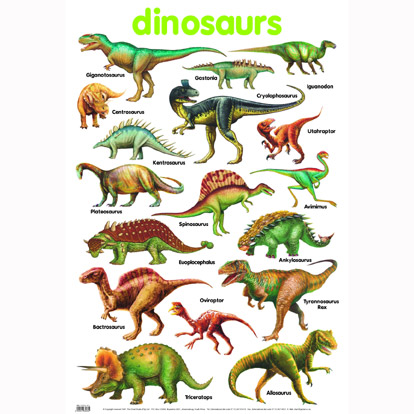
Our good reputation for packing orders has helped us develop a number of new posters for dinosaur enthusiasts.  For example, the My First Dinosaur Poster concept has proved very popular since its introduction about three months ago.  This is an especially robust, double laminated poster featuring colour illustrations of dinosaurs.  The poster has been specially designed to appeal to young children from 3 years and up.

The My First Dinosaur Poster From Everything Dinosaur

Illustration: Everything Dinosaur

Seventeen different dinosaurs are featured, some of the more well-known ones with a good mix of the more unusual dinosaurs.  The name of each animal is provided, printed clearly in black ink against a white background to help young children recognise letters and help them to form words.

2 01, 2008

New Year Predictions for 2008

By |2023-02-14T08:18:44+00:00January 2nd, 2008|Categories: Everything Dinosaur News and Updates, Main Page, Press Releases|0 Comments

Palaeontological Predictions for 2008

As people all around the world start a new year, this is often a good time to consider what changes, developments and news stories we might expect over the next twelve months.  For scientists involved with studying ancient life and attempting to piece together our knowledge of pre-history, 2008 will no doubt be filled with exciting discoveries.  Just for a bit of fun, the team at Everything Dinosaur has compiled a list of predictions, trying to guess what the next year will bring.

Palaeontological Predictions

We are certainly living in a “golden age” for palaeontology.  New parts of the world are being explored and with the advancement of techniques such as electron microscopy and CAT scans we can gain much more information from the fossils already found.

Here in no particular order are our predictions for 2008:

More Aussie Polar Dinosaurs will come to Light

Study of Dinosaurs within what was a polar environment will continue on the rugged coast of Victoria, Australia.  With the help of sponsors and the regular band of dedicated volunteers from the universities of Australia, it is likely that more dinosaurs and other vertebrates such as the large amphibious Labyrinthodonts will be discovered.  A number of small ornithopods have already been described perhaps evidence will be uncovered to provide a clue as to how these little animals could survive such cold conditions – evidence of a feathered hypsilophodont perhaps?

“Walking with” Tour will shake London

The European tour of the “Walking with” Dinosaurs is scheduled to take place in 2008.  This spectacular, live stage show featuring animatronic dinosaurs will no doubt prove to be a huge hit in Europe.  Not too difficult a prediction to make, bearing in mind the reception this tour has already received in Australia and north America.  We were lucky enough to get the chance to review one of the early shows on the Australian leg of the show’s world tour and then to write about the first shows in America.

To read about the tour: Monster Show Rocks America.

Dinosaurs on Television

More Dinosaur TV

The next series of ITVs “Primeval” is scheduled to start in the spring (UK).  Seven episodes have been made and this time viewers will see Dinosaurs.  In addition, expect more documentaries from the likes of the Discovery Channel and National Geographic.  These type of programmes, providing an insight into a specific set of finds or relating a theory about a dinosaur’s demise are ratings winners.  Expect more controversy when television programmes are screened before all the palaeontological evidence has been collated and peer reviewed.

More Dubious “fossils” on Auction Web Sites

As more people gain access to the Internet and speedy downloads with the aid of broadband expect the number of fossils that appear on auction websites to increase.  Many of these items are genuine fossils from respected dealers and private individuals, but as prices for fossils go up expect the trend for misrepresentation and dodgy deals to increase.  It is a fine line between a “restored” fossil, a “repaired” fossil and a “reconstructed” fossil.  We have come across many examples of spinosaur teeth from north Africa which on closer examination don’t appear to be as perfect as promised.  Expect more disappointed purchasers when they realise that the massive theropod tooth they spent a fortune on; bidding for it on an auction site; turns out to be a collection of tooth shards skilfully glued together to mimic a perfect specimen.  Expect more disappointed collectors when they realise the large fossil tooth they saw a picture of on-line turns out to have had its length increased somewhat by the sticking of lots of sand around the base to replicate the root portion.  Such practices will no doubt continue into 2008 and beyond.

More Specimens to Private Collectors

2007 was marked by an increase in the number of large fossils auctioned off and being sold to wealthy individuals.  Complete skeletons of prehistoric animals, rare skulls and such like have found their way via auctions and sales into private collections.  As the market value of such specimens increases so this trend is expected to continue.   Some types of fossil are seen as an investment, with stock markets fluctuating, money is finding a refuge in more abstract investment markets – paintings, fine wines and relics from pre-history.  Dinosaurs are “trendy” collecting them has become the pastime of celebrities, famous and wealthy people wanting to own something a little different and unusual – such as a sauropod femur or a tyrannosaur skull.

Financial Issues for Museums

Calls for UK Museums to Charge for Entry

In the late 1990s it was decided by the UK government to allow free access to many of the country’s national museums and monuments.  By providing free entry it was argued that people would not be deterred from learning about their heritage and this would increase the opportunities to learn for those less well-off than others.  Certainly, attendance at many museums, the natural history ones for example, has increased.  Museums are able to apply for grants, subsidy and subventions to help fund their activities and research, but as costs rise and the political wind changes, this policy of free entry may well be challenged in the next twelve months.

Chinese Dinosaur Discoveries will continue to make the Headlines

In 2008, the spotlight will fall onto China and Beijing in particular, as after all, this is the year that China will host the Olympics for the first time.  However, for palaeontologists the focus will remain on other more rural parts of China such as the provinces of Liaoning and Henan.  Expect more amazing, beautifully preserved fossils of feathered dinosaurs and many new species from the extensive deposits.  Also, with the law passed last year granting all fossil finds to the state, expect more prosecutions and fossil confiscations when peasants attempt to sell their finds.

Everything Dinosaur to Increase Product Range

The team at Everything Dinosaur have been busy organising hall tests, focus groups and other forms of marketing research to identify new prehistoric animal themed products and services.  This trend is going to continue into 2008 and the dedicated team will introduce a number of new products this year, new games, clothing lines, new models and such like.  Trade events and exhibitions will be visited and many new items will be added to the Everything Dinosaur website over the next few months.

To visit Everything Dinosaur: Everything Dinosaur.

Plenty of Plesiosaurs in 2008

It is very probable that new types of plesiosaur (giant marine reptiles) will be named and described in 2008.  Such is the interest in palaeontology at the moment that a number of research teams are excavating Mesozoic marine deposits and within these sediments it is quite likely that new species of marine reptile, including the long-necked plesiosaurs will be found.  Hot spots for plesiosaur finds in 2008 are Greenland, the Arctic circle, Germany and Alberta, Canada.  More pliosaurs and ichthyosaurs may also be discovered.

New Legal Dispute over United States Fossil Tyrannosaur

Last but not least comes our final prediction.  A new discovery, perhaps more T. rex bones or another major theropod from the Cretaceous will end up caught in a legal wrangle.  After 67 million years, a well preserved fossil uncovered in some part of the western USA will fall foul of a legal dispute over ownership of the specimen and the right to extract more bones from the site.  US federal law is currently being tested by one collector and his discovery of the remains of a large tyrannosaur, if another such specimen is discovered outside of a properly orchestrated museum expedition and dig then expect another legal wrangle.

One thing is for sure, it may be 65 million years since the Dinosaurs disappeared and the science of palaeontology may well be a relatively young discipline but 2008 will certainly have plenty of highs and lows for dinosaur enthusiasts, scientists and palaeontologists.

To view the huge range of prehistoric animal models available from Everything Dinosaur: Dinosaur and Prehistoric Animal Models.

1 01, 2008

Most Popular Web Log Articles of 2007 – Part 2 (the Top Five)

By |2023-02-24T21:14:49+00:00January 1st, 2008|Categories: Everything Dinosaur News and Updates, Main Page, Press Releases|0 Comments

The Five Most Popular Everything Dinosaur Web Log Articles of 2007

Continuing the countdown of the top ten web log articles of 2007, this entry counts down from five to the coveted number one spot.  Like the previous blog entry (December 31st), the top five cover a broad range of topics, from new products and developments at Everything Dinosaur, news stories and updates on theories within the science of palaeontology.

To see the previous entry (number ten to six):

The Most Popular Web Log Articles of 2007 – Part 1.

Now to the top five most popular articles of 2007:

5).  The Everything Dinosaur Calendar – (Friday 28th September 2007)

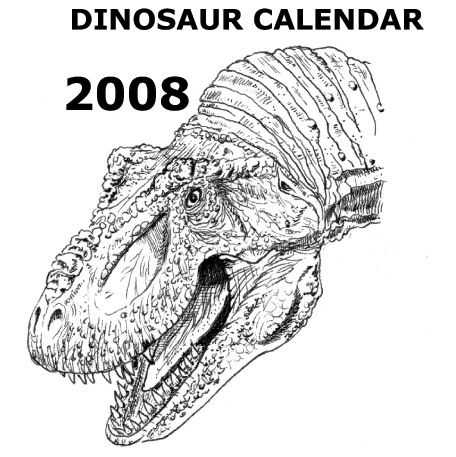
This was the first dinosaur themed calendar produced by Everything Dinosaur.  It was created in collaboration with Mike Fredericks, a professional prehistoric animal illustrator and editor of the magazine “Prehistoric Times”.  Scientists do not know what colour dinosaurs were, it is assumed that they had colour vision and since they evolved in a mostly green and brown world they could have been as colourful as their relatives the birds.  The concept behind the calendar was to produce a series of black and white drawings – one dinosaur for each month, plus front, inside front and back pages and then get children to colour them in creating their own dinosaur scenes.  Each page had dinosaur facts and information, all verified by our dinosaur experts.  The calendar proved very popular – with orders from the UK and also overseas.

The Everything Dinosaur 2008 – Calendar

Everything Dinosaur 2008 dinosaur calendar.

Picture credit: Everything Dinosaur

To read more: 2008 Calendar for Young Palaeontologists.

4).  My First Dinosaur Poster – (Thursday 11th October 2007)

The autumn saw a number of new product introductions as Everything Dinosaur prepared for Christmas.  The introduction of a special double laminated poster for young dinosaur fans captured a lot of reader’s imaginations and as a result this item makes number 4 on our list.

My First Dinosaur Poster

Dinosaur posters available from Everything Dinosaur.

Picture credit: Everything Dinosaur

To view dinosaur themed toys and gifts: Everything Dinosaur.

The poster shows 17 different dinosaurs, some well-known ones some relatively unknown.  Each is colourfully illustrated and the name of the animal is produced clearly in big, black ink so that children can associate the name with the animal.  The poster is large and double laminated, making it sticky-finger proof, essential when it comes to young dinosaur fans.

3).  How Big was Liopleurodon? – (Sunday 9th of September)

Ever since Liopleurodon featured in episode 3 of the ground-breaking BBC series “Walking with..” this short-necked plesiosaur, more commonly known as a pliosaur has been regarded as a truly huge predator.  The programme, which was entitled “The Cruel Sea” showed Liopleurodon snatching an unwary Eustreptospondylus from rocks on the seashore and chomping a female Ophthalmosaurus in half before finally coming to a sad end stranded on a Jurassic beach.

At the time the writers and researchers for the TV series estimated that an adult male Liopleurodon could reach lengths in excess of 25 metres and weigh more than 150 tonnes.  If this were indeed the case then Liopleurodon with its 18 inch long teeth could lay claim to being the biggest carnivorous animal ever.

However, the existing fossil evidence does not back up the BBC’s claims and the article went on to discuss the fossils and put forward alternative estimates of this animal’s size.  Perhaps our thoughts on Liopleurodon are influenced by the weights and sizes of modern whales.  Whales have their body weight supported by water and are totally marine, not venturing back onto shore.  This helps to explain the huge sizes these animals can reach.  It is not known whether Liopleurodon was fully adapted to life in the water and did not come ashore.

To read the complete article: How big was Liopleurodon?

2).  Did the Birds wipe out the Pterosaurs? – (Thursday 2nd of August)

A review of published works on the pterosaur fauna of the Dinosaur Provincial Park formation in Alberta (Late Cretaceous – Campanian faunal stage) led the scientific team to conclude that the limited remains found were mainly representative of the Azhdarchidae pterosaurs.  Azhdarchids were the very large flying reptiles, an animal such as Quetzalcoatlus being a representative of this group.

Phil Currie (curator of Dinosaurs at Royal Tyrrell) and Stephen Godfrey (dept. of Palaeontology at the Calvert Marine museum) who wrote up the original data, concluded that surprising few pterosaur remains had been found, despite over a century of exploration in the area.  Not withstanding the fragile nature of the bones, did the lack of pterosaur fossils indicate that these creatures only made up a small proportion of the total ecosystem.  Had the evolution of the birds led to the decline of the pterosaurs?

Complete article here: Did the Birds wipe out the Pterosaurs?

Last but not least the number one, the most popular Everything Dinosaur web log article of 2007, concerned a tiny bee fossilised in amber.

1).  To Bee or not to Bee – Bee Provides Clue to Orchid Origins – (Friday 31st August 2007)

A study of the remains of a bee preserved in amber revealed tiny pollen grains which gave scientists working at Harvard University a clue to the origin of orchids.

In a report printed in the journal – “Nature”, the university team led by Dr Santiago Ramirez have estimated that the orchid family may have first evolved in the Late Cretaceous.

To read the article in full: To Bee or not to Bee – A Clue to the Origin of Orchids.

28 11, 2007

The Dinosaur Collection – an Ideal Dinosaur Fans Christmas Gift

By |2023-02-24T15:56:26+00:00November 28th, 2007|Categories: Main Page, Press Releases|1 Comment

The Dinosaur Collection – Six models for Prehistoric Animal Fans

With the myriad of different models of prehistoric animals it can be difficult identifying which model belongs to which manufacturer’s series, especially with so many animals being retired and new ones coming along all the time.

Perhaps we should use the “Prefix and Accession number” system that scientists use to identify individual specimens housed in museums around the world.  For example, MIWG6621 is the unique classification code given to a single caudal vertebra (tail bone), of a small bipedal plant-eater – Hypsilophodon foxii, which is housed in the Museum of Isle of Wight Geology, Sandown on the Isle of Wight in the UK.

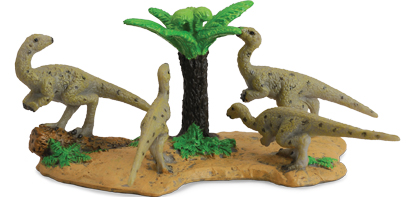
A Model of Four Hypsilophodon Dinosaurs (CollectA)

Hypsilophodon model. Gifts for prehistoric animal fans.

CollectA Hypsilophodon family group part of the successful CollectA Prehistoric Life model range which make ideal gifts for prehistoric animal fans.

The Hypsilophodon models make great gifts for prehistoric animal fans. The range can be viewed here: CollectA Prehistoric World Dinosaur Models.

Gifts for Prehistoric Animal Fans

This would certainly help streamline our searches for various specific models for avid fans and collectors when they ask us to conduct a “Dino Hunt” for them, finding prehistoric animal models for customers.

Access our website here: Everything Dinosaur Home Page.

Simply type in the dinosaur name into the search field box, press the magnifying glass icon next to the box to start the search and if no items appear, then you can always contact us and one of our dinosaur experts and researchers will try to find the product or animal that you have requested.  This certainly saves our customers a lot of time.

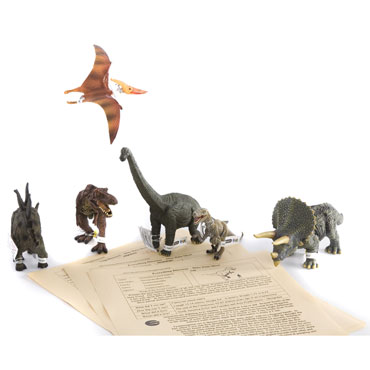
One model series we have taken a fancy to is the “Dinosaur Collection” series from CollectA.  This model series currently consists of six models, five dinosaurs (T. rex, Triceratops, Stegosaurus, Brachiosaurus and Velociraptor), plus a pterosaur.  The pterosaur in question is Pteranodon ingens, so this makes a popular choice for the avid dinosaur fan and for serious model collectors.

The Dinosaur Model Series from Everything Dinosaur

Picture credit: Everything Dinosaur

Models and Fact Sheets

Each model comes with its own fact sheet written by our researchers, and this series is available from Everything Dinosaur, they are just some of the dinosaur and prehistoric animal replicas we have in stock.

To see the dinosaur collection set of models: Dinosaur and Prehistoric Animal Models.

22 11, 2007

The New Dino Xcavator Game – Are you Brave enough to Dig out T. rex?

By |2024-04-02T21:19:16+01:00November 22nd, 2007|Categories: Everything Dinosaur News and Updates, Main Page, Press Releases|0 Comments

Dino Xcavator Game – a novel twist on the classic family game “Operation”

We were going through some notes taken from our focus groups and family testers from the last twelve months or so, yesterday.  With so much going on at the moment it is an effort trying to keep the office tidy, but it proved well worth while as we were able to free up some office space.

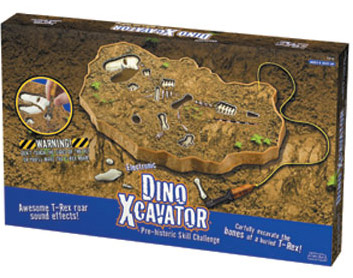
One of the reports we came across was the feedback we received on one of our dinosaur themed games that was introduced last year; an electronic Dinosaur Excavation game – snappily titled “Dino Xcavator”.  The game is a new twist on the family game Operation, but instead of a patient to operate upon, removing tibia, fibias and of course funny bones (humerus), you have to excavate the skull, vertebrae, pedals and unguals (foot bones and bones related to claws); of a Tyrannosaurus rex!

Electronic Dino Xcavator from Everything Dinosaur

Picture credit: Everything Dinosaur

Dinosaur Toys from Everything Dinosaur: Dinosaur Toys and Gifts.

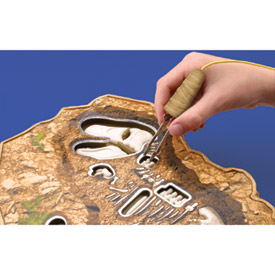
The game is suitable for children of 5-years and older.  Using the special excavation forceps you have to test your palaeontological skills as you excavate your very own Tyrannosaur.  Watch out, touch the sides of the pit whilst you are digging and the T. rex will ROAR…  This is a multi-player game and the winner is the one who can excavate the most bones.  It is certainly a great dinosaur excavation game.

Take turns to draw a card, trying your best to avoid getting the job or removing the devilishly difficult caudal section (the tail bones); then using the special excavation tool try to remove a bone.  A steady hand is required plus a little knowledge about dinosaurs of course.

Carefully Does It! – You Do Not Want to Wake up this Dinosaur!

Digging out Tyrannosaurus rex.

Picture credit: Everything Dinosaur

16 11, 2007

Distinguishing between Art and Science in Palaeontology

By |2023-02-14T08:20:28+00:00November 16th, 2007|Categories: Everything Dinosaur News and Updates, Press Releases|0 Comments

The Difference between Art and Science

Team members at Everything Dinosaur encourage people to try to draw their fossil finds and discoveries.  Photographs of objects are very useful but our dinosaur and fossil experts don’t really believe you understand an object until you have observed it carefully as it is sketched.

Art and Science in Palaeontology

So what is the difference between science and art?  This is quite a difficult question and we would not want to make any value judgements between these two disciplines but the best explanation we can find goes like this:

Science differs from artistic endeavours in that there is more emphasis on evidence than undirected interpretation.  Science is at its best when it is constrained by rules and discipline, whilst art is often at its worst when the artist concerned feels constrained and restricted by rules.

Science and Art Meet at a Fossil Festival

Art and Science in Palaeontology

Prehistoric animal drawing fun at the Lyme Regis fossil festival.  Art and science meet at the Lyme Regis Fossil Festival.

Picture credit: Everything Dinosaur

Encouraging Lots of Learning Activities

For young children, we encourage lots of different learning activities involving dinosaurs and prehistoric animals.  Some are art based with lots of drawing, whilst we also conduct experiments with fossils and dinosaurs as part of our company’s dinosaur workshops in schools programme.

To view the extensive range of educational, dinosaur themed toys, crafts and models available from Everything Dinosaur: Dinosaur Toys and Gifts.

13 11, 2007

Is it a New Book or is it a New Board Game? It’s Both!

By |2024-04-02T21:28:31+01:00November 13th, 2007|Categories: Everything Dinosaur Products, Main Page, Press Releases|0 Comments

The Book of Prehistoric Pop-Up Board Games

A novel twist to a conventional book about prehistoric animals, “Prehistoric Pop-Up Board Games”, combines the features of a book about dinosaurs and other animals from the Age of Reptiles with four prehistoric themed board games.

The Book of Prehistoric Board Games

Is it a book or a game – it is both!

Picture Credit: Everything Dinosaur (Tango)

To view the range of dinosaur themed products in stock: Everything Dinosaur.

Beautifully illustrated by the well-known commercial artist Bob Nicholls, the book takes players through four prehistoric adventures from the Jurassic and Cretaceous.  Each game section can be played by four players and individual game counters are provided within the book’s contents for you – although more players can join in, little model dinosaurs make excellent counters too.

In the first game, you become an Allosaurus, a fierce meat-eater from the Late Jurassic and you have to hunt down a Stegosaurus.  Players then move onto the Cretaceous and face the perils of being a baby pterosaur just hatched looking for a tasty fish to eat; before plunging into the sea to confront the mighty Mosasaurus and other marine perils as you attempt to swim to safety, with your counter which could either be an ichthyosaur, plesiosaur or pliosaur.

Of course any children’s book would not be complete with out an appearance by Tyrannosaurus rex.  Your travels send you to very last days of the dinosaurs and choosing your herbivorous dinosaur game counter you face the dangers of the Late Cretaceous of North America and try to avoid becoming a snack for the ever-hungry predator.

We found the book/games fun and suitable for children aged 5+, although it did appeal to a couple of very enthusiastic 4-year olds we know, who took to it with equal relish.

12 11, 2007

Digging for Dinosaurs – Finding New Fossils

By |2024-04-02T21:29:28+01:00November 12th, 2007|Categories: Everything Dinosaur Products, Main Page, Press Releases|0 Comments

Digging for Dinosaurs – Excavate your own Prehistoric Animals

We often get asked by school children “what does it feel like when you find a fossil?”.  No matter how small and insignificant the find we still get a thrill out of finding fossils, especially when you have been working all day at a dig site, or wandering up and down some shoreline with a gale blowing into your face.

Digging For Dinosaurs

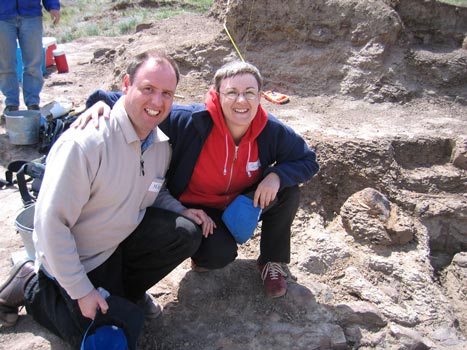
I recall one occasion when we were working with a team of palaeontologists excavating an assemblage of hadrosaur remains that had been deposited in an ancient stream bed.  The carcases had accumulated and become heaped up onto each other, there were at least three adult hadrosaurs within the matrix.  Although it was early days and no skull material had yet been found we were confident that they were the remains of  Edmontosaurus.  Before the bones were buried this pile of corpses had attracted a number of scavengers.  We found crocodilian teeth and a single tooth from a troodontid.

Digging for Dinosaurs

Pause for a pic next to a digs station. Rocks, fossils and digging for dinosaurs.  Picture credit: Everything Dinosaur.

Picture credit: Everything Dinosaur

All in all the site yielded a lot of palaeontological evidence, although I do remember one day when I toiled under the hot sun (we were digging in Alberta as part of a Royal Tyrrell museum team); for hours and hours and although stations either side of me were working on impressive fossils (tibia and fibia to be precise), where I had chosen to dig I could find nothing.  I even went back over the sediment I removed and sieved it again in case I had missed some tiny fragment.  After all my labour, late in the afternoon I uncovered my first fossil of the day – a piece of ossified tendon, tiny, but to me I was thrilled!

No matter whether it is the simplest brachiopod, bivalve, belemnites or an articulated brachiosaur, finding something that lived millions of years ago, and exposing it to human eyes for the first time – it still is an enormous thrill.

When we work on designing items for young palaeontologists we try to create products and games that give them a chance to relive the experience of excavating their very own fossils.

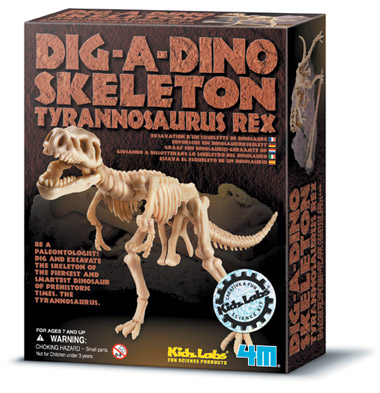
One such product is the “Digging for Dinosaurs” range.  Models of prehistoric animal skeletons are set into a solid block of gypsum and then using the tools provided in the kit, children can have a go at excavating their own prehistoric animal.  If only the real thing was as much fun and came with the guarantee of finding a complete specimen in a single block.

Still, that is not the point, these kits are fun and give a real sense of achievement when all the digging is done.  There are a number of such kits available – the larger ones (house brick size) are called “Dig a Dino” animals in the series include Tyrannosaurus rex, Velociraptor, Triceratops, Stegosaurus and a pterosaur (Pteranodon).

Dinosaur crafts, models and toys: Dinosaur Toys, Models and Gifts.

Dig-a- Dino Range Product Shot

Source: Everything Dinosaur (Kids Labs)

Here are a couple of tips for all the parents of budding palaeontologists:

1).  It is a good idea to put plenty of newspaper down (we use lots of newspaper to wrap specimens in real dig), but in this case it is best to do this as it saves a lot of cleaning up afterwards.

2).  A thump with a mallet is a good way to start the dig (get Dad to do this).

3).  Keep the gypsum bits away from your sink and certainly don’t flush bits away down the plughole, you might lose part of your model skeleton and in extreme cases block the drain.

10 11, 2007

New Dinosaur Pencil Sharpeners – an Ideal Stocking Filler

By |2024-04-03T06:59:25+01:00November 10th, 2007|Categories: Everything Dinosaur Products, Main Page, Press Releases|0 Comments

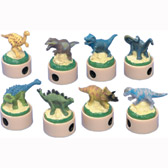
Dinosaur Pencil Sharpeners – 8 Dinosaurs to Choose From

Every week the team at Everything Dinosaur gets together to have a meeting, this usually takes place on a Friday or after we have finished work on a Saturday afternoon.  The first item on the agenda is to “put the kettle on” and whilst one of us makes the tea the rest of the team draw up an agenda and make sure all the points, issues and ideas that have arisen over the last few days are recorded so that they can be discussed amongst ourselves.

Dinosaur Pencil Sharpeners

One item raised a couple of weeks ago was to add Dinosaur Pencil sharpeners to our product range, we had looked a this product a while ago and although it had favourable reviews from our testers at the time, we never got round to adding it to our product range.

We reviewed the comments that had been made about these little plastic sharpeners with a model of a dinosaur on top.  Customers liked the quality of the item, it certainly sharpened pencils – which is always a promising start for a pencil sharpener.  They also liked the choice of eight different dinosaurs in the product range we had examined.

With one eye on all the school visits and Christmas Fairs that Everything Dinosaur attends at this time of year we decided to give these sharpeners a go.

Dinosaur Pencil Sharpeners – Eight to choose from

Picture credit: Everything Dinosaur

To visit the Everything Dinosaur website: Everything Dinosaur.

There are eight different Dinosaur pencil sharpeners to choose from.  I don’t know whether the manufacturers were aware of what they had done but there are are four saurischian (lizard-hipped) Dinosaurs represented by an ornithomimid (ostrich mimic), a sauropod and two theropods plus four ornithischians in the mix.   The ornithischians represented are an ankylosaur, stegosaur, ceratopsian and a pachycephalosaur.

My these manufacturer’s are clever!  They have created a simple product range that just about covers the diversity of the Dinosauria.  Somehow I don’t think this was done as a deliberate attempt to represent the main dinosaurian clades, more likely the different models were chosen because they looked good.  However, this little set illustrates the diversity of the dinosaurs very nicely – and that will do for us.  It is an excellent example of the dinosaur themed school supplies that are available from Everything Dinosaur.

Go to Top