

The Museum für Naturkunde Berlin is celebrating the 75th anniversary of its remarkable Animal Sound Archive. This internationally important collection contains more than 120,000 recordings of animal sounds. It is one of the oldest collections of its kind and the third-largest bioacoustic archive in the world.
The collection includes recordings from approximately 1,800 bird species and 580 mammal species. In addition, it preserves the sounds of numerous amphibians, reptiles, fish and insects. These recordings provide an invaluable scientific resource. They help researchers understand animal behaviour, communication and the complex relationships between species and their environments.
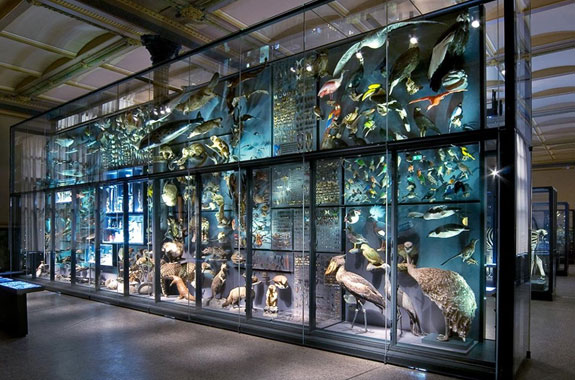
The amazing biodiversity gallery at the Museum für Naturkunde Berlin. Picture credit: Carola Radke.
Picture credit: Carola Radke
The Scientific Importance of Recording Nature
Sound plays a vital role in the natural world. Animals use acoustic signals to attract mates, defend territories, warn others of danger and maintain contact with members of their species. Recording these sounds allows scientists to investigate behaviours that might otherwise remain hidden. Furthermore, bioacoustic recordings can help researchers identify species and monitor changes in animal populations.
For example, scientists can use recordings to study biodiversity in habitats that are difficult to access. Changes in the sounds recorded within an ecosystem may also provide evidence of environmental disturbance or declining wildlife populations.
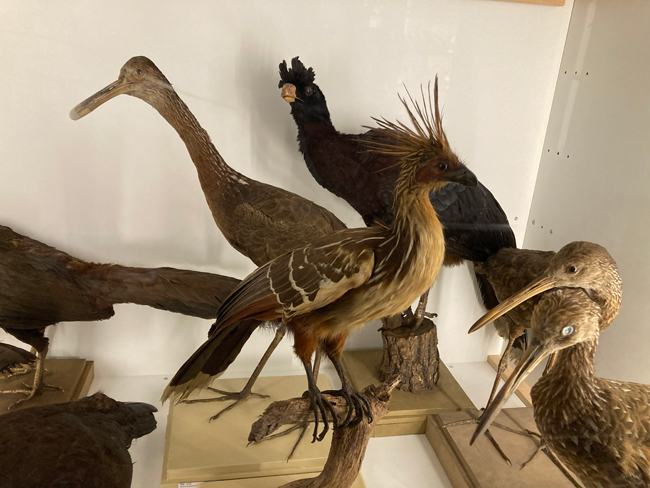
The Museum für Naturkunde Berlin has an enormous collection of stuffed animals including many birds from around the world. In addition, a huge acoustic archive has been built up capturing the sounds and calls of 1,800 different bird species. Picture credit: Everything Dinosaur.
Picture credit: Everything Dinosaur
Consequently, preserving animal sounds is becoming increasingly important for conservation.
A Remarkable Contribution to Natural History
The Animal Sound Archive was founded by German behavioural biologist Günter Tembrock (1918–2011). His pioneering work established the foundations of this extraordinary scientific collection. Over seven decades, the Museum für Naturkunde has developed the archive into a globally significant research resource. Its continued expansion demonstrates the importance of preserving natural history information for future generations.
Commenting on this remarkable scientific resource, Mike from Everything Dinosaur stated:
“Natural history museums play an essential role in helping us understand the world around us. We often think of museum collections as fossils, skeletons and preserved specimens. However, recording the sounds of living animals is equally valuable. The Museum für Naturkunde deserves enormous credit for developing and maintaining this remarkable archive.”
Preserving the Sounds of Nature for Future Generations
Modern technologies, including artificial intelligence, are creating exciting opportunities for bioacoustic research. Large collections of recordings can help scientists develop automated methods for identifying animal species and studying their distribution.
Importantly, historical recordings provide reference points against which modern ecosystems can be compared. Palaeontologists have used cutting-edge technology to examine the soundscapes of palaeoenvironments. For example, there has been extensive research into dinosaur vocalisation.
The vocalisation of hadrosaurs and other dinosaurs: What Sounds Did Dinosaurs Make?
Crocodiles react to human sounds of distress: Crocodiles React to the Sound of Crying.
The Museum für Naturkunde will commemorate the archive’s anniversary with a scientific colloquium on the 7th of November 2026.
Everything Dinosaur congratulates the Museum on this significant milestone. The Animal Sound Archive reminds us that preserving natural history involves more than collecting physical specimens. It also means safeguarding the sounds of the natural world for future scientific study.
Everything Dinosaur acknowledges the assistance of a media release from the Museum für Naturkunde in the compilation of this article.
Visit the Everything Dinosaur website: Models of Prehistoric Animals.

Leave A Comment