All about dinosaurs, fossils and prehistoric animals by Everything Dinosaur team members.

CollectA Age of Dinosaurs Popular and CollectA Prehistoric Life models and figures.

26 02, 2026

The Giant and Remarkable Colossosuchus techniensis

By |2026-03-08T06:33:53+00:00February 26th, 2026|Categories: CollectA Age of Dinosaurs Popular and CollectA Prehistoric Life Models|0 Comments

In 2023, Palaeontologists described a remarkable new phytosaur from the Triassic of India. The species is named Colossosuchus techniensis. Moreover, this enormous reptile may have reached lengths exceeding eight metres. It is one of the largest phytosaurs known to science. Unsurprisingly, the discovery has attracted significant scientific attention. For example, CollectA will be introducing a Colossosuchus techniensis model later this year.

Everything Dinosaur will stock this exciting new prehistoric animal replica.
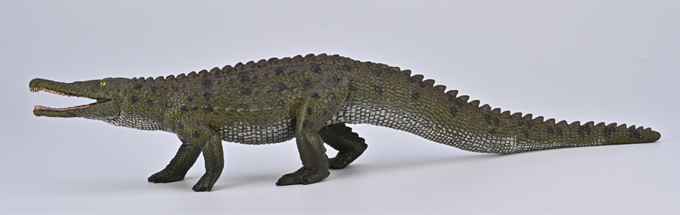
CollectA Colossosuchus model.

The CollectA Colossosuchus model shown in lateral view. This figure measures approximately 21 cm in length.

The range of CollectA Age of Dinosaurs figures: CollectA Age of Dinosaurs Figures.

A Giant Phytosaur from the Triassic of India

During the Late Triassic, phytosaurs dominated rivers and lakes across Pangaea. These reptiles looked similar to modern crocodiles. However, they belonged to a completely different reptile lineage. The recently described Colossosuchus techniensis inspired the new CollectA prehistoric animal model.  Colossosuchus is pronounced Kol-oss-oh-suk-us.

Researchers discovered its fossil remains in the Tiki Formation. This formation lies within the Rewa Gondwana Basin of India. Consequently, the fossils provide valuable insight into Gondwanan ecosystems during the Triassic. The locality proved exceptionally rich. Scientists uncovered twenty-seven skull and jaw specimens. In addition, the team recovered more than three hundred postcranial bones. Altogether, these fossils represent at least twenty-one individual animals.

Interestingly, most specimens belonged to juveniles or subadults. Therefore, the bonebed may represent a group of young animals living together. Alternatively, it might represent a mass dying event, perhaps due to the water source drying up.

One of the Biggest Phytosaurs

Some fossil bones suggest that adults grew to enormous sizes. Researchers estimate that the largest individual exceeded eight metres in length. As a result, Colossosuchus techniensis ranks among the largest phytosaurs discovered so far.

These predators probably behaved like modern crocodiles. For instance, they likely waited near riverbanks before ambushing prey. Fish probably formed part of their diet. However, they may also have targeted terrestrial animals that ventured close to water.  The nostrils were positioned much further up the snout, possibly an adaptation to permit most of the jaw to remain submerged.
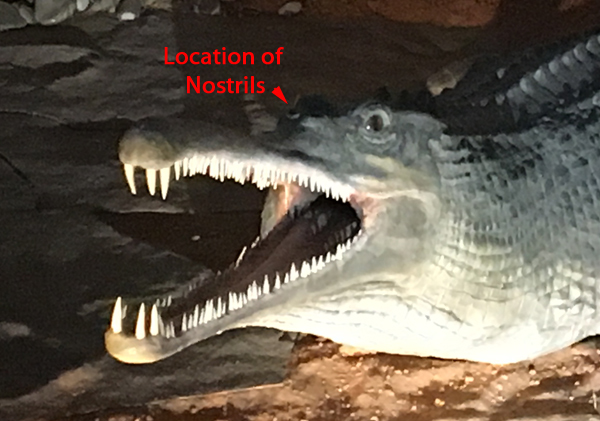
Telling the difference between a phytosaur and a crocodile.

The location of the nostrils in a phytosaur. Picture credit: Everything Dinosaur.

Picture credit: Everything Dinosaur

A Unique Gondwanan Phytosaur Lineage

In the 2023 study, the research team conducted a detailed phylogenetic analysis. Their results placed Colossosuchus techniensis within the phytosaur subfamily Mystriosuchinae. However, the fossils revealed something even more intriguing. The Indian material forms a distinct evolutionary clade. Consequently, this discovery represents the earliest evidence of phytosaur endemism in Gondwana.

The scientists concluded that this lineage branched close to relatives such as Volcanosuchus and Rutiodon. These taxa belong to a broader group known as Leptosuchomorpha. Interestingly, this group shows the first appearance of a depressed supratemporal fenestra. Previously, researchers used this feature to identify more derived phytosaurs.

Phytosaurs and the Carnian Pluvial Event

The researchers also explored the wider evolutionary context. Early phytosaur diversification may have occurred during the Carnian Pluvial Event (CPE). This interval brought dramatic climate change to the Late Triassic. In particular, rainfall increased across many regions. These wetter conditions may have helped phytosaurs expand along coastal environments.

Scientists suggest that phytosaurs migrated along the circum-Tethyan coastline. Later, many lineages evolved independently within Gondwana.

Unfortunately, this success did not last forever. During the Early Norian, many phytosaur taxa disappeared. Researchers suspect increasing aridity played a role in this extinction event. Nevertheless, further study is required to confirm the cause.

A Colossosuchus techniensis Model Coming Soon

Fascinating discoveries like this inspire new prehistoric animal replicas. Therefore, collectors will be pleased to hear that a Colossosuchus model is being introduced.

Everything Dinosaur expects this impressive Triassic predator to join the CollectA range later this year. The model should capture the distinctive long snout and powerful body typical of large phytosaurs. As a result, enthusiasts will soon be able to add this giant Triassic reptile to their collections.
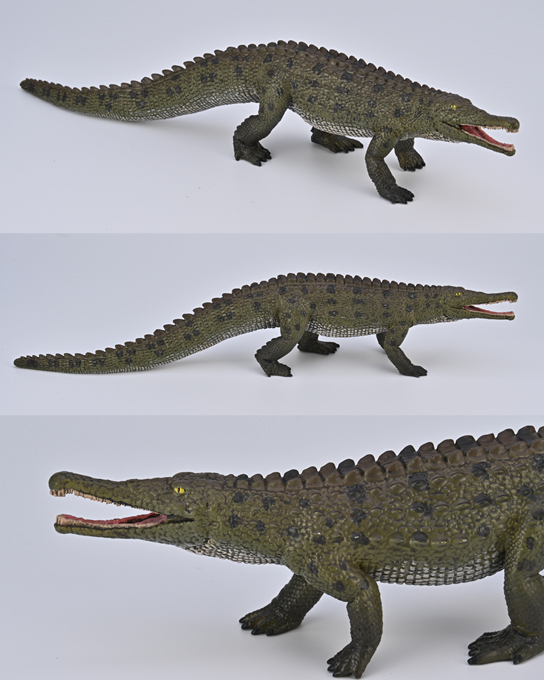
CollectA Colossosuchus techniensis model.

Three views of the new for 2026 CollectA Colossosuchus techniensis model. A replica of a Late Triassic phytosaur from India.

The discovery of Colossosuchus techniensis was described by Debajit Datta and Sanghamitra Ray. Their research appeared in the academic journal Papers in Palaeontology.

This important study highlights the diversity of phytosaurs in India. Furthermore, it improves our understanding of Triassic ecosystems across Gondwana.

The Everything Dinosaur website: Prehistoric Animal Figures.

28 11, 2025

New CollectA Prehistoric Animal Models for 2026 (Part 4)

By |2025-11-27T21:59:07+00:00November 28th, 2025|Categories: CollectA Age of Dinosaurs Popular and CollectA Prehistoric Life Models|0 Comments

Today, in our fourth and final part of the series looking at new for 2026 CollectA prehistoric animal models we introduce a phytosaur.  Specifically, a CollectA Colossosuchus techniensis is being added to the company’s model range.  This new phytosaur replica will be in stock at Everything Dinosaur sometime next year.  It is regarded as one of the largest members of the Phytosauria known to science. A length estimate of around eight metres has been suggested. The CollectA Colossosuchus model, is the first phytosaur figure that the company has made.

  • CollectA Other Prehistoric Animals Colossosuchus model measures 21 cm long (Kol-oss-oh-suk-us).
CollectA Colossosuchus model.

The CollectA Colossosuchus model shown in lateral view. This figure measures approximately 21 cm in length.

The CollectA Colossosuchus techniensis Model

It might superficially resemble a crocodile, but it was not closely related.  It was a large quadrupedal, carnivorous archosauriform from the Late Triassic of India (Tiki Formation).  The nostrils were located close to the eyes and not at the tip of the snout as in extant crocodylians.  It was heavily armoured and the CollectA figure has two rows of raised osteoderms running along its back.

Colossosuchus had fang-like teeth at the front of its jaws but much smaller, conical teeth further back in its mouth.  Earlier reconstructions of phytosaurs showed them with their belly close to the ground and the limbs held out sideways from the body.  However, numerous tracks assigned to the Phytosauria indicate that they walked with the body held off the ground.  The length of the digits and the presence or absence of claws are also different from modern crocodylians. Colossosuchus was formally named and described in 2023 (Datta and Ray).

The tip of the upper jaw projects downwards.

CollectA Colossosuchus techniensis model.

Three views of the new for 2026 CollectA Colossosuchus techniensis model. A replica of a Late Triassic phytosaur from India.

To view the range of CollectA Prehistoric Life models in stock at Everything Dinosaur: CollectA Prehistoric Life Models.

An Extensive Bonebed

Phylogenetic analysis nests Colossosuchus techniensis and other undescribed specimens from India within the sub-family Mystriosuchinae.  The bonebed yielded twenty-seven skull and jaw specimens and over three hundred postcranial fossils.  Scientist studying the fossils calculated that these were the remains of at least twenty-one individuals.  Most of the fossils represented subadults or juveniles.  However, some fossils indicate that Colossosuchus could reach a length of around eight metres.  It is one of the largest phytosaurs described to date.

It was probably an ambush predator feeding on smaller vertebrates, but the majority of its diet could have been made up of fish.

Intriguingly, at least two more phytosaur species lived at the same time in different parts of India.  The discovery of Colossosuchus highlights the rich and diverse fauna that inhabited the area that was to become India around 220 million years ago.  It offers a new insight into Late Triassic ecosystems.  It has been speculated that these fossils represent phytosaur diversification that coincided with the final stages of the Carnian Pluvial Event (CPE).

The CollectA Colossosuchus model.

The CollectA Colossosuchus figure. The large osteoderms on the throat represent a “gular shield”. This feature consisted of irregular plates that served to protect the throat.

The CollectA Colossosuchus Model Colour Scheme is Based on a Mugger Crocodile

Mike from Everything Dinosaur confirmed that this phytosaur figure will be in stock in 2026 and stated.

“I think the colour scheme for CollectA’s first phytosaur is based on the Mugger crocodile (Crocodylus palustris).  This is a nice touch as this crocodile is native to India and Colossosuchus probably filled a similar niche in the ecosystem.”

To read our earlier articles about new CollectA prehistoric animal figures for 2026:

New CollectA prehistoric animal figures (part 1): New CollectA Prehistoric Animal Models for 2026 – Part 1.

See the new CollectA prehistoric animal figures (part 2): New CollectA Prehistoric Animal Figures – Part 2.

New CollectA prehistoric animal figures (part 3): New CollectA Prehistoric Animal Models for 2026 – Part 3.

The Everything Dinosaur website: Everything Dinosaur – Dinosaur Models.

7 11, 2025

New CollectA Prehistoric Animal Models for 2026 (Part 1)

By |2025-11-06T08:01:24+00:00November 7th, 2025|Categories: CollectA Age of Dinosaurs Popular and CollectA Prehistoric Life Models|0 Comments

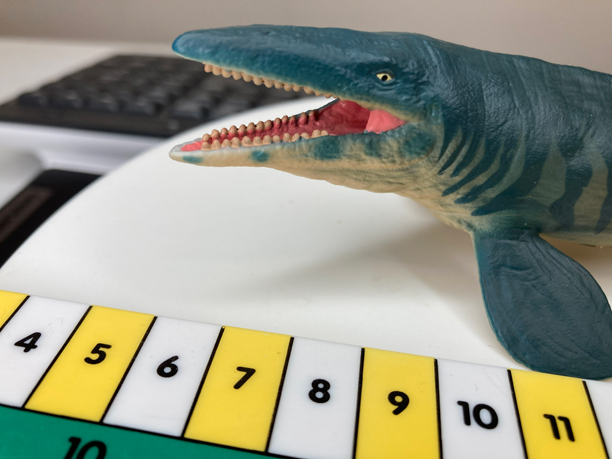
Everything Dinosaur in collaboration with CollectA reveal news of the first of the new prehistoric animal figures for 2026.  There is going to be a new CollectA Tylosaurus model.  Whilst no species has been defined, we think that the model represents Tylosaurus proriger.

  • CollectA Age of Dinosaurs Popular Tylosaurus (model measures approximately 20.5 cm in length).
CollectA Age of Dinosaurs Popular range Tylosaurus figure.

The CollectA Age of Dinosaurs Popular range Tylosaurus.

The New CollectA Tylosaurus Model

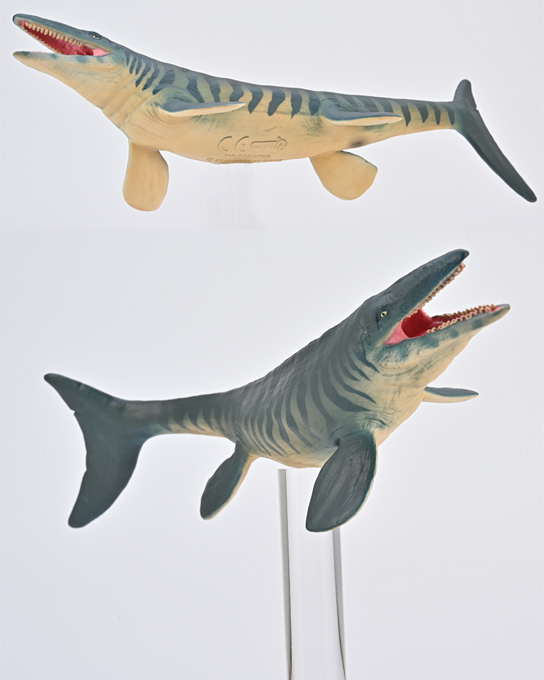
We suspect that this marine reptile figure will replace the original Tylosaurus model from the Age of Dinosaurs Popular range.  The mosasaur has been remodelled and updated.  For example, it has a hypocercal tail. A hypocercal tail has a larger lower lobe compared to the upper lobe.  The cervical vertebrae bend down into the lower lobe.  In contrasts, sharks and some primitive bony fishes have a larger upper lobe in their tails.  The vertebral column extends into the upper lobe, and the tail shape is described as heterocercal.

The front flippers of the Tylosaurus figure are broad, T. proriger is noted for its broad front flippers that are larger than the rear flippers.

CollectA Age of Dinosaurs Prehistoric Life Tylosaurus model (2026).

The front flippers are broad and fractionally larger than the rear flippers. This reflects the fossil material associated with the species Tylosaurus proriger.

To view the range of CollectA Age of Dinosaurs Popular figures in stock: CollectA Age of Dinosaurs Popular Figures.

Distinctive Colouration

This model of a giant mosasaur has distinctive colouration.  The concept of marine countershading is reflected in the colour scheme chosen.  The dorsum is dark, whereas the underbelly is much lighter.  This form of countershading is seen in many marine predators today.  In addition, the stripes running along the flanks remind us of the stripes seen on a Tiger shark.

CollectA Tylosaurus model (new for 2025).

The new for 2026 CollectA Tylosaurus model. We suspect this marine reptile figure will replace the Age of Dinosaurs Tylosaurus (model number 88320), that first came out around fifteen years ago.

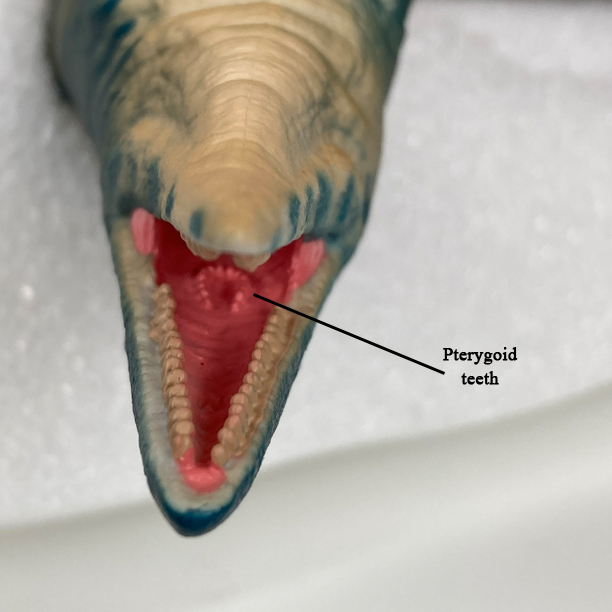
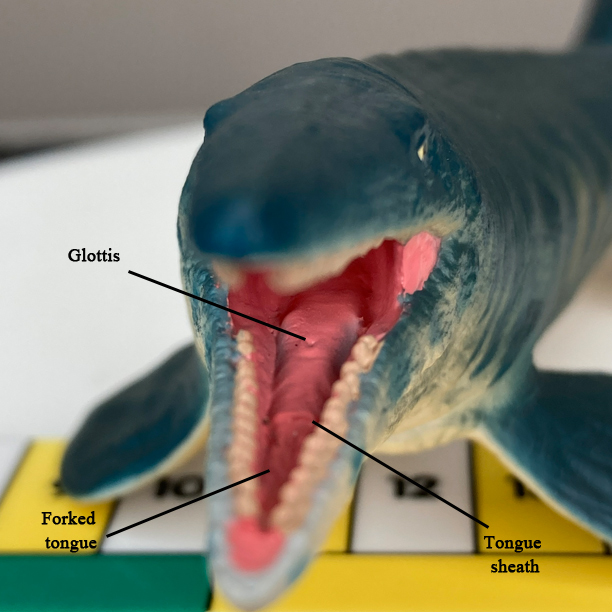
The front of the snout lacks teeth.  This is the distinctive protuberance that inspired the species name (T. proriger).  Fossil skulls reveal damage to this area, suggesting Tylosaurus may have rammed prey with its snout to stun or injure them.  The snout may also have played a role in intraspecific combat.  If you look closely at the image above, the forked tongue of the model can be seen.  The forked tongue is a reminder of this mosasaur being a member of the Order Squamata (snakes and lizards).  Furthermore, there are two rows of pterygoid teeth in the roof of the mosasaur’s mouth.

CollecA Age of Dinosaurs Popular Tylosaurus model.

The new CollectA Tylosaurus marine reptile model has a distinctive paint scheme.

The new Tylosaurus model measures approximately twenty and a half centimetres in length.

We expect to announce more new for 2026 CollectA prehistoric animal figures next Friday.

The Everything Dinosaur website: Prehistoric Animal Figures.

1 09, 2025

The Delightful and Beautiful CollectA Furcatoceratops

By |2025-09-16T14:31:05+01:00September 1st, 2025|Categories: CollectA Age of Dinosaurs Popular and CollectA Prehistoric Life Models|0 Comments

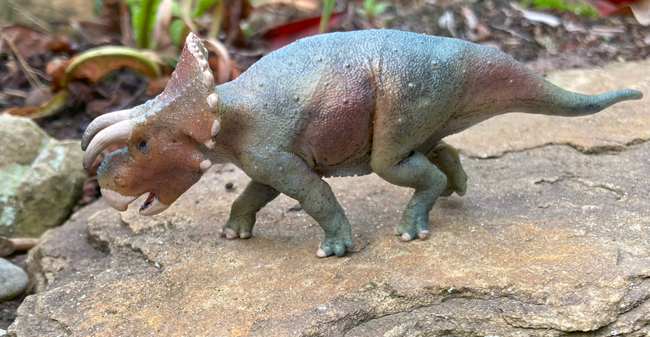
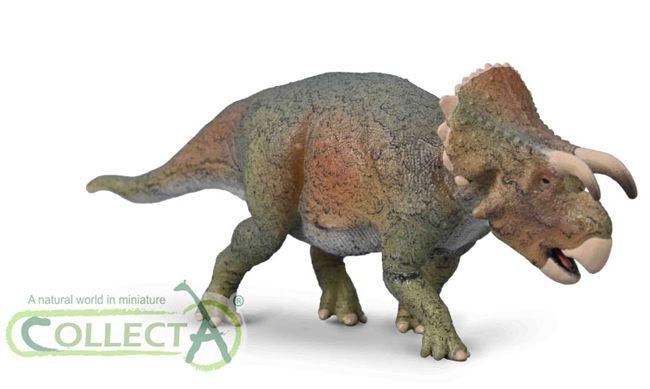
Everything Dinosaur team members took the opportunity to photograph delightful CollectA Furcatoceratops dinosaur model outdoors. This model represents Furcatoceratops elucidans. This dinosaur was scientifically described two years ago (Ishikawa et al). Its fossil remains come from the famous Judith River Formation of Montana. The holotype (NSM PV 24660) was first described ten years ago. The fossils were thought to represent the remains of an Averceratops (Averceratops lammersi). However, further study highlighted unique characteristics, and this led to the establishment of the Furcatoceratops genus.

The CollectA Furcatoceratops dinosaur model.

The CollectA Furcatoceratops dinosaur model shown in lateral view. Picture credit: Everything Dinosaur.

Picture credit: Everything Dinosaur

The CollectA Furcatoceratops Dinosaur Model

The model is relatively small.  It measures a little under eleven and a half centimetres long (four and half inches).  The CollectA Furcatoceratops might be small, but it has some amazing details.  Our photographs highlight the different textures on the animal’s body.  In addition, the images demonstrate that some of the scales are much larger than others.  This reflects what is known about ceratopsian integument that has been preserved in the fossil record.

CollectA Age of Dinosaurs Furcatoceratops model.

The CollectA Age of Dinosaurs Furcatoceratops model. Picture credit: Everything Dinosaur.

Picture credit: Everything Dinosaur

The stone provides an ideal display surface for our dinosaur model.

To view the range of CollectA Age of Dinosaurs figures in stock at Everything Dinosaur: CollectA Age of Dinosaurs Figures.

Mike from Everything Dinosaur commented:

“We took the opportunity of a break in the weather to take some photographs of our Furcatoceratops model outside.  It is a delightful figure of a ceratopsian.  CollectA have introduced numerous horned dinosaurs into their Age of Dinosaurs Popular range.  These dinosaur models help to demonstrate the incredible variety of North American Late Cretaceous ceratopsians.”

Visit the award-winning and customer friendly Everything Dinosaur website: Dinosaur Models and Toys.

26 01, 2025

Photographing the New for 2025 CollectA Furcatoceratops Figure

By |2025-01-29T07:34:26+00:00January 26th, 2025|Categories: CollectA Age of Dinosaurs Popular and CollectA Prehistoric Life Models|0 Comments

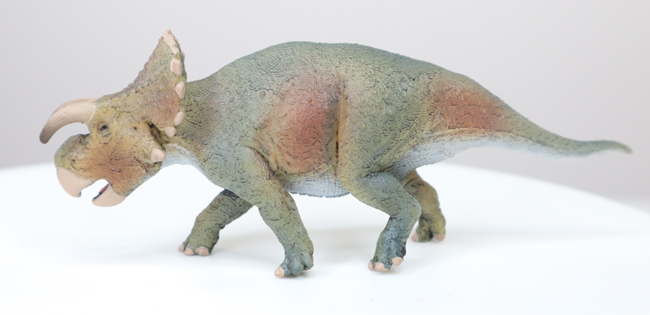
We have taken some photographs of the new for 2025 CollectA Furcatoceratops figure.  This horned dinosaur model is due to be in stock at Everything Dinosaur in a few weeks.  It is a replica of Furcatoceratops elucidans.  This dinosaur was formally named and described in 2023 (Ishikawa et al).

CollectA Furcatoceratops figure in lateral view.

The new for 2025 CollectA Furcatoceratops figure in left lateral view. Picture credit: Everything Dinosaur.

Picture credit: Everything Dinosaur

The New for 2025 CollectA Furcatoceratops Figure

The CollectA Furcatoceratops model is the only figure to be added to the CollectA Age of Dinosaurs Popular range this year (2025). The model measures eleven and half centimetres long.  The tip of the beautiful neck frill is four and half centimetres off the ground.  It is a fabulous horned dinosaur figure. Moreover, it will be in stock at Everything Dinosaur in a few weeks.

To view the range of CollectA Age of Dinosaurs Popular figures: CollectA Age of Dinosaurs Popular Models.

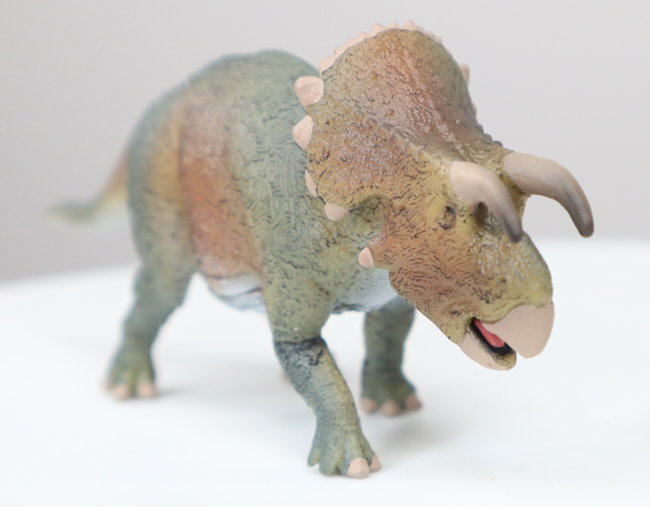
CollectA Furcatoceratops model shown in anterior view.

A close-up view of the new for 2025 CollectA Furcatoceratops figure. It is a new model in the CollectA Age of Dinosaurs Popular range. Picture credit: Everything Dinosaur.

Picture credit: Everything Dinosaur

Customers buying this new horned dinosaur figure will be provided with an Everything Dinosaur Furcatoceratops fact sheet.

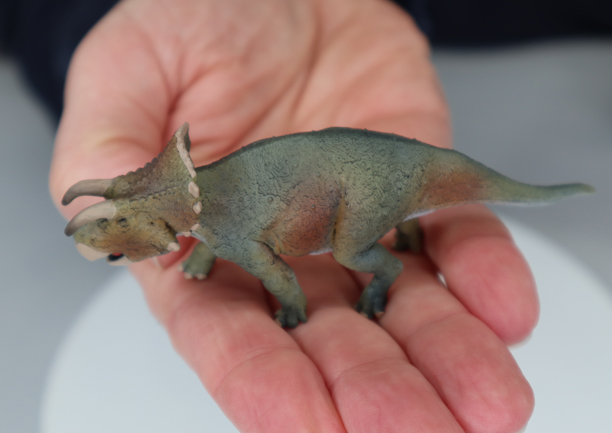
CollectA Furcatoceratops model held in the hand.

A dinosaur model in the hand. Picture credit: Everything Dinosaur.

Picture credit: Everything Dinosaur

Mike from Everything Dinosaur commented:

“We are looking forward to the arrival of this splendid horned dinosaur model.  It will be a welcome addition to the CollectA Age of Dinosaurs Popular range.”

Visit the award-winning Everything Dinosaur website: Dinosaur Toys.

14 12, 2024

A Unique Furcatoceratops Dinosaur Drawing

By |2024-12-25T12:48:07+00:00December 14th, 2024|Categories: CollectA Age of Dinosaurs Popular and CollectA Prehistoric Life Models|0 Comments

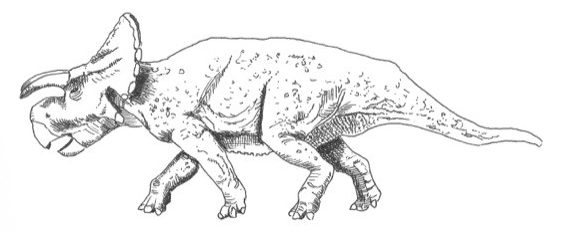
Everything Dinosaur has commissioned a Furcatoceratops dinosaur drawing for use in the company’s Furcatoceratops fact sheet.  The fact sheet is being created in preparation for the arrival of the new for 2025 CollectA Age of Dinosaurs Popular Furcatoceratops dinosaur model.  This is the only ceratopsian model being introduced by CollectA next year (2025).  This centrosaurine (Furcatoceratops elucidans) was formally described in 2023 (Ishikawa et al). Its fossils are associated with the famous Judith River Formation of Montana. The genus name translates as “forked horned face”.

Furcatoceratops dinosaur drawing.

A drawing of the recently described centrosaurine Furcatoceratops. Picture credit: Mike Fredericks.

Picture credit: Mike Fredericks

To read about the discovery of this horned dinosaur: Furcatoceratops – A New Centrosaurine.

Everything Dinosaur’s exclusive video review of the CollectA Age of Dinosaurs Popular Furcatoceratops figure: Furcatoceratops Images and a Video Review.

A Furcatoceratops Dinosaur Drawing

The Furcatoceratops illustration will be used to create a scale drawing.  It will be placed into the Everything Dinosaur Furcatoceratops fact sheet.  Readers will be able to see how big this horned dinosaur was. Furthermore, they can compare this ornithischian with other centrosaurine and chasmosaurine dinosaurs already in the CollectA Age of Dinosaurs Popular range.

The CollectA Age of Dinosaurs Popular Furcatoceratops model.

The CollectA Age of Dinosaurs Popular Furcatoceratops model.

Mike from Everything Dinosaur commented:

“We are expecting the CollectA Furcatoceratops model in the spring.  At the moment, an exact delivery date for the stock is not known.  However, we promise to keep dinosaur fans and model collectors informed.  The drawing will feature on our Furcatoceratops fact sheet.  These fact sheets will be sent out free of charge with the figure.  This is one way in which we try to educate and inform dinosaur fans about new dinosaur discoveries.”

CollectA are due to introduce seven models next year (2025).  The figures are a Giant Short-faced Bear, the huge eurypterid Jaekelopterus, Gallimimus, Maip macrothorax, Ingentia prima and Phorusrhacos.

To view the range of CollectA Age of Dinosaurs Popular figures in stock at Everything Dinosaur: CollectA Age of Dinosaurs Popular Figures.

8 11, 2024

New CollectA Models for 2025 – Part 2

By |2024-11-07T21:28:32+00:00November 8th, 2024|Categories: CollectA Age of Dinosaurs Popular and CollectA Prehistoric Life Models|2 Comments

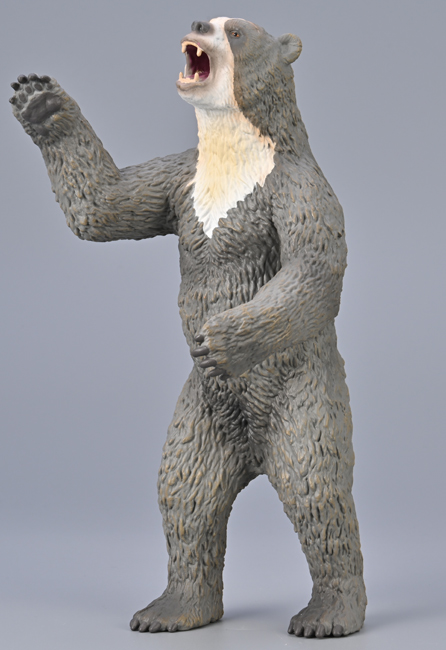
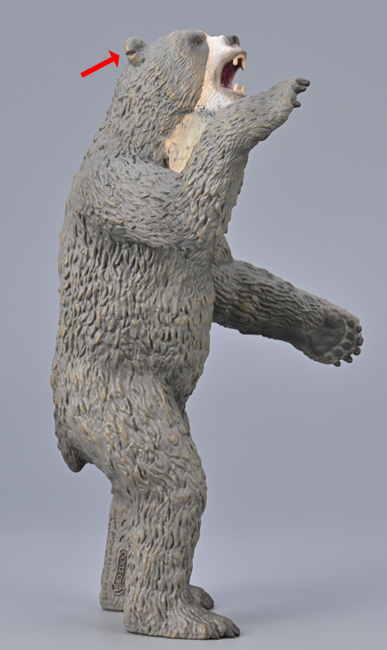
Today, we make a second announcement about new CollectA prehistoric animal models for 2025.  A CollectA Deluxe 1:20 scale giant short-faced bear model will be available next year.  CollectA seem to have listened carefully to the requests of model collectors, and as a result, they have made a replica of Arctodus simus.  We at Everything Dinosaur are not sure when this prehistoric bear figure will be available. Perhaps, we will be able to stock it in the spring.  CollectA have kindly sent us some exclusive images of this new Arctodus simus model.  We can share some of these images with you.

  • CollectA Deluxe 1:20 scale giant short-faced bear (Arctodus simus).
CollectA Deluxe Arctodus simus model.

The new for 2025 CollectA Deluxe giant short-faced bear (Arctodus simus). The figure has a stated scale of 1:20.

The CollectA Deluxe Arctodus simus Model

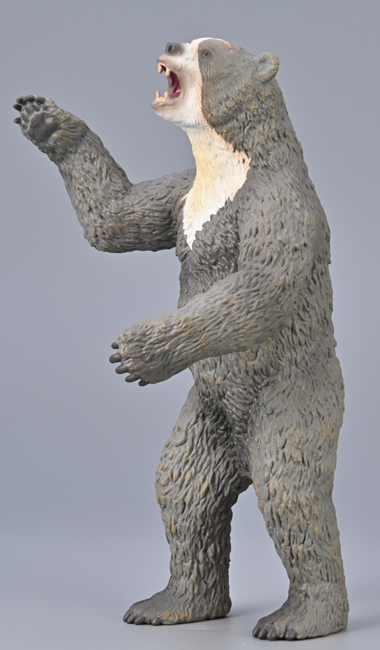
The CollectA Deluxe giant short-faced bear is depicted rearing up.  The engineering team should be congratulated as they have created quite a dynamic pose, whilst maintaining the model’s stability.  The figure represents a male, and that white flash on the chest is most distinctive.  The closest living relative to A. simus is the spectacled bear (Tremarctos ornatus).  It too, tends to have a lighter coloured chest compared to the rest of its body, which is mainly covered in black fur.

CollectA Deluxe giant short-faced bear (Arctodus simus).

The image of the CollectA Deluxe 1:20 scale A. simus shows the distinctive short snout of this genus. The figure has a disproportionately short snout compared to extant bears within the Ursinae subfamily (polar bear, black bear, brown bear).

The figure has a disproportionately short snout compared to most living bears.  Hence the common name for this taxon – the giant short-faced bear.

To view the range of CollectA Deluxe prehistoric animal models in stock: CollectA Deluxe Prehistoric Life Figures.

The Giant Short-faced Bear

This giant bear inhabited North America during the Pleistocene Epoch. It had an extensive range. Fossils of A. simus have been found as far south as Mexico and in Canada. Once thought to be almost entirely carnivorous, it is likely that, like most extant bears, it was omnivorous. The CollectA model represents a male. Males were much larger than the females. The largest specimens stood nearly 1.7 metres high at the shoulder and would have weighed nearly a tonne.  When rearing up, a large male could stand around three and a half metres tall.

Isotope analysis of fossil teeth and bones suggests that this bear browsed on vegetation.  However, it also consumed other animals such as deer and tapirs.  Large males probably chased predators off their kills, allowing these big animals to feed on the carcase.  The white flash on the face, neck and chest of the CollectA model would have helped to intimidate both diurnal and nocturnal hunters allowing the bear to take over the kill.

CollectA Arctodus simus model.

The CollectA design team have provided some nice touches of detail on this model. For example, a small fleshy pad can be seen below the left paw. This is the “false thumb” associated with the sesamoid bone. This feature is found in the living member of the Tremarctinae subfamily – the spectacled bear (Tremarctos ornatus). The red arrow points to a torn ear.

The CollectA Arctodus simus Model and the “False Thumb”

The CollectA figure shows lots of detail such as the “false thumb” just below the main pad of the paw.  This hard pad marks the location of the radial sesamoid bone in the wrist.  This anatomical trait is seen in the spectacled bear and also in the distantly related giant panda.  The CollectA figure has a torn right ear (as indicated by the red arrow in the image).

A spokesperson from Everything Dinosaur confirmed that this figure would be in stock next year (2025), but at this time they were not sure when.

Our thanks to CollectA for sending us these fantastic photographs of their new Arctodus simus model.

Visit the award-winning Everything Dinosaur website: Prehistoric Animal Models and Toys.

1 11, 2024

New CollectA Models for 2025 – Part 1

By |2024-11-01T14:51:56+00:00November 1st, 2024|Categories: CollectA Age of Dinosaurs Popular and CollectA Prehistoric Life Models|0 Comments

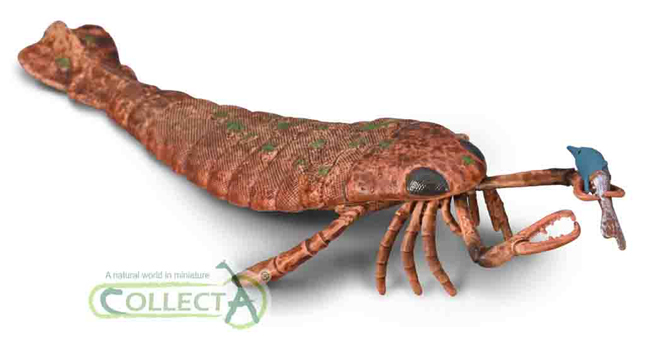
Everything Dinosaur in collaboration with CollectA reveal two new prehistoric animal models for 2025. A new horned dinosaur – Furcatoceratops and an eurypterid.  The eurypterid is a replica of the giant “sea scorpion” Jaekelopterus (J. rhenaniae).

  • CollectA Age of Dinosaurs Popular Furcatoceratops.
  • CollectA Deluxe 1:20 scale Jaekelopterus rhenaniae.
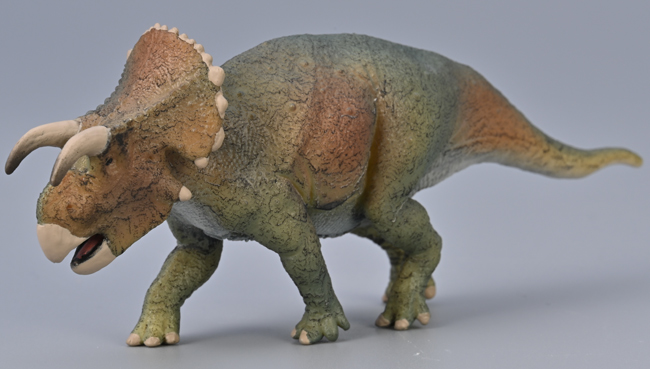
The CollectA Age of Dinosaurs Popular Furcatoceratops model.

The CollectA Age of Dinosaurs Popular Furcatoceratops model.

At this time, we are not certain when these two CollectA prehistoric animal models will be in stock at Everything Dinosaur.  However, we estimate that they might be available in the spring (2025).

New for 2025 the CollectA Jaekelopterus model in 1:20 scale.

New for 2025 a scale model of Jaekelopterus rhenaniae.

New CollectA Prehistoric Animal Models (Part 1)

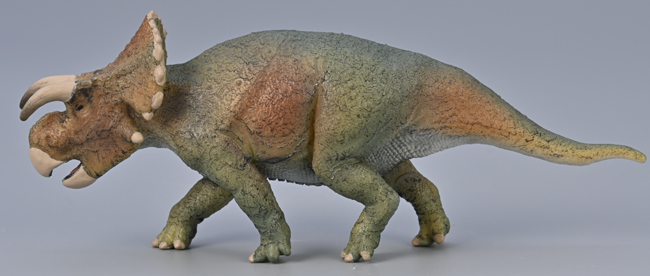
Furcatoceratops (pronounced Fur-kat-toe-sera-tops), is the latest horned dinosaur addition to the Age of Dinosaurs Popular range.  CollectA have been keen to highlight the great variety and diversity of North American ceratopsians.  Furcatoceratops (F. elucidans) joins other centrosaurines in this range such as Nasutoceratops, to which it was closely related.  It was formally named and described in 2023 (Ishikawa et al). Its large brow horns curved sharply downwards, and these have been carefully depicted in this new CollectA figure.

CollectA Age of Dinosaurs Furcatoceratops.

The new for 2025 CollectA Furcatoceratops model shown in lateral view.

The fossil material comes from the famous Judith River Formation of Montana.  The predominantly green-coloured body contrasts nicely with the carefully painted head in the images of a prototype CollectA kindly provided.

To read Everything Dinosaur’s 2023 blog post about Furcatoceratops elucidansFurcatoceratops – A New Centrosaurine.

CollectA Age of Dinosaurs Furcatoceratops dinosaur model.

The model has different-sized epoccipital bones lining the frill. This layout reflects the known fossil material.

Detailed Epoccipitals

The picture (above) shows the beautiful frill of Furcatoceratops more clearly.  The epoccipitals (bones lining the frill) are not all uniform and the same size.  This arrangement of epoccipitals reflects what is seen in the holotype fossil material.

It has been estimated that Furcatoceratops grew to about 4 metres in length.  This could mean a model of around ten centimetres in length with an approximate scale of 1:40.

To view the range of CollectA Age of Dinosaurs Popular figures in stock: CollectA Prehistoric Life Figures.

The CollectA Deluxe Jaekelopterus rhenaniae

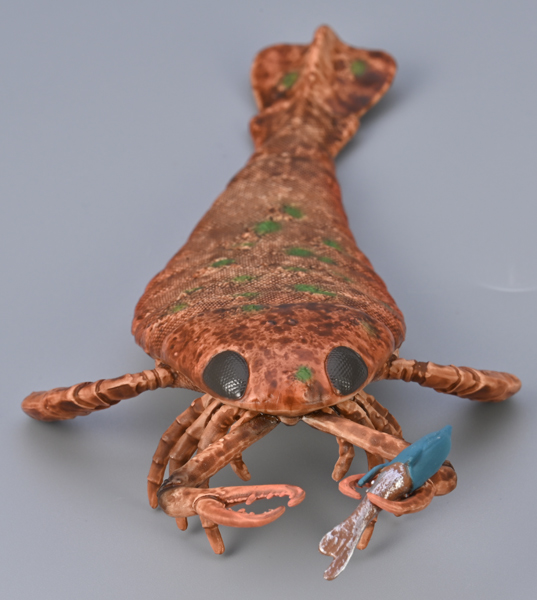
CollectA have gained a reputation for creating wonderful replicas of prehistoric invertebrates.  Collectors have been after an eurypterid figure for years, and CollectA have delivered. The CollectA model represents Jaekelopterus rhenaniae (Yak-kel-op-ter-us ren-an-ee-aye), one of the largest arthropods to have ever lived.

The CollectA Deluxe 1:20 scale Jaekelopterus with prey.

The Jaekelopterus figure is holding a jawless fish in its huge claw (chelicera).

The prototype images provided by the manufacturer show some amazing details.  For example, the figure has large, compound eyes and dorsal ocelli (light-sensitive organs) located on the top of the head.  Remarkably, CollectA have been able to include a small replica of a jawless fish.  Jaekelopterus rhenaniae was probably the apex predator in the Early Devonian waterways of what was to become Germany.

It probably hunted primitive fish. The fish prey represents a generic jawless agnathan.  It is probably based on a group of prehistoric fish called Pteraspidiformes.  This was one of the last times in our planet’s history that an invertebrate was top of the food chain hunting vertebrates.

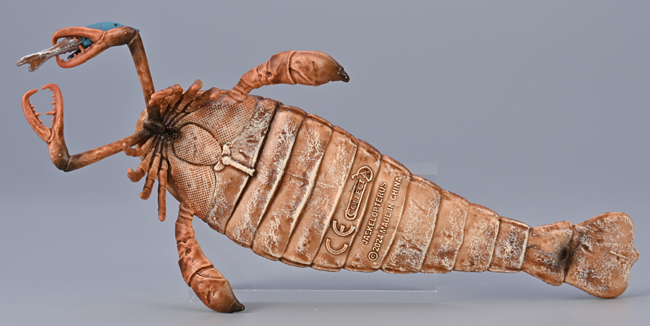
The model is predominantly a mottled brown but with patches of green on it.  When the underside of the model is viewed (see below), there are no green patches.

The underside of the CollectA Jaekelopterus figure.

A view of the underside of the Jaekelopterus model.  The reproductive organ can be seen as can the vent in the pretelson. The mouth parts have been carefully reconstructed along with the appendages.

The absence of any green colouration on the underside suggests that the green patches depict algae growing on the exoskeleton.  It is likely that algae did grow on this large predator as it lurked in the water ready to ambush its next victim.  The limbs were too weak to support this animal on land so, it was probably entirely aquatic.  The algae would benefit this predator. It would have helped to camouflage it.

We believe the CollectA Deluxe Jaekelopterus figure will be approximately sixteen centimetres in length.  At this size it would fit with an approximate scale of 1:20.

To view the range of CollectA Deluxe figures available from Everything Dinosaur: CollectA Deluxe Prehistoric Animal Figures.
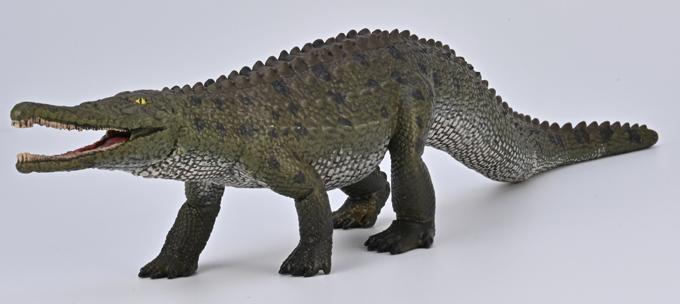
A spokesperson from Everything Dinosaur thanked the manufacturer for providing the additional images.  It is likely that these two CollectA prehistoric animal figures will be in stock in the spring of 2025 or thereabouts.

Hopefully, more new CollectA prehistoric animals next Friday.

Visit the Everything Dinosaur award-winning website: Dinosaur and Prehistoric Animal Models.

27 05, 2024

The Remarkable Beauty of Ammonite Models

By |2024-06-13T18:48:53+01:00May 27th, 2024|Categories: Bullyland Prehistoric Animal Figures, CollectA Age of Dinosaurs Popular and CollectA Prehistoric Life Models, Dinosaur Fans, Everything Dinosaur Products|0 Comments

Ammonite models provide fossil hunters with an opportunity to illustrate their ammonite fossil collections with a replica of the actual animal.  There have been several ammonite figures introduced in recent years.  They have certainly captured the imagination of fossil enthusiasts and model collectors.  Professional palaeontologists have found them useful too.  At Everything Dinosaur, we also supply ammonite models to schools, universities, museums and to people involved in science communication.

The Bullyland ammonite model next to a polished section of an ammonite fossil.

The Bullyland ammonite model is often used in museum displays to depict the living animal next to fossil material. Picture credit: Everything Dinosaur.

Picture credit: Everything Dinosaur

The picture (above) shows an ammonite model next to a polished ammonite fossil.  The ammonite replica is from the Bullyland range of prehistoric animal figures.  It was one of the first replicas of an ammonite to be made by a mainstream model manufacturer.

To view the Bullyland range: Bullyland Prehistoric Animal Models and Figures.

Describing Ammonite Models

Ammonite models are detailed replicas that provide an example of a typical ammonite.  There are hundreds of ammonite genera.  It would not be possible to create a figure to represent every single species.  However, the replicas that do exist provide a helpful and informative representation of these extinct cephalopods.  The models are meticulously designed to replicate the intricate details of the original fossils.

Most ammonite genera had planispiral shells. However, throughout the course of their long evolutionary history these remarkable cephalopods evolved a huge variety of shell forms.

The CollectA Age of Dinosaurs range contains a replica of an ammonite with a planispiral shell. The genus is Pleuroceras.  In addition, CollectA have included an example of a heteromorphic ammonite in their model range. The genus is Pravitoceras.

CollectA Pleuroceras ammonite model.

CollectA Age of Dinosaurs Popular Size Pleuroceras ammonite model.

The CollectA Pravitoceras figure is extremely detailed, and it depicts an ammonite with an irregularly coiled shell.

CollectA Pravitoceras model.

The colourful heteromorph ammonoid model – CollectA Pravitoceras.

To view the CollectA Age of Dinosaurs model series: CollectA Age of Dinosaurs Models.

The Significance of Ammonite Replicas

Ammonite figures have gained popularity amongst fossil collectors.  The models are placed next to fossils to provide a visual clue to what these marine creatures actually looked like.  Ammonite models are used in museum exhibits too.  These figures provide a tangible representation of an extinct animal.  Furthermore, these figures can be used to help with scientific communication and outreach work.  Their robust form enables them to stand up to lots of handling from inquisitive children.  These replicas often evoke a sense of awe and wonder.

A spokesperson from Everything Dinosaur confirmed that the company supplied a large number of these figures.

The spokesperson added|:

“Ammonite models provide an affordable way to demonstrate what these long extinct creatures looked like.  The vast majority of fossils we have represent just the shell.  The creature lived in the last segment of the shell and the models help to bring ammonites back to life.”

Visit the award-winning Everything Dinosaur website: Dinosaur Models and Toys.

13 05, 2024

The New CollectA Nanuqsaurus – Stalking Dinosaur Model

By |2024-05-16T13:54:42+01:00May 13th, 2024|Categories: CollectA Age of Dinosaurs Popular and CollectA Prehistoric Life Models|0 Comments

Everything Dinosaur team members are looking forward to receiving the new CollectA Nanuqsaurus – stalking dinosaur model.  This figure is expected to be in stock later in the year.  The model is part of the CollectA Age of Dinosaur Popular range.  This range of not-to-scale figures features over a hundred prehistoric animals.

The CollectA Nanusaurus - stalking.

The new for 2024 CollectA Age of Dinosaurs Popular Nanuqsaurus -stalking dinosaur model in lateral view.

The CollectA Nanuqsaurus – Stalking Figure

This new theropod dinosaur model measures a fraction under sixteen centimetres in length. It has been carefully crafted and represents Nanuqsaurus hoglundi. This dinosaur was formally named and described in 2014 (Fiorillo and Tykoski).

To read Everything Dinosaur’s blog post from 2014 announcing N. hoglundiAn Update on the New Arctic Tyrannosaur.

The name translates as “Polar Bear Lizard”. The binomial name being derived from the Greek and also the local dialect of the Alaskan Inuit people. The fragmentary fossils, including elements from the skull come from the famous Prince Creek Formation of Alaska.

To view the CollectA Age of Dinosaurs Popular range at Everything Dinosaur: CollectA Age of Dinosaurs Popular Models.

Honouring the Inuit People of Alaska

The holotype fossils represented an animal around five to six metres in length. However, subsequent fossil finds such as isolated teeth indicate that Nanuqsaurus could grow much bigger. An overall body length of around nine metres has been proposed. This would make the size of the polar dinosaur Nanuqsaurus comparable with other Late Cretaceous tyrannosaurs known from lower latitudes.  It is likely that Nanuqsaurus was a permanent resident of the Arctic.  It was probably the apex predator in the palaeoenvironment.

A team member from Everything Dinosaur confirmed that they were expecting this new Age of Dinosaurs Popular figure in stock later in the year (2024).

Visit the user-friendly website of Everything Dinosaur: Dinosaur Toys and Models.

Go to Top