Favourite and Most Popular Blogs of 2025 (Part 2)
Yesterday, we reviewed our blog articles covering the period January to June 2025. Today, we examine the Everything Dinosaur blog posts that went live over the second part of the year.
To read the first part of our weblog review: Favourite and Most Popular Blog Posts of 2025 (Part 1).
In July, the countdown towards the UK’s first dinosaur convention (DinoCon) began in earnest. Spinosaurs from the Iberian Peninsula were highlighted. In addition, a new herrerasaurian dinosaur from India was described (Maleriraptor kuttyi) and we updated American customers on U.S. tariffs.
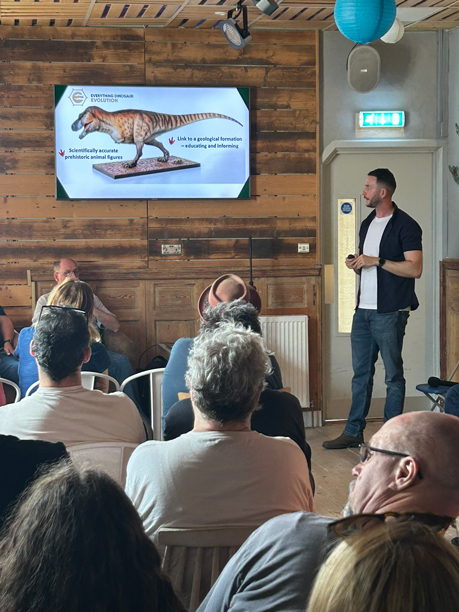
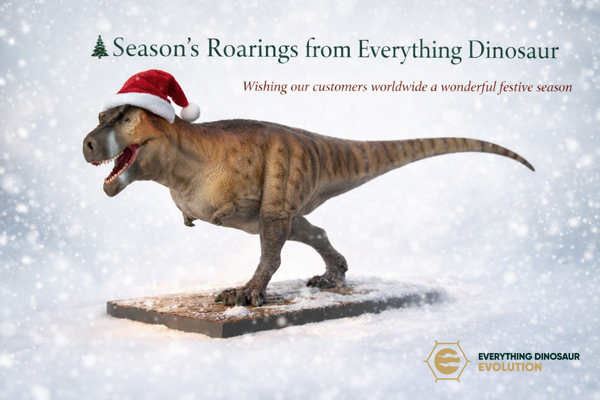
We looked at new books, new Nanmu Studio models and welcomed the return of the Rebor Komodo dragon model. Pre-ordering began for our first dinosaur model the Everything Dinosaur Evolution T. rex. Also in July, researchers described a new species of Triassic pterosaur. Eotephradactylus mcintireae and it represents North America’s oldest known pterosaur.
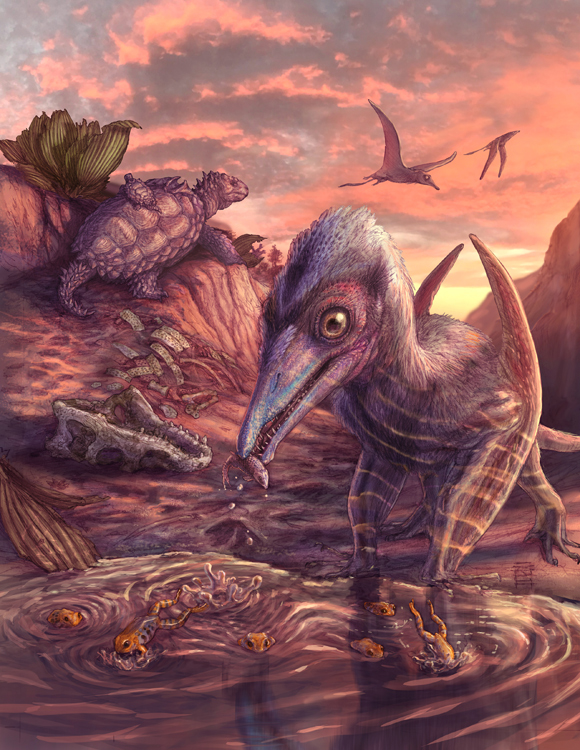
North America’s oldest pterosaur described to date Eotephradactylus mcintireae disturbs some frogs whilst catching a ray-finned fish. An early turtle is seen in the background, and the bones of an armoured crocodilian are visible. Picture credit: Brian Engh.
Picture credit: Brian Engh
DinoCon, New Dinosaur Discoveries and Marine Reptiles Too
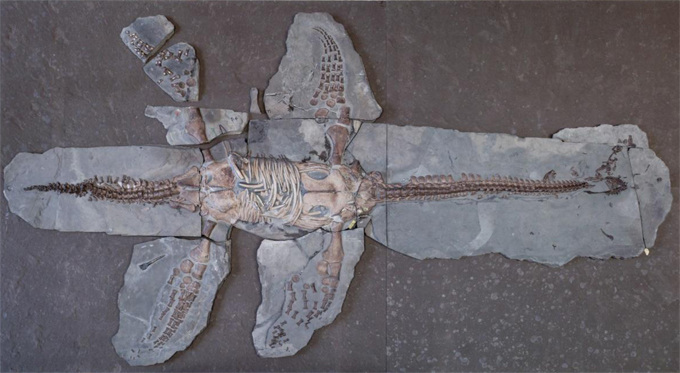
It was a very hot August. However, our warehouse was cool, and we blogged about the suppleness of sauropod tails, PNSO figures and the environmentally friendly packaging we were developing for the Everything Dinosaur Evolution range. Marine reptile fans learned about a newly described plesiosaur from the Posidonia Shale deposits of Germany (Plesionectes longicollum). In addition, a giant ichthyosaur fossil was discovered in Australia and a sail-backed ornithopod from the Wessex Formation was described.
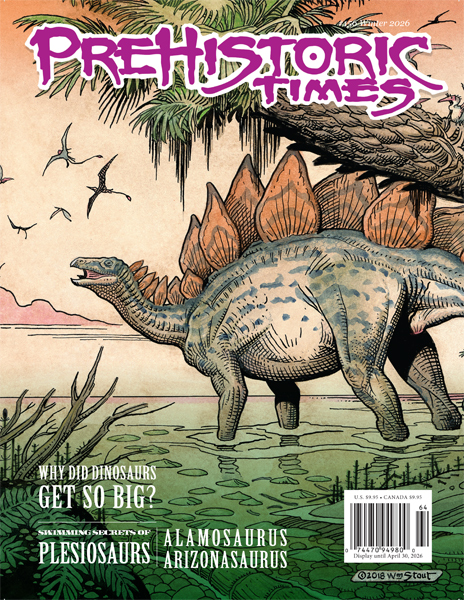
Everything Dinosaur examined a “punk rock dinosaur” – Spicomellus afer and had our Everything Dinosaur Evolution T. rex model featured in “Prehistoric Times” magazine.
We were thrilled to be able to take part in the inaugural DinoCon, it was hard work but lots of fun.
To read more about DinoCon 2025: DinoCon – A Fantastic Success.
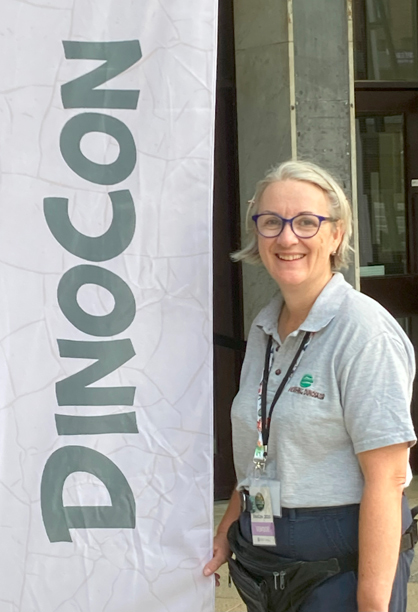
Sue at DinoCon 2025. A huge thank you to all the organisers, helpers, volunteers, security, vendors, medical staff and everyone else who helped to make DinoCon 2025 such an incredible success. Picture credit: Everything Dinosaur.
Picture credit: Everything Dinosaur
Spicomellus, Surprising Dinosaurs and Solving a Pterosaur Mystery in September.
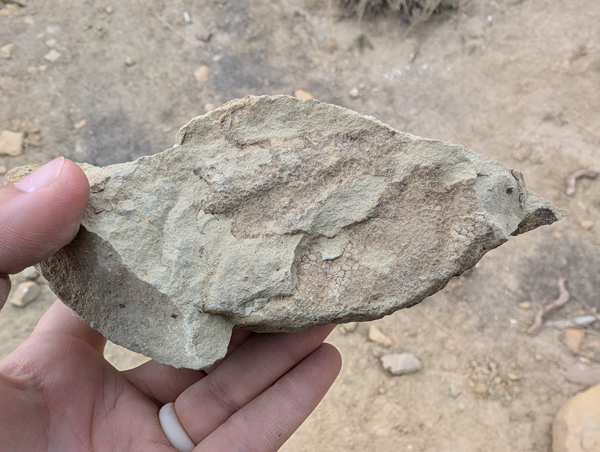
September brought cooler weather and an array of fascinating articles. A study into the oldest insect infestation known was published and the armour of Spicomellus afer was reconstructed. We got down in the grass with grasshoppers, explored eurypterids and welcomed new Haolonggood figures. The Gobi Desert gave us a new pachycephalosaur species (Zavacephale rinpoche) and we mourned the loss of American palaeontologist Mark Norell. A dinosaur fan sent us an Everything Dinosaur animation and we learned about a new Patagonian megaraptor (Joaquinraptor casali).
A highlight for us was the article that explained how two juvenile Pterodactylus fossils helped researchers solve a puzzle about the Solnhofen deposits.
To read more about this pterosaur mystery: Juvenile Pterodactylus Fossils Solve Solnhofen Mystery.
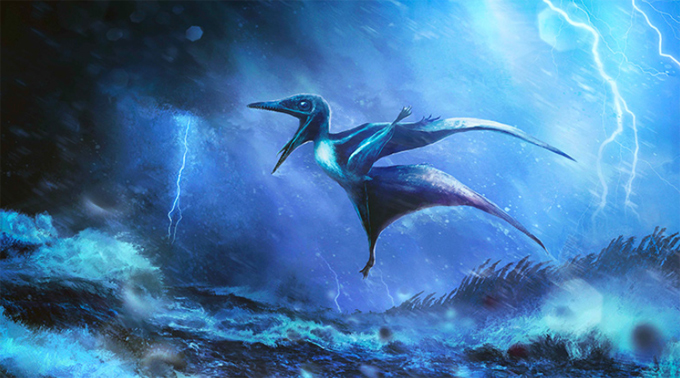
A hatchling Pterodactylus caught in a storm. Picture credit: Rudolf Hima.
Picture credit: Rudolf Hima
The Everything Dinosaur Blog in October Featured a new Dorset Ichthyosaur
Everything Dinosaur started October with a bang! We were nominated for two prestigious business awards. Haolonggood sauropods featured along with the newly arrived Beasts of the Mesozoic Cyberzoic figures. A rare fossil find from Scotland provided clues to the evolution of snakes and lizards. In addition, our chum Dr Dean Lomax published a paper on new ichthyosaur from the “Jurassic Coast” of Dorset (Xiphodracon goldencapensis), and his new book was published! We reported upon a recently described theropod from the Wales and we kept tabs on pre-orders for the Everything Dinosaur Evolution T. rex. Newsletters, bronze statues and dinosaur drawings all featured.
However, our favourite post concerned the introduction of a digital product passport for the Everything Dinosaur Evolution T. rex. It is the first dinosaur model in the world to incorporate this new technology. It provides customers with unprecedented access to product information.
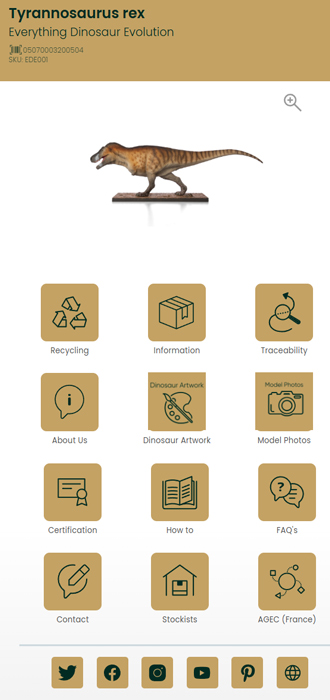
A view of the Everything Dinosaur Evolution T. rex digital product passport. Picture credit: Everything Dinosaur.
Picture credit: Everything Dinosaur
To view the award-winning and innovative Everything Dinosaur Evolution T. rex models: Everything Dinosaur Evolution Tyrannosaurus Figures.
No Let Up in November on the Everything Dinosaur Blog
CollectA announced new prehistoric animal figures in November. We got our teeth into early tetrapod jawbones and recalled our tour of the London Natural History Museum gardens. Haolonggood Sauroposeidon models featured along with the new Rebor Beelzebufo ampinga figures. Everything Dinosaur won an award and the link between Koalas and “marsupial lions” was explained. A film company visited our warehouse and flew a drone fitted with a camera. The Nanotyrannus taxon was confirmed. Everything Dinosaur reported on the study that confirmed beyond all reasonable doubt of the presence of a second tyrannosaur taxon in the Hell Creek Formation.
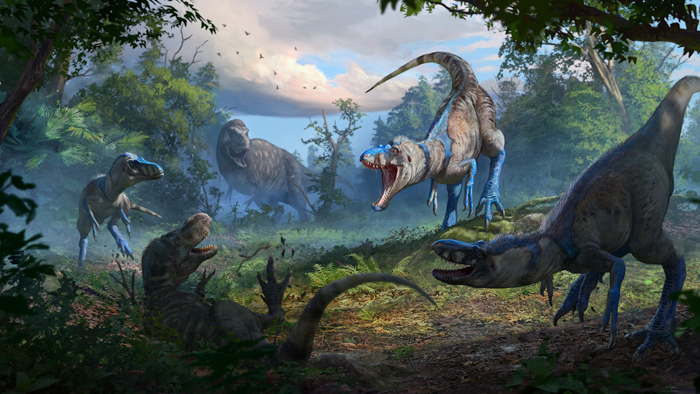
A pack of Nanotyrannus attacks a juvenile T. rex. Picture credit: Anthony Hutchings
Picture credit: Anthony Hutchings
To read about the Nanotyrannus study: Nanotyrannus is Confirmed.
December Blog Posts
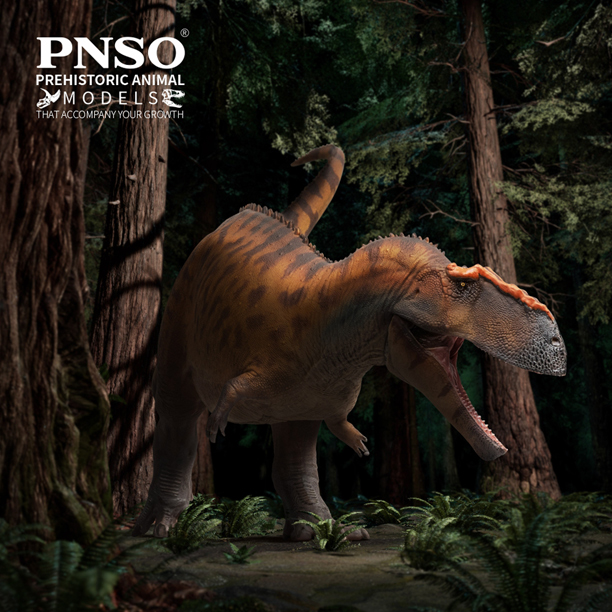
December provided bumper sales for Everything Dinosaur. However, we still made time to publish blog posts. We reviewed new Rebor figures, looked forward to the arrival of the PNSO Taurovenator figure and published rare photographs of the Nanotyrannus dig site from 1942. Our customer service was praised, and we reported upon remarkable “drop crocs” from Australia.
A new video featuring the Everything Dinosaur Evolution T. rex was published along with a new paper reinforcing the validity of Nanotyrannus. We also received our four-hundredth 5-star Google review!
We celebrated the tenth anniversary of the arrival of the Tristan T. rex skeleton at the Museum für Naturkunde Berlin, examined the impact of our partnership with an Australian technology company and received a badge for our website highlighting our successful collaborations with local businesses.
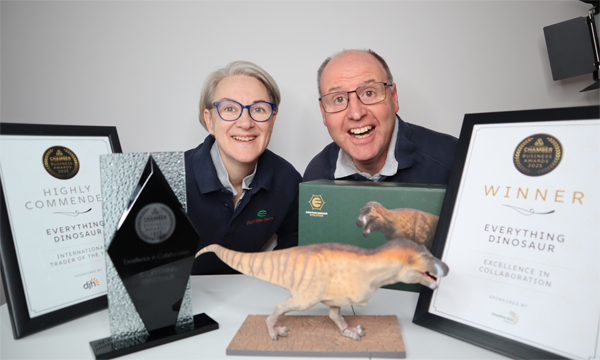
Sue and Mike from Everything Dinosaur with their numerous awards. The company won the Excellence in Collaboration award and received Highly Commended for their international sales. Picture credit: Everything Dinosaur.
Picture credit: Everything Dinosaur
Thus, we conclude our two-part series reviewing some of the highlights from our blog this year. What exciting discoveries, product updates and fossil finds will we cover in 2026?
The multi-award-winning website of Everything Dinosaur: Prehistoric Animal Figures and Dinosaurs.