All about dinosaurs, fossils and prehistoric animals by Everything Dinosaur team members.

Important and influential figures in science or from other related areas concerning dinosaurs and prehistoric animals.

28 11, 2026

Celebrating the Famous Peruvian Palaeontologist Mario Urbina

By |2026-11-13T14:55:33+00:00November 28th, 2026|Categories: Famous Figures|0 Comments

The remarkable discoveries made by Peruvian palaeontologist Mario Urbina, have helped scientists understand the extraordinary diversity of prehistoric cetaceans. For decades, he has explored fossil-rich sediments in southern Peru, documenting ancient whales and other marine vertebrates. His dedicated fieldwork has contributed significantly to our knowledge of Cenozoic marine ecosystems.  Furthermore, he has inspired a new generation of South American palaeontologists.

Mario Urbina is a field palaeontologist and senior researcher associated with the Natural History Museum of the National University of San Marcos in Lima (Peru). His work has helped establish Peru as one of the world’s most important regions for studying the evolution of prehistoric whales.
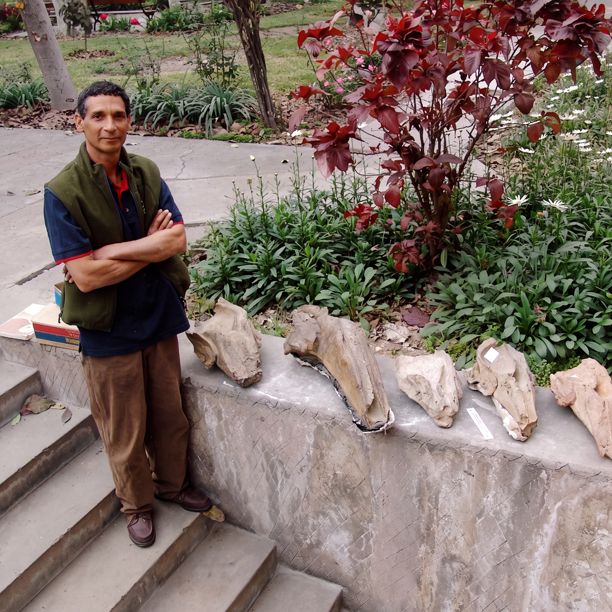
Veteran Peruvian palaeontologist Mario Urbina in 2001. Mario Urbina palaeontologist extraordinaire!

Veteran Peruvian palaeontologist Mario Urbina in 2001 at the Museo de Historia Natural, Universidad Nacional Mayor de San Marcos (UNMSM) in Lima, Peru, alongside several Scaphokogia skulls shortly after mechanical preparation (removal of the rock matrix) and years prior to their formal scientific description. Urbina originally discovered the holotype of S. huachafo during pioneering surveys in Sacaco in the mid-1990s. Picture credit: Aldo Benites-Palomino.

Picture credit: Aldo Benites-Palomino

Exploring the Hugely Significant Pisco Basin

The Pisco Basin of southern Peru preserves an extraordinary record of prehistoric marine life. Its Cenozoic sediments have yielded numerous fossil whales, dolphins, seals, seabirds and other marine animals. According to his ResearchGate biography, Mario Urbina has spent thirty years investigating the geology and palaeontology of these ancient marine deposits.

His fieldwork has led to the discovery of previously unknown species and important new fossil localities. Furthermore, his expertise has supported international research projects investigating the evolution of marine mammals. For example, he was a co-author of the recently published study describing the bizarre, prehistoric pygmy sperm whale Scaphokogia huachafo.

To read an article summarising the scientific paper: A Remarkable Late Miocene Pygmy Sperm Whale.

Mario Urbina and the Discovery of Fearsome Livyatan

One of the most spectacular prehistoric whales discovered in Peru is Livyatan melvillei. Scientists formally described this enormous predatory sperm whale in 2010, with Mario Urbina among the authors of the scientific paper. Unlike living sperm whales (Physeter macrocephalus), Livyatan possessed enormous functional teeth in both its upper and lower jaws. These formidable teeth suggest that this giant predator hunted large marine vertebrates, potentially including other whales.

Everything Dinosaur’s blog post from 2010 announcing the discovery of Livyatan: Fearsome Whale from Prehistory.

The discovery of Livyatan provided compelling evidence of the remarkable diversity of predatory whales that inhabited Miocene seas.

PNSO Requena the Livyatan model

The PNSO Requena the Livyatan prehistoric whale model.

The picture (above) shows the head and jaws of a model of the giant predatory whale Livyatan (L. melvillei).  This Livyatan model is part of the range of PNSO prehistoric animal models.

To view this range: PNSO Prehistoric Animal Figures.

The Extraordinary Discovery of Perucetus colossus

Another remarkable fossil discovery associated with Mario Urbina is the enormous prehistoric whale Perucetus colossus. In 2010, whilst exploring ancient marine sediments in southern Peru, Mario discovered unusual fossil bones. These remains belonged to an immense basilosaurid whale that lived approximately 39 million years ago, during the Eocene Epoch.

The fossil bones were exceptionally large and dense. Indeed, some vertebrae weighed more than 100 kilogrammes. An international team of researchers subsequently described Perucetus colossus in the scientific journal Nature in 2023. Once again, Mario Urbina was among the co-authors.

Initial estimates suggested that this prehistoric whale might have rivalled or even exceeded the blue whale in body mass. However, subsequent research has challenged these estimates, and scientists continue to debate just how heavy Perucetus was.

Everything Dinosaur reported on this extraordinary discovery in August 2023.

To read our article: Giant Whale from Peru – Possibly One of the Heaviest Animals Known to Science.

The discovery of Perucetus colossus demonstrates the importance of Mario Urbina’s dedicated fieldwork. His discoveries have helped scientists investigate the evolution of whales over tens of millions of years.

Peruvian Palaeontologist Mario Urbina Encourages the Next Generation of Earth Scientists

Mario Urbina’s contribution to palaeontology extends far beyond his fossil discoveries. Working alongside fellow researcher Rodolfo Salas-Gismondi, he helped establish the Department of Vertebrate Palaeontology at the Natural History Museum in Lima. Furthermore, Mario has expressed his enthusiasm for supporting students and encouraging scientific collaboration between researchers in Peru and other countries.

Such contributions are essential for developing palaeontology. Experienced field researchers help identify promising fossil sites, document important specimens and share their knowledge with future generations.

Celebrating Decades of Remarkable Fossil Discoveries

The recent scientific description of the extraordinary prehistoric pygmy sperm whale Scaphokogia huachafo provides another reminder of the remarkable fossil record preserved in southern Peru. From the enormous predatory sperm whale Livyatan melvillei to the gigantic Eocene whale Perucetus colossus, discoveries associated with Mario Urbina have helped transform our understanding of prehistoric marine mammals.
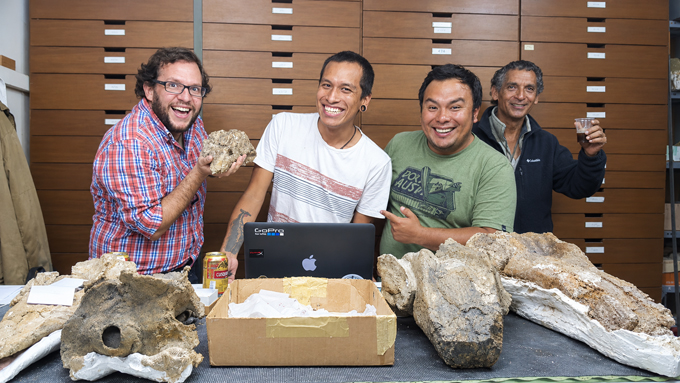
Celebrating the arrival of the prehistoric pygmy sperm whale fossils back at the preparation lab.

Left to right: Dr. Jorge Velez-Juarbe (Curator of Marine Mammals, Natural History Museum of Los Angeles County), Aldo Benites-Palomino, Rafael Varas-Malca, and celebrated Peruvian palaeontologist Mario Urbina in 2016 in the Department of Vertebrate Paleontology at the Museo de Historia Natural (Lima, Peru) examining fossil marine mammal specimens from the Pisco Formation. Picture credit: Aldo Benites-Palomino / Jorge Velez-Juarbe.

Picture credit: Aldo Benites-Palomino / Jorge Velez-Juarbe

At Everything Dinosaur, we recognise the tremendous contribution made by dedicated field palaeontologists such as Mario Urbina.

His enthusiasm, expertise and commitment to scientific discovery have helped advance Peruvian palaeontology. Furthermore, his willingness to support students and encourage international collaboration will help inspire future generations of scientists.

The extraordinary fossils of the Pisco Basin still have many stories to tell, and researchers such as Mario Urbina have played an essential role in bringing these prehistoric animals to the attention of the world.

Everything Dinosaur acknowledges the assistance of Dr Aldo Marcelo Benites Palomino and the University of Zurich in the compilation of this article.

The scientific paper describing Scaphokogia huachafo: “Extreme cranial asymmetry in extinct benthic feeding sperm whales” by Aldo Benites-Palomino, Marcelo R. Sánchez-Villagra, Florencia Paolucci, Jorge Vélez-Juarbe, Alberto Collareta, Apolline Alfsen, Alton Dooley, Dan Omura, Mario Urbina, Rodolfo Salas-Gismondi and Gabriel Aguirre-Fernández published in Communications Biology.

The award-winning Everything Dinosaur website: Models of Prehistoric Animals.
12 11, 2026

Major Evolution Study Delivers Powerful Evidence Supporting Darwin’s Theory

By |2026-11-10T11:56:34+00:00November 12th, 2026|Categories: Famous Figures|0 Comments

A major new study from the University of Bath has found no evidence that important genes receive special protection from mutations, challenging claims that scientists need to rewrite our established understanding of evolution. This study suggests there is no need to amend Darwin’s theory of evolution. The research, published today (12th November, 2026), in the journal “PLOS Biology”, represents the largest analysis of its kind. Scientists examined spontaneous mutations in two microorganisms: the bacterium Escherichia coli (E. coli) and baker’s yeast (Saccharomyces cerevisiae).

Dr Sofia Radrizzani and Professor Laurence D Hurst, from the University of Bath’s Centre for Evolution, led the research. Their findings challenge a long-standing proposal that natural selection might reduce mutation rates in genes that perform essential functions.

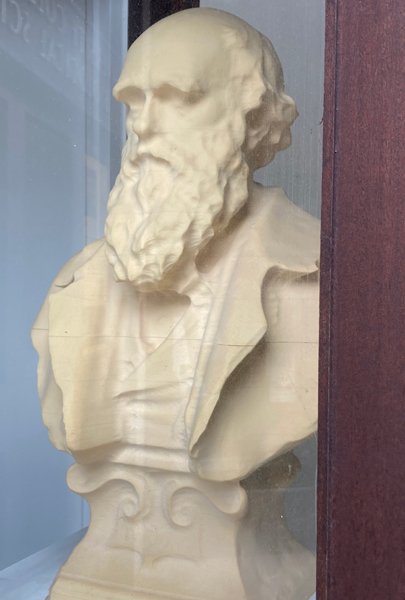
Sir Charles Darwin bust.

The Sir Charles Darwin bust on display at the Darwin Building of the Wellcome Trust in London. New research provides further evidence to support the fundamental principles of Darwin’s theory of evolution. Picture credit: Everything Dinosaur.

Picture credit: Everything Dinosaur

The researchers found no evidence to support this idea, providing further backing for the conventional understanding of how evolution works.

How Does Darwin’s Theory of Evolution Work?

Charles Darwin’s theory of evolution describes how natural selection influences the characteristics of populations over successive generations. Evolution is traditionally understood as a two-stage process. First, mutations generate genetic variation within populations. Natural selection then acts on that variation, favouring characteristics that improve an organism’s chances of survival and reproduction under particular environmental conditions.

Darwin’s famous observations of finches on the Galápagos Islands in 1835 provide a useful illustration. Different finch species possess differently shaped beaks, allowing them to exploit different food sources. Random genetic mutations generate variation, while environmental conditions influence which characteristics give individuals a reproductive advantage. Over many generations, natural selection can make advantageous traits more common within a population.

Darwin's theory of evolution supported by the different shaped bills found in finch species on the Galapagos Islands.

Although probably descended from a common ancestor, over time, different finch species on the Galapagos archipelago evolved differently shaped beaks, allowing them to exploit a wide variety different food sources on the resource depleted islands. Picture credit: Everything Dinosaur (with AI assistance).

Picture credit: Everything Dinosaur with assistance from AI

The famous book: The Origin of Species (Full Title).

However, some scientists have questioned whether mutations occur randomly across the genome. They have suggested that organisms might protect important genes from mutations while allowing genes that could help them adapt to environmental changes to mutate more frequently. For example, genes involved in DNA replication and essential cellular processes might receive protection, while mutations affecting other genes could help bacteria develop antibiotic resistance.

The new University of Bath research challenges this proposal.

The Problem with Protecting Essential Genes

At first glance, the idea of protecting important genes from mutations might seem logical. Mutations affecting essential genes can cause serious problems, potentially damaging the organism or preventing a cell from surviving. However, the researchers identified theoretical difficulties with this proposal.

Gene mutation rates are already extremely low. Reducing them further in individual genes would provide only a small additional benefit. This makes it difficult to explain how natural selection could favour biological mechanisms that specifically protect particular genes from mutations.

The researchers also highlighted a problem with earlier studies: natural selection can remove harmful mutations before scientists have an opportunity to identify them.

Professor Hurst described these missing changes as “ghost mutations”.

He added:

“We’d expect natural selection to rapidly remove mutations when they occur in more important genes, because these mutations are more likely to be harmful to the organism. This can create the illusion that important genes have fewer mutations when, in reality, some mutations have simply disappeared before we have a chance to analyse them – what you can think of as ‘ghost mutations’.”

Mutations affecting essential genes are more likely to damage an organism. Natural selection can therefore remove affected individuals or cells from a population, making those mutations harder to detect in subsequent studies. This process could create the misleading impression that important genes experience fewer mutations, even when their original mutation rates remain unchanged.

Scientists Investigate ‘Ghost Mutations’

To address this problem, the research team examined data from mutation accumulation experiments involving E. coli and baker’s yeast (Saccharomyces cerevisiae). Scientists design these experiments to minimise the influence of natural selection, allowing mutations to accumulate over successive generations. This approach gives researchers a clearer picture of how frequently different parts of the genome experience mutations.

The team conducted three separate tests to establish whether natural selection had significantly distorted the results. All three tests supported the reliability of the data.

Dr Radrizzani described the resulting dataset as the largest and cleanest collection of mutations assembled to date. The researchers then investigated whether essential genes really did experience lower mutation rates.

They compared mutation frequencies with experimental evidence showing what happens when scientists remove individual genes. Some genes are essential for survival, meaning that their removal kills the cell. Other genes can disappear without producing a significant effect. The team found no evidence that essential genes mutated less frequently in either E. coli or baker’s yeast.

Professor Hurst explained that the researchers found no support for the proposed relationship, regardless of how they analysed the data.

What Other Factors Influence Mutation Rates?

The scientists also examined alternative ways of measuring the importance of individual genes. These included the amount of protein a cell produces from a particular gene and the strength of natural selection acting on that gene over evolutionary timescales. Neither measure predicted lower mutation rates.

Genes that produce more abundant proteins did not experience fewer mutations. Similarly, the evolutionary history of a gene did not reliably indicate how frequently it mutated. However, the researchers did identify structural features of the genome that influence mutation rates. For example, genes that DNA replication machinery copies later during the replication process tend to experience more mutations.

This finding highlights how the physical organisation and activity of the genome can influence genetic variation.

No Need to Rewrite Darwin’s Theory of Evolution

The University of Bath study provides important evidence against the suggestion that natural selection protects essential genes by reducing their mutation rates. The researchers found no support for this proposed mechanism in either of the two microorganisms they investigated. Although the study identified known influences on mutation rates, none supported the claims that have challenged the conventional understanding of evolution.

Darwin highlights the Quagga to explain variation: The Extinct Quagga Helps to Explain the Laws of Variation.

Professor Hurst concluded that the findings provide no grounds for a fundamental change in the established evolutionary paradigm. The research reinforces the importance of distinguishing between the generation of genetic variation through mutation and the subsequent influence of natural selection.  It seems there is no need to modify Darwin’s theory of evolution, not for the time being anyway.

Understanding how these processes interact remains central to evolutionary biology, helping scientists investigate how organisms adapt, diversify and respond to changing environments.

Everything Dinosaur acknowledges the assistance of a media release from the University of Bath in the compilation of this article.

The scientific paper: “The importance of genes does not predict their mutation rate” by S. Radrizzani and L. D. Hurst published in PLOS Biology.

The award-winning Everything Dinosaur website: Models of Prehistoric Animals.

14 09, 2026

An Inspiring Journey into Palaeontology with Jessica Lippincott

By |2026-09-13T17:58:19+01:00September 14th, 2026|Categories: Famous Figures|0 Comments

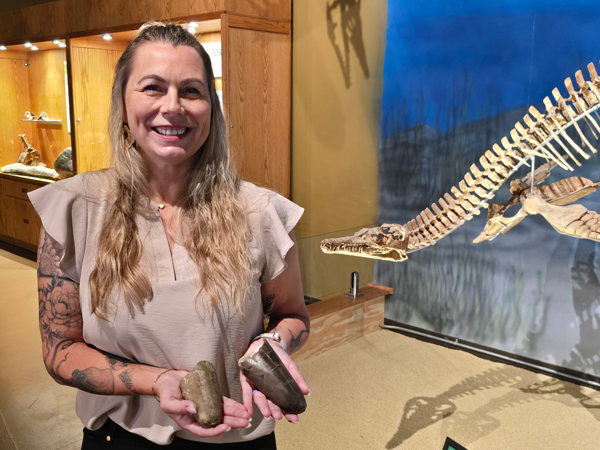
Female palaeontologist Jessica Lippincott did not grow up planning a career studying fossils. In fact, her remarkable journey into palaeontology began almost by accident. Everything Dinosaur recently reported on the scientific description of the unusual, chunky Jurassic belemnite Wyoteuthis linsterorum. Jessica was one of the researchers involved in the study. Therefore, we asked the Wyoming-based palaeontologist to tell us more about her career.

Wyoming palaeontologist Jessica Lippincott holding the holotype and the paratype specimens of Wyoteuthis linsterorum.

Wyoming palaeontologist, Jessica Lippincott, holding both specimens of the “chunky” belemnite Wyoteuthis linsterorum. Picture credit: Courtesy of Jessica Lippincott.

Picture credit: Courtesy of Jessica Lippincott

An Unexpected Introduction to Palaeontology

Jessica’s interest in palaeontology began when she was at high school. She initially applied for a summer job working with an archaeologist at the Bureau of Land Management. However, that position had already been filled. Instead, she learned about an opening at the Tate Museum in Casper, Wyoming. The job involved working as a palaeontology technician.

Jessica explained:

“At the time, I didn’t really have a big interest in dinosaurs or fossils, so I reluctantly took the job. Within two weeks of working, I was hooked and obsessed!”

That unexpected opportunity ultimately shaped her career.

Jessica continued working at the Tate Museum before moving to the Wyoming Dinosaur Center in Thermopolis. Over the years, she has excavated sites across Wyoming. Much of her fieldwork has focused on the Sundance and Morrison formations.

In 2014, Jessica became Executive Director of the Big Horn Basin Foundation. Later, in 2017, she became Education Director at the Wyoming Dinosaur Center.

“Look! Belemnites!”

Ironically, Jessica never imagined that belemnites would become an important part of her research. These squid-like cephalopods are familiar fossils in Wyoming. Jessica recalls seeing them more than thirty years ago. Indeed, finding them became something of a running joke with fellow researcher Bill Wahl.

Whenever she encountered one in the field, she would enthusiastically announce:

“Look! Belemnites!”

However, the fossils that eventually became associated with Wyoteuthis were different.

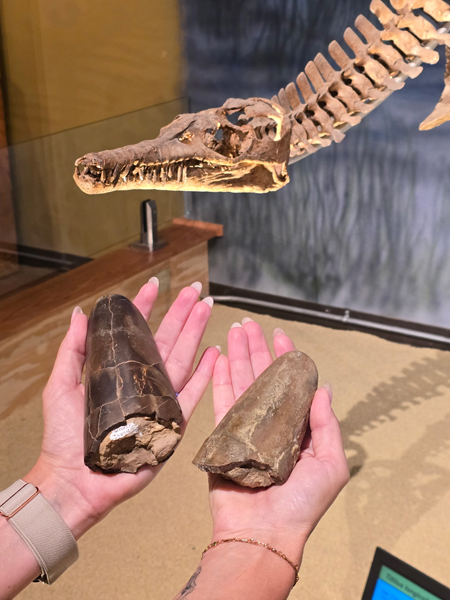
Jessica immediately recognised the potential importance of the first specimen. A large belemnite had reportedly been discovered previously at Como Bluff, but that specimen had been lost. Crucially, the researchers now had two specimens available for scientific study.

The two Wyoteuthis fossil specimens (rostra) found to date.

Photo of Wyoteuthis linsterorum holotype on left, paratype on right. Picture credit: Courtesy of Jessica Lippincott.

Picture credit: Courtesy of Jessica Lippincott

Researching Wyoteuthis

The research team brought together considerable expertise. Alexey Ippolitov contributed his knowledge of belemnite distribution. Bill Wahl provided expertise concerning the Sundance Sea, while Dr Dean Lomax contributed his knowledge of marine reptiles and palaeoenvironments. Jessica recalled that the researchers suspected they might have a new species. However, the fossils proved even more intriguing than expected.

Scanning of the holotype and paratype demonstrated that they were not cylindroteuthidids, the belemnites normally associated with Wyoming’s Sundance Sea. Instead, they represented a relict branch of the Megateuthididae. Until this discovery, this belemnite family was absent from the known fossil record of Wyoming’s Sundance Sea.

To read our blog post about the discover of Wyoteuthis linsterorum: A New “Chunky” Belemnite from Wyoming.

Everything Dinosaur and Why Dinosaurs?

Jessica’s connection with Everything Dinosaur goes back several years. She was the executive producer of the documentary “Why Dinosaurs?”, a project exploring people’s enduring fascination with these prehistoric animals.

Everything Dinosaur sponsored the UK leg of the documentary’s promotional tour. Consequently, Mike and Sue had the opportunity to meet Jessica when she visited Britain.

Everything Dinosaur sponsors a new dinosaur documentary.

Everything Dinosaur was proud to be a sponsor of a new dinosaur documentary entitled “WHY DINOSAURS?”. Female palaeontologist Jessica Lippincott was the executive producer. Picture credit: Everything Dinosaur.

Picture credit: Everything Dinosaur

Commenting on Jessica’s contribution to the study of Wyoteuthis linsterorum, Mike from Everything Dinosaur stated:

“We congratulate Jessica and her colleagues on their fascinating research into this remarkable ‘chunky’ belemnite. It is wonderful to see such an extraordinary fossil being scientifically described. We wish Jessica every success with her career and look forward to hearing about her future palaeontological adventures.”

It is wonderful to see Jessica continuing to contribute to palaeontology through research, education and science communication. Her career also demonstrates how a seemingly chance opportunity can completely change someone’s direction.

From reluctantly accepting a summer job to helping describe remarkable Jurassic fossils, Jessica Lippincott’s story provides an inspiring example of where curiosity and enthusiasm for science can lead.

The multi-award-winning Everything Dinosaur website: Museum Quality Models of Prehistoric Animals.
9 09, 2026

Pioneering Palaeontologist Dorothea Bate Honoured with National Blue Plaque

By |2026-09-09T07:31:39+01:00September 9th, 2026|Categories: Famous Figures|0 Comments

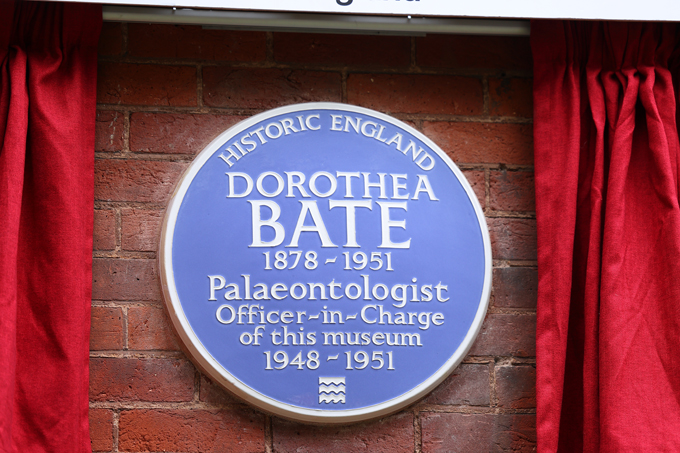
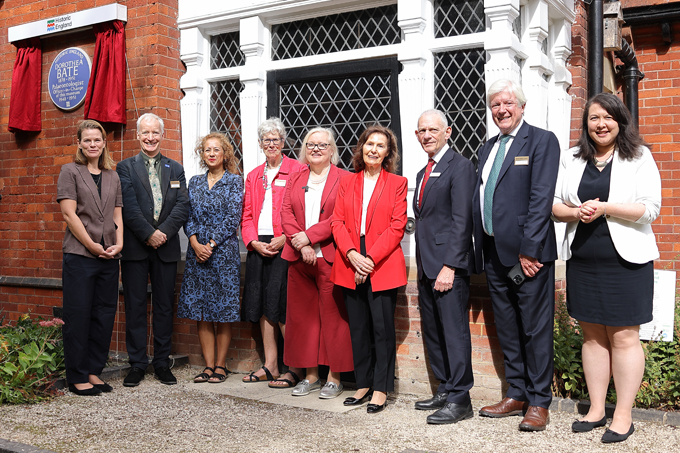
A Dorothea Bate blue plaque has been unveiled at the Natural History Museum at Tring (Hertfordshire). The plaque celebrates one of Britain’s most remarkable fossil hunters. Furthermore, it recognises a pioneering woman who helped transform our understanding of prehistoric animals and life on Earth.

Dorothea Bate (1878–1951) was a palaeontologist and archaeozoologist. She discovered extinct species across the Mediterranean. In addition, her research helped establish the foundations of modern archaeozoology. Archaeozoology is the scientific study of the remains of animals found at archaeological sites.

Commemorating the contribution of Dorothea Bate to science with a blue plaque.

The newly unveiled blue plaque commemorating the contribution of Dorothea Bate. © Historic England. Shared by HE Comms.

Picture credit: © Historic England. Shared by HE Comms

Everything Dinosaur welcomes this recognition of an important scientist. The company has long championed the contribution made by women to palaeontology and the Earth Sciences.

Mike from Everything Dinosaur commented:

“Everything Dinosaur has always championed the contribution of women to palaeontology and the Earth Sciences. Dorothea Bate was a remarkable scientist and an inspirational fossil hunter. This blue plaque provides a fitting opportunity to celebrate her achievements. It also highlights the vital contribution women have made, and continue to make, to our understanding of the history of life on Earth.”

Indeed, we often commemorate the role of women in science on International Women’s Day which is celebrated annually on March the 8th.

Celebrating the role of female scientists (2020): Women in Science on International Women’s Day.

Honouring women in science (2022): Celebrating International Women’s Day – 2022.

Dorothea Bate – A Remarkable Fossil Hunter

Dorothea Bate was born in Carmarthen, Wales, in 1878. She developed a fascination with natural history at an early age. She received little formal education. Instead, she largely taught herself through observation, research and fieldwork. As a young woman, she explored the Gloucestershire countryside and caves searching for fossils. In 1900, Bate travelled to the Natural History Museum in London. She approached museum staff and asked for work behind the scenes. Her determination paid off. She became an assistant and began an association with the institution lasting more than half a century.

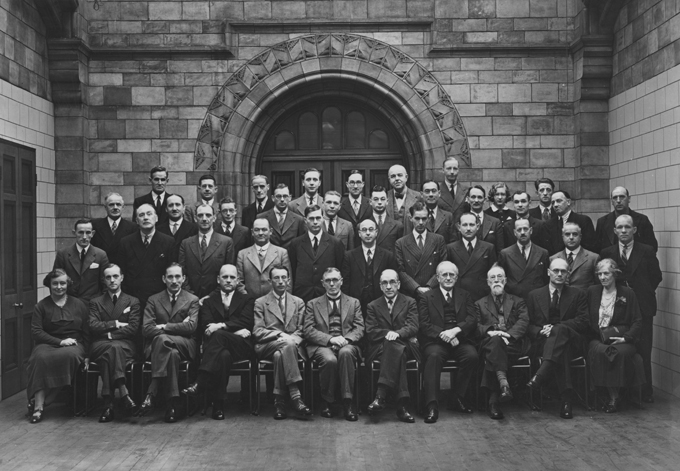
The Natural History Museum Geology Department (1938).

Natural History Museum Geology Department. Dorothea Bate is sat in the front row to the far right. Picture credit: From the Library and Archives, NHM London. Shared by Cordelia Porter.

Picture credit: From the Library and Archives, NHM London. Shared by Cordelia Porter

Remarkably, she published her first scientific paper in 1901.

Bate subsequently undertook expeditions throughout the Mediterranean. Often travelling alone, she explored remote caves looking for evidence of prehistoric animals.

In Cyprus, she discovered a previously unknown dwarf elephant. Later, while working in the Balearic Islands, she discovered Myotragus. This extraordinary extinct animal has been described as a goat-like antelope.

To read our article from 2009 about some remarkable research: Myotragus – The Goat That Behaved Like a Reptile.

Her fieldwork could be extremely challenging. Bate crossed difficult terrain carrying a relatively simple collection kit. Nevertheless, she recovered fossils that would make an enormous contribution to science.

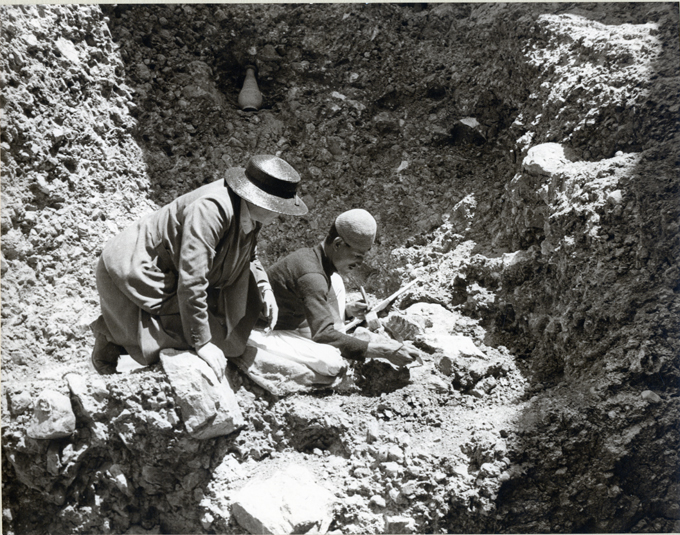
Dorothea working at a dig site.

Dorothea on a dig. Picture credit: From the Library and Archives, NHM London. Shared by Cordelia Porter.

Picture credit: From the Library and Archives, NHM London. Shared by Cordelia Porter

Understanding Ancient Animals and Environments

Later in her career, Bate worked closely with archaeologists. She studied animal remains recovered from ancient cave sites. As a result, she helped pioneer the modern science of archaeozoology.

Importantly, she recognised that changes in animal communities could provide evidence about past environments. Her research helped scientists understand how climatic changes affected wildlife and early human populations. During the Second World War, Bate transferred to the Natural History Museum at Tring. In 1948, she became Officer-in-Charge, a senior role in the organisation. She was responsible for managing and displaying the museum’s collections.

Her scientific achievements were substantial. Dorothea Bate published more than eighty scientific papers. However, she spent much of her career without a permanent paid position.

Dorothea Bate with Sir Temi Zammit (Museum Director) & Dr. Joseph Baldacchino (Curator of Natural History) at the National Museum, Valletta. Malta.

Dorothea Bate with Sir Temi Zammit (Museum Director) & Dr. Joseph Baldacchino (Curator of Natural History) at the National Museum, Valletta. Malta. Picture credit: © National Museum of Archaeology/Heritage Malta. Shared by HE Comms.

Picture credit: © National Museum of Archaeology/Heritage Malta. Shared by HE Comms

Championing Women in the Earth Sciences and the Dorothea Bate Blue Plaque

Bate’s achievements become even more remarkable when considered in their historical context. Opportunities for women in science were extremely limited during much of her career. She was one of the first women to work at the Natural History Museum. Consequently, her success helped demonstrate the enormous contribution women could make to palaeontology and natural history.

Dr Sandra Knapp, Director of Research at the Natural History Museum, highlighted how the role of female scientists in natural history has often been overlooked. She explained that Bate’s research on fossil mammals was innovative and helped establish a path for others.

Dr Knapp explained:

“The role of women scientists in natural history is often hidden – but Dorothea Bate’s work with fossil mammals was both innovative and set a path for others, despite obstacles.”

The national blue plaque helps ensure that Dorothea Bate receives greater recognition.

The Dorothea Bate blue plaque is unveiled.

Staff and officials attending the unveiling ceremony. © Historic England. Shared by HE Comms.

Picture credit: © Historic England. Shared by HE Comms

Everything Dinosaur believes highlighting pioneers such as Bate is important. Women now make vital contributions across palaeontology, geology, evolutionary biology and the wider Earth Sciences. Moreover, recognising scientists from the past can inspire the scientists of the future.

Dorothea Bate combined curiosity, determination and formidable field skills. Her fossil discoveries continue to have scientific importance. More than seventy years after her death, her influence remains.

The national blue plaque at Tring provides a fitting tribute to an exceptional scientist and fossil hunter. It also celebrates a woman who helped pave the way for generations of scientists who followed her.

Everything Dinosaur acknowledges the assistance of a media release from Historic England and email correspondence with the media team at the London Natural History Museum in the compilation of this article.

8 05, 2026

Happy 100th Birthday Sir David Attenborough

By |2026-05-04T14:58:31+01:00May 8th, 2026|Categories: Famous Figures|0 Comments

Today, May the 8th (2026), is the 100th birthday of the naturalist, broadcaster and author Sir David Attenborough. Many happy returns Sir David. For many of us, indeed for most of us, Sir David has always been there. His voice and storytelling have shaped how we understand the natural world. I have grown up with Sir David Attenborough; he has been a constant throughout my life. I clearly remember the seminal series “Life on Earth” being broadcast in 1979. It was groundbreaking at the time, and it remains influential today.

I also recall watching the series on cryptozoology narrated by Sir David Attenborough.  It was entitled “Fabulous Animals”, and it was a BBC children’s television series.  The programme demonstrated his unique ability to inspire curiosity, even when discussing the unknown.

On a personal note, I have had the privilege to correspond with Sir David. One of my most treasured possessions is a signed photograph that he kindly sent to me. It serves as a lasting reminder of his generosity and the impact he has had on so many lives.

Sir David Attenborough.

Still enthusing about the Natural World.  Many happy returns Sir David.

Happy 100th Birthday Sir David Attenborough

Over the decades, Sir David has achieved something truly remarkable. He has brought the natural world into our homes with clarity and authority. In addition, his work has consistently highlighted the fragility of ecosystems. As a result, millions of people have developed a deeper appreciation for biodiversity and conservation.

Importantly, his passion extends beyond living species. His interest in deep time and prehistoric life is equally compelling. This was clearly demonstrated in “Lost Worlds, Vanished Lives”. It was a four-part documentary series aired in 1989 that explored fossils.  Consequently, Sir David helped audiences understand extinction, evolution, and the vast timescales involved in our planet’s history.

In addition, he has explored the Dinosauria on numerous occasions. Notably in a 2016 documentary examining huge sauropod fossils found in Argentina: Attenborough and the Giant Dinosaur.

The fossils were later assigned to a new species of titanosaur – Patagotitan mayorum.

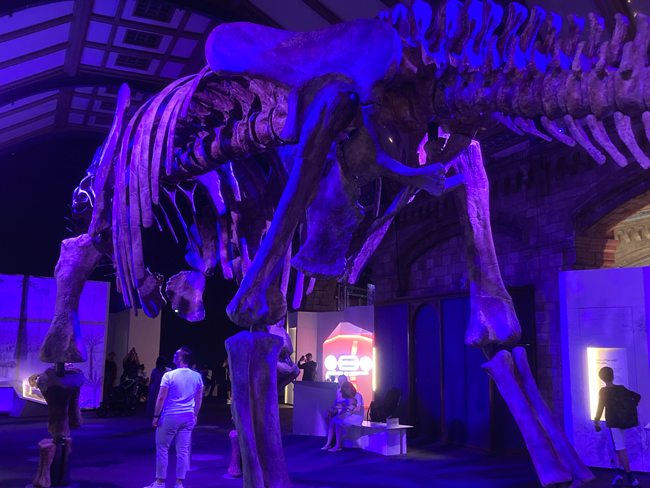
Patagotitan skeleton on display at the London Natural History Museum.

The enormous body of the titanosaur (Patagotitan mayorum) towers over visitors. Picture credit: Everything Dinosaur.

Picture credit: Everything Dinosaur

Other prehistoric animal themed projects associated with this gifted broadcaster include the first two series of “Prehistoric Planet”. He narrated both series. In addition, the television series “First Life” that was broadcast in 2010.

Many Happy Returns

Today, as we celebrate his 100th birthday, it is fitting to reflect on his extraordinary legacy. His work has not only educated but also motivated action. Through his storytelling, he has encouraged us all to take responsibility for the natural world.

Therefore, we thank Sir David Attenborough. His contribution to science communication and conservation is unparalleled. His influence will undoubtedly continue for generations to come.

Many happy returns Sir David.

14 09, 2025

The Legacy of Mark Norell and His Dinosaur Discoveries

By |2025-09-15T22:00:28+01:00September 14th, 2025|Categories: Famous Figures|0 Comments

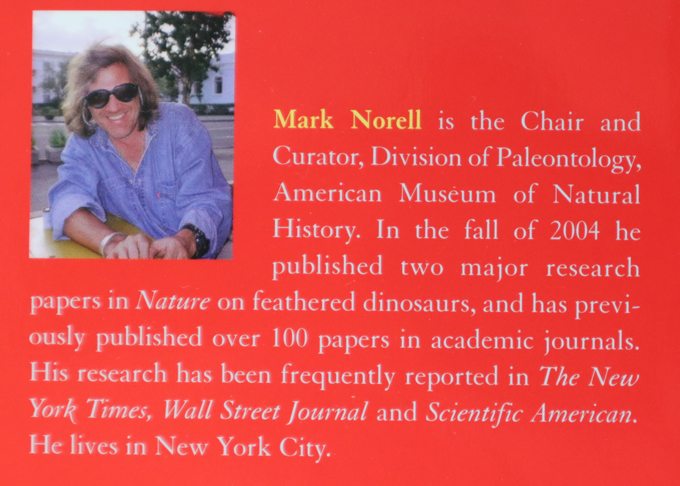
It was with great sadness that we learned of the passing of palaeontologist Mark Norell last week.  Mark was research associate and chairman of palaeontology at the American Museum of Natural History. His contribution to the science of palaeontology was immense, he will be dearly missed.  We contacted the American Museum of Natural History in New York and enquired about an obituary.  Kendra Snyder (Assistant Director of Science Communication), explained that they had worked closely with The New York Times, and an obituary had been published this weekend.

Mark had been suffering from ill health for some time.  He continued to pursue a number of projects, for example he was the scientific advisor to PNSO. The palaeontological community is in mourning.  He was a visionary scientist with a gift for communication.  His research forever changed our perception of the Dinosauria. Norell’s impact was most noticeable in the study of feathered theropod dinosaurs. His work inspired countless students and researchers around the world.

Palaeontologist Mark Norell July 26th 1957 to September 9th 2025

Palaeontologist Mark Norell who sadly passed away last week. We first came across the work of this remarkable palaeontologist when we were sent a copy of the book “Unearthing the Dragon”. Picture credit: Everything Dinosaur.

Picture credit: Everything Dinosaur

Palaeontologist Mark Norell

He was at the forefront of research into feathered dinosaurs in the 1990s.  He worked closely with several notable Chinese palaeontologists helping to document the remarkable fossils unearthed in Liaoning Province. Through meticulous study of oviraptorids, troodontids, and other theropods, he provided compelling evidence that feathers, nests, and brooding behaviours evolved deep within Dinosauria.

Mark Norell’s passing leaves a void, but his legacy endures in every fossil exhibit, in every student he inspired, and in every new discovery shaped by his work. He showed us that dinosaurs were far more dynamic, complex, and bird-like than once imagined. His contributions will continue to resonate for generations.

He wrote or co-authored numerous books.  For example, we were sent a copy of “Unearthing the Dragon”, a book documenting Mark’s adventures exploring the amazing fossils of Liaoning Province.  The book, co-written with Mick Ellison provided a personal account of his work in China.

“Unearthing the Dragon”

“Unearthing the Dragon” was one of the first books about dinosaurs that we were sent.  We were not surprised when Mark became the scientific advisor to PNSO.  He leaves behind an amazing body of work, Sue and I would like to express our condolences to Mark’s family, his work colleagues and to those many fortunate people who regarded him as a friend.

8 05, 2025

Happy Birthday Sir David Attenborough

By |2025-05-08T09:13:11+01:00May 8th, 2025|Categories: Famous Figures|0 Comments

Many happy returns Sir David Attenborough. The acclaimed naturalist and broadcaster celebrates his ninety-ninth birthday today.  Ninety-nine times around the sun, that is something to celebrate.  On this special day for the country, we dedicate today’s blog post to a national treasure.

Sir David Attenborough.

Still enthusing about the natural world and still campaigning and raising awareness about global conservation efforts.

Happy Birthday Sir David Attenborough

Sir David’s energy and enthusiasm for the natural world shows no sign of diminishing despite him being just twelve months short of his centenary.

A regular presenter and contributor to British television programmes since the 1950s, Sir David’s adventures continue to inspire. His insights into our amazing planet and the natural world have inspired generations of wildlife lovers and champions of conservation. He remains one of the most influential campaigners for and advocate of conservation in the world.

Happy birthday Sir David, may you continue to inspire and educate.

12 02, 2025

Happy Birthday Sir Charles Darwin

By |2025-02-16T18:10:21+00:00February 12th, 2025|Categories: Famous Figures|0 Comments

Many happy returns Sir Charles Darwin. On this day in 1809, Charles Robert Darwin was born.  Later knighted, he is most famous for his groundbreaking theory of evolution through natural selection.  He was not alone in considering how species change over time.  The contribution of the remarkable Alfred Russel Wallace (1823 to 1913) is often overlooked. It was Wallace who jointly published ideas on natural selection and the origin of species with Charles Darwin.

Both of these great scientists fundamentally changed our understanding of the natural world and laid the foundation for modern botany and biology.

Sir Charles Darwin bust.

The Sir Charles Darwin bust on display at the Darwin Building of the Wellcome Trust in London. Picture credit: Everything Dinosaur.

Picture credit: Everything Dinosaur

To read an Everything Dinosaur blog post about Alfred Russel Wallace: Remembering the Contribution of Alfred Russel Wallace.

Sir Charles Darwin

Darwin was born in Shrewsbury (Shropshire) on the 12th of February 1809. His parents were wealthy, and his grandfather (Josiah Wedgwood) was the founder of the famous pottery company Wedgwood. His grandfather on his father’s side of the family was Erasmus Darwin, a doctor who was passionate about learning about natural history. Perhaps, it was the writing, poems and research of the young Darwin’s grandfather that first inspired him to study the natural world.  Sadly, Erasmus Darwin died before Charles Darwin was born.

Over a long and distinguished career Charles Darwin became one of the most influential thinkers of his age.  Charles Darwin attended both the University of Edinburgh and Cambridge University.  On a visit to Cambridge Mike and Sue of Everything Dinosaur visited the building where Darwin lived whilst he studied at Christ’s College.

Following Darwin’s epic five-year journey circumnavigating the globe on HMS Beagle, Darwin returned to England and began to build up evidence to support his ideas regarding natural selection.  This culminated in the publication of the “Origin of Species” in November 1859.

Darwin had formulated his theory around twenty years earlier.  However, he was wary about publishing as his ideas directly contradicted the biblical account of creation.  In 1858, Alfred Russel Wallace published a paper outlining natural selection.  In reaction to this Darwin joined Wallace and delivered a joint lecture on evolutionary theory at the Linnean Society of London.  The groundbreaking and revolutionary “Origin of Species” was published more than a year after.

To read our blog post about the 150th anniversary of the publication of the “Origin of Species”: Celebrating the Publication of the “Origin of Species”.

Happy birthday Sir Charles Darwin.

The award-winning Everything Dinosaur website: Prehistoric Animal Toys.

22 10, 2024

Paying Tribute to the Remarkable Dong Zhiming (1937-2024)

By |2024-10-22T10:44:39+01:00October 22nd, 2024|Categories: Famous Figures|0 Comments

Some sad news.  Professor Dong Zhiming one of the most influential palaeontologists of the last sixty years has passed away at the age of eighty-seven.  Born in eastern China (Shandong Province) in 1937, Dong Zhiming rose to fame in the 1960s and 1970s forging a reputation as an authority of Chinese dinosaurs. He was mentored at the Institute of Vertebrate Paleontology and Paleoanthropology (IVPP) by the great C. C. Young, regarded as the “father of Chinese palaeontology”. Having graduated with a degree in biology, Dong Zhiming joined the IVPP and was soon participating in fieldwork excavating dinosaur fossil specimens. He was much admired for his academic rigour and his uncanny ability to find fossils.

Professor Dong Zhiming.

Dong Zhiming one of the most influential palaeontologists of the last sixty years. During his career he named and described over forty genera of dinosaurs. Many of our dinosaur books feature his image when highlighting dinosaur fossil discoveries in China.

Professor Dong Zhiming (1937 – 2024)

He played a prominent role forging scientific co-operation with universities and museums outside of his native China.  For example, in the mid-1980s he was instrumental in the formation of the China-Canada Dinosaur Project. Working in collaboration with Philip Currie and Dale Russell, this project involved the mapping and exploration of a number of key dinosaur fossil sites in both Canada and China. The Chinese sauropod Mamenchisaurus sinocanadorum was named in honour of the work of the China-Canada Dinosaur Project.

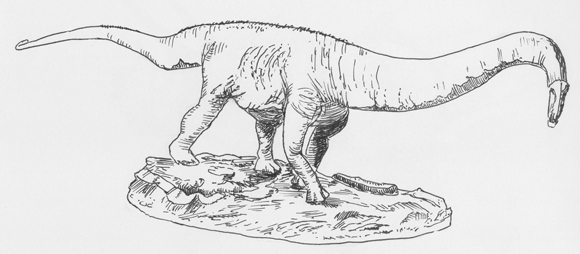
An illustration of the long-necked dinosaur (sauropod) Mamenchisaurus

A Mamenchisaurus drawing. Several species have been assigned to this genus.  For example, M. sinocanadorum, which is one of the larger species.  Mamenchisaurus sinocanadorum honours the China-Canada Dinosaur Project. Picture credit: Everything Dinosaur.

Picture credit: Everything Dinosaur

Naming Dinosaur Taxa

During his long and distinguished career Professor Dong Zhiming named and described over forty dinosaur genera.  Furthermore, the vast majority are these dinosaur genera are still regarded as valid today.  He was instrumental in helping to build up a detailed picture of the dinosaur biota that once roamed the land we now know as China.  He wrote or co-authored hundreds of technical papers.  For example, he named Wuerhosaurus in 1973 and co-authored the first scientific description of the Chinese theropod Yangchuanosaurus (Dong at al 1978).

Model collectors will know that many of the popular PNSO dinosaur models represent taxa named by Professor Dong Zhiming.  Indeed, the professor was honoured in 1994 when the Chinese metriacanthosaurid Sinraptor dongi was named after him.

PNSO Sinraptor dinosaur model

The PNSO Xinchuan Sinraptor dinosaur model in lateral view. The species name of this Chinese metriacanthosaurid honours Professor Dong Zhiming acknowledging his enormous contribution to palaeontology.

In the scientific paper describing S. dongi, published in 1993, the etymology of the species name is explained.  The professor’s huge contribution to Chinese palaeontology is implied:

“The species is named after the discover of the type specimen Zhiming Dong, who also worked on the description of the closely related form, Yangchuanosaurus.”

The professor also named and scientifically described other Mesozoic reptiles.  For instance, in 1972 he named the giant ichthyosaur Himalayasaurus (H. tibetensis). In addition, Professor Dong Zhiming was co-author of the scientific paper that described the enigmatic pterosaur Jidapterus edentus from western Liaoning Province.

To read more about the giant ichthyosaur Himalayasaurus: Tucsan the Himalayasaurus.

PNSO Prehistoric Animal Figures

It is fitting that one of the world’s leading prehistoric animal model ranges features replicas of dinosaurs and other reptiles named by Dong Zhiming.  An objective of the team behind the PNSO range of figures is to help raise the profile of Chinese dinosaurs and their research.  Lots of young people have had their first encounter with a Chinese dinosaur as a result of acquiring a PNSO model.

Mike from Everything Dinosaur commented:

“It was sad to hear the news from China of the passing of Professor Dong Zhiming. Many of my dinosaur books from childhood discussed his discoveries and included information about dinosaurs he had named and described.  His immense contribution to palaeontology has been acknowledged and through the PNSO models his work will continue to be honoured.”

8 05, 2024

Happy Birthday Sir David Attenborough Ninety-Eight Years Young!

By |2024-05-07T15:14:31+01:00May 8th, 2024|Categories: Dinosaur Fans, Famous Figures, Main Page|0 Comments

Today, May the 8th is the ninety-eighth birthday of Sir David Attenborough.  Sir David can be described as a “national treasure”.  Naturalist, biologist, campaigner and broadcaster his work has spanned eight decades.  Back in 2023, we experimented with artificial intelligence (AI) to compose a birthday message.  Chat GPT was employed to compose a suitable piece for our blog.

To read last year’s birthday message: Happy 97th Birthday Sir David Attenborough.

Twelve months on, and AI continues to develop at a remarkable pace.  For this year’s birthday message, we have utilised the AI chatbot aggregator Poe (poe.com) which provides users with access to a variety of AI tools and chatbots.

The AI Birthday Message

Happy 98th Birthday! Today, we celebrate not only another year of your remarkable life but also the immeasurable contributions you have made to our understanding and appreciation of the natural world. Your unwavering commitment to conservation and your extraordinary storytelling have touched the hearts of millions, leaving an indelible mark on the collective consciousness.

Sir David Attenborough.

Still enthusing about the natural world, the remarkable Sir David Attenborough.

Through your captivating documentaries, you have taken us on awe-inspiring journeys, unravelling the wonders of our planet and shedding light on the urgent need to protect its fragile ecosystems. Your voice, filled with passion and knowledge, has served as a beacon of hope, reminding us of our responsibility as stewards of this magnificent Earth.

Your tireless efforts to raise awareness about climate change, biodiversity loss, and the importance of sustainable living have inspired a global movement. You have sparked conversations, ignited curiosity, and empowered countless individuals to take action, making a real difference in the fight to preserve our planet for future generations.

As we celebrate your 98th birthday, we are grateful for the wisdom and inspiration you continue to impart. Your dedication, resilience, and unwavering love for nature are a testament to a life well-lived. May this day be filled with joy, surrounded by loved ones, and may the year ahead bring you good health, happiness, and many more opportunities to share your invaluable knowledge with the world.

Happy birthday, Sir David Attenborough! Thank you for being a shining light in our quest to protect and cherish the beauty of our natural world.

ENDS

We added a media image, a signed photograph of Sir David that we received some years ago.

Many Happy Returns Sir David Attenborough

These are changing times, our world is changing, and technology is changing too.  The genie is well and truly out of the bottle and AI is here to stay.  It will continue to have an enormous impact on our lives and on our planet.  Let us hope that technologies like artificial intelligence can help us develop strategies to combat climate change and to devise robust conservation strategies.

In the meantime, we continue to adopt processes and systems that increase the use of recycled materials in our business.  Furthermore, we have embarked on several projects exploring the adoption of more sustainable product packaging.  In addition, we are continuing to explore ways of reducing single use plastic within the model making industry.

We are sure Sir David would approve.

On that note, we wish you Sir, many happy returns.

Contact Everything Dinosaur to enquire about our environmental policy: Email Everything Dinosaur Team Members.

Go to Top