Recently printed in the academic journal “Cretaceous Research”, a trio of scientists have published details about a new plesiosaur specimen discovered in Late Cretaceous sediments in Guadalajara Province in central Spain. Plesiosaur specimens are exceptionally rare from the Late Cretaceous of Europe and although the fossil material is indistinct in terms of any autapomorphies (unique features), that would permit the establishment of a new species, the fragmentary fossils, including a single tail bone, represent an important discovery nonetheless.
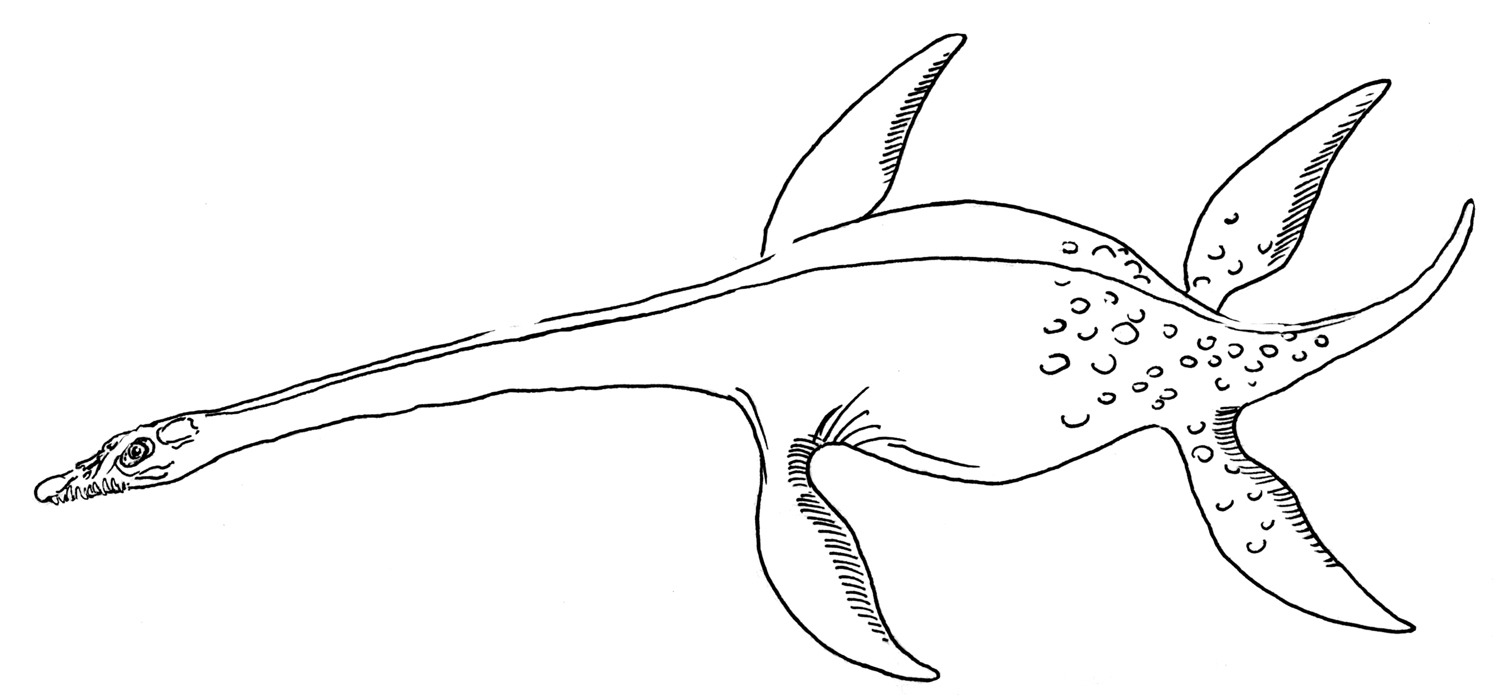
An Illustration of a Typical Member of the Plesiosauridae
Plesiosaurs swam in the Cenomanian seas of Europe.
Picture credit: Everything Dinosaur
The picture (above) is based on a Collecta Prehistoric Life marine reptile model.
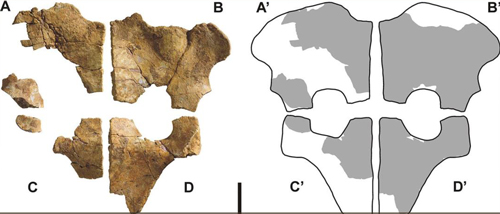
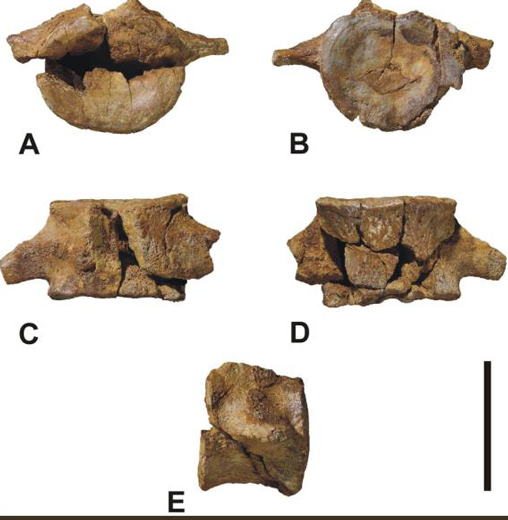
The fossils consist of elements from a pelvic girdle and a caudal vertebra (tail bone). They are the first evidence of a plesiosaur in the coastal marine outcrops of Algora (Castilla-La-Mancha), Spain. It is one of only a handful of such specimens reported from the Cretaceous of Spain.
The Pelvic Girdle Fossil Bones with an Accompanying Line Drawing
The fossils making up part of the pelvic girdle with a line drawing (right).
Picture credit: N. Bardet, M. Segura and A. Pérez-García/Cretaceous Research
An Elasmosaurid
The fossils probably represent a single individual, as such, it is the only plesiosaur specimen from central Spain that is known from several bones. The researchers conclude that the material represents an indeterminate member of the Elasmosauridae. Elasmosaurids were a type of plesiosaur that had a wide geographical range during the Late Cretaceous and one that persisted to the end of the Maastrichtian faunal stage.
Views of the Caudal Vertebra (Indeterminate Elasmosaurid)
Images of a caudal vertebra (Late Cretaceous plesiosaur).
Picture credit: N. Bardet, M. Segura and A. Pérez-García/Cretaceous Research
The authors of the scientific paper include a researcher from the Natural History Museum of Paris (Muséum National d’Histoire Naturelle), as well as two researchers based in Spain. They suggest that the fossils represent an individual that either died further out to sea and was washed into a bay (thanatocoenosis), or the remains of an animal that lived in a near-shore environment (biocoenosis).
The scientific paper: “A Plesiosaur (Reptilia, Sauropterygia) from the Cenomanian (Late Cretaceous) of Algora (Guadalajara Province, Central Spain)” by N. Bardet, M. Segura and A. Pérez-García published in Cretaceous Research.
How Helpful is the Fossil Record When it Comes to Extinct Animal Diversity?
When it comes to understanding biodiversity in ancient palaeoenvironments, scientists have to rely on the fossil record for their information. Ghost lineages can be inferred, the likelihood of related genera can be proposed using cladistics and phylogeny, but ultimately it is the fossils that form the basis of our understanding about how diverse life was in the past. This reliance on fossil material has numerous drawbacks. The fossil record is very incomplete and there is a large preservation bias between different organisms and different environments. For example, a snail with its hard shell, living on the muddy bottom of a shallow sea has got more chance of becoming a fossil than a soft-bodied mushroom living in a temperate forest.
Palaeontologists have to ask themselves: can the fossil record can be trusted to provide information about biodiversity?
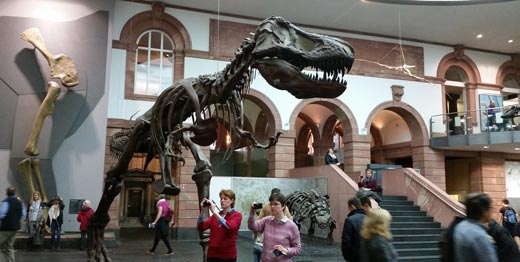
Tyrannosaurus rex Might Be Popular with Museum Visitors but Other Meat-eating Dinosaurs Have a Much Less Complete Fossil Record
T. rex might be very popular with museum visitors, but in reality most of the Tyrannosauroidae are very poorly known. Picture credit: Everything Dinosaur.
Mosasaurs Help to Provide Some Insight
Species are often named and described on the flimsiest of evidence, take for example famous dinosaurs such as Trachodon and Troodon, dinosaurs that were first named based on the finding of isolated teeth. Fortunately, these days ,there is a higher bar set when it comes to establishing that a fossil represents an animal new to science, although some new species are still named based on very fragmentary fossils.
Could it be that our understanding of past biodiversity is simply related to the quality of fossil material in different geological rock formations through time? This question relates to a fundamental debate within palaeontology about the quality and trustworthiness of the fossil record.
Exploring and Understanding the Fossil Record
Researchers from Bristol University and Leeds University set out to explore the relationship between the number and quality of fossils and their relationship with past diversity. Writing in the journal “Palaeontology”, the scientists focused on the Mosasauridae, that family of marine reptiles closely related to today’s snakes and lizards that thrived in the Late Cretaceous before meeting their demise at the same time as the dinosaurs.
Using Mosasaur Models to Examine the Diversity of Extinct Animals
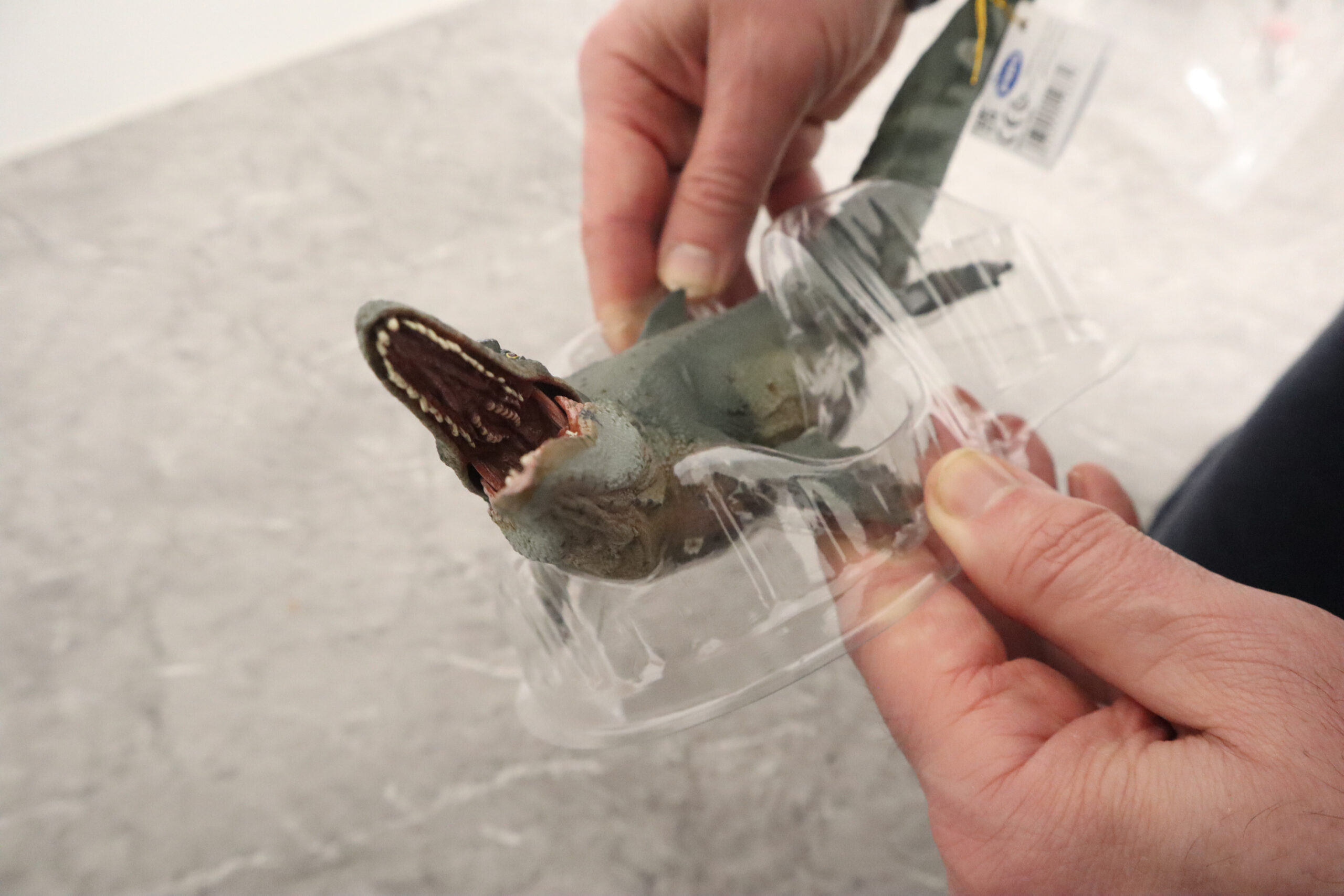
The Papo Mosasaurus figure has pterygoid teeth located in the roof of the mouth. A mosasaur model is used to help explain the diversity of the Animalia. Picture credit: Everything Dinosaur.
Picture credit: Everything Dinosaur
The picture (above) shows the Papo Mosasaurus model.
Mosasaurs evolved into a number of different forms during the Cretaceous, some were giants, measuring more than thirteen metres in length and were the apex predators of marine ecosystems. Other species were much smaller such as the five-metre-long Platecarpus that fed on fish, squid and ammonites. Scientists have even identified a possible freshwater species of mosasaur (Pannoniasaurus inexpectatus).
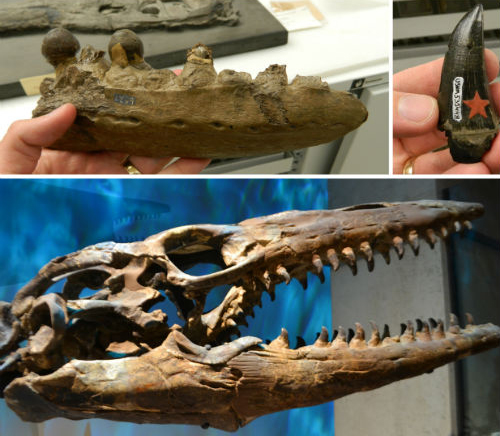
The Fossil Record Indicates Diversity Amongst the Mosasauridae
Fossils illustrate the diversity of the Mosasauridae.
Picture credit: Tom Stubbs and Dan Driscoll
The picture (above), illustrates some of the diversity found in the Mosasauridae. Some species are known from very fragmentary remains such as isolated bones and teeth, other species have been named based on far more complete skeletons. The partial lower jaw (top picture), shows the rounded teeth, almost ball-like teeth of a member of the Globidensini tribe of mosasaurs. A group of mosasaurs that evolved specialised teeth to cope with hard-shelled prey such as ammonites and crustaceans (durophagous diet).
The photograph (far right), shows a single mosasaur tooth. It is very large and the crown is robust and pointed, typical dentition associated with predatory behaviour, attacking and consuming other large vertebrates. The picture (bottom), shows a complete, restored skull of a mosasaur with a jaw containing small, recurved teeth indicative of a diet of fish or other small slippery creatures such as squid.
Dr Dan Driscoll (Bristol University), the lead author of the research stated:
“Mosasaurs have one of the richest vertebrate fossil records and have attracted study for over two centuries. The first mosasaur described was in 1808! Often, studies of fossil record quality have focused simply on the numbers of fossil species, however, it is important to consider the completeness of individual fossil specimens, and whether this distorts our view of diversity. To do this, robust statistical analysis is required.”
Using Mathematical Models to Test the Completeness of the Mosasaur Fossil Record
The researchers documented over four thousand and eighty mosasaur specimens and scored them for their degree of completeness. This is the largest quantitative analysis of its kind undertaken to date. By using mathematical modelling, the scientists were able to demonstrate that fossil completeness does not bias the fossil record of mosasaurs and that the rich fossil record of the Mosasauridae does provide an accurate illustration of the diversity and evolutionary history of these marine reptiles.
The Diverse Mosasauridae Family Occupied a Number of Niches within Marine Ecosystems
Fearsome marine reptiles such as Tylosaurus were apex predators.
Picture credit: BBC Worldwide
Bristol University’s Dr Tom Stubbs, a co-author of the study explained:
“Mosasaurs were key players in Late Cretaceous marine ecosystems. Our study confirms that Mosasaurs were a successful group of animals that continued to diversify through their evolutionary history, before being abruptly wiped out by the extinction event that also impacted dinosaurs and many other groups.”
Fresh Insights into Mosasauridae Evolution
The conclusions provided by this new research reveals new insights into the evolution of the Mosasauridae, and highlights that, although the fossil record is most definitely incomplete, variable fossil completeness does not appear to bias large scale evolutionary and ecological patterns.
Co-author, Dr Alex Dunhill, (School of Earth and Environment at the University of Leeds), added:
“Palaeontologists often presume that the vertebrate fossil record is heavily biased by sampling. This may be so but, here we show that variation in the completeness of fossil specimens does not appear to bias large scale evolutionary patterns.”
Everything Dinosaur acknowledges the assistance of a media release from the University of Bristol in the compilation of this article.
The scientific paper: “The Mosasaur Fossil Record Through the Lens of Fossil Completeness” by D. Driscoll, A. Dunhill, T. Stubbs and M. Benton published in Palaeontology.
Overlooking the Welsh coast between Llandudno and Rhyl is the beautiful but quite compact nature reserve of Mynydd Marian. It forms part of a range of low limestone hills that can be found along this part of the coast of North Wales. The location, a SSSI (Site of Special Scientific Interest), is popular with walkers keen to spot the myriad of different insects and the orchids that thrive on the limestone soils. The exposed cliffs that were once quarried for their limestone, attract local climbing groups. However, there is plenty to see for fossil hunters too.
Fossil Hunters
The strata were laid down over 320 million years ago (Carboniferous), it was formed from the compressed shells of countless marine invertebrates that thrived in a warm, shallow sea. If the numerous stone walls are examined carefully, then lots of fossils of brachiopods and the button-like segments of marine crinoids can be spotted.
A Crinoid Segment Spotted in a Dry-stone Wall (Mynydd Marian)
A crinoid stem exposed in a stone wall at Mynydd Marian nature reserve.Picture credit: Everything Dinosaur.
Picture credit: Everything Dinosaur
Brachiopods and Corals
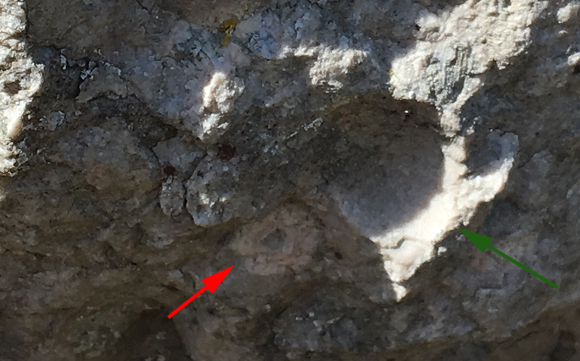
There is little scree to be found and we would not advise climbing the steep faces of the quarry but if the rocks that comprise the stone walls are examined, then many fossils can be seen.
Spotting Fossils at Mynydd Marian Nature Reserve
A crinoid segment (red arrow) and a mould revealing the impression of a brachiopod shell (green arrow) on the surrounding rock. Picture credit: Everything Dinosaur.
Picture credit: Everything Dinosaur
The picture (above), shows two fossils preserved in the rocks of a dry-stone wall. The red arrow is pointing to a crinoid segment, whilst the green arrow indicates a mould left in the surrounding matrix by a brachiopod shell. There is no need to disturb the rocks in the wall, careful observation is all that is required and you will soon start to discern the different types of fossil.
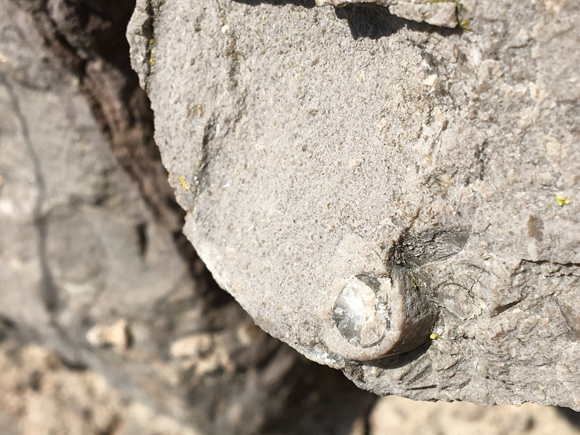
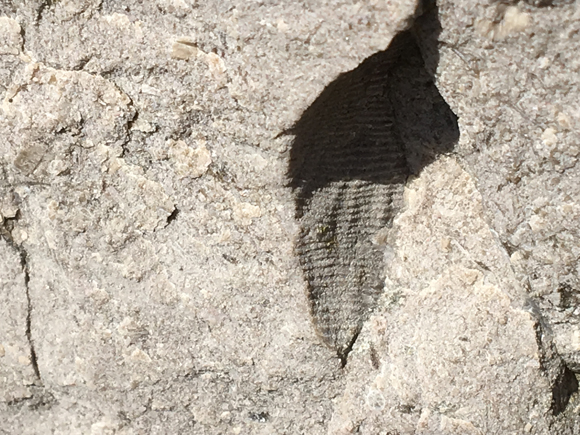
An Impression of the Shell of a Brachiopod preserved in the Limestone
A glimpse into a lost world, an impression of the shell of a brachiopod preserved in the limestone.Picture credit: Everything Dinosaur.
Local Farmer Gives Up His Gomphotherium Skull Secret
Sacré bleu! A French farmer working on his land using a large excavator uncovered the fossilised remains of a prehistoric elephant. However, rather than notify the authorities, it was decided to keep quiet about the fossil find, complete with tusks and large molars, some of which measured more than ten centimetres in length.
Fossils of a Prehistoric Elephant
The discovery was made in the summer of 2014 by an inhabitant of the village of L’Isle-en-Dodon, about forty-five miles south-west of Toulouse in southern France. However, the accidental unearthing of a large elephant skull, must have weighed heavy on the person’s conscience, as three years later, scientists from the Musee d’Histoire Naturelle de Toulouse (Natural History Museum of Toulouse), were informed and a field team was despatched to excavate the site and to remove the prehistoric elephant skull so that this important discovery could be properly prepared and studied.
The Gomphotherium Skull at the Natural History Museum of Toulouse
The Gomphotherium fossil skull from south-west France.
Picture credit: Musee d’Histoire Naturelle de Toulouse
Gomphotherium – A Rare Fossil Skull
Gomphotheres (Gomphotheriidae), were a large and very diverse group of prehistoric elephants that had a wide temporal and geographical distribution. Fossils of these elephants, only distantly related to today’s elephants, have been found in Asia, Africa, North and Central America as well as Europe and a number of species have been named and described.
The first scientific descriptions of these members of the Order Proboscidea was made by the French naturalist Georges Cuvier in the early part of the nineteenth century. Ironically, much of Cuvier’s research was based on elephant fossils discovered in south-western France, the same part of France, where this fossil skull was uncovered.
Cuvier recognised that the fossils (mostly molars), represented elephants and he erected the species name Mastodon angustidens. It was the German zoologist Karl Hermann Konrad Burmeister, who revised Cuvier’s work, distinguishing these elephants from the mastodonts and erected their own taxonomic family – the gomphotheres.
A Scale Drawing of a Typical Gomphothere (G. angustidens)
A scale drawing of a Gomphotherium.Picture credit: Everything Dinosaur.
Picture credit: Everything Dinosaur
Concerned About Amateur Fossil Hunters
The farmer, who remains anonymous, wished to avoid the attentions of amateur fossil hunters. It was feared that if news of the fossil discovery had got out, the farm might have been inundated by fossil collectors keen to find more prehistoric animal remains.
A spokesperson from Everything Dinosaur commented:
“The unwanted attention that such an important fossil find could have generated would have proved very disruptive for the farm, so it is understandable that the farmer did not want to attract too much publicity. However, it is pleasing to note that the appropriate authorities have been informed and that this important specimen can be studied properly.”
A Still from a Video Shows the Gomphotherium Skull being Examined
Examining the Gomphotherium fossil skull.
Picture credit: France TV/Musee d’Histoire Naturelle de Toulouse
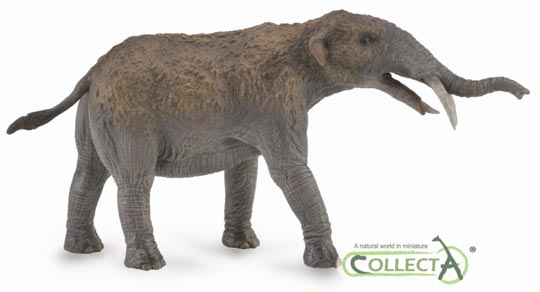
The model manufacturer CollectA has recently introduced a 1:20 scale Gomphotherium replica into their Deluxe Prehistoric Life model range. A picture of this new CollectA Gomphotherium replica can be seen below.
The fossil skull will take about six to nine months to prepare, the researchers at the Natural History Museum of Toulouse hope to learn more about southern European gomphotheres from this specimen, it is likely that this significant fossil discovery will be put on public display at the museum, providing an opportunity for visitors to learn more about the areas prehistoric past.
A View of the Upper Tusks Protruding from the Gomphotherium Skull
A close view of the upper tusks of the Gomphotherium skull fossil.
Picture credit: France TV/Musee d’Histoire Naturelle de Toulouse
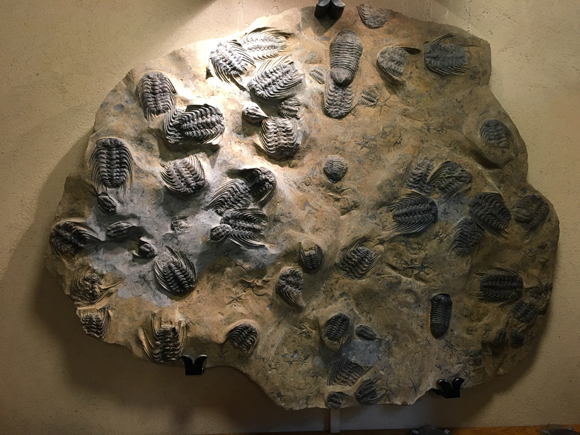
In a far corner on the ground floor of the Oxford University Museum of Natural History, there can be found an amazing trilobite fossil exhibit. This piece of sandstone preserves the remains of three different genera of trilobites, a death assemblage that attests to the diversity and success of these marine arthropods. The fossil, which was acquired by the museum in 2005, is known as “the Selenopeltis Slab”.
Fantastic Fossils – The Selenopeltis Slab
Trilobites galore – the Selenopeltis slab. Can you identify three different types of trilobite?Picture credit: Everything Dinosaur.
Picture credit: Everything Dinosaur
Trilobite Fossil from the Ordovician Period
A slab of sandstone from the Mecissi-Alnif area of Morocco preserves the fossilised remains of three genera of trilobite. The sandstone was deposited some 450 million years ago (Ordovician), a time when invertebrates dominated oceanic biotas. The trilobite Selenopeltis is the most common fossil arthropod on the slab, it is characterised by the presence of long spines on both flanks of the body. The second genus Calymenella, is a large, elongate trilobite with an evenly rounded outline. The third type of trilobite represented in this mass death assemblage is Dalmanitina, a smaller animal with a long spine extending backwards from the posterior end of the pygidium (tail piece).
The sandstone slab also contains the fossilised remains of numerous brittle stars, a type of echinoderm related to starfish, (look for the small, disc-like bodies with five, slender, tapering arms).
Cracking the Code – What Eggs and Eggshells Can Tell Us
A researcher based at the University of Edinburgh has produced a “cracking” assessment on the use of eggs and eggshells of living and extinct archosaurs to obtain information about ancient environments, the behaviour and biology of vertebrates that may have lived many millions of years ago.
Writing in the open access Royal Society Open Science, Shaena Montanari (School of GeoSciences, Edinburgh University), has reviewed how the use of eggshells in the modern and fossil record allow an interpretation of a variety different archosaurs and other amniotes across deep time, providing a unique record of ancient environments and ecosystems.
A Nest of Large Dinosaur Eggs
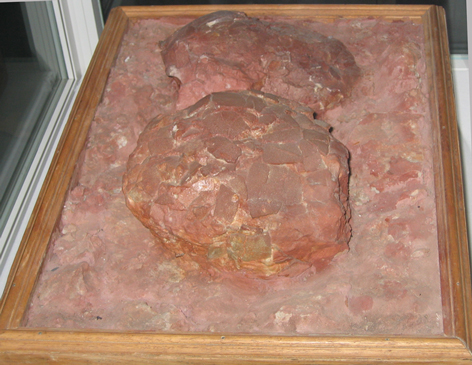
An example of titanosaur fossil eggs. Fossil eggs and eggshell can provide valuable insights into egg-layers and environments. Picture credit: Everything Dinosaur.
Picture Credit: Everything Dinosaur
Archosaur Eggs – Overlooked Body Fossils
Biologists studying living vertebrates and palaeontologists studying extinct animals can look at the skeleton (fossil bones) and make deductions. Other materials in both modern and ancient environments can be overlooked. Take for example, the shelled eggs of archosaurs, the Squamata and potentially monotremes, these, if they are preserved in the fossil or archaeological record, can provide a wealth of information to help support other areas of research.
Palaeontologists know that dinosaur eggs were not that much different from the eggs of living birds. Eggs provide another biogenically created material that can be used to reveal specific information about the egg-layers and the environments they live in when assessed with different types of geochemical, morphological and molecular techniques.
The matrix surrounding the holotype fossil material of the dromaeosaurid Deinonychus (D. antirrhopus), contained fragments of fossil eggshell, later assigned (in all probability due to the low energy depositional environment and taphonomy of the fossil material), to Deinonychus. This was the first record of a dromaeosaurid egg, however, this material was either overlooked or perhaps ignored when the dinosaur bones were first found back in the 1930s.
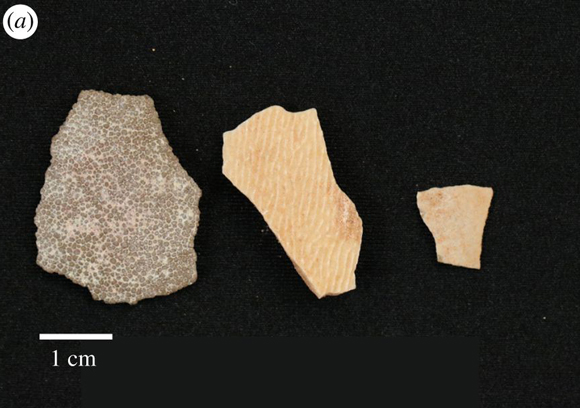
Examples of Fossil Eggshell
Three examples of fossil eggshell.
Picture credit: Royal Society Open Science
The photograph (above) shows three examples of dinosaur eggshell fragments from the Gobi Desert. Such items may be overlooked in the quest for more substantial body fossils but different eggshell types possess varied forms of ornamentation and can help to establish more information about the fossil biota. The three pieces in the photograph, probably represent different types of dinosaur (from left to right titanosaur, oviraptorid and potentially troodontid). Microscopic analysis of the shell structure, along with pore density and isotope data can provide information about the ancient environment and inferred nesting behaviour of long extinct creatures.
Isotope Analysis
Isotope analysis from eggshell can even provide information on the diet of the animal that laid the egg.
Post-doctoral researcher Shaena, explains in the paper that archaeologists can learn a remarkable amount about early human settlements by examining ostrich eggshells. Ostrich eggshell is found in association with human food waste dumps, as bead decorations, sometimes associated with ritual burial or as containers for water. Archaeological sites as far apart as China, India and north Africa have yielded Ostrich egg remnants. These pieces of shell could be used to provide direct evidence of environments where early communities settled.
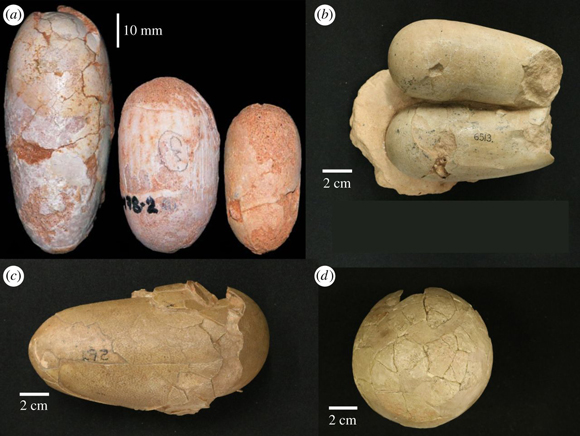
A Selection of Whole or Virtually Complete Dinosaur Eggs
Examples of whole or partial fossilised eggs.
Picture credit: Royal Society Open Science
The photograph shows a variety of fossil archosaur eggs from Mongolia (a) three bird eggs from the Gobi Desert, (b) a pair of unidentified theropod dinosaur eggs from the Cretaceous of Mongolia (AMNH FR 6513). Photograph (c) shows an oviraptorid egg (Cretaceous of Mongolia -AMNH FR6508) and (d) is a probable Ornithopoda egg, again from the Cretaceous of Mongolia (AMNH field number 707)
Clumping Isotopes – Learning About Body Temperature
Researchers have developed a technique in which the body temperature of the dinosaur laying the egg can be calculated by plotting the presence of two rare isotopes found in calcium carbonate a key element in the formation of eggshell and a material that has a high preservation potential. From an analysis of the way in which these two isotopes clump together in the same molecule, scientists are able to infer data about the body temperature of the mother.
As the eggs are formed within the oviduct(s) of egg-laying animals, the temperature of mineral formation should reflect the body temperature of the ovulating female. In this way, such studies can inform the debate about endothermy or otherwise within the Dinosauria.
The scientific paper: “Cracking the Egg: The Use of Modern and Fossil Eggs for Ecological, Environmental and Biological Interpretation” by Shaena Montanari and published in the Royal Society Open Science.
Brindabellaspis – Placoderm Resident on Australia’s First Reef
The Queensland coast (Australia), might be famous for its Great Barrier reef today, but this was not Australia’s original reef, some 400 million years ago, there was a reef, located in what is now New South Wales, mostly built by entirely different types of organisms, that was a natural wonder of the Early Devonian. Living on the bottom of the shallow sea in which this ancient reef formed was a strange-looking fish, with a sensitive beak, oddly reminiscent of another, not quite so ancient resident of “Down Under” – a duck-billed platypus. This strange animal has been named Brindabellaspis stensioi.
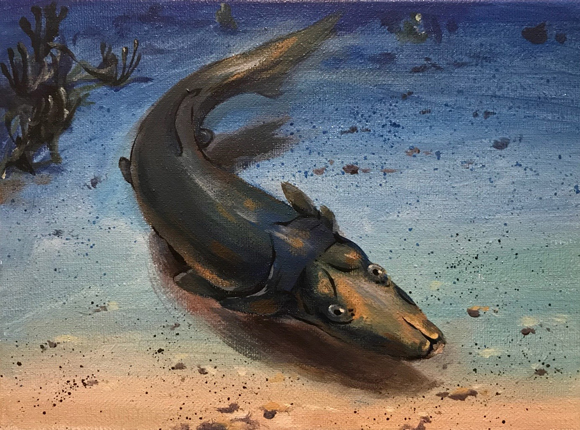
New Research Suggests that Brindabellaspis stensioi had a Sensitive “Beak” Like A Duck-billed Platypus
Brindabellaspis stensioi illustration.
Picture credit: Jason art Shenzhen
Brindabellaspis stensioi
The placoderm, named Brindabellaspis stensioi was originally scientifically described in 1980. However, new fossil specimens, revealed by carefully removing the rock matrix using dilute acids, have shed new light on the evolution of jaws and provided palaeontologists with evidence that the earliest fish dominated ecosystems supported a myriad of forms.
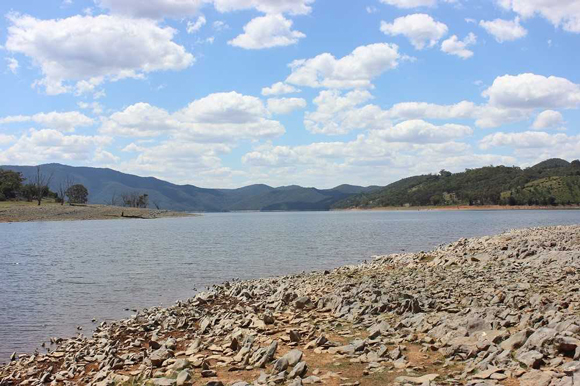
Limestone beds exposed on the shores of Lake Burrinjuck in New South Wales have preserved an extensive reef fauna. Over seventy species of fish have been identified to date, of these, it is the placoderms that dominate, with around 45 species named and described so far. Palaeontologists from Flinders University (South Australia) and the Australian National University (Australian Capital Territory), have reconstructed two of the ancient fossils and discovered that Brindabellaspis had a long bill (rostrum), extending out in front of its eyes.
The Picturesque Limestone Beds of Lake Burrinjuck
Lake Burrinjuck in New South Wales (Australia).
Picture credit: Flinders University
One of the authors of the study, published in “Royal Society Open Science” Benedict King, a Flinders University graduate stated:
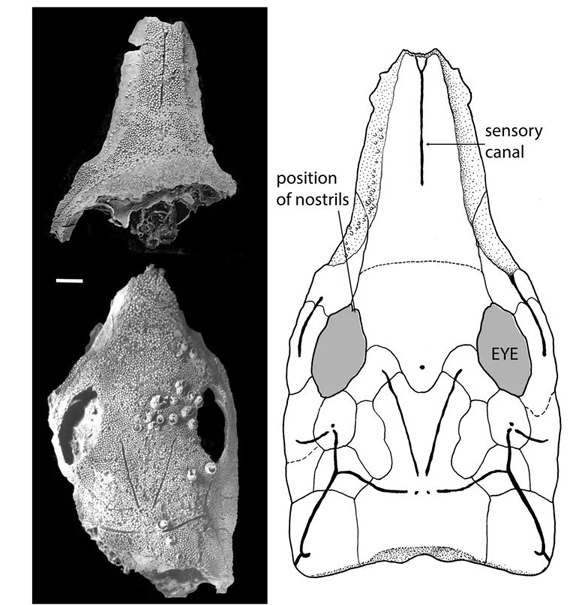
“This was one strange looking fish. The eyes were on top of the head and the nostrils came out of the eye sockets. There is this long snout at the front, and the jaws were positioned very far forward.”
A Unique Sensory System
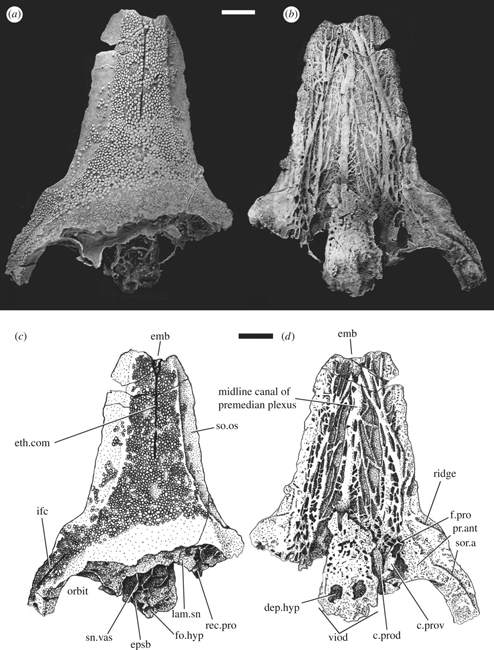
Following a comprehensive evaluation of the skull including the anterior portion (revealed for the first time with these new specimens), the researchers discovered an exceptionally long premedian bone forming an elongated rostrum, supported by a thin extension of the postethmo-occipital unit of the braincase. This seems to be a modified form of pressure sensor, perhaps used to detect prey in the muddy/sandy bottom of the seafloor.
Professor John Young (Flinders University), a world authority on ancient fish and a co-author of the paper added:
“We suspect that this animal was a bottom-dweller. We imagine it used the bill to search for prey, somewhat like a platypus, while the eyes on top of the head looked out for danger from above.”
Adding the Missing Pieces – Thirty-Eight Years Later
For Dr Gavin Young (Flinders University), the discovery of the front portions of the skull and that remarkable, sensitive rostrum helps to “flesh out” his original research on Brindabellaspis stensioi. Dr Young has spent more than five decades studying the fossil fish from the Lake Burrinjuck limestone beds, Dr Young was responsible for naming and describing this placoderm in 1980, now thanks to these new fossils and high-resolution X-ray tomography, this 400-million-year-old fish has a face, albeit a very peculiar one, but one that may demonstrate convergent evolution with the egg-laying monotreme (platypus – Ornithorhynchus anatinus).
New Specimens of Brindabellaspis stensioi Included in this Study
The rostrum and one of the new skull fossils with a line drawing. Note scale bar (left) equals 1 centimetre.
Picture credit: Royal Society Open Science
Dr Young explained:
“When we saw the dense sensory tubes on another broken snout, we immediately thought of the local platypus. I am very gratified there is finally an accurate reconstruction of this strange skull.”
Specialists and not Generalists
The scientists conclude that as Brindabellaspis was clearly such a specialist, then the ancient reef was a thriving and very diverse ecosystem with very probably, a range of specialist organisms making a living on the reef and in the surrounding shallow waters.
Professor Long commented:
“Despite this being one of the earliest well-known ecosystems including many species of fish, the inhabitants of this ancient reef were clearly not in any way primitive. The new findings show that they were highly adapted and specialised in their own right.”
The Elongated Premedian Plate (Rostrum) of Brindabellaspis stensioi
The elongate premedian plate of Brindabellaspis. ANU V3247 in dorsal (a) and ventral (b) views. (c,d). Interpretative drawings of a and b. Scale bars represent 10 mm.
Picture credit: Royal Society Open Science
The scientific paper: “New Information on Brindabellaspis stensioi Young, 1980, Highlights Morphological Disparity in Early Devonian Placoderms” by Benedict King, Gavin C. Young and John A. Long published in by Royal Society Open Science.
Everything Dinosaur acknowledges the assistance of a press release from Flinders University in the preparation of this article.
Fossil Bird Challenges Perceptions About Avian Evolution
Researchers from the Swedish Museum of Natural History and the Milner Centre for Evolution at the University of Bath, have re-examined the fossilised remains of an ancient bird from Wyoming, which casts doubt on the generally held perception that the ancestor of all modern birds originated in the Southern Hemisphere. An examination of the avian fossil record has provided a fresh perspective. The fossil bird, named Foro panarium, was originally described and named back in 1992, but where this 52 million-year-old bird would perch on the avian family tree has been the subject of much debate.
Dr Daniel Field (Milner Centre for Evolution), in collaboration with Alison Hsiang (Swedish Museum of Natural History), have produced a scientific paper that supports the idea that this robust but poor flyer with relatively long legs from the famous Eocene-aged Green River Formation, is the earliest known example of a group of birds called Turacos or “banana eaters”.
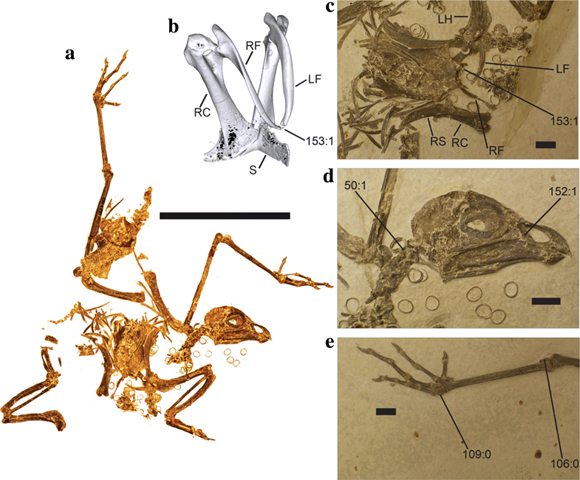
Comparing the Skeleton of F. panarium to the Extant Ross’s Turaco (M. rossae)
The holotype specimen of F. panarium compared to a living species of Turaco.
Picture credit: BMC Evolutionary Biology
The picture (above) shows a stylised image of the holotype specimen of Foro panarium (a, c, d, e) compared to (b) 3-dimensional CT rendering of the pectoral region of Ross’s Turaco (Musophaga rossae). Note scale bar is 10 centimetres.
Birds – the Most Specious of all the Terrestrial Vertebrates
Some commentators might state that we are living in “the age of mammals”, it is true that many of the apex predators, large herbivores and hyper-carnivores around today are mammalian, but in terms of the number of species, there are more species of birds (estimated at 11,000), than there are species of mammals, or amphibians and reptiles for that matter. In addition, there are far more bird species in the Southern Hemisphere than in the Northern Hemisphere. Charles Darwin during his voyage on the Beagle, marvelled at the great diversity of bird species he encountered on his travels through South America, the Galapagos and islands of the Pacific Ocean.
Naturalists are very aware of the dramatically uneven global distribution of today’s Aves. Not only are species numbers higher south of the Equator, but many major groups of birds are entirely restricted to Africa, Australasia and South America which were all, once upon a time, part of the great southern super-continent of Gondwana.
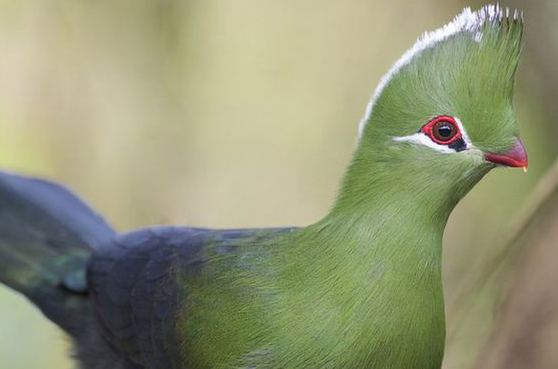
Turaco Birds are Known for their Beautiful Plumage
A beautiful Turaco bird. A Guinea Turaco (T. persa)
Picture credit: Dr Daniel Field
Studying the Avian Fossil Record
Dr Field and Dr Hsiang set out to examine the avian fossil record to see if they could help to explain the uneven geographic distribution of modern-day birds. Did, as many scientists believe, the ancestor of all modern birds (Neornithes), originate in the Southern Hemisphere, or are there more complex issues in play restricting the distribution of birds through deep time?
In order to map the evolutionary history of our feathered friends – the avian dinosaurs, the scientists turned to the fossil record for answers. Writing in the academic journal “BMC Evolutionary Biology”, the scientists report their study of the 52-million-year-old fossil bird named Foro panarium. The taxonomic placement of this species has been controversial, as the fossil shows a mixture of anatomical characteristics. However, using updated information relating to other Eocene and Palaeocene bird species, the researchers concluded that the specimen represents the earliest known relative of the “banana eaters”, the Turacos (Musophagidae family).
Turning to the Fossil Record
Turacos today are entirely restricted to sub-Saharan Africa. This enigmatic family of birds are renowned for their bright, gaudy plumage, elaborate head crests and some species have very loud alarm calls (hence their nick-name in parts of Africa, “go away birds”). The feathers of several species contain unique pigments that generate bright green and magenta tones.
If the American fossil bird F. panarium is indeed a basal member of the Musophagidae, then it suggests that these birds had a much wider, global distribution in the distant past. If this is the case, then why are extant Musophagidae members restricted to Africa?
Biogeographical and Bayesian Statistical Phylogenetic Analysis
Furthermore, an examination of the fossil record of Aves, suggests that Foro panarium is not the only example of a fossil bird being discovered outside the modern geographical distribution for that kind of bird. For example, the Trogoniformes (Trogons and Quetzal birds), which are restricted to the Southern Hemisphere today, have basal members preserved in fossils from the Messel Shales of Germany.
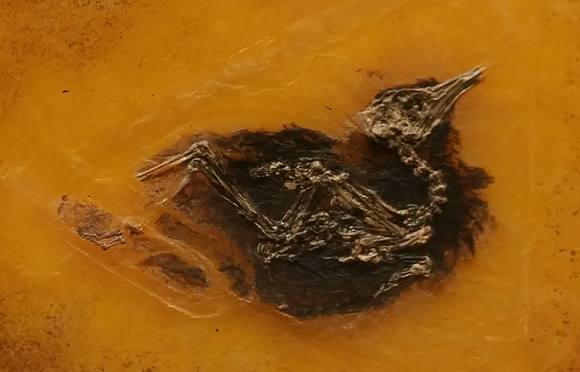
The Beautifully Preserved Remains of a Bird from the Messel Shales of Germany
A bird fossil from the Messel shale of southern Germany. Picture credit: Everything Dinosaur.
Picture credit: Everything Dinosaur
The scientists confirm the complex historical biogeography of crown birds across geological timescales. The geographical distribution of ancient species and their subsequent radiation and restriction is likely to be much more complicated than previously thought. The idea that the common ancestor of all living birds (Neornithes), arose in the Southern Hemisphere is not discounted, but this paper suggests that this assertion may not be as strongly supported by the evidence as previously thought.
Commenting on the significance of this study, Dr Field stated:
“Our picture of bird evolutionary history will continue to grow sharper as each new bird fossil gets unearthed.”
Shedding Light on the Turaco Lineage
It is likely that the birds went through a rapid phase of evolution after the End-Cretaceous extinction event that saw the demise of many ancient avian groups as well as the non-avian dinosaurs. A seed-eating diet, may have helped numerous lineages to persist as the world’s ecosystems recovered.
For the F. panarium fossil specimen itself, it may provide vital clues as to the age of the Musophagidae. Turacos must have diverged from their closest living relatives by at least 52 million years ago, (by the middle of the Ypresian faunal stage), thus supporting the idea of a rapid diversification of the Aves during the Palaeocene Epoch.
The fossil also provides some intriguing insights into the evolution of modern Turaco biology. Living Turacos have short hindlimbs and hind feet claw adaptations to help them to perch in trees. In contrast, the fossilised hindlimbs of Foro panarium are quite long, suggesting that this bird was more of a ground-dweller than its modern descendants.
The scientific paper: “A North American Stem Turaco, and the Complex Biogeographical History of Modern Birds” by Daniel J, Field and Allison Y. Hsiang published in the journal BMC Evolutionary Biology.
The evolutionary history of the Fungi – (Kingdom Fungi), toadstools, yeasts, moulds, mushrooms and such like is very poorly understood. These soft-bodied eukaryotes, which are so important when it comes recycling nutrients in ecosystems, have an exceptionally sparse fossil record. Twelve months ago, researchers writing in the on-line academic journal described very remarkable fossil fungi. A mushroom that had been found preserved in Cretaceous-aged rocks from Brazil.
Fossil Fungi
The Oldest Fossil Mushroom
Gondwanagaricites magnificus fossil and line drawing.
Picture credit: PLOS One
The picture (above) shows a picture of the gilled mushroom (A) and an accompanying line drawing (B). The fossil from the Lower Cretaceous Crato Formation of north-eastern Brazil, represents the oldest fossil mushroom discovered to date and the first to be identified from the southern super-continent of Gondwana.
Gondwanagaricites magnificus
The specimen was collected from the laminated limestones of the Crato Formation, which outcrop on the northern flanks of the Chapada do Araripe in Ceará, (Brazil). Other fossil mushrooms, (Class Agaricomycetes, Order Agaricales) are preserved in the fossil record, but these fossils are associated with amber inclusions, all of which relate to younger material (Mid-Cretaceous to Miocene amber).
The genus name for this remarkable discovery (paper published in 2017), is derived from Gondwana and the Greek “agarikon” meaning mushroom. The species epithet is from the Latin, meaning splendid or magnificent, a reference to the remarkable state of preservation of the specimen.
The scientific paper: “The Oldest Fossil Mushroom” by Sam W. Heads , Andrew N. Miller, J. Leland Crane, M. Jared Thomas, Danielle M. Ruffatto, Andrew S. Methven, Daniel B. Raudabaugh, Yinan Wang published in the open access on-line journal PLOS One
A correction to the original paper, concerning the correct nomenclature to be used when referring to this amazing example of a fossilised fungus has just been published.
The Crato Formation, might be more famous for its pterosaur fossils, but the preservation of a gilled mushroom in this Lagerstätten is nothing short of astonishing.
Cifelliodon wahkarmoosuch – Pangaea Split Later Than Thought
A fossilised skull of a stem mammal dating back to the Lower Cretaceous suggests that the super-continent Pangaea split up more recently than previously thought. The skull, identified as a new species, comes from Utah and it indicates that there were still land links between North America and other landmasses making up Pangaea, as this is the first evidence of a member of the Hahnodontidae to have been described from North American fossil material.
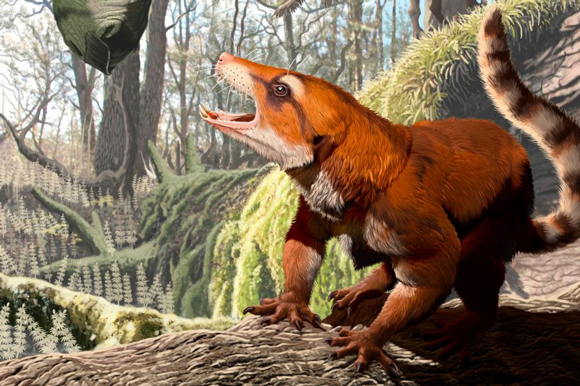
A life reconstruction of the stem mammal C. wahkarmoosuch. The fossilised skull of this small stem mammal suggests that Pangaea broke up later than previously thought.
Picture credit: Jorge A. Gonzalez
Scientists, including researchers from the University of Chicago and the Utah Geological Survey writing in the journal “Nature”, have named the new stem mammal Cifelliodon wahkarmoosuch.
Lead author of the study Zhe-Xi Luo (University of Chicago), explained that palaeontologists had thought that the primitive precursors to today’s mammals – the monotremes, marsupials and placental mammals, were anatomically similar and ecological generalists. However, recent fossil discoveries suggest that many stem mammals were very specialised.
Zhe-Xi Luo stated:
“Now we know mammal precursors developed capacities to climb trees, to glide, to burrow into the ground for subterranean life, and to swim. With this new study, we also know that they dispersed across from Asia and Europe, into North America, and farther onto major southern continents.”
Honouring Richard Cifelli
The genus name honours American palaeontologist Richard Cifelli, at Oklahoma University. Professor Cifelli is regarded as one of America’s leading experts in North American Cretaceous mammals. The species name “wahkarmoosuch”, means “Yellow Cat” in the local native American language for that part of Utah. The fossil comes from the Yellow Cat Member of the Cedar Mountain Formation. Sophisticated high-resolution computerised tomography (CT), was used to create a detailed, three-dimensional model of the skull.
James Kirkland, co-author of the paper and a Utah State palaeontologist commented:
“The skull of Cifelliodon is an extremely rare find in a vast fossil-bearing region of the Western Interior, where the more than 150 species of mammals and reptile-like mammal precursors are represented mostly by isolated teeth and jaws.”
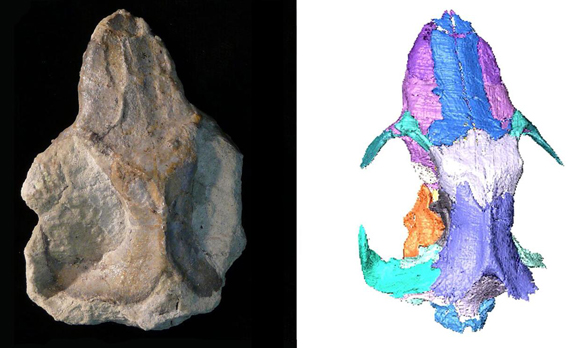
The Fossilised Skull of C. wahkarmoosuch and a Computer -generated Image of the Fossil Material
Dorsal view of the fossil skull (left) and the computer-generated image (right) of C. wahkarmoosuch.
Picture credit: Huttenlocker et al
Cifelliodon wahkarmoosuch – A Nocturnal Predator
Cifelliodon wahkarmoosuch was small, weighing around two kilograms, it was probably about the size of a terrier. This might be tiny compared to some extant North American mammals around today such as the moose, wolf and bison, but back in the Early Cretaceous, some 130 million years ago, it was a relative giant amongst its Cretaceous contemporaries. Analysis of the teeth and preserved teeth sockets suggest that it had teeth were similar to fruit-eating bats and it could bite, shear and crush. It may have been omnivorous, eating small animals but also incorporating plants into its diet.
The skull reveals that this newly described species had a relatively small brain and giant olfactory bulbs to process smell. The small orbits (eye-sockets), suggest that C. wahkarmoosuch probably relied on its sense of smell to find food. It probably did not have good eyesight or colour vision and Cifelliodon may have been nocturnal.
Super-Continent and Land Bridges
The research team have assigned Cifelliodon to the clade Haramiyida, a group of mammaliaform cynodonts that have a long temporal range in the fossil record. Most of these animals are known from fragments of jawbone or fossil teeth. The teeth, which are by far the most common fossil remains of these animals, resemble those of another ancient type of mammal the Multituberculata (Multituberculates). With the discovery of a North American Haramiyidan, scientists are going to have to re-examine fossil teeth from this area that had previously been assigned to the Multituberculata, these teeth might represent members of the Haramiyida.
The fossil discovery emphasises that Haramiyidans and some other vertebrate groups existed globally during the Jurassic-Cretaceous transition, meaning the corridors for migration via landmasses forming the super-continent Pangaea remained intact into the Early Cretaceous. There must have been land bridges permitting the migration of these small animals for longer than previously thought.
Haramiyidan Fossils
Most of the Jurassic and Cretaceous fossils of Haramiyidans are from the Triassic and Jurassic of Europe, Greenland and Asia. Hahnodontidae was previously known only from the Cretaceous of northern Africa. The Utah fossil discovery provides evidence of migration routes between the continents that are now separated in northern and southern hemispheres.
Commenting on the implications for the break-up of Pangaea, Adam Huttenlocker (University of Southern California), a co-author of the study said:
“But it’s not just this group of Haramiyidans. The connection we discovered mirrors others recognised as recently as this year based on similar Cretaceous dinosaur fossils found in Africa and Europe.”
The researchers conclude that hahnodontid mammaliaforms had a much wider, possibly Pangaean distribution during the Jurassic–Cretaceous transition.
Everything Dinosaur acknowledges the help of a press release from the University of Chicago in the compilation of this article.
The scientific paper: “Late-surviving Stem Mammal Links the Lowermost Cretaceous of North America and Gondwana” by Adam K. Huttenlocker, David M. Grossnickle, James I. Kirkland, Julia A. Schultz and Zhe-Xi Luo published in the journal Nature.