All about dinosaurs, fossils and prehistoric animals by Everything Dinosaur team members.

Articles, features and information which have slightly more scientific content with an emphasis on palaeontology, such as updates on academic papers, published papers etc.

23 07, 2018

Confusion over Dinosaur Colour – It’s an Inside Job

By |2023-10-20T15:09:38+01:00July 23rd, 2018|Categories: Dinosaur and Prehistoric Animal News Stories, Dinosaur Fans, Main Page, Palaeontological articles|0 Comments

Internal Sources of Preserved Melanin Throw Doubt on Dinosaur Colour

One of the most exciting discoveries in the last two decades or so when it comes to the Dinosauria, was the recognition that fossilised, microscopic structures containing melanin (called melanosomes), could provide an indication of colour.  The shape of the preserved melanosome when compared to the same type of structures found in living animals, gave scientists an insight into the potential colouration of long extinct creatures.

However, new research from a team of palaeontologists led by scientists from Bristol University and University College Cork (Ireland), has upset the colour scheme somewhat.  They have discovered new sources of the pigment melanin such as in the liver, lungs and spleen preserved in fossils, this means how palaeontologists reconstruct the dinosaurs and other extinct prehistoric animals is going to have to be revisited.

Implications for the Dinosauria

This study has implications for the interpretation of colour within the Dinosauria.

A Fossil Frog from the Miocene of Spain – Dark Areas in the Chest Cavity and Legs are Melanosomes
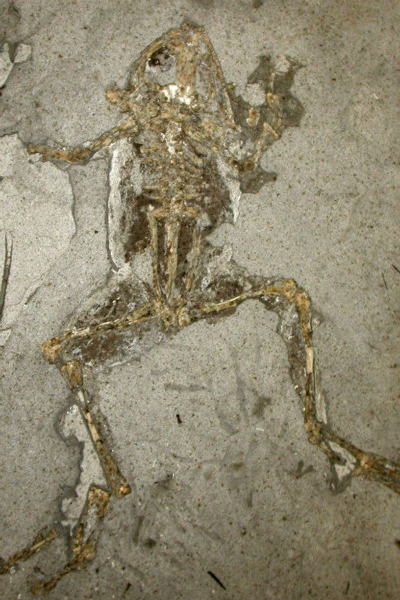
A frog fossil from Spain.
Scientists have detected new sources of melanin in fossil specimens.

Picture credit: Museo Nacional de Ciencias Naturales, Madrid, (Spain)

Study Published in “Nature Communications”

Writing in the academic journal “Nature Communications”,  the researchers looked at living and extinct amphibians.  It is known that extant vertebrates have melanosomes within internal tissues, the scientists demonstrated that these internal melanosomes have a high fossilisation potential and can vastly outnumber those from the skin.  This means that there could be a bias in fossils for preserved internal melanosomes thus “blurring” the picture when it comes to interpreting the colour of extinct animals.

Back to the Drawing Board?  Do we Really Know the Colour of Extinct Creatures?
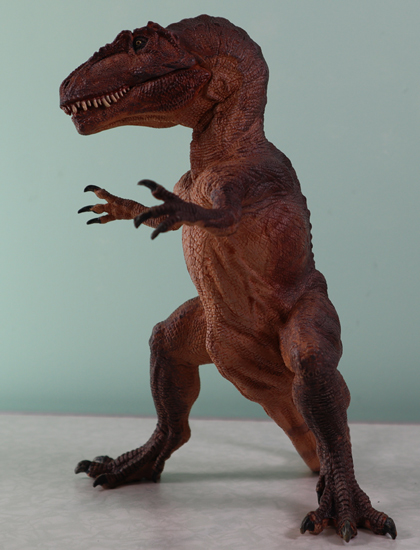
Papo Giganotosaurus.
The Papo Giganotosaurus dinosaur model. Picture credit: Everything Dinosaur.

Picture credit: Everything Dinosaur

The picture (above) shows a brown Papo Giganotosaurus dinosaur model. Is this an accurate reflection of Dinosauria colouration?

To view the Papo dinosaur model range: Papo Dinosaur Models and Figures.

Powerful microscopes in conjunction with the chemical analysis of body tissues demonstrated that internal melanosomes are abundant.  Lead author of the study, Dr Maria McNamara (University College Cork), stated:

“This means that these internal melanosomes could make up the majority of the melanosomes preserved in some fossils.”

However, all might not be lost as according to Dr McNamara, the shape and size of skin melanosomes are usually different from the melanosomes found in internal tissue.  If this is the case, it might permit palaeontologist to refine their melanosome assessments, differentiating between internal and skin melanosome types.  This could lead to more accurate depictions of extinct animals including dinosaurs.

Experiments with Decaying Frogs

Dr Paddy Orr (University College Dublin), along with Dr McNamara’s PhD student Valentina Rossi, also participated in the research, plotting the decay profiles of frogs in order to gain more information on how internal melanosomes can leak into other body parts during the fossilisation process.

Collaborator, Professor Mike Benton from the University of Bristol’s School of Earth Sciences, commented:

“Understanding the origin of melanosomes is crucial in the new studies of colour in dinosaurs and other extinct beasts.”

Slab and Counter Slab Splitting Can Influence the Picture

How a fossil is found in a slab or concretion can also influence any analysis of melanosomes.  The researchers examined the distribution of soft tissues in the slab and counter slab of fossil amphibians.  If the plane of splitting passes through the middle of the soft tissues, non-integumentary melanosomes can be exposed at the surface, producing nearly identical distributions of soft tissues in the slab and counter slab.

Distribution of Soft Tissues in the Slab and Counter Slab
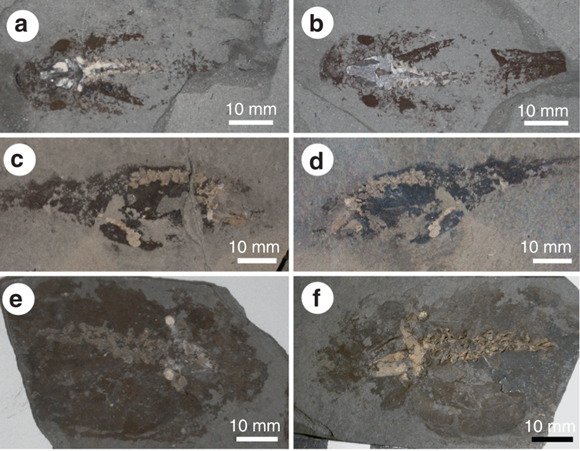
Amphibian fossils.
Amphibian fossils from Europe (slab and counter slab) showing nearly identical distribution of soft tissue between the two parts.

Picture credit: Nature Communications

The photographs (above), labelled a to f, show near identical distributions of soft tissues in the slab and counter slab components of a fossil.  However, if the fossil is split, not quite in the middle (not a medial split), then the slab and counter slab are likely to show different distributions of soft tissue components.  Internal melanosomes may still be exposed at the surface of the fossil.

Uneven Distribution of Soft Tissue Between Slab and Counter Slab
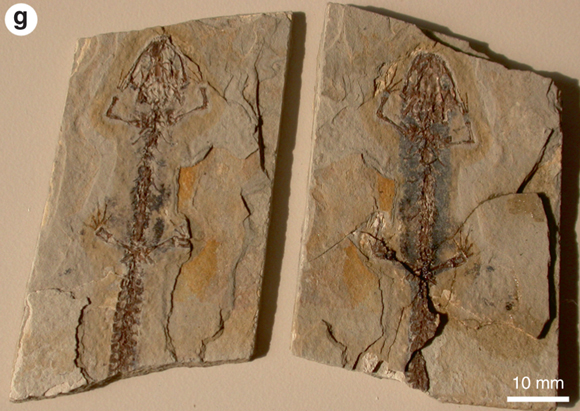
Chelotriton fossil salamander.
The dissimilar distribution of soft tissues in part and counterpart demonstrates that the plane of splitting is not precisely medial within the soft tissues; non-integumentary melanosomes may still be exposed at the surface.

Picture credit: Nature Communications

The picture (g), is the slab and counter slab of the prehistoric salamander Chelotriton from the Miocene of Spain.  The part of the fossil on the right shows more black staining, the remnants of soft tissues preserved in the fossil.  The plain of splitting of this fossil is not precisely medial, therefore leading to one side of the fossil showing greater staining than its counterpart.

A spokesperson from Everything Dinosaur commented:

“This newly published research, rather than thwarting attempts to reconstruct dinosaurs and other prehistoric animals, might actually lead to a refining of the illustration process, allowing palaeontologists and the palaeoartists that work closely with them to create more accurate reconstructions.”

Everything Dinosaur acknowledges the assistance of a media release from the University of Bristol in the compilation of this article.

Visit the Everything Dinosaur website: Everything Dinosaur.
19 07, 2018

How Much Food Did Sauropods Eat? That’s a Great Question!

By |2024-05-11T06:03:38+01:00July 19th, 2018|Categories: Dinosaur and Prehistoric Animal News Stories, Dinosaur Fans, Main Page, Palaeontological articles|1 Comment

New Research Examines the Diets of Giant Dinosaurs

How many plants would a ten tonne Diplodocus need to eat to keep it happy and healthy?  For that matter, what about one of its larger cousins such as the macronarian Camarasaurus that tipped the scales at an estimated twenty tonnes?  If you had a pet Dreadnoughtus  (D. schrani), a long-necked, herbivorous dinosaur that was heavier than a dozen African elephants, how much food would you need to feed it each day?

Super-sized Sauropods and Their Super-sized Digestive Tracts

Paleaontologist Dean Lomax explores a Ceitiosaurus.
A belly up view of “Whale Lizard”.  Palaeontologist Dean Lomax tackling the tummy of Cetiosaurus.  How much food did “Whale Lizard” eat?

Picture credit: Dean Lomax

Palaeontologists have puzzled over the dietary requirements of these super-sized animals for many years.  One of the theories put forward to explain the huge size of sauropods is that they needed to grow big so that they could carry around their vast digestive tracts that were needed to process the huge volumes of plant matter required to provide them with enough energy to do what dinosaurs needed to do.

Sauropoda body mass becomes a sort of self-fulfilling prophecy.  You grow up fast and grow big to avoid predation, so you require a lot food to sustain your body, the bigger you get the more food you need to keep you going, the larger the stomach, especially as your teeth don’t play any role in helping to break up tough stems and foliage.

A Novel Approach

A team of scientists, including researchers from Leeds University, Nottingham University and the University of Göttingen (Germany), have conducted a novel piece of research so that the dietary needs of the largest terrestrial vertebrates can be better understood.  The team grew their own dinosaur food in atmospheric conditions that replicated the environment of the Late Jurassic.  Writing in the journal “Palaeontology”, the research team report on an experiment in which they grew typical plants that would have played a role in the diet of giant, herbivorous dinosaurs, ferns, horsetails, monkey puzzle trees and ginkgos.

The Ancient Ginkgo (Maidenhair) Tree – Dinosaur Food Assessed in this Plant Growth Experiment

A Ginkgo biloba tree.
A small Ginkgo tree (G. biloba).  Typical of the canopy plants that would have been fed upon by sauropods. Picture credit: Everything Dinosaur.

Picture credit: Everything Dinosaur

Plants of the Jurassic Had a Low Nutritional Value

It had been thought that plants growing in an atmosphere with a high amounts of carbon dioxide had low nutritional value.  As a result, herbivorous dinosaurs had to consume vast quantities of plant material in order to obtain enough energy to sustain themselves.

A new experimental approach led by Dr Fiona Gill (School of Earth & Environment, Leeds University), has demonstrated that this may not be the case.  To explore the nutrition of a typical sauropod’s diet, a range of plants were chosen.  Plants representing the understory community, such as a fern (Polypodium vulgare), a type of horsetail (Equisetum hyemale) as well as Ranunculus acris, a member of the buttercup family to represent an early Cretaceous angiosperm (flowering plant), were selected.  Plants representing the forest canopy included the Ginkgo (G. biloba), Araucaria araucana, the monkey puzzle tree and a type of redwood conifer (Metasequoia glyptostroboides).

A Sauropod Stomach Study

The atmosphere was controlled as the plants were grown in walk-in growth chambers and the carbon dioxide concentrations were selected to represent a range of recent estimated CO2 values for the Mesozoic.  Although we are seeing a rise in atmospheric amounts of carbon dioxide today, it has been estimated that during the Age of Dinosaurs there was considerably more CO2 in the atmosphere.  By simulating prehistoric atmospheres, the research team could then cut leaves from the plants and test their nutritional value.  The understory plants were exposed to a Mesozoic climate for three months, the slower growing plants representing the canopy were give six months in the Mesozoic atmospheric conditions.

The Researchers Set Out to Create a Growing Room Atmosphere that Replicated the Conditions of the Mesozoic

A Jurassic scene
Turning walk-in growing rooms into the Jurassic!

An Artificial Sauropod Stomach

An artificial fermentation system was used to simulate digestion of the plant leaves in the sauropods’ enormous stomachs.  This permitted the research team to calculate the leaves’ nutritional value.  The results showed many of the plants had significantly higher energy and nutrient levels than previously believed.

The scientists concluded that these megaherbivores would have needed to consume much less plant material per day than previously thought.  Dinosaur numbers may not have been as constrained by the amount of plant food available.  Ecosystems could have potentially supported a much bigger dinosaur population density.  This might go some way to helping to explain the presence of lots of megaherbivores, including several different genera of sauropod present in the Upper Jurassic Morrison Formation of the United States.

Lead author Dr Gill, explained:

“The climate was very different in the Mesozoic Era, when the huge Brachiosaurus and Diplodocus lived with possibly much higher carbon dioxide levels.  There has been the assumption that as plants grow faster and/or bigger under higher CO2 levels, their nutritional value decreases.  Our results show this isn’t the case for all plant species.”

Higher CO2 Levels

Having modelled the effect of different food metabolisable energy (ME), contents in digested plants and plotted this against estimated energy requirements for different sized sauropods, the scientists concluded that instead of having to consume over a hundred kilograms of plants per day much smaller quantities would be required.  For example, a 10 tonne Diplodocus with an assumed energy requirement of 280 kJ of metabolisable energy per kilogram of body weight per day, feeding exclusively on ferns would need to eat 33.2 kg per day.  If it dined exclusively on horsetails it would need to eat 23.8 kilograms per day.  An elephant, although smaller, as an endothermic mammal has a much greater energy requirement and would need to consume around 40 kilograms of plant material to sustain it.

An African Elephant Compared to a Diplodocid

Comparing the food requirements of megaherbivores.
The nutritional requirements of dinosaurs have been compared to those of megaherbivores today. Picture credit: Everything Dinosaur.

Picture credit: Everything Dinosaur

Studying Dinosaur Diets

Dr Gill stated:

“The large body size of sauropods at that time would suggest they needed huge quantities of energy to sustain them.  When the available food source has higher nutrient and energy levels it means less food needs to be consumed to provide sufficient energy, which in turn can affect population size and density.  Our research doesn’t give the whole picture of dinosaur diet or cover the breadth of the plants that existed at this time, but a clearer understanding of how the dinosaurs ate can help scientists understand how they lived.”

This research is not limited to the Dinosauria, the same methodology can be utilised to model the atmospheric conditions at other points in geological deep time, to assess the nutritional requirements and feeding habits of long extinct, Miocene and Oligocene mammals for example.

The scientific paper: “Diets of Giants: the Nutritional Value of Sauropod Diet during the Mesozoic” by Fiona L. Gill, Jürgen Hummel, A. Reza Sharifi, Alexandra P. Lee, and Barry H. Lomax published in Palaeontology, the journal of the Palaeontological Association.

Visit the Everything Dinosaur website: Everything Dinosaur.

16 07, 2018

Does the Fossil Record Represent True Diversity? That’s a Great Question!

By |2024-05-11T06:09:36+01:00July 16th, 2018|Categories: Dinosaur and Prehistoric Animal News Stories, Dinosaur Fans, Palaeontological articles, Photos/Pictures of Fossils|0 Comments

How Helpful is the Fossil Record When it Comes to Extinct Animal Diversity?

When it comes to understanding biodiversity in ancient palaeoenvironments, scientists have to rely on the fossil record for their information. Ghost lineages can be inferred, the likelihood of related genera can be proposed using cladistics and phylogeny, but ultimately it is the fossils that form the basis of our understanding about how diverse life was in the past.  This reliance on fossil material has numerous drawbacks.  The fossil record is very incomplete and there is a large preservation bias between different organisms and different environments.  For example, a snail with its hard shell, living on the muddy bottom of a shallow sea has got more chance of becoming a fossil than a soft-bodied mushroom living in a temperate forest.

Palaeontologists have to ask themselves: can the fossil record can be trusted to provide information about biodiversity?

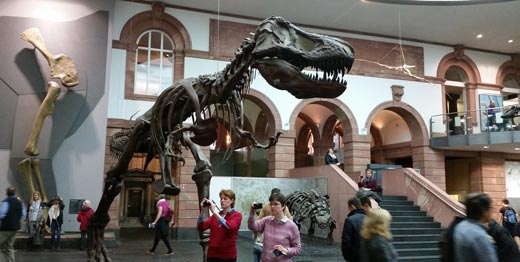
Tyrannosaurus rex Might Be Popular with Museum Visitors but Other Meat-eating Dinosaurs Have a Much Less Complete Fossil Record

T. rex skeleton at the Frankfurt Natural History Museum
T. rex might be very popular with museum visitors, but in reality most of the Tyrannosauroidae are very poorly known. Picture credit: Everything Dinosaur.

Mosasaurs Help to Provide Some Insight

Species are often named and described on the flimsiest of evidence, take for example famous dinosaurs such as Trachodon and Troodon, dinosaurs that were first named based on the finding of isolated teeth.  Fortunately, these days ,there is a higher bar set when it comes to establishing that a fossil represents an animal new to science, although some new species are still named based on very fragmentary fossils.

Could it be that our understanding of past biodiversity is simply related to the quality of fossil material in different geological rock formations through time?  This question relates to a fundamental debate within palaeontology about the quality and trustworthiness of the fossil record.

Exploring and Understanding the Fossil Record

Researchers from Bristol University and Leeds University set out to explore the relationship between the number and quality of fossils and their relationship with past diversity.  Writing in the journal “Palaeontology”, the scientists focused on the Mosasauridae, that family of marine reptiles closely related to today’s snakes and lizards that thrived in the Late Cretaceous before meeting their demise at the same time as the dinosaurs.

Using Mosasaur Models to Examine the Diversity of Extinct Animals

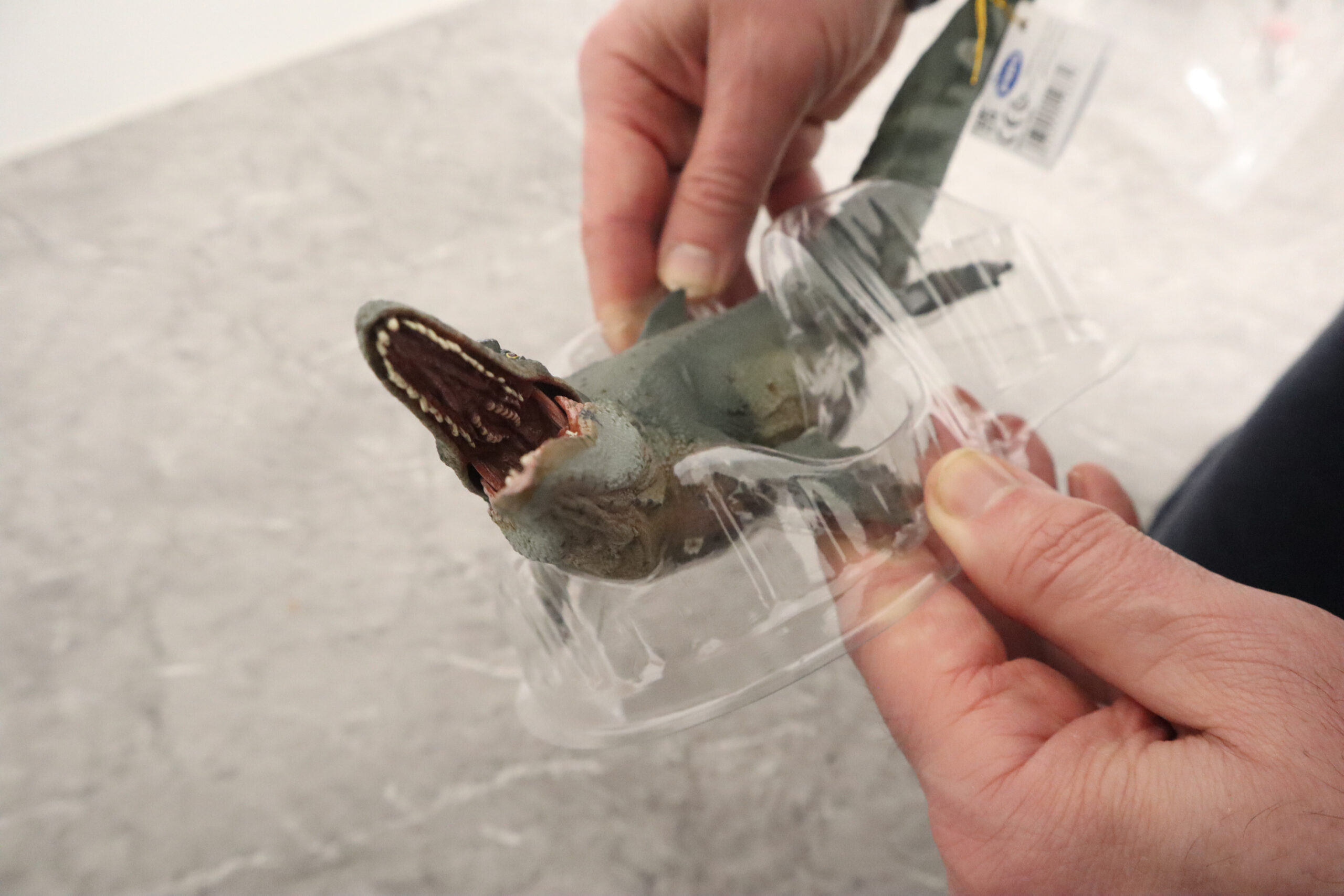
Pterygoid teeth of the Papo Mosasaurus model.
The Papo Mosasaurus figure has pterygoid teeth located in the roof of the mouth. A mosasaur model is used to help explain the diversity of the Animalia. Picture credit: Everything Dinosaur.

Picture credit: Everything Dinosaur

The picture (above) shows the Papo Mosasaurus model.

To view the range of Papo prehistoric animal figures: Papo Prehistoric Animal Models.

Mosasaurs evolved into a number of different forms during the Cretaceous, some were giants, measuring more than thirteen metres in length and were the apex predators of marine ecosystems.  Other species were much smaller such as the five-metre-long Platecarpus that fed on fish, squid and ammonites.  Scientists have even identified a possible freshwater species of mosasaur (Pannoniasaurus inexpectatus).

The Fossil Record Indicates Diversity Amongst the Mosasauridae

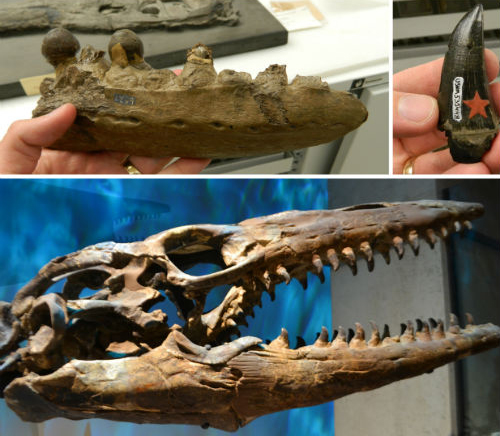
Illustrating the diversity of the Mosasaurs.
Fossils illustrate the diversity of the Mosasauridae.

Picture credit: Tom Stubbs and Dan Driscoll

The picture (above), illustrates some of the diversity found in the Mosasauridae.  Some species are known from very fragmentary remains such as isolated bones and teeth, other species have been named based on far more complete skeletons.  The partial lower jaw (top picture), shows the rounded teeth, almost ball-like teeth of a member of the Globidensini tribe of mosasaurs.  A group of mosasaurs that evolved specialised teeth to cope with hard-shelled prey such as ammonites and crustaceans (durophagous diet). 

The photograph (far right), shows a single mosasaur tooth.  It is very large and the crown is robust and pointed, typical dentition associated with predatory behaviour, attacking and consuming other large vertebrates.  The picture (bottom), shows a complete, restored skull of a mosasaur with a jaw containing small, recurved teeth indicative of a diet of fish or other small slippery creatures such as squid.

Dr Dan Driscoll (Bristol University), the lead author of the research stated:

“Mosasaurs have one of the richest vertebrate fossil records and have attracted study for over two centuries.  The first mosasaur described was in 1808!  Often, studies of fossil record quality have focused simply on the numbers of fossil species, however, it is important to consider the completeness of individual fossil specimens, and whether this distorts our view of diversity.  To do this, robust statistical analysis is required.”

Using Mathematical Models to Test the Completeness of the Mosasaur Fossil Record

The researchers documented over four thousand and eighty mosasaur specimens and scored them for their degree of completeness.  This is the largest quantitative analysis of its kind undertaken to date.  By using mathematical modelling, the scientists were able to demonstrate that fossil completeness does not bias the fossil record of mosasaurs and that the rich fossil record of the Mosasauridae does provide an accurate illustration of the diversity and evolutionary history of these marine reptiles.

The Diverse Mosasauridae Family Occupied a Number of Niches within Marine Ecosystems

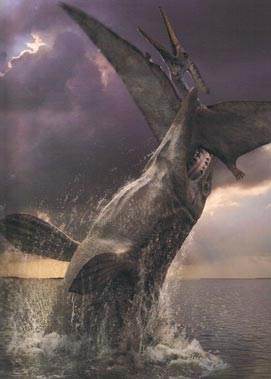
Tylosaurus attacks.
Fearsome marine reptiles such as Tylosaurus were apex predators.

Picture credit: BBC Worldwide

Bristol University’s Dr Tom Stubbs, a co-author of the study explained:

“Mosasaurs were key players in Late Cretaceous marine ecosystems.  Our study confirms that Mosasaurs were a successful group of animals that continued to diversify through their evolutionary history, before being abruptly wiped out by the extinction event that also impacted dinosaurs and many other groups.”

Fresh Insights into Mosasauridae Evolution

The conclusions provided by this new research reveals new insights into the evolution of the Mosasauridae, and highlights that, although the fossil record is most definitely incomplete, variable fossil completeness does not appear to bias large scale evolutionary and ecological patterns.

Co-author, Dr Alex Dunhill, (School of Earth and Environment at the University of Leeds), added:

“Palaeontologists often presume that the vertebrate fossil record is heavily biased by sampling.  This may be so but, here we show that variation in the completeness of fossil specimens does not appear to bias large scale evolutionary patterns.”

Everything Dinosaur acknowledges the assistance of a media release from the University of Bristol in the compilation of this article.

The scientific paper: “The Mosasaur Fossil Record Through the Lens of Fossil Completeness” by D. Driscoll, A. Dunhill, T. Stubbs and M. Benton published in Palaeontology.

Visit the Everything Dinosaur website: Everything Dinosaur.
12 07, 2018

In the Pink! Life’s First Colour

By |2023-10-19T06:43:57+01:00July 12th, 2018|Categories: Geology, Main Page, Palaeontological articles|0 Comments

Scientists Identify the World’s Oldest Biological Colours

A team of international scientists including researchers from the University of Liège, Florida State University and the Australian National University, in collaboration with a colleague based in Japan have discovered the oldest colours preserved in the fossil record.  An analysis of the remains of microscopic, 1.1 billion-year-old cyanobacteria suggest that life back in the Proterozoic was “in the pink”.  Pink coloured pigments have been extracted from ancient marine shales that form part of the Taoudeni Basin of Mauritania (north-western Africa).

When Held Up in the Light the Pink Colouration can be Seen

A vial of pink pigments porphyrins - representing the oldest intact pigments in the world.
The oldest colours found to date.

Picture credit: Australian National University

Pink in the Fossil Record

One of the authors of the scientific paper, published in the “Proceedings of the National Academy of Sciences of the USA”, Dr Nur Gueneli (Australian National University), explained that the pigments taken from the marine black shales were more than six hundred million years older than previous pigment discoveries.

Dr Gueneli commented:

“The bright pink pigments are the molecular fossils of chlorophyll that were produced by ancient photosynthetic organisms inhabiting an ancient ocean that has long since vanished.”

Samples of the shales laid down during the Stenian, the last geological period of the Mesoproterozoic Era, were ground into fine powder before the ancient molecules of long extinct cyanobacteria could be extracted and analysed.  The fossils reveal a range of colours from a blood red to a deep purple in their concentrated form, but when diluted, it is the colour pink that dominates.

Dr Gueneli, who undertook this research whilst studying for a PhD added:

“The precise analysis of the ancient pigments confirmed that tiny cyanobacteria dominated the base of the food chain in the oceans a billion years ago, which helps to explain why animals did not exist at the time.”

A Lack of Things for Higher Organisms to Eat

Complicated animal life was not able to evolve, according to one hypothesis, as it was restrained by the lack of food in the ocean.  In essence, life on Earth could not pick up the evolutionary pace as food webs were constrained by the amount of primary producers in the ecosystem.

Through the team’s discovery of molecular fossils of the photopigment chlorophyll in 1.1-billion-year-old marine sedimentary rocks, they were able to quantify the abundance of different organisms that uses the sun’s energy to produce food (phototrophs).  Nitrogen isotopic values of the fossil pigments revealed that the Pan-African Ocean was dominated by cyanobacteria, while larger planktonic algae were very scarce.  These findings support the hypothesis that small cells at the base of the food chain limited the flow of energy to higher trophic levels, potentially retarding the emergence of large and complex life.

Associate Professor Jochen Brooks, of the Research School of Earth Sciences (Australian National University), one of the authors of the scientific paper, stated that the emergence of more complex life forms was likely to have been restricted by the limited supply of larger food particles, such as algae.

Associate Professor Brooks explained:

“Algae, although still microscopic, are a thousand times larger in volume than cyanobacteria, and are a much richer food source.  The cyanobacterial oceans started to vanish about 650 million years ago, when algae began to rapidly spread to provide the burst of energy needed for the evolution of complex ecosystems, where large animals, including humans, could thrive on Earth.”

Visit the Everything Dinosaur website: Everything Dinosaur.

9 07, 2018

Triassic Dinosaurs Just Got a Lot Bigger! According to New Research

By |2024-05-11T06:11:05+01:00July 9th, 2018|Categories: Dinosaur and Prehistoric Animal News Stories, Dinosaur Fans, Main Page, Palaeontological articles|0 Comments

Ingentia prima – Giant Late Triassic Sauropodomorph from Argentina

Argentina might have been home to huge, plant-eating dinosaurs associated with Cretaceous-aged strata, after all, one of the biggest terrestrial vertebrates known to science is the titanosaur called Argentinosaurus (A. huinculensis), just one of a number of super-sized leviathans from this part of the world.  However, a team of scientists, writing in the academic journal “Nature Ecology & Evolution” have announced the discovery of yet another giant, South American dinosaur. However, this one is a Triassic dinosaur. One that roamed northern Argentina around 210 million years ago.

A Giant Triassic Dinosaur

The dinosaur, classified as a member of the Sauropodomorpha, has been named Ingentia prima and it was certainly very big for a Late Triassic animal, with an estimated body weight of around ten tonnes and a length of approximately ten metres.  To provide a comparison, the sauropodomorph Plateosaurus (P. engelhardti), from the Late Triassic of western Europe, that would have been a contemporary of Ingentia prima, is estimated to have reached a length of about eight metres with a body mass of around four tonnes.  The later sauropodomorph Lufengosaurus (L. huenei), from the Early Jurassic of China, might have been around six metres long and is estimated to have weighed more than 1.5 tonnes, Ingentia is much, much bigger.

Sauropodomorpha Size Comparison

Sauropodamorpha size comparison.
Sauropodomorpha size comparison Plateosaurus, Lufengosaurus and Ingentia prima compared.

Picture credit: Everything Dinosaur with I. prima illustration by Jorge A. González

First Giant

The discovery of Ingentia prima does rather upset the dinosaurian apple cart.  It had been thought that gigantism in the sauropodomorphs evolved in the Early Jurassic, however, here was a ten-tonne giant, comparable in size to those Early Jurassic sauropods that roamed some thirty-five million years later.  The evolution of giant, plant-eating, long-necked dinosaurs came about as a result of the development of numerous anatomical characteristics but I. prima displays many features of the body plan of basal, small sauropodomorphs and lacks most of the anatomical traits previously regarded as adaptations to gigantism.

The Fossilised Material in the Field (Partial Exposure)

Ingentia prima fossils.
The fossil material representing a single, large individual dinosaur is partially exposed.

Picture credit: Cecilia Apaldetti

Lead author of the scientific paper, Dr Cecilia Apaldetti (Universidad Nacional de San Juan, San Juan, Argentina), commented:

“It [Ingentia] was enormous.  It was at least twice as large as the other herbivores of the time and until now it was believed the first giants to inhabit the Earth originated in the Jurassic, about 180  million years ago.”

The dinosaur’s scientific name pays tribute to its size, the name translates from the Latin to “first giant”.  It had been thought, that if the first dinosaurs appeared around 230 million years ago, it took fifty million years for the first giants to evolve, the discovery of a partial skeleton in San Juan Province (north-western Argentina), has changed all that.

Quebrada del Barro Formation

The fossil material consisting of shoulder blades, cervical vertebrae (neck bones) and elements from the forelimbs, heralds from the Quebrada del Barro Formation.  The Ingentia fossil material was found adjacent to the fossilised remains of three individuals belonging to the already known and closely related species Lessemsaurus sauropoides, which had been named and scientifically described back in 1999.

The researchers, in addition to describing I. prima formally for the first time, were able to examine the three new specimens of Lessemsaurus sauropoides.  Ingentia has been placed in a newly erected family of long-necked dinosaurs, the Lessemsauridae, a branch of the Sauropoda that evolved gigantic forms like the later Eusauropods (true sauropods).  The Eusauropoda includes those famous Jurassic giants such as Diplodocus, Brontosaurus and Brachiosaurus, as well as the later titanosaurs such as the mighty Argentinosaurus, which roamed Argentina some 115 million years after Ingentia became extinct.

Circular Saws were used to Help Extract the Large Fossil Bones

Extracting the fossils of Ingentia prima.
Circular saws were used to remove the larger blocks of fossils after they had been jacketed.

Picture credit: Cecilia Apaldetti

Why was a Triassic Dinosaur so Big?

Early sauropodomorphs were small, agile bipeds, but the ancestors of Ingentia adopted a different evolutionary strategy.

A spokesperson from Everything Dinosaur commented:

“Developing a larger gut would allow more effective processing of tough vegetation, enabling these types of dinosaurs to extract more nutrients from the plants that they consumed.  Furthermore, by becoming big, these dinosaurs would have had less to fear from the predators that shared their environment, including theropod dinosaurs.  If you are very large, a meat-eating dinosaur might avoid you and look for an easier meal elsewhere.  Becoming a giant is an evolutionary strategy found in a number of herbivorous animals”.

The Remarkable Skeleton of Ingentia prima

The lessemsaurids (Ingentia, Lessemsaurus and a third Early Jurassic dinosaur from South Africa named Antetonitrus), may have lacked the extremely long necks found in later eusauropods, but their bones reveal some remarkable adaptations nonetheless.  Pneumatic structures have been identified in the vertebrae (air sacs), this indicates that these dinosaurs had a sophisticated and extremely efficient bird-like respiratory system.  These air sacs will have also helped to prevent these animals from overheating, a problem with large creatures, (surface area to volume ratio – hence one of the reasons why African elephants have large ears).  This kind of respiratory system implies the presence of cavities in their bones – a pneumatised skeleton that would have helped to lighten the animal and make locomotion more efficient.

Although Ingentia shows these adaptations to gigantism, it lacks many of the features associated with the later sauropods.  For example, its legs were more bent and not the huge, weight-bearing columns associated with the Diplodocidae and the Macronaria.

The Remarkable Bones and Respiratory System of Ingentia prima

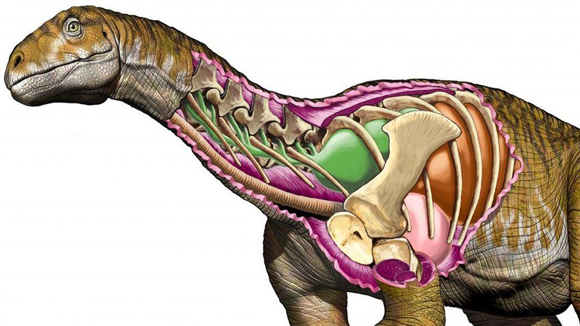
The sophisticated respiratory system of Ingentia prima.
The air sacs of Ingentia (green) the lungs shown in brown.

Picture credit: Jorge A. González

A Triassic Dinosaur Ahead of its Time

The quality of bone preservation permitted the research team to examine the histology of the dinosaur’s bones.  The scientists compared the bone growth in the new fossils with those of an earlier, bipedal sauropodomorph as well as a later eusauropod.  The histology of the earlier sauropodomorph revealed a cyclical growth pattern, the animal growing in spurts, whereas, the eusauropod bones, when examined in cross-section, revealed another pattern of growth.  This dinosaur grew acyclically, growing throughout its long life.  Members of the newly erected Lessemsauridae family grew differently.  Their bones show evidence of growth spurts, a trait found in their ancestors but when they grew, they really put on a spurt.  The researchers identified a growth rate of around two to three times faster than the already impressive rate of the later eusauropods.

Ingentia demonstrates that the first wave of colossal giant dinosaurs evolved some thirty-five million years earlier than previously thought.  In addition, with an accelerated growth rate, unique limb adaptations and a bird-like respiratory system, the Lessemsauridae got big but they did it in a different way when compared to the later long-necked dinosaurs.

When it comes to the “LESSemsauridae” – Less may actually mean more…

The scientific paper: “An Early Trend Towards Gigantism in Triassic Sauropodomorph Dinosaurs” by Cecilia Apaldetti, Ricardo N. Martínez, Ignacio A. Cerda, Diego Pol & Oscar Alcober published in the journal Nature Ecology & Evolution.

Visit the Everything Dinosaur website: Everything Dinosaur.

2 07, 2018

A Placoderm “Platypus” Fish from Australia (Where Else)?

By |2023-10-18T07:01:15+01:00July 2nd, 2018|Categories: Dinosaur and Prehistoric Animal News Stories, Main Page, Palaeontological articles, Photos/Pictures of Fossils|0 Comments

Brindabellaspis – Placoderm Resident on Australia’s First Reef

The Queensland coast (Australia), might be famous for its Great Barrier reef today, but this was not Australia’s original reef, some 400 million years ago, there was a reef, located in what is now New South Wales, mostly built by entirely different types of organisms, that was a natural wonder of the Early Devonian.  Living on the bottom of the shallow sea in which this ancient reef formed was a strange-looking fish, with a sensitive beak, oddly reminiscent of another, not quite so ancient resident of  “Down Under” – a duck-billed platypus.  This strange animal has been named Brindabellaspis stensioi.

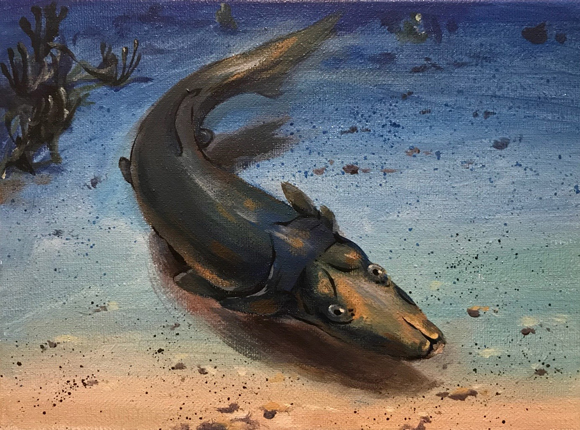
New Research Suggests that Brindabellaspis stensioi had a Sensitive “Beak” Like A Duck-billed Platypus

Brindabellaspis life reconstruction.
Brindabellaspis stensioi illustration.

Picture credit: Jason art Shenzhen

Brindabellaspis stensioi

The placoderm, named Brindabellaspis stensioi was originally scientifically described in 1980.  However, new fossil specimens, revealed by carefully removing the rock matrix using dilute acids, have shed new light on the evolution of jaws and provided palaeontologists with evidence that the earliest fish dominated ecosystems supported a myriad of forms.

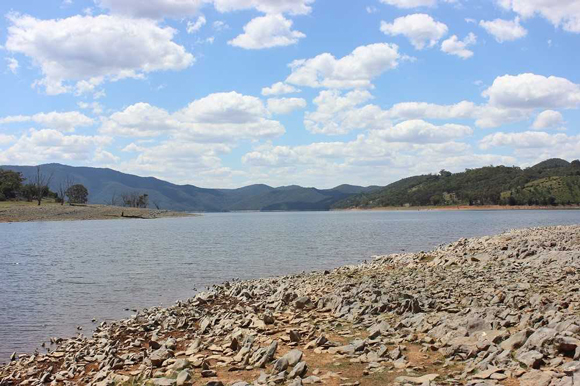
Limestone beds exposed on the shores of Lake Burrinjuck in New South Wales have preserved an extensive reef fauna.  Over seventy species of fish have been identified to date, of these, it is the placoderms that dominate, with around 45 species named and described so far.  Palaeontologists from Flinders University (South Australia) and the Australian National University (Australian Capital Territory), have reconstructed two of the ancient fossils and discovered that Brindabellaspis had a long bill (rostrum), extending out in front of its eyes.

The Picturesque Limestone Beds of Lake Burrinjuck

400 million-year-old limestone beds of Lake Burrinjuck.
Lake Burrinjuck in New South Wales (Australia).

Picture credit: Flinders University

One of the authors of the study, published in “Royal Society Open Science” Benedict King, a Flinders University graduate stated:

“This was one strange looking fish.  The eyes were on top of the head and the nostrils came out of the eye sockets.  There is this long snout at the front, and the jaws were positioned very far forward.”

A Unique Sensory System

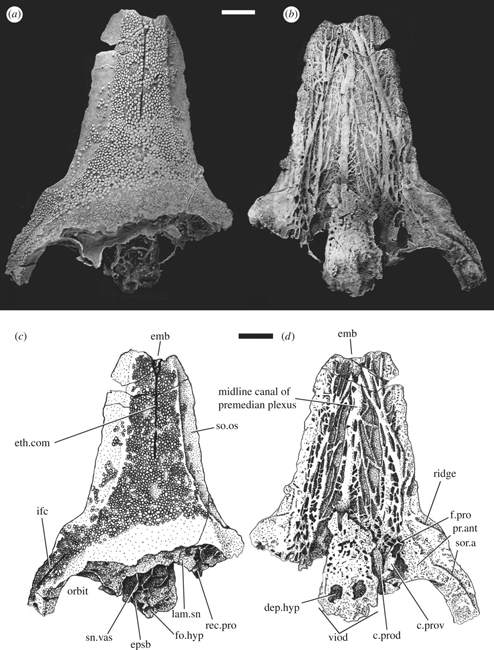
Following a comprehensive evaluation of the skull including the anterior portion (revealed for the first time with these new specimens), the researchers discovered an exceptionally long premedian bone forming an elongated rostrum, supported by a thin extension of the postethmo-occipital unit of the braincase.  This seems to be a modified form of pressure sensor, perhaps used to detect prey in the muddy/sandy bottom of the seafloor.

Professor John Young (Flinders University), a world authority on ancient fish and a co-author of the paper added:

“We suspect that this animal was a bottom-dweller.  We imagine it used the bill to search for prey, somewhat like a platypus, while the eyes on top of the head looked out for danger from above.”

Adding the Missing Pieces – Thirty-Eight Years Later

For Dr Gavin Young (Flinders University), the discovery of the front portions of the skull and that remarkable, sensitive rostrum helps to “flesh out” his original research on Brindabellaspis stensioi.  Dr Young has spent more than five decades studying the fossil fish from the Lake Burrinjuck limestone beds, Dr Young was responsible for naming and describing this placoderm in 1980, now thanks to these new fossils and high-resolution X-ray tomography, this 400-million-year-old fish has a face, albeit a very peculiar one, but one that may demonstrate convergent evolution with the egg-laying monotreme (platypus – Ornithorhynchus anatinus).

New Specimens of  Brindabellaspis stensioi  Included in this Study

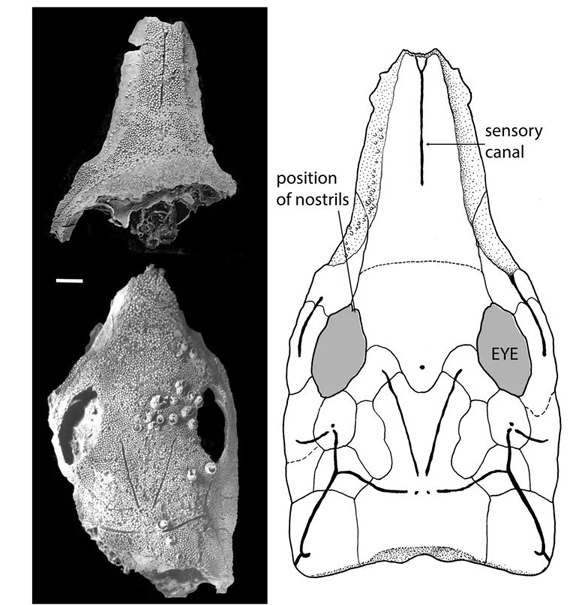
Brindabellaspis fossils and a line drawing.
The rostrum and one of the new skull fossils with a line drawing.  Note scale bar (left) equals 1 centimetre.

Picture credit: Royal Society Open Science

Dr Young explained:

“When we saw the dense sensory tubes on another broken snout, we immediately thought of the local platypus.  I am very gratified there is finally an accurate reconstruction of this strange skull.”

Specialists and not Generalists

The scientists conclude that as Brindabellaspis was clearly such a specialist, then the ancient reef was a thriving and very diverse ecosystem with very probably, a range of specialist organisms making a living on the reef and in the surrounding shallow waters.

Professor Long commented:

“Despite this being one of the earliest well-known ecosystems including many species of fish, the inhabitants of this ancient reef were clearly not in any way primitive.  The new findings show that they were highly adapted and specialised in their own right.”

The Elongated Premedian Plate (Rostrum) of Brindabellaspis stensioi

Brindabellaspis elongated premedian plate.
The elongate premedian plate of Brindabellaspis. ANU V3247 in dorsal (a) and ventral (b) views. (c,d).  Interpretative drawings of a and b.  Scale bars represent 10 mm.

Picture credit: Royal Society Open Science

The scientific paper: “New Information on Brindabellaspis stensioi Young, 1980, Highlights Morphological Disparity in Early Devonian Placoderms” by Benedict King, Gavin C. Young and John A. Long published in by Royal Society Open Science.

Everything Dinosaur acknowledges the assistance of a press release from Flinders University in the preparation of this article.

Visit the Everything Dinosaur website: Everything Dinosaur.

26 06, 2018

Watching the Birdie – Head for the Southern Hemisphere

By |2023-10-16T14:10:32+01:00June 26th, 2018|Categories: Dinosaur and Prehistoric Animal News Stories, Main Page, Palaeontological articles, Photos/Pictures of Fossils|1 Comment

Fossil Bird Challenges Perceptions About Avian Evolution

Researchers from the Swedish Museum of Natural History and the Milner Centre for Evolution at the University of Bath, have re-examined the fossilised remains of an ancient bird from Wyoming, which casts doubt on the generally held perception that the ancestor of all modern birds originated in the Southern Hemisphere.  An examination of the avian fossil record has provided a fresh perspective. The fossil bird, named Foro panarium, was originally described and named back in 1992, but where this 52 million-year-old bird would perch on the avian family tree has been the subject of much debate.

Dr Daniel Field (Milner Centre for Evolution), in collaboration with Alison Hsiang (Swedish Museum of Natural History), have produced a scientific paper that supports the idea that this robust but poor flyer with relatively long legs from the famous Eocene-aged Green River Formation, is the earliest known example of a group of birds called Turacos or “banana eaters”.

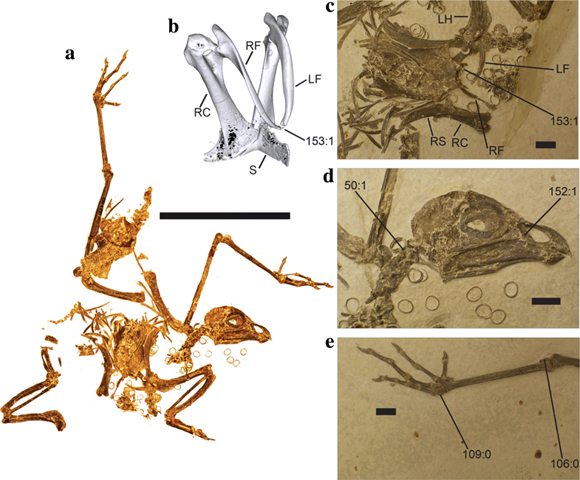
Comparing the Skeleton of F. panarium to the Extant Ross’s Turaco (M. rossae)

Holotype of Foro panarium compared to living Turaco species.
The holotype specimen of F. panarium compared to a living species of Turaco.

Picture credit: BMC Evolutionary Biology

The picture (above) shows a stylised image of the holotype specimen of Foro panarium (a, c, d, e) compared to (b) 3-dimensional CT rendering of the pectoral region of Ross’s Turaco (Musophaga rossae).  Note scale bar is 10 centimetres.

Birds – the Most Specious of all the Terrestrial Vertebrates

Some commentators might state that we are living in “the age of mammals”, it is true that many of  the apex predators, large herbivores and hyper-carnivores around today are mammalian, but in terms of the number of species, there are more species of birds (estimated at 11,000), than there are species of mammals, or amphibians and reptiles for that matter.  In addition, there are far more bird species in the Southern Hemisphere than in the Northern Hemisphere.  Charles Darwin during his voyage on the Beagle, marvelled at the great diversity of bird species he encountered on his travels through South America, the Galapagos and islands of the Pacific Ocean.

Naturalists are very aware of the dramatically uneven global distribution of today’s Aves.  Not only are species numbers higher south of the Equator, but many major groups of birds are entirely restricted to Africa, Australasia and South America which were all, once upon a time, part of the great southern super-continent of Gondwana.

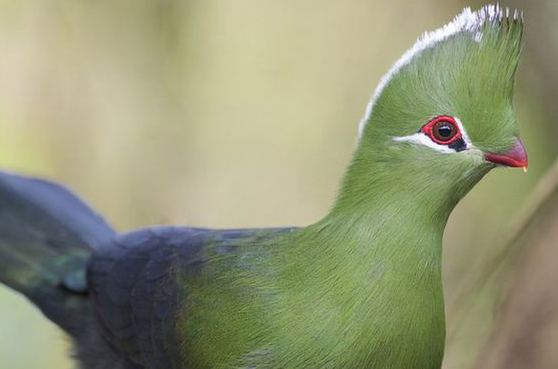
Turaco Birds are Known for their Beautiful Plumage

 Guinea Turaco (T. persa).
A beautiful Turaco bird.  A Guinea Turaco (T. persa)

Picture credit: Dr Daniel Field

Studying the Avian Fossil Record

Dr Field and Dr Hsiang set out to examine the avian fossil record to see if they could help to explain the uneven geographic distribution of modern-day birds.  Did, as many scientists believe, the ancestor of all modern birds (Neornithes), originate in the Southern Hemisphere, or are there more complex issues in play restricting the distribution of birds through deep time?

In order to map the evolutionary history of our feathered friends – the avian dinosaurs, the scientists turned to the fossil record for answers.  Writing in the academic journal “BMC Evolutionary Biology”, the scientists report their study of the 52-million-year-old fossil bird named Foro panarium.  The taxonomic placement of this species has been controversial, as the fossil shows a mixture of anatomical characteristics.  However, using updated information relating to other Eocene and Palaeocene bird species, the researchers concluded that the specimen represents the earliest known relative of the “banana eaters”, the Turacos (Musophagidae family).

Turning to the Fossil Record

Turacos today are entirely restricted to sub-Saharan Africa.  This enigmatic family of birds are renowned for their bright, gaudy plumage, elaborate head crests and some species have very loud alarm calls (hence their nick-name in parts of Africa, “go away birds”).  The feathers of several species contain unique pigments that generate bright green and magenta tones.

If the American fossil bird F. panarium is indeed a basal member of the Musophagidae, then it suggests that these birds had a much wider, global distribution in the distant past.  If this is the case, then why are extant Musophagidae  members restricted to Africa?

Biogeographical  and Bayesian Statistical Phylogenetic Analysis

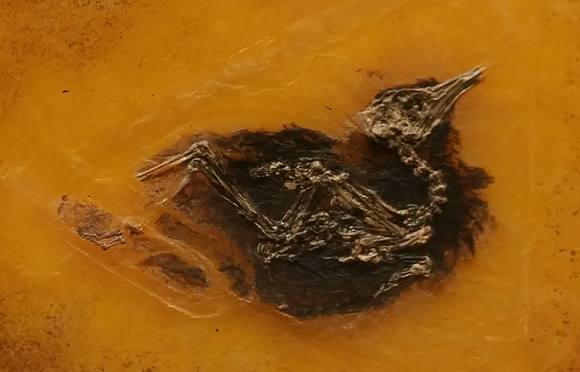
Furthermore, an examination of the fossil record of Aves, suggests that Foro panarium is not the only example of a fossil bird being discovered outside the modern geographical distribution for that kind of bird.  For example, the Trogoniformes (Trogons and Quetzal birds), which are restricted to the Southern Hemisphere today, have basal members preserved in fossils from the Messel Shales of Germany.

The Beautifully Preserved Remains of a Bird from the Messel Shales of Germany

Bird Fossil - Messel shale.
A bird fossil from the Messel shale of southern Germany. Picture credit: Everything Dinosaur.

Picture credit: Everything Dinosaur

The scientists confirm the complex historical biogeography of crown birds across geological timescales.  The geographical distribution of ancient species and their subsequent radiation and restriction is likely to be much more complicated than previously thought.  The idea that the common ancestor of all living birds (Neornithes), arose in the Southern Hemisphere is not discounted, but this paper suggests that this assertion may not be as strongly supported by the evidence as previously thought.

Commenting on the significance of this study, Dr Field stated:

“Our picture of bird evolutionary history will continue to grow sharper as each new bird fossil gets unearthed.”

Shedding Light on the Turaco Lineage

It is likely that the birds went through a rapid phase of evolution after the End-Cretaceous extinction event that saw the demise of many ancient avian groups as well as the non-avian dinosaurs.  A seed-eating diet, may have helped numerous lineages to persist as the world’s ecosystems recovered.

To read a recent article about this: Seed Eating May Have Helped Some Types of Bird to Survive the Cretaceous Extinction Event.

For the F. panarium fossil specimen itself, it may provide vital clues as to the age of the Musophagidae.  Turacos must have diverged from their closest living relatives by at least 52 million years ago, (by the middle of the Ypresian faunal stage), thus supporting the idea of a rapid diversification of the Aves during the Palaeocene Epoch.

The fossil also provides some intriguing insights into the evolution of modern Turaco biology.  Living Turacos have short hindlimbs and hind feet claw adaptations to help them to perch in trees.  In contrast, the fossilised hindlimbs of Foro panarium are quite long, suggesting that this bird was more of a ground-dweller than its modern descendants.

The scientific paper: “A North American Stem Turaco, and the Complex Biogeographical History of Modern Birds” by Daniel J, Field and Allison Y. Hsiang published in the journal BMC Evolutionary Biology.

Visit the Everything Dinosaur website: Everything Dinosaur.

24 06, 2018

Amazing Fossil Fungi Described in New Scientific Paper

By |2024-05-08T20:34:57+01:00June 24th, 2018|Categories: Main Page, Palaeontological articles, Photos/Pictures of Fossils|0 Comments

Mesozoic Mushrooms

The evolutionary history of the Fungi – (Kingdom Fungi), toadstools, yeasts, moulds, mushrooms and such like is very poorly understood.  These soft-bodied eukaryotes, which are so important when it comes recycling nutrients in ecosystems, have an exceptionally sparse fossil record.  Twelve months ago, researchers writing in the on-line academic journal described very remarkable fossil fungi.  A mushroom that had been found preserved in Cretaceous-aged rocks from Brazil.

Fossil Fungi

The Oldest Fossil Mushroom

Early Cretaceous mushroom Gondwanagaricites magnificus.
Gondwanagaricites magnificus fossil and line drawing.

Picture credit: PLOS One

The picture (above) shows a picture of the gilled mushroom (A) and an accompanying line drawing (B).  The fossil from the Lower Cretaceous Crato Formation of north-eastern Brazil, represents the oldest fossil mushroom discovered to date and the first to be identified from the southern super-continent of Gondwana.

Gondwanagaricites magnificus

The specimen was collected from the laminated limestones of the Crato Formation, which outcrop on the northern flanks of the Chapada do Araripe in Ceará, (Brazil).  Other fossil mushrooms, (Class Agaricomycetes, Order Agaricales) are preserved in the fossil record, but these fossils are associated with amber inclusions, all of which relate to younger material (Mid-Cretaceous to Miocene amber).

The genus name for this remarkable discovery (paper published in 2017), is derived from Gondwana and the Greek “agarikon” meaning mushroom.   The species epithet is from the Latin, meaning splendid or magnificent, a reference to the remarkable state of preservation of the specimen.

The scientific paper: “The Oldest Fossil Mushroom” by Sam W. Heads , Andrew N. Miller, J. Leland Crane, M. Jared Thomas, Danielle M. Ruffatto, Andrew S. Methven, Daniel B. Raudabaugh, Yinan Wang published in the open access on-line journal PLOS One

A correction to the original paper, concerning the correct nomenclature to be used when referring to this amazing example of a fossilised fungus has just been published.

The Crato Formation, might be more famous for its pterosaur fossils, but the preservation of a gilled mushroom in this Lagerstätten is nothing short of astonishing.

Visit the Everything Dinosaur website: Everything Dinosaur.

23 06, 2018

Rare Stem Mammal Skull Re-shapes Ancient Landmasses

By |2024-05-11T06:07:34+01:00June 23rd, 2018|Categories: Dinosaur and Prehistoric Animal News Stories, Dinosaur Fans, Main Page, Palaeontological articles, Photos/Pictures of Fossils|0 Comments

Cifelliodon wahkarmoosuch – Pangaea Split Later Than Thought

A fossilised skull of a stem mammal dating back to the Lower Cretaceous suggests that the super-continent Pangaea split up more recently than previously thought.  The skull, identified as a new species, comes from Utah and it indicates that there were still land links between North America and other landmasses making up Pangaea, as this is the first evidence of a member of the Hahnodontidae to have been described from North American fossil material.

Linking Super-continents Cifelliodon wahkarmoosuch

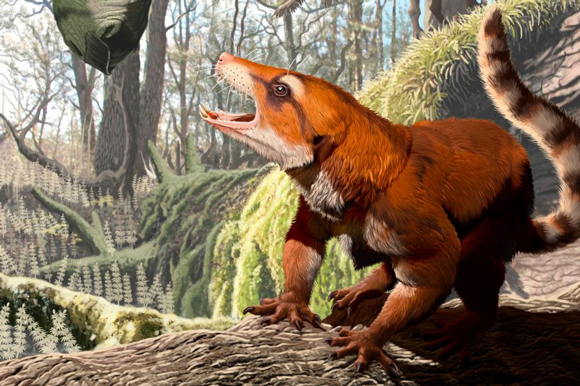
Cifelliodon wahkarmoosuch life reconstruction.
A life reconstruction of the stem mammal C. wahkarmoosuch.  The fossilised skull of this small stem mammal suggests that Pangaea broke up later than previously thought.

Picture credit: Jorge A. Gonzalez

Scientists, including researchers from the University of Chicago and the Utah Geological Survey writing in the journal “Nature”, have named the new stem mammal Cifelliodon wahkarmoosuch.

Lead author of the study Zhe-Xi Luo (University of Chicago), explained that palaeontologists had thought that the primitive precursors to today’s mammals – the monotremes, marsupials and placental mammals, were anatomically similar and ecological generalists.  However, recent fossil discoveries suggest that many stem mammals were very specialised.

Zhe-Xi Luo stated:

“Now we know mammal precursors developed capacities to climb trees, to glide, to burrow into the ground for subterranean life, and to swim.  With this new study, we also know that they dispersed across from Asia and Europe, into North America, and farther onto major southern continents.”

Honouring Richard Cifelli

The genus name honours American palaeontologist Richard Cifelli, at Oklahoma University.  Professor Cifelli is regarded as one of America’s leading experts in North American Cretaceous mammals.  The species name “wahkarmoosuch”, means “Yellow Cat” in the local native American language for that part of Utah.  The fossil comes from the Yellow Cat Member of the Cedar Mountain Formation.  Sophisticated high-resolution computerised tomography (CT), was used to create a detailed, three-dimensional model of the skull.

James Kirkland, co-author of the paper and a Utah State palaeontologist commented:

“The skull of Cifelliodon is an extremely rare find in a vast fossil-bearing region of the Western Interior, where the more than 150 species of mammals and reptile-like mammal precursors are represented mostly by isolated teeth and jaws.”

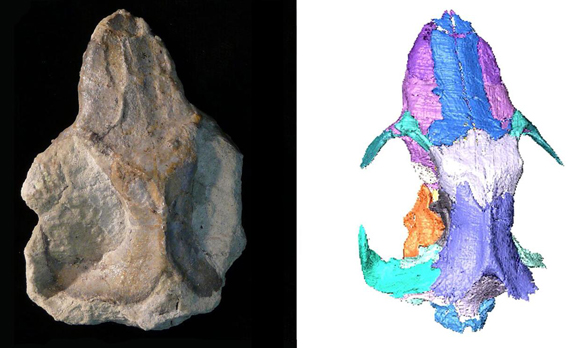
The Fossilised Skull of C. wahkarmoosuch and a Computer -generated Image of the Fossil Material

The skull and scan of C. Dorsal view of the fossil skull (left) and the computer generated image (right) C. wahkarmoosuch.
Dorsal view of the fossil skull (left) and the computer-generated image (right) of  C. wahkarmoosuch.

Picture credit: Huttenlocker et al

Cifelliodon wahkarmoosuch – A Nocturnal Predator

Cifelliodon wahkarmoosuch was small, weighing around two kilograms, it was probably about the size of a terrier.  This might be tiny compared to some extant North American mammals around today such as the moose, wolf and bison, but back in the Early Cretaceous, some 130 million years ago, it was a relative giant amongst its Cretaceous contemporaries.  Analysis of the teeth and preserved teeth sockets suggest that it had teeth were similar to fruit-eating bats and it could bite, shear and crush.  It may have been omnivorous, eating small animals but also incorporating plants into its diet.

The skull reveals that this newly described species had a relatively small brain and giant olfactory bulbs to process smell.  The small orbits (eye-sockets), suggest that C. wahkarmoosuch probably relied on its sense of smell to find food.  It probably did not have good eyesight or colour vision and Cifelliodon may have been nocturnal.

Super-Continent and Land Bridges

The research team have assigned Cifelliodon to the clade Haramiyida, a group of mammaliaform cynodonts that have a long temporal range in the fossil record.  Most of these animals are known from fragments of jawbone or fossil teeth.  The teeth, which are by far the most common fossil remains of these animals, resemble those of another ancient type of mammal the Multituberculata (Multituberculates).  With the discovery of a North American Haramiyidan, scientists are going to have to re-examine fossil teeth from this area that had previously been assigned to the Multituberculata, these teeth might represent members of the Haramiyida.

The fossil discovery emphasises that Haramiyidans and some other vertebrate groups existed globally during the Jurassic-Cretaceous transition, meaning the corridors for migration via landmasses forming the super-continent Pangaea remained intact into the Early Cretaceous.  There must have been land bridges permitting the migration of these small animals for longer than previously thought.

Haramiyidan Fossils

Most of the Jurassic and Cretaceous fossils of Haramiyidans are from the Triassic and Jurassic of Europe, Greenland and Asia.  Hahnodontidae was previously known only from the Cretaceous of northern Africa.  The Utah fossil discovery provides evidence of migration routes between the continents that are now separated in northern and southern hemispheres.

Commenting on the implications for the break-up of Pangaea, Adam Huttenlocker (University of Southern California), a co-author of the study said:

“But it’s not just this group of Haramiyidans.  The connection we discovered mirrors others recognised as recently as this year based on similar Cretaceous dinosaur fossils found in Africa and Europe.”

The researchers conclude that hahnodontid mammaliaforms had a much wider, possibly Pangaean distribution during the Jurassic–Cretaceous transition.

Everything Dinosaur acknowledges the help of a press release from the University of Chicago in the compilation of this article.

The scientific paper: “Late-surviving Stem Mammal Links the Lowermost Cretaceous of North America and Gondwana” by Adam K. Huttenlocker, David M. Grossnickle, James I. Kirkland, Julia A. Schultz and Zhe-Xi Luo published in the journal Nature.

Visit the Everything Dinosaur website: Everything Dinosaur.

2 06, 2018

The Mother of All Dragons – Megachirella

By |2023-10-14T10:10:45+01:00June 2nd, 2018|Categories: Dinosaur and Prehistoric Animal News Stories, Dinosaur Fans, Main Page, Palaeontological articles, Photos/Pictures of Fossils|0 Comments

The Mother of All Dragons – Megachirella wachtleri

A team of international scientists, including palaeontologists from Bristol University, Midwestern University (Arizona) and the University of Alberta, have identified the world’s oldest lizard fossil (Megachirella wachtleri), permitting fresh insight into the evolution of extant snakes and lizards (Squamata).  Writing in the journal “Nature”, the researchers, including co-author Dr Massimo Bernardi from MUSE – Science Museum, Italy and University of Bristol’s School of Earth Sciences, built the largest dataset of reptiles ever assembled in order to assess where in the evolutionary tree of the Reptilia a fossil from the Dolomites of Italy should be placed.

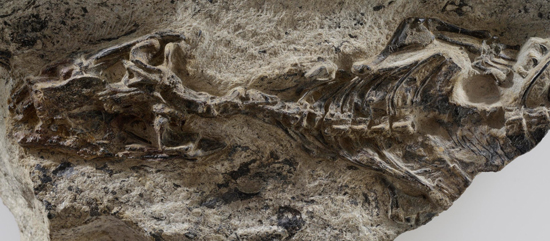
The Holotype Specimen of Megachirella wachtleri

The origins of the Squamata - The holotype of Megachirella wachtleri.
The holotype of Megachirella wachtleri.

Picture credit:  MUSE – Science Museum

Megachirella wachtleri

The fossil, consisting of an articulated partial specimen was discovered in marine sediments in the Dolomites of Italy and named Megachirella wachtleri in 2003.  Although, found in marine sediment, the fossil, which represented the front portion of the animal, showed no adaptations to an aquatic existence.  On the contrary, it had strong legs with claws and although small at around twenty centimetres in length, it was probably a capable climber.  It was concluded that the carcass of this reptile had been washed out to sea following a storm.

An analysis in 2013 concluded that Megachirella wachtleri was a member of the Lepidosauromorpha, a group of diapsid reptiles defined as being closer to Squamata than to the Archosauria.

Lepidosaurs include modern snakes and lizards, many extinct forms of reptile and the Order Rhynchocephalia, once very diverse, but now only represented by the tuatara of New Zealand.  This new research, which drew upon an enormous database of skeletal and molecular information about 129 different types of reptile, revealed that Megachirella had characteristics that are only found in the Squamata.  It was concluded that M. wachtleri was a stem squamate – think of it as being the “the mother of all dragons”.

Co-author Dr Randall Nydam of the Midwestern University in Arizona stated:

“At first I did not think Megachirella was a true lizard, but the empirical evidence uncovered in this study is substantial and can lead to no other conclusion.”

The 240-million-year-old fossil, Megachirella wachtleri, is the most ancient ancestor of all modern lizards and snakes discovered to date.  The study also found that geckoes are the earliest crown group squamates not iguanians as previously thought.

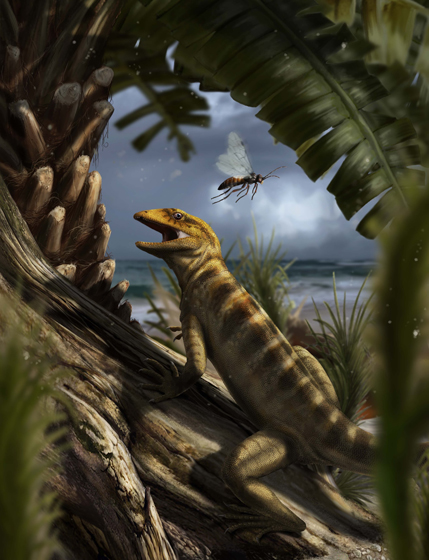
A Life Reconstruction of  Megachirella wachtleri

Megachirella wachtleri in the Dolomites 240 million years ago.
A life reconstruction of Megachirella wachtleri.

Picture credit: Davide Bonadonna

Megachirella wachtleri on the Front Cover of “Nature”

The beautiful illustration of M. wachtleri produced by Davide Bonadonna is featured on the front cover of the journal Nature, which provides details of this scientific study.

The research team conclude that the Squamata probably evolved in the Late Permian and therefore, the ancestors of today’s snakes and lizards survived the most devastating mass extinction event known to science – the end Permian extinction.

Tiago Simões, lead author of the scientific paper and a PhD student at the University of Alberta (Canada), explained:

“The specimen is 75 million years older than what we thought were the oldest fossil lizards in the entire world and provides valuable information for understanding the evolution of both living and extinct squamates.”

10,000 Squamate Species

It has been estimated that there are around 10,000 species of lizards and snakes living today, twice as many different species as mammals.  Despite this modern diversity, scientists did not know much about the early stages of their evolution.

Student Tiago Simões added:

“It is extraordinary when you realise you are answering long-standing questions about the origin of one of the largest groups of vertebrates on Earth.”

Co-author of the study, Dr Michael Caldwell from the University of Alberta, explained that fossils represent the only accurate window into the ancient story of life on our planet.  The new understanding about Megachirella and its significance is but a point in deep geological time, it does tell us things about the evolution of lizards that we simply cannot learn from any of the extant species today.

Co-author Dr Massimo Bernardi from MUSE – Science Museum, Italy and University of Bristol’s School of Earth Sciences, commented upon the importance of such fossil specimens, stating:

“This is the story of the re-discovery of a specimen and highlights the importance of preserving naturalistic specimens in well maintained, publicly accessible collections.”

The scientific paper:

“The Origin of Squamates Revealed by a Middle Triassic Lizard from the Italian Alps” by T. Simões, M. Caldwell, M. Tałanda, M. Bernardi, A. Palci, O. Vernygora, F. Bernardini, L. Mancini and R. Nydam published in the journal Nature.

Everything Dinosaur acknowledges the help of a press release from Bristol University in the compilation of this article.

Visit the Everything Dinosaur website: Everything Dinosaur.
Go to Top