All about dinosaurs, fossils and prehistoric animals by Everything Dinosaur team members.

Everything Dinosaur team members working in schools, helping museums and other educational bodies. Our work with and in schools.

29 01, 2012

Helping Teachers with Dinosaur Resources

By |2023-01-26T08:02:57+00:00January 29th, 2012|Categories: Educational Activities, Everything Dinosaur News and Updates, Everything Dinosaur Products, Teaching|0 Comments

How to Recycle Dinosaur Excavation Kits

At Everything Dinosaur, we get lots of enquiries about dinosaurs and prehistoric animals every day.  We try our best to answer every one, passing on information and advice and helping out with general queries.  Many teachers contact us, asking for help with lesson plans, ideas on how to go about teaching a dinosaur topic, a dinosaur workshop and so forth.  Here again, our qualified teachers in the company are happy to help. We spend a lot of our time advising and helping teachers.

One familiar theme that crops up time and time again is how to get the best out of any dinosaur themed teaching resources.  Many schools purchase prehistoric animal excavation kits for use in the classroom.  These kits consist of  a gypsum block that contains the model of a dinosaur or some such other extinct creature.  Children can use these kits to excavate their own dinosaur model.

Recycle Dinosaur Excavation Kits

Of course, once the prehistoric animal has been dug out once, that’s it, but not with Everything Dinosaur.  We have produced a short video (four minutes and twenty seconds) that shows teachers, home educators and parents how they can recycle their dinosaur excavation kit or fossil find so that they can be used again and again.

All you need are a few household items and you can recycle your dinosaur excavation kit.  We have used these kits in our own teaching work and my own set has lasted ten years and they are still going strong.

Everything Dinosaur’s Video of How to Recycle a Dinosaur Excavation Kit

Everything Dinosaur helps with dinosaur resources for schools.

 Video credit: Everything Dinosaur

To view fossil finds, dinosaur excavation kits and other dinosaur themed toys and gifts: Visit Everything Dinosaur.

Helping Teachers

Teachers, parents and home educators can effectively re-use Everything Dinosaur’s fossil finds and prehistoric animal excavation kits.  By doing this they can keep teaching costs down, recycling resources for use with different classes.

 Fossil Finds, Prehistoric Animal Kits can be Recycled

Save Money by recycling excavation kits.

Picture credit: Everything Dinosaur

For large kits, instead of casting the plastic model in a yogurt pot we tend to use a butter tub, or small, plastic ice cream container.  It is just simply a case of scaling up to accommodate the larger animal model.  We store our kits in plastic bags, with each kit in its own bag.  Freezer bags are ideal as they often have a white space on them which you can use to write a label.  Keep the excavation tools with the recycled kit for use again when digging out another time.  Team members at Everything Dinosaur, even tear off the label from the original packaging and put this in the plastic bag.  This provides an extra reference as to which prehistoric animal each kit contains.

By recycling excavation kits such as these teachers, parents and home educators can save money.

To see the extensive range of prehistoric animal excavation kits and other learning resources available from Everything Dinosaur’s award-winning website: Dinosaur Excavation Kits and Learning Resources.
15 07, 2011

Young Archaeologists Club Give Everything Dinosaur the Thumbs Up

By |2023-03-08T13:19:58+00:00July 15th, 2011|Categories: Educational Activities, Teaching|0 Comments

Young Archaeologists Give Everything Dinosaur’s Teachers Top Marks

Budding archaeologists at a museum in Cumbria enjoyed a visit from Everything Dinosaur team members to teach about dinosaurs in school.  Over the course of the two hour session the school children studied dinosaurs and dinosaur fossils.

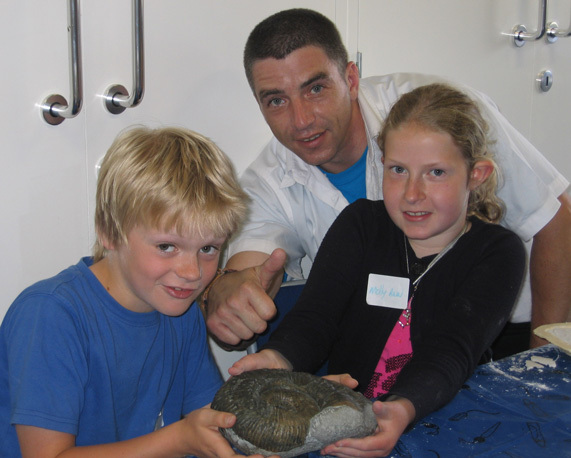
Young Archaeologists Club Give Everything Dinosaur the Thumbs Up

Thumbs up for Everything Dinosaur. Picture credit: Everything Dinosaur.

Everything Dinosaur and the Beacon Museum

The company’s dinosaur workshops in school got a big thumbs up from the keen, enthusiastic budding archaeologists.

Everything Dinosaur

For replicas of prehistoric animals, dinosaur toys and games visit Everything Dinosaur’s website: Visit Everything Dinosaur’s Award-winning Website.

24 02, 2011

Discovering Dinosaurs – The Next Generation of Palaeontologists

By |2023-03-07T10:06:04+00:00February 24th, 2011|Categories: Educational Activities, Everything Dinosaur News and Updates, Main Page, Press Releases, Teaching|0 Comments

Pupils get to Grips with Dinosaurs and Fossils

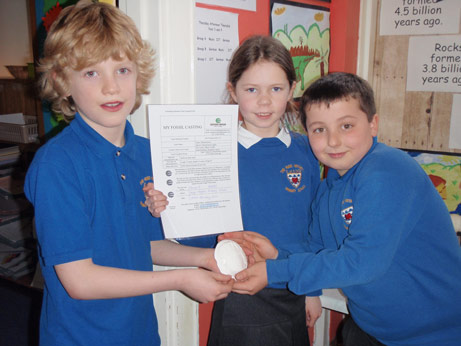
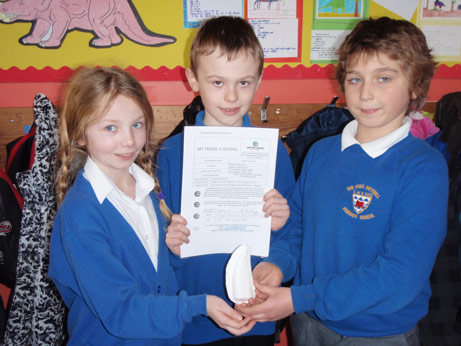
Pupils at Hugo Meynell Primary School, near to the Shropshire town of Market Drayton, had the chance to travel back to the time and to learn about dinosaurs and fossils with a visit from one of Everything Dinosaur’s palaeontologists.

Taking part in a number of experiments, in what was a dinosaur themed workshop, the students in years 3 and 4 learned about these prehistoric animals and had the chance to get grips with a number of fossils, all part of a special topic on dinosaurs that they had been studying.

Young Palaeontologists

As part of the day’s activities, the lucky pupils were able to help cast museum replicas of some of the dinosaur fossils that are part of Everything Dinosaur’s collection, a collection that includes very rare and special items such as Tyrannosaurus rex teeth.  For the classes involved they, and the teaching staff, were able to keep their own very special souvenir of the visit from a dinosaur expert.

Pupils with a Cast of a Large Theropod Tooth (Tyrannosaurus rex)

Picture credit: C. Cowley

Hugo Meynell School Young Palaeontologists with Edmontosaurus Toe Bone

Everything Dinosaur’s visit to Hugo Meynell School.

Picture credit: C. Cowley

The pictures show some of the young palaeontologists from Hugo Meynell school with the cast replicas of dinosaur fossils, along with a special certificate given to them by which explained where the fossil from which the cast was made was found and from which dinosaur the fossil came from.

Dinosaurs and Fossils

Dinosaurs in schools, these young palaeontologists were thrilled at the prospect of getting to handle real fossils.

Visit Everything Dinosaur’s award winning website: Visit Everything Dinosaur.

10 02, 2011

Dinosaurs at National Science and Engineering Week

By |2023-01-15T11:50:25+00:00February 10th, 2011|Categories: Educational Activities, Everything Dinosaur News and Updates, Main Page, Teaching|0 Comments

Everything Dinosaur Prepared for National Science Week

Next month sees the annual National Science and Engineering Week, the event actually runs from March 11th through to March 20th and its aim is to showcase the best in science and engineering in the UK and to get people involved.  There are a huge number of events and activities taking place again this year, from intimate cafe venues holding discussions on science related topics to enormous science festivals all round the country.

National Science and Engineering Week

The dinosaur experts at Everything Dinosaur are not being left out, they are visiting a number of schools with fossils and other dinosaur related activities to enthuse the next generation of young scientists.

To view the extensive range of dinosaur and prehistoric animal toys and gifts available from Everything Dinosaur’s award-winning website: Dinosaur Toys and Gifts.

A Communication Theme

The theme for this event is communication, bringing the general public together to discuss science topics, discover new things and to communicate the role science and engineering has to play in everyone’s lives.

Organised by the British Science Association, this annual event goes from strength to strength and Everything Dinosaur are proud to be involved especially with the elements that involve teaching about dinosaurs in school.

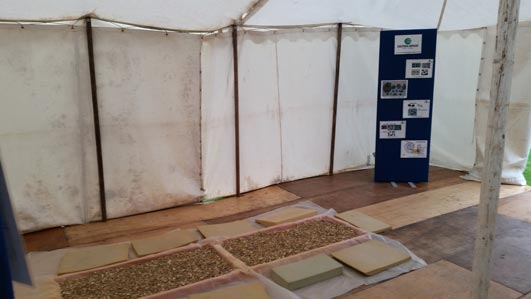
Preparing a Fossil Hunting Activity (Everything Dinosaur)

Everything Dinosaur fossil hunting activity.

Fossil trays laid out at for a fossil hunting activity prepared by Everything Dinosaur team members.  Picture credit: Everything Dinosaur.

Picture credit: Everything Dinosaur

Everything Dinosaur

For educational, dinosaur themed toys, models and games visit Everything Dinosaur’s child-friendly and award-winning website: Everything Dinosaur.

21 01, 2011

Dancing with Dinosaurs – Helping to Inspire Schoolchildren

By |2024-04-21T12:00:05+01:00January 21st, 2011|Categories: Educational Activities, Everything Dinosaur News and Updates, Main Page, Teaching|0 Comments

Year 1’s Interpretation of a Mass Extinction

Yesterday, one of the team members at Everything Dinosaur was at a school, working with teachers and teaching assistants to deliver a dinosaur workshop and to conduct some outreach activities centred around the topic for the term – dinosaurs.  The eager young palaeontologists wanted to show us their dancing with dinosaurs drama routine.

Dancing with Dinosaurs

The students were all very keen and had lots and lots of questions, which were answered with our usual enthusiastic gusto.  At the end of a busy day, the children from Year 1 (aged 5-6) put on a dancing display as they interpreted how they thought the dinosaurs met their demise.  We moved to the hall, and in time to the music, the children at first pretended to be different types of dinosaurs, four-legged herbivores, giant long-necks and ferocious predators.

As the music grew louder (indicating the imminent arrival of an extraterrestrial body such as an asteroid), the “dinosaurs” became scarred and started running around in a panic.  At the crescendo of the music, the asteroid hit the Earth and all the children fell down and stayed very still, indicating the demise of the Dinosauria.

It was a very creative piece of music and movement, helping the young students to burn off some energy after they had been sitting down making dinosaur eggs, and digging for dinosaurs in the sand pit.

The teaching staff had considered how to appeal to different learning styles and to use differentiation in their teaching delivery.  The topic had been very well planned with lots of engagement for all the young students and it was a pleasure to have been a part of it.

I’m sure the children will really enjoy the rest of this term’s topic, after all, teaching about dinosaurs in school is fun.

To view the extensive range of dinosaur and prehistoric animal toys and gifts available from Everything Dinosaur’s award-winning website: Visit Everything Dinosaur.

9 01, 2011

New Everything Dinosaur Teaching Programme for 2011

By |2023-03-06T15:58:42+00:00January 9th, 2011|Categories: Educational Activities, Everything Dinosaur News and Updates, Main Page, Press Releases, Teaching|0 Comments

New Teaching Lesson Plans from Everything Dinosaur

With more and more schools in the UK adopting the creative curriculum, team members at Everything Dinosaur have responded by introducing a new range of teaching sessions and lesson plans to aid reception students through to key stage 4.  Our trained and qualified teachers have prepared a number of innovative and enriching lesson plans based around palaeontology and dinosaurs.  The aim of these sessions is to engage and involve  young people with the fascinating subject of Earth Sciences.

Everything Dinosaur

Working under the concept of “Dinosaur detectives” we use real case studies regarding new fossil discoveries to develop effective and very “hands on” dinosaur themed teaching schemes.

As part of our work in this important area of education, we have developed a number of advertisements to support our teaching activities and dinosaur workshops.

Everything Dinosaur’s Dinosaur Themed Teaching Activities

Picture credit: Everything Dinosaur

So if you want to involve your class in a dinosaur themed topic such as “Jurassic Forest” or Everything Dinosaur’s dinosaur detectives lesson plans simply log onto our website: Everything Dinosaur  to view the extensive range of dinosaur themed toys and gifts we stock.

The Everything Dinosaur Logo

Everything Dinosaur

Everything Dinosaur logo – a sign of quality and reliability.

Picture credit: Everything Dinosaur

In addition, if you require any advice about the products that we stock you are most welcome to drop Everything Dinosaur an email: Contact Everything Dinosaur.

28 06, 2010

Taking a Photograph of a Dragonfly Prior to a School Visit to Talk about Rare Fossils

By |2024-04-19T14:56:42+01:00June 28th, 2010|Categories: Educational Activities, Photos/Schools, Teaching|0 Comments

Picture of a Dragonfly to Help Teach about Fossils

As team members at Everything Dinosaur prepare for a dinosaur workshop as the Summer term draws to a close, we have been asked to show examples of living creatures that have been around on planet Earth for a long time.  Naturally we have dug out our information on the Tuatara from New Zealand, plus information on Horseshoe crabs and other such creatures, all part of our preparations for teaching about dinosaurs with Year 4.

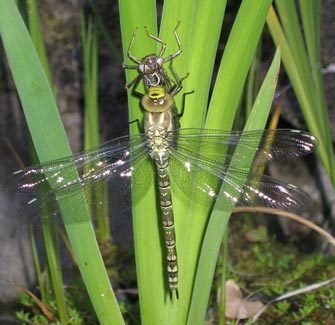
Coincidently, one of our team members spotted a dragonfly emerging from our office pond and they were able to take a photograph whilst this beautiful insect was drying its wings.

A Picture of a Dragonfly

Fossils of Dragonflies preserved from the Carboniferous.

Picture credit: Everything Dinosaur

Dragonfly

Always a pleasure to see a member of the Odonta Order emerging from our office pond, such creatures have, very rarely been preserved in the fossil record.

To read an article on the discovery of a dragonfly fossil: Spectacular Insect Fossil from the Eastern USA.

Dragonflies are amazing aerial acrobats and Everything Dinosaur team members enjoy watching them during their office breaks, in between preparing lesson plans for more dinosaur workshops of course.

To view the extensive range of dinosaur and prehistoric animal themed gifts and toys available from Everything Dinosaur’s award-winning website: Visit Everything Dinosaur.

29 01, 2010

Lapal Primary School and the Beautiful Diplodocus

By |2024-04-19T07:11:24+01:00January 29th, 2010|Categories: Dinosaur Fans, Educational Activities, Everything Dinosaur News and Updates, Main Page, Teaching|0 Comments

Lapal Primary School and the Diplodocus

Pupils at Lapal Primary school in Halesowen (England) have been travelling back in time to visit the age of Dinosaurs with a range of teaching activities organised for years 1 and 2.

Students have been getting to grips with fearsome creatures such as Tyrannosaurus rex and Velociraptors as well as marvelling at peaceful plant eating giants such as the armoured Stegosaurus and the huge Diplodocus.

For these young palaeontologists and their teachers, dinosaur themed activities have included creating their own prehistoric animal models and helping to paint gigantic posters featuring well-known dinosaurs.  The posters have been used to decorate the classrooms and the corridors.

For Miss Loughton’s class (2L) the front of the classroom is now adorned with an enormous Diplodocus grazing on a tree fern.  This artwork has been lovingly created by the children aided by Miss Loughton and the class teaching assistant Mrs Holden.

Lapal Primary School and their Diplodocus (class 2L)

Picture credit: Everything Dinosaur

The picture shows the Diplodocus mural (Diplodocus longus), we loved the spotted decorations and the addition of a tree fern so that this herbivorous dinosaur could be depicted chomping on plants.  After all, with a twenty tonne body to sustain, scientists believe that animals such as Diplodocus probably spent most of the time eating.

The Head of the Diplodocus

Diplodocus close-up view.

Picture credit: Everything Dinosaur

The picture (above) shows a close view of Lapal Primary school’s Diplodocus about to take a bite out of a tree fern.

Dinosaurs make a great topic for primary school children, helping them to express their creativity with story writing, imaginative play and aiding numeracy and reading development.

It was a real pleasure visiting the school and working with years 1 and 2, helping with the dinosaur experiments and showing some of our fossils.  Our thanks to all the students, teaching assistants and teachers who helped make the day so special.

To view the extensive range of prehistoric animal and dinosaur themed toys and gifts available from the award-winning Everything Dinosaur website: Visit Everything Dinosaur.

13 07, 2009

Not all Fossils are Dinosaurs (A Helpful Explanation)

By |2024-04-17T11:09:44+01:00July 13th, 2009|Categories: Main Page, Teaching|0 Comments

Not All Fossils are Dinosaurs

Everything Dinosaur team members are often asked questions by school children about the biggest and fiercest meat-eaters.  The students may ask whether Giganotosaurus really was bigger than T. rex for example.  Whilst trying to answer their many questions we do try to stress that the fossil record is not made up of just dinosaurs.

Dinosaur Fossils

When the fossil record is examined, dinosaurs make up only a tiny portion, indeed the fossil record is dominated by marine organisms (as far as we know all dinosaurs lived on land) and it is the invertebrates who make up the vast majority of fossils.

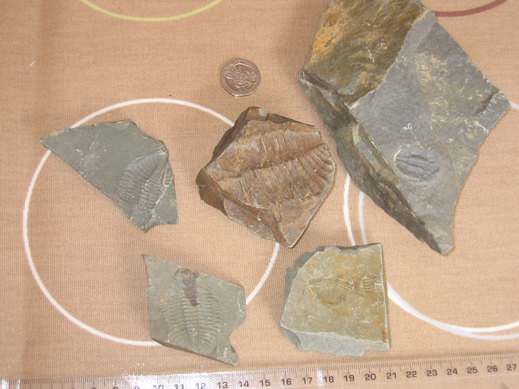
A Selection of Trilobite Fossils from Wales

A selection of trilobite fossils.

A selection of our trilobite fossils.  The coin helps to provide a scale.

Picture credit: Everything Dinosaur.

Trilobites and Ammonites

Many invertebrate groups, trilobites and ammonites are much more important to palaeontologists than vertebrate fossils.  Identifying strata by examining the types of fossils they contain has been a process of enquiry since the early 19th Century.  Indeed, engineers such as William Smith were able to work out the relationships between different rock layers based on the different types of invertebrate fossils they contained.  This method of using fossils to identify the relative age of strata is called biostratigraphy. The stratigraphic column (rock strata), is divided into zones, sometimes called biozones, these are characterised by one or more specific fossil species.  These in turn are called zonal fossils.

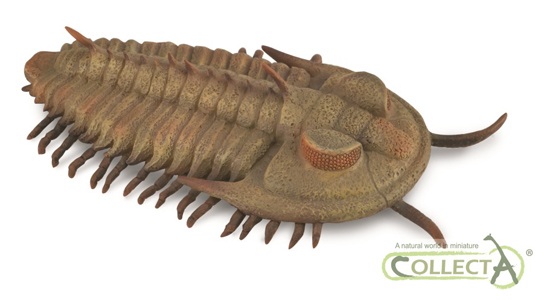
A Replica of a Trilobite (Redlichia rex)

CollectA Redlichia rex trilobite.

CollectA Redlichia rex trilobite model.

To be a helpful zone fossil, an organism needs to be relatively abundant, live in a marine environment and rapidly evolving so as to develop many different forms.  The more geographically dispersed the better, so ammonites and trilobites make very effective zone fossils.

CollectA have introduced several model figures representing important invertebrate animals from the fossil record.  To view the CollectA range: CollectA Age of Dinosaurs Models and Figures.

Despite all the hyperbole and media attention given to the Dinosauria, they really only make up a tiny portion of the known fossil record.  Being rare, often found as incomplete, partial skeletons and terrestrial; dinosaurs are not good zone fossils.  Whilst talking to some palaeontology students from Canada the other day, we were not unduly surprised to hear that in three years of lectures, the dinosaurs had been covered in a single afternoon.

25 03, 2009

Humans and Dinosaurs a “Handy” way to tell the Difference

By |2023-02-28T15:27:45+00:00March 25th, 2009|Categories: Educational Activities, Everything Dinosaur News and Updates, Main Page, Teaching|0 Comments

Latest Palaeontological Research helps with Classroom Exercise

A few weeks ago, team members at Everything Dinosaur reported on the research published by a team of American scientists who had studied the best preserved hand prints of a theropod dinosaur.  Theropod dinosaurs such as Megalosaurus, Allosaurus and Dilong were bipedal.  This means that they walked upright on their hind legs.  Scientists had speculated how these animals would have used their hands and what movement they would have had with their forelimbs.  A lot can be determined by studying the fossilised arm and hand bones of these particular dinosaurs, but no decent, well-preserved “hand prints” of such animals had ever been found.

Dinosaur “Hand Prints”

The study of a dinosaur trackway, left in mudstone has revealed that dinosaurs had hands that were not suitable for walking upon very early in their evolution.  In a report published in the online palaeontological journal PLos ONE, a U.S. based team have concluded that the fossil hand-prints, perhaps the best theropod hand-prints discovered to date, indicate that these dinosaurs abandoned the use of their forelimbs as legs early in their evolutionary development.

The lead author, Andrew R. C. Milner of the St George Dinosaur Discovery Site at Johnson Farm in Utah, stated that due to the disproportionately small forelimbs of most theropods, trace fossils of them as they rested on the ground are extremely rare.  Only a few other examples of theropod hand-prints are known, but the discovery of a wonderfully well-preserved set of impressions in 2004, have enabled scientists to shed more light on the range of movement of dinosaur hands and arms.

Dinosaur Trace Fossils

Vertebrate palaeontologist Milner and his colleagues describe in the paper, a clear set of 5 cm deep impressions preserved amongst hundreds of other trace fossils in the sediment that has been dated to the Early Jurassic (Sinemurian faunal stage), approximately 198 million years ago.  The rock preserves trace fossils of worm borings, tracks made by crabs as well as body fossils of fish.  The sediment represents a part of a shoreline adjacent to an ancient lake (known as Lake Dixie).  The water level seems to have altered and as a result the sediment shows signs that the water levels fell and the muddy sand cracked and dried in the sun.

A theropod dinosaur left a remarkable trackway, on this shoreline, it stopped and sat down, perhaps to rest for a while.  As it rested it put its hand’s on the ground and these left impressions (left manus and right manus).  There is even the marks in the fossilised trackway that show where the base of the tail was rested on the ground.

To read the article in full: Dinosaur Hand-print Reveals Link to Birds.

An Artist’s Impression of the Theropod Resting and Trackway Picture

Picture credit: H. K. Luterman of Cedar City, Utah

Everything Dinosaur, is always keen to build in new ideas and scientific developments into its teaching programmes so we combined the research work carried out on these remarkable trackways with an experiment with school children to see if dinosaurs and people has the same range of movement in their hands and arms.  We term this teaching exercise, part of our range of classroom activities “the palms down activity”, but many of my colleagues prefer the more intriguing title – can dinosaurs juggle?

Dinosaur Hands

As well as showing various fossils with the class, we run an exercise to test how we place our hands when we are resting.  By splitting the class into groups and appointing a student to supervise the exercise for each group we can get the entire class to repose with their hands in a relaxed, comfortable position.  By studying how we; H. sapiens rest and comparing our resting position with that of a theropod dinosaur we can see differences in how we use our arms and hands compared to a dinosaur.

We carried out this experiment with Year 6 students at Barnfields Primary School in Stafford (England).  The results, were as we predicted with most of these 10-11 years old pupils resting with their hands on the table palms down.  This is a comfortable position for our hands, a very different pose to that of a theropod dinosaur.  If the fossil trackway evidence from Utah proves to be conclusive, theropod dinosaurs rested with their palms facing in a more upwards direction.

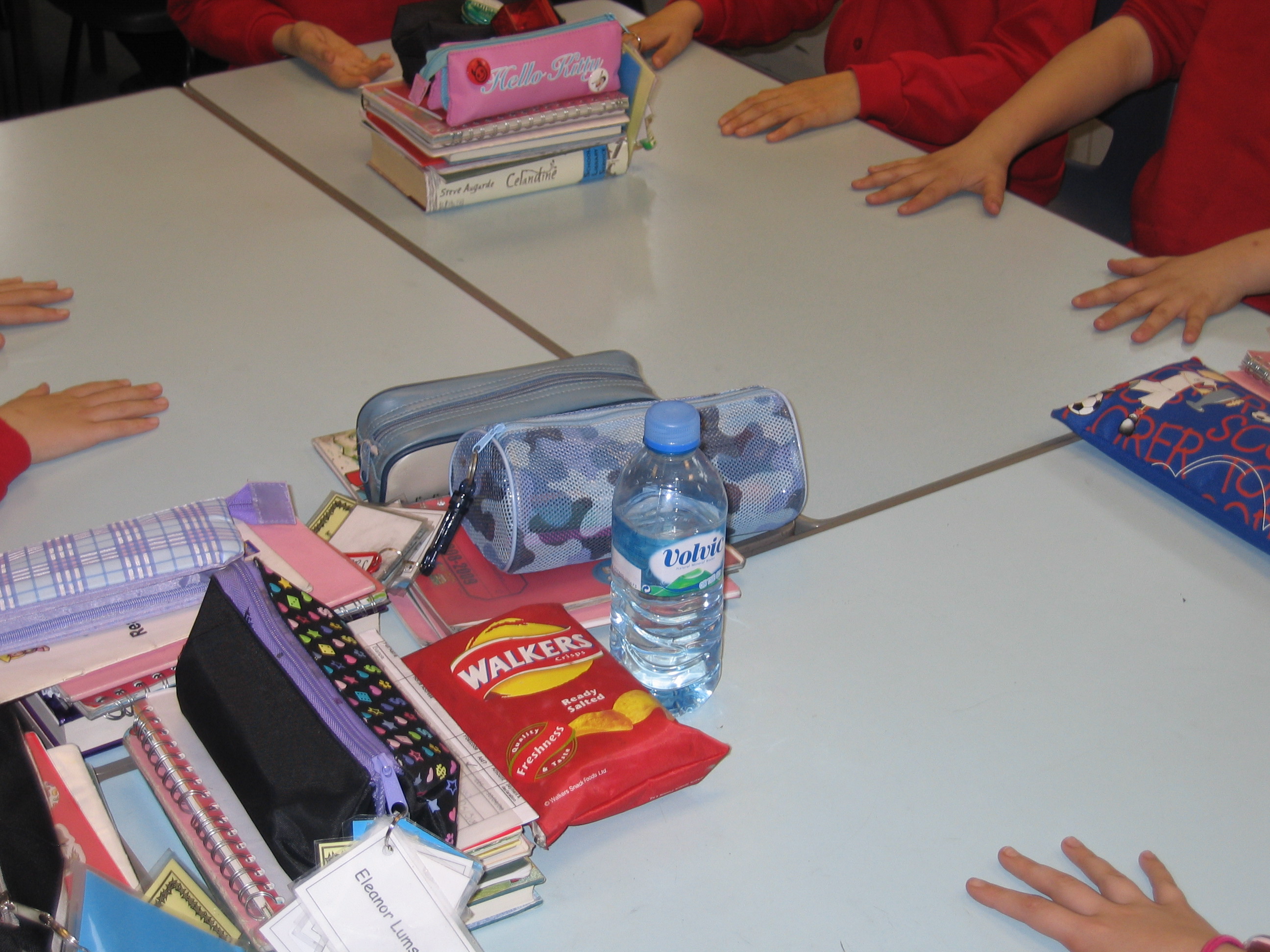
Barnfields Primary School Children “Hands Up” Exercise

Examining Dinosaur Hands.

Picture credit: Everything Dinosaur

Pupils with their Hands in a Natural Resting Position

Dinosaur Hands being examined.

Picture credit: Everything Dinosaur

(Our thanks to the Barnfield Primary School, the teachers, parents and pupils for giving us permission to publish these photographs).

The pictures show that the majority of children, when unprompted, placed their hands palms down, interesting also to note the tendency to splay the fingers out, again in response to no prompting.  We were then able to compare the student’s reaction to the fossil trackways and establish differences between our hands and those of a dinosaur.

Teachers and teaching assistants could develop this exercise by plotting the results on a simple bar chart or by introducing concepts of theory testing or describing events.  The peculiar shaped object in the top right had section of the second photograph is actually a fossil, one of the many exhibits that we hand round in class.  It is a fossil of a Woolly Mammoth’s tooth.  Here at Everything Dinosaur, we have developed a number of ideas based around delivering a practical demonstration of real palaeontology – all based around the National Curriculum.  For example, in our lesson plan for this exercise we cover concepts such as “make comparisons and identify patterns – N.C. KS2 SC1 2i” and ” how animals in a habitat are suited to their environment – N.C. KS2 SC1 5c”.

The exercise certainly proved very popular with the pupils and it did demonstrate our ability to pronate our forelimbs (twist our arms), a skill inherited from our tree climbing ancestors, and from the evidence presented here, we humans seem to have a greater range of arm movement than a theropod dinosaur.  So, we can conclude that dinosaurs probably couldn’t juggle.

To view the range of dinosaur and prehistoric animal themed gifts approved by the teaching team at Everything Dinosaur: Dinosaur Toys and Gifts.

Go to Top