New for 2014, this set of six dinosaur models in a handy plastic tub by Papo. The model set features Triceratops, Tyrannosaurus rex, Spinosaurus, Stegosaurus, Brachiosaurus and Velociraptor. This tub of dinosaurs, for want of a better name, is part of a range of figures made by Papo of France which are available as play sets. The models range in size from around five centimetres in length (the Velociraptor) to around ten centimetres long (the Brachiosaurus).
Papo Mini Dinosaurs
Here is Everything Dinosaur’s video review:
Papo Mini Dinosaurs Reviewed
Video credit: Everything Dinosaur
In this short video (4.57) we look at the models in a little more detail and we suggest that some of the dinosaur figures can be used as baby dinosaurs when put together with the larger Papo dinosaur models.
Just in stock at Everything Dinosaur and timed nicely it seems with the return of cold and showery weather for most of the UK, are these super microwarmer soft toy dinosaurs. There are three in the series, a cuddly T. rex (if you can imagine such a thing), a friendly Stegosaurus and a cute Triceratops. These soft toys have a special pocket in their tummies, inside you will find a cloth sachet that contains linseed. Put this sachet into the microwave to warm up and then pop it back into the dinosaur to create a super, warm and cosy soft toy dinosaur.
Soft Toy Dinosaurs
The Microwarmer Tyrannnosaurus rex Dinosaur Soft Toy
A soft toy that also acts as a hot water bottle. Picture credit: Everything Dinosaur.
Picture credit: Everything Dinosaur
With sales of these items supporting the Natural History Museum, mums and dads are going to like them too. The sachet pops inside the tummy of the dinosaur and it keeps warm for quite a long time. These microwarmer dinosaurs are so much more practical than a hot water bottle.
The Soft and Cuddly Stegosaurus in the Range
We have taken out the linseed sachet so you can see how big it is. Picture credit: Everything Dinosaur.
Picture credit: Everything Dinosaur
Microwaveable dinosaur soft toys make excellent bedtime buddies for young dinosaur fans. We think these are suitable for children from three years and upwards. A point made by one of our reviewers was that the material was not only very soft but also sensible, it is sponge washable.
To view Everything Dinosaur’s range of soft toy dinosaurs including prehistoric plush: Prehistoric Animal Soft Toys.
The Microwarmer Triceratops Dinosaur Soft Toy
A friendly, cute Triceratops soft toy. Picture credit: Everything Dinosaur.
Picture credit: Everything Dinosaur
Each of these microwaveable soft toys measures at least twelve inches in length, the Stegosaurus is nearly fifteen inches long and they are bound to prove popular with young dinosaur fans. Each soft toy comes with easy to follow instructions.
Microwave advice as follows (based on a microwave with a turntable and on full power)
Microwave rating 0 to 800 Watts – maximum heating time sixty seconds
Microwave rating from 801 to 1,000 Watts – maximum heating time forty-five seconds
If for any reason you heat up your linseed pouch for too long, and it becomes too hot, no need to worry, simply carefully pick up the sachet and place it on a heat-proof surface to cool down.
The latest editions to Everything Dinosaur’s huge range of prehistoric animal themed merchandise have just been put up on line. They are soft and cuddly dinosaur themed backpacks, one a Triceratops, the other a colourful Tyrannosaurus rex.
Measuring a generous sixty-three centimetres in length, the Triceratops has been created so that it matches other horned dinosaur soft toys currently available from Everything Dinosaur.
The Soft and Cuddly Triceratops Dinosaur Backpack
A backpack for a young dinosaur fan. Picture credit: Everything Dinosaur.
Picture credit: Everything Dinosaur
Dinosaur Backpacks
Lightweight and very soft, this horned dinosaur themed backpack proved very popular on test with both girls and boys. The sturdy black straps are adjustable and the backpack is comfortable to wear. It also doubles as a handy pyjama or nightgown case for budding young palaeontologists. The roomy zipped pouch on the back means that you can carry dinosaurs around or even slip in a snack as you go on fossil finding adventures. Mums and dads liked the backpack too, although it is not waterproof, it is sponge washable and the cute expression on the face of this Triceratops appealed.
The Soft and Cuddly Tyrannosaurus rex Dinosaur Backpack
Proved very popular with young dinosaur fans on test. Picture credit: Everything Dinosaur.
Picture credit: Everything Dinosaur
The T. rex measures a fraction over sixty-three centimetres in length. The colourful backpack featuring the “Tyrant Lizard King” was described as being “cute” and it represented a “happy dinosaur” according to one young reviewer.
Everything Dinosaur’s range of soft toys, including dinosaur plush: Soft Toy Dinosaurs.
We had some fun photographing these backpacks, they are so soft and cuddly that our photographer was reluctant to let them go but we managed to get some pictures in the end. Even Tyrannosaurus rex refused to co-operate at one point. We wanted to take a picture so that we could show the sturdy adjustable straps on the back, we succeeded, but it looks like our T. rex got camera shy in the photograph.
Sturdy Straps on these Dinosaur Themed Backpacks
Robust and sturdy straps on the dinosaur themed backpack. Picture credit: Everything Dinosaur.
Picture credit: Everything Dinosaur
Sales of these two products help to support the Natural History Museum – London.
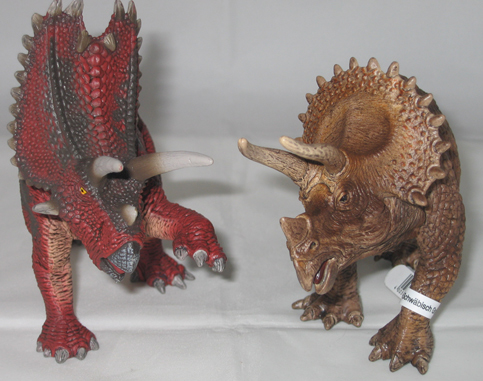
One of the new additions to the Schleich World of History model series for 2014, the only horned dinosaur to be added this year, is this colourful model of the ceratopsid known as Pentaceratops (P. sternbergii). In this short dinosaur model review, we will discuss this replica, the fossil evidence and compare the Pentaceratops replica to the Triceratops model also made by Schleich which was introduced back in 2012.
Schleich Pentaceratops Dinosaur Model
The first fossils of Pentaceratops were discovered in 1921 by the famous American palaeontologist Charles Hazelius Sternberg as the Upper Cretaceous sedimentary strata of the south-western United States was being mapped. Pentaceratops was named and scientifically described in 1923, by Henry Fairfield Osborn, the same palaeontologist who named Tyrannosaurus rex back in 1905.
Pentaceratops had a very elongated and relatively narrow head shield when compared to other chasmosaurine dinosaurs such as the distantly related Triceratops (T. horridus). This feature has been very well recreated by the design team at Schleich and the detailing is superb, although the model shows little evidence of the large parietal fenestrae, the pair of substantial, skin covered holes that were located towards the top of the head crest.
The Schleich Pentaceratops Compared to the Schleich Triceratops Dinosaur Model
Pentaceratops model is on the left. Picture credit: Everything Dinosaur.
Picture credit: Everything Dinosaur
The Size of the Skull
Many articles published on Pentaceratops refer to the size of the skull, which was certainly very big. It had been thought that this dinosaur possessed the biggest skull of any terrestrial vertebrate, although many larger specimens once ascribed to Pentaceratops, have been reassigned to a new dinosaur genus, Titanoceratops which was established in 2011.
The lines between these two genera remain a little blurred, although there is plenty of fossil material to study, much of the skull material related to Pentaceratops from the Fruitland and Kirtland Formations of New Mexico and Colorado is crushed and distorted so definitive classification is somewhat hazardous.
Pentaceratops means “five horned face”, this is a bit of a misnomer, as this dinosaur did not have five horns. The jugal bone, the bone over the cheek area of the skull, was prominent and came to a point. The cheek bones may have been covered by horny outgrowths so when viewed from the front, it would look like this dinosaur did indeed have five horns.
An Anterior (view from the front) of Pentaceratops compared to Triceratops
One of the enlarged jugal bones with a horny sheath on it can be clearly seen on the Pentaceratops model (cheek area, under the eye). Picture credit: Everything Dinosaur.
Picture credit: Everything Dinosaur
The horn configuration was the same as the better known Triceratops, the Schleich World of History Triceratops which can be seen adjacent to the Pentaceratops model illustrates this point nicely. Both dinosaurs had long forward facing brow horns, with a shorter nasal horn. Pentaceratops was smaller than the largest species of Triceratops and it also had a shorter tail, these details can clearly be seen when the two Schleich models are compared. Although smaller than the largest species of Triceratops known (T. horridus), scientists estimate that this Late Cretaceous herbivore may have weighed in excess of 3,000 kilogrammes.
Based on an adult Pentaceratops reaching a length of around 6.3 metres, we estimate that this figure is in approximately 1:37 scale as this Schleich replica measures a little over seventeen centimetres in length. The model has been very well painted and the skin texture with its irregular sized scales and folds of skin, particularly on the underside of the neck, has been rendered with a great deal of care and attention.
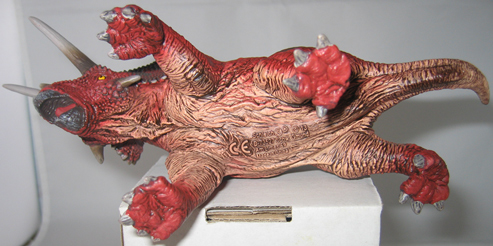
A View of the Underside of the Schleich Pentaceratops
The detail on the underside of the Schleich Pentaceratops. Picture credit: Everything Dinosaur.
Picture credit: Everything Dinosaur
The picture above shows the fine detail on the underside of the Schleich Pentaceratops dinosaur model. Note the folds of loose skin underneath the neck and the texture on the underside of the short, stubby tail.
This dinosaur is posed with one front foot off the ground, quite an unusual stance for a prehistoric animal model. The correct number of digits have been added, five on the front feet, with four toes on the hind feet, the red colouration makes this replica stand out, although we suspect that since the Pentaceratops name is not reproduced on the underside of the model, (see picture above), less well informed dinosaur fans and model collectors could end up referring to this as another Triceratops replica.
Everything Dinosaur provides a fact sheet on Pentaceratops with each model that we sell, hopefully this will help clear up any confusion that may arise.
Pentaceratops and the other models in the Schleich World of History range are available from Everything Dinosaur, the UK based retailer of dinosaur models, toys and games that is staffed by parents, teachers and real dinosaur experts.
A Video Review of the Bullyland Lambeosaurus Dinosaur Model
Duck-billed dinosaurs had been relatively under represented in the Bullyland range of prehistoric animals. In fact, Everything Dinosaur team members had trouble remembering what duck-billed dinosaur models this German manufacturer had made in the past. There used to be a Parasaurolophus in the range, but the last version of this model, a lovely replica with a bright orange crest was retired a few years ago, so it is refreshing to see the name sake of the lambeosaurines stepping into the spotlight as Bullyland added a Lambeosaurus to their Museum Line series.
Museum Line Lambeosaurus
In this short video review, we take a look at this new for 2014 replica, comment on the fossil evidence and naturally, we discuss that wonderful head crest.
Everything Dinosaur’s Review of the Bullyland Museum Line Lambeosaurus
Video credit: Everything Dinosaur
The video is 5 minutes, 33 seconds long, it gives viewers a little more information about this dinosaur, where it lived and how difficult it is to classify lambeosaurine fossil material.
A Review of the Light Green, 2014 Schleich T. rex Dinosaur Model
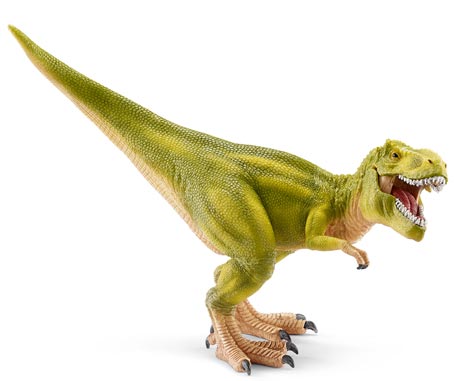
One of the first of the 2014 Schleich World of History dinosaurs to be reviewed by team members at Everything Dinosaur is the new, light green T. rex figure from the German manufacturer. Schleich have made a number of replicas of what is perhaps the most famous dinosaur of all and this new addition to their prehistoric animal model range is bound to prove popular with young dinosaur fans.
Schleich T. rex Dinosaur Model
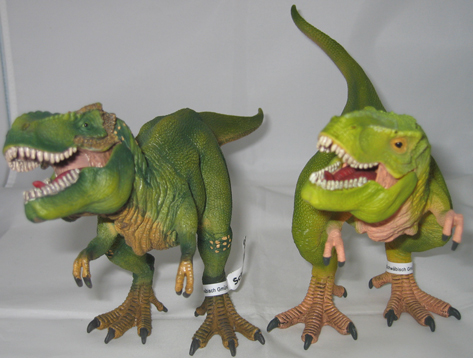
This is the second, large-sized Tyrannosaurus rex model in the World of History series, when compared to the 2012 T. rex, this model is fractionally smaller, the earlier model measuring around 28 centimetres from nose to tail, whilst the 2014 Tyrannosaurus rex measures about 27 centimetres in length. Apart from the obvious colour difference, the actual pose is slightly different with the head turned more to the left and the slightly longer tail is raised upwards.
A Comparison Between the 2014 T. rex (right) with the Schleich 2012 T. rex (left)
2012 version on left with the 2014 version on right. Picture credit: Everything Dinosaur.
Picture credit: Everything Dinosaur
Articulated Lower Jaw
As with the earlier T. rex model, the lower jaw is articulated, so this dinosaur can be posed with its mouth open or closed, or indeed posed in any position in between. When the jaws are opened, the care attention taken over the painting of the mouth area by the artists at Schleich can be clearly seen.
Schleich Tyrannosaurus rex has an Articulated Lower Jaw
A moveable lower jaw on this T. rex dinosaur model.
The model is very well balanced and it is ideal for creative play, although as with the majority of the Schleich dinosaur replicas that represent bipeds, the hind feet are a little oversized. The large feet permit this dinosaur model to be posed with the tail raised off the ground, the anatomically correct position. It seems that Schleich have had to trade off having slightly bigger feet on their meat-eating dinosaur models against being able to portray them in more dynamic poses.
Examining the Skin Texture
The texture of the skin with its scales and skin folds has been beautifully rendered. There is a lot of fine skin detail to admire, even individual rounded scales along the flank can be picked out. The level of detail is also reflected on the underside of the model, an area of some replicas often neglected, but this is not the case with this new Schleich T. rex.
The skull is particularly well modelled with individual wrinkles around the nostrils depicted along with accurate representations of the skull morphology complete with its fenestrae and lumps and bumps. Intriguingly, this dinosaur’s eye is black, with no obviously definition such as an iris. This gives this T. rex quite a menacing, frightening look, especially when light reflects off the highly glossy black paint of the eye to give the impression of a white pupil.
As this replica measures approximately 27 centimetres in length, by our estimates this makes this particular model something like 1:50 scale. The model is very robust, it almost has a waxy feel to it and it would be a great T.rex model to encourage creative, imaginative play.
These two World of History T. rex models work well together, perhaps the bigger figure could represent a larger, mature female and the slightly smaller, light green model a male, her mate. For scientists believe that, just like many of today’s birds, female T. rexes were bigger than the males. Here is another opportunity for model collectors and dinosaur fans to acquire another interpretation of Tyrannosaurus rex and there is a lot to commend this particular Schleich replica. Everything Dinosaur even includes a T. rex fact sheet that we send out with all our sales of Tyrannosaurus rex dinosaur models.
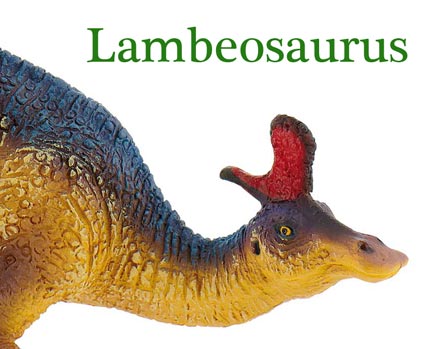
This review is of the new for 2014 Bullyland Lambeosaurus model, part of the company’s Museum Line prehistoric animal model range. This is the only duck-billed dinosaur model currently available from this German manufacturer and this replica has a lot to commend it.
Lambeosaurus
Lambeosaurus is one of the better known genera of hadrosaurid dinosaurs and substantial fossil remains ascribed to the lambeosaur family have been found. All the fossils discovered to date and related to this genus, come from North America. In most circumstances, it is the lack of fossil material that gives palaeontologists problems when it comes to describing a new dinosaur species and working out where it fits into the dinosaur family tree.
Lambeosaurus is an exception to this, as the amount of fossil material discovered has led to considerable confusion with regards to this dinosaur and to the number of species of Lambeosaurus there might have been and how closely related it is to other crested duck-billed dinosaurs.
The Bullyland Lambeosaurus Dinosaur Model
New interpretation of Lambe’s lizard.
Picture credit: Everything Dinosaur
“Hatchet-like” Crests
As these animals grew and developed, so the size and the shape of that famous “hatchet-like” crest changed. There may also have been differences in the crest morphology between males and females. Defining what is actually a species of Lambeosaurus is therefore a bit tricky, however, something like three species are currently recognised and the geographical range of the fossil finds suggests that these types of duck-billed dinosaur lived all along the western part of North America, from Alberta (Canada), in the north, down to New Mexico in the south.
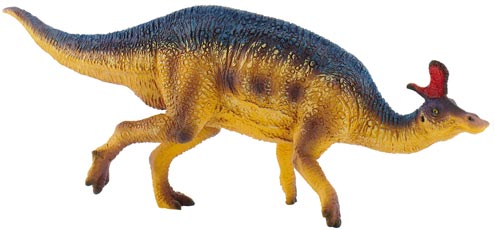
Bullyland Lambeosaurus Dinosaur Model
The Bullyland Lambeosaurus is very well painted and there is lots of detail to admire. The hatchet crest has a bumpy, roughened texture and it is painted bright red with a brown/black border. The size and shape of the crest suggests that this model represents one of the larger species of Lambeosaurus currently recognised and that the model is a male. The ears and nostrils can be clearly seen, little details often overlooked with inferior models.
The replica is roughly in proportion to the known fossil material and the striking blue stripe running down the model gives this Lambeosaurus a certain flamboyance. The model makers have done a lot of work on the skin texture with some raised dermal scutes and smaller scales, these reflect what is known about Lambeosaurus as impressions of fossilised skin have been found. The figure measures around twenty-six centimetres in length and based on a comparison with the fossil material associated with one of the bigger Lambeosaurs, Lambeosaurus magnicristatus, we estimate that the figure is in approximately 1:27 scale. It is posed in quite a dynamic, active stance with the tail held out straight behind the body, to give the impression of movement.
A Close up of the “Hatchet Shaped” Crest
The body and the crest of this dinosaur have been given an authentic roughened texture.
The Bullyland design team have taken care to depict the digits of this dinosaur. A characteristic of the hadrosaurids is that the fingers of the hand on the front limbs were often united, connected by skin to form a fleshy pad, whilst the toes of the hind feet could be more splayed. It is this webbing between the fingers of the hands of this dinosaur that helped give weight to the early hypothesis that these herbivores were largely aquatic.
The model with its Front Digits United to Form a Fleshy Pad
The Museum Line Lambeosaurus with an Everything Dinosaur fact sheet. Picture credit: Everything Dinosaur.
There is much to be admired about this latest interpretation of a Lambeosaurus from Bullyland. The model’s bright colours and dynamic pose are likely to make it a favourite amongst collectors and dinosaur fans.
Schleich Light Green Tyrannosaurus rex Video Review
The new for 2014 Schleich light green Tyrannosaurus rex is the first of the new Schleich dinosaurs to have a a video review created for it. Team members at Everything Dinosaur have enthusiastically plotted the progress of the four new models scheduled for introduction this year by Schleich into their “World of History” series. It is our intention to produce reviews for all the new models, but the T. rex replica is a very good place to start.
Tyrannosaurus rex Model
There are a total of three tyrannosaurs currently made by Schleich, two within the larger model series and a third, smaller model in what was called “die kleinen Dinos” by our German friends. As with all prehistoric animal model manufacturers, T. rex tends to act as a flagship model for the factory, after all, it is the one dinosaur replica that is made by all the model manufacturers and the new, light green Tyrannosaurus rex from Schleich stands up very well to scrutiny.
The Light Green Tyrannosaurus rex Model (Schleich)
T. rex (Schleich 2014).
A Video Review by Everything Dinosaur
It is a very tactile model, has lots of detail and the articulated lower jaw is bound to make it very popular amongst young dinosaur fans. The five minute video review discusses some of the features of this new replica and compares it to the 2012 tyrannosaur model introduced by Schleich when their revamped prehistoric animal model range “Urzeittiere Dinosaurier”, this translates as prehistoric animals – dinosaurs, first came out.
Everything Dinosaur’s Video Review of the Light Green T. rex (Schleich)
Video credit: Everything Dinosaur
In this short video, we look at the possibility of making this new T. rex model the male in a pair of tyrannosaurs with the slightly larger, dark green, 2012 T. rex being the female. There is evidence to suggest that the females were larger than the males. The fossil record from locations such as the the Hell Creek Formation of the western United States indicates two forms of Late Cretaceous tyrannosaur, a robust form and a gracile form. Could this fossil material represent differences between boys and girls just as we see today with some species of birds?
The females may have been bigger as they required wider hips to permit the storage and passage of eggs. Females in many different types of animal tend to be bigger than the males, In tyrannosaur circles, could the girls have ruled the roost? For the moment, the fossil evidence poses this intriguing question finding definitive proof is somewhat tricky, however, thanks to Schleich at least dinosaur fans and model collectors can create their own family of tyrannosaurs.
Imminent Arrival of Four New Dinosaur Models (Schleich Prehistoric Animals)
Everything Dinosaur is eagerly awaiting the arrival of the four, new dinosaur models from Schleich of Germany. Fact sheets have been prepared, drawing materials commissioned and everything is in place to welcome these latest additions to the company’s huge model range.
Schleich Models Available from Everything Dinosaur
Four new dinosaurs coming soon including a Schleich Pentaceratops. Picture credit: Everything Dinosaur.
Picture credit: Everything Dinosaur
New Schleich Dinosaur Models
Three of the new dinosaurs are theropods, three are bipeds, two represent dinosaurs that Schleich have created models of before, two represent new species for the German manufacturer and all four are bound to please collectors and young dinosaur fans alike.
There is a brightly coloured horned dinosaur called Pentaceratops. Not to be mistaken for Triceratops “five horned face” was a little smaller than “three-horned face”. This herbivorous dinosaur was named and described by the same scientist who described Tyrannosaurus rex. Talking of T. rex Schleich are introducing a second replica of this fearsome carnivore into their “Prehistoric Life” series. This one is a lighter green version, it has an articulated lower jaw, just like the other Tyrannosaurus rex in the range that we at Everything Dinosaur refer to as the “World of History”.
Adding a Velociraptor
Not to be outdone, the existing Velociraptor model has a new, colourful partner. The new green Velociraptor has a moveable lower jaw and moveable arms.
Say Hello to the New Velociraptor Dinosaur Model from Schleich
Velociraptor Dinosaur Model from Schleich.
Picture credit: Everything Dinosaur
All the models are designed for creative, imaginative play and are robust enough to survive even the toughest of geological periods.
The final model to be added to the Dinosaurier, (as our German friends call the dinosaurs), is a wonderful model of the bizarre theropod dinosaur called Therizinosaurus. This dinosaur model too, has an articulated lower jaw and moveable arms. Look out for those amazing three-fingered claws on this dinosaur, whose ancestors ate meat but which took up a vegetarian diet.
The fossil finds dinosaur excavation kits that Everything Dinosaur supplies are certainly very popular. These kits include a digging tool, so that young dinosaur fans can excavate their own plastic dinosaur skeleton and experience what it is like to be a real palaeontologist. The digging tool included is very similar to one we actually use ourselves when working around fossil bone. There are four different types of dinosaur skeleton to collect. They are Tyrannosaurus rex, Velociraptor, Stegosaurus and Triceratops.
Fossil Finds
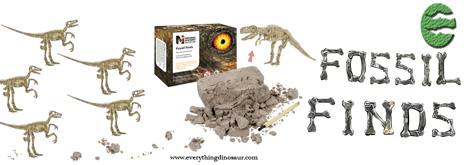
Everything Dinosaur Fossil Finds
Everything Dinosaur creates a banner to promote Fossil Finds.
Picture credit: Everything Dinosaur
These dinosaur fossil inspired kits are very popular with teachers who use them as teaching resources in schools as well as with mums and dads who use them at dinosaur themed party gifts. The square packaging makes them ideal for use in a pass the parcel game at a dinosaur inspired birthday party. However, the packaging on all four of the kits looks very similar and our team members at Everything Dinosaur thought it would be a good idea if we published a handy guide to identify which kit is which.
Identifying the Dinosaur
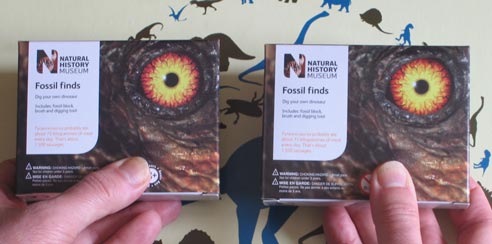
All the kits look the same from the front, this can lead to confusion as purchasers may not be sure which dinosaur fossil find they have.
A View of the Front of the Fossil Finds Packaging
Although there are four different dinosaur fossil finds in the series they all look the same from the front.
Picture credit: Everything Dinosaur
All the fronts of the boxes feature a Tyrannosaurus rex themed fact. The fact states that this apex predator probably ate around seventy-five kilogrammes of meat a day, the equivalent of 1,500 sausages. Customers of Everything Dinosaur might think that all the fossil finds that they have bought feature the same skeleton inside. All is not lost, here is how to determine which dinosaur is actually in each kit.
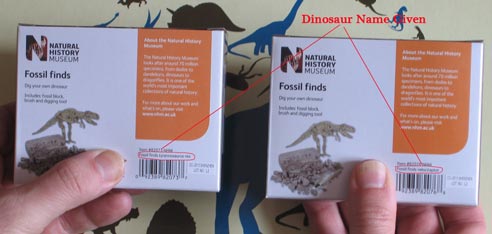
To determine which fossil find excavation kit you have, turn the box over and look at the back. In the bottom corner above the product’s bar code, the name of the dinosaur featured inside will be shown.
Turn the Kit over and Look at the Printing on the Back
The name of the dinosaur whose skeleton is featured in the kit can be seen just above the bar code.
Picture credit: Everything Dinosaur
We have highlighted in red where the dinosaur’s name is printed. All the kits have similar printing on the back of the box too, but the name of the dinosaur featured should be clearly displayed.
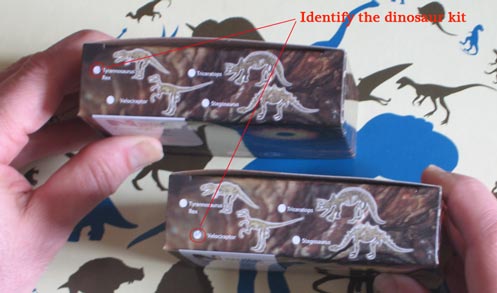
There is another way to check, if you look on the top of the box, illustrations of the four dinosaur skeletons in this series are shown. There should be a tick or mark in the circle next to the skeleton illustration to indicate which dinosaur is in the kit, although we at Everything Dinosaur recommend you check the printing on the back of the box as sometimes this “check mark” is difficult to make out.
The Top of the Box Should Provide Guidance as to Which Dinosaur is in Each Kit
A tick or mark in the white circle identifies the dinosaur skeleton in the box.
Picture credit: Everything Dinosaur
In the picture above we have highlighted the “check mark” area to help customers find the information they are looking for.
To view the range of educational prehistoric animal themed skeleton kits available from Everything Dinosaur: Dinosaur Themed Toys and Gifts.
All the kits we supply in this fossil finds range are sent out with a dinosaur fact sheet which provides more information about the dinosaur the kit represents. Hopefully, this article will help our customers to sort out which fossil find kit is which and save any confusion when preparing a lesson plan for use in school or when getting ready for a dinosaur themed birthday party or some other event.