All about dinosaurs, fossils and prehistoric animals by Everything Dinosaur team members.

Everything Dinosaur’s work with schools and other educational bodies. Articles, features and stories about dinosaurs and their role in education and educating young people.

16 07, 2010

Frogs from Switzerland Encountered on Family Holiday

By |2024-04-19T14:59:47+01:00July 16th, 2010|Categories: Animal News Stories, Educational Activities, Everything Dinosaur News and Updates, Main Page|0 Comments

Swiss Frogs – Frogs from Switzerland

One of our team members had been recounting to a friend how well our frogs in the office pond had done this year.  We had a record amount of frogspawn and this has resulted in a multitude of baby frogs in and around the office pond.  However, we had not seen the number of tadpoles encountered by a traveller whilst on holiday in Switzerland.  The traveller was keen to tell us all about the frogs from Switzerland that had been encountered.

The pictures taken of a vast shoal of tadpoles in the shallows of a Swiss lake, certainly put the numbers of tadpoles we had seen in our pond to shame.  Whilst walking close by to the lake, a strange dark patch was seen in the shallows and it was only when observed at close quarters that the viewer discovered that they were tadpoles – thousands of them.

Frogs from Switzerland

The tadpoles shoal together in vast numbers presumably as a protection against predators.  Switzerland may not be famous for its reptiles and amphibians but it has a number of native species including frogs, toads, newts, as well as snakes, lizards and we think a terrapin, although our expertise on central European fauna is a little limited.

The tadpoles were estimated to be more than 2 cm long with large, well developed heads.  It is difficult to be certain as to what species they are, after all, we are not very knowledgeable when it comes to the fauna of Switzerland but at a guess we would say that they are what we in the UK call the Common Frog (Rana temporaria).  The Swiss call this frog – Grasfrosch.

7 07, 2010

Going to the Movies – Did Ancient Humans Enjoy the “Cinema”?

By |2023-01-10T07:46:57+00:00July 7th, 2010|Categories: Educational Activities, Main Page|0 Comments

Did Prehistoric Man enjoy a Primitive version of the Cinema?

We live in an age where TV screens are getting bigger and bigger.  High definition, surround sound, home cinema experience, these are the modern “buzz” words when it comes to choice of a television set.  It seems that these days, at least in terms of televisions that “bigger is best”, or are the advertisers tapping into a primeval instinct held deep within the most primitive part of our brains for a feast of the senses experience when it comes to home entertainment?

A new study by a joint British/Austrian team of researchers studying rock art and cave paintings from around the world suggests that our ancestors created these images as part of a more holistic story telling experience – a feast for the eyes and the ears in the darkness.  Could this be the prehistoric equivalent of going to the cinema to sit in the dark and watch a film with Dolby sound?

Carvings in rock found all over Europe dating back to approximately 6,000 years ago share common symbols and images and, what is more they tend to be drawn in the darkest, most hidden of locations perhaps suggesting this artwork was more than mere pictorial illustrations of these ancient people’s lives and environment.

Researchers from Cambridge University (UK) and Sankt Poelten’s University of Applied Sciences (Austria) state that there may be more to these pictures than just simple illustrations.

Frederick Baker of Cambridge University commented:

“The cliff engravings… in our opinion are not just pictures but are part of an audiovisual performance.  There were still no moving image but [the pictures] created sequences like in animation… this was not just a treat for the eyes but also for the ears, as these rock engravings are especially found in locations with particular echoes”.

He went onto add:

“In this sense, the rock engravings are not just static images but pictures that created a story in the mind of the viewer – just like at the cinema.”

In a bid to recreate this audio-visual experience the researchers have teamed up with Weimar’s Bauhaus University in Germany and intend to use computer technology to establish the sequence of images and animate them just like a modern cartoon.

To read a previous article exploring the relationship between cave paintings and sounds: The Link between Sound and Images in Palaeolithic Art.

The images, some of which pre-date the Bronze Age, depict scenes such as fights, hunting, animals and dances.  Strangely, women are very rarely portrayed and the team have yet to find a illustration of death.

This animation project is being centred around the northern Lombardy region of Italy, a location with a large cluster of ancient cave art and engravings.  Previous studies have concluded that the siting of such drawings may have been significant.  They are often drawn in the most inaccessible parts of caves, perhaps the locations added to the experience.  Tests on the acoustics in caves also indicate that the illustrations were located in the best place to produce eerie sounds and echoes – perhaps all part of the audio-visual experience for our ancestors.

Wide screen cave painting anybody?

For models of caveman and prehistoric mammals: CollectA Age of Dinosaurs Popular Range.

1 07, 2010

Scow Party Make Slow Progress on Day 1 of Voyage

By |2023-01-09T16:31:53+00:00July 1st, 2010|Categories: Dinosaur and Prehistoric Animal News Stories, Dinosaur Fans, Educational Activities, Main Page|0 Comments

Trees, Tiller Trouble and Tornadoes – 1910 Expedition Re-enactment Crew Set Off

Those plucky adventurers attempting to re-create the 1910 Barnum Brown expedition travelling along the Red Deer River in Alberta by scow (flat bottomed, river craft) have encountered some tricky situations already on their epic voyage.

Barnum Brown Expedition

The Peter C. Kaisen (the name of the scow, it being the name of a palaeontology technician at the American Museum of Natural History, one of the assistants to Barnum  Brown), was loaded onto a flat bed trailer on Monday in readiness for its journey later that day to the launch site on the Red Deer River.

The scow was launched and this exciting expedition was finally underway after many years of planning and a great deal of hard work and preparation.  Unfortunately, things did not run quite as smoothly as planned.

Here is an update from the Dinosaur Hunting by Boat web log:

“Not good news I’m afraid.  We got away OK at 3:15 yesterday, but only a couple kilometres downstream hit a bridge piling side on.  Some smashed drinking glasses and ceramic mixing bowls were the only minor damage in the kitchen.  One of the tiller support blocks was smashed but usable, I [Darren Tanke – the expedition’s leader], was able to nail it back together.  After that a leaning tree tried to swipe the tent off the scow.  A collision with the bank shattered the tiller block again, and snapped a tiller clean in two. We then had a rough landing and endured a nasty thunderstorm and we heard of a tornado in the area.  We camped on some flat land right above where we stopped.  We only made 12 kilometres yesterday.  Perry is on his way to do some repairs.  Travelling by scow is very challenging as we are discovering this the hard way.  In places it is swift (10 km/hr.) with shallow rapids, but placid for the most part so far.  We hope to continue on again later today (10am on the 30th as I write this)”.

With every expedition there are always some “teething” problems to be encountered and overcome, the resilience of the 2010 crew is to be admired and of course, it is only by re-enacting the voyage of the 1910 expedition that  a full appreciation of the difficulties of exploring and mapping the Red Deer River area can be had.

For models and replicas of Late Cretaceous North American dinosaurs: Dinosaur and Prehistoric Animal Models.

Best of luck to everyone involved – keep going.

To read more about the scow expedition: Spirit of Adventure Lives On with Epic Voyage Along Red Deer River.

28 06, 2010

Taking a Photograph of a Dragonfly Prior to a School Visit to Talk about Rare Fossils

By |2024-04-19T14:56:42+01:00June 28th, 2010|Categories: Educational Activities, Photos/Schools, Teaching|0 Comments

Picture of a Dragonfly to Help Teach about Fossils

As team members at Everything Dinosaur prepare for a dinosaur workshop as the Summer term draws to a close, we have been asked to show examples of living creatures that have been around on planet Earth for a long time.  Naturally we have dug out our information on the Tuatara from New Zealand, plus information on Horseshoe crabs and other such creatures, all part of our preparations for teaching about dinosaurs with Year 4.

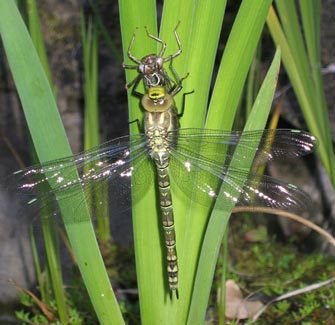
Coincidently, one of our team members spotted a dragonfly emerging from our office pond and they were able to take a photograph whilst this beautiful insect was drying its wings.

A Picture of a Dragonfly

Fossils of Dragonflies preserved from the Carboniferous.

Picture credit: Everything Dinosaur

Dragonfly

Always a pleasure to see a member of the Odonta Order emerging from our office pond, such creatures have, very rarely been preserved in the fossil record.

To read an article on the discovery of a dragonfly fossil: Spectacular Insect Fossil from the Eastern USA.

Dragonflies are amazing aerial acrobats and Everything Dinosaur team members enjoy watching them during their office breaks, in between preparing lesson plans for more dinosaur workshops of course.

To view the extensive range of dinosaur and prehistoric animal themed gifts and toys available from Everything Dinosaur’s award-winning website: Visit Everything Dinosaur.

28 06, 2010

Unique Arctic Pliocene Fossil Site may Hold Clues to Northern Hemisphere’s Future Climate

By |2024-04-19T14:56:01+01:00June 28th, 2010|Categories: Dinosaur and Prehistoric Animal News Stories, Educational Activities, Geology, Main Page, Palaeontological articles|0 Comments

Ancient Arctic Fossil Site Reveals Arctic was much Warmer Recently

Scientist’s studying the Arctic’s ancient past have issued a stark warning about the future climatic conditions the Arctic will face after an analysis of fossils and microfossils from Pliocene strata.

A team of researchers from the USA, Canada and Holland have published their conclusions in the scientific journal “Geology”.  They conclude that the Arctic Circle was much warmer than previously thought 4 million years ago, with average annual temperatures approximately 0 degrees Celsius.

The international team of scientists examined the fossil evidence at a world-renowned Ellesmere Island fossil site and calculated that the palaeo-climate was much milder and warmer than had been previously thought.  This evidence provides a stark warming for geologists and climatologists as they calculate the effect of global warming on the Arctic in the 21st century.

Ellesmere Island

Ellesmere island lies deep within the Arctic Circle and it is part of the Nunavut territory of Canada.  This heavily glaciated, snowbound island is one of the largest in the world, yet there are only a few hardy scientists as year round inhabitants as the annual temperature for this cold and mountainous region is approximately -19 (minus) degrees Celsius.

The island is very important to palaeontologists as there are many fossiliferous Cenozoic sediments plus a number of extremely significant older strata, such as the early Carboniferous sediments that represent ancient stream-beds where fossils of the ancient transitional fish/amphibian Tiktaalik (T. roseae) have been discovered.

In this study, the international team analysed the prehistoric evidence from peat deposits dating from the early Pliocene, approximately 4 million years ago.  The peat accumulated in a beaver pond (hence the name of the dig site – Beaver Pond), this pond was surrounded by a larch forest, today the only tree native to Ellesmere Island is the Arctic Willow.  The plant and animal fossils that have accumulated in these sediments are important to scientists as they provide a window into the past climate of this part of the northern hemisphere as well as helping palaeontologists to understand the interchange of mammalian fauna between Asia and North America during this part of the Earth’s relatively recent history.

Six Researchers

The team of six researchers published their findings after analysing the fossilised remains of plants, trees and animals that had been preserved in the peat deposits.  Based on this information they have calculated that the average annual temperature for this area around 4 million years ago was 0 degrees Celsius, still very cold but not as cold as scientists had thought previously.

This clearer picture of the ancient Arctic climate has potentially important and troubling implications for how quickly and severely the region could witness a temperature spike given current climate-change trends.

The team state in the journal Geology:

“The Arctic climate system may be much more sensitive to greenhouse gas warming than previously thought, and current CO2 levels may be sufficient to bring about significant and irreversible shifts in Arctic ecosystems.”

Given the dramatic increases that have been seen in atmospheric carbon dioxide levels (CO2) the team suggest:

“Our results indicate that a significant increase in Arctic temperatures may be imminent in response to current atmospheric CO2 levels.”

The research was led by University of Colorado scientist Ashley Ballantyne and the paper has been co-authored by Canadian Museum of Nature palaeontologist Natalia Rybczynski and biologist David Greenwood of Manitoba’s Brandon University.  Also contributing was palaeontologist Jaelyn Eberle, curator of fossil vertebrates at the University of Colorado Museum of Natural History.

Ancient Arctic

When the transitional animal Tiktaalik roamed; Ellesmere Island was situated a lot further south, however, the Beaver Pond site is just four million years old and dates from a time when the island was at roughly the same high northerly latitude that it is at today.

In addition, the amount of carbon dioxide in the atmosphere during that time, the Pliocene era, was almost identical to the elevated CO2 levels of today’s warmed-up globe – making the Beaver Pond site an unusually accurate “proxy” for the 21st century Arctic, the researchers conclude.

And while the Ellesmere site’s namesake species, a primitive variety of small beaver and other extinct mammals, such Pliocene rabbits and three-toed horses, are indicative of a warmer environment than today, scientists have generally estimated that the average annual temperature at Beaver Pond four million years ago was no higher than -5 (minus) degrees Celsius.

New Evidence

However, this new evidence suggests that Arctic temperatures could rise much higher, much faster if present-day climate trends continue.

Natalia Rybczynski commented:

“It is really, really compelling evidence.  That number [0 degrees Celsius] is quite a bit warmer than previous proxy estimates and it is warmer than the [climate change] models have come up with.”

She went onto add:

“We don’t imagine in 100 years we’re going to be getting a forest on Ellesmere Island.  You just don’t have the soil – it’s not going to happen.”

But the scientists predict that the warm conditions revealed by the Beaver Pond site may offer a foretelling of the Canadian Arctic’s climate future.

A team spokesperson said:

“If you just let the planet go to its equilibrium under the current CO2 levels, that is the warming that perhaps you would expect to see based on this one site.”

By studying ancient strata, scientists are able to supplement the work of climate models and computer programmes to provide fresh insights into the threat of global warming.  Unfortunately, the Beaver Pond site is under threat as a coal mine is planned for the area.  Ironically, an important fossil site that may provide clues to our future climate is threatened by the desire to get at fossil fuels that are evidence of the Earth’s climatic past.

For replicas and figures of ancient prehistoric animals: Prehistoric Animal Models and Figures.

27 06, 2010

Remarkable Spirit of Adventure Lives on with Voyage on Alberta’s Red Deer River

By |2024-04-19T14:52:36+01:00June 27th, 2010|Categories: Dinosaur and Prehistoric Animal News Stories, Dinosaur Fans, Educational Activities, Geology, Main Page|2 Comments

Voyage Re-enacts Dinosaur Expedition of 1910

For the last eight years Palaeontology Technician Darren Tanke (Royal Tyrrell Museum, Drumheller, Alberta, Canada) has pursued a dream of re-enacting Barnum Brown’s historic 1910 dinosaur expedition on Alberta’s Red Deer River.  His work and that of many other volunteers becomes a reality on June 29th as the scow called Peter C. Kaisen is to be formerly launched on the river at the city of Red Deer.

In 1910, Barnum Brown , the newly appointed Associate Curator of Vertebrate Palaeontology at the American Museum of Natural History (New York), along with technical assistant Peter C. Kaisen (after whom the new scow is named), and other collectors, spent the first of four seasons floating down the Red Deer scouring its banks and the surrounding area for dinosaur skeletons and bone beds.

A Spirit of Adventure

Barnum Brown, has been called “the greatest dinosaur hunter of the 20th century”.  Perhaps most famous for his discoveries of Tyrannosaurus rex fossils, casts of which were on display at the Natural History museum in London until recently, he is strongly associated with the exploration of the Red Deer River area.  From 1910, Brown recovered a spectacular variety of fossils, including almost complete dinosaur skeletons from this part of Canada.  In total, Brown and his team excavated material representing 36 species of dinosaur and a further 84 species of other vertebrates.

Alberta in the early part of the 20th century had limited railway lines and very few roads.  The deep valley of the Red Deer was only accessible by water.  For his expedition, Brown used a specially designed scow – a flat  bottomed, flat decked, floating camp.  It was equipped with a large tent and a wood-burning stove.  It was used as living accommodation and for transportation of up to 10 tons of field equipment and specimens that the explorers picked up along the way.

Palaeontology

The pictures show the American Museum scow called “Mary Jane” in 1911.  It is from studying the photographs and records made at the time, that Darren and his team have been able to reconstruct the scow.  In the picture, the expedition’s  cook Fred Saunders can be seen on the left, with Barnum Brown on the right.  If viewers look carefully to the right of Barnum Brown (his left) a black cat standing on a shelf attached to the two upright tiller support posts can be seen.  A cat accompanied the original explorers to control mice, however, Darren Tanke and his colleagues will not have a cat on their voyage for “fear of losing it along the way”.

Fascinated by Brown’s voyages and motivated by a desire to raise awareness of Alberta’s dinosaur-hunting history, Darren Tanke and other volunteers will spend five weeks on the Red Deer River.  They will explore the banks and the surrounding badlands and have high expectations of what thy may find.

Commenting on his hopes for the expedition, Tanke stated:

“It’s been many years since an expedition systematically surveyed the Badlands along much of the river.  In that time rain, melt water and wind have eroded the valley formations and we hope to map several promising locations for future digs.”

Five-Week Expedition

The five-week trip begins on June 29th with the launch and will end at the Dinosaur Provincial Park on August 7th.  This coincides with the town of Brooks centennial and a celebration is planned at the park to coincide with the arrival of the scow.

Tanke commented:

“The project started about eight years ago, when I started looking for and buying artifacts or replicas to equip a reconstructed scow”.

Darren hopes to relive the little known past of Alberta’s palaeontological heritage and to share it with others, he went onto add:

“I think the best way to truly understand what our palaeontological forefathers went through is to live, as closely as possible, the same way the did on the early fossil hunting expeditions.”

The Magnificent Scow

The magnificent scow and its rowing boat were built by carpenter Perry Schopff of Munson, (Alberta).  Schopff and Tanke have both worked for many years at the Royal Tyrrell Museum, though they are working on this centennial project in their spare time.  The Peter C. Kaisen measures 30 feet long by 12 feet wide and has a height of just 18 inches.  Few details of the vessel used on Brown’s 1910 trip were available so Schopff worked from some rare photographs taken of the 1912 expedition to help him re-create the craft.  Some modern safety features have been added such as compartmentalised sections, sections filled with foam and metal flashing on the underwater corners.

Tanke and some of the scow’s crew will on occasion dress according to clothes of the day and the boat’s tools, tent and stove are typical of those of the period.  For the last eight years, Tanke has scoured antique and second-hand shops for period tools and equipment.  He has even gone as far as researching cookbooks and recipes to replicate the meals the explorers ate as they drifted down the Red Deer.

This project is funded by Darren Tanke, expedition participants, interested members of the public and the Calgary-based Dinosaur Research Institute The Dinosaur Research Institute.

The Dinosaur Research Institute has played a large supportive role as a fund-raiser to promote historic awareness and scientific aspects of this unique and exciting project.

The Start of the Expedition

Hauling of the scow to its Red Deer River launch point (11am to 1pm on June 29th) is being done by Dan’s Oilfield Services with funding assistance from Cliff’s Oilfield Hauling.  Both these firms operate in Drumheller.

For us at Everything Dinosaur, (especially the lucky ones amongst us who have had the pleasure of working in Alberta), we would like to congratulate Darren and his team for putting together such an imaginative and worthwhile project.  We wish them every success on their voyage and we look forward to reporting their progress.

The very best of luck to you all.

Visit Everything Dinosaur’s website: Everything Dinosaur.

26 06, 2010

Council Worker Discovers 3,000 Year Old Carving

By |2023-01-08T21:40:42+00:00June 26th, 2010|Categories: Dinosaur and Prehistoric Animal News Stories, Educational Activities, Main Page|0 Comments

3,000 Year Old Prehistoric Art Discovered in South Yorkshire

For John Gilpin, a Woodlands Officer in the Council’s Parks and Countryside department at Sheffield Council (South Yorkshire, England) a day’s routine maintenance in Ecclesall woods, turned out to be a day to remember when he discovered an example of prehistoric art that dates from the Late Bronze Age.

Prehistoric Art

John found a boulder marked with a series of strange lines and cuts.  The boulder has been examined by Archaeologists and declared a “significant archaeological find.”
Jim McNeil, of South Yorkshire Archaeological Service, said:

“I was called in and recorded the discovery, taking photographs.  I have taken advice from a specialist who considers this to be an important piece of prehistoric rock art.  This is the second example of such rock art from Ecclesall Woods, although other examples are known from the Peak District and further north in the Pennines.”

Despite having been carefully studied by experts, the exact meaning of the carvings remains unclear.

The previous discovery of prehistoric rock art in Ecclesall Woods was in 1983. The only other example nearby is at Gardom’s Edge, north of Baslow in the Peak District.
Mary Bagley, Director of the Parks and Countryside department at Sheffield Council, stated:

“This just goes to show what things we have in our parks, woodlands and countryside that we didn’t know were there – and to think we were a City of Culture all those years ago.”

The find is one of a number of new archaeological discoveries made around South Yorkshire in recent years, finds which include rare Iron Age pottery plus evidence of a Roman settlement.

Ecclesall wood is a 140 hectare area of ancient woodland found southwest of the city of Sheffield (South Yorkshire).  It is a popular visitor attraction and has a rich archaeological heritage as well as providing an important habitat for many native and non-native types of fauna and flora.

For models of prehistoric animals: Everything Dinosaur.

24 06, 2010

The Abundant and Extremely Successful Tenontosaurus

By |2024-04-19T10:31:46+01:00June 24th, 2010|Categories: Educational Activities, Everything Dinosaur News and Updates, Main Page|0 Comments

The Prolific Tenontosaurus

We have just finished writing and testing a new teaching session aimed at Year 7 students (key stage 3) for the national curriculum science element.  Working around the objective of trying to create a 45 minute long teaching session based around the concepts of scientific evaluation and analysis, we chose to focus on the interaction between the Cretaceous dromaeosaur Deinonychus and the herbivorous Tenontosaurus.

Tenontosaurus

Despite the large numbers of Tenontosaurus fossils that have been found in the United States (Montana with a second species identified in Texas),  palaeontologists remain uncertain whether this highly successful plant-eater is a member of the Hypsilophodontidae or a basal iguanodontid.  We think current research puts this ornithopod in the Iguanodontidae camp (at least for the moment).

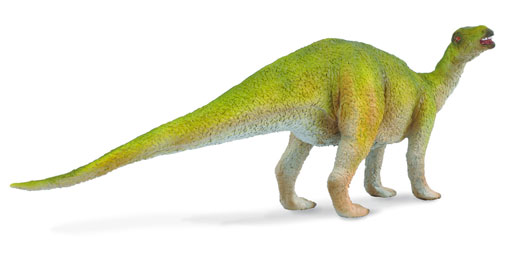
The CollectA Age of Dinosaurs Tenontosaurus Model

CollectA Tenontosaurus model.

The CollectA Age of Dinosaurs Tenontosaurus model.

Tenontosaurus Fossils

Something like 20% of all Tenontosaurus fossils found outside Texas are associated with the fossilised remains of Deinonychus.   This may reflect a predator/prey relationship and a number of dig sites have revealed so much more information that some scientists have postulated that Deinonychus was the  main predator of Tenontosaurus and these two genera were very strongly dependent upon one another – i.e. when the Tenontosaurs thrived so did the predatory “raptors”.

The lesson plan we have developed permits students to explore the fossil evidence and to act as “dinosaur detectives” putting forward theories as to what the fossils may show.  We then encourage students, working in small groups to undertake role play to demonstrate the theory that they have come up with and to justify it.

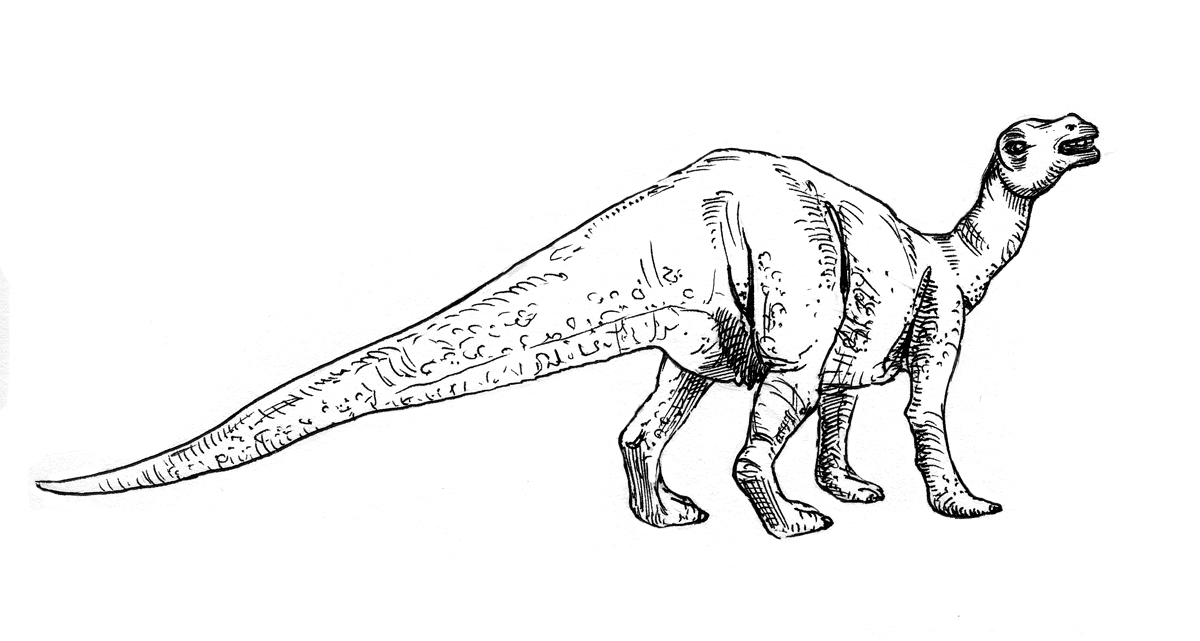
An Illustration of the Herbivorous Dinosaur Tenontosaurus

Everything Dinosaur's illustration of "Sinew Lizard"

Tenonotosaurus illustrated.

Picture credit: Everything Dinosaur

To view a model of Tenontosaurus and other dinosaur models, take a look at the CollectA Prehistoric Life Model range: CollectA Age of Dinosaurs Prehistoric Life Models.

Working around the themes from the national curriculum for science such as using scientific ideas and models to explain phenomena and developing them creatively to generate and test theories (KS3 Science 1.1a), this lesson plan that has already been piloted, seems to have a broad appeal as well as catering for a number of different learning styles.

16 06, 2010

Deinonychus versus Tenontosaurus Important Prehistoric Relationships Between Predator and Prey

By |2024-04-19T14:51:38+01:00June 16th, 2010|Categories: Dinosaur Fans, Educational Activities, Everything Dinosaur News and Updates, Main Page|0 Comments

Predator/Prey Relationships in the Fossil Record

The problem with movies, dvds and television documentaries is that in many cases the scientific evidence is often embellished to some extent to make things more interesting and exciting for viewers.  There is a degree of “poetic licence” employed in some cases to make an interesting story a little more dramatic, sometimes facts can be re-interpreted to permit an exciting scene to be shot.  This is all well and good, but often people can get the wrong impression about an animal or about the interactions and relationships between fauna and flora, especially if the subjects are extinct as there are no animals or plants like them around today to observe and study.

Deinonychus versus Tenontosaurus

This is very often the case when it comes to the Dinosauria and team members at Everything Dinosaur are working on a new teaching programme to challenge some of our assumptions about dinosaurs.  Take for example, the speculation surrounding the predator/prey relationship between the herbivorous Tenontosaurus (T. tillettorum) and the fierce meat-eater Deinonychus (D. antirrhopus).

An Illustration of Deinonychus

Deinonychus life reconstruction (2017). Deinonychus versus Tenontosaurus.

Deinonychus life reconstruction showing feathers. Did this theropod hunt Tenontosaurus?

Picture credit: Everything Dinosaur

Something like 20% of all the fossils of the primitive iguanodont Tenontosaurus have been found in association with fossils of the dromaeosaur Deinonychus.  Scientists have speculated that this is evidence of a predator/prey interaction preserved in the fossil record of North America from approximately 110 million years ago.  Interpreting this evidence is going to form the basis of a new lesson plan aimed at Year 6 and Year 7 school children as part of Everything Dinosaur’s work on key stage 3 science teaching materials.  This session is being piloted next week, the Deinonychus/Tenontosaurus interaction will form part of the teaching before moving onto to discuss what we really know about the likes of Tyrannosaurus rex from the fossil evidence.

To view the extensive range of dinosaur and prehistoric animal themed toys and gifts available from Everything Dinosaur’s award-winning website: Visit Everything Dinosaur.

13 06, 2010

Is Tarbosaurus really a T. rex?

By |2023-01-08T18:42:57+00:00June 13th, 2010|Categories: Dinosaur Fans, Educational Activities, Main Page|0 Comments

Is the Asian Tarbosaurus really a Tyrannosaurus rex?

Whilst working with some school children on one of our dinosaur related lesson plans one of the Everything Dinosaur team members was asked about Tarbosaurus and whether this Late Cretaceous Tyrannosaur was really a Tyrannosaurus rex.

Tarbosaurus

This is certainly an interesting question and one that continues to cause debate, after all, when the eminent Russian palaeontologist Evgeny Maleev formerly named and described this dinosaur in 1955, the name he chose was Tyrannosaurus bataar.  It was only after the original holotype material was reviewed and related to skull material from other tyrannosaurids found in Mongolia and China did the genus name get revised to Tarbosaurus.

A Drawing of Tarbosaurus (T. bataar)

Tarbosaurus

A drawing of the Late Cretaceous Asian tyrannosaurid Tarbosaurus.  Picture credit: Everything Dinosaur.

Picture credit: Everything Dinosaur

The difficulties arose because the joint Mongolian and Soviet expeditions to explore the Nemegt Formation of the Gobi desert which took place in the late 1940s and 1950s discovered several large theropod skeletons, including some skull material.  A number of genera were subsequently named and described, including Tarbosaurus.  In the revision of the work, which took place in the 1960s skull material from what was thought to represent smaller tyrannosaurids was ascribed to the genus Tyrannosaurus bataar as they were now considered to represent juvenile and immature species of this genus.  The skull morphologies and dentition of these skull fossils were considered as a single body of fossil evidence was enough for the Tarbosaurus genus to be created.  Tarbosaurus bataar remains the only valid genus and most palaeontologists think that although Tarbosaurus and Tyrannosaurus rex are closely related they are distinct genera.

Recent Studies

Ironically, more recent studies have shown that Tarbosaurus may possess more primitive tyrannosaur characteristics and may be more closely related to another Mongolian tyrannosaur Alioramus (A. remotus).  If this is the case then this may well lend support to the hypothesis that large tyrannosaurids evolved in Asia and migrated into North America.

Surprisingly, scientists have quite a lot of fossil specimens of both Tarbosaurus and Tyrannosaurus rex to study (about thirty specimens of each).  This is a remarkably high figure when one considers the limited amount of fossil material known from other large apex predators of the Suborder Theropoda.  Tarbosaurus differed from T. rex in a number of ways, the skull was less deep and the snout narrower.  The bone configuration of the skull designed to lesson the shock of biting was different in these two large meat-eaters.  These points and other morphological differences have led most palaeontologists to conclude that these two animals do belong in different genera.

To view a model of Tyrannosaurus rex, Tarbosaurus and theropod dinosaurs in the CollectA model range: CollectA Age of Dinosaurs Prehistoric Life Models.

Go to Top