All about dinosaurs, fossils and prehistoric animals by Everything Dinosaur team members.

Everything Dinosaur team members working in schools, helping museums and other educational bodies. Our work with and in schools.

16 03, 2018

Investigating Fossils an Exciting and Fun Activity

By |2024-05-10T07:33:08+01:00March 16th, 2018|Categories: Key Stage 1/2|Comments Off on Investigating Fossils an Exciting and Fun Activity

Fossil Investigation – Learning About Mary Anning

Our dinosaur expert spotted a very busy fossil investigation table whilst on a visit to Altrincham Preparatory School to work with the two classes of Year 1 children who are currently studying dinosaurs and investigating fossils.  The boys have been learning all about the life and work of Mary Anning and most of the fossils on display came from the Lyme Regis (Dorset) area which is where Mary lived.

A Fossil Investigation Table
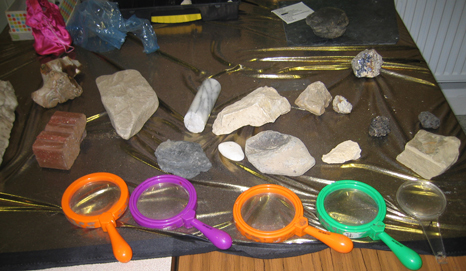
Rocks and fossils to explore.
A very full “rock table”. Picture credit: Everything Dinosaur.

Picture credit: Everything Dinosaur

Mary Anning Themed Extension Resources

After an exciting morning of dinosaur and fossil workshops, our team member returned to the office and prepared additional themed extension materials that were then emailed over to the school.  Having been comprehensively briefed by the dedicated and enthusiastic Year 1 teaching staff, we were able to provide a non-chronological report compiling exercise that involved the boys researching the story of Mary Anning and learning about some of her fossil discoveries.  In addition, we were able to send over some pictures and drawing materials of prehistoric animals that once thrived in the seas and oceans of the Mesozoic.  After all, the rocks along the Dorset coast around Lyme Regis were all formed in marine conditions.

To enquire about Everything Dinosaur’s outreach work: Email Everything Dinosaur.

The Mary Anning Non-chronological Report Exercise Prepared for the School

Mary Anning Non-chronological report. Investigating fossils.
A non-chronological report exercise based on the life and work of Mary Anning. Picture credit: Everything Dinosaur.

Picture credit: Everything Dinosaur

Investigating Fossils

An Example of One of the Marine Reptile Drawings Sent to the School
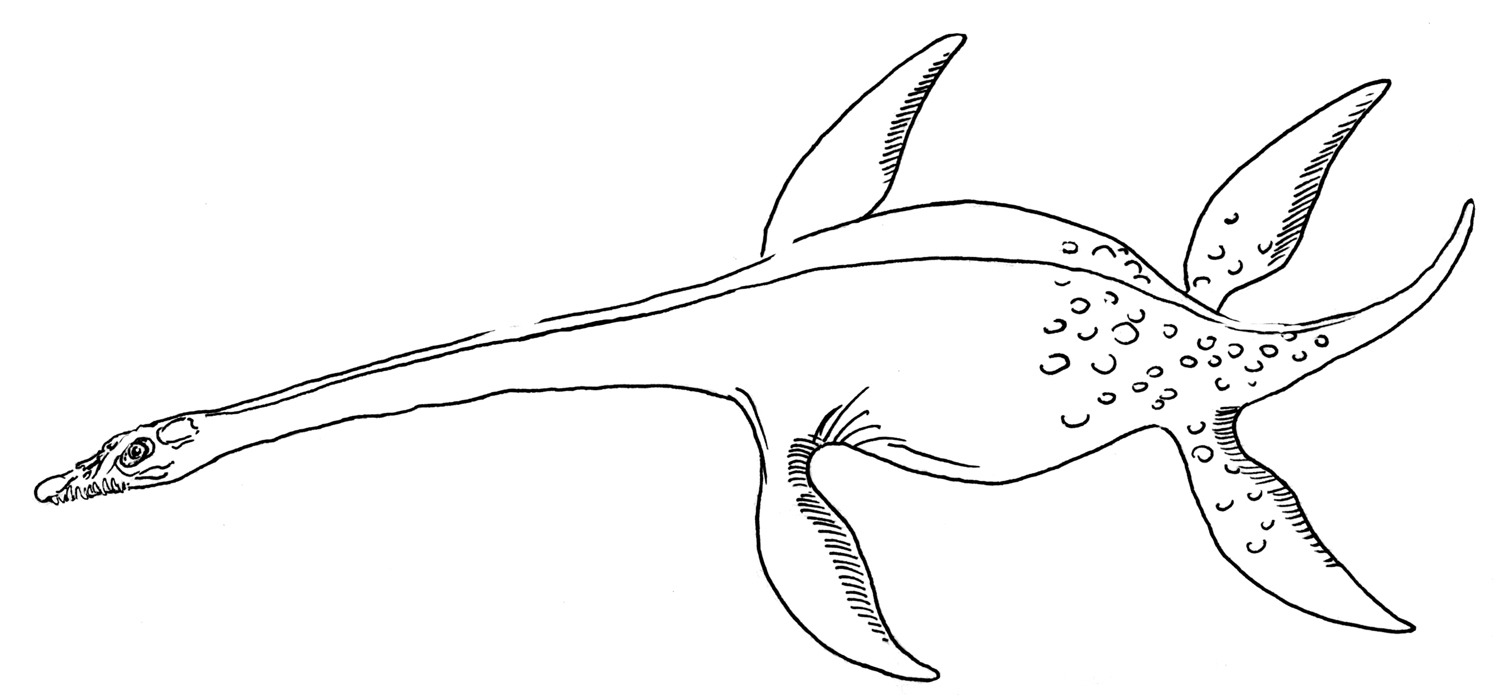
Attenborosaurus conybeari.
Plesiosaurs and other prehistoric animals featured in the lesson plan. Picture credit: Everything Dinosaur.

Picture credit: Everything Dinosaur

We look forward to seeing the prehistoric marine seascapes that the pupils create.  Perhaps they will be put up on display in the well-appointed classrooms, if so, we might receive a picture of the boy’s artwork which we can share on our various social media sites.

Visit the Everything Dinosaur website: Everything Dinosaur.
9 03, 2018

Working to Honour Mary Anning and Mary Leakey

By |2023-10-04T06:23:52+01:00March 9th, 2018|Categories: Dinosaur Fans, Educational Activities, Everything Dinosaur News and Updates, Famous Figures, Main Page, Press Releases, Teaching|0 Comments

Everything Dinosaur Helping to Honour Female Scientists

With International Women’s Day having been very much in the news this week, Everything Dinosaur is taking this opportunity to honour two female pioneers in the Earth sciences, both called Mary.  Today, March 9th, is the anniversary of the death of Mary Anning, the famous amateur fossil collector from Dorset who did much to bring the amazing geology of that part of the coast of southern England to the world’s attention.  It is only in the last few decades that her contribution to the nascent science of palaeontology has begun to be recognised.  As part of our continuing work in schools, we have developed a lesson plan based around researching the life of Mary Anning for Key Stage 1 and Key Stage 2 pupils.

Everything Dinosaur’s Non-chronological Report Focused on Mary Anning

Mary Anning Non-chronological report.
A non-chronological report exercise based on the life and work of Mary Anning.  Picture credit: Everything Dinosaur.

Picture credit: Everything Dinosaur

A Non-chronological Report Focused on Mary Anning

A non-chronological report is a non-fiction report that is not written in time order.  Usually written in the third person, these reports help children to practice structuring texts and working with a variety of writing styles.  They involve a planning phase in which the compiler has to research the subject area and to decide what to include or discard.   It helps children to evaluate sources of information, encourages cross-checking of references and provides the opportunity for the teacher to check learning.  Everything Dinosaur’s lesson plan includes a template for the creation of a non-chronological report focused on the life and work of Mary Anning.

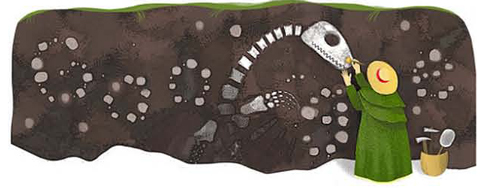
Mary Anning Honoured in a Google Doodle

Google celebrates the life and work of Mary Anning.
Google pays tribute to Mary Anning (1799-1847).

Picture credit: Google

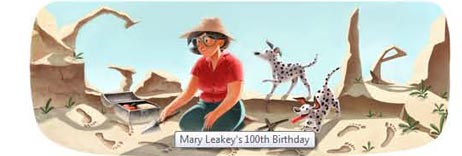
Mary Douglas Leakey (1913-1996)

The British palaeoanthropologist Mary Leakey, who along with her husband Louis, did much to improve our understanding of the evolution of humankind has also been the subject of a Google doodle.  Everything Dinosaur is working towards honouring the work of this ground-breaking scientists by having a blue plaque erected at her childhood home in London.  We shall update blog readers with regards to our progress in the near future.

A Google Doodle Honouring the Work of Mary Leakey

Mary Leakey honoured by Google.
Celebrating the role of women in science.

Picture credit: Google

To read more about the life and work of the remarkable Mary Leakey: Celebrating the Role of Women in Science – Mary Douglas Leakey.

Visit the award-winning Everything Dinosaur website: Everything Dinosaur.
8 03, 2018

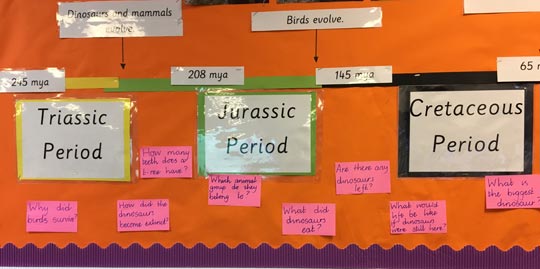
Geological Timelines Spotted in Year 5

By |2023-05-14T10:32:53+01:00March 8th, 2018|Categories: Key Stage 1/2|Comments Off on Geological Timelines Spotted in Year 5

Year 5 Getting to Grips with Deep Time

Children in Year 5 at Oasis Academy Short Heath (Birmingham), got to grips with geological timelines as they commenced the term topic entitled “Jurassic World”.   The emphasis might be on developing vocabulary and improving writing but there was plenty of evidence of cross-curricular activities on display in the two well-appointed classrooms.

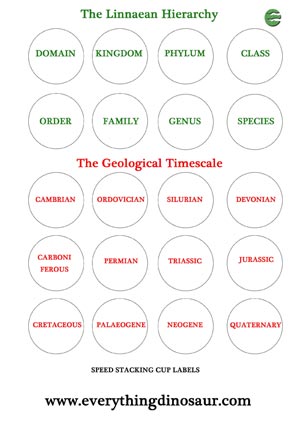
Geological Timelines

Learning About Classification and Geological Timelines

speed stacking game labels.

Learn how animals are classified, learn the geological timescale with this speed stacking game.  Picture credit: Everything Dinosaur.

Picture credit: Everything Dinosaur

Exploring the Mesozoic

The Mesozoic Era is divided into three geological periods, the Triassic, the Jurassic and the Cretaceous.  This enormous period of time in Earth’s history is sometimes referred to as the “Age of Dinosaurs”.  It was during the Mesozoic that the first dinosaurs evolved and the non-avian dinosaur extinction event marks the end of the Cretaceous.

The pupils in 5E and 5G have been compiling questions about dinosaurs that they want to research and during our dinosaur workshops with Year 5, our dinosaur expert was able to field the numerous questions that the children posed.  The eager, young scientists also explored the concept of extinction and they discovered that not all the Dinosauria are extinct.

For models and replicas of Mesozoic animals: Models, Figures and Replicas of Prehistoric Animals.

What is the Geological Timescale?

A geological timescale records intervals of immense periods of time relative to one another.  Several different geological timescales exist, each one developed using slight different datasets and interpretation methods.  These timescales, recording the history of our planet (all 4.57 billion years of it), have been revised and updated since the first timescales were produced more than two hundred years ago.

As our dating techniques and knowledge improves so these timescales get reviewed and revised.  There are several academic bodies responsible for these revisions, the British Geological Survey (BGS) and the Geological Society of America (GSA) for instance.  However, it is the International Commission on Stratigraphy that is generally responsible for ruling on any proposed changes.

A Geological Timescale Created by Year 5 Pupils

Geological Timescale.

A geological timeline created by school pupils.

Picture credit: Oasis Academy Short Heath/Everything Dinosaur

We won’t quibble with the dates stated in the timeline sequence, for instance, the changes in our planet that mark the end of the Triassic and the beginning of the Jurassic are now dated to approximately 201.5 million years ago and not 208 million years ago, as chronicled in older text books.  Perhaps, it might be instructive for the classes to explore the current debate about the need to recognise our impact on the climate of Earth by erecting a new geological Epoch – the Anthropocene.

Visit Everything Dinosaur’s website: Everything Dinosaur.

Here are some links to blog articles that cover this debate:

The search for the start of the Anthropocene: Scientists Search for the Anthropocene Spike.

The impact of global climate change: COP21 – Global Climate Change.

7 03, 2018

Dinosaurs A Year 1 Art Project

By |2023-10-05T09:25:24+01:00March 7th, 2018|Categories: Dinosaur and Prehistoric Animal Drawings, Dinosaur Fans, Educational Activities, Main Page, Teaching|0 Comments

Year 1 Art Project Dinosaurs

Whilst searching through our extensive archives, we came across a photograph taken during one of our many visits to schools to conduct dinosaur and fossil themed workshops.  The children in a Year 1 class at Wellgate Primary have used prehistoric animal drawings to help inspire them in their art classes.  Various drawings of dinosaurs and fossils were used to help the children gain an appreciation of perspective and to learn about the influence of shading on the appearance of a drawing.  How very creative!

Dinosaurs Inspire a Year 1 Art Class

Dinosaur drawings inspire Year 1.
Super dinosaur drawings by a Year 1 class.

Picture credit: Everything Dinosaur/Wellgate Primary

Black and White Illustrations Using Dinosaurs and Fossils

The teacher instructed the children to only use pencil to shade in their drawings and not to add anything else to their illustrations.  This display formed part of an extensive collage that highlighted various painting and drawing styles, all focused on the theme of fossils and prehistoric animals.  Our dinosaur and fossil expert who visited the school to conduct a workshop, took the picture to demonstrate the creative approach to the scheme of work adopted by the teaching team with its cross-curricular touch points clearly evident.

It looks like we have some budding future palaeoartists, all the various pieces of art made a fantastic display.

Visit the Everything Dinosaur website: Everything Dinosaur.
5 03, 2018

Fascinating Facts About Dinosaurs

By |2024-05-04T18:01:49+01:00March 5th, 2018|Categories: General Teaching, Key Stage 1/2|Comments Off on Fascinating Facts About Dinosaurs

Dinosaur Facts

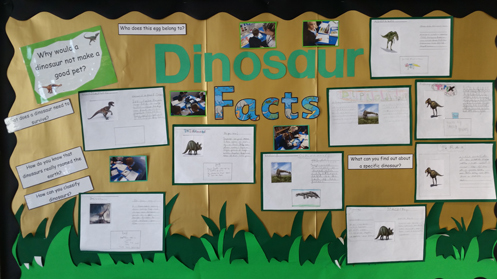
A visit to a school in the chilly south of the country to work with four groups of Year 4 children who have just started their topic for the second half of the Spring Term.  The spacious and well-appointed classrooms already had some dinosaur themed work on display.  Our fossil expert spotted a display board with some A4-sized print outs that had been posted up.  One of the Learning Support Assistants (LSA’s), explained that the facts had been pinned up in a diagonal shape, this would permit the children to look at the published facts, research whether they were accurate or not and post up their own findings either above or below.

Testing Dinosaur Facts (Published Facts About Dinosaurs)

A Colourful Dinosaur wall display. Facts about dinosaurs.
Everything Dinosaur team members are always impressed by school displays that feature dinosaurs and fossils. For example, these pupils produced a colourful dinosaur wall display during their term topic studying prehistoric animals. Picture credit: Everything Dinosaur

Picture credit: Everything Dinosaur/LHPA

Visit the Everything Dinosaur website: Everything Dinosaur.
Encouraging Independent Enquiry

The children were being challenged to conduct their own independent research to test the validity of the statements on the print outs.  Could they uncover evidence to either support or refute the statements (facts)?  The eager, young palaeontologists could then post up their responses either above or below the statements, the position on the wall indicating how much they agreed with the statement or how much they disagreed with the statement following their independent enquiries.  This would provide a visual display as well as giving a valuable lesson in working scientifically.

The Year 4 classes were being challenged to look for evidence, assess the validity of the evidence and either to support or refute the statements that had been posted up.

Facts About Dinosaurs

We wish the young scientists well with their endeavours, our fossil expert chatted to many of the children over the course of the day.  They were all enjoying their dinosaur and prehistoric animal term topic and many of the children already possessed a lot of knowledge about dinosaurs.  One confident learner explained in remarkable detail how the dinosaurs (non-avian dinosaurs), became extinct.

An eager dinosaur fan even asked could we come back when she was in Year 5?

For further information about Everything Dinosaur’s science outreach work: Email Everything Dinosaur.

4 03, 2018

Celebrating 300 Unique School Blog Posts

By |2024-05-04T17:54:10+01:00March 4th, 2018|Categories: General Teaching|Comments Off on Celebrating 300 Unique School Blog Posts

Everything Dinosaur Celebrates 300 School Blog Posts

Everything Dinosaur team members have posted up 300 articles onto their school blog!  Since we started this special “dinosaurs for schools” blog site, highlighting examples of excellent teaching and helping schools deliver lessons about dinosaurs, fossils, extinction and life in the past, we have steadily built up our collection of blog posts.  Today, we mark reaching the achievement of posting up number 300!

Everything Dinosaur Team Members Celebrate the Achievement of Reaching Blog Post Number Three Hundred

Everything Dinosaur dinosaur themed educational resources.
Teaching tips, articles, resources and free downloads. Picture credit: Everything Dinosaur.

Picture credit: Everything Dinosaur

A Thank You from Everything Dinosaur

A special thank you to all the contributors who sent letters, drawings and other amazing prehistoric animal-themed items into our offices.  A big thanks to all the teachers, learning support assistants, senior leadership team members and parents who gave their permission for us to post up examples of children’s work.  We look forward to posting up another 300 articles featuring the various activities and extensions that come out of our dinosaur and fossil workshops.  A big thank you to all our “dinosaurs for schools” blog readers too, we really do appreciate all the feedback and comments that we receive and yes, we do read them all and we respond to all those that require a reply.

Next week, we have more dinosaur workshops to deliver and our team members have volunteered to answer questions about dinosaurs compiled by children in a Reception class located in North Wales, it should be another exciting and fascinating week at Everything Dinosaur.

Visit the award-winning, user-friendly Everything Dinosaur website: Everything Dinosaur.

2 03, 2018

What’s Your Favourite Dinosaur Book? A Great Question

By |2024-05-04T18:02:44+01:00March 2nd, 2018|Categories: General Teaching|Comments Off on What’s Your Favourite Dinosaur Book? A Great Question

What is Your Favourite Book About Dinosaurs?

Writing about our favourite dinosaur book.

Yesterday, was World Book Day, an opportunity to celebrate books, authors, illustrations and the joy of reading.  For part of the day team members were tweeting and re-tweeting the various pictures put up on social media that highlighted the numerous activities taking place at schools that we had recently visited to deliver dinosaur workshops.  We received lots of emails and we responded to all those that required a reply, praising the efforts of the children, teachers and other grown-ups who had worked so hard to make World Book Day memorable.

In one of the email that we received, we were asked to nominate our favourite book about dinosaurs.

Our Nominated Favourite Dinosaur Book (Childhood Favourite)

favourite dinosaur book.
Beautiful dinosaur book. Picture credit: Everything Dinosaur.

Picture credit: Everything Dinosaur

Favourite Dinosaur Book

Choosing a favourite dinosaur book from our substantial collection was quite hard.  However, after much deliberation we chose “Dinosaurs and Other Prehistoric Reptiles”.  This publication was first put into print in the mid 1960’s, the text by Jane Werner Watson guides the reader through geological time and focuses on the rise of the dinosaurs.  The illustrations are by Rudolph F Zallinger and they are beautiful, although like the few facts in this book, they are now hopelessly inaccurate and out of date.  Zallinger painted wonderfully detailed landscapes, populated by dinosaurs and other prehistoric creatures.

We love the small details in Zallinger’s paintings, the tiny mammal appearing next to the giant Triceratops, the beautifully crafted plants and the woodland that forms the backdrop to a dramatic illustration of Ornitholestes attempting to catch Archaeopteryx.  We know that Ornitholestes and Archaeopteryx lived in different parts of the world, but as children this book really captured our imaginations and helped to fuel a life-long fascination with ancient animals, fossils and life in the past.

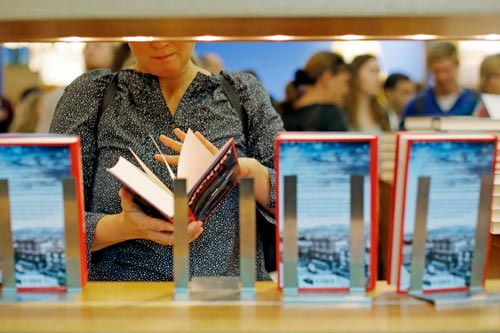
The Joy of Reading – Browsing Books

Browsing books.
Time for browsing at the Frankfurt Book Fair.

Picture credit: The Frankfurt Book Fair Press

Visit the Everything Dinosaur website: Everything Dinosaur.
28 02, 2018

Year 4 Recreate the Age of Dinosaurs

By |2023-09-16T17:58:56+01:00February 28th, 2018|Categories: Educational Activities, Main Page, Teaching|0 Comments

Dinosaur Landscapes Created by Year 4 Children

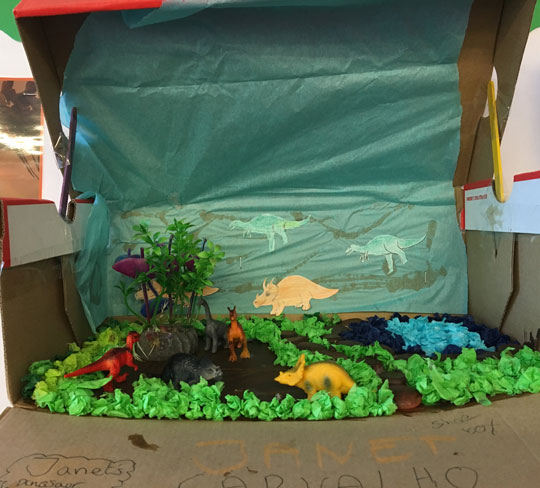
The children in Year 4 at Langley Hall Primary Academy have begun their topic for the second half of the Spring Term.  The four classes are studying dinosaurs, fossils and life in the past.  The enthusiastic young scientists have been creating mini dinosaur worlds depicting prehistoric scenes and what a fantastic display of dinosaur dioramas they make!

Dinosaur Landscapes

Children in Year 4 at Langley Hall Primary Academy Have Made Mini Dinosaur Dioramas

Dinosaur landscapes on display.
A collection of dinosaur dioramas created by children in Year 4 at Langley Hall Primary Academy.

Picture credit: Langley Hall Primary Academy/Everything Dinosaur

The four classes have been named after famous artists.  There is Matisse, Degas, Klee and O’Keeffe classes, clearly the children have been inspired by these artists as they made their very own prehistoric scenes.

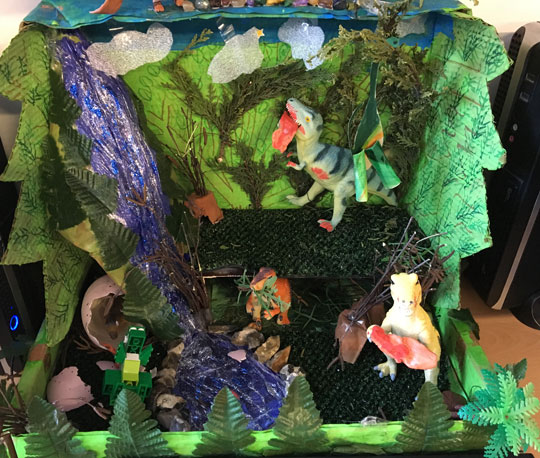
A Range of Materials Have Been Used to Create the Prehistoric Landscapes

"Jurassic World" created by Year 4 children.
Dinosaur dioramas created by children in Year 4 at Langley Hall Primary Academy.

Picture credit: Langley Hall Primary Academy/Everything Dinosaur

Using Different Materials to Create Prehistoric Scenes

Lots of different materials have been used to create prehistoric scenes.  For example, some of the children made plants out of pieces of coloured tissue paper, whilst one pupil collected moss to provide flora for their dinosaur diorama.  The prehistoric animal models have plenty of different textures to explore, some children used small pieces of gravel in their scenes, whilst one innovative young scientists used couscous to make a sand effect.  Can you spot the chicken egg in the photograph below?  During the workshops that Everything Dinosaur conducted with the children over the course of a day, the pupils discovered that chickens are dinosaurs (avian dinosaurs).

Can You Find the Dinosaur Egg?

Year 4 children create prehistoric scenes.
Dinosaur worlds created by children in Year 4 at Langley Hall Primary Academy.

Picture credit: Langley Hall Primary Academy/Everything Dinosaur

Dinosaur toys and gifts: Dinosaur Toys and Gifts.

Georgia O’Keeffe and the Ghost Ranch Location

One of the Year 4 classes is named after Georgia O’Keeffe.  Georgia O’Keeffe was an American painter, best-known for her modernist approach to her subject matter.  Many of her paintings feature the atmospheric landscapes of the Ghost Ranch region of New Mexico.  The sandstones, siltstones and mudstones of this region date from the Triassic geological period and Ghost Ranch is famous for its dinosaur fossils.  Fossils of freshwater Coelacanths are also associated with the region (Chinle Formation).  Our dinosaur expert challenged the children to research the story of the Coelacanth and its rediscovery as part of several extension activities that were suggested during the workshops.

A Variety of Ecosystems and Habitats

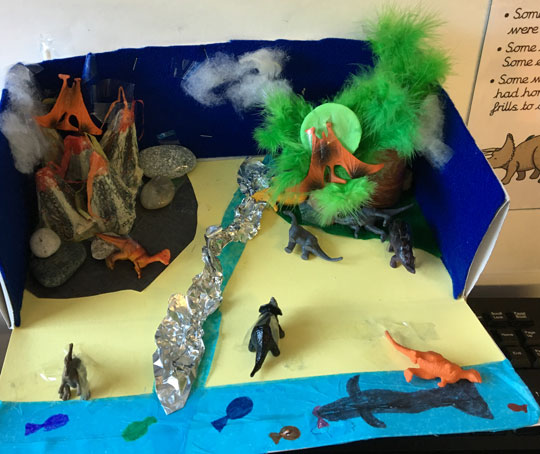
Dinosaurs as a term topic permits lots of cross-curricular activities.  Everything Dinosaur provided some numeracy-based as well as literacy-based extension activities and the dioramas can be used to help explore and reinforce learning about food chains and different habitats.  For instance, in the prehistoric scene (below), the Year 4 pupil has used a range of materials to depict different environments.  They have even included some aquatic animals in their prehistoric scene.   Could add a drawing of a Coelacanth to their diorama?

A Prehistoric Scene Using Various Materials to Create Different Habitats

A dinosaur world in a shoe box.
Prehistoric landscapes created by children in Year 4 at Langley Hall Primary Academy.

Picture credit: Langley Hall Primary Academy/Everything Dinosaur

Visit the Everything Dinosaur website: The Everything Dinosaur Website.

25 02, 2018

Understanding and Exploring Feelings (PSHE)

By |2023-09-16T17:34:05+01:00February 25th, 2018|Categories: Early Years Foundation Reception|Comments Off on Understanding and Exploring Feelings (PSHE)

Understanding and Exploring Feelings PSHE with EYFS

Dinosaurs can help young children explore their feelings.

A key aspect of teaching for the Early Years Foundation Stage (EYFS) is to help the children develop key life skills, one of the principle frameworks for achieving this is through the PSHE (Personal, Social and Health Education), portion of the curriculum.

Learning About Dinosaurs

In many schools, a topic involving learning about dinosaurs forms part of the scheme of work for Nursery and Reception.  Children as young as three years of age can show remarkable pre-knowledge when it comes to dinosaurs and prehistoric animals and with giants like Tyrannosaurus rex and Triceratops to study, the children tend to be very enthusiastic learners.  Dinosaurs as a topic can help children to build strong relationships and to manage their emotions, a dinosaur drawing can prove an effective teaching resource, assisting in the exploration of ideas such as your feelings, the feelings of others and exploring empathy.

Learning About Feelings/Thinking of Others

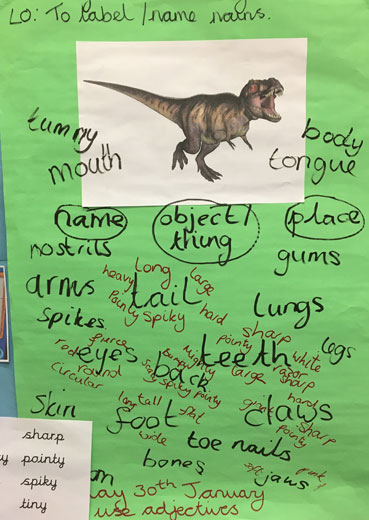
Dinosaurs and describing words.
A dinosaur themed exercise helping children to develop their use of adjectives. Picture credit: Everything Dinosaur.

Picture credit: Everything Dinosaur

Dinosaur Workshops

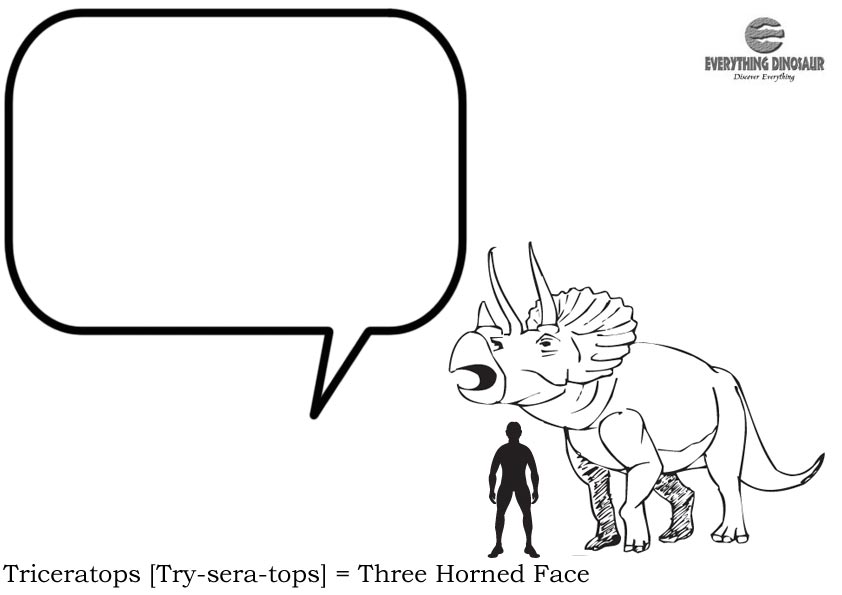
When delivering dinosaur workshops to Foundation Stage children, our experts provide a number of additional resources.  For example, the picture above shows a Triceratops with a speech bubble.  The children are asked to see if they can work out what the dinosaur might be saying.  This exercise provides valuable hand to eye co-ordination when it comes to holding a pencil and tests motor skills.  It also helps the child to think about the feelings of others.

What Might Triceratops be Saying?

Triceratops helps with speech development.
Exploring emotions and helping to construct sentences. Picture credit: Everything Dinosaur.

Picture credit: Everything Dinosaur

These simple sheets that we provide utilise some of our detailed dinosaur illustrations and permit the teaching team to explore feelings using topic appropriate resources.  At Foundation Stage, the teaching team are tasked with a number of responsibilities towards ongoing provision to support personal and emotional development.

Visit the Everything Dinosaur website: Everything Dinosaur.
A dinosaur topic provides, numerous opportunities for children to explore and understand their feelings and the feelings of others.  The teacher or teaching assistant can explore ideas such as is the dinosaur happy/sad?  What would it say if it was sad?  How might you (the child), act to help the dinosaur to stop from feeling sad?

These resources along with the other extension materials provided by Everything Dinosaur enable the Foundation Stage teaching team to develop clear, planned aspects of the curriculum that allow the children to explore feelings and emotions.

 For further information about Everything Dinosaur’s outreach work: Email Everything Dinosaur.

23 02, 2018

Hatching Chicks During a Special Dinosaur Workshop

By |2024-05-04T18:26:32+01:00February 23rd, 2018|Categories: Early Years Foundation Reception, General Teaching|Comments Off on Hatching Chicks During a Special Dinosaur Workshop

Hatching Chicks During EYFS Dinosaur Workshop

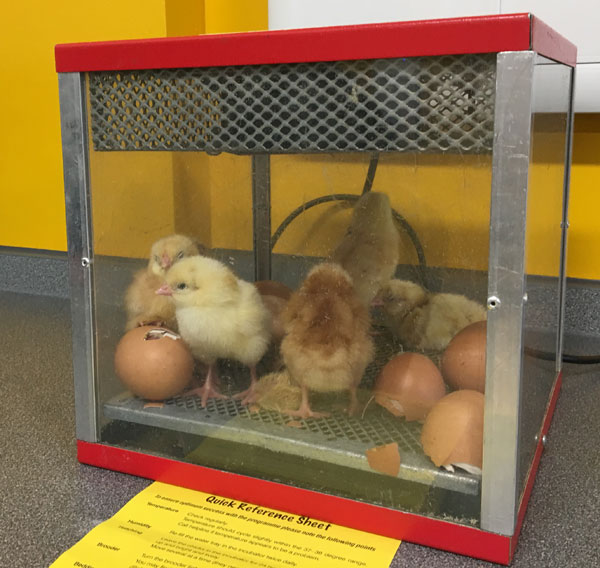
Whilst delivering a series of tactile and kinaesthetic dinosaur themed workshops with children in Early Years Foundation Stage (EYFS), we were joined by some very special visitors to the school.  As part of a rich, diverse and highly creative curriculum, the Foundation Stage children had the opportunity to watch hatching chicks.  The incubator had been placed on a unit top allowing the children a perfect view, permitting them to observe the chicks hatching.

Special School Visitors – Hatching Chicks

Hatching chicks.
Hatching chicks in the classroom. Picture credit: Everything Dinosaur.

Picture credit: Everything Dinosaur

Birds are Dinosaurs

Our dinosaur expert explained that birds were actually dinosaurs and that the Dinosauria was classified into two groups, the non-avian dinosaurs such as Triceratops, Stegosaurus and Apatosaurus and the avian dinosaurs which includes all birds (Aves) living today.  Some of the children even got to hold a cast of Tyrannosaurus rex toe bones and have their picture taken by the incubator.

For dinosaur themed education toys and games: Educational Prehistoric Animal Gifts.

Incorporating the Hatching Chicks into the Lesson Plan

The Everything Dinosaur team member explained how birds are very similar to dinosaurs and like T. rex, most birds walk on three toes.  The similarities between the chicks and Tyrannosaurus rex were explained and highlighted, the photographs that had been taken by the teaching team would help to prompt the children’s thinking in a follow up activity.  Can the children remember the similarities between dinosaurs and birds?  What are the differences?

Visit the Everything Dinosaur website: Everything Dinosaur.

Go to Top