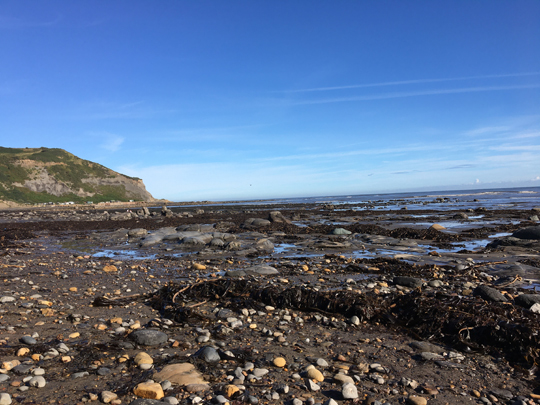
For a few hours team members at Everything Dinosaur were able to take a break from their duties and to visit the Yorkshire coast on a hunt for ammonites and other fossil remains. It was an early start to take advantage of collecting on a low tide and to make the best of the fine weather that had been forecast. For many fossil hunters, the hunt is almost as rewarding as the finds. With all the problems with travel at the moment due to the COVID-19 pandemic, it made a pleasant change to be able to participate in a fossil hunting expedition, albeit only for a few hours.
The Spectacular and Very Beautiful Yorkshire Coast
A visit to the North Yorkshire coast on fossil collecting expedition. The beginning of the day, fine weather is forecast and the early start permitted the team to collect fossils on a falling tide. Picture credit: Everything Dinosaur,
Picture credit: Everything Dinosaur
Avoiding the Cliffs Whilst Fossil Hunting
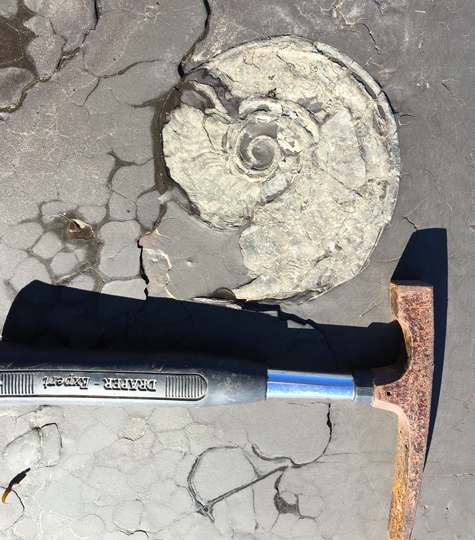
The recent heavy rains had saturated the cliffs, making the risk of rockfalls even greater. During the team’s visit to the beach, several small rockfalls were observed, however, team members stayed away from the cliffs and were content to scour the foreshore looking for fossils. As this location on the North Yorkshire coast is a SSSI (site of special scientific interest), hammering rocks out of the cliffs is not permitted. There were plenty of ammonites to see, including quite large ones, preserved at numerous locations at beach level.
Large Ammonite Fossils Could be Observed on the Beach
Large ammonites preserved on the beach. The geology hammer provides a scale.
Picture credit: Everything Dinosaur
The cliffs at this location are very dangerous and there is a steep and hazardous descent to the beach from the cliff top, this location is not for the faint hearted and not suitable for family groups.
Searching for Fossils on the Foreshore – Some Interesting Finds
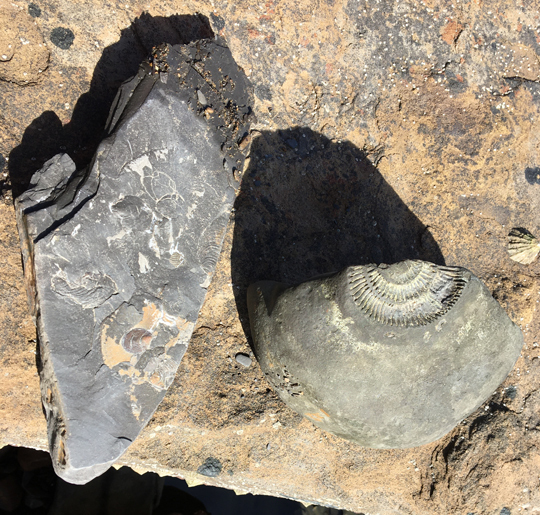
A Dactylioceras ammonite negative exposed in a broken “cannonball” and some brachiopod pieces collected from the foreshore.
The strata dates from the Lower Jurassic and there were plenty of small fragments of ammonites to collect in addition to the occasional gryphaea fossil along with various bivalves and brachiopods. Some of the large specimens were kept as when we visit schools or conduct outreach science activities, we like to give away fossils to help provide resources to the teaching team and to encourage young people to take up fossil collecting as a hobby.
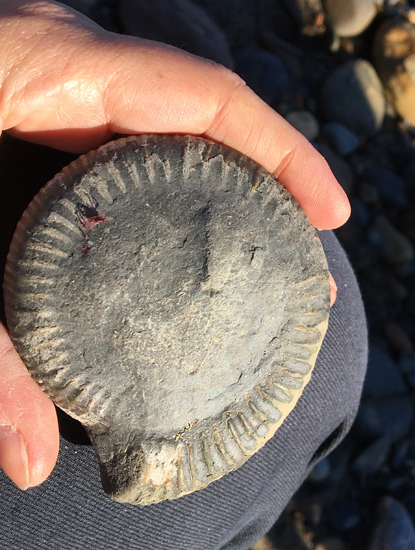
An Ammonite Fossil Found on the Beach
An ammonite partially eroded out of a nodule. We think this is an example of Dactylioceras commune.A wonderful discovery whilst fossil hunting.
Picture credit: Everything Dinosaur
An Ammonite Model
When we visited schools we liked to take an ammonite model with us as well as ammonite fossils. The model helped the children to understand what the creature looked like in real life.
A Model of an Ammonite
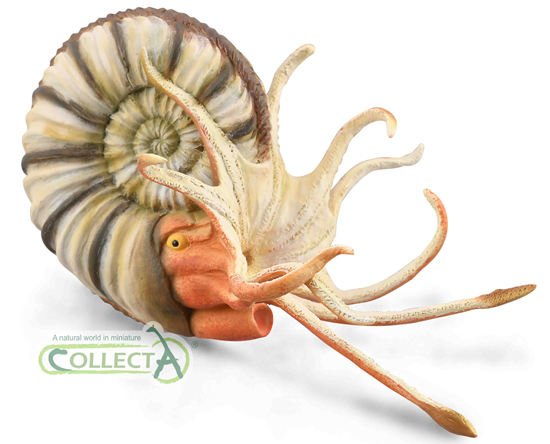
CollectA Age of Dinosaurs Popular Size Pleuroceras ammonite model.
The picture (above) shows a CollectA ammonite figure. To view this range of prehistoric animal models: CollectA Prehistoric Life Figures.
The giant prehistoric caiman Purussaurus is regarded as one of the largest crocodilians to have ever lived. How big this predator of the wetlands of South America during the Miocene actually was, remains open to debate. It is known mainly through skull material, (the largest measuring 1.45 metres in length) and isolated teeth. It is one of several types of crocodiles associated with the Pebas Mega-Wetland System from the north-western side of the continent. Evidence of Purussaurus interaction with prey is limited, confined to a scarred and dented turtle shell, documenting a failed attack by an adult Purussaurus.
Fossilised Tibia with Pathology
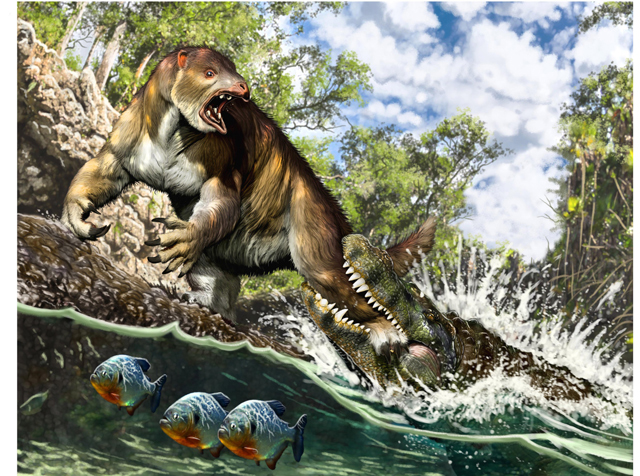
However, scientists have reported the discovery of the lower leg bone of a ground sloth that bears the tell-tale tooth marks and scratches of an attack from a Purussaurus (P.neivensis). The sloth identified as the genus Pseudoprepotherium very probably did not survive the encounter with a four-metre-long caiman.
A Life Reconstruction of the Purussaurus Attack
A ground sloth (Pseudoprepotherium) attacked by the giant South American caiman Purussaurus. In total 46 toothmarks were identified on the 13 million-year-old tibia bone from the ground sloth.
Picture credit: Jorge A. González
Attacked by a Juvenile Purussaurus
Thirteen million years ago, South America was an island continent. There was no isthmus joining the landmass to North America and therefore no opportunity for placental carnivores (Order Carnivora), to enter South America. There were terrestrial predators, such as pouched mammals from the marsupial lineage (sparassodonts) and three-metre-high terror birds (phorusrhacids). Competing with these creatures for the title of most feared predator was the prehistoric caiman Purussaurus neivensis and its close relatives.
Writing in “Biology Letters”, palaeontologist Rodolfo Salas-Gismondi from Cayetano Heredia University (Peru), along with co-author François Pujos conclude that the bitemarks on a tibia found during field work in north-eastern Peru represent predation by a four-metre-long, juvenile Purussaurus.
The Location of the Fossil Find and Views of the Damaged Tibia
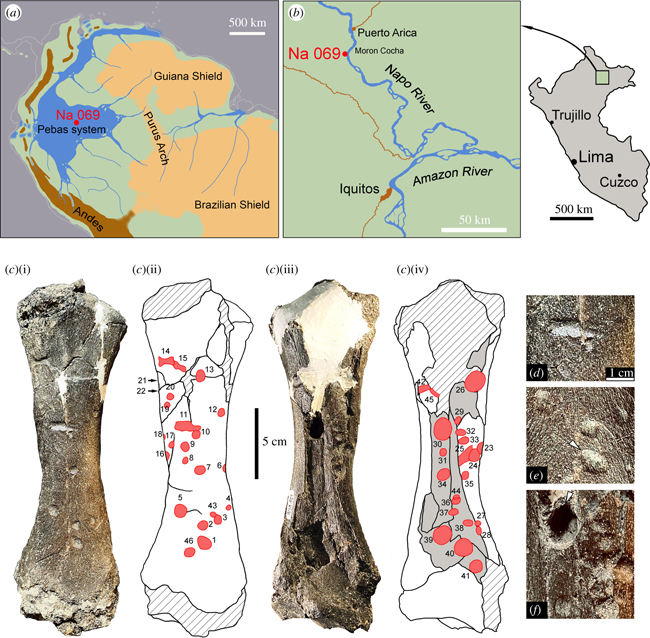
The location of the fossil tibia find in north-eastern Peru. Close-up views of the toothmarks on the tibia and line drawings.
Picture credit: Salas-Gismondi and François Pujos (Biology Letters)
The picture (above), shows the Pebas Mega-Wetland System around 13 million years ago (a). Na069 represents the bonebed where the tibia was found and (b) shows this bonebed location on the Napo River in north-eastern Peru. The left tibia of the ground sloth is shown in anterior (c i) and posterior (c ii) views with accompanying line drawings. Photographs (d-f) highlight individual toothmarks and punctures. The red dots map the bitemarks.
Extant and Extinct Crocodilian Skulls Compared Along with Purussaurus Teeth and Damaged Turtle Shell
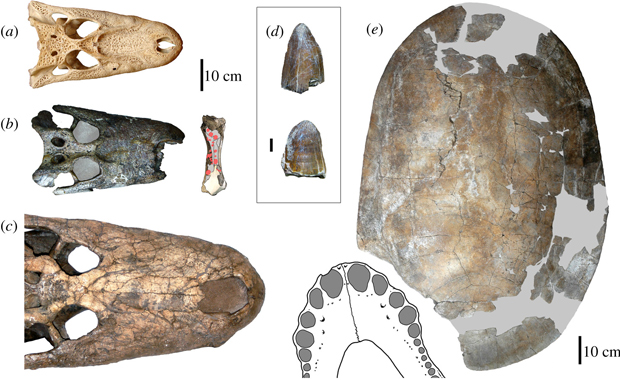
The skull of an adult black caiman compared to a juvenile Purussaurus neivensis, the bite-marked tibia and the skull of a fully grown P. neivensis along with turtle shell showing bitemark.
Picture credit: Salas-Gismondi and François Pujos (Biology Letters)
The picture (above) shows dorsal views of an adult extant black caiman (Melanosuchus niger) skull (a) compared with the skull of a juvenile Purussaurus neivensis (b), facing the damaged ground sloth tibia. The skull of an adult P. neivensis (c) and teeth (d). The shell of the prehistoric turtle Podocnemis with a portion of the carapace missing attributed to a bite from a huge Purussaurus brasiliensis (tip of jaw in line drawing).
A Substantial Meal for a 4-metre Crocodilian
The interpretation of the damaged tibia as evidence of predation from Purussaurus neivensis provides a rare insight into prehistoric crocodilian/prey behaviour. It suggests that prior to reaching adult size, young individuals fed upon terrestrial mammals about the size of a capybara. The ground sloth is estimated to have weighed around 78 kilograms that’s the about the same as an adult human male. If a young Purussaurus could take down an sloth weighing as much as a man, it speaks volumes for that person’s chances if they ever would have met a fully grown Purussaurus.
The scientific paper: “Predation of the giant Miocene caiman Purussaurus on a mylodontid ground sloth in the wetlands of proto-Amazonia” by François Pujos and Rodolfo Salas-Gismondi published in Biology Letters.
Newly Described Multituberculate Mammal Provides Clues to Middle Ear Evolution
A team of international scientists from the Chinese Academy of Sciences, the American Museum of Natural History (New York) and the Beipiao Pterosaur Museum of China, have described a new species of multituberculate mammal that once roamed and climbed in the forests of north-eastern China during the Early Cretaceous. The small creature has been named Sinobaatar pani and its delicate middle ear bones have been preserved providing researchers with an opportunity to study the evolutionary development of hearing.
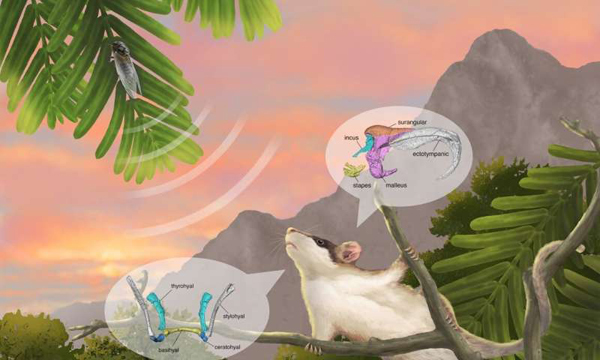
A Life Reconstruction of the Small Multituberculate Mammal S. pani
Newly described multituberculate mammal provides clues to middle ear evolution. A life reconstruction of Sinobaatar pani.
Picture credit: Institute of Vertebrate Palaeontology and Palaeoanthropology (IVPP)
How Do Mammals Hear?
The terrestrial placental mammal ear can be divided into three sections:
Outer ear – collects and directs sound via the ear flap (pinna) and the outer ear canal which ends in the eardrum (tympanic membrane).
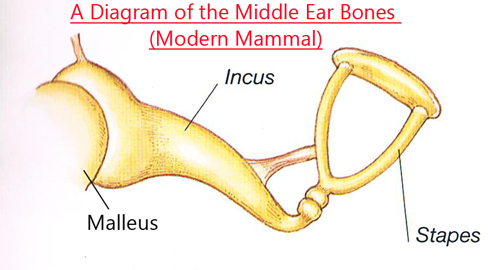
Middle ear – which filters and amplifies sound waves directing them to the inner ear. The middle ear contains three, delicate and tiny bones (ossicles), the anvil, hammer and the stapes (incus, malleus and stirrup).
Inner ear – consisting of the cochlea (organ for hearing) and the vestibular system (associated with balance).
The Inner Bones of a Model Mammal
The three middle ear bones of a modern mammal. The three tiny bones are highlighted, these transfer vibrations from the eardrum to the inner ear, where the sound waves are changed into electrical signals by the cochlea which are then deciphered by the brain. Picture credit: Everything Dinosaur.
Picture credit: Everything Dinosaur
It is the inner ear bones that act as a bridge between the eardrum and the oval window which is the opening to inner ear. The cochlea, which is a hollow, spiral shaped bone transduces the sound waves into electrical signals (neural impulses), that are deciphered by the brain.
Sinobaatar pani and Middle Ear Evolution
Scientists believe that bones that were once part of the reptilian jaw slowly evolved into the three bones that are now found in the middle ear. A joint research team led by Dr Mao Fangyuan from the Institute of Vertebrate Palaeontology and Palaeoanthropology (IVPP) of the Chinese Academy of Sciences and Professor Meng Jin from the American Museum of Natural History were able to model the delicate middle ear bones of S. pani by using computerised tomography to access and view the fossils whilst they were still surrounded by matrix.
The powerful, rock-penetrating X-rays allowed the scientists to construct three-dimensional computer models of the malleus, incus and the stapes and to study their shape.
The images generated, permitted the comparing of the tiny inner ear bones of the Early Cretaceous multituberculate with the embryos of different types of living mammal (placental, marsupial and monotreme).
The Ancestral Phenotype of the Mammalian Middle Ear
Dr Mao explained that her colleagues were able to examine and assess the ancestral phenotype of the mammalian middle ear. The researchers recognised that the three main Mesozoic mammalian groups (multituberculates, eutriconodontans and symmetrodontans) share a similar middle ear structure between the incus and malleus, which they termed the “braced hinge joint”. Although they acknowledged that the middle ear may have evolved independently in several mammalian groups, they proposed that the braced hinge joint could represent a critical feature of the ancestral phenotype of the mammalian middle ear.
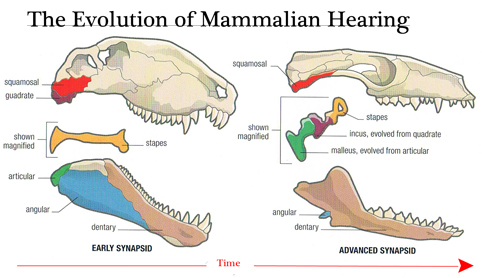
The Evolution of Mammalian Hearing
The evolution of the mammalian middle ear. The skull and jaw of an early synapsid (pelycosaur) compared to the skull and jaw of a later synapsid, the evolution of the three middle ear bones.
Dr Mao commented:
“There are two basic patterns of the middle ear in living mammals, represented by monotremes and therians [placentals and marsupials], respectively. In the former, the middle ear is characterised by an “abutting contact” between the incus and malleus, which is distinct from the one in therian mammals where the incus-malleus articulation is saddle-shaped.”
Sinobaatar pani Provides Clues
The abutting pattern in monotremes and the saddle-shaped joint in therians may well be derived from the braced hinge joint linking the incus and malleus as observed in Mesozoic mammals. At the very least, these fossil forms have narrowed the morphological gap between the middle ear of protomammals, formed by the postdentary bones lodged in the lower jaw, to the middle ear of extant mammals. The researchers proposed that the surangular bone, which is another postdentary bone in protomammals, persisted in Mesozoic mammals; its fate in living mammals remains uncertain.
Writing in the National Science Review, the researchers demonstrate that middle ear morphologies in Mesozoic mammals represent different evolutionary stages with Sinobaatar showing an advanced inner ear configuration. Furthermore, the evolutionary changes recorded in the Mesozoic mammals are largely consistent with the way the middle ear bones develop as living mammals grow, supporting the relationship between evolution and development.
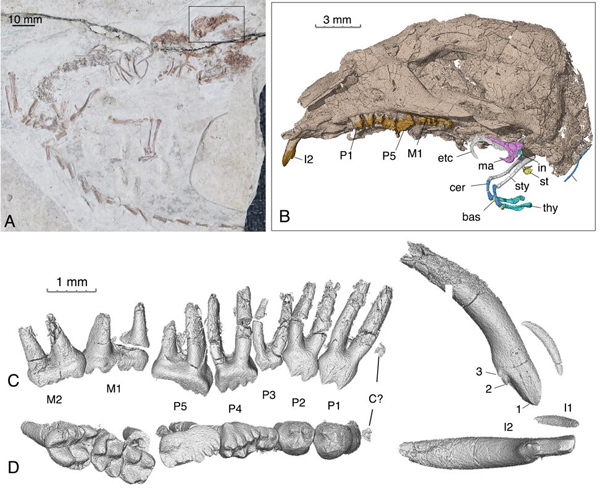
The Holotype of S. pani and Three-dimensional Skull and Teeth Images
The holotype specimen of Sinobaatar pani (BPMC 0051) in the matrix (A) the black rectangle shows the area that has been CT-rendered to show the three-dimensional skull (B). Left upper dentition in (C) lingual and (D) occlusal views.
Picture credit: Institute of Vertebrate Palaeontology and Palaeoanthropology (IVPP)
Everything Dinosaur acknowledges the assistance of a press release from the Chinese Academy of Sciences in the compilation of this article.
The scientific paper: “Exploring ancestral phenotypes and evolutionary development of the mammalian middle ear based on Early Cretaceous Jehol mammals” by Fangyuan Mao, Cunyu Liu, Morgan Hill Chase, Andrew K Smith and Jin Meng published in National Science Review.
Horned Baby Dinosaurs But Not a Ceratopsian in Sight!
A team of international researchers have published a new scientific paper that reports on the discovery of a beautifully preserved embryo of a dinosaur. The fossil specimen representing a titanosaur, that lived around 80 million years ago, has permitted palaeontologists to demonstrate that these herbivores had stereoscopic vision, just like most of the carnivorous dinosaurs that would have hunted them. Furthermore, the embryonic skull has revealed that these sauropods had small horns on the front of the face, which they later lost as they grew up.
A Close-up View of the Embryonic Titanosaur Skull
A close-up view showing the embryonic titanosaur articulated skull preserved inside the dinosaur egg.
Picture credit: The University of Manchester
An Amazing Fossil Discovery
The research team, which included Dr John Nudds (Manchester University), state that this is the most complete and articulate skull known from any titanosaur, a group of temporally and geographically diverse sauropods, members of which evolved into some of the largest land animals that ever existed. The egg fossil was discovered in southern Argentina (Patagonia) and heralds from strata laid down during the Cretaceous (Campanian faunal stage of the Late Cretaceous).
A Model of a South American Titanosaur – Dreadnoughtus
The new for 2024 CollectA Deluxe 1:100 scale Dreadnoughtus dinosaur model. Picture credit: Everything Dinosaur.
Picture credit: Everything Dinosaur
The image (above) show a titanosaur figure in the CollectA Deluxe range.
It was imperative the egg was repatriated to Argentina however as it is illegal to permanently remove fossils from the country.
Commenting on the significance of the fossil discovery, Dr John Nudds (Manchester University) stated:
“The preservation of embryonic dinosaurs preserved inside their eggs is extremely rare. Imagine the huge sauropods from Jurassic Park and consider that the tiny skulls of their babies, still inside their eggs, are just a couple of centimetres long. We were able to reconstruct the embryonic skull prior to hatching. The embryos possessed a specialised craniofacial anatomy that precedes the post-natal transformation of the skull in adult sauropods. Part of the skull of these embryonic sauropods was extended into an elongated snout or horn, so that they possessed a peculiarly shaped face.”
Revising Opinions About Baby Dinosaur Anatomy
The analysis of the fossil specimen allowed the research team to revise opinions on how babies of these huge dinosaur might hatch and to test previously held ideas about sauropodomorph reproduction. The elongated facial horn may have been used as an “egg tooth” to help the babies to break out of their eggs.
New Study Tests Ideas about Sauropodomorph Reproduction
Eggshell fragment (A) and the skull of the embryonic dinosaur (B). Note scale bar = 2 cm.
Picture credit: The University of Manchester
The paper has been published today in the academic journal “Current Biology”. The fossilised bones of the embryo were revealed by dissolving the matrix using an acid preparation. The researchers were able to perform a virtual dissection of the fossil material by bombarding the specimen with powerful X-rays to build up a three-dimensional image. The European Synchrotron Radiation Facility (ESRF) at Grenoble was employed for this purpose.
Dinosaur Embryology and Baby Sauropods
Dinosaur embryology remains one of the least explored and poorly understood areas of research when it comes to the Dinosauria. Argentina has provided palaeontologists with evidence of titanosaur nesting sites and embryos before, most famously the nest sites discovered in northern Patagonia associated with Saltasaurus loricatus that were studied by the famous Argentinian palaeontologist José Bonaparte. Saltasaurus was named and described in 1980, the first titanosaur to be named from South America. Since then, many more genera have been erected including Argentinosaurus, Andesaurus, Barrosasaurus, Bonatitan, Dreadnoughtus and Futalognkosaurus.
However, this is the first time a fully intact embryo has been studied. Other fossilised eggs are also known from this site, the scientists hope to repeat their work with other specimens and are optimistic that some of the eggs might even retain the preserved remains of dinosaur skin.
The scientific paper, “Specialized Craniofacial Anatomy of a Titanosaurian Embryo from Argentina” is published in Current Biology. The lead author on the paper is Martin Kundrat, Evolutionary Biodiversity Research Group Pavol Jozef Šafárik University.
The Jurassic-aged strata found on the coastline of the Isle of Skye in Scotland’s Inner Hebrides is recognised as one of the most globally significant locations in the world for dinosaur fossils from the Middle Jurassic. Recently, the fossil sites on Skye received greater legal protection: Legal Protection for Isle of Skye Fossil Locations. The vertebrate body and trace fossils confirm the presence of a rich biota of different dinosaurs and early mammals. Footprints on Skye had hinted at the presence of stegosaurs in Scotland. It is ironic therefore, that further evidence for the existence of armoured dinosaurs in the Middle Jurassic of Scotland has not come from Skye but from its island neighbour, the Isle of Eigg that lies to the south.
Stegosaur Limb Bone Found on a Beach on the Isle of Eigg
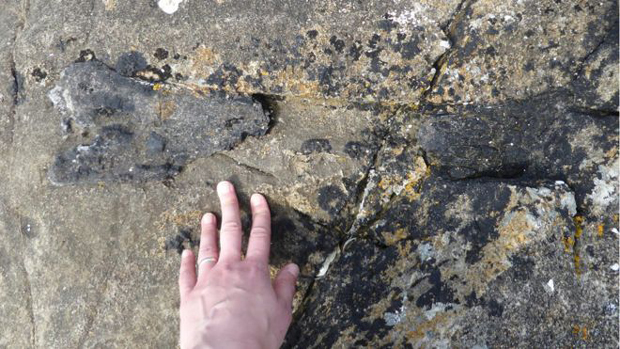
The stegosaur limb bone exposed on the beach (Isle of Eigg).
Picture credit: Dr Elsa Panciroli (National Museums Scotland)
A Stegosaurus Fossil Bone – A Serendipitous Discovery
The contemporaneous Jurassic strata that outcrops on the small island of Eigg, it covers an area of just 30² kilometres (11² miles), has been well explored. It is renowned for its fossils of marine fauna including ammonites, prehistoric sharks and marine reptiles. This is the first time that a dinosaur bone has been found on the Isle of Eigg. The 166 million-year-old limb bone (Bathonian faunal stage of the Jurassic), was discovered by chance by Dr Elsa Panciroli (National Museums Scotland).
Dr Panciroli explained:
“I was running along the shore on my way back to meet the rest of the team and I ran right over it. It wasn’t clear exactly what kind of animal it belonged to at the time, but there was no doubt it was a dinosaur bone.”
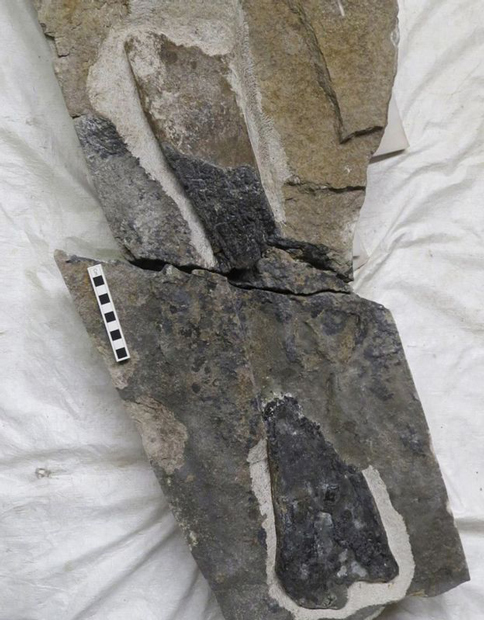
The bone is highly eroded, it having been exposed on the face of a boulder for some time, it measures a little over fifty centimetres in length. It represents a bone from the hind limb.
The Stegosaurus Fossil Bone Specimen Removed from the Boulder
The eroded stegosaur limb bone is now in the collection of the National Museums of Scotland.
Picture credit: N. Larkin
A Hugely Significant Find
The scientists comment that this single fossil bone represents a “hugely significant find”, albeit one found fortuitously thanks to a sharp-eyed field team member. Dinosaur fossils from the Middle Jurassic are particularly rare and this fossil has a global significance for palaeontologists.
Palaeontologist Dr Steve Brusatte (University of Edinburgh), who has co-authored a paper on the fossil bone stated:
“This fossil is additional evidence that plate-backed stegosaurs used to roam Scotland, which corroborates footprints from the Isle of Skye that we identified as being made by a stegosaur”.
The bone now resides in the collections of National Museums Scotland (Edinburgh), the fieldwork on the Isle of Eigg was funded by the National Geographic Society with the permission of The Isle of Eigg Heritage Trust.
A paper on the fossil specimen will be published in the Earth And Environmental Transactions Of The Royal Society Of Edinburgh.
Mesozoic Strata Associated with Skye, Eigg and Rùm (Inner Hebrides)
The Isle of Eigg in relation to the Isle of Skye (Inner Hebrides), the location of Mesozoic-aged strata is highlighted in dark green.
Picture credit: Google Maps with additional annotation by Everything Dinosaur
The British Isles and Stegosaurs
The oldest fossils of a stegosaur described to date, also come from the British Isles, but from a location very much to the south and east of the Inner Hebrides. The coast of North Yorkshire, notably the Saltwick Formation has yielded at least two stegosaur tracks, attributed to the ichnospecies Deltapodus brodricki. These are the oldest fossils attributed to a stegosaur known to science (we think). The Saltwick Formation was laid down around 175-171 million years ago (Aalenian faunal stage of the Middle Jurassic) and are therefore at least five million years older than the stegosaur body and trace fossils associated with the Inner Hebrides.
Natural Casts of Stegosaur Tracks (Deltapodus brodricki) from the North Yorkshire Coast
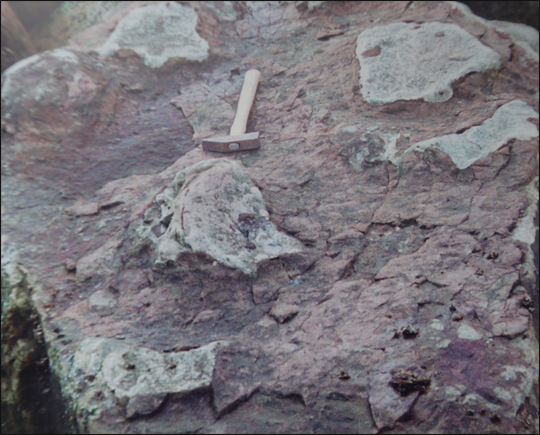
Natural casts of stegosaur tracks Deltapodus brodricki from the Aalenian aged Saltwick Formation.
Comprehensive Review of Dinosaur/Bird Relationship Published
The evolution of the Aves (birds), can be regarded as one of the most significant moments in tetrapod evolution. From their Mesozoic origins, the birds have thrived and today they have a global distribution and still outnumber the Mammalia in terms of extant species. Spectacular fossils, particularly those from northern China, demonstrate that birds are members of the Theropoda.
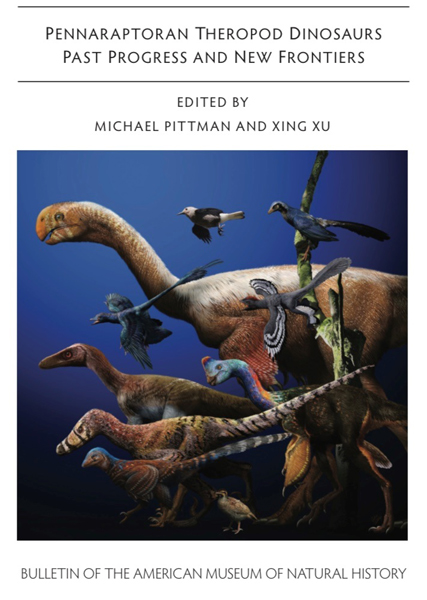
Numerous palaeontologists and other scientists have got together to publish a comprehensive overview of that part of the Theropoda most closely related to living birds. The volume entitled “Pennaraptoran Theropod Dinosaurs – Past Present and New Frontiers” has been edited by Research Assistant Professor Dr. Michael Pittman of Hong Kong University and Professor Xing Xu (Chinese Academy of Sciences).
Pennaraptoran Theropod Dinosaurs – Past Progress and New Frontiers
A landmark volume on the biology and evolution of early birds and their close relatives.
Picture credit: Bulletin of the American Museum of Natural History and Julius T Csotonyi
The Origin of Birds
The Pennaraptora are a clade that consists of the Aves, as well as the pennaceous feathered dromaeosaurids, troodontids, oviraptorosaurians and the scansoriopterygids. It was erected relatively recently (2014), it is defined as the most recent common ancestor of Oviraptor philoceratops, the “raptor” Deinonychus antirrhopus, and Passer domesticus (the house sparrow), and all descendants. To improve understanding about this clade the International Pennaraptoran Dinosaur Symposium (IPDS), was held at the University of Hong Kong in the spring of 2018 and as a follow-up to this event, a special volume detailing the scientific papers and research has been published in the journal “Bulletin of the American Museum of Natural History”.
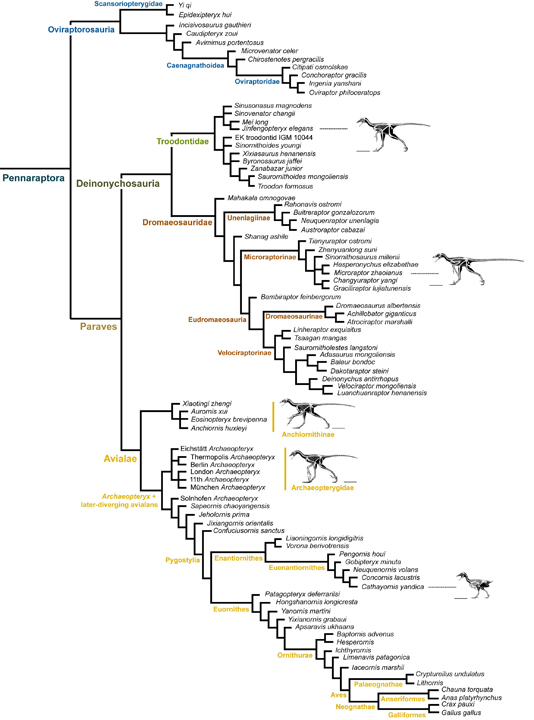
The symposium permitted the drafting of a comprehensive cladogram demonstrating evolutionary relationships within the Pennaraptora.
Evolutionary Tree of Pennaraptoran Theropods
Evolutionary tree of pennaraptoran theropods.
Picture credit: Pittman et al
Commenting on the significance of this volume, co-editor Dr Pittman stated:
“The volume documents past progress, works toward consensus on key unresolved issues, breaks new ground in the field and identifies priority areas for future research.”
Split into Three Sections
The publication has been divided into three main sections and consists of fourteen chapters:
1). The Fossil Record, Systematics and Biogeography – how fossils have shaped the definition of the clade.
2). Anatomical Frontiers – with a focus on recent fossil discoveries particularly related to the manus (hand) and the skull.
3). Early Flight Study – research into the origin and evolution of powered flight.
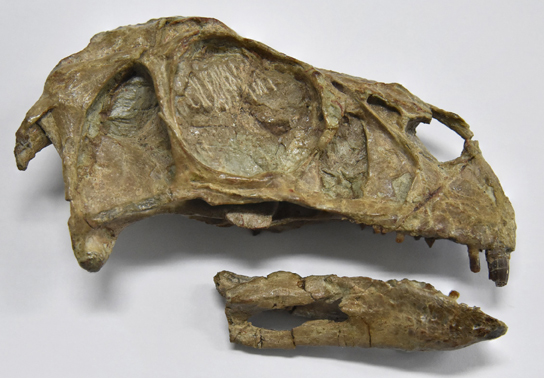
Incisivosaurus – A Primitive Member of the Oviraptorosauria
Skull of the early-diverging oviraptorosaurian pennaraptoran Incisivosaurus. Later-diverging oviraptorosaurians lost their teeth and evolved a beak.
Picture credit: Xing Xu and Waisum Ma
Examining the Relationship Between Extant Aves and Theropod Dinosaurs
The third part of the volume, looking at the evolution of flight examines recent efforts to identify the small pennaraptorans that first took to the skies, what their flight capabilities were and how their flight might have been acquired. A new broader context is postulated for flight behaviour as part of a functional landscape. Wing-assisted incline running (WAIR), a behaviour seen in modern birds that is proposed as an early stage of flight development, is argued as a later innovation based on a study of modern ostriches.
Co-editor Professor Xu commented:
“The volume involved 49 experts from more than 10 countries whose views cover much of the current discussion on pennaraptoran palaeobiology and evolution.”
One of the contributors, Dr Daniel Field (Cambridge University), added:
“This is a landmark volume that advances our understanding of pennaraptoran dinosaurs and identifies key areas to address in the years ahead.”
Sapeornis chaoyangensis – An Early Cretaceous Avialan
The early short-tailed fossil bird Sapeornis. Under Laser-Stimulated Fluorescence, the feathers and other soft tissues preserved around the fossil skeleton become clear. This new information has been used to assess the bird’s soaring abilities.
Picture credit: Serrano et al
Everything Dinosaur acknowledges the assistance of a media release from Hong Kong University in the compilation of this article.
A fortuitous rock fall on the Bright Angel Trail in the Grand Canyon National Park (Arizona), has revealed two ancient trace fossils that have been interpreted as the trackways created by small vertebrates as they climbed a steep sand dune. The sandstone blocks containing the fossilised trackways from the Manakacha Formation, a sub-unit of the extensive Supai Group, are the subject of a scientific paper published in the academic, on-line, open-access journal PLOS One.
Estimated to be around 313 million years old (Moscovian Age of the Pennsylvanian Epoch – Late Carboniferous), the fossilised trackways are thought to have been made by either basal diapsid reptile or a basal synapsid and are the first tetrapod tracks reported from the Manakacha Formation and the oldest known from the Grand Canyon region.
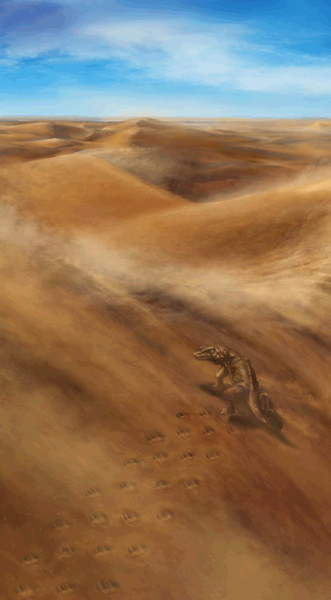
An Artist’s Reconstruction of the Tetrapod Ascending the Sand Dune
Crossing a sand dune. A life reconstruction of a basal amniote moving diagonally up a dune creating a trackway similar to the one described in the scientific paper.
Picture credit: Emily Waldman
Ascending Sand Dunes
The rocks in this region are aeolian sandstones and the discovery of the two trackways document the earliest known occurrence of dunefield-dwelling amniotes. Lead author of the scientific paper, Steve Rowland (professor emeritus of geology at the University of Nevada), commented that these fossils demonstrate that by the Late Carboniferous, the first vertebrates capable of laying eggs out of water had adapted to desert habitats.
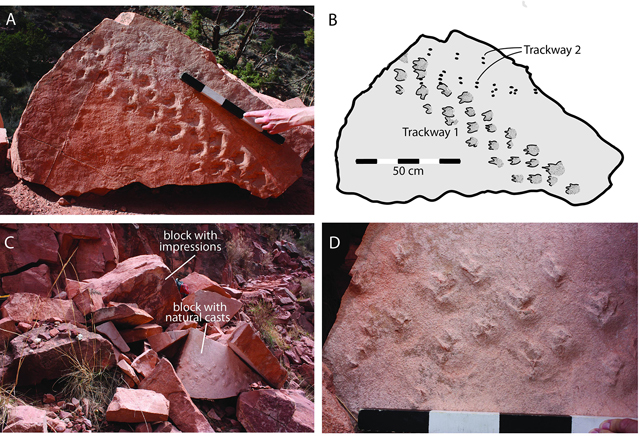
The Main Trackway, Line Drawing, Site of Rock Fall and Counterpart Slab
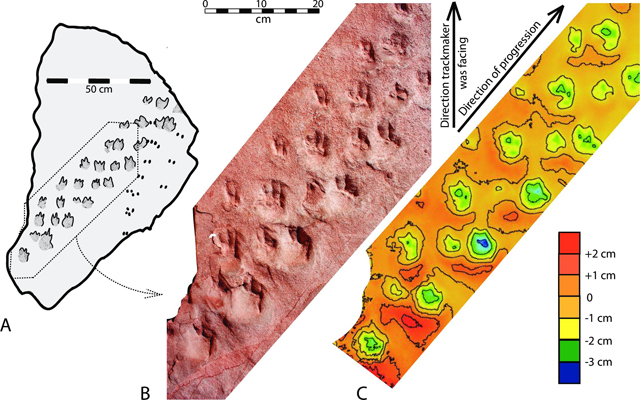
Main trackway block adjacent to Bright Angel Trail (Grand Canyon), with tracks in concave epirelief (impressions) at (A). Scale is calibrated in decimeters. Sketch of main trackway surface (B). Note occurrence of Trackway 2 (alignments of small black spots) above Trackway 1. The rocks (C) next to the Bright Angel Trail, including at least two rocks with amniote tracks. Counterpart block (D) with tracks in convex hyporelief (natural casts).
Picture credit: Rowland et al (PLOS One)
Side-stepping Ascent of a Steep Dune Revealed by Fossilised Trackways
The rock fall occurred close to a popular hiking trail and they were first spotted during a geology field trip to the Grand Canyon in 2016. The leader of that trip, professor Allan Krill sent a photograph of the tracks to the Department of Geology at the University of Nevada and Professor Rowland decided to investigate further. The tracks have been interpreted as showing the ascent of a dune slope at an angle of approximately 20 degrees, thus reducing the steepness of the climb.
The second trackway, a series of small rounded depressions in the rock suggest claw marks. It has been postulated that these marks are a deeper undertrackway, made some hours or days after the first track was produced, possibly by an animal of the same species as the first trackmaker.
Line Drawing of Main Trackway (1) with a Plotted Three-dimensional Track Interpretation
Studying the fossilised trackways. Sketch of main trackway surface (A). Detail of a portion of the trackway, with scale (B). Coloured digital elevation model with explanation of colours (C). Contour interval is 1 cm.
Picture credit: Rowland et al (PLOS One)
The scientists conclude that to traverse over the steep slope the little animal was moving, laterally one step at a time so that it always had its three other legs to support its body and to grip the surface. The transition across the dune may not have been particularly elegant but the 28 impressions that have been preserved may help to shed further light on the evolution of early amniotes, which are scarce in the Carboniferous/Early Permian fossil record of North America.
A Controversial Interpretation
Not everyone is convinced of the interpretation of the fossils by the research team which included Mario Caputo (Society for Sedimentary Geology) and Zachary Jensen (College of Southern Nevada).
A spokesperson representing the palaeontology programme at the Grand Canyon commented that there was a lot of disagreement amongst the scientific community when it came to interpreting fossil tracks and inferring animal behaviours from them. During the Late Carboniferous, this part of Arizona was a coastal-plain on the western edge of the super-continent of Pangaea. There were extensive dunefields in close proximity, the dunes being formed by the action of the wind (aeolian), occasionally exceptional tidal conditions, storms or other flooding events interrupted the aeolian deposition burying parts of the dunefield in fine mud.
The scientific paper: “Early adaptation to eolian sand dunes by basal amniotes is documented in two Pennsylvanian Grand Canyon trackways” by Stephen M. Rowland, Mario V. Caputo and Zachary A. Jensen published in the open-access, on-line journal PLOS One.
Triassic Ichthyosaur Bit Off More than it Could Chew
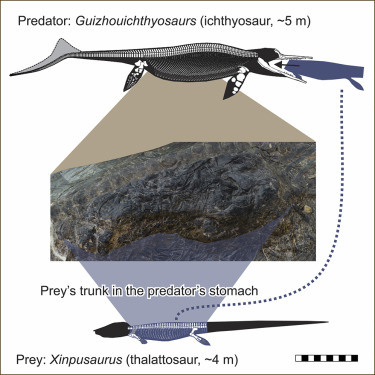
An international team of researchers have reported the oldest evidence found to date of megapredation, that is, when one large predator eats another large animal. Sadly, for the 4.8 metre ichthyosaur at the centre of this research published in the on-line, open access journal iScience, the victim, a 4-metre-long thalattosaur (another type of marine reptile), turned out to be the last meal this fish lizard ever had.
Evidence of Megapredation – Thalattosaur Torso Found in Stomach of an Ichthyosaur
The torso of the thalattosaur in the stomach of the ichthyosaur. Although the thalattosaur was almost as long as the ichthyosaur it was much lighter.
Picture credit: Jiang et al/iScience
Which Marine Reptiles were Top of the Food Chain?
When it comes to mapping Mesozoic food chains it is how big the animal was and the size and shape of the teeth that are usually used to determine position in the food web. Large animals with big, pointed teeth are usually regarded as the apex predators. However, there is little direct evidence in terms of stomach contents to support these assertions.
A nearly complete specimen of a Guizhouichthyosaurus has been found that contained the torso of another marine reptile, nearly as big as the ichthyosaur. Guizhouichthyosaurus is believed to have reached a length of between 6-7 metres (most specimens are much smaller). Their teeth are not huge and they seem adapted to grabbing slippery prey such as fish and squid. However, the evidence is quite compelling, it seems that Guizhouichthyosaurus also fed on other large marine reptiles too. Until this fossil discovery, Guizhouichthyosaurus had not been regarded as an apex predator.
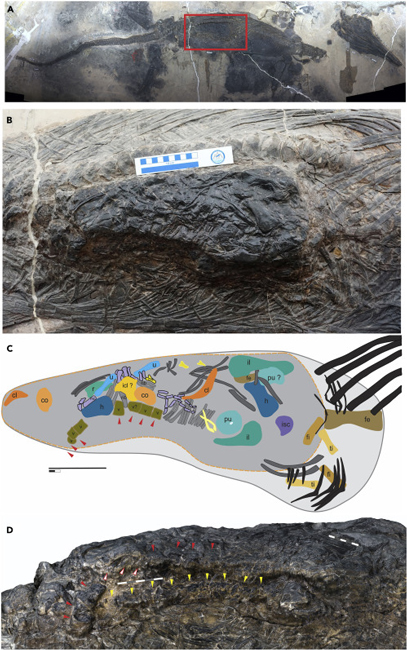
Specimen of Guizhouichthyosaurus with Stomach Contents
Skeleton of Guizhouichthyosaurus and stomach contents.Studying the Guizhouichthyosaurus fossil.
Picture credit: Jiang et al/iScience
A Surprise in the Abdominal Region
The ichthyosaur specimen, likely to represent a new species of Guizhouichthyosaurus was found in 2010 and excavated from the Ladinian (Middle Triassic) Zhuganpo Member of the Falang Formation in Xingyi, Guizhou Province, in south-western China. During preparation, a large block of bones was identified in the stomach cavity. It soon became clear that these bones were not from the ichthyosaur but represented a thalattosaur, identified as Xinpusaurus xingyiensis.
The seventy-four centimetre mass was classified as a bromalite, a trace fossil representing the remains of material sourced from the digestive tract of the ichthyosaur. The lack of evidence of damage from stomach acids suggests that the unfortunate Xinpusaurus had been swallowed shortly before the Guizhouichthyosaurus itself died. Attempting to consume such a large item of prey probably killed the ichthyosaur.
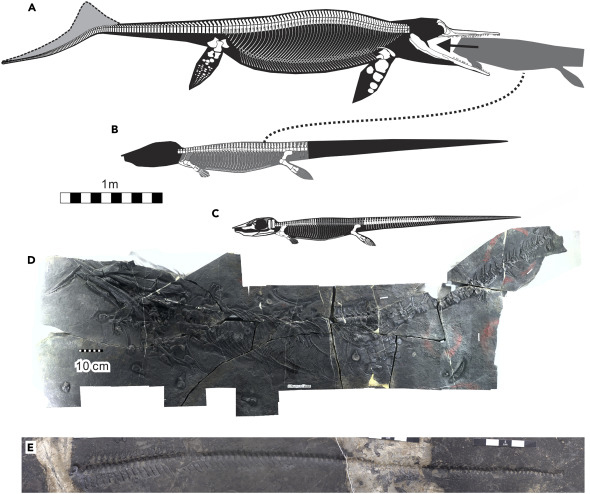
Skeletal Reconstruction of the Ichthyosaur and Thalattosaur
(A) = Skeletal reconstruction of the predator, Guizhouichthyosaurus, with (B) approximate skeletal map of the prey, Xinpusaurus xingyiensis. Skeletal reconstruction of X. xingyiensis holotype (C) and photograph of X. xingyiensis holotype fossil (D). A natural mould of the isolated, articulated tail of Xinpusaurus found 23 metres away from the ichthyosaur/thalattosaur specimen (E). Scale bars 1 metre (A-C), 10 cm (D) and 25 cm for (E).
Picture credit: Jiang et al/iScience
Scavenging a Carcase Discounted
An articulated Xinpusaurus tail was found some twenty-three metres away from the ichthyosaur/thalattosaur specimen. Whilst it is not possible to definitively match this tail to the bromalite, the researchers suggest that the tail could have come from the prey. The presence of limb bones in the stomach cavity indicate that the Xinpusaurus was attacked and that the ichthyosaur was not scavenging a carcase. If the Guizhouichthyosaurus had been feeding on a rotting corpse, it is likely that the Xinpusaurus limb bones would have become detached from the body as the soft tissue eroded.
It has been proposed that the ichthyosaur attacked the slightly smaller Xinpusaurus at the water’s surface. The predator employed a “grip and tear” strategy, as seen in extant aquatic predators such as large crocodilians and killer whales (Orcinus orca). By grabbing the victim and thrashing its powerful body and tail, the Xinpusaurus could have been ripped to pieces by the ichthyosaur. This might explain why the head and neck of the Xinpusaurus is missing whilst a detached tail was found nearby.
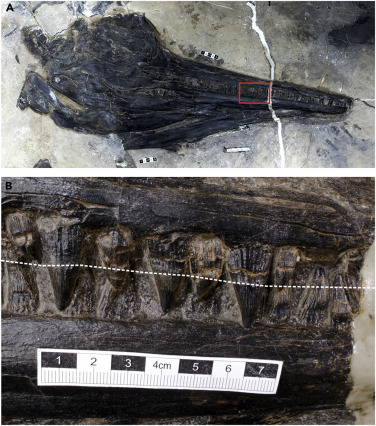
The Skull of the Guizhouichthyosaurus and a Close View of the Teeth
The skull of the ichthyosaur with the red rectangle highlighting the area shown in close up view. Dotted line in (B) indicates the gumline. The small, closely spaced teeth of Guizhouichthyosaurus do not look typically like the dentition of an apex predator.
Picture credit: Jiang et al/iScience
Guizhouichthyosaurus Fossil Study
The remarkable fossils most likely represent the oldest record of megafaunal predation by a marine reptile and the oldest example of megapredation. If Guizhouichthyosaurus was capable of such carnage then it seems the many more Mesozoic reptiles, not previously considered as top predators could also have indulged in megapredatory behaviour.
The scientific paper: “Evidence Supporting Predation of 4-m Marine Reptile by Triassic Megapredator” by Da-Yong Jiang, Ryosuke Motani, Andrea Tintori, Olivier Rieppel, Cheng Ji, Min Zhou, Xue Wang, Hao Lu and Zhi-Guang Li published in iScience.
Bristol Channel Could Provide Oldest Evidence of Insular Dwarfism
The flamboyant Baron Franz Nopcsa did much to establish the concept of island dwarfism, that is animals on islands with limited resources often evolve into much smaller forms. Baron Nopcsa was the first person to suggest dwarf dinosaurs based on specimens associated with the Late Cretaceous Hateg Island, but a team of researchers including scientists from Bristol University, have uncovered evidence of island dwarfism in strata laid down in the Upper Triassic millions of years before the Hateg biota evolved.
Late Triassic Island Dwarfs
Writing in the “Proceedings of the Geologists’ Association”, the researchers report on an analysis of fossil remains from strata laid down around 205 million years ago that suggests ancient North American reptiles lived on an island archipelago in the area that now forms South Wales and the Bristol Channel.
Student Matthew Skinner, (School of Earth Sciences at Bristol University), studied a treasure trove of fossil material that had been collected from Ruthin Quarry back in the 1950s and housed as part of the fossil collection at the National Museum of Wales (Cardiff). The fragmentary and very fragile material documented life on a small tropical island during a time in Earth’s history when the Atlantic Ocean did not exist and Europe and North America were only partly separated and what division there was consisted of narrow, shallow seaways dotted with small islands.
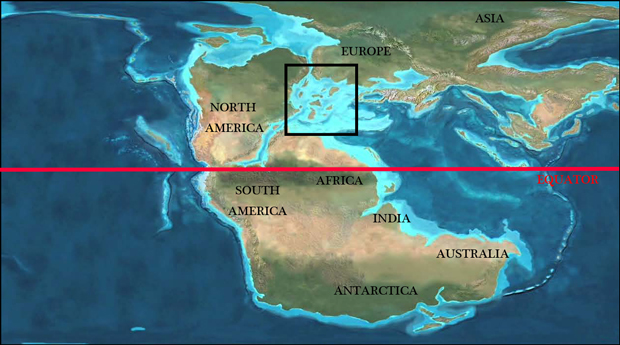
World Map (Late Triassic) The Black Square Shows the Approximate Location of the Island Archipelago
Pangaea in the Late Triassic, the black square highlights the island archipelago linking Europe and North America.
Eleven Different Taxa
In total eleven different taxa were identified, many of the vertebrates identified from the Ruthin Quarry fossils were reminiscent of fossils associated with much older strata in North America. The researchers describe the Ruthin Quarry biota as “relictual”, they are the remnants of a population that was once much more widely distributed. The Ruthin Quarry specimens are some 25 million years younger than the similar fossils known from North America.
Matthew Skinner commented:
“We were amazed to discover that most of the Ruthin beasts showed greatest similarity to relatives from North America. Of course, at that time, one could just hop across from South Wales to New York. The islands provided little space and food and so regular-sized animals couldn’t survive on them; the Ruthin animals were all dwarf versions of their closest mainland relatives, maybe half the size on average.”
Professor Mike Benton (Bristol University), who supervised the research study, explained:
“Our other questions were about the effects of island life. We know today that animals on remote islands can evolve in different ways from on the mainland. Often they become smaller, as there is less food, and they might be anachronistic – meaning they are throw-backs to much more ancient animals from the mainland.”
As most of the taxa identified from the site possess closest relatives that are found in much older strata and their body size is small, the scientists have concluded that these fossils record evidence of island dwarfism, also referred to as insular dwarfism. This is the oldest known record of this biological phenomenon.
A New Species – Smilodonterpeton ruthinensis
The team identified cartilaginous fish including the primitive shark Rhomphaiodon minor from a single tooth which helped to date the material. Numerous reptiles were described including parareptiles from the Procolophonidae family, one procolophonid is a new species and has been named Smilodonterpeton ruthinensis (chisel-toothed reptile from Ruthin).
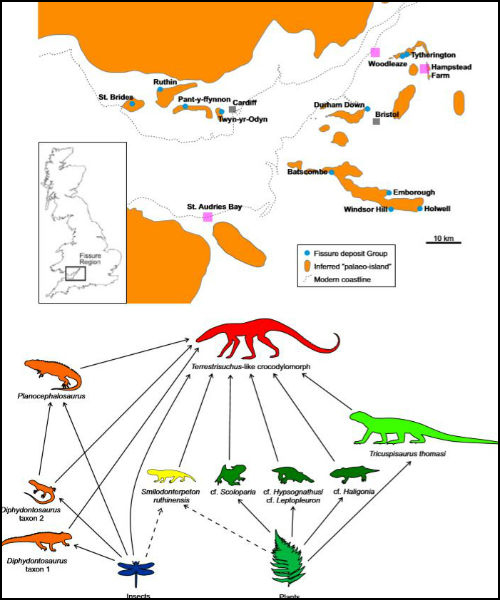
Other reptiles identified include three species of rhynchocephalians (beak lizards, distantly related to the living Tuatara of New Zealand), the herbivore Tricuspisaurus thomasi and archosaurs including a small, predatory crocodylomorph similar to Terrestrisuchus. Although less than a metre in length, this crocodylomorph may have been the top predator on the island. From this inventory, a simple food chain for the Ruthin Quarry fossil site could be constructed.
Location of the Fossil Finds and the Ruthin Quarry Food Chain
A map of the Bristol Channel/South Wales area during the Late Triassic showing the ancient islands in relation to the modern coastline. With (below) a food web for Ruthin Island.
Picture credit: Bristol University
CT Scans and Three-Dimensional Computer Models
A number of the delicate fossil specimens were subjected to non-destructive CT scans to help reveal their anatomical details. Tricuspisaurus had been named and scientifically described in 1957, but its taxonomic relationship with other reptiles was unclear. This research has enabled the scientists to challenge the view that Tricuspisaurus was a procolophonid.
Co-author of the paper, Dr David Whiteside (Bristol University and the Palaeontology Department of the London Natural History Museum), stated:
“It has been questioned for many years how Tricuspisaurus is related to the other reptiles. I was keen we found out what it really was, and Matthew was able to CT scan the specimens and this showed that its teeth were located in tooth sockets and it had a beak at the front of its jaws. This confirms it was not a procolophonid, as had been thought, but a distant relative of birds, crocodiles and dinosaurs.”
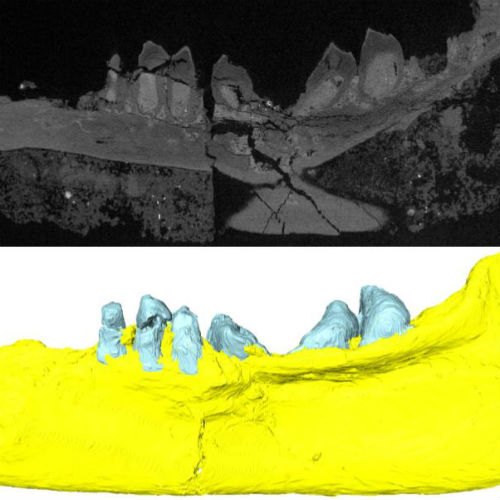
CT Scan and Digital Image of the Lower Jaw of Tricuspisaurus
CT scan and 3-D digital computer model of the lower jaw of Tricuspisaurus. The scan shows the base of its teeth embedded in tooth sockets. A clear tooth socket lacking a tooth is visible at the back of the jaw. Scale bar equals 5 mm.
The scientific paper: “Late Triassic island dwarfs? Terrestrial tetrapods of the Ruthin fissure (South Wales, UK) including a new genus of procolophonid” by M. Skinner, D. Whiteside, and M. Benton published in the Proceedings of the Geologists’ Association.
Eustreptospondylus oxoniensis from Summertown (Oxfordshire)
After the recent hot weather and to coincide with the gradual opening up of museums as some of the COVID-19 restrictions are eased in England, we wanted to feature the fossilised remains of one of the most complete theropod dinosaurs known from the Middle Jurassic of Europe – Eustreptospondylus oxoniensis.
Eustreptospondylus oxoniensis
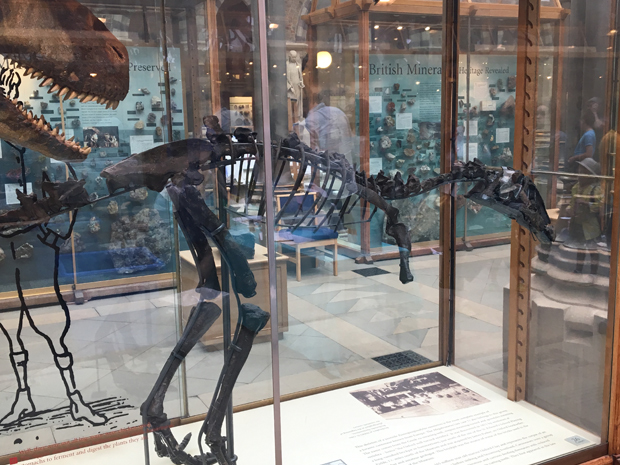
Why Eustreptospondylus? It’s fossils were discovered in a clay pit at Summertown, Oxfordshire. The marine sediments revealed a single, disarticulated skeleton, probably representing a young animal. The specimen (OUMNH J. 13558) is on display at the Oxford University Museum of Natural History. As we reach high summer in the Northern Hemisphere, we think it fitting to remember the dinosaur from Summertown.
Eustreptospondylus oxoniensis on Display at the Oxford University Museum of Natural History
The mounted skeleton of Eustreptospondylus oxoniensis on display at the museum.Picture credit: Everything Dinosaur.
Picture credit: Everything Dinosaur
Visit the award-winning and highly rated Everything Dinosaur website: Everything Dinosaur.
Discovered in 1871?
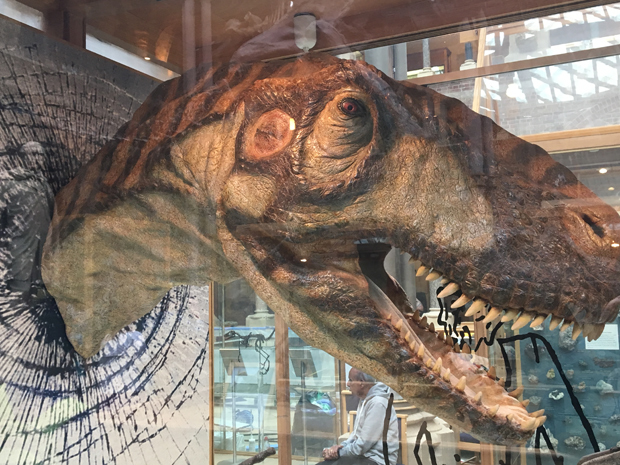
The fossilised remains of this theropod were discovered in 1871 according to the Oxford University museum, but some sources claim the fossils were found in the previous year. The dinosaur has not always been displayed like this, for many years the fossils were posed in a “kangaroo-like” posture with the tail bones dragging on the ground. In addition, a replica of the head of an adult Eustreptospondylus was added to the exhibition case to demonstrate that this dinosaur would have grown up into a formidable predator, had it lived for a few years longer.
The Reconstructed Head of the Fearsome Eustreptospondylus (E. oxoniensis)
A reconstruction of the head of Eustreptospondylus oxoniensis on display at the Oxford University Natural History Museum.
Picture credit: Everything Dinosaur
As we move into high summer, it’s a pleasure to remember one resident of Summertown.