All about dinosaurs, fossils and prehistoric animals by Everything Dinosaur team members.

Pictures of fossils, fossil hunting trips, fossil sites and photographs relating to fossil hunting and fossil finds.

31 03, 2021

Studying the Brains of Australia’s “Thunderbirds”

By |2024-05-22T21:27:32+01:00March 31st, 2021|Categories: Dinosaur and Prehistoric Animal News Stories, Dinosaur Fans, Main Page, Palaeontological articles, Photos/Pictures of Fossils|2 Comments

Australia boasts a weird and wonderful flora and fauna. Millions of years of isolation has led to the land “down under” evolving a very unique biota, perhaps most marked by the abundance of marsupial mammals. Today’s fauna, remarkable as it might be, is overshadowed somewhat by the incredible megafauna that once existed on the continent.

Australia’s Giant “Thunderbirds”

For example, giant, flightless birds thrived and evolved into a myriad of different sized forms as climates and habitats changed. Some of these birds, members of the extinct family the Dromornithidae, were giants and have been nicknamed Australia’s giant “Thunderbirds” or even “Devil Ducks”. A newly published study examines the evolutionary development of “bird brains” in a bid to settle the phylogeny of these giant birds.
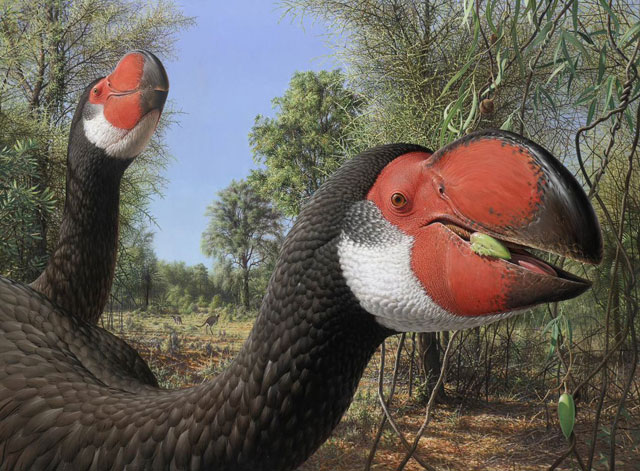
Dromornis stirtoni life reconstruction.
A life reconstruction of the giant Australian “Thunderbird” Dromornis stirtoni of the Late Miocene. At around 3 metres tall and weighing approximately 600 kilograms, D. stirtoni is one of the largest avian dinosaurs to have ever lived. Picture credit: Peter Trusler.

Mapping the Brains of “Mihirungs”

Scientists had puzzled over the phylogeny of these extinct birds for some time. Earlier studies suggested that they were related to waterfowl – hence one of their nicknames “Devil Ducks”. Researchers from Flinders University (Adelaide, South Australia), reconstructed the brains of a number of dromornithid genera in a bid to better understand the family’s origins and to learn more about their place in the Australian megafauna dominated prehistoric ecosystems.

One of the birds studied was the enormous Dromornis stirtoni, the largest of the “mihirungs” (the Aboriginal word for “giant bird”).
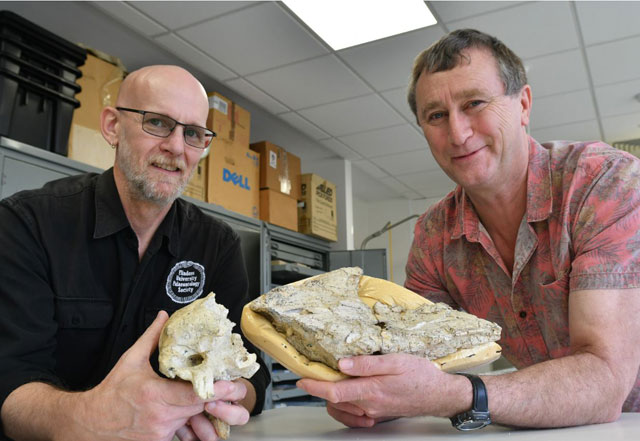
Dromornis "Thunderbird" fossils
Dr Warren Handley and Associate Professor Trevor Worthy – the authors of the scientific paper, hold a skull (left) and partial upper bill (right) of the mihirung Dromornis planei. Picture credit: Flinders University.

Plant-eater or Meat-eater?

Heavier than a polar bear (Ursus maritimus) Dromornis stirtoni is known from Upper Miocene deposits from Australia’s Northern Territory. Dromornis had a huge skull, more than half a metre long, but its brain was squeezed for space.

It possessed a big, powerful beak, but its diet along with the diets of other dromornithids remains a mystery. It could have fed on leaves, nuts and fruit, or perhaps it was a predator. The lack of a “hook” and the absence of talons in this and other species suggests that these flightless birds were probably not hypercarnivores.

Examining Bird Brains (Australia’s Giant “Thunderbirds”)

Writing in the academic journal “Diversity”, the researchers examined the craniums of giant “Thunderbirds” looking at a variety of genera including the earliest Dromornis murrayi from the Late Oligocene to Dromornis planei and Ilbandornis woodburnei from the middle Miocene Epoch and Dromornis stirtoni, that roamed northern Australia around 7 million years ago (Messinian, the last stage of the Miocene).
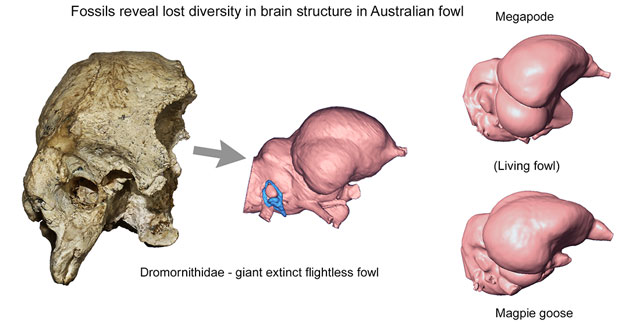
Examining the brain structures of living and extinct Australian fowl
Fossil study reveals lost diversity in the brain structure of Australian fowl. Picture credit: Flinders University.

Related to Gamefowl (Galliformes)

The researchers conclude that these birds were probably more closely related to gamefowl (Galliformes) than they were to waterfowl (Anseriformes).

Commenting on the research, one of the authors Dr Warren Handley (Flinders University) stated:

“Together with their large, forward-facing eyes and very large bills, the shape of their brains and nerves suggested these birds likely had well-developed stereoscopic vision, or depth perception, and fed on a diet of soft leaves and fruit. The shape of their brains and nerves have told us a lot about their sensory capabilities, and something about their possible lifestyle which enabled these remarkable birds to live in the forests around river channels and lakes across Australia for an extremely long time.”

An Evolutionary Experiment

The researchers suggest that the Dromornithidae were the result of birds distantly related to chickens getting a free reign in evolutionary terms on the isolated continent. They took a very different evolutionary path when compared to their relatives the megapodes which still exist in Australasia.

The researchers postulate that the range in body sizes exhibited by dromornithids were due to climate change and the availability of food within the ecosystem. The Late Miocene was a period of dramatic climate change with the continent becoming more arid and cooler. Rainforests retreated and were replaced by more open woodlands, these changes may have played a role in the evolution of giant forms such as D. stirtoni.

Everything Dinosaur acknowledges the assistance of a media release from Flinders University in the compilation of this article.

The scientific paper: “Endocranial Anatomy of the Giant Extinct Australian Mihirung Birds (Aves, Dromornithidae)” by W. D. Handley and T. H. Worthy published in Diversity.

Visit the Everything Dinosaur website: Everything Dinosaur.

26 03, 2021

Study Shows Lots of Variation in Dinosaur Species

By |2024-05-22T21:12:29+01:00March 26th, 2021|Categories: Dinosaur and Prehistoric Animal News Stories, Main Page, Palaeontological articles, Photos/Pictures of Fossils|0 Comments

Researchers from the University of Bonn (Germany), in collaboration with colleagues from Liverpool John Moores University examined cranial material of the Plateosaurus species – P. trossingensis and discovered that the skulls of these dinosaurs demonstrated a high degree of variation. Just like people, this Plateosaurus species demonstrates a high degree of individual variation within a species.

Plateosaurus trossingensis fossil skeleton
Fossil of a Plateosaurus trossingensis, on loan from the Sauriermuseum Frick and on display at the Zoological Research Museum Alexander Koenig (ZFMK) in Bonn. Doctor Katja Waskow (left) from the Zoological Research Museum and on the right, Prof. Dr Martin Sander from the University of Bonn. Picture credit: Volker Lannert/University of Bonn.

Not All Dinosaurs of the Same Species Looked Alike

Plateosaurus from the Late Triassic of Europe is one of the most extensively studied of all the dinosaurs, thanks mainly to the huge bonebeds containing thousands of fossilised bones that have been found. It is by studying the fossilised remains that palaeontologists can put forward evidence to suggest the erection of a new species. However, this new study published in Acta Palaeontologica Polonica, suggests that the anatomy of Plateosaurus was significantly more variable than previously thought.

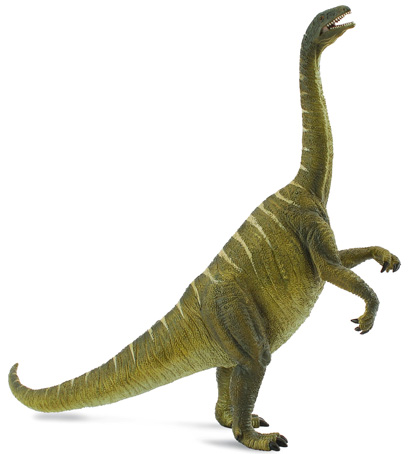
A Plateosaurus dinosaur model.
A rearing Plateosaurus. A model of a Plateosaurus (CollectA Plateosaurus), this Late Triassic member of the Prosauropoda is one of the most extensively studied of all the Dinosauria.

The picture (above) shows a CollectA Plateosaurus figure.

To view this range: CollectA Age of Dinosaurs Models and Figures.

Natural Variation

The researchers examined the complete skulls of fourteen individual Plateosaurus trossingensis specimens, eight of which had not been studied before, along with numerous other skull bones and discovered that there was considerable variation in the skulls. Such variation had been noted before and it had been suggested that the extensive bonebeds at Frick (northern Switzerland), Trossingen (south-western Germany) and Halberstadt (central Germany) might contain the fossilised remains of more than one species.

However, the researchers which included PhD student Jens Lallensack (University of Bonn), could not group these variations according to specific anatomical traits, locality or their stratigraphy. The team concluded that there was no evidence to indicate the presence of more than one species, but these types of dinosaurs showed considerable variation within their species (intraspecific variability).

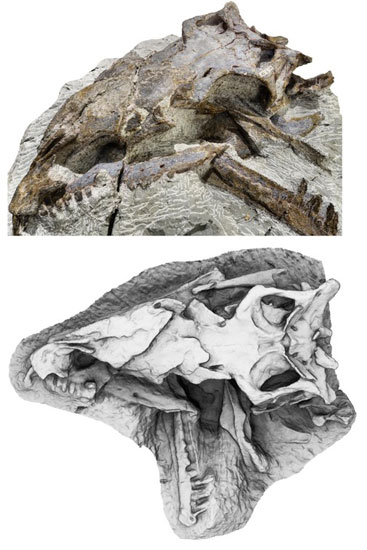
Plateosaurus trossingensis skull and drawing.
A Plateosaurus trossingensis skull in right lateral view with a colour coded diagram (below) showing individual fossil bones. Picture credit: Jens Lallensack (University of Bonn).

Taking into Account Bone Deformation

The careful documentation of the skull variation will assist other palaeontologists when it comes to understanding the distinct individuality of dinosaurs within a given population. The team were able to distinguish these differences from those characteristics of the bones that are deformed and altered as a result of their fossilisation. Being able to attribute bone deformation due to taphonomy (the fossilisation process), is extremely useful in helping to determine unique anatomical traits that could lead to the identification of a new species.

Photograph (top) and a model of a deformed skull resulting from the fossilisation process (below)
Photograph (top) and a model of a deformed skull resulting from the fossilisation process (below). Picture credit: Jens Lallensack (University of Bonn).

The scientific paper: “New skulls of the basal sauropodomorph Plateosaurus trossingensis from Frick, Switzerland: Is there more than one species?” by Jens N. Lallensack, Elżbieta M. Teschner, Ben Pabst and P. Martin Sander published in Acta Palaeontologica Polonica.

Visit the Everything Dinosaur website: Everything Dinosaur.
25 03, 2021

Cephalopods Evolved 30 Million Years Earlier Than Previously Thought

By |2024-05-22T21:11:24+01:00March 25th, 2021|Categories: Dinosaur and Prehistoric Animal News Stories, Main Page, Palaeontological articles, Photos/Pictures of Fossils|0 Comments

Cephalopods those advanced sophisticated molluscs such as octopi, squid and cuttlefish evolved some thirty million years earlier than previously thought according to some new research published this week.

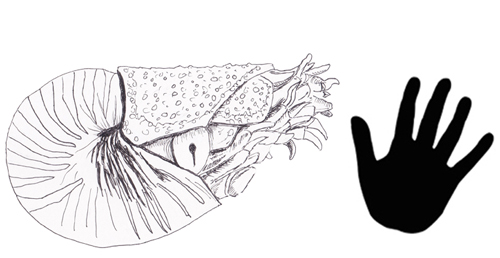
Nautilus scale drawing.
A scale drawing of an extant nautilus (Nautilus pompilius). Newly published research suggests the ancestors of the modern Nautilus were around at least 522 million years ago.  Picture credit: Everything Dinosaur.

Picture credit: Everything Dinosaur

Cephalopods belong to the phylum Mollusca. Animals such as the octopus are regarded as highly intelligent, capable of complex behaviours and are regarded by many scientists as being as sophisticated, if not more so, than many vertebrates. The ancestors of the extant cephalopods around today originally possessed a chambered shell, indeed, the pearly nautilus still retains this feature (see above for a nautilus illustration). Researchers from Heidelberg University in collaboration with colleagues from the Bavarian Natural History Collections examined a 522 million-year-old outcrop from the Lower Cambrian Bonavista Formation exposed at Bacon Cove (south-eastern Newfoundland, Canada). Slices of the red sandstone which represent a shallow, marine depositional environment revealed tantalising glimpses of ancient Cambrian animals.

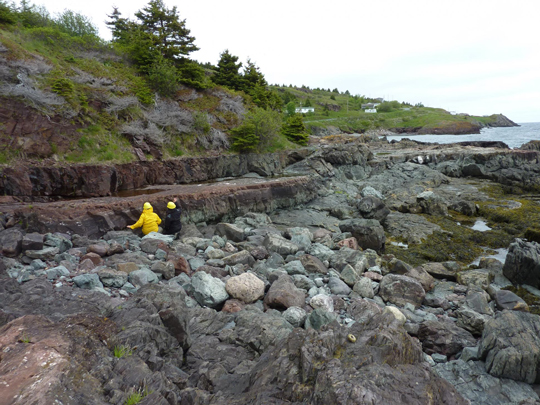
Looking for evidence of the oldest cephalopods known to science.
Scientists documenting the evidence at Bacon Cove (Newfoundland). Picture credit: Anne Hildenbrand (Heidelberg University).

The Oldest Known Cephalopods

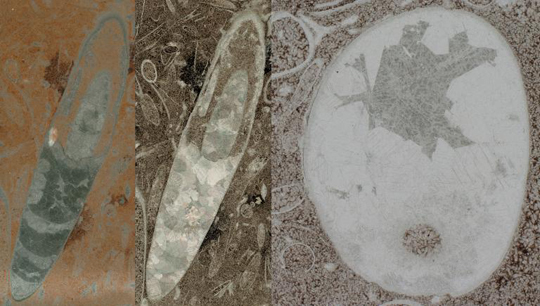
Tiny calcareous shells measuring no more than 14 mm high and around 3 mm wide discovered in cross-sections of the red sandstone rock are interpreted as representing phragmocones, part of the internal skeleton of a marine invertebrate. The researchers postulate that as similar structures are found in cephalopods, then these fossils represent the earliest evidence of the Cephalopoda.

Longitudinal and cross-sectional images of the fossils that could represent the oldest cephalopods known to science.
Longitudinal and cross-sectional images of the fossils that could represent the oldest cephalopods known to science. Picture credit: Gregor Austermann, Heidelberg University / Communications Biology.

An Extraordinary Find

Co-author of the research, Dr Gregor Austermann (Institute for Earth Sciences at Heidelberg University), commented:

“This find is extraordinary. In scientific circles it was long suspected that the evolution of these highly developed organisms had begun much earlier than hitherto assumed. But there was a lack of fossil evidence to back up this theory.”

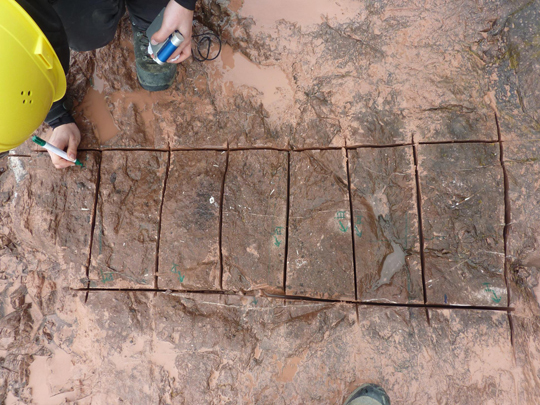
Documenting the fossil finds.
Carefully documenting the fossil finds at Bacon Cove. Picture credit: Anne Hildenbrand (Heidelberg University).

Plectronoceras cambria

Although molecular studies had suggested that cephalopods evolved earlier than indicated by the fossil record, there was very little physical evidence to back this up. Many palaeontologists regard Plectronoceras cambria, fossils of which come from Texas limestones and date from the Middle/Late Cambrian as the earliest cephalopod. These Canadian fossils, if proved to represent the body fossils of cephalopods, push back the evolutionary origins of this important group by at least 30 million years.

The specimens described here may represent the earliest cephalopods capable of regulating the buoyancy of their shell through a siphuncle. This view supports the molecular studies that suggest that cephalopods originated in the Early Cambrian. These animals may have been the first to actively control their buoyancy and therefore to be capable of moving up and down the water column. It could be speculated that these fossils which are around 522 million years old, represent the remains of some of the first animals living above the sea floor (pelagic animals) and able to swim (nektonic).

The scientific paper: “A potential cephalopod from the early Cambrian of eastern Newfoundland, Canada” by Anne Hildenbrand, Gregor Austermann, Dirk Fuchs, Peter Bengtson and Wolfgang Stinnesbeck published in Communications Biology.

Visit the award-winning Everything Dinosaur website: Prehistoric Animal Models and Toys.

24 03, 2021

Dig Those Remarkable Ankylosaurs

By |2024-05-22T21:07:36+01:00March 24th, 2021|Categories: Adobe CS5, Dinosaur and Prehistoric Animal News Stories, Dinosaur Fans, Main Page, Palaeontological articles, Photos/Pictures of Fossils|0 Comments

A study of the fossilised remains of an as yet unnamed species of ankylosaurid suggests that these dinosaurs were adapted for digging. Whilst it seems unlikely that these large herbivores could have lived in burrows, they may have been able to dig for roots and tubers, excavate wells in dried up rivers to reach subsurface water and dig into sediments to obtain supplementary minerals in a similar way that extant elephants do today.

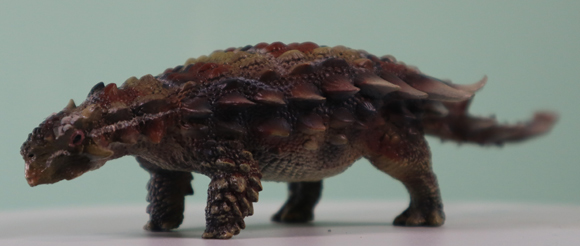
The compact and low-slung Pinacosaurus could have been adapted for digging.
A compact and low-slung body shape with powerful limbs could be adaptations for digging. The low profile of the PNSO Pinacosaurus ankylosaurid model. A newly published scientific paper suggests that these types of dinosaurs may have dug shallow pits in which they could protect themselves from attack. Picture credit: Everything Dinosaur.

Picture credit: Everything Dinosaur

The model (above) is a Pinacosaurus armoured dinosaur from PNSO.

To view the range of PNSO dinosaur models: PNSO Prehistoric Animal Figures.

Digging Pits to Protect Their Undersides

Furthermore, many palaeontologists have postulated that these armoured herbivores might have been able to hunker down to defend their limbs and undersides from theropod predators. If these animals dug shallow pits they might have been able to protect themselves from attack and make it difficult for carnivorous dinosaurs to spot them when they were partially buried. Horned lizards (Phrynosoma) have a similar flat body and lateral fringe scales as seen in some types of ankylosaurid, these extant reptiles adopt these types of defensive strategies.

Discovered in the Early 1970s

Remains of an armoured dinosaur was first reported by a joint Soviet-Mongolian expedition to the southern Gobi Desert of Mongolia in the early 1970s. The skeleton consisting of dorsal vertebrae, elements from the limbs, ribs parts of the pelvis and the pectoral girdle along with several armoured scutes, was partially prepared for removal, but the excavation was not completed. The fossil specimen remained uncollected but crated up until 2008 when it was taken away for preparation by members of a Korean/Mongolian research team.

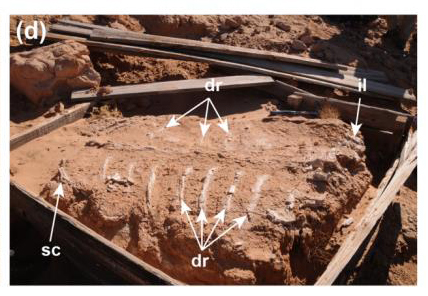
The crate containing (MPC-D 100/1359)
A close view of the crate containing the postcranial remains in a dorsal orientation. The fossil specimen was partially crated up but not removed from the site at Hermiin Tsav in the southern Gobi Desert (Mongolia). Abbreviations sc = scapula, dr = dorsal ribs, il = ilium.

Probably a New Species of Armoured Dinosaur

The sandstone sediments of the Upper Cretaceous (Middle to Late Campanian stage), Baruungoyot Formation have yielded the remains of three ankylosaurid taxa, namely Saichania chulsanensis, Tarchia kielanae and Zaraapelta nomadis. Writing in the journal “Scientific Reports” the researchers which include such luminaries as Phil Currie and Eva Koppelhus (University of Alberta), Michael Ryan (Canadian Museum of Nature) and corresponding author Yuong-Nam Lee (Seoul National University, South Korea), state the unnamed ankylosaurid has some similarities to S. chulsanensis, but there are anatomical differences. Unfortunately, very little postcranial fossils of Tarchia kielanae and Zaraapelta nomadis have been found making it impossible to undertake a direct comparison with this specimen (MPC-D 100/1359).

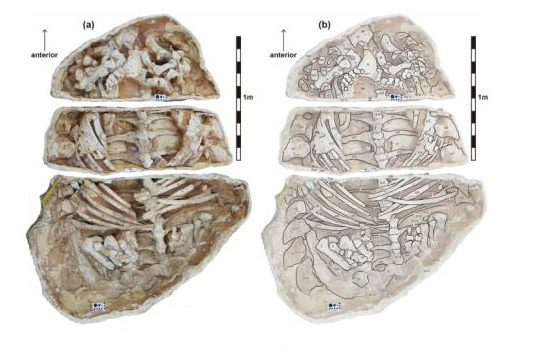
Photograph (a) and line drawing (b) of ankylosaurid fossil material.
The new ankylosaurid postcranial specimen (MPC-D 100/1359). Photograph (a) and line drawing (b) of the specimen in ventral view. Note scale bar equals 1 metre.

Adapted for Digging

The scientists speculate that several anatomical features identified in MPC-D 100/1359 could indicate that this ankylosaurid was adapted for digging. The bones in its front feet are arranged in a shallow arc, which could have enabled it to dig soft earth. The fused vertebrae and the reduced number of bones in its hind feet, compared to other dinosaurs, may have helped anchor the ankylosaurid when digging or moving its tail. The body shape of MPC-D 100/1359, which is wider in the middle and narrower at the front and rear, may have helped its body to remain straight when digging. These traits such as the narrow-wide-narrow body shape and the manus (hand) and pes (foot) bone configuration are also known in other ankylosaurids.

Dig Those Ankylosaurs

Digging for resources out of reach from other animals and excavating shallow pits as part of a defensive strategy might have been prevalent amongst these armoured dinosaurs.

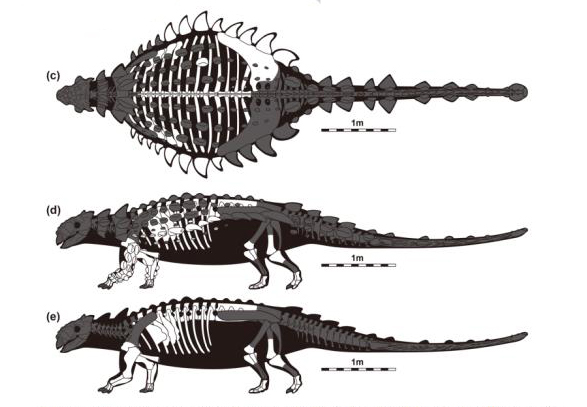
Ankylosaurid skeletal drawing.
Line drawing of the ankylosaurid skeleton, known elements in white (c) dorsal view, (d) left lateral view with armour shown, (e) left lateral view with armour removed. Note scale bar = 1 metre.

To read Everything Dinosaur’s article from 2014 about the discovery of Zaraapelta nomadis: New Species of ankylosaurid in Praise of Victoria Arbour.

The scientific paper: “A new ankylosaurid skeleton from the Upper Cretaceous Baruungoyot Formation of Mongolia: its implications for ankylosaurid postcranial evolution” by Jin-Young Park, Yuong-Nam Lee, Philip J. Currie, Michael J. Ryan, Phil Bell, Robin Sissons, Eva B. Koppelhus, Rinchen Barsbold, Sungjin Lee and Su-Hwan Kim published in Scientific Reports.


21 03, 2021

Spring Clean for a Rare Allosaurus

By |2024-05-11T17:52:28+01:00March 21st, 2021|Categories: Dinosaur Fans, Everything Dinosaur News and Updates, Main Page, Photos of Everything Dinosaur Products, Photos/Pictures of Fossils, Press Releases|0 Comments

We have been asked to update an exhibit featuring the dinosaur Allosaurus. Our work will involve providing information for use on display boards next to a reconstruction of this Late Jurassic theropod.

A Spring Clean for Allosaurus

As part of our work to update the text associated with this dinosaur exhibit, we will be adding information about Allosaurus jimmadseni – a new species within this genus named and described in 2020.

An Allosaurus skeleton.
Note the narrow lower jaw, reflecting studies that show a relatively weak bite. Everything Dinosaur team members have been asked to provide an update on this iconic Late Jurassic dinosaur genus.

First Described in 1877

Allosaurus was named and described by the American palaeontologist Othniel Charles Marsh in 1877, on the basis of fragmentary remains including a single fossil tooth and a toe bone. The subsequent discovery of many thousands of fossils including nearly complete skeletons, most famously from the Cleveland-Lloyd Dinosaur Quarry in Emery County, Utah, has made Allosaurus one of the best-known of all the big meat-eating dinosaurs. Size estimates vary but it may have grown to more than 12 metres in length and weighed around 2.5 tonnes (depending on species).

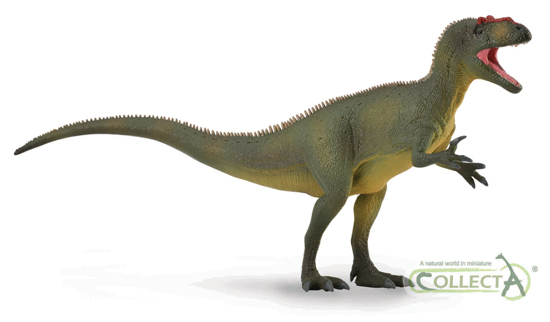
CollectA "Roaring" Allosaurus model.
The CollectA “Roaring” Allosaurus dinosaur model. A 2020 model introduction by CollectA. This dinosaur model is regarded by many model collectors as an accurate depiction of Allosaurus.

The picture (above) shows an Allosaurus roaring figure from the CollectA Age of Dinosaurs Popular range.

To view this range: CollectA Age of Dinosaurs Models.

The State Fossil of Utah

In 1988, in recognition of the abundance of Allosaurus fossil material excavated from the Cleveland-Lloyd Dinosaur Quarry, Allosaurus was appointed the state fossil of Utah.

Several species of Allosaurus have been erected since it was first scientifically described, although most palaeontologists recognise just three species, the most recent of which to be named is Allosaurus jimmadseni (2020). This species was named in honour of James H. Madsen Jr. the first state palaeontologist of Utah.

To read Everything Dinosaur’s blog post from January 2020 about a third valid species of Allosaurus to be described: A New Species of Allosaurus is Announced.

Visit the Everything Dinosaur website: Everything Dinosaur.

20 03, 2021

New Utahraptor State Park Proposed

By |2024-05-11T17:52:56+01:00March 20th, 2021|Categories: Dinosaur and Prehistoric Animal News Stories, Dinosaur Fans, Geology, Main Page, Photos/Pictures of Fossils|0 Comments

Fossils of the large dromaeosaurid Utahraptor (U. ostrummaysorum) were put on display as legislators and campaigners lobbied for the creation of a state park named after the iconic theropod dinosaur.

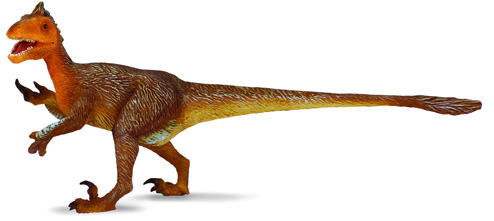
Utahraptor dinosaur model
Legislators have proposed a new state park in Utah which would conserve and protect the famous Dalton Wells quarry (Yellow Cat Member of the Cedar Mountain Formation), which has yielded numerous important dinosaur fossils including the first fossils of the giant dromaeosaurid Utahraptor (U. ostrummaysorum).

The picture (above) shows a model replica of Utahraptor from the CollectA Age of Dinosaurs range.

To view this range: CollectA Prehistoric Life Popular Models.

A New State Park for Grand County, Utah

A bill has been proposed that would create the Utahraptor State Park, if passed this would be the 45th such park designated within the “Beehive State”. The park would cover an area of Grand County in eastern Utah, close to the town of Moab and it would include the Dalton Wells Quarry where the first fossils of the giant raptor Utahraptor were discovered.

As well as providing camp sites and trails the park would protect and preserve the Dalton Wells Quarry site. Although the park’s current plans do not include provision for a museum, it has been suggested that if funding could be found, then a small museum documenting the extensive Lower Cretaceous strata that are exposed in this area and their contribution to palaeontology could be constructed.

It has been speculated that a 1:1 scale replica of the skeleton of a Utahraptor could be erected within the park’s boundary.

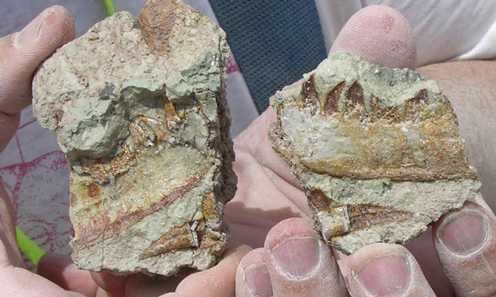
The fossilised remains of a Utahraptor jaw (slab and counter slab)
Slab and counter slab of a Utahraptor jaw (dentary). This fossil was collected from the Arches National Park, the proposed Utahraptor State Park will border it. Picture credit: James Kirkland/St George News.

Utahraptor State Park Proposed

The proposals involve the conversion of approximately 6,500 acres (2,630 hectares), into a park. Responsibility for conservation would be undertaken by either Utah’s Division of Forestry, Fire and State Lands or the Utah School and Institutional Trust Lands Administration.

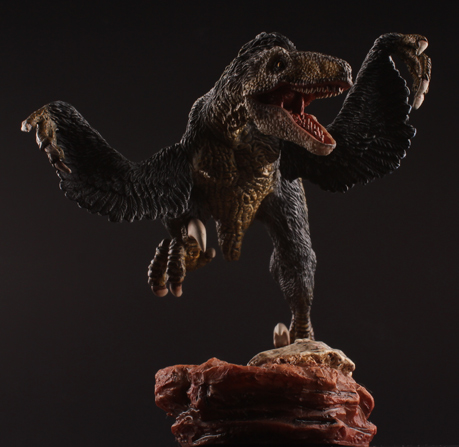
Rebor Wind Hunter (Utahraptor model).
A replica of the fearsome Early Cretaceous predator Utahraptor. The model is “Wind Hunter” the Rebor Utahraptor replica which has been out of production for some time.

The picture (above) shows a Utahraptor figure from the Rebor range of replicas.

To view this range: Rebor Prehistoric Animal Models and Figures.

A spokesperson from Everything Dinosaur commented:

“We do appreciate how tight budgets are right now, but if the funding could be found to establish this new park and to protect the famous Dalton Wells location, that would be fabulous. So much of the world’s open spaces and important scientific sites are under threat it would be wonderful to see this exceptionally important fossil site protected.”

10 03, 2021

A Fan of “Huxley’s near bird” – the Remarkable Anchiornis

By |2024-05-21T07:19:58+01:00March 10th, 2021|Categories: Dinosaur Fans, Everything Dinosaur Products, Main Page, Photos of Everything Dinosaur Products, Photos/Pictures of Fossils|0 Comments

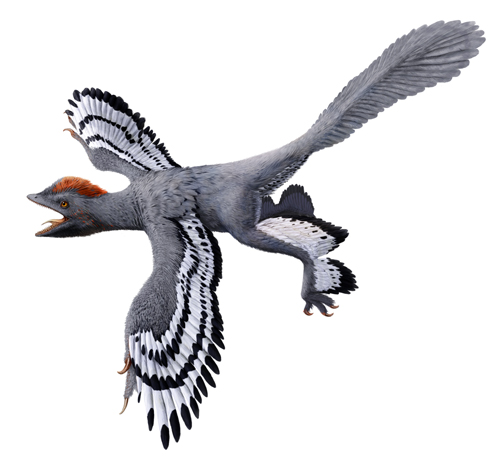
Our thanks to Cooper, a dinosaur fan who commented on one of our blog posts highlighting one of his favourite dinosaurs, the diminutive Anchiornis (A. huxleyi), the scientific name translating as “Huxley’s near bird”.

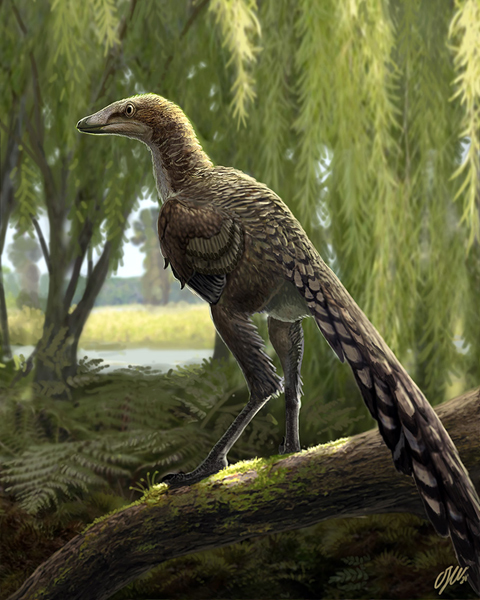
An illustration of Anchiornis huxleyi.
An illustration of the feathered dinosaur Anchiornis huxleyi. Picture credit: Julius Csotonyi.

Controversial Taxonomy

Many palaeontologists believe that this small dinosaur known from Upper Jurassic deposits associated with the Tiaojishan Formation of Liaoning (north-eastern China), is a basal member of the Paraves clade, a part of the Maniraptora that incorporates the dromaeosaurids, the troodontids and the avialans, those dinosaurs that lead directly to the evolution of modern birds. The exact taxonomic position of this dinosaur remains controversial.

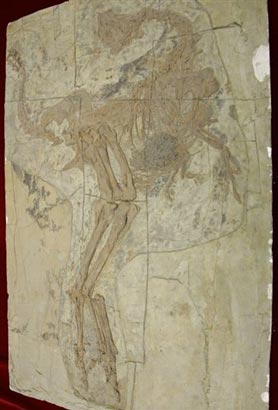
Fossil of an Anchiornis
Ancient, feathered creature. An Anchiornis fossil from the famous Tiaojishan Formation of Liaoning Province (north-eastern China). Picture credit: CAS.

A Fan of Anchiornis

Cooper produced a near perfect copy of one of Everything Dinosaur’s numerous articles on Anchiornis huxleyi. The many fossil specimens associated with this species has led to several different types of scientific research paper being published about Anchiornis, focusing on ontogeny, phylogeny and behavioural aspects of this little theropod.

Everything Dinosaur has written a number of blog posts (at least fourteen), about Anchiornis with our first article being published in 2009.

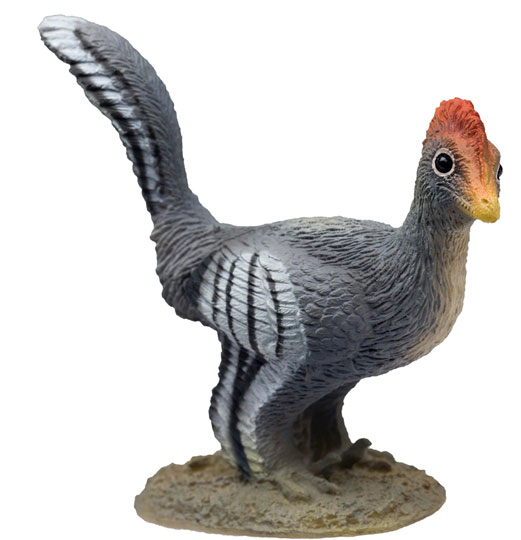
PNSO Luffy the Anchiornis Dinosaur Model
The PNSO “Luffy” the Anchiornis dinosaur model from the “Age of Dinosaurs” model range. PNSO introduced a series of prehistoric animal models, many of which were based on Chinese fossil discoveries.

A spokesperson for the UK-based specialist mail order company stated:

“Our thanks to Cooper for reaching out to us. We deal with hundreds of enquires every week and we do our best to respond to all those that require a reply. We are glad that Cooper found our work on Anchiornis huxleyi so thought-provoking and informative.”

Anchiornis huxleyi

Named and described shortly before Everything Dinosaur published its first blog post about this dinosaur, the species name honours Thomas Henry Huxley, an early champion of Darwin’s theory of evolution.

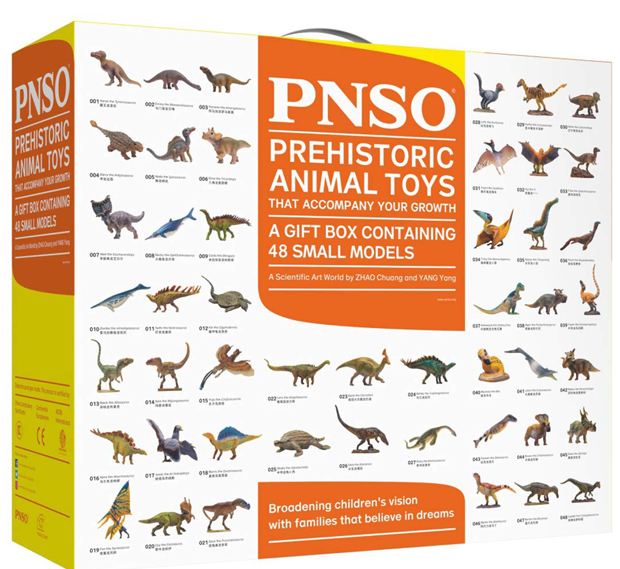
The Chinese company PNSO is one of the few mainstream model makers to have made an Anchiornis figure. “Luffy” the Anchiornis (pictured above), is one of a series of 48 models featured in the “Age of Dinosaurs – Toys that Accompany your Growth” model range. It also features in the huge PNSO Age of Dinosaurs box set.

Forty-eight models in the PNSO gift box.
PNSO special edition gift box features 48 prehistoric animal models including “Luffy” the Anchiornis.

To view the PNSO Anchiornis model and the other prehistoric animal figures available from Everything Dinosaur: PNSO Age of Dinosaurs.

The Everything Dinosaur website: Dinosaur Models and Toys.

8 03, 2021

Unlocking Evolutionary Secrets – A Plant Pompeii

By |2024-05-21T07:14:17+01:00March 8th, 2021|Categories: Adobe CS5, Main Page, Palaeontological articles, Photos/Pictures of Fossils|0 Comments

Stunning fossil plants preserved within a volcanic ash fall in China have shed light on an evolutionary race 300 million years ago, which was eventually won by the seed-bearing plants that dominate the flora of our planet today.

New research into fossils found at the “Pompeii of prehistoric plants”, in Wuda, Inner Mongolia, reveals that the plants, called Noeggerathiales, were highly-evolved members of the lineage from which came seed plants.

Reconstruction of the crown of Paratingia wuhaia
A reconstruction of the crown of Paratingia wuhaia. A newly described prehistoric plant from the Early Permian.

The Importance of Noeggerathiales

Noeggerathiales were important peat-forming plants that lived around 325 to 251 million years ago (Late Carboniferous to the end of the Permian). Understanding their relationships to other plant groups has been limited by poorly preserved examples until now. The beautiful fossils found in China have allowed experts to work out that Noeggerathiales are more closely related to seed plants than to other fern groups.

No Evolutionary Dead-end

No longer considered an evolutionary cul-de-sac, they are now recognised as advanced tree-ferns that evolved complex cone-like structures from modified leaves. Despite their sophistication, Noeggerathiales fell victim to the profound environmental and climate changes of 251 million years ago that destroyed swamp ecosystems globally (End Permian mass extinction event).

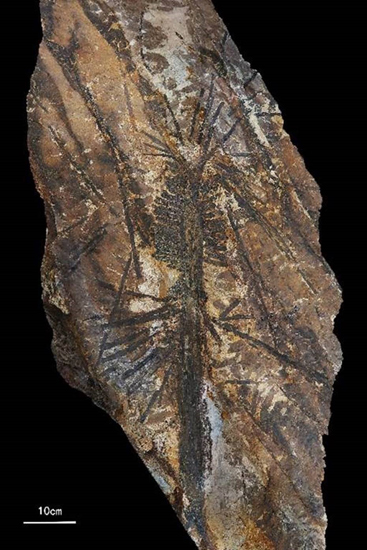
Fossil specimen of the new species (Paratingia wuhaia)
Fossil specimen of the new species (Paratingia wuhaia) preserving the crown of the tree with leaves and its fertile organs attached to the stem.

Co-author of the scientific paper, published this month in the Proceedings of the National Academy of Sciences (PNAS), Dr Jason Hilton, Reader in Palaeobiology at the University of Birmingham’s Institute of Forest Research, commented:

“Noeggerathiales were recognised as early as the 1930s, but scientists have treated them as a ‘taxonomic football’, endlessly kicked around without anyone identifying their place in the story of life. The spectacular fossil plants found in China are becoming renowned as the plant equivalent of Pompeii. Thanks to this slice of life preserved in volcanic ash, we were able to reconstruct a new species of Noeggerathiales that finally settles the group’s affinity and evolutionary importance.”

A Stark Warning for Us

The researchers comment that the fate of advanced Noeggerathiales is a stark reminder of what can occur when a sophisticated and seemingly well-adapted form of life is faced with rapid, dramatic environmental change.

The scientists studied complete Noeggerathiales preserved in a bed of volcanic ash 66 cm thick formed 298 million years ago (Early Permian), smothering all the plants growing in a nearby swamp. The ash stopped the fossils from rotting or being consumed and preserved many complete individuals in microscopic detail.

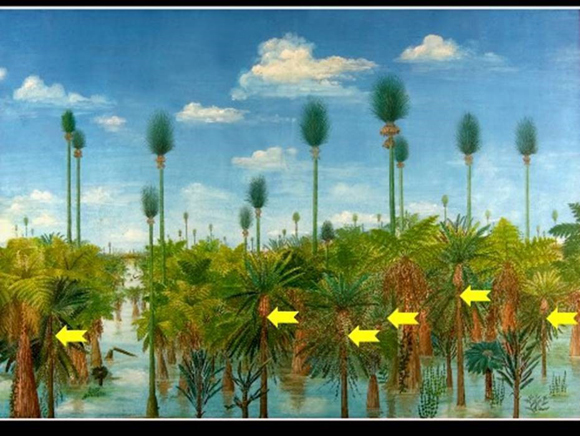
A Life Reconstruction of the Early Permian Wuda Tuff Flora
A life reconstruction of the swamp (yellow arrows indicate the newly named plant species (Paratingia wuhaia).

Lead-Author Jun Wang, (Nanjing Institute of Geology and Palaeontology), added:

“Many specimens were identified in excavations in 2006-2007 when a few leaves were visible on the surface of the ash. It looked they might be connected to each other and a stem below – we revealed the crown on site, but then extracted the specimens complete to take them back to the lab. It has taken many years to study these fully and the additional specimens we have found more recently. The complete trees are the most impressive fossil plants I have seen and because of our careful work they are also some of the most important to science.”

An Extensive Ancestral Lineage

The research team postulate that that the ancestral lineage from which seed plants evolved diversified alongside the earliest seed plant radiation during the Devonian, Carboniferous and Permian periods, and did not rapidly die out as previously thought.

Everything Dinosaur acknowledges the assistance of a press release from the University of Birmingham in the compilation of this article.

The scientific paper: “Ancient noeggerathialean reveals the seed plant sister group diversified alongside the primary seed plant radiation” by Jun Wang, Jason Hilton, Hermann W. Pfefferkorn, Shijun Wang, Yi Zhang, Jiri Bek, Josef Pšenička, Leyla J. Seyfullah and David Dilcher published in the Proceedings of the National Academy of Sciences.

The Everything Dinosaur website: Dinosaur Toys and Gifts.

7 03, 2021

The First Rebbachisaurid Sauropod Reported from Asia

By |2024-05-21T07:12:17+01:00March 7th, 2021|Categories: Dinosaur and Prehistoric Animal News Stories, Dinosaur Fans, Main Page, Palaeontological articles, Photos/Pictures of Fossils|0 Comments

An open-access paper has recently been published in the on-line academic journal PLOS One announcing the discovery of a new species of rebbachisaurid sauropod. The newly described dinosaur named Dzharatitanis kingi is the first member of the Rebbachisauridae family to have been found in Asia. Rebbachisaurids are known from Europe, Africa South America and possibly North America. They are related to diplodocids such as Brontosaurus and Apatosaurus and most palaeontologists group them in the Diplodocoidea superfamily along with the Diplodocidae and the rare and enigmatic Dicraeosauridae dinosaurs.

A Life Reconstruction of Dzharatitanis kingi
Dzharatitanis kingi the first rebbachisaurid to be described from Asia. Picture credit: Alexander Averianov. The large pterosaurs walking in the same direction as the sauropod probably represent the azhdarchid Azhdarcho, the only pterosaur to have been described to date from fossils found in the Bissekty Formation.

Described from a Single Fossil Bone

Described from a single, well-preserved tail bone from the base of the tail (anterior caudal vertebra), this herbivore is estimated to have been around 15 to 20 metres in size. The fossil bone was found in 1997, by David Ward and one of the authors of the scientific paper, Hans-Dieter Sues, during the Uzbekistan/Russian/British/American/Canadian exhibition to map and document Late Cretaceous Dzharakuduk escarpment outcrops associated with the Bissekty Formation in the Kyzylkum Desert of Uzbekistan.

Dzharatitanis is (as far as Everything Dinosaur team members are aware), the first sauropod to have been formally described from the Bissekty Formation.

The strata associated with the fossil find are believed to be around 90 million years of age (Turonian stage of the Late Cretaceous). D. kingi represents one of the geologically youngest known rebbachisaurids.

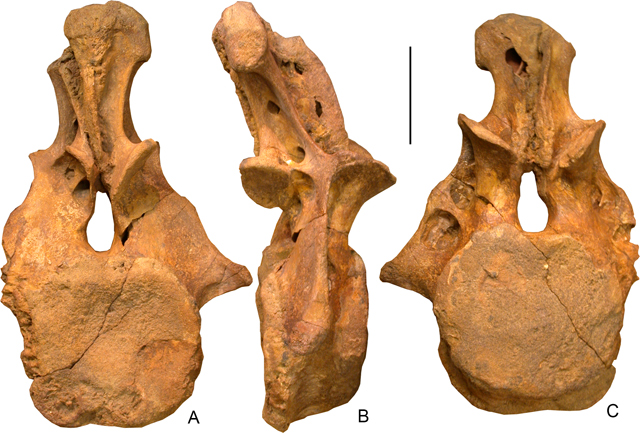
Dzharatitanis caudal vertebra
Dzharatitanis kingi, USNM 538133 (holotype), anterior caudal vertebra in posterior (A), right lateral (B), and anterior (C) views. Note scale bar = 10 cm. Picture Credit: Alexander Averianov and Hans-Dieter Sues

“Dzharakuduk titan”

The genus name is derived from the Dzharakuduk escarpment and translates as “Dzharakuduk titan”, whereas the species name honours the late Dr Christopher King who did much to map and document the geology of the Cretaceous-aged strata of central Asia.

Numerous “pencil-shaped” teeth along with isolated bones indicate the presence of sauropods within the Bissekty Formation however, D. kingi is the first member of the Sauropoda to be described. The caudal vertebrae of these types of dinosaur are very diagnostic. Their shape and characteristics help palaeontologists to identity related genera and this single fossil bone, believed to represent the first bone of the tail was sufficient to merit the erection of a new dinosaur species.

The sauropods from the Bissekty Formation now comprise at least two taxa, the rebbachisaurid Dzharatitanis kingi and an indeterminate and as yet unnamed titanosaur.

The scientific paper: “First rebbachisaurid sauropod dinosaur from Asia” by Alexander Averianov and Hans-Dieter Sues published in PLOS One.

The Everything Dinosaur website: Everything Dinosaur.
6 03, 2021

New Research Suggests Troodontids in Europe

By |2024-05-21T07:09:48+01:00March 6th, 2021|Categories: Adobe CS5, Dinosaur and Prehistoric Animal News Stories, Dinosaur Fans, Main Page, Palaeontological articles, Photos/Pictures of Fossils|0 Comments

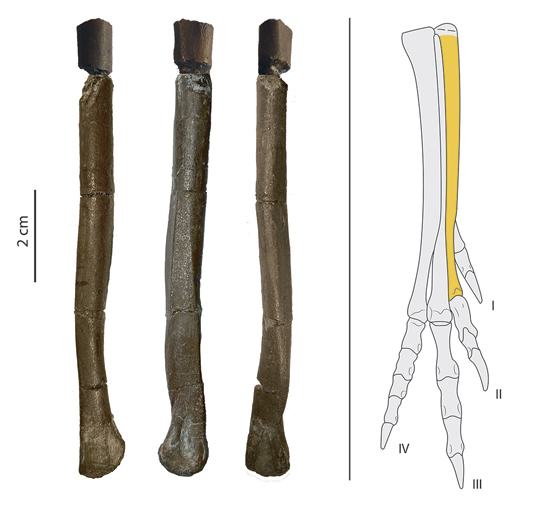
A team of international scientists including Steve Brusatte (University of Edinburgh), have confirmed the presence of troodontids in the Late Cretaceous of Europe. A new species of troodontid has been erected based on the discovery of a single metatarsal bone (the second metatarsal bone from the right foot), from Late Cretaceous strata in the Talarn Formation exposed at the Sant Romà d’Abella site in the southern Pyrenean region of Spain. This new dinosaur has been named Tamarro insperatus.

Tamarro insperatus Life Reconstruction
A life reconstruction of the first troodontid confirmed from the Late Cretaceous of Europe Tamarro insperatus.

Picture credit: Oscar Sanisidro

Found in 2003

The single fossil bone indicating the presence of troodontids in Europe was found in September 2003 by a team of palaeontologists from the Museu de la Conca Dellà (Lleida, Isona, Spain) at the Sant Romà d’Abella site (Spain). It was found in fluvial floodplain deposits believed to have been laid down just 200,000 years or so before the K-Pg mass extinction event.

The fossil bone was found in the same horizon as plant fossils and the type specimen of the lambeosaurine Pararhabdodon isonensis, the metatarsal was found in close proximity to the Pararhabdodon type specimen, these are the only two vertebrates known from this site.

The Dinosaurs from the Late Cretaceous of Europe

During the Late Cretaceous, high sea levels ensured that much of the European landmass we know today was underwater. Numerous islands existed, creating an extensive archipelago and several dinosaurs associated with these islands exhibit dwarfism or other unusual features associated with isolated ecosystems. Very little is known about the Theropoda that inhabited these islands. For example, the presence of troodontids in Europe has been debated for a long time. Several troodontid-like and Paronychodon teeth (a nomen dubium taxa referred by some to the Troodontidae), were recovered from the Campanian and Maastrichtian deposits of the ancient Hateg (Romania) and Ibero-Armorican (Portugal, France and Spain) islands, but this fossil bone provides definitive, unequivocal proof of these theropods being present in the Late Cretaceous of Europe.

The Single Fossil Bone (Metatarsal) of Tamarro insperatus
Views of the second metatarsal (metatarsal II from the right foot), plus line drawing showing the skeletal position of the bone.

Picture credit: Albert G. Sellés (Institut Català de Paleontologia Miquel Crusafon/Museu de la Conca Dellà)

A Basal Troodontid with Asian Origins

An analysis of the bone and a phylogenetic assessment suggests that Tamarro is a basal member of the Troodontidae family and most likely a representative of the Asian subfamily the Jinfengopteryginae. The research team speculate on how a dinosaur with relatives in Asia could have become established in Europe. Maastrichtian troodontids like Tamarro could have reached Europe during the Cenomanian faunal stage and persisted on these islands until the K-Pg extinction event.

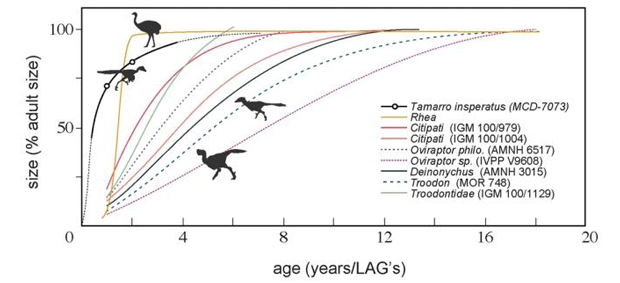
Estimated at around two metres in length Tamarro is around twice the size of other related troodontids. A close examination of the bone (cross-sectional histology), reveals that the metatarsal came from a subadult animal that was growing rapidly. Although troodontids are known to have fast growth rates, Tamarro seemed to be growing much quicker than other members of the Troodontidae, perhaps reaching full maturity in around two years.

Tamarro insperatus Growth Rate
Growth rate of Tamarro insperatus compared to other members of the Maniraptora. When compared to other taxa from the group of dinosaurs most closely related to birds (including Aves), Tamarro has a rapid growth rate reaching a subadult state in around one year.

The genus name is derived from the Catalan word “Tamarro” which refers to a small, mythical creature from local folklore. The species or trivial name “insperatus” is from the Latin for unexpected, a reference to the unexpected discovery of the fossil bone.

The scientific paper: “A fast-growing basal troodontid (Dinosauria: Theropoda) from the latest Cretaceous of Europe” by Albert G. Sellés, Bernat Vila, Stephen L. Brusatte, Philip J. Currie and Àngel Galobart published in Scientific Reports.

The Everything Dinosaur website: Dinosaur Models and Gifts.

Go to Top