All about dinosaurs, fossils and prehistoric animals by Everything Dinosaur team members.

Articles, features and information which have slightly more scientific content with an emphasis on palaeontology, such as updates on academic papers, published papers etc.

27 10, 2018

Pachycephalosaurus – Was It Carnivorous? That’s a Great Question!

By |2024-05-11T06:42:44+01:00October 27th, 2018|Categories: Dinosaur and Prehistoric Animal News Stories, Dinosaur Fans, Main Page, Palaeontological articles, Photos/Pictures of Fossils|0 Comments

Theropod-like Front Teeth Identified in a Pachycephalosaur

Pachycephalosaurus, that dome-headed dinosaur that lived alongside such famous prehistoric animals as T. rex and Triceratops, in the Late Cretaceous of Montana, has always been a bit-player when it comes to depicting life in the very last couple of million years before the extinction of the non-avian dinosaurs.  Its more illustrious contemporaries tend to hog the limelight somewhat.

However, the scientific description of a nearly complete skull and jaws of what has been identified as a juvenile Pachycephalosaurus, might just have revealed a surprising side to this peaceful plant-eater.  The teeth in the front of jaws are triangular and pointed, reminiscent of the dentition of a meat-eating dinosaur.  Could palaeontologists have got Pachycephalosaurus wrong?

A Reconstruction of the Juvenile Pachycephalosaurus Skull and Jaws
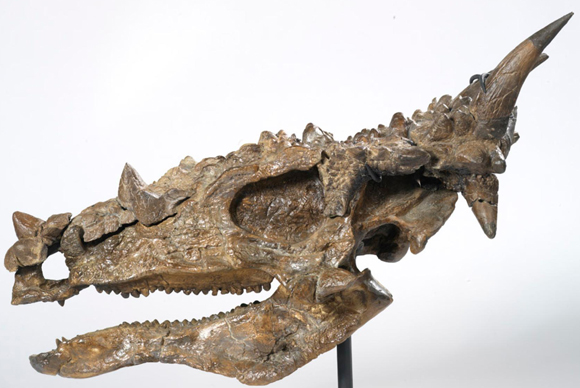
Reconstruction of a Juvenile Pachycephalosaurus skull.
A reconstruction of the fossil skull of the juvenile Pachycephalosaurus that has theropod-like teeth in the front of the jaws.

Picture credit: Brian Boyle (Royal Ontario Museum)

Front Portion of the Jaws Suggests Omnivory in Certain Pachycephalosaurs

In a presentation made at the annual meeting of the Society of Vertebrate Palaeontology held in Albuquerque, New Mexico, Mark Goodwin (University of California Museum of Palaeontology) and David Evans (Royal Ontario Museum), described a near complete juvenile pachycephalosaur skull from eastern Montana.  The back of the jaws contained the broad, leaf-shaped teeth which seem well suited to herbivory.  It had been assumed that the teeth in the front of the jaws (premaxilla and the anterior portion of the dentary, immediately behind the predentary), were the same shape.  However, until this fossil specimen was found, no record of the front teeth of these dinosaurs existed.

Palaeontologists may have to re-think their views on the diet of this member of the Hell Creek Formation biota.  The sharp, blade-like triangular teeth located at the front of the mouth seem adapted to ripping and tearing flesh.

The Teeth at the Front of the Jaws are Typical of a Meat-eating Theropod Dinosaur
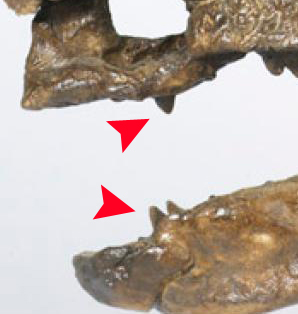
Pachycephalosaurus Theropod-like teeth.
A close-up view of the teeth in the premaxilla (upper jaw) and the anterior portion of the dentary (lower jaw). Triangular theropod-like teeth have been identified in a juvenile Pachycephalosaurus.

Picture credit: Brian Boyle (Royal Ontario Museum) with additional annotation by Everything Dinosaur

Confusing Pachycephalosaurs

Pachycephalosaurus is the largest member of the Pachycephalosauridae family to have been scientifically described and notwithstanding a cameo appearance of a jail-breaking Stygimoloch in the recent “Jurassic World – Fallen Kingdom” movie, perhaps the most famous.  However, not a great deal is known about Pachycephalosaurus and other bone-headed dinosaurs.  Fossil remains tend to be very fragmentary and most species have been named from quite scrappy remains and then you have those amazing skulls to consider.

The CollectA Pachycephalosaurus Dinosaur Model
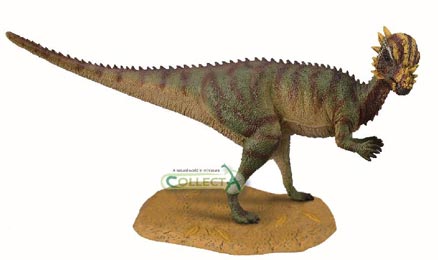
CollectA Pachycephalosaurus model.
A lithe Pachycephalosaurus dinosaur model.  Pachycephalosaurus (P. wyomingensis) is the largest known member of the Pachycephalosauridae with an estimated body length of 4.6 metres.

The model (above) is from the CollectA Prehistoric Life range.

To view this range: CollectA Prehistoric Life Models.

Several species have been named based on the shape and cranial ornamentation associated with those thickened skulls.  The thick bone may resist erosion and provide palaeontologists with some fossil bone to study, but it has been suggested that the skulls of these dinosaurs changed dramatically as the animal grew.  So much so in fact, that a number of academics, including Mark Goodwin, have published scientific papers that cast doubt on the validity of many pachycephalosaur species.  For example, palaeontologists such as Goodwin have put forward evidence to suggest that both Dracorex and Stygimoloch are not distinctive species, the fossils ascribed to these two genera could represent juvenile Pachycephalosaurus specimens.

It seems, just like many other types of Late Cretaceous ornithischian dinosaur, the pachycephalosaurs underwent extreme changes to the shape of their heads as they grew up.  Such changes in cranial morphology have resulted in the establishment of several species that may actually just represent examples of the same species but at different growth stages.

Some Palaeontologists Suggest that Radical Changes in Skull Shape and Ornamentation Do Not Indicate Different Species but Different Growth Stages

Different skull shapes and ornamentation linked to different growth stages.
It has been proposed that the cranial ornamentation and skull shape of Pachycephalosaurs changed as these animals grew and matured. This can cause confusion when trying to identify species.

Picture credit: Kari Scannella with additional annotation by Everything Dinosaur

To complicate matters, pachycephalosaur fossil material covers a period of approximately 2 million years.  Over this timescale, these animals evolved and their skull morphology changed, thus, further blurring the lines between different species and fossils of the same species but at different levels of maturation.

Confirming the Likely Diet of Pachycephalosaurus

It would be difficult to confirm that Pachycephalosaurus also ate other animals as well as plants, but not impossible.  Only one jaw fossil with the front teeth in situ has been found, so scientists don’t know whether the diets of these dinosaurs changed as they grew.  Perhaps, young pachycephalosaurs were omnivorous, whilst when fully grown, adults tended to consume plants rather than other animals.  The rib cages of those genera which have a more complete fossil record, suggest that these bipeds had large guts, this would indicate a digestive system adapted to processing vegetation.

Professor Philip Currie (University of Alberta), who also attended the Society of Vertebrate Palaeontology meeting, has proposed that studying carbon isotopes preserved in the tooth enamel might provide further evidence relating to diet.  In addition, the many hundreds of examples of isolated, broken teeth from the Hell Creek Formation could be re-examined and checked for any potential affinities with the Pachycephalosauridae.  Feeding traces from fossil bone could also yield more data in support of the idea that bone-headed dinosaurs ate meat.

A Reconstruction of the Skull of an Adult Pachycephalosaurus
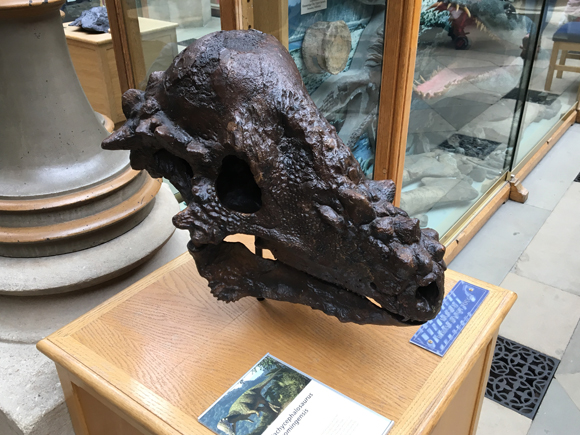
A replica skull of Pachycephalosaurus wyomingensis.
Pachycephalosaurus wyomingensis replica skull. Picture credit: Everything Dinosaur.

Picture credit: Everything Dinosaur

A spokesperson from Everything Dinosaur commented:

“It is likely that there are many more examples of pachycephalosaurs to be found in Upper Cretaceous rocks, hopefully, if more fossil material can be discovered, then palaeontologists will be able to piece together a more complete phylogeny of these strange dinosaurs.  Furthermore, if more examples of their dentition [teeth] come to light, then we might be able to gain a better understanding of their diets. “

Visit the Everything Dinosaur website: Everything Dinosaur.
21 10, 2018

Flea Bites and Dermal Infections in Glyptodonts

By |2023-11-04T09:04:29+00:00October 21st, 2018|Categories: Dinosaur and Prehistoric Animal News Stories, Main Page, Palaeontological articles, Photos/Pictures of Fossils|2 Comments

Fleas on Glyptodonts

A new study examining one of the more bizarre types of megafauna from prehistoric South America has revealed that glyptodonts and their relatives suffered from fleas and dermal infections.  It seems that the hard, bony armour of some of these car-sized giants was no defence against flea bites.  Brazilian-based scientists writing in the open access, on-line journal “PLOS One”, have studied hundreds of pieces of glyptodont armour and discovered evidence of infections caused by fleas.

Such armour might have deterred a sabre-toothed cat from attacking, but the osteoderms and armoured tails were no defence against parasites.

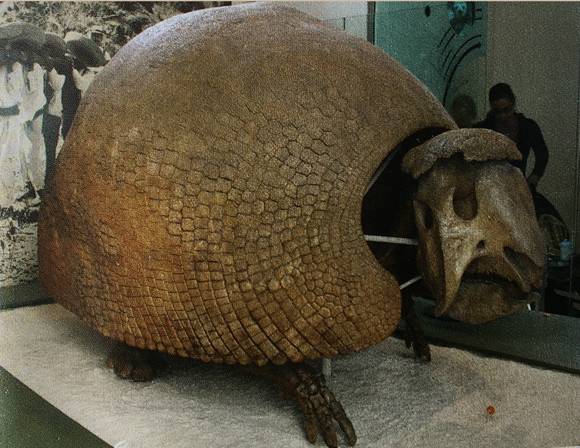
A Skeleton of the Giant Glyptodont Panochthus spp.

Fossil glyptodont Panochthus.
A glyptodont fossil (Panochthus frenzelianus).  Researchers studied the tiles of bone (osteoderms) that formed the protective bony exoskeletons of extinct types of armadillo and determined that these armoured giants suffered from parasites and skin infections.

Picture credit: R. Somma/Wikimedia Commons

Extinct Members of the Order Cingulata Studied

The scientists from Universidade Federal Rural do Semi-Árido, Mossoró (Brazil), studied the osteoderms that make up the exoskeleton of two extinct genera of glyptodonts Panochthus (pictured above) and Glyptotherium.  In addition, the research team examined the fossilised armour of another extinct armadillo-like creature Pachyarmatherium.

All these mammals belong to the Order Cingulata (armadillos and their relatives).  Damaged osteoderms were noted in all three genera and attributed to attacks by fleas and infections.  The scientists were able to identify the flea bites as coming from one particular genus  – Tunga.  The Tunga flea, sometimes referred to as the “jigger flea”, is native to South and Central America and is known to parasitise a number of large mammals including humans.  The bites cause well-defined circular lesions and perforations.  Such patterning was identified in a number of fossilised pieces of dermal armour.

Flea bites permitted secondary damage to be caused by the invasion of pathogenic microorganisms such as bacteria and fungi.

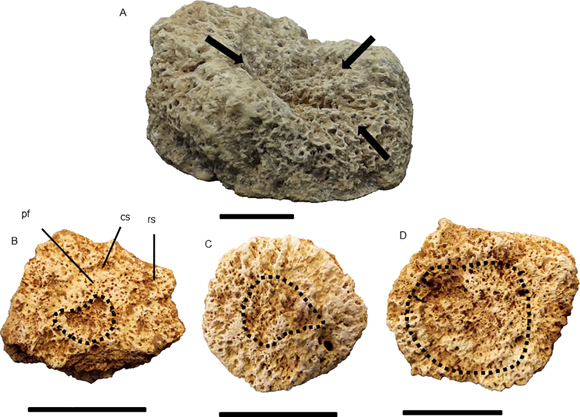
The External Surface of Osteoderms from the Glyptodont Glyptotherium Showing Pitting and Damage

Cingulata osteoderm parasite infection.
Osteoderms of the Brazilian glyptodont Glyptotherium showing damage from flea bites.

Picture credit: PLOS One

The picture (above) shows severe pitting (black arrows) in (A) and three other osteoderms attributed to Glyptotherium which show stages of damage from (B), slight, through to (D) advanced pitting and the response to the damage by the deposition of more bone (calcium deposition).  The scale bar in A = 3 cm, whereas, the scale bar in B-D is 4 cm.

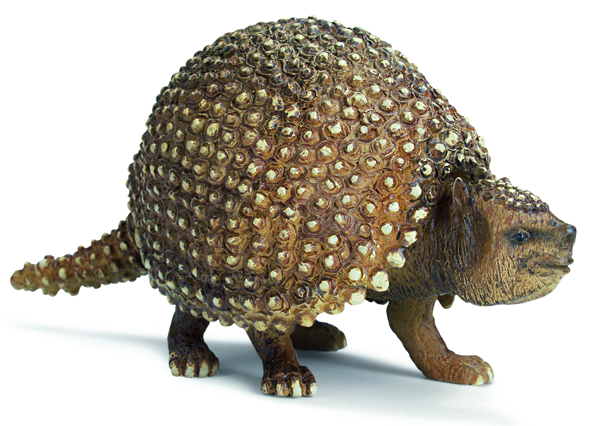
A Life Reconstruction of a Glyptodont

Schleich Glyptodon model.
The Schleich Glyptodon figure.

The bone alteration and re-growth identified in this study represent the first record of flea attack and pitting in two genera of large glyptodonts Panochthus and Glyptotherium and in a non-glyptodontid, large cingulate (Pachyarmatherium), from the Quaternary of the Brazilian Intertropical Region.  These newly identified flea bite occurrences and subsequent infections widen the geographic distribution of those diseases during the Cenozoic and provide more evidence for the co-evolution of parasites such as the Tunga flea and South American megafauna.

The scientific paper: “Ectoparasitism and Infections in the Exoskeleton of Large Fossil Cingulates” by Fábio Cunha Guimarães de Lima, Kleberson de Oliveira Porpino published in PLOS One.

Visit the Everything Dinosaur: Everything Dinosaur.

19 10, 2018

Feeding Traces on the Frill of a Young Centrosaurus

By |2023-11-02T13:03:29+00:00October 19th, 2018|Categories: Dinosaur and Prehistoric Animal News Stories, Dinosaur Fans, Main Page, Palaeontological articles, Photos/Pictures of Fossils|0 Comments

Bite Marks Found on the Frill of a Young Centrosaurus

The movies and television documentaries featuring dinosaurs are stuffed full of them, but the fossil record tells a different story.  What are we referring to?  Dinosaurs hunting, attacking and fighting other dinosaurs.  Rarely has a programme or film been produced about the Dinosauria that does not feature some gory scenes of a bloody battle or a fearsome theropod feasting on some poor, unfortunate plant-eating victim.  However, although such interactions obviously took place, the fossil record demonstrating such behaviour is extremely sparse.  A new paper, published in the open access journal “PeerJ”, reports on the discovery of bite marks preserved on the frill of a young Centrosaurus.

This raises two intriguing questions:

  • Which meat-eating dinosaur made the bite marks?
  • Is this evidence of predation or scavenging a carcass?

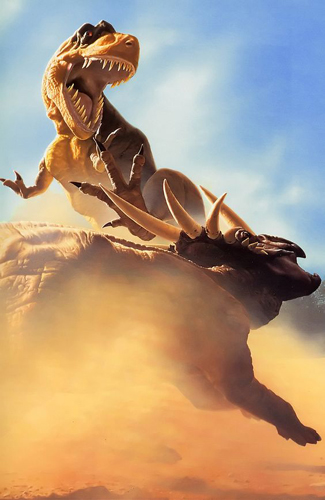
Dinosaurs Fighting – A Tyrannosaur Attacks a Horned Dinosaur (Styracosaurus)

Daspletosaurus fighting a horned dinosaur.
Tyrannosaur fighting a horned dinosaur.

Picture credit: John Gurche

Bite Marks – Tell-Tale Signs of Predator/Prey Interaction

Bite marks on fossil bones can provide valuable information about interactions between carnivorous dinosaurs and the animals that they attacked.  It is not always possible to distinguish whether the trace fossils represent wounds inflicted on an animal during a fight, or whether these marks represent post-mortem feeding, such as consumption of the victim.  If there are signs of healing and bone growth, palaeontologists can be confident that the bite marks in that instance represent a lucky escape for the intended victim.

The key thing to note, is that the more data about bite marks that can be collected, the better the dataset that palaeontologists have to compare potential bite mark injuries against.

Part of the Skull of a Juvenile Centrosaurus With Tooth-marks

Ironically, quite a large proportion of the tooth-mark fossils associated with dinosaurs come from those deposits that are associated with the remains of large-bodied tyrannosaurids.  In this newly published paper, the scientists from Queen Mary University London and the Royal Tyrrell Museum (Alberta, Canada), report on the discovery of a portion of the skull from a juvenile horned dinosaur.  The bone, a fragment of the squamosal, which makes up part of the frill, was found on the surface of a dinosaur bonebed in the Dinosaur Provincial Park Formation.  The fossil is approximately 76.3 to 75.6 million years old and has been assigned to the horned dinosaur species Centrosaurus apertus.

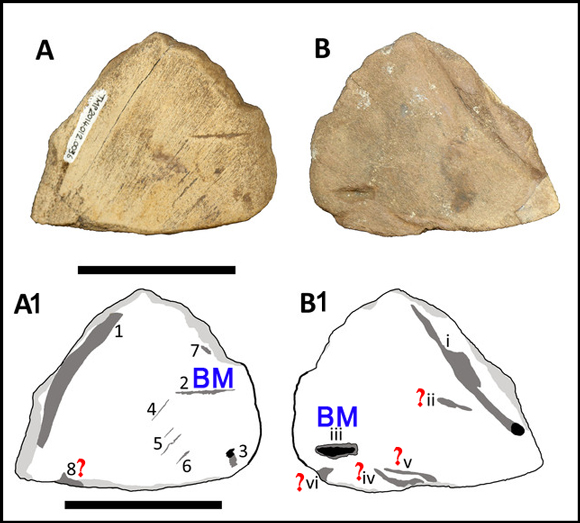
Views of the Fragment of the Squamosal Bone (Centrosaurus apertus) and Line Drawings

Identifying potential bite marks in a bone from a juvenile Centosaurus.
The two sides of the partial squamosal bone from a juvenile Centrosaurus showing signs of damage/wear/bite marks. Actual fossil (A and B), interpretive line drawings (A1 and B1).

Picture credit: PeerJ with additional annotation by Everything Dinosaur

Key

BM = Probable bite marks

? = Possible bite marks

Feeding on a Young Centrosaurus

Analysis of the fossil found numerous marks and gouges on both sides of the fossil bone.  Some of these marks could have resulted from damage due to transportation prior to burial.  Other marks could reflect effects caused by chemical erosion or the presence of vascular grooves.  However, the scientists were able to propose that at least some of the marks were due to teeth coming into contact with the bone.

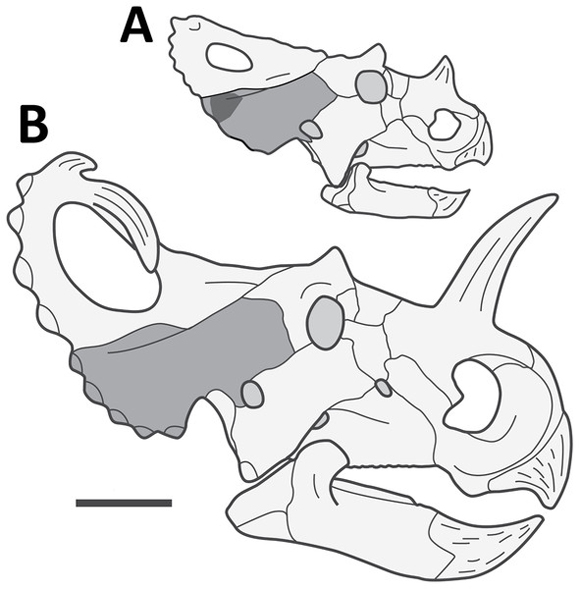
The Position of the Partial Squamosal on the Skull of a Juvenile Centrosaurus and an Adult Skull Shown for Comparison

Juvenile (A) and adult (B) Centrosaurus skulls.
A comparison of Centrosaurus skulls (C. apertus) Juvenile (A) and adult (B).  The squamosal bone that makes up part of the frill is shaded grey, whilst the portion of bone in the study is shaded dark grey.

Picture credit: PeerJ

Although it is difficult to assess the size of the horned dinosaur based on such a small fragment of bone, the scientists suggest that based on comparisons with squamosal bones from adults, the juvenile Centrosaurus was perhaps about a third the size of a fully grown Centrosaurus.

Which Dinosaur Made the Feeding Traces?

The researchers ruled out crocodiles, other reptiles and mammals when it came to identifying what creature made the bite marks.  This left the team with three types of theropod dinosaur to investigate.  troodontids, dromaeosaurs and tyrannosaurs are known from the Dinosaur Provincial Park Formation.  There is also the genus Richardoestesia to consider, its affinity within the Theropoda is uncertain.  The bite marks are too small to have been made by a large tyrannosaur, but a juvenile tyrannosaur might have scavenged the carcass.

It is also possible that a dromaeosaurid may have fed on the remains as well.  It is possible that both the dromaeosaurid and a young tyrannosaur fed on the carcass, after all, modern carcasses may be fed on by multiple species (lions may kill a zebra but hyenas may chase them off the kill and rob them of the carcass – kleptoparasitism).

To read an article from Everything Dinosaur published in 2015 that looks at the structure of the teeth of different Theropod dinosaurs: Research to get your Teeth Into.

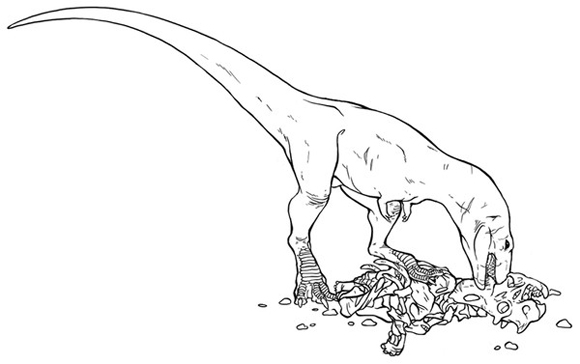
A Hypothesised Reconstruction of a Juvenile Gorgosaurus Feeding on the Carcass of a Juvenile Centrosaurus

A speculative illustration of a young Gorgosaurus feeding on the carcass of a juvenile Centrosaurus.
A young tyrannosaur (Gorgosaurus) scavenging the carcass of the juvenile Centrosaurus.

Picture credit: Marie-Hélène Trudel-Aubry/PeerJ

Slim Pickings

The marks on the squamosal fragment represent the first documented case of a carnivore consuming a juvenile ceratopsid, but the trace fossils may represent scavenging a corpse rather than predation.  However, there is not a lot of meat on a squamosal bone.  The scientists suggest that the feeding marks represent late stage consumption, as the most nutritious parts of the young Centrosaurus had already been eaten.  It is possible that a large tyrannosaur made the kill, fed and then abandoned the carcase which was later picked over by other theropods.

Despite the apparent preferences for feeding on juvenile dinosaurs, most feeding traces described to date are on the bones of adults which may have resisted being consumed and destroyed (even by large tyrannosaurs).  Feeding traces on a juvenile dinosaur remain unusual and exceptionally rare.  Perhaps the size and shape of ceratopsian skulls, even in juveniles, made them difficult to process or required an excess of handling effort for a relatively little reward in terms of food.

The scientific paper: “Bite Marks on the Frill of a Juvenile Centrosaurus from the Late Cretaceous Dinosaur Provincial Park Formation, Alberta, Canada” by David W.E. Hone, Darren H. Tanke and Caleb M. Brown published in PeerJ.

Visit the Everything Dinosaur website: Everything Dinosaur.
13 10, 2018

New Research Suggests the Ancestors of Sarahsaurus Probably Did Not Originate in North America

By |2024-05-11T08:06:22+01:00October 13th, 2018|Categories: Dinosaur and Prehistoric Animal News Stories, Dinosaur Fans, Main Page, Palaeontological articles, Photos/Pictures of Fossils|0 Comments

Early Jurassic North American Sauropodomorphs were Migrants

The sauropodomorph dinosaur called Sarahsaurus was a migrant into North America just like the other North American sauropodomorphs that have been described to date.  That is the conclusion made by researchers from the University of Texas Austin, in a scientific paper published this week.

Recently, Everything Dinosaur has covered a number of technical papers that have featured the Suborder Sauropodomorpha (the sauropods and their direct ancestors).  The United States might be famous for dinosaurs such as Brontosaurus, Camarasaurus and Diplodocus, but surprisingly not much is known about the ancestors of these iconic, long-necked dinosaurs.

Studying Sarahsaurus

Writing in the open access journal PLOS One, the researchers from the University’s Jackson School of Geosciences, conclude that the handful of sauropodomorphs known from the Lower Jurassic of North America are not that closely related and they represent successive immigration waves into that part of the super-continent Pangaea.

Sarahsaurus and Other North American Early Jurassic Sauropodomorphs Do Not Form a Unique Clade

Sarahsaurus (North American dinosaur).
A life reconstruction of the North American sauropodomorph Sarahsaurus.

Picture credit: Brian Engh

CT Scans and Phylogenetic Analyses

The researchers conducted the first detailed analysis of the fossils ascribed to the genus Sarahsaurus (Sarahsaurus aurifontanalis).  This dinosaur had been named back in 2010, from fossil material excavated from the Lower Jurassic Kayenta Formation exposed in north-eastern Arizona.  In total, three specimens, including the holotype were studied and subjected to computed tomographic imaging.

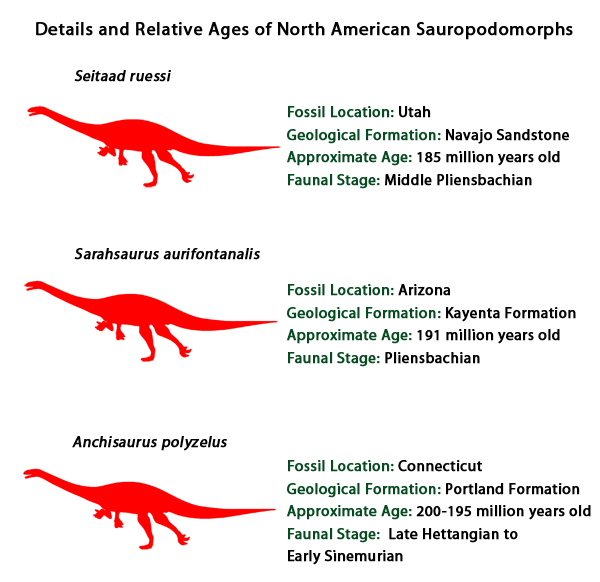
With more anatomical data, the scientists then conducted a series of phylogenetic assessments to see where within the Sauropodomorpha Sarahsaurus should be nested and importantly, how the other sauropodomorphs from North America such as Anchisaurus (A. polyzelus) and Seitaad (S. ruessi) were related to Sarahsaurus.

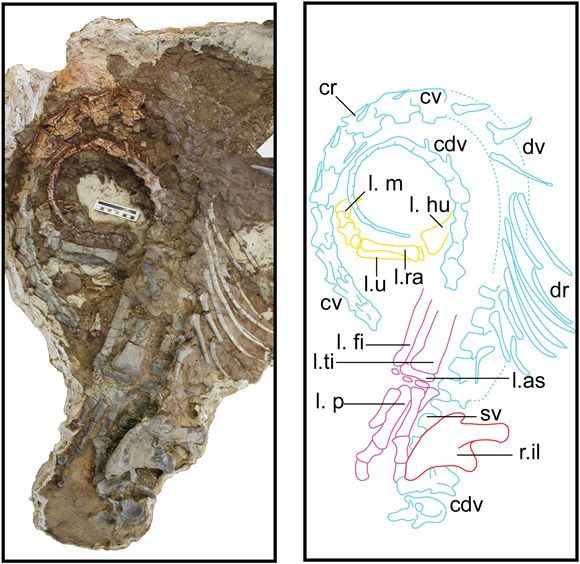
The Main Fossil Block Associated with Sarahsaurus and a Line Drawing Showing a Layout of the Fossil Material

Sarahsaurus holotype.
The main block containing much of the holotype specimen of Sarahsaurus aurifontanalis.

Picture credit: PLOS One

Sarahsaurus aurifontanalis

All of the Sarahsaurus specimens referred to in this study came from siltstone deposits.  Manual preparation of the fossils was extremely laborious and time consuming.  Many of the bones were encrusted with an extremely hard purple-black oxide coating, hence the use of high-resolution X-ray CT scans to provide more information about the finer details preserved on the fossil material.

In addition, conducting the phylogenetic analysis was made even more problematic than usual as the material used to establish unique characteristics of Sarahsaurus which could then be used to compare with other sauropodomorphs, provided numerous obstacles for the scientists to overcome.

Firstly, a skull used in this study probably came from a much younger individual than the other Sarahsaurus specimens analysed.  Furthermore, not all the specimens shared the same bones so making direct comparisons to establish a unique set of features for Sarahsaurus was challenging.

The Massospondylidae Family

These factors coupled with some mixing and redistribution of the holotype material in the sediment and the crushed nature of many of the fossil bones made the phylogenetic assessment very tricky, but the researchers were able to conclude that Sarahsaurus aurifontanalis is probably a member of the Massospondylidae family, which means that this dinosaur is not closely related to the other North American Sauropodomorpha and is more closely related to dinosaurs known primarily from the Southern Hemisphere (Gondwana).

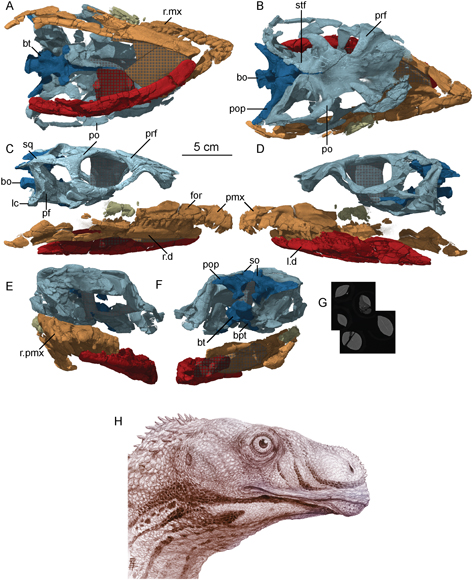
CT Scans of a Skull Specimen Provisionally Assigned to Sarahsaurus

CT scans help to plot the shape of the fossil skull provisionally assigned to Sarahsaurus.
Skull (MCZ 8893) provisionally referred to Sarahsaurus aurifontanalis, reconstructed from CT data.  Life reconstruction (H) by Brian Engh.

Picture credit: PLOS One/Brian Engh

Waves of Dinosaur Migration into North America Following the End Triassic Extinction Event

If the three known North American sauropodomorphs are not that closely related and the likes of Sarahsaurus is classified as a member of the Massospondylidae, then this suggests that rather than evolving in North America, these dinosaurs arrived on that part of the super-continent of Pangaea as a result of a number of migrations that took place during the Early Jurassic.  This links with other research that suggests that although theropods were present in North America during the Triassic transition to the Jurassic, other types of dinosaurs such as the Sauropoda and the ornithischians populated this part of the world later.

The dinosaurs may not have been the super evolved terrestrial animals that simply outcompeted all the other tetrapods in the world driving the majority to extinction.  Instead, the Dinosauria may have been opportunists, migrating into areas after the former occupants of key niches in the ecosystem had already died out.

Research Suggests that there were Several Migration Waves into North America During the Early Jurassic

Comparing three North American members of the Sauropodomorpha.
Relative ages of North American sauropodomorphs.

Picture credit: Everything Dinosaur

To read Everything Dinosaur’s article on the discovery of Seitaad ruessi: Dinosaur Buried Alive is a New Species from Utah.

The scientific paper: “Anatomy and Systematics of the Sauropodomorph Sarahsaurus aurifontanalis from the Early Jurassic Kayenta Formation” by Adam D. Marsh and Timothy B. Rowe published in the open access journal PLOS One.

Visit the Everything Dinosaur website: Everything Dinosaur.
9 10, 2018

“Powerful Terror Ruler” – Dynamoterror dynastes

By |2023-11-02T06:57:36+00:00October 9th, 2018|Categories: Dinosaur and Prehistoric Animal News Stories, Dinosaur Fans, Main Page, Palaeontological articles, Photos/Pictures of Fossils|0 Comments

“Powerful Terror Ruler” – Dynamoterror dynastes

A new species of North American tyrannosaur has been scientifically named.  The newly described “tyrant lizard” joins a plethora of tyrannosaurids known from the Late Cretaceous of Laramidia, but Dynamoterror dynastes stands out from the majority of these fearsome theropods for some very important reasons.

Firstly, it is quite geologically old for a Late Cretaceous large-bodied tyrannosaur, its discovery has implications for our understanding of tyrannosaur evolution.  In addition, its the frontal bones that help make this dinosaur stand out and besides, its scientific name, which means “powerful terror ruler”, is a nod in the direction of the most famous dinosaur of all – Tyrannosaurus rex.

A Life Reconstruction of Dynamoterror dynastes Attacking the Recently Described Invictarx zephyri

The newly described Tyrannosaur Dynamoterror attacks Invictarx

Dynamoterror ambushes the armoured dinosaur Invictarx zephyri.

Picture credit: Brian Engh

The Geological Age – Early Campanian

The fossil bones, representing a single, individual animal were collected in 2012.  They herald from San Juan County, New Mexico, specifically the upper part of the Allison Member of the Menefee Formation.  Although fragmentary, the fossil material consists of asociated bones including left and right frontals (bones from the top of the skull over the eye socket), a right metacarpal (bone from the hand), four broken pieces from the backbone, pieces of rib, a portion of the right ilium and some toe bones, plus several unidenfiable slithers of bone.

It might not sound like much, but this is the first associated tyrannosaurid skeleton reported from the Menefee Formation.  Isolated teeth had been found in this locality before suggesting the presence of tyrannosaurids, but Dynamoterror dynastes is the first to be named and described.  It was probably the dominant predator in the lush, tropical, coastal swamps that covered this part of the southern United States some 80 million years ago.

During the Late Cretaceous, North America was essentially split into two by a wide seaway, the Western Interior Seaway.  To the east lay Appalachia and tyrannosaurs are known from here, but not many, only two genera have been named to date – Appalachiosaurus montgomeriensis and Dryptosaurus aquilunguis and both of these are only known from a single, partial, associated skeleton.

Dynamoterror dynastes

In the Upper Cretaceous strata to the west that formed the landmass called Laramidia, lots of tyrannosaurs have been named and described.  However, the tyrannosaurid record for Laramidia is restricted to a period from about 77 million years ago to the K-Pg extinction event some 66 million years ago.  Dynamoterror comes from rocks which are around 3 million years older.  It provides the first fossil record of a Laramidian tyrannosaurid from the Early Campanian of 80 million years ago and, as a result, will help palaeontologists to better understand tyrannosaurid evolution.

The Cool Thing About Frontals

Less than one percent of the skeleton may have been found (field teams were despatched in 2013 and again this year to try and find more remains but without luck), but when it comes to describing a new genus, it is often quality that triumphs over quantity.  The frontal bones, their shape, the groves that they possess and other features including how they knit together with other skull bones, can prove extremely helpful when it comes to identifying a new dinosaur species.  The researchers which included Dr Andrew McDonald (Curator, of the Western Science Centre, California), identified some unique characteristics in the frontal bones, hence the establishment of a new genus.

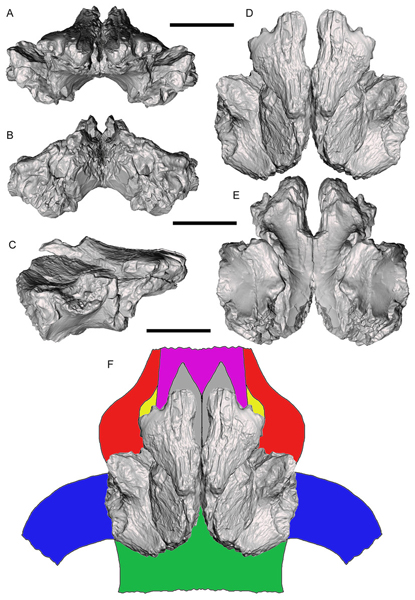
Photographs and Computer-generated Three-dimensional Models of the Left and Right Frontals of D. dynastes

The frontal bones of Dynamoterror dynastes.

Photographs and three-dimensional, computer-generated models of the right frontal (A, B) and the left frontal (C, D) of Dynamoterror dynastes (rostal view – viewed from the front of the brain).  Scale bar = 5  centimetres.

Picture credit: PeerJ/Western Science Centre

Dynamoterror dynastes A Large Bodied Tyrannosaur

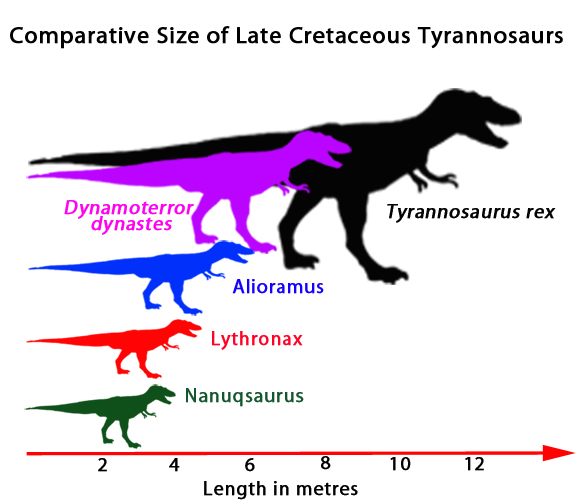
The researchers cannot be certain whether their fossil discovery represents a fully grown animal or a sub-adult.  However, when the frontal bones of D. dynastes were compared to those of Tyrannosaurus rex, the scientists concluded that Dynamoterror was at least nine metres long.  The armoured dinosaur that features in the illustration (above), Invictarx, was also named and described by Dr McDonald, along with Mr Doug Wolfe (Zuni Dinosaur Institute for Geosciences) who worked together on this tyrannosaur.  It is likely that more dinosaurs will be described based on fossil discoveries from within the Menefee Formation.  Alton C. Dooley Jr also collaborated in the study of Dynamoterror.

To read about the discovery of the nodosaurid Invictarx: A New Nodosaur from New Mexico.

Size Comparison of Selected Late Cretaceous Tyrannosaurs

Comparing the size of selected Late Cretaceous Tyrannosaurs.

Size comparison between selected Late Cretaceous tyrannosaurs. Picture credit: Everything Dinosaur.

Picture credit: Everything Dinosaur

What’s in a Name?

This new taxon provides further, significant insight into the morphology and diversity of tyrannosaurids from the Early Campanian of Laramidia and it’s name is pretty cool too.  The genus name is taken from the Greek word “dynamis” which means “power” and the Latin word “terror”.  The trivial or specific name, is from the Latin word “dynastes” meaning “ruler”.  Hence, the binomial scientific name Dynamoterror dynastes translates to “powerful terrror ruler”, however, the scientific paper also states that this epithet honours the name “Dynamosaurus imperiosus“, from Henry Fairfield Osborn, the American palaeontologist who referred to fossil material later assigned to Tyrannosaurus rex as Dynamosaurus imperiosus in scientific papers published in the early years of the 20th century.

The Reconstructed Frontal Complex of Dynamoterror dynastes

Life restoration of the frontals of Dynamoterror dynastes.

The reconstructed frontals of D. dynastes.

Picture credit: PeerJ/Western Science Centre

Analysing the Frontals

In the picture above, the left and right frontals have been articulated together to show how they would sit at the top of the skull, in (A) rostral; (B) caudal; (C) right lateral; (D) dorsal; and (E) ventral views.   The illustration (F), shows a view of the reconstructed skull in dorsal view.  Individual bone elements of the skull are colour-coded to show how the top of the skull knitted together: frontals (grey); fused nasals (violet); prefrontals (yellow); lacrimals (red); postorbitals (blue); and parietal (green).

The scale bars represent 5 centimetres and the missing skull bones have been based on the related tyrannosaurid Teratophoneus curriei, a geologically younger tyrannosaur from the Upper Campanian of southern Utah (Kaiparowits Formation).  T. curriei roamed Laramidia around 76 million years ago, some 4 million years after Dynamoterror dynastes.

The scientific paper: “A New Tyrannosaurid (Dinosauria: Theropoda) from the Upper Cretaceous Menefee Formation of New Mexico” by Andrew T. McDonald, Douglas G. Wolfe and Alton C. Dooley published in PeerJ.

Visit the Everything Dinosaur website: Everything Dinosaur.
29 09, 2018

New Giant Dinosaur From South Africa Described

By |2023-10-30T12:12:35+00:00September 29th, 2018|Categories: Dinosaur and Prehistoric Animal News Stories, Dinosaur Fans, Main Page, Palaeontological articles, Photos/Pictures of Fossils|0 Comments

Ledumahadi mafube – Giant Plant-eater from the Early Jurassic

A new species of giant sauropodiform from the Early Jurassic of South Africa has been named and described. The dinosaur has been named Ledumahadi mafube and is estimated to have weighed around twelve tonnes and stood about four metres high at the hips. L. mafube may have been the largest animal alive on Earth between 200 and 195 million years ago.

Over the course of the Jurassic, gigantic sauropod genera evolved, famous giants such as Brontosaurus, Brachiosaurus and Diplodocus.  Writing in the journal “Current Biology”, the international research team led by Professor Jonah Choiniere (Witwatersrand University), concluded that Ledumahadi shows that quadrupedal sauropodomorphs which lacked the columnar limbs of the later sauropods could still attain, massive sauropod-like body sizes.  This challenges one of the assumptions held in palaeontology, that the evolution of column-like legs was a prerequisite that enabled the long-necked, lizard-hipped dinosaurs to grow so big.

A Life Reconstruction of the Newly Described Sauropodiform Ledumahadi mafube

Ledumahadi mafube illustrated.
A life reconstruction of Ledumahadi mafube.

Picture credit: Viktor Radermacher (Witwatersrand University)

The illustration shows the twelve tonne South African giant Ledumahadi mafube with its bent, semi-erect forelimbs.  It is observed by a much smaller Early Jurassic dinosaur, the ornithischian Heterodontosaurus tucki.

“Giant Thunderclap at Dawn”

The fossil material consists of disarticulated post-cranial material discovered at Beginsel farm, approximately fifteen miles southeast of the town of Clarens in Free State Province, close to the border of South Africa and Lesotho.  The fossils were found in mudstone from the upper Elliot Formation representing terrestrial sediments laid down between 200 and 195 million years ago (Hettangian to Sinemurian faunal stages of the Early Jurassic).

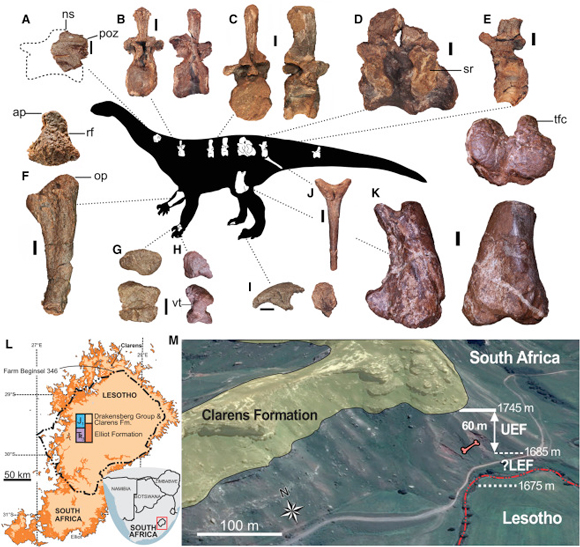
The Fossilised Remains of Ledumahadi mafube and Location Maps

Fossils and location map of Ledumahadi mafube (South Africa).
Skeletal drawing the fossils of Ledumahadi mafube along with maps showing the fossil discovery location (UEF – upper Elliot Formation, whilst LEF – lower Elliot Formation).

Picture credit: Witwatersrand University

The dinosaur’s name, pronounced Le-dew-ma-har-dee maf-fu-be is from the local Sesotho dialect of the region.  It translates as “giant thunderclap at dawn”, reflecting the size of the animal and the stratigraphically early position of this taxon.

The Origins of Sauropod Dinosaurs

Commenting on the significance of the name, Professor Choiniere stated:

“The name reflects the great size of the animal as well as the fact that its lineage appeared at the origins of sauropod dinosaurs.   It honours both the recent and ancient heritage of southern Africa.”

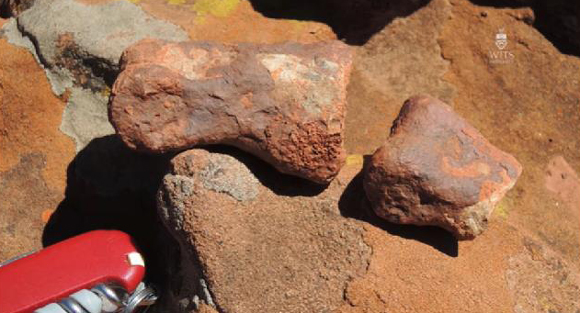
Fossil Bones Photographed at the Quarry Site

Giant dinosaur bones from South Africa
Bones from the front limbs (hands) – Ledumahadi mafube, the penknife provides a handy scale.

Picture credit: Witwatersrand University

An Adult Dinosaur Around Fourteen Years Old When it Died

An analysis of the growth lines of the limb bones indicate that the specimen was fully grown when it died and that this dinosaur was approximately fourteen years old when it met its demise.  The research team compared the limb measurements of the front and hind limbs of Ledumahadi with other dinosaurs and extant tetrapods and they concluded that this dinosaur, had very robust limbs and was a quadruped, which weighed around twelve tonnes.  The plant-eating Ledumahadi was a giant amongst the Early Jurassic Dinosauria, it is the largest animal known so far from Early Jurassic sediments more than 195 million years old.  When Ledumahadi roamed it may have been the largest animal on Earth at the time.

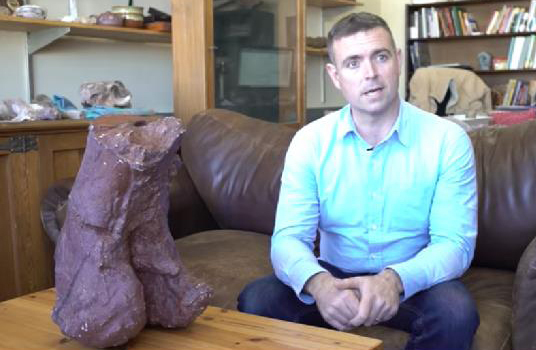
Professor Choiniere and the Distal Portion of the Right Femur of Ledumahadi

Professor Jonah Choiniere describes the new Early Jurassic dinosaur Ledumahadi mafube.
Professor Jonah Choiniere with the distal portion of the femur of Ledumahadi.

Picture credit: Witwatersrand University

A Different Stance and Posture Compared to Later Sauropods

The scientists, which included Roger Benson from Oxford University, conclude that L. mafube had a different posture than later sauropods.  It did not have the column-like limbs of dinosaurs like Brontosaurus, Brachiosaurus and Diplodocus, its forelimbs would have been more crouched and partially flexed.  The research team postulate that this posture was an evolutionary experiment with gigantism within the lizard-hipped reptiles.

Lead author of the paper, Dr Blair McPhee (Witwatersrand University), explained:

“The first thing that struck me about this animal is the incredible robustness of the limb bones.  It was of similar size to the gigantic sauropod dinosaurs, but whereas the arms and legs of those animals are typically quite slender, Ledumahadi’s are incredibly thick.  To me this indicated that the path towards gigantism in sauropodomorphs was far from straightforward and that the way that these animals solved the usual problems of life, such as eating and moving, was much more dynamic within the group than previously thought.”

Professor Choiniere Compares A Giant Toe Claw Bone (Pedal Ungual) with His Hand

The toe claw (ungual) of Ledumahadi mafube.
Professor Jonah Choiniere holding a pedal ungual (toe claw bone) from Ledumahadi mafube.

Picture credit: Witwatersrand University

A Transitional Form of Long-necked Dinosaur (Ledumahadi mafube)

Analysis of the bones and comparative studies with other sauropods and extant tetrapods, led the scientists to conclude that the internal structure of the bones of Ledumahadi displayed traits associated with basal sauropodomorphs and more derived members of this group.  L. mafube probably represents a transitional stage between the sauropodomorphs and the later true Sauropoda.

Limb Bone Study Has Helped Plot the Evolutionary Change from Bipedalism to a Quadrupedal Stance

How did a quadrupedal stance in Sauropods evolve?
Plotting the evolutionary change from bipedalism to a quadrupedal stance in the Sauropoda.

Picture credit: Witwatersrand University

The picture above depicts silhouettes scaled in height to the cube root of mass estimate of the taxon.  The colour of the silhouettes represents the inferred posture; red is bipedal, and black equals quadrupedal.   The purple line marks the Triassic/Jurassic boundary.

Out-competed by the Columnar-limbed Sauropods

Ledumahadi may have been the biggest animal on Earth during the very Early Jurassic, but the fossil record indicates that this large dinosaur body-plan with flexed limbs and a more crouched posture was not to last.

Co-existing with Ledumahadi were primitive sauropods such as Vulcanodon (V. karibaensis), which although smaller had column-like limbs.  Within a few million years, only the columnar-limbed sauropods remained as the only surviving lineage.  The reasons for this faunal turnover are unclear, but it might reflect that Ledumahadi might have had to expend more energy moving about with its flexed limbs that were not held directly under the body.  The more energy efficient posture of the straight-legged sauropods with their column-like legs may have provided a competitive edge, driving dinosaurs like Ledumahadi to extinction.

To read Everything Dinosaur’s article about a recently described long-necked, Early Jurassic sauropodiform from China that is also helping palaeontologists to better understand sauropod evolution:  Yizhousaurus Helping to Give Sauropod Evolution a Head Start.

The scientific paper: “A Giant Dinosaur from the Earliest Jurassic of South Africa and the Transition to Quadrupedality in Early Sauropodomorphs” by Blair W. McPhee, Roger B.J. Benson, Jennifer Botha-Brink, Emese M. Bordy & Jonah N. Choiniere published in the journal “Current Biology”.

View the Everything Dinosaur website: Visit Everything Dinosaur.

26 09, 2018

New Study Suggests Bird Evolution is Very Complicated

By |2024-05-11T16:38:54+01:00September 26th, 2018|Categories: Dinosaur and Prehistoric Animal News Stories, Dinosaur Fans, Main Page, Palaeontological articles, Photos/Pictures of Fossils|0 Comments

Jinguofortis perplexus – A Mosaic of Dinosaur and Bird Features

Scientists from the Chinese Academy of Scientists have described a new species of ancient, Early Cretaceous bird with a mosaic of dinosaur and bird characteristics.  The bird, which has been named Jinguofortis perplexus, lived approximately 127 million years ago and it will help palaeontologists to learn more about bird development and the evolution of powered flight in the avian dinosaurs.

Jinguofortis perplexus

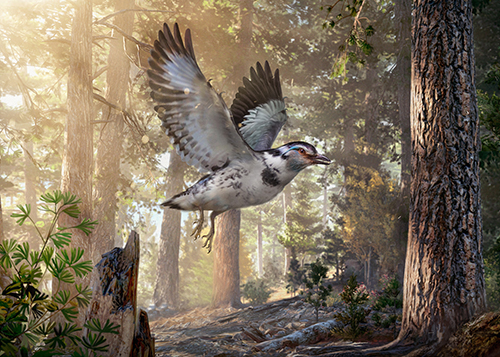
An Illustration of the Newly Described Early Cretaceous Bird Jinguofortis perplexus

Jingoufortis perplexus illustrated.
Jinguofortis a newly described Early Cretaceous bird with a mosaic of avian and reptilian traits.

Picture credit: PNAS (Chung-Tat Cheung)

The pigeon-sized bird does not have a long bony tail, a characteristic inherited from dinosaurs that is found in the first birds such as Archaeopteryx.  Instead, the tail is much reduced and ends with a compound bone, a pygostyle, possessed by modern birds today.  Jinguofortis perplexus represents a transitional form, after birds had lost their dinosaurian tails but before they had evolved a fan of flight feathers on their shortened, compressed tails.

Honouring the Contribution of Female Scientists

The fossil specimen comes from the Debeigou Formation of north-eastern China and the genus name “Jinguofortis” derives from the Mandarin word for female warrior “jinguo” and the Latin word “fortis” meaning brave and strong.  The name honours the contribution made to palaeontology by female scientists around the world.  The species or trivial name “perplexus” is from the Latin and reflects the puzzling mix of anatomical traits.  Jinguofortis has been assigned to a basal member of the clade of short-tailed birds (Pygostylia).

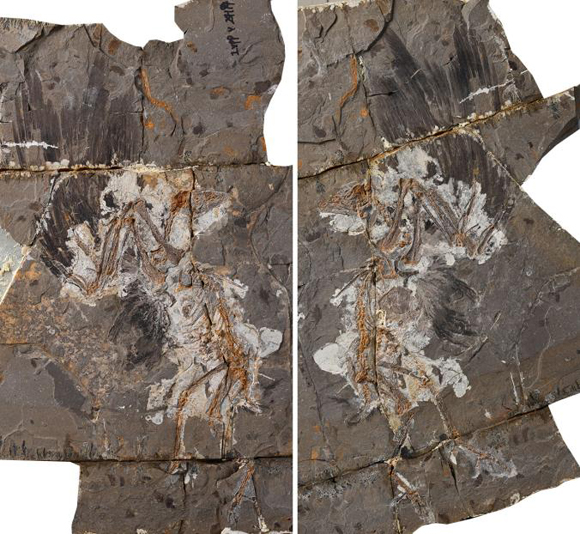
The Slab and Counter Slab of the Fossil Bird Jinguofortis perplexus

Jingoufortis perplexus fossil material.
The fossilised remains of the Early Cretaceous bird Jinguofortis perplexus.

Picture credit: PNAS (Proceedings of the National Academy of Science)

Avian and Dinosaurian Characteristics

Writing in the academic journal “Proceedings of the National Academy of Sciences (USA)”, the researchers Wang Min, Thomas Stidham and Zhou Zhonghe (Chinese Academy of Sciences), describe a unique combination of anatomical traits, including a jaw with small teeth like Jinguofortis’s theropod dinosaur relatives as well as a short bony tail ending in a pygostyle.  Gizzard stones associated with the well-preserved, but rather flattened fossil, indicate that Jinguofortis may have fed on seeds and other plant material.  Jinguofortis also possessed a third finger with only two bones, unlike other early birds.

For dinosaur and prehistoric animal models: Prehistoric Animal Models.

Fused Shoulder Bones

Close examination of the slab and counter slab revealed that the shoulder girdle of Jinguofortis was fused into a single bone, the scapulocoracoid, a feature associated with the non-avian dinosaurs.  Modern birds usually have two bones the scapula and the coracoid that provide greater flexibility in the shoulder, ideal for flapping, powered flight.  The fossil’s shoulder joint also gives clues about its flight capacity.  In flying (volant) birds, the shoulder, which experiences high stress during flight, is a tight joint between the two unfused bones (scapula and the coracoid).  In contrast, Jinguofortis perplexus with its fused bones suggests that it flew in a different way compared to modern birds.

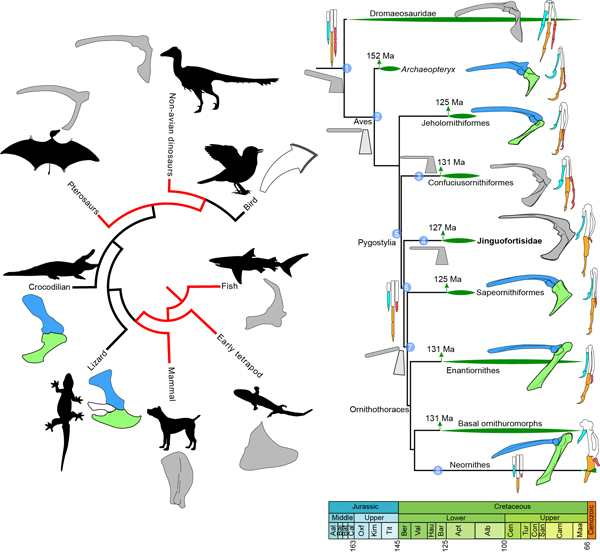
Changes in the Coracoid and Scapula (Shoulder Girdle) in Vertebrates

Evolution of the shoulder girdle with a focus on the Avialae.
Changes in the evolution of the shoulder girdle (vertebrates) and the development of the shoulder within Avialae.

Picture credit: Wang Min (Chinese Academy of Sciences)

The picture above plots the main changes in the shoulder joint of vertebrates from fish through to tetrapods such as amphibians, reptiles and mammals.  The second part of the diagram maps the evolution of the shoulder joint from the Dromaeosauridae (the raptors), through to avian dinosaurs (birds) and shows that Jinguofortis sits between the earlier Confuciusornithiformes and the later Sapeornithiformes and is basal to the Pygostylia.  The diagram provides a temporal reference and also illustrates the evolution of the bird hand with its much reduced digits from dinosaurian ancestors with their grasping hands.

Measuring the Fossil Wing of Jinguofortis perplexus

Measurement of the fossil’s wing size and estimation of its body mass show that the extinct species had a wing shape and wing loading (wing area divided by body mass) similar to living birds that need a lot of manoeuvrability.  Jinguofortis lived in a dense forest.  Its body plan would have assisted it to dodge and weave through the branches and dense foliage as it flew.

Jinguofortis perplexus with its mosaic of bird and dinosaur characteristics suggests that the evolution of modern birds was more complex than previously thought.

The Everything Dinosaur website: Everything Dinosaur.
23 09, 2018

Chemical Clues to the Earliest Animal Fossils

By |2023-10-30T10:53:35+00:00September 23rd, 2018|Categories: Dinosaur and Prehistoric Animal News Stories, Main Page, Palaeontological articles, Photos/Pictures of Fossils|0 Comments

Cholesterol Proves Dickinsonia was an Animal

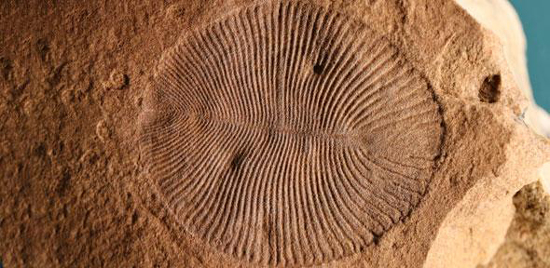
A team of international scientists including researchers from the Australian National University (Canberra) and the Russian Academy of Sciences (Moscow), have finally solved one of the great puzzles in palaeontology.  They have detected molecules of cholesterol in an ancient animal fossil to confirm that the bizarre Dickinsonia, part of the enigmatic Ediacaran biota, was an animal and therefore distantly related to all other animals including humans.

A Fossil of Dickinsonia – A Bizarre Disc-like Organism But What Exactly Was It?

Dickinsonia costata fossil.
The Ediacaran fossil Dickinsonia costata, specimen P40135 from the collections of the South Australia Museum.

Picture credit: Fr Alex Liu (Cambridge University)

The Enigmatic Ediacaran Biota

Before the Cambrian explosion and the evolution of hard-bodied organisms, there existed a strange biota formed of bizarre, soft-bodied organisms that did not show much affinity to Late Cambrian fossil groups and to any form of living organisms today.  Fossils appear in sedimentary rock dated between 570 to 541 million years ago and have been found in Australia, (the Ediacara Hills of South Australia, from which this period in Earth’s history is named) and notably in Namibia, England, China, Canada and Russia.  They were the first complex multi-cellular organisms to appear on Earth.

Although the Ediacaran biota immediately preceded the rapid appearance and diversification of animals in the Cambrian, where these strange organisms fit within the tree of life remained a mystery.  Some of these fossils appear segmented and show some bilateral symmetry, Dickinsonia for example, but most lack any obvious signs of a gut, a mouth, an anus or any appendages that might link them to the Animalia.

This new study, published in the journal “Science”, identified biomarkers, specifically the fat, cholesterol in the fossilised remains of Dickinsonia.  This discovery confirms that at least one bizarre Ediacaran group, Dickinsonia and related taxa are members of the animal kingdom (Metazoa).

Finding Fossils Can Be Dangerous

Australian National University PhD student Ilya Bobrovskiy and his fellow collaborators in this research project, explored a remote area of exposed cliff on the White Sea coast of north-western Russia.  The field team were looking for strata laid down in the Ediacaran so that they could study any fossils preserved within the ancient rocks.  The sedimentary material they were interested in was exposed high up on a steep cliff face and ropes had to be used to get the field team down the cliff face so that they could dislodge sandstone boulders which fell to the beach below and then could be collected for further analysis.

Palaeontology Can Be a Dangerous Business – Dislodging Ancient Marine Sandstone Boulders From the Cliff Face

Extracting sandstone blocks from the cliff face.
Digging out huge blocks of sandstone to find Ediacaran fossils on the Russian White Sea coast.

Picture credit: Australian National University

Dickinsonia – The Earliest Known Animal in the Geological Record

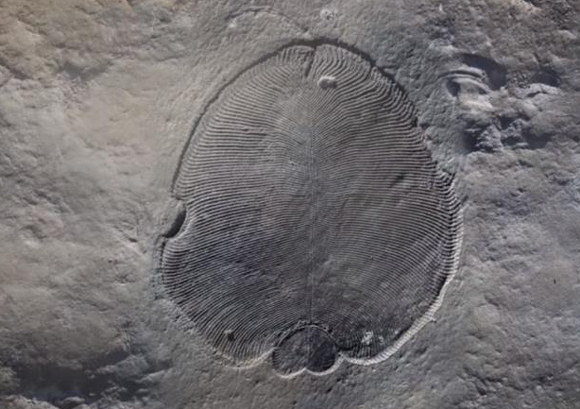
Some Dickinsonia fossils are a whopping 140 centimetres in length, indicating that these organisms were much bigger than most of the Ediacaran and later Cambrian biota, but where they fitted in the classification of life on Earth remained open to conjecture.  Previously, it had been suggested that these fossils represented giant, single-celled amoeba, lichens or dead-end evolutionary experiments that have no connection to other life forms.  The research team discovered a Dickinsonia fossil that was so well preserved that a molecular analysis revealed traces of tiny amounts of cholesterol, a type of fat that is only produced by animal life.  The scientists postulate that this is the conclusive evidence that confirms that Dickinsonia was an animal.

Cholesterol Found in Dickinsonia Proves it was an Animal

Dickinsonia fossil.
A beautifully preserved 558-million-year-old fossil of Dickinsonia, now classified as an animal (Metazoan).

Picture credit: Australian National University

Co-author of the study, Associate Professor Jochen Brocks from the ANU Research School of Earth Sciences commented:

“The fossil fat molecules that we’ve found prove that animals were large and abundant 558 million years ago, millions of years earlier than previously thought.  Scientists have been fighting for more than 75 years over what Dickinsonia and other bizarre fossils of the Ediacaran biota were.  The fossil fat now confirms Dickinsonia as the oldest known animal fossil, solving a decades-old mystery that has been the Holy Grail of palaeontology.”

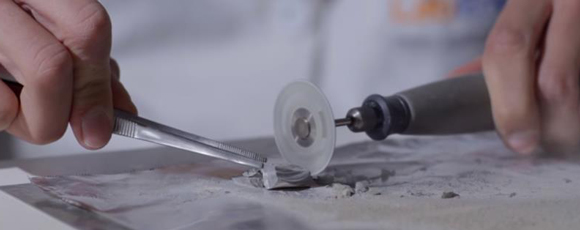
Preparing Fossil Specimens for Analysis

Searching for traces of organic materials such as fats in Dickinsonia.
Preparing a fossil specimen for the organic matter analysis.

Picture credit: Australian National University

Molecular Analysis of Dickinsonia Fossils

Using extremely sensitive techniques to assess the chemical nature of fossil material has opened up whole new areas of study for palaeontologists.  Prior to the employment of such technologies as computerised tomography, synchrotron radiation light sources, biomarker analysis and four-dimensional scanning, palaeontologists were restricted to studying the shape and the form of fossils.  Today, palaeontologists can utilise these new methodologies, drawn from a variety of disciplines such as engineering and medicine to undertake complementary areas of study.

To read an article published in 2017 that postulated that Dickinsonia was a member of the Animal Kingdom and likely to be a Metazoan: Growth Analysis Suggests Dickinsonia was Definitely an Animal.

For models and replicas of ancient prehistoric creatures: Prehistoric Animal Models.

17 09, 2018

Stay Small if you Want to Survive the Mesozoic

By |2023-10-30T08:58:27+00:00September 17th, 2018|Categories: Dinosaur and Prehistoric Animal News Stories, Main Page, Palaeontological articles|0 Comments

Tiny Fossils Reveal How Shrinking Was Essential for Successful Mammalian Evolution

Mammals and dinosaurs may have shared a common reptilian ancestor, but these two tetrapod lineages diverged from one another a very long time ago.  However, mammals lived alongside the dinosaurs for many millions of years and a new study published in the academic journal “Nature”, suggests that staying small and inconspicuous was a key factor contributing to the evolution of mammals.  It was only after the extinction of the dinosaurs and other types of reptile, pterosaurs and marine reptiles, for example, that mammals were able to grow much larger.

Mammals and Dinosaurs

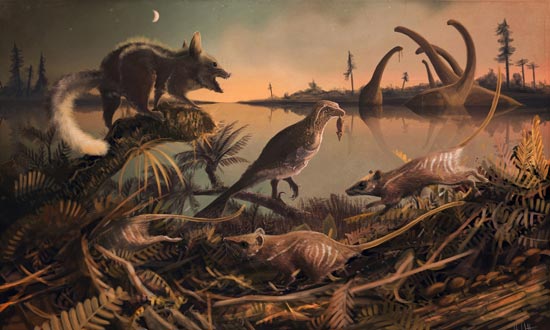
Most Mammals Remained Small During the Mesozoic and Many were Probably Nocturnal

Purbeck (Dorset) 145 million years ago.
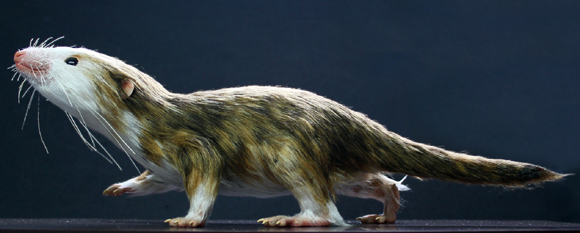
Purbeck Lagoon 145 million years ago, small placental mammals living alongside dinosaurs.  As darkness falls Durlstodon (top left) looks on whilst two Durlstotherium scurry through the undergrowth.  In the centre a Durlstotherium has been caught by Nuthetes destructor.

Picture credit: Mark Witton

The Origins of Mammals

There are three types of mammals living today, there are the monotremes, the egg-laying mammals such as the platypus and the echidna, remnants of a once very widespread and diverse group of egg-laying mammals called the Australosphenida, that existed in the Southern Hemisphere for much of the Jurassic and Cretaceous.  Secondly, there are the pouched mammals, the marsupials, familiar creatures such as kangaroos, possums, koalas and such like.  Thirdly, there are the much more common and geographically widespread placental mammals (humans are a placental mammal).

The first true mammals such as the Late Triassic Eozostrodon, Megazostrodon and Morganucodon lived over 200 million years ago and a team of scientists from the United States and the UK have concluded that whilst the dinosaurs grew into giants, the ancestors of all modern mammals opted for a different strategy, they stayed small.

A Life Reconstruction of the Morganucodont Morganucodon of the Late Triassic

Staying small helped A model of the Late Triassic mammaliaform evolution during the Mesozoic.
A model of the Late Triassic mammaliaform Morganucodon.

Picture credit: University of Birmingham

Getting to Grips with the Mammalian Jaw

The researchers used modern computer analysis to examine what happened to the skeleton of our tiny, shrew-like mammal ancestors.  Modern mammals have a unique lower jaw, consisting of a single bone that bears teeth (the dentary).  In contrast, other vertebrates have more complex lower jaws formed by several bones fused together.

In the course of the evolution of mammals, the complex jaws became simplified and a new jaw joint was formed, whilst some of bones that once formed the back of the jaws (the articular in the lower jaw and the quadrate in the back of the upper jaw), became much reduced in size, moving to the middle ear to evolve a role to aid hearing.

For an article that looks at the evolution of hearing in the mammaliaform and true mammals: Let’s Hear It For Mammalian Evolution.

A Transitional Process

The scientists looked at how it was possible for the jaw to be restructured, whilst the animal was still able to feed and to hear.  X-ray computed tomography (CT scans) were employed to assess the skulls and jaws, computer models were then built to simulate the evolutionary process.  The team’s results showed that the small size of the fossil mammals significantly reduced the stresses in the jaw bones when feeding, while still being powerful enough to capture and bite through prey, such as insects.

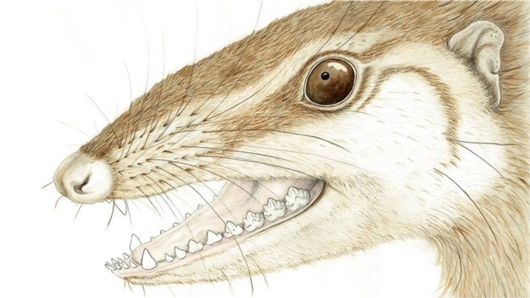
Early Mammals were Small and Shrew-like

The Middle Jurassic mammaliaform (W. rex).
An illustration of Wareolestes rex.  An early mammaliaform that probably was nocturnal and insectivorous.

Picture credit: Elsa Panciroli

Mammalian Jaw Evolution

Commenting on the study, lead author and lecturer at Birmingham University, Dr Stephan Lautenschlager stated:

“Our results provide a new explanation of how the mammalian jaw evolved over 200 million years ago.  Getting very small appears to have been crucial for our mammalian ancestors.  This allowed them to reduce the stresses in the jaw during feeding and made the restructuring of the jaw bones possible.”

Professor Emily Rayfield (Bristol University), who lead the study added:

“The evolution of the mammalian jaw joint has perplexed palaeontologists for over 50 years.  Using computational methods, we can offer explanations to how our mammalian ancestors were able to maintain a working jaw while co-opting bones into a complex sound detection system.  Our research is about testing ideas of what makes mammals unique among the animal kingdom, and how this may have come about.”

The scientific paper: “The Role of Miniaturisation in the Evolution of the Mammalian Jaw and Middle Ear” by Stephan Lautenschlager, Pamela Gill, Zhe-Xi Luo, Michael J. Fagan and Emily Rayfield published in the journal Nature.

Everything Dinosaur acknowledges the assistance of a press release from the University of Birmingham in the compilation of this article.

Visit the Everything Dinosaur website: Everything Dinosaur.
5 09, 2018

Tracing the Origins of Biodiversity in the Animal Kingdom

By |2023-10-29T16:36:15+00:00September 5th, 2018|Categories: Dinosaur and Prehistoric Animal News Stories, Dinosaur Fans, Main Page, Palaeontological articles, Photos/Pictures of Fossils|0 Comments

Illuminating the Evolution of Animal Life – Humbling Thoughts

Recently two scientific papers have been published that delve deep into the origins of life on Earth.  In one paper, published in the “Proceedings of the National Academy of Sciences USA”,  the origins of animal body plans (Animalia) were explored, analysing the anatomical designs of animals, looking at how animal life half a billion years ago evolved and changed over time to bring us the biodiversity we see today and that which is preserved in the fossil record.

Tracing the Origins of the Animalia

This study mapped shared characteristics and one of the conclusions drawn from the research was that all those weird and wonderful Cambrian creatures, as preserved in the Burgess Shales of British Columbia or in the Sirius Passet Lagerstätte of Greenland, are actually less weird than the butterflies and birds that you might see in your own garden.

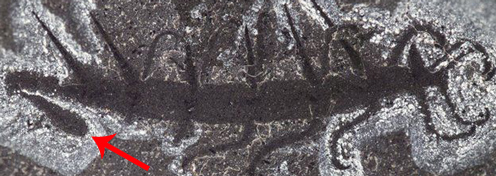
The Body Plans of Bizarre Cambrian Creatures Such as Hallucigenia are not that Bizarre According to a New Study

A Hallucigenia specimen (Burgess Shale).
A Hallucigenia specimen (Royal Ontario Museum).  The red arrow is pointing towards a teardrop shaped object that might represent the fossilised remains of this strange creature’s head.

Picture credit: Royal Ontario Museum/Dr Jean Bernard Caron with additional annotation by Everything Dinosaur

In the second scientific paper, which shares a number of authors with the first publication and was published last month in the journal “Nature: Ecology & Evolution”, researchers examined the evolution of all life as a whole, conducting research using a new molecular clock analysis to plot a unified timescale for the early evolution of life on our planet.

What is the Molecular Clock?

The idea of a molecular clock is based on the idea that evolutionary changes occur at regular time intervals, that the rate of genetic change (mutation), has remained constant over time.  The molecular clock uses this premise, it plots the number of differences in the genomes of two living species (for example a human and a bacterium) and these changes are proportional to the time since they shared a common ancestor.

Using this methodology, the scientists, from the universities of Bath and Bristol were able to avoid putting too much reliance on a very fragmentary and often highly controversial early life fossil record. 

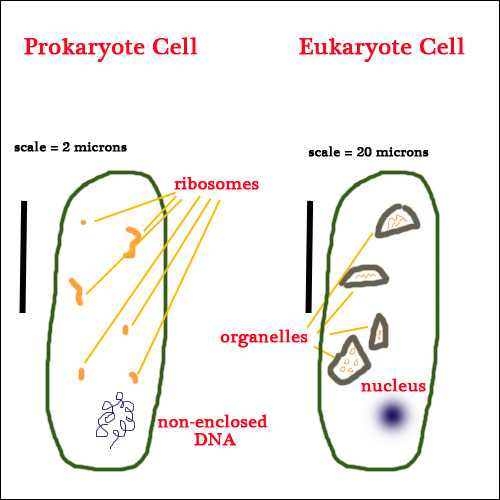
This research team concluded that the last universal common ancestor of cellular life existed more than 3.9 billion years ago and that the crown clades of two primary divisions of life – Eubacteria and Archaebacteria emerged less than 3.4 billion years ago.  Furthermore, the scientists concluded that modern eukaryotes (organisms whose cells have a nucleus enclosed within membranes – animals, protists, plants and fungi), don’t constitute a primary lineage of life and emerged relatively late during life on Earth’s evolutionary history (around <1.84 billion years ago).

Eukaryote Cell Compared to the Prokaryote Cell Typical of Eubacteria and Archaebacteria

Eukaryote Cell Compared to a Prokaryote Cell.
Simple diagram showing differences in eukaryote cells and prokaryote cells.  In a new study, scientists conclude that prokaryotes such as Eubacteria and Archaebacteria emerged less than 3.4 billion years ago whilst our branch of life on Earth, the eukaryotes emerged much more recently about 1.84 billion years ago. Picture credit: Everything Dinosaur.

Picture credit: Everything Dinosaur

Did Animal Body Plans Emerge Over Deep Time or Come About in Response to Sudden Changes?

This was the question that the researchers set out to answer in the paper published the “Proceedings of the National Academy of Sciences USA”.  It is agreed that complex animal life evolved from single celled eukaryotes and that multi-cellular animals diversified into thirty or forty distinct anatomical body plans, but when and how did these body plans emerge?  Were the majority of these different body plans already in existence after the Cambrian explosion, some 500 million years ago?

To answer these questions the research team, consisting of scientists from Bristol University, Dartmouth College in New Hampshire and the University of West Georgia, looked at features from living groups of animals and cross-referenced those characteristics against what can be identified from the fossil record.

Professor Philip Donoghue (Bristol University) a co-author of both scientific papers explained:

“This allowed us to create a ‘shape space’ for animal body plans, quantifying their similarities and differences.  Our results show that fundamental evolutionary change was not limited to an early burst of evolutionary experimentation.  Animal designs have continued to evolve to the present day, not gradually as Darwin predicted, but in fits and starts, episodically through their evolutionary history.”

Mapping the Evolution of Different Types of Animal Body Plan

Mapping the evolution of animal body plans.
Grouping similar body plans and separating dissimilar body plans in the Animalia.

Picture credit: Bristol University

The research team propose that major expansions in the type of animal following the Cambrian explosion aligns with other major ecological transitions such as the conquest of terrestrial environments.

Bradley Deline (University of West Georgia) added:

“Our results are important in that they highlight the patterns and pathways in which animal body plans evolved.  Many of the animals we are familiar with today are objectively bizarre compared with the Cambrian weird wonders.  Frankly, butterflies and birds are stranger than anything swimming in the ancient sea.”

Trying to Fit Extinct Animals into the Study

Contributors to both scientific papers, James Clark (Bristol University) and Mark Puttick (Milner Centre for Evolution, University of Bath), looked at how fossils could be incorporated into this research.

Dr Puttick stated:

“One of the problems we had is that our study is mostly based on living species and we needed to include fossils.  We solved the problem through a combination of analysing the fossils and using computer models of evolution.”

James Clark added:

“The fossils plot intermediate of their living relatives in shape space.  This means that the distinctiveness of living groups is a consequence of the extinction of their evolutionary intermediates. Therefore, animals appear different because of their history rather than unpreserved jumps in anatomy.”

Studying the Genomes of Different Animals (Animalia)

Jenny Greenwood, also from the University of Bristol’s School of Earth Sciences, wanted to explore how this study might be reflected in the genomes of different organisms.  She wanted to work out which of the many proposed genetic mechanisms drove the evolution of animal body plans.

Jenny commented:

“We did this by collecting data on the different genomes, proteins, and regulatory genes, that living animal groups possess.  The differences in anatomical designs correlate with regulatory gene sets, but not the type or diversity of proteins.  This indicates that it is the evolution of genetic regulation of embryology that precipitated the evolution of animal biodiversity.”

These researchers have concluded that animal evolution has been permitted or driven by gene regulatory evolution.

Two Papers Helping to Improve our Understanding of the Evolution of Life on Earth

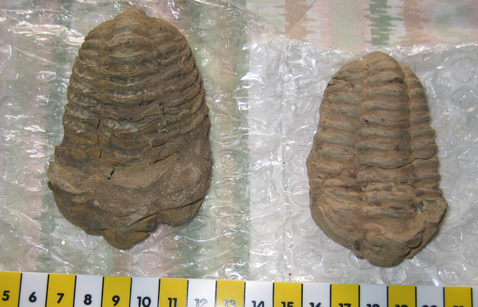
The definition of benthic. A pair of trilobite fossils. Trilobites feature in the televison programme "First Life".
“Mike and Sue” – the Calymene trilobites. The Cambrian also the rapid diversification of the Trilobita. Picture credit: Everything Dinosaur.

Picture credit: Everything Dinosaur

Everything Dinosaur acknowledges the help of a press release from Bristol University in the compilation of this article.

The two scientific papers:

“Integrated Genomic and Fossil Evidence Illuminates Life’s Early Evolution and Eukaryote Origin” by Holly C. Betts, Mark N. Puttick, James W. Clark, Tom A. Williams, Philip C.J. Donoghue and Davide Pisani published in the journal Nature: Ecology & Evolution.

“Evolution of Metazoan Morphological Disparity” by B. Deline, J. Greenwood, J. Clark, M. Puttick, K. Peterson and P. Donoghue  published in the Proceedings of the National Academy of Sciences USA.

Visit the Everything Dinosaur website: Everything Dinosaur.
Go to Top