All about dinosaurs, fossils and prehistoric animals by Everything Dinosaur team members.

Everything Dinosaur’s work with schools and other educational bodies. Articles, features and stories about dinosaurs and their role in education and educating young people.

15 07, 2011

Young Archaeologists Club Give Everything Dinosaur the Thumbs Up

By |2023-03-08T13:19:58+00:00July 15th, 2011|Categories: Educational Activities, Teaching|0 Comments

Young Archaeologists Give Everything Dinosaur’s Teachers Top Marks

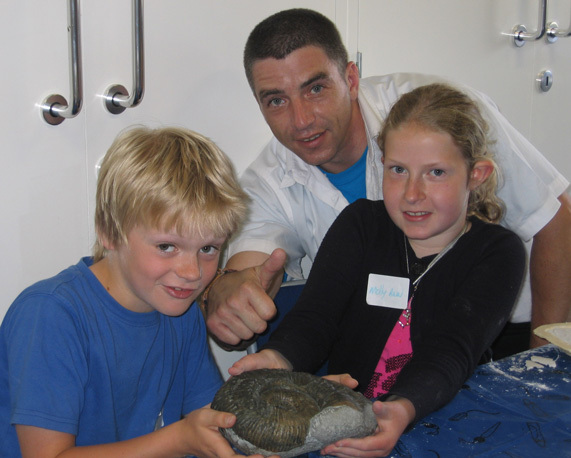
Budding archaeologists at a museum in Cumbria enjoyed a visit from Everything Dinosaur team members to teach about dinosaurs in school.  Over the course of the two hour session the school children studied dinosaurs and dinosaur fossils.

Young Archaeologists Club Give Everything Dinosaur the Thumbs Up

Thumbs up for Everything Dinosaur. Picture credit: Everything Dinosaur.

Everything Dinosaur and the Beacon Museum

The company’s dinosaur workshops in school got a big thumbs up from the keen, enthusiastic budding archaeologists.

Everything Dinosaur

For replicas of prehistoric animals, dinosaur toys and games visit Everything Dinosaur’s website: Visit Everything Dinosaur’s Award-winning Website.

13 06, 2011

Whithaven’s Beacon Welcomes Dinosaurs – A New Exhibition

By |2024-04-19T06:18:08+01:00June 13th, 2011|Categories: Dinosaur Fans, Educational Activities, Everything Dinosaur News and Updates, Main Page|2 Comments

BBC Walking with Dinosaurs Exhibition at the Beacon

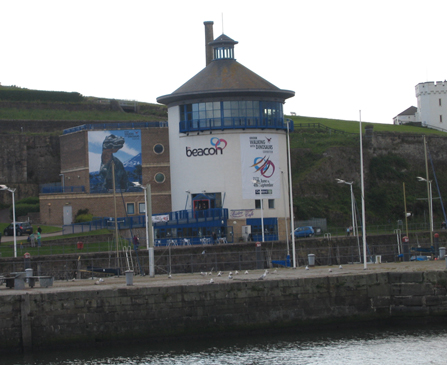
The innovative Beacon museum at Whitehaven (Cumbria) has opened its summer dinosaur exhibition and the theme is prehistoric animals as they will be hosting the Walking with Dinosaurs exhibit – an opportunity for young palaeontologists and dinosaur enthusiasts of all ages to get up close to the likes of Triceratops and Tyrannosaurus rex.

Heralding the official opening, the enthusiastic staff at the Beacon held a press event last Friday evening, part of which involved testing the museum’s sound system and the roars of dinosaurs could be heard across the historic quayside.

Saturday was the official opening and television presenter and broadcaster Steve Leonard was on hand to perform the opening ceremony, cutting the red ribbon across the Beacon’s doors and an exhibition sixty-five million years in the making was underway.  Team members from Everything Dinosaur had brought some fossils with them to show visitors and did their best to answer the many questions that were posed by the young and young-at-heart dinosaur fans.

The Beacon Museum at Whitehaven Promotes the Exhibition

Picture credit: Everything Dinosaur

The Beacon museum is a fascinating place to visit, with five floors jam packed with artefacts and relics that show Whitehaven’s past, there is even a super activity centre on the ground floor to accommodate school visits and permit lots of extension activities such as dinosaur crafts and mask making, which have been organised to accompany this dinosaur themed summer event.

It must have been quite a job trying to shoe-horn the Walking with Dinosaurs exhibition into the galleries, but the Beacon staff have managed to do it and they display the dinosaurs and the interactive elements associated with the exhibition in an imaginative way.  For example, placing the cast of a skeleton of a peaceful, plant-eating Plateosaurus next to a Roman legionnaire in full battle dress.

Dinosaur Exhibition

Rather than conflict with each other, these two contrasting museum items seem to be getting along well.  We did point out to the Beacon staff that Plateosaurus was a very geographically dispersed dinosaur, it roamed a significant proportion of what was to become the Roman Empire.  We also explained that Roman legionnaires were blamed for littering much of the Italian landscape with the remains of their lunches – oyster shells and such like.

These were actually fossils of brachiopods and bivalves that had eroded out of the limestone formations from the surrounding hillsides.  There is even a type of fossil brachiopod nick-named the “Roman Lamp” as the fossil resembles an oil lamp which was in widespread use during Roman times.

To us, it seems almost appropriate to station the Plateosaurus next to the Roman soldier.

The museum staff have laid out the dinosaur exhibits in chronological order, as much as possible.  Starting on the fourth floor (the viewing gallery), there is a display of models from the television series that represent prehistoric animals from the Triassic, the dawn of the dinosaurs.  In the display cases, beautifully preserved, carbonised plant fossils found around the Whitehaven area can be seen.  These fossils pre-date the dinosaurs, they are actually over 300 million years old – (Pennsylvanian Epoch of the Carboniferous Period).

Descending down from the fourth floor it is like travelling forward in time some 150 million years.  On the third floor, the remains of giant sauropods (long-necked dinosaurs) can be seen; giant Jurassic herbivores like Diplodocus and Brachiosaurus.  On the second floor, you enter the Early Cretaceous, visiting the polar forests of Antarctica meeting the likes of the cute Leaellynasaura and the massive plant-eating iguanodontids, as well as pterosaurs such as Tapejara and Ornithocheirus.

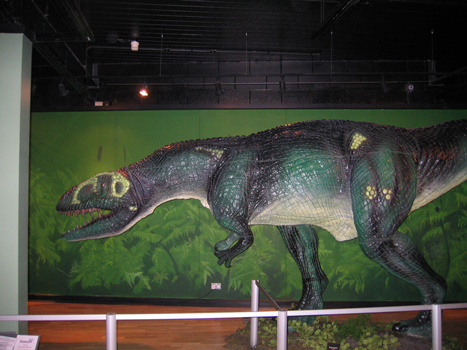
One of the Giant Dinosaur Exhibits on Display at the Beacon (Life-size Megalosaurus)

“Mega Lizard”.

Picture credit: Everything Dinosaur

On the first floor, you get the chance to see the last of the dinosaurs, those types of prehistoric animal that lived at the very end of the Cretaceous.  Look out for the huge Triceratops skull and the T. rex lurking in readiness to ambush the unwary visitor.   If you are lucky enough to visit the museum when Everything Dinosaur’s experts are on hand, you might get the chance to handle some real fossils and to pick the brains of our team – if there is something you have always wanted to know about dinosaurs – here’s your opportunity to find out.

We might even let in on one or two secrets, such as why do we call young dinosaur fan’s “munchkins” and Ankylosaurus’s claim to fame that you will not find publicised in any dinosaur book.

Everything Dinosaur team members will be at the museum on the following dates:

July – 9th and 10th

August – 13th and 14th

The Beacon museum is open daily from 10am to 5.30pm, with a last entry forty-five minutes before closing.  Meals, snacks and refreshments are available from the Bistro which is on site and the Beacon museum staff have lots of dinosaur themed activities planned to help entertain (and educate) visitors to the museum over the next two months.  For further details check the Everything Dinosaur blog.

The Walking with Dinosaurs exhibition runs until the 4th September, so catch it quick before the dinosaurs once again become extinct.

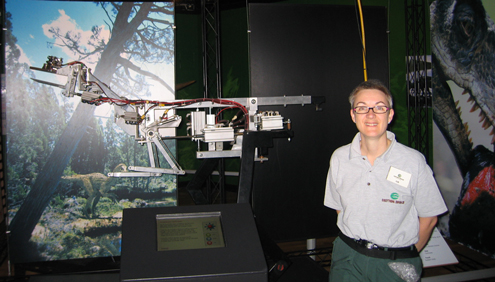
Everything Dinosaur’s Sue with one of the Animatronics on Display at the Museum

Sue next to Robotic Dinosaur (Everything Dinosaur).

Picture credit: Everything Dinosaur

The picture shows Sue, standing next to one of the robotic frameworks used to bring to life the dinosaurs for the award winning television series – in this case a fearsome Utahraptor.  Visitors to the Beacon can get the chance to operate this animatronic dinosaur themselves, just one of the many interactive elements to the exhibition.

Visit Everything Dinosaur’s award-winning website: Everything Dinosaur.

24 05, 2011

The Trilobite Hunt – Deep into Beautiful Wales

By |2024-04-21T09:33:46+01:00May 24th, 2011|Categories: Adobe CS5, Educational Activities, Everything Dinosaur News and Updates, Geology, Main Page|3 Comments

The Everything Dinosaur Trilobite Excursion

Finally, the day arrived when we could set off to Wales in order to explore a quarry which was rich in trilobite fossils.  This was the first time that we had visited this location and we were not to be disappointed.  The location in Powys, is actually a private quarry and permission must be granted by the owner before we could visit.  After booking into a delightful local Bed and Breakfast establishment that evening, we awoke refreshed and ready to go on our long awaited Trilobite hunt.

Trilobite Fossil Hunt

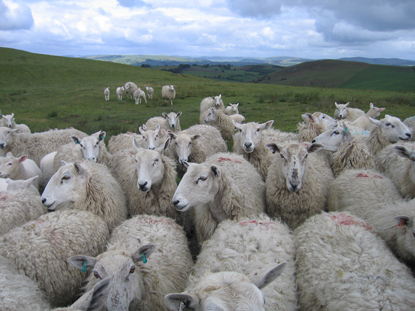
Fortified by an English (should that be Welsh) cooked breakfast, we set off to drive the short distance to the quarry.  Having found our way to the site and parked the van, our first challenge was to negotiate the curious sheep that quickly gathered to investigate us.

Curious Welsh Sheep Come to Say Hello

Picture credit: Everything Dinosaur

Unfortunately, we discovered that the large plastic bucket that we use to carry our tools in – geological hammer, chisels, a plastic sheet for sitting on etc. must have been the same size and shape as the bucket that the sheep get fed out of.  They thought the Everything Dinosaur team members were about to provide them with lunch.

Once over the gate and passed the by now very disappointed sheep, we made our way to the actual fossil site.  We had been advised that trilobite remains, particularly Ogyginus genera were superabundant and soon we all had found various specimens.  Fossils of cast pygidium were particularly common

There was no need to split many of the rocks, although splitting those amongst the scree slope proved relatively easy – just a case of striking the rock with the head end of our geological hammer at the right angle.  We even found one or two examples of trinucleid trilobites, easily distinguished by their over-sized cephalons.  The shales had layers of ash that were prominent in some places of the quarry, betraying this marine environment’s volcanic history – things have changed a lot since the Ordovician.

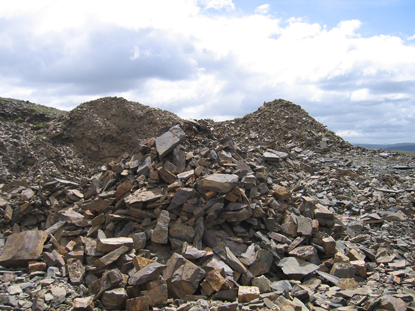
The Trilobite Site (Tile Quarry)

Searching for trilobites in Wales.

Picture credit: Everything Dinosaur

Trilobite Fossils

Gloves proved very handy (no pun intended), the rocks have sharp edges and the wearing of gloves avoids cut fingers and scratches.  After a couple of hours of searching we settled down to our picnic lunch, admiring the wonderful views of the Welsh countryside as we did so.  There were no Red Kites to be seen (we had been told to look out for them), but the boggy ground seemed to be home to a number of newts that we were careful leave in peace.

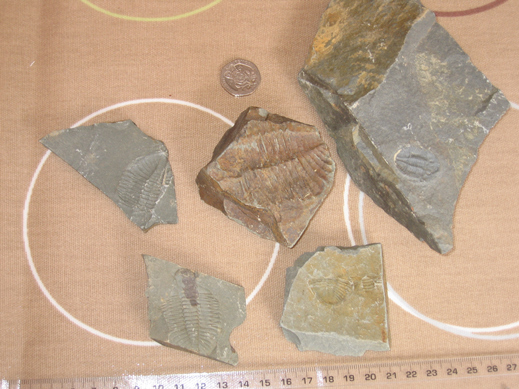
A Selection of our Trilobite Finds

A selection of our trilobite fossils.

Picture credit: Everything Dinosaur

The picture shows some of our finds, the ruler and twenty-pence piece provide scale.

After a bit more searching and one or two rain showers, we decided to call it a day, we had a review of our finds on site took some more photographs and then packed up, making sure that we left no litter.  A most enjoyable day, rounded off by a visit to a superb Thai restaurant and then a bit of bat watching as we wandered back to the bed and breakfast accommodation.

Our thanks to Pete Lawrence for the pointers,  over the next few days we will sort through the fossils that we brought back and put some on display in our warehouse display cases.

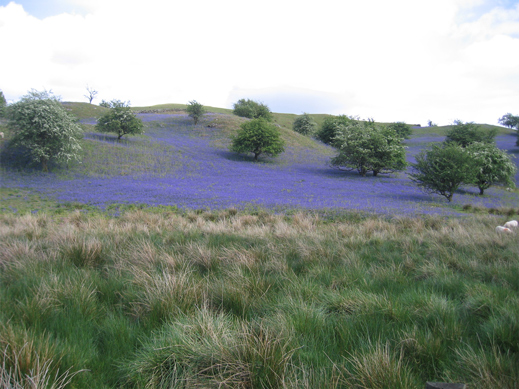
We had been lucky with the weather, although we had dressed as if we were going up the north face of the Eiger (be prepared is our motto, as there is no shelter in the quarry), we only had one or two light showers to contend with.  On the way back we stopped to take a picture of the beautiful bluebells growing in profusion further down the hill.

The Wonderful Welsh Scenery

Picture credit: Everything Dinosaur

The picture shows the very pretty bluebells that were in full flower, lower down the slopes.  This picture enabled us to use some of our newly learnt skills as we experiment with CS5 Photoshop.  There was an ugly telegraph pole in this photograph and we at first struggled to remove it from our picture, however this is how we resolved that particular problem.

1).  Changed status of background layer (layer_1) so that we could manipulate image

2).  Roughly highlighted offending pole using the pen tool (any selection tool would have done).

3).  When selection selected, right click – fill – then in the drop down box click on content aware, press return and hey presto the object disappears and the background is cleverly filled in around the object.

For models and replicas of trilobites and other Palaeozoic creatures: CollectA Prehistoric Life Models and Replicas.

9 05, 2011

What is a Coelacanth? Providing Informative Answers

By |2024-04-21T09:37:43+01:00May 9th, 2011|Categories: Animal News Stories, Educational Activities, Main Page|0 Comments

Ancient Fish Question Swims into View

Whilst on a school visit the other day, one of the Everything Dinosaur team members was explaining how the natural world can surprise us and was illustrating his point by telling the story of the re-discovery of the Coelacanth.  Having explained how this strange fish was re-discovered by science in the last Century, the question was asked what is a Coelacanth?

What is a Coelacanth?

Coelacanths belong to an ancient class of fish the Sarcopterygians (lobe-finned fishes).  These fish have muscles and large bones at the base of their fins and it was once thought that Coelacanths used their fleshy fins to “walk” on the seabed, providing scientists with a link to those vertebrates that were the first back-boned animals to walk on land.

The Coelacanths were thought to have become extinct approximately 66 million years ago, however, in 1938, a trawler fishing off the Chalumna river estuary (South Africa), caught a strange looking fish and once the catch had been returned to port, Marjorie Courtney-Latimer, the curator of the nearby East London museum was notified and it was from her sketches and information that led to this specimen being identified as a Coelacanth.  It was not until 1952 that a second Coelacanth specimen was captured.

The two known species that survive to day belong to the genus Latimeria, named in honour of Marjorie Courtney-Latimer.

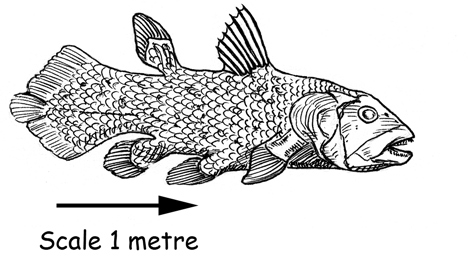
An Illustration of the Coelacanth

Scale drawing of a Coelacanth. What is a Coelacanth?

What is a Coelacanth?

Picture credit: Everything Dinosaur

Safari Ltd have produced an excellent model of a Coelacanth as part of their “Wild Safari Dinos” series, to view this model (Wild Safari Dinos Coelacanth)  and the other creatures in this range and dinosaur models: Wild Safari Prehistoric World Models and Figures.

5 05, 2011

Giant Ants Provide Clue to Ancient Global Warming According to New Research

By |2024-04-21T09:33:20+01:00May 5th, 2011|Categories: Dinosaur and Prehistoric Animal News Stories, Educational Activities, Geology, Main Page|0 Comments

Queen Ant Fossil the Size of a Humming Bird Sheds Light on Eocene Climate Change

The fossilised remains of a giant ant which grew to over 5 centimetres long is helping researchers to understand how the climate changed in northern latitudes during the Eocene Epoch.  The fossil suggests that giant ants were able to cross continents via the Arctic and this was probably only possible due to global warming.

Giant Ant

A North American team of palaeontologists have discovered the fossil of a huge ant, whose presence sheds light on the spread of such insects after the demise of the dinosaurs.  The distribution of fossils of these large members of the Hymenoptera and providing scientists with valuable data on times of global warming over the last fifty million years or so.

Fossils of gigantic ants have been found elsewhere in the world, perhaps most notably in the Messel shales and Eckfeld Maar Eocene aged strata of Germany (Formicium giganteum).  However, writing in the British based, Proceedings of the Royal Society B (Biology) the four scientists have linked these fossil finds to a climate change study deducing that since large extant species of ants are only found in the tropics today, then the fossil species must also have lived in tropical environments.

Charting the spread and distribution of these fossils with a cross reference to their geological age would provide scientists with a better understanding of periods of global warming during the Palaeogene Period.

Scientific Paper

In a paper entitled “Intercontinental dispersal of giant thermophilic ants across the Arctic during early Eocene hyperthermals“, the authors Bruce Archibald and Rolf Mathewes from the Simon Fraser University (British Columbia, Canada), David Greenwood from Brandon University (Manitoba, Canada) and Kirk Johnson from the Denver Museum of Nature & Science in Colorado (USA) describe a new species of giant ant.

The species has been formally described and named Titanomyrma lubei. This winged queen ant lived in the Eocene Epoch about 50 million years old.  It had a body just over five centimetres long — comparable to a hummingbird — a size only rivalled today by the enormously large queens of an ant species found in tropical Africa.

Found at Denver Museum

Dr Archibald found the ant fossil in a drawer when visiting Johnson at the Denver Museum.

He commented:

“What is surprising is that this ant scurried about an ancient forest in what is now Wyoming when the climate there was hot like the modern tropics. In fact, all of the closely related fossil giant ants have been found in Europe and North America at sites that had hot climates.”

The North American research team looked at the habitats of the largest modern ants, and found that almost all live in the tropics, indicating that there might be something about being big that requires ants to live in hot climates.

During the Eocene Epoch, many plants and animal species migrated between Europe and North America via continuous land across the Arctic, bridging the two continents.  Scientists have puzzled over the mystery of how did these ancient members of the Hymenoptera cross through a temperate Arctic climate which is believed would have been simply to cold for them.

The researchers suspect that the key is in the brief, but intense episodes of global warming that happened around this time.  These events appear to have created periodic opportunities for life forms more suited to a warmer climate to pass between continents through the Arctic.  Dr Archibald calls them brief openings of a physiological gate to cross the physical land bridge.

Global Warming

After the mass extinction of the Dinosauria, the Earth experienced a prolonged period of global warming with global temperatures steadily rising and this led to extensive tropical rain-forest forming in latitudes as high as Canada and northern Europe.  For much of this period, even the Poles were free from ice, instead they were covered by dense conifer forests.

Dr Archibald added that these findings will help scientists gain a better grasp of the impacts of global warming on life. He concluded:

“As the Earth’s climate changes, we are seeing tropical pest species extend their ranges into mid-latitudes and dragonflies appear in the Arctic.  Understanding the details of how life forms adapted to global warming in the past will be of increasing importance in the future.”

Reproduced from Simon Fraser University source.

Visit Everything Dinosaur’s award-winning website: Everything Dinosaur.

2 05, 2011

A Trip Back to the Carboniferous – Great Day’s Fossil Hunting

By |2023-03-07T10:33:43+00:00May 2nd, 2011|Categories: Educational Activities, Everything Dinosaur News and Updates, Geology, Main Page|0 Comments

Exploring a 330-million-year-old Carboniferous Coral Reef

Every once in a while team members at Everything Dinosaur, get the chance to visit some very special fossil sites, around the world and closer to home.  With the day off afforded by the Royal Wedding (congratulations to Kate and William), we took the opportunity to visit an area of the Welsh coast and go fossil hunting in a part of the world which promised the chance to find some Carboniferous aged corals, brachiopods and gastropods.

Fossil Hunting

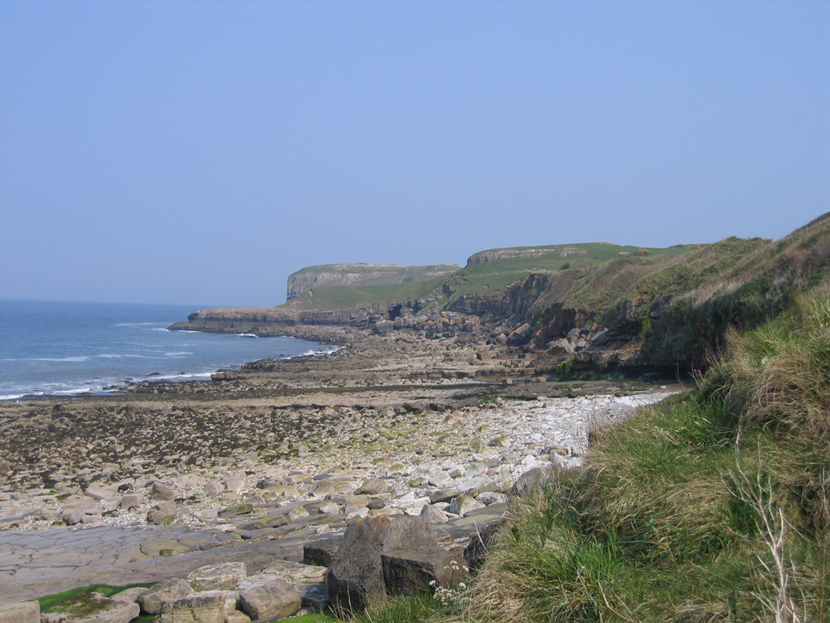
The geological period known as the Carboniferous lasted from approximately 360 million years ago to around 299 million years ago.  It is sub-divided into two main epochs, the earlier Mississippian and the Pennsylvanian.  The strata laid down during these epochs are further divided into Lower, Middle and Upper.  The Carboniferous is split into seven faunal zones and we were interested in visiting an exposed area of limestone that formed part of a headland.  The limestone contained the remains of an ancient coral reef, an environment that would have resembled the coral reefs seen off the coast of Australia, such as the Great Barrier Reef that stretches for more than one thousand miles along the coast of Queensland.

The weather was gorgeous and armed with a few provisions, stout walking boots and a digital camera to record our discoveries; off we set.  It took a few hours to locate the fossil bearing rocks, but we were in no hurry, having our picnic lunch staring out to sea whilst perched on the shoreline was a wonderful way to spend part of the afternoon – we could not have wished for a better day.

The Beautiful Welsh Scenery
Picture credit: Everything Dinosaur

There was not a cloud in the sky, but it was not too hot, perfect walking, hiking and fossil collecting weather, although we were all sensible and made sure that we were protected from the sun with hats and kept applying the sun tan lotion.

Carboniferous Fossils

The fossil bearing rock that we were looking for was laid down in the Visean faunal stage in what is termed the Mississippian epoch.  The Carboniferous was a time of great change.  Global cooling resulted in a series of major glacial events across much of the landmass that covered the southern part of the planet.  In most people’s minds the Carboniferous is associated with the great forests and swamps, these habitats went onto form the immense coal fields that are found all over the world (the geological period is named after the Greek word for coal-bearing).

However, in marine environments, invertebrates and vertebrates diversified immensely, exploiting the opportunities afforded by the changes of climate.

As for Wales, it was part of the southern coastline of a landmass known as Avalonia and it sat almost on the equator.  The warm shallow seas teemed with life and the strata we were looking for preserved the fossilised remains of an ancient coral reef and some of its inhabitants.  Corals are part of the phylum Cnidaria (pronounced nigh-dare-ee-ah).  This group of animals secrete a skeleton of calcium carbonate and it is this skeleton that is readily preserved as a fossil.

There are three main types of coral represented in the fossil record.  The first are Rugose corals, these can be either individual animals or colony forming.  They evolved in the Ordovician but became extinct as a result of the Permian mass extinction. The second type of coral are known as Tabulate corals (always colonial).  These too became extinct at the end of the Permian.  All corals found today, are part of a third group, the Hexacorals (can be solitary or form colonies).  The Hexacorals appeared in the early Mesozoic, replacing the environmental niches held by the more ancient coral forms.

It took most of the day to locate the area we were looking for.  This location is not for the faint hearted and we cannot stress enough that sites such as this should not be visited alone, there are large boulders to clamber over and steep cliffs to negotiate as well as tide times to consider.  However, the trip was worth it, the picture below shows the scale of the fossil bearing strata, a team member from Everything Dinosaur provides the scale.

Visiting a Carboniferous Coral Reef
Fantastic coral fossil.

Picture credit: Everything Dinosaur

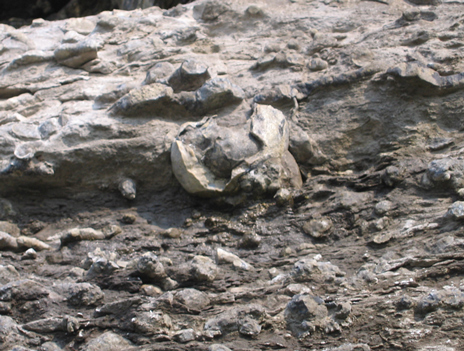
Our colleague, Sue in the picture, is actually sat on the fossil bearing strata.  It really was one of those “Eldorado Moments” as we call them, the moment when you realise that you have discovered a fossil rich site.  Everywhere we looked we could see fossils of Corals, Crinoids (sea-lillies) and Brachiopods it was really exciting to see so many fossils preserved together.  Some of the Brachiopods were very large, we took care not to damage these exposed fossils, removing them was out of the question but we were content to take some pictures.

A Large Fossil Brachiopod
Picture credit: Everything Dinosaur

Surrounded by remains of Coral and Crinoid stems, a large Brachiopod (in-determinant genus) standing proud of the rock.  The diameter of this fossil was approximately 10 centimetres.  This really was a superb site, one that was breathtaking and we could not have wished for a better day for fossil collecting.

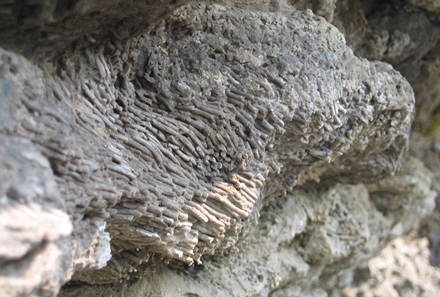
The picture shows the fantastic preservation of the parallel corallites that housed the coral polyps.  Having a decent camera whilst fossil collecting is a great idea.  Often a picture can be taken in replace of trying to remove the fossil from the rock.  Better to leave it in situ so that other people can enjoy it.  The geology hammer carefully laid on the fossil provides scale.

We were really impressed with this photograph, the detail on the coral fossil can be clearly made out,  we will have to post some of these pictures up on the Everything Dinosaur Facebook page.

It is worth noting that this coastal environment is an important ecosystem today.  Granted the sea isn’t quite the warm, tropical paradise of millions of years ago, but it is in itself a thriving habitat for a number of marine animals.  We saw plenty of Blennys (small fish) in the many rock pools, as well as sea snails, crabs, mussels and sea anemones.  We even found limpets, clinging onto the fossil bearing rock.  The last picture we took shows a limpet tucked away in a sheltered crevice right in the middle of the fossil coral formation.  Here was a mollusc quite at home surrounded by the remains of ancient members of the Mollusca phylum as well as Corals and Brachiopods.

A Limpet Hiding in the Fossil Bed
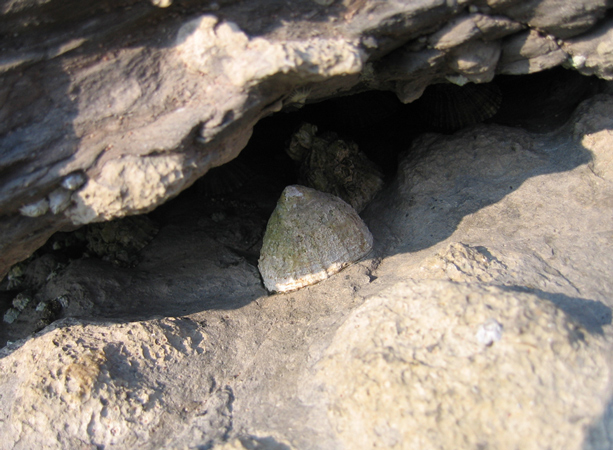
Extant species amongst extinct species.

Picture credit: Everything Dinosaur

The picture shows a limpet keeping out of the sun, waiting for the tide to turn and the sea water to return.  Some barnacles can also be seen in the photograph.

All in all, an enjoyable day out, our visit to the Carboniferous.

To veiw replicas and models of prehistoric animals from the Palaeozoic: CollectA Prehistoric Life Models.

17 04, 2011

Not all Tadpoles are the Same (Observing Tadpoles in our Unique Office Pond)

By |2024-04-21T12:28:35+01:00April 17th, 2011|Categories: Educational Activities, Everything Dinosaur News and Updates, Main Page|0 Comments

Differences in Tadpoles – Trying not to get Caught Out by Anthropomorphism

The weekend has brought a number of staff members into the Everything Dinosaur offices, to do the various chores that we have been assigned.  However, we still get plenty of time to sit outside in the sun during our coffee breaks and to observe the many hundreds of tadpoles in the office pond.    As Sir David Attenborough observed in his latest episode of the excellent Radio 4 series “Life Stories”, some animals are easier to distinguish from others of their species.  Humpback whales for example, when they dive, their large, crescent shaped tail flukes often rise clear of the water.  The undersides of these tails are white with black markings.  Each whale has distinct tail markings and when these are photographed they can be used to help identify that individual whale if it is spotted in the future.  From these simple observations scientists have been able to build up a comprehensive picture of the voyages made by individual whales of different species.

Looking for differences in our tadpole population is somewhat more tricky, but not impossible.  Although the animals were hatched within just a few days of each other their variation is remarkable and in only a few minutes, a number of identifying characteristics can be determined.  For example, at first glance the tadpoles all seem to be the same colour, but this is not so, some are darker than others, some are black, some are more a shade of brown.

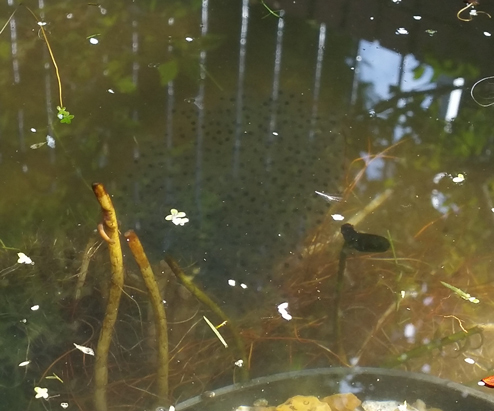
Not All Tadpoles Are The Same

Frog spawn in the office pond (2016)

Frog spawn in the office pond.

Picture credit: Everything Dinosaur

Tadpoles

The tadpoles are all the same species – The Common Frog (Rana temporaria), but even after two weeks differences can be observed in the population.  Identifying individuals without intruding too much (by marking them for example), is complicated by these animal’s rapid growth rate, after all, those that survive will undergo a dramatic metamorphosis in a few weeks.  But certainly, differences between individuals in terms of their size, growth rate, colouration, body length, degree of fluking on the tail can all be made out.

Genetically, all these tadpoles will be slightly different – this is a result of the way in which they were produced – with two parents providing genetic material to the offspring.  Although, we wish to try to avoid being accused of anthropomorphism individuals may have different behaviours.  It might be too much to regard these as different personalities and to label tadpoles as introverts and extroverts as individuals may behave in contrasting ways to others of their kind.  For instance, those tadpoles that are the strongest swimmers have been observed swimming across open stretches of water, perhaps seeking food resources that they can exploit.  Other tadpoles, not as well developed as their siblings remain in the same part of the pond for long periods.  Their growth may be restricted as they are less mobile and therefore less able to find food than some of their counterparts.

Interestingly, mobility in tadpoles residing in our office pond was in previous years we suspect, likely to lead to those tadpoles actively swimming in open water to be predated upon.  There used to be a population of water boatman in the pond.  These aggressive invertebrates would attack and eat any tadpoles that they could catch.  As the water boatman were nektonic (swimming actively in the water column), they were more likely to predate those tadpoles that ventured into open water without cover.  This year, however, we have not observed a single water boatman in the pond.  We suspect that the cold winter killed off our population.  There is now an absence of nektonic predators of tadpoles in the pond. The removal of a predator may enable more tadpoles to metamorphosise and make it to the froglet stage and this environmental change could favour those “bolder” nektonic individuals who venture out into open water.  This subtle change in the predator/prey balance could have an effect on tadpole numbers surviving and influence the type of tadpole “personality” likely to survive into the summer.

We shall continue to observe with fascination.

In the meantime, visit Everything Dinosaur’s website: Everything Dinosaur.

11 04, 2011

Remarkable Dinosaur Balloon Art

By |2024-04-21T10:00:27+01:00April 11th, 2011|Categories: Educational Activities, Everything Dinosaur News and Updates, Main Page|3 Comments

Dinosaur Balloon Art – Not as Easy as it Looks

Weekend took us to my niece’s birthday party (she is four today).  During the fun, festivities and games, the entertainer did some balloon art.  He made swords, teddy bears, giraffes and all sorts of animals for the children.  Not wishing to be left out, one of the Everything Dinosaur team members who attended requested a dinosaur.  Mr Dazzle (the name of the entertainer), explained that he could do dinosaur balloon art, but his repertoire would be slightly limited as he had thirty enthusiastic and very excited four-year olds to manage.

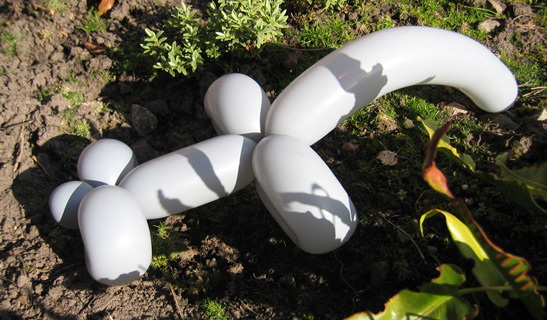
Dinosaur Balloon Art

True to his word, he produced a grey, long-necked dinosaur a few minutes later (see pic).  It certainly had a long neck and legs and it was a very credible effort, not withstanding the fact that it had no tail.

Our Balloon Dinosaur

Picture credit: Everything Dinosaur

Interesting that he choose to depict a sauropod as a grey animal.  As the largest land living animal today (African elephant) is regarded as being grey by many observers, this may have “coloured” our perception as to the colour of the largest type of extinct terrestrial animal – Sauropoda.  The colour of these herbivorous dinosaurs is very much open to speculation, but most illustrators do depict these large animals as coloured grey.  Hatchlings, may have been very differently coloured from adults, perhaps camouflaged to enable them to hide in the undergrowth to avoid predation.  Nice balloon dinosaur though, although a colleague said it reminded them of some of the bizarre Cambrian life forms preserved in the Burgess Shale deposits of British Columbia.

Visit Everything Dinosaur’s award-winning website: Everything Dinosaur.

7 04, 2011

Dinosaur Teaching Topics – How to Name a Dinosaur

By |2023-03-06T16:04:51+00:00April 7th, 2011|Categories: Educational Activities, Everything Dinosaur News and Updates, Main Page|1 Comment

Brontomerus mcintoshi Research Helps School Pupils Get to Grips with Palaeontology

Pupils at Sacred Heart Primary school, Blackburn, have been travelling back in time to visit the age of Dinosaurs in a range of teaching activities. The budding young palaeontologists in Miss De Piano’s Year Three class, were given the chance to name their very own prehistoric animal.

Students had been getting to grips with fearsome creatures such as Tyrannosaurus rex and Velociraptors as well as marvelling at peaceful plant eating giants such as the armoured Stegosaurus and the huge Diplodocus. This was part of the school’s science week events organised, to coincide with National Science and Engineering Week, by one of the school’s teachers – Mrs Smith. They were given the chance to look at some of the research carried out on a new species of long-necked dinosaur – Brontomerus mcintoshi.  This dinosaur, fossils of which have been found in Utah, (United States), has only just been formally named and scientifically described.

In total, fragmentary remains of two dinosaurs were discovered in the same quarry, one adult and a much smaller juvenile.  The name Brontomerus means “thunder thighs”, in recognition of an enlarged anterior portion of hip-bone associated with the remains of the smaller specimen.  Scientists have suggested that the expanded hip bone served as an anchor for large leg muscles, giving this particular dinosaur very strong legs.

The Age of Dinosaurs

For the young scientists in Miss De Piano’s class the challenge set by Everything Dinosaur was to consider how animals change as they get older.  If animals change as they grow, could they come up with an alternative name for Brontomerus once they had reviewed the fossil evidence?

The class was split into two groups for this part of the dinosaur teaching session, each group was given the task of answering questions on chickens, however, one group was asked to describe a chick, whilst the other portion of the class described an adult bird.  Although each group was asked the same questions, it soon became clear to the pupils that a chick looks very different when compared to an older bird.

Based on this, and with an overview of the fossil evidence of Brontomerus provided by Everything Dinosaur, the class set about creating their own names for this type of dinosaur.  All part of the fun when it comes to teaching about dinosaurs in school.

Organisms Change as they Grow

PNSO Aubrey and Dabei (Torosaurus dinosaur models)

The 1:35 scale PNSO Torosaurus models (Aubrey and Dabei). The adult Torosaurus figure has an articulated lower jaw. the adult Torosaurus is very different in appearance than the juvenile. Picture credit: Everything Dinosaur.

Picture Credit: Everything Dinosaur

The Torosaurus in the picture (above) is from the PNSO range of prehistoric animal figures.

To view this range: PNSO Age of Dinosaurs Figures.

The chicken was used in this dinosaur workshop to illustrate issues related to ontogeny (how organisms grow), helpful in explaining to the students differences in the fossil skeleton of the adult compared to the juvenile dinosaur.

The pupils worked on the theory that, if this plant-eating dinosaur really had very strong limbs, perhaps it could rear up onto its hind legs to help it to graze on parts of trees that other dinosaurs could not reach, just like a Gerenuk antelope in Africa does today.

A wide variety of alternative names were thought up, a few examples from the clever pupils were Two-legosaurus, Standuposaurus, Treeasaurus, Anteloposaurus and our personal favourite Vegesaurus.
It was a real pleasure visiting Sacred Heart Primary and helping the children with their dinosaur experiments and showing some of our fossils.  Our thanks to all the students, teaching assistants and teachers who helped make the day so special.

5 04, 2011

Massachusetts “Mayfly” A Remarkable Fossil Discovery

By |2023-03-07T07:49:23+00:00April 5th, 2011|Categories: Dinosaur and Prehistoric Animal News Stories, Educational Activities, Main Page|0 Comments

Fossil Hunter Stumbles Upon Amazing Fossil Behind Shopping Centre

Fossils come in all shapes, forms and sizes.  Palaeontologists group fossils into various categories, for example there are body fossils and trace fossils.  Body fossils preserve something of the bodily remains of organisms, whereas trace fossils preserve evidence of the activity of animals, such as a fleeting impression made in soft mud by a flying insect from over 300 million years ago. Scientists report on a remarkable fossil discovery from the USA.

Remarkable Fossil Discovery

Some 300 million years ago, what was to become the U.S. state of Massachusetts in what is now the eastern United States, lay close to the equator, part of an enormous land mass that consisted of both what was to become Europe and the Americas (except South America).  The land was dominated by dense swamps, roaming these lush environments were amphibians and the first types of reptiles.

The air was dominated by insects, the only creatures that had evolved to exploit an aerial way of life at the time.  One such insect, an ancestor of today’s mayflies landed on the muddy edge of a body of water, probably a puddle or small pool, it then took off again, but it left the delicate impression of its body and marks in the mud where its thin legs stuck into the soft sediment.

Remarkably, this tiny impression was quickly covered in fine sediment, perhaps it rained and the water level rose, sweeping grains of mud into the imprint left by the insect.  This trace of the fleeting resting place of an insect way back in the Carboniferous Period, was preserved as a fossil and stumbled upon by a keen fossil collector, who was looking for fossil bearing strata at the back of a shopping mall.

This primitive, ancestral mayfly fossil has become the oldest known full body impression of a flying insect, displacing the previous earliest discovered so far by some 30 million years or so.

Fossil Site Behind Shopping Mall

University undergraduate, Richard Knecht was looking for a fossil site, in a swampy area behind a shopping mall three years ago when he literally stumbled upon this amazing trace fossil.  As he emerged from the swamp he came to a rock outcrop of the type he was looking for, and the Harvard University Museum worker states

“I grabbed a loose piece of rock on the outer edge of the outcrop and it was already naturally split as rocks tend to do as they weather.  I opened it like a book and there were both halves [cast and mould] of the specimen.”

A spokesperson for Everything Dinosaur in the UK stated that this was like finding the slab and counter slab of a fossil, but to discovery such a perfectly preserved trace fossil of a flying insect is truly astonishing.  As insects are soft bodied and very light they rarely fossilise.  Trace fossils of these arthropods are extremely rare, especially anything dating as far back as the Carboniferous.

Ancient Fossil Insect

Commenting on the discovery, Conrad Labandeira, curator of palaeoentomology at the Smithsonian Institute in Washington said:

“Most fossil insects, when you look at them, you don’t really have a lot of surface detail.  This is a very valuable type of preservation.  You can actually view some of the movements of the appendages.  This gives you some idea of the scope of movement of the legs… information that we don’t normally get from body fossils.”

The research team have been studying the fossil bearing site have had their findings to date published in the scientific journal “The Proceedings of the National Academy of Sciences”.  Insects preserved in amber is one thing, but to have such a superb trace fossil of a primitive mayfly is very exciting.

The oldest evidence of any kind of insects comes from a body fossil dating to the Devonian Period (approximately 418 million years old).  The only other older insect specimen is one of a flightless insect, found by the same research team at the very same location as the mayfly trace fossil.  A number of fascinating fossils have been found so far, including the tracks of a primitive reptile as well as numerous insect and plant fossils.

Richard Knecht, commenting on the fossil discoveries made so far stated:

“We have found a lot of interesting stuff, this [mayfly fossil] is just one of the characters coming out.”

For models and replicas of Palaeozoic creatures: Prehistoric Animal Models and Figures.

Go to Top