All about dinosaurs, fossils and prehistoric animals by Everything Dinosaur team members.

Everything Dinosaur’s work with schools and other educational bodies. Articles, features and stories about dinosaurs and their role in education and educating young people.

2 01, 2016

In Praise of Britain’s Regional Museums

By |2023-04-10T07:29:32+01:00January 2nd, 2016|Categories: Dinosaur Fans, Educational Activities, Main Page, Press Releases|0 Comments

Seek Out These Hidden Gems

According to VisitBritain, tourism to the UK swells our nation’s coffers by some £26.2 billion annually.  In 2014, there were 34.38 tourist visits to Britain, feedback from tourists be they Americans, Australians, visitors from France, Germany or ever increasingly from China, cite our country’s wonderful history and heritage as one of the key reasons for their visit.  However, for us Brits the fact that we have such a rich, varied and fantastic heritage sometimes gets overlooked.

We are very fortunate in this country to have some amazing regional museums, each telling the story of a small part of the British Isles, providing insight and access to some remarkable historical objects and artefacts.  Take as an example, Dorking Museum and Heritage Centre, based as you might guess, close to the busy centre of the Surrey town of Dorking.  For anyone with an interest in palaeontology, geology, or indeed for anyone eager to learn how these two sciences came into being, such places can provide a wonderful opportunity to indulge an inquiring mind.

Dorking 130 Million Years Ago

Dinosaurs once roamed this part of the world, in fact it is thanks to the fossil discoveries from such famous geological deposits that form the Wealden Group, that scientists in Georgian Times first had the opportunity to study the fossilised bones of the prehistoric reptiles that were to become known as the dinosaurs.  The county of Surrey played an important role in the early days of palaeontology.

Add the fact that overlying these continental deposits of clays and sandstones is the equally important Lower Greensand Formation, a later sequence of deposits formed as sea levels rose, permitting this part of England (including Dorking) to became home to a vast array of exotic and for the most part, now extinct creatures.

Dorking in the Early Cretaceous
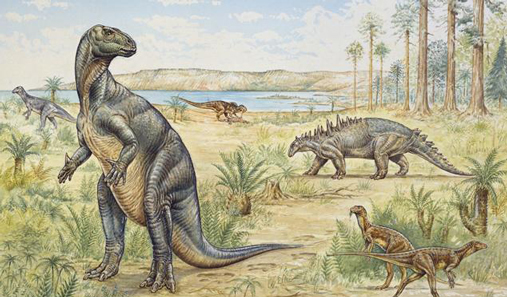
Dinosaurs once roamed Surrey (England).

Dinosaurs once roamed Surrey (England).

Picture credit: Natural History Museum (London)

The picture above shows a large ornithopod (Iguanodon) in the foreground, with two hypsilophodont dinosaurs close by.  An armoured Polacanthus slowly makes its way across the fern rich lowlands, whilst close to the shoreline a theropod dinosaur can be seen consuming its latest kill.  The posture of the dinosaurs shown in this illustration is now a little outdated, but fossils collected from the various quarries that surround Dorking provide ample evidence that such creatures did indeed roam this part of the world some 130 million years ago.

On Display at Dorking Museum and Heritage Centre – Tail Bones from an Iguanodontid
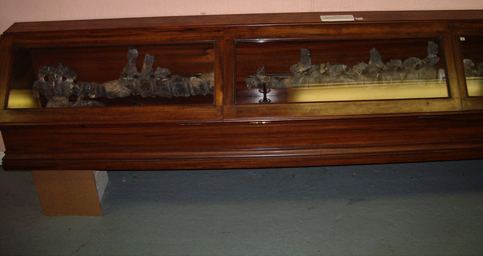
On display at the museum.

On display at the museum.  Tail bones recently re-labelled as Mantellisaurus.

Picture credit: Dorking Museum and Heritage Centre

Everything Dinosaur stocks a range of ornithopod models and figures: Ornithopod models and figures (Dinosaur Models).

A Wealden Dinosaur

One of the local fossil finds is the tail of an Iguanodon, a Wealden dinosaur, found during the excavation of a well at Capel in 1891.  It is on show at the Museum in the original case built for its display.  This exhibit has recently been reclassified as the caudal vertebrae from Mantellisaurus (M. atherfieldensis), a dinosaur related to Iguanodon but regarded as s separate genus.  Many of the fossils within the Museum’s collection were donated to the founding committee of the Dorking Museum back in 1948 by Roland Cubitt, the 3rd Baron Ashcombe.

The “Ashcombe Collection” consists of an eclectic range of minerals and fossils assembled by George Cubitt, the 1st Baron Ashcombe, in the 19th century.  A large part of this important geological collection is made up of local chalk fossils, many of them unearthed during chalk quarrying at nearby Ranmore.  The 1st Baron Ashcombe rewarded employees for delivering fossils to him and shared his discoveries with early experts, including the anatomist Richard Owen, who was influential in the foundation of the London Natural History Museum.

The fossil collection on show at the Dorking Museum and Heritage Centre is fondly known as ‘Lord Ashcombe’s teeth’.  There are particular strengths in crustaceans and fish, but the collection also includes teeth and bones of mammoths, woolly rhinoceri and the like from the Ice Age gravels of the River Mole.

The Fossilised Teeth of a Woolly Rhino
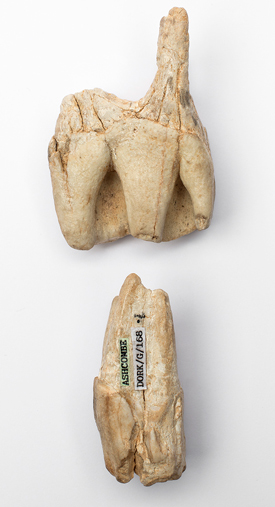
The molars of an ancient Woolly Rhino.

The molars of an ancient Woolly Rhino.

Picture credit: Dorking Museum and Heritage Centre

Ice Age Dorking

The well defined roots of the molars can be easily seen in the photograph, particularly in the tooth at the top of the picture.  The gravels of the River Mole still occasionally yield Pleistocene fossils as the river winds its way through the valley before it links up with the River Thames at Hampton Court.  The valley and its surrounding geology, including that all important Cretaceous Wealden Group, are the focus of attention of the Mole Valley Geological Society, but the Dorking Museum gives visitors the chance to explore the geology of the town itself as regular tours are conducted through the impressive South Street Caves.

An opportunity to view the chalk formations of southern England from a very different perspective and to indulge in a little bit of local history as well.

To visit the website of the Mole Valley Geological Society: Mole Valley Geological Society.

An Outstanding Archive

Around the main museum, themed panels explore periods, events, themes and individuals that have played a part in the history of the town and its surrounding villages.  These are supported by paintings, posters, photographs and artefacts that bring the stories to life.  Digital frames inset into the panels, and things to touch and smell, puzzle and try on all enhance the visitor experience.

The Museum houses an outstanding archive including books, maps, photographs and documents that tells the story of Dorking and the surrounding area.  From important dinosaur discoveries and fossil fish through to historical characters such as William Mullins one of the Pilgrim Fathers that set sail for America, to more recent luminaries such as the composer Ralph Vaughan Williams and the celebrated actor Lord Laurence Olivier.

The Museum is more than just a building, however, it forms a vibrant community resource.  The volunteer team works with local schools, care homes, clubs and youth groups to enhance understanding of the history of the area.  There are talks, walks, activities and visits, as well as resources for reminiscence activities and loan boxes for schools.

Dorking Museum opening times: Thursday, Friday and Saturday, 10am – 4pm.
Admission: Adults £2, Concessions £1, Under-5s free, Family ticket £4.50 (prices correct at time of publication)

For more information on this fascinating regional museum visit: Dorking Museum and Heritage Centre.

Emphasising the Importance of Regional Museums

Regional museums are not just the sole preserve of tourists and the curious members of the public keen to learn about local history.  Sometimes, such institutions can play a significant role in research.  For instance, the Ashcombe collection includes a fossilised pliosaur skull found in the Dorking chalk pits during the 1850s.

Richard Owen, no less, identified it as a pliosaur called Polyptychodon interruptus, but vertebrate palaeontologist Dr Roger Benson (Oxford University) cast doubt on Owen’s conclusion.  Dr Benson states that this specimen has close affinities to a pliosaur genus known from North America and as such, the Dorking specimen might represent the fossilised remains of one of the last of these great marine reptiles to have lived.

To read more about the Dorking specimen research: Pliosaur Skull Links Dorking to Kansas.

Regional Museums

Funded entirely by public donation and staffed by a dedicated team of enthusiastic volunteers, the Dorking Museum and Heritage Centre is just one of those hidden gems to be found in Britain’s towns and cities.  We at Everything Dinosaur, take time out today to pay tribute to the work of such institutions and to acknowledge their contribution to the preservation of our country’s heritage and for their assistance in the advancement of the science of palaeontology.

To contact the Museum via email: [email protected]
24 12, 2015

Everything Dinosaur and the Festive Period

By |2023-04-09T21:55:22+01:00December 24th, 2015|Categories: Dinosaur Fans, Educational Activities, Main Page, Press Releases, Teaching|0 Comments

Christmas Time and Dinosaurs

Team members at Everything Dinosaur are working up to the late afternoon of Christmas Eve.  We have blog posts to finish for museums, a teaching resources article to complete and the warehouse needs a quick tidy up before Santa drops in.

We will also be monitoring the emails to deal with any customer queries should any arise.  In addition, we shall be keeping a listen out just in case we get any last minute phone calls.  As for the office and our working arrangements over the Christmas period, we shall of course, be taking a well earned break.  However, team members will be on hand throughout the majority of the holiday season to make sure that emails and other correspondence are answered promptly.

Nearly All Prepared for Christmas at Everything Dinosaur

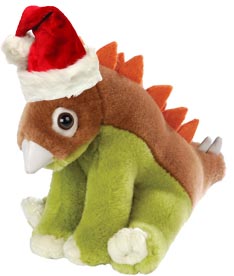
Even members of the Thyreophora celebrate Christmas it seems.

Even members of the Thyreophora celebrate Christmas it seems.

Picture credit: Everything Dinosaur

The Joys of the Annual Stock Take for Everything Dinosaur

Once the festivities are over, we shall be commencing our annual stock take.  This is a bit of a tradition and the task is made bearable thanks to lots of hot coffee, mince pies and a few savoury morsels to keep us all going.  Undertaking an inventory of our product range and fossil collection is quite an onerous task, we have thousands of products and lots and lots of fossils, even though this year we have given away a great many of our smaller specimens to schools and other institutions as part of our work in schools.  Speaking of which, January is going to be yet another record breaking month for our dinosaur workshops in schools.

We are going to have so much fun working with all the school children.

To learn about Everything Dinosaur’s outreach programmes: Email Everything Dinosaur.

Back to School with Dinosaurs, Rocks and Fossils

Everything Dinosaur and teaching work in schools.

Everything Dinosaur and teaching work in schools.

Picture credit: Everything Dinosaur

New Models from CollectA, Schleich, Papo and Safari Ltd

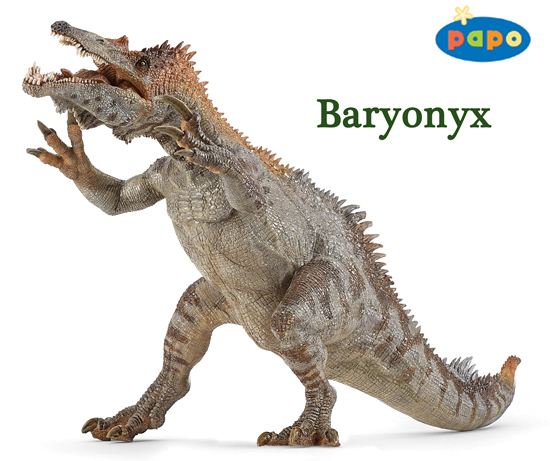
2016 will see us once again expanding our product range with lots of new dinosaur models and replicas.  Only this morning we were telephoned by one of the senior managers at Papo, he wanted to tell us how excited he was after having seen the new Papo prehistoric animal models that are due out next  year.  In particular, he was “bowled over” by the new Papo Baryonyx replica that is going to be in stock at Everything Dinosaur sometime in quarter 1.

The New for 2016 Papo Baryonyx Dinosaur Replica

Papo Baryonyx dinosaur model - available early 2016 from Everything Dinosaur.

Papo Baryonyx dinosaur model – available early 2016 from Everything Dinosaur.

Picture credit: Papo with additional annotation by Everything Dinosaur

To read our exclusive article on the new Papo prehistoric animal model range: New from Papo for 2016.

To view the range of Papo models in stock: Papo Prehistoric Animal Models.

We have some interesting new additions to our portfolio so check out our Facebook page, social media and this blog for exciting announcements in the next few weeks.

Predictions and Favourite Prehistoric Animals

Over the next few days we shall also be finalising our palaeontology predictions for the year ahead.  We shall also be looking back on the predictions we made this year.  In addition, we have our annual list of the most popular prehistoric animals of 2015 to compile.  Given all the dinosaur sales, letters, pictures and fossil photographs we receive this will take some calculating.

Everything Dinosaur

Everything Dinosaur’s palaeontology predictions for 2015: Palaeontology and Fossil Predictions for 2015.

That’s enough about the future, just time to return to the present and to wish all our customers, supporters, followers and fans a Merry Christmas.

24 11, 2015

Rocks, Fossils and Remarkable Dinosaurs

By |2024-05-05T14:51:57+01:00November 24th, 2015|Categories: Educational Activities, Main Page, Teaching|0 Comments

Rocks, Fossils and Dinosaurs with Year 3 (Broadway Primary School)

A busy morning spent working with the enthusiastic pupils in Year 3 at Broadway Primary as the children have been learning about rocks, fossils and dinosaurs.   The children were studying life in the past and exploring dinosaurs as their topic for the second part of the autumn term.  This subject area links nicely into the national curriculum science element for England at Lower Key Stage 2 (Rocks, Animals and Working Scientifically).

Aims of the Curriculum

One of the aims of that part of the curriculum related to learning about different types of rocks involves explaining how fossils form and what fossils can tell us about extinct animals.  The girls and boys got the chance to cast their own fossils from Everything Dinosaur’s collection and thanks to the classroom wall they learnt all about how sedimentary rocks get laid down.

Can you See the Fossils in the Layers of Sedimentary Rocks?

Rocks, fossils and dinosaurs

Pause for a pic next to a digs station.  Can you see the fossils in the layers of rock?

Picture credit: Everything Dinosaur

Everything Dinosaur

The picture above shows a view of the amazing Dinosaur Provincial Park Formation which can be found in Alberta (southern Canada).  These rocks were laid down in layers towards the end of “Age of Dinosaurs”, near to the end of the Cretaceous Period.  The dinosaur fossils we find in these rocks are approximately 75 million years old.  Duck-billed dinosaurs and horned dinosaur fossils can be found (herbivores).  There are also fossils of the meat-eating dinosaurs (carnivores) but these are much less common then the plant-eaters.  Can Year 3 work out why?

Visit Everything Dinosaur’s award-winning website: Everything Dinosaur.

We can also find fossils of salamanders, bony fish, lizards and several types of crocodiles, although none of these crocodiles are closely related to the crocodiles alive today.

Dinosaurs and Maths

As part of our workshop and in order to support a number of mathematical themed extension exercises, we looked at how big the teeth of Tyrannosaurus rex really are.  One of the “pinkie palaeontologist” challenges we set the class was whether or not the children could use the special “greater than” and “less than” symbols we sent over to make a table listing items in the classroom that were bigger or small than the T. rex tooth they saw.  Could the children think of a way to present their data?

Benjamin’s favourite dinosaur was Velociraptor, he and some of his chums were shown an unusual way to measure a dinosaur.  Once this relatively small dinosaur had been measured we set the class another challenge that involved them trying to measure a much larger, carnivorous dinosaur.  Let’s hope they can master their eight times table, as this would certainly help!

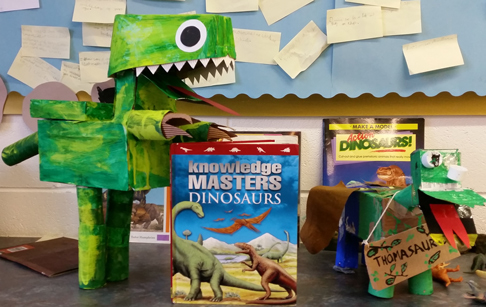
Dinosaur Models Made by the Children

Model dinosaurs on display at Broadoak Primary School.

Model dinosaurs on display at Broadoak Primary School.

Picture credit: Broadway Primary School

On the classroom walls there was lots of excellent evidence of independent learning, the books at the back of the classroom had inspired the young researchers.  There were also a number of wonderful dinosaur models on display.   The Year 3 class had produced some excellent dinosaur replicas and we loved the “Thomasaurus”.

Dinosaurs and Literacy

In collaboration with Miss Heaton (class teacher), we were able to advise on further extension resources, focusing on literacy.  Different types of writing activities were proposed (non-fiction and fiction) and we challenged the children to use some of the resources that we had provided to write statements about prehistoric animals and also to think up some questions to pose for us.  We know Ethan and Emma have questions, we suggested that they save them in their heads and then include them in a thank you letter that they could compose and send to the Everything Dinosaur offices.

Rocks, Fossils and Dinosaurs

We look forward to seeing some of the results of the children’s research as they study rocks, fossils and dinosaurs.

Everything Dinosaur stocks a wide range of dinosaur and prehistoric animal themed toys, crafts and games that have all been approved by our teaching team.  The company even stocks replicas of iconic animals from the fossil record such as ammonites, belemnites and trilobites.

Visit Everything Dinosaur’s award-winning website: Dinosaur Toys, Games and Crafts.

14 11, 2015

Celebrating South African Dinosaurs with an Exclusive Poster

By |2024-05-05T14:59:43+01:00November 14th, 2015|Categories: Dinosaur and Prehistoric Animal News Stories, Dinosaur Fans, Educational Activities, Main Page|0 Comments

Poster Celebrates South African Dinosaurs

Earlier this week, scientists from the Evolutionary Studies Institute of Witwatersrand University (Johannesburg) put on display the fragmentary fossils of a huge dinosaur which roamed South Africa.  The fossils date from the Early Jurassic and represent an plant-eating dinosaur, a sauropod that measured perhaps in excess of sixteen metres.

Celebrating South African Prehistoric Animals

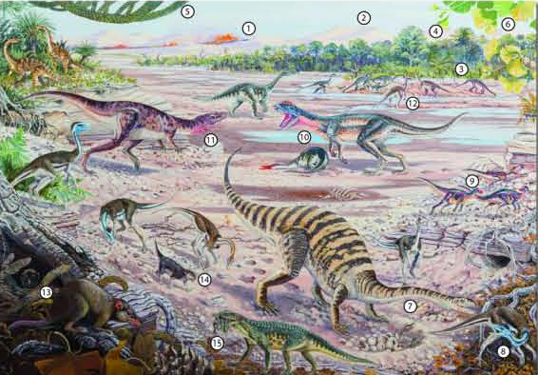
There have been a number of remarkable fossil finds over the last two years or so in South Africa.  These discoveries have helped to shed new light onto the fauna and flora of the Late Triassic and the Early Jurassic geological periods.  The announcement of the latest dinosaur discovery the “Highland Giant” coincided with the celebration of UNESCO’s World Science Day for Peace and Development.  A special poster has been commissioned to celebrate South African dinosaurs and other prehistoric life.  This poster was designed by artist and poet Maggie Newman.

Celebrating the  Prehistoric Life of South Africa

The prehistoric life of South Africa.

The prehistoric life of South Africa.

Picture credit: The Evolutionary Studies Institute (Witwatersrand University)

South African Dinosaurs

The beautiful and very detailed poster depicts South Africa some 200 million years ago (Hettangian faunal stage of the Early Jurassic), a time when the continents were formed into a super-sized landmass that was beginning to split apart.  Dinosaurs were becoming the dominant terrestrial fauna but they shared the land with a wide range of other bizarre reptiles as well as some synapsids that were from the branch of the Tetrapoda that would lead to modern mammals.

Poster Key

This poster shows a scene in South Africa between 200 and 183 million years ago.  At the time the continents were splitting apart and there were many volcanic eruptions (1).  The climate was drying and there were sand dunes (2), tree ferns (3), yellowood (4), monkey puzzle (5) and ginkgo trees (6) formed patches of forest.  Early dinosaurs like this egg-laying Massospondylus (7) are shown fending off a hungry Coelophysis (8).  Heterodontosaurus (9) was different from other dinosaurs because it had incisor, canine and molar type teeth for cutting, biting and grinding up their plant food.

“Different Types of Teeth”

The name Heterodontosaurus means “different types of teeth” and this interesting small animal may have had quills like a porcupine.  In the scene, three Heterodontosaurus are fleeing a kill made by a crested dinosaur called Dracovenator (10), a relative of Dilophosaurus.

The Dracovenator is being threatened by a Ceratosaur (11).  The herbivorous Aardonyx dinosaurs (12) in the background are foraging peacefully.  Dinosaurs were not the only animals alive at this time.  Megazostrodon (13) was a small insect eating animal closely related to the earliest mammals.  Tritylodon (14) was a mammal ancestor with teeth like a dassie (Rock Hyrax – Procavia capensis).  The animal that looks like a lizard (15) is a small armoured land-dwelling crocodile called Protosuchus.

The original fossils of the dinosaurs and other prehistoric animals depicted in the poster are on display at institutions and museums around South Africa.

Dr Choiniere Comments

Dr Jonah Choiniere (senior researcher at the Evolutionary Studies Institute at Witwatersrand University) stated:

“We think that this poster will show young learners…. ‘yes, South Africa does have dinosaurs’.  We hope that it will get them excited about studying the science behind South Africa’s incredible palaeosciences heritage.”

The poster is available for free and upon request to all visitors to the Origins Centre while stocks last and it will also be distributed to science centres, museums and visiting schools in the country.

To read an article all about the latest addition to the dinosaur dominated fauna of South Africa: South Africa’s “Highland Giant”.

Everything Dinosaur would like to take this opportunity to thank those institutions involved with the commissioning of the poster, helping to inform and to educate people about life in the past.

For additional information about prehistoric animals contact Everything Dinosaur: Email Everything Dinosaur.

12 11, 2015

“The Expeditioner’s Discovery Guild” A Unique Blog

By |2024-05-05T15:00:48+01:00November 12th, 2015|Categories: Dinosaur Fans, Educational Activities, Main Page|0 Comments

New Blog Covering Science Topics

A new open encyclopaedia project has started that covers the sciences.  This new web blog that everyone can contribute to, covers subjects as diverse as biology, botany, geology, mineralogy palaeontology, cryptozoology and speculative evolution.  There is even room for xenobiology (the manipulation of biological processes) and astrobiology (naturally evolved life in the universe) on this new site run by enthusiast Destin Bogart and his colleagues.

Providing a Platform for Informed Discussion

Main logo of The Expeditioner’s Discovery Guild

Main logo of The Expeditioner’s Discovery Guild

Picture credit: Destin Bogart

The Expeditioner’s Discovery Guild looks at the living world (real and imagined) and aims to provide a forum for like-minded individuals to express their views, publish articles and add to the discussion.  Findings and hypotheses most welcome!

A Wide Range of Topics Covered

For the uninitiated, Destin provides a handy, brief explanation of the topic areas the blog intends to cover.  Biology is the study of living things, botany is the study of plant life, whereas zoologists study animals.  Geology covers the Earth and its processes, mineralogy is the study of crystals and minerals and readers of the Everything Dinosaur blog should need no introduction to palaeontology.  At the Guild, the administrator wishes to encourage discussion on cryptids (unknown organisms), so cryptozoologists would concern themselves with beasts of myth or legend, the Yeti, or Scotland’s Loch Ness monster for example.

In Search of the Loch Ness Monster et al

Elasmosaurus scale drawing

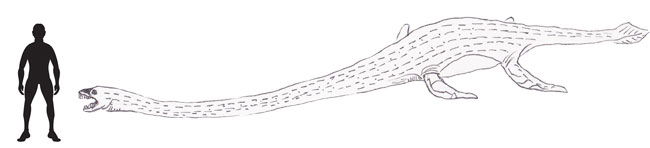
The Elasmosaurus scale drawing commissioned by Everything Dinosaur as the company’s fact sheet is updated.  In search of a plesiosaur like an Elasmosaurus in Loch Ness.

Picture credit: Everything Dinosaur

Astrobiology, xenobiology, and speculative evolution allow enthusiasts to gain a better understanding the mechanisms of natural selection and evolution as well as providing an entertaining look into what could share this universe with the 8.2 million species or so to be found on our own planet.

Commenting on the inclusion of some of the more “obscure” disciplines within this blogsphere, one of the administrators stated:

“Astrobiology is the search for extraterrestrial life, xenobiology is the study of extraterrestrial organisms, and speculative evolution basically takes an event, or situation in which evolution could take a different path.  This blog will focus mainly on the solid sciences and will occasionally delve into these fictitious sciences to prove, disprove, and approve.”

“The Expeditioner’s Discovery Guild”

The team at the Expeditioner’s Discovery Guild will strive to publish only the most accurate and scientifically acceptable information and speculations. Over the time span of this project, readers will learn through videos, presentations, talk-seminars, and info-videos about the Earth, its composition, the life that lived and still lives on it and speculate on the future of our planet and other life carrying bodies in the universe.

The Expeditioner’s Discovery Guild line up includes Brandon Ahrens, Sergio Treviso, Molly Essenburg, Destin Bogart and David Lichliter and this experienced team aims to bring to its readership the very latest developments in scientific literature, providing informed comment but retaining a light touch with a focus on entertaining as well as enlightening.

Publishing Plans

Plans include publishing new articles every week (Mondays, Wednesdays and Fridays), authors, academics and science writers are invited to contribute to what is described as an “experience-heavy project”.

Discussing the need to attract more high calibre writers, Destin Bogart explained:

“We are a small group and we need more members!  Scientists and scientifically minded people are invited to submit their contributions and we are also looking for candidates with a gift for narration, to provide the voice overs for our planned video series.”

To contact Everything Dinosaur with questions about prehistoric animals and fossils: Email Everything Dinosaur.

The team intend to base each article on a specific organism, examining how it lives, its biology and so forth.  Looking into the future (something we at Everything Dinosaur would expect astrobiologists to be very accomplished at), the Expeditioner’s Discovery Guild intend to create a series of encyclopaedias that contain all the articles published.  These encyclopaedias will, at first, probably be made available via a digital download and they will include a directory of the contributors (profiles, avatars and a short biography).

The Expeditioner’s Discovery Guild welcomes new scribes and anyone wishing to participate in this exciting project that has all ready established a Tumblr account as well as a blog and web platform.  Soon a dedicated YouTube channel will be added.

Explore Everything Dinosaur’s award-winning website: Everything Dinosaur website.

A spokesperson from Everything Dinosaur wished the team every success with their new project.

5 11, 2015

Warrington’s Wonderful Dinosaurs

By |2023-04-08T08:11:50+01:00November 5th, 2015|Categories: Educational Activities, Main Page, Teaching|0 Comments

A Morning with Year 1 and Reception (Winwick CE Primary)

October was a very busy month for the dinosaur experts at Everything Dinosaur with lots of school visits to squeeze in amongst all the other prehistoric animal projects that we were involved with.  On a Wednesday, towards the end of the month we delivered a dinosaur workshop to Reception and Year 1 pupils at Winwick CE Primary School (Warrington, Cheshire) and what a fun and fact filled morning it was.  The emphasis was on exploring dinosaurs and fossils so that the term topic could link into key areas of the national curriculum related to numeracy and literacy.

Lots of extension ideas and activities followed on from our visit, for example, we set the Year 1 children one of our special “pinkie palaeontologist challenges” – could they compose a thank you letter to Everything Dinosaur?

A Set of Wonderful Dinosaur Thank You Letters from Year 1

Dinosaurs Inspire Handwriting

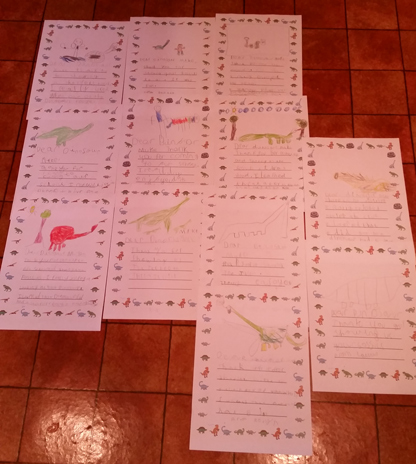
Year 1 write thank you letters.

Picture credit: Everything Dinosaur

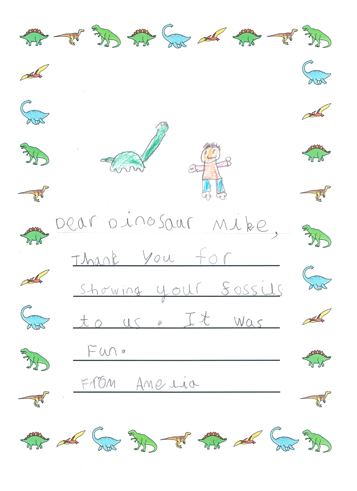
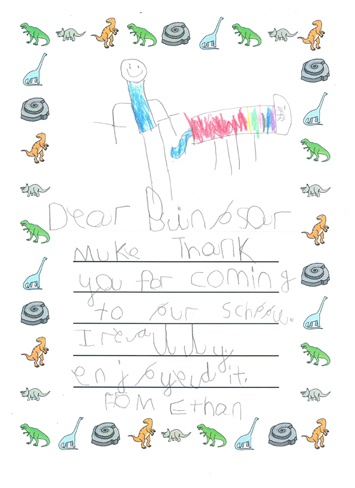
Sure enough, we received an envelope from the school, sent into us by the class teacher (Mrs Common) and inside we found a lovely set of thank you letters from the children.  Our dinosaur expert had asked the children to make sure they got their words onto the lines correctly, that they used capital letters and full stops.  In addition,  we wanted to see some wonderful spelling.

Amelia Says Thank You to Everything Dinosaur

Amelia says thank you.

Picture credit: Winwick CE Primary School and Everything Dinosaur

What super writing Amelia, well done you!

Dinosaur Workshop

Year One Class Send in Thank You Letters After Dinosaur Workshop

A thank you letter from Ethan. Well done!

Picture credit: Winwick CE Primary School and Everything Dinosaur

We enjoyed reading through the letters and we loved looking at the wonderful prehistoric animals that the children had drawn, especially the ammonites!

To discover more about Everything Dinosaur’s outreach work: Email Everything Dinosaur.

Commenting on the busy morning, a spokesperson from Everything Dinosaur stated:

“We had a fantastic time working with the children.  Special thanks to Mrs Dudley, Mrs Hansley, Miss Abu and Mr Bate for their help and assistance on the day.  A big Iguanodon thumbs up to Mrs Cameron who even offered us some toast at break-time.”

It sounds like Everything Dinosaur were very well looked after at the school.  Dinosaurs as a term topic provides so many opportunities for children to gain confidence with their writing, develop their vocabularies and to practice simple addition and subtraction.  A big thank you to all the children who sent in letters to us, this is greatly appreciated.

Everything Dinosaur stocks a wide variety of dinosaur and prehistoric animal themed merchanise including dinosaur themed clothing: Dinosaur Themed Clothing.

2 11, 2015

Why Would a Dinosaur Not Make a Good Pet?

By |2023-04-07T21:04:49+01:00November 2nd, 2015|Categories: Educational Activities, Main Page, Teaching|0 Comments

Year 2 at Bishop King CE Primary School Study Dinosaurs

As part of the extension activities suggested by Dinosaur Mike of Everything Dinosaur during his visit to Bishop King CE Primary School (Lincoln, England), to work with Key Stage 1, the children in Year 2 were challenged to have a go at designing their very own dinosaur.  Having met Tyler and explained that in the past a huge marine reptile roamed the seas of what was to become the United States of America, one of the company’s “pinkie palaeontologist challenges” was set.  Could the pupils come up with their very own prehistoric animal?

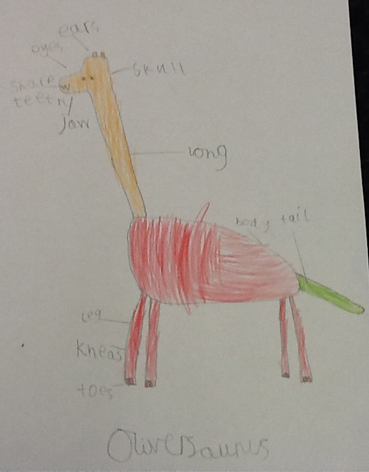
A Wonderful Oliversaurus from Oliver

Dinosaur drawings.

Oliver designs a dinosaur.

Picture credit: Bishop King CE Primary School

Dinosaur Workshop

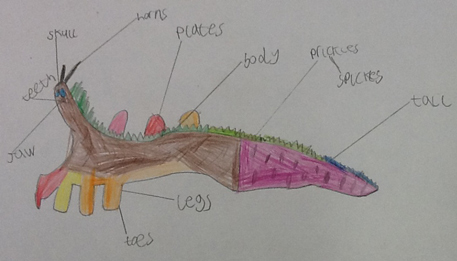
The children took to their task with gusto.  We challenged the class to think carefully about their dinosaur. For example, what colour would it be?  Would it have a long neck or a short neck?  A big body or a little body?  We wanted to see lots of lovely labels including pointing out where the dinosaur’s skull was, a word we introduced to the classes during our fossil handling activities.

Everything Dinosaur stocks a range of dinosaur themed toys and gifts: Dinosaur Toys and Gifts.

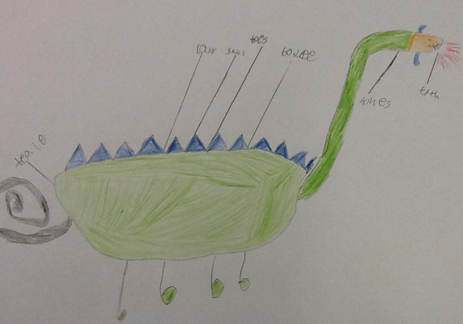
A Big Green Dinosaur with Navy Blue Spikes on His Back

Dinosaurs as pets

A big green dinosaur.

Picture credit: Bishop King CE Primary School

Year 2 Term Topic

The term topic for the two classes of Year 2 children this autumn has a science focus.  The aim is to decide whether or not a dinosaur would make a good pet.  This subject area acts as an umbrella topic, linking in with exploration of food chains, habitats and life cycles as well as learning about different parts of the body.  This particular extension exercise dovetails nicely into art as well as supporting literacy, vocabulary development and handwriting skills.

Excellent Labelling Just Like a Scientist

dinosaur drawing.

A very colourful dinosaur design.

Picture credit: Bishop King CE Primary School

When it comes to providing posters for conferences detailing research, it is important to provide accurate, well annotated diagrams.  This is a useful skill within palaeontology.  It seems from these examples here that the pupils at Bishop King CE Primary have started to hone their science skills at an early age.

Commenting on the Drawings

Commenting on the drawings, that were very kindly sent into Everything Dinosaur by class teacher Miss Knapp, a spokesperson from Everything Dinosaur stated:

“A new dinosaur is named and described approximately every three weeks.  By the time the children break up for Christmas it is very likely that a further two dinosaurs will have been formally named and described.  Dinosaurs were a very diverse group of reptiles, over the 165 million years in which dinosaurs existed they evolved into all sorts of forms, as well as the giants such as Diplodocus and Tyrannosaurus rex, some dinosaurs could fly, others lived in trees whilst some types of dinosaurs excavated burrows.”

Our congratulations to the children in Year 2.  They have come up with some beautiful and very colourful dinosaurs and Everything Dinosaur team members were most impressed with all the clear labelling.  We hope our dinosaur workshop went some way to help the children to answer the question why would a dinosaur not make a good pet?

24 10, 2015

Unmistakably Ella The Dinosaur Fan with an Excellent Thank You Letter

By |2024-05-05T15:06:03+01:00October 24th, 2015|Categories: Educational Activities, Main Page, Teaching|0 Comments

Ella’s Thank You Letter to Everything Dinosaur

Whilst going through some correspondence in the Everything Dinosaur office today, we came across a letter that we had received from a young dinosaur fan at Southglade Primary in Nottinghamshire (England).  The letter had been replied to and indeed Everything Dinosaur team members posted up a blog article all about the dinosaur workshop that we had conducted with the Year 3 class,  but this one particular letter had been put aside from all the others.

Thank You Ella

We had been discussing how lead authors and co-authors are cited in academic texts.   A colleague had remembered a thank you letter written by a enthusiastic dinosaur fan Ella, from the way that Ella had written her letter, it was clear who had been the author.

Ella’s Thank You Letter to Everything Dinosaur

Ella was definitely the author of this letter!

Ella was definitely the author of this letter!

Picture credit: Ella (definitely the lead author)

Dinosaur Fan

We could not mistake Ella as the writer of this letter.  When Everything Dinosaur conducts a dinosaurs and fossil workshop with Key Stage 1 and Key Stage 2 children we encourage the teaching team to have the class compose thank you letters to us.  Very often, it can be a challenge for the teaching team to get pupils to practice their hand-writing and the composing of a thank you letter after a dinosaur workshop provides a wonderful excuse to put pen to paper.

To learn more about Everything Dinosaur’s work helping to support learning and to contact the company: Email Everything Dinosaur.

Supporting the National Curriculum

Our team members provide a huge variety of extension ideas and activities, all linked to key components of the national curriculum.  For example, when working with Year 3 children exploring rocks and fossils, we build in links to the maths and literacy elements as well as introducing the concepts of scientific working and geological time.

We received a big pile of letters from Ella and her class mates, the children commented:

“Thank you for coming to our school and teaching us about dinosaurs”.

“I loved the part when I could hold the biggest jaw.”

“My best and favourite part was when you opened the big box.”

“Thank you for letting me hold the fossils.”

“I really liked all the dinosaur facts.”

A Year 3 Dinosaur Fan

You are most welcome, we are glad that Year 3 got so much out of our visit.  Some of the letters that we received even contained pictures of prehistoric animals.  One of the extinct creatures that was featured in the children’s illustrations was Tylosaurus.  We think this was because in the class there is a little boy called Tyler and we explained to him and his classmates all about this Late Cretaceous marine reptile.

To read the earlier blog article about Everything Dinosaur’s visit to Southglade Primary: Thank You Letters Received from Year Three.

If the letters received by Everything Dinosaur are anything to go by then dinosaur workshops in school for Year 3 are a big success.

Visit Everything Dinosaur’s award-winning website: Everything Dinosaur.

23 10, 2015

New 2016 Prehistoric Animal Models from Safari Ltd

By |2023-04-07T14:53:07+01:00October 23rd, 2015|Categories: Dinosaur and Prehistoric Animal News Stories, Dinosaur Fans, Educational Activities, Everything Dinosaur News and Updates, Everything Dinosaur Products, Main Page, Press Releases|0 Comments

New Prehistoric Animal Models (Safari Ltd) 2016

With the news that Safari Ltd had ended its twenty-eight year partnership with the Carnegie Museum of Natural History, which broke in the spring, model collectors and dinosaur fans alike have been eagerly awaiting developments.  What prehistoric animal models would come out in 2016?  Everything Dinosaur can now reveal that information, the wait is over and enthusiasts of all things Dinosauria et al are not going to be disappointed.

Here are the new prehistoric animals:

  • Plesiosuchus
  • Iguanodon
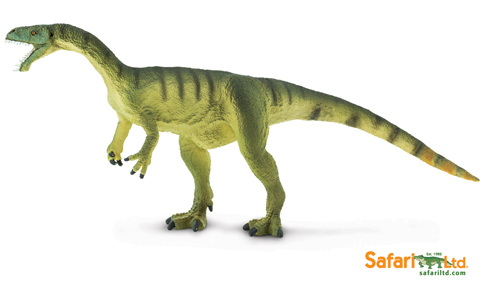
  • Masiakasaurus
  • Shunosaurus
  • Carcharodontosaurus
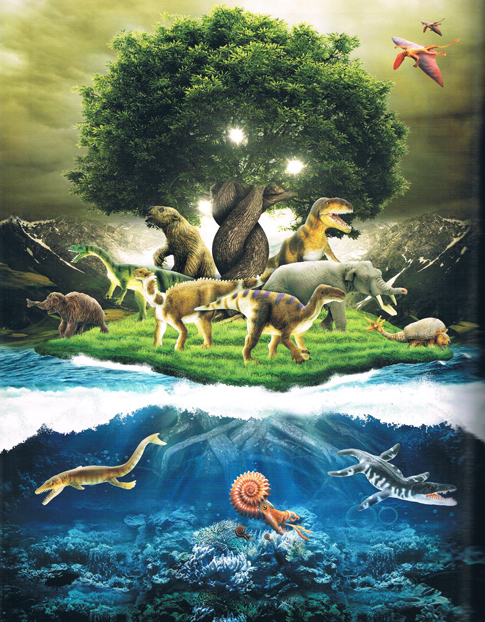
  • Plus re-issues of previous Safari Ltd models, the baby Woolly Mammoth, the Megatherium (giant ground sloth), Amebelodon and the glyptodont Doedicurus.

Everything Dinosaur intends to stock all these items, we will do all we can to keep our customers and fellow prehistoric animal fans informed about deliveries into our warehouse.

Wild Safari Prehistoric World

There are a total of five new replicas, this is the same total as last year, the 1:10 scale Carnegie Collectibles Velociraptor, plus four not to scale models under the Wild Safari brand that has now become the flagship brand for prehistoric animal replicas the Florida-based company makes.

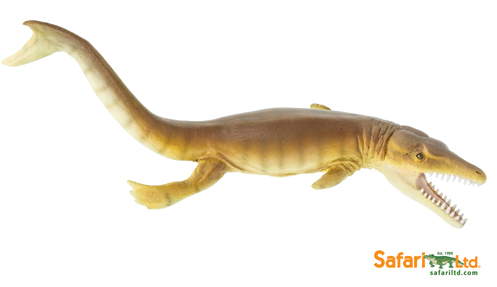
Let’s take a look at the new models in turn, firstly the Plesiosuchus model (marine crocodile).  This Late Jurassic carnivore was one of the super predators of the shallow seas that covered much of Europe.  It is estimated to have been around seven metres in length, approximately the size of the largest Saltwater crocodiles (Crocodylus porosus) found today.  Plesiosuchus means “near crocodile” and is pronounced Plee-see-oh-sook-us.  It was a member of the Metriorhynchoidea (pronounced Met-ri-oh-rink-oi-deer [A super family of the Crocodylomorpha]).  It is great to see a model of a metriorhynchid from Safari Ltd.

New for 2016 the Wild Safari Dinos Plesiosuchus

Available soon from Everything Dinosaur.

Available from Everything Dinosaur.

Picture credit: Safari Ltd/Everything Dinosaur

The Plesiosuchus replica measures a fraction over seventeen centimetres and is around four and half centimetres tall (it’s the tail).

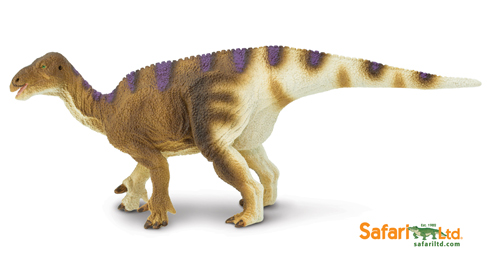
Now the Iguanodon model comes into focus.  It is great to see another ornithopod in the Safari Ltd Prehistoric Life model collection.

New for 2016 the Wild Safari Dinos Iguanodon

Some very striking colours on this new replica.

Some very striking colours on this new replica.

Picture credit: Safari Ltd/Everything Dinosaur

Several Iguanodontid Models Made

Over the years, there have been a number of iguanodont models made, with the retirement of the Carnegie Collectibles Iguanodon replica, it is great to see this introduction.  Iguanodon is brought bang up to date, the bipedal pose of the earlier model, launched in 2007 and effectively a re-paint of an even earlier Carnegie replica, has been replaced by a walking on all four limbs approach.  The body proportions seem much more accurate and we love the thickened base of the tail.

These ornithopods were powerful animals and indeed the base of the tail and pelvis were very robust.  The model has been given a striped colour scheme and we adore the flashes of purple, not a colour associated very often with dinosaur models.  It is a nice touch.  The model measures 18.5 cm by 7 cm.

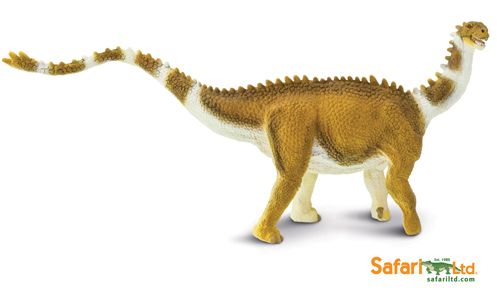
New for 2016 – Shunosaurus

Available soon from Everything Dinosaur - Shunosaurus.

Available soon from Everything Dinosaur – Shunosaurus.

Picture credit: Safari Ltd/Everything Dinosaur

“Sauropod Crossed with a Llama”

The “sauropod crossed with a Llama”, as an Everything Dinosaur member of staff termed this replica when trying to decipher the double page advert that showed a glimpse of this figure, turns out to be a Shunosaurus.  The colourful figure measures 16.5 cm in length and that detailed head stands around 7 cm high.  One of the best known of all the Chinese Dinosauria, certainly the best known sauropod, thanks to the huge fossil assemblage excavated from the Dashanpu Quarry site (Sichuan Province).  This looks like an excellent interpretation of the extensive fossil material.  Well done Safari Ltd for bringing out such an interesting replica.

“Vicious Lizard” – Masiakasaurus

Available from Everything Dinosaur.

Available from Everything Dinosaur.

Picture credit: Safari Ltd/Everything Dinosaur

Masiakasaurus

A new fact sheet will be required for the fourth new prehistoric animal figure we are featuring here – Masiakasaurus, (the name means vicious lizard).  An agile theropod that lived on the island of Madagascar in the Late Cretaceous.  The forward pointing teeth have been very well depicted in this new for 2016 replica.  We suspect that this is the first dinosaur model made by Safari Ltd, whose scientific name was inspired by a band member of Dire Straits.

The formal, binomial name for this two metre long terror is Masiakasaurus knopfleri.  It was the music of Dire Straits’s front man Mark Knopfler that inspired the field team behind this particular dinosaur fossil discovery.

To read about the discovery and naming of another theropod dinosaur from Madagascar: New Dinosaur Discovery from Madagascar.

The design team at Safari Ltd have taken into careful consideration details of this dinosaur’s known skeleton (about two-thirds of all the bones in the skeleton have been described to date).  Note the position of the hands and digits, although an abelisaurid, Masiakasaurus had proportionately much longer front limbs than other members of this theropod dinosaur family.

An Attractively Painted Model

It is an attractively painted model, the stripes and green markings are a good choice, it is likely that this dinosaur, required camouflage to help it avoid being spotted by larger meat-eaters that shared its floodplain environment.

The new Safari Ltd Masiakasaurus is around 18.5 cm in length and stands an impressive 8.25 cm tall.

New for 2016 – Carcharodontosaurus

Say hello to "shark-toothed lizard".

Say hello to “shark-toothed lizard”.

Picture credit: Safari Ltd/Everything Dinosaur

Carcharodontosaurus

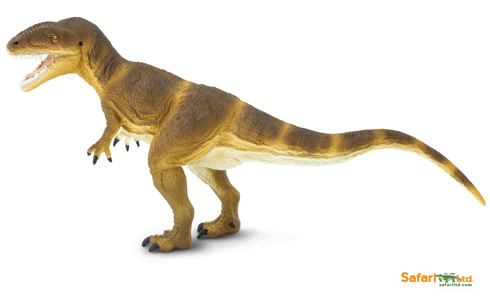
One of the largest theropods known, Carcharodontosaurus is a firm favourite amongst dinosaur fans and model collectors alike.  It is great to see this interpretation by Safari Ltd.  We had thought that the large, meat-eating dinosaur was going to be a megalosaur, we got wrong but we are delighted to see this North African monster join the Safari Ltd “Prehistoric Life” fold.  At an impressive 22.75 cm long and standing 10.25 cm tall this is the biggest model dinosaur that Safari Ltd are bringing out next year.

To view Everything Dinosaur’s existing range of prehistoric animals from Safari Ltd: Wild Safari Prehistoric World Models.

Look out for announcements on Everything Dinosaur’s Facebook page, Twitter feed and on this blog site.  More information including when they will be in stock will be posted up soon.

Prehistoric Animal Models.

As seen in Prehistoric Times magazine, the Wild Safari Prehistoric World advert featuring some of the new prehistoric animal models.

Check out Everything Dinosaur’s Facebook page for pics of the prehistoric mammal models that are being re-introduced by Safari Ltd.

Find Everything Dinosaur on Facebook: Everything Dinosaur on Facebook.

22 10, 2015

Volunteers Needed to Explore the Triassic

By |2023-04-07T14:42:32+01:00October 22nd, 2015|Categories: Dinosaur Fans, Educational Activities, Everything Dinosaur News and Updates, Main Page|0 Comments

Volunteers Needed to Explore the Triassic

Yesterday, may have been “Back to the Future Day”, but here at Everything Dinosaur the emphasis is very much on the past, approximately 220 million years in the past, the Norian faunal stage of the Triassic to be precise.  We have been contacted by a student at Huddersfield University (England), who has asked for volunteers to help test a prehistoric virtual environment set at this pivotal time in vertebrate evolution.

Please Note – the request for volunteers has ended – no further volunteers required.

An Opportunity to Explore “Triassic World”

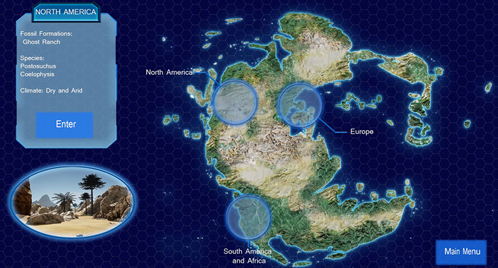
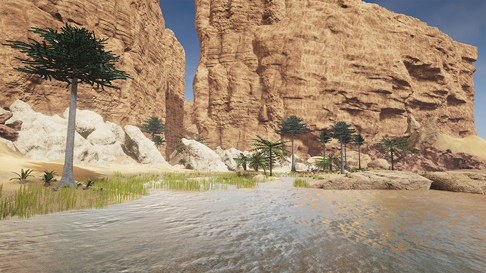
Which part of Pangea would you like to explore?

Which part of Pangaea would you like to explore?

Picture credit: Daniel Carter

Time Travellers Needed

Student, Daniel Carter has been building a computer simulation that enables players to explore a series of Triassic environments set during the Norian faunal stage of the first geological period of the Mesozoic. Daniel has already benefited from the advice of Everything Dinosaur’s experts as he seeks to perfect the various habitats and make the flora and fauna as accurate as possible.  The objective of this educational game is for players to discover and learn about prehistoric animals and plants from this critical point in our planet’s history.

Players Can Explore a Variety of Triassic Ecosystems

The prehistoric environments are based on Late Triassic Lagerstätten.

The prehistoric environments are based on the Late Triassic.

Picture credit: Daniel Carter

Daniel has carefully constructed three environments, all based on famous Lagerstätten. If you have ever felt the urge to get up close to the fauna represented by the famous Ghost Ranch sediments of New Mexico, now’s your chance.

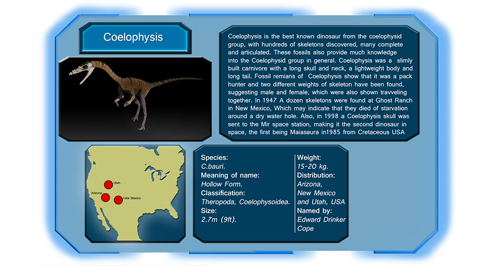
The focus is very much on education.  When an explorer encounters a creature they can interact with it and discover more about it by accessing data files.  So if you come across a Coelophysis you can learn all about this Late Triassic dinosaur.  An inventory will be available to let players know what species they are looking for and gamers will be given clues which could lead to the location of the specific creatures.   You might even get the chance to encounter an ancestor of modern mammals.   Could you track them down?

Explorers Can Learn About the Animals and Plants They Encounter

Educational fact files are incorporated into the play.

Educational fact files are incorporated into the play.

Picture credit: Daniel Carter

Part of a Masters Degree Project

Daniel, the creator of this virtual Triassic world disclosed that his intention is to inform and help educate and he needs dinosaur and fossil enthusiasts to help him perfect his prehistoric project.

Daniel explained:

“The game will feature an encyclopaedia which will list all the plants and animals in the game with a brief description, as well as some extra entries.  Each area will be fairly large in size and will include a number of different things for players to discover and explore.”

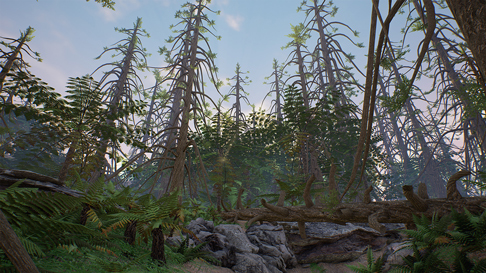
Fancy a Stroll Through a Triassic Forest?

Gamers will be able to explore a number of terrestrial environments.

Gamers will be able to explore a number of terrestrial environments.

Picture credit: Daniel Carter

How You Can Help

Daniel needs volunteers to test the game for bugs and glitches.  He would welcome feedback and advice on the overall gaming experience.  Can you suggest additional plants and animals that should be included?

To help, email Everything Dinosaur and we will pass this information on to Daniel: Contact Everything Dinosaur – put the words Triassic World at the front of your email.

In order to help Daniel, we have suggested that interested parties should get in touch with Daniel by the 12th November 2015 (that’s three weeks).

To see one of the early fly through videos, showcasing Daniel’s creative talent: Triassic Oasis Fly Through.

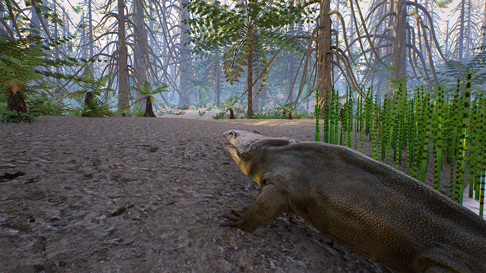
Meet the Inhabitants of Triassic World

Encounter giant amphibians in the Triassic landscape.

Encounter giant amphibians in the Triassic landscape.

Picture credit: Daniel Carter

Please Note – the request for volunteers has ended – no further volunteers required.

An Unreal 4 Game Engine

The game has been created using the Unreal 4 game engine and Daniel would like to see his game used in schools and museums to help teach children about prehistoric life.

A spokesperson from Everything Dinosaur commented:

“The Norian Age represents a real melting pot of vertebrate evolution.  The dinosaurs were diversifying and becoming more abundant but they shared the single landmass of Pangaea with a whole range of strange creatures.  Pterosaurs chased insects in the air, crocodile-like Phytosaurs hunted in the rivers and giant amphibians, relics from the Palaeozoic, could still be found.”  We congratulate Daniel for his hard work and we look forward to seeing the game once it has been completed.”

If you want to help build a Triassic exploration game, here’s that email again: Contact Everything Dinosaur don’t forget to put the words Triassic World at the front of your email.

Don’t forget the 12th November deadline.

Have fun exploring!

Please Note – the request for volunteers has ended – no further volunteers required.

Update

After a very successful testing programme, Daniel wrote to Everything Dinosaur saying:

“I would just like to say thanks for going out of your way to help me with my project.  The blog post got my game quite a bit of attention, and the testers I had were very helpful.  Thanks to this my game has changed for the better, working upon the feedback and suggestions provided by the testers.”

Visit Everything Dinosaur’s award-winning website: Everything Dinosaur.

Go to Top