All about dinosaurs, fossils and prehistoric animals by Everything Dinosaur team members.

Everything Dinosaur’s work with photoshop and other platforms.

4 05, 2021

The New CollectA Neovenator Scenting Prey is Reviewed

By |2024-05-26T09:03:17+01:00May 4th, 2021|Categories: Adobe CS5, Dinosaur Fans, Everything Dinosaur Products, Main Page, Photos of Everything Dinosaur Products, Product Reviews|0 Comments

Everything Dinosaur team members have been so impressed with the first batch of new for 2021 CollectA prehistoric animal figures that they have decided to review them all. Today, it is the turn of the CollectA Neovenator scenting prey dinosaur model. This figure replaces an earlier version of the theropod Neovenator within the CollectA Age of Dinosaurs Popular range.

The CollectA Neovenator scenting prey dinosaur model
The new for 2021 CollectA Age of Dinosaurs Popular Neovenator scenting prey.  Picture credit: Everything Dinosaur.

Picture credit: Everything Dinosaur

Visit the award-winning Everything Dinosaur website: Buy Dinosaur Toys.

Neovenator salerii

The CollectA Neovenator scenting prey has been beautifully painted. The light green tones contrast well with the striking darker green stripes that run from the nape of the neck right down to the model’s long tail. The tail makes up around 50% of the entire figure’s length. The body proportions of the Neovenator model reflect the graceful and lightweight nature of the dinosaur’s skeleton. Neovenator being regarded as relatively lightly built for a large predator with a gracile body plan. The grasping hands have been sculpted extremely well and the claws are skilfully painted. Their battleship grey colour matches the toe claws.

The pale underside provides a sharp contrast to the colouration on the flanks and the CollectA model has been given a row of small wattles that run down the neck. There is a row of similarly coloured spines that extend from the back of the skull to the tip of the tail. These spines are enlarged over the hips and immediately behind the head.

CollectA Neovenator Scenting Prey Dinosaur Model
The CollectA Neovenator scenting prey figure reflects a much more modern interpretation of this theropod dinosaur.  Picture credit: Everything Dinosaur.

Picture credit: Everything Dinosaur

Features of the Skull

The figure is named “scenting prey” as an analysis of Neovenator cranial material published in 2017 revealed a substantial network of neurovascular canals in the upper jaw (premaxilla and maxilla) that were linked to the external surfaces of the bones in the jaw. The scientists concluded that this may have been a specialised tactile organ, enabling Neovenator to sense its environment through its jaw. These canals could have sensed jaw pressure, assisting this dinosaur to avoid bone when feeding, or this sensory organ could have played a role in intraspecies recognition and behaviour, or even assisted Neovenator in locating suitable nesting sites. The large nostrils suggest that this dinosaur had a powerful sense of smell. To read more about this research: The Sensitive Face of Neovenator.

Neovenator scenting prey
The elevated head of the CollectA Neovenator scenting prey model. The posture of the CollectA dinosaur model reflects the 2017 scientific paper that revealed a network of neurovascular canals linked to the premaxilla and the maxilla bones.  Picture credit: Everything Dinosaur.

Picture credit: Everything Dinosaur

Taxonomic Position Uncertain

The taxonomic classification of Neovenator remains uncertain, despite nearly 70% of the fossil skeleton being known to science. When first described in 1996, it was thought to have affinities with the Allosauridae family. Subsequent studies have challenged this suggesting a placement within the carcharodontosaurids.

The elevated head shows lots of amazing detail. The dark green markings that run from the eye socket down to the bottom jaw and then up to the postorbital bone are in stark contrast to the bright yellow jaw tips and the yellow patch that surrounds the eye.

CollectA Neovenator scenting prey and the CollectA Brontosaurus Prey
The CollectA Neovenator dinosaur model has used its sensitive snout to detect a sauropod carcass (CollectA Brontosaurus prey model).  Picture credit: Everything Dinosaur.

Picture credit: Everything Dinosaur

This is an exquisitely created dinosaur model and Everything Dinosaur highly recommends the CollectA Age of Dinosaurs Popular Neovenator scenting prey.

To view the CollectA Neovenator scenting prey figure and the rest of the models in the CollectA Prehistoric Life range: CollectA Prehistoric Life Models and Figures.
2 05, 2021

CollectA Megalosaurus in Ambush Reviewed

By |2024-05-26T08:56:07+01:00May 2nd, 2021|Categories: Adobe CS5, Dinosaur Fans, Everything Dinosaur Products, Main Page, Photos of Everything Dinosaur Products, Press Releases, Product Reviews|0 Comments

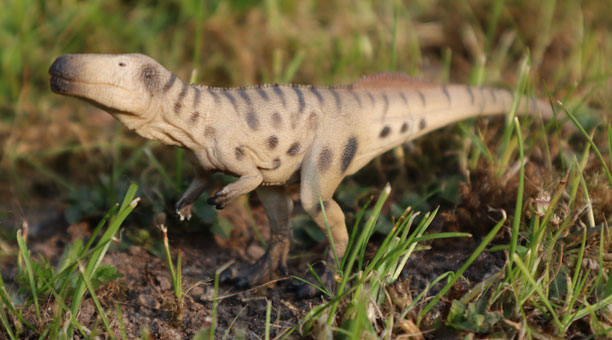
Megalosaurus was scientifically described way back in 1824 (Buckland), over the last 197 years, this dinosaur has had a number of makeovers. The lizard-like quadruped as depicted in the world-famous Crystal Palace dinosaur sculptures may be long gone, but its appearance is still debated. For example, did theropod dinosaurs have lips? The new CollectA Age of Dinosaurs Popular Megalosaurus model provides collectors with a very modern interpretation of “Big Lizard”, lips are included along with a plume of bristles beginning at the back of the hips and running about a quarter of the tail’s length.

CollectA Age of Dinosaurs Popular Megalosaurus in Ambush
The CollectA Age of Dinosaurs Popular Megalosaurus in ambush figure. The muted tones would have provided excellent camouflage for this Jurassic hunter.  Picture credit: Everything Dinosaur.

Picture credit: Everything Dinosaur

CollectA Age of Dinosaurs Popular Megalosaurus

Part of the extensive CollectA Age of Dinosaurs Popular range, this new for 2021 Megalosaurus replica replaces an early CollectA Megalosaurus that was first introduced around eleven years ago. The “kangaroo posture” has gone, the hands are not pronated and the feet have been correctly proportioned.

The model is more scientifically accurate and it has been posed “mouth shut” a more natural pose than the previous figure with its large, open jaws revealing a set of beautiful but unrealistic white teeth.

CollectA Megalosaurus dinosaur model (circa 2010)
The original CollectA Megalosaurus that was introduced in 2010. This original Megalosaurus figure from CollectA has been replaced with a more scientifically accurate model.

Iconic Dinosaur

A spokesperson from Everything Dinosaur commented:

“We think William Buckland, Richard Owen and indeed Robert Plot who first published a description of a Megalosaurus fossil bone back in 1676, would be most impressed with this figure. They probably would not recognise this interpretation. It reflects how far our understanding of the Dinosauria has changed.”

CollectA Age of Dinosaurs Popular Megalosaurus in Ambush
The CollectA Age of Dinosaurs Popular Megalosaurus in Ambush dinosaur model. It looks like it has a smug expression on its face – a “Mona Lisa Megalosaurus”.  Picture credit: Everything Dinosaur.

Picture credit: Everything Dinosaur

The Everything Dinosaur website: Dinosaur Models and Toys.

That Knowing Expression

The design team at CollectA have given their new Megalosaurus model lips. This is in line with some of the latest scientific thinking. As a result, our Megalosaurus in ambush has an intriguing expression on its carefully painted face. It’s as if it knows something we don’t!

Team members at Everything Dinosaur have nicknamed this dinosaur model “Mona Lisa Megalosaurus” – our tribute to the enigmatic look on this little figure.

Lips depicted on the new for 2021 CollectA Megalosaurus dinosaur model.
The new CollectA Megalosaurus has lips. Say hello to “Mona Lisa Megalosaurus”.  Picture credit: Everything Dinosaur.

Picture credit: Everything Dinosaur

Skilfully Painted

Measuring around 16 cm in length, this is a skilfully painted model. The obvious counter shading on the previous model has gone, being replaced with more muted and subtle tones. The dark spots and stripes on the body and on the anterior portion of the muzzle contrast nicely with the underlying tan colouration.

The new CollectA Megalosaurus dinosaur model has been given a short row of bristles, a nod perhaps to megalosaur fossil material from Germany that reputedly showed evidence of an integumentary covering: Megalosaurs join the “Tufty” club.

To view the CollectA Age of Dinosaurs Popular Megalosaurus and the rest of the figures in the CollectA Prehistoric Life range: CollectA Prehistoric Life Dinosaurs and Prehistoric Animal Models.

30 04, 2021

Japan’s Second Hadrosaur (New Fossil Discovery)

By |2024-05-25T22:31:27+01:00April 30th, 2021|Categories: Adobe CS5, Dinosaur and Prehistoric Animal News Stories, Dinosaur Fans, Main Page, Palaeontological articles, Photos/Pictures of Fossils|0 Comments

Scientists from the Hokkaido University Museum in collaboration with colleagues from the Okayama University of Science have named a second hadrosaurid from the Late Cretaceous of Japan. Described from a partial skeleton, Yamatosaurus izanagii lived at the same time as the first duck-billed dinosaur named from Japan (Kamuysaurus japonicus), but these two dinosaurs probably did not co-exist, instead Kamuysaurus may have been restricted to more northern coastal environments whilst the newly described Yamatosaurus may have been confined to more southerly habitats.

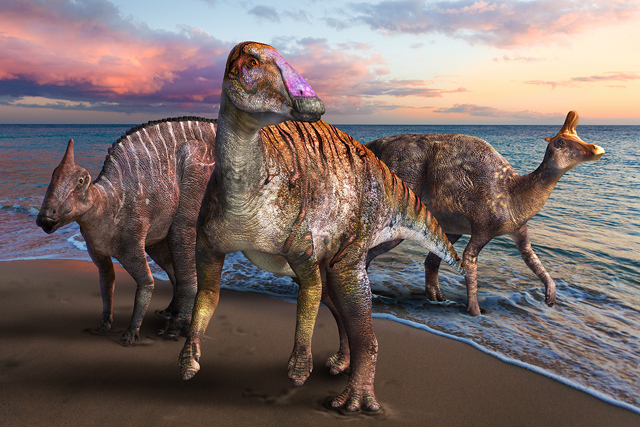
Yamatosaurus izanagii Life Reconstruction with more Advance Forms of Duck-billed Dinosaur in the Background
Yamatosaurus izanagii life reconstruction (centre), with a Lambeosaurinae representative (right) and a representative of the Saurolophinae (left), the dentition and shoulder bones suggest that Yamatosaurus is a basal member of the Hadrosauridae family and its discovery supports the idea that hadrosaurs evolved in Asia. Picture credit: Masato Hattori.

Did the Hadrosauridae Originate in Asia or North America?

The researchers, who included Yoshitsugu Kobayashi, Ryuji Takasaki and Anthony R. Fiorillo (who wrote the scientific paper describing Kamuysaurus in 2019), plus Katsuhiro Kubota (Hokkaido University Museum), conducted a phylogenetic analysis suggesting that Yamatosaurus was a primitive member of the hadrosaur family. Intriguingly, the team also undertook a biogeographical analysis (plotting age of ornithopod fossil finds against geographical location). They conclude that basal hadrosaurids were widely distributed in both Asia and Appalachia (the landmass representing eastern North America).

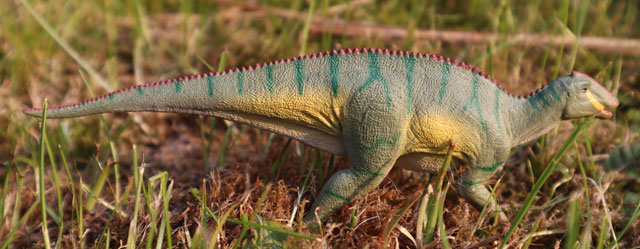
The CollectA Kamjysaurus (lateral view).
Individual scales on the flanks and along the tail can be made out and the skin folds add to the realism of the figure. Picture credit: Everything Dinosaur.

Picture credit: Everything Dinosaur

The picture (above) shows a Kamuysaurus model that is in the CollectA Age of Dinosaurs Popular range.

To view this range: CollectA Age of Dinosaurs Popular Models.

In addition, the scientists postulate that the discovery of Yamatosaurus supports the theory that the sub-families of more derived duck-billed dinosaurs the Lambeosaurinae and the Saurolophinae originated in Asia and that towards the end of the Cretaceous, basal hadrosaurids such as Plesiohadros djadokhtaensis (Mongolia), Tanius sinensis (C‌hina) and Yamatosaurus (Japan) continued to thrive in eastern Asia but were extinct elsewhere.

Data Suggests an Asian Origin for Hadrosaurs
A biogeographical analysis indicates that the Hadrosauridae may have originated in Asia. The discovery of Yamatosaurus izanagii in Japan supports the idea of an Asian original for that line of ornithopods that evolved into hadrosaurs.

Discovered in Marine Sediments

Amateur fossil collector Mr. Shingo Kishimoto discovered the fossilised remains in 2004, whilst exploring exposures of the Kita-ama Formation on the island of Awaji (Hyogo Prefecture). The fossil material consists of a dentary (lower jawbone), along with the surangular, neck bones, bones from the tail, cervical ribs and a coracoid plus some isolated teeth.

Although hadrosaur fossils have been found in several locations in Japan (all four main islands – Hokkaido, Honshu, Shikoku, and Kyushu), they are, with the exception of the Kamuysaurus material, highly fragmentary consisting of teeth, portions of the limbs and vertebrae, this is only the second time that a new genus of duck-billed dinosaur has been erected from Japanese fossils.

The stratum from which the Yamatosaurus material was collected consists of marine mudstones of approximately the same age (early Maastrichtian), as the sediments in which Kamuysaurus was found.

Various views of the right dentary of Yamatosaurus
Right dentary of Yamatosaurus izanagii gen. et sp. nov. in lateral (a), medial (b), dorsal (c), ventral (d), and anterior (e) views.

Unique Traits and Basal Characteristics

Study of the nearly complete right dentary helped the researchers to erect a new, basal hadrosaur genus. Unlike other hadrosaurs Yamatosaurus had just one functional tooth in several battery positions and no branched ridges on the chewing surfaces. This suggests that Yamatosaurus evolved to feed differently compared to other duck-billed dinosaurs.

Furthermore, the coracoid (that with the scapula would have formed the shoulder joint), shows traits linked to the movement away from a bipedal gait to becoming quadrupedal. This bone shows transitional characteristics that in later, more derived hadrosaurs, were more fully developed permitting these animals to become facultative bipeds (adopting a quadrupedal gait but able to run on their hind legs if required to do so).

To read Everything Dinosaur’s article from 2019 about the formal description of the first hadrosaur named from Japan (Kamuysaurus japonicus): Japan’s Greatest Fossil Dinosaur Gets a Name.

The scientific paper: “A new basal hadrosaurid (Dinosauria: Ornithischia) from the latest Cretaceous Kita-ama Formation in Japan implies the origin of hadrosaurids” by Yoshitsugu Kobayashi, Ryuji Takasaki, Katsuhiro Kubota and Anthony R. Fiorillo published in Scientific Reports.

Visit the Everything Dinosaur website: Everything Dinosaur.

28 04, 2021

The New CollectA Kamuysaurus is Reviewed

By |2024-05-25T18:25:45+01:00April 28th, 2021|Categories: Adobe CS5, Dinosaur Fans, Everything Dinosaur Products, Main Page, Photos of Everything Dinosaur Products, Product Reviews|0 Comments

The new for 2021 CollectA Kamuysaurus dinosaur model is in stock and what a wonderful addition it makes to the CollectA Age of Dinosaurs Popular range. It’s great to see CollectA introduce another hadrosaur replica, a replica of a dinosaur that was only formally named and described in 2019.

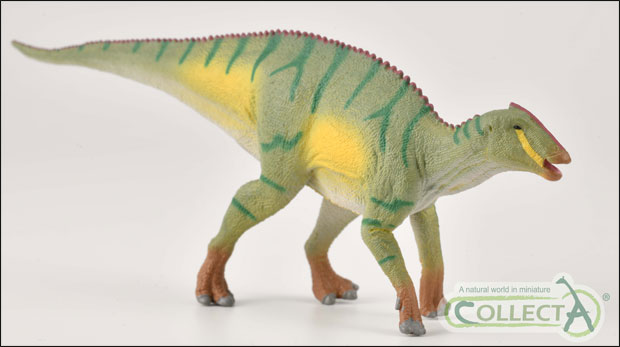
The new for 2021 CollectA Kamuysaurus dinosaur model
The new for 2021 CollectA Kamuysaurus dinosaur model continues the trend for CollectA to make replicas of the unique Japanese dinosaur biota. Kamuysaurus follows on from Fukuiraptor and Fukuisaurus that were introduced previously.  Picture credit: Everything Dinosaur.

Picture credit: Everything Dinosaur

A Japanese Hadrosaur

Named and described based on a single, nearly complete specimen Kamuysaurus heralds from exposures of the Upper Cretaceous Hakobuchi Formation on Hokkaido. The dinosaur nicknamed the “Mukawa dragon” has been skilfully recreated by the design team at CollectA. The model possesses a small, straight nasal crest that extends to the top of the head, a feature remarked upon in the scientific paper when the rugose nature of the nasal and frontal bones was discussed. In contrast, the row of small spikes running from the back of the graceful neck to the very tip of the tail are speculative but they do not detract from the appearance of this replica.

The CollectA Kamjysaurus (lateral view).
Individual scales on the flanks and along the tail can be made out and the skin folds add to the realism of the figure.  Picture credit: Everything Dinosaur.

Picture credit: Everything Dinosaur

Model Measurements

The CollectA Kamuysaurus measures 14 cm in length and it stands a fraction under 5.5 cm high. It is a relatively small model, but it has been beautifully painted and the individual scales on the well-sculpted flanks can be made out with the skin folds at the base of the tail adding realism.

The CollectA Kamuysaurus dinosaur model
The beautifully painted CollectA Kamuysaurus. A replica of a duck-billed dinosaur, known from one specimen discovered in marine sediments on the Japanese island of Hokkaido.  Picture credit: Everything Dinosaur.

Picture credit: Everything Dinosaur

Japanese Dinosaurs

The flash of bright yellow leading from the orbit (eye socket) to the side of the animal’s beak contrasts with the more muted tones of the belly and flank which indicate counter shading. The dark stripes present on the limbs and along the neck, back and tail give the impression that this dinosaur would have been well camouflaged, a good defence against predators – although palaeontologists have yet to uncover any evidence to suggest the presence of large, terrestrial predators that shared the same palaeoenvironment.

CollectA Kamusaurus dinosaur model.
The CollectA Age of Dinosaurs Kamuysaurus model. A replica of a hadrosaurid from the Late Cretaceous of Japan. This new for 2021 dinosaur model is in stock at Everything Dinosaur.

The introduction of the CollectA Age of Dinosaurs Popular Kamuysaurus continues the trend of CollectA adding models of Japanese dinosaurs into their product portfolio. In 2019, a model of Fukuiraptor (F. kitadaniensis) an Early Cretaceous predator known from the island of Honshu was introduced. Approximately twelve months later CollectA added a Deluxe 1:40 scale version of the contemporaneous Fukuisaurus (F. tetoriensis).

A spokesperson from Everything Dinosaur exclaimed:

“It’s great to see another hadrosaurid model added to the CollectA range, even better to have a dinosaur representing the unique biota associated with the Late Cretaceous of Japan”.

The Everything Dinosaur website: Dinosaur Toys and Models.

CollectA Age of Dinosaurs Popular range Kamuysaurus dinosaur model.
The model has a row of small spines running from the back of the neck down to the tip of the long tail. These have been painted a magenta colour.  Picture credit: Everything Dinosaur.

Picture credit: Everything Dinosaur

To purchase the new for 2021 CollectA Kamuysaurus and to see the rest of the range in the CollectA Age of Dinosaurs Popular range: CollectA Dinosaur and Prehistoric Animal Models.

27 04, 2021

A New PNSO Paul the Allosaurus Figure

By |2024-05-25T18:21:07+01:00April 27th, 2021|Categories: Adobe CS5, Dinosaur Fans, Everything Dinosaur News and Updates, Everything Dinosaur Products, Main Page, Photos of Everything Dinosaur Products, Press Releases|0 Comments

Everything Dinosaur can confirm that PNSO intend to introduce a model of an Allosaurus into their mid-size model range. We expect this exciting new dinosaur, an iconic member of the dinosaur-dominated biota of the Morrison Formation to be in stock at Everything Dinosaur in the summer (2021).

PNSO Paul the Allosaurus
PNSO Paul the Allosaurus dinosaur model in lateral view.

Paul the Allosaurus

This new theropod replica is one of a plethora of model introductions that PNSO and Everything Dinosaur have announced over the last few months. Like the majority of the PNSO theropod figures in the larger ranges, this Allosaurus model will also have an articulated lower jaw.

PNSO Paul the Allosaurus dinosaur model
The new for 2021 PNSO Paul the Allosaurus dinosaur model has an articulated lower jaw, just like the majority of the theropod figures that PNSO have produced in the larger size model series.

Three Species in the Genus

The genus was first erected in 1877 (Othniel Charles Marsh), one of the many dinosaur genera named as fossils from the Morrison Formation of the western United States began to be uncovered and sent east for study. Most palaeontologists recognise three species in this genus, the most recent to be named Allosaurus jimmadseni was only formally scientifically described last year (2020). To read more about A. jimmadseni: A New Species of Allosaurus (A. jimmadseni).

PNSO Paul the Allosaurus dinosaur model
The stunning PNSO Paul the Allosaurus (anterior view).

Bilateral Crests Suggest Allosaurus jimmadseni

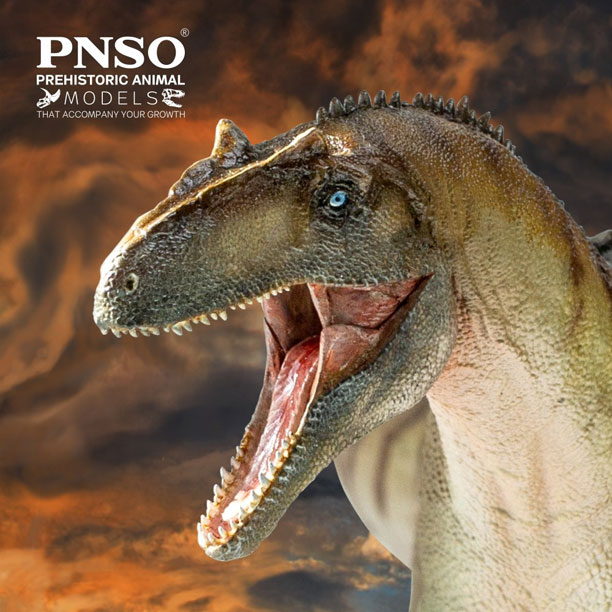
The picture (above) shows a close view of the head of the new PNSO Allosaurus model. A pair of bilateral nasal crests that run from the nostrils to the eye socket (orbit) can clearly be seen. This feature is absent in Allosaurus fragilis and since PNSO intended to introduce this model to celebrate the dinosaurs of the Morrison Formation, we have concluded that this figure is intended to represent Allosaurus jimmadseni.

PNSO Paul the Allosaurus dinosaur model
The new for 2021 PNSO Allosaurus replica (Paul the Allosaurus). The two bilateral crests that run from just above the eye socket (orbit) and down the snout indicate that this PNSO figure might be a replica of the recently named and described Allosaurus jimmadseni.

Paul the Allosaurus Model Measurements

Dinosaur model fans and collectors like to know about the size of any new figures and details of any potential scale. Although PNSO do not declare a scale for their model in the mid-size model range, the figure does measure 25 cm long and a potential scale can be calculated. For example, if the new PNSO Allosaurus is indeed a replica of A. jimmadseni, then if this dinosaur was around 8 metres in length, this suggests a scale of approximately 1:32.

PNSO Paul the Allosaurus dinosaur model measurements
The PNSO Paul the Allosaurus measures 25 cm long and it has a height of approximately 9 cm. Based on an Allosaurus fragilis being around 12 metres in length, team members at Everything Dinosaur estimate this model is in approximately 1:48 scale. However, should this model represent Allosaurus jimmadseni, then the scale would be different. The exact size of A. jimmadseni is not known but at an estimated 8 metres long, the PNSO figure would represent a dinosaur in 1:32 scale.

Checking on Availability

A spokesperson from Everything Dinosaur confirmed that there had been a meeting about PNSO yesterday but when Allosaurus would be in stock had not yet been confirmed. Team members anticipate that Paul the Allosaurus should be available in the summer (2021), but they were currently checking to see if more information could be provided.

The Everything Dinosaur website: Dinosaur Models and Toys.

PNSO Paul the Allosaurus product packaging
The PNSO Paul the Allosaurus product packaging.

The PNSO Paul the Allosaurus model will be supplied with a transparent support stand. It along with the recently introduced Stegosaurus figure celebrate the dinosaur biota associated with the famous Morrison Formation of the western United States.

PNSO Morrison Formation Dinosaurs
PNSO celebrating dinosaurs known from the Upper Jurassic Morrison Formation of western North America.

To view the extensive range of PNSO models currently available from Everything Dinosaur: PNSO Prehistoric Animal Models and Figures.
25 04, 2021

New Rebor G-2016 Embryos YouTube Review

By |2024-05-25T15:01:54+01:00April 25th, 2021|Categories: Adobe CS5, Dinosaur Fans, Everything Dinosaur Products, Everything Dinosaur videos, Main Page, Photos of Everything Dinosaur Products, Product Reviews|0 Comments

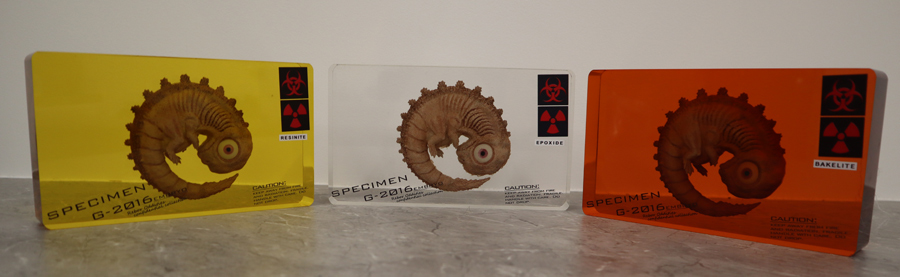
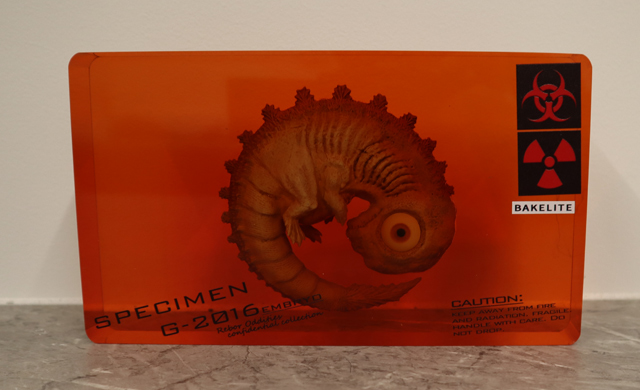
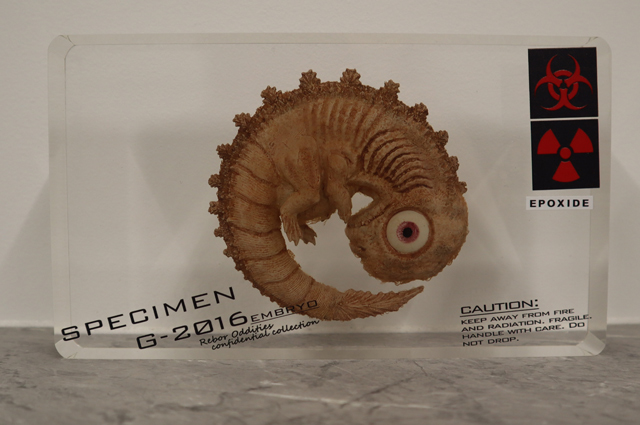
We at Everything Dinosaur, might know our dinosaur and prehistoric animal models, but every once in a while we come across a replica that simply takes our breath away. Rebor have produced three astonishing figures depicting science fantasy embryos entombed in resin.

These replicas entitled the Rebor Oddities Specimen: G-2016 Embryos are beautifully engineered and we wanted to mark the release of these limited-edition figures by producing a short YouTube video tribute.


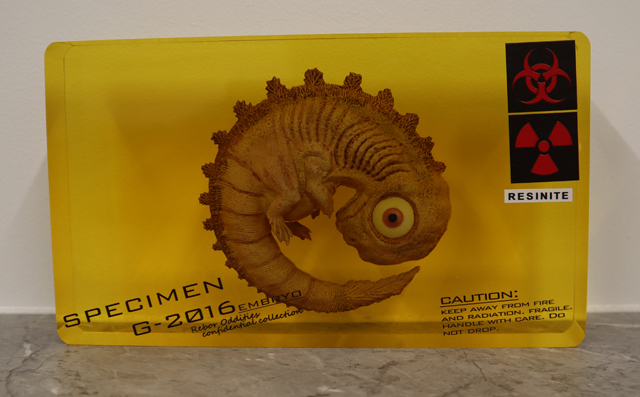
The Rebor Oddities Specimen: G-2016 Embryo in Bakelite is a brilliant, science-fiction/fantasy model from Rebor. In our video we praise the model’s innovative design.

The Rebor Oddities Specimen G-2016 Embryo (Bakelite)

The Rebor Oddities Specimen G-2016 Embryo. A science fiction/fantasy embryo encased in a resin block. A beautifully engineered and highly innovative replica. Picture credit: Everything Dinosaur.

Picture credit: Everything Dinosaur

The Rebor Oddities Specimen: G-2016 Embryo (Epoxide)

The very striking Rebor Oddities Specimen: G-2016 Epoxide figure – clearly proving to be a big favourite amongst collectors. Picture credit: Everything Dinosaur.

Picture credit: Everything Dinosaur

The Everything Dinosaur website: Dinosaur Toys and Models.

Limited-edition Figures

Only 500 of each type of model has been made and stocks of these fascinating figures are already low.

A spokesperson from Everything Dinosaur commented:

“Whilst we do not pretend to understand all the cultural references, we have had a lot of orders from Asia for these stunning figures. We might be more used to examining a T. rex foetus as per a previous Rebor model introduction, but we have been bowled over by these beautifully figures. They certainly are very different.”

Rebor Oddities Specimen: G-2016 (Resinite)

Only 500 of each figure has been made. These limited edition figures have proved very popular with collectors. Picture credit: Everything Dinosaur.

Picture credit: Everything Dinosaur

Rebor Odditites Specimen: G-2016 replicas

The Rebor Oddities Specimen: G-2016 replicas make an attractive display. Picture credit: Everything Dinosaur.

Picture credit: Everything Dinosaur

The Rebor range of prehistoric animal models and fantasy figures has expanded since its first production run some eight years ago. Rebor have produced some amazing and highly innovative figures and if these three limited edition replicas are anything to go by then model collectors are going to have some exciting times ahead.

To view the range of Rebor models and figures available at Everything Dinosaur: Rebor Models and Figures.
23 04, 2021

PNSO to Introduce a New Yutyrannus Model

By |2024-05-25T14:49:26+01:00April 23rd, 2021|Categories: Adobe CS5, Dinosaur Fans, Everything Dinosaur News and Updates, Everything Dinosaur Products, Main Page, Photos of Everything Dinosaur Products, Press Releases|0 Comments

Today, might be St George’s Day (April 23rd), but team members at Everything Dinosaur have stopped all talk of “dragons” to post up news about a replica of the “feathered tyrant” being introduced by PNSO.

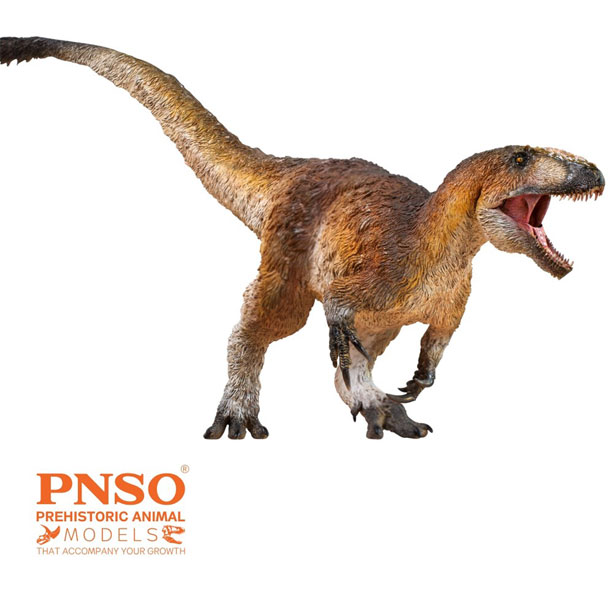
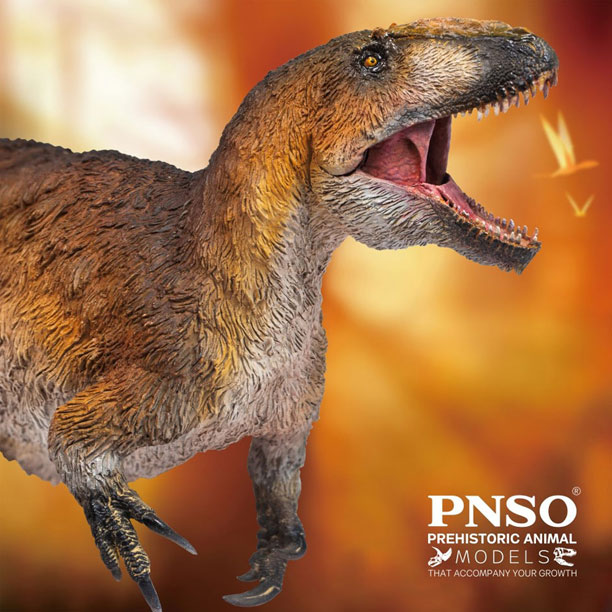
Yinqi the Yutyrannus (Y. huali) model in the PNSO mid-size model range has been announced in a joint release by Everything Dinosaur and representatives of the Chinese company.

PNSO Yinqi the Yutyrannus dinosaur model
The new for the summer of 2021 PNSO Yinqi the Yutyrannus dinosaur model.

The “Feathered Tyrant”

Known from three, nearly complete specimens found in Lower Cretaceous sediments in Liaoning Province, north-eastern China, Yutyrannus (Y. huali) translates as “beautiful, feathered tyrant”. Regarded as a basal member of the Tyrannosauroidea (primitive member of the tyrannosaur lineage), some of the fossilised feathers are more than fifteen cm long, demonstrating that even some extremely large theropods were feathered.

PNSO Yinqi the Yutyrannus
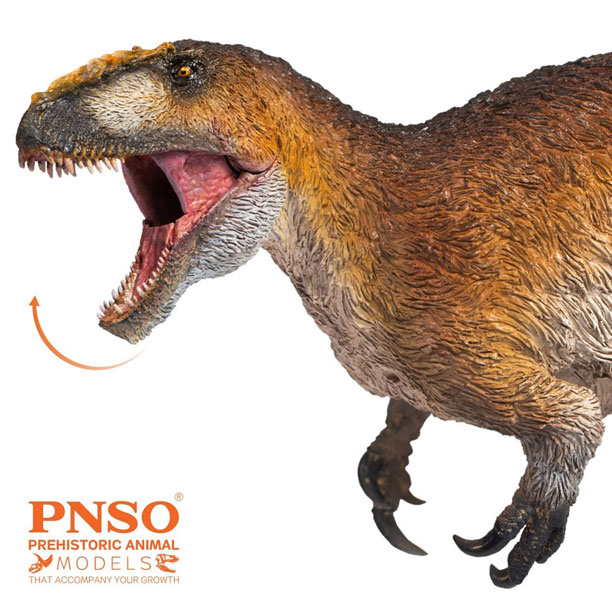
The PNSO Yinqi the Yutyrannus (anterior view).

PNSO Yinqi the Yutyrannus

The model measures around 25.5 cm long and the highest part of the raised tail is 12.3 cm off the ground. This is a beautifully detailed dinosaur model and a welcome addition to the PNSO mid-size model range.

PNSO Yinqi the Yutyrannus Model Measurements
The PNSO Yinqi the Yutyrannus model measurements.

The PNSO Yinqi the Yutyrannus will be available from Everything Dinosaur in the summer (estimated around July 2021).

With an Articulated Lower Jaw

The new PNSO tyrannosaur replica joins versions of Tyrannosaurus rex and Qianzhousaurus (Q. sinensis) in PNSO’s tyrannosaur range (mid-size models and larger). Just like the original “Wilson” the T. rex and A-Shu the Qianzhousaurus, Yinqi the Yutyrannus will have an articulated lower jaw.

PNSO Yinqi the Yutyrannus huali Dinosaur Model
PNSO Yinqi the Yutyrannus with an articulated jaw.

Celebrating the Jehol Biota

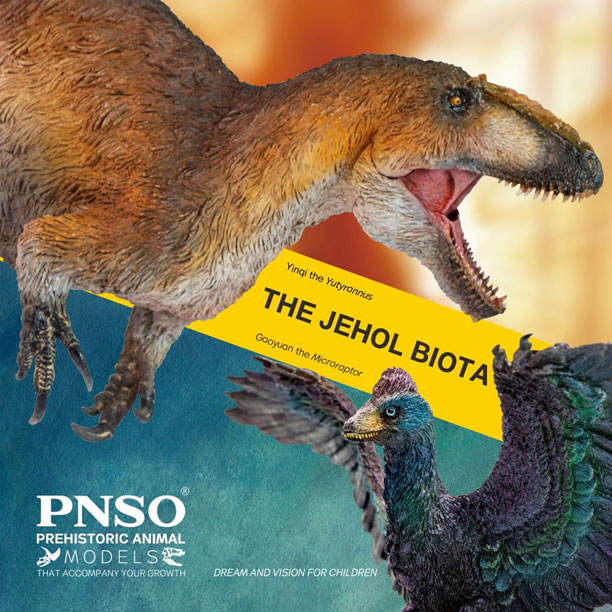
The introduction of this new figure (summer 2021), continues the trend whereby the Chinese manufacturer celebrates the dinosaur fauna associated with a specific geological formation. In this case, it is the Yixian Formation that forms one of the constituents of the famous Jehol biota.

PNSO Yinqi the Yutyrannus huali model
The PNSO Yutyrannus and the Microraptor are replicas of dinosaurs associated with the Jehol biota.

A spokesperson from Everything Dinosaur commented:

“PNSO have ambitious production plans for quarter 2 and 3 of 2021. We at Everything Dinosaur know what’s coming and we think dinosaur fans and model collectors are going to be enthralled with PNSO’s product offerings.”

The Everything Dinosaur website: Dinosaur Models and Toys.

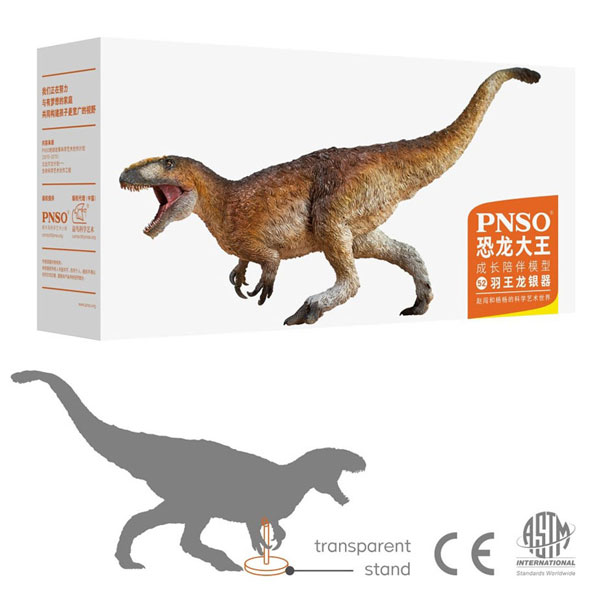
PNSO Yinqi the Yutyrannus product packaging
The PNSO Yinqi the Yutyrannus is supplied with a small, transparent stand that when placed in the middle of the replica’s chest helps to support this dinosaur figure.

Supplied with a Support Stand

PNSO Yinqi the Yutyrannus will be supplied with a small, transparent stand that when placed in the middle of the model’s chest will help to support this dinosaur in its dynamic pose.

PNSO Yinqi the Yutyrannus dinosaur model
PNSO Yinqi the Yutyrannus (lateral view).

The PNSO Yutyrannus will be available from Everything Dinosaur in the summer of 2021. To view the current range of PNSO models and figures available from Everything Dinosaur: PNSO Dinosaur and Prehistoric Animal Models.

22 04, 2021

Studying a Special Spinosaurus

By |2024-05-25T14:47:34+01:00April 22nd, 2021|Categories: Adobe CS5, Dinosaur Fans, Educational Activities, Everything Dinosaur News and Updates, Main Page, Photos/Pictures of Fossils|0 Comments

Team members at Everything Dinosaur have been asked to cast their expert eyes over a display board that focusses on Spinosaurus (Spinosaurus aegyptiacus). Spinosaurus has become an increasingly popular dinosaur with children since it featured as the main protagonist in the third of the “Jurassic Park” films – “Jurassic Park III” that was released in 2001.

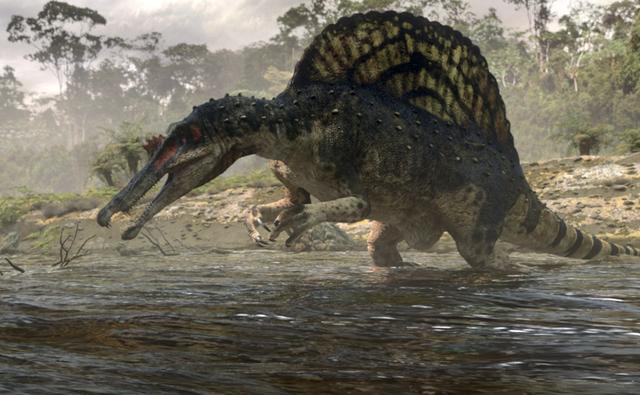
The public profile of this dinosaur was also boosted when it was featured in the first episode of the six-part BBC documentary series “Planet Dinosaur” that first aired ten years ago (2011).

Spinosaurus
From paddler to swimming the “evolving” image of Spinosaurus. The image (above) is from the BBC television series “Planet Dinosaur” that first aired in 2011. Picture Credit: Everything Dinosaur/BBC.

“Spiny or Thorn Lizard”

Known from the Late Cretaceous of North Africa (Cenomanian faunal stage), Spinosaurus (S. aegyptiacus) is regarded by many palaeontologists as the largest theropod dinosaur known to science. Its exact size remains controversial with various size estimates and assessments of body mass having been made. Several studies have indicated that this carnivore could have reached lengths in excess of 15 metres and perhaps weighed as much as 20 tonnes.

Wild Safari Prehistoric World Spinosaurus dinosaur model
The beautiful markings on the Wild Safari Prehistoric World Spinosaurus dinosaur model. Picture credit: Everything Dinosaur.

Picture credit: Everything Dinosaur

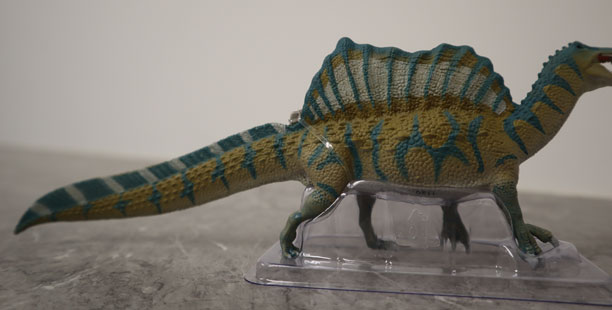
The picture (above) shows the Wild Safari Prehistoric World Spinosaurus figure. The model makers depicted this dinosaur as a quadruped. They took great care to reflect the known science regarding the huge sail. The designers created the model after studying Spinosaurus fossils.

To view the Wild Safari model range: Wild Safari Prehistoric World Models.

A Dinosaur that Behaved Like a Crocodile

Much of what we know about Spinosaurus comes from research carried out over the last twenty-five years. Although it was named and scientifically described over a hundred years ago.

Spinosaurus (S. aegyptiacus), was described in 1915 by the famous German palaeontologist Ernst Stromer von Reichenbach based on fragmentary fossils found in series of expeditions to the Bahariya depression in the Western Desert of Egypt. Much of the fossil material collected during these expeditions was destroyed by allied bombing raids in World War II.

Everything Dinosaur team members have updated the information panel for the exhibition. The panel provides readers with details of some of the most recent research that suggests that Spinosaurus was quadrupedal and semi-aquatic.

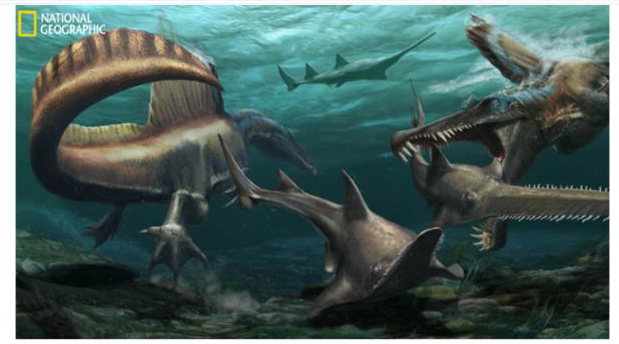
Swimming Spinosaurus 2020
A pair of spinosaurids hunting the giant, prehistoric sawfish Onchopristis. Picture Credit: Davide Bonadonna/National Geographic.

The function of the enormous sail remains a mystery. This structure was formed by elongated spines that were extensions of the back vertebrae. The sail may have played a role in helping this large dinosaur keep cool (thermoregulation). It also may have played a role in visual communication between spinosaurs. The spines could even have supported a fleshy hump that stored reserves of fat. The display panel we have helped to prepare will help to tell the story of how our perceptions regarding “Spiny or Thorn Lizard” has changed over the years.

Visit the award-winning Everything Dinosaur website: Everything Dinosaur.

21 04, 2021

Preparing for a New Avaceratops

By |2024-05-25T14:45:33+01:00April 21st, 2021|Categories: Adobe CS5, Dinosaur and Prehistoric Animal Drawings, Dinosaur Fans, Everything Dinosaur News and Updates, Everything Dinosaur Products, Main Page, Photos of Everything Dinosaur Products, Press Releases|0 Comments

Everything Dinosaur team members are eagerly awaiting the arrival of the Beasts of the Mesozoic Wave 2 ceratopsian figures. There are going to be another nine articulated, horned dinosaur models added to this exciting range and the shipment of models is already on the water heading to our warehouse. However, unlike other companies, we like to offer a little more with every Beasts of the Mesozoic model that we supply. Everything Dinosaur customers receive a fact sheet to accompany their Beasts of the Mesozoic ceratopsian. As a result, we have been reviewing existing data sheets and preparing three new ones specifically for Spiclypeus (S. shipporum), Wendiceratops (W. pinhornensis) and Avaceratops (A. lammersi).

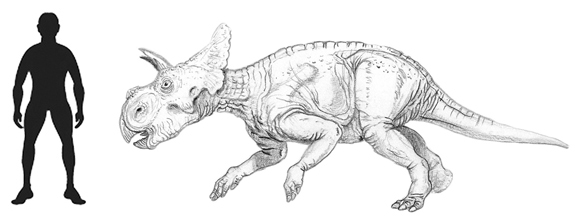
Our work also involves us commissioning illustrations of dinosaurs so we can include a scale drawing in our fact sheet.

Avaceratops Scale Drawing
A scale drawing of Avaceratops lammersi known from the Judith River Formation of Montana (USA).  Picture credit: Everything Dinosaur.

Picture credit: Everything Dinosaur

Helping to Educate and Inform

A spokesperson from Everything Dinosaur commented:

“We might have had to stop our school visits due to the impact of the COVID-19 pandemic, but we still have at the very heart of this business the ethos of helping to educate and inform. For all the Beasts of the Mesozoic articulated figures we have a fact sheet available that tells customers something about the science behind the model. We have all the first wave of the Ceratopsia covered and shortly we will have completed our work on the data sheets required for Wave 2.”

Visit the Everything Dinosaur website: Dinosaur Toys and Prehistoric Animal Figures.
Beasts of the Mesozoic Avaceratops lammersi
The Beasts of the Mesozoic Avaceratops lammersi articulated dinosaur model. Part of the second wave of Beasts of the Mesozoic ceratopsians, the Avaceratops has nineteen points of articulation and is supplied with an Everything Dinosaur fact sheet.

The spokesperson added that these new articulated dinosaur models would be in stock at Everything Dinosaur in early May (2021).

To view the range of Beasts of the Mesozoic models and replicas available from Everything Dinosaur: Beasts of the Mesozoic “Raptors” and Horned Dinosaurs.
19 04, 2021

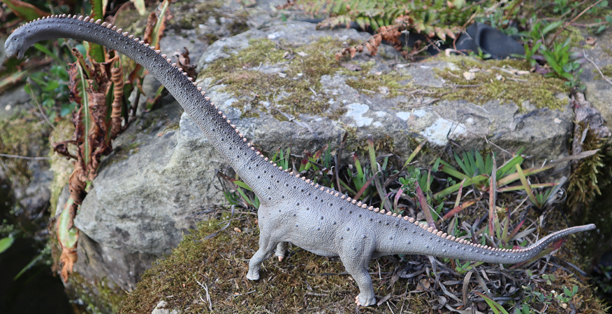
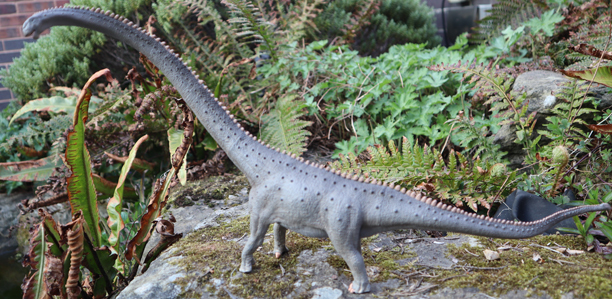
The New CollectA Deluxe Mamenchisaurus is Reviewed

By |2024-05-25T14:38:45+01:00April 19th, 2021|Categories: Adobe CS5, Dinosaur Fans, Everything Dinosaur Products, Main Page, Photos of Everything Dinosaur Products, Product Reviews|0 Comments

The new for 2021 CollectA Deluxe Mamenchisaurus dinosaur model is now in stock at Everything Dinosaur. This is one of the biggest sauropod figures that CollectA have made and this beautifully detailed replica has certainly impressed model fans and collectors.
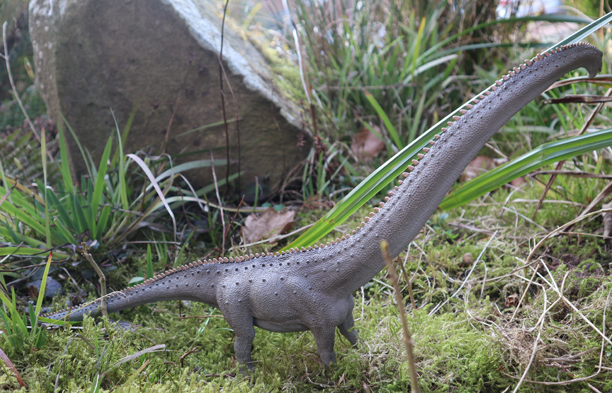
CollectA Deluxe Mamenchisaurus Dinosaur Model
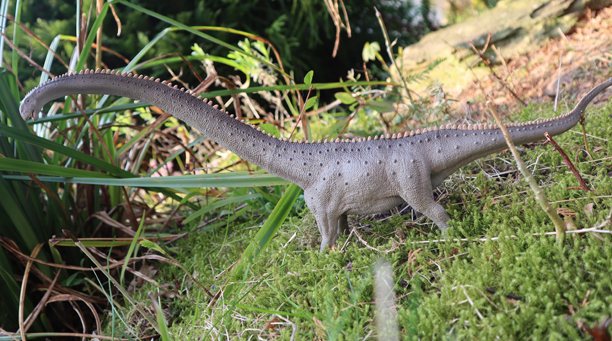
The beautifully detailed CollectA Deluxe Mamenchisaurus dinosaur model (lateral view).  Picture credit: Everything Dinosaur.

Picture credit: Everything Dinosaur

Scale Dinosaur Model

CollectA have declared a scale of 1:100 for their Mamenchisaurus. As the model measures around 40 cm in length this figure represents a dinosaur that would have measured approximately 40 metres, this is perhaps a little too large for most of the Mamenchisaurus species named to date.

The CollectA Mamenchisaurus Sauropod Figure
CollectA Mamenchisaurus model.  Picture credit: Everything Dinosaur.

Picture credit: Everything Dinosaur

The Everything Dinosaur website: Dinosaur Toys.

The model has been exquisitely designed. The neck is slightly curved and the small head is turned towards the animal’s left shoulder. This pose gives the model a more natural look, the animal is moving along and looking towards its left as it walks. The head has been beautifully crafted, the nostrils are visible and the mouth is open displaying the small teeth. There were teeth present all along the jawline and this has been accurately portrayed in the CollectA model.

CollectA Deluxe Mamenchisaurus (close view of the head)
A close view of the exquisitely detailed head of the CollectA Mamenchisaurus model.  Picture credit: Everything Dinosaur.

Picture credit: Everything Dinosaur

Fine Detail of Scales and Dermal Armour

As well as having a row of prominent spikes that descend from the back of the head down to the end of the tail, the design team at CollectA have added rows of raised scutes along the neck, flanks and down the tail of the figure. There is much to be admired in the fine skin texture and the limbs have been proportioned to reflect the fossil record. The claws and toes have been painted in the same tan tone as the spikes and this realistic dinosaur model has been given a cloaca.

The CollectA Deluxe Mamenchisaurus Model
The dermal scutes and raised scales on the model can be clearly seen in this photograph.  Picture credit: Everything Dinosaur.

Picture credit: Everything Dinosaur

An Asian Sauropod

It is refreshing to see CollectA create a scale model of a Chinese sauropod rather than a replica of a sauropod associated with western North America and the Morrison Formation. Due to the large number of fossils assigned to this genus, thanks to huge numbers of bones found in Shaximiao Formation exposures (Sichuan Province, China), Mamenchisaurus is one of the best known of all the Jurassic members of the Sauropoda. It is great to see a mainstream manufacturer such as CollectA make a model of this dinosaur.

CollectA Deluxe Mamenchisaurus Dinosaur Model
The new for 2021 CollectA Deluxe Mamenchisaurus dinosaur model.  Picture credit: Everything Dinosaur.

Picture credit: Everything Dinosaur

Highly Recommended

The figure has been given a small defensive club on the end of its tail, reminiscent of Shunosaurus. There may be some debate as to whether this dinosaur possessed such a club, fused caudal vertebrae in at least one specimen does suggest that a tail club was present.

All in all, this is a very detailed model and it is a very welcome addition to the CollectA Deluxe model range.

CollectA Deluxe Mamenchisaurus Model
CollectA Deluxe Mamenchisaurus dinosaur model.  Picture credit: Everything Dinosaur.

Picture credit: Everything Dinosaur

To view the CollectA Deluxe Mamenchisaurus and to see the other figures available from Everything Dinosaur in this this range: CollectA Deluxe Prehistoric Life Models.

Go to Top