All about dinosaurs, fossils and prehistoric animals by Everything Dinosaur team members.

Everything Dinosaur’s work with photoshop and other platforms.

13 10, 2022

Dinosaur Mummies an Alternate Fossilisation Pathway According to New Research

By |2024-03-09T17:06:18+00:00October 13th, 2022|Categories: Adobe CS5, Dinosaur and Prehistoric Animal News Stories, Dinosaur Fans, Main Page, Palaeontological articles, Photos/Pictures of Fossils|0 Comments

Research into a beautifully preserved Edmontosaurus fossil suggests that dinosaur mummies might be more common than previously thought. The Edmontosaurus specimen found by Tyler Lyson when exploring Slope County (North Dakota) and Hell Creek Formation exposures contained therein is providing palaeontologists with an insight into the fossilisation process that might produce a “dinosaur mummy”.

A mummified dinosaur was thought to require two mutually exclusive taphonomic processes in order to form. Firstly, to have the carcase exposed on the surface for a considerable portion of time to permit the remains to dry out and become desiccated. Secondly, rapid burial and deposition to preserve what remains of the corpse.

The taphonomy of the Edmontosaurus specimen (NDGS 2000), suggests that there may be other circumstances the lead to the mummified remains of dinosaurs.
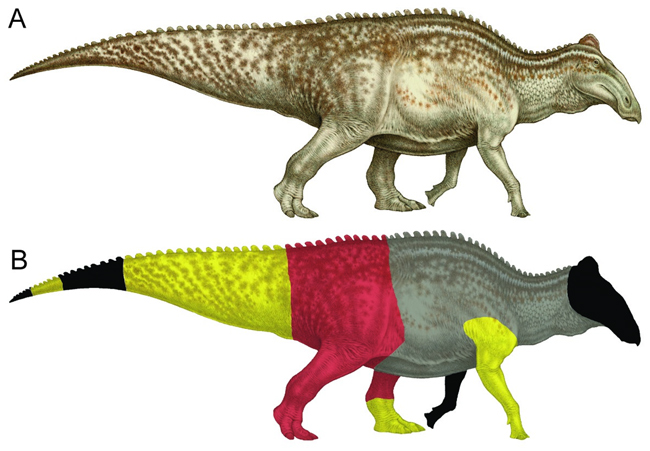
Edmontosaurus "Dakota" Skin Preservation
Distribution and current state of preparation of the preserved skin on the Edmontosaurus specimen (NDGS 2000). Life reconstruction by Natee Puttapipat. Black areas in the diagram indicate portions of the skeleton apparently absent from the specimen, light grey areas indicate regions where the skeleton is preserved but no skin is currently preserved, red areas indicate regions where skin is present and is still undergoing preparation. The yellow shading indicate areas where the skin is fully prepared and were examined in this study. Picture credit: Drumheller et al (PLoS One).

Dinosaur Mummies – Hooves and Fingers (E. annectens)

A team of scientists, including researchers from University of Tennessee–Knoxville, Knoxville, Tennessee and the North Dakota Geological Survey team, writing in the academic journal PLoS One propose a new explanation for how such fossil specimens might form. Large areas of desiccated and seemingly deflated skin have been preserved on the limbs and tail. Such is the degree of preservation of the front limb, (manus) that palaeontologists have discovered that Edmontosaurus (E. annectens) had a hoof-like nail on the third digit.

This discovery led to a substantial revision of Edmontosaurus limb anatomy in prehistoric animal replicas, as epitomised by the recently introduced CollectA Deluxe 1:40 scale Edmontosaurus.
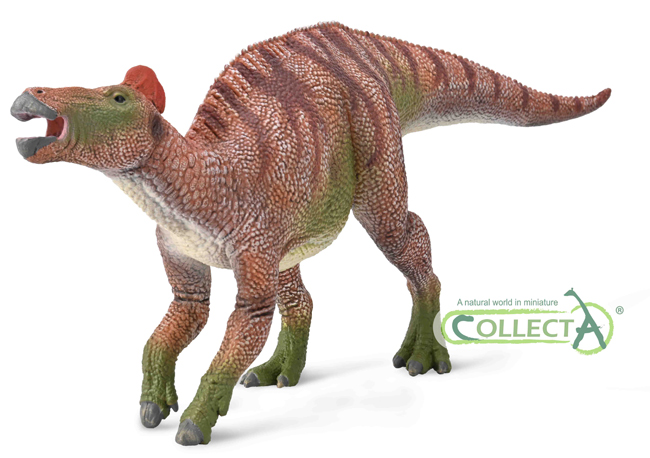
CollectA Deluxe 1:40 scale Edmontosaurus dinosaur model
The new for 2022 CollectA Deluxe 1:40 scale Edmontosaurus dinosaur model. CollectA had wanted to introduce a replica of this iconic Late Cretaceous hadrosaur for some time. Many of the details such as the hoof-like third digit on the hand and the enlarged scales on the neck replicate what the scientists have discovered by studying the Edmontosaurus dinosaur mummy known as Dakota.

To read a blog article that contains a video review of the Edmontosaurus and explains more about the “dinosaur mummy” research: Everything Dinosaur Reviews the CollectA Deluxe Edmontosaurus Dinosaur Model.

Evidence of Scavenging

The research team identified bite marks from carnivores upon the dinosaur’s skin. These are the first examples of unhealed carnivore damage on fossil dinosaur skin, and furthermore, this is evidence that the dinosaur carcass was not protected from scavengers by being rapidly buried, yet it became a mummy nonetheless.

Many of the marks suggest bites from the conical teeth of crocodyliforms, although pathology associated with the tail is more difficult to interpret. The researchers suggest that some of the “V-shaped” patterns identified suggest that flexible, clawed digits rather than more rigidly fixed teeth, may have been responsible for these injuries. Perhaps these marks were caused by feeding deinonychosaurs (Dakotaraptor steini) or perhaps a juvenile T. rex.

Examining the Decomposition of Carcases

If the carcase was scavenged, then it was not buried rapidly and one of the supposed pre-requisites for “dinosaur mummification” did not occur with this fossil specimen. Instead, the researchers propose an alternative route for the creation of such remarkable fossils, a theory that has been influenced by what is observed in the world today. When scavengers feed on a carcase, they rip open the body and feed on the internal organs. Punctures made in the body allow fluids and gases formed by decomposition to escape, thus permitting the skin to dry out, forming a desiccated, dried out husk.
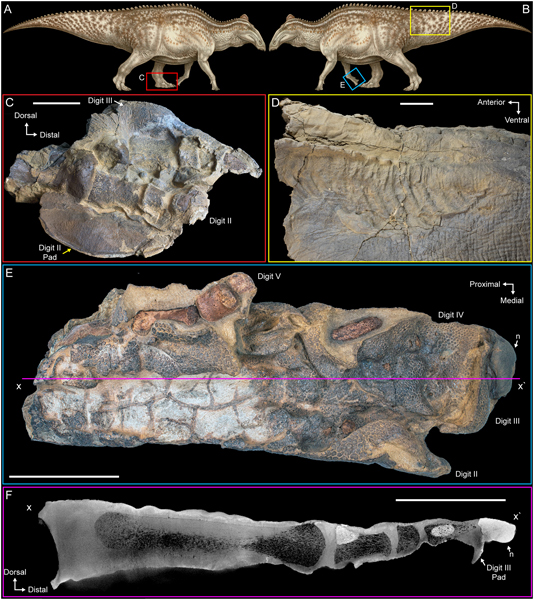
Evidence of desiccation of the Edmontosaurus fossil
Evidence of desiccation in the preserved remains of the Edmontosaurus (specimen number NDGS 2000). Note all scale bars equal 10 cm. Life reconstruction by Natee Puttapipat. Picture credit: Drumheller et al (PLoS One).

Dinosaur Skin More Commonly Preserved

The research team postulate that if the more durable soft tissues can persist some months prior to burial to permit desiccation to occur, then dinosaur skin fossils, although rare, are possibly, more commonly preserved than expected.
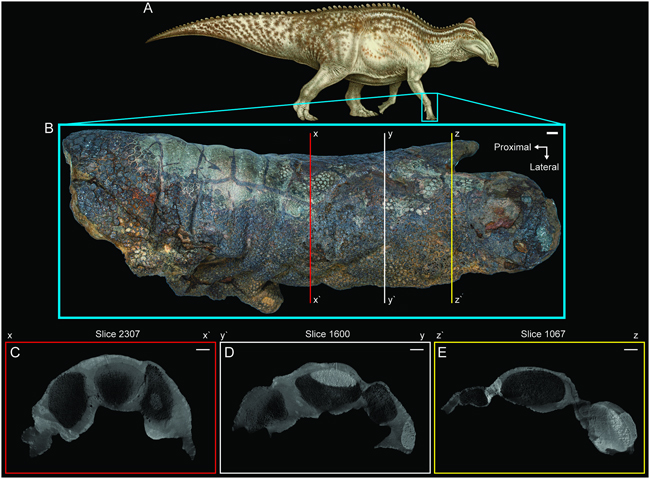
Edmontosaurus "Dakota" right manus preservation pathway
Cross sectional views through the right manus of the Edmontosaurus fossil (NDGS 2000). NDGS 2000 reconstruction in right lateral view (A). Right manus in dorsal view indicating the positions of the three cross sectional views (B). CT image along line x to x’ (C). CT image along line y to y’ (D). CT image along line z to z’ (E). In (C), (D), and (E), slice numbers from the original CT data are provided above each image. Paleoart in (A) by Natee Puttapipat. Scale bars equal 1 cm. Picture credit: Drumheller et al (PLoS One).

A New Theory on How “Dinosaur Mummies” Could Form

It is important to make clear that what a palaeontologist refers to as a “dinosaur mummy” is not the same as the mummified remains of an Egyptian deity. The skin and other soft tissues are permineralised, they are rock, although it is noted that molecular sampling of this Edmontosaurus specimen yielded putative dinosaurian biomarkers such as evidence of degraded proteins, suggesting that soft tissue was preserved directly in this specimen.

Generally, the two presumed prerequisites for mummification, that of being exposed on the surface for some time to permit the corpse to desiccate and rapid burial are incompatible. So, the researchers propose a new theory on how a “dinosaur mummy” could form:

  • A corpse is scavenged creating puncture marks to allow fluids and gases to escape.
  • Smaller organisms such as invertebrates and microbes exploit these punctures to access the internal organs and other parts of the skeleton.
  • Consumption from within in conjunction with decomposition allows the skin to deflate and to drape over the underlying bones that are more resistant to feeding and decay.
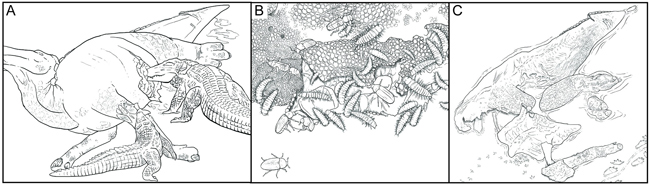
Edmontosaurus soft tissue preservation pathway.
Proposed soft tissue preservational pathway for the Edmontosaurus fossil. Incomplete predation and/or scavenging of the carcass creates openings in the body wall through which fluids and gasses can escape (A). Invertebrates and microbes (B) use those openings to access the internal tissues. Removal of internal soft tissues and drainage of fluids and gasses associated with decomposition allows the deflated skin and other dermal tissues to desiccate and drape over the underlying bones (C). Illustration by Becky Barnes. Picture credit: Drumheller et al (PLoS One).

The scientists hope that this new paper will help with the excavation, collection and preparation of fossils. The presence of soft tissues and biomarkers such as degraded proteins demonstrate that rapid burial may not be a pre-requisite to permit their preservation. As a result, such evidence as skin, soft tissue and biomarkers may be more common in the fossil record than previously thought.

The scientific paper: “Biostratinomic alterations of an Edmontosaurus “mummy” reveal a pathway for soft tissue preservation without invoking ‘exceptional conditions'” by Stephanie K. Drumheller, Clint A. Boyd, Becky M. S. Barnes and Mindy L. Householder published in PLoS One.
12 10, 2022

New Study into Stegoceras Muscles

By |2024-03-09T19:10:12+00:00October 12th, 2022|Categories: Adobe CS5, Dinosaur and Prehistoric Animal News Stories, Dinosaur Fans, Main Page, Palaeontological articles|0 Comments

Researchers have examined the musculature of a bone-headed dinosaur in a bid to better understand hypothesised intraspecific, head-butting combat. Pachycephalosaurs are a group of Late Cretaceous, bipedal ornithischian dinosaurs known from Asia and North America. They are characterised by their thickened skulls, which are sometimes adorned with lumps, bumps and spikes.

The skulls, some of which can be up to 20 cm thick have been the focus of a lot of research. It has been suggested that these thickened skull domes evolved as these dinosaurs indulged in intraspecific head-butting contests, either head-to-head impacts or using their heads to butt the flanks of their opponents.

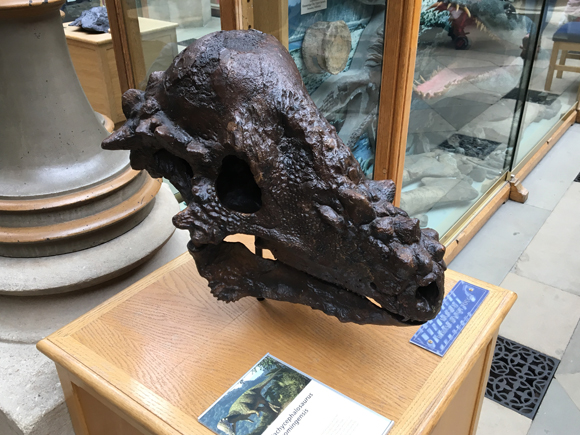
A replica skull of Pachycephalosaurus wyomingensis.
Pachycephalosaurus wyomingensis replica skull. The thickened skull domes, which in some specimens of P. wyomingensis were up to 20 cm thick are thought to have evolved as these dinosaurs participated in intraspecific head-butting combat. Picture credit: Everything Dinosaur.

To read a blog post from 2011 looking at the evidence for head-butting combat in pachycephalosaurs: Study Supports Theory of Pachycephalosaur Intraspecific Combat (Head-butting).

Stegoceras Muscle Study

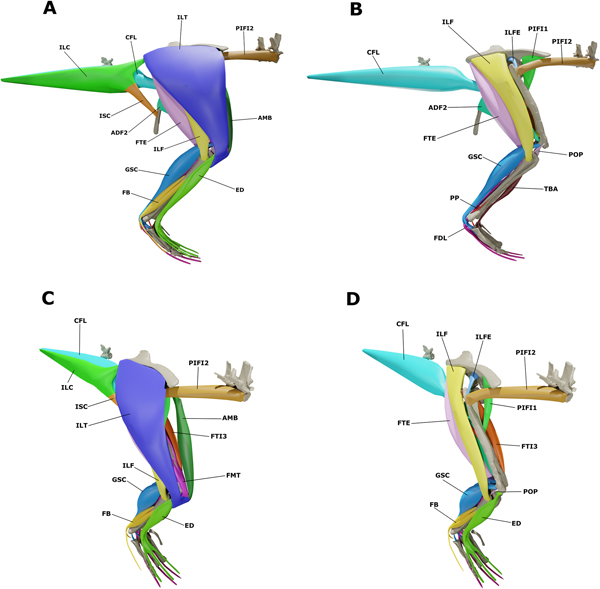
Writing in the open-access, on-line journal PLoS One, researchers from Carleton University, Ottawa in collaboration with Professor Phil Currie (University of Alberta) have examined the postcranial skeleton of a specimen of the pachycephalosaur Stegoceras validum to gain a better understanding of the musculature of the limbs, hips and the base of the tail. The specimen (UALVP 2) is one of the best preserved pachycephalosaur postcranial skeletons discovered to date and the best preserved pachycephalosaur discovered in Canada. The limb bones preserve muscle scars and other surface textures which enabled the research team to accurately construct the muscles associated with the forelimbs, hindlimbs and the pelvic region.

Pachycepahlosaurus indulging in head-butting combat.  Reporting upon a Stegoceras muscle study.
A charging Pachycephalosaurus.

Focusing on Muscles Not Bones

Unlike most studies relating to the Dinosauria, the fossil bones were not the central focus of this research. The scientists who include Professor Phil Currie (University of Alberta) and PhD student Bryan Moore (Carleton University), examined the bones to determine the layout, shape and size of the muscles that were attached to them. The team were interested in mapping the *myology of the back end of a pachycephalosaur so that they could assess how the postcranial skeleton would have assisted with the hypothesised head-butting contests.

The term *myology refers to the study of the shape, structure and arrangement of muscles.

Stegoceras muscle study.
Pelvic and hind limb muscular reconstruction of Stegoceras validum. Superficial musculature in lateral view (A). Deep musculature in lateral view (B). Superficial musculature in anterodorsolateral view (C) and (D) deep musculature in anterodorsolateral view. Picture credit: Moore et al/PLoS One.

Strong Legs and a Wide Pelvis

The study of specimen number UALVP 2 demonstrated that the forelimbs of Stegoceras validum were not especially robust and strong, particularly in comparison to early, lizard-hipped bipeds such as the Triassic theropod Tawa hallae. However, in contrast, in Stegoceras the hind limbs and pelvic area were more robust with large, powerful muscles associated with the pelvis, the thighs and the base of the tail. These larger muscles, in combination with the wide pelvis and stout hind limbs, produced a stronger, more stable pelvic structure that would have proved advantageous during hypothesised intraspecific head-butting contests.

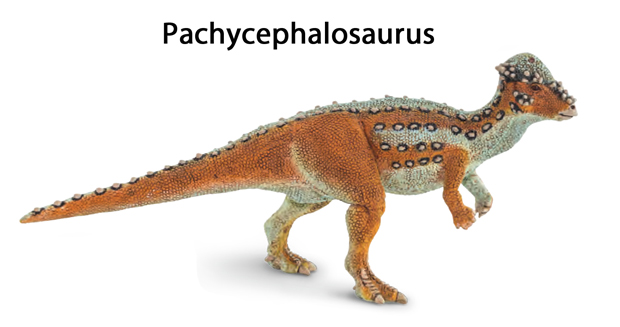
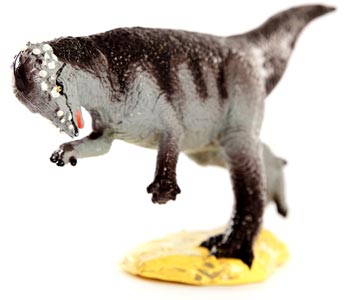
The new for 2020 Wild Safari Prehistoric World Pachycephalosaurus dinosaur model.
The new for 2020 Wild Safari Prehistoric World Pachycephalosaurus model. The model has a large dent in its skull dome, suggesting damage resulting from a headbutting contest with a rival.

The picture above shows a Pachycephalosaurus dinosaur model from the Wild Safari Prehistoric World range, to view this range of figures in stock at Everything Dinosaur: Safari Ltd Dinosaur Models.

The research team concludes that the hind quarters of Stegoceras evolved to help this small dinosaur deliver and absorb impact forces associated with the proposed head-butting behaviour. The scientists suggest that more research is needed to examine the potential velocity at which the thickened skull could be propelled forward during such contests. They propose additional research assessing the postcranial properties of other pachycephalosaurs and comparing their bauplan with similar sized dinosaurs such as Thescelosaurus (T. neglectus).

The scientific paper: “The appendicular myology of Stegoceras validum (Ornithischia: Pachycephalosauridae) and implications for the head-butting hypothesis” by Bryan R. S. Moore, Mathew J. Roloson, Philip J. Currie, Michael J. Ryan, R. Timothy Patterson and Jordan C. Mallon published in PLoS One.

The Everything Dinosaur website: Everything Dinosaur.

10 10, 2022

Wild Safari Prehistoric World Citipati

By |2022-10-13T14:54:40+01:00October 10th, 2022|Categories: Adobe CS5, Dinosaur Fans, Everything Dinosaur Products, Main Page, Photos of Everything Dinosaur Products|0 Comments

Time for Everything Dinosaur team members to take a look at the Wild Safari Prehistoric World Citipati dinosaur model, after the manufacturer (Safari Ltd) sent Everything Dinosaur some extra pictures of this popular feathered replica.

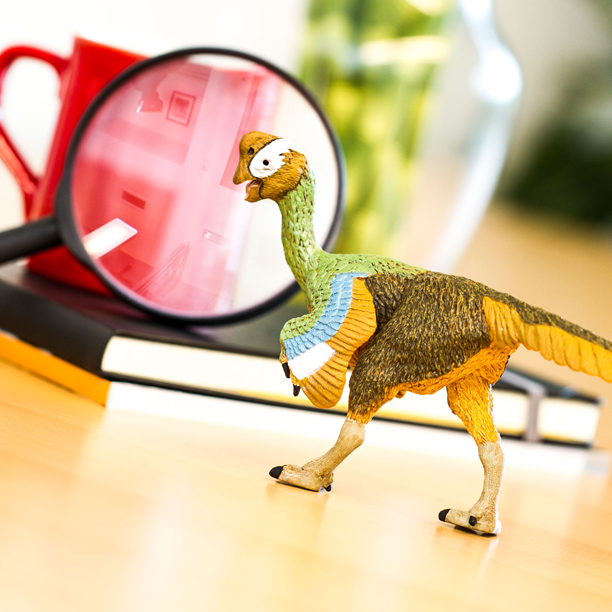
Wild Safari Prehistoric World Citipati dinosaur model.
Under the magnifying glass! Safari Limited’s Wild Safari Prehistoric World feathered Citipati replica.

Wild Safari Prehistoric World Citipati

Originally introduced in 2019, into Safari Limited’s Wild Safari Prehistoric World series, this colourful replica has swiftly become a firm favourite with dinosaur fans and collectors of prehistoric animal models.

The manufacturing and distribution of this dinosaur figure was prescient. Production of the model was underway when a new scientific paper was published proposing that additional specimens should be added to the Citipati genus. The genus name for this three-metre-long theropod comes from the Sanskrit for “funeral pyre lord”, a reference to a tale from Buddhist folklore about two religious disciples that were beheaded by a thief. The beautifully preserved Citipati specimens were excavated from the red sandstone deposits of the Djadokhta Formation. The species name is in honour of the Polish palaeontologist Halszka Osmólska (1930 – 2008), who pioneered research into Asian dinosaurs and made a substantial contribution to our understanding of the diversity of the Theropoda from the Upper Cretaceous deposits of Mongolia.

Wild Safari Prehistoric World Citipati.
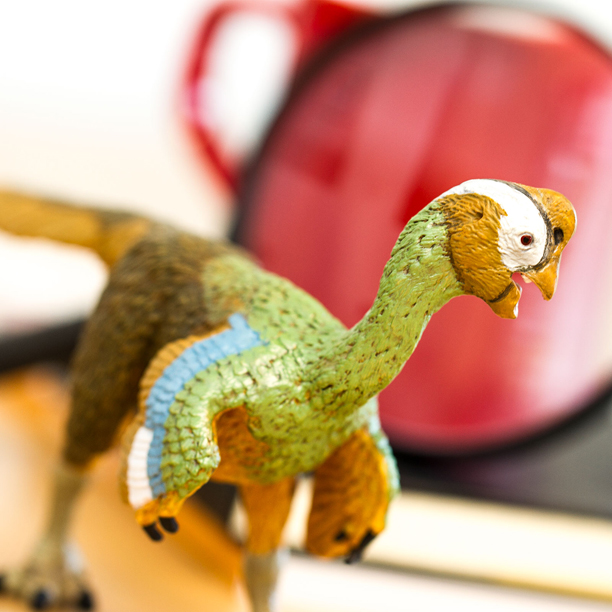
Home on the range – the Wild Safari Prehistoric World Citipati dinosaur figure, a wonderful replica of a Late Cretaceous feathered theropod dinosaur.

Accurate and Detailed Prehistoric Animal Models

Safari Ltd has built up a strong reputation for the production of accurate and detailed prehistoric animal models. The Citipati figure is just one of a series of feathered theropod models in the Wild Safari Prehistoric World range. To view this range: Feathered Dinosaurs and Prehistoric Animal Models (Safari Ltd).

Wild Safari Prehistoric World Citipati dinosaur figure.
Citipati dinosaur model. One of a selection of Citipati images sent to Everything Dinosaur team members by our chums at Safari Ltd.
8 10, 2022

Meeting Some Old Friends – A Special Trip to a Museum

By |2024-03-09T17:07:17+00:00October 8th, 2022|Categories: Adobe CS5, Dinosaur Fans, Main Page, Photos|0 Comments

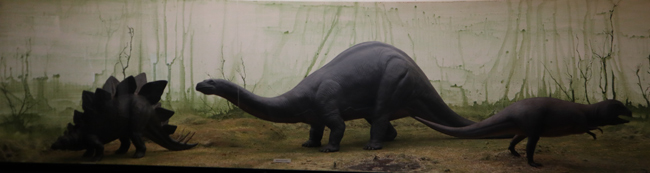
Whilst on a trip to Liverpool team members at Everything Dinosaur took the opportunity to briefly visit the fabulous Liverpool World Museum and meet up with some old friends. On the fourth floor in the dinosaur gallery there are some cases that display dinosaur replicas, typical examples of the fauna associated with a geological period, although our visit was short, we were able to take a photograph of the Jurassic dinosaur models that were on display.

Liverpool World Museum Jurassic dinosaurs.
An exhibit at Liverpool World Museum showcasing typical Jurassic dinosaurs. Picture credit: Everything Dinosaur.

Jurassic Dinosaur Models

The display case shows a Stegosaurus (left), a sauropod (centre) and a replica of a theropod dinosaur (right). Everything Dinosaur does not know when the models were commissioned or installed but the exhibit could have been first set up in the 1970s. This display case has been a part of the Museum’s Earth Gallery for as long as we can remember.

The models, although carefully crafted, provide what is now a very outdated view of typical members of the Dinosauria. There is a certain nostalgia for exhibits such as this. Whilst it is acknowledged that this is not a modern depiction, over the years, we have grown rather fond of this trio of dinosaurs and others like them that adorn the display cabinets.

When visiting the fourth floor of the Liverpool World Museum to view the collection of fossils and the casts of dinosaurs on display, it is always a highlight of our visit to take a moment or two to reacquaint ourselves with some old friends.

27 09, 2022

Palaeontology in Video Games

By |2023-02-07T09:25:47+00:00September 27th, 2022|Categories: Adobe CS5, Dinosaur and Prehistoric Animal News Stories, Dinosaur Fans, Main Page, Palaeontological articles|3 Comments

Palaeontology, dinosaurs and prehistoric animals are frequently subjects for video games. Players have the opportunity to construct their own “Jurassic Park”, go fossil collecting and combat dinosaurs. A new study indicates that these games may contain negative and harmful themes that can confuse and lead to misconceptions about palaeontology.

An international team of researchers, led by scientists from the University of Birmingham, played and studied a variety of video games containing elements of palaeontology. An eclectic range of video games were sampled including Super Mario World, Animal Crossing and the “Jurassic Park/World” games. The team attempted to map what was “palaeo-fact” and what was “palaeo-fiction”.

A timeline of palaeontology in video games
Timeline of palaeontology in video games. Picture credit: Clements et al/University of Birmingham.

Sorting “Palaeo-fact” from “Palaeo-fiction”

Dr Thomas Clements (University of Birmingham) and a co-author of the study explained:

“Loads of people are inspired by and get their understanding of dinosaurs from movie blockbusters like Jurassic Park, but no one talks about how massive the gaming industry is in shaping not only the public’s understanding of ancient life and also of paleontological science.”

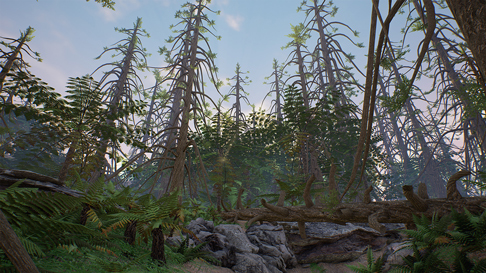
A Triassic forest from a video game.
Gamers will be able to explore a number of terrestrial environments. A Triassic forest environment from a video game. Picture credit: Daniel Carter.

Pleasantly Surprised by the Accuracy

The researchers were pleasantly surprised by the accuracy of some of the games. However, they quickly identified numerous negative tones that were repeatedly reflected in the gaming environment.

Dr Clements commented:

“When we played through many of these games, we were pleasantly surprised about the accuracy of games like Animal Crossing that provide accurate and educational information in a fun and engaging way. However, we also found that many games contain misleading, negative, and sometimes quite damaging themes – many already widespread issues in the gaming industry. It is common for palaeo-games to contain ethically dubious science, the illegal collection of fossils, ‘monsterification’ of animals, poor representation of minority groups, and the hypersexualisation of women.”

Writing in the journal EGUsphere Geoscience Communications, the scientists analysed the representation of palaeontology in hundreds of video games, classifying them into several categories. They then defined a number of factors which may help or hinder a video game’s effectiveness in promoting palaeontology to a wider audience. Their study has implications for ways that science communicators can address these issues when talking to the public about palaeontology and has a wider role in helping to support gender equality and ethnic diversity.

Portraying Palaeontology to the Public

Co-author Jake Atterby (University of Birmingham), stated:

“This paper is about how the science of palaeontology is portrayed to the public, at a time when many people get a lot of their knowledge from media and entertainment. Audiences can subconsciously learn from the media they consume, including depictions of our science that are deliberately exaggerated for entertainment. This can give players a false impression of ancient life and the work that we do. It is important for palaeontologists to understand the public’s perception of our science to help when we communicate our research.

Everything Dinosaur acknowledges the assistance of a media release from the University of Birmingham in the compilation of this article.

The scientific paper: “The perception of palaeontology in commercial off-the-shelf video games and an assessment of their potential as educational tools” by Thomas Clements, Jake Atterby, Terri Cleary, Richard P. Dearden and Valentina Rossi published in EGUsphere Geoscience Communications.

25 09, 2022

Everything Dinosaur’s Latest Customer Newsletter

By |2024-03-19T16:51:36+00:00September 25th, 2022|Categories: Adobe CS5, Dinosaur Fans, Everything Dinosaur News and Updates, Everything Dinosaur Newsletters, Everything Dinosaur Products, Main Page, Press Releases|0 Comments

Everything Dinosaur’s customer newsletter for September features the latest Rebor replicas to arrive, a chance to purchase rare Rebor museum quality Titanoboas and two CollectA deluxe dinosaurs including the recently introduced CollectA deluxe Triceratops horridus dinosaur model.

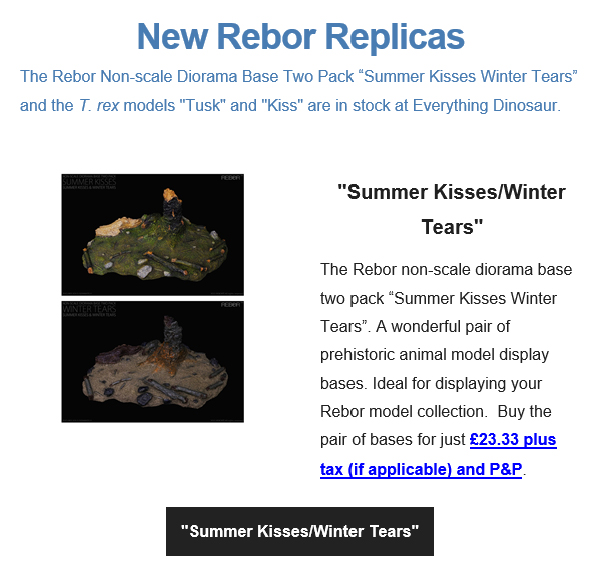
The new Rebor non-scale, diorama display bases “Summer Kisses and “Winter Tears” provide the headlines for our latest customer communication.

Rebor Summer Kisses and Winter Tears display bases.
The Rebor “Summer Kisses” and “Winter Tears” display bases feature in Everything Dinosaur’s September newsletter. Picture credit: Everything Dinosaur.

Everything Dinosaur’s Customer Newsletter – Rebor Replicas

“Summer Kisses” and “Winter Tears” are the first, bespoke diorama bases to be introduced into Rebor’s extensive model range. They contain amazing detail and the tree stump featured on the bases provides extra support and stability for Rebor replicas. To read about these exciting new additions: Looking at “Winter Tears” and “Summer Kisses”.

Please note, the outer packaging for these figures has been damaged in transit to our warehouse. Whilst we have opened, inspected and checked all the display bases, unfortunately the outer packaging for the Rebor Non-scale Diorama bases is below the standard one would normally expect.

Rebor T. rex Models “Kiss” and “Tusk”

Also prominent in Everything Dinosaur’s customer newsletter are the two new Rebor Tyrannosaurus rex models “Kiss” and “Tusk”. The “Kiss” T. rex figure has been given lips, whilst “Tusk” reflects a more conventional view with T. rex being lipless and having an overbite.

Both newly introduced theropod replicas have proved to be extremely popular with model collectors.

Rebor Tyrannosaurus rex figures "Kiss" and "Tusk".
The two new for 2022 Rebor Tyrannosaurus rex models feature in Everything Dinosaur’s September customer newsletter. The Rebor “Tusk” a dinosaur model without lips and an overbite is left, whilst the lipped Rebor “Kiss is “right”. Picture credit: Everything Dinosaur.

Rebor Titanoboa Museum Class Maquettes

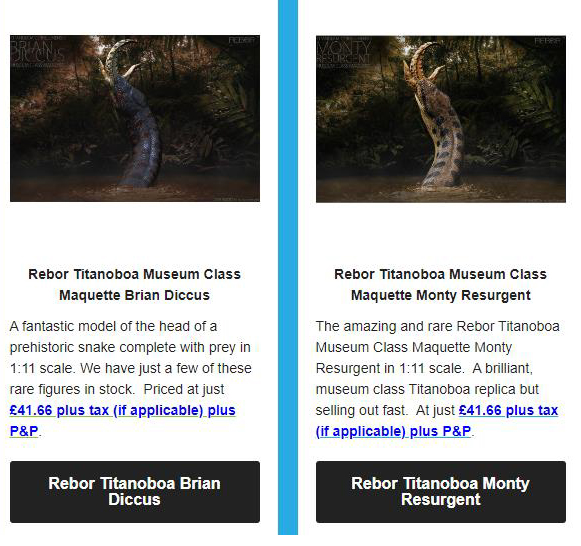
Customers who have subscribed to Everything Dinosaur’s free newsletter have also been given an update on the availability of the two special-edition Rebor Titanoboa maquettes “Brian Diccus” and “Monty Resurgent”. These 1:11 scale replicas were originally introduced in 2021 but are now becoming increasingly rare and difficult to obtain. Fortunately, for model collectors Everything Dinosaur does still have these figures in stock.

To view the wide selection of Rebor models available from Everything Dinosaur: Rebor Replicas Figures and Models.

Rebor Titanoboa figures.
The two, special-edition Rebor Titanoboa Museum Class maquettes feature in the latest Everything Dinosaur customer newsletter. Picture credit: Everything Dinosaur.

CollectA Deluxe Prehistoric World Figures

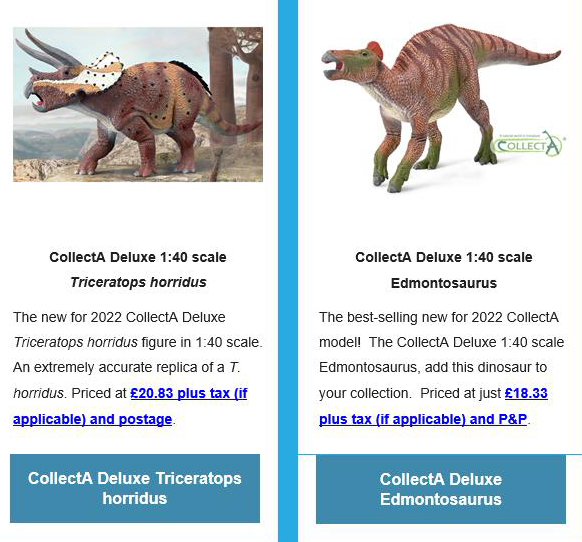
The latest edition of the Everything Dinosaur customer newsletter also features the recently arrived CollectA Deluxe Triceratops horridus model and highlights the best-selling CollectA Deluxe Edmontosaurus. These ornithischian models demonstrate the quality of workmanship associated with the CollectA ranges.

CollectA Deluxe Triceratops horridus and CollectA Edmontosaurus
The Everything Dinosaur September newsletter features the recently arrived CollectA Deluxe Triceratops horridus and the best-selling CollectA Deluxe Edmontosaurus. Picture credit: Everything Dinosaur.

To view the range of CollectA deluxe figures in stock: CollectA Deluxe Prehistoric World Models.

A spokesperson from Everything Dinosaur explained that the company sends out informative and helpful product updates from time to time and recommended that model collectors subscribe.

Contact Everything Dinosaur to request joining our newsletter mailing list: Email Everything Dinosaur.

22 09, 2022

Bring Back “April” Campaign Launched to Restore Unique Fossil Specimen

By |2024-04-13T08:57:39+01:00September 22nd, 2022|Categories: Adobe CS5, Dinosaur and Prehistoric Animal News Stories, Dinosaur Fans, Main Page, Palaeontological articles|0 Comments

The University of Manchester has launched a campaign to bring back “April” the Tenontosaurus. Manchester Museum is asking for public support to install a stunning Tenontosaurus fossilised skeleton, one of the most complete specimens of this Early Cretaceous ornithopod ever found.

The Museum is hoping to raise £10,000 GBP ($11,280.00 USD), to enable the Tenontosaurus to be restored and installed in the Dinosaurs and Fossils gallery as an exhibit with the 110-million-year-old fossil bones in their correct anatomical positions.

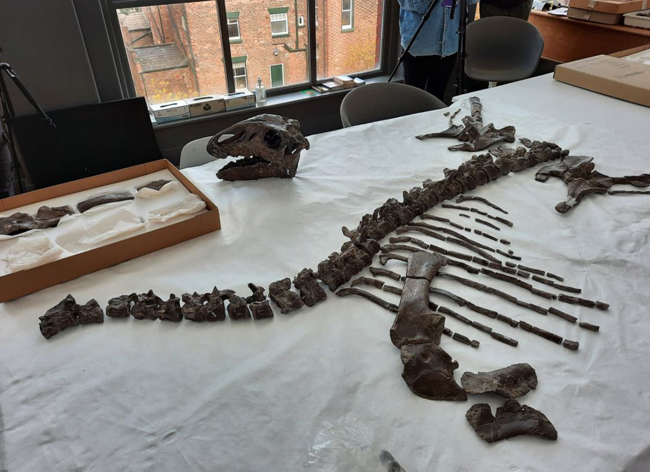
The fossilised remains of April the Tenontosaurus laid out in anatomical position.
The fossilised remains of “April” the Tenontosaurus partially laid out in anatomical position. Picture credit: The University of Manchester.

The Tenontosaurus specimen (MANCH LL.12275) was purchased by the University of Manchester in 1999. It has been the subject of a recent scientific paper which confirmed the presence of gastroliths (stomach stones), the first evidence of gastroliths to be identified in a derived member of the Ornithopoda.

To read about this scientific research: “April” the Tenontosaurus Reveals Her Secrets.

Bring Back “April”

The stunning fossil specimen comes from Montana, and it is affectionately named “April” after the wife of Barry James who originally prepared the fossil for display. When first put on show to the public it was portrayed in an upright position, like a super-sized kangaroo with its tail resting on the ground. However, research from Earth Sciences students from the University of Manchester has shed light on how the skeleton would have walked and posed in life.

Tenonotosaurus skeleton made ready for exhibition.
The original mount of “April” the Tenontosaurus. The skeleton was dismantled and put into storage when a replica of a T. rex skeleton made its debut at the museum. Picture credit: The University of Manchester.

Thousands of Hours of Restoration Work is Required

The Curator of the Earth Science Collections at the Manchester Museum David Gelsthorpe outlined the aims of the fund-raising effort and explained some of the problems that this restoration project will pose.

He commented:

“April is a Tenontosaurus purchased by Manchester Museum in 1999 and was previously displayed standing upright. Over the past few years, we have been working with a team of Earth Sciences students from the University of Manchester to carefully study April’s bones and find out more about her. Using their palaeontology skills and computer modelling, their research has helped us to better understand how she would have moved on all fours. As well as changing the way the skeleton stands, over 10,000 hours of careful conservation work is required to restore its bones.”

The Museum is requesting donations to help bring “April” back to her best and to permit her to be once again an integral part of the Museum’s Dinosaurs and Fossils Gallery.

To read more about this campaign and to make a donation: Support Manchester Museum Help Bring “April” Back.

The restored skull of "April" the Tenontosaurus
Tenontosaurus skull in left lateral view. The stunning and beautifully restored “April” the Tenontosaurus skull. Picture credit: The University of Manchester.

A New Dinosaur Display

If the fund raising succeeds than the Tenontosaurus specimen will form the focal point of a brand-new exhibition devoted entirely to the Dinosauria, planned for April 2023. Visitors will have the opportunity to view prehistoric giants, such as “Stan” the Tyrannosaurus rex cast and to learn about British dinosaur fossil discoveries. The demise of the Dinosauria and many other types of animals and plants as a result of a mass extinction event, some sixty-six million years ago, will be linked to today’s problems of climate change and the current rate of extinction.

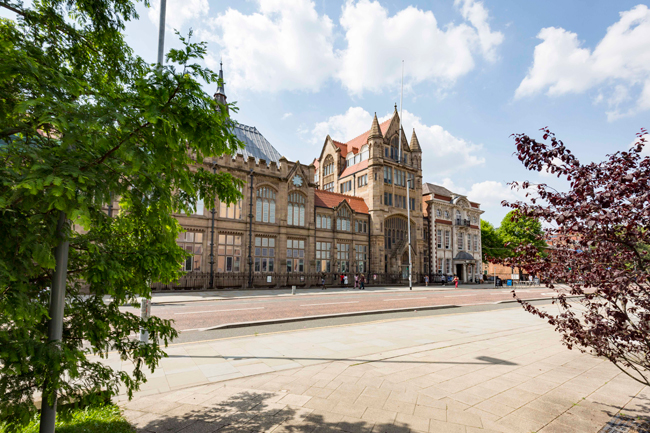
Manchester Museum.
The front entrance of the Manchester Museum, a neo-Gothic building that houses approximately 4.5 million artefacts from the natural sciences and human history. A new dinosaur exhibit is scheduled to open in February 2023. Picture credit: The University of Manchester.

Plans for the new dinosaur exhibit are part of a larger scheme of improvements planned for Manchester Museum which has been entitled “Hello Future”.

To play your part and contribute to “April’s” restoration, please visit: Support Manchester Museum. Every donation will go towards helping to put “April” back on display.

Everything Dinosaur acknowledges the assistance of a media release from Manchester Museum in the compilation of this article.

21 09, 2022

Beautiful Rebor Summer Kisses Winter Tears Diorama Bases

By |2024-04-13T08:58:18+01:00September 21st, 2022|Categories: Adobe CS5, Dinosaur Fans, Everything Dinosaur News and Updates, Everything Dinosaur Products, Main Page, Photos of Everything Dinosaur Products, Press Releases|0 Comments

The Rebor Summer Kisses Winter Tears diorama bases are in stock at Everything Dinosaur. Two fantastic prehistoric animal display bases. These are the first, bespoke diorama bases to have been made by Rebor and as their names suggest each base depicts the same landscape but in a different season. The Winter Tears base depicts an arid environment typical of the dry season, whilst Summer Kisses is verdant and lush, illustrating a landscape after recent rains.

Rebor Summer Kisses Winter Tears diorama bases
The Rebor diorama display bases Summer Kisses (top) and Winter Tears (bottom). Picture credit: Everything Dinosaur.

Suitable for Lots of Different Dinosaurs

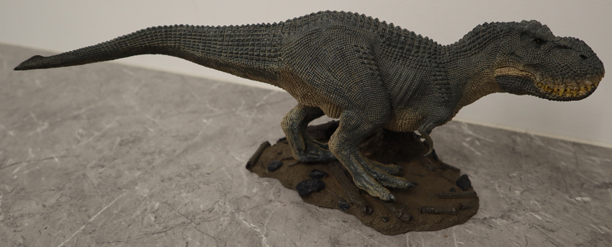
The two beautifully painted diorama display bases can be used with a huge range of dinosaur and prehistoric animal figures. For example, team members posed a Rebor Vanilla Ice tyrannosaur figure on a base. This theropod model, one that was introduced by Rebor in 2018, looks very much at home on both Winter Tears and Summer Kisses.

Rebor dinosaur model on display.
The Rebor tyrannosaur figure Vanilla Ice Mountain on the “Winter Tears” display base. Picture credit: Everything Dinosaur.

Lots of Details on the Bases

Each base has lots of detail, including stones and plenty of small sticks. A large tree stump towards the rear of each base provides additional support for any prehistoric figure that is to be displayed. Both Summer Kisses and Winter Tears are made from durable polystone and there is plenty of space amongst the debris to position a prehistoric animal figure securely.

Close-up view of the Rebor tyrannosaur model Vanilla Ice Mountain on the "Summer Kisses" display base.
A close-up view of the Rebor tyrannosaur model Vanilla Ice Mountain on the “Summer Kisses” display base. Picture credit: Everything Dinosaur.

A spokesperson from Everything Dinosaur commented:

“We congratulate the manufacturer for producing such detailed display bases. The Rebor Summer Kisses Winter Tears diorama bases represent the same piece of landscape, but in different seasons – a dry season and a wet season.”

To view the range of Rebor prehistoric animal figures and the display bases in stock at Everything Dinosaur: The Rebor Dinosaur and Prehistoric Animal Model Collection.

Note: The outer packaging for these figures has been damaged in transit to our warehouse. Whilst we have opened, inspected and checked all the display bases, unfortunately the outer packaging for the Rebor Non-scale Diorama bases is below the standard one would normally expect.

20 09, 2022

New Rebor Tyrannosaurus rex Figures in Stock

By |2024-04-13T08:56:47+01:00September 20th, 2022|Categories: Adobe CS5, Dinosaur Fans, Everything Dinosaur News and Updates, Everything Dinosaur Products, Main Page, Photos of Everything Dinosaur Products, Press Releases|0 Comments

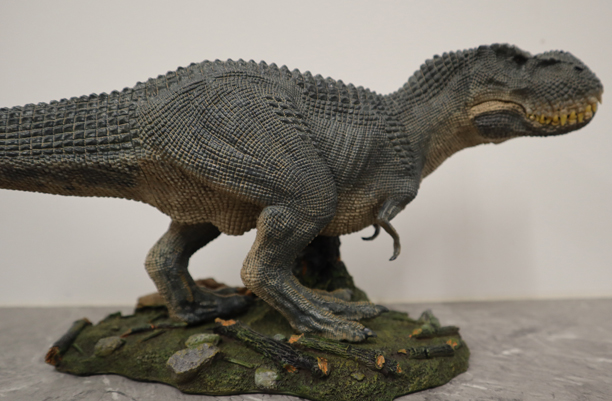
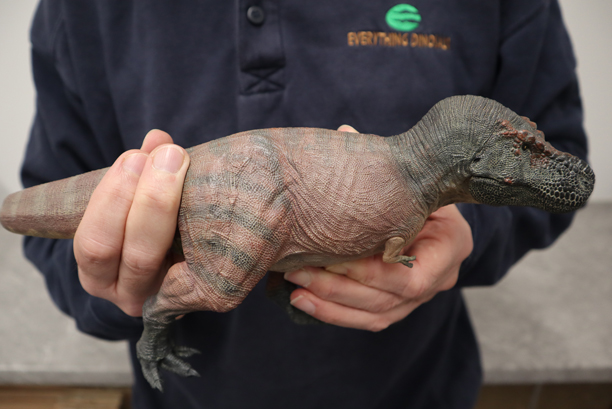
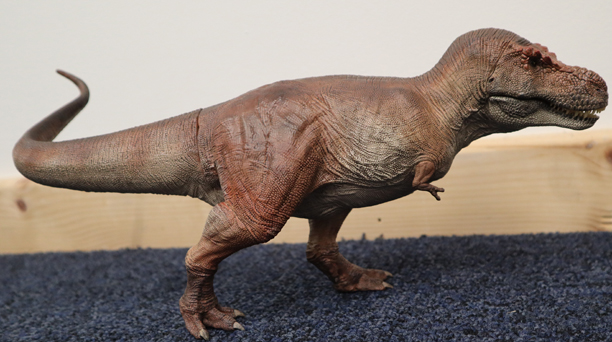
New for 2022 Rebor Tyrannosaurus rex figures in stock at Everything Dinosaur. The Rebor T. rex Kiss Mountain and the Rebor T. rex Tusk King T. rex Requiem figures have arrived at Everything Dinosaur’s warehouse. The “Kiss” figure has been given lips, whilst the “Tusk” replica has a more typical overbite as seen in earlier Rebor tyrannosaurs.

Rebor T. rex Kiss Mountain dinosaur model.
The Rebor Kiss T. rex figure (Mountain), this tyrannosaur model has been given lips. Picture credit: Everything Dinosaur.

The Rebor T. rex Kiss Mountain Model

The Rebor T. rex Kiss Mountain model measures a little over 40 cm in length and that impressive head stands around 14 cm off the ground. Like its counterpart figure T. rex Tusk, this figure has a declared scale of 1:35.

Rebor Kiss Mountain T. rex model
A dinosaur model with lips. The new for 2022 Rebor T. rex Kiss Mountain model in 1:35 scale. A wonderful model of a Tyrannosaurus rex. Picture credit: Everything Dinosaur.

Rebor T. rex Tusk King T. rex Requiem Model

The Rebor T. rex figure called Tusk (T. rex Tusk King T. rex Requiem) has a colouration superficially similar to the original Rebor King T. rex, which was the second tyrannosauroid model to be made by Rebor. It has an articulated jaw and moveable arms, but depicts this iconic tyrannosaur without lips. Tusk is the same size and scale as the Kiss figure.

Such is the stability of these excellent theropods, that they were able to be placed on the office carpet without the need of the clear, plastic support that is supplied with these figures.

Rebor T. rex Tusk dinosaur model.
The Rebor T. rex Tusk King T. rex Requiem model is supplied with a transparent plastic support base, but our models appear quite stable even standing on our office carpet without the need for the support stand. Picture credit: Everything Dinosaur.

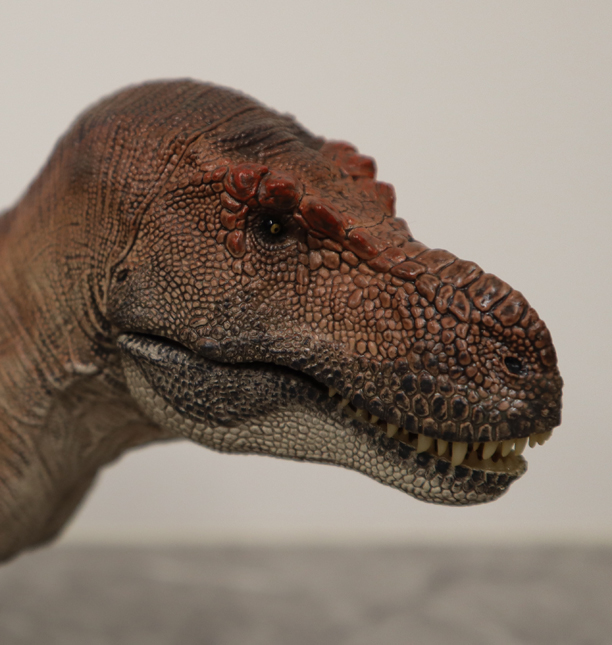
Both models have been beautifully painted and show some stunning details. A spokesperson from Everything Dinosaur commented on the impressive lacrimal crests of these models, particularly the crimson-coloured crests of Tusk.

A close-up view of the Rebor T. rex Tusk figure.
A close-up view of the detail on the head of the Rebor T. rex Tusk dinosaur model. The Rebor figure has most impressive lacrimal crests. Picture credit: Everything Dinosaur.

Rebor Tyrannosaurus rex Figures in Stock

To view the range of Rebor dinosaur and prehistoric animal models stocked by Everything Dinosaur: Rebor Prehistoric Animal Models and Figures.

16 09, 2022

A Devonian Heart

By |2023-02-25T20:51:42+00:00September 16th, 2022|Categories: Adobe CS5, Dinosaur and Prehistoric Animal News Stories, Main Page, Palaeontological articles, Photos/Pictures of Fossils|0 Comments

Researchers have discovered a 380-million-year-old fossilised heart, along with other internal organs of prehistoric fish. This exciting discovery is not only helping palaeontologists to understand the internal organs of placoderms, these fossils are also providing a fresh perspective on our own evolution.

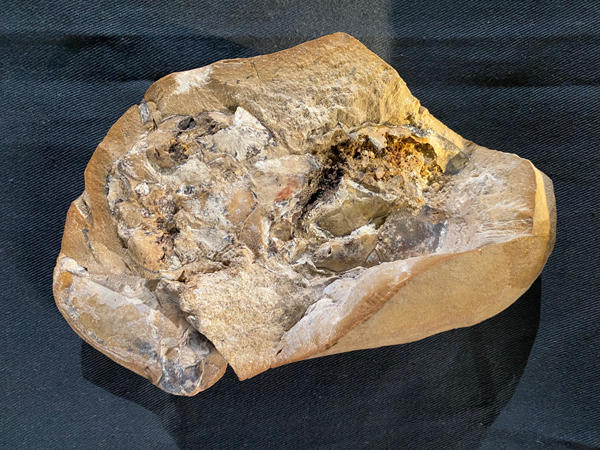
The Gogo fish fossil where the 380-million-year-old, 3-D preserved heart was discovered by the research team.
The Gogo fish fossil where the 380-million-year-old, 3-D preserved heart was discovered by the research team. Picture credit: Curtin University.

Fossilised Internal Organs in Ancient Armoured, Jawed Fish

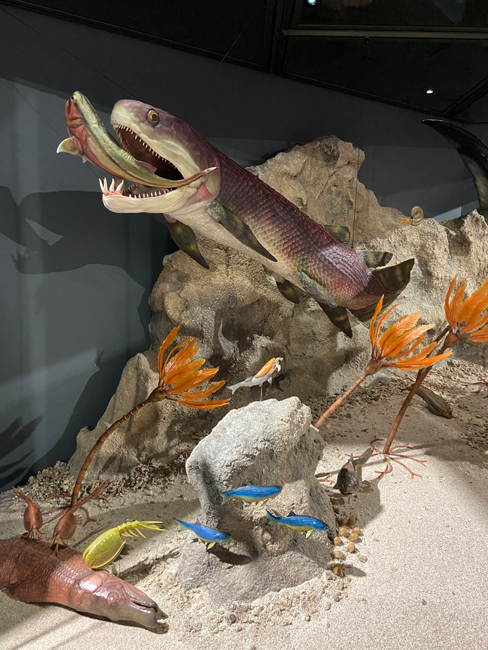
The remarkably well-preserved fossils representing the Devonian placoderm Compagopiscis, come from the famous Gogo Formation, in the Kimberley region of Western Australia. The Gogo Lagerstätte preserves the fauna that once thrived on an ancient, shallow water reef. The fossils are thought to be around 380 million years old (Frasnian faunal stage of the Late Devonian).

Gogo fish diorama
Gogo fish diorama at the West Australia Museum Boola Bardip depicting the typical fauna associated with the Gogo Lagerstätte. Typical inhabitants of a tropical reef that existed approximately 380 million years ago. Picture credit: Curtin University.

Soft Tissues Including Liver and Intestines but No Evidence of Lungs

The international research team led by scientists from Curtin University and the Western Australia Museum have published their findings in the academic journal “Science”. They have identified a number of internal organs preserved in three-dimensions including the liver and intestines. Additionally, the fossils show that the lungs are absent, refuting the hypothesis that lungs are ancestral in jawed vertebrates.

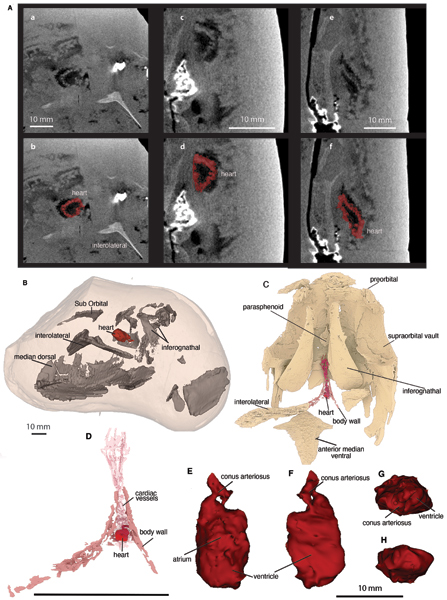
CT scans and interpretive models showing the heart of the placoderm Compagopiscis.
CT scans and interpretive models showing the heart of the placoderm Compagopiscis. Picture credit: Curtin University.

Details Revealed by Computerised Tomography

In collaboration with scientists at the Australian Nuclear Science and Technology Organisation in Sydney and the European Synchrotron Radiation Facility in Grenoble, France, researchers used neutron beams and synchrotron x-rays to scan the specimens, still embedded in limestone concretions. They constructed three-dimensional, computer-generated images of the soft tissues inside them based on the different densities of minerals deposited by the bacteria and the surrounding rock matrix.

Lead researcher and John Curtin Distinguished Professor Kate Trinajstic (Curtin’s School of Molecular
and Life Sciences and the Western Australian Museum), commented that to find three-dimensionally preserved tissues in Devonian fossils was an extremely rare event.

Professor Trinajstic explained:

“As a palaeontologist who has studied fossils for more than 20 years, I was truly amazed to find a 3-D and
beautifully preserved heart in a 380-million-year-old ancestor. Evolution is often thought of as a series of small steps, but these ancient fossils suggest there was a larger leap between jawless and jawed vertebrates. These fish literally have their hearts in their mouths and under their gills – just like sharks today.”

The Complex Heart of an Arthrodiran

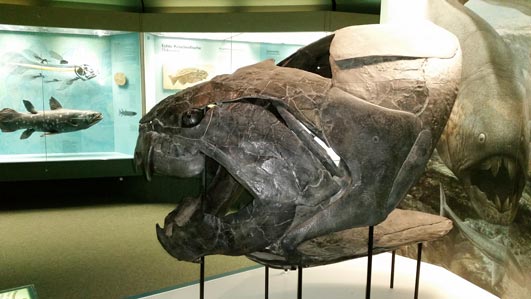
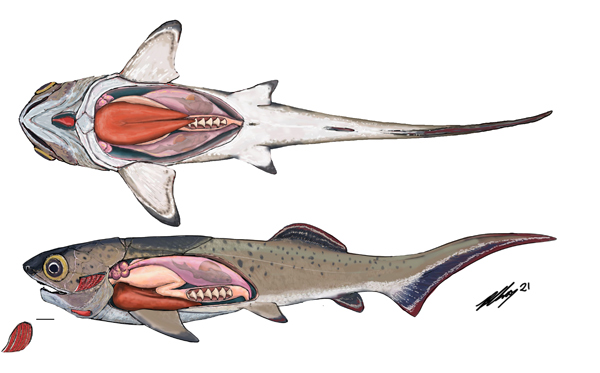
This is the first time a 3-D representation of the heart of a member of the Arthrodira has been found. The Arthrodira are an extinct Order of jawed, armoured fish within the Class Placodermi. They thrived in the Devonian and some arthrodirans evolved into apex predators such as the huge Dunkleosteus.

Dunkleosteus on display.
The spectacular Dunkleosteus exhibit. A giant apex predator of the Devonian. Picture credit: Everything Dinosaur.

The surprising complex heart is s-shaped and consists of two chambers with the smaller chamber sitting on top. Professor Trinajstic stated that these features were advanced in such early vertebrates, offering scientists a unique perspective on how the head and neck region began to change to accommodate jaws, a critical stage in the evolution of animals with backbones.

Reconstruction of arthrodire internal anatomy.
Reconstruction of arthrodire internal anatomy. Picture credit: Curtin University.

Learning About the Anatomy of a Primitive Jawed Fish

The discovery and subsequent detailed analysis of these mineralised soft tissues, in combination with earlier studies looking at muscle structure, placoderm embryos and evidence of viviparity makes the Gogo Lagerstätte an exceptionally important fossil resource as researchers strive to improve their knowledge of early vertebrates.

Professor Trinajstic added:

“For the first time, we can see all the organs together in a primitive jawed fish, and we were especially surprised to learn that they were not so different from us. However, there was one critical difference – the liver was large and enabled the fish to remain buoyant, just like sharks today. Some of today’s bony fish such as lungfish and bichirs have lungs that evolved from swim bladders, but it was significant that we found no evidence of lungs in any of the extinct armoured fishes we examined, which suggests that they evolved independently in the bony fishes at a later date.”

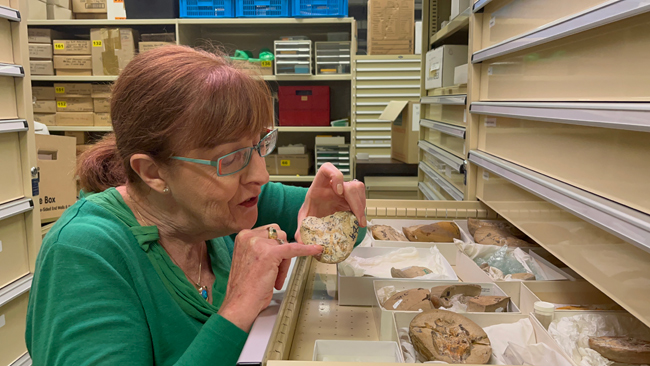
Professor Kate Trinajstic inspects the ancient fossils at the Western Australia Museum.
Professor Kate Trinajstic inspects the ancient fossils at the Western Australia Museum Boola Bardip. Picture credit: Curtin University.

The Stuff of Palaeontologists’ Dreams

Co-author of the scientific paper, Professor John Long (Flinders University, Adelaide, South Australia) commented:

“These new discoveries of soft organs in these ancient fishes are truly the stuff of palaeontologists’ dreams, for without doubt these fossils are the best preserved in the world for this age. They show the value of the Gogo fossils for understanding the big steps in our distant evolution. Gogo has given us world firsts, from the origins of sex to the oldest vertebrate heart, and is now one of the most significant fossil sites in the world. It’s time the site was seriously considered for world heritage status.”

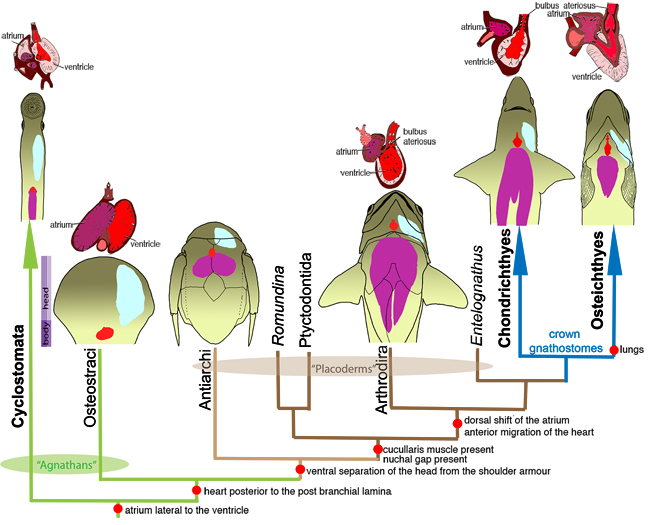
A cladogram depicting the evolution of the heart in early vertebrates.
A cladogram depicting the evolution of the heart in early vertebrates. Picture credit: Curtin University.

To read an earlier blog post about a fossil from the Upper Devonian Gogo Formation that indicates live birth (viviparity) in placoderms: Evidence of Live Birth (Viviparity) in a 380-million-year-old Fish.

Exceptional Fossils Meet Exceptional Technology

Co-author of the paper Professor Per Ahlberg (Uppsala University, Sweden) explained that access to state-of-the-art, non-destructive scanning technology enabled scientists to make such exceptional discoveries.

Professor Ahlberg explained:

“What’s really exceptional about the Gogo fishes is that their soft tissues are preserved in three dimensions. Most cases of soft-tissue preservation are found in flattened fossils, where the soft anatomy is little more than a stain on the rock. We are also very fortunate in that modern scanning techniques allow us to study these fragile soft tissues without destroying them. A couple of decades ago, the project would have been impossible.”

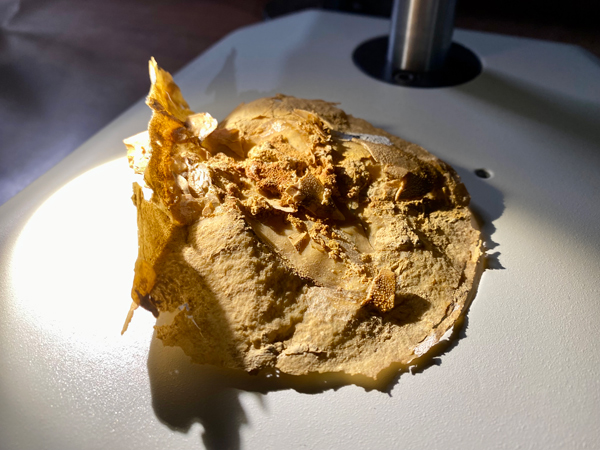
The preserved stomach of a Gogo fish fossil under the microscope.
The preserved stomach of a Gogo fish fossil under the microscope. Picture credit: Curtin University.

A Collaborative Effort

The research was truly a collaborative effort not only involving the Australian Nuclear Science and Technology Organisation and the European Synchrotron Radiation Facility, but also scientists from Flinders University, the Western Australian Museum, Uppsala University, South Australia Museum and Monash University’s Australian Regenerative Medicine Institute.

Everything Dinosaur acknowledges the assistance of a media release from Curtin University in the compilation of this article.

The scientific paper: “Exceptional preservation of organs in Devonian placoderms from the Gogo lagerstätte” by Kate Trinajstic, John A. Long, Sophie Sanchez, Catherine A. Boisvert, Daniel Snitting, Paul Tafforeau, Vincent Dupret, Alice M. Clement, Peter D. Currie, Brett Roelofs, Joseph J. Bevitt, Michael S. Y. Lee and Per E. Ahlberg published in the journal Science.

Go to Top