Team members at Everything Dinosaur have been busy making plans for the arrival of the Papo Chilesaurus dinosaur model. The COVID-19 pandemic severely disrupted the production plans of Papo and Chilesaurus, although not planned to be one of the first new for 2020 model releases, it now looks like Chilesaurus will be coming into stock at Everything Dinosaur before the Stygimoloch and the Megaloceros figures.
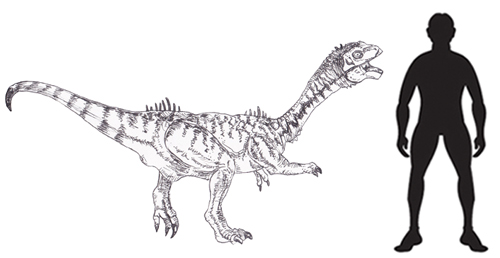
The Chilesaurus Scale Drawing Commissioned by Everything Dinosaur
A scale drawing of the bizarre Late Jurassic dinosaur Chilesaurus.Picture credit: Everything Dinosaur.
Picture credit: Everything Dinosaur
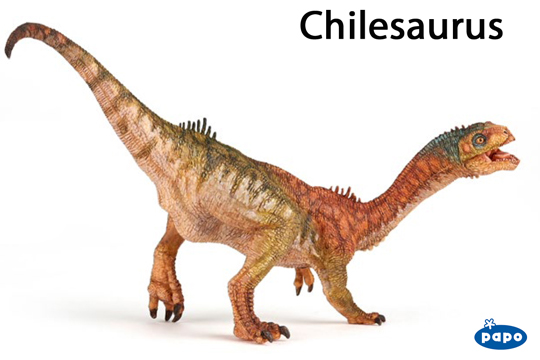
The Papo Chilesaurus Dinosaur Model
The Chilesaurus and the controversial Giganotosaurus are due to arrive first, with the Stygimoloch following a few weeks later. The new Papo Parasaurolophus and feathered Velociraptor colour variants are now scheduled for an early autumn release, although we do stress, that this itinerary is liable to change.
Although several dinosaur tracks and footprints that date from the Jurassic have been found in Chile, when the first fossils of Chilesaurus were discovered by a seven-year-old boy on the 4th of February 2004, these were the first dinosaur body fossils to have been found in Chile.
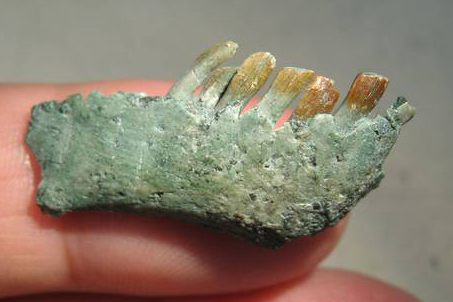
A Fossilised Jaw with Strange Square-shaped Tooth Tips
Teeth adapted for cropping plants. A partial jawbone attributed to Chilesaurus diegosuarezi.
Picture credit: Dr Fernando Novas (Museo Argentino de Ciencias Naturales (Buenos Aires, Argentina)
This bizarre dinosaur, when first formally named and described (2015), was regarded as a tetanuran theropod. The tetanurans are the largest clade of theropod dinosaurs and include all members of the Theropoda more closely related to modern birds than they are to Ceratosaurus. Chilesaurus demonstrated a highly unusual combination of anatomical characteristics that could be interpreted within phylogenetic studies in numerous ways, depending on the data set used.
A Controversial Scientific Paper
Following a controversial scientific paper published in 2017 entitled “A New Hypothesis of Dinosaur Relationships and Early Dinosaur Evolution”, written by Matthew Baron and David Norman (Cambridge University) along with Paul M. Barrett (London Natural History Museum), this little biped has taken up a prominent position within Dinosauria research.
A paper published a few months after the controversial publication that challenged the traditional view of dinosaur classification, suggested that Chilesaurus with its strange suite of features, was not a theropod at all. It was suggested that it was the earliest diverging member of the Ornithischia. It was proposed that Chilesaurus was a “transitional taxon”, bridging the morphological gap between the Theropoda and the Ornithischia.
This little, unassuming dinosaur might just prove to be one of the most significant dinosaur discoveries of the 21st century.
The Papo Chilesaurus Dinosaur Model
The Papo Chilesaurus dinosaur model (available in the next few weeks from Everything Dinosaur).
Looking at the Declared Scale for Prehistoric Animal Models
As collectors, we may be very familiar with many different product lines having a declared scale of 1:40 for dinosaur figures and a scale of 1:20 for prehistoric mammals such as Woolly Mammoths and Sabre-toothed cats, but not all manufacturers use these scales. Even if two prehistoric animal models from two different manufacturers are in 1:40 scale, this does not necessarily mean that these models are going to be the same size.
The Manufacturer CollectA Declares a Variety of Scale Sizes for its Prehistoric Animal Models
Many model manufacturers declare a scale for their prehistoric animal figures. What do these scales mean? Picture credit: Everything Dinosaur.
Picture credit: Everything Dinosaur
What Do These Declared Scales Mean?
Everything Dinosaur team members have been busy working on a short YouTube video that looks at how model manufacturers use varies scales in relation to their prehistoric animal replicas. In this video, we intend to explain how scale sizes are calculated and we urge caution when looking at any declared scale for a given prehistoric animal figure. A myriad of declared scales are used. For example, the Bullyland “Museum Line” range has a declared scale of 1:30, whereas Rebor and PNSO tend to use 1:35 scale, especially for some of their larger models. Papo in contrast, tend not to declare a scale for their “Les Dinosaures” at all.
Even when manufacturers claim the same scale for their figures, the actual models within those ranges can be very different sizes.
Getting to Grips with Prehistoric Animal Models
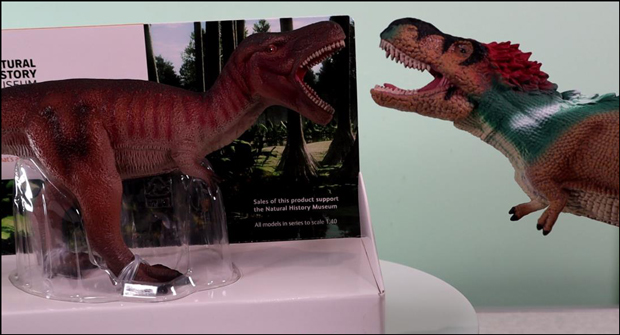
In our informative video, scheduled to be around twelve minutes long, we explore this theme and compare the 1:40 scale Natural History Museum Tyrannosaurus rex model with the CollectA Deluxe roaring, feathered T. rex which also has a declared scale of 1:40.
The London Natural History Museum T. rex Figure is Compared to the CollectA Roaring, Feathered T. rex Model
Comparing T. rex dinosaur models. Although both the CollectA roaring, feathered T. rex and the Natural History Museum T. rex are in 1:40 scale, these models are different sizes. The Natural History Museum T. rex figure is on the left, whilst the CollectA model is shown on the right. Picture credit: Everything Dinosaur.
A spokesperson from Everything Dinosaur commented:
“Our YouTube video looking at how the scale for dinosaur and prehistoric animal models is calculated, aims to help collectors to appreciate some of the difficulties behind working out just how big some dinosaurs were. If palaeontologists are uncertain as to just how big a dinosaur could grow, then it is very challenging for a model manufacturer to accurately scale a figure. The manufacturer has to consider other factors too and we outline some of the issues that need to be considered before deciding how big to make a prehistoric animal model.”
Everything Dinosaur on YouTube
The YouTube channel of Everything Dinosaur was started nearly ten years ago. It aims to provide product reviews, hints and tips as well as useful and informative videos to help model collectors make the most of their prehistoric animal collections.
Everything Dinosaur is expecting its latest shipment of PNSO products to arrive at the company’s warehouse in the next few days. The products have cleared customs and inspection and team members are awaiting to hear the scheduled time of delivery from the transport company. The two new for 2020 baby dinosaur figures (young T. rex and the baby Sinoceratops), will be in stock very soon at Everything Dinosaur.
A-Qi the Baby Sinoceratops Figure from PNSO
A-Qi the baby Sinoceratops model (PNSO).
PNSO Aaron the Baby T. rex Dinosaur Model
Aaron the baby Tyrannosaurus rex dinosaur model (PNSO).
Just like the vast majority of prehistoric animal models that Everything Dinosaur supplies, we intend to provide a free Sinoceratops fact sheet with the PNSO A-Qi Sinoceratops figure. Our team members have been busy preparing for the arrival of the PNSO figures by researching and writing a fact sheet on the only undisputed ceratopsid known from Asia – Sinoceratops zhuchengensis. Just where within the Ceratopsidae family of horned dinosaurs does Sinoceratops fit remains uncertain. Although classified as a member of the Centrosaurinae, it shares a number of anatomical traits with the chasmosaurs too.
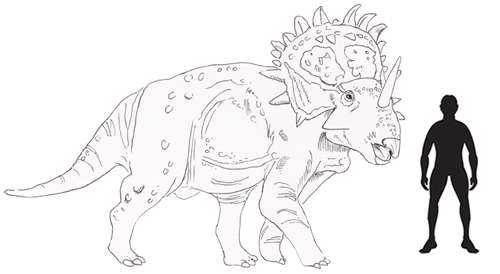
At around six metres in length and weighing two tonnes, it is much larger than other basal centrosaurines, more the size of some of the earliest members of the Chasmosaurinae such as Utahceratops (U. gettyi) from Utah and the geologically older Judiceratops (J. tigris) from Montana.
The Scale Drawing of Sinoceratops (S. zhuchengensis) Prepared for the Everything Dinosaur Fact Sheet
Sinoceratops scale drawing prepared for the Everything Dinosaur fact sheet. Picture credit: Everything Dinosaur.
Picture credit: Everything Dinosaur
Splitting the Ceratopsidae – Chasmosaurs and Centrosaurs
The Ceratopsidae family of horned dinosaurs is further divided into two broad sub-families, the Chasmosaurinae and the Centrosaurinae. In general terms, chasmosaurs are distinguished by their long brow horns with reduced nose horns and tall neck frills. The centrosaurs, in contrast, have large nose horns, reduced brow horns and smaller neck frills. As more and more horned dinosaurs have been discovered and described including basal members of each sub-family, this rather simplified approach has fallen out of favour, the anatomical traits between the Chasmosaurinae and the Centrosaurinae becoming somewhat blurred.
A simplified comparison between the Chasmosaurinae and the Centrosaurinae.Picture credit: Everything Dinosaur.
Picture credit: Everything Dinosaur
In the scientific paper describing Sinoceratops (Xu Xing et al 2010), the authors commented that the Sinoceratops taxon was considerably larger than most other centrosaurines but similar in size to basal chasmosaurines. In addition, the researchers stated that Sinoceratops is more similar to chasmosaurines than to other centrosaurines in several features, thus blurring the distinction of the two ceratopsid subgroups.
The discovery of the first member of the ceratopsids known from outside North America provided significant information on the morphological transition from non-ceratopsid to ceratopsid dinosaurs, but also complicated the biogeography of the Ceratopsidae family as a whole.
Researchers from Brown University (Rhode Island, USA) and Liverpool John Moores University, have plotted the tracks made by living birds in a bid to reveal new information about how some of the early theropod dinosaurs walked. In a paper, published today in Biology Letters, the scientists describe how they analysed the locomotion of guineafowl (Order Galliformes) and discovered that dinosaurs may have moved in a similar way, despite the absence of a long, counter-balancing tail in modern Aves.
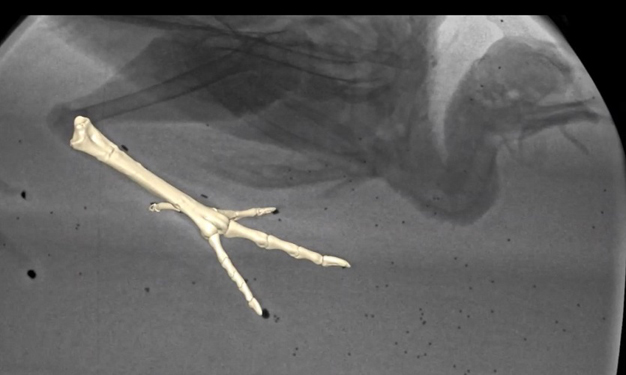
A X-ray Imagery was Used to Map the Movement of Bones in the Foot of Guineafowl
Plotting the foot movements of extant Guineafowl to help interpret Early Jurassic dinosaur footprints.
Picture credit: Turner et al/Liverpool John Moores University
Retaining Features of Their Non-avian Dinosaur Ancestors
The researchers used X-rays to image and plot the bird tracks in three-dimensions, as the guineafowl walked through a variety of substrates with different properties. The feet of ground-dwelling birds retain many features of their dinosaurian ancestors, after all, living birds are members of the Order Theropoda along with famous dinosaurs such as Velociraptor and Tyrannosaurus rex. The locomotion of the guineafowl permits insights into the complex interplay between anatomy, foot motion (kinematics) and substrate. The results can then be used to assess the tracks made by dinosaurs.
Studying Avian Dinosaur Tracks Provides a Fresh Perspective on Ancient Non-avian Dinosaur Fossil Tracks
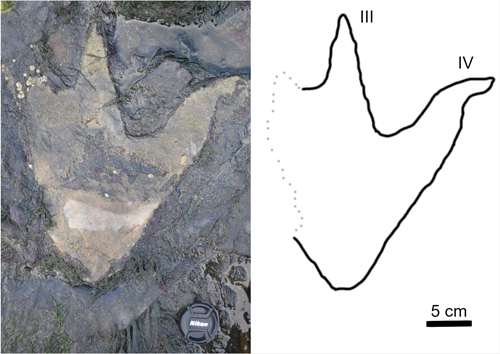
A dinosaur footprint from the Isle of Skye. This new study can shed light on ancient dinosaur trackways.
Picture credit: Scottish National Heritage
A Looping Pattern Below the Ground Identified
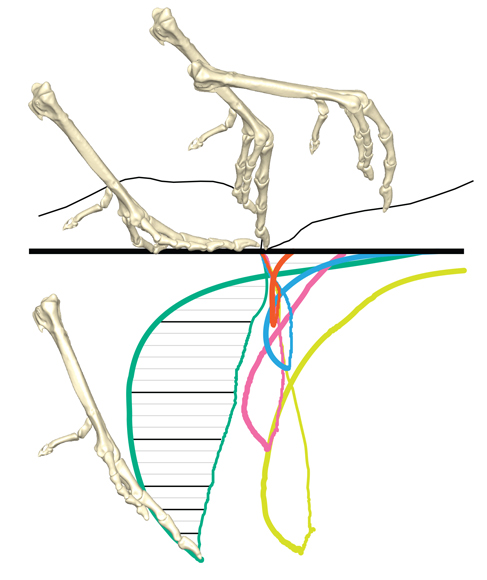
Despite substantial step-to-step variability, the foot consistently moves in a looping pattern below the ground, matching the “looping motion” of dinosaur feet captured in the fossil record from the Early Jurassic.
One of the scientific paper’s authors, Dr Peter Falkingham, a senior lecturer in vertebrate biology at Liverpool John Moores University stated:
“Dinosaurs were moving in very similar ways to modern birds even 200 million years- ago (many millions of years before birds evolved), even though they were quite different, having long, muscular tails, for instance. The similarity of motion, and the similarity of foot shape (three-toed) between dinosaurs 200 million years ago and birds today tells us how successful and versatile that foot has been evolutionarily.”
A Lateral View Showing the Foot Movement and the Looping Pattern of the Toes
Plotting the movement of digit III through a variety of substrates revealing the consistent looping pattern identified below the ground.
Picture credit: Turner et al/Liverpool John Moores University
The scientists report that when a foot sinks into the sediment, a) the sub-surface motion gets recorded and b) the foot has to get out again. Where it exits relative to where it went in can tell us how the foot was moving. Despite substantial kinematic variation, the foot consistently moves in a looping pattern below ground. As the foot sinks and then withdraws, the claws of the three main toes create entry and exit paths in different locations. Sampling these paths at incremental horizons captures two-dimensional features just as fossil tracks do, allowing depth-based zones to be characterised by the presence and relative position of digit impressions.
Analysis of Early Jurassic Theropod Tracks
Exit features and depth zone attribution in Early Jurassic theropod fossil tracks.
Picture credit: Turner et al/Liverpool John Moores University
Studying Theropod Dinosaur Tracks
When the fossilised tracks of a small, theropod dinosaur were examined, the scientists found an equivalent looping response to soft substrates. This study, comparing extant and extinct track-makers provides important new data on substrate properties and will assist with the interpretation of dinosaur tracks providing a fresh perspective on these important trace fossils.
This paper provides a new theoretical framework and vocabulary for describing relative positions of entry and exit traces, offering a new way of studying fossil footprints.
For a related article where researchers from Brown University in collaboration with international colleagues conducted earlier research on dinosaur footprints using guineafowl: Walking with Dinosaurs – the Birth of a Dinosaur Footprint.
Everything Dinosaur acknowledges the assistance of Liverpool John Moores University in the compilation of this article.
The scientific paper: “It’s in the loop: shared sub-surface foot kinematics in birds and other dinosaurs shed light on a new dimension of fossil track diversity” by Morgan L. Turner, Peter L. Falkingham and Stephen M. Gatesy published in Biology Letters.
“Turntable Tuesday” – Mojo Fun Prehistoric Mammals
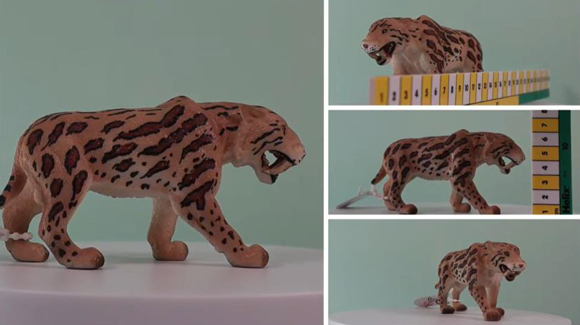
For Everything Dinosaur’s weekly video feature “Turntable Tuesday”, we wanted to do things a little differently. Usually, we showcase a single prehistoric animal figure in a short video review. However, with the addition of a whopping sixteen new Mojo dinosaurs into the “Prehistoric and Extinct” range, team members were concerned that some of the excellent prehistoric mammal models made by Mojo might get overlooked. Rather than highlighting a single figure, the “Turntable Tuesday” feature was extended so that we could display the Cenozoic mammals produced by Mojo. Our latest video features several Mojo Fun prehistoric mammals.
Prehistoric Mammal Models Take a Spin for “Turntable Tuesday”
Mojo Fun Prehistoric Mammals – Often Overlooked Figures in the Range
Prehistoric mammal models, Smilodon, Woolly Mammoths, Brontotheres and such like are not going to sell as well as models of Triceratops, Stegosaurus and T. rex. Manufacturers have to make commercial decisions as to which models they continue to make as their range expands. For collectors, the addition of a lot of new models in a particular product range can sometimes be bad news, as figures of less high profile animals are retired and taken out of production to make room.
The Mojo “Prehistoric and Extinct” Range Contains Some Excellent Prehistoric Mammal Figures
A selection of prehistoric animal models from the Mojo “Prehistoric and Extinct” range. From left to right – Brontotherium, Daeodon, Hyaenodon gigas and the baby Woolly Mammoth model. Picture credit: Everything Dinosaur.
Picture credit: Everything Dinosaur
“Turntable Tuesday” – Mojo Fun Prehistoric Mammals
The “Turntable Tuesday” video lasts for four and a half minutes. Following a brief introduction in which we outline some of the problems that can occur when a model range is expanded dramatically, the Mojo Brontotherium model is discussed. The video swiftly moves on introducing the baby Woolly Mammoth model and the Hyaenodon gigas. Rare, out of production figures are also discussed such as the excellent Mojo Quagga and the recently retired Thylacine replica.
The Mojo Quagga Figure
The Mojo Quagga model. This model has been retired and it is now out of production.
Everything Dinosaur’s video concludes with a look at the Mojo Smilodon, the entelodont (Daeodon) and provides further information on the Mojo “Prehistoric and Extinct” range.
Everything Dinosaur team members made a commitment in 2020 to post up at least fifty new videos on the company’s YouTube channel. This is quite a challenge considering all our other activities on social media, such as this blog site for example. However, Everything Dinosaur is on track to achieve this and recently the company posted up a new YouTube channel trailer to help promote Everything Dinosaur on the YouTube platform.
Our YouTube promotional trailer explains what we do and why we do it! The video lasts a fraction over 2 minutes and it attempts to explain our passion for dinosaur and prehistoric animal model collecting. If you want to learn some of the science behind the prehistoric animal models and figures in your own collection, then watch the trailer through as it packed with examples of our work and highlights of our videos.
Everything Dinosaur’s Trailer Showcases the Variety of Videos the Company has Produced
The YouTube channel hosts a wide variety of dinosaur and prehistoric animal videos. The channel has over 170 prehistoric animal themed videos posted on it.Images from the Everything Dinosaur on YouTube trailer. Picture credit: Everything Dinosaur.
Picture credit: Everything Dinosaur
An Award-winning Dinosaur Company
Everything Dinosaur is a multi-award-winning mail order company, with thousands of customers all over the world. We have customers in something like 160 countries and as our trailer video points out, we have even sent dinosaur models to the North Pole! We really enjoy talking about life in the past, deep time and the amazing creatures that inhabited prehistory. It’s great to be able to share ideas and explore the fascinating hobby of model collecting with fellow dinosaur fans and enthusiasts, so we developed a YouTube channel as a natural extension of our social media outreach.
Everything Dinosaur’s YouTube Channel
Everything Dinosaur on YouTube over 170 dinosaur and prehistoric animal videos are now on-line.Picture credit: Everything Dinosaur.
Picture credit: Everything Dinosaur
Everything Dinosaur has a Large Social Media Presence
A spokesperson from Everything Dinosaur commented:
“We get lots and lots of emails, our Facebook and social media pages are very active and the Everything Dinosaur blog has over 4,800 articles and features. We have had a YouTube channel for some years, but it has recently been revamped and we are on course to post up at least fifty new videos this year.”
Lots of Videos on the YouTube Channel of Everything Dinosaur
Some of the videos on the YouTube channel.Promoting the Everything Dinosaur on YouTube trailer. Picture credit: Everything Dinosaur.
Rebor Models and Mojo Dinosaurs Feature in Newsletter
The latest edition of Everything Dinosaur’s newsletter was sent out earlier this week. Subscribers were amongst the very first in the world to be informed that the spectacular Rebor Dilophosaurus pair “Green Day” and “Oasis” were back in stock. In addition, the newsletter highlighted the return of the Rebor 1:35 scale “Killer Queen” replica in the jungle colour scheme. The new range of Mojo Fun dinosaurs, all sixteen of them were featured too!
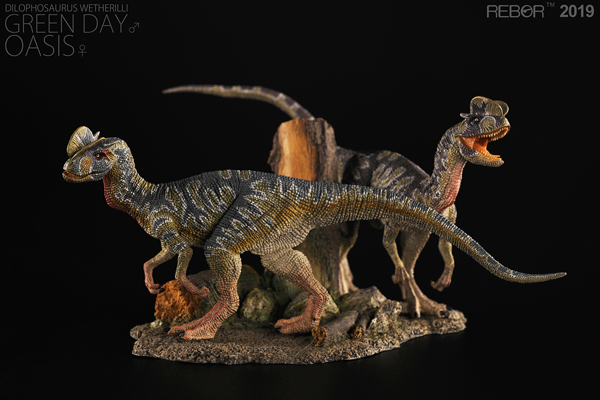
The Pair of Rebor Dilophosaurus Dinosaur Models “Green Day” and “Oasis” Feature in the Newsletter
Buy the Pair! Rebor Dilophosaurus dinosaur models “Green Day” and “Oasis”. Rebor models feature in the latest Everything Dinosaur newsletter. Picture credit: Everything Dinosaur.
Picture credit: Everything Dinosaur
A Special Offer from Everything Dinosaur
The Rebor Dilophosaurus male “Green Day” and the female “Oasis” are back in stock at Everything Dinosaur. Buy the pair at a special price! Just £49.99 (including tax if applicable) plus shipping (price as of June 2020). Two fantastic Rebor figures – snap up a double of “double crested lizard” to add to your collection.
The Male and Female Dilophosaurus Dinosaur Models from Rebor “Green Day” and “Oasis”
The Rebor Dilophosaurus replicas “Green Day” and “Oasis”.
The Rebor Dilophosaurus Models Are Available Separately
Rebor “Green Day” and “Oasis” Dilophosaurus models. These models are available separately and as a pair whilst stocks last. Picture credit: Everything Dinosaur.
Picture credit: Everything Dinosaur
Rebor “Killer Queen” – Jungle and Sixteen New Dinosaurs from Mojo Fun
One of the top-selling figures over the last year or so has been the Rebor Tyrannosaurus rex replica called “Killer Queen”. A small number of these excellent T. rex figures have arrived at Everything Dinosaur’s warehouse and our team members have been quick to inform collectors and newsletter fans of their arrival. This display piece, complete with an articulated jaw measures over 40 centimetres in length, as the song says: “guaranteed to blow your mind”.
Mojo Fun has introduced a total of sixteen new dinosaur models representing dinosaurs from the Jurassic and the Cretaceous. Our newsletter featured these new releases from Mojo too.
Rebor “Killer Queen” in the Jungle Colour Variant and New Dinosaurs from Mojo
Rebor “Killer Queen” jungle colour variant and sixteen brand new Mojo dinosaur models in stock at Everything Dinosaur. Picture credit: Everything Dinosaur.
Picture credit: Everything Dinosaur
Fans of the Rebor “Killer Queen” – plain colour variant don’t have long to wait for this model to be back in stock either. This figure will be back in stock at Everything Dinosaur in July (2020).
Highlighting Mojo Brachiosaurus Deluxe and the Troodontid Model
In the popular Mojo Fun range, collectors are rather spoilt for choice when it comes to deciding which models to acquire. There are lots of new theropods, two Baryonyx figures, a new T. rex plus Spinosaurus, Velociraptors, Allosaurus and one of our personal favourites – a replica of a feathered troodontid dinosaur complete with an articulated jaw. Herbivorous dinosaurs are well-represented in the new Mojo Fun range as well. For example, the range includes new models of Stegosaurus, Ankylosaurus and Triceratops plus Mamenchisaurus, Mandschurosaurus, Brontosaurus and a beautiful Brachiosaurus deluxe dinosaur model.
Highlighting Mojo Dinosaur Models (Troodontid and the Brachiosaurus Deluxe)
New for 2020 Mojo troodontid and Brachiosaurus deluxe dinosaur models. New dinosaur models feature in the Everything Dinosaur newsletter. Picture credit: Everything Dinosaur.
Subscribing to Everything Dinosaur’s newsletters is easy, to get updates, information about new releases, dinosaur discoveries and fossil news, just drop us an email.
To request to join the Everything Dinosaur newsletter subscribers list just send us an email: Email Everything Dinosaur.
Taxonomic status of Ugrunaaluk kuukpikensis is Challenged
Five years ago, Everything Dinosaur reported the naming of a new species of duck-billed dinosaur that lived well inside the Arctic circle during the Late Cretaceous. The dinosaur was named Ugrunaaluk kuukpikensis (pronounced 00-grew-na-luck kook-pik-en-sis). At the time of publication, Ugrunaaluk was thought to be closely related to Edmontosaurus. Since then, there has been quite a debate regarding the taxonomic validity of Ugrunaaluk. In the latest twist of a tale set in prehistoric polar latitudes, researchers writing in PLOS One conclude that this Arctic dinosaur is most probably a species of Edmontosaurus.
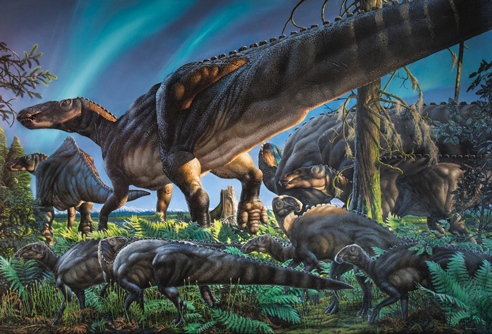
The Taxonomic Validity of the Arctic Hadrosaur Ugrunaaluk kuukpikensis is Challenged
The taxonomic validity of Ugrunaaluk kuukpikensis is controversial as this species was erected based on the study of the bones of immature, not fully adult individuals.
Picture credit: James Havens
The Prince Creek Formation Specimens
Duck-billed dinosaur fossils from the Liscomb Bonebed (Prince Creek Formation, North Slope, Alaska), were the first dinosaur bones discovered from the Arctic. When originally assessed, it was proposed that these hadrosaurids were Edmontosaurus, members of the sub-clade Hadrosaurinae. In 2015, a scientific paper was published that proposed the closely related species Ugrunaaluk kuukpikensis. However, the taxonomic status of this material is problematical. The fossils associated with the Liscomb Bonebed site represent immature, sub-adults and as such many of the anatomical traits used to characterise U. kuukpikensis, may reflect the developmental age of the individual and the shape of the bones may have altered as the dinosaur grew and matured.
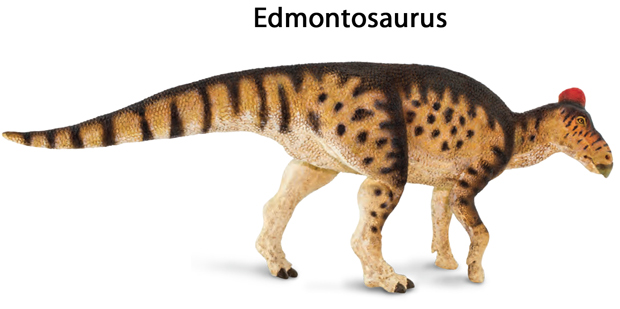
A Model of an Adult Edmontosaurus
The new for 2020 Wild Safari Prehistoric World Edmontosaurus dinosaur model.
Picture credit: Everything Dinosaur
The picture (above) shows an Edmontosaurus figure from the Wild Safari Prehistoric World model series.
Looking at the Evidence for an Edmontosaurus taxon Hypothesis
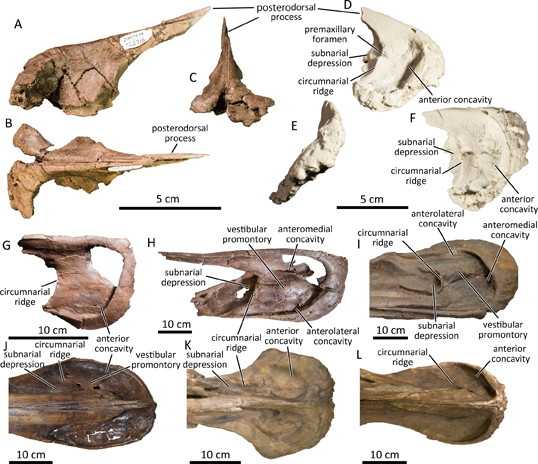
In this newly published paper, researchers from Okayama University of Science (Japan), the Perot Museum of Nature and Science (Texas) and Hokkaido University Museum (Japan), re-examined the skull bones from the Liscomb Bonebed and determined that the traits used to distinguish these Arctic fossils from those ascribed to Edmontosaurus were questionable.
In 2015, the scientific paper describing Ugrunaaluk kuukpikensis (Mori et al), proposed eight diagnostic characters for this new species. Among the eight characters identified, three were proposed to distinguish Ugrunaaluk kuukpikensis from the Edmontosaurus genus. Four of these eight characters distinguished Ugrunaaluk from Edmontosaurus annectens, which is known from Maastrichtian aged deposits from Montana and one character to distinguish Ugrunaaluk from the geologically older Edmontosaurus regalis, fossils of which are found in Canada.
It is likely that the shape of the skull of Edmontosaurus changed as it grew. The bones forming the skull would also undergo change in shape and size, because of this, any taxon erected solely based on the shape of skull bones from young animals is questionable. In this newly published paper, the researchers, which include Ryuji Takasaki, a researcher at the Okayama University of Science and Professor Yoshitsugu Kobayashi (Hokkaido University Museum), conclude that the Liscomb Bonebed hadrosaurid material should be ascribed to Edmontosaurus.
Comparing the Liscomb Bonebed Fossil Material with Known Edmontosaurus Skull Bones
A study of skull bones from the Prince Creek Formation (Alaska), suggests that the immature individual duck-billed dinosaurs found at this site are from the Edmontosaurus genus and that Ugrunaaluk kuukpikensis should be regarded as nomen dubium.
Picture credit: PLOS One (Takasaki et al)
Was Edmontosaurus Geographically Widespread
If the Arctic fossils are ascribed to Edmontosaurus, then this suggests that Edmontosaurus was geographically very widespread during the Late Cretaceous with fossils associated with this genus found in the northern states of the USA, Canada and Alaska. The scientists consider that the Prince Creek Formation Edmontosaurus should be regarded as Edmontosaurus sp. until further discoveries of mature hadrosaurines from the Prince Creek Formation Bonebed and/or equivalently juvenile Edmontosaurus specimens from the lower latitudes allow direct comparisons.
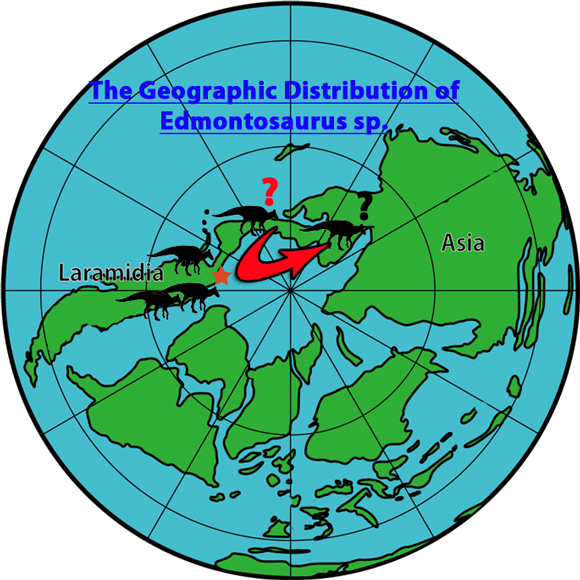
Furthermore, if Edmontosaurus is associated with the very far north of Laramidia, this has implications for the ancestry of Late Cretaceous Asian hadrosaurids. A number of duck-billed dinosaurs found in Asia may represent descendants of the Edmontosaurini lineage that migrated from Laramidia into Asia.
The Distribution of Edmontosaurus sp.
The researchers suggest that Edmontosaurus was geographically very widespread occupying much of northern Laramidia and many of the Late Cretaceous Asian hadrosaurs may have been descended from the Edmontosaurus lineage.
Picture credit: Scientific Reports with additional annotation by Everything Dinosaur
The map (above), illustrates the distribution of Edmontosaurus as proposed by the research paper. There is some evidence to suggest that Edmontosaurus preferred coastal environments and that this genus was widely distributed across northern Laramidia during the Late Cretaceous. If this assessment proves to be correct, Edmontosaurus had a geographical distribution spanning about 4,000 kilometres from north to south in North America.
The scientists speculate that the ancestor of Asian hadrosaurids such as Kamuysaurus migrated from North America.
Japanese Hadrosaurs Had North American Roots
Professor Kobayashi commented:
“It is possible that the ancestor of Kamuysaurus that adapted to the environment at the northern limit of the species’ habitat crossed from North America to Asia and eventually evolved to Kamuysaurus.”
If the Prince Creek Formation hadrosaurs are established as members of the Edmontosaurus genus, then they could represent a new species of Edmontosaurus. The large latitudinal distribution of this taxon could be re-established, the latitudinal range for Edmontosaurus would extend from about 40 degrees north to at least 70 degrees north.
The researchers conclude that despite the extensive geographical and temporal range of this taxon, the morphological disparity within different species associated with this genus is relatively small when compared to other members of the Hadrosaurinae. The lack of any substantial anatomical differences between widely distributed species could reflect the relatively low latitudinal temperature gradient during the Late Cretaceous compared to today. A relatively benign and unchanging environment would not have imposed significant pressure on species to evolve in order to adapt to new conditions.
The scientific paper: “Re-examination of the cranial osteology of the Arctic Alaskan hadrosaurine with implications for its taxonomic status” by Ryuji Takasaki, Anthony R. Fiorillo, Ronald S. Tykoski and Yoshitsugu Kobayashi published in PLOS One.
Everything Dinosaur’s websites are scheduled for routine maintenance and upgrades this weekend (Friday/Saturday 26th/27th June 2020). As a result of this work, some visitors to our sites might experience a slight slowing down in our website performance and speed. The work has been scheduled for a time when traffic to our three websites is at its lowest, Everything Dinosaur doing all it can to minimise any inconvenience to our customers.
Scheduling Maintenance on the Everything Dinosaur Website
Everything Dinosaur’s Websites Scheduled for Routine Maintenance
Everything Dinosaur’s websites are scheduled for essential maintenance. Our friendly Tyrannosaurus rex and our ever so helpful Stegosaurus will be on hand to oversee the work and to ensure that Everything Dinosaur’s customers are not inconvenienced too much.Picture credit: Everything Dinosaur.
Picture credit: Everything Dinosaur
A spokesperson from Everything Dinosaur commented:
“Late this Friday or in the early hours of Saturday morning (BST), [June 26th/27th 2020] the servers that host Everything Dinosaur’s websites are undergoing some essential maintenance and updates. During this time visitors to our websites, might experience a slowing down in the speed of our sites. We apologise in advance for any inconvenience caused.”
It’s “Turntable Tuesday” and it is time to give another prehistoric animal model a spin on the turntable in Everything Dinosaur’s film and photography studio. Today, it is the turn of the “Green Day” male Dilophosaurus dinosaur model from Rebor. This replica of the Early Jurassic theropod was introduced in 2019, stock of this figure, along with its counterpart, the female Dilophosaurus “Oasis” has just come into Everything Dinosaur’s warehouse.
Rebor Dilophosaurus Models
The Rebor Dilophosaurus Model “Green Day” Takes a Spin for “Turntable Tuesday”
Video credit: Everything Dinosaur
Dilophosaurus wetherilli – Double Crested Lizard
Fossils discovered in Arizona in the 1940s and originally attributed to the taxonomic wastebasket taxon Megalosaurus were formally assigned their own genus in 1970 when this dinosaur was scientifically described – Dilophosaurus (D. wetherilli). The famous crests of Dilophosaurus, after which this large carnivore is named, have never been found attached to the skull. However, the standard restoration as seen in the Rebor model seems to be the most convincing and plausible anatomical configuration.
In Everything Dinosaur’s “Turntable Video” review we provide a close-up view of the skull and those crests as we demonstrate the articulated jaw. In addition, we utilise a split screen effect to show the poseable tail and the articulated front limbs.
Everything Dinosaur Used a “Split Screen” Effect to Highlight All the Articulated Parts on the Rebor Dilophosaurus “Green Day”
The Rebor Dilophosaurus dinosaur models have articulated lower jaws, articulated arms and poseable tails. Note the red flash over the eye of the “Green Day” model. Rebor added this colouration to help distinguish the “male” model from the “female” Dilophosaurus – “Oasis”.Picture credit: Everything Dinosaur.
Picture credit: Everything Dinosaur
Calculating the Scale
In the Everything Dinosaur “Turntable Tuesday” video review (which is just over one minute fifty seconds long), we provide measurements for the “Green Day” figure. The actual length of the dinosaur model is difficult to quantify as the tail is flexible but if the model is put into a natural pose with the tail not necessarily straightened out as much as it could be, the figure measures approximately 23.5 cm long.
If we consider that an adult Dilophosaurus wetherilli was about 6 metres in length, then this makes the Rebor figures approximately 1:25 scale models.
A Perfect Pair – The Rebor Dilophosaurus Dinosaur Models “Green Day” and “Oasis”
The Rebor Dilophosaurus pair “Green Day” and “Oasis” (Green Day – the male is on the right). Everything Dinosaur team members estimate that these two dinosaur models are in 1:25 scale approximately.Picture credit: Everything Dinosaur.
Picture credit: Everything Dinosaur
The Rebor Range of Dinosaurs and Prehistoric Animal Models
The Rebor range of dinosaurs and prehistoric animal models is available from Everything Dinosaur. To view the Rebor range: Rebor Models and Figures.
Rebor “Oasis” and “Green Day” Dilophosaurus Dinosaur Models
The Rebor Dilophosaurus replicas “Green Day” and “Oasis”.
Everything Dinosaur on YouTube
Everything Dinosaur’s YouTube channel contains over 170 dinosaur and prehistoric animal videos, including model reviews, tips and hints about prehistoric animal model collecting, new releases, updates and insider information.
Find Everything Dinosaur on YouTube here: Everything Dinosaur on YouTube. We recommend that you subscribe to our YouTube channel.