

Remarkable Torvosaurus Discovery Rewrites the Story of a Giant Jurassic Predator
A remarkable new study of the giant, carnivorous dinosaur Torvosaurus has provided fresh insights into the evolution, anatomy and geographical distribution of this formidable Jurassic predator. Published research proposes that Torvosaurus gurneyi, previously recognised as a distinct species from Portugal, should be regarded as a junior synonym of the North American theropod Torvosaurus tanneri.
This proposed taxonomic revision has important implications for our understanding of Late Jurassic dinosaur communities, providing further evidence of strong biogeographical connections between North America and the Iberian Peninsula.
What was Torvosaurus?
Torvosaurus was a large-bodied, carnivorous theropod dinosaur belonging to the family Megalosauridae. It lived during the Late Jurassic, approximately 150 million years ago, and was among the most formidable predators of its time. The genus was established in 1979 by palaeontologists James A. Jensen and Peter M. Galton, following the discovery of fossil material in the Upper Jurassic Morrison Formation of Colorado, USA. The type species is Torvosaurus tanneri.
With its powerful jaws, large, serrated teeth and robust skeletal construction, Torvosaurus was an impressive predator. It shared its environment with other well-known dinosaurs, including Allosaurus, Ceratosaurus, stegosaurs and the enormous, long-necked sauropods.
Fossils attributed to Torvosaurus have also been discovered in Europe, particularly in Portugal, providing an important opportunity to investigate the distribution of large theropods during the Late Jurassic.
Torvosaurus gurneyi – A Giant Theropod from Portugal
In 2014, palaeontologists Christophe Hendrickx and Octávio Mateus formally described a new species of Torvosaurus from fossil material discovered in the Upper Jurassic deposits of Portugal.
Named Torvosaurus gurneyi, this dinosaur was identified from fossil remains including a maxilla (part of the upper jaw). Comparisons with North American T. tanneri material highlighted anatomical differences that were interpreted as evidence of a separate species. The Portuguese dinosaur was recognised as one of the largest terrestrial predators known from Europe. Its discovery was particularly significant because it demonstrated that large megalosaurid theropods inhabited both sides of the proto-North Atlantic region during the Late Jurassic.
To read Everything Dinosaur’s blog post from 2014 about the naming of Torvosaurus gurneyi: Europe’s Largest Meat-eating Dinosaur Described.
However, new research has now challenged the distinction between these two species.
New Torvosaurus Fossil Material Provides New Evidence
A study published this month in Papers in Palaeontology describes an exceptionally complete specimen of Torvosaurus tanneri from the Brushy Basin Member of the Morrison Formation in north-western Colorado. The research, authored by Ethan Warner-Cowgill, Glenn W. Storrs, Matthew C. Lamanna and Mark A. Loewen, provides important new information about the anatomy of this giant theropod.
The specimen is particularly valuable because it preserves skeletal elements that were previously incomplete or unknown in Torvosaurus and other megalosaurids.
Among the most significant discoveries are:
- A complete maxilla, providing new information about the anatomy of the upper jaw.
- An articulated posterior portion of the lower jaw.
- Evidence of pneumatic structures within the maxilla, indicating that parts of the skull contained air-filled spaces.
- A remarkably large third maxillary tooth, measuring approximately 250 millimetres in length.
The researchers highlight that this enormous tooth represents the largest tooth known from a terrestrial animal from the Jurassic Period or earlier.
The new fossil material has also allowed the researchers to produce a revised reconstruction of the skull. This indicates that the skull was approximately 1.2 metres long, relatively low and elongated, with a narrow profile across the front of the snout.
These anatomical findings provide a much more complete picture of the skull of the theropod Torvosaurus tanneri and offer new opportunities for comparing it with other megalosaurid dinosaurs.

A scale drawing of Torvosaurus gurneyi. Picture credit: Everything Dinosaur.
Picture credit: Everything Dinosaur
Torvosaurus gurneyi Proposed as a Junior Synonym of Torvosaurus tanneri
Perhaps the most significant conclusion of the new research concerns the taxonomic status of the Portuguese Torvosaurus gurneyi. Following comparisons made possible by the newly described Colorado specimen, the researchers propose that the anatomical differences previously used to distinguish T. gurneyi from T. tanneri do not justify recognising them as separate species.
Consequently, Torvosaurus gurneyi is considered a junior synonym of Torvosaurus tanneri. In zoological nomenclature, a junior synonym is a scientific name that refers to the same taxonomic entity as an earlier-established name. Where two names are regarded as referring to the same species, the older available name normally takes priority.
In this instance, Torvosaurus tanneri, named in 1979, has priority over Torvosaurus gurneyi, named in 2014. If this proposed interpretation is accepted more widely, the geographical distribution of T. tanneri will extend beyond North America to include Portugal.
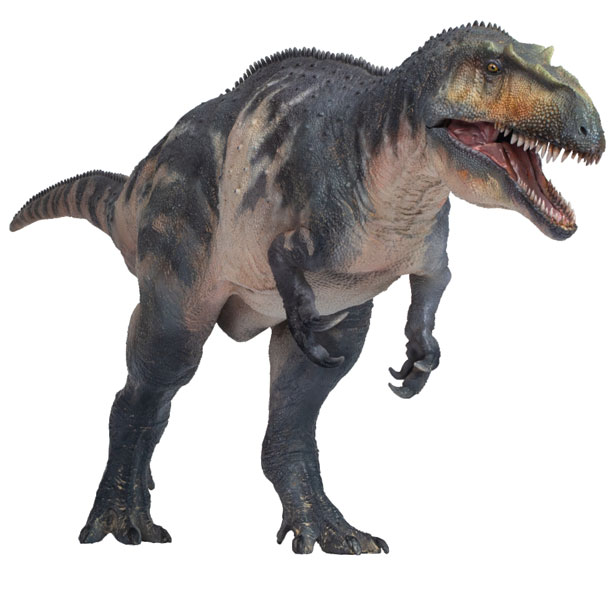
The PNSO Connor the Torvosaurus dinosaur model, a stunning replica of a Late Jurassic apex predator.
The image above shows a Torvosaurus model. It is part of the PNSO range of prehistoric animal figures.
To view the range of PNSO prehistoric animal models in stock: PNSO Dinosaur Models and Prehistoric Animal Figures.
Strong Biogeographical Connections Between North America and Europe
The implications of this taxonomic reassessment extend beyond the naming of a dinosaur. During the Late Jurassic, North America and Europe were part of a changing arrangement of continental landmasses. The opening and development of the proto-North Atlantic Ocean influenced the geography and distribution of prehistoric animals. The Morrison Formation of western North America and the Lourinhã Formation of Portugal are particularly important Upper Jurassic fossil deposits. Both have produced diverse dinosaur assemblages, including large sauropods and several groups of theropod dinosaurs.
The proposed synonymy of T. gurneyi with T. tanneri adds further support to the idea that dinosaur faunas on either side of the proto-North Atlantic shared significant evolutionary and biogeographical connections. This does not necessarily demonstrate precisely how individual dinosaur populations moved between these regions. However, it highlights the importance of comparing fossils from different continents when reconstructing prehistoric ecosystems and understanding dinosaur distribution.
Implications for Late Jurassic Carnivorous Dinosaurs
The new research provides an important contribution to our knowledge of Torvosaurus. The exceptionally complete Colorado specimen offers valuable anatomical information, including new insights into the structure of the skull and the enormous teeth of this giant megalosaurid. Just as importantly, the proposed reassessment of Torvosaurus gurneyi provides a new perspective on the relationship between Late Jurassic dinosaur faunas in North America and Europe.
The story of Torvosaurus demonstrates how new fossil discoveries can lead to significant changes in scientific interpretations, helping palaeontologists refine our understanding of prehistoric biodiversity, evolution and biogeography.
For dinosaur enthusiasts, the research which changes the fossil material assigned to the theropod Torvosaurus tanneri provides another fascinating reminder that there is still much to learn about the giants that inhabited our planet millions of years ago.
The scientific paper: “New cranial material and interpretation of Torvosaurus (Theropoda, Megalosauridae) from the Upper Jurassic Morrison Formation of Colorado, USA” by Ethan Warner-Cowgill, Glenn W. Storrs, Matthew C. Lamanna and Mark A. Loewen published in Papers in Palaeontology.
The award-winning Everything Dinosaur website: Museum Quality Prehistoric Animal Figures.