What is the Most Scientifically Accurate T. rex Model?
What makes a scientifically accurate T. rex model? It is a question often asked by collectors and enthusiasts. At Everything Dinosaur, we receive emails asking for advice about which Tyrannosaurus model is correct. That is a difficult question as nobody has ever seen a living non-avian dinosaur. However, we try our best to help. It is often a question of stating that the term “correct” is probably not appropriate. Indeed, it might be better to look at the evidence that suggests that the designers have consulted the fossil record.
So, how do we judge accuracy? How do you determine whether a Tyrannosaurus rex is scientifically accurate?
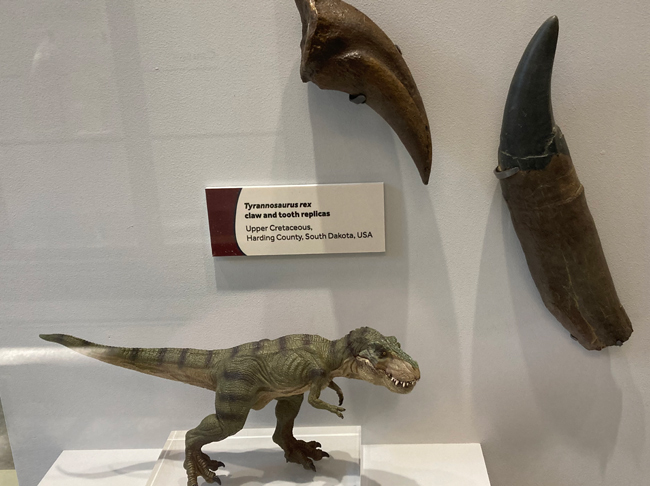
A Papo green running Tyrannosaurus rex model on display next to a replica of a T. rex tooth and a T. rex claw. An exhibit at the Manchester Museum of Natural History. T. rex is ubiquitous, images of the “tyrant lizard king” seem to be everywhere. However, even museum displays may not incorporate an accurate representation of this famous dinosaur. Picture credit: Everything Dinosaur.
Picture credit: Everything Dinosaur
Starting with the Fossil Record
Tyrannosaurus rex remains one of the most studied theropod dinosaurs. So, when it comes to judging scientific accuracy, several factors come into consideration. Firstly, any reliable figure must reflect the fossil evidence. For example, is the tail in the correct position? Are the forelimbs demonstrating pronation? It is important to assess whether the design team have considered tyrannosaur anatomy and the skeletal proportions.
A classic issue with many T. rex figures (and bipedal dinosaurs generally), is that the feet are often made oversized to ensure the figure is stable. Indeed, the feet of a Tyrannosaurus rex model can be as much as twenty-five percent larger to permit the figure to stand without the need for a support. Modern theropod reconstructions need to portray dynamic, active animals. Hence companies like PNSO provide a clear, plastic support to help their figures stand.
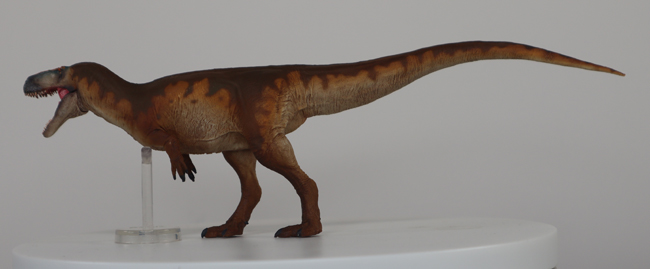
The new for 2023 PNSO Megalosaurus dinosaur model. It was supplied with a support stand to help this anatomically accurate theropod model to stay upright. Picture credit: Everything Dinosaur.
Picture credit: Everything Dinosaur
Considering Soft Tissue
To a palaeontologist bones only tell part of the story. Dinosaurs were living animals and any prehistoric animal figure should try to convey the impression of a living, breathing animal. For example, a scientifically accurate T. rex model would not show the fenestrae (openings on the skull). Tyrannosaurus models can look too thin; they have an almost “shrink-wrapped” appearance. It is true that T. rex may have lost condition, but it possessed a wide neck, deep chest and broad hips. Scientists study muscle attachment scars on fossil bones. These are then compared with extant animals. Ideally, the design team should include a palaeontologist or at least someone with anatomical knowledge.
Tyrannosaurus rex Integument
It is important to consider the integument and skin texture. Some small fossils of Tyrannosaurus skin are known. These fossils can help with the texture of the figure. Furthermore, while feathers may have been present in juveniles, most adult reconstructions favour a largely scaly appearance. Although it is noted that some parts of the body of an adult T. rex may have had a sparse covering of simple feathers.
Importantly, scale size and distribution should vary. This avoids a uniform, artificial finish. As a result, high-quality models often display intricate detailing across the head and flanks.
Colour remains one of the biggest unknowns. Even so, informed speculation plays a role. Artists often look to modern animals for inspiration. For instance, countershading is common in large animals today. This means a darker upper body and lighter underside. Such a pattern can help with camouflage. Therefore, subtle and naturalistic tones are usually preferred over bold, unrealistic colours. Designers should also consider the palaeoenvironment carefully. For example, T. rex was very probably an ambush predator, therefore, it is important to consider aspects of camouflage and concealment.
Considering Inferred Behaviour and the Presentation for a Scientifically Accurate T. rex Model
Equally important is how the Tyrannosaurus rex is presented. A scientifically grounded model avoids exaggerated, “movie monster” poses. Instead, it should aim to reflect plausible animal behaviour. For example, a calm but alert stance may reflect a real animal at rest. In contrast, overly dramatic roaring poses can misrepresent anatomy. Consequently, many collectors now favour more naturalistic displays.
In recent years, dinosaur model collectors have seen two contrasting trends emerge:
- The increase of articulated figures (Creative Beast Studio, Nanmu Studio, PNSO)
- The desire to create anatomically accurate figures (Safari Ltd, CollectA, Everything Dinosaur Evolution)
A handful of manufacturers work with palaeontologists and other academics. This collaboration has raised standards across the hobby. Collectors now expect far greater scientific rigour.
For instance, some modern models incorporate detailed research into musculature, integument, and even ecological context. In addition, display bases can provide environmental clues linked to fossil formations.
Setting New Standards in Scientific Accuracy
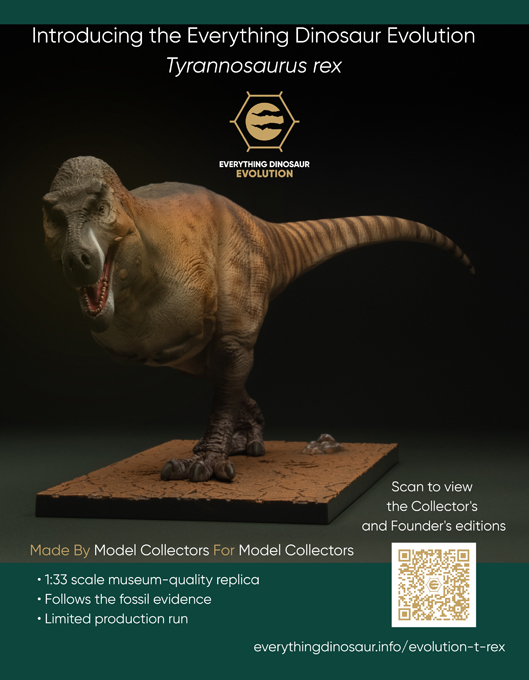
The Everything Dinosaur Evolution series reflects this shift towards accuracy. This range of figures sets out to produce accurate models shaped by the input of academics, anatomists and leading artists. Each model is developed using current scientific understanding. For example, the 1:33 scale T. rex features carefully considered proportions and posture. Moreover, its design avoids the clichés of cinematic depictions. Instead, it presents a grounded interpretation based on fossil evidence. After all, this dinosaur model has been developed by Everything Dinosaur team members in collaboration with top designer Glen Southern, famous palaeo-reconstruction artist Bob Nicholls and the well-known vertebrate palaeontologist Dr Dean Lomax.
A Long Design and Development Process for a Scientifically Accurate T. rex Model
It took three years to design and develop. Famously, debate on the shape of the toe claws took three weeks. In addition, the paint application follows a complex structured plan. Natural tones and subtle contrasts help create a believable finish. The aim is not spectacle, but authenticity. Every aspect of the colour scheme has been carefully considered.
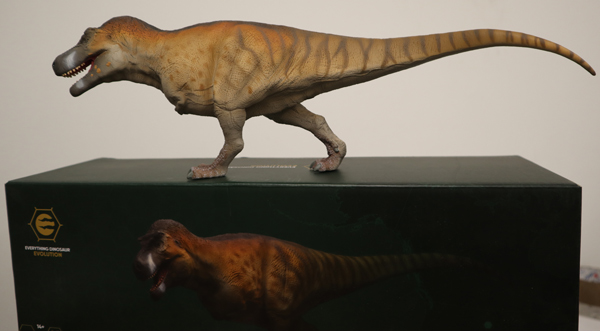
The 1:33 scale Everything Dinosaur Evolution T. rex model on top of its beautiful box. Picture credit: Everything Dinosaur.
Picture credit: Everything Dinosaur
To learn more about the complicated colour scheme for the Everything Dinosaur Evolution T. rex model: Explanation of the Painting Plan for Everything Dinosaur Evolution Figure.
Furthermore, even the display base adds context. It has been designed to echo the ancient environment in which T. rex once lived. As a result, the model becomes more than a standalone figure. Indeed, if you are going to try to create a scientifically accurate T. rex model any display needs to be considered.

The Everything Dinosaur Evolution T. rex display base. There is a metal rod to help secure the model to the base. In addition, the base, which represents a dried-up lake contains two tyrannosaur tracks and a pile of dinosaur dung. Both the tracks and dung are based on real fossils. If you are attempting to make a scientifically accurate T. rex model, the display base needs careful consideration too. Picture credit: Everything Dinosaur.
Picture credit: Everything Dinosaur
Drawing a Conclusion
So, what is the most scientifically accurate T. rex model? The answer depends on how closely a model follows current scientific thinking. It is unlikely that a consensus view will ever be achieved. After all, no one has seen a living Tyrannosaurus rex. In summary, accuracy comes from anatomy, texture, colour, and behaviour working together. Collectors should consider the team behind the model. Do they have the credentials and knowledge to create scientifically accurate prehistoric animal models? As science advances, so too will our reconstructions.
For collectors, this makes the search both exciting and rewarding. However, if we may be so bold, the tremendous feedback from collectors, dinosaur experts, academics and dinosaur model fans makes us extremely proud about our first dinosaur model. We have high expectations for the rest of the Hell Creek series.
Perhaps, we have created a strong contender for the accolade of most scientifically accurate T. rex model. That is, until the next significant fossil discovery or academic paper. So pleased we made an early call about our Everything Dinosaur Evolution Tyrannosaurus rex having lips.
View the Everything Dinosaur Evolution Tyrannosaurus rex: Everything Dinosaur Evolution Dinosaur Model.
Mike from Everything Dinosaur commented:
“Our figure has earned recognition from many as one of the most scientifically accurate Tyrannosaurus rex models ever produced, and that achievement reflects the dedication of an exceptional team. We worked alongside leading experts in palaeontology, design, and palaeoart, whose knowledge and passion shaped every detail of our first dinosaur model.”
The Everything Dinosaur website: Scientifically Accurate Prehistoric Animal Models.