All about dinosaurs, fossils and prehistoric animals by Everything Dinosaur team members.
27 06, 2024

Lokiceratops rangiformis a New Horned Dinosaur from Montana

By |2024-06-30T16:58:13+01:00June 27th, 2024|Categories: Dinosaur and Prehistoric Animal News Stories|0 Comments

A remarkable new taxon of ceratopsian has been described from northern Montana.  This new horned dinosaur, a centrosaurine, has been named Lokiceratops rangiformis.  The authors of the scientific paper, published in the journal PeerJ, suggest that the large number of similar taxa identified from this region suggests that dinosaur diversity has been underestimated.  In addition, mounting evidence indicates dinosaurs were living and evolving in a small geographic area (high endemism).  This high endemism identified in centrosaurines contrasts with the extensive (historic) ranges seen in most large mammals today.

Lokiceratops rangiformis life reconstruction by Andrey Atuchin.

Reconstruction of Lokiceratops surprised by a crocodilian in the 78-million-year-old swamps of northern Montana, USA. Picture credit: Andrey Atuchin for the Museum of Evolution in Maribo, Denmark.

Picture credit: Andrey Atuchin.

Lokiceratops rangiformis

The fossils were collected from the lower portion of the McClelland Ferry Member of the Judith River Formation in the Kennedy Coulee region close to the Canadian border. The fossil material consists of most of the skull, although the lower jaws were not found.  Postcranial material includes the right scapula and coracoid plus some vertebrae and elements from the hips.

Lokiceratops is one of the largest centrosaurines known to science.  It had an estimated body length of around 6.7 metres and is thought to have weighed 5 tonnes.  As well as being one of the largest members of the Centrosaurinae described to date, it is also one of the most ornate.  Lokiceratops possessed two, huge blade-like horns on the back of its frill (epiparietal 2).  The super-sized epiparietal 2 horns are relatively larger than any other parietal epiossification within the Centrosaurinae.

Lokiceratops had two large brow horns, but unlike most of its close relatives it lacked a nose horn. The frill ornamentations of Lokiceratops demonstrate bilateral asymmetry.  There is considerable variation in the shape of the seven epiparietals on the left and right sides of the frill.

The stunning frill and horns of Lokiceratops rangiformis.

The stunning frill and horns of Lokiceratops rangiformis. Picture credit: Fabrizio Lavezzi © Evolutionsmuseet, Knuthenborg.

Picture credit: Fabrizio Lavezzi © Evolutionsmuseet, Knuthenborg.

What’s in a Name?

The bilateral asymmetry gave rise to the species name.  The genus is named after the blade-wielding Norse god Loki, a god that causes chaos and mischief in Norse mythology.  The genus name translates as “Loki’s horned face”.  Whereas the species epithet comes from the reindeer/caribou genus Rangifer. This is a reference to the differing horn lengths on each side of the frill, similar to the asymmetric antlers of caribou and reindeer.

Co-author of the study Joseph Sertich, a palaeontologist with the Smithsonian Tropical Research Institute and Colorado State University stated:

“This new dinosaur pushes the envelope on bizarre ceratopsian headgear, sporting the largest frill horns ever seen in a ceratopsian.  These skull ornaments are one of the keys to unlocking horned dinosaur diversity and demonstrate that evolutionary selection for showy displays contributed to the dizzying richness of Cretaceous ecosystems.”

Portrait of Lokiceratops rangiformis by Andrey Atuchin.

Portrait reconstruction of Lokiceratops rangiformis. Picture credit: Andrey Atuchin for the Museum of Evolution in Maribo, Denmark.

Picture credit: Andrey Atuchin

High Endemism in Centrosaurines

Lokiceratops rangiformis fossils come from the same narrow stratigraphic interval and geographic area as three other centrosaurines (Wendiceratops pinhornensis, Albertaceratops nesmoi, and Medusaceratops lokii) and one chasmosaurine (Judiceratops tigris). Phylogenetic analysis indicates that Lokiceratops is closely related to Wendiceratops and Albertaceratops.  Indeed, it has been placed in the tribe Albertaceratopsini along with Albertaceratops and Medusaceratops.

To read Everything Dinosaur’s blog post from 2010 about the scientific description of Medusaceratops lokiiA New Horned Dinosaur from Montana.

The research team concludes that the Albertaceratopsini, was one of multiple centrosaurine clades to undergo geographically restricted radiations, with Nasutuceratopsini restricted to the south and Centrosaurini and Pachyrostra restricted to the north.

Whilst ceratopsian ancestors were widespread across the Northern Hemisphere throughout the Cretaceous, their isolation on Laramidia led to the evolution of huge body sizes, and most characteristically, distinctive patterns of horns above their eyes and noses, on their cheeks and along the edges of their elongated head frills. Yet, based on current evidence and acknowledging uneven temporal and geographic sampling, all known centrosaurine species exhibit relatively small geographic ranges.

This pattern is seen not only in genera and species, but also above the species level. That is, centrosaurine subclades—including Albertaceratopsini—also show restricted geographic distributions.  Fossils recovered from this region suggest horned dinosaurs were living and evolving in a small geographic area, a high level of endemism that implies dinosaur diversity is underestimated.

Co-author Mark Loewen (Natural History Museum of Utah) explained:

“Previously, palaeontologists thought a maximum of two species of horned dinosaurs could coexist at the same place and time. Incredibly, we have identified five living together at the same time.  The skull of Lokiceratops rangiformis is dramatically different from the other four animals it lived alongside.”

Lokiceratops rangiformis life reconstruction Fabrizio Lavezzi.

Reconstruction of Lokiceratops in the 78-million-year-old swamps of northern Montana, USA as two Probrachylophosaurus move past in the background. Picture credit: Fabrizio Lavezzi © Evolutionsmuseet, Knuthenborg.

Picture credit: Fabrizio Lavezzi © Evolutionsmuseet, Knuthenborg.

Fossils Discovered in 2019

The fossils represent a mature, adult animal.  The material is found in the late spring of 2019 by Mark Eatman on private land of the Wolery Ranch in Kennedy Coulee.  It was excavated under a lease in the autumn.  The holotype specimen number is EMK 0012.  The individual fossilised skull bones of Lokiceratops were integrated into a state-of-the-art reconstruction of the complete skull and is permanently reposited and displayed at the Museum of Evolution in Maribo, Denmark.  A reconstruction of the skull, alongside a full-sized sculpture, will be displayed at the Natural History Museum of Utah in Salt Lake City for the next few months.

Lokiceratops rangiformis lived around 78 million years ago (Campanian faunal stage of the Late Cretaceous).

Andrew Farke from the Raymond M. Alf Museum of Paleontology and another co-author of the paper commented:

“We now recognise over thirty species of centrosaurines within the greater group of horned dinosaurs, with more like Lokiceratops being described every year”.  

Ceratopsians were much more diverse than previously thought.  This new research also demonstrates some groups such as the Albertaceratopsini had relatively small distributions across the island landmass of Laramidia.  Centrosaurine dinosaurs demonstrate geographically restricted radiations.  High speciation rates may have been driven in part by sexual selection or as a result of regional variations in climate or flora. The high endemism seen in centrosaurines and other dinosaurs implies that dinosaur diversity is presently underestimated and contrasts with the large (historic) geographic ranges seen in most extant mammalian megafauna.

Everything Dinosaur acknowledges the assistance of a media release from the Natural History Museum of Utah in the compilation of this article.

The scientific paper: “Lokiceratops rangiformis gen. et sp. nov. (Ceratopsidae: Centrosaurinae) from the Campanian Judith River Formation of Montana reveals rapid regional radiations and extreme endemism within centrosaurine dinosaurs” by Mark A. Loewen​​, Joseph J. W. Sertich​, Scott Sampson, Jingmai K. O’Connor, Savhannah Carpenter, Brock Sisson, Anna Øhlenschlæger, Andrew A. Farke, Peter J. Makovicky, Nick Longrich and David C. Evans published in PeerJ.

The Everything Dinosaur website: Dinosaur Models and Toys.

26 06, 2024

Your Parcel’s Remarkable Journey

By |2024-06-24T12:19:02+01:00June 26th, 2024|Categories: Everything Dinosaur News and Updates|0 Comments

Ordering on-line should be convenient, hassle free and easy.  However, purchasing from a mail order company can be fraught with problems.  At Everything Dinosaur, we receive lots of positive feedback about the quality of our packaging and our prompt deliveries.  We have received thousands of 5-star reviews for our customer service, sadly, many of our customers have shared with us some of their experiences and difficulties after purchasing from other businesses that have proved to be less dependable.  Everything Dinosaur parcels are treated with care.  From their shipment to the factory to our warehouse and to their despatch to you, our products and their packaging are treated with respect.

Let’s take you through the process of getting your order, packed and despatched and on its way.

Packing Everything Dinosaur parcels.

Sue from Everything Dinosaur with another two parcels ready to begin their journey to customers. We pick, check and pack all the orders ourselves. Picture credit: Everything Dinosaur.

Picture credit: Everything Dinosaur

The Journey of Everything Dinosaur Parcels

We pride ourselves at Everything Dinosaur for our careful product picking, packing and despatching.  The journey of your purchase is extremely important to us.  We invest in bespoke packaging and boxes to protect products.  In addition, we are committed to using environmentally friendly packaging materials as much as possible.   Team members go to great lengths to ensure that Everything Dinosaur parcels arrive promptly and in great condition.

Once an order has been placed, we pop out into the warehouse and select the items for you.  The products are inspected and brought to our packing room.  Each section of the warehouse is dedicated to a specific product line, such as PNSO, Haolonggood, Rebor, prehistoric plush and CollectA prehistoric animal figures.

Picking Everything Dinosaur parcels.

A busy aisle in the Everything Dinosaur warehouse. In this section of our warehouse we store PNSO prehistoric animal figures. The racking opposite is for Beasts of the Mesozoic models. A well-organised warehouse helps us to pick orders for customers quickly. Picture credit: Everything Dinosaur.

Picture credit: Everything Dinosaur

Into the Packing Room

Once picked, the orders are laid out in the packing room.  The paperwork is added, including our free prehistoric animal fact sheets and the order is checked again.   An appropriate box is selected to ensure the customer’s items are provided with the best protection possible.  In addition, we use compostable packing chips to cushion the purchased items during their journey. This is a further demonstration of our commitment to sustainable practices.

Everything Dinosaur parcels being prepared for despatch.

Early morning and the first of the day’s parcels have been picked, checked and packed. These parcels will then get labelled with all the relevant information to speed them through customs and across borders. Some of the double-walled, bespoke cardboard is stored in the packing room for easy access. Picture credit: Everything Dinosaur.

Picture credit: Everything Dinosaur

Visit the award-winning Everything Dinosaur website: Dinosaur Toys.

Parcels tend to be packed in batches, depending on their final destination.  For example, all UK parcels going out on our tracked service are packed together.  Parcels destined for Europe are also packed in batches.

Labels are prepared, checked against the invoice paperwork and adhered securely to the relevant parcel.  Then parcels are carefully crated or placed in collection sacks ready for collection by the various courier companies that we use.  Once again, a section of our warehouse is especially set aside for the storage of parcels awaiting despatch.

That’s how we pick, check, pack and despatch your order from our warehouse.  However, there is another part to this story…

International Freight Forwarding

Before items reach you, they have to reach us.  The first leg of your parcel’s journey begins at the factory where the goods are produced.  There are dinosaur fans all over the world and there are factories making figures all over the world too.  We rely on our freight forwarding partners Neon Freight to help us move what we stock on-line into our warehouse.

A freight forwarder is an organisation that arranges the transportation of goods on behalf of clients. In this instance, the freight forwarder meaning the company that manages the shipping of the dinosaur models from the factory to the Everything Dinosaur warehouse.

Neon Freight was founded over a decade ago. They have a simple mission, it is to be able to provide professional logistics solutions with a strong emphasis on a straightforward, people-oriented approach to delivery.  The friendly Neon Freight team works alongside us helping to streamline the international shipping process.  The dedicated and enthusiastic team help us to bring goods in from all over the world. They are genuinely interested in us and our customers.

A freight forwarder is an organisation that arranges the transportation of goods on behalf of clients. In this instance, the freight forwarder meaning Neon Freight Ltd, the company that manages the international logistics of Everything Dinosaur.

The offices of Cheshire-based Neon Freight Ltd. Neon Freight handle international logistics for Everything Dinosaur. Picture credit: Neon Freight Ltd.

Picture credit: Neon Freight Ltd

Mike from Everything Dinosaur commented:

“We suspect that we would have to travel a long way to find a more knowledgeable and friendly company.”

To visit the website of Neon Freight Ltd and to understand a little more about what freight forwarding entails: Freight Forwarder Meaning.

Taking Care of Everything Dinosaur Parcels

At Everything Dinosaur, we understand that the journey of your purchase is extremely important to you.  We take immense pride in the selection of items we choose to stock.  We work hand-in-hand with our partners like Neon Freight to ensure the challenges of a complex international market are overcome. Then, from the moment your order is placed, until the moment it is delivered, we go to great lengths to ensure that your parcel is handled with the utmost care and attention.

Everything Dinosaur parcels go on a remarkable journey, and we are with you every step of the way to ensure that you get your delivery.

25 06, 2024

A Remarkable New Creature from the Famous Burgess Shale

By |2024-06-29T06:02:57+01:00June 25th, 2024|Categories: Main Page, Palaeontological articles, Photos/Pictures of Fossils|0 Comments

A newly published scientific paper has described a new taxon from the famous Burgess Shale deposits of British Columbia.  The new taxon has been named Entothyreos synnaustrus.  Its discovery will help palaeontologists to better understand how arthropod-like features evolved in the ancestors of the Arthropoda.  Entothyreos helps to broaden our understanding about how major anatomical innovations within invertebrates came about.

Entothyreos synnaustrus fossil specimens.

Entothyreos synnaustrus fossil specimens. ROMIP 59505. A, full slab, with Entothyreos paratype specimens numbered 1–9. Insets as indicated. B, ROMIP 59505.2, anterior section with front limbs. C, ROMIP 59505. 3. dissociated anterior section. D, ROMIP 59505.5, dissociated spines and dorsolateral sheets. E, ROMIP 59505.6, anterior section F, ROMIP 59505.7, isolated spine and claw. G, H, ROMIP 59505.8, isolated spines and claws. G, full specimen. H, close-up of claws of posterior lobopod. I, ROMIP 59505.9. fragment of posterior section showing dissociated dorsolateral sclerotic trunk sheets and spines. Scale bars: A, 50 mm; B, D, E, G, I, 5 mm; C, F, 2.5 mm and H, 1 mm. Picture credit: Aria and Caron.

Entothyreos synnaustrus from the Tulip Beds

The fossil material comes from the Tulip Beds locality at the base of the Campsite Cliff Shale Member. This location was discovered in 1983 by a Royal Ontario Museum field team.  The site has yielded over ten thousand fossils, a rich array of soft-bodied organisms including the filter feeding Siphusauctum gregarium. The tulip-shaped body of S. gregarium inspired the location’s name.

To read an Everything Dinosaur blog post about Siphusauctum gregarium: Picking Tulips from the Burgess Shale.

The Burgess Shale biota was preserved by rapid mudflow deposits. The first specimens of the new species were collected in 1989.  Most of the fossil material having been collected in subsequent field expeditions in 1996, 2000, 2008 and 2016. A total of fifty-one specimens of E. synnaustrus have been identified to date.

Entothyreos synnaustrus taphonomy.

Entothyreos synnaustrus taphonomy. A, Paratype ROMIP 53233. Full specimen (posterior region missing). Spine arrangement quasi in place but underlying plates not visible. B, paratype ROMIP 53241. Possible moult with spine arrangement little disturbed, missing endocuticular plates. C, paratype ROMIP 53244. Weathered specimen preserving annulated posterior lobopods (arrow). D–H, paratype ROMIP 53239. D, full specimen (composite image of the part and counterpart, specimen immersed in water). Insets as indicated. E, close-up of a pair of anterior lobopods. Inset is F. F, close-up of proximal-most portion of lobopods with dense array of setae or small spines. G, EDS imaging of carbon (red) showing minute elements along spines otherwise rich in aluminium (light blue). H, BSE imaging of anterior spines showing minute external ornamentation. Scale bars: A, B, 10 mm; C, D, 5 mm; E, H 2 mm; F and G 1 mm. Picture credit: Aria and Caron.

The Evolution of the Arthropoda

The evolution of an exoskeleton consisting of hardened body parts (sclerites) connected by flexible joints is a defining characteristic of the Arthropoda.  The development of this body structure, referred to as arthrodization is considered one of the most significant evolutionary advancements in the animal kingdom.  The arthrodization of their limbs, known as arthropodization, likely emerged before the arthrodization of their bodies. Both of these key features first appeared during the rapid diversification of life known as the Cambrian explosion.  Entothyreos synnaustrus has been classified as a lobopodian.  Lobopodians are animals such as the extinct, bizarre Hallucigenia from the Cambrian as well as extant tardigrades and the velvet worms (Onychophora).  These animals are close relatives of arthropods but do not possess the sclerites of true arthropods.

Entothyreos synnaustrus, demonstrates a distinct system of overlapping and hardened body plates along its trunk. It also had hardened rings surrounding the bases of its limbs. While the limb rings likely provided protection, the trunk plates may have helped this animal stand upright and feed.  It is thought to have been a filter feeder, filtering particles of food from the water column.

Entothyreos synnaustrus line drawings (dorsal and lateral views).

Technical drawings from Entothyreos synnaustrus in lateral view (A) and dorsal view (B). Picture credit: Danielle Dufault/Royal Ontario Museum.

Entothyreos synnaustrus Developing Specialised Parts of the Body

Other related lobopodian fossils also show evidence of having separate ring-like structures that connected the bases of their spiny appendages, with these structures covered by the outer layer of the lobopodian’s soft body.  Importantly, this newly described taxon has tubby clawed legs, appendages adapted for filter feeding and spines. This newly described taxon has different parts of its five-centimetre-long body performing different functions.  This specialisation is a trait found in arthropods and indeed in more derived invertebrates.

Entothyreos synnaustrus line tracings

Entothyreos synnaustrus line tracings. A, paratype ROMIP 64650, full specimen and B, holotype ROMIP 53234, central trunk section. Paratype ROMIP 66325 (C) central trunk section. Colours: dark yellow, surface cuticular layer; light orange, sclerotic sheet; purple, intercalary element. Line legend as indicated in A. Picture credit: Aria and Caron.

The Late Neoproterozoic and the Early Palaeozoic saw dramatic changes in life on our planet. Organisms went from amorphous unstructured creatures to ones with a definitive shape and specialised body areas. During the Cambrian organisms became more derived than the Ediacaran biota and we begin to see the evolutionary changes and radiation of the major animal groups we see today.

The discovery of Entothyreos synnaustrus suggests that the evolution of arthropod-like features, such as segmented and hardened body parts, may have emerged in parallel among the ancestors of arthropods. This broadens our understanding of how major anatomical innovations can arise in the history of life.

Entothyreos synnaustrus life reconstruction

A life reconstruction of the newly described Entothyreos synnaustrus, part of the Burgess Shale Cambrian biota. Picture credit: Danielle Dufault/Royal Ontario Museum.

The Challenge of Interpreting Cambrian Fossils

One of the huge challenges faced by palaeontologists studying Cambrian fossils is trying to work out where in the Animalia the organisms should be placed.  Numerous Cambrian organisms have been identified, some of which demonstrate some, but not all the features seen in the Arthropoda.  For example, the “Walking Cactus” – Diania cactiformis is one such animal.  D. cactiformis is known from the Lower Cambrian Maotianshan shale of China.  It is around twelve million years older than Entothyreos synnaustrus.  It has jointed legs, which is a trait associated with the Arthropoda.  However, it has no discernible head, eyes or gills.

To read an article about the amazing Diania cactiformisA Transitional Fossil Between Worms and Arthropods.

Palaeontologists remain uncertain as to how and in which order the characteristics associated with the arthropods evolved.  The scientific description of E. synnaustrus helps to inform the debate.

Everything Dinosaur acknowledges the assistance of Associate Professor Jean-Bernard Caron at the University of Toronto in the compilation of this article.

The scientific paper: “Deep origin of articulation strategies in panarthropods: evidence from a new luolishaniid lobopodian (Panarthropoda) from the Tulip Beds, Burgess Shale” by Cédric Aria and Jean-Bernard Caron published in the Journal of Systematic Palaeontology.

The Everything Dinosaur website: Dinosaur and Prehistoric Animal Models.

24 06, 2024

Everything Dinosaur Receives Some Special Visitors

By |2024-06-24T13:56:12+01:00June 24th, 2024|Categories: Everything Dinosaur News and Updates|0 Comments

Everything Dinosaur received some special visitors late last week. Judith Donaldson and Dean Burrows from the Digital Cheshire programme visited the warehouse.  Digital Cheshire provide fully funded business training programmes to help companies remain competitive. Team members have been undertaking some training to help Everything Dinosaur prepare for new company initiatives.  Judith (Senior Business Development Programme Manager) and her colleague Dean were given a tour of the warehouse and offices.

They were most impressed with the “dino van”!

Sue Judd from Everything Dinosaur with visitors from Cheshire East Council (Digital Cheshire).

Sue Judd from Everything Dinosaur with Dean Burrows and Judith Donaldson from the Digital Cheshire programme. Picture credit: Everything Dinosaur.

Picture credit: Everything Dinosaur

Sue from Everything Dinosaur commented:

“The training programme from Digital Cheshire has been extremely useful.  It has helped us broaden our skills and it has provided us with a better understanding of the digital world.”

Visiting Everything Dinosaur

The warehouse layout is currently being revised.  Additional racking is being put up to accommodate more dinosaur toys and models.  Each part of the warehouse is dedicated to a different product range. For example, there are parts of the warehouse dedicated to Rebor, to Nanmu Studio and for Papo prehistoric animal figures.  A properly organised warehouse makes the picking and packing of orders for customers much easier and more efficient.

With so many international orders to manage, a well organised warehouse is essential.

Dean Burrows Marketing, Communications & Business Engagement Lead at Cheshire East Council (Digital Cheshire Programme), enquired about Everything Dinosaur’s exports.  Sue explained that there were parcels for customers in the USA, Lithuania and Poland awaiting despatch.  Once these parcels had been collected by the various tracking companies, the next job was to email the relevant parcel tracking information.

Digital Cheshire provides fully funded masterclasses. Their mission is to help businesses by demystifying the digital world, instil confidence and increase productivity.

Sue explained that team members were always keen to learn new skills.

She added:

“Thanks to Digital Cheshire, we have been able to pick the brains of industry experts and learn about how new technologies such as AI can boost our productivity. For a company that sells dinosaur toys and models, we need to keep updating our skillset. After all, we don’t want to become extinct.”

Visit the award-winning Everything Dinosaur website: Dinosaur Toys and Models.

23 06, 2024

Eofauna T. rex Features in New Company Newsletter

By |2024-06-26T06:22:26+01:00June 23rd, 2024|Categories: Dinosaur Fans, Eofauna Scientific Research Models|0 Comments

The latest Everything Dinosaur newsletter features Eofauna Scientific Research theropod figures.  The customer newsletter highlights the Eofauna T. rex model.  This new for 2024 dinosaur model has just arrived in stock at Everything Dinosaur.  The Tyrannosaurus rex model is based on “Sue” the famous T. rex fossil specimen on display at the Field Museum, Chicago.  The fossil is specimen number FMNH PR 2081.

Eofauna T. rex model features in an Everything Dinosaur newsletter.

The Eofauna Scientific Research T. rex model features in an Everything Dinosaur newsletter. Picture credit: Everything Dinosaur.

Picture credit: Everything Dinosaur

To view the range of Eofauna Scientific Research available from Everything Dinosaur: Eofauna Models and Figures.

The New Eofauna T. rex Model

The new for 2024 Eofauna Scientific Research T. rex model is beautiful. It is a fantastic, museum quality replica of Tyrannosaurus rex. The model has been made in 1:35 scale and it has an articulated lower jaw. The Eofauna Scientific Research T. rex model is supplied with a removeable base permitting the figure to be displayed with or without its display base.

This dinosaur model measures thirty-four centimetres in length and the head height is approximately thirteen centimetres.

The Everything Dinosaur customer newsletter also highlighted the other theropod in the Eofauna series.  Eofauna introduced a 1:35 scale replica of Giganotosaurus (G. carolinii).

The Eofauna Giganotosaurus and the Eofauna T. rex model

Eofauna Scientific Research theropods. There are two theropod dinosaurs in the range, the T. rex and the Giganotosaurus. Both are 1:35 scale figures. Picture credit: Everything Dinosaur.

Picture credit: Everything Dinosaur

A spokesperson from Everything Dinosaur praised Eofauna for introducing a second 1:35 scale theropod figure.

The spokesperson added:

“These are wonderful figures, and we hope that Eofauna Scientific Research introduces more theropod figures in the future”.

Visit the award-winning and customer friendly Everything Dinosaur website: Dinosaur Toys and Models.

22 06, 2024

King of the Giant Apes Gets a Vintage Makeover

By |2024-06-16T12:31:15+01:00June 22nd, 2024|Categories: Dinosaur and Prehistoric Animal Models, Nanmu Studio Models|0 Comments

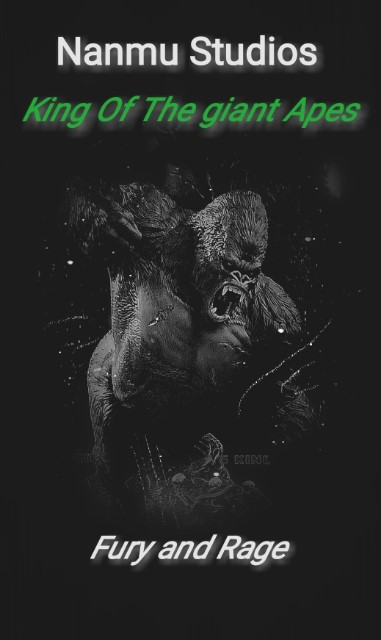
Our thanks to Carl who sent into Everything Dinosaur an image featuring his recently acquired King of the Giant Apes figure.  Nanmu Studio have created a limited-edition, resin model of an iconic movie monster.  This spectacular figure is supplied complete with a stunning display base.  It is a wonderful model and model collector Carl wanted to give his figure a vintage look.

King of the Giant Apes

One of Everything Dinosaur’s customers got quite artistic with their new Nanmu Studio King of the Giant Apes figure. Picture credit: Carl

Picture credit: Carl

The image refers to the figure as the “Fury and the Rage”.  This is a nod towards the Chinese name for this resin model. Carl has given his image a monochrome look. The first movie to feature the giant ape “King Kong” was released in 1933.  In this film the huge ape battled numerous prehistoric animals including dinosaurs and pterosaurs.  Carl’s image is a perhaps a tribute to this first film.

King of the Giant Apes

The King of the Giant Apes from Nanmu Studio is a truly spectacular figure.  This resin figure is supplied with its own hand-painted display stand.  The giant ape model measures some twenty-three cm high.  The display base is approximately fifteen centimetres in length and some ten and a half centimetres wide at its widest part.  A peg on the foot of the ape figure ensures that the model sits securely on its base.

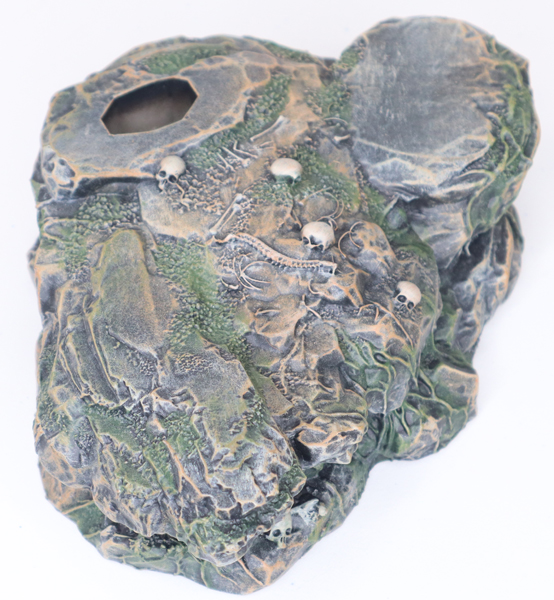
The King of the Giant Apes display base.

The King of the Giant Apes display base. Picture credit: Everything Dinosaur.

Picture credit: Everything Dinosaur

The picture (above) shows the Nanmu Studio King of the Giant Apes display base.  The eight-sided hole towards the rear of the base is to accommodate the peg on the model’s foot.  When the model ape is inserted into the base the peg and the hole cannot be seen.

To view the range of Nanmu Studio figures and models in stock at Everything Dinosaur: Nanmu Studio Models and Figures.

“Fury and Rage”

The figure depicts the giant ape fighting.  It has many scars from previous battles including some that look quite fresh.  The right hand is raised as if the huge gorilla is about to throw a punch.  The mouth is open and the beautiful detail of the inside of the mouth can be seen.   The left hand is placed forward and is about to rest on the ground.

Nanmu Studio King of the Giant Apes.

The Nanmu Studio King of the Giant Apes on its magnificent display stand. Picture credit: Everything Dinosaur.

Picture credit: Everything Dinosaur

A spokesperson from Everything Dinosaur praised Nanmu Studio for creating such a stunning, limited-edition resin figure.

Our thanks to model collector Carl, who sent in such a superb piece of artwork featuring the King of the Giant Apes.

Visit the award-winning Everything Dinosaur website: Dinosaur Figures and Replicas.

21 06, 2024

New Study Suggests Protoceratops Fossils Did Not Inspire the Griffin Legend

By |2024-06-24T06:32:58+01:00June 21st, 2024|Categories: Dinosaur and Prehistoric Animal News Stories, Dinosaur Fans|0 Comments

Newly published research suggests that Protoceratops fossils did not inspire the griffin from mythology.  The study published in “Interdisciplinary Science Reviews” was conducted by Dr Mark Witton and Richard Hing, palaeontologists at the University of Portsmouth.  The researchers have challenged the popular assumption that the half-animal, half-bird griffin was inspired by Protoceratops fossil material found by ancient nomads.

For centuries, academics have puzzled over where the griffin legend originated.  This new study examined the fossil evidence and the influence of folklore upon palaeontology.

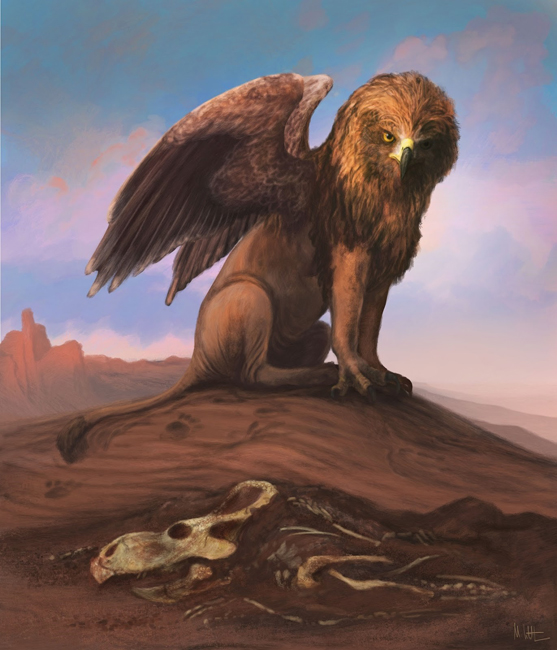
Protoceratops fossils probably did not inspire the griffin legend.

A painting of the mythological griffin. A chimaera which consisted off the head and wings of an eagle combined with the body of a big cat such as a lion. Protoceratops fossils can be seen in the foreground. A new study suggests that there is no compelling evidence to link dinosaur fossils with the legendary griffin. Picture credit: Mark P. Witton.

Protoceratops Fossils Did Not Give Rise to the Griffin Legend

The link between the fossils of the ceratopsian and griffin mythology was proposed around thirty years ago.  The link is believed to have been popularised in papers and books written by the folklorist Adrienne Mayor.  For example, a cryptozoology paper entitled “Paleocryptozoology: a call for collaboration between classicists and cryptozoologists” was published in 1989.  The theory that Protoceratops fossils led to the idea of the mythological half-bird, half-beast creature was discussed again in the book “The First Fossil Hunters”.  The ideas that dinosaur fossils found by people in Asia gave rise to the idea of a griffin became established and was mentioned in numerous books, documentaries and even museum exhibits.

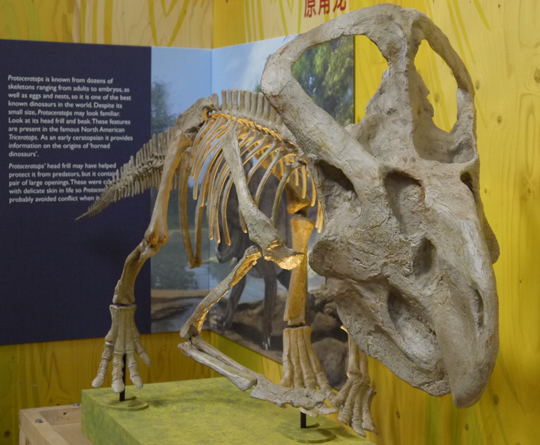
Protoceratops skeleton on display.

A skeleton of a Protoceratops on display. Picture credit: Everything Dinosaur.

Picture credit: Everything Dinosaur

Two species of Protoceratops are currently recognised (P. andrewsi and P. hellenikorhinus).  Fossils have been found in Mongolia and China.  It had been suggested that Protoceratops fossil bones were found by nomads prospecting for gold in Central Asia. These stories travelled southwest on trade routes inspiring the mythical griffin.

The first depictions of what is thought to be a griffin can be found in Egyptian and Middle Eastern art around the 4th millennium BC. Depictions of the griffin became popular in ancient Greece during the 8th century BC.

The Protoceratops Genus

Protoceratops was a small herbivorous dinosaur, measuring around two to two and a half metres in length. It had a beak, a large skull and a broad head shield. Its fossils are relatively common in some parts of the Gobi Desert.  Due to the relative abundance of fossil material including eggs, embryos, juveniles and mature adults, it is one of the most extensively studied of all the Dinosauria.

Like griffins, adult Protoceratops were quadrupedal, and the head shield could be interpreted as wings.  However, in the first detailed study of its kind, the researchers found that the supposed link between Protoceratops and the griffin did not stand up to close scrutiny.  For instance, the idea that Protoceratops remains were found by nomads prospecting for gold is thought to be unlikely.

Protoceratops fossil material is found hundreds of kilometres away from ancient gold sites.  In the hundred years since the first Protoceratops fossils were found by western scientists, no gold has been reported from these areas.  It also seems doubtful that the nomads would have seen much of the Protoceratops skeletons, even if they had stumbled upon them.

Dr Mark Witton explained:

“There is an assumption that dinosaur skeletons are discovered half-exposed, lying around almost like the remains of recently-deceased animals.  But generally speaking, just a fraction of an eroding dinosaur skeleton will be visible to the naked eye, unnoticed to all except for sharp-eyed fossil hunters.  That’s almost certainly how ancient peoples wandering around Mongolia encountered Protoceratops. If they wanted to see more, as they’d need to if they were forming myths about these animals, they’d have to extract the fossil from the surrounding rock.”

Dr Witton added:

“That is no small task, even with modern tools, glues, protective wrapping and preparatory techniques. It seems more probable that Protoceratops remains, by and large, went unnoticed — if the gold prospectors were even there to see them.”

Protoceratops skeleton compared to griffin art.

A Protoceratops skeleton compared to ancient griffin art. The griffins are all very obviously based on big cats, from their musculature and long, flexible tails to the manes (indicated by coiled “hair” on the neck), and birds, and differ from Protoceratops in virtually all measures of proportion and form. Image compiled from illustrations in Witton and Hing (2024); Protoceratops skeleton by and Mark P. Witton.

No Unambiguous Reference to Protoceratops Fossils in Ancient Literature

Furthermore, the geographic spread of griffin art through history does not align with the scenario of griffin folklore and legend beginning with strange bones found in Mongolia and China.  There is no evidence to indicate that ideas about fossils from Asia spread into Africa, the Middle East or Europe. In addition, there are also no unambiguous references to Protoceratops fossils in ancient literature.

To read an article about the likely habitat of Protoceratops: Protoceratops was a Tough Dinosaur.

The researchers argue that Protoceratops is only griffin-like in being a four-limbed animal with a beak. There are no details in griffin art suggesting that dinosaur fossils were referenced.  There is evidence to suggest that extant cats and birds were referenced.

Dr Witton stated:

“Everything about griffin origins is consistent with their traditional interpretation as imaginary beasts, just as their appearance is entirely explained by them being chimaeras of big cats and raptorial birds. Invoking a role for dinosaurs in griffin lore, especially species from distant lands like Protoceratops, not only introduces unnecessary complexity and inconsistencies to their origins, but also relies on interpretations and proposals that don’t withstand scrutiny.”

Fossils are Culturally Important

The scientists are keen to emphasise that there is strong evidence to suggest that fossils have been culturally important throughout human history.  There are innumerable instances of fossils inspiring folklore around the world.  These instances are known as “geomyths”.  For example, the guards from belemnites were once thought to be the remains of lightning bolts.

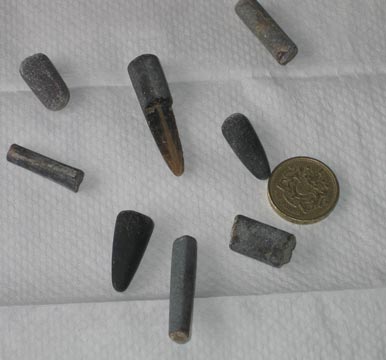
Some belemnite guard fossils, the coin shows scale.

Belemnite guard fossils from the “Jurassic Coast”. These common fossils were once thought to represent the remains of lightning bolts.  Picture credit: Everything Dinosaur.

Picture credit: Everything Dinosaur

Co-author of the study Richard Hing commented:

“It is important to distinguish between fossil folklore with a factual basis, that is, connections between fossils and myth evidenced by archaeological discoveries or compelling references in literature and artwork — and speculated connections based on intuition.”

Richard Hing went onto add:

“There is nothing inherently wrong with the idea that ancient peoples found dinosaur bones and incorporated them into their mythology, but we need to root such proposals in realities of history, geography and palaeontology. Otherwise, they are just speculation.”

Dr Witton summarised the study.  He explained that not all mythological creatures demand an explanation from the fossil record.  Dinosaurs are thought to have given rise to dragon myths.  Fossil elephants may have led to the myth of the one-eyed cyclops.  Protoceratops fossils leading to the imagining of a griffin, these are all popular geomyths.  However, there is very little evidence to support these links, and what there is, is speculative.

These stories are promoted as they seem intuitively plausible.  However, by doing so we ignore the growing knowledge of fossil geomyths grounded in fact and evidence.  Geomyths with evidence deserve more attention.

Everything Dinosaur acknowledges the assistance of the University of Portsmouth in the compilation of this article.

The study is published in Interdisciplinary Science Reviews.

Visit the award-winning Everything Dinosaur website: Dinosaur Toys and Models.

20 06, 2024

Top Marks for Everything Dinosaur from Positive Customer Feedback

By |2024-07-01T23:04:27+01:00June 20th, 2024|Categories: Product Reviews|0 Comments

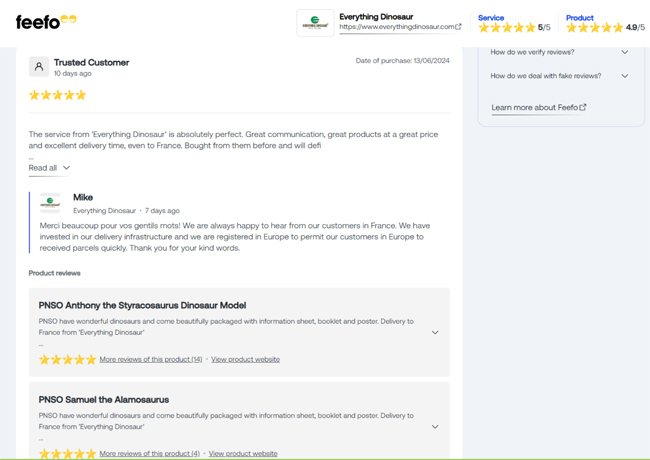
Feedback from customers is extremely important.  We rely on Feefo reviews as well as our own website reviews for customer feedback.  This month (June 2024) we are thrilled to have received over sixty 5-star customer reviews which have been logged on the Feefo website.  We are delighted to share one such review on this blog post, from a customer in France. This review is a testament to our commitment to providing exceptional service to customers all around the world.

Feefo reviews from a customer in France.

Another five-star Feefo review received by Everything Dinosaur. One of our French customers gave Everything Dinosaur and PNSO models top marks. Picture credit: Everything Dinosaur.

Picture credit: Everything Dinosaur

Feefo Reviews from France

The 5-star review came from a customer who had purchased the PNSO Styracosaurus and Alamosaurus models.  The customer service of Everything Dinosaur was praised.

In the customer’s comments the reviewer highlighted our helpful communication and fantastic products:

“The service from Everything Dinosaur is absolutely perfect.  Great communication, great products at a great price and excellent delivery time, even to France.”

All we can say is – merci beaucoup!

To read more about feedback from European customers: Top Marks from a Customer in Germany.

Receiving Positive Feedback

Receiving positive feedback like this from an overseas customer is incredibly meaningful. We are honoured.  Feedback such as this demonstrates our commitment to excellence.  We pride ourselves on being a trusted supplier of dinosaur and prehistoric animal figures to customers worldwide. Feefo reviews mean a lot to us.

We are genuinely grateful to every single one of our valued customers for taking the time to leave feedback and to share their experience of purchasing.  Such feedback motivates us to continue raising the bar and finding new ways to exceed the expectations of our customers, no matter where in the world they may be.

Visit the award-winning Everything Dinosaur website: Dinosaur Models and Toys.

19 06, 2024

New Nanmu Studio Velociraptor Figures from Everything Dinosaur

By |2024-06-20T12:21:56+01:00June 19th, 2024|Categories: Everything Dinosaur videos, Nanmu Studio Models|0 Comments

The new for 2024 Nanmu Studio Velociraptors are in stock at Everything Dinosaur.  To celebrate their arrival, Mike and Sue of Everything Dinosaur created a YouTube short.  Sue is holding the Blood Knight figure, whilst Mike highlights the White Queen articulated model.  The two team members demonstrate the product packaging and comment on the quality of the figures.  Nanmu Studio intends to bring out more articulated dinosaur figures later this year (2024).  For example, there are plans for an articulated Carnotaurus model.

The Nanmu Studio Zero-Set Easy Motion Velociraptors each have twenty-four points of articulation.  They are supplied with a transparent support stand and each figure has a flexible tail.  Customers will also receive a free Everything Dinosaur Velociraptor fact sheet with purchases.

Video credit: Everything Dinosaur

Visit the Everything Dinosaur YouTube channel for more videos: Everything Dinosaur on YouTube.

The New Nanmu Studio Velociraptors

The two new Nanmu Studio Velociraptors measure approximately thirty-five centimetres in length.  Depending on the pose chosen, the model height is around thirteen centimetres.  Nanmu Studio does not declare a scale for these articulated dinosaur models.  However, based on these measurements we estimate that the models are in 1/6th scale approximately.

To view the range of Nanmu Studio figures in stock at Everything Dinosaur: Nanmu Studio Dinosaurs.

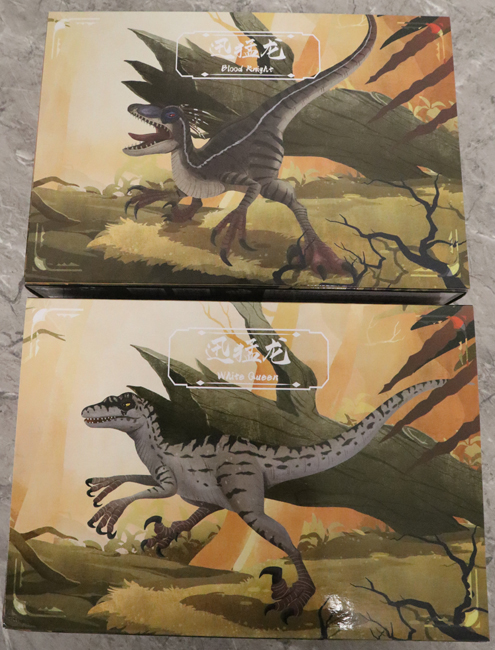
Nanmu Studio articulated Velociraptor models.

The beautiful packaging of the Nanmu Studio Velociraptor figures. The Blood Knight packaging (top) and the White Queen packaging (bottom). Picture credit: Everything Dinosaur.

Picture credit: Everything Dinosaur

Mike from Everything Dinosaur commented:

“We enjoy seeing videos sent into us by customers.  There are plans for us to make more Instagram Reels and YouTube shorts that highlight the models and figures we have in stock.  We hope our customers find these videos helpful and informative.”

To view the extensive range of dinosaur and prehistoric animal models and toys in stock, take a look at Everything Dinosaurs award-winning website: Dinosaur Models and Toys.

18 06, 2024

New “Prehistoric Times” Issue 150 Sneak Peek

By |2024-06-20T10:44:00+01:00June 18th, 2024|Categories: Magazine Reviews, Prehistoric Times|1 Comment

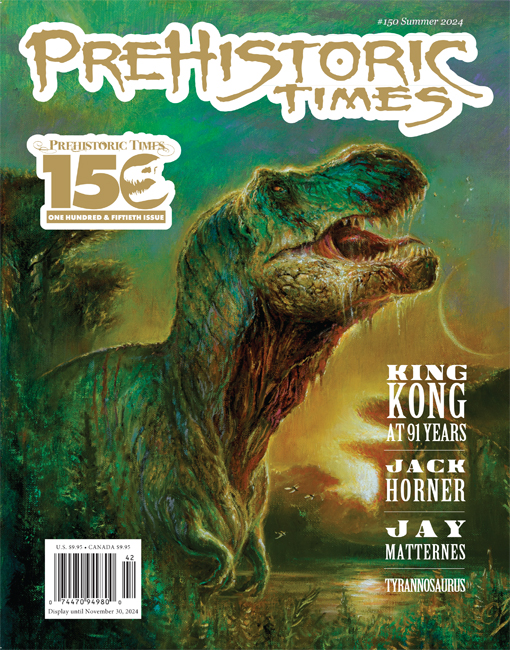
Everything Dinosaur would like to thank editor Mike Fredericks who emailed the front cover artwork for “Prehistoric Times” issue 150.  We are reliably informed that the correct term for celebrating a special 150th event is a sesquicentennial.  The painting on the front cover has a retro look to it.  It reminds us of the artwork associated with the Aurora Prehistoric Scenes kits from the late 1960s and early 1970s.  The front cover features Tyrannosaurus rex.  The illustration is the work of Bob Eggleton.

"Prehistoric Times" Issue 150 front cover.

The front cover of issue 150 (summer 2024) of “Prehistoric Times” magazine.  The artwork was created by Bob Eggleton.  Picture credit: Mike Fredericks.

Picture credit: Mike Fredericks

“Prehistoric Times” Magazine Issue 150

As always, issue 150 of “Prehistoric Times” magazine is crammed full of excellent articles and amazing artwork.  Editor Mike Fredericks wrote to Everything Dinosaur and outlined some of the magazine’s contents. It is 91 years since the first King Kong film hit cinema screens. This famous monster movie had its premiere in the spring of 1933. The film starred Fay Wray and Robert Armstrong. However, the titular character, the giant ape, was to become enshrined in movie folklore. Directed by Merian C. Cooper and Ernest B. Schoedsack the film grossed over $5 million USD. The stop-motion monsters were created and animated by Willis H. O’Brien. The 1933 King Kong film regularly features in lists of the top one hundred most influential movies of all time.

Nanmu Studio King of the Giant Apes.

The 1933 monster movie inspires and enthrals ninety-one years later.  For example, the recently introduced Nanmu Studio King of the Giant Apes resin figure pays tribute to this iconic movie monster.  The image shows the Nanmu Studio King of the Giant Apes on its magnificent display stand. Picture credit: Everything Dinosaur.

Picture credit: Everything Dinosaur

The picture above shows the recently introduced limited-edition giant ape resin model by Nanmu Studio.  It seems that the giant ape from the cinema continues to inspire designers, artists and model makers.

To view the range of Nanmu Studio prehistoric animal figures in stock at Everything Dinosaur: Nanmu Studio Models.

Tyrannosaurus rex and Mosasaurus

The two prehistoric animals to feature in issue 150 are Tyrannosaurus rex and Mosasaurus.  We look forward to reading more about these prehistoric creatures, in the articles, which we suspect will be penned by the excellent Phil Hore.  We are also looking forward to seeing all the reader submitted artwork and illustrations.

There is an interview with artist Jay Matternes about his new book.  Famous palaeontologist Jack Horner outlines his extensive work on the Dinosauria including T. rex and the great and the good in the “Prehistoric Times” community get to discuss their fascination with the “King of the Tyrant Lizards”.  Everything Dinosaur gets a mention too.

Tracy Ford looks at tyrannosaurs and there is a feature on the first publication of a feathered T. rex illustration.  Subscribers can learn more about the remarkable work of the influential 20th century artist Zdeněk Burian and the magazine will feature the latest model reviews and fossil discoveries.  Editor Mike Fredericks has informed us that there will be a T. rex model build article in issue 150.

“Prehistoric Times” magazine is published quarterly.  It is a great magazine, and we can’t wait to receive our copy of this special 150th edition.

To learn more about the magazine and to subscribe: “Prehistoric Times” Magazine.

Go to Top