Everything Dinosaur team members have been asked to provide some scientific information on the “Styx Demon”, the pachycephalosaur known as Stygimoloch. The profile of this animal was raised recently due to its appearance in the last “Jurassic World – Fallen Kingdom” film to be released and with the introduction of a Stygimoloch model in the Papo “Les Dinosaures” range.
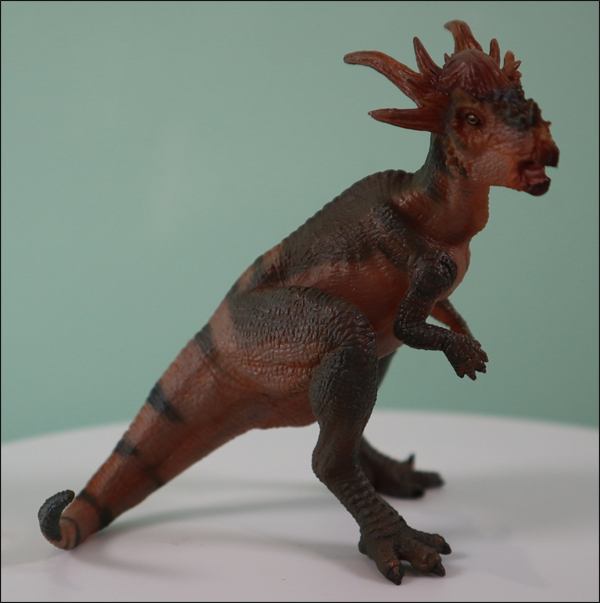
The new for 2020 Papo Stygimoloch dinosaur model. A replica of a very spiky pachycephalosaur. Fossils used to erect this genus in 1983 are believed by many palaeontologists to represent juveniles of Pachycephalosaurus.Picture credit: Everything Dinosaur.
Picture credit: Everything Dinosaur
The picture (above) shows the Papo Stygimoloch model.
Preparing Stygimoloch Information for a Dinosaur Exhibit
A paper presented at the 2007 annual meeting of the Society of Vertebrate Paleontology suggested that the spiky Stygimoloch was not a valid species of dinosaur, but its fossils represented juveniles of the already described and much larger, bone-headed dinosaur Pachycephalosaurus. With the validity of this genus in question, this makes preparing scientific information for a dinosaur exhibit featuring Stygimoloch a bit of a challenge for our dedicated team members.
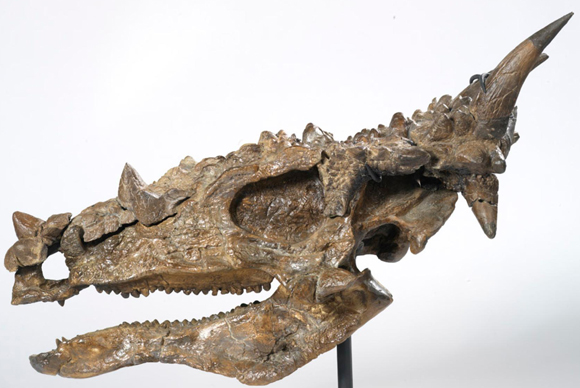
A reconstruction of the fossil skull of the juvenile Pachycephalosaurus that has theropod-like teeth in the front of the jaws. The discovery of an almost complete skull and jaws of a juvenile Pachycephalosaurus in eastern Montana (2018), gave palaeontologists the opportunity to learn more about the potential diet of this dinosaur.Picture Credit Brian Boyle (Royal Ontario Museum).
Summarising the Story of Stygimoloch
In 1973, scientists from the University of California Berkeley, whilst exploring Hell Creek Formation exposures in McCone County, Montana, found a single, robust skull fragment with the remains of three distinct, prominent horns projecting out of the back of it.
Although classified as a bone from a pachycephalosaur, no further work on the bone was carried out until palaeontologists Hans-Dieter Sues and Peter Galton published a comprehensive review of North American pachycephalosaur fossils in 1983. They named Stygimoloch (S. spinifer), based on this unusual skull bone and other fragmentary material that had once been thought to represent part of the neck frill from a Triceratops.
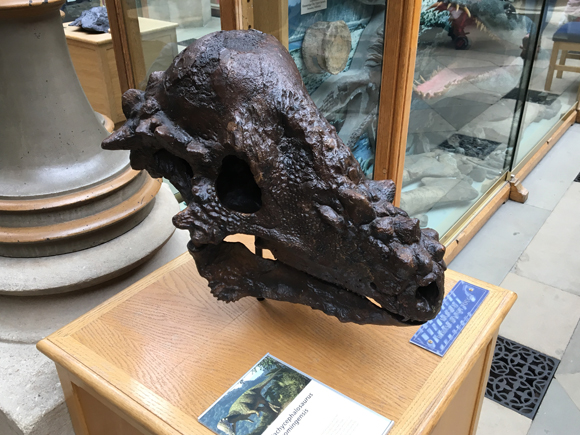
Pachycephalosaurus wyomingensis replica skull. Both Dracorex and Stygimoloch are believed by many scientists to represent juveniles of the already described genus Pachycephalosaurus.Picture credit: Everything Dinosaur.
Picture credit: Everyhting Dinosaur
Rising to the Challenge
Our team members are not ones to shy away from a challenge. As well as providing information on Stygimoloch for the exhibition, they also prepared some additional information featuring Pachycephalosaurus wyomingensis so that visitors could learn more about how perceptions regarding Hell Creek Formation pachycephalosaurs have changed.
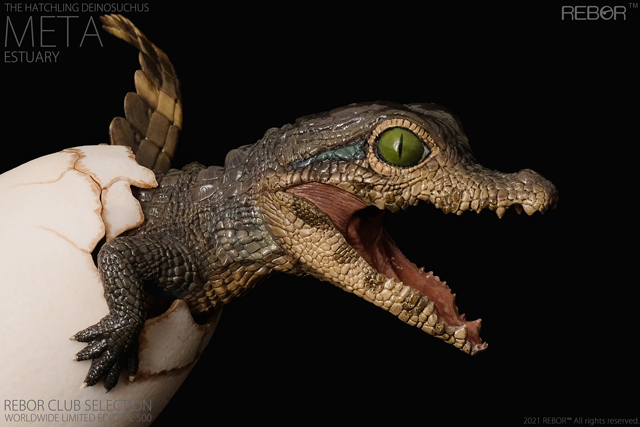
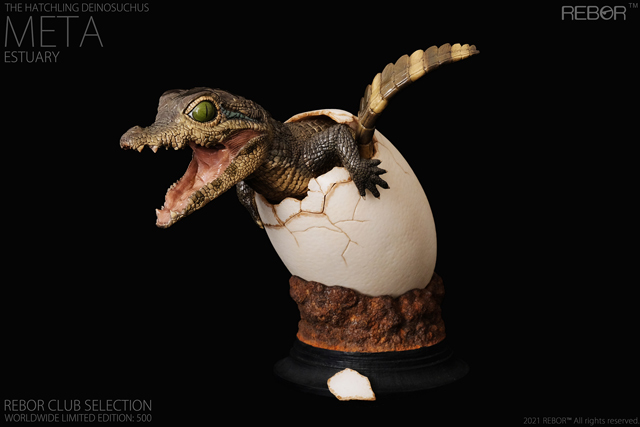
That talented team at Rebor have introduced two limited-edition hatchling Deinosuchus polystone replicas. Two fantastic replicas of a hatching Deinosuchus, a fearsome crocodile that lived in the southern United States during the Late Cretaceous.
The Rebor Club Selection: Meta the hatchling Deinosuchus estuary variant in close right lateral view.
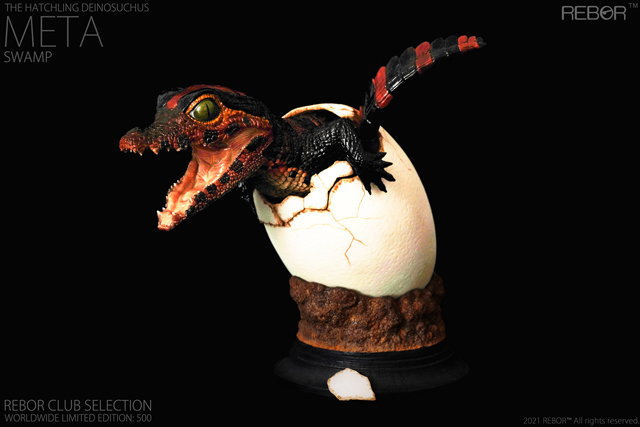
Fans of the Rebor range have two colour variants to choose from. There is the Rebor Club Selection: Meta the hatchling Deinosuchus (estuary variant) as shown above. Alternatively, collectors could select the Rebor Club Selection: Meta the hatchling Deinosuchus (swamp variant) shown below.
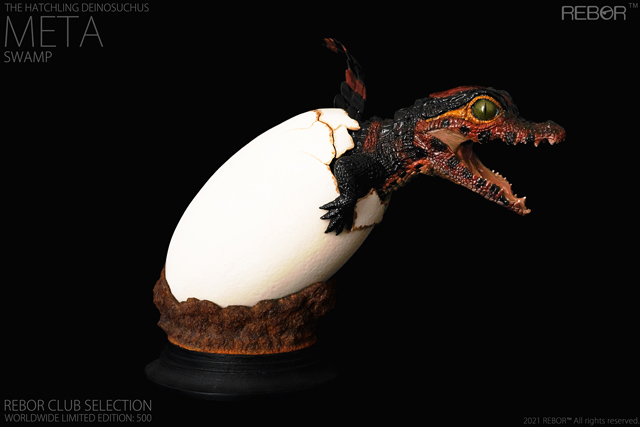
The Rebor Club Selection: Meta the hatchling Deinosuchus – the swamp colour variant in close right lateral view.
Digitally Designed Models
These two polystone replicas are the first models in the extensive Rebor Club Selection portfolio to have been digitally sculpted. Fans of the Rebor range can expect even more detailed and lifelike figures.
The Rebor Club Selection: Meta the hatchling Deinosuchus is about to leave its egg! It’s very keen to get to the safety of the water. This is the first Rebor Club Selection figure to have been digitally sculpted.
Only 500 of Each Have Been Made
Announcing these figures over the Easter Holiday weekend, Rebor have stipulated that only 500 of each of the Deinosuchus models (swamp variant and the estuary variant) will be produced. These are limited-edition models, likely to rise in value over time as collectors, not able to pick one up when first introduced, desperately try to complete their Rebor model collections.
The 2021 limited-edition Rebor Club Selection: Meta the hatchling Deinosuchus polystone replica (swamp colour variant).
Aware of the Rebor range’s popularity a spokesperson from Everything Dinosaur commented:
“These stunning Rebor Club Selection replicas are bound to be very popular. The two polystone figures combine the excellence of Rebor with the fact that there are very few Deinosuchus figures in production. These two factors plus their limited production run are going to make both “swamp” and “estuary” highly collectable.”
Rebor Club Selection: Meta the hatchling Deinosuchus model in right lateral view. As both “swamp” and “estuary” colour variants are limited production figures with just 500 of each scheduled to be made, these models are going to highly collectable.
Available from Pre-order from Everything Dinosaur
The Rebor Club Selection: Meta the hatchling Deinosuchus “swamp variant” and the Rebor Club Selection: Meta the hatchling Deinosuchus “estuary variant” are available to pre-order from Everything Dinosaur.
The company spokesperson advised that customers did not delay in placing their pre-orders. Demand is going to far exceed supply and very soon both “swamp” and “estuary” will be as extinct as Deinosuchus hatcheri, the giant prehistoric crocodile upon which these polystone replicas are based.
Both the Rebor Club Selection Meta the hatchling Deinosuchus models are available to order from Everything Dinosaur (whilst stocks last).
The Amazon rainforest is an extremely important low latitude habitat with a huge diversity of animals, fungi and plant species. Described as the “lungs of the planet”, this tropical rainforest is at the very centre of many global conservation efforts. New research suggests that it was the extra-terrestrial impact event some 66 million years ago that led to the rise of this angiosperm dominated ecosystem.
K/Pg Extinction Event
Approximately 66 million years ago a rock from space smashed into our planet. This triggered a sudden mass extinction event devastating around 75% of all the animal and plant terrestrial species, many of which subsequently became extinct. At this time the dinosaurs, their cousins the pterosaurs and the majority of marine reptiles died out.
Analysis of Fossil Pollen and Study of Fossil Leaves
Writing in the journal “Science”, researchers from the Southern Methodist University (Texas) and the University of Wyoming report on the study of tens of thousands of fossil pollen specimens along with thousands of leaf fossils from Cretaceous-aged strata and deposits laid down after the K/Pg extinction event. The scientists, which include co-author Dr Ellen Currano (Department of Botany, University of Wyoming), found that the types of plant creating tropical forests were very different pre and post the extra-terrestrial impact. In the Late Cretaceous tropical forests were dominated by conifers and they were much more open than the dense, angiosperm forests that came about during the Palaeocene.
Study suggests the floral composition of tropical rainforests changed dramatically after the extra-terrestrial impact event. During the Late Cretaceous tropical forests were dominated by conifers and forest canopies were less dense. Picture Credit: Danielle Dufault.
A Thick Forest Canopy Denying Access to Light
The scientists discovered that the fossil pollen and leaves show a marked transition in tropical forest flora. After the extra-terrestrial impact forests developed a thick canopy blocking much of the light from reaching the ground and angiosperms became more dominant.
How Did These Changes Come About?
As well as the documenting the turnover in flora and the transition from one tropical forest environment to a different type of rainforest in the Palaeocene, the researchers propose three possible explanations for this change:
The absence of large megaherbivores, specifically dinosaurs allowed plant densities in forests to increase. The extinction of giant plant-eating dinosaurs such as the Ceratopsia, hadrosaurs, armoured dinosaurs and the titanosaurs allowed plants to grow at lower levels as they were not being trampled or consumed by herbivorous dinosaurs.
Several types of fern and conifer became extinct during the K/Pg transition permitting new types of angiosperm (flowering plants) to evolve and exploit the vacated niches.
Falling ash from the impact enriched soils throughout the tropics, provided an advantage to faster-growing angiosperms.
The scientists conclude that the three hypotheses are not mutually exclusive and that a combination of factors could have led to the change in the flora as recorded in the fossil record.
A Significant Lesson for Today
Today, a rapidly changing climate, largely caused by the actions of our own species is having a dramatic effect on the world’s forests. The researchers note that the fossil record demonstrates that rainforests do not simply “bounce back”, after a catastrophe. They can take millions of years to recover and a very different type of ecosystem is likely to emerge.
The scientific paper: “The impactful origin of neotropical rainforests” by Bonnie F. Jacobs and Ellen D. Currano published in the journal Science.
Long-time fan of dinosaurs and prehistoric animals, Marc, who is also a long-time customer of Everything Dinosaur offered to write a short testimonial about his experiences purchasing from us.
What a kind thought especially in these difficult and challenging times.
Everything Dinosaur Receives Feedback
Marc wrote:
“I’ve been an Everything Dinosaur customer for a number of years, and they’ve never once let me down. They’ve always had an excellent range of models, which has only improved with time with the addition of lines from Creative Beast (Beasts of the Mesozoic) and PNSO, among others. Service has always been personable and friendly but professional, and every package has arrived on time. I also (as a dinosaur nerd) really appreciate the effort they put into the educational side. Overall, ED is a business well worth supporting, and I hope they’re around for a long while yet.”
Signage at Everything Dinosaur’s offices and warehouse. The UK-based mail order company has recently moved into larger premises incorporating more warehouse storage and offices. Picture credit: Everything Dinosaur.
Picture credit: Everything Dinosaur
A spokesperson from Everything Dinosaur thanked Marc for their kind gesture and stated:
“Our thanks to Marc and to every single one of our customers who support our company. These are exceptionally difficult times and we are doing all we can to maintain our high standards of customer service and to offer an even wider range of prehistoric animal models and figures.”
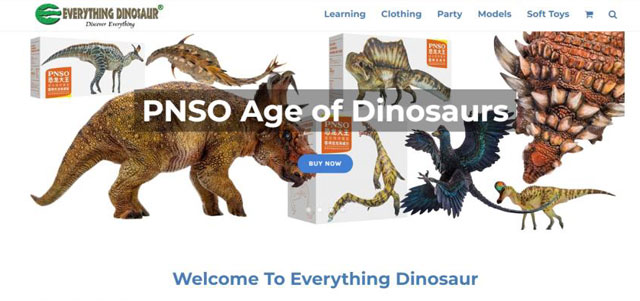
The PNSO Fusion Slider on the Everything Dinosaur website. A typical example showing the huge range of prehistoric animal models and figures available from the UK-based mail order company. Picture credit: Everything Dinosaur.
Picture credit: Everything Dinosaur
The spokesperson from Everything Dinosaur continued:
“We remain committed to bringing into stock even more models of prehistoric animals as we support our customers and fans of dinosaurs and other extinct creatures.”
Once again, our thanks to Marc for writing a testimonial for Everything Dinosaur.
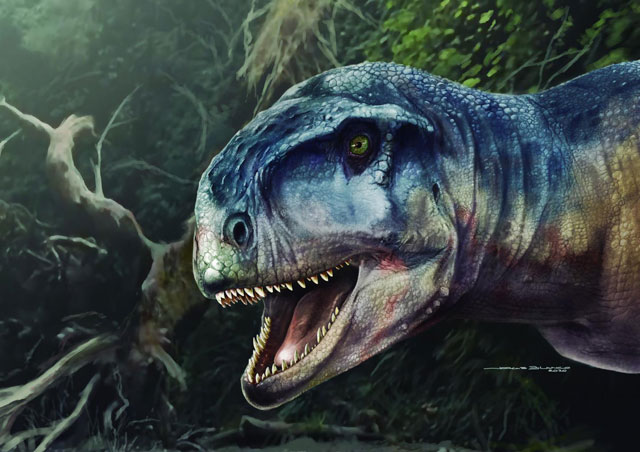
A team of international researchers have named and described a new species of fearsome, meat-eating dinosaur based on a partial skull found in 2015 in Neuquén Province (northern Patagonia). The dinosaur is a member of the Abelisauridae family and it has been named Llukalkan aliocranianus. The genus name is from the local Mapuche dialect and translates as “one who causes fear”. Not only was Llukalkan a likely apex predator, its discovery helps to confirm that the abelisaurs were one of the most important and significant predators in South America during the Late Cretaceous.
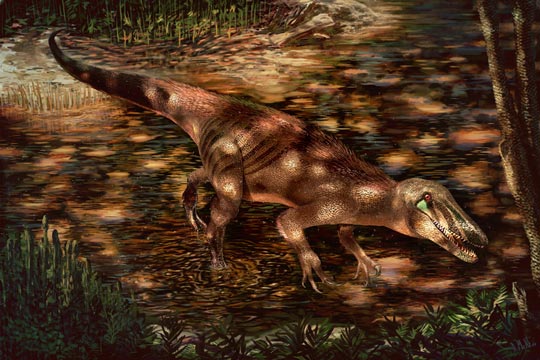
A life reconstruction of the newly described abelisaurid from Argentina Llukalkan aliocranianus. Picture credit: Jorge Blanco and the Journal of Vertebrate Paleontology.
Found in Close Proximity to Viavenator exxoni
The well-preserved skull was found in outcrops of the Bajo De La Carpa Formation at the La Invernada fossil site. The strata at this location were laid down approximately 85 million years ago (Santonian faunal stage of the Late Cretaceous) and the bones were found close to the location of an earlier abelisaurid discovery (Viavenator exxoni), which had been found by some of the scientists that also participated in the Llukalkan study.
Assessment of the lacrimal bone suggest that this skull material represents a sub-adult animal and comparison with other abelisaurids such as Carnotaurus indicates that Llukalkan may have been around five metres in length, making it slightly smaller than Viavenator which is estimated to have been around six metres long.
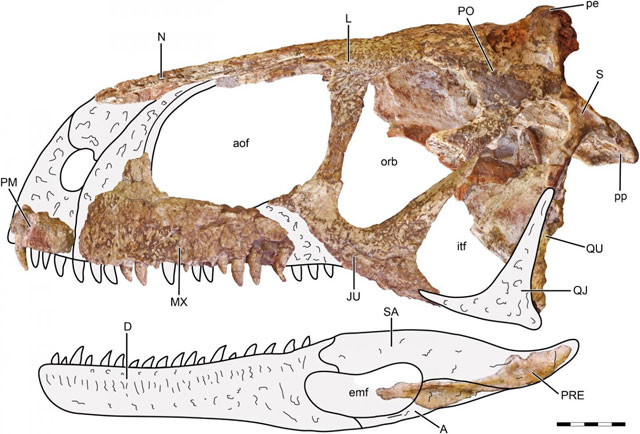
A view of the cranial material of the holotype (Llukalkan aliocranianus) – view in left lateral view with line drawing showing where the bones fit with the rest of the skull. Unique rugose and roughened patches on the skull bones confirmed that the scientists were dealing with a new species.
Writing in the peer reviewed academic publication the “Journal of Vertebrate Paleontology”, the researchers which included Federico A. Gianechini, Leonardo S. Filippi and Ariana Paulina-Carabajal identified a number of autapomorphies within the skull material that led them to confidently assign a new species. The trivial name is derived from the Latin for “different skull”.
Abelisaurids “Top Dogs”
Something like ten different genera of abelisaurid dinosaur have been discovered in Patagonia to date. The scientists state that Llukalkan and Viavenator were probably contemporaneous and they help to demonstrate the dominance of this type of theropod dinosaur in the Late Cretaceous of Argentina. Both Viavenator and the newly described Llukalkan were closely related, both have been assigned to the Abelisauridae clade – the Furileusauria which includes the geologically much younger and much larger Pycnonemosaurus (P. nevesi), fossils of which come from Brazil.
Megaraptors for Company
It is likely that these two furileusaurian abelisaurids probably shared their environment with another type of large theropod hypercarnivore. Fossils of the megaraptor Tratayenia rosalesi, which was described in 2018, are also associated with the Santonian-aged strata of the Bajo de la Carpa Formation, albeit the Tratayenia material was found at a different location.
An illustration of the new Late Cretaceous megaraptoran dinosaur Tratayenia. Picture credit: Andrea McAfee (Carnegie Museum of Natural History).
At around eight metres in length (possibly even bigger), T. rosalesi was a formidable predator. Whether the abelisaurids were the “top dogs” when it came to the food chain remains uncertain. However, with the discovery of Llukalkan so close to the fossils of Viavenator, it does suggest that these types of theropods were extremely successful predators.
The scientific paper: “A New Furileusaurian Abelisaurid from La Invernada (Upper Cretaceous, Santonian, Bajo De La Carpa Formation), Northern Patagonia, Argentina” by Federico A. Gianechini, Ariel H. Méndez, Leonardo S. Filippi, Ariana Paulina-Carabajal, Rubén D. Juárez-Valieri and Alberto C. Garrido published in the Journal of Vertebrate Paleontology.
Australia boasts a weird and wonderful flora and fauna. Millions of years of isolation has led to the land “down under” evolving a very unique biota, perhaps most marked by the abundance of marsupial mammals. Today’s fauna, remarkable as it might be, is overshadowed somewhat by the incredible megafauna that once existed on the continent.
Australia’s Giant “Thunderbirds”
For example, giant, flightless birds thrived and evolved into a myriad of different sized forms as climates and habitats changed. Some of these birds, members of the extinct family the Dromornithidae, were giants and have been nicknamed Australia’s giant “Thunderbirds” or even “Devil Ducks”. A newly published study examines the evolutionary development of “bird brains” in a bid to settle the phylogeny of these giant birds.
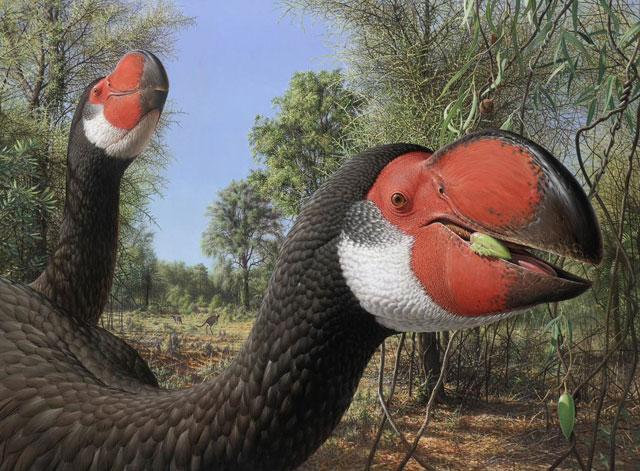
A life reconstruction of the giant Australian “Thunderbird” Dromornis stirtoni of the Late Miocene. At around 3 metres tall and weighing approximately 600 kilograms, D. stirtoni is one of the largest avian dinosaurs to have ever lived. Picture credit: Peter Trusler.
Mapping the Brains of “Mihirungs”
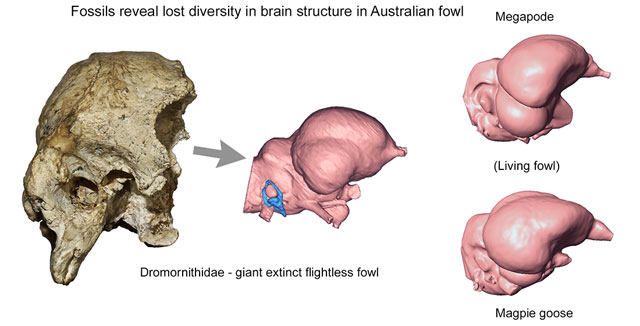
Scientists had puzzled over the phylogeny of these extinct birds for some time. Earlier studies suggested that they were related to waterfowl – hence one of their nicknames “Devil Ducks”. Researchers from Flinders University (Adelaide, South Australia), reconstructed the brains of a number of dromornithid genera in a bid to better understand the family’s origins and to learn more about their place in the Australian megafauna dominated prehistoric ecosystems.
One of the birds studied was the enormous Dromornis stirtoni, the largest of the “mihirungs” (the Aboriginal word for “giant bird”).
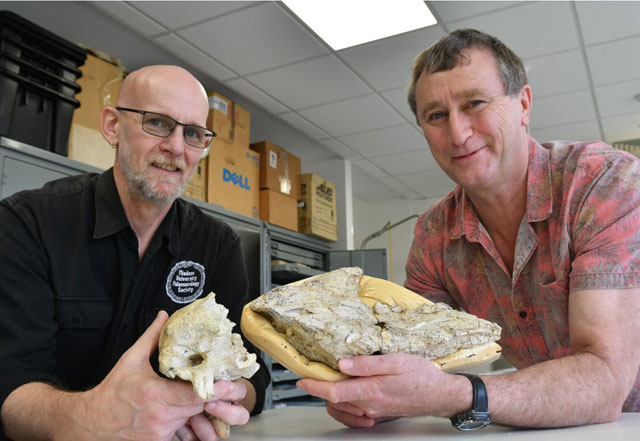
Dr Warren Handley and Associate Professor Trevor Worthy – the authors of the scientific paper, hold a skull (left) and partial upper bill (right) of the mihirung Dromornis planei.Picture credit: Flinders University.
Plant-eater or Meat-eater?
Heavier than a polar bear (Ursus maritimus) Dromornis stirtoni is known from Upper Miocene deposits from Australia’s Northern Territory. Dromornis had a huge skull, more than half a metre long, but its brain was squeezed for space.
It possessed a big, powerful beak, but its diet along with the diets of other dromornithids remains a mystery. It could have fed on leaves, nuts and fruit, or perhaps it was a predator. The lack of a “hook” and the absence of talons in this and other species suggests that these flightless birds were probably not hypercarnivores.
Writing in the academic journal “Diversity”, the researchers examined the craniums of giant “Thunderbirds” looking at a variety of genera including the earliest Dromornis murrayi from the Late Oligocene to Dromornis planei and Ilbandornis woodburnei from the middle Miocene Epoch and Dromornis stirtoni, that roamed northern Australia around 7 million years ago (Messinian, the last stage of the Miocene).
Fossil study reveals lost diversity in the brain structure of Australian fowl. Picture credit: Flinders University.
Related to Gamefowl (Galliformes)
The researchers conclude that these birds were probably more closely related to gamefowl (Galliformes) than they were to waterfowl (Anseriformes).
Commenting on the research, one of the authors Dr Warren Handley (Flinders University) stated:
“Together with their large, forward-facing eyes and very large bills, the shape of their brains and nerves suggested these birds likely had well-developed stereoscopic vision, or depth perception, and fed on a diet of soft leaves and fruit. The shape of their brains and nerves have told us a lot about their sensory capabilities, and something about their possible lifestyle which enabled these remarkable birds to live in the forests around river channels and lakes across Australia for an extremely long time.”
An Evolutionary Experiment
The researchers suggest that the Dromornithidae were the result of birds distantly related to chickens getting a free reign in evolutionary terms on the isolated continent. They took a very different evolutionary path when compared to their relatives the megapodes which still exist in Australasia.
The researchers postulate that the range in body sizes exhibited by dromornithids were due to climate change and the availability of food within the ecosystem. The Late Miocene was a period of dramatic climate change with the continent becoming more arid and cooler. Rainforests retreated and were replaced by more open woodlands, these changes may have played a role in the evolution of giant forms such as D. stirtoni.
Everything Dinosaur acknowledges the assistance of a media release from Flinders University in the compilation of this article.
The scientific paper: “Endocranial Anatomy of the Giant Extinct Australian Mihirung Birds (Aves, Dromornithidae)” by W. D. Handley and T. H. Worthy published in Diversity.
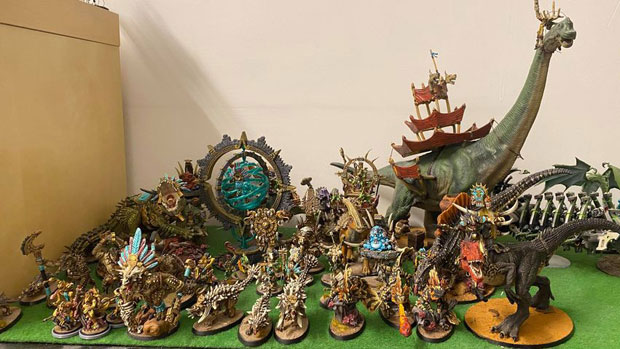
Our thanks to Warhammer enthusiast Jeffery who sent into Everything Dinosaur some pictures of his customised dinosaur models that he had created so that they could participate in Warhammer miniature wargames.
Papo dinosaur models have been used to create a dinosaur army for use in Warhammer miniature wargames.
Papo Dinosaur Models
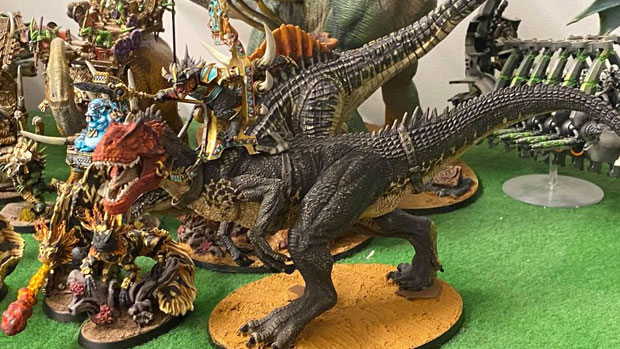
Jeffery has used a range of Papo dinosaur models to create his stunning dinosaur army. There is the Papo Allosaurus, Acrocanthosaurus, Ankylosaurus and the massive Brachiosaurus in the ranks.
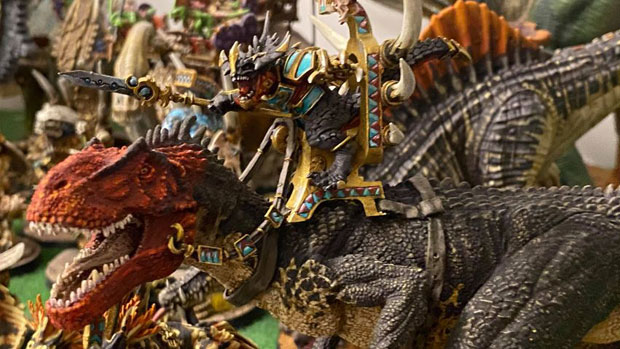
The Papo Allosaurus dinosaur model has been customised for Warhammer battles. Whilst Papo models stand perfectly well on their own, bases have been added so that these figures can be used on a variety of surfaces and battle landscapes.
The models have been repainted and given bases and they look a very formidable fighting force. The level of detail is astonishing.
Papo dinosaur models ready for battle! Customised Papo prehistoric animals prepared for a Warhammer game.
Warhammer
Warhammer is a tabletop, miniature wargame featuring an array of amazing creatures doing battle with each other. Players take turns to move their model warriors around a battle landscape, the warriors being a mixture of aliens, monsters, humans and fantasy figures including customised dinosaur models. Battles are won or lost depending on the roll of a dice. Warhammer is believed to be the most popular miniature wargame played in the world. Jeffery has used several Papo models to help create this amazing formation of fighting dinosaurs.
An epic Warhammer dinosaur army inspired by Papo dinosaur models. The head of the Papo Allosaurus figure has been skilfully painted a bright crimson colour to give this meat-eating dinosaur an even more frightening appearance.
A spokesperson from Everything Dinosaur commented:
“It is always a pleasure seeing how our customers use their prehistoric animal model purchases. We know that many of the models that we supply are used in various wargames and it was very kind of Jeffery to send into us his pictures of the dinosaur army he had created that was inspired by Papo models.”
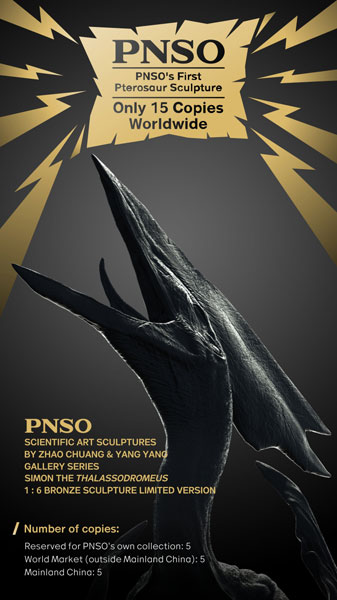
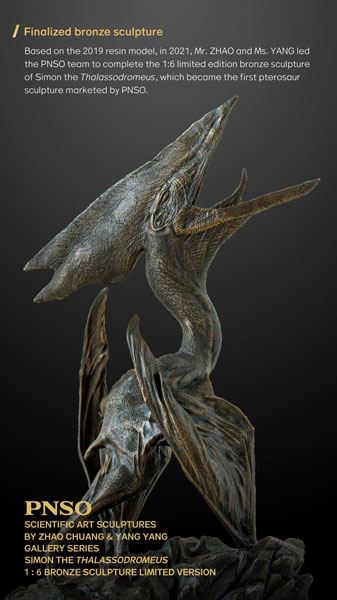
PNSO have announced that they will be producing fifteen bronze statues of the pterosaur Thalassodromeus. Everything Dinosaur customers are being offered these once in a lifetime, 1:6 scale, bronze sculptures at £2,550.00 GBP ($3,500.00 USD) the price includes delivery.
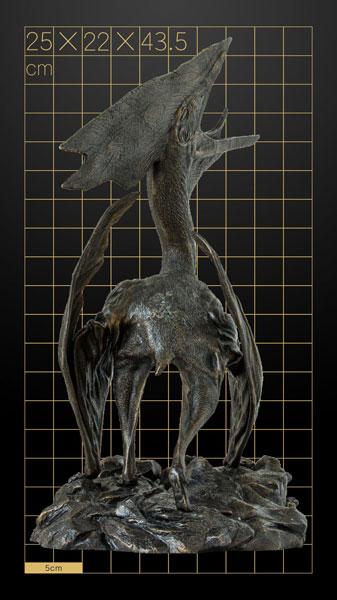
Just 15 bronze statues will be cast. Each will weigh 7.75 kilos and the figure measures 22 cm x 25 cm x 43.5 cm.
Limited-edition Pterosaur Bronze Statue
Just a handful of these fantastic figures will be available outside of China. Once fifteen have been cast in solid bronze, no more will be made.
Only a handful of these stunning bronze statues are being made available outside China.
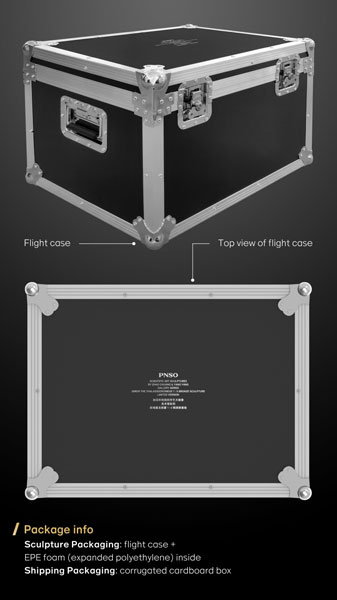
Each PNSO Simon the Thalassodromeus figure is supplied in its own custom-built flight case.
Each of the fifteen PNSO Simon the Thalassodromeus bronzes has a unique number.
A Very Special Limited Edition Bronze Figure
A spokesperson from Everything Dinosaur commented:
“This is a stunning bronze figure, superbly detailed and a once in a lifetime opportunity to acquire a truly remarkable statue. With only a handful being offered to customers outside China, this is a rare chance to purchase a pterosaur cast in bronze.”
Today, the clocks have gone forward in the UK, this means that this is the official start of British Summer Time (BST). Whilst it might be pouring with rain outside and chilly, better weather and better times are hopefully on the way.
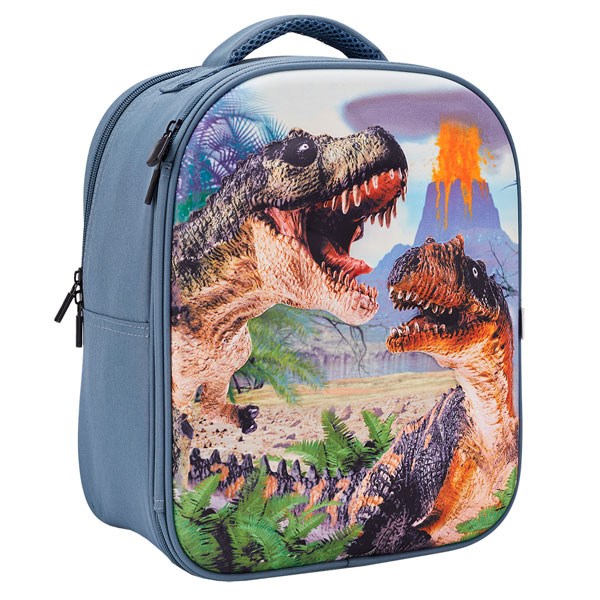
Tomorrow, some of the lockdown restrictions in England are being lifted. Restrictions have been lifted elsewhere within the UK, as the country begins to move cautiously out of the COVID-19 lockdown. We have noticed a small change in our customer’s buying habits over the last week. The Mojo Fun Dinosaur Backpack and Playscape has been selling really well.
The Mojo Fun dinosaur backpack with playscape features two Mojo Fun dinosaurs on the decorative front panel, a T. rex (left) and an Allosaurus (right). Team members at Everything Dinosaur have noticed an upturn in sales of this backpack figure, we suspect that with the COVID-19 restrictions being lifted (in a small way), so more people are travelling and visiting friends and family.
A Sturdy Backpack with Dinosaurs Too!
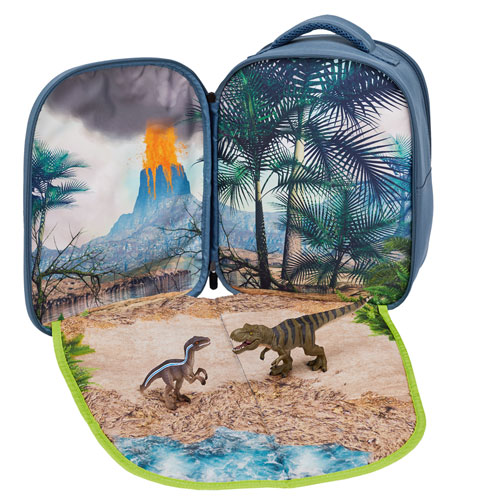
This sturdy backpack which folds out to reveal a stunning prehistoric playscape is supplied with two dinosaur models. It can be used for carrying bits and bobs and yet, when unzipped the backpack transforms into a prehistoric play scape.
The dinosaur backpack opens up to provide a playscape for dinosaur models. Two dinosaurs are included with the backpack along with a Mojo Fun collector’s catalogue.
An Ideal Travel Companion
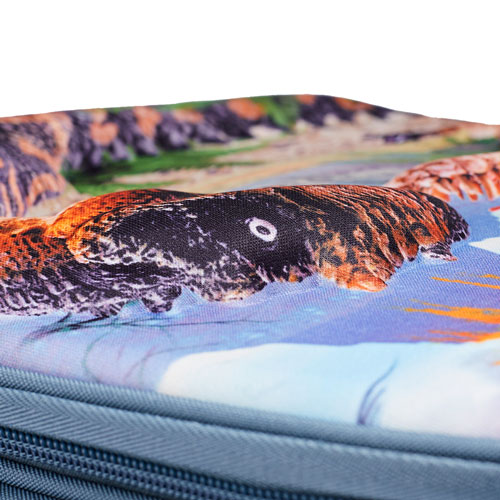
The bright and colourful front panel features two Mojo dinosaur models, the Mojo Fun Allosaurus and a fearsome Mojo Fun Tyrannosaurus rex. The panel itself is embossed and raised slightly providing a stylish three-dimensional effect.
The Mojo Fun dinosaur backpack with playscape has a raised and embossed dinosaur -themed design on the front panel.
A spokesperson from Everything Dinosaur commented:
“We do understand how desperate families have been to get out for the day and to visit relatives. The increase in sales of the Mojo Fun dinosaur backpack and playscape has coincided with an easing of restrictions that had been imposed due to COVID-19. Perhaps this is merely a coincidence, but we like to think that for young dinosaur fans they will soon be going on some more dinosaur adventures.”
Whilst stressing the need to stay safe and to obey those restrictions that remain, the spokesperson added that team members at Everything Dinosaur were happy at the thought that this backpack would be used by lots of young people on their travels this year.
Study straps on the Mojo Fun dinosaur backpack and playscape. This is an ideal backpack for young dinosaur fans to take with them on their travel adventures. It can also be wiped over with a damp cloth with anti-viral treatment to help keep children safe and well.
To view the Mojo Fun Dinosaur backpack and playscape and the rest of the figures currently available from Everything Dinosaur (more model stock due in soon): Mojo Fun Dinosaurs and Prehistoric Animal Models.
Team members at Everything Dinosaur as fans of prehistoric animals themselves don’t mind helping out fellow collectors. For example, we often receive emails from prehistoric animal model enthusiasts asking us to select a particular replica for them. We are happy to take some photographs of the figure that we have chosen and then email the images to the potential buyer for their approval.
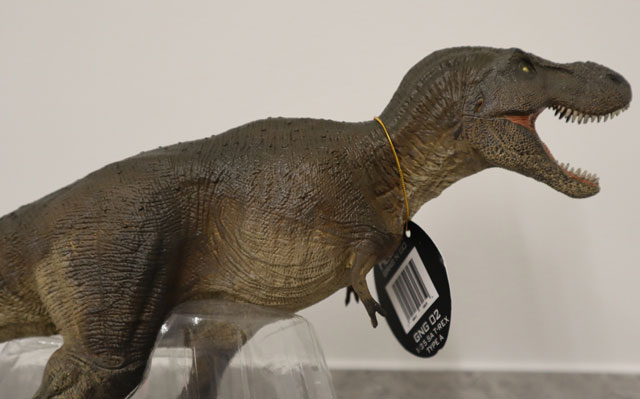
The Rebor GrabNGo 02 T. rex Type A in anterior view. An Everything Dinosaur customer wanted us to select a dinosaur model. Picture credit: Everything Dinosaur.
Picture credit: Everything Dinosaur
Rebor GrabNGo 02 T. rex Model
Recently, we received a request from one of our customers based in Europe to select a Rebor GrabNGo 02 T. rex dinosaur model. These vinyl figures are very popular and the first two versions of the Tyrannosaurus rex (02 and 03) have been retired and production has been discontinued. Our customer was keen to obtain the figure and asked us to check over the seams and the paintwork.
Rebor GrabNGo 02 T. rex Type A dinosaur model in right lateral view.A selection of T. rex pictures taken by Everything Dinosaur team members. Picture credit: Everything Dinosaur.
Picture credit: Everything Dinosaur
We were happy to take photographs of a Rebor T. rex model in one of our packing rooms. We made sure that we emailed over several images, each showing the dinosaur figure from a different angle. It was just like photographing a fossil specimen for a collection. When documenting a fossil, a number of photographs are taken, each one is carefully labelled identifying the specimen number and the angle of view.
The Rebor GrabNGo 02 T. rex Type A in left lateral view.The Rebor GrabNGo range of figures are very photogenic. Team members had fun selecting a Tyrannosaurus rex figure and then photographing it in one of our packing rooms. Picture credit: Everything Dinosaur.
When taking photos of dinosaur models, we tend to provide several shots of the head of the model, so that the potential customer can see the detailing around the mouth and any seams between the head and the body.
The Rebor GrabNGo 02 T. rex Type A in right lateral view.We like to take lots of photographs of the model to show our customers. Picture credit: Everything Dinosaur.
Picture credit: Everything Dinosaur
The customer was happy with the figure we had selected for them. This particular Rebor GrabNGo 02 T. rex dinosaur model is now safely stored on our reserve shelf in our warehouse so that when the customer places their order, the figure we chose can be despatched to them.