All about dinosaurs, fossils and prehistoric animals by Everything Dinosaur team members.
23 02, 2013

Adding to Colorado’s Rich Jurassic Heritage

By |2023-02-12T10:09:38+00:00February 23rd, 2013|Categories: Dinosaur and Prehistoric Animal News Stories, Dinosaur Fans|0 Comments

“Tossed Salad” of Dinosaur Bones  Being Excavated by Volunteers

Local volunteers, palaeontologists and State Rangers are working together to excavate and preserve a “treasure trove” of Upper Jurassic vertebrate fossils in a series of quarries located within the borders of the Comanche National Grassland preserve in south-eastern Colorado (United States of America).  The area within the designated boundaries of the Comanche National Grassland consists of pristine prairie land interspersed with canyons and ranch lands.

There are a number of such locations in the United States, afforded the same protection and security as the country’s State Forests.

Trace and Body Fossils

Dinosaur tracks and body fossils have been known from this part of Colorado, approximately 200 miles south-east of the city of Denver, for many years.  For example, in the 150 metres deep Picket Wire Canyon, a set of sauropod footprints can be followed, running alongside the Purgatoire river.  These dustbin lid sized impressions preserved in the rock are some of the best preserved dinosaur footprints in the whole of the Morrison Formation.

Last autumn a tooth of a ceratosaur was discovered at this locality.  The dagger-like tooth was approximately 150 million years old and would have belonged to one of the apex predators of the Morrison Formation strata.  A quarry located close to the bottom of one of the canyons has yielded a large number of rather jumbled dinosaur bones.

To date, palaeontologists have identified bones from sauropods such as the diplodocid Apatosaurus, a relative of Brachiosaurus called Camarasaurus along with the bones of theropod, meat-eating dinosaurs such as ceratosaurs and the much larger Allosaurus.  There has also been a report of the discovery of a limb bone that may represent a genus of Stegosaurus.

An Illustration of a Typical Ceratosaurus

A meat-eating dinosaur with a horn on its nose.

A meat-eating dinosaur with a horn on its nose.

Picture credit: Everything Dinosaur

The picture (above) shows a Wild Safari Dinos Ceratosaurus dinosaur model.

To view the Safari Ltd range: Wild Safari Prehistoric World Figures.

Rich Fossil Heritage

The jumbled up bones seemed to have formed on a sand and gravel bank in the middle of a Late Jurassic river system.  The bodies of dinosaurs were washed up against this natural obstacle during times of flooding.  The water slowing down and gradually giving up its load of dead animal and plant remains.  The rotting carcases attracted a number of scavenging dinosaurs, pterosaurs and crocodiles and many of the bones have traces of bite marks preserved on them.  The scavenging animals would have scattered the bones further as they ripped open the carcases and disturbed the remains, (the phrase dinoturbation comes to mind).

Volunteers chosen by the scientific staff from the Denver Museum of Nature and Science have been busy working to help excavate, stabilise and preserve the fossil material.  So much fossil material has been discovered that dozens of volunteers have been kept busy at the quarry location, mapping the site as well as excavating and preserving the fossils.

Working on the Fossils at the Dig Site
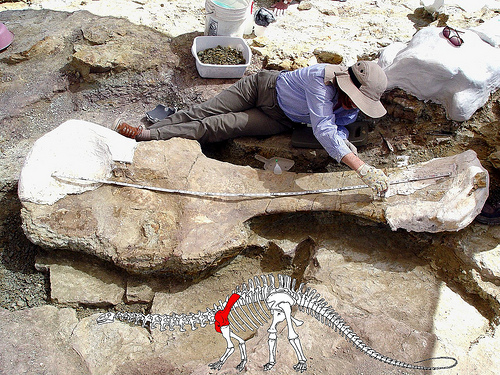
A scapula from a diplodocid

A scapula from a diplodocid with a skeletal drawing showing bone placement. Picture credit: Denver Museum of Nature and Science.

Picture credit: Denver Museum of Nature and Science

The picture above shows a scapula (shoulder blade) of a large diplodocid dinosaur at the dig site.  It has been speculated that his fossilised bone is from an Apatosaurus.

The teams have been working in conjunction with the country’s Forest State service.  A palaeontologist for the Forest Service, Bruce Schumacher commented on the importance of the Comanche National Grassland location.

He stated:

“Discoveries such as this allow scientists to better reconstruct ancient ecosystems of the past. In learning about these past worlds, we are able to reflect better on our present world and  understand what impact man is having on the present ecosystem.”

Groups of Volunteers

Working with groups of volunteers under the guidance of experts from the Denver Museum of Nature and Science, something like fifty fossil bearing sites have been explored so far.  The Forest State service are confident that the fossils that are unearthed within the boundary of the Comanche National Grassland will help palaeontologists to piece together more information about life for these large reptiles during the Late Jurassic.  They are also hopeful that the abundance of fossil material may even yield a new species of dinosaur, one that when scientifically named and described may forever link the Comanche National Grasslands with the science of vertebrate palaeontology.

This article has been compiled using information from the United States Department of Agriculture.
22 02, 2013

A Review of the Feathered Dinosaurs Toob (Safari Ltd)

By |2023-02-12T10:05:10+00:00February 22nd, 2013|Categories: Everything Dinosaur Products, Product Reviews|0 Comments

Feathered Dinosaur Toob Reviewed

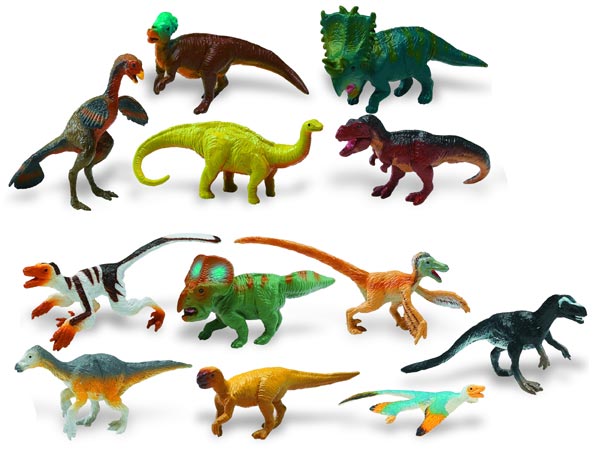
Originally designed with the co-operation of palaeontologists from the American Museum of Natural History, the feathered dinosaur tube made by Safari Ltd contains twelve, hand-painted dinosaur models.  Of the twelve models in this set, only six are replicas with feathers, the remainder include the likes of a T. rex figure and a model of the sauropod, the long-necked dinosaur known as Apatosaurus.

Feathered Dinosaurs Toob

The feathered dinosaurs in the set are Microraptor,  an ancestor of the tyrannosaurs known as Dilong, Sinornithosaurus, Velociraptor, Beipiaosaurus and Caudipteryx.  The Microraptor model has recently been re-painted . The gaudy colours of the original model in the first sets to become available, have been toned down replaced by steel blue for the body with subtle greens, yellows and black for the feathered wings.  The new colour scheme is probably better camouflage for a flying dinosaur that may have spent a considerable amount of its time in the forest canopy.

The Models Featured in the Feathered Dinosaur Toob (Safari Ltd)

Feathered dinosaurs toob model set.

Picture credit: Everything Dinosaur

Non-feathered Dinosaur Models

The non-feathered dinosaurs in this set are Psittacosaurus, Chasmosaurus, Pachycephalosaurus and Protoceratops as well as the aforementioned T. rex and Apatosaurus replicas.  It is interesting to note the inclusion of a Protoceratops and a Velociraptor model together.  The Protoceratops was a plant-eating dinosaur with the predatory Velociraptor sharing its habitat.  This  combination is very appropriate (putting a model of Protoceratops and Velociraptor in the same set), especially when you consider the scientific evidence  such as that published in 2010 suggesting that the carnivorous Velociraptor may have scavenged the carcases of the plant-eating Protoceratops as well as the famous Velociraptor fighting a Protoceratops fossil discovered by a joint Polish and Mongolian expedition to the Gobi desert in the 1970s.

Intriguingly, a contemporary of both Velociraptor and Protoceratops is depicted in the set – Psittacosaurus.  Since the models making up this set were first produced; new fossil evidence concerning Psittacosaurus has been discovered.  Although this dinosaur is depicted as non-feathered in this particular model series, there is considerable fossil evidence to indicate that this small ornithischian was covered in downy feathers, or at least it had long feather-like quills protruding from the tail.

To view the range of Safari Ltd prehistoric animal models available from Everything Dinosaur: Safari Ltd. Prehistoric Animal Models and Figures.

The dinosaur replicas are approximately eight centimetres long.  Although, the models are not to scale, they make super additions to any model scenes that are being created.   Especially the likes of the Dilong, Caudipteryx and Microraptor replicas when used in conjunction with some of the Carnegie Dinosaur Collectibles models also made by Safari Ltd.

A Set of Twelve Models

As this set  contains, 12 models, it lends itself to creative play.  So this set is likely to prove popular with children as well as with collectors.  Supplied with its own handy storage pack those thoughtful sculptors at Safari Ltd have even ensured that each model has the name of the dinosaur it represents carefully inscribed on its underside – very helpful for those collectors wishing to identify their models.

It is good to see a set that includes some feathered dinosaurs within the already impressive Safari Toobs range.

To view a video review of this model set:

The Wild Safari Prehistoric World Feathered Dinosaurs Toob is reviewed by Everything Dinosaur.
21 02, 2013

Juvenile Oviraptorids (Chicken-sized Dinosaurs) and a New Species

By |2024-04-29T12:13:57+01:00February 21st, 2013|Categories: Dinosaur and Prehistoric Animal News Stories|0 Comments

Fossils Provide Evidence of How Oviraptorids Grew Up

The bird-like oviraptorids which are known mainly from Upper Cretaceous strata from Mongolia and China are a very specialised group of dinosaurs that belong to the Suborder theropoda.  Despite a number of recent fossil discoveries, palaeontologists have still much to learn about these dinosaurs.  However, the discovery of a large number of oviraptorid specimens including five juveniles has helped scientists to erect a new genus and to learn a little about how these dinosaurs grew from babies into adults.

New Oviraptorid Dinosaur

The newest member of the Oviraptoridae is represented by the smallest specimens of Oviraptors discovered to date, the five individual specimens measure between 25 cm and 50 cm in length.  This newly discovered dinosaur has been named Yulong mini, the fossils were excavated from the Qiupa Formation of Upper Cretaceous strata from the Henan Province (eastern China).  The geological age of the Qiupa Formation is debated.  However, the presence of a number of dinosaur fossils including oviraptorids, dromaeosaurs and ornithomimids indicate that this strata was most probably laid down towards the very end of the Cretaceous period.

The name of this new dinosaur, is derived from the Chinese name for Henan Province coupled with the Chinese word for dragon and the specific name refers to the tiny size of these reptiles, so the name translates as “tiny dragon from Henan”.

Fossils of the New Oviraptorid Y. mini

New dinosaur genus - Yulong mini.

New dinosaur genus – Yulong mini.

Picture credit: Junchang Lu (lead author)

Yulong mini

The baby dinosaurs are the subject of a scientific paper published in the journal “Naturwissenschaften”.  Chinese researchers from the Henan Geological Museum and the Chinese Academy of Sciences wrote this paper in conjunction with the Canadian palaeontologist Phil Currie, who has worked extensively on Late Cretaceous Theropod dinosaurs from this part of the world.

Writing about the discovery, lead author Junchang Lu commented that:

“These dinosaurs looked like chickens with a tail.  Their behaviour was probably very similar to that of a modern bird.  When compared to primitive Oviraptorids such as Caudipteryx, Yulong should be feathered, although no evidence of feathers were found due to the poor preservation condition of the fossil material and the coarse characteristics of the surrounding matrix.”

Several dinosaur specimens were found at this location, but these juvenile dinosaurs perhaps represent the most important vertebrate fossils found to date as they permit palaeontologists to piece together information about how these dinosaurs grew.  A number of ontogenetic characteristics have been identified helping scientists to understand how these creatures matured into adult animals.  The skulls are not yet fully fused and the babies do show different body proportions in comparison with adult oviraptorids.

Limb Proportions

Intriguingly, the hind limb proportions (ratio of upper leg bones to lower leg bones) femur: tibia/fibia remain constant in oviraptorids.  The younger dinosaurs have the same hind limb proportions as older animals.  This suggest that these dinosaurs were not particularly fast runners and may have a had a much more sedentary habit.  It is unlikely that these types of dinosaur pursued and fed upon animals roughly equal in size to themselves.

A number of adult specimens were also found at this site, although they were not found in close association with the chicken-sized juveniles.  It can be speculated that as the babies were found apart from the adults, the youngsters may have been very independent from birth – perhaps an indication of precocial behaviour.  Precocial offspring are born or hatched as relatively well-developed animals that show a high degree of independence from the adult animals.  Many types of modern bird show this type of behaviour.

To view models and replicas of oviraptorids and other feathered theropods: Wild Safari Wild Dinos Models and Figures.

The diet of these creatures remains uncertain.  Studies of the skull and jaws of Y. mini when related to the hind limb proportions which indicate a more sedentary lifestyle, suggest that these oviraptorids may have been herbivorous feeding on leaves, ferns and even flowers and fruit.  However, the bite force calculated from measurements of the jaw size and muscle area of the juveniles is still considerable and it is not possible to rule out that these dinosaurs may have also eaten small animals such as lizards, mammals and even younger members of their own species.

Perhaps this is another reason why the babies tended to keep out of the way of the adults.

The scientific paper: “Chicken-sized oviraptorid dinosaurs from central China and their ontogenetic implications” by Junchang Lü, Philip J. Currie, Li Xu, Xingliao Zhang, Hanyong Pu and Songhai Jia published in Naturwissenschaften.

20 02, 2013

New for 2013 Wild Safari Dinos Brachiosaurus Dinosaur Model Reviewed

By |2024-04-29T12:22:22+01:00February 20th, 2013|Categories: Everything Dinosaur Products, Everything Dinosaur videos, Product Reviews|0 Comments

New Safari Ltd Brachiosaurus – (Wild Safari Dinos) Reviewed

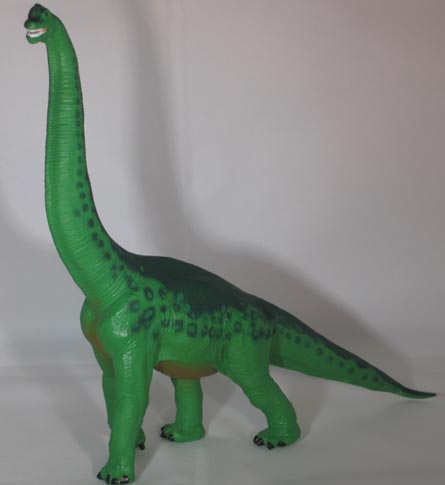
The first of the 2013 prehistoric animal figures made by Safari Ltd have arrived and we have been busy marvelling at the Wild Safari Dinos Brachiosaurus replica.  It has been fun comparing this dinosaur model with the Carnegie Collectibles scale model of Brachiosaurus that came out from this American company last year.

Brachiosaurus Dinosaur Model

Everything Dinosaur team members have put together a short video review (4 minutes 16 seconds), we explain why this model has been introduced and point out some of its features.  As with all the Safari Ltd prehistoric animal models it has lots of detail and we do take the opportunity to comment on the stance of the model as well as the colouration and even the position of the nostrils.

Everything Dinosaur’s Video Review of the Wild Safari Dinos Brachiosaurus Dinosaur Model

Everything Dinosaur reviews the Wild Safari Brachiosaurus dinosaur model.

Video credit: Everything Dinosaur

Brachiosaurus Model

Brachiosaurus must be one of the design team’s favourite dinosaurs as there have been a number of Brachiosaurus models introduced over the last few years.  It is also twenty-five years or so since Safari Ltd first created a model of this iconic herbivore associated with the Upper Jurassic Formations of the western United States.

To view the range of dinosaur models available from Everything Dinosaur (Safari Ltd): Dinosaurs and Prehistoric Animal Models – Safari Ltd.

The Wild Safari Dinos Brachiosaurus Model (2013)

The new Brachiosaurus dinosaur model.

Picture credit: Everything Dinosaur

This is certainly a very well painted figure, one that we think will prove to be a popular addition to the Wild Safari Dinos range.

19 02, 2013

Carboniferous Crinoids Provide Evidence of Oldest Biomolecules Directly Isolated from Fossil Material in New Study

By |2024-04-29T12:23:07+01:00February 19th, 2013|Categories: Dinosaur and Prehistoric Animal News Stories, Palaeontological articles|3 Comments

Study into 350 Million Year Old Echinoderms Reveals Presence of Biomolecules

America some 350  million years ago looked very different than it does today.  For starters, much of the land mass which we now know as the United States formed part of a super-continent called Laurentia, but a considerable portion of the USA was covered by a warm, shallow tropical sea.

Scientists from Ohio State University have been studying an unusual phenomena associated with crinoid fossils from strata deposited in an ancient marine environment in the American Midwest and their research reveals that complex organic molecules may have been preserved.  It had been thought that organic molecules could not survive the fossilisation process and remain present in fossil material after immense periods of time, but a number of recent studies using the most sophisticated analysis techniques ever to be employed in palaeontology are challenging  this assumption.

Ancient Crinoid Fossils

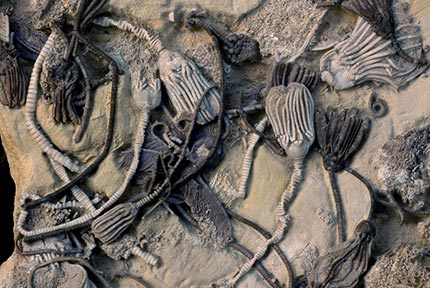
Crinoid fossils preserved in rocks from the American Midwest (specifically Indiana, Ohio and Iowa), the remains of animals that lived during the Mississippian Epoch (Carboniferous), can be preserved in different colours depending on the species.  Different species of crinoid, preserved in the same matrix, the same fossil slab, can be blueish grey, creamy white or even dark grey when observed under natural light.  Scientists had commented on this bizarre phenomenon over a hundred years ago, the fact that the crinoid fossils found in some parts of the Midwest seemed to be colour coded, but it took a team of geologists and scientists from the Ohio State University to get to the bottom of this mystery.

An Example of the Different Coloured Crinoid Fossils Used in this Study

Revealing 350 million year old organic compounds.

Revealing 350 million year old organic compounds.

Picture credit: Professor William Ausich, courtesy of Ohio State University.

Crinoids are members of the ancient Phylum known as Echinodermata (Echinoderms) – starfish, brittle stars, sea urchins and crinoids (sea-lilies).  Their fossil record dates back to the Cambrian.  Crinoids are often referred to as sea-lilies, as they superficially look like plants.  The fossil record for crinoids dates back to the Early Ordovician and there are a number of genera living today, including forms with stems that live attached to the sea-bed filling an ecological niche once filled by the Carboniferous crinoids.

Crinoids Described

Most prehistoric crinoids were attached to the sea-bed by a stem or a stalk, with a root-like holdfast at the bottom.  The mouth and the digestive tract was located in an enclosed cup at the top of the stem.  A series of feathery appendages which were covered in tiny, thin plates (pinnules) acted as a food gathering mechanism.  The sea current brought particles of food which were caught by the pinnules on the arm-like appendages and these food items were than wafted into the mouth.

The hard parts of the animal were formed of calcium carbonate (calcite), extracted from the surrounding sea water.  This calcite was porous and a thin skin of living tissue covered these hard parts.  Calcite is often very well preserved in the fossil record and the calcite plates that make up the flexible stem of these sea creatures are common fossils in Palaeozoic and Mesozoic aged marine, sedimentary deposits.

Dramatic Storms

A series of dramatic storms seem to have devastated the sea-bed where vast colonies of these sea-lilies thrived.  The sea-floor became choked in finely grained mud.  Once these crinoids were buried they were no longer able to feed and vast numbers of them were wiped out.  Being rapidly buried, quickly isolated from scavengers and oxygen to speed up the degradation process the calcite skeletons were preserved in beautiful detail, many of which remain articulated.

The porous calcium carbonate elements of the animal gradually became filled with minerals and preserved as fossils, however it seems that some of the pores that once contained living tissue were sealed so completely that traces of the molecules that made up the living tissue of the organism may have been preserved.

The University based research team were able to extract organic molecules from the individual sea-lily fossils.  They discovered that different species contained different organic molecules.   Some of these ancient sea creatures, that had died during these storm events, although they lay next to other species of crinoid  and had become preserved in the same slab of sedimentary rock: the different species were preserved in different colours – the greys, creams and blue-greys.

The organic molecules, referred to as biomarkers were extracted using a gas chromatograph mass spectrometer.  Tiny samples were taken from the individual fossils, these were then dissolved into a solution.  This liquid and its contents was analysed by the gas chromatograph mass spectrometer and individual molecules were identified based on their mass and their electric charge.  A computer programme was used to sort the data and to find a match in living crinoid species for the organic molecules recovered.

To view models and replicas of iconic invertebrates from the fossil record: CollectA Age of Dinosaurs Models.

The software identified these biomarkers as being similar to quinones found in Echinodermata.  These quinones are aromatic, organic compounds that are found in a number of organisms, they are associated with pigmentation (the colour of an animal) or in the production of toxins and other unpalatable substances that deter predators from attacking.

Professor William Ausich, of the School of Earth Sciences (Ohio State University) and  a co-author of the academic paper that has just been published in the scientific journal “Geology” stated:

“There are lots of fragmented biological molecules—we call them biomarkers—scattered in the rock everywhere.  They’re the remains of ancient plant and animal life, all broken up and mixed together.  But this is the oldest example where anyone has found biomarkers inside a particular complete fossil.  We can say with confidence that these organic molecules came from the individual animals whose remains we tested.”

Christina O’Malley in conjunction with the Ohio State geochemist Yu-Ping Chin, confirmed that the quinone-like molecules occur in fossil crinoids as well as in their extant descendants.  Although different coloured fossils do contain different quinones, the research team stressed that there was no definitive evidence to suggest that the preserved molecules were directly associated with the extinct creatures colouration.

The researchers hope to be able to extract more organic material from the fossils in a bid to find out as much as they can about each individual species.

Explaining that these molecules did not represent genetic material such as DNA, Professor Ausich commented:

“We suspect that there’s some kind of biological signal there, we just need to figure out how specific it is before we can use it as a means to track different species.”

It is truly astonishing that these gregarious, benthic (living on the sea-floor), animals from the Palaeozoic can reveal traces of organic compounds when their fossilised remains are analysed.

The scientific paper: “Isolation and characterization of the earliest taxon-specific organic molecules (Mississippian, Crinoidea)” by Christina E. O’Malley; William I. Ausich and Yu-Ping Chin published in Geology.

18 02, 2013

Dinosaur Statue in America – A “Hidden Gem”

By |2023-02-12T09:24:03+00:00February 18th, 2013|Categories: Dinosaur and Prehistoric Animal News Stories, Dinosaur Fans|0 Comments

Celebrating America’s First Dinosaur – Hadrosaurus foulkii

When discussing dinosaur discoveries made in the United States it conjures up thoughts about long treks into the western United States to explore the strata of states such as Utah, South Dakota, Colorado or the “Bad Lands” of Montana.  These parts of America have indeed proved to be a rich hunting ground for palaeontologists.  The rivalry between Cope and Marsh leading to the discovery of a great many dinosaur genera from the western part of that vast country during the 19th century has been very well documented.

American Dinosaur Discoveries

Many of these genera are household names, known to every school child and represent some of the most famous dinosaurs of all – Stegosaurus, Allosaurus and Diplodocus for example.  However, the very first United States dinosaur discovery did not take place in the west, the small town of Haddonfield in New Jersey on the eastern seaboard can lay claim to be the location where the first scientific excavation of a dinosaur fossil took place.

The small town of Haddonfield, which stands a couple of miles east of the Delaware River and just a few miles from the centre of Philadelphia, celebrated back in 2008, the 150th anniversary of the discovery, excavation and scientific description of the first major dinosaur find in the United States of America.  Amateur naturalist William Parker Foulke had discovered some very large fossilised bones in a marl pit the location of which is now in the centre of the town (Maple Avenue) and commemorated by a plaque and a civic bench.  There had been dinosaur fossils found in America prior to this, however, this was the first time that a large portion of the fossilised bones from a single specimen had been found.

Hadrosaurus foulkii

Dr Joseph Leidy (University of Pennsylvania), an eminent anatomist, was given the task of working out what the bones represented.  The Order Dinosauria had been erected some sixteen years previously and Dr Leidy announced that the fossilised material represented the preserved remains of a giant, herbivorous dinosaur.  He named this new genus of dinosaur Hadrosaurus foulkii to honour William Parker Foulke who had discovered the fossils.  Thus, H. foulkii became the first member of the Order Dinosauria to be described in the United States, the town of Haddonfield, New Jersey, can lay claim to be being the birth place of dinosaur studies in America.

Unfortunately, the specimen excavated from the marl pit in Haddonfield, lacked a skull and the lack of any cranial material partially explains why this specimen has been omitted from a number of academic texts.

Dinosaur Statue

A two and quarter metre tall statue of a Hadrosaurus was erected in 2003 to commemorate the discovery.  This statue, designed by artist John Giannotti stands at 2 Kings Court in the centre of Haddonfield and the statue of the dinosaur is known affectionately by locals as “Haddy the Hadrosaurus”.  The magazine “USA Today” has declared this little homage to American palaeontology a hidden gem, a real honour when one considers the historical importance of the American eastern seaboard.   At just under six metres in length, it might be thought that this dinosaur statue could be seen as menacing passers-by, but as every school child in the town will tell you, Hadrosaurus was a peaceful, plant-eating giant.

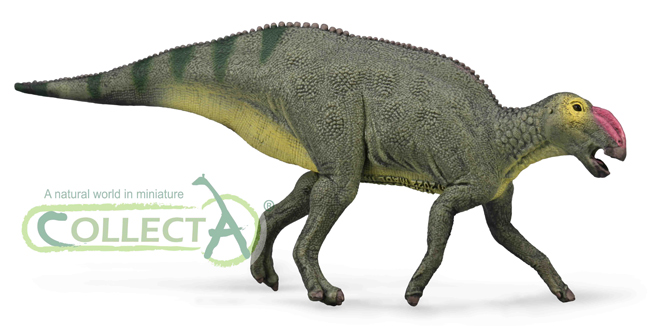
A Model of Hadrosaurus foulkii

New CollectA Models 2023 Hadrosaurus.

The new for 2023 CollectA Age of Dinosaurs Hadrosaurus dinosaur model.

To view the not-to-scale CollectA model range: CollectA Age of Dinosaurs Figures.

The bronze statue of the dinosaur with its commemorative plaque and story board explaining which bits of the duck-billed dinosaur were actually found, is a tourist attraction and local landmark.  It is pleasing to see a statue erected ten  years ago to mark an event that took place more than one hundred and fifty years back has been awarded such an accolade by such a prestigious organisation as “USA Today”.

Commenting on the award, the artist Mr Giannotti declared:

“I think it is wonderful.  It’s a nice tribute, I like the idea of it being considered a hidden gem.”

17 02, 2013

The Amazing Feathered Dinos Toob (Safari Ltd) Reviewed

By |2024-04-29T12:24:53+01:00February 17th, 2013|Categories: Dinosaur Fans, Everything Dinosaur videos, Product Reviews|0 Comments

A Review of the Feathered Dinosaurs Model Set (Safari Ltd) by Everything Dinosaur

As a result of a number of requests received, team members at Everything Dinosaur are making a number of video reviews of prehistoric animal replicas manufactured by Safari Ltd.  We have prepared a short (five minutes and seventeen seconds), video showcasing the “Feathered Dinos Toob”.

Feathered Dinosaurs Toob

This set of twelve dinosaur models features the non-avian feathered dinosaurs -Microraptor, Dilong, Velociraptor, Sinornithosaurus, Caudipteryx and Beipiaosaurus.  The non-feathered replicas in this set include T. rex, Apatosaurus, a lovely Chasmosaurus, Protoceratops, Pachycephalosaurus and a Psittacosaurus* model.

Everything Dinosaur’s Video Review of the Feathered Dinosaurs Toob

Everything Dinosaur Reviews the Wild Safari Prehistoric World Feathered Dinosaurs Toob.

Video credit: Everything Dinosaur

A Feathered Psittacosaurus?

Psittacosaurus* – when this set was being designed, Psittacosaurus as a member of the bird-hipped dinosaurs and related to the horned dinosaurs such as Styracosaurus and Triceratops was not thought to be feathered. Only fossils of lizard-hipped feathered dinosaurs had been found at the time.  However, recent fossil discoveries have revealed that psittacosaurs may have been covered in bristle-like proto-feathers.

To read more about this: Upsetting the Feathered Dinosaur Apple Cart.

This dinosaur “Toob”, as our American friends call this model set, is popular with collectors as it contains a number of splendid dinosaur models including a wonderful model of Protoceratops.  All the models are hand-painted and supplied in their own acetate tube with a cleverly designed closing cap.  This dinosaur model set is also very popular with children as it is great for creative play.

To view the range of Safari Ltd prehistoric animal figures in stock at Everything Dinosaur: Safari Ltd. Dinosaur and Prehistoric Animal Figures.

16 02, 2013

“Lolong” Largest Saltwater Crocodile in Captivity is Dead

By |2023-02-12T09:47:28+00:00February 16th, 2013|Categories: Animal News Stories|0 Comments

Locals Mourn the Death of their Giant Crocodile

A huge crocodile known as “Lolong” has died at the Philippine eco-tourism park he inhabited just eighteen months after being captured.  The Saltwater crocodile was officially declared the largest crocodile in captivity in 2011. It was measured at 6.17 metres long and it weighed more than one thousand kilogrammes, this reptile resembled a prehistoric monster, not out of place in a dinosaur movie.  The crocodile had become a significant tourist attraction and as the local mayor of the town of Bunawan, where the park was located,said:  “Lolong helped put our town on the world map”.

Saltwater Crocodile

Believed responsible for the deaths of a number of local fisherman, an extensive crocodile hunt was instigated to bring this man-eater into captivity.  The marshes of the Agusan del Sur province of the Philippines were searched and eventually this monster crocodile was caught in a trap, tempted by the carcase of a pig used as bait.  When the crocodile was captured, pictures of the huge reptile tied to a cart and surrounded by excited villagers quickly spread around the world, this part of the Philippines had found fame and fortune thanks to this apex predator.

To read an article about this reptile’s capture: Monster Crocodile Caught in the Philippines.

The crocodile, which is thought to have been at least fifty years of age, fell ill after swallowing a piece of nylon cord about three weeks ago and it had been suffering from intestinal problems but the actual cause of death has yet to be determined.  An autopsy is being carried out and the results will be published next week.  The weather had been unseasonably cold and it is thought that the crocodile could have been affected by the chilly conditions.  Whatever, the cause of death, the crocodile will leave much of the town in mourning as it had been a big tourist attraction bringing lots of visitors to Bunawan.

Monster Crocodile

The crocodile was discovered last Monday, floating upside down in its enclosure with a very bloated stomach.  A veterinarian who specialises in reptiles was called in and the crocodile was immersed in a pool of tepid water in a bid to revive it but to no avail.  Sadly, this crocodile had passed away within eighteen months of its capture.

Mayor of Bunawan, Edwin Elorde commented:

We don’t know what happened to it.  Its death is a complete mystery at the moment and I have to admit that I am really depressed.  I have come to love that crocodile, it brought fame and fortune to our town.”

A number of other Saltwater crocodiles have already been offered to the specially created eco-tourism park that was set up to house “Lolong”, however, lurking in the marshes surrounding the town there are rumoured to be even larger crocodiles still on the loose.  The eco-system in the marshland is particularly rich, providing a refuge for a number of endangered species in the Philippines as well as some very large Saltwater crocodiles.

Although not closely related to dinosaurs, the residents of the town of Bunawan came to appreciate the fact that they had their very own prehistoric monster which was in itself a significant tourist attraction.

For models and replicas of extant and extinct archosaurs: Mojo Fun Prehistoric and Extinct Models.

A pig was slaughtered in honour of the deceased reptile and offerings were made by locals to the spirit of “Lolong”.  The crocodile has had its head removed and been skinned.  The rest of the carcase was buried so that the flesh could rot quickly away allowing the bones to be exhumed at a later date and an exhibit created.  It is hoped that even in death this very large crocodile would act as symbol of the rich natural environment and help to preserve the habitat as well as encouraging eco-tourists into the province.

To read an article about the largest crocodiles in captivity: Philippine Crocodile is Declared Largest in Captivity.

15 02, 2013

Safari Ltd Prehistoric Animal Models – Which to New Model to Review?

By |2024-04-29T12:31:26+01:00February 15th, 2013|Categories: Dinosaur Fans, Everything Dinosaur News and Updates, Everything Dinosaur videos, Press Releases|2 Comments

Which Safari Ltd Prehistoric Animal Models Should Everything Dinosaur Make A Video Review?

It has been suggested that team members at Everything Dinosaur make some more video reviews of the prehistoric animal models made by Safari Ltd.  We do make short, (five minutes) video reviews of a number of prehistoric animal models and replicas.  For example, in the Safari Ltd prehistoric animal model ranges we have already made videos for the Deinosuchus, the new Brachiosaurus, Miragaia as well as the Carnotaurus (Carnegie Collectibles).  In the Wild Safari Dinos and Prehistoric Life series we have already reviewed Kaprosuchus, Inostrancevia, Dracorex, Ceratosaurus, Vagaceratops as well as the new T. rex and Acrocanthosaurus models.

Prehistoric Animal Models

Naturally, it is our intention to review the new 2013 releases from Safari Ltd, these will be made in due course, but we have received a request following discussions with Safari Ltd for Everything Dinosaur team members to make some more videos of models.

Which models of prehistoric animals made by Safari Ltd would you like to see reviewed?

We have already received requests to review the scale model of Spinosaurus made by this American company, along with a request to review the American Museum of Natural History Feathered Dinosaurs Toob.  So far we have reviewed a number of the “Toob” products made by Safari Ltd – prehistoric sharks and prehistoric crocodiles as well as the prehistoric sealife Toobs.

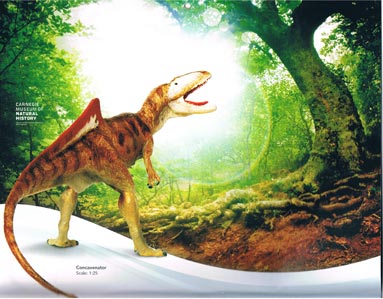
The New 2013 Concavenator Model (Carnegie Collectibles)

On the Safari Ltd Calendar.

On the Safari Ltd calendar.

Picture credit: Everything Dinosaur

The picture above shows the new Carnegie Collectibles Concavenator dinosaur model made by Safari Ltd.  It features on the Safari Ltd calendar.  Team members at Everything Dinosaur intend to produce a review of this new replica when stocks are available.  Readers have the chance to suggest what models they would like us to produce a video of.

To view Everything Dinosaur’s range of Safari Ltd prehistoric animal models: Safari Ltd. Wild Safari Prehistoric World Models.

14 02, 2013

Amazing Scientists at Remarkable School Studying Rare Fossils and Wonderful Dinosaurs

By |2024-04-29T13:03:47+01:00February 14th, 2013|Categories: Educational Activities, Photos/Schools, Teaching|0 Comments

Year 2 Demonstrate their Dinosaur Drawing Skills

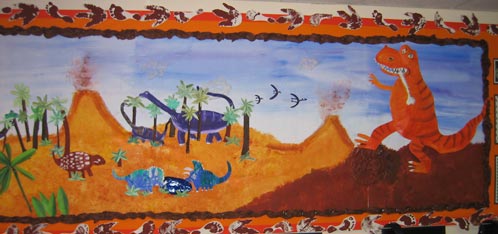
Another day and another school visit for Everything Dinosaur, this time to Rode Heath Primary School in Cheshire.  The year two children under the tutelage of Mrs Woollam the class teacher, have been studying dinosaurs this term.  There was lots of artwork on display including a very colourful wall mural showing, in the foreground, a bright orange Tyrannosaurus rex chomping on a bone.

Rode Heath Primary with their own “Walking with Dinosaurs” Wall Display

A very colourful dinosaur scene.

A very colourful dinosaur scene.

Picture credit: Everything Dinosaur

Tyrannosaurus rex

The T. rex is heading towards a group of herbivorous dinosaurs.  There are horned dinosaurs (Ceratopsians), and an Ankylosaurus whilst amongst the trees two titanosaurs lurk.  It is certainly a very impressive mural.  Forming a border around the picture there are some cut-out tridactyl (three-toed) dinosaur footprints intermingled with footprints made by the school children.

Year two have been busy making exhibits for their very own dinosaur museum.  Teaching Assistant Mrs Hulse was busy taking photographs of the fossils that we brought so that they too could be included in the class museum. Some of the pupils are going to be tour guides for the museum so they will have to “bone up” on lots of dinosaur facts and figures.

Dinosaur Term Topic

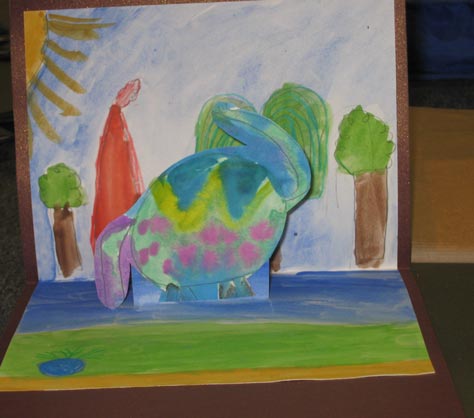
Dinosaurs and fossils make an excellent subject for a term topic.  Lots and lots of extension activities can be employed to help children develop writing and numeracy skills.   For example, Mrs Woollam’s class have been working on their own dinosaur “pop-up” books, showcasing some of the artwork they have produced as well as providing a great platform for creative writing.

Chloe Thompson (aged 7), decided to include a very fierce looking meat-eating dinosaur in her pop-up book.   Team members at Everything Dinosaur were very impressed with the big teeth.

Pink and Blue Meat-eating Dinosaur by Chloe Thompson

A very colourful dinosaur.

A very colourful dinosaur.

Picture credit: Chloe Thompson

If you look carefully you can see that Chloe has added some dinosaur bones in the foreground.  Part of the lesson covered the different types of dinosaur, herbivore, carnivore and even omnivores.

Millie and her Herbivorous Dinosaur

A Sauropod suns himself.

A sauropod suns himself.

Picture credit: Millie

Millie chose to depict a plant-eating dinosaur in her pop-up book.  The sauropod is painted with blues, greens and even a little bit of pink – nice one Millie.

Everything Dinosaur

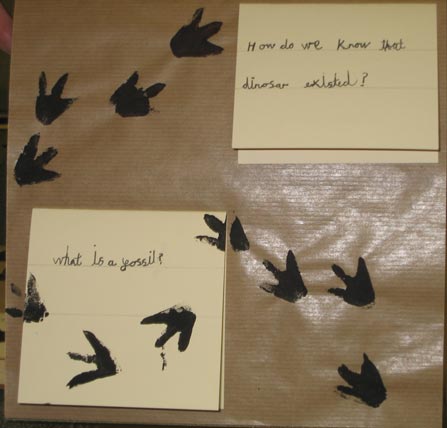
The pupils have had the chance to explore dinosaur footprints, we showed some bones and the children had guess which part of the dinosaur they were.  Jonny (aged 6) depicted a set of dinosaur tracks in his special dinosaur book.

Jonny Illustrates a Set of Dinosaur Footprints

Depicting a Dinosaur Trackway

Depicting a dinosaur trackway.

Picture credit: Jonny (aged 6)

The children had prepared lots of questions, including one about Giganotosaurus.  We did our best to answer them all and to explain about flying reptiles, dinosaurs and other prehistoric animals.  The team members at Everything Dinosaur were most impressed with the creative writing, the artwork and the knowledge demonstrated by the children.

To view the range of educational themed dinosaur toys and products available from Everything Dinosaur: Visit Everything Dinosaur.

Go to Top