All about dinosaurs, fossils and prehistoric animals by Everything Dinosaur team members.

Everything Dinosaur team members working in schools, helping museums and other educational bodies. Our work with and in schools.

5 05, 2015

Great Work from Great Wood Primary School

By |2023-03-27T07:26:25+01:00May 5th, 2015|Categories: Educational Activities, Main Page, Teaching|0 Comments

Year 2 Learn All About Dinosaurs in the Great Outdoors – Dinosaur Workshop

It was certainly an interesting morning when Everything Dinosaur visited the two classes of Year 2 at Great Wood Primary School (Morecambe).  The children had just started learning all about prehistoric animals as part of their term topic “Jurassic Forest”.  One of our fossil experts visited the school as part of the planned scheme of work to help inspire and enthuse children and teachers alike.  Unfortunately, the fire alarm sounded part way through the first session and the whole school had to be evacuated.

Dinosaur Workshop

However, it was a sunny day, so undaunted, we were able to continue by moving everything outside.  With the minimum of fuss, the pupils in Mrs Parkin’s class settled themselves down in the playground  and we were able to deliver a second workshop.   Everything Dinosaur’s “Dinosaur Mike” challenged the two classes (2T with Mrs Todd and 2P with Mrs Parkin), to send in thank you letters as part of an agreed extension activity to help encourage the children with their composition and sure enough, at the end of last week, we received a large envelope which contained letters and some very colourful dinosaur drawings.

 A Wonderful Set of Letters Sent in by Year 2
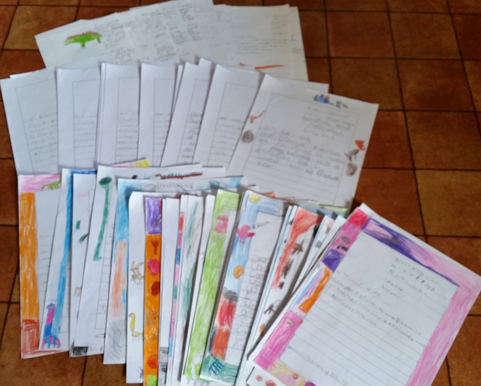
Letters and drawings sent in by children at Great Wood Primary.

Letters and drawings sent in by children at Great Wood Primary.

Picture credit: Everything Dinosaur

Dinosaur Workshop at Great Wood Primary School

Writing a thank you letter to Everything Dinosaur is a good way for the teaching team to check learning following a recount activity.  This composition exercise helps young learners practice sentence sequencing, planning their writing, as well as spelling and the layout and format of a letter.  The children can also read their letters out aloud as part of a further teaching activity within the class.

Examples of Thank You Letters Received by Everything Dinosaur

Super examples of letter writing from the children.

Super examples of letter writing from the children.

Picture credit: Everything Dinosaur

Thank you Eva and Zak for your lovely letters.

Thank You Letters and Drawings

Some children had taken the opportunity to draw pictures of fossils and prehistoric animals on the back of their thank you letters.  We were impressed with the drawings and we shall pin some of these up onto our warehouse notice board.

Year Two Sent in some Colourful Drawings
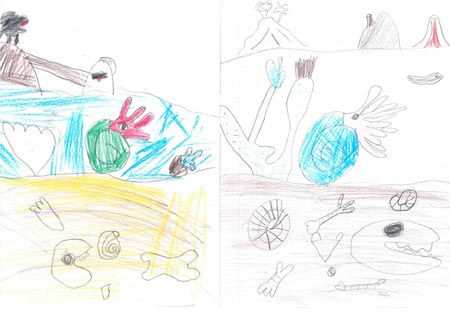
Can you spot the Ammonites?

Can you spot the ammonites?

Picture Credit: Everything Dinosaur

Super writing from Izzy and Mae with two lovely drawings too.

To learn more about the team members at Everything Dinosaur: About Us.

So Many Letters for Us to Read!
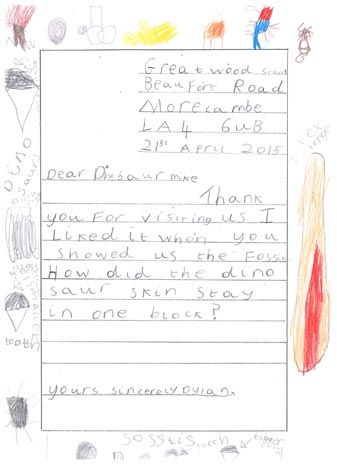
An example of one of the letters we received, thank you Dylan.

An example of one of the letters we received, thank you Dylan.

Picture credit: Everything Dinosaur

Dinosaur Mike commented:

“Once it was realised that the fire alarm going off was due to building work being undertaken around the school, the teaching team and administration staff at Great Wood Primary soon got all the children organised.  After the fire drill procedures had been carried out, we were able to continue the dinosaur themed workshop outside.  Fortunately, it was sunny and not too cold.  We were able to adjust our lesson plan and continue working.  We do appreciate that, just like the teachers, we sometimes have to be very flexible.”

Nina’s Very Bright and Cheerful Thank You Letter
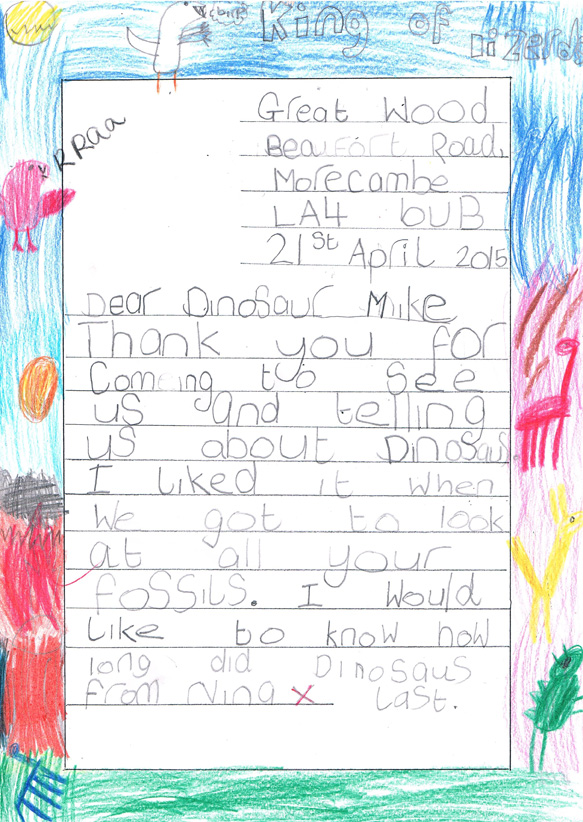
We were sent lots of very colourful letters.

We were sent lots of very colourful letters.

Picture credit: Everything Dinosaur

How Long Did the Dinosaurs Last?

Nina asked “How long did the dinosaurs last?”  The first dinosaurs evolved perhaps as early as 240 million years ago, the last of the Dinosauria died out 66 million years ago.  That’s a really good question, well done Nina.

Our thanks to 2T and 2P for sending us some wonderful examples of writing.

Everything Dinosaur stocks a wide range of dinosaur themed toys and games: Dinosaur Themed Toys and Games.
4 05, 2015

“How to Clone a Mammoth” – Key Stage 3/4

By |2023-03-27T07:23:06+01:00May 4th, 2015|Categories: Key Stage 3/4|Comments Off on “How to Clone a Mammoth” – Key Stage 3/4

Helpful Book on Genetic Engineering for Teachers

With the changes being rolled out in the new curriculum for England, many teachers have contacted Everything Dinosaur for help and advice when it comes to teaching students about natural selection, the work of Darwin,  and genetics.  Cell biology, inheritance and an understanding of genetics are key components of both Key Stage 3 and 4 in the science component of the new curriculum.  A new book written by Associate Professor Beth Shapiro (University of California, Santa Cruz), helps to set out the current state of play in terms of genetic engineering to bring back characteristics of long dead animals including the Woolly Mammoth.

Clone a Mammoth

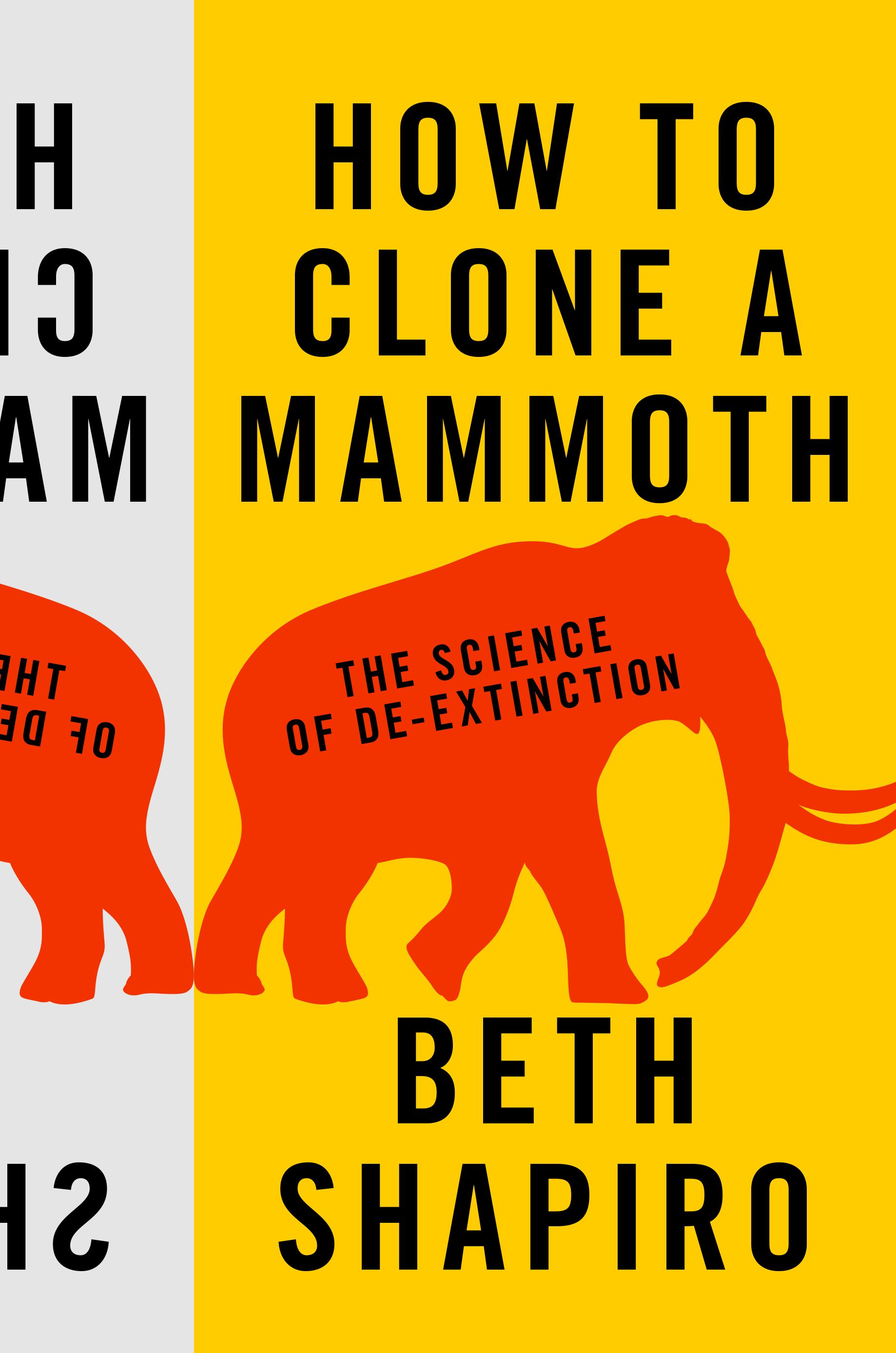
“How to Clone a Mammoth” by Beth Shapiro

The science behind de-extinction.

The science of de-extinction by Beth Shapiro.

Picture credit: Princeton Press

The book explains how organisms have been manipulated for hundreds of years via selective breeding.  This ties in with important elements of the biology component of both Key Stage 3 and 4.  Beth Shapiro, avoids the overuse of technical language and sets out in easy to understand terms the pros and cons associated with the manipulation of genetic material.  The author uses plenty of examples to illustrate her arguments.  “How to Clone a Mammoth” takes a thorough and balanced approach to this subject area and examines the science behind genome sequencing and the potential consequences for “de-extinction”.

Helpful Reading for Key Stage 3/4

Commenting on the book, a spokesperson from Everything Dinosaur stated:

“At a little over 200 pages, this is essential reading for science teachers and technicians.  It tackles how the genome of any genetically modified organism would interact with the environment and outlines in simple terms the role that genetic engineering could have in the conservation of endangered ecosystems.”

To read a more comprehensive review of “How to Clone a Mammoth”: How to Clone a Mammoth – Book Review.

Importantly, as well as addressing the science behind the concept of the “de-extinction ” of a species, the author addresses the wider implications too.  The book educates the reader and provides valuable guidance to teachers who can use the points made to encourage a broader understanding of, not only the science, but of the ethical, social and moral consequences of this research.

Everything Dinosaur stocks a range of scale prehistoric animal models including Woolly Mammoth figures: Prehistoric Mammal Models.

Highly recommended!

For further information on “How to Clone a Mammoth” and to purchase this book: Princeton Press.

1 05, 2015

Exciting Dinosaur Day at Yew Tree Primary

By |2024-05-05T13:37:54+01:00May 1st, 2015|Categories: Educational Activities, Main Page, Teaching|0 Comments

Key Stage 1 Study Dinosaurs – Dinosaur Day at School

A busy day yesterday working with Year 1 and Year 2 classes at Yew Tree Community Primary School in Tameside.  Arriving nice and early our dinosaur expert was able to have a chat to the teaching team to gain an appreciation of the learning objectives and to ensure that the dinosaur workshops dove-tailed into the overall scheme of work.  Like many primary schools, Yew Tree Community has experienced a big increase in pupil numbers in recent years and Key Stage 1 is made up of five classes, so in order to maximise the amount of teaching, the school hall was used for the day (apart when lunch was served and then it was a question of dinner with the dinosaurs).

Dinosaur Day

The Children were Keen to Show the “Dinosaur Eggs” They had Discovered

Very colourful "dinosaur eggs".

Very colourful “dinosaur eggs”.

Picture credit: Everything Dinosaur

Dinosaur Workshop at School

The dedicated teaching team had developed an exciting range of activities, all part of the dinosaur term topic.  The photographs taken during the dinosaur workshops will certainly support the teaching work, with lots of recounting and recalling.  During the lunch break, Everything Dinosaur’s workshop leader saw some lovely examples of creative writing undertaken by Year 1, the children had certainly been inspired by the fossils.  After a busy day of teaching, it was straight back to the office to email over further materials and extension resources for use in a number of activities that we had planned with the teaching team during the course of the day.

Everything Dinosaur stocks an extensive range of educational, dinosaur themed toys and games: Everything Dinosaur Toys and Gifts.

With the first part of the Summer Term quite short, there is a lot to pack in so it was important to get the extension materials emailed over to the school as quickly as we could.

To contact Everything Dinosaur to learn more about our science communication work: Contact Everything Dinosaur.

28 04, 2015

Plastic Dinosaur Skeleton Models – Great for Creative Play

By |2023-03-26T12:02:26+01:00April 28th, 2015|Categories: Educational Activities, Everything Dinosaur Products, Main Page, Photos of Everything Dinosaur Products, Teaching|0 Comments

Plastic Dinosaur Skeletons from Everything Dinosaur

A term topic on dinosaurs for Early Years Foundation Stage (EYFS) can provide a number of opportunities for young minds to develop through creative play.  Most children are fascinated by dinosaurs and prehistoric animals and Everything Dinosaur team members often get asked by teachers and teaching assistants for ideas on how to stimulate the class when the children have been learning about dinosaurs.  We recommend a wide range of tactile activities to help young learners explore the nature of materials and the wider world.  For example, this set of twelve plastic prehistoric animal skeletons gives the children the chance to play at being a palaeontologist.

Prehistoric Animal Skeleton Set Available from Everything Dinosaur

Dinosaur skeleton

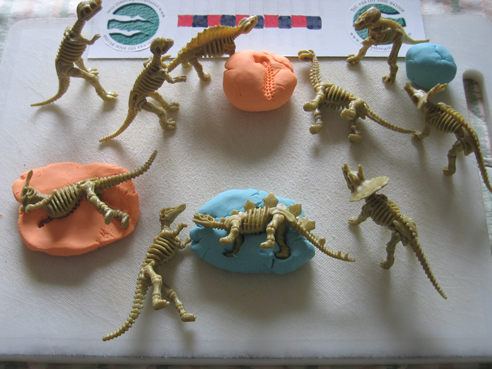
A set of assorted prehistoric animal and dinosaur skeletons.  Picture credit: Everything Dinosaur.

Picture credit: Everything Dinosaur

Dinosaur Skeleton Models

These robust, plastic skeleton models represent a number of very well known dinosaurs.  Prehistoric creatures such as Triceratops, Stegosaurus and Brachiosaurus.  There are even some meat-eating dinosaurs and a pterosaur (Pteranodon), in this twelve figure set.  We bury these models in the sand pit play area at the school and invite the children to excavate their own dinosaur fossils using paint brushes and plastic spades.  This is a fun activity  and the addition of a couple of magnifying glasses so that the children can examine the bones helps the pupils to feel like scientists.

These models can also be used in the wet play area as children explore which objects float.  They are a wonderful resource for Early Years Foundation Stage (EYFS plastic dinosaur skeletons).

Use the Models to Make Impressions Just Like Fossils

Dinosaur skeleton models.

Showing how fossils form. Picture credit: Everything Dinosaur.

Picture credit: Everything Dinosaur

Creating Fossils

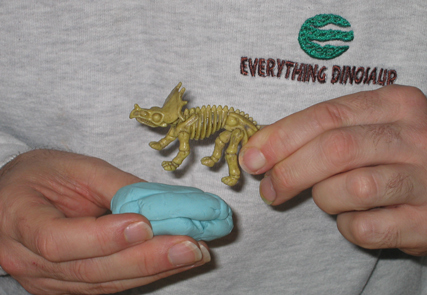
By pressing these study models into modelling clay the children can learn how fossils form and they can have a go at making fossils for themselves.  Each of these little models is around ten centimetres in length and as there are twelve in the series they are very useful when it comes to playing sorting and counting games, for example:

  • Sort out all the skeletons of animals that have horns
  • Group the skeletons into those that walk on four legs and those that walk on just two
  • Split the plant-eaters from the meat-eaters – can you work out which is which?

Remarkable Details

The models have a remarkable level of detail on them, the children can easily work out which model is which.  The other day, a five-year-old pointed out the Dimetrodon (not a dinosaur) to us.  We were most impressed!

To view the range of educational products available from Everything Dinosaur including these skeleton models: Everything Dinosaur Products and Gifts.

We Even Used Our Dinosaur Skeletons to Make Footprints

Dinosaur skeleton footprint exercise.

A cheap but very effective learning resource. Picture credit: Everything Dinosaur.

Picture credit: Everything Dinosaur

To see the full range of educational toys, games and models that Everything Dinosaur offers: Visit Everything Dinosaur.

27 04, 2015

The Genome of the Woolly Mammoth is Sequenced

By |2023-03-26T11:57:40+01:00April 27th, 2015|Categories: Key Stage 3/4|Comments Off on The Genome of the Woolly Mammoth is Sequenced

Woolly Mammoth Genome Sequenced

A team of international scientists has published the genome of the Woolly Mammoth (M. primigenius).  Their work has been published in the latest edition of the journal “Current Biology”.

The genome is an organism’s complete set of DNA, the information needed to build, maintain and sustain an organism.  The genome includes all the genes involved with coding proteins and all the non-coding elements of the DNA or RNA.  In the case of the Woolly Mammoth, the genome is very long, consisting of several billion base pairs or nucleotides.  The four chemical building blocks of DNA are adenine (A), cytosine (C), guanine (G) and thymine (T).  The G’s always pair up with the C’s, whilst the adenine always links up with the thymine (A’s to T’s).

Scientists have Mapped the Genome of the Woolly Mammoth

The genome of the Woolly Mammoth.

Great care is taken to prevent contamination of any genetic material recovered.

Picture credit: Swedish Museum of Natural History/Current Biology

Genome of the Woolly Mammoth

In fact, the complete genome of two Woolly Mammoths have been sequenced.  The first to be sequenced comes from a Mammoth that died just 4,300 years ago on the remote Wrangel Island in the Arctic Ocean.  Wrangel island is believed to where the very last Mammoths roamed.  The second Mammoth to have its genome sequenced came from north-eastern Siberia and dates from approximately 44,800 years ago.

This research is not linked to the “de-extinction” of the Woolly Mammoth but a better mapped genome will prove very helpful to geneticists with plans to breed Asian elephants with Woolly Mammoth traits.  The research was undertaken to help scientists to understand better the stress the last population of Woolly Mammoths was under prior to the extinction of this species.

The genome reveals a significant amount of inbreeding taking place in the last of the Mammoths.  A sign of a reducing population.   The genome from the Late Pleistocene specimen, when compared to the much more recent Wrangel Island genome, is helping scientists to calibrate the molecular clock for this ancient elephant.

What is a Molecular Clock?

The molecular clock for an organism is an extremely simple but useful concept.  It is assumed that the rate of mutation (genetic change) is relatively constant, if this is the case, then by comparing the DNA of two organisms that died at very different geological times will provide scientists with an accurate method of dating those specimens.

The study shows that over the history of the species, the Woolly Mammoth population was reduced dramatically (genetic variation declined) on at least two occasions.  A decline in the genetic variation of an organism could be an indicator of population decline.  Although this is not always the case, for example, the species of extant great ape with the least genetic variation is also the most numerous on our planet.  That species is our own – Homo sapiens.

For museum quality models of Woolly Mammoths and other Ice Age creatures for use in schools and museums: Museum Quality Prehistoric Mammal Models.

21 04, 2015

Everything Dinosaur Mentioned by Ofsted

By |2023-03-26T11:05:18+01:00April 21st, 2015|Categories: General Teaching, Key Stage 1/2|Comments Off on Everything Dinosaur Mentioned by Ofsted

Year 1 Pupils Produce High Quality Writing

A return visit today to Winnington Park Primary School in Cheshire to work with Year 1 and Everything Dinosaur mentioned by Ofsted.  This is the second time that a member of the Everything Dinosaur teaching team has visited this school.  Our last visit was in June 2014 to help reinforce learning and summarise the teaching work undertaken as the children had studied all things dinosaur over the summer term.

Studying Dinosaurs and Fossils

Today’s activities were a provocation, helping to motivate and enthuse, as the children had just started studying dinosaurs and fossils.  However, the pupils displayed a remarkable degree of knowledge and applied learning, even at this early stage of the term topic.  Under the expert tutelage of the teaching team, the children had been creating fact books all about dinosaurs and learning how to tell plant-eaters and meat-eaters apart.  We helped the eager, budding young palaeontologists explore fossils and dinosaurs, leaving them with an extension activity that involved measuring and comparing different sets of dinosaur footprints.

Year 1 Have Been Painting Various Prehistoric Animals

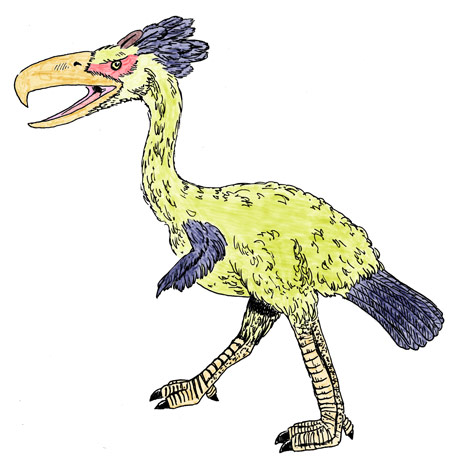
A drawing of Kelenken. Phorusrhacids illustrated. The "Terror Birds".

The Kelenken in all its glory.

Picture credit: Everything Dinosaur

Everything Dinosaur Mentioned in Ofsted Report

The day after our dinosaur workshop last year, this school had an Ofsted inspection.  The overall rating was “Good” for the school and the inspectors highlighted some outstanding teaching, the visit from our dinosaur expert “Dinosaur Mike” to the school the day before the inspection was discussed and the Ofsted inspectors commented that most of the children had made good progress and produced short pieces of good quality hand writing.

Everything Dinosaur Mentioned In Ofsted Report

Everything Dinosaur mentioned by Ofsted after our help with handwriting.

Lots of examples of hand-writing on display.

Picture credit: Everything Dinosaur

Commenting on the benefits of a school visit from a company like Everything Dinosaur, the report states:

“Pupils enjoy writing, especially when it is linked to a visit, or a school visitor.  This was the case in a Year 1 English class where pupils were talking and writing about a recent visit from “Dinosaur Mike”.  Most pupils made good progress and produced short pieces of writing of high quality.  One pupil was able to explain that “Dinosaur Mike is a palaeontologist.”

A themed dinosaur workshop with Year 1 has certainly helped to motivate and inspire the young learners.

Some of the prehistoric animals used in the teaching sessions can be found here on the Everything Dinosaur website: Prehistoric Animal Models, Toys and Gifts.

21 04, 2015

Providing Exclusive Prehistoric Animal Drawing Materials for Foundation Stage 2

By |2024-05-05T10:02:09+01:00April 21st, 2015|Categories: Educational Activities, Teaching|0 Comments

EYFS Create an Underwater Prehistoric Scene

Everything Dinosaur team members despatch prehistoric animal drawing materials to a school to help support a term topic.

A recent trip to a primary school to conduct a dinosaur workshop resulted in a request from one of the teaching assistants.  They had lots of blue crepe paper and they wanted to create a prehistoric scene that could be posted up onto the walls of the corridor outside the classroom for Foundation Stage 2.  However, she had not got any pictures of “sea monsters”, (her words not ours), for the children to colour in to help create the picture.

No worries, amongst all the other extension resources we supplied, we sent over a number of emails with fact sheets and drawings of a vast array of prehistoric creatures which were typical fauna of Jurassic marine environments.

Prehistoric Animal Drawing Materials

Everything Dinosaur stocks a huge array of sea monster models and marine prehistoric animals.  To view the range in stock at Everything Dinosaur: Sea Monster and Marine Reptile Models.

Providing Pictures of the Plesiosauria to Primary Schools

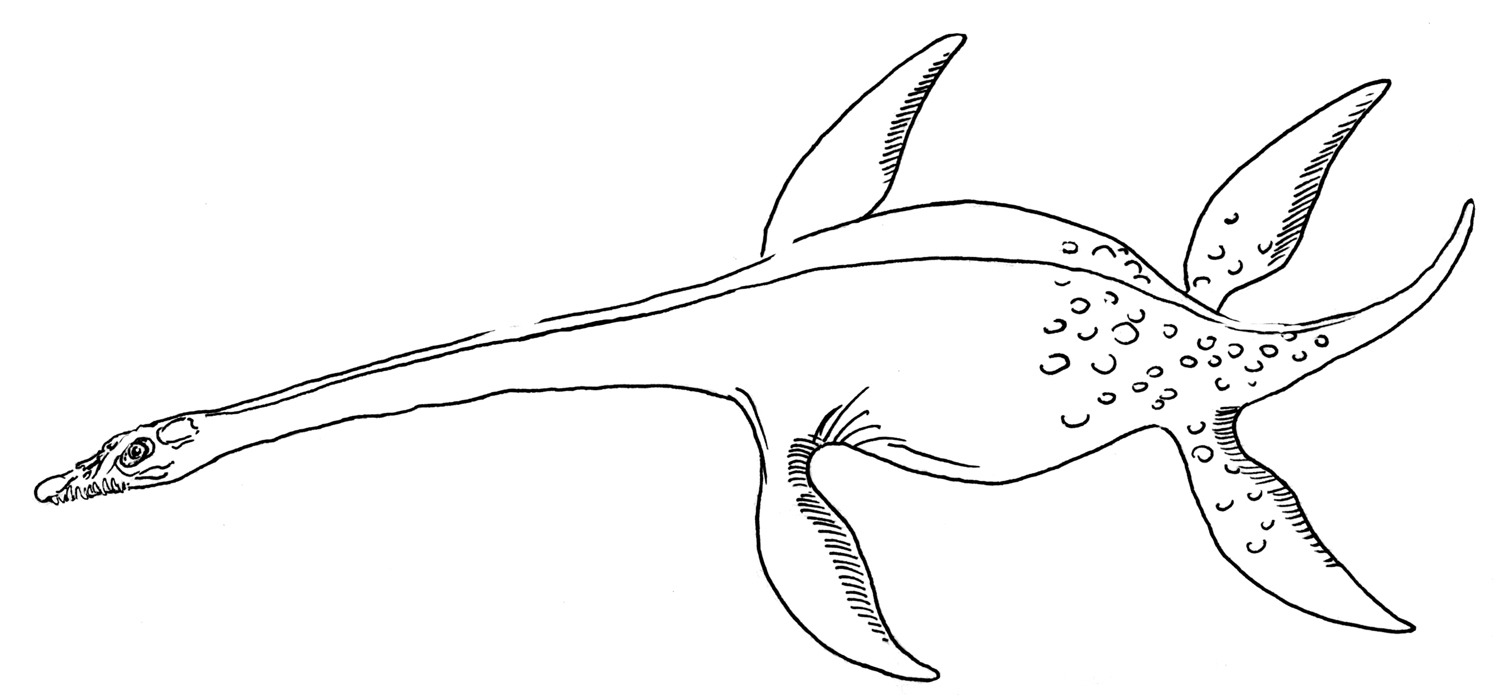
Attenborosaurus conybeari.

Plesiosaurs and other prehistoric animals featured in the picture.

Picture credit: Everything Dinosaur

We sent over pictures which included:

  • Jellyfish
  • Ammonites
  • Belemnites
  • Coelacanth (fish)
  • Ichthyosaurus
  • Mixosaurus (another type of ichthyosaur)
  • Attenborosaurus (pliosaur)
  • Liopleurodon (pliosaur)

Lots of other prehistoric animal pictures were also sent over.  We even supplied the teaching team with an outline of a seascape that could be used as a back drop as the children in Foundation Stage 2 explored a prehistoric, undersea world.

To read a recent blog post about Everything Dinosaur’s visit to the Foundation Stage classes at John Locke Academy: Visiting Foundation Stage Classes.

A spokesperson from the UK-based company stated:

“We were delighted to help the children and their teachers, we look forward to seeing their prehistoric marine animal inspired artwork.”

To learn more about the team members at Everything Dinosaur: About Us.

17 04, 2015

Reception Classes at Mead Primary School Study Sensational Dinosaurs

By |2024-05-05T10:04:16+01:00April 17th, 2015|Categories: Early Years Foundation Reception|Comments Off on Reception Classes at Mead Primary School Study Sensational Dinosaurs

Giraffes, Lions and Zebras Learn all about Dinosaurs

It was a busy day yesterday for our dinosaur experts as the teaching team at Mead Primary School (Essex) had requested a dinosaur workshop for each of the three Reception classes at the school.  The children in Foundation Stage Two had been learning all about dinosaurs and the classes, each named after an animal (Zebras, Giraffes and Lions), had prepared lots of questions.  The focus for the scheme of work was writing and there were many examples of the children’s handwriting on display, including some lovely dinosaur fact books that some of the pupils had made.

Dinosaur Workshop

The Walls Outside the Classroom were Decorated with Dinosaur Displays

Dinosaur display after a dinosaur workshop in school.

Lots of different dinosaurs on display.

Picture credit: Everything Dinosaur

Summer Term Topic

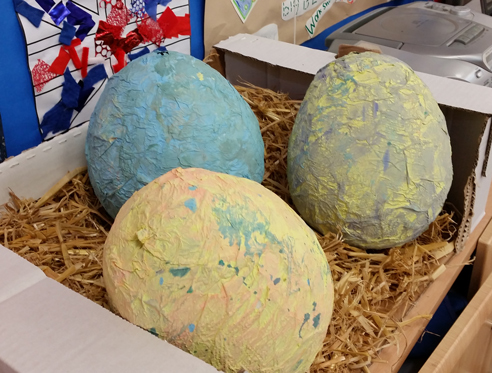
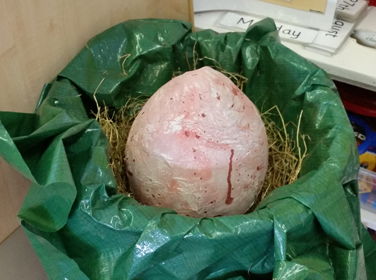
To act as a provocation for the Summer Term topic, the teachers had made paper mache dinosaur eggs, one for each class.  The children discovered the eggs and concluded that a dinosaur had laid them.  They were then encouraged to write to one of our dinosaur experts to invite him in to help them investigate .  The dinosaur workshops in the school, were a great success helping to motivate and inspire the children as well as the enthusiastic teaching team.

To view the range of dinosaur and prehistoric animal themed toys and games including replicas of iconic fossil animals stocked by Everything Dinosaur: Learning Materials – Everything Dinosaur.

One of the Eggs Found at the School – Could this be a Dinosaur Egg?

Dinosaur Workshop in School.

What will happen when it hatches?

Picture credit: Everything Dinosaur

To contact Everything Dinosaur to request further information about our educational work: Email Everything Dinosaur Team Members.

16 04, 2015

Dinosaurs Help the Focus on Writing at Mead Primary School

By |2023-03-26T10:15:37+01:00April 16th, 2015|Categories: Educational Activities, Teaching|0 Comments

Lions, Zebras and Giraffes Learn All About Dinosaurs – Dinosaur Workshop in School

Children in the Reception classes at Mead Primary in Romford (Essex, south-east England), have been learning all about dinosaurs and prehistoric animals this term, their learning was supported by a dinosaur workshop in school.

Dinosaur Workshop in School

The children discovered a giant egg in each of the three Reception classrooms (Lions, Zebras and Giraffes) and with the support of their enthusiastic teaching team, the children were encouraged to write letters to one of the dinosaur experts at Everything Dinosaur so that these strange objects could be investigated.  The discovery of the eggs is all part of a coordinated approach to help motivate and enthuse the pupils when it comes to writing.  Our dinosaur expert who visited the school, was shown some wonderful examples of the children’s work including some of the invitation letters that were on display.

One of the Eggs Discovered in the Classroom

What will happen when it hatches?

What will happen when it hatches?

Picture credit: Everything Dinosaur

Colourful Dinosaur Displays

There were lots of colourful dinosaur themed displays in the classrooms and outside in the corridor which links the Key Stage 1 classes to the rest of this, larger than average, primary school.

One of the Bright and Colourful Prehistoric Animal Themed Displays

Lots of different dinosaurs on display.

Lots of different dinosaurs on display.

Picture credit: Everything Dinosaur

Designing Dinosaurs

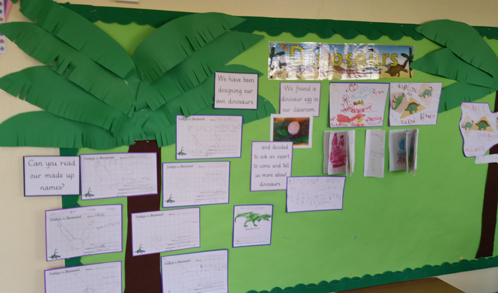
The children had been designing their own dinosaurs and there were lots of examples of hand-writing too, including some very informative fact books that the pupils had made.  The volcano in the picture had been made using fabric with coloured tissue paper as the lava, this was just one example of the use of lots of different materials and media having been incorporated into the scheme of work.  The dinosaur workshops that were delivered continued the focus on writing and vocabulary development, with the visitor challenging the children to come up with lots of describing words for the fossils and other objects that they handled.

The Foundation Stage Two children certainly knew their dinosaurs and they were keen to demonstrate their acquired knowledge.  Prior to the visit to the school by Everything Dinosaur, the teachers had encouraged the children to think of questions to ask, the budding palaeontologists had come up with a super assortment of queries.  For all those questions not answered on the day, our expert suggested a couple of writing themed extension activities to help support the classes with their enquiries.

Some of the Questions That the Children had Come up With

Questions, questions and even more questions!

Questions, questions and even more questions!

Picture credit: Everything Dinosaur

To help the children understand how most fossils are formed our expert discussed a simple experiment the children could conduct using the water play area.  This extension activity also dove-tailed nicely into an exploration of the properties of materials in which children investigate why some objects float whilst others sink.  Dinosaurs make a great topic for primary school children to study.

Demonstrating Learning

The children clearly enjoyed learning all about prehistoric animals and we look forward to hearing how they got on with the dinosaur footprint measuring exercise we provided.  One of the aims of the teaching scheme of work for next week is to help the children gain a little more confidence in measuring and using numbers, the footprint exercise we provided will help the teaching team to achieve their learning objectives, providing the children with a dinosaur themed activity in support of their numeracy development.

Everything Dinosaur stocks a wide range of prehistoric animal themed toys and games: Dinosaur Toys and Gifts.

Inspiring Displays with Lots of Evidence of Learning

Lots of examples of hand-writing on display.

Lots of examples of hand-writing on display.

Picture credit: Everything Dinosaur

One of the classrooms even had its very own dinosaur museum.   The teachers had been inspired by the topic to come up with some very creative lesson plans and the children were clearly inspired by all things dinosaur!

To request further information on Everything Dinosaur’s educational activities: Email Everything Dinosaur.

13 04, 2015

Dinosaur Soft Toys – The Amazing Achievosaurs

By |2024-05-05T10:24:24+01:00April 13th, 2015|Categories: Early Years Foundation Reception, General Teaching, Key Stage 1/2|Comments Off on Dinosaur Soft Toys – The Amazing Achievosaurs

The Acheivosaurs – Reinforcing Positive Learning Behaviours in EYFS and Year 1

A range of three inch (eight centimetre) tall soft toy dinosaurs is helping young learners to develop life skills.  The Achievosaurs teaching concept is reinforcing positive values in schools and Everything Dinosaur has lobbied hard to get these super dinosaur soft toys back into production.   Many children in the EYFS (Early Years Foundation Stage) and Year 1 are very familiar with dinosaurs such as Tyrannosaurus rex and Diplodocus.  The fascination for all things dinosaur can help motivate young learners and these dinosaur soft toys have proved to be a valuable teaching aid for educationalists.

Dinosaur Soft Toys

The Achievosaurs – Super Soft Toy Dinosaurs for Use in Schools

Dinosaur soft toys.

Some of the original “Achievosaurs”.

Picture credit: Everything Dinosaur

This range of “Itsy Bitsy” dinosaur soft toys help encourage children.  As these items are now back in production, Everything Dinosaur team members set out to examine how the “Achievosaurs” teaching concept came about.

The Achievosaurs

Retired Bristol school teacher, Lori Mitchell got in touch with Everything Dinosaur and she explained how the idea for using dinosaur soft toys took shape.

Ms Mitchell commented:

“The idea for the Achievosaurs came after a South Gloucestershire Early Years course “Providing Challenge, Improving Outcomes” in October 2010.  During the day, we were asked to consider how we encourage our children to reflect on their learning, rather than just talk about their activities, and how we can help them develop the skills needed to become life-long learners.  We discussed the learning-focused qualities we wanted to encourage in our children and a colleague shared the “Curious Cat” she used with her class.  One of the Early Years advisors then said something like “you know, dinosaurs would be another idea..you could have a Thinkasaurus”…and that was it…I went home after the course and devised the Achievosaurs!”

To view the dinosaur soft toys available from Everything Dinosaur: Dinosaur Soft Toys.

Go to Top