All about dinosaurs, fossils and prehistoric animals by Everything Dinosaur team members.

Everything Dinosaur’s product news.

16 08, 2018

New Rebor “Sweeney” Arrives at Everything Dinosaur

By |2024-05-11T08:08:10+01:00August 16th, 2018|Categories: Dinosaur Fans, Everything Dinosaur News and Updates, Everything Dinosaur Products, Main Page, Photos of Everything Dinosaur Products, Product Reviews|0 Comments

The Rebor “Sweeney” Velociraptor Model Arrives

The latest Rebor replica figure, a 1/18th scale model of a running Velociraptor, nicknamed “Sweeney” has arrived at Everything Dinosaur.  This figure joins the range of Velociraptor figures offered including “Pete”, Spring-heeled Jack”, “Winston” and “Alex Delarge”.

The Latest Rebor “Raptor” The Velociraptor Called “Sweeney”

Rebor Velociraptor "Sweeney"
The Rebor Velociraptor figure “Sweeney”.

A Striped Dromaeosaurid

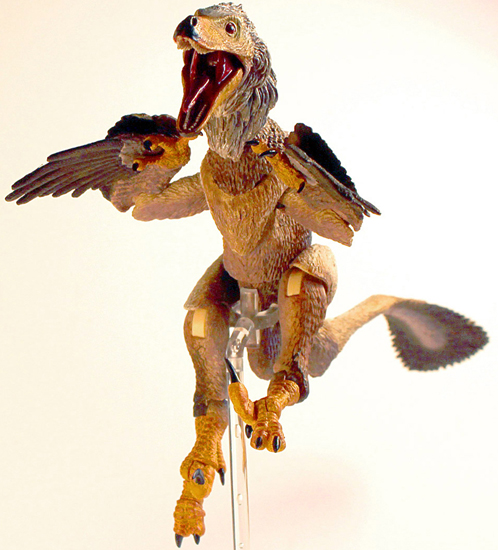
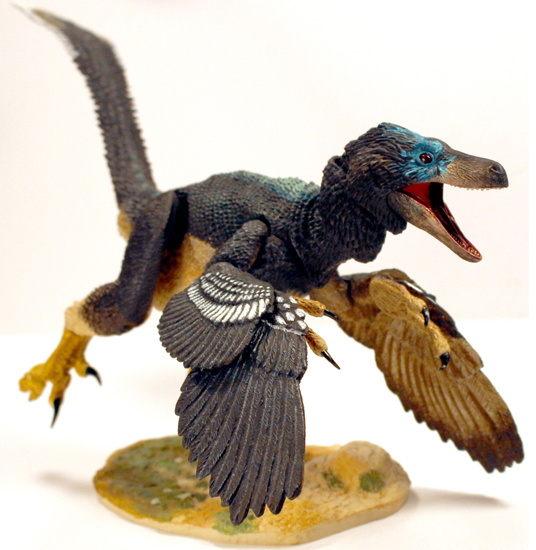
This 1:18 scale replica of a running Velociraptor has an articulated lower jaw and articulated forelimbs.  The model’s colouration has been inspired by the extant tiger and with its stripes it is a very striking and colourful scale model.

The name “Sweeney” comes from “Sweeney Todd”, a very unsavoury fictional character from Victorian literature, a barber by trade who has a side-line in making pies out of the customers he kills with his cut-throat razor.  The sharp, sickle-shaped killing claw on the second toe of each foot of Velociraptor makes a suitable analogy for “Sweeney Todd’s” razor, however, whether this claw could be used to slash prey is debated.  Many palaeontologists believe that the enlarged toe claw that was held off the ground, could have helped to pin prey down, but it was not used as a slashing weapon, although the tip would have been quite sharp.

A Close View of the Enlarged Second Toe Claw of Velociraptor

The second toe claw of Velociraptor.
As Velociraptor ran the second toe claw was held off the ground.

The picture (above), shows a close-up view of the feet of the running Velociraptor “Sweeney”.  Note the fine detail on the model and the way in which the second toe of each foot is held off the ground as the dinosaur ran.  This would have helped to keep the sickle-toe claw sharp.

The spectacular Rebor Velociraptor figure measures approximately twenty-two and a half centimetres in length. The head height (when perched on its sand texture base), is around eleven centimetres and the base itself, reminiscent of the sandy, desert environment in which Velociraptor mongoliensis lived, measures nine centimetres by four centimetres.

To view the Rebor Velociraptor figure and the rest of the Rebor range of prehistoric animal models: Rebor Replicas/Rebor Prehistoric Animal Figures.

Create Your Own Rebor Velociraptor Pack

The Rebor range now contains a total of seven models of fully-grown Velociraptors in 1:18 scale.  “Sweeney” joins “Alex Delarge”, “Winston”, “Gunn”, “Rose”, “Pete” and “Spring-heeled Jack”, collectors have the opportunity to create their own “Raptor” pack, their very own magnificent seven!

Flocking This Way!  The Rebor New for 2018 Velociraptor Figure “Sweeney”

The stripey Velociraptor figure called "Sweeney" by Rebor.
The Rebor “Sweeney” Velociraptor figure.

A spokesperson from Everything Dinosaur commented:

“It is wonderful to see another dromaeosaurid figure added to the exciting range of models manufactured by Rebor.  “Sweeney” is the last of the Velociraptor figures to be made for the foreseeable future, these 1:18 scale figures have proved extremely popular with discerning model collectors and we expect that “Sweeney” will soon become a firm favourite too.”

The Beautiful Rebor Velociraptor Figure “Sweeney”

The 1:18 scale Rebor Velociraptor figure "Sweeney".
The Rebor range is certainly something to get your teeth into.

Visit the Everything Dinosaur website: Everything Dinosaur.

Rebor and Everything Dinosaur will be announcing more additions to the Rebor range shortly, some of which will not be dinosaurs.  Check out this blog site and Everything Dinosaur on social media for more information.

15 08, 2018

JurassicCollectables Reviews the New Eofauna Straight-Tusked Elephant

By |2024-05-11T08:08:37+01:00August 15th, 2018|Categories: Dinosaur Fans, Everything Dinosaur Products, Everything Dinosaur videos, Main Page, Photos of Everything Dinosaur Products, Product Reviews|0 Comments

A Video Review of the Eofauna Straight-Tusked Elephant

Those talented and clever people at JurassicCollectables have produced a video review of the second figure in the range of prehistoric animal figures made by  Eofauna Scientific Research.  The video provides viewers with an up-close and detailed examination of the superb Eofauna Straight-tusked elephant replica (Palaeoloxodon antiquus).  A prehistoric animal model inspired by the scientific study of fossil remains.

JurassicCollectables Reviews the Eofauna Scientific Research Straight-Tusked Elephant

Video credit: JurassicCollectables

Palaeoloxodon antiquus (Old Slanting Tooth)

This prehistoric elephant has a long history of research and scientific study.  It was first thought to be closely related to the extant Asian elephant (genus Elephas) and was initially named Elephas antiquus.  Subsequent studies in the 19th and 20th centuries refined this large herbivore’s taxonomic position and in 1924, the Japanese palaeontologist Hikoshichiro Matsumoto erected the genus Palaeoloxodon when examining elephant fossils found in his native Japan.  Several species of Palaeoloxodon have been described, with the species in the video review, P. antiquus, associated with warm temperate forest and scrubland habitats of Europe that existed during the Pleistocene inter-glacial phases.

Size estimates vary for Palaeoloxodon antiquus, however, bulls could have had shoulder heights in excess of 4.5 metres and weighed in excess of sixteen tonnes.  It is great to see the various models used by JurassicCollectables in this video review, viewers can really appreciate the size of this figure.  Our thanks as always to “off-colour” Alan for his contribution.

Available from Everything Dinosaur – the Eofauna Scientific Research Straight-Tusked Elephant Replica

Straight-tusked elephant model.
Eofauna Scientific Research Straight-tusked elephant (Palaeoloxodon antiquus).

Eofauna Straight-Tusked Elephant Video Review

JurassicCollectables outlines how the model was produced.  This stunning 1:35 scale replica is based on actual fossil specimens that were studied by Eofauna Scientific Research team members.  This is a scientifically accurate model and in the JurassicCollectables video review, the narrator gives viewers a guided tour of the figure and provides a close-up examination of this detailed model.  The beautiful skin texture is marvelled at and the narrator even picks out the carefully sculpted veining to be found on those large ears.

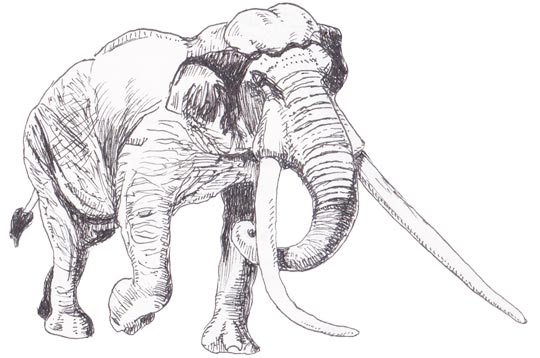
Everything Dinosaur’s Illustration of Palaeoloxodon antiquus (Straight-Tusked Elephant)

Straight-tusked elephant illustration.
A drawing of a Straight-tusked elephant, commissioned by Everything Dinosaur. Picture credit: Everything Dinosaur.

Picture credit: Everything Dinosaur

Sales Helping to Fund Scientific Research

Eofauna Scientific Research is a non-profit organisation and revenues from sales of this figure are invested back into scientific research and the dissemination of knowledge about extinct animals.  It this wasn’t reason enough to add this splendid, 1/35th scale model to your collection, it has already attracted numerous 5-star Feefo reviews on Everything Dinosaur’s website, for example:

Doug wrote to say: “Top quality model.  Anatomical detail totally convincing.  Detail in skin texture & features outstanding.  Perfect posture, not too aggressive.”

Anthony added: “Magnificent replica.  The sculpting and paint job was of the highest quality.  Great pose.  It was a good learning experience to find out that elephants once lived in Europe.  This is the second Eofauna replica I’ve purchased, and I look forward to seeing what they offer next year.”

To purchase the Eofauna Straight-tusked elephant model and their first figure the excellent Eofauna Steppe Mammoth replica: Eofauna Scientific Research Models.

In the Video, the Eofauna Straight-Tusked Elephant is Compared in Size with the Eofauna Steppe Mammoth Figure

Comparing Eofauna models.
The Eofauna Steppe Mammoth (left) compared to the Eofauna Straight-tusked elephant (right).

Picture credit: JurassicCollectables

JurassicCollectables have developed an amazing YouTube channel packed full of prehistoric animal model reviews and other entertaining and informative videos.  They have just achieved 74, 000 subscribers, that’s an astonishing achievement, our congratulations to the JurassicCollectables team.

Visit the YouTube channel of JurassicCollectables here: JurassicCollectables, Everything Dinosaur recommends that dinosaur model fans subscribe to the JurassicCollectables YouTube channel.

In the meantime, take a look at the Everything Dinosaur website: Everything Dinosaur.

12 08, 2018

In Praise of “Meg” an Amazing Shark Model

By |2024-05-11T06:19:13+01:00August 12th, 2018|Categories: Animal News Stories, Dinosaur and Prehistoric Animal News Stories, Everything Dinosaur Products, Everything Dinosaur videos, Main Page, Movie Reviews and Movie News, Photos of Everything Dinosaur Products|0 Comments

Megalodon Makes it to the Big Screen

This weekend sees the opening of the summer blockbuster “Meg”, a prehistoric shark-based action movie featuring Jason Statham and a twenty-five-metre-long representation of Carcharocles megalodon – Megalodon, an extinct species of prehistoric shark, so famous that it is just known by its specific or trivial name.

Commenting on a Prehistoric Shark

With the film likely to make in excess of £30 million in box office receipts on just its opening weekend in the USA, the movie, which incidentally is the most expensive shark film ever made (estimated budget of around $130 million USD), is likely to be a runaway box office success.  However, this iconic marine monster is well and truly extinct, it really is “safe to enter the water” to borrow a strapline from perhaps, the best-known and best-loved shark movie of them all, the 1975 “Jaws”.

Warner Bros and director Jon Turteltaub may have resurrected Megalodon, but most palaeontologists will confidently tell you that, what was probably the largest carnivorous shark to have existed, died out around 2.6 million years ago.

When those talented people as Safari Ltd introduced a “Megalodon” model back in 2014, Everything Dinosaur put together a short video introduction to the model.

Everything Dinosaur’s Video Review of the Wild Safari Dinos Megalodon Model

Video credit: Everything Dinosaur

We may have lacked the budget of the movie and unfortunately, we were unable to afford the services of Jason Statham, but our six minute video review set out to explain a little more about the science behind this prehistoric shark and to provide a guide to the Wild Safari Prehistoric World Megalodon model.

Carcharocles megalodon (Otodus megalodon)

Many marine biologists had believed that Carcharocles megalodon was closely related to the modern Great White Shark – Carcharodon carcharias (hence Everything Dinosaur’s original research into finding a suitable Megalodon model).  However, recent studies suggest that it was actually a member of another sub-branch of the Lamniformes Order and that Megalodon was a member of the Otodontidae family and not a member of the Lamnidae family as previously thought.

It may have had a similar lifestyle and habit to the Great White Shark and it was much bigger and heavier, but it was unlikely to have been around twenty-five metres in length, the size of Megalodon in the movie.

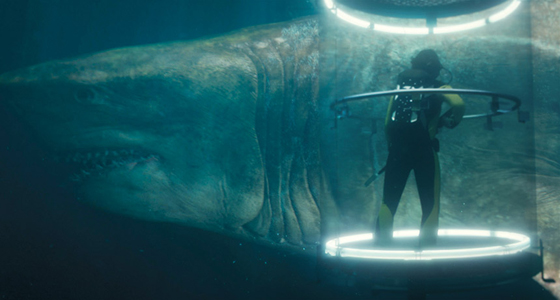
A Still from the Motion Picture “Meg”

Meglaodon from the movie "Meg".
A still from the 2018 summer blockbuster “Meg”.

Picture credit: Warner Bros

A spokesperson from Everything Dinosaur commented:

“If these giant, prehistoric sharks were still around today, then, as we suspect they were shallow water specialists living in the top two hundred metres of water, the upper portions of the epipelagic zone of the ocean, then they certainly would have been spotted by now.  The “Meg” is very much extinct and we are sure that the film will provide plenty of thrills and spills for cinema goers.  Perhaps, it will also raise awareness amongst its audience about the plight of many shark species today.  Over fishing, habitat loss and pollution are having a devastating effect on global shark populations.  It has been estimated that some 100 million sharks die each year, with luck this movie will raise awareness about shark species conservation.”

Visit the Everything Dinosaur website: Everything Dinosaur.

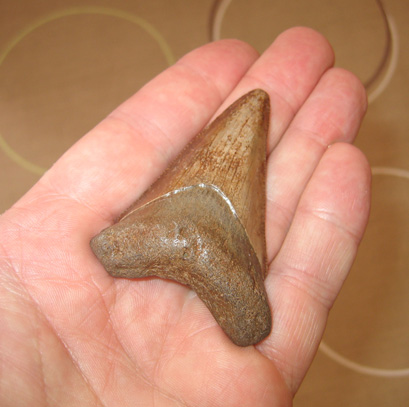
The Tooth from a Megalodon Shark

Megalodon fossil tooth
A large fossil tooth from a Otodus megalodon. Picture credit: Everything Dinosaur.

Picture credit: Everything Dinosaur

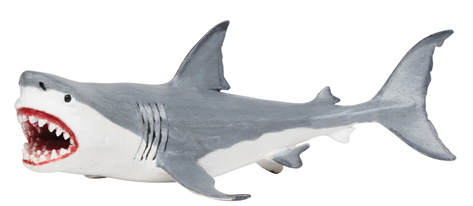
Safari Ltd have produced an excellent replica of this prehistoric shark, to view the model and the rest of the amazing figures in the Wild Safari Dinos Prehistoric World collection: Safari Ltd. Wild Safari Prehistoric World.

The Wild Safari Prehistoric World Megalodon Figure 

Wild Safari Prehistoric World Megalodon model.
Fearsome C. megalodon

Visit the award-winning Everything Dinosaur website: Everything Dinosaur.

Please note, following a scientific revision the binomial name for this shark has been changed. Most palaeontologists refer to this species as Otodus megalodon.

10 08, 2018

The Really Dangerous Predator of Hell Creek

By |2023-10-27T09:50:39+01:00August 10th, 2018|Categories: Dinosaur and Prehistoric Animal Drawings, Dinosaur Fans, Everything Dinosaur Products, Main Page, Photos of Everything Dinosaur Products, Photos/Pictures of Fossils|1 Comment

Acheroraptor temertyorum – Most Dangerous Critter of Hell Creek

Was Acheroraptor temertyorum more dangerous to smaller dinosaurs than T. rex?

If you could travel back in time and visit western North America 66 million years ago, you might find yourself within the territory of a Tyrannosaurus rex.  Not a very safe place to be you might think, you would probably be right, but the Hell Creek fauna contained another theropod dinosaur, one that was perhaps, more dangerous to a human visitor than a T. rex or for that matter the other apex predator known from the Hell Creek Formation – Dakotaraptor steini.

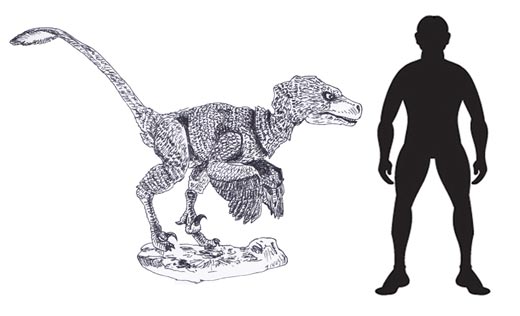
Named and scientifically described in 2013, the real man-eater of Hell Creek might have been Acheroraptor (A. temertyorum), at around three metres long and weighing as much as a German Shepherd dog, a pack of these ferocious hunters would probably have made short work of any human visitor to the Late Cretaceous who was unfortunate to encounter them.

A Scale Drawing of the Velociraptorine Dromaeosaurid Acheroraptor temertyorum

Acheroraptor temertyorum scale drawing.
A scale drawing of Acheroraptor. Picture credit: Everything Dinosaur.

Picture credit: Everything Dinosaur

Acheroraptor temertyorum – “Underworld Plunderer”

Named after the River of Pain “Acheron” in the underworld from Greek myth, Acheroraptor was one of the very last of the non-avian theropod dinosaurs and it probably played a secondary predator role in the Hell Creek ecosystem.  There were larger predators, the five-and-a-half-metre-long Dakotaraptor for example, that like Acheroraptor was one of the very last dromaeosaurids to evolve.  However, packs of Dakotaraptors and the iconic Tyrannosaurus rex may not have considered a single person much of meal and may not have expanded a lot of energy in trying to catch them.  To a pack of Acheroraptors, a human would have made a very satisfactory lunch, best to avoid Acheroraptor if you can.

To read more about the discovery of Dakotaraptor steini: Dakotaraptor – A Giant Raptor.

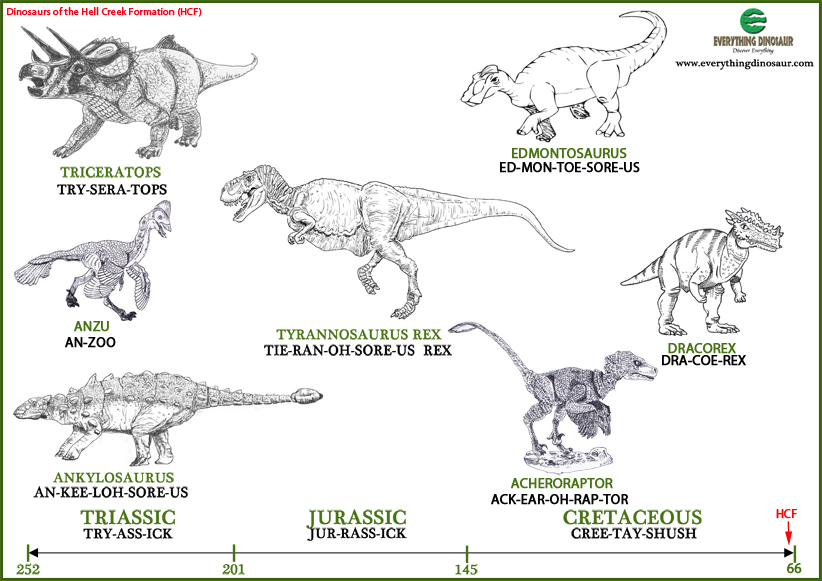
Some of the Typical Dinosaurian Fauna of the Hell Creek Formation (Maastrichtian Faunal Stage of the Late Cretaceous)

Dinosaurs of the Hell Creek Formation.
Typical dinosaurs of the Hell Creek Formation.   Although there were larger predators, to a person visiting Montana 66 million years ago, meeting a pack of Acheroraptors would have been extremely dangerous. Picture credit: Everything Dinosaur.

Picture credit: Everything Dinosaur

Part of the Vertebrate Fossil Collection at the Royal Ontario Museum

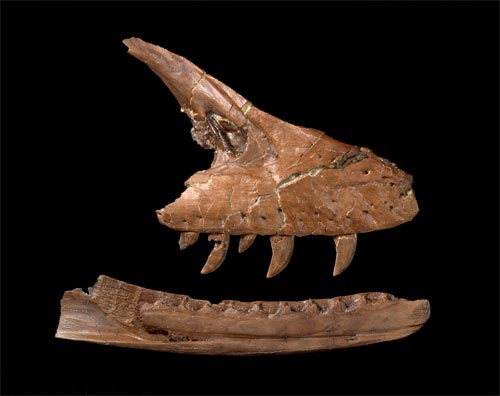
The specific or trivial name “temertyorum” was selected to honour James and Louise Temerty in recognition for their outstanding support and contribution to the Royal Ontario Museum, which houses the jaw fragments that led to the scientific description of this dinosaur back in 2013.

Acheroraptor probably lived in packs and may have had a role similar to extant hyenas or jackals in present-day ecosystems.  Palaeontologists had suspected that dromaeosaurids roamed Montana in very last years of the Cretaceous, numerous teeth with their diagnostic wide ridges (denticles) had been discovered, but the lack of fossilised bones prevented scientists from assigning a genus.

The Holotype Fossil Maxilla and Lower Jaw (Dentary) of Acheroraptor

The fossilised jawbones of Acheroraptor.
The jaws of Acheroraptor.

Picture credit: Royal Ontario Museum

Acheroraptor More Closely Related to Asian Dromaeosaurids

Palaeontologists have concluded that Acheroraptor was more closely related to Asian dromaeosaurids such as Velociraptor (V. mongoliensis), than it was to other North American dromaeosaurids.  Assigned to the Velociraptorinae subfamily of the Dromaeosauridae, the relatively long-snouted Acheroraptor provides supporting evidence to suggest the presence of a Late Cretaceous land bridge between Asia and North America.

A spokesperson from Everything Dinosaur explained:

“There is a considerable amount of evidence that supports the idea of the existence of a Cretaceous Beringian land bridge linking North America and Asia.  This land bridge may not have been permanent but appeared at times when sea levels fell, permitting a faunal exchange between dinosaur-based ecosystems.  The ancestors of Acheroraptor temertyorum probably migrated into North America.”

To read Everything Dinosaur’s recent article about Alaskan trace fossils providing evidence of a mixing of dinosaur faunas from Asia and North America: Did Alaskan Therizinosaurs and Hadrosaurs Live Together?

Beasts of the Mesozoic 1/6th Scale Acheroraptor temertyorum

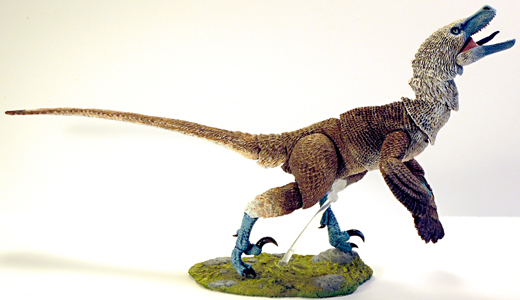
There are lots of models of the Hell Creek Formation biota available, countless T. rex and Triceratops figures for instance, but it was the clever and talented David Silva of Creative Beast Studio who created a 1/6th scale replica of Acheroraptor within the amazing “Beasts of the Mesozoic” model range.

The “Beasts of the Mesozoic” Acheroraptor temertyorum Figure

Beasts of the Mesozoic Acheroraptor temertyorum figure.
The Beasts of the Mesozoic Acheroraptor model.

To view the beautiful Acheroraptor model and the rest of the figures in the “Beasts of the Mesozoic Raptor” range: Beasts of the Mesozoic “Raptors”.

9 08, 2018

The Amazing Mojo Fun Dinosaurs, CollectA and Rebor

By |2024-05-11T06:18:30+01:00August 9th, 2018|Categories: Dinosaur Fans, Everything Dinosaur News and Updates, Everything Dinosaur Newsletters, Everything Dinosaur Products, Main Page|0 Comments

Everything Dinosaur’s Latest Newsletter

Subscribers to Everything Dinosaur’s newsletter received their latest bulletin earlier this month.  August started with a roar, as the four new for 2018 Mojo Fun dinosaurs have arrived at our warehouse.  Choose from a blue Baryonyx, a delightful Diplodocus, a model of the deadly Deinonychus or a giant (it measures around 35 cm long), Giganotosaurus.  All four models are very colourful and show lots of amazing detail, they are a quartet of super new additions to the Mojo Fun range (Prehistoric and Extinct).

Mojo Fun Dinosaurs

The Four New for 2018 Mojo Fun Dinosaurs are in Stock at Everything Dinosaur

New Mojo Fun dinosaur models are in stock.
New for 2018 Mojo Fun Dinosaur Models are in stock at Everything Dinosaur. Picture credit: Everything Dinosaur.

Picture credit: Everything Dinosaur

Everything Dinosaur customers who had requested a model be reserved for them have already been contacted by team members.  It’s all part of our customer service.

To view the range of Mojo Fun models available from Everything Dinosaur: Mojo Fun Prehistoric and Extinct Animals.

The CollectA Roaring T. rex and the Return of “Savage”

Before we had the opportunity to finish unloading all the new Mojo Fun models, the CollectA roaring, feathered Tyrannosaurus rex arrived.  This is the latest feathered dinosaur to be made by CollectA and it has replaced the original 1:40 scale model that came out in 2015.  CollectA were unsure about the future of their first, large, 1:40 scale feathered T. rex replica, but after three years in production, the company decided that it would replace its first figure with a new dinosaur replica, this time, depicting T. rex vocalising.

To view the CollectA Deluxe range of models: CollectA Deluxe Prehistoric Life.

Great news for fans of the Rebor replicas, the popular Ceratosaurus (C. dentisulcatus) model is back in stock!  There are more than thirty figures in the Rebor range currently, with more models to be announced before the end of the year.  Newsletter readers will be amongst the first to find out about availability and release dates for the new Rebor figures.

Newsletter Readers were Amongst the First to Find Out About New Models and Items Back in Stock

The CollectA roaring, feathered T. rex and the Rebor "Savage" Ceratosaurus.
The CollectA roaring T. rex model is in stock along with the welcome return of the Rebor Centrosaurus replica (Savage). Picture credit: Everything Dinosaur.

Picture credit: Everything Dinosaur

5,000 Facebook “Likes” and the Return of “Sentry”

Our Facebook page has passed the landmark of 5,000 “likes”, we are well on our way to 5,100, but we took this opportunity to thank our customers and followers on social media for their support.  We are all truly humbled by all the “likes” that we have received.  We do our best to follow up every comment, enquiry and question that we receive on our Facebook pages, we tend to post up several times a day on social media.

In addition, our latest newsletter announced the arrival of new stocks of the Rebor “Sentry” Compsognathus figure.  This is a beautifully detailed 1/6th scale model of the little theropod Compsognathus (C. longipes).  It is a very elegant model of “elegant jaw”.

Celebrating 5,000 “likes” on Facebook and “Sentry” Returns

Celebrating 5,000 Facebook likes and the return of the Rebor "Sentry" figure.
Celebrating 5,000 Facebook “likes” and the return of the Rebor Compsognathus figure. Picture credit: Everything Dinosaur.

Picture credit: Everything Dinosaur

To view the Rebor range of figures including “Savage” and “Sentry”: Rebor Replicas and Figures.

Subscribing to Everything Dinosaur’s Newsletters

Subscribing to our newsletter is very easy and it’s free!  The Everything Dinosaur newsletter provides lots of updates and information on new model releases, company production plans, figure retirements and special offers.  We send out these emails periodically, helping to keep our dedicated and enthusiastic customer base informed.

To request a subscription to Everything Dinosaur’s regular newsletter, simply drop us an email: Email Everything Dinosaur.

7 08, 2018

In Praise of the CollectA Deluxe 1:20 Scale Dunkleosteus

By |2023-10-27T07:41:38+01:00August 7th, 2018|Categories: Dinosaur Fans, Everything Dinosaur Products, Main Page, Photos of Everything Dinosaur Products, Product Reviews|0 Comments

Praising the CollectA Deluxe 1:20 Scale Dunkleosteus Model

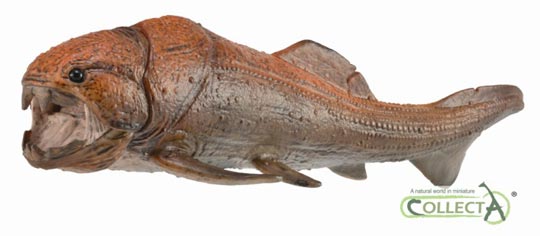
CollectA have stated that they intend to introduce more figures and replicas that represent animals from the Palaeozoic into their model range.  True to their word, 2018 has seen the introduction of a Dimetrodon along with an Estemmenosuchus, models of animals that lived during the Permian.  In addition, CollectA have added a 1:20 scale Dunkleosteus to their Deluxe range.

The Dunkleosteus figure has attracted a lot of praise from model collectors and from curators of vertebrate fossil collections around the world.

The CollectA Dunkleosteus Model Compared to a Museum Specimen

The CollectA 1:20 scale Dunkleosteus compared to a museum specimen.
A comparison between the new for 2018 CollectA 1;20 scale replica of Dunkleosteus and a museum specimen. Picture credit: Everything Dinosaur.

Picture credit: Everything Dinosaur

The picture (above), shows a close-up view of the anterior portion of the new for 2018 CollectA Dunkleosteus model (left).  The use of gloss on the figure gives this model an attractive wet-look, very appropriate for a Late Devonian marine predator.  To the right, is a photograph of a Dunkleosteus exhibit on display at the Senckenberg Naturmuseum Frankfurt in Germany.  The production team at CollectA have taken great care to depict the famous jaws and the bony head shield of this prehistoric fish accurately.

Dunkleosteus is a member of the Placodermi (plated skins), a Class of armoured fish, that was extremely varied, geographically widespread and specious.

Dunkleosteus – Huge Skull Plates and Shears for Jaws

Although Dunkleosteus (D. terrelli), is regarded as an iconic animal in the fossil record, it is only known from its massive skull plates and shear-like jaws, although recently, some details were published on the discovery of a fragmentary piece of fossilised cartilage associated with supporting the tail (ceratotrichia).  The rest of the animal, its backbone, soft tissues, the shape of its fins and tail are not known.  In order to produce a 1:20 scale model, the designer at CollectA has had to make an educated guess about the body plan of Dunkleosteus.

Designer Anthony Beeson got inspiration from other Devonian placoderms as well as using living fish when it came to devising the shape of the CollectA model.

The CollectA Deluxe Dunkleosteus Figure

CollectA Dunkleosteus.
CollectA 1:20 scale Deluxe Dunkleosteus model.

Picture credit: Everything Dinosaur

The bony plates and jaws that have been preserved give scientists an impression of what the front of this fish looked like, but the remainder, more than two thirds of the entire animal is simply not known to science.  The CollectA model has been given a short, but broad dorsal fin.  Other better known and much smaller placoderms had similarly shaped dorsal fins.  These fishes also possessed paired pelvic and pectoral fins, so the CollectA model has been provided with these as well.

A Heterocercal Tail

The CollectA figure has been given a heterocercal tail.  Heterocercal tails are not symmetrical.  The vertebrae extend into the top lobe of the tail and this makes it longer than the lower or ventral lobe.  Heterocercal tails are known in members of the Placodermi and these types of tails are also found in many species of shark.  The CollectA Dunkleosteus tail has some nicks in both the top and ventral lobe, typical wear and tear as expected in the fins of an apex predator and from a fish that may have been subject to attack from members of its own species (intraspecific combat).

A View of the Heterocercal Tail of the CollectA Dunkleosteus Model

The tail of the CollectA Dunkleosteus.
The CollectA Dunkleosteus has been given a heterocercal tail. Picture credit: Everything Dinosaur.

Picture credit: Everything Dinosaur

Visit the Everything Dinosaur website: Everything Dinosaur.

Head Shield Covered in Skin

The huge bony plates that covered the anterior portion, of what many scientists have described as the world’s first vertebrate super-predator, are frequently described as armour.  The head was actually covered by a tough skin, as much as eight centimetres thick in some areas.  The headshield very probably did provide protection, but they also served as anchor points for the huge muscles needed to power the jaws of this prehistoric fish.

Recent research undertaken by the Cleveland Museum of Natural History (Ohio), that houses an extensive collection of placoderm fossils, indicates that Dunkleosteus had a very powerful bite, at least as powerful as that of top aquatic predators today such as alligators and sharks.

Commenting on the CollectA Dunkleosteus Figure

Commenting on the shape of the figure, including the raised area immediately behind the jaws, designer Anthony Beeson stated:

“The hump (which isn’t supposed to be anything of the sort), is simply the result of having the bony skull embedded in the body of the Dunkleosteus, rather than to just have it resting on the surface of the fish like a suit of armour as other firms have done.  If there is a resulting hump that is purely my take on how it may have appeared.  As the skull is the only thing preserved in the fossil record the rest of the animal is pure speculation as any artist or modeller has to do.  No one for instance is certain on how the tail may have looked.  One has to look at contemporary and modern species and also think what will make the model attractive both visually and touch-wise.  The skin ornamentations are not scutes, but I based them on the skin of the Devonian fossil fish Gemuendina and other skin decoration on those of large modern fishes such as the Wolf Fish.”

To view the CollectA Dunkleosteus and the other figures in the CollectA Deluxe model range: CollectA Deluxe Prehistoric Life Models.

4 08, 2018

Beautiful CollectA Dimorphodon Model Wins Award

By |2024-05-11T06:17:39+01:00August 4th, 2018|Categories: Dinosaur Fans, Everything Dinosaur Products, Main Page, Photos of Everything Dinosaur Products|0 Comments

Award Winning CollectA Deluxe Dimorphodon

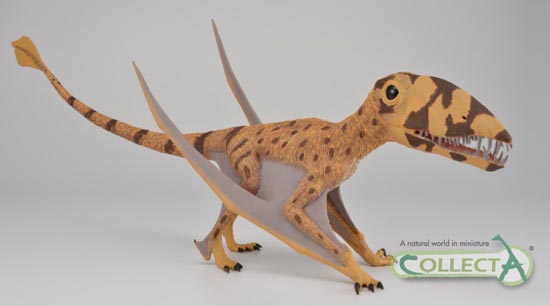
The CollectA Supreme Deluxe Dimorphodon model has been voted by readers of Prehistoric Times magazine the best non-dinosaur prehistoric animal toy of 2017.  This prestigious award recognises the efforts of CollectA to bring larger models to the market, the Dimorphodon measures nearly forty centimetres in length and as such, provides an accurate scale model of one of the first pterosaurs to be scientifically described.

The Award Winning CollectA Supreme Deluxe Dimorphodon Figure

CollectA Dimorphodon pterosaur model.
The CollectA Dimorphodon model with a movable lower jaw.

The CollectA Dimorphodon and other models in the Deluxe range can be found on Everything Dinosaur’s website here: CollectA Deluxe Prehistoric Life Models.

Dimorphodon – An Early Jurassic Flying Reptile

Dimorphodon was the first pterosaur fossil from the British Isles to be scientifically described. The first specimen was discovered by the world-famous, amateur fossil hunter Mary Anning.  The fossil, which was missing the skull, was found on the Dorset coast in 1828.  Prior to the scientific description of Dimorphodon, only two species of pterosaur had been studied, both of which came from the Solnhofen limestone deposits of southern Germany.

When first described, this flying reptile was named Pterodactylus macronyx.  Pterodactylus was the first flying reptile genus to be erected.  It was later discovered that the Dorset specimens had very different shaped heads compared to those fossils associated with the Pterodactylus genus, a new genus name for the fossil was proposed by the English anatomist Richard Owen (1858).

A Scale Drawing of D. macronyx

Dimorphodon scale drawing.
A scale drawing of Dimorphodon macronyx. Picture credit: Everything Dinosaur.

Picture credit: Everything Dinosaur

Long Claws on the Forelimbs

The species name “macronyx” refers to the large claws on the forelimbs.  It has been suggested that this flying reptile favoured inland habitats and it lived in woodland, the long claws would have helped it to scramble up trees.   The long stiff tail may have been involved in flight stability.  The wingspan of D. macronyx was approximately 1.4 metres, about the same size as the wings of today’s Raven (Corvus corax).

The CollectA Supreme Deluxe Dimorphodon Model

CollectA catalogue 2017.
The CollectA 2017 catalogue featured the Dimorphodon model on the front cover. Picture credit: Everything Dinosaur.

Picture credit: Everything Dinosaur

A spokesperson from Everything Dinosaur commented:

“We are so pleased for all the team at CollectA.  It is great to hear that their Deluxe Dimorphodon figure has been awarded this accolade.  We look forward to hearing news about what plans the company has for prehistoric animal figures in the future.”

Visit the award-winning Everything Dinosaur website: Everything Dinosaur.

27 07, 2018

JurassicCollectables Reviews the New Papo Compsognathus Model

By |2024-05-11T06:15:55+01:00July 27th, 2018|Categories: Dinosaur Fans, Everything Dinosaur Products, Everything Dinosaur videos, Main Page, Photos of Everything Dinosaur Products, Product Reviews|0 Comments

The Papo Compsognathus Dinosaur Model Reviewed

The dedicated and enthusiastic production team at JurassicCollectables have made a video review of the new for 2018 Papo Compsognathus dinosaur model.  At Everything Dinosaur, the Compsognathus (along with the Papo Quetzalcoatlus), represent the last of this year’s models to be introduced.  It was certainly worth the wait, especially if you like to collect prehistoric animal figures that are reminiscent of the dinosaurs seen in the “Jurassic Park/Jurassic World” film franchises.  Papo have done a splendid job producing a replica of “elegant jaw”, which at one time, was regarded as the smallest dinosaur known to science.

In the short video review, it lasts a little over ten minutes, the JurassicCollectables narrator reviews this new theropod model and compares and contrasts this figure with the increasingly rare Rebor Sentry Compsognathus.  Also featured is the classic Papo green standing Tyrannosaurus rex replica, an iconic Papo figure, now sadly out of production.

JurassicCollectables – Papo Compsognathus Dinosaur Model Video Review

Video credit: JurassicCollectables

JurassicCollectables have produced video reviews of every single prehistoric animal and dinosaur replica that Papo have produced, to see these videos and to subscribe to their fantastic YouTube channel: Subscribe to JurassicCollectables on YouTube.

The Papo Compsognathus Dinosaur Model

Papo Compsognathus model.
The Papo Compsognathus figure has an articulated jaw.

A Finely Detailed Papo Compsognathus Model with an Elegant Articulated Jaw

The finely detailed model has an articulated lower jaw.  The JurassicCollectables reviewer highlights the jaw and discusses the painting of this feature.  Papo have produced another excellent figure with an articulated jaw, it is quite a skilled job to be able to produce such a small, articulated component.  It is also apt, as Compsognathus means “elegant jaw”, in recognition of this small dinosaur’s elegant, narrow snout and small jaw bones.

To see the range of Papo prehistoric animal models available from Everything Dinosaur (including the Papo Compsognathus): Papo Prehistoric Animals.

In the JurassicCollectables Video the Papo Compsognathus is Compared with the Rebor Compsognathus (Sentry)

The Papo and Rebor Compsognathus models.
In the JurassicCollectables video, the Papo Compsognathus model is compared to the Rebor Compsognathus.

Picture credit: JurassicCollectables

The picture above shows one of the studio shots from the video showing the new for 2018  Papo Compsognathus (background) being compared to the Rebor Compsognathus figure (foreground).   In this well put together video review,  JurassicCollectables comment extensively about these dinosaur models.

The narrator comments:

“Love the use of colour!  The jaw opens really wide which is perfect, it is more of a 1/6th scale figure.  The sculpt is incredible.“

Look out also for a cameo appearance by “off-colour Alan”, the Papo Compsognathus replica is one dinosaur model that Alan can look straight in the eye.  Our thanks to the team at JurassicCollectables for posting up this super video review.

Visit the Everything Dinosaur website: Everything Dinosaur.

26 07, 2018

Beasts of the Mesozoic Figures Back in Stock

By |2025-07-29T08:46:44+01:00July 26th, 2018|Categories: Dinosaur Fans, Everything Dinosaur News and Updates, Everything Dinosaur Products, Main Page, Photos of Everything Dinosaur Products|0 Comments

Beasts of the Mesozoic Figures Back in Stock

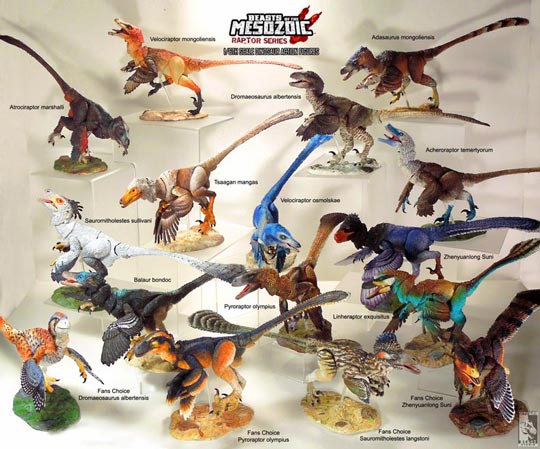
Great news for dinosaur fans and model collectors.  Another shipment of the excellent Beasts of the Mesozoic 1/6th scale “Raptor” figures has arrived at the Everything Dinosaur warehouse.  This exciting range consists of 24 collectable figures, all members of the Eumaniraptora clade (or if you prefer the Paraves).  Put simply, the models represent dromaeosaurids, troodontids and given the current debate about Balaur bondoc, a flightless bird.

A New Shipment of Beasts of the Mesozoic Figures Has Arrived at Everything Dinosaur

Beasts of the Mesozoic Deluxe 1:6 scale "Raptors".
The Deluxe Raptors in the Beasts of the Mesozoic range available from Everything Dinosaur.

To view the Beasts of the Mesozoic range: Beasts of the Mesozoic Models.

Build-A-Raptor Kits

Everything Dinosaur has extended their interest in this range by adding the two Build-A-Raptor kits.  Make your very own customised and unique dinosaur with this unpainted set of “Raptor” parts.  The Beasts of the Mesozoic Build-A-Raptor sets have lots of interchangeable parts so you can design and build your own unique prehistoric animal.  So adaptable are the components that the parts in set A (Velociraptor) are interchangeable with the parts in the Build-A-Raptor set B (Atrociraptor).

The Beasts of the Mesozoic Build-A-Raptor Kits Have Been Added to Everything Dinosaur’s Range

Beasts of the Mesozoic Build-A-Raptor Sets
The Beasts of the Mesozoic Build-A-Raptor Sets (Velociraptor and Atrociraptor). Picture credit: Everything Dinosaur.

Picture credit: Everything Dinosaur

Fact Sheets Sent Out with Every Figure

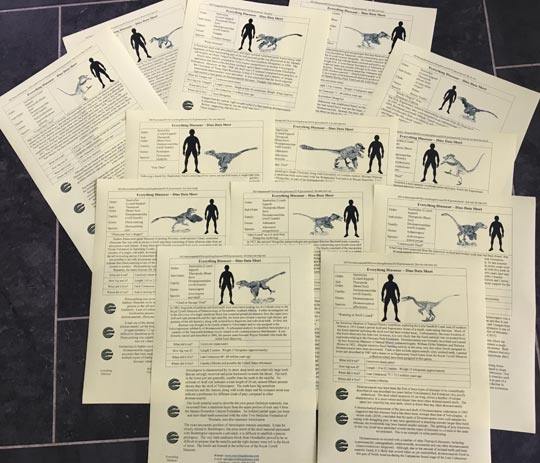
As part of Everything Dinosaur’s commitment to helping collectors and dinosaur fans learn more about prehistoric animals, we have researched and written a fact sheet on all the creatures featured in this range.  Each fact sheet contains a scale drawing and explains a little more about the dinosaur (or in the case of Balaur bondoc, flightless bird), that this skilfully made replica depicts.  Our fact sheets provide an A to Z guide on the dromaeosaurids and their relatives, or if you will,  Acheroraptor through to Zhenyuanlong suni!

Customers Receive a Fact Sheet with Every Purchase

Fact sheets prepared for the Beasts of the Mesozoic range of models.
A collection of Beasts of the Mesozoic fact sheets created by Everything Dinosaur.  A fact sheet is sent out with every Beasts of the Mesozoic figure purchased. Picture credit: Everything Dinosaur.

Picture credit: Everything Dinosaur

Which One is Your Favourite?

With so many figures in this wonderful range to choose from, it is hard to decide which replica is our favourite.  For example, there is the magnificent Tsaagan mangas, an articulated, poseable replica of a fearsome dromaeosaurid, that was a contemporary of Velociraptor (V. mongoliensis is also included in the Beasts of the Mesozoic range).

The Two-metre-long Fearsome Tsaagan mangas

Beasts of the Mesozoic Tsaagan mangas.
The Beasts of the Mesozoic Deluxe “Raptor” Tsaagan mangas.

Or perhaps a figure of a European prehistoric animal is more your preference?  Maybe your favourite is the enigmatic and mysterious Balaur bondoc from the Hateg Formation of Romania.

Is it a Bird or is it a Dinosaur?  Beasts of the Mesozoic Balaur bondoc

Beasts of the Mesozoic Balaur bondoc.
The Beasts of the Mesozoic Balaur bondoc replica.

Which Beasts of the Mesozoic 1/6th scale figure is your favourite?

Contact Everything Dinosaur to tell us about your favourite models: Contact Everything Dinosaur.

10 07, 2018

Beautiful Bullyland Ammonite at the Museum

By |2024-03-14T09:24:30+00:00July 10th, 2018|Categories: Educational Activities, Everything Dinosaur Products, Main Page, Photos of Everything Dinosaur Products|0 Comments

Bullyland Ammonite on Display

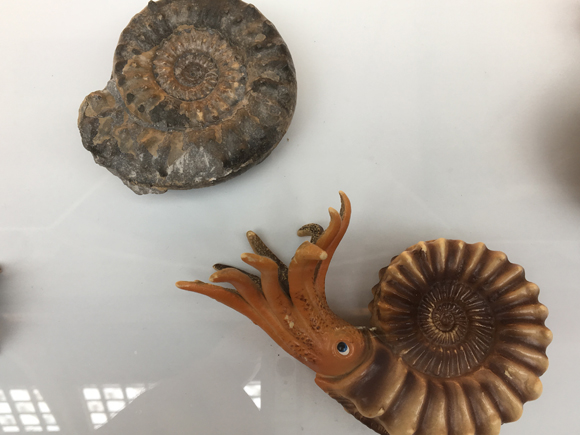
We spotted an old friend whilst on a visit to the Oxford University Museum of Natural History (Oxford, England).  In a display case showing fossils of ammonites we noted that a Bullyland ammonite replica had been placed inside the display case to give visitors an idea of what an ammonite actually looked like.  Ammonite fossil shells may be relatively common, but it is surprising how few people understand that living inside the shell was an animal with tentacles, a creature related to today’s squid, cuttlefish and octopus.

 Spotted in a Museum Display Case – the Bullyland Ammonite Replica

We spotted a Bullyland ammonite model being used to help illustrate a display of ammonite fossils.
A Bullyland ammonite model is used to help illustrate a display of ammonite fossils. Picture credit: Everything Dinosaur.

Picture credit: Everything Dinosaur

The Bullyland Ammonite Replica

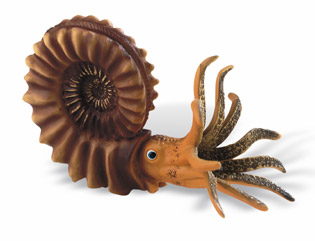
The ammonite model from Bullyland is a robust replica of this iconic mollusc primarily known from the fossil record of the Mesozoic.  It is a super addition to any fossil fan’s collection.  Ideal for creative play, school or home study and for use in museums as the display case at the Oxford University Museum of Natural History testifies.  It is wonderful to see a Bullyland figure used in such a way, helping to educate and inform.

To view the Bullyland ammonite model and the rest of the figures in the Bullyland range available from Everything Dinosaur: Bullyland Models and Figures.

The Bullyland Ammonite Figure as it Appears on the Everything Dinosaur Website

Bullyland ammonite model.
The Bullyland ammonite replica.

Helping Out at Many Museums

Lots of museums have fossils of ammonites within their invertebrate fossil collections, we suspect that many curators and exhibition managers have taken advantage of this excellent replica and used it to help illustrate what these enigmatic cephalopods looked like.  After all, when our team members visit schools to conduct dinosaur and fossil themed workshops, we use this same Bullyland ammonite replica to explain to children which bit of an animal is likely to become a fossil and which bits are not likely to fossilise.

At a little under eighteen centimetres in length and with a shell diameter of around nine centimetres, this model was certainly at home amongst the Jurassic ammonite fossils on display.  Seeing the Bullyland ammonite replica being used in a museum got us thinking, are there any other examples of prehistoric animal models and figures being incorporated into a scientific exhibition or display?

It was a pleasure to peruse part of the extensive fossil collection at the Oxford University Museum of Natural History and to discover an old friend.

Visit the Everything Dinosaur website: Everything Dinosaur.

Go to Top