All about dinosaurs, fossils and prehistoric animals by Everything Dinosaur team members.

Dinosaur and prehistoric animal themed articles, features and stories.

11 02, 2022

Abditosaurus kuehnei – The First New Dinosaur of 2022

By |2022-10-23T18:36:31+01:00February 11th, 2022|Categories: Adobe CS5, Dinosaur and Prehistoric Animal News Stories, Dinosaur Fans, Main Page, Palaeontological articles|0 Comments

The first new dinosaur to be scientifically described in 2022, hails from the Late Cretaceous of the southern Pyrenees of Spain and it’s a giant. At an estimated 17.5 metres long, Abditosaurus kuehnei was probably the largest dinosaur on the European archipelago some 70.5 million years ago (Maastrichtian faunal stage of the Late Cretaceous) and its fossils represent the most complete titanosaur known from Europe described to date.
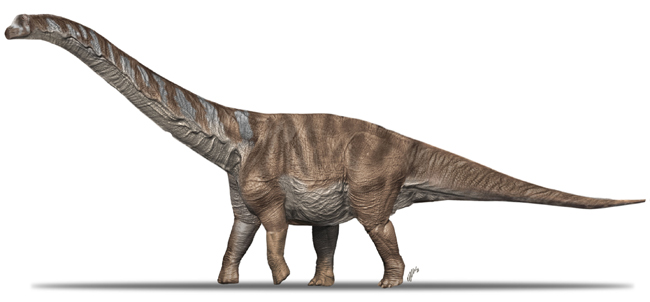
Abditosaurus kuehnei life reconstruction.
Abditosaurus kuehnei life reconstruction. Picture credit: Oscar Sanisidro / Museu de la Conca Dellà.

A Dinosaur That Took Decades to Discover

During the Late Cretaceous sea levels were exceptionally high and much of the continent of Europe we know today was underwater. The landmass of Europe was divided into a series of islands, this archipelago is known to have supported a wide variety of different types of non-avian dinosaur, titanosaurs were present, although none of the scientifically described genera would have matched Abditosaurus in size.

Late Cretaceous Europe.
Europe during the Maastrichtian faunal stage of the Late Cretaceous. Abditosaurus roamed the Ibero-Amorican island on the western age of the archipelago. The Ibero-Amorican island consisted of mainly southern France, Portugal and north-central Spain. The researchers propose that this large titanosaur migrated to the island from the south around 70.5 million years ago when sea level regression opened up a temporary land bridge with northern Africa. Adapted from Dalla Vecchia.

Related to Titanosaurs from Gondwana

The new titanosaur taxon demonstrates an unusual combination of characters not seen in other Ibero–Armorican titanosaurs. For example, it had a very robust humerus with a distally expanded deltopectoral crest, an anatomical characteristic typical of the Saltasauridae family of titanosaurs. A phylogenetic analysis carried out by the research team, who included Doctor Albert Sellés, a palaeontologist with the Institut Català de Paleontologia Miquel Crusafont at the Universitat Autònoma de Barcelona and the Museu de la Conca Dellà, nests Abditosaurus within a clade of South American and African saltasaurines and away from European titanosaurs. This suggests that Abditosaurus migrated to the Ibero-Amorican island around 70.5 million years ago when a temporary land bridge united the island with northern Africa.

Further evidence suggesting that dinosaurs migrated from Africa to the island was found at the dig site. Dr Albert Sellés, one of the co-authors of the scientific paper, explained that eggshell fossils from a titanosaurian oospecies known from Gondwana were also discovered.

Abditosaurus kuehnei fossil excavation.
Abditosaurus kuehnei fossil excavation (a) the fossils exposed at the Orcau-1 site and (b, c) fieldwork to extract the fossil material. Picture credit: Institut Català de Paleontologia Miquel Crusafont.

The “Forgotten Reptile”

German palaeontologist Walter Georg Kühne found the first fossil evidence of this large dinosaur in 1954 when exploring Upper Cretaceous deposits near the small town of Orcau (Catalonia). These fossils were despatched to the Instituto Lucas Mallada in Madrid. The following year Kühne returned and collected more bones. No further excavations took place until 1986, when the site was opened up again by a field team from the Institut de Paleontologia de Sabadell (Barcelona) which found dorsal ribs and part of the sternum. From 2012 to 2014 the dig site was opened up once more, this time by a joint Museu de la Conca Dellà, Institut Català de Paleontologia and Universidad de Zaragoza expedition and further fossil material was removed.

The generic name is derived from the Latin word “Abditus” (meaning forgotten) and the Greek word “sauros” (lizard), in recognition of the protracted excavation. The specific name honours Professor Walter Georg Kühne.

Abditosaurus kuehnei skeletal drawing.
Skeletal reconstruction and scale estimate of Abditosaurus kuehnei. The different coloured bones indicate which bones were excavated during the different field expeditions. The bones coloured light pink were excavated in the 1950s but have been subsequently lost. Picture credit: Bernardo González Riga.
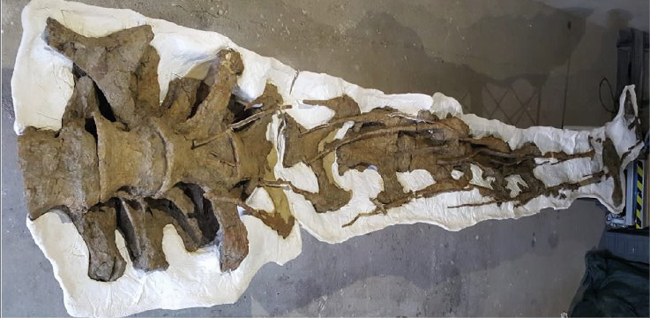
Cervical vertebrae of Abditosaurus kuehnei.
The partially complete but articulated cervical vertebrae of Abditosaurus kuehnei. Picture credit: Institut Català de Paleontologia Miquel Crusafont.

The photograph above shows the neck bones of Abditosaurus recovered from the dig site. Although famous for their long necks, the fossil record of sauropod cervical vertebrae is surprisingly sparse.

To read an Everything Dinosaur blog post that summarises some of the problems of restoring sauropod specimens when palaeontologists have only limited information about the size of the dinosaur’s neck: How Much Do We Know About Sauropod Necks?

The scientific paper: “A titanosaurian sauropod with Gondwanan affinities in the latest Cretaceous of Europe” by Bernat Vila, Albert Sellés, Miguel Moreno-Azanza, Novella L. Razzolini, Alejandro Gil-Delgado, José Ignacio Canudo and Àngel Galobart published in Nature Ecology & Evolution.
9 02, 2022

A New Super-predator from the Middle Triassic

By |2024-10-24T08:15:41+01:00February 9th, 2022|Categories: Adobe CS5, Dinosaur and Prehistoric Animal News Stories, Dinosaur Fans, Main Page, Palaeontological articles, Photos/Pictures of Fossils|0 Comments

Scientists from the University of Birmingham, Virginia Tech (USA) and the London Natural History Museum have described a new super-predator from the Middle Triassic of Tanzania. The ancient archosaur, a very distant relative of modern crocodiles, has been named Mambawakale ruhuhu, with a skull estimated to be around 75 cm long and a total body length of around 5 metres, Mambawakale is one of the largest terrestrial carnivores known from this period in Earth’s history.

Originally referred to as Pallisteria angustimentum, with the genus name honouring geologist John Weaver Pallister OBE (1912–1985), the researchers writing in the open-access journal Royal Society Open Science, wanted to acknowledge the contribution of local scientists and field team members from Tanzania and Zambia. Once it had been established that the fossils represented a new taxon, advice was sought and the genus name Mambawakale (from the regional Kiswahili language meaning “ancient crocodile”) was erected.

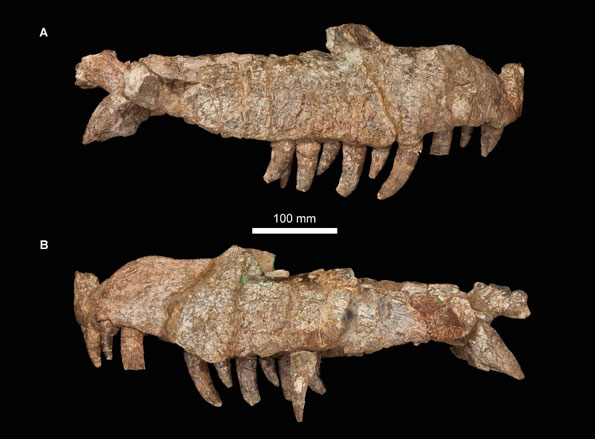
Photographs of the skull of Mambawakale ruhuhu (Holotype)

Photographs of the skull of Mambawakale ruhuhu (NHMUK R36620) in right lateral view (a) and left lateral view (b). Note scale bar = 100 mm. Picture credit: Butler et al.

Picture credit: Butler et al

The Manda Beds of Tanganyika (Tanzania)

The first, major collection of Triassic fossils from the Middle Triassic Manda Beds exposed in the Ruhuhu Basin of southern Tanzania took place in the 1930s. The research was led by the British geologist Gordon Murray Stockley. At the time Tanganyika was still part of the British Empire and the fossils were removed to the UK, Europe and to South Africa (an independent dominion of the British Empire). The archosaur fossils were studied by Alan Charig in the late 1950s, but this work was not published until after his death in 1997.

In 1963, two years after Tanganyika gained independence and was renamed Tanzania, Alan Charig participated in a British Museum (Natural History Museum) expedition to the region to find more archosaur material. This expedition was heavily reliant on Tanzanians and Zambians who helped excavate fossils, locate dig sites and built roads to permit transport of the fossils. Sadly, the efforts of these people were not recognised in published reports and no Tanzanians or Zambians were named in the publications.

The Mambawakale material consisting of a partial skull, lower jaw, cervical vertebrae and the bones from the left hand (manus), was one of the last sets of fossils from the 1963 expedition to be studied. Once the researchers had identified that these fossils represented a new genus, they wanted to recognise the previously little acknowledged contributions of the Africans, hence, the reference to the Kiswahili language for the genus name. The species epithet makes reference to the Ruhuhu Basin.

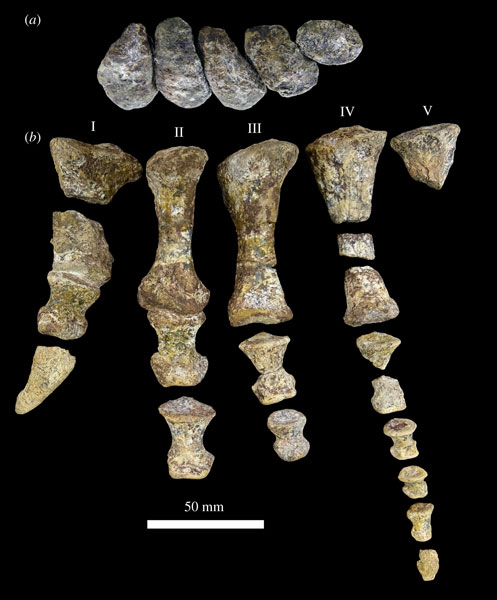
Mambawakale left manus

Left hand (manus) of the newly described pseudosuchian archosaur Mambawakale ruhuhu (specimen number NHMUK R36620). Picture credit: Butler et al.

Picture credit: Butler et al

One of the Oldest Known Archosaurs

The large skull and heterodont dentition in the anterior portion of the upper jaw, indicate that Mambawakale was a powerful animal and a formidable carnivore.

Corresponding author Richard Butler, Professor of Palaeobiology at the University of Birmingham stated:

“Mambawakale ruhuhu would have been a large and terrifying predator, which roamed across Tanzania some 240 million years ago. At around 5 metres long, it’s one of the largest predators that we know of from this period.”

Analysis of the skull led to the identification of cranial autapomorphies (unique characteristics) that permitted the research team to erect a new genus. The Mambawakale material can be confidently distinguished from all other Manda Bed archosaurs, with the possible exception of the probably very closely related Stagonosuchus nyassicus for which direct comparisons are not possible due to the lack of overlapping fossil bones.

Photographs of the skull of Mambawakale ruhuhu in (a) dorsal view and (b) ventral view

Photographs of the skull of Mambawakale ruhuhu in (a) dorsal view and (b) ventral view. Specimen number NHMUK R36620, note scale bar = 100 mm. Picture credit: Butler et al.

Picture credit: Butler et al

Professor Butler went onto add:

“Our analysis identifies Mambawakale as one of the oldest known archosaurs and an early member of the lineage that eventually evolved into modern crocodilians. It’s an exciting discovery, because identifying this animal helps us to understand the rapid early diversification of archosaurs and enables us to add a further link to the evolutionary story of modern-day crocodiles.”

Mambawakale ruhuhu life reconstruction

Life reconstruction of the newly described pseudosuchian Mambawakale ruhuhu. Only the skull, elements from the jaw and fragmentary postcranial material are known so the body shape has been created based on better-known, large pseudosuchian relatives. Picture credit: Gabriel Ugueto.

Picture credit: Gabriel Ugueto

Dating the Manda Beds

Tetrapod fossils associated with the Manda Beds have led palaeontologists to propose that the deposits date from the Anisian stage of the Middle Triassic, however, the age of these rocks remains in dispute. Some recent papers have suggested that the rocks, and therefore the fossils contained therein are actually younger and that the strata were laid down in the Late Triassic (Carnian stage).

Everything Dinosaur acknowledges the assistance of a media release from the University of Birmingham in the compilation of this article.

The scientific paper: “A new pseudosuchian archosaur, Mambawakale ruhuhu gen. et sp. nov., from the Middle Triassic Manda Beds of Tanzania” by Richard J. Butler, Vincent Fernandez, Sterling J. Nesbitt, João Vasco Leite and David J. Gower published in Royal Society Open Science.

The Everything Dinosaur website: Prehistoric Animal Models.

8 02, 2022

Rebor Deinosuchus “Swamp” Video Showcase

By |2024-10-23T22:12:52+01:00February 8th, 2022|Categories: Adobe CS5, Dinosaur Fans, Everything Dinosaur News and Updates, Everything Dinosaur Products, Everything Dinosaur videos, Main Page, Product Reviews|0 Comments

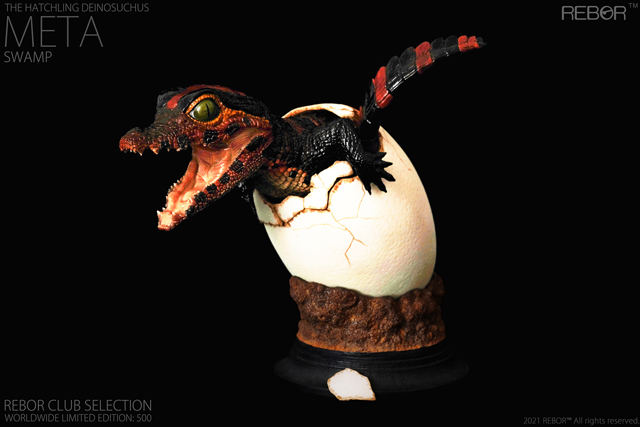
Team members at Everything Dinosaur have created another short YouTube video to highlight a prehistoric animal model that they stock. This time, it is the limited-edition Rebor Club Selection: Hatchling Deinosuchus in the swamp colour variant that has been put into the spotlight.

Video credit: Everything Dinosaur

The Everything Dinosaur website: Dinosaur Models.

Highlighting Product Features

The product video showcase is designed to highlight features and show more detail. Whilst images provided by the manufacturer and indeed photographs taken by Everything Dinosaur team members do help, a short video can give potential purchasers an excellent view of the prehistoric animal figure and help them to make a more informed purchase decision.

The Rebor Club Selection: Meta the Hatchling Deinosuchus (swamp variant) video showcase, lasts a little over 40 seconds. The total number of models made in this series is stated along with the replica’s measurements. The unique number on the base of the model is highlighted along with the Rebor packaging.

Rebor Club Selection: Meta the hatchling Deinosuchus - the Swamp Variant

The 2021 limited edition Rebor Club Selection: Meta the hatchling Deinosuchus polystone replica (swamp colour variant).

A Collectable Crocodile Figure

The Rebor Deinosuchus replica in the swamp colour variant is one of two versions available. The other version is the estuary version, which has already featured in an Everything Dinosaur product video showcase. Both limited-edition figures are highly collectable and when current stocks sell out, these models will not be put back into production.

As with the estuary colour variant, Everything Dinosaur will include a free Deinosuchus fact sheet with sales of this excellent figure from its website.

A spokesperson from Everything Dinosaur commented:

“This is the second Deinosuchus product video showcase, the YouTube video featuring the estuary variant was posted up a few days ago. Over the last few weeks, we have made a number of product video showcases that highlight Rebor models. Whilst we can’t put up videos of every single replica in the Rebor range we hope that the short videos that we have made provide customers with more information and allow them to appreciate the high level of detail associated with the Rebor range.”

To view the range of Rebor models and figures in stock at Everything Dinosaur: Rebor Models and Figures.

7 02, 2022

The New PNSO Lu Xiong the Zhuchengtyrannus

By |2024-10-23T07:32:30+01:00February 7th, 2022|Categories: Adobe CS5, Dinosaur Fans, Everything Dinosaur News and Updates, Everything Dinosaur Products, Main Page, Press Releases|0 Comments

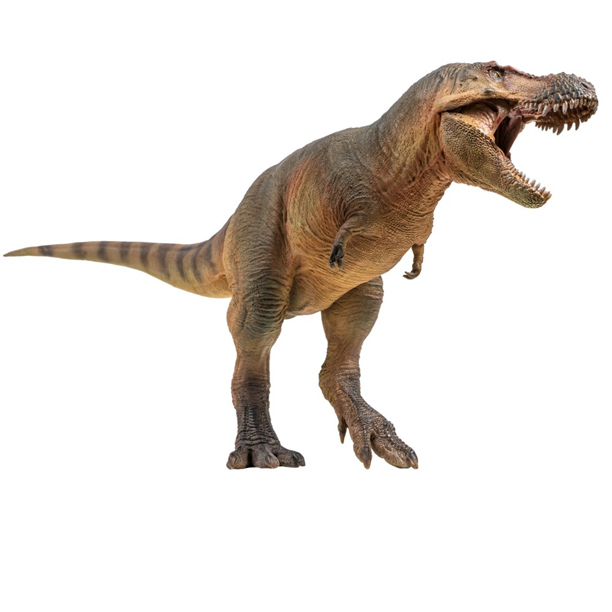
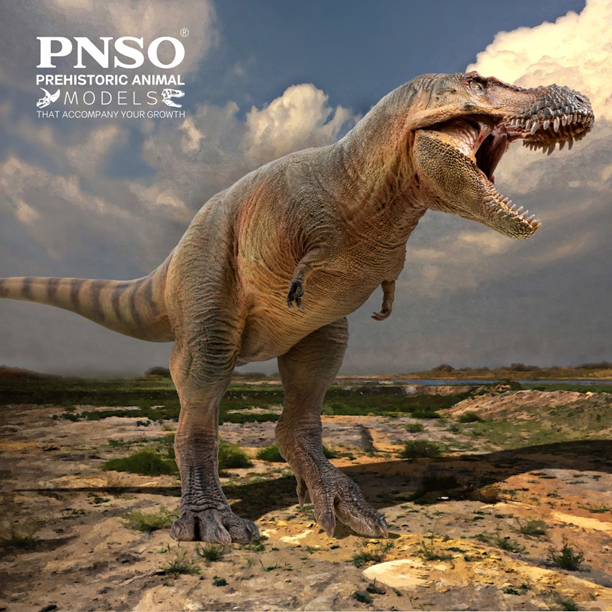
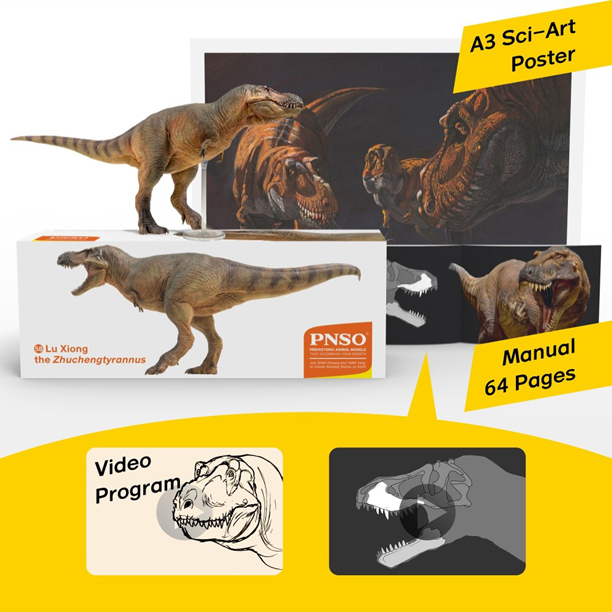
PNSO will introduce a model of the fearsome Late Cretaceous Chinese tyrannosaur Zhuchengtyrannus in early spring. The PNSO Lu Xiong the Zhuchengtyrannus will be in stock at Everything Dinosaur in March (2022). Team members were aware of this tyrannosaur model going into production and arranged to delay the loading of their shipping container on the vessel leaving China until the new Zhuchengtyrannus figure was available from the factory.

PNSO Lu Xiong the Zhuchengtyrannus dinosaur model

The PNSO Lu Xiong the Zhuchengtyrannus dinosaur model.

Zhuchengtyrannus magnus

News of the discovery and scientific description of a new taxon of giant tyrannosaur from Asia (eastern China), began to appear in media outlets around the 1st of April 2011. The discovery of a giant, Late Cretaceous predator that may have rivalled Tyrannosaurus rex in size was thought by some to be an April Fool’s joke. A point alluded to in Everything Dinosaur’s blog post announcing the discovery: A New Tyrannosaur Taxon is Described.

PNSO Zhuchengtyrannus dinosaur model

The new for 2022 PNSO Zhuchengtyrannus model.

Zhuchengtyrannus Model Measurements

The PNSO Lu Xiong the Zhuchengtyrannus dinosaur model, pronounced “zoo-cheng-tie-ran-us” measures 28.5 cm in length and it stands 11.5 cm high. PNSO have introduced two other tyrannosaurs into their mid-size model range, both were launched in 2021. There is a replica of Tarbosaurus (Chuanzi the Tarbosaurus), which is thought by many palaeontologists to represent a sister taxon to Zhuchengtyrannus (Loewen et al, 2013) and a model of the controversial genus Nanotyrannus (N. lancensis).

Model Size Comparisons

  • PNSO Lu Xiong the Zhuchengtyrannus (2022) – length 28.5 cm and height 11.5 cm.
  • The PNSO Chuanzi the Tarbosaurus (2021) – length 31 cm and height 11 cm.
  • PNSO Logan the Nanotyrannus (2021) – length 17 cm and height 6.5 cm.
PNSO Lu Xiong the Zhuchengtyrannus model measurements.

The PNSO Lu Xiong the Zhuchengtyrannus model measurements.

Colour Posters, Booklet and a QR Code

The new for 2022 PNSO Lu Xiong the Zhuchengtyrannus replica is supplied with colour posters, a 64-page booklet and the packaging has a QR code on it that links to a short video that explains how the figure was developed.

PNSO Zhuchengtyrannus supplied with booklet and posters.

The new for 2022 PNSO Lu Xiong the Zhuchengtyrannus dinosaur model is supplied with colour posters, a 64-page information booklet and the packaging has a QR code that links to a short video that explains how the figure was developed.

The award-winning Everything Dinosaur website: Dinosaur Toys.

Evidence of a Second Large Tyrannosaur from Shandong Province

The fossil material ascribed to Zhuchengtyrannus consists of a left dentary (lower jaw) and a nearly complete right maxilla (bone from the upper jaw). Both were found in a hadrosaur bonebed deposit. Calculating the size of this fearsome theropod has proved difficult, although it has been described as an apex predator.

Intriguingly, other tyrannosaur bones were found in the same bonebed. A lower jaw and a maxilla from suspected other tyrannosaurs (specimen numbers ZCDM V0030 and ZCDM V0032 respectively), were discovered. Both fossils differ from the equivalent material ascribed to Z. magnus and from all known tyrannosaurs. This suggests that at least one other large tyrannosaur was present in the palaeoenvironment.

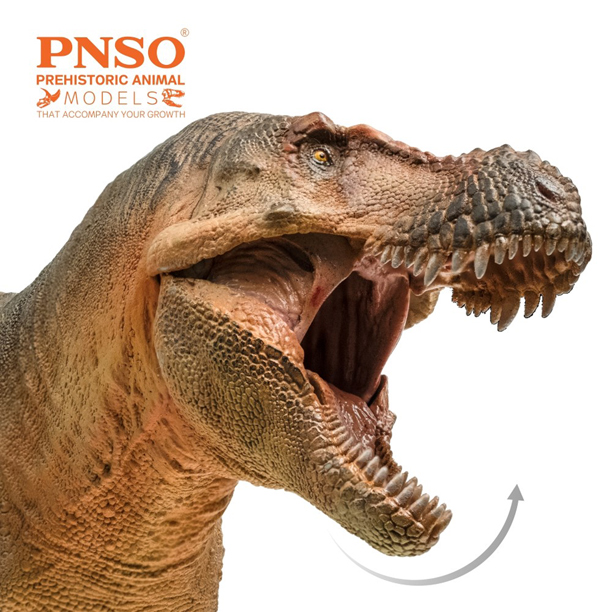
The PNSO Zhuchengtyrannus model has been equipped with an articulated lower jaw.

PNSO Lu Xiong the Zhuchengtyrannus has an articulated lower jaw.

The PNSO Lu Xiong Zhuchengtyrannus model has an articulated lower jaw.

A spokesperson from Everything Dinosaur commented that they were looking forward to the arrival of Lu Xiong the Zhuchengtyrannus dinosaur model and this figure should be in stock in March (2022).

To view the range of PNSO prehistoric animal models and figures available from Everything Dinosaur: PNSO Age of Dinosaurs.

6 02, 2022

Rebor Deinosuchus “Estuary” Video Showcase

By |2024-10-23T07:25:10+01:00February 6th, 2022|Categories: Adobe CS5, Dinosaur Fans, Everything Dinosaur News and Updates, Everything Dinosaur Products, Everything Dinosaur videos, Main Page, Product Reviews|0 Comments

Everything Dinosaur team members have produced a short video highlighting the features of the Rebor Deinosuchus model in the estuary colour scheme. The brief video, which is up on the company’s popular YouTube channel has been created so that potential customers can get a really good look at this limited-edition figure.

A spokesperson for the UK-based mail order company confirmed that they were planning to make more product showcase videos and to post them up onto Everything Dinosaur’s website.

Video credit: Everything Dinosaur

Highlighting the Deinosuchus Model

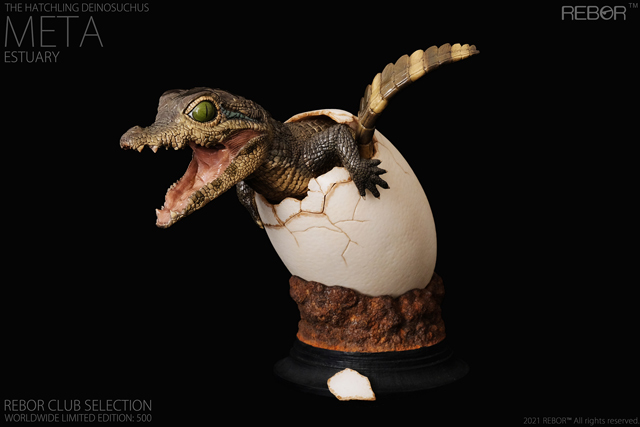
The product video showcase features the limited-edition Rebor Club Selection: Meta the Hatchling Deinosuchus in the estuary colour scheme. The short video (it lasts a little over forty seconds), provides information on the number of replicas made, the model’s measurements and highlights the packaging as well as the unique product number located on the base of the Deinosuchus figure.

Rebor Meta the hatchling Deinosuchus model (Estuary Variant0

The Rebor Club Selection: Meta the hatchling Deinosuchus is about to leave its egg! It’s very keen to get to the safety of the water.

Collecting Collectable Crocodilian Figures

The Rebor Deinosuchus replica in the estuary colour variant is one of two versions that have been manufactured. The other replica is the swamp version, which will feature in a forthcoming Everything Dinosaur product video showcase. Both limited-edition figures are highly collectable and when current stocks are sold, these models will not be put back into production.

Rebor Club Selection Deinosuchus figures

The Rebor Club Selection Deinosuchus figures – the box contents. The limited edition Estuary variant (right) and the limited edition Swamp variant (left). Picture credit: Everything Dinosaur.

Picture credit: Everything Dinosaur

Visit the Everything Dinosaur website: Prehistoric Animal Models and Toys.

As with the swamp colour variant, Everything Dinosaur team members will include a free Deinosuchus fact sheet with sales of this excellent figure from the company’s website.

A spokesperson from Everything Dinosaur stated:

“This is the first Rebor Deinosuchus Club Selection product video showcase, the YouTube video featuring the other version, the swamp variant will be posted up onto Everything Dinosaur’s YouTube channel in a few days. Over the last few weeks, we have made several product video showcases that highlight Rebor models including the recently introduced Smilodon populator figures. Whilst we are unable to put up videos of every single item in the Rebor range we hope that the short videos that we have made provide customers with more information and allow them to appreciate the excellent quality of the models within this particular product portfolio.”

To view the range of Rebor models in stock at Everything Dinosaur: Rebor Models and Figures.

3 02, 2022

PNSO Paul the Allosaurus Video Showcase

By |2024-10-22T21:58:34+01:00February 3rd, 2022|Categories: Adobe CS5, Dinosaur Fans, Everything Dinosaur Products, Everything Dinosaur videos, Main Page, Photos of Everything Dinosaur Products, Press Releases, Product Reviews|0 Comments

Everything Dinosaur team members have created a short, forty second video that highlights the PNSO Paul the Allosaurus dinosaur model. This replica of the Late Jurassic theropod Allosaurus has proved to be extremely popular amongst model collectors and dinosaur fans. Everything Dinosaur has set about creating short YouTube videos that are between thirty to sixty seconds in length that feature some of the prehistoric animal models that the UK-based company stocks.

The PNSO Paul the Allosaurus figure has been a top seller since it was introduced last year, so it was an obvious candidate for the company’s video showcase project.

Video credit: Everything Dinosaur

The Everything Dinosaur website: Dinosaur Models.

PNSO Paul the Allosaurus

Introduced in 2021, part of a substantial an enlargement of the PNSO not-to-scale mid-size model range, Paul the Allosaurus is also a firm favourite amongst Everything Dinosaur team members. The video showcase shows the figure on a turntable and demonstrates the articulated jaw. The packaging is shown and a team member holds the model so the size of the figure can be easily assessed. The model measurements (approximately 25 cm in length and around 9 cm in height), are also stated in the brief video.

PNSO Paul the Allosaurus

PNSO Paul the Allosaurus dinosaur model in lateral view.

Creating Videos to Help Customers

These short videos are designed to provide a “flavour” of the figure. The Everything Dinosaur website (and this blog), puts up lots of images of prehistoric animal models, but customers have requested videos and team members are busy compiling a library of short videos to provide customers with more information and to help them to make informed purchase decisions.

PNSO Paul the Allosaurus dinosaur model

The new for 2021 PNSO Paul the Allosaurus dinosaur model has an articulated lower jaw, just like the majority of the theropod figures that PNSO have produced in the larger size model series.

To view the range of PNSO prehistoric animal models and figures available from Everything Dinosaur: PNSO Age of Dinosaurs Models and Figures.

1 02, 2022

Rare Dinosaur Tracksite Damaged by Construction Crew

By |2024-10-22T21:40:18+01:00February 1st, 2022|Categories: Dinosaur and Prehistoric Animal News Stories, Dinosaur Fans, Main Page, Palaeontological articles, Photos/Pictures of Fossils|0 Comments

Reports emerged over the weekend that a hugely significant dinosaur tracksite near to Moab in Utah had been damaged by Bureau of Land Management (BLM) contractors as they attempted to build a raised concrete and rail walkway at the site.  Team members were saddened to hear the news of a rare dinosaur tracksite damaged by a construction team.

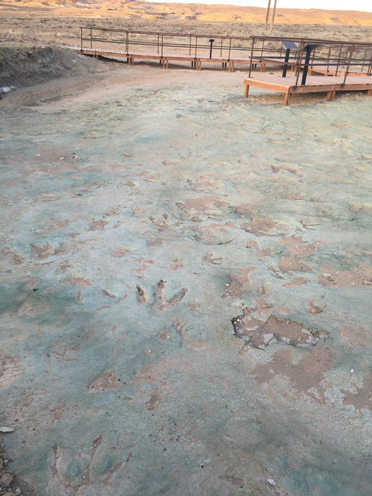
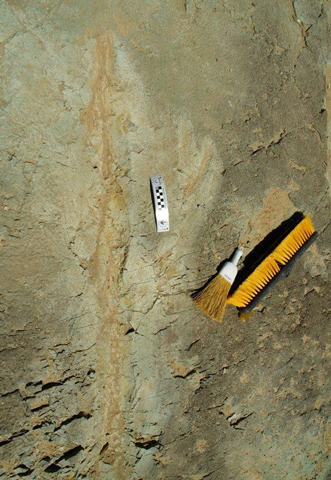
The Mill Canyon dinosaur tracksite was opened as a visitor attraction in 2016. The location features more than 200 dinosaur tracks representing at least 8 different types of dinosaur, a record of activity close to a water source some 112 million years ago (Albian faunal stage of the Early Cretaceous). Over the weekend, reports emerged on social media that a Bureau of Land Management project to replace the wooden boardwalk with a more robust structure had encountered problems. It has been alleged that a mechanical digger had driven over the exceptionally rare trace fossils and damaged as much of 30% of the site.

Mill Canyon tracksite.

At least six different dinosaur tracks have been deciphered at Moab (Utah). Picture credit: Bureau of Land Management.

Picture credit: Bureau of Land Management

Cease and Desist

It has been reported in the media that the Center for Biological Diversity (based in Tucson, Arizona), sent a cease-and-desist letter to the U.S. Bureau of Land Management’s Utah office, requiring the agency to halt the destruction with immediate effect.

Commenting on the alleged damage, Patrick Donnelly, Great Basin Director at the Center for Biological Diversity stated:

“I’m absolutely outraged that the BLM has apparently destroyed one of the world’s most important paleontological resources. This careless disregard for these irreplaceable traces of the past is appalling. It really calls into question the Bureau’s competence as a land-management agency.”

Trace fossil - crocodile tail drag.

The tail drag made by an ancient crocodile preserved in the Red Ruby mudstones of the Cedar Mountain Formation (Utah). Picture credit: Bureau of Land Management.

Picture credit: Bureau of Land Management

Dinosaur Tracksite Damaged

Last year, the Bureau of Land Management approved an environmental assessment to replace the existing boardwalk with a raised concrete-and-steel trail. The document explained that any risks to the dinosaur tracks would be mitigated by flagging sensitive areas and providing “onsite inspections during construction.” Photos shared on social media show a mechanical digger left on the site, tyre tracks damaging dinosaur prints and a rare crocodilian resting trace”.

The cease-and-desist letter documents the destruction of these rare artefacts and states that the Paleontological Resources Preservation Act of 2009 has been violated. Furthermore, the Bureau of Land Management may also be in breach of the National Environmental Policy Act and the Federal Lands Policy and Management Act for neglecting to adhere to project approval protocols.

A spokesperson from Everything Dinosaur expressed dismay at this development and went onto state:

“We have blogged about fossil thefts and vandalism to very important palaeontological sites, many of our posts relate to sites in Utah. It is extremely sad to have to write about this very unfortunate incident. Let’s hope that any damage that has occurred can be mitigated and this extremely significant trace fossil site continues to enjoy the protection that it deserves.”

To read Everything Dinosaur’s original post about the opening of the trackway to visitors: New Dinosaur Track Exhibit Opened.

30 01, 2022

Rebor Smilodon “Ice Age” Video Showcase

By |2024-10-16T07:34:03+01:00January 30th, 2022|Categories: Adobe CS5, Dinosaur Fans, Everything Dinosaur News and Updates, Everything Dinosaur Products, Everything Dinosaur videos, Main Page|0 Comments

Team members at Everything Dinosaur have produced their second short YouTube video highlighting the features of a prehistoric animal model that the company has in stock. The first video showcase featured the Rebor Smilodon populator in the plain colour scheme, so it is only fitting that the second video in this new series should focus on another Rebor Smilodon figure, the Ice Age colour variant.

The forty-five second video shows the model, packaging and box contents. How easy it is to change the heads is demonstrated and the Smilodon figure placed on a revolving turntable is shown with the open jaws head and then with the closed head attachment.

Video credit: Everything Dinosaur

The Everything Dinosaur website: Prehistoric Animal Toys.

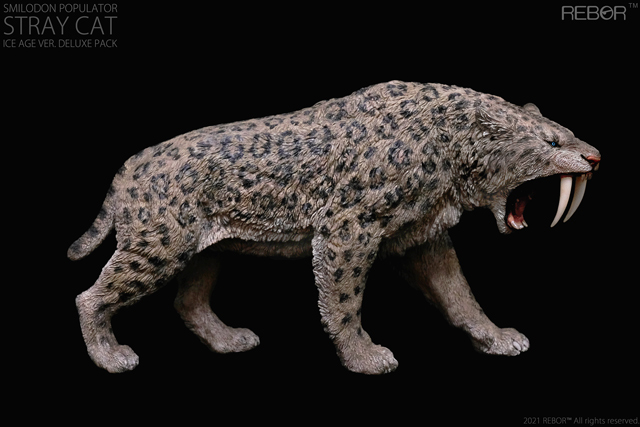
Rebor Smilodon populator Stray Cat in the Ice Age Colour Scheme

The captions in the video provide details of the model’s measurements and confirm that the Smilodon figure has a declared scale of 1:11. Team members took advice from Rebor and from viewers of the first Smilodon video showcase to improve the lighting and exposure on the turntable footage to permit the colouration of the model to be shown clearly.

Rebor Smilodon populator Stray Cat Ice Age model

The Rebor Smilodon populator Stray Cat Ice Age colour variant.

A spokesperson from Everything Dinosaur commented that the Rebor Smilodon populator Stray Cat model in the Ice Age colour scheme had been selected for the second video showcase after the very positive feedback the company had received after their first YouTube video which featured the plain colour variant.

The spokesperson went onto add:

“We intend to create more showcase videos of models and figures. Our plan is to embed these videos into the product pages of our company website so visitors can see videos as well as images of the models that we sell. We aim to provide as much information as possible to help customers to make an informed purchase decision.”

To view the Rebor range of models and figures available from Everything Dinosaur: Rebor Models and Figures.

To visit Everything Dinosaur’s YouTube channel and subscribe: Subscribe to Everything Dinosaur on YouTube.

28 01, 2022

Rebor Smilodon “Plain” Video Showcase

By |2024-10-15T17:26:58+01:00January 28th, 2022|Categories: Adobe CS5, Dinosaur Fans, Everything Dinosaur News and Updates, Everything Dinosaur Products, Everything Dinosaur videos, Main Page|0 Comments

A few days ago, team members at Everything Dinosaur announced that they were looking at adding short videos to the company’s website that could highlight prehistoric animal models and their features. A video was posted on Everything Dinosaur’s YouTube channel outlining these plans and asking for feedback on the idea. This YouTube video also featured the first of the Everything Dinosaur products to get placed into the spotlight, the Rebor Smilodon populator Stray Cat in the plain colour variant.

This forty-five second video showcase has been posted up on the channel as a separate, stand-alone item and it can be viewed (see below).

Video credit: Everything Dinosaur

Demonstrating the Model

The idea behind these short, 30-60 second videos is that we can help customers to make informed purchase decisions. We do put up lots of images on our product pages, but the video will help us to demonstrate some of the features of the figure. For example, we can show the articulated jaw, poseable arms and the flexible tail. We can demonstrate how the model is put together as well as showing the box contents and the packaging.

These videos will help customers to get a really good look at the figure they are considering purchasing. Viewers will be able to gauge the quality and detail of a replica.

Feedback has been overwhelmingly positive and we are grateful for all the comments that we have received. A second product video showcase, this time featuring the Rebor Smilodon populator Stray Cat in the Ice Age colour scheme will be posted up shortly.

Rebor Smilodon populator Stray Cat Ice Age model

The Rebor Smilodon populator Stray Cat Ice Age colour variant.

A spokesperson from Everything Dinosaur commented:

“The first video showcase featuring a prehistoric animal model stocked by Everything Dinosaur has been posted up. The video features the Rebor Smilodon populator Stray Cat in the plain colour scheme. We intend to post up more videos in the coming weeks.”

To view the range of Rebor models and figures available from Everything Dinosaur, including the Smilodon populator replicas: Rebor Models and Prehistoric Animals.

27 01, 2022

The Popular Papo Pentaceratops Gets a Display Base

By |2024-10-15T17:22:57+01:00January 27th, 2022|Categories: Adobe CS5, Dinosaur Fans, Everything Dinosaur Products, Main Page, Photos of Everything Dinosaur Products|0 Comments

Our thanks to prehistoric animal model fan and collector James who sent into Everything Dinosaur some pictures of the display base he had made for his Papo Pentaceratops model. The clever design of the Papo Pentaceratops permits collectors to display this figure as a quadruped or in a rearing pose, the Pentaceratops being balanced on its hind legs supported by its tail. James has added a base to the figure and created a little prehistoric scene in which this large, horned dinosaur is confronted by a crocodilian.

Papo Pentaceratops with display base

The Papo Pentaceratops dinosaur model is confronted by a crocodilian. Although alarmed by the presence of a predator this large, ornithischian dinosaur has nothing to fear from the croc. Picture credit: James.

Picture credit: James

Crocodilians Prey on Dinosaurs

Palaeontologists have named and described a wide range of different crocodilians and their close relatives from fossils found in Upper Cretaceous rocks in North America. Pentaceratops fossils are known from the Kirtland Formation (late Campanian faunal stage), in New Mexico. The sandstones and mudstones that predominately make up these deposits were laid down in a wide, alluvial flood plain close to the western shore of a shallow sea that split North America into two landmasses – Appalachia to the east and Laramidia to the west.

Papo Pentaceratops Display Base

The Pentaceratops display base. The horned dinosaur is alarmed by the presence of the crocodilian. Picture credit: James.

Picture credit: James

Several crocodilians are known from the Kirtland Formation (Denazinosuchus, Leidyosuchus and Brachychampsa), but these genera would have posed no threat to a fully-grown Pentaceratops, or indeed any large plant-eating dinosaur.

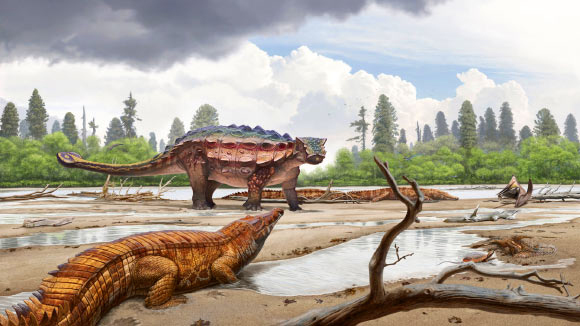
Akainacephalus johnsoni.

The Akainacephalus drawing shows some of the fauna associated with the dig site.

Picture credit: Andrey Atuchin (Denver Museum of Nature and Science)

An adult Deinosuchus could have been a threat to a Pentaceratops. Although this giant alligatoroid lived during the Campanian and its fossils are associated with estuarine environments of the Western Interior Seaway, team members at Everything Dinosaur are unaware of any Deinosuchus fossils having been excavated from Kirtland Formation deposits. Still, it is highly likely that dinosaurs such as Pentaceratops would have frequently come across large crocodilians at water holes or when attempting to cross rivers, so some interspecific interaction is entirely plausible.

Papo Pentaceratops display base.

A close-up view of the Papo Pentaceratops display base. Picture credit: James.

Picture credit: James

Papo Pentaceratops

The Papo Pentaceratops has proved to be a popular model, since it was introduced into the Papo “Dinosaures” range in 2019. A spokesperson from Everything Dinosaur stated that they had been delighted to receive the images of the dinosaur and praised the model collector for creating such a carefully constructed prehistoric scene.

Visit the Everything Dinosaur website: Dinosaur Toys.

Papo Pentaceratops dinosaur model.

The Papo Pentaceratops dinosaur model. Picture credit: Everything Dinosaur.

Picture credit: Everything Dinosaur

To view the Papo Pentaceratops and the rest of the Papo models in stock at Everything Dinosaur: Papo Dinosaurs and Prehistoric Animal Models.

Go to Top