All about dinosaurs, fossils and prehistoric animals by Everything Dinosaur team members.

News stories and articles that do not necessarily feature extinct animals.

19 05, 2014

New Crocodile Attacks Reported

By |2024-02-25T07:38:47+00:00May 19th, 2014|Categories: Animal News Stories, Main Page|2 Comments

More Crocodile Attack Fatalities

A Nile crocodile (Crocodylus niloticus) is reported to have attacked and killed a woman whilst she was collecting reeds in the Shire River (Mangochi district, southern Malawi).  Mangochi Police Station Public Relations Officer, Inspector Rodrick Maida stated that the deceased had been in the river gathering reeds with two female friends when the crocodile grabbed her.  The women were unable to free the victim from the crocodile’s grip and ran to nearby houses to fetch help.

Crocodile Attacks

A search conducted by a group of villagers from Mtalimanja also ended in tragedy when Walani Lawe (aged 51) was attacked and severely injured whilst attempting to retrieve the woman’s body.  The dead woman’s body has yet to be recovered.  Mr Lawe was taken to Mangochi District Hospital and it has been reported that he is responding well to treatment.

This attack comes just a few days after another fatal crocodile attack this time in Papua New Guinea and the species concerned was a Saltwater or Estuarine crocodile (C. porosus).  Several media sources have reported that a four-metre-long reptile attacked and killed an eleven year old boy whilst he fished with his parents.  The incident took place on the Siloura River in Gulf Province, in the southern part of Papua New Guinea. The attack occurred on Thursday afternoon.

Authorities Make Statement

Police Commander Lincoln Gerari, said in the statement that the boy had been identified as Melas Mero.  Following the fatal attack, a large crocodile was tracked by hunters and killed.   The boy’s limbs and part of the hips were found inside the crocodile’s stomach.  Other body parts have been recovered by the police team.

Describing the sudden attack, the Commander explained:

“The crocodile swept the boy with its tail and then attacked the defenceless child.”

This is the second fatal crocodile attack to be reported from Papua New Guinea in 2014.  On January 1st a man was killed by a Saltwater Crocodile at Rawa Bay in North Bougainville.   According to a Darwin based, crocodile data recording team, this is the seventy-fifth crocodile attack recorded in Papua New Guinea since 1958.  Of these seventy-five attacks, sixty-five have proved fatal.

25 04, 2014

Important News as Third Crocodile Attack Fatality in Vadodara (Gujarat State)

By |2024-05-02T06:21:30+01:00April 25th, 2014|Categories: Animal News Stories, Main Page|2 Comments

Mugger Crocodiles Protecting Nests Blamed for Fatal Attacks

Indian media is reporting a third crocodile attack in as many weeks in and around the city of Vadodara in the state of Gujarat (north-western India).  A sixty year old man was attacked close to the Vishwamitri river on Friday afternoon, despite desperate attempts from local residents and members of the fire brigade, the man was pronounced dead at the scene.  The crocodile initially refused to relinquish the body, but persistent efforts finally succeeded in recovering the victim who has yet to be formally identified.

The Vishwamitri River

The Vishwamitri river runs through the city of Vadodara and recent surveys suggest that there is a healthy population of Mugger crocodiles (Crocodylus palustris) living in the river.  The Mugger or Marsh crocodile is the most common crocodile species found in India and although these reptiles predominately eat fish, snakes, turtles and small mammals, they have been known to attack people and livestock.   However, the spate of recent crocodile attacks has led city officials to issue notices and warnings with regards to the potential threat of an attack.

An elderly woman was killed by a crocodile three weeks ago, when she was seized close to a lock near the village of Savli.  A teenage boy was killed on April 20th when he fell into the Vishwamitri when trying to cross the river on a wooden plank.

Crocodile Attacks

The Mugger crocodile can grow up to around 4.5 metres in length, with adult males growing to larger sizes than females.  They are distributed throughout the Indian sub-continent and can be found in Sri Lanka, Bangladesh, Nepal, Pakistan with a small population reported from southern Iran.   The recent spate of attacks has been blamed on female crocodiles being extra aggressive at this time of year (spring).  Many female crocodiles might be guarding nests and as a result, they will instinctively attack any creature that wanders too near the eggs.  Animal activists and conservation groups have urged local people to avoid areas where crocodiles are known to nest, not to venture close to the riverbanks and not to go out at night near bodies of freshwater.

A recent study of Mugger crocodiles and American alligators (Alligator mississippiensis) by an international team of scientists proved the long held belief that these species use tools to help attract prey close enough for them to grab in their powerful jaws.  These two species of crocodylians are not closely related but both the American alligator and the Mugger find sticks and balance them on the top of their jaws in a bid to lure birds to perch on them and to steal the sticks during the nesting season when many wading birds are seeking sticks and other materials to help them build nests.

A paper on this observed behaviour was published in the academic journal “Ethology Ecology and Evolution”.

This is the only known incidence of tool use in the Reptilia.

Boy from Zimbabwe Attacked by Nile Crocodile

A twelve year old boy from Zimbabwe was killed by a Nile crocodile  (Crocodylus niloticus) on April 22nd and earlier this month a fisherman was mauled to death in Belize with an American crocodile (Crocodylus acutus) blamed for the assault.  A Nile crocodile which is believed to have been responsible for the deaths of at least six people was captured by Ugandan game wardens.  The crocodile measured nearly six metres in length and is estimated to have been at least eighty years old.

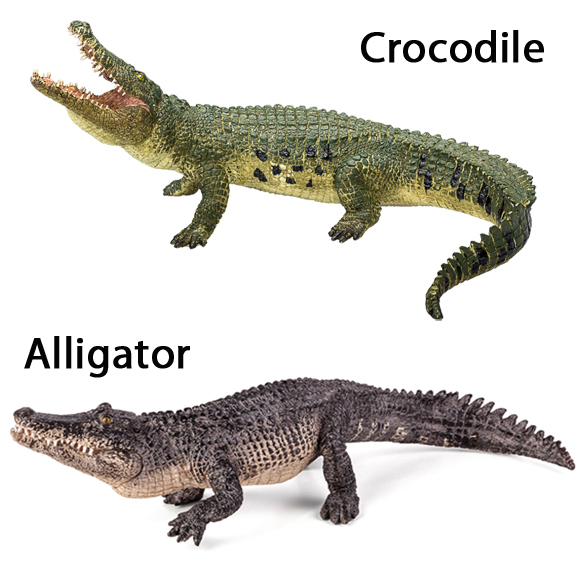
The Differene Between Crocodiles and Alligators

Crocodile and Alligator comparison.

Crocodile (top) and Alligator (bottom).

We are grateful to Brandon who pointed out that the attack reported in Belize was not from an American Crocodile but from a Morelet’s crocodile (Mexican crocodile).  We thank him for the correction.

28 03, 2014

Australia Rejects Saltwater Crocodile Hunting Ban in Important Federal Government Ruling

By |2024-05-02T10:09:05+01:00March 28th, 2014|Categories: Animal News Stories, Main Page|0 Comments

Crocodile “Trophy Hunting” Plan Turned Down

A controversial plan to allow safari hunters in Australia’s Northern Territory state to kill crocodiles, has been rejected by the federal government in Canberra.  This is the latest set back for campaigners demanding a sustained and extensive cull of the many large, Saltwater crocodiles that inhabit water courses in the Northern Territory.

Saltwater Crocodile

Minister for the Environment Greg Hunt said “trophy hunting” would not be appropriate.  The proposal, which was backed by the authorities and governors in Northern Territory, would have permitted up to fifty crocodiles to be shot for sport.  Currently, around five hundred crocodiles are culled in the region every year.

Those campaigners that put the proposal forward in the first place, argue the plan would bring in much-needed income for some of the indigenous people in the region.   The ability to put on such hunts would attract a lot of interest from shooting enthusiasts and this would give the State a considerable boost to its tourist incomes, but Greg Hunt’s decision to reject the plan has angered some Territorians living in some parts of Australia’s remote outback.

Bess Price, Minister for Wildlife and Parks commented:

“Greg Hunt has made a decision which will do nothing to improve the lives of indigenous Territorians living in remote communities.”

Crocodylus porosus

Saltwater crocodiles, otherwise known as Estuarine crocodiles (Crocodylus porosus) can grow to a length in excess of seven metres and large males can weigh more than a tonne.  They are responsible for a number of attacks on people, pets and livestock in Australia each year, their numbers having bounced back dramatically since a hunting ban was imposed in 1971.

A number of these attacks prove fatal, once these crocodiles are over five feet in length they are regarded as man-eaters.  In January, two crocodiles were shot by park rangers as they tried to recover the body of a twelve year old boy that had been attacked.  In August of last year, team members from Everything Dinosaur reported on the recovery of the body of a twenty-six year old man who had been killed by a crocodile whilst attempting to swim across the Mary River during a birthday party.

Visit Everything Dinosaur’s website for models and replicas of archosaurs including ancient crocodilians: Ancient Archosaurs Models and Replicas.

7 02, 2014

Museum Victoria Scientists Discover New Species Thanks to Robotic Submersible

By |2023-03-09T15:02:32+00:00February 7th, 2014|Categories: Animal News Stories|0 Comments

Remotely Operated Deep Sea Vehicle Explores the Ocean’s Depths

Three new species of sea cucumber have been discovered by Museum Victoria scientists almost a thousand metres beneath the surface of the ocean.  The sea cucumbers were discovered on a British-led expedition for new life on seamounts and hydrothermal vents 1500 kilometres  (940 miles) south of the island of Madagascar.  The project involved more than twenty international marine engineers and scientists, including Museum Victoria marine biologists Mark O’Loughlin and Melanie Mackenzie.

Sea Cucumbers

Commenting on the deep sea exploration mission, O’Loughlin stated:

“We were able to describe three species of sea cucumber totally new to science.  New technology provided the very rare opportunity to publish colour photos of the new species for fellow scientists.”

The identification of the sea cucumbers was made possible by the expedition’s remotely operated vehicle, or ROV, a remote-controlled robot capable of traversing the ocean floor, collecting samples, and taking video and photographs.  Operators back on the ship control the ROV’s robotic arm, guiding it to collect specimens as they appear on a video screen.  Samples are then sorted and preserved by the scientific team as part of this marine study.

The Echinodermata

Sea cucumbers belong to the phylum called Echinodermata which also includes sea urchins, crinoids and starfish.  Sea cucumbers are a very ancient marine animal, so named as their elongated bodies superficially look-like a cucumber in appearance, although our team members at Everything Dinosaur can find no resemblance themselves.  These animals probably evolved in the Cambrian but their fossil preservation potential is relatively poor and very few fossil specimens have been found when compared to other members of the Echinodermata.

Melanie Mackenzie added:

“Specimens often lose their colour during the preservation process, so by the time they’re back at the lab, they look completely different.  The ROV allows us to not only access new environments and take samples, but also to take video and photographs of animals in their natural environments.”

Small Remote Operated Vehicle

The ROV is about the size of a small, family car  and can work at depths of up to six kilometres (over three and a half miles), opening up a whole new world for scientists.  But while the ROV is useful in exploring new environments, O’Loughlin insists that it is just one of many research tools available to marine scientists.

He stated:

“You still need the scientific expertise to interpret what you find down there, which is what we brought to this collaboration.  We’re proud to belong to a global community of such esteemed institutions.”

The project was led by Professor Alex Rogers (Oxford University) and funded through a grant from the UK-based Natural Environment Research Council.  The three new sea cucumbers will be housed at the British Museum of Natural History (London) for future research.

Australian scientists will soon have greater access to ROV technology, with the Marine National Facility’s new research vessel called “Investigator” due to be launched this year.

Everything Dinosaur acknowledges the support of Museum Victoria in the production of this article.

Visit Everything Dinosaur’s award-winning website: Everything Dinosaur.

12 01, 2014

In Praise of David Attenborough’s Life on Earth

By |2023-03-02T11:35:19+00:00January 12th, 2014|Categories: Animal News Stories, Everything Dinosaur News and Updates, Press Releases|0 Comments

BBC Television Series “Life on Earth” Still Impresses

The BBC are repeating on Saturday morning (BBC 2), the ground breaking television series “Life on Earth”.  This thirteen part television series was first broadcast in 1979, the first episode entitled “The Infinite Variety” was first aired in the United Kingdom on the 16th January 1979.  In essence, this television series, voted one of the best television programmes of all time by British viewers, is celebrating its 35th birthday this week.

Life on Earth: A Natural History

“Life on Earth: A Natural History”, narrated by David Attenborough may have reached middle age but the amazing imagery, fantastic photography and superb commentary makes it as fresh today as it was all those years ago.  It was the first in a long-line of natural history programmes made by the BBC and narrated by Sir David.  The format is very simple, the programmes, designed to fit into a typical quarter-year for a scheduler (hence thirteen episodes), traces the history of life on our planet with each programme telling the story of a major group of organisms or major evolutionary development.

Life on Earth Celebrates Its 35th Birthday This Week

Life on Earth first shown in 1979.

Life on Earth first shown in 1979.

Picture credit: BBC

The series sees, Sir David travelling the world and it was made in conjunction with Warner Bros. and Reiner Moritz Productions.  The soundtrack music, which itself was highly regarded, was composed by Edward Williams.  For team members at Everything Dinosaur, this television series remains right up there with some of the best programmes that the BBC has ever made.  Some of us can recall watching this programme when it first was shown back in 1979.  It helped fuel our interest in the natural world and evolution.  Although, some of the information and imagery used in this television series has now been made redundant as our understanding of evolution and fossils has progressed somewhat, it is still compulsive viewing.

BAFTA Television Awards

“Life on Earth” won the Broadcasting Press Guild Award for Best Documentary Series, it was also nominated for four BAFTA television awards in the following categories:

  • Best Television Factual Series (lost to Circuit 11 Miami)
  • Television Craft/Film Cameraman (lost to Tinker, Tailor, Soldier, Spy)
  • Television Craft/Film Editor (we are not sure who won the BAFTA in 1980)
  • Television Craft/Film Sound (lost to Speed King)

We are pleased that the dedicated team behind this series received recognition for their superb work, we think Sir David Attenborough was granted Fellowship of the BAFTA academy in 1980.  However, for us this television series is still a great pleasure to watch and it does bring back happy memories of when we first saw these programmes more than thirty years ago.

Visit Everything Dinosaur’s award-winning website: Everything Dinosaur.

11 01, 2014

New Species of Slender-nosed Crocodile Discovered in Africa

By |2023-03-02T11:29:57+00:00January 11th, 2014|Categories: Animal News Stories|1 Comment

African Crocodile Diversity Just Gets More and More Complicated

It seems that today’s extant reptiles have still got a lot to teach us about their phylogeny and taxonomic relationships as a team of scientists studying crocodiles in central Africa have discovered a new species of these ancient creatures.  According to a scientific paper published in the academic journal “The Proceedings of the Royal Society B (Biology)”, the rare Slender-snouted crocodile (Mescistops cataphractus) is actually two species and these two species diverged from each other at least seven million years ago.

Slender-nosed Crocodile

An analysis of molecular data and genetic samples provided the University of Florida team, who working in collaboration with scientists from Gabon, with the evidence to suggest that there are two distinct species present in the central African crocodile population.

A New Species of Slender-nosed Crocodile May Have Been Identified

New species of Crocodilian discovered.

New species of crocodilian discovered.

Picture credit: Matt Shirley

Describing how the discovery was made, lead author of the paper Matthew Shirley stated:

“It was simply a matter of going to places people before us never wanted to go or thought possible to go.”

African Crocodiles

This part of Africa had been beset with civil war, local militias and lack of infrastructure, the sites where Slender-nosed crocodiles could still be found were remote and very difficult to get access to.

Post doctorate researcher Shirley and his team have not only identified two genetically different species, but they have noted anatomical and physical differences too.

The researcher explained:

“There were actually two different species of Slender-snouted crocodile, as well as one sub-species, described in the past.  Over the years these were all synonymised with Mecistops cataphractus, but we are now faced with the necessity of determining if any of these previous names is equally applicable to the new taxa.”

When it comes to the scientific names of organisms, any binomial name attributed in the past may take precedence, it will be a question of trawling through the archives to see if such a name exists.  This new discovery has very important implications for the conservation of these small, Africa crocodiles.  The split between the two species suggests that the West African Slender-nosed crocodile is on the verge of extinction.

Matthew Shirley commented on how vulnerable to extinction these crocodiles are:

“Over the past eight years of effort I and others have detected less than fifty Slender-snouted crocodiles in the wild in West Africa, and of these less than seven were adults, compared to nearly 2,000 in Central Africa over the same time period and survey effort.  We recently evaluated its status for the 2014 IUCN [International Union for the Conservation of Nature] Red List and found that it is Critically Endangered making it one of the top crocodilian conservation priorities globally along with  the decline of Gharials, Siamese and Orinoco crocodiles.”

Critically Endangered Crocodiles

The research team called for drastic measures to help these critically endangered crocodiles.  It has been suggested that captive breeding programmes should be introduced with what crocodiles left in the wild being captured and put into zoos to permit the population to be boosted before any animals bred in captivity are released back into the wild.

Recently, crocodiles native to the African continent have gone through a considerable taxonomic revision.  Up until recently only three species of crocodilian were recognised in Africa, the very dangerous Nile crocodile (Crocodylus niloticus), the Slender-snouted nosed crocodile (Mescistops cataphractus) and the Dwarf crocodile, also often referred to as Broad-snouted crocodile (Osteolaemus tetraspis).  Studies (also involving staff from Florida University), have suggested that there are two distinct Nile crocodile species, and three, genetically different types of Dwarf crocodile.

If the scientific community recognises all of these new species then the species count for Africa will jump from three to seven.  These changes will mean a re-evaluation of total crocodile numbers in the wild and will have implications for future crocodilian conservation.

The scientific paper: “Rigorous approaches to species delimitation have significant implications for African crocodilian systematics and conservation” by Matthew H. Shirley, Kent A. Vliet, Amanda N. Carr and James D. Austin published in the Proceedings of the Royal Society B.

11 11, 2013

DNA Study Suggest “Man’s Best Friend” Domesticated in Europe

By |2023-03-01T09:04:35+00:00November 11th, 2013|Categories: Animal News Stories, Dinosaur and Prehistoric Animal News Stories|0 Comments

European Origin of “Domesticated Dogs” At Least 18,000 Years Ago

The results of an extensive study of wolves and domesticated dogs including analysis of fossil material has led a team of scientists to conclude that dogs were first domesticated in Europe.  The likes of Charles Darwin did not know, after all, genetics was a branch of science that was unknown to the co-author of the theory of natural selection (Darwin and Wallace jointly presented their ideas in 1858 to the Linnean Society), but it is now widely accepted that all domesticated dogs are descended from the Grey Wolf (Canis lupus).  Just when dogs became a part of people’s lives and started to work in partnership with humans is a hotly debated subject.

Domesticated Dogs

The emergence of a form of “domesticated” dog has now been mapped and this new study points to an origin from Europe and at least 18,000 years ago.  It all depends on where you are in the world as to whether 18,000 years ago is classed as the Mesolithic “Middle Stone Age” or the Old Stone Age (Palaeolithic), as these time periods are defined by the development and use of tools and other artefacts by indigenous populations, either way, mankind’s relationship with dogs goes back a very long way.

The team of researchers from Turku University (Finland) have somewhat “muddied the waters” when it comes to assessing when and where dogs began to have a much closer relationship with our own species.  Earlier studies had indicated that wolves began to attach themselves with human settlements in the Middle East or perhaps in the near Asia region as recently as 15,000 years ago.

This new data, based on the DNA samples, pushes our relationship with “man’s best friend” further back into prehistory and locates the first domestication as being in Europe.

Scientists Looked at Fossil Evidence from Dogs Buried Close to Human Settlements

Analysis of DNA may hold the key to unravelling the mystery of dog domestication.

Examining Fossil Evidence

However, fossil evidence has challenged this earlier research and indeed, a remarkable excavation site in southern Siberia, dated to around 33,000 years ago (definitely Palaeolithic but who’s counting), puts the date of dog domestication, or at least descendants of wolves having a close relationship with mankind, much further back in time than even this new Finnish study suggests.

To read an article about the discoveries from the southern Siberian dig site: It’s a Dog’s Life!

Studying Mitochondrial Genomes

One of the problems associated with trying to identify exactly where and when dogs began to live alongside humans is that palaeontologists have found some distinctly dog-looking fossil evidence in various sites around both the Old and the New World.  For this research, the scientists looked at the mitochondrial genomes from present-day dogs and wolves, as well as from eighteen fossil Canids, whose remains date from between 1,000 and more than 36,000 years old.

Dr Olaf Thalmann (Turku University) and his colleagues used genetic sequences from a wide range of fossil and extant sources in order to gain an understanding of the great diversity of dog breeds around today and how they relate to the remains of dogs excavated from various fossil sites.  The analysis revealed that modern dogs are most closely related to ancient European wolves or dogs, they are not closely related to any of the wolf groups from outside Europe.  Intriguingly, the research suggests that domesticated dogs have a link with a strain of ancient European wolf, one that is extinct.

When Did Dogs Become Domesticated?

The proposed “start point” for domestication going back beyond 18,000 years is certainly fascinating.  It suggests that dogs began to separate out of wolf populations when our species was nomadic.  Dog domestication may actually have occurred long before we began to settle in farming communities.  It seems that dogs may have come “walkies” with us when we were very much hunters and gatherers.

A spokes person from Everything Dinosaur commented:

“Both wolves and ourselves are diurnal hunters, perhaps the wolves that were the ancestors of the first domesticated dogs followed human hunting trips, to feed off the scraps that we left behind from the hunting of large, herbivorous mammals like Elk, Ox, Mammoth and Woolly Rhino.  Or indeed, it could have been the other way round with human hunting parties scavenging the kills of wolf packs.”

Wolves and Humans

Over time, wolves and humans began to tolerate each other’s presence and the first steps on the long road to mutual co-operation and subsequent domestication were taken.

Explaining some of the reasoning behind the team’s work, Dr Thalmann stated:

“You can see how the wolves benefitted from living near humans because they got to the carcases, but humans too would have benefitted.  You have to remember that 18,800 to 32,000 years ago, Europe had much bigger predators than even the wolves, animals such as bears and hyenas.  You can imagine that having wolves living close to you might prove to be a very useful alarm system.  It is a plausible scenario for the origin of the domestication of dogs.”

The precise details surrounding the origin of today’s domesticated canine remain unclear.  The genetic markers that can be traced are extremely difficult to interpret, not helped that due to mankind’s movements, dog populations have become very mixed over time.  In addition, it seems that some populations of dogs may have back-bred with wild wolves causing further confusion.  This particular study and indeed, the majority of the earlier studies, relied on so-called mitochondrial DNA (mtDNA), a small sub-packet of genetic material in cells that is normally passed down through the generations solely on the maternal line, although incredibly useful,  mtDNA does not represent the fullest information possible.

The much larger DNA retrieved from the cell nucleus (nuclear DNA), could provide a lot more genetic information, but the DNA’s poor preservation ability, the risk of cross-contamination and the difficulty of retrieving substantial amounts from fossils are formidable barriers to progress.

Published in the Journal “Science”

The findings of this research, published in the academic journal “Science”, suggest that an ancient, extinct central European population of wolves gave rise to the domestic dog.  In addition, evidence from the mtDNA indicates that several other types of ancient dog found in the fossil record may represent ultimately doomed previous domestication attempts.   If enough nuclear DNA is recovered from the fossil record, a clearer understanding of our relationship with dogs can probably be obtained, but for the moment it looks like the origins of today’s pets and working dogs are in central Europe and the bond between man and dog goes back into the Palaeolithic.

Visit Everything Dinosaur’s award-winning website: Visit Everything Dinosaur.

9 11, 2013

Fisherman Claims to have Spotted a Rare Crocodile in a Hampshire Lake

By |2024-05-01T15:24:45+01:00November 9th, 2013|Categories: Animal News Stories|0 Comments

Crocodilian Alert in Hampshire

There may be plenty of rumours of “Big Cats” lurking around some of the more remote parts of the British countryside, but a crocodile in a Hampshire lake is a new twist on all those strange sightings of wild animals.  However, for one fisherman, he may well have encountered a two foot crocodile, one that was lurking in the water and ready to snatch fish from the line as the quarry was reeled in.

Alan Pragnell, an experienced angler, was fishing from the banks of a lake near to Ringwood (Hampshire, southern England), when he had the strange encounter.  It may sound like a “fishy tale”, but we at Everything Dinosaur are aware that there are very probably a number of illegally kept exotic pets such as crocodiles in the UK and Alan could well be right.

Crocodile

Alan hooked a small roach, a freshwater fish that is common in England.  He was reeling in his catch when the mystery animal grabbed hold of the fish.  When the fish was let go, the animal was sitting right in front of him, claims Mr. Pragnell

In an interview, Alan stated:

“It was quite clear enough.  It was a matter of inches away, just lying there.  It was a crocodile”.

Not a Pike

Another species of fish, the Pike, sometimes called the Northern Pike (Esox lucius), is known to take fish in this manner, but Alan is convinced what he saw was no Pike.

Alan added:

“It was about two foot long.  I was looking at it in disbelief.  It had four legs and a tail.  It was there for about ten seconds and then sunk down into the depths.  I know pike. I know what I saw.”

Although Mr Pragnell survived the encounter, his catch was left “shredded” describing the poor fish as having several deep parallel slashes.  The incident took place in the summer and the local angling association, the Ringwood District and Anglers Association has been informed.

A Fisherman’s Tale?

There are many folk who might regard this as a bit of a “fisherman’s tale”, however, despite the derision that Alan has attracted, there may well be something in what he is saying.

Alan explained:

“I am as sure as sure is.  I’m 64 I have been fishing since I was six.  What would be the point in lying?  I reckon someone had it as a pet and just chucked it over the fence when it got too big.”

Such incidents although sounding bizarre to us, are becoming increasingly common in some parts of the world.  In the Northern Territory of Australia, Saltwater crocodiles do frequently take fish off angler’s lines.  These animals are also responsible for a number of attacks on local fisherman each year, sadly some of these attacks are fatal.

To read an article about an Australia fisherman’s encounter with a Saltwater crocodile: Aussie angler catches crocodile.

No Further Sightings

With no further sightings or evidence, the local angling association has closed the case.  Mr Peter Hutchinson, the club’s Vice President stated:

“Nothing’s been seen since and I’m sure that if was a crocodile it would have died during the winter because it was so cold.”

Well, Mr Hutchinson, I would not be too sure if I were you.  However, we agree about the sensible precaution of keeping the lake a secret, after all, nobody wants to attract would be crocodile hunters to the location.

Pets Abandoned by their Owners

Everything Dinosaur team members have reported on numerous occasions incidents where “pet” crocodilians have been abandoned by their owners.  In December 2011, we wrote a short article about a caiman being left outside an exotic pet shop in the West Midlands.

To read more about this story: Crocodiles Victims of the Economic Downturn.

It is very likely that there are a number of crocodiles, caimans, and alligators being kept illegally as pets in the UK.  These animals are smuggled into the country and sold in a shady underworld of exotic pet sales.  Depending on the species, crocodiles can grow very quickly and soon become exceptionally dangerous.

A two foot specimen may not be a man-eater, but it would still be capable of inflicting a very nasty bite and capable of taking a finger off.

There may be something in what Mr Pragnell says, terrapins have been spotted in and around a number of British lakes and ponds.  These animals are not native to our shores, but they have either escaped captivity or most likely have been released by thoughtless owners who no longer wanted to look after them any more.

Could There Be a Crocodile Lurking in a Hampshire Lake?

Crocodile and Alligator comparison.

Crocodile (top) and Alligator (bottom).

As for any crocodile not surviving the winter, this is no guarantee, the American Alligator (Alligator mississippiensis) which is found in the south-eastern United States can tolerate freezing temperatures, at least for a short while.  All crocodiles are cold-blooded and if there was a particularly cold, prolonged British water it is likely that a large number of exotic reptile pets that had been released into the wild would die. However, if the winter was quite mild, the crocodile may well enter a period of dormancy, not feeding until the warmer weather.  A crocodile could survive into the spring under such conditions.

The Illegal Trade in Crocodiles

This weekend there was a report from the UAE of another illegally obtained baby Nile Crocodile (Crocodylus niloticus) being sold via a pet dealer in the local market.  The salesman claimed that as well as crocodiles, monkeys, chimpanzees and poisonous snakes even tiger cubs could be obtained – if the price was right!  We at Everything Dinosaur urge members of the public never to purchase any so-called exotic pets, not least without taking proper advice and checking to see if the sale would be legal in the UK.

For models and replicas of crocodilians and extinct archosaurs: Mojo Fun Prehistoric Life Replicas and Figures.

12 10, 2013

Tracing the Descendants of the Iceman

By |2023-02-27T13:30:09+00:00October 12th, 2013|Categories: Animal News Stories, Famous Figures|0 Comments

Austrian Scientists Identify Living Relatives of Oetzi the 5,300 Year-Old Iceman

He may have lived during the Neolithic, otherwise known as the New Stone Age, but the frozen corpse of a man found in the Italian Alps back in 1991 has enabled scientists to determine that nineteen Tyrolean men alive today are related to this ancient human.  His body preserved in ice, has enabled scientists to discover a great deal about Europeans in the Neolithic, called Oetzi by the scientists, the genome of this individual has now been fully mapped and studies of the male population of the Tyrol reveals that a number can be identified as living descendants.

Oetzi the Iceman

The ancestry was established by DNA analysis carried out by researchers from the Institute of Legal Medicine at Innsbruck Medical University (Austria).  The body of a middle-aged man was found in the Italian Alps more than twenty years ago.  At first, it was thought that the corpse was that of a climber who had got into difficulties and perished on the mountain, but tests later revealed that this was the remains of a man who had lived more than five thousand years ago.

International researchers have studied the body and those artefacts found with it, team members at Everything Dinosaur have written a number of articles regarding the progress of the research that reveals such fascinating insights into this person’s eye colour, their lactose intolerance and their predisposition to heart disease.

To read a recent article on Oetzi the Iceman: Iceman Reveals His Secrets.

Studying the Body

As far as Everything Dinosaur team members can tell, the related individuals were identified from tests on blood donors in the Tyrol region.  These men have not been informed about their relationship to Oetzi, whom, according to some researchers may have been a tribal chief.

The Austrian Press Agency states that a particular, distinct genetic mutation was matched between the Iceman and the nineteen men.  Scientists from the Institute of Legal Medicine of the Innsbruck Medical University are confident that more related males will be found when tests are carried out on blood samples from males living in the Swiss region of Engadine and from the South Tyrol of Italy.

Studying a Stone Age Man

The genetic mutation that permitted the connection between a Stone Age man and people living today, is quite rare in modern populations.  Of the 3,700 samples of blood tested less than 0.52% of the population had the mutation.

Women were not included in this particular research project, as a different procedure would have been required to match their genes and confirm the ancestral connection.  Oetzi is the oldest, natural European mummy found to date and as such he has permitted scientists an unprecedented window into the world of New Stone Age people at around 3,300 BC.

Intriguingly, an arrow head was found embedded in his body, was this an old wound or was this how he was killed.? Researchers still debate whether he died approximately where his corpse was found or was he taken up the mountain pass to be buried by members of his tribe?

Visit Everything Dinosaur’s award-winning website: Visit Everything Dinosaur’s Website.

5 10, 2013

In Praise of those that Protect the “Beautiful Ugly”

By |2023-02-24T10:46:34+00:00October 5th, 2013|Categories: Animal News Stories|1 Comment

Attempts to Save the Habitat of the Atlantic Bushmaster

Back in the mid 1970s one of Everything Dinosaur’s team members took part in a project to raise awareness on the plight of some of the less loveable animals and plants that we share our planet with.  However, the “ugly” animals need our protection too, including venomous snakes such as the Atlantic Bushmaster.

Supporting  Conservation Efforts

Conservation groups have little trouble getting support for the cute and cuddly Panda or indeed the magnificent Amur Leopard et al, but when it comes to less attractive, non-fluffy endangered animals and plants things can be a little more difficult.

A Model of a Panda (PNSO Family Zoo Figure)

A model panda.

A panda model. Conservation groups find it easier to fund raise for “cute and cuddly animals”.

Dr Rodrigo Souza

Today, we acknowledge and honour the work of Dr Rodrigo Souza from Brazil.  Dr Souza has dedicated much of his spare time to helping to save the rare and endangered creatures that inhabit the ever shrinking rainforests of eastern Brazil.

The doctor moved to the north-eastern state of Bahia twelve years ago and over time he has developed a deep understanding and fascination of the creatures that call the Atlantic coast rainforest home.  His passion is for one particular animal, a member of the Squamata, which regularly top the list of the most hated creatures when people are surveyed on such matters.

Atlantic Bushmaster

For the doctor, the Atlantic Bushmaster (Lachesis muta), a snake and one of the most venomous in South America is the creature that he devotes the majority of his time to.  This snake is a member of the Pit Viper family and as it grows to lengths of more than two and half metres, it is one of the largest vipers on Earth.  Two sub-species are recognised and the Atlantic Bushmaster with its often lethal bite has a number of  local myths and stories associated with it throughout its range.  It is also known as the “Mapepire”.  It resembles a warty rattlesnake and it prefers primary, undisturbed rainforest where it hunts its preferred prey of small mammals.

The sensory heat-seeking pits under the snake’s eyes help it to detect warm-blooded mammals at night, the time when this snake is most active.  As a result, of this viper’s ability to detect heat, it is also known as the “fire extinguisher” as locals say that it is attracted to naked flames.

Doctor Souza keeps nearly three dozen of these venomous snakes at his own private sanctuary.  He has been able to successfully breed these reptiles in captivity and to “milk” them of their venom so that an antidote for bite victims.  The good doctor’s work is vitally important.  Not only is he raising awareness regarding the threat to the Atlantic rainforest habitat but he has also managed to educate the local people into seeing the wildlife and the rainforest as a precise natural resource that needs protecting.

In addition, he has been able to product substantial quantities of snake venom antidote, no mean feat as each “milking” requires him to handle a potentially lethal animal and in captivity the snakes are notorious for stopping production of venom when under stress.

The BBC Radio 4 programme “From our Own Correspondent” has featured the work of Dr Souza, it also raised the problem of the continuing industrialisation of this part of Brazil.

There are now plans by ENRC, a British-Kazakh mining company, to build a railway right through one of the few remaining areas of virgin Atlantic rainforest.  ENRC’s aim is to transport iron ore from a mine in the interior to the port of Iheus, despite the region being named by UNESCO as a priority region for conservation.

The railway would of course bring jobs.  But for Dr Souza, who has been battling for years to preserve this unique ecosystem, it’s a slap in the face.  For him the railway would be an ecological disaster for the rainforest and his beloved Atlantic Bushmasters.

This venomous snake with its fearsome reputation deserves our help, it is definitely a member of the “beautiful ugly” as one of the locals who was working with our colleague back in the 1970s stated.

Everything Dinosaur acknowledges the help of the BBC in the compilation of this article.

Little known fact about the Atlantic Bushmaster, the species name muta means “dumb”, not a reference to this viper’s intellectual ability, it has an array of super senses.  In this instance, the “dumb” refers to the fact that although it rattles its tail when threatened it lacks the hollow “rattle scales” of a true rattle snake and therefore in the laboratory the threat is silent or mute.  When an Atlantic Bushmaster is threatened in its native habitat the swishing and rapidly vibrating tail disturbs leaves and other debris and the “rattling” sound can be heard.

Go to Top