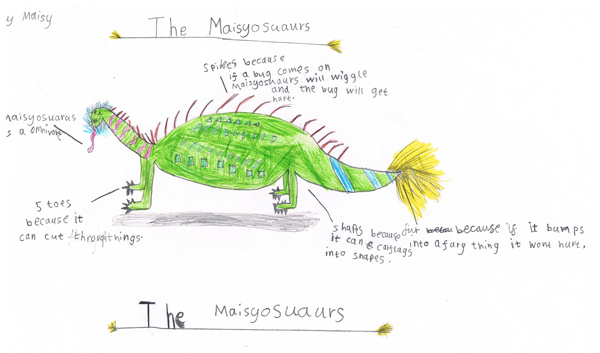
Our thanks to young Maisy and her classmates for sending lots of beautiful dinosaur drawings to our offices. We had challenged the children (Year 2), to have a go at designing their very own prehistoric animals during a dinosaur workshop at their school. We received an amazing array of very colourful drawings, with lots of lovely labelling and some fascinating explanations from the children as to why their dinosaur was so special.
Maisy Has Designed a Maisyosaurus
A very colourful dinosaur design created by Maisy in Year 2.
Picture credit: Maisy/Everything Dinosaur
Maisy and Her Dinosaur
Maisy labelled the various body parts of her dinosaur, explaining that it was an omnivore and that it had five toes to help it cut through things. Certainly, having four fingers and a thumb makes using scissors very straight forward, I’m sure the dinosaur would have appreciated the comment. Maisyosaurus also had spikes on its back, as Maisy explained, the spikes helped this dinosaur shake off a bug should one alight on it. Perhaps it could it have shaken its big, bushy yellow tail in order to scare off flies and other insects.
Our thanks again to Maisy and the other Key Stage 1 pupils at her school for sending in the super dinosaur designs.
As team members at Everything Dinosaur make plans for the imminent arrival of the Beasts of the Mesozoic range of 1:6 scale dinosaur figures, we have been busy finalising the scale drawings of these extinct animals for use in our fact sheets. For virtually every named prehistoric animal that we supply from Achelousaurus and Acheroraptor to Zhenyuanlong, we research and write a fact sheet. In this way, our customers can learn a little about the prehistoric creature the model or soft toy represents.
A Scale Drawing of the Beasts of the Mesozoic Pyroraptor
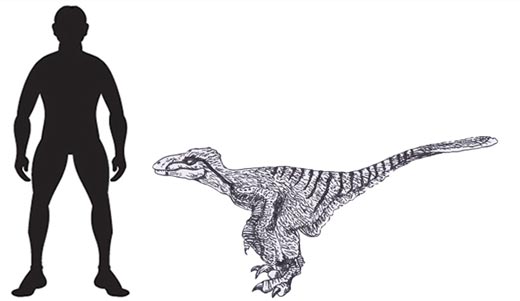
A scale drawing of the dromaeosaurid Pyroraptor olympius.
Estimating the size of dinosaurs is quite a tricky business. When it comes to a dromaeosaur like Pyroraptor, we are hampered by the lack of fossil evidence. This dinosaur is known from a handful of teeth and some fragmentary bones. However, we estimate that this fast-running dinosaur was around 1.5 metres in size and weighed between eight and ten kilograms.
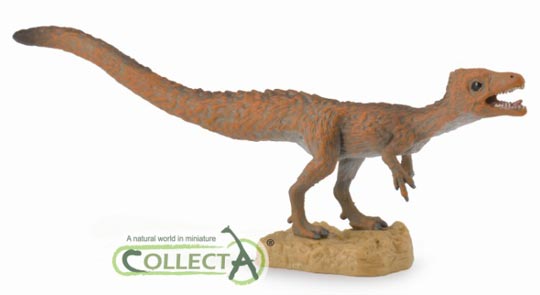
The poor fossil record of most dinosaurs hampers mass and length estimations, many of the fossils relate to sub-adults or juveniles so the exact size of an adult animal is very difficult to calculate. A case in point is the recently described Sciurumimus (Sciurumimus albersdoerferi), from Germany. This dinosaur is known from a single fossil specimen. It is a spectacular fossil and very nearly complete. However, the skeleton is that of a baby, a very young animal measuring around seventy centimetres in length.
This baby dinosaur could have grown up to become one of the largest theropod dinosaurs known from the Jurassic of Europe. Until more fossils of this species are found, the adult size of this carnivorous dinosaur remains entirely speculative.
The CollectA Sciurumimus (Sciurumimus albersdoerferi) Dinosaur Model
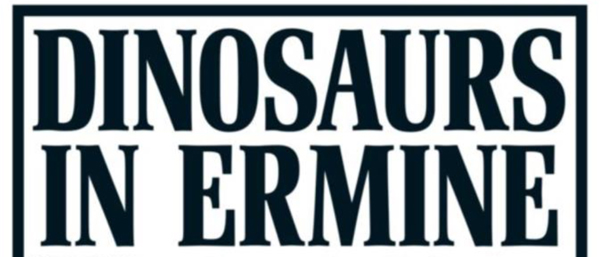
An interesting headline featured on the front of a national newspaper here in the UK. It was spotted as an Everything Dinosaur team member went past a newspaper vendor this morning.
Intriguing Headline – Dinosaurs in Ermine
A headline from an English newspaper. Don’t worry it is not a report on a new dinosaur fossil discovery! Picture credit: Everything Dinosaur.
Picture credit: Everything Dinosaur
The headline certainly caught our attention. However, it was not a report on an amazing pseudo-mammal dinosaur fossil find, after all, palaeontologists have only now got some members of the public to accept the idea of dinosaurs with feathers.
Visit the award-winning and children-friendly website of Everything Dinosaur: Everything Dinosaur.
New Papo, New CollectA, New Rebor Figures all Feature in Newsletter
Subscribers to Everything Dinosaur’s newsletter received their latest bulletin a few days ago. They were amongst the first to know about the arrival of the latest batch of new for 2018 Papo dinosaur figures as well as the shipment of CollectA models including the 1:40 scale Mapusaurus figure. In addition, our newsletter featured an update on the latest offerings from Rebor.
Papo Dinosaur Figures
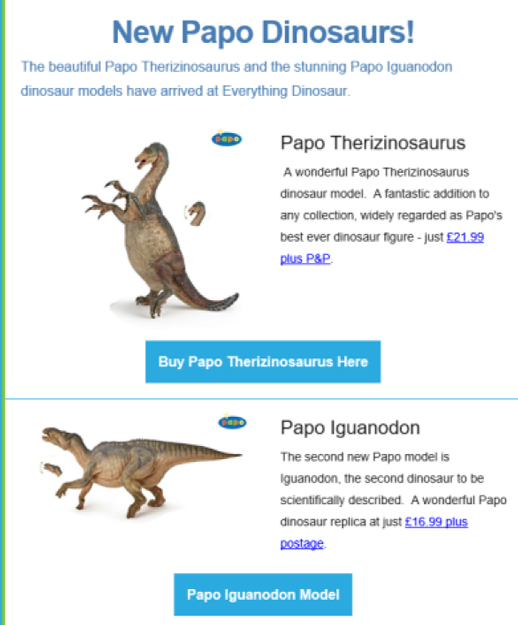
The Papo Therizinosaurus and the Papo Iguanodon Models are in Stock at Everything Dinosaur
New for 2018 Papo Therizinosaurus and Papo Iguanodon dinosaur models in stock at Everything Dinosaur. Two new Papo dinosaur figures. Picture credit: Everything Dinosaur.
Picture credit: Everything Dinosaur
Everything Dinosaur customers who had requested a Papo model be put on reserve for them have already been contacted by staff members.
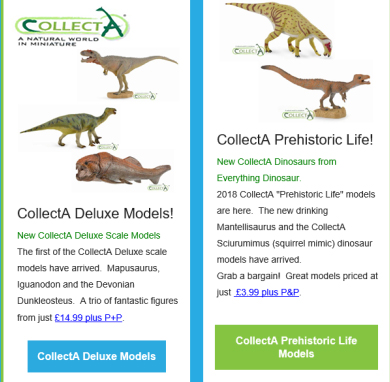
Five new CollectA prehistoric animal figures have arrived. There are 1:40 scale figures of the fearsome Mapusaurus and a beautiful Iguanodon. In addition, CollectA have introduced a 1:20 scale replica of the giant Devonian placoderm Dunkleosteus and just like the amazing Mapusaurus, it too has a movable jaw.
Newsletter Readers were Amongst the First to Find Out About the New CollectA Models
New for 2018 CollectA prehistoric animals.Picture credit: Everything Dinosaur.
Picture credit: Everything Dinosaur
A Drinking Mantellisaurus and Sciurumimus
As well as the new scale models from CollectA, our latest bulletin included details of the two new, not-to-scale dinosaur figures that have just come out. The drinking Mantellisaurus has been eagerly anticipated by model collectors and joining this ornithopod, is a model of the bizarre, carnivore Sciurumimus, that despite being only known from a 70 cm long skeleton, may actually represent one of the largest types of theropod from Jurassic Europe.
To see the Mantellisaurus and the Sciurumimus models and the rest of the huge CollectA Prehistoric Life range: CollectA Prehistoric Life Models.
Rebor “Chickenosaurus” and an Amazing 3D Lenticular Poster
Rebor continue to innovate and have added an amazing dinosaur embryo figure to the company’s “Oddities” range. This cleverly designed item is a fantastic model of a genetically modified baby dinosaur. The Rebor Chickenosaurus is supplied with a battery and has a light-up base and it makes a real focal point within a model collection.
Rebor Introduces a “Genetically Modified” Dinosaur and a Poster of “Wind Hunter”
Rebor “Chickenosaurus” and the 3-D Utahraptor poster. Picture credit: Everything Dinosaur.
Picture credit: Everything Dinosaur
Rebor has introduced a three-dimensional poster of the Utahraptor figure “Wind Hunter” produced by the company. This poster, the first to be made by Rebor, is also available from Everything Dinosaur. This colourful and very striking dinosaur poster measures 26.5 cm by 20 cm (including the frame) and it is a limited-edition item. It makes a smashing backdrop to the 1:35 scale Rebor Utahraptor ostrommaysorum figure.
A spokesperson from Everything Dinosaur commented:
“Once again the design team at Rebor have produced a pair of innovative carnivorous dinosaur themed items. The “Chickenosaurus” has a light up base and when lit, the superb detail on the little dinosaur embryo can be clearly seen. As for the three-dimensional, lenticular poster, it gives the impression that the eyes of a pack of hungry Utahraptors are following you around the room – spooky.”
To request a subscription to Everything Dinosaur’s regular newsletter, simply drop us an email: Email Everything Dinosaur.
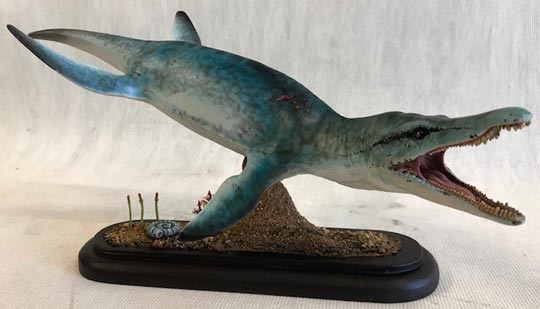
The talented model maker and artist Martin Garratt has made a spectacular marine reptile diorama using a CollectA Deluxe 1:40 scale Pliosaurus model. The skilfully painted figure has been supported on a raised mound of sand and the orientation of the flippers have been changed to provide a very realistic swimming effect. If you look carefully, you can see lying on the sandy base an ammonite shell, it is these little touches of detail that help Martin’s creations to stand out from those of other model makers.
The Marine Reptile Diorama
A customised CollectA Pliosaurus scale model.
Picture credit: Everything Dinosaur/UMF Models
Pliosaurus – Top Ocean Predators for Much of the Mesozoic
Pliosaurs (short-necked plesiosaurs), were widely distributed. Fossils of pliosaurs have been found in Europe and the Americas and some of these marine reptiles were giants, growing to lengths in excess of twelve metres.
These animals evolved in the Early Jurassic and persisted until the Early Cretaceous. Biomechanical tests on the jaws suggests that some species had the most powerful bite of any known vertebrate. In Martin’s diorama he has taken great care to paint the jaws and the inside of the mouth and that black band across the eye really gives this model a menacing look. The back of the throat has been given a wash treatment that adds an extra sheen to the paint, giving a wet look to the animal’s mouth.
Superbly Painted Head and Jaws of the CollectA Pliosaurus Figure
CollectA Pliosaurus model customised by Martin Garratt.
Picture credit: Everything Dinosaur/UMF Models
Clever Countershading
The subtle blues, mottled greys and that off-white underbelly reflect theories regarding the colouration of these apex predators. Although the skin colour of these reptiles is unknown, they were very probably surface water predators and as many extant, pelagic predators show this sort of countershading today, Martin has opted for this colour scheme on his Pliosaurus diorama.
The Streamlined Body of the Model
Martin Garratt has made a marine reptile diorama using the CollectA Deluxe Pliosaurus model.
Picture credit: Everything Dinosaur/UMF Models
Pliosaurus Model Transformation
The diorama has certainly transformed the CollectA Deluxe 1:40 scale Pliosaurus figure. However, it just goes to show what a good replica the CollectA Pliosaurus is, it provides the basic anatomical details that permits a skilled and experienced model maker to create such a stunning display.
The CollectA Deluxe 1:40 Scale Pliosaurus Marine Reptile Model
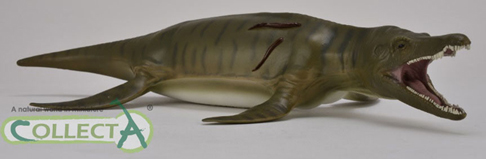
The CollectA Deluxe 1:40 scale Pliosaurus diorama.
When CollectA introduced their Deluxe Pliosaurus model in 2015, collectors noted that there were strange red markings on the flank of the figure. The designer of this model Anthony Beeson, had added lampreys to the replica, as many large marine animals today are plagued by adult lampreys that attach themselves to their bodies, bore into their flesh and feed (micro-predation). The lampreys effect was a clever touch on the original model, but Martin decided to utilise the lampreys and create a wound on his version.
Martin has Converted the Lampreys into a Bite Mark on the Model
A customised CollectA Pliosaurus scale model.
Picture credit: Everything Dinosaur/UMF Models
If you look carefully at the picture (above), you can see that just above the right shoulder, a bite-mark effect has been created. This wound could have occurred as the pliosaur hunted or it could have resulted from intraspecific combat.
Marilyn of UMF models explained how Martin created this effect:
“He took the Lampreys off and used a hot needle to melt the rubber slightly to create a ‘bite mark’ and the red colouring is blood”.
This beautifully painted figure shows what can be achieved using an inexpensive model such as the CollectA Pliosaurus, it really is a spectacular marine reptile diorama. Well done Martin!
To read an article that features a makeover of the Wild Safari Prehistoric World Kronosaurus figure by Martin Garratt: Kronosaurus Model Makeover.
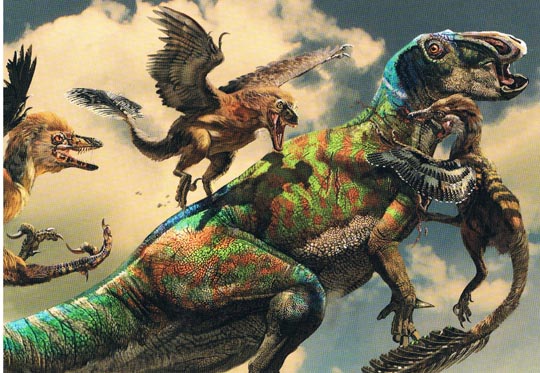
Renowned Chinese palaeoartist Zhao Chuang has produced stunning illustrations of many dinosaurs and prehistoric animals. It is great to see that a lot of his work depicts dinosaurs that once roamed China. Today, we feature an illustration of the ornithischian dinosaur Jinzhousaurus (J. yangi) being attacked by a flock of dromaeosaurids.
Jinzhousaurus yangi Ambushed by Dromaeosaurid Dinosaurs
Jinzhousaurus from the Yixian Formation of China being attacked by a pack of dromaeosaurids, probably Sinornithosaurus.
The picture (above) shows a very colourful Jinzhousaurus being attacked by a trio of theropod dinosaurs. Jinzhousaurus is known from a single, highly compressed specimen which includes most of the skeleton and skull. It lived around 122 million years ago (early Aptian faunal stage of the Early Cretaceous) in north-eastern China and is one of the ornithischian constituents of the Yixian Formation palaeobiota.
This herbivorous dinosaur measured around five metres in length. Where Jinzhousaurus sits on the dinosaur family tree remains uncertain. Despite well preserved (if somewhat flattened remains), the exact taxonomic position of this dinosaur is contentious. When first described in 2001, it was regarded as a member of the iguanodontids (hence the prominent thumb spike painted by Zhao Chuang). Recent studies have proposed that it was more closely related to the duck-billed dinosaurs.
Jinzhousaurus shows a number of primitive and more derived anatomical characteristics so its placement within the Ornithopoda remains problematic. Current thinking is that it was a member of the Hadrosauroidea, a clade of ornithischian dinosaurs that includes duck-billed dinosaurs (hadrosaurids) and all dinosaurs more closely related to them than to Iguanodon.
Which Raptor?
The trio of feathered raptors engaged in combat could represent a number of dinosaur species. Our notes on Zhao Chuang’s illustration do not define the dinosaurs concerned. Several dromaeosaurids and troodontids are known from the Yixian Formation. If we were to guess, then the three attacking theropods illustrated by Zhao Chuang could represent Sinornithosaurus as fossils of this dromaeosaurid come from the same bedding planes (Dawangzhangzi Bed) of the Yixian Formation.
May Newsletter – Model Retirements and New Figures Back in Stock
Subscribers to Everything Dinosaur’s newsletter received their latest bulletin this week. They were the first to know about the arrival of more stocks of the Rebor Velociraptor 1:18 scale replica “Winston”, as well as the arrival of more of the Rebor Yutyrannus huali figure, the Rebor Y-REX, the first 1:35 scale model produced by Rebor.
Everything Dinosaur’s Newsletter
Back in Stock at Everything Dinosaur the Rebor Y-REX and the Rebor Velociraptor Figure “Winston”
Everything Dinosaur May newsletter announces Rebor models back in stock.Picture credit: Everything Dinosaur.
Picture credit: Everything Dinosaur
Everything Dinosaur customers who had requested a model be reserved for them have already been contacted by team members.
Model Retirements Announced in Everything Dinosaur’s Newsletter
In a meeting with the senior management of Safari Ltd a few months ago, Everything Dinosaur was informed that the model making company was going to slim down its inventory. Three models have been retired, the Edmontosaurus, Inostrancevia and the Nigersaurus, expect more retirements to be announced by Everything Dinosaur in the near future. Also, rumoured to be consigned to extinction, is the Battat Terra Amargasaurus figure, this sauropod dinosaur model, is believed to be out of production.
Newsletter Readers were Amongst the First to Find Out About Model Retirements
Everything Dinosaur announces model retirements in its May 2018 newsletter – three Safari Ltd models (Inostrancevia, Nigersaurus and Edmontosaurus) plus one retirement from Battat (Battat Terra Amargasaurus). Picture credit: Everything Dinosaur.
Picture credit: Everything Dinosaur
Safari Ltd Retirements
The model of the gorgonopsid Inostrancevia, part of the Wild Safari Prehistoric World model range was introduced along with the Edmontosaurus back in 2011. It is a shame to see these three figures out of production, but we can expect to hear of new model introductions to this award-winning range in the autumn.
Models Out of Production
Safari Ltd model retirements in 2018.
Battat Terra Amargasaurus
Rumours abound about the retirement of the Amargasaurus dinosaur model from the Battat Terra range. It is proving very difficult to find stocks, however, model collectors and dinosaur fans can rest assured, Everything Dinosaur has plenty of stock of this figure that is believed to have been withdrawn from production.
A spokesperson from Everything Dinosaur commented:
“One of the benefits of subscribing to our newsletter is that you can find out about model retirements and figures going out of production before most other collectors. This enables dinosaur fans who have subscribed to complete their model collections.”
To request a subscription to Everything Dinosaur’s regular newsletter, simply drop us an email: Email Everything Dinosaur.
Giant Squid Soft Toys and New Papo Models
One of our more unusual soft toys features in the May newsletter, the cute and cuddly giant squid soft toy. This colourful plush cephalopod measures over eighty centimetres long from the tips of the tentacles to its rear end. We also had to mark the arrival of the first for 2018 Papo figures by giving the Papo cave man with spear, the Papo young Spinosaurus and the Papo Amargasaurus a mention.
New Papo Figures and a Giant Squid Soft Toy
May newsletter 2018 – Papo models and a giant squid soft toy.Picture credit: Everything Dinosaur.
Picture credit: Everything Dinosaur
With the disappearance of the Battat Terra Amargasaurus and the arrival of the Papo Amargasaurus model, it seems fans of this South American, long-necked dinosaur will be able to collect a replica of this dinosaur after all.
Scientists Identify Giant Triassic Ichthyosaur Jaw Bone and Help Solve 19th Century Fossil Mystery
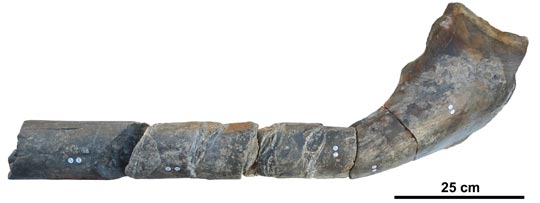
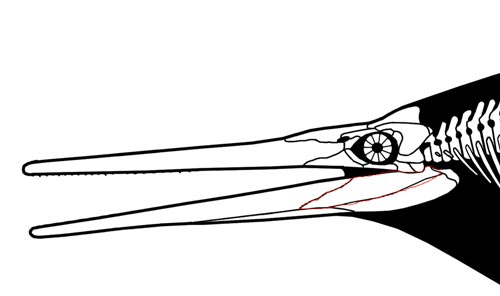
Scientists have identified a jaw bone of a giant marine reptile, that could represent one of the largest animals that ever lived. The newly described fossil bones, representing a portion of an enormous lower jaw, may also have shed light on a mystery that dates back to the middle of the 19th century. The fossilised jaw, which consists of several, broken, individual pieces, is thought to be an incomplete surangular (bone from the rear of the lower jaw), from a shastasaurid ichthyosaur, a clade of enigmatic, giant marine reptiles that were geographically widespread during the Late Triassic.
The fossil material was found on the beach at the small village of Lilstock in (west Somerset), the specimen is approximately 205 million years old.
A Lateral View of the Fossil Material – A Giant Ichthyosaur from Somerset!
The incomplete surangular jaw bone from Lilstock (Somerset).
Picture credit: Manchester University
Ichthyosaur Fossil Found on a Somerset Beach
Fossil collector and co-author of the study, published in the scientific journal PLOS One, Paul de la Salle, found a portion of the specimen in May 2016. He later returned to the beach and found more pieces, that together form a partial surangular more than a metre in length (see photograph above).
An Approximate Representation of the Location of Surangular on the Skull of Shonisaurus
A close-up of the skull of Shonisaurus, the surangular bone is outlined in red.
Picture credit: Scott Hartman with additional annotation by Everything Dinosaur
Commenting on his fossil find Paul stated:
“Initially, the bone just looked like a piece of rock but, after recognising a groove and bone structure, I thought it might be part of a jaw from an ichthyosaur and immediately contacted ichthyosaur experts Dean Lomax (Manchester University) and Professor Judy Massare (SUNY College at Brockport, New York, USA), who expressed interest in studying the specimen. I also contacted Dr Ramues Gallois, a geologist who visited the site and determined the age of the specimen stratigraphically.”
Comparisons with Shonisaurus sikanniensis
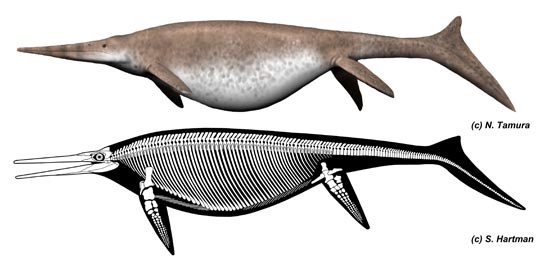
Dean Lomax and Judy Massare made the surangular identification and visited the Royal Tyrrell Museum of Palaeontology in Drumheller, southern Alberta (Canada), to view skull material from the largest ichthyosaur yet described, the monstrous shastasaurid Shonisaurus sikanniensis. S. sikanniensis fossils come from Upper Triassic rocks found in British Columbia and the Royal Tyrrell material indicates a marine reptile around 21 metres in length. The researchers found similarities between the new Somerset specimen and Shonisaurus sikanniensis, which suggests that the Lilstock fossils represent a giant shastasaurid too.
A Life Restoration and Skeletal Drawing of the Giant Ichthyosaur Shonisaurus
Shonisaurus life restoration and skeletal reconstruction (N. Tamura and S. Hartman).
Picture credit: Nobumichi Tamura and Scott Hartman
Ichthyosaur as Big as a Blue Whale?
Commenting on the approximate size of the Somerset specimen, Dean Lomax said:
“As the specimen is represented only by a large piece of jaw, it is difficult to provide a size estimate, but by using a simple scaling factor and comparing the same bone in S. sikanniensis, the Lilstock specimen is about 25% larger. Other comparisons suggest that the Lilstock ichthyosaur was at least 20 to 25 metres. Of course, such estimates are not entirely realistic because of the differences between species. Nonetheless, simple scaling is commonly used to estimate size, especially when comparative material is scarce.”
When compared to giant marine vertebrates today, the upper end of the size estimate for the Lilstock specimen would indicate a creature longer than the largest toothed whale, the Sperm whale (Physeter macrocephalus), indeed, at around 25 metres long, it would rival in size the largest cetaceans of all, adult Blue whales (Balaenoptera musculus).
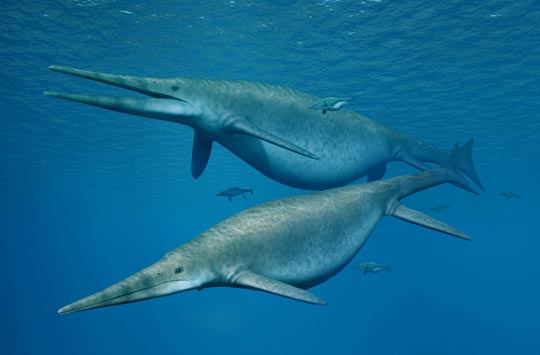
A Pair of Giant Shastasaurid Ichthyosaurs Cruise the Late Triassic Ocean with a Pod of Smaller Ichthyosaurs for Company
A pair of Shonisaurus – giant marine reptiles of the Late Triassic.
Picture credit: Nobumichi Tamura
Solving a Mystery That Dates Back to 1850
In 1850, a large bone was described from the Upper Triassic sediments of Aust Cliff in Gloucestershire (UK). Four other fragmentary bone elements were subsequently found and described. Sadly, two of these fossils are missing and presumed destroyed. These bone shafts have been assigned to limb bones of herbivorous dinosaurs. Two of the fossils were thought to resemble the limbs of stegosaurs, but if that was the case, it would push back the evolutionary origins of stegosaurs into the Norian faunal stage of the Late Triassic. Other scientists have speculated that the fossil material might not be dinosaurian at all, but fossils of a related archosaur from the pseudosuchian lineage.
However, with the discovery of the Lilstock specimen, another possibility has come to light. These fossils could represent jaw fragments of giant, previously unrecognised ichthyosaurs, after all, the Aust Cliff location has already yielded a number of marine reptile fossils including ichthyosaurs.
Dean Lomax added:
“One of the Aust bones might also be an ichthyosaur surangular. If it is, by comparison with the Lilstock specimen, it might represent a much larger animal. To verify these findings, we need a complete giant Triassic ichthyosaur from the UK – a lot easier said than done!”
The scientific paper: “A Giant Late Triassic Ichthyosaur from the UK and a Reinterpretation of the Aust Cliff “Dinosaurian” Bones by Lomax, D. R., De la Salle, P., Massare, J. A. and Gallois, R. (2018) published in PLOS One.
Rebor Fallen Queen, Straight-tusked Elephants and Paleo-Creatures Feature in Newsletter
Everything Dinosaur’s latest customer newsletter has been circulated and it contains lots of helpful information about new products, stocking levels and updates on forthcoming introductions. The headline features the return of the extremely popular Rebor Fallen Queen (Triceratops horridus) figure. Version two of this figure is back in production and Everything Dinosaur has received stocks of this super replica which makes a fantastic addition the Rebor King T. rex model.
The Latest Everything Dinosaur Newsletter
The March Newsletter has Triceratops in the Headlines
The Rebor T. horridus in the March newsletter from Everything Dinosaur. Picture credit: Everything Dinosaur.
Picture credit: Everything Dinosaur
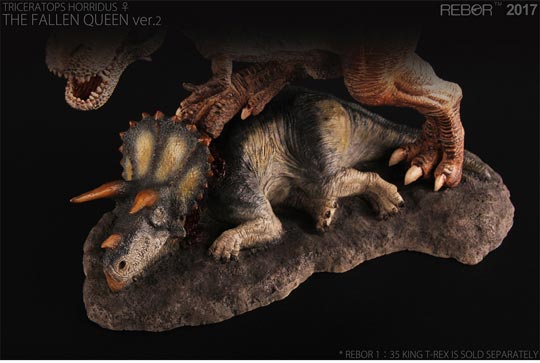
The Rebor Fallen Queen is a Stand Alone Figure or can be used in Conjunction with the Rebor 1:35 scale T. rex Replica
The Rebor Fallen Queen (version 2) with the Rebor King T. rex figure.
Reserving Models
Everything Dinosaur customers who had requested a model be reserved for them have already been contacted.
On the subject of reserve lists, Everything Dinosaur’s priority reserve list for the second model in the Eofauna Scientific Research scale model series is now open. The Straight-tusked elephant (P. antiquus) has already generated a lot of excitement after our joint press release with our friends at Eofauna. A number of museums and other institutions have already made enquiries and this 1:35 scale figure will be with us in June.
Proving Very Popular Already – The Eofauna Scientific Research Straight-tusked Elephant Model
The reserve list is now open for the Eofauna Scientific Research Straight-tusked elephant.Picture credit: Everything Dinosaur.
Picture credit: Everything Dinosaur
To join our priority reserve list for this stunning Straight-tusked elephant scale model, simply drop Everything Dinosaur an email: Email Everything Dinosaur.
Leave the rest to us, you don’t have to have a memory like an elephant, we will reserve a figure for you and a team member will personally email you to let you know that the stock has arrived.
Extinct Animals from Paleo-Creatures and a Soft Toy Dodo
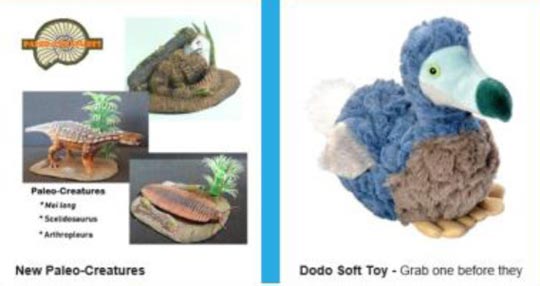
Our latest bulletin also features three new figures from Paleo-Creatures, the “sleeping dragon” Mei long, a marvellous Arthropleura model and especially for fans of early armoured dinosaurs, a splendid Scelidosaurus replica. These new additions are in stock and currently available from Everything Dinosaur.
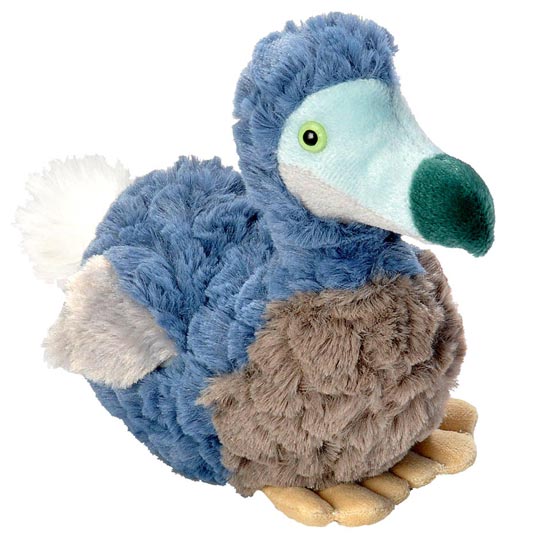
Paleo-Creatures Replicas and a Dodo Soft Toy
Extinct creatures feature in the Everything Dinosaur March 2018 newsletter.Picture credit: Everything Dinosaur.
Standing a fraction under twenty centimetres high, the new Dodo soft toy has been skilfully crafted and it looks incredibly cute. There are just a few of these remarkable plush Dodos in stock so grab yours before they become extinct. Best of all, you don’t have to travel all the way to Mauritius to pick one up.
The Dodo Soft Toy Available from Everything Dinosaur
PNSO Triceratops “Doyle” and the Eofauna Scientific Research Steppe Mammoth
Concluding our latest newsletter, we feature the stunning and extremely rare PNSO Triceratops “Doyle” figure along with the very first figure in the Eofauna Scientific Research range, the 1:40 scale Steppe Mammoth model (Mammuthus trogontherii). These two scale models have proved to be extremely popular with model collectors.
The PNSO Triceratops Figure “Doyle” and the Eofauna Scientific Research Steppe Mammoth
PNSO Triceratops Doyle and the Eofauna Scientific Research Steppe Mammoth.Picture credit: Everything Dinosaur.
Coming from the PNSO Age of Dinosaurs range, the Triceratops “Doyle” is also in 1:35 scale, it measures around 26 centimetres in length and the base upon which the replica stands is a little over nineteen centimetres long.
We look forward to sending out more newsletters later on in the spring. Remember, if you want to join our newsletter list simply drop Everything Dinosaur an email, expressing your wish to get our periodic newsletters: Email Everything Dinosaur to Subscribe to our Newsletter.
Class 1 at Ysgol Bro Carmel Enquire About Diplodocus
The children in class 1 at Ysgol Bro Carmel Nursery and Primary School in North Wales have been learning all about dinosaurs this term. The class teacher, Mrs Metcalfe emailed Everything Dinosaur and explained that as part of the diverse and varied teaching programme, the eager, young palaeontologists had some questions about Diplodocus for us. A diplodocid had been spotted in the school yard and the children had been writing instructions on how to trap this long-necked dinosaur. Could Everything Dinosaur offer some assistance?
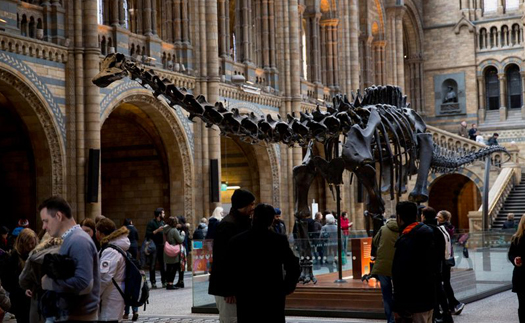
Diplodocus on Display at the Natural History Museum (London)
Diplodocus on display in a museum, this long-necked dinosaur is proving to be very popular with the Class 1 children at Ysgol Bro Carmel.
Answering Questions About Dinosaurs and Diplodocus
What Did Dinosaurs Eat?
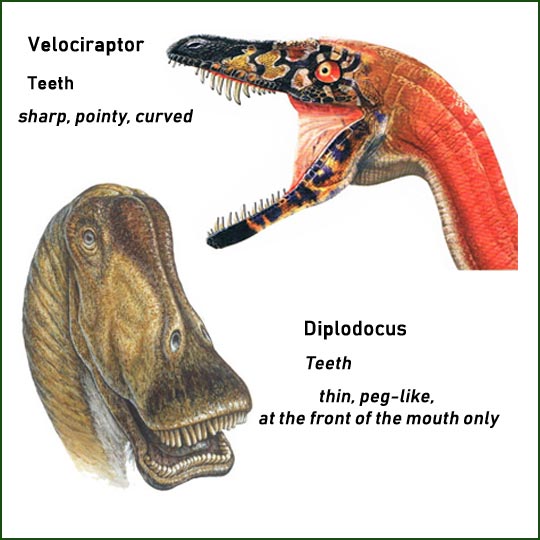
Palaeontologists can work out what extinct dinosaurs liked to eat by looking at their fossilised teeth. The shape of the teeth can tell a scientist a lot about the type of food that dinosaurs ate. The teeth of Velociraptor are sharp, pointed and curved. This suggests that Velociraptor was a meat-eater (carnivore). The teeth of diplodocids are a very different shape when compared to the teeth of the fearsome Velociraptor. Diplodocus only had teeth at the front of its mouth, these teeth were thin and looked like pegs.
Comparing the Teeth of a Meat-eater (Velociraptor) to the Teeth of a Plant-eater (Diplodocid)
Comparing the teeth of the carnivore Velociraptor to the herbivore (sauropod).
Picture credit: Everything Dinosaur from original illustrations by Michael Skrepnick and Zhao Chuang
Diplodocus was a plant-eater (herbivore), this dinosaur probably spent most of his life eating plants.
How is Diplodocus Different from Brontosaurus?
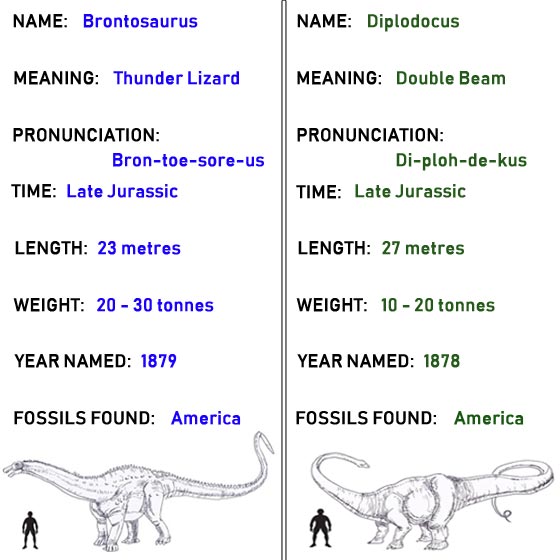
Diplodocus and Brontosaurus were closely related. Both were plant-eaters and they probably liked to eat the same types of plants. These long-necked dinosaurs lived in the Late Jurassic and their fossils have been found in the same country (United States of America). Diplodocus was different from Brontosaurus in a number of ways. It had a much longer tail and its neck was longer and more slender than Brontosaurus. Brontosaurus was probably much heavier than Diplodocus.
Similarities and Differences Between Brontosaurus and Diplodocus
Brontosaurus compared to Diplodocus.Picture credit: Everything Dinosaur.
Picture credit: Everything Dinosaur
How big is a Diplodocus?
We have provided some information about the size of Diplodocus in the picture above. Can the children work out how much longer Diplodocus was compared to Brontosaurus? Why have we put a picture of a person next to our two dinosaur drawings (above), can the children think like scientists and come up with the answer?
How Could We Trap a Diplodocus if it was Alive?
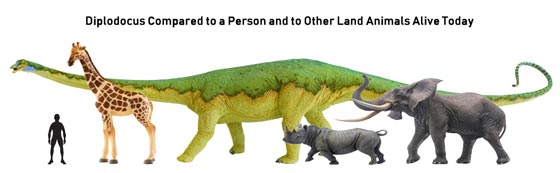
Trying to trap a Diplodocus might be quite dangerous, after all, this plant-eating dinosaur was much bigger than any land animals alive today. The children have probably come up with some amazing ideas and suggestions. You could dig a big pit and cover it with tree branches then chase the Diplodocus towards the hole, if the Diplodocus fell in, it would probably get stuck, so long as the hole was deep enough. However, this might hurt the dinosaur, so perhaps instead of trying to force the dinosaur to try and do something, it might be better to persuade it to come to you.
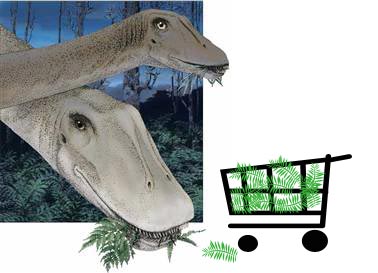
Since Diplodocus needed to eat a lot of plants, class 1 could perhaps persuade it to come and visit them by putting out some of its favourite food. If the children collected lots and lots of ferns (Diplodocus probably ate around 200 kilograms of plants every day), filling a shopping trolley with Diplodocus treats, might persuade the dinosaur to come and visit the children in the playground.
Attracting Diplodocus into the Playground by Providing Some of its Favourite Food
No need to catch a Diplodocus, try attracting it into the playground by leaving out some of its favourite food.
People attract dinosaurs into their gardens every day, even though they probably don’t realise they are doing this. Birds are so closely related to dinosaurs, that we should not call birds “birds” at all. They are “avian dinosaurs”. If you have a bird table at your school or in your garden you can watch dinosaurs feeding. Check out the feet on birds like the sparrow, thrush and blackbird, they have claws just like a dinosaur and they walk on three toes just like Tyrannosaurus rex!
How Long is the Neck of a Diplodocus? How Long is the Tail of Diplodocus?
A complete fossilised neck of Diplodocus has never been discovered. All the bones that make up a tail of a Diplodocus have never been found. When you visit a museum and see a spectacular mounted skeleton like “Dippy” the Diplodocus which used to be on display at the Natural History Museum (London), the skeleton you see consists of the bones of several individuals put together to make a single exhibit.
Missing bones are made as models and added to the skeleton to make it look complete. Most palaeontologists think that Diplodocus had around fourteen or fifteen neck bones and the neck measured about eight metres long. A baby Diplodocus had a relatively short neck, when it hatched (as far as we know, all dinosaurs hatched from eggs, just like birds today), as the Diplodocus grew, its neck got longer and longer. The whip-like tail of Diplodocus was longer than its neck. Size estimates for the tail of a Diplodocus are difficult to make, but Everything Dinosaur’s fossil experts suggest that the tail of a fully-grown Diplodocus could have been around fourteen metres long, that’s longer than a Badminton court!
Comparing a Diplodocus to Large Land Animals Alive Today
Diplodocus compared to animals alive today.
Picture credit: Everything Dinosaur
Our thanks to all the children in class 1 at Ysgol Bro Carmel Nursery and Primary School, we hope our answers to your questions help you with your term topic.