

A new study examining Tyrannosaurus rex hatchlings has provided fresh insight into the early lives of these famous theropod dinosaurs. Researchers writing in the journal “Biology” investigated evidence linked to the development and reproductive strategies of large meat-eating dinosaurs. The researchers concluded that tyrannosaurs produced relatively small hatchlings compared to modern birds. This suggests that they laid large numbers of eggs and invested less energy in caring for their young.
Although adult Tyrannosaurus rex specimens are amongst the most famous fossils ever found, the earliest growth stages remain poorly understood. Fossils of very young tyrannosaurs are exceptionally rare. Therefore, palaeontologists continue to search for clues about how these remarkable animals developed.
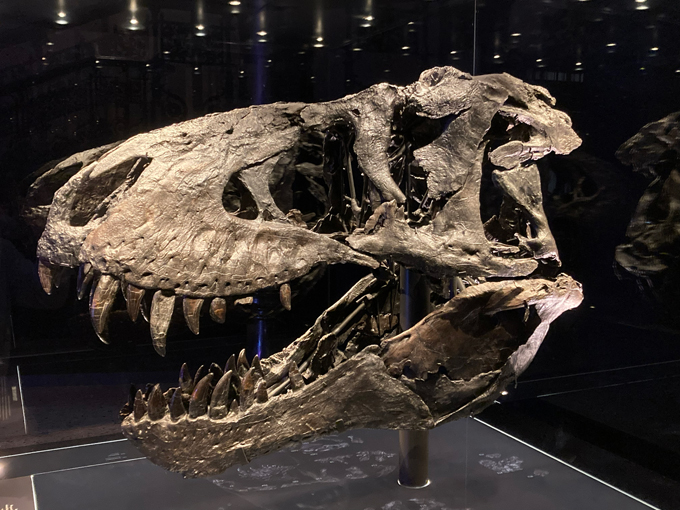
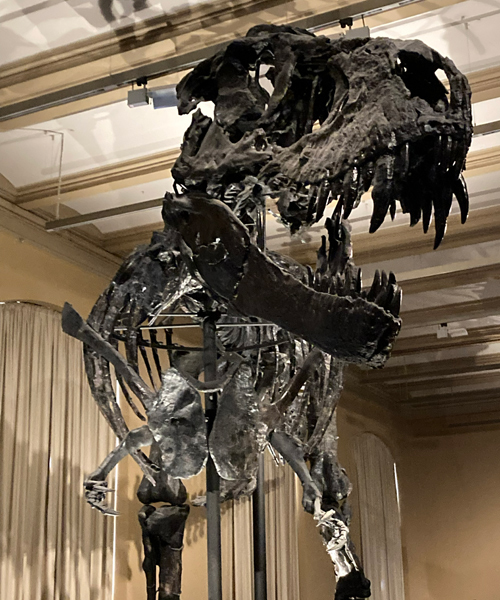
The beautiful Tristan the Tyrannosaurus rex skull shown in lateral view. A new study suggests different niches in the ecosystem for juvenile tyrannosaurs compared to the adult animals. Picture credit: Everything Dinosaur.
Picture credit: Everything Dinosaur
Studying Tyrannosaurus rex Hatchlings
The enormous size of adult T. rex raises fascinating questions about reproduction. Every giant dinosaur began life as a small hatchling. All dinosaurs emerged from eggs. Consequently, scientists want to understand how these animals grew from vulnerable juveniles into apex predators.
The scientists, which included researchers from the University of Bath, examined fossil evidence and compared growth patterns seen in related dinosaurs. This work helps palaeontologists build a more complete picture of tyrannosaur biology. Dinosaurs occupied an evolutionary position between more primitive reptiles and modern birds, both in their anatomy and in some aspects of their biology such as reproduction strategies.
Young tyrannosaurs would have looked very different from adults. They were probably lightly built, long-legged animals adapted for speed. In contrast, mature T. rex individuals developed huge skulls, powerful jaws and immense bite forces.
This dramatic transformation demonstrates how dinosaurs could occupy different ecological roles during their lives.

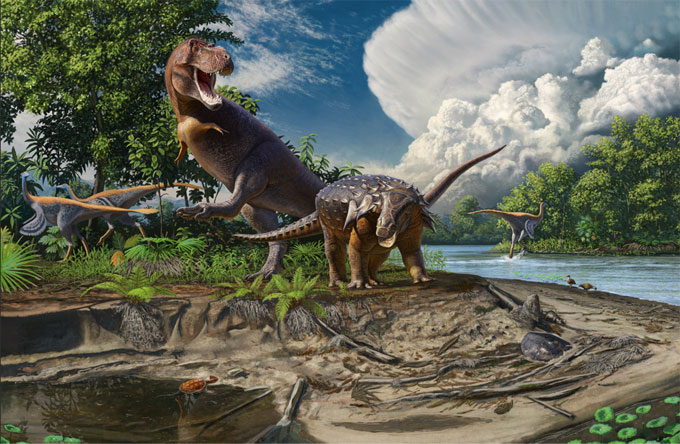
Tyrannosaur hatchlings had very different body proportions compared to adults. A new study provides fresh insights into tyrannosaur reproduction strategies. Picture credit: Everything Dinosaur (AI Assisted).
Picture credit: Everything Dinosaur (AI Assisted)
Understanding Dinosaur Growth and Reproduction
The study also highlights the challenges associated with investigating dinosaur reproduction. Unlike modern birds and reptiles, palaeontologists cannot directly observe extinct dinosaurs nesting or raising their young.
Instead, scientists rely on fossils, bone histology, eggs, embryos and comparisons with related, extant animals. Dinosaur reproductive strategies probably represented an intermediate stage between more primitive reptiles, such as crocodilians which typically provide limited parental care, and modern birds. Birds often demonstrate advanced parental behaviours and significant investment in their offspring.
Evidence from other theropod dinosaurs shows that many species grew rapidly. This fast growth helped them reach larger sizes more quickly and may have reduced the risks faced by young animals.
From Tiny Hatchling to Apex Predator
An adult Tyrannosaurus rex could reach more than twelve metres in length. However, newly hatched individuals would have been tiny compared to their parents. The research team studied bones and teeth of hatchlings from the Frenchman Formation of Saskatchewan (Canada). These fossils reputedly represent T. rex. In addition, juvenile tyrannosaur fossils from the geologically older Dinosaur Provincial Park formation were studied. These fossils have been assigned to Gorgosaurus.
The difference between hatchlings and adults suggests that young tyrannosaurs may have hunted different prey. This reduced competition between generations and allowed animals of different ages to exploit separate ecological niches. Indeed, the contrasting body shapes between juvenile and mature tyrannosaurs fuelled the Nanotyrannus debate. However, recent studies have concluded that lightly built, long-legged tyrannosaurs thought to represent T. rex juveniles are most likely a different tyrannosaur taxon.
To read more about the recent Nanotyrannus research: New Paper Reinforces Nanotyrannus Unique Taxon Theory.
This idea, animals of the same species filling different niches depending on their age is known as ontogenetic niche partitioning, has been proposed for several dinosaur groups.
Revealing the Early Lives of Famous Dinosaurs
The study of Tyrannosaurus rex hatchlings remains an exciting area of palaeontology. For example, in this paper, the researchers stated that synchrotron scans revealed Haversian bone re-modelling, suggesting that tyrannosaurs moved soon after hatching. It is speculated that tyrannosaurs may have been precocial. Precocial young are relatively mobile and independent soon after hatching.
A 2021 article that highlights a study suggesting that baby tyrannosaurs were precocial: Tyrannosaurs – Born Ready to Hunt!
Future fossil discoveries may reveal more information about nesting behaviour, growth rates and juvenile anatomy.
Everything Dinosaur team members regularly highlight that even the most famous dinosaurs continue to surprise scientists. New research techniques and fossil discoveries are helping experts build a clearer picture of how these extraordinary animals lived. Understanding the youngest members of this species provides valuable information about one of the most remarkable predators in Earth’s history.
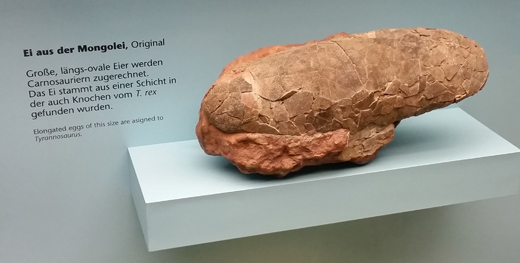
A dinosaur egg (believed to be from a theropod dinosaur). Theropod dinosaur eggs tend to be elongated and less round compared to the eggs of other dinosaurs such as sauropods. Picture credit: Everything Dinosaur.
Picture credit: Everything Dinosaur
Estimating Nest Sizes
Clutch sizes were likely large. The team conservatively estimated that a small, female adult T. rex would lay around twenty eggs. The largest T. rex females could perhaps lay thirty eggs. In comparison, Gorgosaurus (G. libratus), may have laid more eggs per clutch. For example, the researchers propose clutch sizes of up to a hundred eggs for Gorgosaurus.
Scientists can only speculate about the mortality rate of hatchling tyrannosaurs. However, animals that produce large numbers of offspring typically experience high juvenile mortality rates. Many predators could have killed a baby T. rex. For example, hatchlings had to avoid dromaeosaurs, crocodilians and the powerful beaks of azhdarchid pterosaurs.
The scientific paper “Hatchlings of Tyrannosaurus rex and the Evolution of Dinosaur Reproductive Strategies” by Nicholas R. Longrich, Peter J. Makovicky, Tim Tokaryk, David M. L. Cooper, Evan T. Saitta, Gregory M. Erickson, Tamas Szekely and Eric Snively published in Biology.
The Everything Dinosaur website: Models of Theropods and Other Dinosaurs.

Leave A Comment