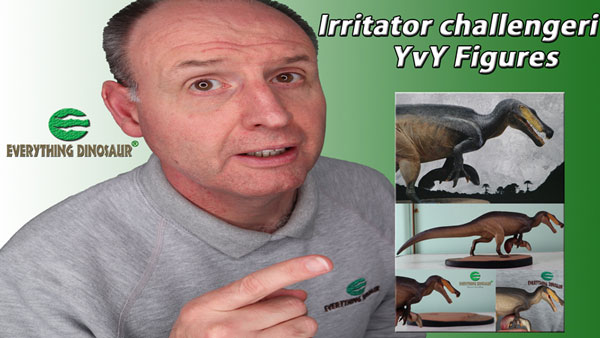
Everything Dinosaur team members have been working on a YouTube video that features the Irritator challengeri dinosaur model from YvY Figures. Marketed under the brand Dino Hazard, the plan is to show the model and provide a mini review and then discuss the steps that Everything Dinosaur have to take in order to place this exciting dinosaur model legitimately on the market.
Everything Dinosaur team members are working on a YouTube video that will explain the steps that they have to take to ensure a dinosaur model has been properly tested before it can be placed on the market. Picture credit: Everything Dinosaur.
Picture credit: Everything Dinosaur
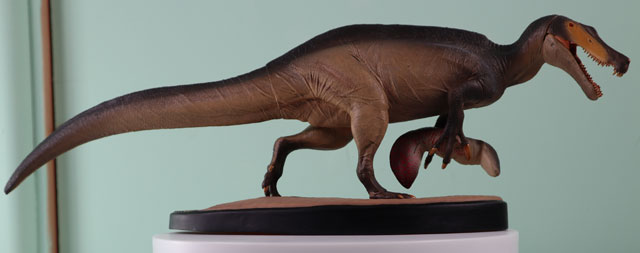
Dino Hazard Irritator challengeri
YvY Figures contacted Everything Dinosaur a few weeks ago and enquired whether we were interested in stocking this figure, the first in the Dino Hazard series. In order to place such a product on the market, it is important to check the safety certificates and accreditation associated with the model.
Everything Dinosaur takes the safety of our customers extremely seriously and a sample was requested so that we could conduct our own independent safety tests.
Sold under the brand Dino Hazard the Irritator challengeri dinosaur model comes complete with an optional display base and a replica of a lungfish. The figure including accessories and packaging has been sent to an independent testing company for safety checks. Picture credit: Everything Dinosaur.
Picture credit: Everything Dinosaur
A spokesperson from Everything Dinosaur commented:
“Before a product such as this can be placed on the market, it needs to undergo a series of product safety tests. These have to be carried out by an independent, accredited testing company. Everything Dinosaur uses Eurofins, a highly respected, global leader in consumer product testing for this work.”
An Everything Dinosaur team member holds the Dino Hazard Irritator challengeri dinosaur model, which in turn is holding in its claws the replica of a lungfish (Equinoxiodus alcantarensis) which is supplied as an accessory with this dinosaur figure. Picture credit: Everything Dinosaur.
Picture credit: Everything Dinosaur
A Model of a South American Spinosaurid
Irritator challengeri was the first spinosaurid described from fossil material found in South America (Brazil). The model measures around 37 cm in length and the manufacturer states that this is a 1:20 scale figure.
The video will be available on Everything Dinosaur’s YouTube channel shortly.
Dinosaur model fans and collectors have been very impressed over the last twelve months or so with the large number of new model releases from the Chinese company PNSO. At a time when most factories have been struggling to obtain raw materials, PNSO have managed to set in motion a production plan that has seen a new model being announced every few weeks.
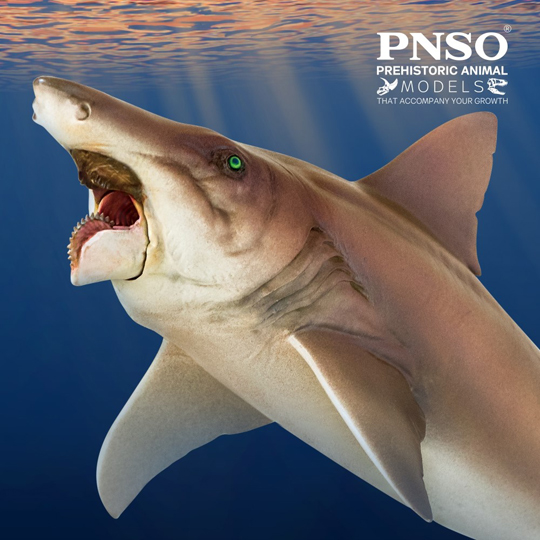
PNSO have added a replica of the Permian marine predator Helicoprion to their mid-size model range. Everything Dinosaur made an announcement about this new prehistoric fish replica in a joint collaboration with PNSO earlier in 2021.
Keeping up with PNSO Product Announcements
Everything Dinosaur would like to congratulate the design and production team at PNSO. They continue to delight prehistoric animal model collectors with their new model introductions and announcements. We do understand how challenging it can be for model collectors to keep up to date with all this exciting news. The Everything Dinosaur blog provides an invaluable and authoritative source of information and our dedicated team members frequently post up on social media too, these posts help to keep prehistoric animal model fans updated.
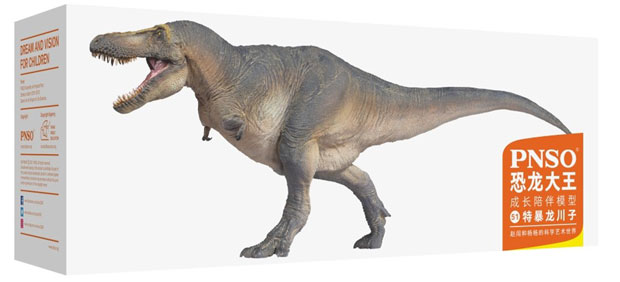
The product packaging for the new PNSO Tarbosaurus dinosaur replica. Last week (June 11th, 2021) Everything Dinosaur released news of PNSO’s latest model – a replica of the Late Cretaceous tyrannosaur Tarbosaurus (T. bataar).
Providing Further Assistance
In a bid to provide further assistance to dinosaur model collectors, here is a list of the recently announced new prehistoric animal replicas being introduced by PNSO.
PNSO Chuanzi the Tarbosaurus 51
PNSO Jeff the Kronosaurus in the 1:35 scale scientific art
PNSO Stegosaurus Models (Biber and Rook) in the scientific art 1:35 scale
In addition to providing the name of the animal we have also included (where applicable), the product inventory number as provided by PNSO on the company’s product packaging. Dinosaur model collectors can then get some insight into further potential announcements by noting which numbers in the numeric sequence have yet to be filled.
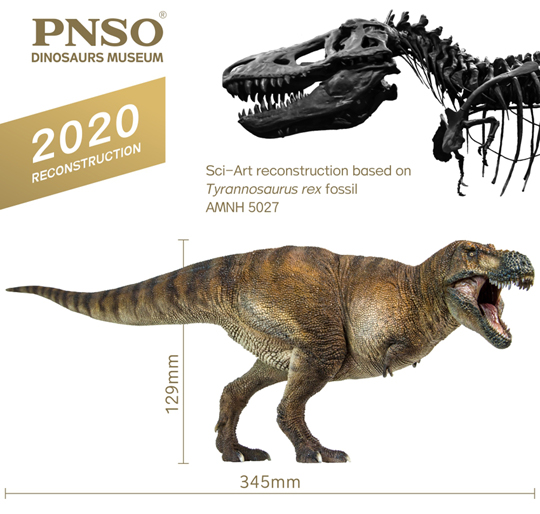
The new PNSO “Wilson” the Tyrannosaurus rex replica is based on the museum specimen AMNH-5027. As well as mid-size model introductions PNSO made announcements about new scale models such as the new Wilson T. rex replica.
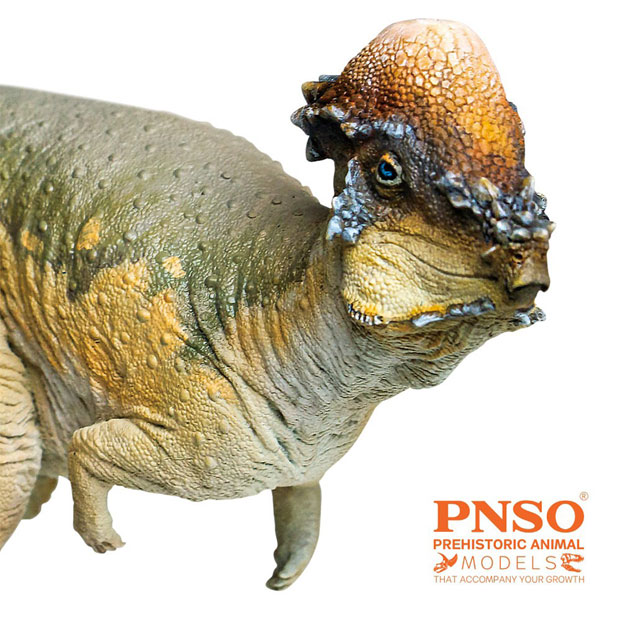
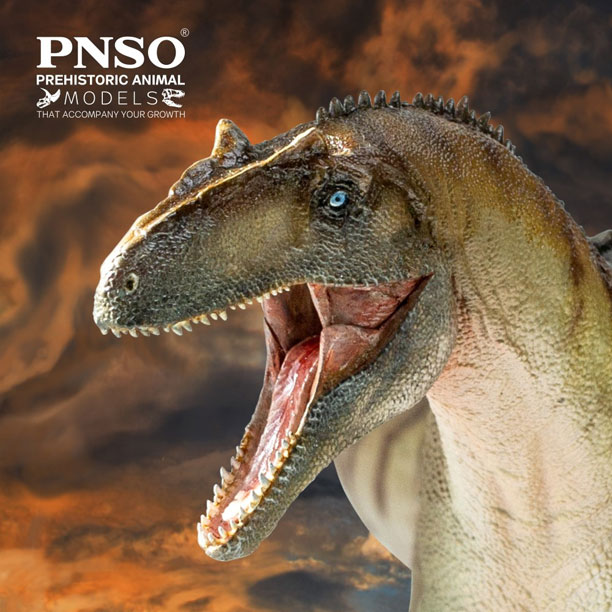
A spokesperson from Everything Dinosaur commented that the PNSO Austin the Pachycephalosaurus and Paul the Allosaurus would be in stock at Everything Dinosaur in a few days.
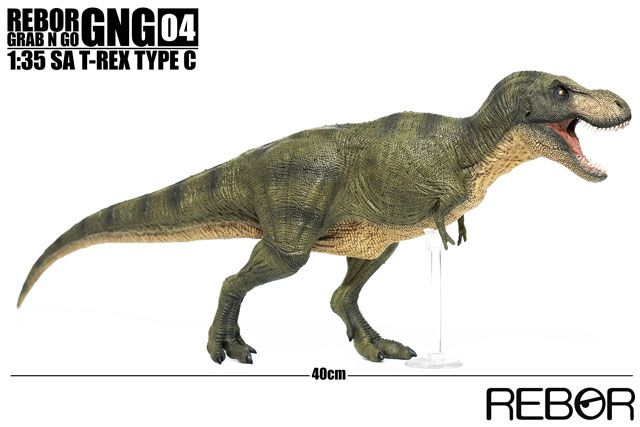
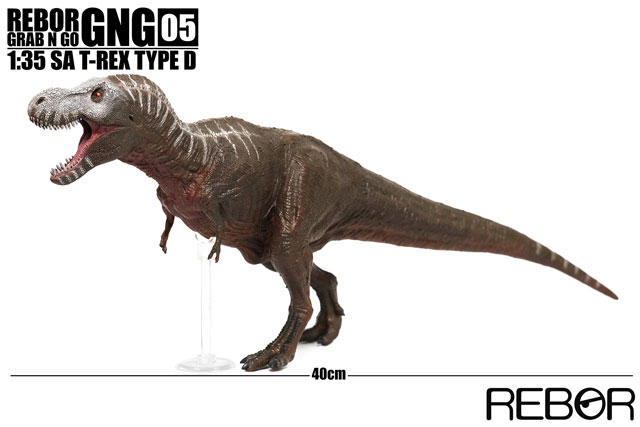
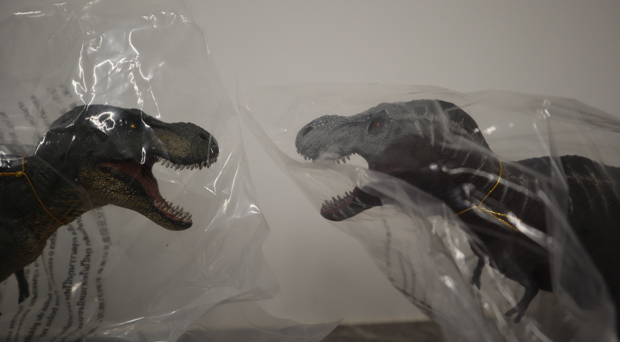
The two new Rebor GrabNGo T. rex dinosaur models (Rebor GNG05 1:35 scale SA T. rex Type D and Rebor GNG04 1:35 scale SA T. rex Type C) are now in stock at Everything Dinosaur. These eagerly anticipated Tyrannosaurus rex models arrived at the Everything Dinosaur warehouse yesterday and they will be replacing the original GNG Rebor rexes that were introduced in 2020.
Rebor GrabNGo Tyrannosaurus rex dinosaur models are now in stock at Everything Dinosaur. Rebor GNG04 1:35 scale SA T. rex Type C (left) and the Rebor GNG05 1:35 scale SA T. rex Type D (right). Picture credit: Everything Dinosaur.
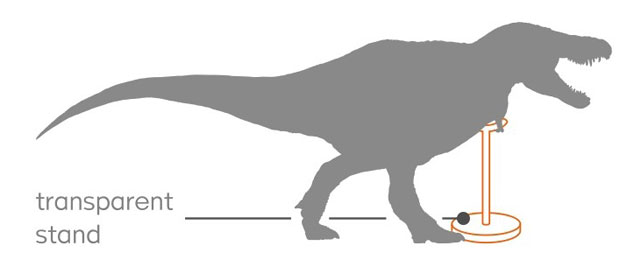
The models are the same sculpt but they have very different colour schemes. GNG04 is a dark green figure with subtle black banding, whilst GNG05 can be described as mainly brown-coloured but with prominent white markings on the head and neck. Each figure measures 40 cm in length and is supplied with a transparent support stand to permit Rebor to keep the well-crafted hind feet in proportion with the rest of the model.
The Rebor GNG04 1:35 scale SA T. rex Type C is supplied with a transparent support stand.
The Rebor GNG05 1:35 scale SA T. rex Type D. The model’s striking colouration reminded team members of the tyrannosaurs depicted in the American documentary series “Dinosaur Revolution” produced by Creative Differences and originally aired on the Discovery Channel around a decade ago.
The Rebor GNGO5 1:35 Scale SA T. rex Type D
The colouration of the Rebor GNG05 1:35 scale SA T. rex Type D, reminds team members at Everything Dinosaur of the Tyrannosaurus rexes that featured in the American documentary series “Dinosaur Revolution” that aired around ten years ago. In the four-part documentary series, the final episode featured the dinosaur dominated biota of the Hell Creek Formation of North America. Several T. rex dinosaurs were featured in this programme. If we recall correctly there were two male T. rexes, one was called “Jack Palance” and another called “Stumpy”. “Stumpy” had a deformed forearm as a result of a fight with the bigger “Jack Palance”, fortunately the Rebor GNG05 1:35 scale SA T. rex Type D has no such disability.
The new Rebor GrabNGo T. rex dinosaur models are now in stock at Everything Dinosaur. Rebor GNG04 1:35 scale SA T. rex Type C (left) and the Rebor GNG05 1:35 scale SA T. rex Type D (right). Picture credit: Everything Dinosaur.
Picture credit: Everything Dinosaur
A spokesperson from Everything Dinosaur praised Rebor for introducing another two, inexpensive dinosaur models into their portfolio and they confirmed that the original GNG T. rexes (Rebor GNG02 1:35 SA T. rex Type A and the Rebor GNG03 1:35 scale SA T. rex Type B) our now out of production and retired.
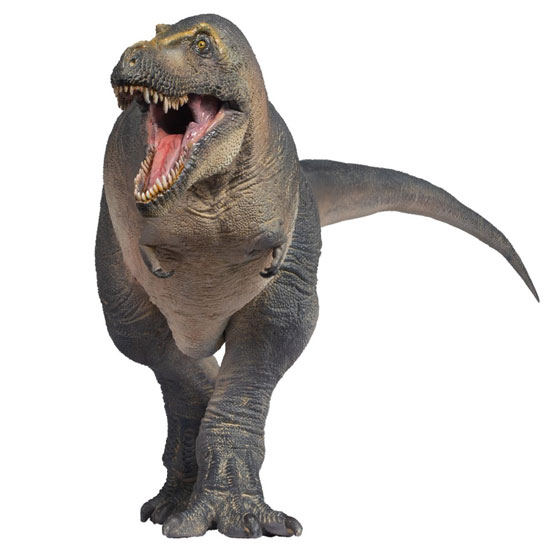
In a joint collaboration with PNSO, Everything Dinosaur is pleased to announce that a Tarbosaurus dinosaur model is being introduced into PNSO’s mid-size prehistoric animal model range. Say hello to Chuanzi the Tarbosaurus, the very latest addition to the ever-growing PNSO prehistoric animal portfolio.
This new dinosaur figure is likely to be available from Everything Dinosaur in the late summer of 2021.
A close-up view of the head of the new for 2021 PNSO Chuanzi the Tarbosaurus dinosaur model.
PNSO Chuanzi the Tarbosaurus
Dinosaur fans and model collectors will be aware that PNSO have ramped up production considerably and numerous new figures have been announced since the end of 2020. Chuanzi the Tarbosaurus is the second member of the Tyrannosauroidea to be announced this year after Yinqi the Yutyrannus (April 2021). Eagle-eyed collectors will note that the Tarbosaurus figure is number 51 in this series, whilst Yinqi, which was announced earlier is number 52.
The product packaging for the new PNSO Tarbosaurus dinosaur replica. Chuanzi the Tarbosaurus is number 51 in the PNSO mid-size model range.
Named and described in 1955, Tarbosaurus (T. bataar) is one of the largest tyrannosaurids known. It is believed to have been slightly smaller than Tyrannosaurus rex, but closely related to the “tyrant lizard king”. Tarbosaurus measured around 12 metres in length and most body weight estimates suggest a figure of between 4,000 and 5,000 kilograms.
PNSO Prehistoric Dinosaur Models: 51 Chuanzi the Tarbosaurus. This new for 2021 PNSO figure depicts Tarbosaurus as a heavy-set, robust theropod.
Model Measurements
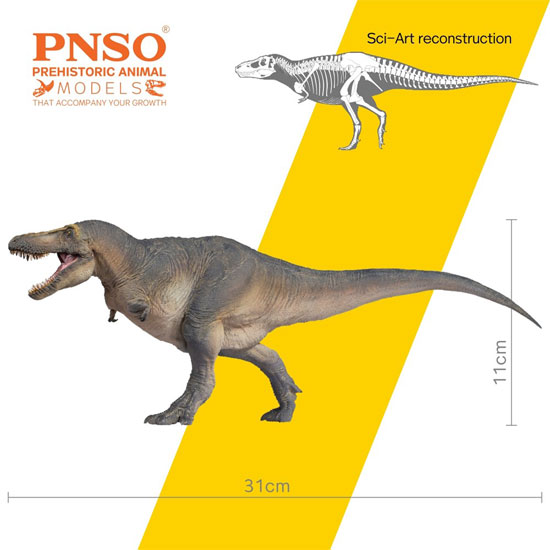
Chuanzi the PNSO Tarbosaurus measures 31 cm in length and it has a head height of 11 cm. The recently introduced new Wilson the T. rex figure is slightly longer (34.5 cm long), so these two models can be displayed together to provide the viewer with a comparison between these closely related Late Cretaceous tyrannosaurs.
The PNSO Chuanzi (Tarbosaurus dinosaur model) measures 31 cm in length and that powerful looking neck supports a head that stands 11 cm high.
Available from Everything Dinosaur in the Summer (2021)
A spokesperson from Everything Dinosaur confirmed that they intended to stock this figure and that it should be available from them later this summer. They also stated that there were more prehistoric animal figures to be announced.
As with other theropod dinosaur models in the PNSO model range, this new Tarbosaurus will have an articulated lower jaw and it will be supplied with a transparent stand to help support the model.
The PNSO Chuanzi the Tarbosaurus dinosaur model has an articulated lower jaw.
PNSO have chosen to depict Tarbosaurus as a powerful and heavy-set animal. The figure will be supplied with a transparent support stand.
The new PNSO Tarbosaurus (Chuanzi the Tarbosaurus) model is supplied with a transparent support stand.
To view the current range of PNSO prehistoric animal models in stock at Everything Dinosaur: PNSO Age of Dinosaurs.
Everything Dinosaur moved into new and larger premises in April (2021), our contact details for our customers remain the same but the business has relocated so that we can have all our dinosaur and prehistoric animal models in one place. Having moved, it was an opportunity to build up our profile on Google Maps. Reviews and feedback from our customers mean a great deal to us and this week we saw our 100th Google Review posted up on-line. All these reviews are 5-star ratings, every one of them genuine Google customer reviews.
Google Customer Reviews
Since Everything Dinosaur moved into new, bigger premises in April we have set about building up our presence on Google. In the last 8 weeks or so we have been able to gain 100 Google reviews all of them 5-star reviews. Picture credit: Feefo.
Feedback and Customer Reviews
Feedback and customer reviews are very important to a little, dinosaur-themed company such as ourselves. After all, in these uncertain and challenging times nobody wants to become extinct. Ever since Everything Dinosaur was formed, we have always welcomed feedback from our customers. Our website has over 1,670 customer reviews and comments on it, many thousands more are archived on our previous website manifestations. We continue to work with the independent ratings company Feefo and we have received thousands of Feefo feedback reports too. Our website currently displays around 600 customer reviews and we have received Feefo’s highest award for customer service (Platinum) every year since this accolade was introduced.
Everything Dinosaur has been awarded the Platinum Trusted Service accolade from Feefo.The company has been awarded this top honour by the independent ratings company Feefo, ever since the Platinum Trusted Service award was first created. Picture credit: Feefo.
A spokesperson from Everything Dinosaur commented:
“We are immensely proud of our Google achievement. To be able to pick up 100 customer reviewers in such a short time for a business our size is quite remarkable. In addition, every single one of these 100 customers gave us 5-stars, that’s top marks and we are truly humbled and honoured.”
Thank You
Everything Dinosaur would like to thank all those customers who have taken time out of their busy lives to leave feedback and to provide a review. These comments and testimonials mean a great deal to the company and every single review, blog post feedback and social media post is read and reviewed by team members.
On behalf of everyone at Everything Dinosaur – thank you.
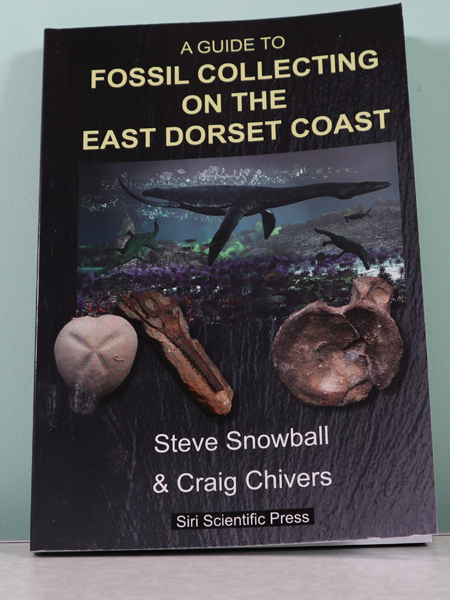
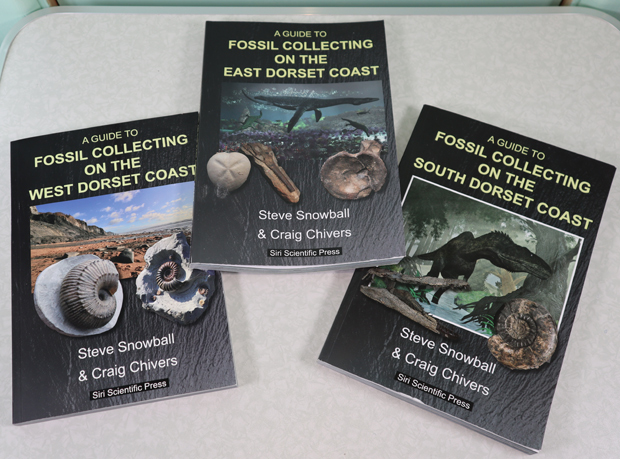
The third and final part of a series of guides to fossil hunting on the Dorset coast has been published by Siri Scientific Press. A guide to “Fossil Collecting on the East Dorset Coast” by Steve Snowball and Craig Chivers, provides an up to date and very informative guide to fossil collecting from the beautiful coast near Durdle Door eastwards ending at the Eocene-aged deposits to be found at Hengistbury Head.
The front cover “A Guide to Fossil Collecting on the East Dorset Coast” by Steve Snowball and Craig Chivers published by Siri Scientific Press. Picture credit: Everything Dinosaur.
Picture credit: Everything Dinosaur
A Highly Acclaimed Guidebook
“Fossil Collecting on the East Dorset Coast” is aimed at amateur as well as the more serious fossil hunter and it is required reading if you want to visit some of the more remote parts of the Dorset coast. Access to some of the locations can be tricky and the authors have ensured that plenty of useful information has been included such as advice about tide times, avoiding the dangers of rock falls (which can be frequent along this stretch of the coastline), along with details about accessing quarries and which ones require visitor permission.
This highly acclaimed guidebook is beautifully illustrated with lots of colour photographs not only showing fossil finds but also highlighting the stunning landscape and geology of this part of the southern coast of England.
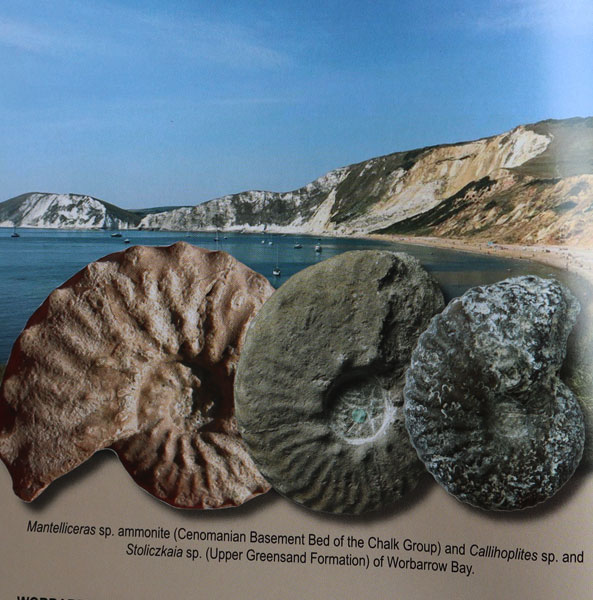
The book is packed with beautiful photographs showing typical fossil finds at each location as well as stunning shots of the Dorset coast. Often typical fossil finds are shown against a backdrop of the magnificent scenery of this part of England’s southern coast.
Stunning Images of Fossils
The authors provide an introduction to the UNESCO World Heritage site known as the “Jurassic Coast” before outlining the Dorset fossil collecting code of conduct and focusing on the unique geology of east Dorset. The book is then sub-divided into different sections taking the reader on fossil hunting excursions starting at the majestic Bat’s Head and St. Oswald’s Bay in an easterly direction to Worbarrow Bay and Gad Cliff through to Peveril Point and Swanage. The final excursion visits the Studland Bay and the Hengistbury Head area. Each part of the book contains stunning images of the fossils associated with each location.
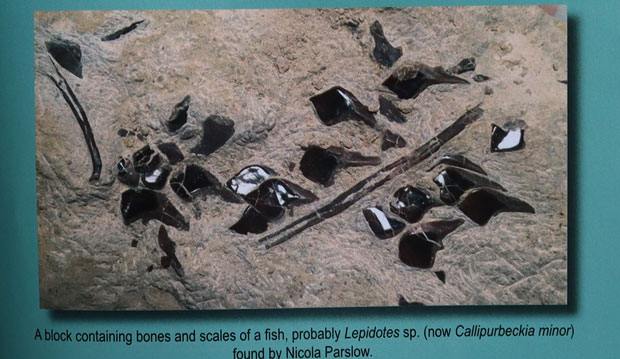
A block containing the fossilised remains of a prehistoric fish found on the east Dorset coast. Fossil found by Nicola Parslow. A “Guide to Fossil Collecting on the East Dorset Coast” contains full colour images highlighting fossils that can be found at the various locations.
Highlights include information and photographs showcasing the remarkable Etches Collection Museum of Jurassic Marine Life at Kimmeridge and the contribution made by Steve Etches, extensive information on the types of ammonites to be found and details on the different types of vertebrate fossils including trace fossils such as dinosaur footprints along with body fossils such as the bones from ancient crocodiles.
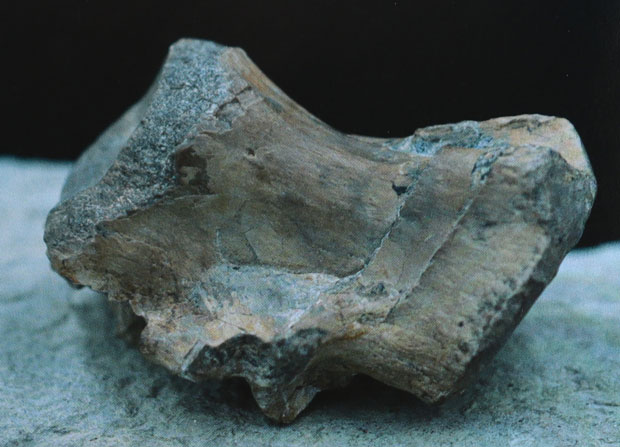
A crocodile vertebra found on the east Dorset coast (Durlston Bay) found by Julian and Vicky Sawyer.
Highly Recommended
A spokesperson from Everything Dinosaur commented:
“This book has over 200 colour photographs and illustrations including wonderful prehistoric scenes created by the very talented Andreas Kurpisz, it is an extremely informative and invaluable guide to fossil hunting on this part of the beautiful Dorset coast. The detailed descriptions of the fossil locations provided by the authors are a testament to their in-depth knowledge and passion for their hobby. It completes the trilogy of books dedicated to fossil hunting on the Dorset Coast and it is essential reading for amateur fossil collectors, students as well as seasoned professionals. Highly recommended.”
Three excellent guides have been published about fossil hunting on the Dorset coast by Steve Snowball and Craig Chivers. All three publications are available from Siri Scientific Press whilst stocks last. Picture credit: Everything Dinosaur.
Picture credit: Everything Dinosaur
To purchase the “Guide to Fossil Collecting on the East Dorset Coast” visit the website of the publisher Siri Scientific Press: Siri Scientific Press.
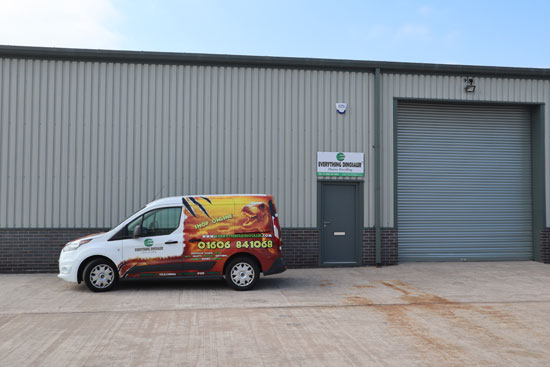
The UK-based Everything Dinosaur, a dedicated team that specialises in the supply of museum quality dinosaur and prehistoric animal models has moved into new, bigger premises. The new premises were acquired at the beginning of the year, but COVID-19 restrictions delayed the building of the offices and the bespoke packing rooms as well as the laying out of the racking system and storage facilities for all the various dinosaurs that the company stocks.
The new Everything Dinosaur offices and warehousing. In 2021, Everything Dinosaur moved into bigger premises. Picture credit: Everything Dinosaur.
Picture credit: Everything Dinosaur
Award-winning Dinosaur Company
The award-winning dinosaur company, famed for its customer service, aims to increase the number of different ranges of models that it offers. It already supplies one of the widest ranges of museum quality, prehistoric animal figures and although the warehouse is already very busy, the company does intend to add even more models to its portfolio in the near future.
The signage over the new premises for Everything Dinosaur (warehousing and offices). Picture credit: Everything Dinosaur.
Picture credit: Everything Dinosaur
Customer Contact Details
A spokesperson for Everything Dinosaur commented that they were determined to retain the customer contact details so that nobody would be inconvenienced by the move. The contact emails and telephone numbers for the company are the same as previously.
The spokesperson also confirmed that they were actively engaged in negotiations with a number of suppliers with a view to exporting more prehistoric animal models and figures from China and elsewhere in the world.
To visit Everything Dinosaur’s award-winning website and on-line store: Everything Dinosaur.
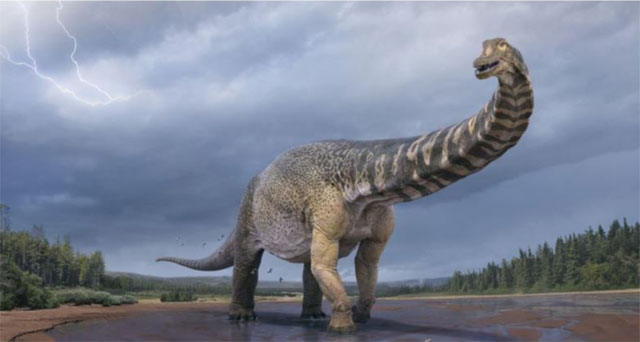
“Cooper” the giant Australian dinosaur, whose bones were found back in 2007 has been officially named. The largest animal ever to walk on the “land down under” has been named Australotitan (Australotitan cooperensis), this Cretaceous giant is estimated to have been around 30 metres in length, so Australotitan rivalled some of the giant South American titanosaurs, (to which it was distantly related), in size. Writing in the academic journal “PeerJ”, scientists describe this Australian titanosaur.
A life reconstruction of the newly named Australotitan cooperensis, the largest known animal to have ever lived in Australia. Picture credit: Queensland Museum.
“Southern Titan”
Writing in the academic journal “PeerJ”, the researchers who include corresponding author Scott Hocknull of the Queensland Museum and Robyn and Scott Mackenzie from the Eromanga Natural History Museum (Queensland), used limb bone comparisons to estimate the size of Australotitan. A sophisticated computer programme provided detailed 3-D surface scans of the fossil bones to permit autapomorphies to be identified that led to the erection of this new taxon.
A Giant Australian Titanosaur
The huge dinosaur, with a shoulder height of around 6 metres was named “Southern Titan”, the trivial (species name), honours the site of the fossil discovery – the Cooper-Eromanga Basin, Cooper Creek system and the common vernacular for this part of south-western Queensland “Cooper Country”.
Back in 2015, Everything Dinosaur reported on the on-going research being conducted on this titanosaur when final preparations were being made for the opening of the Eromanga Natural History Museum which was being built to house this specimen along with other dinosaur and marine reptile remains that had been found in Queensland.
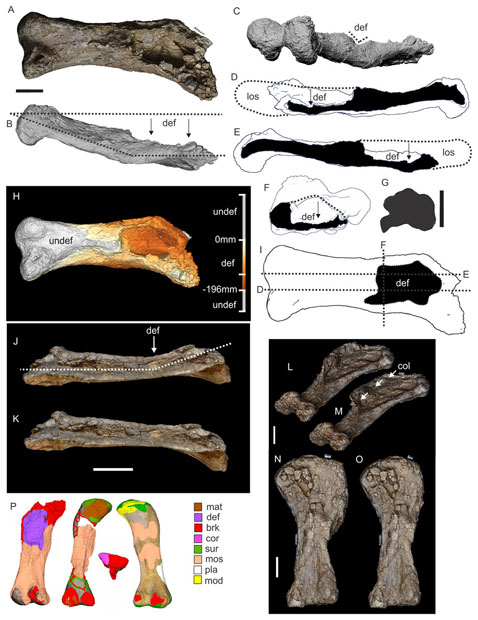
Several of the bones although almost complete show distortion. The bones of this particular titanosaur seem to have been trampled and partly crushed by the movements of another titanosaur that “walked over the grave” of Australotitan. The use of the 3-D bone scans permitted the researchers to correctly reconstruct bone morphology and a subsequent phylogenetic assessment revealed that A. cooperensis was related to three other, roughly contemporaneous sauropod taxa known from Queensland – Wintonotitan, Diamantinasaurus and Savannasaurus.
The right femur (specimen number EMF102) seems to have been trampled and crushed as another sauropod walked over it. Sophisticated 3-D scans were used to reconstruct the original shape of the bones and permit taxonomic study. Note scale bars = 20 cm. Picture credit: Hocknull et al
The scientific paper: “A new giant sauropod, Australotitan cooperensis gen. et sp. nov., from the mid-Cretaceous of Australia” by Scott A. Hocknull, Melville Wilkinson, Rochelle A. Lawrence, Vladislav Konstantinov, Stuart Mackenzie and Robyn Mackenzie published in PeerJ.
Earlier this spring, a team of researchers led by Pavel Skutschas (St Petersburg University, Russia), published a paper reporting on the study of 63 stegosaur teeth that had been found in Lower Cretaceous deposits in south-western Yakutia, located in eastern Siberia. Just like today, during the Early Cretaceous this part of Siberia was at a high latitude (palaeolatitude estimate of N 62°- 66.5°) and within the Arctic circle. The scientists conclude that these stegosaurs may have had some special adaptations to help them survive their harsh environment, such as a rapid tooth replacement rate to permit them to cope with a diet mainly consisting of conifer needles and branches.
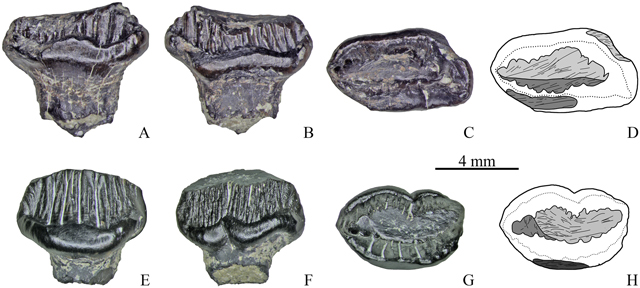
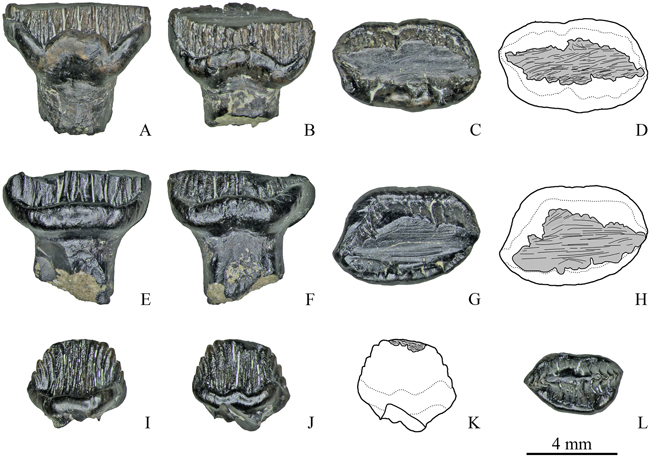
Maxillary teeth with two (A-D), and with three wear facets (E-H) of Stegosauria indet. from the Teete locality, Yakutia, Russia; Batylykh Formation (Lower Cretaceous). Specimens ZIN PH 80/246 (A-D), ZIN PH 57/246 (E-H) in labial (A, E), lingual (B, F), occlusal (C, G) views, and interpretive drawings (D, H) in occlusal views showing the wear facets with scratches. Picture credit: Skutschas et al.
Stegosaurs Probably Present All Year
There has been much debate amongst palaeontologists as to whether large herbivorous dinosaurs such as stegosaurs were permanent residents of high latitude palaeoenvironments, or whether they migrated up to these latitudes in the summer to take advantage of the long periods of daylight. In the height of summer, there would have been around twenty-two hours of daylight at this latitude presumably providing very favourable conditions for plant growth.
The researchers, writing in the on-line, academic journal PLOS One report the discovery of smaller stegosaur teeth in the excavations, which took place in 2012 and then in the summer months from 2017-2019. As it is thought that the teeth represent a single species of stegosaur, this indicates that both adults and juveniles were present at this site.
Lead author Pavel Skutschas an Associate Professor in the Department of Vertebrate Zoology at St Petersburg University commented:
“We have found teeth of animals of different ages. This suggests that the polar stegosaurs are most likely to have been sedentary that they reproduced and raised offspring on the same territory all year round”.
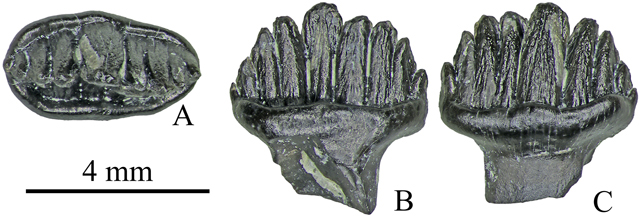
Small, relatively unworn tooth of an indeterminate stegosaur from the Teete locality in (A) occlusal, (B) labial and (C) lingual views. This suggests that both adult and juvenile stegosaurs were present. Picture credit: Skutschas et al.
A Diverse Prehistoric Fauna
The researchers from St Petersburg University worked together with colleagues from the Zoological Institute of the Russian Academy of Sciences, the Borissiak Paleontological Institute of the Russian Academy of Sciences, the University of Bonn (Germany) and the Diamond and Precious Metal Geology Institute of the Siberian Branch of the Russian Academy of Sciences to examine, excavate and sieve material from the Batylykh Formation, Sangar Series (Lower Cretaceous, Berriasian–Barremian faunal stage) along the banks of the Teete River in Suntar Ulus, Yakutia, Eastern Siberia.
This location has yielded dinosaur fossils (including theropods as well as ornithischian dinosaurs), turtles, salamanders and early mammals.
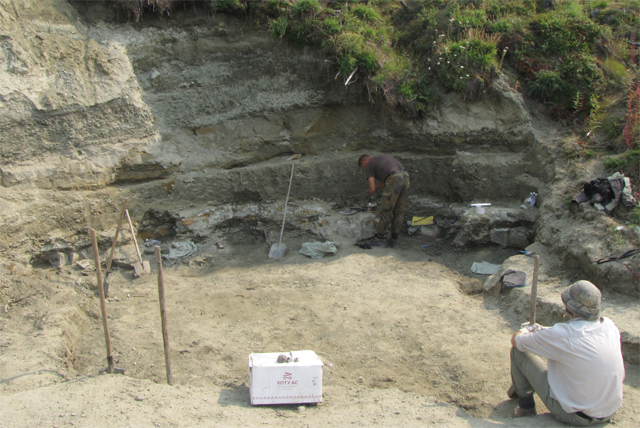
Researchers working at the excavation site. Picture credit: University of St Petersburg.
Stegosaurian remains are the most abundant and consist of numerous isolated teeth, vertebrae, ribs, pelvic elements and occasional cranial material. The stegosaur teeth were all retrieved by screen washing and sieving samples. Most exhibit a high degree of wear and indicate that these animals fed on very abrasive plant material. In addition, study of the tiny scratches on the teeth suggest tooth on tooth contact and precise dental occlusion in the Teete River stegosaurs.
Studying Stegosaurs
The microwear examined suggests that these animals had a more complex jaw movement to help them process food in their mouths, the tooth wear observed could not have occurred if these dinosaurs were only capable of moving their jaws up and down in a simple scissor-like action.
Maxillary teeth with a single apical facet of Stegosauria indet. from the Teete locality, Yakutia, Russia; Batylykh Formation (Lower Cretaceous). Specimens ZIN PH 7/246 (A–D), ZIN PH 11/246 (E–H), ZIN PH 20/246 (I–L), ZIN PH 6/246 (M–P) in labial (A, E, I, M), lingual (B, F, J, N), occlusal (C, G, K, P) views, and interpretive drawings in occlusal (D, H, L) and lingual (O) views showing the wear facets with scratches. Picture credit: Skutschas et al.
Rapid Tooth Replacement
Under the microscope, the researchers made another surprising discovery. The Teete stegosaurs are characterised by their relatively short tooth formation time. The teeth were rapidly replaced and the replacement teeth were formed in a relatively short time (95 days). This might have been an adaptation to the particularly abrasive diet of these herbivores which probably fed on conifers. Furthermore, the scientists identified the presence of a “wavy enamel pattern” on the teeth.
This type of enamel has also been found on the teeth of Psittacosaurus, a basal member of the horned dinosaurs (Ceratopsia) and within the Ornithopoda. The researchers conclude that this feature of teeth is a shared trait amongst bird-hipped dinosaurs. Whether it was present in the ancestor of the ornithischian dinosaurs or whether this histological feature is an example of convergent evolution in different types of plant-eating dinosaur is not known.
The scientific paper: “Wear patterns and dental functioning in an Early Cretaceous stegosaur from Yakutia, Eastern Russia” by Pavel P. Skutschas, Vera A. Gvozdkova, Alexander O. Averianov, Alexey V. Lopatin, Thomas Martin, Rico Schellhorn, Petr N. Kolosov, Valentina D. Markova, Veniamin V. Kolchanov, Dmitry V. Grigoriev, Ivan T. Kuzmin and Dmitry D. Vitenko published in PLOS One.
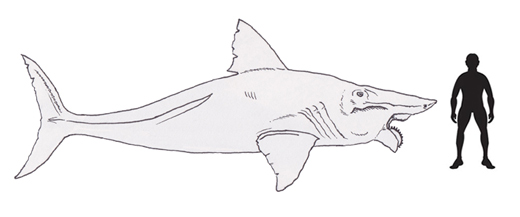
As Everything Dinosaur team members prepare for the arrival of the new for 2021 PNSO Helicoprion model a scale drawing of this strange fish from the Permian has been commissioned. Haylee the Helicoprion model is due to be in stock at Everything Dinosaur later in the summer (2021).
As Everything Dinosaur prepares for the arrival of Haylee the Helicoprion model from PNSO a scale drawing of this Permian fish has been commissioned. Picture credit: Everything Dinosaur.
Three species in the Helicoprion genus are currently assigned, each one being distinguished from the others by variations identified in the distinctive tooth whorl. The size of this predator remains uncertain, although based on the morphology of other smaller related fish, Helicoprion has been estimated to have been around 5 to 8 metres in length. In the Everything Dinosaur scale drawing that we have prepared, our image indicates that this strange fish grew to lengths of around 7.5 to 8 metres.
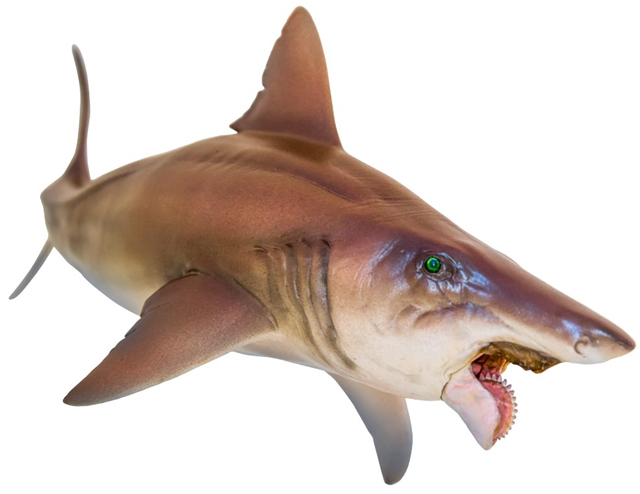
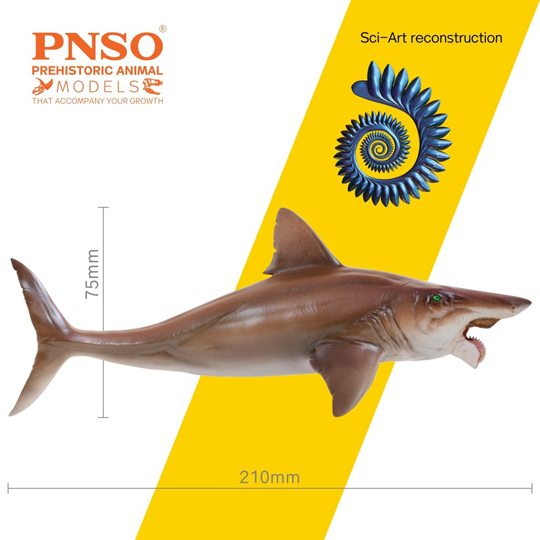
PNSO Haylee the Helicoprion replica. The stunning emerald eye on the model is reminiscent of the eye of a Chimaera such as the deep water Rabbit Fish (Chimaera monstrosa) to which Helicoprion is distantly related.
Haylee the Helicoprion
As with the other mid-size PNSO replicas, this stunning model has been given a nickname. The figure is called Haylee the Helicoprion, Everything Dinosaur team members are not sure why Haylee was chosen; however, it is certainly a welcome addition to the PNSO product portfolio and we are looking forward to stocking it later on this year (2021).
The model measures 21 cm in length and from the base of the tail fluke to the top of the dorsal fin of the Helicoprion is 7.5cm
Model Measurements
The model measures around 21 cm in length and although PNSO do not declare a scale for this range of prehistoric animal figures, team members estimate that if Helicoprion was around 8 metres in length then this model would be in approximately 1:38 scale or thereabouts.
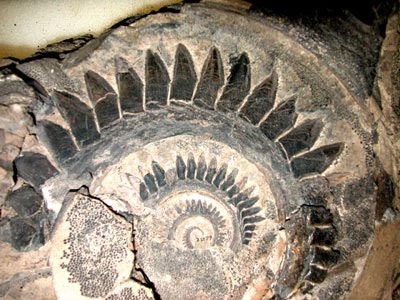
Fossilised teeth whorl from a cartilaginous fish. The famous tooth whorl associated with the Permian fish genus Helicoprion.
A spokesperson from Everything Dinosaur commented that they were looking forward to bringing this model into stock and they were also excited about making more new product announcements about PNSO models in the very near future.
To view the range of PNSO prehistoric animal models and figures in stock at Everything Dinosaur: PNSO Age of Dinosaurs.