By Mike|2023-12-05T10:59:19+00:00May 4th, 2019|Categories: General Teaching|Comments Off on Everything Dinosaur Gets a New Trade Mark
Everything Dinosaur Gets a Trade Mark
The Everything Dinosaur company has been granted a trade mark for its brand. The granting of this trade mark status has meant that team members have had to update a number of images used on the Everything Dinosaur websites and social media pages. For example, the company logo featured in the header area of this dinosaurs for schools site now has the symbol ® attached to it. An image of the Everything Dinosaur trademark has been reproduced below.
Everything Dinosaur Has Successfully Applied for a Trade Mark
Everything Dinosaur logo trade mark (2019). Picture credit: Everything Dinosaur.
Picture credit: Everything Dinosaur
What is a Trade Mark?
What is a trade mark? How does this affect a company? A trade mark is a sign that helps to distinguish the origin of goods and services from those of other companies. For example, the logo demonstrates that the sales related to prehistoric animals and such like, that are the core business activities of Everything Dinosaur, come from this organisation. A trade mark can take a variety of forms, it can be symbol, it can take the form of words, smells, logos, sounds, colours or a combination of the above. However, the trade mark needs to be distinctive and acceptable. The Everything Dinosaur trade mark is yet another indication of our long-term commitment to the market place.
The Everything Dinosaur Trade Mark
A spokesperson from Everything Dinosaur commented:
“As a small, British company getting trade mark status is important to us, it provides a degree of protection for our business as well as providing assurance to our customer base with regards to our commitment to the market.”
Visit the award-winning and trade marked Everything Dinosaur website: Everything Dinosaur.
Scientists from Tsinghua University (Beijing), in collaboration with colleagues from the Chinese Academy of Sciences have suggested that the way in which some theropod dinosaurs ran caused their feathered arms to move up and down. Involuntary wing flapping might have been the first stage in the evolution of powered, active flight. This is the conclusion reached in a new scientific paper published in the academic journal “PLOS – Computational Biology”, after a series of highly innovative experiments that involved building a robotic dinosaur and strapping artificial wings to young ostriches.
Modelling the Running Action of Caudipteryx
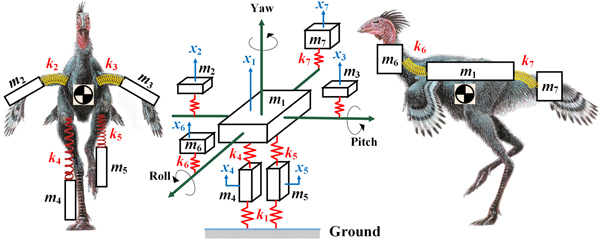
Mechanically modelling the running action of the basal feathered dinosaur Caudipteryx.
Picture credit: PLOS – Computational Biology
Ground Up or Tree Down?
Most scientists now accept that the Dinosauria is divided into two divisions, the avian dinosaurs – the birds and the non-avian dinosaurs, essentially all the other dinosaurs. In addition, it is also widely believed that a type of maniraptoran dinosaur (a clade that contains true birds and those dinosaurs closely related to birds), evolved into our feathered friends.
Trouble is, how did powered flight, a trait very closely associated with most birds alive today come about? Were some dinosaurs arboreal, clambering amongst the branches of trees and they then evolved the ability to glide and finally powered flight came about in what is described as a “tree down” approach. Or, were fast-running, cursorial dinosaurs learning to leap into the air and over many generations, feathered arms became longer and stronger and the lift generated led to the evolution of volant dinosaurs and subsequently the birds? This theory is termed “ground up”.
The debate has persisted for more than a hundred years.
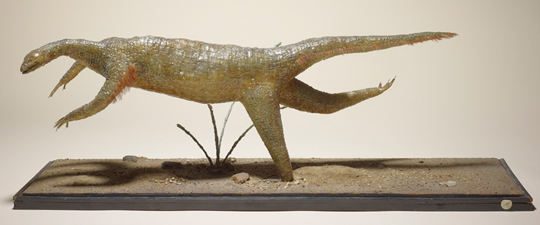
Proavis – A Hypothetical Attempt to Assess “Ground Up” – Fast Running Led to the Evolution of Powered Flight
A model of the hypothetical animal Proavis. An early attempt to examine how fast-running bipedal animals might have evolved into birds.
Picture credit: Grant Museum of Zoology
Taking a Mechanical Approach to Caudipteryx
The researchers adopted a mechanical approach to this evolutionary conundrum. They looked at one of the most basal, non-flying feathered dinosaurs known – Caudipteryx and assessed whether if this dinosaur ran fast enough, its running gait might have caused its feathered arms to flap involuntarily.
In theory, if the arms were strong enough, the wings and their feathers large enough, flapping whilst running fast could generate lift and if the lift to body weight ratios were right, then the dinosaur could take to the air. In essence, passive wing flapping may have been an evolutionary precursor to later active wing flapping and powered flight.
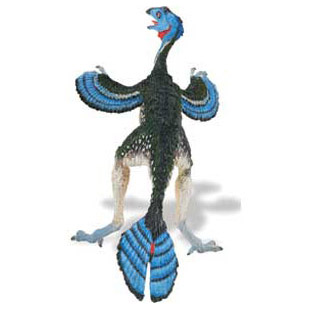
An Illustration of Caudipteryx
A basal feathered dinosaur that could not fly, but could it flap?
The Caudipteryx model is from the Safari Ltd range.
An assessment of the fossilised bones of the pheasant-sized Caudipteryx led the researchers to determine that Caudipteryx had a top speed of 8 metres per second (28.8 kmh or 18 mph). However, simulations using mechanical and computer models suggested that at even lower speeds from 2.5 to 5.8 metres per second, the gait of Caudipteryx would have created strong enough vibrations through its body to cause the wings to flap.
Testing the Physical Movement of Artificial Wings on Young Ostriches
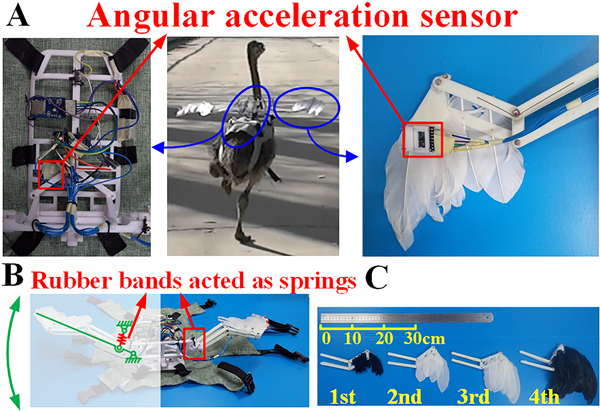
Testing the movement of artificial wings in young ostrich locomotion study.
Picture credit: PLOS – Computational Biology
A Life-size Robotic Caudipteryx
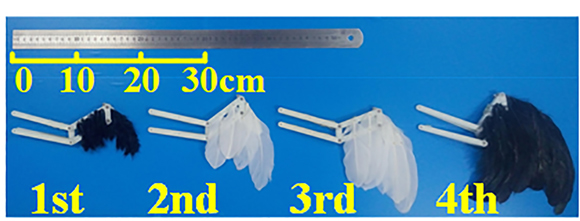
To test their calculations, the scientists built a life-size, robotic Caudipteryx and tested its running performance on a treadmill. Several young ostriches were kitted out with artificial wings equipped with sensors that could detect lift and forward thrust, or any coefficient drag. These birds were then put on the treadmill to see how they would perform. In addition, five different sizes of feathers on the wings were tried, the larger feathers producing more results akin to the development of powered flight.
Five Different Wing Sizes and Feathers were Tested
Five different wing and feather combinations were tested.
Picture credit: PLOS – Computational Biology
Professor John Hutchinson (Royal Veterinary College, London), an expert on animal locomotion, although not directly involved in the research, described this physical modelling approach as “ambitious and creative”, but questioned the paper’s main findings.
The study, for example, may have oversimplified the biology, reducing a living organism to a series of springs and constituent parts with individual mass, subsequently compiled to produce a single result. Caudipteryx could have ran with its arms held very close to its body, helping it to reduce air resistance as it moved quickly, but also negating some of the lift and thrust that might have been generated by its feathered forelimbs.
Despite his reservations, Professor Hutchinson sees this study has helping to “lay groundwork that could be built upon and tested more rigorously.”
It seems that for the time being, the debate between “tree down” and “ground up” remains unresolved and it is not certain how much of a role passive arm flapping as a result of terrestrial locomotion influenced the evolution of active wing flapping, the precursor to a truly aerial existence.
More PNSO Prehistoric Animals Added to Everything Dinosaur’s Model Range
Everything Dinosaur will be bringing more PNSO prehistoric animal models into stock. In the next few weeks, the UK-based company will take delivery of “Essien” the Spinosaurus, “Lucio” the Amargasaurus and the marine reptile “Ron” the Mosasaurus. In addition, Everything Dinosaur will be stocking the new Ankylosaurus “Sede” along with the new Megalodon model “Patton”.
Coming into Stock at Everything Dinosaur – The PNSO Spinosaurus Model “Essien”
The PNSO Spinosaurus measures around 49 cm long.
Picture credit: Everything Dinosaur
“Essien” the Spinosaurus
The PNSO Spinosaurus model represents a recent interpretation of Spinosaurus aegyptiacus, the North African theropod is depicted as a quadruped and the model measures around 49 cm long and the top of the sail on the back is some 18.5 cm off the ground. This PNSO Spinosaurus would make a stunning centrepiece.
The Spinosaurus Has Captured an Onchopristis
PNSO Spinosaurus replica with the just caught Onchopristis.
Picture credit: Everything Dinosaur
“Ron” the Mosasaurus
Swimming into view is the marine reptile “Ron” the Mosasaurus, which, like “Essien” the Spinosaurus has an articulated jaw. The model is reported to be in 1:35 scale and it measures around 30 cm in length. It truly is a monster-sized Mosasaurus model.
“Ron” The Beautiful PNSO Mosasaurus Figure
“Ron” the PNSO Mosasaurus replica. It has an articulated lower jaw.
Picture credit: Everything Dinosaur
This highly detailed figure even has pterygoid teeth located in the roof of its mouth, betraying the Squamata link with the Mosasauridae.
A Monster of a Marine Reptile with Fantastic Packaging – PNSO Mosasaurus
Marine reptile in a box – the PNSO Mosasaurus “Ron”.
Picture credit: Everything Dinosaur
“Lucio” the Amargasaurus
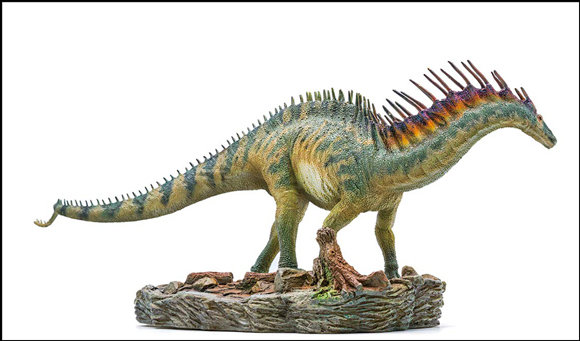
For a company that has focused so much on Chinese dinosaurs, it is great to see the South American Amargasaurus figure enter the “Scientific Art Model” range. “Lucio” the Amargasaurus measures around 30 cm in length and the figure is supplied with a base, on which to pose the figure.
PNSO Amargasaurus “Lucio”
PNSO Amargasaurus “Lucio”. A beautiful Amargasaurus model with a declared scale of 1:35.
Picture credit: Everything Dinosaur
The Amargasaurus figure with its polystone effect base depicts the model walking over soft mud, the base even has a couple of Amargasaurus footprints preserved within it.
New PNSO Prehistoric Animal Figures “Sede” and ” Patton”
Everything Dinosaur will be also be stocking a new range of PNSO prehistoric animal figures.
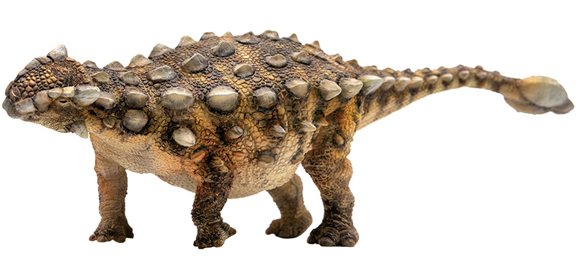
PNSO have introduced a range of large models under the straplines “PNSO prehistoric animal models that accompany your growth”, now extended to include “Scientific Art Models”. The company has also made forty-eight small prehistoric animal figures under the strapline “PNSO prehistoric animal toys that accompany your growth”. Today, Everything Dinosaur announces that there will also be a range of intermediate-sized models, including and Ankylosaurus “Sede” and a Megalodon model with an articulated lower jaw “Patton”.
The New PNSO Ankylosaurus Figure “Sede”
“Sede” the Ankylosaurus (PNSO). The Ankylosaurus figure measures approximately 25 cm long.
Picture credit: Everything Dinosaur
The New PNSO Megalodon Model “Patton”
PNSO Megalodon model. This figure has an articulated lower jaw.
Picture credit: Everything Dinosaur
PNSO Prehistoric Animal Figures
A spokesperson from Everything Dinosaur commented:
“All these figures will be coming into stock in the next few weeks, perhaps as early as next month. We will publish prices but for the time being we encourage collectors to email us, to join our no obligation, priority reserve lists for these exciting PNSO figures.”
Brown Banks and White Cliffs – The Search for Lost Prehistoric Settlements
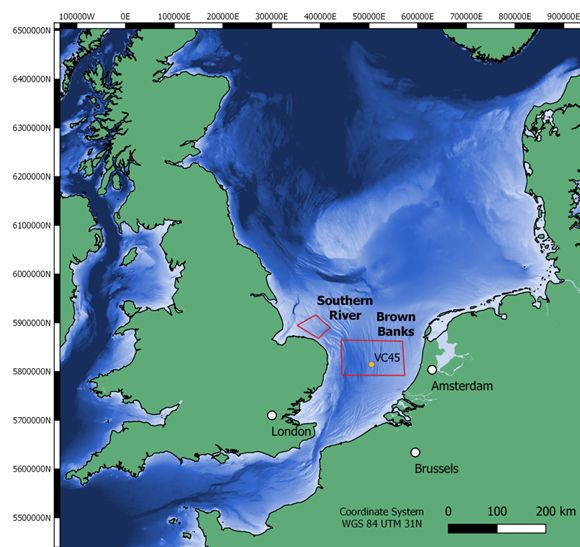
After a successful expedition in 2018, the second voyage in search of prehistoric landscapes and submerged settlements within the Brown Bank area of the southern North Sea will set off next week. Marine experts will join archaeologists on the eleven-day voyage. Researchers from the UK and Belgium will combine acoustic techniques and physical sampling of the seabed to unravel the topography and history of these landscapes and their inhabitants. The scientists will be mapping a lost world.
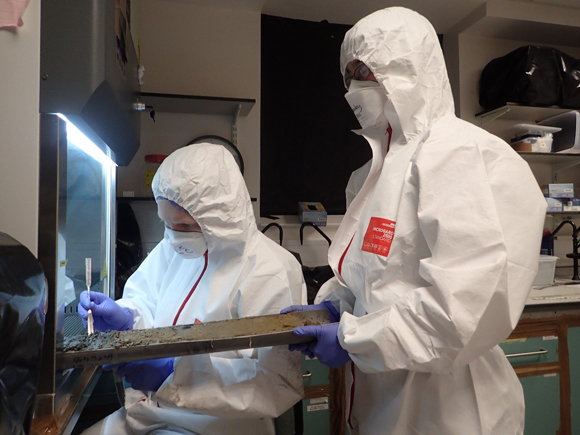
Careful Analysis of North Sea Sediment Cores Looking for Evidence of Prehistoric Settlements
DNA sampling of sediment cores at the University of Warwick.
Picture credit: Lost Frontiers
Exploring Prehistoric Landscapes
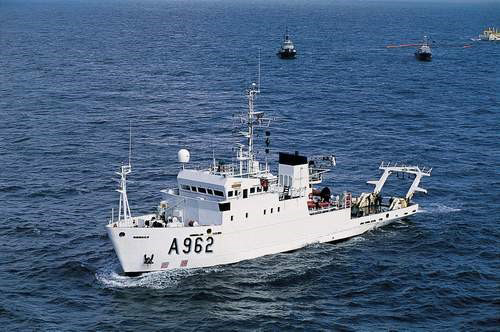
The expedition will be led by Dr Tine Missiaen (Flanders Marine Institute – VLIZ), accompanied by scientists from Ghent University and the University of Bradford. The voyage on board the Belgian research vessel “RV Belgica” takes place within the collaborative Belgian-UK-Dutch research project known as “Deep History: Revealing the palaeo-landscape of the southern North Sea”.
The research project aims to reconstruct the Quaternary history (roughly spanning the last half a million years) and human occupation of the wider Brown Bank area. The project compliments the Bradford-led “Lost Frontiers” project, in which archaeologists are mapping the prehistoric North Sea landscape known as Doggerland. The research is funded by the European Research Council (ERC).
Until sea levels rose at the end of the last Ice Age, between 8-10,000 years ago, an area of land connected Great Britain to Scandinavia and the continent. The Lost Frontiers team has identified thousands of kilometres of plains, hills, marshlands and river valleys, but despite all this mapping, evidence of human settlement has been difficult to find.
Home to Thousands of Stone Age People
Archaeologists have long suspected that the southern North Sea plain, right in the centre of Doggerland, may have been home to thousands of people. Tantalising clues have been brought up by trawlers over the years, but the researchers hope to find more evidence to substantiate the population hypothesis.
A concentration of archaeological material, including worked bone, stone and human remains, has been found within the area around the Brown Bank, an elongated, eighteen-mile-long (thirty-kilometres) sand ridge roughly sixty miles (a hundred kilometres) due east from Great Yarmouth on the Norfolk coast. The amount of artifacts found suggests the presence of a Stone Age settlement.
Exploration Areas (May 2019) – The Brown Banks and the Southern River
The Southern River and the Brown Banks 2019 exploration areas. Note: VC45 core location.
Picture credit: Lost Frontiers/VLIZ/UGent
A Detailed Geophysical and Geotechnical Survey
In 2018, teams from the Flanders Marine Institute, Ghent University, the Dutch Geological Service and the University of Bradford collaborated on a detailed geophysical and geotechnical survey to identify prehistoric land surfaces, including ancient lakes and river valleys. Sediment was extracted from the seabed to see if traces of human activity could be identified.
Thanks to the simultaneous use of different seismic sources, an uninterrupted image of the subbottom was obtained with unprecedented detail. Combined with the study of sediment cores this allowed the scientists to refine the search for human activity to areas on the Brown Banks.
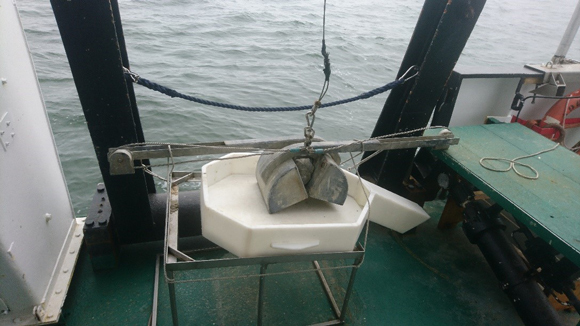
The May 2019 expedition will focus on detailed investigations in these areas, deploying VLIZ’s novel multitransducer echosounder, which uses sonar technology to obtain images of the subbottom with the highest possible resolution, and the collection of larger samples of sediment as well as video footage from the seafloor using VLIZ’s dedicated videoframe.
The Grab Sampler Ready to be Deployed
The grab sampler ready to be deployed.
Picture credit: Belgian Navy
Exploring the “Southern River”
The team will also be visiting another area, known as the “Southern River”, a major prehistoric river valley flowing across a submerged headland off the East Anglian coast. Previously surveyed by Lost Frontiers, the team believes that the estuary of the river, which may also have been flanked by white chalk cliffs, provides another potential area for prehistoric settlement. The detailed survey of this area during this expedition will be the first ever undertaken to assess the archaeological potential of this part of the North Sea.
Commenting on the importance of this research, Professor Vincent Gaffney (University of Bradford), stated:
“In 2018, the team demonstrated that we can find prehistoric land surfaces on the Brown Banks that date from the Mesolithic period. This provides the exciting prospect to return and recover larger volumes of sediment from those land surfaces, and find out what evidence they may contain of human settlement.”
The Survey Vessel – The RV Belgica
The RV Belgica (Belgian Navy).
Picture credit: Belgian Navy
Doctor Tine Missiaen, (Flanders Marine Institute), added:
“The combined use of different state-of-the-art acoustic sources provides a major step forward in the identification and reconstruction of prehistoric land surfaces that now lie buried below the seafloor. With the detailed investigations that will be carried out in May 2019 we hope to further unravel the unique history of these landscapes and their inhabitants.”
Everything Dinosaur acknowledges the assistance of a media release from the University of Bradford in the compilation of this article.
By Mike|2023-12-08T09:05:40+00:00May 1st, 2019|Categories: Early Years Foundation Reception|Comments Off on The Start of a Dinosaur Inspired Term Topic
Starting a Dinosaur Inspired Term Topic
Children in the Foundation Stage at Almondbury Community School have started a term topic all about dinosaurs and prehistoric animals. The budding young palaeontologists in the Nursery and Reception classes took part in some dinosaur-themed workshops today to help kick-start their summer term topic.
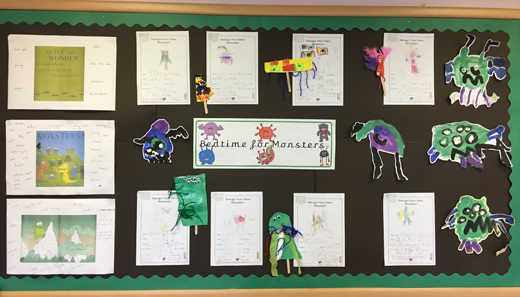
The walls of the well-appointed and tidy classrooms at the Greenside Centre were already crammed full of lots of colourful and creative artwork. Our dinosaur expert who visited the school, spotted some beautiful drawings of monsters that had been created by the Foundation Stage 2 children. There was some very imaginative artwork on display and many of the drawings were accompanied by a sentence or two. The vibrant posters highlighted the children’s development of fine motor skills, they must have had lots of practice holding pencils and forming recognisable letters and words.
Spotting Drawings of Monsters in the Foundation Stage Classrooms
Dinosaur drawings and illustrations of monsters spotted outside the classroom. Picture credit: Everything Dinosaur.
Picture credit: Everything Dinosaur
Dinosaur Drawings
As part of the work with the children, our dinosaur expert set a challenge – could they draw him a dinosaur? As a further extension for the Reception-aged children, could they label the body parts of their dinosaur including its skull? During the workshop with the Reception class, it was explained that palaeontologists call your head a skull and when working with the Nursery children, the eager, young learners confidently asserted that the helmet that a palaeontologist wears fits on their head!
At this school, there is a strong emphasis on giving every pupil access to a stimulating and balanced curriculum, lots of tactile activities were being prepared for the children by the dedicated teaching team. In one part of the spacious classroom, a cargo net had been brought in and facts about dinosaurs posted up on the walls, as this area was soon to be turned into a “dinosaur den” for the children to explore.
All Set to Build a “Dinosaur Den” in the Classroom
Dinosaur drawings feature in the dinosaur den. Picture credit: Everything Dinosaur.
Picture credit: Everything Dinosaur
Dinosaur Footprints and a Dinosaur-themed “Hokey Cokey”
The Foundation Stage wing of the Greenside Centre was very busy with lots of activities for the children set out and the during the workshops the pupils demonstrated some super listening skills and they were very enthusiastic ammonites catching fish. When pretending to be a giant, armoured dinosaur moving through the forest, our dinosaur expert witnessed super-sized steps, but slow moving dinosaurs keeping very quiet in case a hungry Tyrannosaurus rex came by.
The handy pronunciation guide we provided for the teachers should help with the scheme of work, along with the dinosaur footprints to measure and a special prehistoric animal-themed “hokey cokey” song for the children to learn. Can they remember how many figures T. rex had? How did a T. rex move its arms?
Jaw Fossil Indicates Denisovans Occupied the Tibetan Plateau
Denisovans, occupied the Tibetan Plateau long before Homo sapiens arrived in the region. Furthermore, the ability to cope with less oxygen at high altitudes may have been passed onto our species when ancient members of Homo sapiens, bred with Denisovans. The analysis of a fragmentary lower jaw bone reveals the presence of Denisovans at least 160,000 years ago at the Baishiya Karst Cave complex in Xiahe, China.
The ability to survive in such extreme climates had been thought to be a unique trait of H. sapiens, that is now not the case and what is more, the enigmatic and poorly known Denisovans seem to have passed on a gene that helps modern people cope with living at high elevations.
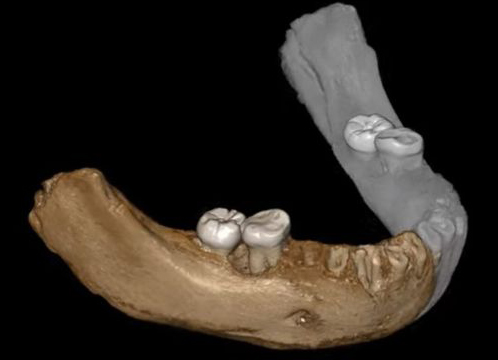
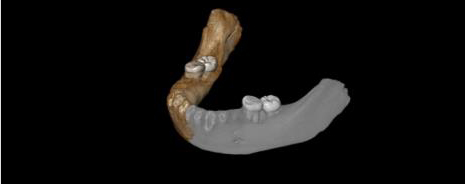
A Digital Reconstruction of the Fossil Mandible
View of the virtual reconstruction of the Xiahe mandible after digital removal of the adhering carbonate crust. The mandible is so well preserved that it allows for a virtual reconstruction of the two sides of the mandible. Mirrored parts are in grey.
Picture credit: Jean-Jacques Hublin (MPI-EVA)
The Enigmatic Denisovan People
The study, undertaken by a team of international researchers including Shara Bailey (New York University), as well as scientists from the Institute of Tibetan Plateau Research, the Chinese Academy of Sciences, Lanzhou University, and the Max Planck Institute for Evolutionary Anthropology, has been published in the journal “Nature”.
Using a technique known as ancient protein analysis, the researchers found that the mandible’s (lower jaw) owner belonged to a Denisovan population from Siberia. This population occupied the Tibetan Plateau, regarded as the “Roof of the World” because it rises three miles (five kilometres), above sea level. This suggests that the enigmatic Denisovans were adapted to a low oxygen environment.
In contrast, evidence of Neanderthals is rarely found above 2,000 metres and what evidence there is, probably indicates that Homo neanderthalensis populations only occasionally climbed to such heights, perhaps for the purpose of a special hunt or ceremony. They do not seem to have persisted at high altitude.
The research team state that Denisovans had already adapted to living in this high-altitude setting significantly prior to the appearance of Homo sapiens. Previous genetic studies found present-day Himalayan populations carry the EPAS1 allele in their genome, passed on to them by Denisovans, which helps with adaptation to their specific and demanding environment.
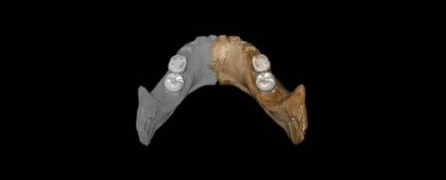
A Posterior View of the Fossil Mandible
Digital reconstruction of the Denisovan jaw bone. Reconstructed area is shaded grey.
Picture credit: Jean-Jacques Hublin (MPI-EVA)
Who Were the Denisovans?
Denisovans are members of a hominin group currently only known directly from fragmentary fossils, the genomes of which have been studied from a single site, Denisova Cave in Siberia. They are also known indirectly from their genetic legacy through gene flow into several low-altitude East Asian populations and high-altitude modern Tibetans. The presence of a new species of ancient human was confirmed when a research team led by Svante Pääbo from the Max Planck Institute for Evolutionary Anthropology (MPI-EVA), conducted a genetic study on a single fossil finger bone from the Denisova Cave site.
Commenting on the significance of linking a fossil to the Tibetan Plateau, one of the paper’s co-authors Jean-Jacques Hublin (MPI-EVA), stated:
“Traces of Denisovan DNA are found in present-day Asian, Australian, and Melanesian populations, suggesting that these ancient hominins may have once been widespread. Yet, so far, the only fossils representing this ancient hominin group were identified at the Denisova Cave.”
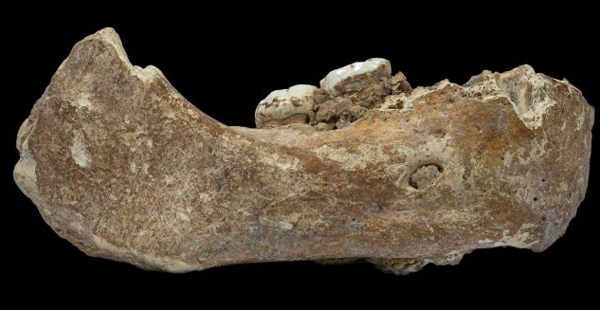
A Photograph of the Actual Fossil Jaw Bone (Lateral View)
Xiahe Denisovan jaw bone from the Baishiya Karst Cave (Gansu Province, China).
Picture credit: Dongju Zhang (Lanzhou University)
Discovered by a Monk
In this newly published paper, the researchers describe a hominin lower mandible that was found on the Tibetan Plateau in the Baishiya Karst Cave in Xiahe, Gansu Province, China. The fossil was originally discovered in 1980 by a local monk who donated it to the 6th Gung-Thang Living Buddha who then passed it on to Lanzhou University.
Since 2010, researchers Fahu Chen and Dongju Zhang from Lanzhou University have been studying the cave site from where the mandible originated in a bid to find more human remains. In 2016, a collaboration began with the Department of Human Evolution at the Max Planck Institute for Evolutionary Anthropology and although no DNA has been recovered, the team did manage to extract proteins from one of the large molars within the jaw. These proteins were then categorised using a technique called ancient protein analysis.
The Reconstructed Denisovan Jaw Bone
A view of the Denisovan jaw bone from China. The grey area represents reconstructed elements.
Picture credit: Jean-Jacques Hublin (MPI-EVA)
Piecing Together the Face of a Denisovan
The fossil record of the Denisovans is particularly sparse, it is limited to just some teeth and part of a finger. This is the first fossil of its kind to be found and perhaps, if more Denisovan fossils can be discovered, then it hints at the possibility that anthropologists might be able to reconstruct the skull.
Co-author Shara Bailey explained:
“Although we still do not know the shape and size of the Denisovan skull, now with a lower jaw we can start to piece together the puzzle of what they actually looked like”.
Everything Dinosaur acknowledges the assistance of a press release from New York University in the compilation of this article.
By Mike|2023-12-05T10:38:16+00:00April 30th, 2019|Categories: General Teaching, Key Stage 3/4|Comments Off on A Late Cretaceous Dinosaur and Prehistoric Animal Diorama
Late Cretaceous Dinosaur and Prehistoric Animal Diorama
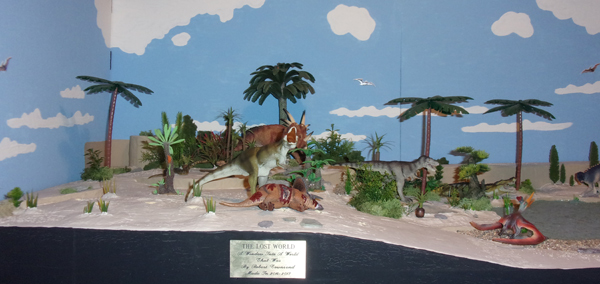
Our thanks to Robert who sent in to us a photograph of the dinosaur and prehistoric animal landscape that he had created. He has built a huge prehistoric landscape, complete with authentic Mesozoic vegetation, dinosaur footprints, flying reptiles and a watering hole. The talented model maker then created his very own Late Cretaceous prehistoric scene using his large collection of dinosaur and prehistoric animal models.
A Late Cretaceous Dinosaur and Prehistoric Animal Diorama
An ancient Late Cretaceous landscape. A Late Cretaceous diorama.
Picture credit: Robert
We think you will agree the results are very impressive.
A Creative and Imaginative Prehistoric Scene
A lot of care and thought has gone into making this creative and imaginative scene. Robert has been careful to research the prehistoric animals that his model collection represents and he has only featured models of prehistoric animals that would have lived in North America during the Late Cretaceous. The diorama features such famous dinosaurs as Tyrannosaurus rex, Triceratops, Styracosaurus and the armoured giant Ankylosaurus.
The prehistoric scene also features a large pterosaur replica. The pterosaur (Pteranodon sternbergi), has swooped down to the watering hole to take a drink, but it had better watch out as a large predator (Albertosaurus), is stalking it. On the ground, this flying reptile would have been vulnerable to attack from tyrannosaurids, let’s hope that it spots the danger in time and is able to take flight.
The Pteranodon is Being Stalked by an Albertosaurus
A resting pterosaur is stalked by Albertosaurus.
Picture credit: Robert
A Late Cretaceous Diorama
Our congratulations once again to Robert, for creating such a wonderful prehistoric animal diorama and that is a wonderful collection of dinosaur and prehistoric animal figures that you have got there.
Fans of the Rebor range of prehistoric animal replicas will know that some of the recent model introductions have had flexible tails. The three Ankylosaurus models “War Pig” for example, along with the two colour variants of the tyrannosaur figure “Vanilla Ice”, these figures have all been supplied with detachable, flexible tails. Team members at Everything Dinosaur thought it might be helpful to would-be Rebor collectors if we were to shoot a short video to show how these tails attach to the models. In addition, for those people who had not purchased one of these Rebor dinosaur models before, we could show how the figures are supplied.
How to Attach the Tail to the Rebor Killer Queen T. rex Dinosaur Model (Jungle Colour Variant)
Video credit: Everything Dinosaur
The Tail is Supplied as a Separate Piece
In this short, thirty second video, we show how the tail is supplied as a separate piece (Rebor Killer Queen Tyrannosaurus rex models) and how it can be inserted into the back of the figure to make the model complete. Both the Rebor Killer Queen “jungle” and “plain” variants have this feature and the tails are flexible, allowing collectors to put their T. rex into a variety of poses. The nature of the joint into the posterior of the animal reduces the amount of vertical movement, but in the Dinosauria, generally, the tail could not move a great deal in the vertical plane. However, the flexible rod in the tail piece permits quite a degree of lateral movement.
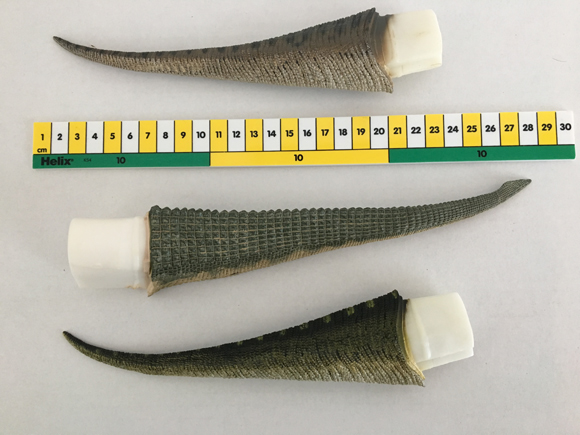
A trio of Rebor tyrannosaurid dinosaur tails. The tail piece (top) is from the Rebor Killer Queen T. rex model (plain colour variant). The tail in the middle is from the Rebor Vanilla Ice tyrannosaur figure (jungle colour variant) and the tail (bottom) is from the Rebor Killer Queen Tyrannosaurus rex (jungle colour version).Picture credit: Everything Dinosaur.
Picture credit: Everything Dinosaur
The picture (above), shows three tail pieces from three different Rebor tyrannosaurid models. The tail piece (top) is from the Rebor Killer Queen T. rex model (plain colour variant). The tail in the middle is from the Rebor Vanilla Ice tyrannosaur figure (jungle colour variant) and the tail (bottom) is from the Rebor Killer Queen T. rex (jungle colour variant).
All the tails in the photograph come from 1:35 scale Rebor replicas.
Rebor Killer Queen
The tail inserts into the posterior with a positive “click” and the separate tail piece helps Rebor to cut down on product packaging (less cardboard required as the model fits into a smaller box).
Callichimaera perplexa et al Challenging the Definition of a Crab
An international team of scientists reported the discovery of a variety of Late Cretaceous marine crustacea that have challenged the current definitions of what makes a crab. It is a case of a Cretaceous crab ruffling a few scientific feathers.
Writing in the academic journal “Science Advances”, the researchers from the University of Alberta, Kent State University, the University of Montreal, the Smithsonian Tropical Research Institute in Panama, the Canadian Parks and Wilderness Society, the National Autonomous University of Mexico, the University of Nevada, and the College of Communication and Design in Boca Raton, Florida, as well as Yale University , describe the discovery of hundreds of beautifully-preserved specimens from the USA and Colombia.
A Life Reconstruction of the Cretaceous Crab Callichimaera perplexa
A life reconstruction of Callichimaera perplexa.
Picture credit: Elissa Martin, (Yale Peabody Museum of Natural History)
The preserved remains include hundreds of tiny shrimp fossils and an entirely new branch of the evolutionary tree for crabs (Order Decapoda).
A Very “Goofy-looking” Crab – Callichimaera perplexa
According to lead researcher, Yale University palaeontologist Javier Luque, the most significant fossil discovery is Callichimaera perplexa, which at around 95-million-years-old, is the earliest example of a swimming arthropod with paddle-like legs since the eurypterids (sea scorpions), that are believed to have died out in the Permian. The genus name derives from the mythical creature called a chimera, which was formed from the body parts of a variety of different animals. In a press release from Yale University, it is stated that the binomial scientific name translates as “perplexing beautiful chimera.”
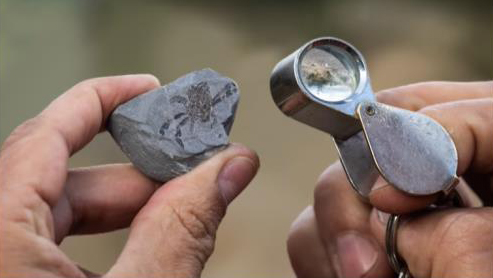
Examining a Fossil Specimen (Callichimaera perplexa)
Examining a Callichimaera perplexa fossil.
Picture credit: Yale University
A Unique and Very Strange Cretaceous Nektonic Crab
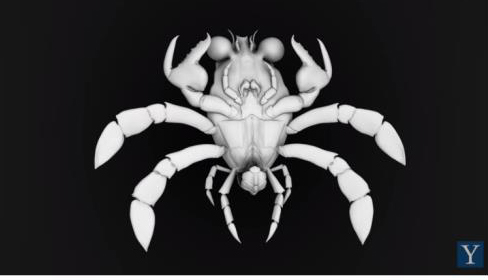
Measuring around 2-3 centimetres in diameter, Callichimaera is described as looking very strange with large, unprotected compound eyes with no sockets, bent claws, leg-like mouth parts, a long body and an exposed tail. It was nektonic (an active swimmer), as an adult it resembled typical crab larval stages. This suggests that some ancient crabs may have retained a few of their larval traits into adulthood, amplified them, and developed a new body architecture. This is an evolutionary process called “heterochrony” – a change to the timing or rate of development relative to the ancestor.
The Diverse Body Plans of Swimming Crabs and other Nektonic Arthropods
The diverse body plans of selected arthropods.
Picture credit: Yale University
Luque commented:
“Callichimaera perplexa is so unique and strange that it can be considered the platypus of the crab world. It hints at how novel forms evolve and become so disparate through time. Usually we think of crabs as big animals with broad carapaces, strong claws, small eyes in long eyestalks, and a small tail tucked under the body. Well, Callichimaera defies all of these ‘crabby’ features and forces a re-think of our definition of what makes a crab a crab.”
A Computer-generated Image Showing the Underside of Callichimaera perplexa
A view of the ventral side (underside of the body) of Callichimaera.
Picture credit: Yale University
The scientific paper: “Exceptional Preservation of mid-Cretaceous Marine Arthropods and the Evolution of Novel Forms via Heterochrony” by J. Luque1, R. M. Feldmann, O. Vernygora, C. E. Schweitzer, C. B. Cameron, K. A. Kerr, F. J. Vega, A. Duque, M. Strange, A. R. Palmer and C. Jaramillo published in the journal Science Advances.
Everything acknowledges the assistance of a press release from Yale University in the compilation of this article.
Visit the user-friendly, award-winning Everything Dinosaur website: Everything Dinosaur.
Gobihadros mongoliensis – A Newly Described Hadrosauroid from Mongolia
Scientists have described a new species of basal hadrosauroid from the Baynshire Formation of the central and eastern Gobi Desert (Mongolia). It has been named Gobihadros mongoliensis. At approximately three metres long, this cow-sized, ornithischian may not be the most impressive dinosaur to have been found, but its discovery is significant for vertebrate palaeontologists. G. mongoliensis is the first non-hadrosaurid hadrosauroid from the Late Cretaceous of central Asia known from an almost complete, articulated skull and postcranial material.
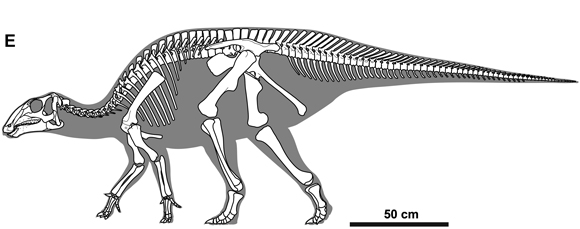
A Skeletal Reconstruction of Gobihadros mongoliensis
A skeletal reconstruction of the basal hadrosauroid Gobihadros mongoliensis.
Picture credit: PLOS One
Writing in the on-line academic journal “PLOS One”, the researchers David Evans (Royal Ontario Museum, Ontario, Canada), Khishigjav Tsogtbaatar (Mongolian Academy of Sciences), David Weishampel (John Hopkins University, Maryland, USA) and Mahito Watabe (Osaka City University, Japan), have concluded that Gobihadros is similar to Bactrosaurus johnsoni from eastern China and Gilmoreosaurus mongoliensis from the Iren Nor region of Inner Mongolia.
Outside of the Hadrosauridae Family
A phylogenetic assessment places Gobihadros outside of the Hadrosauridae, the family of dinosaurs commonly referred to as the duck-billed dinosaurs. Gobihadros most certainly had a broad beak, very typical of a duck-billed dinosaur, but it has been classified as a basal member of the Hadrosauroidea, essentially the next classification bracket up from the Hadrosauridae, encompassing all the duck-billed dinosaurs and all dinosaurs more closely related to them than to Iguanodon.
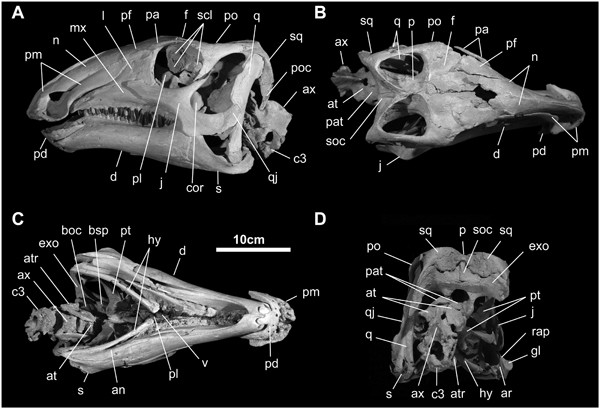
Views of the Skull and Jaw Bones of Gobihadros mongoliensis
Skull and mandible (MPC-D100/763) of Gobihadros mongoliensis in left lateral (A), dorsal (B), ventral (C), and posterior (D) views.
Picture credit: PLOS One
Gobihadros mongoliensis from the Baynshire Formation
The fossil material was collected over a period of several years from the sandstone and mudstone deposits from a number of sites associated with the Baynshire Formation. The dinosaur was described from two superbly preserved specimens, a complete and uncrushed skull (MPC-D100/763) and the holotype, which consists of an almost complete skull and postcranial skeleton found largely in an articulated state. Although, the exact date of the Baynshire Formation remains open to debate, recent studies place the sediments in the early Late Cretaceous (Cenomanian-Santonian faunal stages).
Line Drawings of the Skull and Jaws of G. mongoliensis
Skull (MPC-D100/763) of Gobihadros mongoliensis in left lateral (A), anterior (B), dorsal (C), and posterior (D) views.
Picture credit: PLOS One
Helping Scientists to Understand an Evolutionary Transition
The exquisite nature of the fossil preservation and its completeness has provided palaeontologists with one of the most detailed anatomical records of a hadrosauroid. New information has been compiled documenting the evolutionary transition of the Hadrosauroidea towards the Hadrosauridae. In addition, comparison with the fossil remains of much younger hadrosaurids from the Late Cretaceous of Asia (Maastrichtian faunal stage), such as Saurolophus angustirostris, Kerberosaurus manakini, Wulagasaurus dongi and Kundurosaurus nagornyi suggests that later Asian hadrosaurids migrated into Asia from North America, rather than sharing a common Asian ancestor with Gobihadros mongoliensis.
The scientific paper: “A New Hadrosauroid (Dinosauria: Ornithopoda) from the Late Cretaceous Baynshire Formation of the Gobi Desert (Mongolia)” by Khishigjav Tsogtbaatar, David B. Weishampel, David C. Evans and Mahito Watabe published in PLOS One.