All about dinosaurs, fossils and prehistoric animals by Everything Dinosaur team members.

Everything Dinosaur team members working in schools, helping museums and other educational bodies. Our work with and in schools.

19 12, 2014

A Rare Ichthyosaurus from South Wales

By |2024-05-04T17:30:26+01:00December 19th, 2014|Categories: General Teaching|Comments Off on A Rare Ichthyosaurus from South Wales

Amateur Fossil Collector Finds Two-metre-long Ichthyosaurus Fossil

Fossil collector Jonathan Bow made the discovery of a life time last September when he spotted an unusual rock whilst walking along the foreshore at Penarth (Vale of Glamorgan).  This part of the Welsh coast is one of the most popular locations for fossil hunting in the whole of the British Isles.  Fossils are eroded out of the cliffs and scattered along the beach, strong tides in the area scour the cliffs and a lot of fossil material dating from the Early Jurassic is deposited.

Fossils normally include pieces of ammonites, brachiopods and gastropods but occasionally fragments of vertebrate bone are found.  These fossils are from marine reptiles, paddle bones and occasional vertebrae can be picked up, but Jonathan’s discovery is truly exceptional.

A Replica of an Ichthyosaurus (Himalayasaurus)
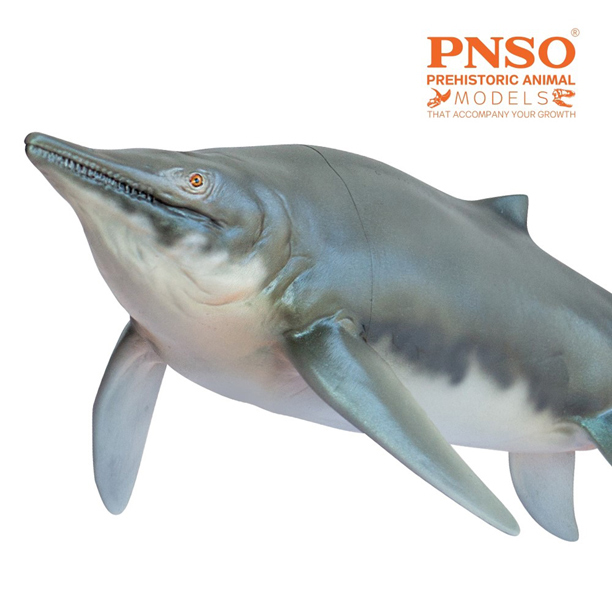
PNSO Tucson the Himalayasaurus (anterior view)

The PNSO Tucson the Himalayasaurus, a fantastic replica of a giant ichthyosaur.

Ichthyosaurs

Ichthyosaurs are not dinosaurs, they are reptiles but belong to a separate group of the Reptilia not closely related to the Dinosauria.  Early Jurassic forms resembled dolphins and these animals thrived in marine environments for over 130 million years.

Commenting on the fossil find a spokesperson from Everything Dinosaur stated:

“This is a remarkable discovery.  The specimen is almost complete and indicates that this animal died and was rapidly buried before currents or scavengers could scatter the bones.”

Ichthyosaurus from South Wales

Everything Dinosaur has a number of ichthyosaur specimens in its fossil collection.  Most of the fossils are from an ichthyosaur species known as Ichthyosaurus communis.  This year, 2014 marks the bicentennial of the publication of the first scientific paper describing an ichthyosaur.

To read the story of the discovery of a huge ichthyosaur fossil in England: The Rutland Ichthyosaur.

The spokesperson from the educational company staffed by real dinosaur experts warned that on this part of the Welsh coast it was inadvisable to stray to close to the cliffs.

“The very mechanism that deposits fossils onto the shore, the action of the sea, is also eroding the surrounding cliffs at an alarming rate. Rock falls are common and we urge visitors to the area to take care and not to stray to close to the cliffs themselves.  There are plenty of fossils to find along the seashore.”

Everything Dinosaur stocks a large range of ichthyosaur replicas along with models of other types of marine reptile.  To view the range: Sea Monsters – Models and Replicas.

18 12, 2014

The Earliest Horned Dinosaur from North America

By |2023-03-19T07:14:19+00:00December 18th, 2014|Categories: General Teaching, Key Stage 3/4|Comments Off on The Earliest Horned Dinosaur from North America

Spaniel Sized Horned Dinosaur – Aquilops americanus

Many school children may be familiar with horned dinosaurs such as Triceratops and the spiky Styracosaurus.  Indeed, these huge Late Cretaceous herbivores are some of the best known of all the dinosaur species. However, scientists have been researching how these dinosaurs came to be in North America in the first place.

It is believed that in the Cretaceous, land bridges formed between the land that was to become North America and Asia.  The horned dinosaur group, most probably evolved in Asia and migrated into the land that we now know as Canada and the United States at some point in deep time, when a land bridge existed between these two continents.

Aquilops americanus

Everything Dinosaur reported this week on the research carried out by a dedicated team of palaeontologists as they seek to understand how these bird-hipped dinosaurs evolved and migrated out of their ancestral home.  In a newly published scientific paper, a partial skull and jaw of a new type of horned dinosaur, roughly the size of a small spaniel has been described.  The dinosaur, whose skull measures just over eight centimetres in length has been named Aquilops americanus (the name means “American Eagle Face”).

Important Horned Dinosaur Fossil Discovery

Cranial material of Aquilops.

Skull fossil that can sit in the palm of your hand.

Picture credit: Reuters

For articulated models and replicas of horned dinosaurs and other prehistoric creatures: Beasts of the Mesozoic Models.

These fossils represent the oldest horned dinosaurs found to date in North America, scientists hope that this rare find will help them to understand more about the evolution and radiation of the Neoceratopsidae and the Ceratopsidae.

To read the complete article from Everything Dinosaur: Shedding Light on the Earliest Horned Dinosaurs of North America.

30 11, 2014

Providing Extension Activities to Support a Dinosaur Topic

By |2023-03-18T08:20:05+00:00November 30th, 2014|Categories: General Teaching|Comments Off on Providing Extension Activities to Support a Dinosaur Topic

Dinosaur Themed Extension Ideas Provided by Everything Dinosaur

Our team members are always keen to advise teachers and learning support providers with regards to extension activities to be conducted after a visit from one of our experts.

As part of our work, whether it is with Key Stage 1, 2 or even Key Stage 3 students, we are happy to work in collaboration with the teaching team to ensure learning objectives are being reinforced.  For example, with Key Stage 3 students we can provide helpful support materials to ensure a lively and informed debate about the ethics of cloning when it comes to the resurrection of long extinct species such as the Woolly Mammoth. Whereas, with Key Stage 1 or Key Stage 2 students. we can help with recounts and activities that emphasis the concept of scientific working.

Providing Extension Activities

Key Stage 2 Teacher Lists Extension Activities after Dinosaur Workshop

Extension ideas - dinosaur workshop.

A teacher lists the extension ideas during a dinosaur workshop.

Picture credit: Hurst Green Primary

“Pinkie Palaeontologist Challenges”

In the example above, the teacher requested advice on how to build in a focus on English and hand-writing after a visit from Everything Dinosaur to Year 3.  We agreed to set a series of what we call “pinkie palaeontologist challenges” to the class.  These challenges involved the children recounting their work with Everything Dinosaur, writing thank you letters, producing scientific posters and devising their very own prehistoric animal based on a set of criteria provided by the Everything Dinosaur team member.

Such activities link nicely to other elements of the curriculum, and we even promised to show case some of the children’s work on Everything Dinosaur’s web log, thus allowing elements of the ICT syllabus to be covered to.

Commenting on the dinosaur workshop, the teacher stated:

“It was an excellent session, informative and fun with loads of hands on activities for the children (and staff).  Five stars!”

See the extensive range of dinosaur toys and games available from Everything Dinosaur: Gifts and Dinosaur Toys.

27 11, 2014

Helpful Free Extension Ideas for Key Stage 2

By |2024-05-04T18:49:48+01:00November 27th, 2014|Categories: Educational Activities, Teaching|0 Comments

Fossils and How Fossils Form with Everything Dinosaur

Year 3 at Hurst Green Primary have been studying rocks, fossils and dinosaurs in the second half of the autumn term.  3H have even been split into five teams for this topic that explores dinosaurs and life in the past.  The teams are Tyrannosaurus rex, Velociraptors, Sabre-tooth tigers, Mastodons, and Pterodactyls.  Our dinosaur and fossil expert, praised the teaching team for their innovative approach to delivering the learning objectives for this topic, however, it was pointed out that there were one or two concerns over the names chosen for the teams.  For example, although “Sabre-tooth tiger” is a term in common usage, the cats within the genus Smilodon are not closely related to modern tigers.

Extension Ideas for Key Stage 2

The Table Teams in Class 3H

Teams in the classroom learning about dinosaurs.

Teams in the classroom learning about dinosaurs.

Picture credit: Everything Dinosaur/Hurst Green Primary

Helping the Teacher

We did point out the other errors in the team names and sent over information to help the teacher make the corrections.  In addition, we gave the class one of our “pinkie palaeontologist challenges”!   In collaboration with the teacher, we challenged the children to create a scientific poster of the prehistoric animal that their team name was based on.  We promised to email over some teaching resources all about these prehistoric animals. Could the children create a display all about T. rex, Mastodons, Velociraptors and pterosaurs?

To view Everything Dinosaur’s range of dinosaur themed arts and crafts along with replicas of iconic fossil animals: Dinosaur Themed Arts and Crafts.

Supporting the Lesson Plan

To set up the task, we explained how scientists display results and data on poster boards.  We asked the children to create scale drawings, diagrams of the animal that their team was named after (with proper labelling of course).  Could they explain what the animal ate, where it lived and how long ago these animals roamed the Earth?

A Teacher Makes Notes About Suggested Extension Ideas for Year 3

A teacher lists the extension ideas during a dinosaur workshop.

A teacher lists the extension ideas during a dinosaur workshop.

Picture credit: Everything Dinosaur/Hurst Green Primary

Extension Idea – Non-chronological Report

The posters would provide an example of a non-chronological report.  This activity would help the children recount what they had learned during the Key Stage 2 dinosaur workshop and it would link nicely in with teaching objectives related to English, Maths, History and Geography elements of the national curriculum.

Our dinosaur expert spent the morning helping Year 3 study dinosaurs and fossils.  With a focus on ICT, could the children’s posters be pinned onto a classroom wall and a picture taken of them?  This photograph could then be emailed to Everything Dinosaur, all part of helping the children to learn about how emails and websites work.

The teacher commented:

“Thank you Everything Dinosaur, an excellent session – informative but fun with loads of hands-on activities for the children (and staff).”

For an explanation about why it is not valid to use the term “Sabre-tooth tigers”: How Smilodon Got Stripes.

24 11, 2014

EYFS and Special Dinosaurs

By |2024-05-04T17:34:40+01:00November 24th, 2014|Categories: Educational Activities, Teaching|0 Comments

What was the Biggest Dinosaur? EYFS and Dinosaurs!

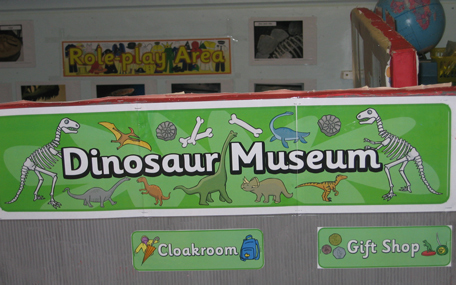
For the Reception class at St Joseph’s R.C. Primary, the question posed this term was “which was the biggest dinosaur”?  The budding palaeontologists had been busy exploring prehistoric animals aided by their enthusiastic teaching team.  Mrs Crean had helped the children to build a dinosaur museum in the classroom.  Inside the museum, there were lots of examples of words used to describe different types of dinosaur and other animals that lived in the past.  The museum even had a gift shop and a cloakroom, a place for palaeontologists who visit the school to store their hard hats!

EYFS and Dinosaurs

EYFS Build a Dinosaur Museum in their Classroom

Come to our dinosaur museum!

Come to our dinosaur museum! EYFS and Dinosaurs.

Picture credit: Everything Dinosaur

A Dinosaur Workshop

The teaching team for the EYFS (Early Years Foundation Stage) are following a very creative curriculum and the children were very confident and enjoyed handling the fossils and learning just how big some dinosaurs could be.  The dinosaur workshop enabled the children to experience what it would be like to be an Ankylosaurus moving through the forest, or an ammonite in its shell bobbing up and down in the sea.  During the teaching session the children were encouraged to use describing words and to explore the properties of materials.

Fossil Teeth

A fossil tooth feels very cold to the touch, some fossils can be small and light, whilst others can be very heavy.  Our thanks to Miss Harrison for helping when it came to carrying the specimens.  Miss Tucker made sure that everyone was given the opportunity to take part and Mrs Barnes helped organise the children into a group photograph to mark Everything Dinosaur’s visit.  Perhaps the photograph will be put up in the museum?

The Dinosaur Term Topic Challenges the Children to Expand Their Vocabulary

Encouraging the use of describing words.

Encouraging the use of describing words.

Picture credit: Everything Dinosaur

As for what was the biggest dinosaur, our dinosaur expert emailed over some information on the dinosaur that is currently regarded as the biggest scientifically described – Argentinosaurus.

To view models of massive dinosaurs such as Argentinosaurus and other super-sized sauropods: Prehistoric Animal Models and Figures.

24 11, 2014

Dinosaurs and the Remarkable EYFS

By |2024-05-04T17:52:27+01:00November 24th, 2014|Categories: Early Years Foundation Reception|Comments Off on Dinosaurs and the Remarkable EYFS

Question – What was the Biggest Dinosaur?

For children in the Reception class at St Joseph’s R. C. Primary, today was an important day for them as they could demonstrate their knowledge about dinosaurs and fossils to the dinosaur expert from Everything Dinosaur who came to visit their school.  Under the guidance of the teaching team, the thirty children in Reception class had set up their very own “Dinosaur Museum” with its own cloakroom and gift shop.  Just like a real museum, the eager, young museum curators had made sure that the correct signs were in use.

Dinosaurs and EYFS

Early Years Foundation Stage Set up Their Own Dinosaur Museum

A dinosaur museum (dinosaurs and EYFS).

Come to our dinosaur museum! Dinosaurs and EYFS.

Picture credit: Everything Dinosaur

Dinosaurs as a term topic had been brought into the school as the teaching and leadership teams explored the Cornerstones curriculum, providing a more creative approach to the learning objectives for each class.  The children were certainly very excited and keen to handle the fossils that had been brought in.  The theme for the term topic was “which was the biggest dinosaur”?  When the rib bones and skull bones of some dinosaurs were seen, the children could begin to see that some dinosaurs were really very big indeed.

Dinosaur Workshop

The dinosaur expert was keen to help the children develop their vocabularies and after some group activities to help reinforce learning the children were challenged to come up with some new words to help describe the various fossils that were displayed.

As for the biggest dinosaur, that is quite a tricky question.  The current “world record holder”, certainly the largest dinosaur scientifically described to date is Argentinosaurus (A. huinculensis).  Although, as the Everything Dinosaur, fossil expert pointed out, that fact may be challenged in the very near future as new fossil discoveries are made.

The Reception class teacher praised Everything Dinosaur stating:

“This was a wonderful session.”

To view the exciting selection of educational, prehistoric animal themed products stocked by Everything Dinosaur: Dinosaur Games, Dinosaur Crafts, Dinosaur Toys.

21 11, 2014

Year 2 and Year 3 Get to Grips with Dinosaurs and Rare Fossils

By |2024-05-04T18:50:45+01:00November 21st, 2014|Categories: Key Stage 1/2|Comments Off on Year 2 and Year 3 Get to Grips with Dinosaurs and Rare Fossils

St Mary’s Catholic Primary School Children Learn About Fossils and Dinosaurs

It has been a very busy Autumn term for the dinosaur experts at Everything Dinosaur.  There have been so many school visits to fit into their teaching schedules.  For example, this week one of our fossil experts was at St Mary’s Catholic Primary School working with Key Stage 1 and Key Stage 2 pupils.

Dinosaurs and Fossils

Year 2 students (Wharfe class) had been learning about animals that lived in the past and trying to answer the question “Would a dinosaur make a good pet?  A dinosaur themed workshop helped the eager, young palaeontologists to see some of the disadvantages of having a Triceratops in the back garden, or taking an Ankylosaurus to school.  The children had prepared lots of questions and prior to the visit the teaching team had been exploring eggs and identifying which types of animals are egg layers.   All the information was being posted up on the classroom’s topic wall.

A Colourful Topic Wall for Dinosaurs in the Year Two Classroom

Dinosaurs and adjectives.

Encouraging the use of describing words.

Picture credit: Everything Dinosaur

A Dinosaur Workshop

The dinosaur workshop linked nicely into the science topic for the term.  Wharfe class were looking at living and non-living things with a specific emphasis on dinosaurs and other prehistoric animals.  The children were helping to sort out and classify things in accordance as to whether they are living today, extinct or never alive.   The Everything Dinosaur team member set a couple of extension activities for the class, in support of the teaching team.  The focus will be on helping the children to devise charts, posters and fact sheets, all part of working scientifically.

To view the huge range of dinosaur themed toys and gifts available: Dinosaur Toys and Dinosaur Gifts.

Learning About Rocks and Fossils

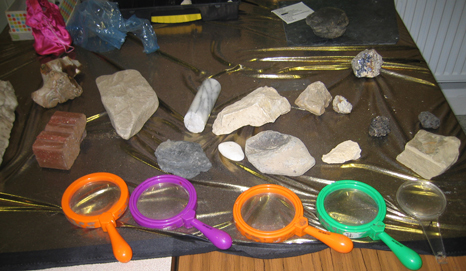
Swale class (Year 3) were learning all about rocks, fossils and soil.  This was an opportunity to ask Everything Dinosaur how fossils are formed and what they are made of.  The leader of the dinosaur workshop set up an experiment for the children so that they can explore how fossils form.  Lots of photo opportunities for the teacher Mrs Hunt!   Year 3 had been set the learning challenge of looking at rocks and their properties, with a view to working out what rocks tell us about how the Earth was formed.  Everything Dinosaur was able to explain about sedimentary rocks and where fossils can be found and the sort of rocks likely to contain them.

A Table with Lots of Different Types of Rocks

Rocks and fossils to explore.

A very full “rock table”. Lots of rocks and fossils to explore!

Picture credit: Everything Dinosaur

Swale class were also set one of our challenges as part of a series of extension activities.  We can’t wait to hear about how the children tackled this challenge.

17 11, 2014

Rocks and Dinosaurs at St Mary’s Catholic Primary School

By |2023-03-17T21:06:42+00:00November 17th, 2014|Categories: Educational Activities, Main Page, Teaching|0 Comments

Year 2 and Year 3 Study Dinosaurs and Fossils

Pupils at St Mary’s Catholic Primary School enjoyed a visit from Everything Dinosaur today.  The visit of a dinosaur and fossil expert was scheduled to take place as Key Stage 1 pupils were starting a topic on dinosaurs and Key Stage 2 classes were beginning a science topic all about rocks, fossils and soils.

The children in Wharfe class (all the classes are named after rivers), had been considering whether a dinosaur would make a good pet.  They had looked at eggs and put up notes on their topic wall about animals that laid eggs.

Identifying Which Animals Lay Eggs

Which animals lay eggs?

Which animals lay eggs?

Picture credit: Everything Dinosaur

The visitor from Everything Dinosaur was able to provide quite a bit of evidence about dinosaurs and their suitability for a pet.  Identifying how much a Triceratops probably ate by looking at the jaws and teeth, convinced most of the children that some of the biggest dinosaurs known would not make good pets.  Under the tutelage of the class teacher Mrs Conroy, the children would be learning about living and non-living things, with a focus on life in the past.  One of the learning objectives for this part of the Autumn term was for the children to consider what living things require in order to survive and flourish.

Developing Vocabulary

There was a big emphasis on developing a scientific vocabulary, our dinosaur expert helped the class by assisting them when it came to identifying what some prehistoric animals ate and the terms used to describe these types of prehistoric creatures.

To read more about Everything Dinosaur’s huge range of dinosaur and prehistoric animal themed toys and gifts: Dinosaur Toys and Dinosaur Gifts.

Year 3 (Swale class), had been learning about different types of rocks and their properties.  Mrs Hunt, the teacher was excited to learn about the local geology and all about the rocks that form Swaledale.  The children loved handling the fossils and taking part in the experiments to demonstrate petrification processes such as permineralisation.  On a table in the classroom, the children had lots of rocks to explore and to learn about.  The eager pupils were keen to show the Everything Dinosaur expert their fossils and he was happy to tell them all about these specimens, the class particularly liked learning about “Devil’s toenails”.

Lots of Rocks for Year 3 to Examine

A very full "rock table".

A very full “rock table”.

Picture credit: Everything Dinosaur

Having left each class with one of Everything Dinosaur’s “pinkie palaeontologist challenges”, we shall see how the children get on and we are all excited to hear the results.

11 11, 2014

A “Brummie-saurus” a Sensational Dinosaur Statue

By |2024-05-04T18:33:06+01:00November 11th, 2014|Categories: Educational Activities, Main Page, Teaching|0 Comments

Birmingham School Children Learn All About Dinosaurs and Fossils

It was an early start today for an Everything Dinosaur team member as they set off to visit a school in Birmingham (West Midlands), to work with the Year 3 classes who had just started their topic on dinosaurs and fossils.  The focus for the day was to help each class get to grips with working scientifically and to support the intended learning outcomes of the teaching team.

Dinosaurs and Fossils

One of the things we had been asked to do was to help explain what the world looked like during the time of the dinosaurs and how the location of land masses has changed.  Time for us to bring in some of our collection of Permian plant fossils, specifically fossils of various glossopterids to assist us with this aspect of our work.  A map of the world stuck onto the wall of the dance studio where we were based for the day came in very handy.

Lower Key Stage 2 Children

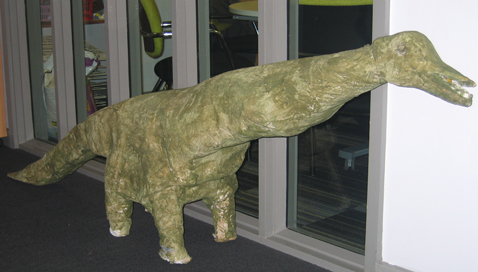
This is the first time a dinosaurs and fossils topic had been introduced at the lower Key Stage 2 level at this school, however, our sharp-eyed photographer spotted a wonderful paper mache sauropod that was lurking in a corridor.  Apparently, this dinosaur had been part of a art project a few years ago.  It was certainly a very striking sculpture.

Diplodocus Inspired Artwork on Display at School

A school's very own version of "Dippy".

A school’s very own version of “Dippy”.

Picture credit: Everything Dinosaur 

We conducted various experiments (hopefully, our experiment with 3PW will demonstrate tomorrow how fossils can form), we were asked some amazing questions by the budding young scientists and we set each class one of our “palaeontologist challenges” as part of the extension activities.

Our dinosaur expert got some lovely feedback from the children.

“I loved learning all about dinosaurs” – AB

“It was fantastic!” – AM

One of the Year 3 teachers told us:

“The children’s reaction to the workshop was fantastic.  They were all engaged and amazed by the facts and the artefacts!”

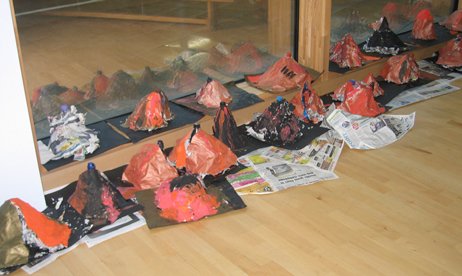
Volcanoes in the Dance Studio

The dance studio, where we set up for the day, was also the place where a number of volcano models that had been built by children at the school were being stored.  We felt very much at home.

Models of Volcanoes Built by School Children

Geology on display in the dance studio.

Geology on display in the dance studio.

Picture credit: Everything Dinosaur

To see the huge range of dinosaur themed toys and gifts available from Everything Dinosaur: Dinosaur Toys and Gifts.

As part of the agreed extension activities, we set up a little bit of work for the children which links into their ICT studies this term.  We can’t wait to see the results.  Perhaps these Birmingham based school children will design their very own dinosaur, could we have a “Brummie-saurus” on our hands?

7 11, 2014

Year 2 Children Learn All About Dinosaurs and Fossils

By |2023-09-02T09:09:09+01:00November 7th, 2014|Categories: Key Stage 1/2|Comments Off on Year 2 Children Learn All About Dinosaurs and Fossils

Anfield Infants Learn All About Dinosaurs and Fossils

Year 2 pupils at Anfield Infants learned all about fossils and dinosaurs with a visit to their school from Everything Dinosaur.   The three classes of Year 2 pupils are studying fossils and dinosaurs for the rest of the autumn term and the enthusiastic teaching team have lots of exciting activities planned.  The Everything Dinosaur team member, explained how fossils formed and helped the children conduct an experiment with celery stalks to prove that living things have holes and spaces and it these spaces that can get filled with minerals as part of the fossilisation process (permineralisation).

Dinosaurs and Fossils

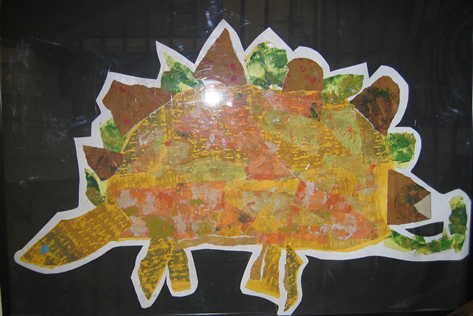
Over the day, the Everything Dinosaur team were able to see some of the amazing artwork around the school, inspired in part by previous visits of the Cheshire based company to the school.

Amazing Prehistoric Animal Artwork on Display at School

Stegosaurus inspired artwork. Picture credit: Everything Dinosaur.

Picture credit: Everything Dinosaur

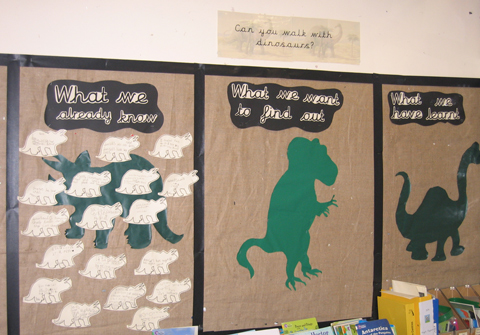
 The children had thought of lots of questions to ask the dinosaur expert, these questions had been pinned up onto a large K-W-L chart that was on display in each of the Year 2 classrooms.

The K-W-L Chart in One of the Year Two Classrooms

KWL chart all about dinosaurs.
Learning all about dinosaurs and fossils. Picture credit: Everything Dinosaur.

Picture credit: Everything Dinosaur

For more information about the extensive range of prehistoric animal models, toys and games available from Everything Dinosaur, including replicas of iconic fossils such as trilobites and ammonites: Visit Everything Dinosaur’s Website.

Feedback from the Teaching Team

Feedback received by Everything Dinosaur
Everything Dinosaur gets rave reviews for workshop. Picture credit: Everything Dinosaur.

Picture credit: Everything Dinosaur

There were lots of experiments and activities and the children were thoroughly engaged, learning all about extinction, herbivores and carnivores and how the world has changed since the time of the dinosaurs.

For dinosaur themed toys and games: Toys and Gifts.

Go to Top