All about dinosaurs, fossils and prehistoric animals by Everything Dinosaur team members.

Articles, features and information which have slightly more scientific content with an emphasis on palaeontology, such as updates on academic papers, published papers etc.

16 01, 2010

Diapsid Archosaurs out competed Synapsid Ancestor of Mammals New Evidence from Alligator Breath

By |2024-04-19T06:22:08+01:00January 16th, 2010|Categories: Dinosaur and Prehistoric Animal News Stories, Main Page, Palaeontological articles|0 Comments

New Study Indicates Alligators Breathe Like Birds – Implications for the Rise of the Archosaurs

The greatest known extinction event took place some 250 million years ago, at the Permian/Triassic boundary.  A lot of groups of animals disappear from the fossil record at this point, never to be found as fossils in younger rocks.  This period in Earth’s history did not just mark the end of one geological period and the start of another but scientists made this boundary the end of the Palaeozoic era and the start of the Mesozoic.  Nearly 60% of all marine families became extinct.  Virtually all the coral species (rugose and tabulate corals), became extinct, along with the last of the trilobites.  Other invertebrate groups such as brachiopods, gastropods and crinoids were devastated.  Vertebrates did not cope much better with many marine species becoming extinct and large numbers of reptilian and amphibian families being wiped out.  An estimated 70% of all terrestrial vertebrate genera died out.

The reasons as to why this mass extinction event occurred remain unclear.  However, as a consequence of this mass extinction, one of the most significant changes in mega fauna can be identified in the fossil record of the Early Triassic.  During the Triassic, the synapsids, one clade of reptiles that had dominated terrestrial life, a group whose descendants are modern mammals, went into dramatic decline.  In contrast, diapsids, particularly the archosaurs, the ancestors of crocodiles, pterosaurs, birds and dinosaurs diversified and came to dominate terrestrial food chains.

There may be many reasons for this, fundamentally the Archosauria seemed better adapted to the environmental conditions around on planet Earth in the Early Triassic, when compared to the majority of their synapsid rivals.  A new study to be published in the scientific journal “Science” may provide some clues as to why one particular group of reptiles were more successful than other groups.  It has all to do with the way in which an Alligator breathes.

Researchers at the University of Utah (United States) have found the Alligators have a uni-directional air flow in their lungs, this is similar to that found in modern birds.  However, although both archosaurs, Alligators and birds represent different branches in the archosaur family tree.  The development of an efficient lung function, more efficient in certain ways than the lung function of synapsids, could have given archosaurs the crucial advantage required in the harsh Triassic world to see them and not the synapsids go onto dominate terrestrial mega fauna.
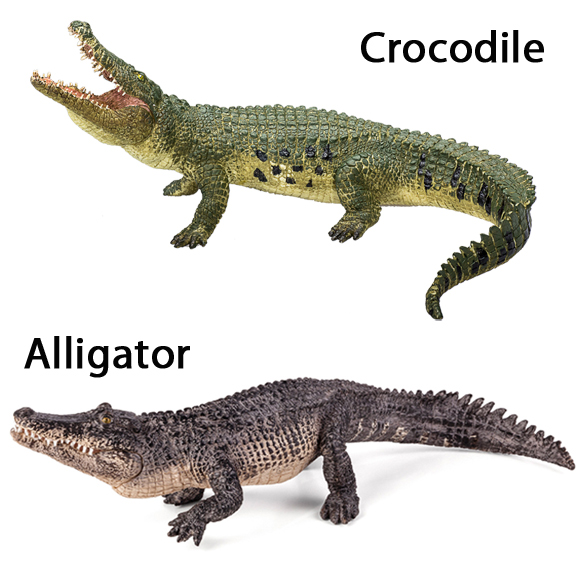
Crocodile and Alligator comparison.

Crocodile (top) and Alligator (bottom).

For models of ancient archosaurs including prehistoric crocodilians: Prehistoric Animal Replicas and Scale Models.

Birds have a very efficient lung function with de-oxygenated air kept separate from oxygenated air as it is expelled from the lungs.  With mammals such as ourselves (H. sapiens), used air we breathe out gets mixed with fresh air we breathe in.  Birds have more efficient lungs than mammals, so much the better to get oxygen to muscles to help power flight.  However, this new American study demonstrates that Alligators too, have this efficient one-way breathing system, indicating that this type of lung adaptation was present in both branches of the archosaurs, the bird line and the crocodile line.

Low oxygen levels in the Early Triassic would have meant that archosaurs with their efficient lungs would have been able to sustain activity longer than the synapsids and this may have given the archosaurs the opportunity to supplant the synapsids as the dominant large terrestrial animals – hence the rise of Dinosauria.

This is one of the conclusions made by the team of scientists who have studied the lung function of one extant archosaur, a member of the crocodile-like archosaur lineage, the American Alligator (A. mississipiensis).

Assistant Professor of Biology (University of Utah), and lead author of the research paper, Colleen G. Farmer stated:

“The real importance of this air-flow discovery in gators is it may explain the turnover in fauna between the Permian and the Triassic, with the synapsids losing their dominance and being supplanted by these archosaurs.”

Colleen went on to add:

“Even with much less oxygen in the atmosphere, many archosaurs, such as pterosaurs, apparently were capable of sustaining vigorous exercise.  Lung design may have played a key role in this capacity because the lung is the first step in the cascade of oxygen from the atmosphere to the animal’s tissues, where it is used to burn fuel for energy.”

Assistant Professor Farmer, stated that this particular piece of research work did not necessarily help to explain the rise and dominance of the dinosaurs.  Within the two main types of archosaur, there are anatomical differences.  Perhaps the mesotarsal ankle of the dinosaur and bird lineage which gave these types of animals greater mobility on land when compared to the crurotarsal ankle of the crocodile-like archosaurs, may be the answer.

She went on to comment:

“Our data provide evidence that unidirectional flow [of air in the lungs] predates the origin of pterosaurs, dinosaurs and birds, and evolved in the common ancestor of the crocodilian and bird [and pterosaur and dinosaur] lineages.”

In the lungs of humans and other mammals, airflow is like the tides.  When we inhale, the air moves through many tiers of progressively smaller, branching airways, or bronchi, until dead-ending in the smallest chambers, cul-de-sacs named alveoli, where oxygen enters the blood and carbon dioxide moves from the blood into the lungs.

It long has been known that airflow in birds is unidirectional, and some scientists suggest it also was that way in dinosaurs.

In modern birds, the lungs’ gas exchange units are not alveoli, but tubes known as “parabronchi,” through which air flows in one direction before exiting the lung.  Farmer says this lung design helps birds fly at altitudes that would “render mammals comatose.”

Some researchers have argued that unidirectional airflow evolved after crocodilians split from the archosaur family tree, arising among pterosaurs and theropod dinosaurs, the primarily meat-eating group that included Tyrannosaurus rex.  Others have argued it arose only among coelurosaurs, a group of dinosaurs that also includes T. rex and feathered dinosaurs.

To read an article on the relationship between Avian and Dinosaur lungs: Ideas on Dinosaur Breathing – A Breath of Fresh Air.

Unidirectional air flow in birds long has been attributed to air sacs in the lungs.  But Farmer disagrees, since gators don’t have air sacs, and says it’s due to aerodynamic “valves” within the lungs.  She believes air sacs help birds redistribute weight to control their pitch and roll during flight.  Farmer says many scientists simply assume air sacs are needed for unidirectional airflow, and have pooh-poohed assertions to the contrary.

“They cannot argue with this data, “I have three lines of evidence.  If they don’t believe it, they need to get an alligator and make their own measurements.”

Farmer and her team conducted several types of experiments on Alligators to assess their lung function, working with live and dead specimens.  The research involved the use of CT scans on a metre long Alligator to assess the flow of air, plus surgery on Alligators to insert flow meters into the lungs and autopsies and experiments on the dead animals.  The CT scans were performed with the help of Kent Sanders Associate Professor of Radiology at the University of Utah School.

Computerised tomographic (CT) X-ray images of side and top views of a 24-pound American alligator, with 3-D renderings of the bones and of airways or bronchi within the lungs.  The windpipe and first-tier of bronchi are not shown.  A University of Utah study found that air flows in one direction through a gator’s lungs.  It flows from the first-tier bronchi through second-tier bronchi (blue), then through tube-like third-tier parabronchi (not shown) and then back through other second-tier bronchi (forest green).  (Credit: C.G. Farmer and Kent Sanders, University of Utah.)

Note: lateral and dorsal views

Farmer says the fact Alligator lungs still had unidirectional flow after being removed shows unidirectional airflow is caused by aerodynamic valves within the lungs, and not by some other factor, like air sacs or the liver, which acts like a piston to aid breathing.

How does air loop through an alligator’s multichambered lungs?

Inhaled air enters the trachea, or windpipe, and then flows into two primary bronchi, or airways.  Each of those primary bronchi enters a lung.

From those primary airways, the bronchi then branch into a second tier of narrower airways. Inflowing air jets past or bypasses the first branch in each lung because the branch makes a hairpin turn away from the direction of airflow, creating an aerodynamic valve.  Instead, the air flows into other second-tier bronchi and then into numerous, tiny, third-tier airways named parabronchi, where oxygen enters the blood and carbon dioxide leaves it.

The air, still moving in one direction, then flows from the parabronchi into the bypassed second-tier bronchi and back to the first-tier bronchi, completing a one-way loop through the lungs before being exhaled through the windpipe.

Our thanks to the following reference source for helping to compile this article:

University of Utah (2010, January 15). Alligators breathe like birds, study finds. ScienceDaily.

13 01, 2010

From the Water onto the Land only 35 million Years Earlier – Further Important Information

By |2024-04-18T18:57:54+01:00January 13th, 2010|Categories: Dinosaur and Prehistoric Animal News Stories, Main Page, Palaeontological articles|0 Comments

Devonian Terrestrial Tetrapods – Further Information

The article published on the Polish paper providing details on the trace fossils indicating that Devonian creatures were venturing onto land many millions of years earlier than previously thought has attracted a lot of comments and additional information.

To read the original article: From the Water onto the Land Thirty-Five Million Years Earlier.

Curator of Vertebrate Palaeontology, Professor Jennifer Clack at the University Museum of Zoology (Cambridge), has an extensive knowledge of early tetrapods and has published a number of papers and books on this particular subject.  In 2002, she wrote “Gaining Ground – The Origin and Evolution of Tetrapods”, so Professor Clack is well placed to comment on the Polish trace fossils; Professor Clack provided the following information.

The timing of the origin of terrestriality is a bit contentious because it depends on what you classify as actually being “terrestrial”.  The trackways found in the Polish quarry are certainly older than other previously discovered fossil evidence.  The trackways are 18 million  years older than the “near-tetrapods” that have been seen as the closest relatives of animals with limbs bearing digits.  If the trackways are to be believed, digits were present way back in the early Middle Devonian.  In fact, the figure of 35 million years is a bit misleading, because some already known trackways (other trace fossils) pre-date known tetrapods with digited limbs: 18 million years is the safer figure.

There have been numerous theories as to why tetrapods left the water, over the past couple of decades as more material has been found.  If the new trackway data is corroborated by body fossils, it could suggest new ideas and render some of the previous theories put forward obsolete.

With body fossils to back up the trackway finds, the story could go either way.  We either have the story more or less right, just the timing wrong and the beasts we already know in fact have a long, “ghost” lineage – or they could change all of our conceptions about what an early tetrapod ancestor looked like and how it was related to later ones.

Until some of these questions are resolved, there is no way really to know why the limbs became capable of supporting weight on land.

Ends

We are very grateful to Professor Clack for her input on this complex and fascinating subject.  She informs us that work is currently going on an updated and revised edition of her book which deals with the evolution of the tetrapods “Gaining Ground”.  One of the great things about palaeontology is that one new discovery can turn conventional, accepted theory on its head, or in this case should that be on its feet!

For models of Palaeozoic tetrapods: Prehistoric Animal Scale Models.

11 01, 2010

From the Water onto the Land only 35 million Years Earlier – An Important Update

By |2024-04-18T18:55:59+01:00January 11th, 2010|Categories: Educational Activities, Everything Dinosaur News and Updates, Main Page, Palaeontological articles|0 Comments

Tetrapods – Why bother coming onto the Land?

Following our publication of an article providing information on the recent discovery of tetrapod trace fossils in a Polish quarry, we have had the question posed to us – why evolve into cumbersome land dwelling tetrapods when as fish you are extremely well adapted to a life in water?  Good question and one that continues to puzzle scientists.

To read the report on the trace fossils: From the Water onto the Land 35 million years Earlier.

The Devonian Period

The Devonian Period is often referred to as the “Age of Fishes”, there certainly was evolutionary radiation in some of the fish clades that existed during this geological period.  The actinopterygians or the ray-finned fish diversified extensively, indeed this group is still represented today by something like 25,000 species.  However, clades declined and many important fish groups that had evolved during the early Devonian did not survive to see the Carboniferous.

Jawless fishes, once common in the Late Silurian and up until the Middle Devonian, went into steep decline, clades such as the osteostracans and the Heterostracans were all but extinct some 370 million years ago.  Just a few families of jawless fish represented these once diverse and abundant groups as the Devonian drew to a close – sort of “dead clades walking”.

Invasion of the Land

On the subject of walking, the Devonian saw the invasion of the land by the first four-legged vertebrates – the tetrapods had arrived.  In the light of the article published regarding the discovery of tetrapod trace fossils in Poland we received some information from Dr Zerina Johanson, from the Natural History Museum in London.

Dr Johanson, has published a number of papers on Devonian vertebrates, here are her comments:

The article on the Polish trackways is very important because of its age – Middle Devonian (Eifelian) based on conodonts (extinct, jawless marine creatures whose fossils are used to help date rock strata – biostratification), found 20 metres above the trackways.

As the authors note, this is 18 million years older than the previously known tetrapods, and also older than their nearest fish ancestors, the elpisostegalids.  This has the effect of pushing the fish to tetrapod split (evolution of tetrapods from fish ancestors) from the Late Devonian (based on body fossils) to the Middle Devonian.  Also as the authors note, this period of time is characterised by more typical sarcopterygian fish, rather than those that are currently recognised as the nearest ancestors to tetrapods. These include the very famous Tiktaalik, which has a flattened skull and eyes rotated to the top of the skull. This morphology does not characterise Middle Devonian sarcopterygian fish.

The Polish Trackway

Also important is that the Polish trackway locality is interpreted as an “extremely shallow marine tidal, perhaps lagoonal, environment”, and the authors suggest that some of the track makers were swimming.  So, these earliest tetrapods did not necessarily move onto land.  Other Devonian tetrapods, such as Acanthostega from East Greenland, clearly lived in a river environment while possessing hands and feet.

So, your reader’s question about why tetrapods evolved limbs and moved onto land, is a good one, and perhaps one that we can’t answer at the moment, because limbs seem to have evolved in the water. Sometimes it’s difficult to say exactly why a feature evolved – in this case we could say that the evolution of hands and feet was a preadaptation for life on land.  As to why tetrapods moved onto land, the authors of the Polish study noted that:

“The intertidal environment provides a ready food source of stranded marine animals on a twice-daily basis, in the immediate vicinity of the sea, and would thus have allowed marine ancestors of tetrapods gradually to acquire terrestrial competence while accessing a new and essentially untouched resource.”

Accessing New Food Resources

In the Polish researcher’s scenario, tetrapods were moving from a shallow marine environment onto land to access new food resources, although presumably they lived primarily in the water.  Fully terrestrial Tetrapods don’t appear until the Carboniferous.

Our thanks to Dr Johanson for helping to explain the importance of the new research from Poland.  It does make you think, after all, as we put together this blog, in essence we are nothing more than highly evolved fish.

For models of Palaeozoic creatures, visit the figures section of Everything Dinosaur’s award-winning website: Prehistoric Animal Models.

7 01, 2010

From the Water and Onto the Land 35 million Years Earlier According to New Research

By |2024-04-19T06:26:10+01:00January 7th, 2010|Categories: Dinosaur and Prehistoric Animal News Stories, Main Page, Palaeontological articles|2 Comments

Polish Quarry Footprints indicate Tetrapods on Land 395 million Years Ago

One of the most important developments in the history of vertebrates, incidentally, our evolutionary history as we humans are vertebrates, was the movement of tetrapods from a water based environment onto the land.  Scientists had believed that this momentous event took place some time around 360 million years ago (Late Devonian).  However, the discovery of several sets of footprints, unearthed in a disused Polish quarry, is forcing scientists to re-think the emergence of vertebrates capable of walking around on land, pushing back the date to 35 million years earlier.

Tetrapod Footprints

The tetrapod group consists of all four-limbed vertebrates.  The fossil record had indicated that this important group evolved sometime in the Late Devonian, but this new discovery means that scientists may have to re-write the geological time-line.  Amphibians, reptiles, birds, mammals and of course human beings are all tetrapods.

The origins of the tetrapod group remain unclear, tetrapods have distinct digits, limbs with wrist and elbow joints and interlocking pegs associated with the backbone.  From fossils of creatures such as Ichthyostega and Acanthostega, two tetrapods whose remains are associated with Devonian river and lake deposits from Greenland it is thought that these adaptations evolved in animals that lived primarily in water, replacing the earlier theory of strong limbs developing in creatures that were crawling around on land.  Although it is not disputed that limbs evolved from fin-like appendages, not all forms of fish fin are suitable to evolve into limbs equipped to walk around on land.

The fish Order panderichthyids had two pairs of narrow fins.  Each fin-like appendage had a single bone that joined the shoulder or hip girdle, it is from these types of fish, with their peculiar fin arrangement that tetrapods are believed to have evolved from.

The depressions in the rock strata, can clearly be seen in the photographs, these are the trackways the scientists are studying.

The Oldest Tetrapod Tracks

Commenting on the paper, due to be published in the scientific journal “Nature” co-author Grzegorz Niedƃwiedzki, a palaeontologist at Warsaw University stated:

“These are the oldest tetrapod tracks and also the oldest evidence of true tetrapods”.

The research paper describes the sets of trackways, that were left in strata representing an inter-tidal zone.  These footprints (known as trace fossils), were made by several individuals, some of the prints are over 25 cm in diameter, indicating animals in excess of 2.5 metres long.  These were sizeable creatures, wandering on the exposed tidal flats.

“We are dealing with creatures that were walking”, commented Marek Narkiewicz, a geologist at the Polish Geological Institute and co-author of the research paper.

Discovered in an abandoned mountain quarry, the tracks suggest that tetrapods were walking planet Earth tens of millions of years earlier than previously thought.

Tracks are Older than the Oldest Known Fossils of Lobe-finned Fish

The tracks are also approximately ten million years older than the oldest known fossils of the lobe-finned fishes believed to be the transitional forms between fish and tetrapods.  Specimens of the panderichthyid; Elpistostege discovered in Devonian strata in Latvia is thought by scientists to be an ancestor of animals like Ichthyostega, however, these footprints of tetrapods moving around on land pre-date Elpistostege.

Commenting on how the Polish trackways will alter scientist’s thinking Per Ahlberg, a palaeontologist at Uppsala University (Sweden) stated:

“These transitional fish [Panderichthyids] continued to exist alongside the tetrapods for quite some period of time.  It is not so strange for one type of animal to live alongside its evolutionary successors, several feathered dinosaurs, for example, continued to exist alongside birds for millions of years”.

Feeding in a Lagoon

The trackways were formed on the exposed mud of a lagoon, this finding contrasts with other Devonian tetrapod discoveries that show animals capable of living on land existing in freshwater habitats.   The researchers suggest in this new paper that locomotion on land evolved so that predatory animals could take advantage of the dead and dying creatures that had been washed up by the tide, or left exposed as the tide went out.  Twice a day, these carnivores would have had access to marine animals stranded as the tide receded.  Scientists have postulated on the theory that access to this food resource was the evolutionary motivation to develop sturdy limbs capable of propelling a creature around on land.

Per Ahlberg added:

“If you’re picking off dead and moribund animals in the strand land—those things left behind by the receding tide—well then you don’t need to be terribly good at moving around.  You just need to be able to haul your way out, eat what you want to eat, and then haul your way back into the water again.”

It is hoped that these newly discovered trace fossils will help scientists to piece together the tetrapod puzzle, just when did our ancestors start walking on land and why did they begin to do so?

Perhaps the Polish quarry will yield more secrets, helping to shed light on this aspect of our own evolution – a bit of a fishy tail.

For models of creatures that lived in the Paleozoic: Prehistoric Animal Models.

20 12, 2009

New Research Suggests Prehistoric Koalas Less Reliant on Eucalyptus than Modern Koalas

By |2024-04-18T15:17:29+01:00December 20th, 2009|Categories: Main Page, Palaeontological articles|0 Comments

New Study shows Subtle Differences between Ancient and Modern Koalas

One of the iconic animals of Australia, the cute and cuddly Koala bear is having a prehistoric makeover as a result of a new study into prehistoric Koala specimens.  Firstly, although commonly referred to as a “bear” the Koala is not, indeed there are no bear species that are native to Australia.  The extant Koala (Phascolarctos cinereus) is an endangered species in Australia.  Some still live in the wild but most can be found in protected wildlife areas.  Once hunted for their fur, these sedentary animals spend most of their lives in the trees and eat almost exclusively the leaves of the eucalyptus tree.

The word Koala was believed to have been derived from the aboriginal for “I do not drink”, these marsupials related to the Wombat group, seem to get all the moisture they need from eating eucalyptus, although this word derivation has been questioned.

Prehistoric Koala

New research published in the scientific publication “The Journal of Vertebrate Palaeontology”, contrasts the fossilised species of Koala with their modern counterparts.  By the late Palaeogene, Australia had become isolated from the rest of the world, leaving the marsupials that dominated the mammal based element of the ecosystem to thrive without competition form placental mammals.  As Australia continued to drift north (it is still moving northwards today), the humid warm conditions began to change and the continent became much drier.  The rainforests began to shrink and many animals had to adapt to the new environmental conditions.

This led to a number of adaptations in the Koala genera leading to distinctive differences between extinct and extant Koala species as published in a joint research paper by the University of New South Wales’s School of Biological, Earth and Environmental Sciences and CSIRO.  CSIRO is the Australian Commonwealth Scientific and Research Organisation.

A Shift to a Diet of Eucalyptus

The scientists report that a shift to an eucalyptus diet was probably caused by the change in the climate as Australia moved north.  In the drier conditions it was the Eucalypts that became the dominant tree genera in many areas.  Coping with the new diet caused adaptive changes in the Koala digestive and anatomical structure, as these herbivores adapted to their tough diet.  Differences in the appearance of skulls between extant Koalas and their ancient ancestors, have been revealed with the research team comparing the skulls of modern animals with those found at the Riversleigh Formation in Queensland.

Dr Julien Louys of the University of New South Wales commented:

“In order to accommodate both mechanical demands of their new diet, as well as maintaining their auditory sophistication, the Koala underwent substantial changes to its cranial anatomy, in particular the facial skeleton”.

Ancient Koala

The study of ancient Koala fossils dating from the Oligocene and Miocene epochs indicate that the Koala group diversified from the Wombat family some 40 million years ago.  The Koalas are members of the Diprotodontidae Order, named by Sir Richard Owen (he who coined the term Dinosauria), in 1866.  The modern Koala is the sole survivor of the Phascolarctidae Family.

A number of prehistoric genera of Koala are known in the Australian fossil record, two of which from the Miocene and Pliocene epochs do not share the modern Koala’s trait of being almost exclusive eucalyptus feeders.

Fossils of Koalas are extremely rare, most genera are known from fragments of skull, jaw bones and fossilised teeth.  As ancient Koalas lived in woodlands the chances of them being preserved as fossils was extremely small.

The researchers drew their conclusions about the changes to Koala diets and lifestyles after making a detailed study of the possums and extant/extinct Koala species.  The two fossil species analysed (Litokoala kutjamarpensis and Nimiokoala greystanesi) have been found at the Riversleigh site and although there are similarities between ancient and modern species there are substantial differences in the teeth, palate and jaws.

Vocalisation in Prehistoric Koalas

The researchers believe that the prehistoric Koalas also shared with their modern cousins the ability to produce loud “bellows” based on similar large bony prominences — the auditory bullae — that enclose structures in the middle and inner ear.  However the auditory bullae of the extinct Nimiokoala and Litokoala species are not as exaggerated as in the modern koala, according to team member Professor Mike Archer.

Professor Archer stated:

“Modern Koalas are extremely sedentary and vocal animals.  They produce low frequency vocalisations that pass through vegetation and can be heard up to 800 metres away, far exceeding the home range limits of male Koalas.  The fossil Koalas share similar large bony ear structures to the modern Koala and would have been well adapted to detecting vocalisations in the rain-forest environment of Riversleigh in the Miocene era.”

The unique structure of the skull of the modern Koala is a result of having to compromise in terms of evolutionary adaptations between the need to vocalise and change to a tougher diet of eucalyptus leaves claim the researchers.

Everything Dinosaur stocks a range of prehistoric mammal models: Models of Prehistoric Mammals.

11 12, 2009

New Theropod Fossil Provides Evidence of Dinosaur Diversification

By |2023-01-01T08:35:07+00:00December 11th, 2009|Categories: Dinosaur and Prehistoric Animal News Stories, Main Page, Palaeontological articles|0 Comments

Small Meat-Eating Dinosaur Points the way to Dinosaur Diversification

The discovery of a small, meat-eating theropod dinosaur, fossilised in an almost perfect bone preservation state is helping scientists to piece together the evolution of the main types of dinosaur.  This new Triassic dinosaur was discovered during excavations at the famous Ghost Ranch location in New Mexico, (USA).

Theropod Dinosaur

The rocky ridges at Ghost Ranch, consisting of a sequence of Triassic sandstones, is one of the most famous vertebrate fossil sites in the world.  This location has helped provide scientists with an insight into the dawn of the dinosaurs and the flora and fauna that shared the environment with the first types of dinosaur.  Fossil discoveries in and around the Ghost Ranch site formed the basis of the “Walking with Dinosaurs” episode, “New Blood”, the first episode in the ground-breaking BBC TV series.

The Ghost Ranch site was first excavated by George Whitaker and Edwin H. Colbert from the American Museum of Natural History in 1947, their work helped to unearth more than a thousand specimens of the small, sleek dinosaur predator Coelophysis.  Now it looks like Ghost Ranch has provided evidence of another type of Triassic dinosaur predator.

This new genus of dinosaur, named Tawa hallae, after the Native American Hopi tribe’s name for their sun god – Tawa, is estimated to have measured about 2 metres long.  This bipedal animal shows characteristics of the typical theropod lineage that was to produce huge carnivores such as Giganotosaurus and T. rex.  A swift and agile hunter, T. hallae had strong legs, relatively short forelimbs but with strong grasping hands and a jaw lined with curved, sharp teeth.

A Model of the Recently Described Tawa hallae

The Schleich Tawa hallae dinosaur model.

The Schleich Tawa dinosaur model (T. hallae).

The image shows a replica introduced into the Schleich dinosaur model range.  To view the entire range of Schleich prehistoric animals available from Everything Dinosaur: Schleich Dinosaur and Prehistoric Animal Models.

University of Texas Research

The University of Texas based research team responsible for the discovery and analysis of the fossil bones suggest that this dinosaur provides helpful information on the evolution and diversification of the Dinosauria.  During this time in the Triassic, approximately 215 million years ago, the super-continent Pangaea was at its largest, representing a single landmass that included Australia, Antarctica, the Americas, India and Africa.  A dinosaur would have been able to walk from the South Pole to the North Pole if it had wanted to.

The research team’s paper, published in the scientific journal “Science” suggests that shortly after the first dinosaurs evolved in South America they split into their three main groups the saurischian sauropodomorphs and the theropods, along with the bird-hipped ornithischians.

Dr Sterling Nesbitt, a researcher at the University of Texas in Austin, lead author on the paper, explained that a number of U.S. based scientists were involved in this particular study.  The Tawa hallae bone bed first being excavated in 2004, with more fossil evidence coming to light during a more extensive excavation two years later.  Although a number of theropod skeletons are known from this location, most notably the Coelophysoidea dinosaur Coelophysis; many of the light, hollow fossil bones are crushed.  However, this new discovery is part of a very well-preserved sequence of strata that has yielded articulated specimens which are up to 95% complete.

Commentating on this new dinosaur, Dr Nesbitt stated:

When we saw [the specimen] our jaws dropped.  A lot of these theropods have really hollow bones, so when they get preserved they get really crunched,  but these were in almost perfect condition.”

This new dinosaur genus, is helping to fill a gap in the fossil record.  The skeleton has been dated to around 215 million years ago (mid Norian faunal stage) and puts it only about 15-17 million years later than the very first dinosaurs.  This discovery adds to the evidence that the Dinosauria diversified into its three main component groups shortly after the dinosaurs first evolved.

The finding provides strong evidence for an existing hypothesis that dinosaurs originated in what is now South America, and very soon diverged into their main types and then spread throughout the whole of Pangaea.

Dr David Martill, a palaeontologist from the University of Portsmouth (UK), who was not involved in this study, said this was a “very exciting discovery”.

The Portsmouth University palaeontologist went on to add:

“This… rewrites the evolutionary tree for meat-eating dinosaurs.  This beast shows how important it is to keep going in to the field looking for fossils.  Just one lucky discovery can make such a difference to the way we perceive the evolution of dinosaurs, and any other creature for that matter.”

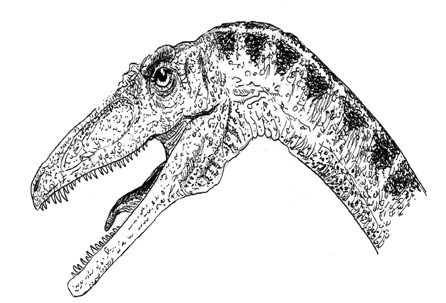
The discovery of this new, strong-jawed meat-eater may help explain a mystery surrounding the vast numbers of Coelophysis fossils found together.  Coelophysis was a swift-running, bipedal dinosaur with a long tail, long neck and small head.  Scientists have puzzled over why so many of these dinosaurs have been found fossilised together?

An Illustration of the Head of Coelophysis

Picture credit: Everything Dinosaur

Were these animals pack hunters and did they move around in large packs?  Today most vertebrates that move in large numbers are herbivores, scientists have remained curious why so many meat-eaters may have hunted together in the Triassic, perhaps with larger, more powerful carnivores such as Tawa hallae on the prowl it was safer to be part of a large group.  Interestingly, this type of behaviour, not seen in predatory mammals to any great extent, may be part of the explanation why the dinosaurs were able to diversify so rapidly and out compete other terrestrial reptiles that lived at the same time.

10 12, 2009

Pterosaur – The Flying Mystery New Evidence

By |2023-01-01T08:31:03+00:00December 10th, 2009|Categories: Dinosaur and Prehistoric Animal News Stories, Main Page, Palaeontological articles|0 Comments

Pterosaurs – New Research Provides Support for Orientation of the Pteroid Bone

Pterosaurs or as they are more commonly known, flying reptiles, were not dinosaurs, these remarkable reptiles evolved during the early part of the Mesozoic and they were the first vertebrates to master flight.  Their evolution was all part of the Triassic diversification of the reptiles following the Permian mass extinction event that wiped out approximately 95% of all plant and animal species on the planet.

Pterosaurs

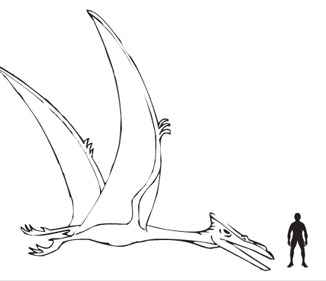
Although, many types of reptiles had evolved “wing-like” structures that enabled them to glide or parachute; it was the pterosaurs that evolved active flight, the ability to control with much more certainty the flying motion.  From early, long-tailed rhamphorhynchoids such as the black bird sized Preondactylus, the pterosaurs dominated the air until the evolution of the first birds.  The last of the pterosaurs such as the giant Quetzalcoatlus with its 12 metre wing span were the largest flying animals known in the fossil record.

An Illustration of the Huge Late Cretaceous Pterosaur Quetzalcoatlus

Picture credit: Everything Dinosaur

To view a scale model of a Quetzalcoatlus, dinosaurs and other pterosaur replicas, take a look at the Wild Safari Prehistoric World model range: Safari Ltd. Wild Safari Prehistoric World Dinosaur Models.

However, with no similar types of animals extant today, scientists have puzzled over a number of mysteries surrounding how these animals, particularly the largest genera, actually flew.  The aerodynamics of the membrane of skin that stretched from the shoulder, to the wing-tip and down to an area near the hind limb were remarkable.  The specialised arms of pterosaurs with their elongated fourth finger supported this double-sided membrane of skin that formed the wing, but how this wing was controlled to enable flight to take place has puzzled scientists for more than 100 years.

The position of a particular bone, the pteroid and how it could have withstood the stresses of flapping flight, as well as helped to direct the shape of the wing membrane has been a cause of much of the debate amongst scientists.  Unfortunately, despite the relatively extensive fossil record of Jurassic and Cretaceous pterosaurs, the incomplete skeletons and their crushed state of preservation has led to confusion over the orientation of the pteroid bone and its role in powered flight.  What was needed to help resolve this issue (or at least add to the debate), were a number of well preserved pterosaur skeletons with wrist bones and limbs that would enable scientists to obtain a 3-dimensional impression of a flying reptile’s wing.  Despite the many superb specimens uncovered from the Santana Formation of Brazil, the fossils found to date were unable to provide conclusive evidence as to the orientation of pteroid bone.

The Pteroid Bone

The pteroid bone is a rod-like bone found exclusive in pterosaurs.  It articulated at the wrist and supported the forewing in front of the inner part of the wing spar.  The function of this bone and its orientation has been a source of contention amongst palaeontologists.  Two contrasting theories have been proposed concerning the orientation of the pteroid bone.  One group of scientists believe that it was orientated medially (towards the body), it pointed towards the body of the animal, leading to a forewing that was relatively narrow.  A second theory suggests that the pteroid bone was directed forwards, away from the body during flight, resulting in a much broader forewing.

A Pair of Pterosaurs (CollectA Deluxe/Supreme Guidraco)

pterosaur

A pair of Guidracos, note the articulated jaws.

Picture credit: Everything Dinosaur

Images the skeleton of a pterodactyloid with a close up of the delicate pteroid bone that projects from the wrist and supports the forewing (propatagium).

In a paper published in the scientific journal “The Proceedings of the Royal Society Biology”, the team of researchers from Bristol University and University College, Dublin (Ireland), used biomechanical analysis and the testing of models in wind tunnels to test the position and orientation of the pteroid bone.  The team discovered that the aerodynamic efficiency of the wing structure was greatly improved if the pteroid bone was positioned in an antero-ventral orientation (forwards and putting downwards).  The lift : drag ratios were dramatically improved when the bone was put in this position when compared to other orientations for this bone.  The team claim that the maximum lift generated is exceptionally high when compared to conventional aerofoils, permitting even the largest pterosaurs to take off and land without difficulty.

Commenting on the sheer size of some of the largest pterosaurs, Colin Palmer, from the University of Bristol and lead author on the paper stated.

“Based on existing fossil evidence, pterosaurs are believed to have had a wing span of up to 12 metres and a weight of between 80 and 250 kilogrammes.”

The absence of any similar sized flying animals today, makes assessments of the flying capabilities of large pterosaurs very difficult.  The wing membranes of bats are also made of skin, but how they are supported by bones is very different to that which is seen in pterosaurs.  The bat wing is supported by all the fingers except the first digit, the thumb and often extends beyond the back leg to reach the tail.  Even the largest species of bats alive today do not have wingspans approaching anything near as large as some of the pterosaurs.

Commentating on the importance of understanding the structure and performance of pterosaur wings, a spokesperson said:

“It affects the speed at which they could fly, which could tell you about the type of life they led, where they lived, and possibly even what they ate.  They are the biggest animals ever take to the skies.”

Such a light and delicate looking wing being able to provide powered flight to an animal with the dimensions of a small aircraft is a remarkable evolutionary achievement.  The pterosaurs were around for something like 150 million years and they were the first back-boned animals to achieve powered flight.  Further studies will no doubt be undertaken to explore their flight capabilities, perhaps focusing not just on the aerodynamic structures but analysing the brains and senses of these animals that enabled them to control and manipulate their huge wings.

To view scale models of a variety of pterosaurs, Everything Dinosaur recommends the: CollectA Deluxe/Supreme Model Range.

20 11, 2009

Dinosaur Dash – The New Dinosaur Evolution Game

By |2024-04-18T15:23:25+01:00November 20th, 2009|Categories: Dinosaur Fans, Everything Dinosaur News and Updates, Main Page, Palaeontological articles|0 Comments

Dinosaur Dash Game – Can you be the first to Evolve?

Designed with the co-operation of those clever palaeontologists at the Natural History Museum in London, the Dinosaur Dash game challenges players to survive the age of reptiles.

In this family, dinosaur themed, board game, the object is to take your little dinosaur playing piece, all herbivores (we suspect because if there was a T. rex playing piece then this would lead to too many arguments), from the Triassic to the Cretaceous.

Dinosaur Evolution Game

For two to four players, with a special game version for especially young dinosaur fans (five years and up), the board game is supplied with a set of dinosaur quiz and chance cards to help young people learn about prehistoric animals.  The game uses beautifully illustrated game cards, from the Natural History Museum in London and is packed full of dinosaur facts and information.

The Dinosaur Dash – Evolution Game

The game box is wonderfully illustrated by John Sibbick; the famous dinosaur artist and illustrator.  As you play the game you will have to answer questions about prehistoric animals and rely on your knowledge, skill and luck to survive the Mesozoic.  It is a great festive gift idea for fans of dinosaurs and prehistoric animals and the game has a strong educational element too.

To view the extensive range of dinosaur and prehistoric animal themed gifts and toys available from Everything Dinosaur’s award-winning website: Visit Everything Dinosaur.

Along your time travelling adventure, you may have to escape the fearsome jaws of a Tyrannosaurus rex, or fight off a rival Triceratops with a display of your frill and three horns.  Can you be the first to evolve?

A spokesperson from Everything Dinosaur praised the game.  It represents lots of fun for all the family.  After all, how would you cope when faced with a T. rex?

The spokesperson added:

“It is a great board game.  We recommend this wonderful, family-friendly game.  It would make an ideal Christmas gift.”

13 11, 2009

Scientific Research over Warm-Blooded Dinosaurs Hots Up!

By |2024-04-18T07:31:38+01:00November 13th, 2009|Categories: Dinosaur and Prehistoric Animal News Stories, Main Page, Palaeontological articles|0 Comments

Endothermic or Ectothermic or Somewhere in-between New Research adds to the Debate

The controversial area of vertebrate palaeontology exploring the theory of warm-blooded dinosaurs hots up once again.

The hotly debated (no pun intended), issue of whether dinosaurs were warm-blooded (endothermic) or cold-blooded (ectothermic) continues to attract research and a new paper has been published from a team of U.S. based researchers this week that adds to the amount of data available on this controversial subject.

Warm-blooded dinosaurs?

The debate over the metabolism of dinosaurs has raged for over a hundred years, many scientists in the 19th and early 20th centuries believed that dinosaurs were cold-blooded, that is; they controlled their internal body temperatures by their behaviour.  Basking in the sun to warm up and seeking shade when they needed to cool down.  This sort of behaviour could be seen in extant species such as lizards and snakes,  (reptiles that are around today).  A number of researchers kept lizards and other small reptiles in glass laboratory tanks, altering the temperature of the environment and then monitoring how active or inactive the creatures were.  From their observations, they concluded that cold-blooded reptiles were sluggish when it was cooler and their activity was highly dependent on the surrounding temperature.  It was from studies such as these that the impression of slow, ponderous sluggish dinosaurs came about.

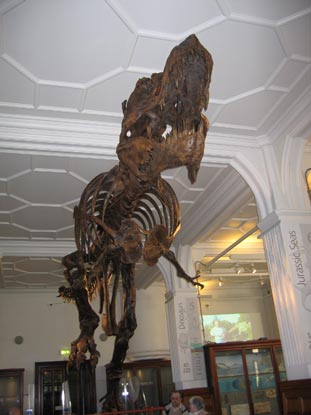
Was Tyrannosaurus rex Warm-Blooded?

Warm-blooded dinosaurs.

The debate over warm-blooded dinosaurs hots up after a new scientific paper exploring endothermy within the Dinosauria is published. Picture credit: Everything Dinosaur.

Picture credit: Everything Dinosaur

Whether an animal is ectothermic (cold-blooded) or endothermic (warm-blooded) is very important as depending on what sort of metabolism an animal has will influence behaviour, activity and even potential intelligence.

So why all the fuss over cold or warm-blooded dinosaurs?

The chemical reactions that take place in an animal’s body work best at set temperatures and if these fluctuate then the body will cease to function efficiently.  Cold-blooded animals like amphibians, snakes and lizards rely on external factors such as sun or outside air temperature to warm their bodies.  When they get too hot they seek shade or shelter.  Warm-blooded animals on the other hand, convert the food they eat into energy to help keep them warm and to maintain the correct body temperature.  When warm-blooded animals get too hot, they have to cool down and various adaptations for cooling down can be seen in mammals today (endothermic creatures).  For example, we humans sweat, dogs pant and elephants wallow in mud or flap their ears to cool the blood that flows through them.

If dinosaurs were warm-blooded then creatures such as Tyrannosaurus rex would have been athletic, active animals with high metabolic rates that would have permitted them to survive in all sorts of climates, even cold, harsh ones at high latitudes such as polar environments.  Palaeontologists, have found dinosaur fossils in Antarctica and at high latitudes in the Northern Hemisphere.  Now although these parts of the world were not the frozen wastelands of today, they were much warmer in the Mesozoic, dinosaurs would still have had to endure months without daylight and freezing temperatures below 0 degrees Celsius.

This new study from scientists at the University of Washington, St Louis appears to confirm that many types of dinosaur were endothermic, or warm-blooded just like mammals or birds.

Dr Herman Pontzer and his colleagues analysed the leg bones of extinct species as well as living animals and calculated the amount of energy required to move about.  In recent research, this team had demonstrated that the energy required to move about, to walk, trot and run was strongly associated with leg length.  The height of the hips above the ground, as well as determining stride pattern and stride length, could be used to predict the observed energy cost of locomotion with a 98% accuracy for a wide range of terrestrial animals.

Dr  Pontzer’s team applied this concept to an analysis of fossilised dinosaur leg bones, calculating the actual volume of leg muscle dinosaurs would have needed to move about efficiently.  In total, fourteen different species of bipedal prehistoric animal or dinosaur were studied.  Animals studied in the research include the early dinosaur Heterodontosaurus, the first bird in the fossil record Archaeopteryx, as well as Triassic saurischian dinosaurs such as Plateosaurus.  Theropods made up the bulk of the extinct animals studied, dinosaurs such as Allosaurus, T. rex, Microraptor and Velociraptor.  The reason why mainly bipedal animals were chosen for this particular study is quite simple; there was less need to make assumptions over weight distribution between bipedal animals as compared to animals which had a four-footed stance.

The findings indicate that these extinct animals had an endothermic metabolism.  That these dinosaurs were warm-blooded, they required too much energy to move about efficiently and that ectothermic bodies could not supply this energy in enough quantities.  This research has been published in the on line scientific journal PLoS One (Public Library of Science).

The team commented:

“These results strongly suggest endothermy for larger bipedal dinosaurs, because other explanations require physiological adaptations or locomotor limitations unseen in living terrestrial vertebrates.”

The research team have indicated that the characteristic of warm-bloodedness evolved very early in the age of reptiles and perhaps this type of metabolism existed in the common ancestor to the dinosaurs and pterosaurs.  The scientists concluded that having an endothermic metabolism and a subsequently high metabolic rate would have contributed to the evolutionary success of the Dinosauria.

Endothermic Dinosaurs

However, not all dinosaurs may have been endothermic, indeed the cold-blooded v warm-blooded dinosaur debate is likely to continue.  For example, Dr Tom Rich of the Museum of Victoria, a palaeontologist famous for excavating dinosaurs at locations such as the famous dinosaur cove and at East Gippsland has commented on these research findings.  Dr Rich and his colleagues are famous for researching into a polar-like paleogeographic environment.  The site of their dinosaur excavations, in the Australian state of Victoria, during the Early Cretaceous would have been much further south, at approximately 75 degrees south.  Dinosaurs such as Leaellynausaura and Atlascopcosaurus would have inhabited a polar forest environment putting up with freezing temperatures and prolonged periods without sunlight.  It has been argued that only endothermic dinosaurs could have survived in these conditions.  It is not known whether these dinosaurs were permanent residents or Summer migrants to the area.

Dr Rich has commented on this new research published in PLoS One, arguing that not all dinosaurs may have been warm-blooded.  The large sauropods would have faced a number of problems maintaining a constant body temperature, and no remains of sauropod-like dinosaurs have been found in polar paleogeographical environments, as far as team members at Everything Dinosaur can recall.  It has been suggested that sauropods such as Diplodocus and the titanosaurs may have been cold-blooded or possibly somewhere in-between an ectothermic and truly endothermic metabolism.

Visit Everything Dinosaur’s award-winning website: Visit Everything Dinosaur.

10 11, 2009

Rare Transitional Fossil Discovered in South Africa – Ancestor of Jurassic Giants

By |2024-04-18T07:32:39+01:00November 10th, 2009|Categories: Dinosaur and Prehistoric Animal News Stories, Main Page, Palaeontological articles|0 Comments

Aardonyx celestae – The Start of Something Big (Sauropoda)

Scientists have published a report into a recently discovered set of fossilised dinosaur bones that provide clues regarding the evolution of the largest land animals ever to walk the Earth.

A paper written by a joint team of South African and U. S. based scientists on a new dinosaur species, believed to be the ancestor of the sauropods has been published in the online scientific journal Proceedings of the Royal Society of Biology.

This new species of dinosaur has been classified as a basal sauropod, a member of the Sauropodomorpha, a group of primitive herbivores from which the huge giants such as Apatosaurus, Diplodocus and  Brachiosaurus evolved.  This new dinosaur has been named Aardonyx celestae, the name is a combination of Afrikaans and Greek which means “Earth Claw”.

Fossilised Dinosaur Bones

The fossils were found in the Northern Free State of South Africa, near the small town of Senekal, in the Bethlehem region.  The fossils represent at least two individuals, both believed not to be fully grown when they died.  The largest specimen is estimated to have measured approximately 7 metres in length.

The fossils reveal a number of characteristics that indicate that this species may have been a transitional species. Elements of the anatomy are characteristic of the larger, later sauropods.

Matthew Bonnan, a vertebrate palaeontologist at Western Illinois University, one of the authors of the research paper states that this relatively small dinosaur was a sauropod ancestor with features foreshadowing those of its more famous descendants such as Apatosaurus.

Early Jurassic Fossils

The fossils have been dated to the very Early Jurassic, approximately 195 million years ago (Sinemurian faunal stage).  The sauropodomorphs were the first plant-eating dinosaurs, the earliest forms evolved in the Middle Triassic but the fossil record for Triassic sauropodomorphs is extremely poor.  One of the oldest known sauropodomorphs was Saturnalia, fossils of which have been found in Brazil.

During the Triassic and Early Jurassic the continents we know today as South America, Antarctica, Australia and Africa were joined together to form one single land mass – Gondwanaland.  Theoretically, a primitive dinosaur called have walked from South America to South Africa, perhaps the sauropodomorphs evolved in the Southern Hemisphere.

Aardonyx celestae

In images showing this new dinosaur, the bones shaded in white indicate those elements of the skeletons that have been recovered from the dig site.  The discovery of most of the skull has helped scientists to understand the taxonomic relationship between this Early Jurassic dinosaur and its descendants.

When Matthew and his colleagues studied the length of the rib bones and compared these to the length of the forelimbs, they concluded that the front legs of this dinosaur were capable of bearing considerable weight but for the majority of the time this dinosaur may have adopted a bipedal approach.  In essence, Aardonyx may have been a facultative biped, an animal that walked around on its hind legs, but would adopt a quadrupedal stance (all fours) as and when required.

In biology, the ability to undertake an activity by desire rather than obligation is referred to as facultative.  In this case, the bipedal A, celestae could walk on all fours if it chose to do so.  The later much heavier sauropods were so large they rarely if changed their quadrupedal stance.

Pits on the Jawbone

The large number of small pits along the creature’s jawbone suggests that Aardonyx lacked a fleshy cheek that would have constrained how far the creature could open its mouth.  Its wide gape, Bonnan and his colleagues suggest, enabled this dinosaur to grab large mouthfuls of foliage with each bite.  Also, a strip of bone that ran along the base of the peg-like teeth braced them against side-to-side forces produced when the dinosaur stripped foliage from trees.

Commenting on these characteristics, Adam Yates, a palaeontologist at the University of the Wiwatersrand in Johannesburg and lead author in this study stated:

“These features are the first steps on the road to the specialised, bulk-browsing herbivory seen in sauropods.”

The shaded parts of the diagrams supplied indicate those parts of the skull that have been discovered to date.  Scientists hope that these South African fossils will shed more light on the evolution of the sauropods.

Sauropodomorphs

It is hoped that more information on the sauropodomorphs will be revealed when the fossilised remains of Thecodontosaurus are prepared and properly studied.  The best specimen of this English sauropodomorph that dates from the Middle to Late Triassic has not been removed from its rock matrix.  However, a recently awarded Heritage Lottery Fund (HLF) grant will enable a complete preparation process to take place.

To read more about the work on Thecodontosaurus: Bristol’s Dinosaur Thecodontosaurus to Rise Again Thanks to Grant.

The size and shape of muscle attachments on this dinosaur’s femur indicates that the leg muscles were powerful but that the creature was, for the most part, rather slow-moving, a characteristic certainly shared with its extremely large descendants.  For instance, estimates of the top speed of a dinosaur as big as a Brachiosaurus have been as low as 7 kmh, that is slower than most people walk.  However, if you are the size of a three-story house running away is not the best defensive option, not many meat-eaters would be bold enough to tackle a gigantic herbivore such as a Brachiosaurus.

Matthew Bonnan stated:

“This dinosaur wasn’t running a lot.  The overall shape of Aardonyx and particular aspects of its limbs, teeth and jawbone are anatomical hints of things to come in later sauropods.”

Commenting on the discovery, Paul Upchurch, a vertebrate palaeontologist at University College, London said:

“This is a very interesting animal.  The large number of bones recovered from various parts of the skeleton provide a good idea of what the creature might have looked like.”

He went on to add:

“Many of the features expected in a sauropod ancestor are present in Aardonyx, but they’re combined in an unusual mosaic.  For instance, although the creature had a wide gape that would have allowed it to grab large mouthfuls of vegetation, it had a narrow snout, unlike the broad U-shaped snout seen in most true sauropods.  This animal is expected, but in an unexpected sort of way.” 

The Hunt for More Primitive Sauropodomorphs

Scientists have predicted that more primitive sauropodomorphs will be found, hopefully these new South African discoveries will help shed light on the evolution of the Sauropoda and may help palaeontologists to understand the evolution of the ornithischian dinosaurs as well as the saurischian dinosaurs.   The most primitive of all dinosaurs, the ancestor of all that was to follow; was probably a small, gracile, bipedal, meat-eater.

Fossils of primitive members of the Sauropodomorpha will help scientists to learn more about the evolution of different types of dinosaur and the radiation of different forms that occurred during the Triassic/Jurassic.

To view replicas and models of sauropod dinosaurs: Prehistoric Animal Models and Figures.

Go to Top