All about dinosaurs, fossils and prehistoric animals by Everything Dinosaur team members.

Dinosaur and prehistoric animal themed articles, features and stories.

8 06, 2022

Remarkable Australian Pterosaur Fossils Reveal Crocodiles Dined on Flying Reptiles

By |2025-01-05T21:24:40+00:00June 8th, 2022|Categories: Adobe CS5, Dinosaur and Prehistoric Animal News Stories, Dinosaur Fans, Main Page, Palaeontological articles, Photos/Pictures of Fossils|0 Comments

Scientists have identified two partial pterosaur thigh bones that despite one being at least ten million years older than the other, have been identified as belonging to the same type of flying reptile (Anhangueria). Furthermore, one of the bones preserves a potential bite mark tentatively attributed to a crocodilian.
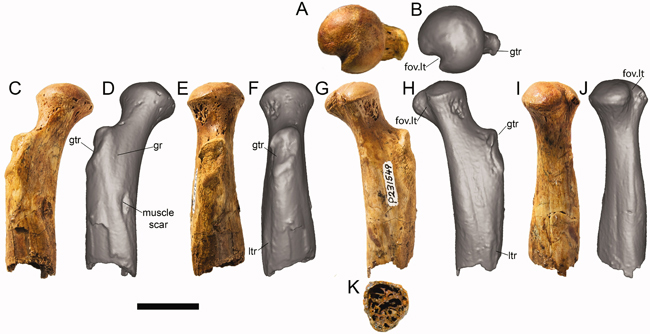
Pterosaur femur

Anhangueria indet. partial right femur from the Toolebuc Formation (NMV P231549): A, B, proximal; C, D, posterior; E, F, dorsal; G, H, anterior; I, J, ventral and K, distal views. A, C, E, G, I and K are photographs; B, D, F, H and J are 3D renders derived from surface scan data. Scale bar = 2 cm. Picture credit: Pentland et al.

Picture credit: Pentland et al

Two Rare Australian Pterosaur Fossils

The researchers who include famous Australian vertebrate palaeontologists Patricia Vickers-Rich and Thomas Rich report that the two bones although found over 200 miles apart, both come from pterosaurs from the same pterosaur clade (Anhangueria).

Specimen number NMV P231549 was collected in 1991 at Slashers Creek Station, southeast of the small town of Boulia (Queensland), from Toolebuc Formation deposits (middle to upper Albian) and is believed to be at least 100 million years old.

Specimen number AODF 2297 was found in 2004 at Belmont Station, around 35 miles northeast of the town of Winton in Queensland. It came from deposits associated with the “upper” Winton Formation (Cenomanian-lowermost Turonian stage of the Late Cretaceous). It is estimated to be around 10 million years younger.
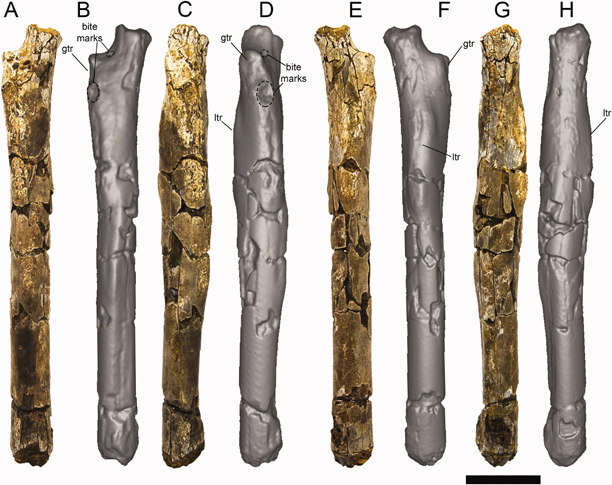
Anhangueria femor from the Winton Formation.

Anhangueria indet. partial left femur from the Winton Formation (AODF 2297): A, B, posterior; C, D, dorsal; E, F, anterior; and G, H, ventral views. A, C, E and G are photographs; B, D, F and H are 3D renders derived from surface scan data. Scale bar = 2 cm. Picture credit: Pentland et al.

Picture credit: Pentland et al

Although pterosaur fossils are exceptionally rare in Australia and most specimens are extremely fragmentary, their three-dimensional preservation has enabled palaeontologists to learn a great deal about the type of pterosaurs that ranged over this part of Gondwana during the Cretaceous.

Lead author of the scientific paper describing these pterosaur bones, Adele Pentland (PhD student at Swinburne University, Melbourne, Victoria), was also the lead author of another scientific paper published in 2019 which described another anhanguerid pterosaur Ferrodraco lentoni.

To read more about F. lentoni: The Most Complete Pterosaur Specimen Found in Australia to Date.
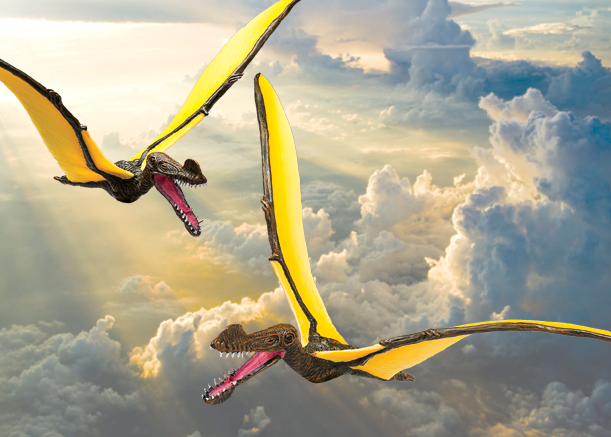
Mojo Fun Tropeognathus.

A pair of Mojo Fun Tropeognathus pterosaurs.

The picture (above) shows two Tropeognathus pterosaurs, soaring high in the sky.  These pterosaurs are typical of the Anhangueridae. The models are from the Mojo Fun series.

To view the range of Mojo Fun figures available from Everything Dinosaur: Mojo Fun Prehistoric Animal Figures.

The Winton Formation fossil preserves a potential bite mark, that the researchers have tentatively proposed was made by a crocodylomorph. It is not known whether this feeding trace represents predation or post-mortem scavenging.
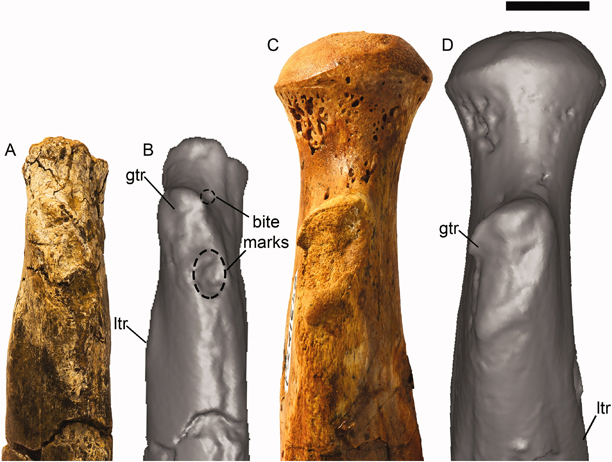
Comparing the two pterosaur femori.

Comparisons between greater trochanters of the Toolebuc Formation (NMV P231549) and Winton Formation (AODF 2297) pterosaur femora. AODF 2297 in A, B, dorsal view. NMV P231549 in C, D, dorsal view. A and C are photographs; B and D are 3D renders derived from surface scan data. Picture credit: Pentland et al.

Picture credit: Pentland et al

The scientists conclude that these new pterosaur fossils are a valuable addition to the meagre list of pterosaur specimens found in Australia and attest to the cosmopolitan distribution of anhanguerians during the Early and early Late Cretaceous.

The scientific paper: “New anhanguerian pterosaur remains from the Lower Cretaceous of Queensland, Australia” by Adele H. Pentland, Stephen F. Poropat, Matt A. White, Samantha L. Rigby, Patricia Vickers-Rich, Thomas H. Rich and David A. Elliott published in Alcheringa: An Australian Journal of Palaeontology.

7 06, 2022

The New PNSO Jennie the Centrosaurus Reviewed

By |2025-01-05T21:08:16+00:00June 7th, 2022|Categories: Adobe CS5, Dinosaur Fans, Everything Dinosaur Products, Main Page, Photos of Everything Dinosaur Products|0 Comments

The PNSO Jennie the Centrosaurus figure is proving popular amongst dinosaur fans and model collectors. This replica was introduced earlier this year (2022) one of several new horned dinosaur models introduced by PNSO into their mid-size, not-to-scale model series.

Jennie the Centrosaurus

The PNSO Jennie the Centrosaurus dinosaur model. Centrosaurus apertus is one of the best-known of all the Dinosauria with at least seventeen monodominant bonebeds ascribed to Centrosaurus. Picture credit: Everything Dinosaur.

Picture credit: Everything Dinosaur

Centrosaurus apertus

Named and described in 1904 (Lawrence Lambe), Centrosaurus is arguably one of the best-known of all the Dinosauria with numerous monodominant bonebeds having been discovered in the Canadian provinces of Saskatchewan and Alberta. PNSO has gained a strong reputation for the excellence of their dinosaur models and the Jennie the Centrosaurus figure has been praised for its stunning detail, particularly the head ornamentation, complete with that single, curved nose horn.

PNSO Jennie the Centrosaurus dinosaur model.

A close-up view of the head of Jennie the Centrosaurus. Picture credit: Everything Dinosaur.

Picture credit: Everything Dinosaur

The Everything Dinosaur website: Dinosaur Toys.

Model Measurements

The PNSO Jennie the Centrosaurus figure is approximately 16.5 cm long and the model stands around 7.5 cm high. Centrosaurus apertus was not amongst the biggest of the Late Cretaceous ceratopsids. The Everything Dinosaur fact sheet that is supplied with sales of this dinosaur model suggests a body length of around 5.5 metres and proposes that a fully-grown adult Centrosaurus would have weighed about 2,000 kilograms.

PNSO Centrosaurus model.

The beautifully detailed PNSO Centrosaurus dinosaur model in lateral view. Picture credit: Everything Dinosaur.

Picture credit: Everything Dinosaur

Poster and Booklet

This PNSO dinosaur model is supplied with a poster depicting Centrosaurus created by Zhao Chuang and a full-colour, 64-page booklet. A QR code on the packaging links to a short video presentation that explains how the model was designed and developed.

PNSO Centrosaurus poster

The PNSO model is supplied with a colour poster. The poster is an illustration of a Centrosaurus by world-renowned palaeoartist Zhao Chuang. Picture credit: Everything Dinosaur.

Picture credit: Everything Dinosaur

Available from Everything Dinosaur

To date, ten new prehistoric animal figures have been introduced by PNSO this year (including new colour versions and updated versions of previously introduced figures). The PNSO portfolio continues to grow and their reputation for the excellence of their figures remains a talking point amongst dinosaur fans and model collectors.

To view the range of PNSO prehistoric animal models available from Everything Dinosaur: PNSO Age of Dinosaurs.

5 06, 2022

A New Short-snouted Troodontid – Papiliovenator

By |2023-08-30T20:25:05+01:00June 5th, 2022|Categories: Adobe CS5, Dinosaur and Prehistoric Animal News Stories, Dinosaur Fans, Main Page, Palaeontological articles, Photos/Pictures of Fossils|0 Comments

A new species of short-snouted troodontid has been named and described based on fossils found in the Upper Cretaceous Wulansuhai Formation at Bayan Manduhu, Inner Mongolia. This little dinosaur has been named Papiliovenator neimengguensis.

Everything Dinosaur team members have been busy updating readers about new dinosaurs named and described this year (see below*), the formal scientific paper announcing this new troodontid was published earlier in the spring, but information about the fossils attributed as the holotype material had been circulating for some time.

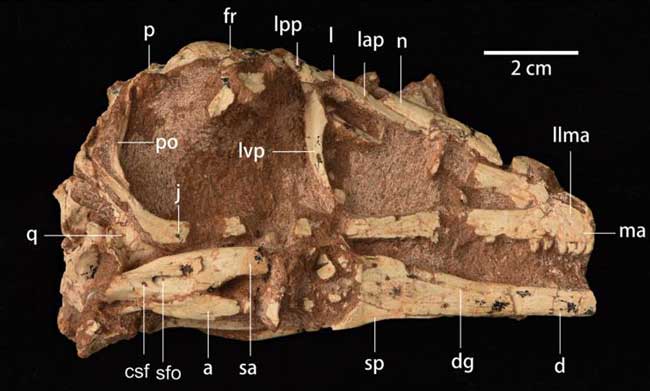
Papiliovenator neimengguensis Skull
The short-snouted skull of Papiliovenator neimengguensis in lateral view. Picture credit: Pei et al.

Named From Strangely Shaped Dorsal Vertebrae

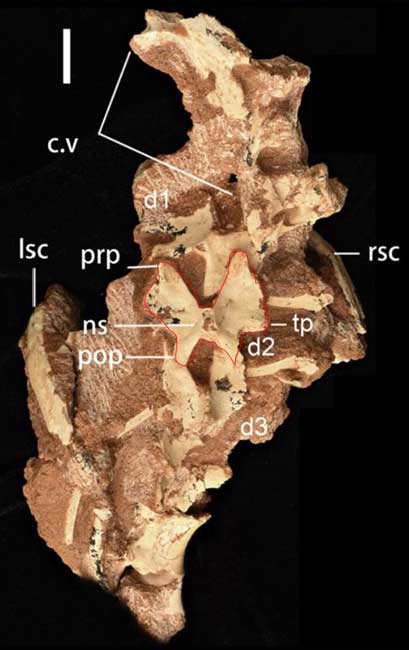
Known from a nearly complete skull and fragmentary, semi-articulated postcranial material thought to represent a single, individual animal, Papiliovenator means “butterfly hunter”. This little carnivore, which was less than a metre long, might well have hunted butterflies and other members of the Lepidoptera, but the derivation of the genus name does not reflect this dinosaur’s diet. Instead, it was the unusual shape of the neural arches associated with the two dorsal vertebrae closest to the neck of this dinosaur that inspired the genus name. When viewed from above (dorsal view), these neural arches are butterfly-shaped.

Papiliovenator neimengguensis fossil bones.
Papiliovenator neimengguensis fossil bones. A view of the articulated dorsal vertebrae with the distinctive butterfly-shaped, broad neural arches of the anteriormost dorsal vertebrae when viewed from the top down (dorsal view). The neural arch has been outlined in red. Picture credit: Pei et al with additional annotation by Everything Dinosaur.

Unusual for a Late Cretaceous Troodontid

The researchers report that Papiliovenator was unusual among Late Cretaceous troodontids in having a fairly deep, short-snouted skull. This skull shape is seen in geologically older troodontids known from the Early Cretaceous. Most other Late Cretaceous troodontids have long, low snouts, except for the smaller Almas ukhaa from the Campanian-aged Djadochta Formation of Mongolia. Coincidently, Rui Pei of the Chinese Academy of Sciences was the lead author of the scientific paper naming and describing A. ukhaa (Pei et al, 2017). Rui Pei is the lead author of the paper describing Papiliovenator.

*To read about a new basal iguanodontian from southern China: Napaisaurus guangxiensis.

*A new alvarezsaurid taxon from Uzbekistan: Dzharaonyx eski Old Dzharakuduk Claw.

*A new therizinosaur from the Japanese island of Hokkaido: Paralitherizinosaurus japonicus.

The fossils are thought to represent a sub-adult animal. The discovery of Papiliovenator neimengguensis allows for an improved understanding of troodontid anatomy, as well as helping to highlight the regional variation of troodontids from the Upper Cretaceous of the Gobi Basin.

The scientific paper: “A new troodontid from the Upper Cretaceous Gobi Basin of inner Mongolia, China” by Rui Pei, Yuying Qin, Aishu Wen, Qi Zhao, Zhe Wang, Zhanmin Liu, Weilesi Guo, Po Liu, Weiming Ye, Lanyun Wang, Zhigang Yin, Ruiming Dai and Xing Xu published in Cretaceous Research.

Visit the Everything Dinosaur website: Everything Dinosaur.

4 06, 2022

Mary Anning and the “Sea Dragon”

By |2022-10-21T10:10:56+01:00June 4th, 2022|Categories: Adobe CS5, Dinosaur Fans, Famous Figures, Main Page, Movie Reviews and Movie News, Photos|0 Comments

The 2022 Cheltenham Science Festival is due to begin on Tuesday, 7th June (2022) and the award-winning director James Morgan’s film “Sea Dragon” will be featured. This delightful short tells the story of Mary Anning’s ground-breaking fossil discovery that challenged the worldview of 19th century England.

The film will be shown as part of Dr Dean Lomax’s presentation entitled “Mary Anning and the Sea Dragons” which is taking place at the Helix Auditorium on the evening of the 8th of June (2022).

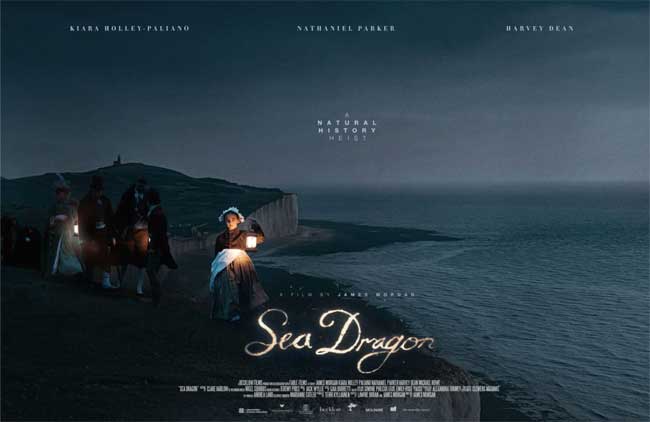
Sea Dragon - a natural history heist.
“Sea Dragon” – a natural history heist. The film is directed by James Morgan and produced by Terhi Kylliainen. Starring Kiara Holley-Paliano as Mary Anning, Harvey Dean as Joseph Anning and Nathaniel Parker as Mr Fairfax it tells the story of a fossil discovery in the cliffs along the Dorset coast and the ideological battle that commences when its significance is brought to light. Picture credit: Becklow Films, design by Matt Needle.

A Changing World – A Changing Society

Set in 1812, on the stunningly beautiful Dorset coast, young fossil hunter Mary Anning (played by Kiara Holley-Paliano) finds herself locked in an ideological battle with a devious auctioneer (Nathanial Parker) over the fate of an ichthyosaur fossil specimen.

The auctioneer considers the fossil skull to be from a crocodile, but Mary thinks differently, and our feisty protagonist sets out with her brother Joseph to rescue the specimen. This is the story of a young girl with the courage to challenge convention. A person not prepared to accept the doctrine of the time but to consider the evidence of her own eyes and in a beautifully conceived scene set in a Georgian drawing room, to confront the accepted view of the world.

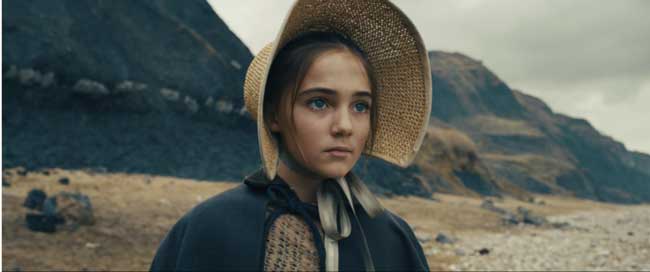
Mary Anning "Sea Dragon""
Kiara Holley-Paliano as Mary Anning portrayed in the film “Sea Dragon” directed by James Morgan. Picture credit: Becklow Films.

Exploring New Worlds

At its heart, “Sea Dragon” is an archetypal story of how an individual can force society to change. Directed by James Morgan, an award-winning director of film and television, this short film explores new worlds both social and palaeontological. Mary Anning, who rarely received any credit for her discoveries during her lifetime, helped to erode established beliefs about how the world was ordered. She challenged Georgian society. Her contribution to the nascent sciences of palaeontology and geology eroded long held and established views as surely as the Dorset cliffs with their fossil treasures crumble into the sea.

Sea Dragon Movie Poster
Sea Dragon (short, 2021). A young fossil hunter Mary Anning makes a ground-breaking discovery, challenging the worldview of 19th century England. Picture credit: Becklow Films, design by rathbleedart.

Commenting on the significance of this short, Director James Morgan stated:

“I hope the film does justice to the spirit of Mary Anning, and also poses questions about the
assumptions that still lay buried in our own foundations. As the ground continues to move
beneath our feet – we can only hope that we have learnt to listen to the small voice in the
corner of the room. Because small voices with the courage to see things differently are the most
powerful catalysts of positive change.”

Film director James Morgan.
James Morgan the director of the short film “Sea Dragon”. Championing the small voice in the corner of the room. Picture credit: Ben Sadd.

Our thanks to producer Terhi Kylliainen for her assistance in the compilation of this article.

“Sea Dragon” will be shown as part of Dr Dean Lomax’s presentation entitled “Mary Anning and Sea Dragons” at the Cheltenham Science Festival 2022 (Helix Auditorium, 5pm on the 8th of June).

The film website: The Film “Sea Dragon”.

The website of the director: James Morgan Film Director and Photographer.

2 06, 2022

Rebor and PNSO Models Feature in Newsletter

By |2025-01-05T20:51:02+00:00June 2nd, 2022|Categories: Dinosaur Fans, Everything Dinosaur News and Updates, Everything Dinosaur Newsletters, Everything Dinosaur Products, Main Page, Photos of Everything Dinosaur Products, Press Releases|0 Comments

Soon to be in stock Rebor and PNSO dinosaur models feature in the latest Everything Dinosaur customer newsletter. Dinosaur fans and model collectors were given the opportunity to join priority notification lists for a total of seven dinosaur figures that are due to arrive shortly. The PNSO models, including Aubrey and Dabei Torosaurus figures for example, are expected in stock in just a few weeks (June 2022).

Email alert for Torosaurus pair.
Making the headlines! The new for 2022 Torosaurus pair of Aubrey and Dabei will be in stock at Everything Dinosaur shortly. These two Torosaurus models are featured in the Everything Dinosaur customer newsletter.

No Need to Pre-order, No Deposit to Pay, No Administration Fees!

In the next few weeks new PNSO and Rebor models, including limited-edition figures will be arriving at Everything Dinosaur. As a thank you to all our customers, blog readers and newsletter subscribers we are giving you the opportunity to receive priority email alerts when these exciting models arrive.

There is no need to pre-order, there is no deposit to pay and there are no administration fees. Just let us know what model(s) you want and we will ensure you get a priority email when the model is in stock.

Rebor "Kiss" and "Tusk" models.
The eagerly anticipated Rebor 1:35 scale Tyrannosaurus rex figures “Kiss” and “Tusk” feature in the most recent Everything Dinosaur newsletter. Subscribers, customers and blog readers can contact Everything Dinosaur and request a priority email alert when these tyrannosaur figures are in stock.

Get Notified About Rebor Limited-edition “Extinction” Figures

The new for 2022 Rebor “Extinction” figures are also featured in the latest Everything Dinosaur newsletter. These two figures “Bronze” and “Victorian neoclassical marble” are limited-edition models, but Everything Dinosaur has offered subscribers, blog readers and customers the opportunity to join a priority notification list for these fascinating, highly detailed replicas.

Rebor "Extinction" models feature in customer newsletter.
The two recently announced Rebor limited-edition “Extinction” figures feature in the Everything Dinosaur customer newsletter.

Rebor figures available from Everything Dinosaur: Rebor Figures.

PNSO Acrocanthosaurus and PNSO Sinraptor Models

The new PNSO Fergus the Acrocanthosaurus and Xinchuan the Sinraptor models are also featured in the latest edition of the Everything Dinosaur newsletter. Once again, these two dinosaur figures have notification lists associated with them. Customers can join these lists with no obligation to buy.

PNSO models - Acrocanthosaurus and Sinraptor.
Two PNSO theropod models also feature in the latest Everything Dinosaur customer newsletter. Both Fergus the Acrocanthosaurus and Xinchuan the Sinraptor will be in stock at Everything Dinosaur in a few weeks (June 2022).

To view the range of PNSO models and figures in stock at Everything Dinosaur: PNSO Prehistoric Animal Models and Figures.

A spokesperson from Everything Dinosaur commented:

“There are several new Rebor and PNSO models coming into stock soon. For example, we expect Fergus the Acrocanthosaurus, Xinchuan the Sinraptor and the Torosaurus pair from PNSO to be in stock in June [2022]. We are giving customers the opportunity to be notified when these figures arrive. We know that the limited-edition Rebor “Extinction” replicas will be difficult to get hold of, so we are doing all we can to assist customers to add these figures to their model collections.”

To request to join any of the priority notification lists for these replicas, simply send an email to Everything Dinosaur stating which model notification list(s) you would like to join: Email Everything Dinosaur.

Visit the award-winning Everything Dinosaur website: Dinosaur Toys and Models.

30 05, 2022

The New PNSO Sinraptor Model – Join Waitlist

By |2024-12-31T11:37:34+00:00May 30th, 2022|Categories: Adobe CS5, Dinosaur Fans, Everything Dinosaur News and Updates, Everything Dinosaur Products, Main Page, Press Releases|0 Comments

Xinchuan the PNSO Sinraptor model will be in stock at Everything Dinosaur next month (June 2022). There is no need to pre-order this figure, simply join the Everything Dinosaur waitlist for this dinosaur replica and you will receive a priority notification email when this figure is in stock.

PNSO Xinchuan the Sinraptor figure.

Sinraptor dongi was formally named and described in 1994. The species name is in honour of the eminent Professor Dong Zhiming, one of China’s most celebrated palaeontologists. This exciting new for 2022 dinosaur model in the PNSO mid-size model range will be in stock at Everything Dinosaur in June 2022.

The Everything Dinosaur PNSO Xinchuan the Sinraptor Waitlist

This fascinating and eagerly anticipated, new for 2022 dinosaur model in the PNSO mid-size model range will be in stock at Everything Dinosaur in June 2022. There is no need to pre-order this figure, no need to pay upfront and there is no need for a deposit, just join the Everything Dinosaur waitlist for this figure or email Everything Dinosaur to receive a no obligation, priority email alert when the dinosaur model is in stock.

To be informed about new model introductions: Email Everything Dinosaur.

Sinraptor dongi

Sinraptor dongi was formally named and described in 1994 from fossil material associated with the Shishugou Formation located in north-western China. The Shishugou Formation has yielded numerous dinosaur and pterosaur remains and the strata is believed to have been deposited between 165 to 155 million years ago (Middle to Late Jurassic). A second species assigned to the Sinraptor genus has been named (S. hepingensis from Gao [1992]), although the exact taxonomy of this second species remains controversial as it was originally named by Gao Yangchuanosaurus hepingensis. Yanchuanosaurus and Sinraptor are closely related genera, yet their phylogeny and taxonomy has yet to be fully resolved.

PNSO Sinraptor dinosaur model

The PNSO Xinchuan Sinraptor dinosaur model in lateral view. A fabulous PNSO Sinraptor model.

To join the priority waitlist, simply visit Everything Dinosaur’s PNSO Age of Dinosaurs section of its website and if you are an account holder you can join the waitlist on the PNSO Xinchuan the Sinraptor product page.

The Everything Dinosaur website: Models of Dinosaurs.

To view the range of PNSO models and replicas in stock at Everything Dinosaur and to find the PNSO Xinchuan the Sinraptor product page: PNSO Age of Dinosaurs.

29 05, 2022

Fires Started by “Raptors”? What an Amazing Idea!

By |2024-12-31T11:26:41+00:00May 29th, 2022|Categories: Adobe CS5, Dinosaur Fans, Key Stage 3/4, Main Page, Photos, Teaching, TV Reviews|0 Comments

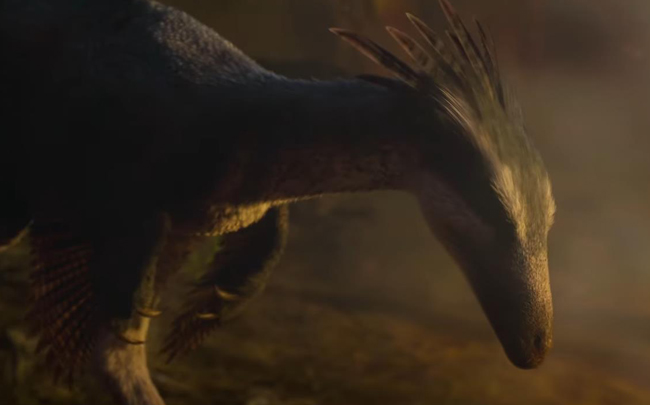
In episode four (Ice Worlds) of the acclaimed television series “Prehistoric Planet”, a troodontid dinosaur is depicted deliberately spreading a forest fire. Is this behaviour plausible? This Apple TV+ series has been praised for depicting prehistoric animals not as movie monsters but as animals capable of complex behaviours as seen in living relatives. The behaviour of many of the dinosaurs in the documentary series reflects behaviour observed and documented in birds.

The clever troodontid from the television series "Prehistoric Planet"

The feathered troodontid, regarding as one of the cleverest non-avian dinosaurs to have evolved, searches for a smouldering ember in order to start a fire elsewhere in the forest. Picture credit: Apple TV Plus.

Picture credit: Apple TV Plus

Lead scientific consultant for the five-part, nature documentary series, vertebrate palaeontologist and author Darren Naish has used his extensive knowledge of the living world to create realistic scenarios illustrating behaviours of long extinct creatures.

For example, the troodontid is depicted carefully selecting a burning ember and carrying it to another, as yet unburnt, part of the forest in order to deliberately start a fire. Fire starting is a behaviour that has been observed in some species of birds.

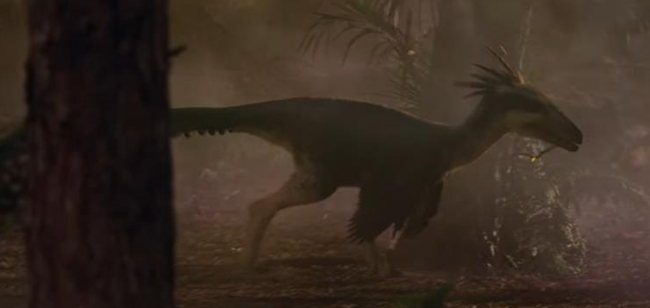
Troodontid on the prowl (Prehistoric Planet Apple TV Plus)

A troodontid patrols the edge of a forest fire in a northern, Late Cretaceous forest. Small animals fleeing the flames would make an easy target for this hunter, but did it deliberately carry smouldering embers to create further fires as part of its hunting strategy? Picture credit: Apple TV Plus.

Picture credit: Apple TV Plus

Forest Fires Provide an Opportunity for Hunters

Flames and smoke from a forest fire, presumably started by lightning would cause animals to flee and a hunter like a troodontid could patrol the fringes of the fire and ambush any small mammal, lizards or birds that had been panicked and were attempting to avoid the flames.

In the scene which features the troodontid, this clever little dinosaur (troodontids having relatively large brains in proportion to their body size), chooses an ember and deliberately carries it to another part of the forest to in order to spread the fire.

A troodontid carries a smouldering stick.

In the television episode the troodontid is shown carrying an ember from the forest fire. It drops the ember in a part of the forest not yet ablaze in a bid to flush out more potential prey. Picture credit: Apple TV Plus.

Picture credit: Apple TV Plus

Australian Fire Hawks

Indigenous Australians have reported that certain types of bird intentionally spread fires in order to exploit feeding opportunities. People in northern Australia have considered the black kite (Milvus migrans), the whistling kite (Haliastur sphenurus) and the brown falcon (Falco berigora) to be “fire hawks” picking up smouldering debris moving it some distance and then dropping it in a bid to spread the conflagration. Some of the observations and anecdotes were reported in a scientific paper published in the “Journal of Ethnobiology”.

The paper attempted to document evidence supporting the theory that many birds of prey used fires to help them find food, making easy meals out of insects and other small animals attempting to avoid the blaze.

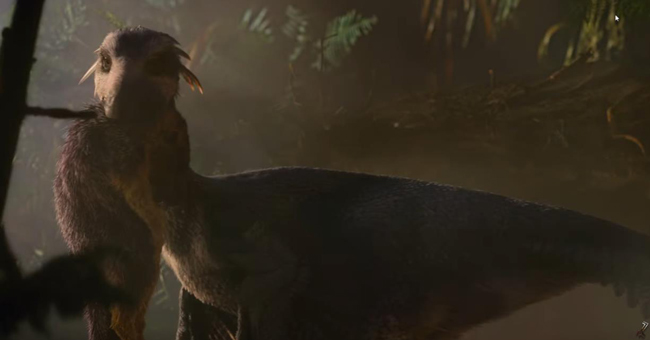
A successful hunt for a troodontid

A successful hunt. The intelligent and resourceful troodontid claims its prize. Picture credit: Apple TV Plus.

Picture credit: Apple TV Plus

Co-author of the scientific paper, which was published in 2017, Mark Bonta (Pennsylvania State University), commented:

“We’re not discovering anything. Most of the data that we’ve worked with is collaborative with Aboriginal peoples. They’ve known this for probably 40,000 years or more.”

Other Scientists are Sceptical

Some experts have expressed scepticism, whether these birds were intentionally spreading fires or were seen to pick up sticks as a consequence of darting down to capture prey but missing their intended target.

Anthony Molyneux of the Alice Springs Desert Park commented:

“If [hawks] have missed the prey and perhaps grabbed a stick, they will drop that stick or rock. If the stick is smouldering or on fire, then it will start another fire.”

In a 2016 interview with the Australian Broadcasting Corporation, Bob Gosford, an Australian indigenous-rights lawyer and ornithologist explained that these raptors thrive in areas where wildfires are common.

In the interview he stated:

“It’s a feeding frenzy, because out of these grasslands come small birds, lizards, insects, everything fleeing the front of the fire.”

There have been many first-hand accounts of hawks and other birds of prey picking up burning sticks in their claws and dropping them in a fresh area of dry grass several hundred metres away to start another fire.

No one can ever know whether troodontids or other theropod dinosaurs indulged in this fire-spreading behaviour, but research is on-going to determine whether their close relatives (birds) deliberately spread fires.

It certainly made an intriguing and thought-provoking segment in the documentary series.

The scientific paper: “Intentional Fire-Spreading by “Firehawk” Raptors in Northern Australia” by Mark Bonta, Robert Gosford, Dick Eussen, Nathan Ferguson, Erana Loveless, Maxwell Witwer published in the Journal of Ethnobiology.

To view articulated models and replicas of dromaeosaurids including troodontid dinosaurs: Beasts of the Mesozoic Articulated Models.

28 05, 2022

The Beautiful Rebor “Extinction” Library

By |2024-12-31T10:54:03+00:00May 28th, 2022|Categories: Adobe CS5, Dinosaur Fans, Everything Dinosaur Products, Main Page, Photos of Everything Dinosaur Products|0 Comments

The news that Rebor will introduce two new, highly innovative Velociraptor models into their Rebor Oddities range has certainly got tongues wagging. Team members have been busy responding to emails from customers about these figures over the last few days.

Rebor Oddities "Extinction" Renaissance Bronze

Views of the Rebor Velociraptor “Extinction” figure in the bronze colour scheme.

One recurring question has cropped up over and over again, customers have been keen to see a list of the books that the contemplative theropod is sitting on. As the Velociraptor considers the human skull that it is holding in its right hand, it is obviously a scholar, at least judging by the volumes contained in its library.

Rebor Oddities "Extinction" Renaissance Bronze

Rebor Oddities “Extinction” Velociraptor.

The Rebor “Extinction” Book List

In total, twenty-three books are featured in these intriguing sculpts. They are a combination of fiction and factual publications, each one, arguably representing a significant moment in the history of the written word.

Our list:

  • Hamlet by William Shakespeare.
  • The Lost World by Sir Arthur Conan Doyle first published in 1912.
  • Vulgate Latin Bible – a 4th century translation of early Christian texts by Jerome of Stridon which was to become the official religious text adopted by the Catholic Church.
  • Philosophiae Naturalis Principia Mathematica by Isaac Newton (later Sir Isaac Newton), published in 1687.
  • Leviathan by Thomas Hobbes first published in 1651. Also known as “The Matter, Forme and Power of a Commonwealth Ecclesiasticall and Civil” it outlines a political philosophy whereby the population enter into a form of social contract with an absolute ruler.
  • A Treatise of Human Nature by the Scottish philosopher David Hume, first published in 1739. The full title of this book is “A Treatise of Human Nature: Being an Attempt to Introduce the Experimental Method of Reasoning into Moral Subjects”.
  • The Time Machine by H. G. Wells published in 1895.
  • The Divine Comedy by the Italian poet Dante Alighieri published in the early 14th century.
  • The Decameron by the 14th Century Italian writer Giovanni Boccaccio which recounts the stories told by a group of young people as they shelter from the Black Death.
  • The Geological Story Briefly Told.
  • The Poems of Longfellow – a compilation of the work of the American poet Henry W. Longfellow.
  • Zoological Philosophy by Jean-Baptiste Lamarck first published in 1809 which outlined a theory of inherited characteristics passed on from generation to generation.
  • The Prince published in the early 16th century by the Italian diplomat and politician Niccolò Machiavelli. It outlined the methods employed by people in power to keep their influential positions and justified the use of unethical and immoral means to achieve success.
  • Wuthering Heights by Emily Brontë first published in 1847.
  • Stratigraphical Palaeontology: A Study of Ancient Provinces.
  • Gray’s Anatomy of the Human Body – after Henry Gray a comprehensive guide to human anatomy published in 1858.
  • The Critical Review – published in the late 18th and early 19th centuries, a periodical that reviewed newly published books written by a diverse range of leading academics and public figures.
  • The Natural History.
  • Frankenstein by Mary Shelley written in 1818.
  • Lyrics of the Heart: with Other Poems a collection of the work of the English poet and journalist Alaric Alexander Watts
  • Meyers Konversations-Lexikon an encyclopaedia of the German language by Joseph Meyers.
  • On the Origin of Species – the ground-breaking work by Charles Darwin (later Sir Charles Darwin) that outlines his theory of natural selection (first published in 1859).
  • History of the World – possibly the six-volume history of the world in Hungarian published between 1906 and 1908 by Endrei Zalán.

Perhaps, the number twenty-three is also significant. In our species Homo sapiens, most of us have twenty-three pairs of chromosomes in our cells.

The award-winning Everything Dinosaur website: Prehistoric Animal Models.

The Rebor Extinction figure (bronze).

Rebor Oddities “Extinction” Velociraptor in neoclassical marble. In total, twenty-three published works are illustrated on this Rebor figure.

To view the range of Rebor models and figures currently in stock at Everything Dinosaur: Rebor Models and Figures.

27 05, 2022

A Basal Iguanodontian from Southern China

By |2024-12-31T10:46:40+00:00May 27th, 2022|Categories: Adobe CS5, Dinosaur and Prehistoric Animal News Stories, Dinosaur Fans, Main Page, Photos/Pictures of Fossils|0 Comments

Scientists have named and described a new genus of basal iguanodontian from the Xinlong Formation of southern China. The dinosaur has been named Napaisaurus guangxiensis. It is the first, basal iguanodontian taxa described from southern China.

Napaisaurus guangxiensis fossil material.

Holotype fossil material of Napaisaurus (N. guangxiensis) is a right ilium and ischium found in 2020. It is the first, basal iguanodontian taxa from southern China. Picture credit: Ji and Zhang.

Picture credit: Ji and Zhang

Fossils Found in 2020

Partial hip bones (a right ilium and a right ischium) from a single individual animal were discovered in 2020 from excavations undertaken in strata associated with the Aptian-aged, Xinlong Formation of Napai Basin, Fusui County, Guangxi Zhuang Autonomous Region, South China. The dinosaur’s name translates as Napai Basin lizard from Guangxi and its discovery adds to the dinosaur biota (sauropods, spinosaurids and carcharodontosaurids) associated with the Xinlong Formation.

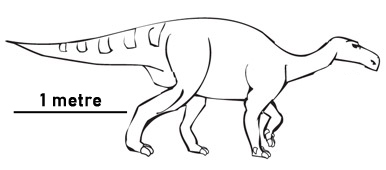
Team members at Everything Dinosaur, estimate that based on the partial hip bones, the Napaisaurus specimen would have been around four metres in length.

Scale drawing of Napaisaurus

A scale drawing of Napaisaurus guangxiensis. This basal iguanodontian is estimated to be around four metres in length. Picture credit: Everything Dinosaur.

Picture credit: Everything Dinosaur

Comparing Dinosaur Biotas from China and North-eastern Thailand

The official journal publication announcing the discovery of this new Early Cretaceous herbivore was published earlier this year, but it was made available on-line in 2021.

The fossils permit an iguanodontian to be added to the dinosaur biota associated with the Xinlong Formation and it provides important evidence helping palaeontologists to better understand the relationship between the Lower Cretaceous fossils of the Napai Basin (Xinlong Formation) and those associated with contemporaneous deposits from northern China and the Khorat Group of north-eastern Thailand. Specifically, the naming of Napaisaurus adds a definitive iguanodontian to the Xinlong Formation biota, thus permitting a more detailed comparison with the ornithischian dinosaurs associated with the Aptian-aged Khok Kruat Formation (the uppermost member of the Khorat Group), from which several iguanodontian ornithopods have been described (Ratchasimasaurus, Siamodon, Sirindhorna).

The scientific paper: “First new genus and species of basal iguanodontian dinosaur (Ornithischia: Ornithopoda) from southern China” by S. Ji and P. Zhang published in Acta Geoscientica Sinica.

The award-winning Everything Dinosaur website: Dinosaur and Prehistoric Animal Models.

26 05, 2022

A New PNSO Xinchuan the Sinraptor Dinosaur Model

By |2024-12-31T10:37:44+00:00May 26th, 2022|Categories: Adobe CS5, Dinosaur Fans, Everything Dinosaur News and Updates, Everything Dinosaur Products, Main Page, Photos of Everything Dinosaur Products, Press Releases|0 Comments

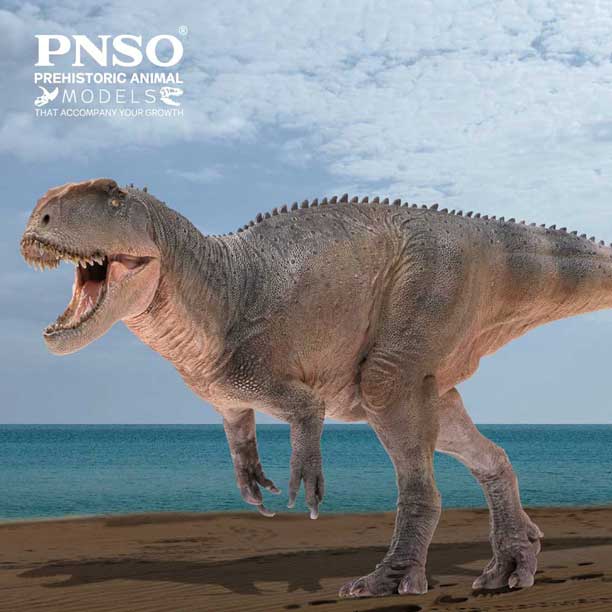
PNSO have announced that they will be adding a replica of a Sinraptor to their mid-size prehistoric animal model range. Everything Dinosaur have known about this new dinosaur model for some time and confirm that it will be in stock in just a few weeks.

PNSO Xinchuan the Sinraptor figure.

Sinraptor dongi was formally named and described in 1994. The species name is in honour of the eminent Professor Dong Zhiming, one of China’s most celebrated palaeontologists.

A Chinese Theropod Dinosaur

Sinraptor (S. dongi) was named and scientifically described in 1994. The genus name translates as “Robber from China”, so it is highly appropriate for PNSO to add a replica of this Jurassic predator to their already extensive mid-size model range. The specific or trivial name honours the eminent Chinese palaeontologist Professor Dong Zhiming. Although it has the term “raptor” included in the genus name, it was not related to “raptors” (dromaeosaurs). It has been classified as a member of the Carnosauria clade, specifically a member of the Allosauroidea and within this superfamily it is defined as a metriacanthosaurid and thought to be closely related to another Chinese taxon Yangchuanosaurus.

PNSO Sinraptor dinosaur model

The stunning PNSO Xinchuan the Sinraptor dinosaur model.

PNSO Xinchuan the Sinraptor Model Measurements

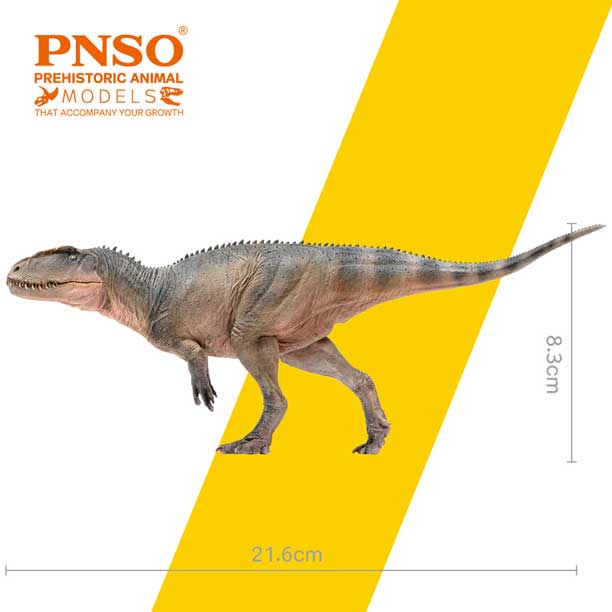
This new for 2022 dinosaur model measures 21.6 cm in length and the model stands around 8.3 cm tall. PNSO do not declare a scale for their mid-size models, however, team members estimate a scale of 1:35 based on the original size estimates given for the holotype specimen.

PNSO Xinchuan the Sinraptor model measurements.

Xinchuan the Sinraptor model measures 21.6 cm long and the figure stands around 8.3 cm high.

Posters, Full-colour Booklet and an Articulated Jaw

The Sinraptor figure is supplied with a transparent, plastic support stand, a full-colour, 64-page illustrated booklet and a poster that highlights the palaeoart of Zhao Chuang. This superb dinosaur model also has an articulated lower jaw.

PNSO Sinraptor dinosaur model.

The PNSO Sinraptor model is supplied with a clear, plastic support stand and comes with posters and a 64-page, fully illustrated booklet.


The PNSO Xinchuan the Sinraptor dinosaur figure is supplied with a sixty-four page booklet and posters.

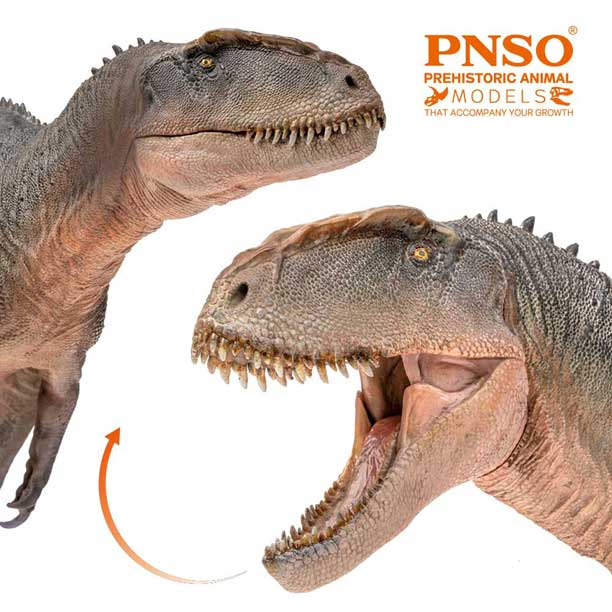
PNSO Xinchuan Sinraptor model has an articulated lower jaw.

Sinraptor has been classified as a member of the allosauroid group of theropod dinosaurs, specifically it has been classified as a member of the Metriacanthosauridae. The PNSO Xinchuan Sinraptor model has an articulated lower jaw.


Available from Everything Dinosaur in Just a Few Weeks

A spokesperson from Everything Dinosaur commented:

“We had known about this model for several months, as a result, we arranged to bring stock of this figure in with our next shipment of PNSO figures. We expect to have the Sinraptor model in stock along with Fergus the Acrocanthosaurus replica in just a few weeks.”

PNSO Sinraptor dinosaur model

The PNSO Xinchuan Sinraptor dinosaur model in lateral view.

To view the current range of PNSO prehistoric animal models and figures in stock at Everything Dinosaur: PNSO Age of Dinosaurs.

The Everything Dinosaur website: Dinosaur Models.

Go to Top