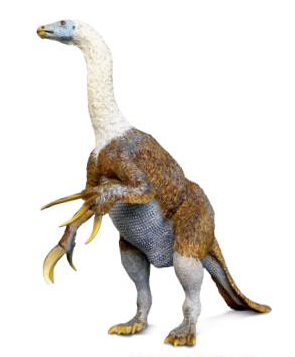
A Wild Safari Prehistoric World Therizinosaurus is to be added to the range of prehistoric animal figures offered by Safari Ltd. An image of this new theropod dinosaur model has been included in documents sent to Everything Dinosaur. A spokesperson for the UK-based mail order company explained that the figure was likely to be in stock early in 2024.
The first official image of the soon to be introduced Wild Safari Prehistoric World Therizinosaurus dinosaur model.
The Wild Safari Prehistoric World Therizinosaurus Model
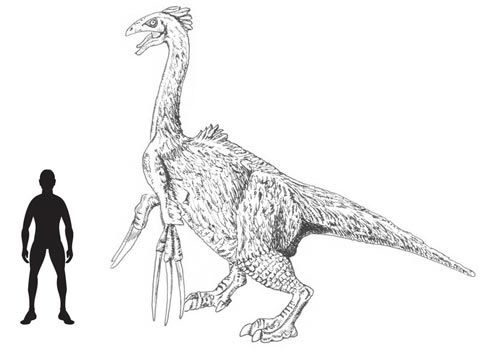
Formally named and scientifically described in 1954 (Maleev), this dinosaur is famous for its huge hand claws. Size estimates vary, but some palaeontologists suggest Therizinosaurus could have reached a length of ten metres and stood around five metres tall. Fossils of Therizinosaurus cheloniformis are rare. This dinosaur’s body shape and size has been inferred by studying more complete specimens of smaller maniraptoran relatives such as Nanshiungosaurus and Erliansaurus.
Huge “scythe lizard”. A scale drawing of Therizinosaurus. Picture credit: Everything Dinosaur.
Picture credit: Everything Dinosaur
Model Measurements
A spokesperson from Everything Dinosaur stated that the model had a length of 16.8 cm (6.6 inches). It stood 16.4 centimetres high (6.4 inches tall).
The spokesperson also confirmed that the Wild Safari Prehistoric World Therizinosaurus dinosaur model was likely to be in stock at Everything Dinosaur early in 2024.
Everything Dinosaur has received a whopping 647 Feefo product reviews over the last few months. Feefo, the independent ratings agency records comments from customers and feedback on products. As well as receiving hundreds of comments about customer service, nearly 650 product reviews have been received.
Over the last few months Everything Dinosaur has received a colossal 647 feedback comments about products from customers. The average product rating from customers was an amazing 4.9 out of 5 stars. Picture credit: Everything Dinosaur.
Picture credit: Everything Dinosaur
Feefo Product Reviews
Feefo is one of the world’s largest verified buyer reviews platforms.
Feefo helps to empower businesses like Everything Dinosaur by collecting genuine, verified customer reviews and insights. This feedback provides visitors to our website with extra assurance and allows Everything Dinosaur to relate real customer purchasing experiences.
Over 93% of the product reviews received are 5-star reviews. An amazing 642 out of 647 product reviews from customers are either 4-star or 5-star (99.2%).
A spokesperson from Everything Dinosaur commented:
“We would like to thank all our reviewers who have submitted feedback to Feefo about us. The comments we have received help us to improve our business. Everything Dinosaur has received an amazing 647 reviews over the last few months. We are immensely proud to have earned such an astonishing number of 5-star reviews.”
Customer Service Reviews
In addition to the product reviews, Everything Dinosaur has received hundreds of customer service reviews. Of the 324 customer service reviews received over this period, 320 of them are 5-star reviews. The other four reviews are 4-star reviews.
With this level of independently verified customer reviews, Everything Dinosaur has one of the best business ratings for customer service in worldwide retail.
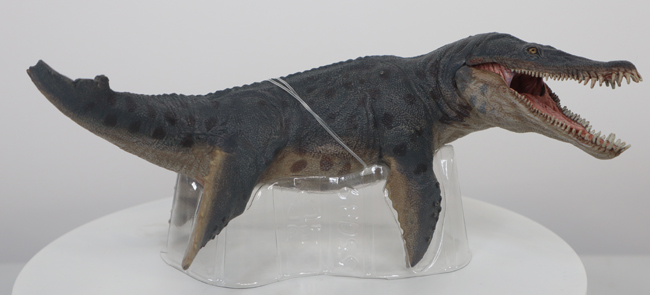
Our thanks to William who sent into Everything Dinosaur his review of the PNSO Requena the Livyatan prehistoric whale model. The reviewer commented that the PNSO model was impressive, a replica worthy of fighting the formidable Otodus megalodon.
A close-up view of the head of Requena the Livyatan.
William explained that the PNSO Livyatan was a superb model. He stated that in his opinion it would not be surpassed. It was wonderful to own a replica of one of the Earth’s greatest predators.
The reviewer commented:
“This is my first foray into the ancient Miocene oceans and I chose wisely with the ancient “Requena”. It is just perfection, in all aspects from the sculpt, to the colour, to the design. Everything Dinosaur delivers with their premier on-line global store.”
PNSO Requena the Livyatan prehistoric whale model anterior view.
A “Leviathan” of a Model
Pleased with his PNSO purchase William forgave the visible seams on this large figure and exclaimed:
“It is not a tiny figure, it’s a leviathan of a model!”
The reviewer concluded his comments by praising Everything Dinosaur. He complimented the UK-based mail order company for their efforts in bringing into stock the latest models and figures. He highlighted Everything Dinosaur’s work with Haolonggood of China and congratulated them on becoming official stockists.
William has purchased from Everything Dinosaur on many occasions. He highlighted how easy it was to make a purchase. In addition, he stressed how safe and secure purchasing was. He explained that customers receive an email with minutes of placing an order. Parcels are packed and despatched swiftly.
A new species of Japanese dinosaur has been announced. The dinosaur, classified as a deinocheirid and therefore distantly related to the bizarre Deinocheirus has been named Tyrannomimus fukuiensis.
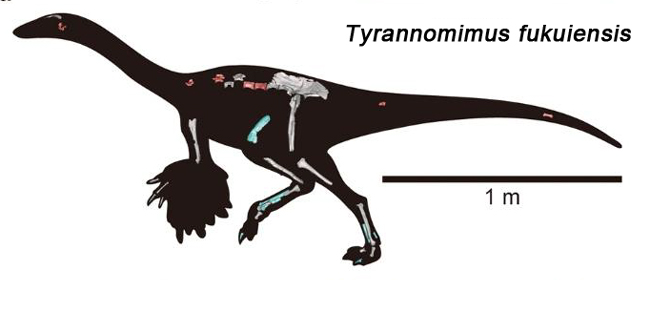
Fragmentary fossils representing a type of ornithomimosaur had been excavated from the Kitadani Dinosaur Quarry (Fukui Prefecture, Japan) since 1998. The remains represent several individuals, but the fossil bones show identical anatomical traits leading palaeontologists to conclude that a single, new taxon was present.
Fossil material associated with T. fukuiensis. The holotype (FPDM-V-11333) shown in red and the paratype shown in blue. The right femur in the diagram is a mirror image of the left femur (FPDM-V-11338). Picture credit: Hattori et al with additional annotation by Everything Dinosaur.
Tyrannomimus fukuiensis
Phylogenetic analysis indicates that T. fukuiensis is the earliest definitive deinocheirid described to date. Its discovery will help scientists to better understand the evolution and dispersal of early ornithomimosaurs. Tyrannomimus is estimated to have had a body length of around 2.5 metres. It was probably feathered.
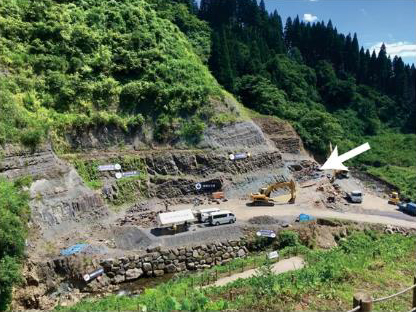
The Kitadani Dinosaur Quarry in 2019 with an arrowhead indicating where the studied specimens were found. Picture credit: Hattori et al.
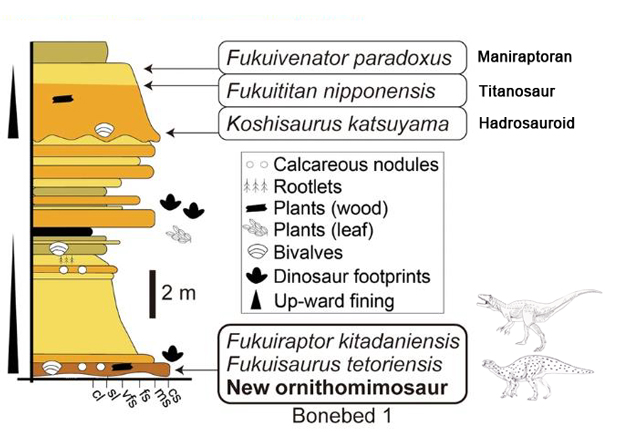
The bonebed from which the fossil material was excavated is thought to be around 120 million years old (Aptian faunal stage of the Cretaceous). The Kitadani Dinosaur Quarry has yielded several different types of dinosaur. The stratum from where the Tyrannomimus was excavated is associated with two other dinosaurs – Fukuiraptor (possible megaraptoran) and the herbivorous Fukuisaurus (hadrosauriform).
Stratigraphic section of the part of the Kitadani Formation in the Kitadani Dinosaur Quarry showing the approximate location of key fossils including dinosaurs such as Tyrannomimus fukuiensis. Picture credit: Hattori et al with additional annotation by Everything Dinosaur.
Kitadani Dinosaur Quarry Bonebed 1 Biota
Both Fukuiraptor (F. kitadaniensis) and Fukuisaurus (F. tetoriensis) are found at the same level as Tyrannomimus fossil material. This suggests these dinosaurs were coeval. The palaeoclimate of the lower portion of the Kitadani Formation is believed to have been a humid, tropical ecosystem. Slightly younger geological deposits, yield abundant conifer fossils indicating that the climate may have become drier.
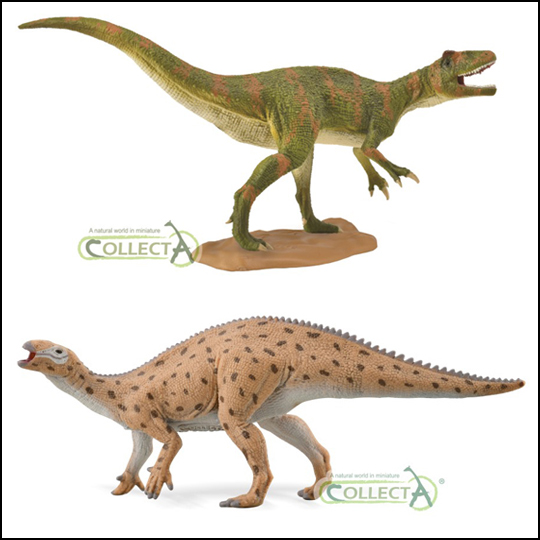
The CollectA Fukuiraptor (top) and the CollectA Deluxe Fukuisaurus (bottom). These dinosaurs may have been contemporaries of the newly described deinocheirid Tyrannomimus.
The picture (above) shows Fukuiraptor and Fukuisaurus figures. These replicas are part of the CollectA range of prehistoric animal figures. Fukuiraptor is in the CollectA Age of Dinosaurs range, whilst the 1:40 scale Fukuisaurus is found within the CollectA Deluxe range.
The genus name translates as “tyrant mimic”. The ilium shows similarities to the hip bones of tyrannosauroids. Indeed, prior to its formal scientific description this dinosaur was thought to be a member of the Tyrannosauroidea.
The identification of Tyrannomimus fukuiensis as an ornithomimosaur has implications for a dinosaur found in Portugal. Aviatyrannis jurassica was named and described in 2003 (Rauhut). It is estimated to have lived around 155 million years ago (Late Jurassic). Aviatyrannis was thought to represent a tyrannosauroid. However, analysis of the bones of Tyrannomimus with Aviatyrannis revealed similar characteristics. As such, Aviatyrannis may represent an ornithomimid too. If this is the case, then Aviatyrannis jurassica, may represent the earliest ornithomimosaur described to date.
If Aviatyrannis is confirmed to be a member of the Ornithomimosauria, then it significantly expands the temporal and biogeographic range of these theropod dinosaurs.
Everything Dinosaur acknowledges the assistance of the open-access scientific paper in the compilation of this article.
The scientific paper: “New theropod dinosaur from the Lower Cretaceous of Japan provides critical implications for the early evolution of ornithomimosaurs” by Soki Hattori, Masateru Shibata, Soichiro Kawabe, Takuya Imai, Hiroshi Nishi and Yoichi Azuma published in Scientific Reports.
Everything Dinosaur has produced a short YouTube video review of the recently introduced Papo Kronosaurus marine reptile figure. In this brief video, team members take a detailed look at the Papo Kronosaurus and explain why this figure has a tail fin.
The Everything Dinosaur review of the recently introduced Papo Kronosaurus model. Video credit: Everything Dinosaur.
Video credit: Everything Dinosaur
Reviewing the Papo Kronosaurus
Our YouTube video lasts a little over three minutes. We wanted to give model collectors the opportunity to take a closer look at the Papo Kronosaurus replica. The official image released by Papo does not highlight the excellent quality of this model. Everything Dinosaur wanted to create a video and publish photographs to assist collectors with purchase decisions.
The Papo Kronosaurus marine reptile photographed in lateral view. Picture credit: Everything Dinosaur.
Picture credit: Everything Dinosaur
To view the extensive range of Papo prehistoric animal figures and models in stock at Everything Dinosaur: Papo Prehistoric Animal Models.
Kronosaurus Markings and the Tail Fin
The video begins with the Kronosaurus model being introduced. Comments are made about the figure having a typical Papo appearance. The head and the teeth are examined in detail. The narrator moves on to discuss the flippers and the presence of skin parasites, probably barnacles on the marine reptile figure. This Kronosaurus model has a cloaca.
The video format (chapters):
00:00 – Papo Kronosaurus! 00:48 – Typically Papo! 01:00 – Head and Teeth. 01:22 – Kronosaurus Flippers. 01:51 – Cloaca Watch! 02:08 – Tail Fin Shape! 02:52 – Congratulations Papo.
A section of the Everything Dinosaur video is dedicated to explaining why the figure has been given a tail fin. Tail fins/flukes in the Plesiosauria remains a controversial area. There is some evidence within the fossil record. However, the Plesiosauria is such a diverse clade that there may have been many different shapes and sizes of tail appendage. Most palaeontologists agree, that if a tail fin or fluke was present on Kronosaurus, it probably did not play a huge role in locomotion. The tail fin or fluke would have probably helped to stabilise the predator as it manoeuvred.
The video concluded with the narrator praising the Papo prehistoric animal model range and congratulating the company for producing an excellent Kronosaurus.
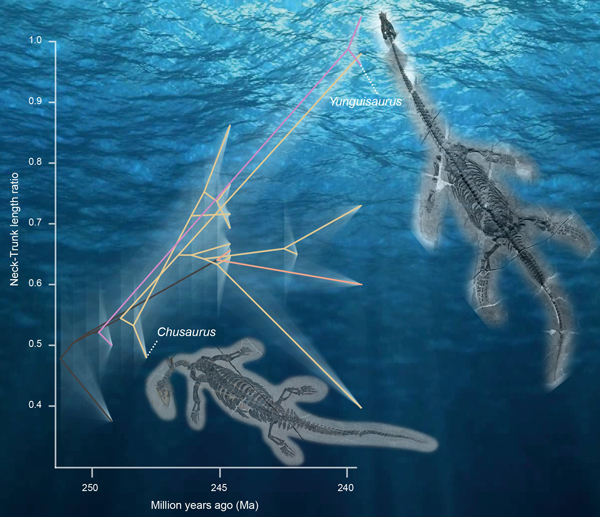
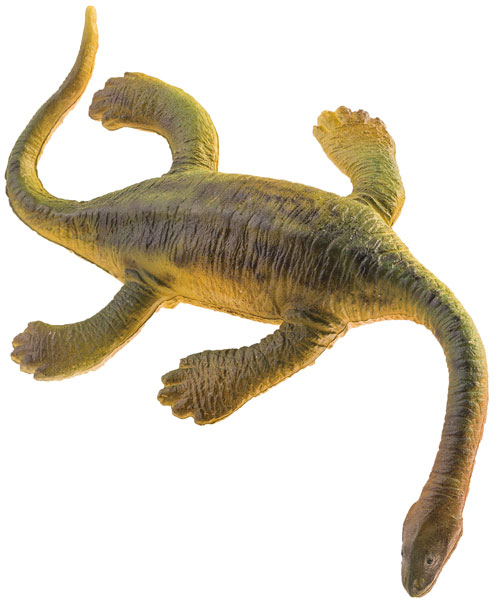
Long necks in proportion to overall body length is known in many tetrapods. Giraffes and sauropods are typical examples. The evolution of a longer neck being linked to feeding strategies. A newly described ancestor of plesiosaurs named Chusaurus xiangensis suggests that neck elongation occurred rapidly in these types of marine reptiles. Lengthy necks, ideal for pursuing fast-moving nektonic prey such as fish and squid developed quickly over a five-million-year period approximately 250 million years ago.
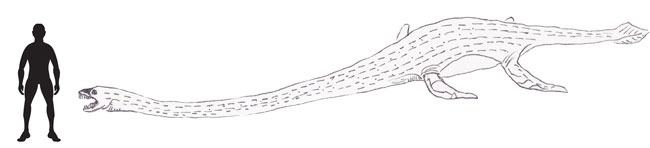
The new described pachypleurosaurid sauropterygian, Chusaurus xiangensis indicates that increasing neck length rapidly evolved in the Plesiosauria. Picture credit: Qi-Ling Liu.
Picture credit: Qi-Ling Liu
Chusaurus xiangensis
Researchers have reported a new species of pachypleurosaurid sauropterygian from southern China. The new species shows key features of its Middle Triassic relatives, but has a relatively short neck, measuring 0.48 of the trunk length, compared to > 0.8 from the Middle Triassic onwards. Comparative phylogenetic analysis shows that neck elongation occurred rapidly in all Triassic eosauropterygian lineages. This evolution was probably driven by feeding pressure in a time of rapid re-establishment of new kinds of marine ecosystems.
The lengthy necks of marine reptiles, used for chasing fast-moving fishes, developed quickly over a five-million-year period around 250 million years ago.
The best-known of all the pachypleurosaurs is Keichousaurus.
Adding More Vertebrae
The researchers conclude that pachycephalosaurs lengthened their necks mainly by adding new vertebrae.
The findings, published today in BMC Ecology and Evolution, and carried out by scientists in China and the UK, show that pachypleurosaur taxa lengthened their necks mainly by adding new vertebrae. One taxon, Keichousaurus had more than 20 cervical vertebrae, while some Late Cretaceous plesiosaurs such as Elasmosaurus had as many as 72. Its neck was five times the length of its trunk.
The Elasmosaurus scale drawing commissioned by Everything Dinosaur as the company’s fact sheet is updated. This plesiosaur had a neck five times the length of its trunk and more than seventy cervical vertebrae. Picture credit: Everything Dinosaur.
Picture credit: Everything Dinosaur
The illustration (above) was inspired by the recently introduced CollectA Age of Dinosaurs Elasmosaurus figure.
Pachypleurosaurs Like Chusaurus xiangensis Evolved in the Early Triassic
These reptiles originated in the Early Triassic, four million years after the end-Permian mass extinction that wiped out around 90% of Earth’s species. Ecosystems were undergoing dramatic changes in the aftermath of the extinction event.
The authors of the study, including scientists from the University of Bristol, studied the Chusaurus xiangensis fossils from Hubei Province (China). Its neck had begun to lengthen. However, it was less than half the length of its trunk, compared to later relatives that had a neck length to trunk ratio of greater than 0.8 (80%).
Two Fossil Skeletons to Study
Lead researcher Qi-Ling Liu from the China University of Geosciences (Wuhan), commented:
“We were lucky enough to find two complete skeletons of this new beast. It’s small, less than half a metre long, but this was close to the ancestry of the important group of marine reptiles called Sauropterygia. Our new reptile, Chusaurus, is a pachycephalosaur, one of a group of small marine predators that were very important in the Triassic. I wasn’t sure at first whether it was a pachypleurosaur though because the neck seemed to be too short.”
Co-author Dr Li Tian (China University of Geosciences) added:
“The fossils come from the Nanzhang-Yuan’an Fauna of Hubei. This has been very heavily studied in recent years as one of the oldest assemblages of marine reptiles from the Triassic. We have good quality radiometric dates showing the fauna is dated at 248 million years ago.”
Fellow author Professor Michael Benton of the University of Bristol’s School of Earth Sciences explained:
“The end-Permian mass extinction had been the biggest mass extinction of all time and only one in twenty species survived. The Early Triassic was a time of recovery and marine reptiles evolved very fast at that time, most of them predators on the shrimps, fishes and other sea creatures. They had originated right after the extinction, so we know their rates of change were extremely rapid in the new world after the crisis.”
Not All Vertebrates Evolve in the Same Way
Not all vertebrates evolve in the same way. When it comes to evolving a lengthy neck, giraffes have changed in a different way to pachypleurosaurs. Most mammals have seven neck vertebrae. Giraffes have seven neck bones too. Each one is extremely long, so these herbivores can browse on the tops of trees. Chusaurus had seventeen. Later pachycephalosaurs had twenty-five. Late Cretaceous plesiosaurs such as the huge Elasmosaurus had seventy-two. These long necks with numerous vertebrae are likely to have been extremely flexible. These marine reptiles could whip their necks round and grab a fish, whilst keeping their body steady.
Flamingos also have long necks so they can reach the water to feed. They have extra cervical vertebrae, up to twenty, but each one is also long.
Chusaurus xiangensis – Perfectly Adapted to its Environment
Dr Benjamin Moon, who also collaborated in this study stated:
“Our study shows that pachycephalosaurs doubled the lengths of their necks in five million years, and the rate of increase then slowed down. They had presumably reached some kind of perfect neck length for their mode of life.”
Dr Moon added:
“We think, as small predators, they were probably mainly feeding on shrimps and small fish, so their ability to sneak up on a small shoal, and then hover in the water, darting their head after the fast-swimming prey was a great survival tool. But there might have been additional costs in having a much longer neck, so it stabilised at a length just equal to the length of the trunk.”
Everything Dinosaur acknowledges the assistance of a media release from the University of Bristol in the compilation of this article.
The scientific paper: “Rapid neck elongation in Sauropterygia (Reptilia: Diapsida) revealed by a new basal pachypleurosaur from the Lower Triassic of China” by Qi-Ling Liu, Long Cheng, Thomas L. Stubbs, Benjamin C. Moon, Michael J. Benton, and Li Tian published in BMC Ecology and Evolution.
Our thanks to collector and prehistoric animal fan William who sent in a review of the PNSO Dunkleosteus model. The PNSO placoderm replica was introduced into the mid-size model range in late 2021. This model of a prehistoric fish has proved to be popular with collectors.
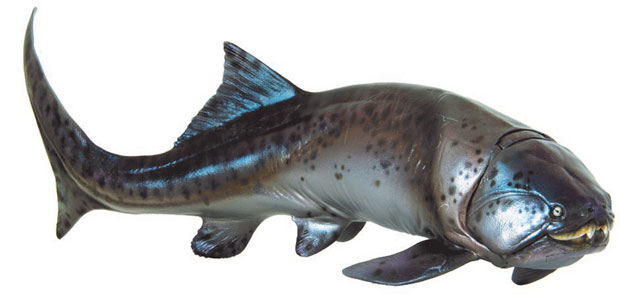
A stunning model of a placoderm – the PNSO Dunkleosteus model.
Collector Comments on the PNSO Dunkleosteus Model
William emailed Everything Dinosaur praising this prehistoric animal model.
He stated:
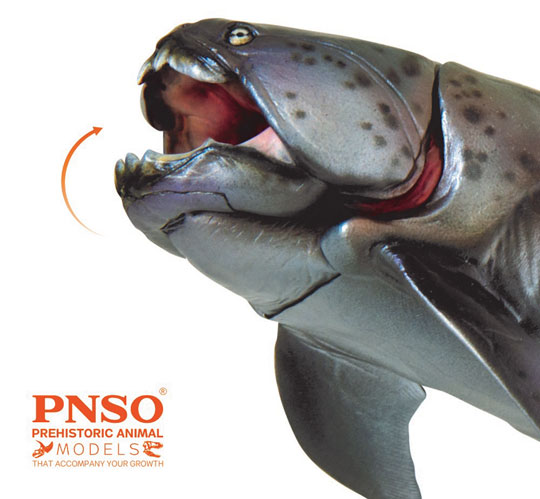
“Zaha is my first ancient marine predator. I decided to dip my toe into the prehistoric past “Zaha” sports the new updated shark like body with a beautiful rainbow trout colour. But what sold me on this beautiful model is the truly accurate articulated jaw.”
Terror of the Devonian
William explained that when viewed with the mouth closed, the armoured skull looks fantastic.
He added:
“If you carefully pinch the lower jaw the real magic happens. Once you draw it downwards to open this engages the jaw’s opening mechanism as in the real-life ancient apex predator.”
This fish was a terror of the Devonian. The jaw action of “Zaha” is described as “smooth” and the jaw when opened displays lots of detail. The reviewer comments that there might be several Dunkleosteus figures on the market, but the PNSO figure is the only one you need to add to your collection.
The PNSO Zaha the Dunkleosteus has an articulated jaw and armoured plates.
William concluded his review of the PNSO Dunkleosteus model by praising Everything Dinosaur.
He thanked Everything Dinosaur on behalf of the legion of palaeo-figure collectors who valued what the UK-based company does. He commented that the extensive range of figures covered a wide price range. Price points for children as well as adult prehistoric animal model collectors.
Our thanks to William for his Dunkleosteus review and for his kind comments.
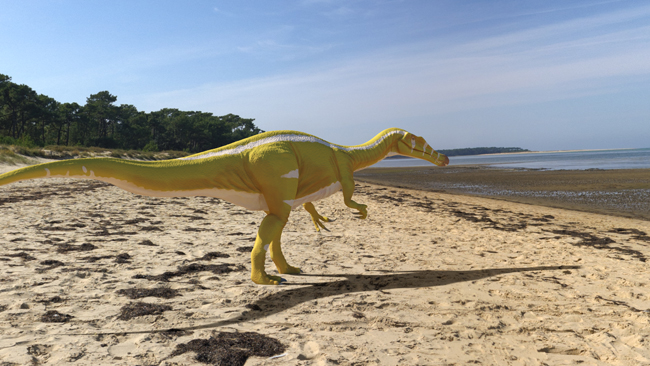
A new species of spinosaurid named Protathlitis cinctorrensis has been described from fossils found in Castellón Province in north-eastern Spain. The dinosaur is estimated to have measured around ten to eleven metres in length. It has been described based on a right maxilla and five, sturdy tail bones (caudal vertebrae) excavated from the Lower Cretaceous Arcillas de Morella Formation. In addition, a previously described tooth has been assigned to this species.
The discovery of another European spinosaurid taxon adds weight to the hypothesis that these theropods originated in Laurasia. Later, during the Barremian-Aptian faunal stages, these dinosaurs migrated into Africa and Asia, where they diversified.
In Europe, the baryonchines dominated, whilst in Africa, it was the spinosaurines that were most abundant.
Protathlitis cinctorrensis, near the coastal areas where it lived. Picture credit: Grup Guix.
Writing in the academic journal “Scientific Reports” the researchers propose that this dinosaur is nested with the Spinosauridae family as a basal baryonychine. As such, it is the first baryonychine dinosaur species known from the Arcillas de Morella Formation.
The genus Protathlitis was named in reference to the UEFA Europa League title won by the Spanish football club Villarreal C.F. in 2021. It is also a tribute to the club centenary celebrated this year (2023).
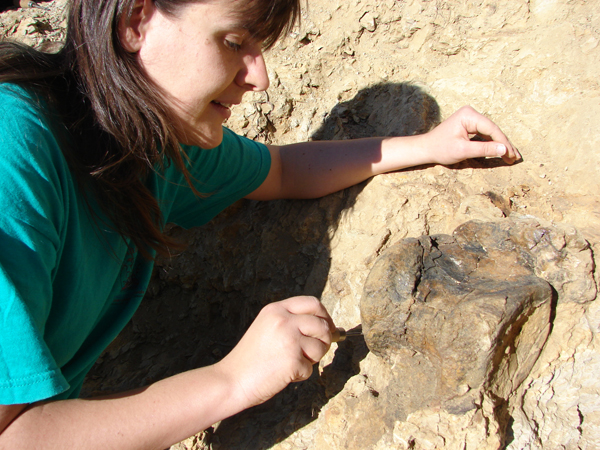
Palaeontologist Begoña Poza, co-author of the work, excavating fossil 5ANA-78, in the fifth digging campaign at the ANA site (Cinctorres, Castellón). Picture credit: Grup Guix.
Everything Dinosaur contacted one of the authors of the study, curious to find out more about the Villarreal C.F connection.
Andrés Santos-Cubedo explained that the dinosaur’s name celebrates the UEFA Europa League title.
He added:
“Because three of the scientists who wrote the paper, live in Villarreal, and one of us was at the final in Gdansk (Poland).”
The species name for this dinosaur, “cinctorrensis” is dedicated to Cinctorres and its inhabitants. This municipality is in the Els Ports region within the province of Castellón.
A Diverse Dinosaur Fauna
The discovery of P. cinctorrensis will help palaeontologists to better understand the evolutionary history of this enigmatic theropod group. In addition, it confirms that the Iberian Peninsula in the Early Cretaceous was home to a highly diverse dinosaur fauna. Dinosaurs described from this region include iguanodontids, titanosaurs, hypsilophodonts as well as a second spinosaurid – Vallibonavenatrix cani. V. cani is the first member of the spinosaurine subfamily to be described from fossils found in the Arcillas de Morella Formation.
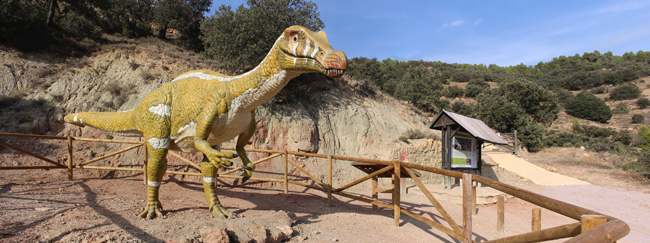
Recreation of the dinosaur Protathlitis cinctorrensis, located at the ANA site, Cinctorres (Castellón). Picture credit: Grup Guix.
Everything Dinosaur acknowledges the assistance of a media release and personal correspondence with one of the authors of the study in the compilation of this article.
The scientific paper: “A new spinosaurid dinosaur species from the Early Cretaceous of Cinctorres (Spain)” by Andrés Santos-Cubedo and Carlos de Santisteban published in Scientific Reports.
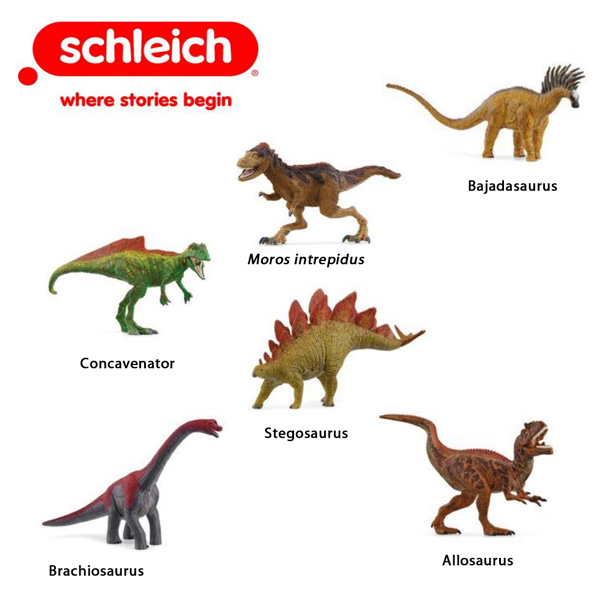
Six new Schleich dinosaur models have been announced for 2024. These six new figures will be in stock at Everything Dinosaur by the middle of December 2023. Technically, these model introductions represent five brand new figures with what looks like to be a new colour version of the Schleich Brachiosaurus.
Five new Schleich dinosaur models and one repainted Brachiosaurus figure. Picture credit: Everything Dinosaur.
Picture credit: Everything Dinosaur
Schleich Dinosaur Models
The five new dinosaur figures are:
Allosaurus – a Late Jurassic theropod most famously associated with the Morrison Formation.
Bajadasaurus – a dicraeosaurid sauropod from the Early Cretaceous of Argentina.
Concavenator – a carcharodontosaurid theropod from the famous Las Hoyas fossil site in Spain.
Moros intrepidus – a small tyrannosauroid theropod from Cedar Mountain Formation exposures in Utah.
Stegosaurus – an armoured dinosaur also most famously associated with the Morrison Formation.
The sixth figure seems to be a new version of the Schleich Brachiosaurus model that was originally introduced in 2017. The Schleich Brachiosaurus figure has been praised for its tactile qualities.
A spokesperson from Everything Dinosaur confirmed that all six dinosaur models were due to be in stock by the middle of December (2023).
The spokesperson added:
“Over the autumn season we expect to be able to post up details of other new models from manufacturers. We expect to be able to announce news of new for 2024 Safari Ltd models. Later in the autumn we will be providing details about new figures from CollectA.”
Moros intrepidus
The early Late Cretaceous theropod Moros intrepidus is an interesting choice for Schleich. Named and described in 2019, Moros is known from fragmentary fossils including teeth and hind limb bones. The fossils were found in sediments representing the lower Mussentuchit Member of the Cedar Mountain Formation. Palaeontologists estimate that Moros lived around 96 million years ago. The apex predator role was still dominated by allosauroids. It was only later that tyrannosaurs took over the role of apex predators in North America.
The next video to be posted up on Everything Dinosaur’s YouTube channel will be a short review of the recently introduced Papo Kronosaurus marine reptile model. Model collectors have asked for more images of the Papo Kronosaurus figure. Everything Dinosaur team members are happy to help. Photographs of the model have been taken and circulated on social media. In addition, the short YouTube video will highlight the finer details of this new replica.
The next Everything Dinosaur YouTube video will feature the recently introduced Papo Kronosaurus model. Picture credit: Everything Dinosaur.
Picture credit: Everything Dinosaur
The Everything Dinosaur YouTube channel contains hundreds of informative videos. The channel provides news, hints and tips for dinosaur model collectors. It has thousands of subscribers.
Please subscribe to Everything Dinosaur on YouTube.
Papo Kronosaurus
The Papo Kronosaurus is the second marine reptile figure to be introduced this year by Papo. It follows the Papo Mosasaurus figure that was introduced in the early spring. Both figures have articulated jaws and the Papo Mosasaurus will briefly feature in the Kronosaurus YouTube short.
The new for 2023 Papo Kronosaurus figure has an articulated jaw. This model will feature in a short video. Picture credit: Everything Dinosaur.
Picture credit: Everything Dinosaur
Everything Dinosaur stocks a wide variety of Papo prehistoric animal figures. The Papo range, named “Les Dinosaures” has grown to incorporate dozens of dinosaurs, pterosaurs, prehistoric mammals and marine reptiles.
To view the Papo range of prehistoric animal figures in stock at Everything Dinosaur: Papo Prehistoric Animals.
A spokesperson from Everything Dinosaur stated that the stock footage had already been shot. A script for the voice over recording had been prepared. The text was due to be revised and finalised. Once the video had been put together and edited, there were plans to post it up in the next two to three days.