All about dinosaurs, fossils and prehistoric animals by Everything Dinosaur team members.

Fossil finds, new dinosaur discoveries, news and views from the world of palaeontology and other Earth sciences.

15 09, 2017

Deltasuchus – Dinosaur Crunching Crocodile Identified in New Research

By |2024-05-09T14:40:19+01:00September 15th, 2017|Categories: Dinosaur and Prehistoric Animal News Stories, Dinosaur Fans, Main Page|0 Comments

Deltasuchus motherali – Unlocking the Fauna of Appalachia

A team of researchers based in the United States have uncovered the remains of an early Late Cretaceous crocodile that is distantly related to modern-day crocodiles.   The discovery comes from the Arlington Archosaur Site, this location is rapidly proving to be one of the best sites for helping palaeontologists to understand the fauna of Appalachia.

Late Cretaceous Fossils

During the early Late Cretaceous, much of North America was covered by a shallow sea (Western Interior Sea), the area around Fort Worth and Arlington (Texas), about 95 million years ago, was a peninsula, projecting into this tropical sea.  The peninsula was covered in swamps and marshes and the Arlington Archosaur Site (part of the Woodbine Formation), preserves a record of the animals that inhabited this low-lying area.

University of Tennessee faculty member, Stephanie Drumheller-Horton, (Department of Earth and Planetary Sciences), has described this new crocodyliform, named Deltasuchus motherali in a scientific paper published in the “Journal of Vertebrate Palaeontology”.  Working in collaboration with Thomas Adams (Witte Museum) and Christopher Noto (University of Wisconsin-Parkside), Stephanie describes this ancient crocodile as a “generalist”, the shape of the skull and the jaw suggests that this crocodile, which may have grown to lengths in excess of six metres, preyed on turtles, fish and may have ambushed small dinosaurs.

Deltasuchus motherali

Scientists Show the Skull Material of D. motherali
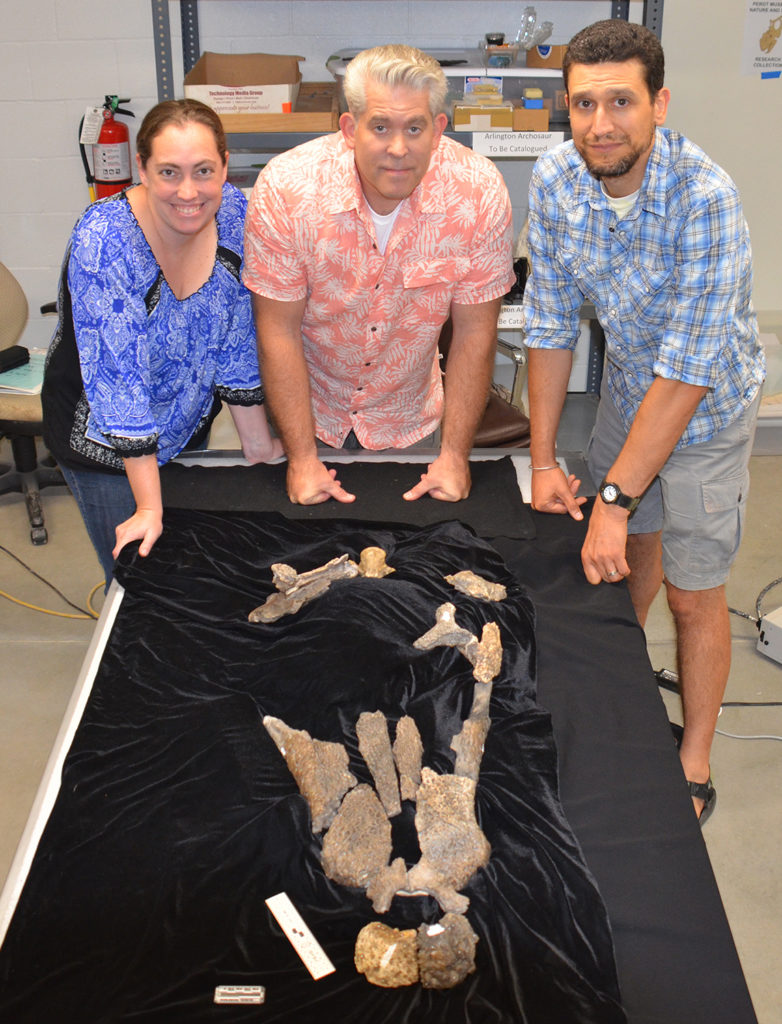
Deltasuchus skull material.

Stephanie Drumheller-Horton, (far left) with Thomas (Witte Museum) and Christopher Noto (University of Wisconsin-Parkside) with the skull elements of Deltasuchus motherali.

Picture credit: University of Tennessee

The Arlington Archosaur Site

First discovered in 2003, the Arlington Archosaur Site, has provided palaeontologists with an opportunity to examine life in the Late Cretaceous on the south-western coast of Appalachia.  Very few vertebrate fossils are known from those parts of the United States that once made up the landmass called Appalachia.  The scientists are confident that more types of crocodile, turtle, fish and amphibian will be named from fossils excavated from the Arlington area.  Ornithopod fossil teeth have also been found at this dig site, but to date, no significant quantities of dinosaur bones have been excavated.

A Map Showing the Approximate Position of Arlington on Appalachia in the Early Late Cretaceous
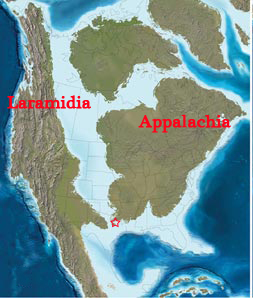
Appalachia and the Arlington Archosaur Site.

The approximate location of Arlington in the early Late Cretaceous.

In the picture above, the red cross shows the approximate location of Arlington in the early Late Cretaceous.  The Arlington Archosaur Site is undergoing rapid residential development and the field teams are in a race with construction companies to map and excavate the area as quickly as possible.

The Arlington Archosaur Site
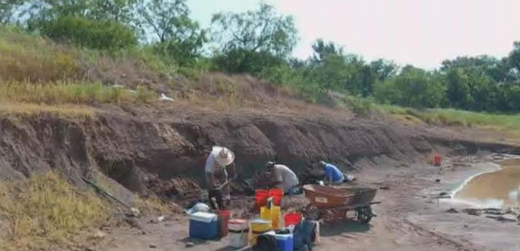
The Arlington Archosaur Site (Texas).

The Arlington Archosaur Site.

Picture credit: University of Tennessee

A Significant Crocodyliform Fossil from the Arlington Archosaur Site

Commenting on the significance of the crocodyliform fossil find, Drumheller-Horton stated:

“We simply don’t have that many North American fossils from this part of the Cretaceous, the last period of the age of dinosaurs, and the eastern half of the continent is particularly poorly understood.  Fossils from the Arlington Archosaur Site are helping fill in this gap, and Deltasuchus is only the first of several new species to be reported from the locality.”

The species name of Deltasuchus motherali honours one of the site volunteers, Austin Motheral, who first uncovered the fossils of this particular crocodile with a small tractor when he was just fifteen years old.

Field Team Members and Volunteers Excavating the Fossils
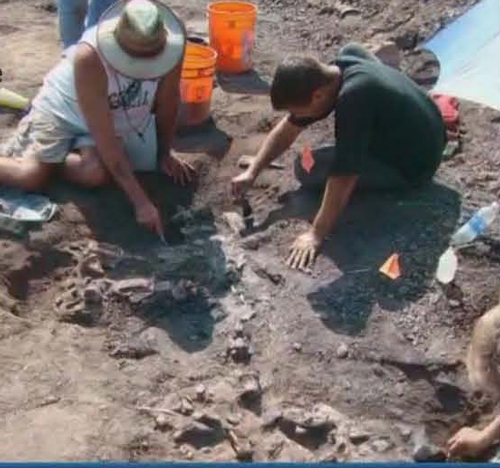
Excavating bones from the Arlington Archosaur site.

Excavating the delicate bones from the Arlington Archosaur Site.

Picture credit: University of Tennessee

Everything Dinosaur acknowledges the assistance of a media release from the University of Tennessee in the compilation of this article.

Visit the Everything Dinosaur website: Everything Dinosaur.

13 09, 2017

The Fantastic Lewes Dinosaur Project

By |2024-05-09T13:36:37+01:00September 13th, 2017|Categories: Dinosaur and Prehistoric Animal News Stories, Dinosaur Fans, Main Page|0 Comments

Town Aims to Honour Gideon Mantell with a Life-size Dinosaur Monument

An ambitious project to install a life-size iguanodontid in the town of Lewes (East Sussex, England), to commemorate the work of one of the most important contributors to the early study of dinosaurs, is gathering pace.  The dinosaur-themed monument would act as a fitting tribute and memorial to Dr Gideon Mantell who made such a significant contribution to the nascent science of palaeontology in the early part of the 19th century.

Honouring Gideon Mantell

Mantell was born in the town of Lewes (1790).  For most of his adult life, he dedicated his spare time to studying the amazing fossilised bones of ancient vertebrates that were being found in the local quarries. Mantell is credited with the discovery of the second dinosaur to be scientifically described (Iguanodon) and many of Mantell’s fossils are now part of the Natural History Museum’s dinosaur fossil collection.

Internationally renowned model maker, Roby Braun has been commissioned to create a 7-metre-long model of an iguanodontid (Mantellisaurus).  The life-size replica will honour the work of this dedicated and disciplined scientist whose research was never really given the plaudits that it deserved during his lifetime.

Gideon Mantell (1790-1852)

Gideon Mantell.

Gideon Mantell (1790-1852).

The endeavour, entitled “The Lewes Dinosaur Project” will be officially launched at the Lewes Fossil Festival that starts this weekend (16th/17th September).  Suggestions are being invited as to where best to locate the 3-metre-high dinosaur monument.  Debby Matthews, of the community interest company working on the proposals commented:

“It will be pretty large and will need a stable base where it can be viewed.  There will be a plaque with it describing the links between Gideon Mantell (or his wife), finding the first teeth and bones of an unknown, ancient land animal.”

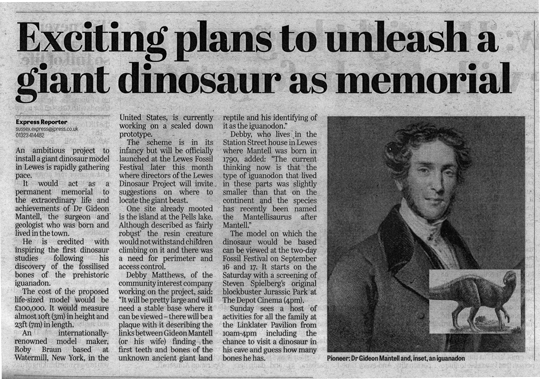
Local Newspapers Cover the Story

Gideon Mantell newspaper article.

Gideon Mantell article.

Picture credit: Sussex Express

Mantellisaurus – Revising the Iguanodonts

The giant, plant-eating dinosaur that Mantell described (Iguanodon), was a member of a highly successful and diverse family of dinosaurs (Iguanodontidae), that had a global distribution and formed one of the dominant terrestrial faunas of the Early Cretaceous (although the group did persist until the very end of the Age of Dinosaurs).  As more fossils of iguanodontids have been described, so the “English Iguanodon”, identified by Mantell has been reassessed, the holotype fossil material for Iguanodon (I. bernissartensis) now comes from Belgium.  However, in 2007 the genus Mantellisaurus (M. atherfieldensis) was erected and includes iguanodontid fossil material from the Wessex and Vectis Formations of southern England and the Isle of Wight.  The genus name honours Dr Gideon Mantell.

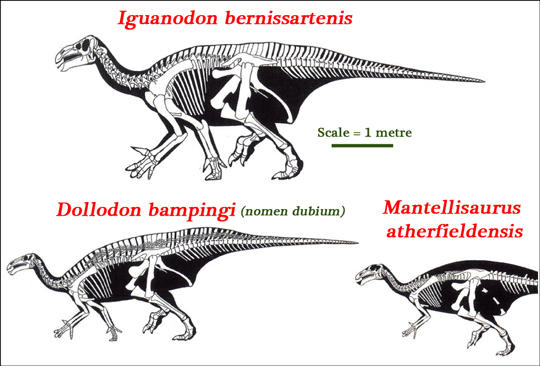
Comparisons of Different Iguanodonts

Skeletal comparisons (iguanodontids)

Iguanodontid comparisons. D. bampingi is regarded as Nomen dubium.

Picture credit: Everything Dinosaur from original skeletal drawings by Gregory S. Paul

Gideon Mantell Honoured in the Hintze Hall of the Natural History Museum (London)

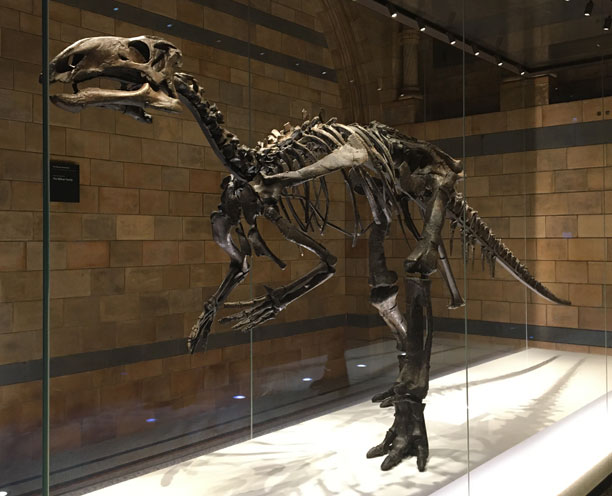
Earlier this year, Everything Dinosaur reported on the refurbishment of the main hall at the London Natural History Museum.  “Dippy” the popular Diplodocus exhibit was replaced with a Blue Whale skeleton.  However, in one of the “Wonder Bays” that surrounds the enormous cetacean, there is a dinosaur.  The spectacular Hintze Hall displays a mounted skeleton of a Mantellisaurus.  The specimen (NHMUK R5764), is one of the most complete dinosaur skeletons ever found in the British Isles and it is fitting that the Natural History Museum should pay tribute to the contribution made by Dr Gideon Mantell in this way.  Now it’s the turn of the town of Lewes to set about honouring one of its most famous former residents.

The Mounted Skeleton of Mantellisaurus on Display at the Natural History Museum

Gideon Mantell and Mantellisaurus.

Gideon Mantell and Mantellisaurus. A mounted Mantellisaurus skeleton on display at the London Natural History Museum. Picture credit: Everything Dinosaur.

Picture credit: Everything Dinosaur

To view replicas of Mantellisaurus and other iguanodontids: CollectA Age of Dinosaurs Popular Range.

A Weekend Fossil Festival

The model on which the dinosaur would be based can be viewed at the two-day Fossil Festival (16th/17th September).  A screening of the ground-breaking Steven Spielberg directed, “Jurassic Park” will take place at 4pm Saturday afternoon as part of the dinosaur themed festival activities.

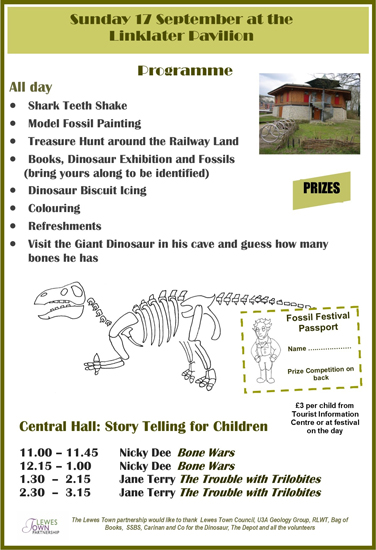
On Sunday, the Linklater Pavilion in the town will be hosting a range of dinosaur related, family-themed activities as the community aims to raise the profile of the project.

The Fossil Festival Flyer

Mantell Fossil Festival flyer.

Gideon Mantell Fossil Festival flyer.

Picture credit: Debby Matthews

The website of Everything Dinosaur: Everything Dinosaur.

12 09, 2017

Europe’s Newest Brachiosaur is Described in a New Paper

By |2024-05-08T20:41:00+01:00September 12th, 2017|Categories: Dinosaur and Prehistoric Animal News Stories, Dinosaur Fans, Main Page, Photos/Pictures of Fossils|0 Comments

Soriatitan golmayensis of the Lower Cretaceous of Spain

Say hello to Europe’s newest member of the Brachiosauridae family – Soriatitan golmayensis, a sauropod estimated to have been longer than a badminton court!  This new species of herbivorous dinosaur has been described in a scientific paper published in the journal “Cretaceous Research”.  The fossil material, consisting of a single tooth, elements from the hips, limb bones including a partial femur and fragmentary tail bones were excavated over several years from the turn of the century.  The study of the fossil material finally culminating in the establishment of a new species of brachiosaurid.

Soriatitan golmayensis

The genus name means “Soria Titan”, a reference to Soria Province in central Spain where the fossils come from.  The species name honours the Lower Cretaceous Golmayo Formation (upper Hauterivian-lower Barremian), from which the fossil material was extracted.

An Illustration of the Newly Described Early Cretaceous Sauropod Soriatitan golmayensis

Soriatitan golmayensis illustrated.

An illustration of the brachiosaurid Soriatitan golmayensis.

Picture credit: Fundación Conjunto Paleontológico de Teruel-Dinópolis

Approximately Fourteen Metres Long

With less than 15% of the skeleton to work with, the researchers, which included lead author of the paper, Rafael Royo-Torres (Fundación Conjunto Paleontológico de Teruel-Dinópolis/Museo Aragonés de Paleontología, Spain), were able to identify this dinosaur as a brachiosaur by comparing the bones to better-known species.  To estimate the size, the scientists scaled up the dinosaur based on the dimensions of the 1.25-metre-long humerus (upper arm bone).  When this bone was compared to the humeri of other brachiosaurids the team concluded that their specimen represented a fourteen-metre-long individual.

The Size of Soriatitan Was Calculated Using the Humerus

Fossil humerus (Soriatitan golmayensis).

The humerus from Soriatitan which was used to estimate the animal’s size.

Picture credit: Fundación Conjunto Paleontológico de Teruel-Dinópolis

The Brachiosauridae Family

Brachiosaurs probably originated in the late Middle Jurassic and survived the break-up of Pangaea before finally becoming extinct in the Early Cretaceous.  Fossils of these long-necked, heavy-limbed plant-eaters are known from North America, Africa, Europe and southern England.  The Brachiosauridae is one of the three groups that make up the larger clade the Titanosauriformes.

The research team estimate that Soriatitan roamed the Iberian Peninsula some 132 million years ago.  Although, other fragmentary fossils notably those of Pelorosaurus conybeari from the Grinstead Clay Formation (West Sussex, England), have been tentatively assigned to the Brachiosauridae, the discovery of Soriatitan is extremely significant.  Dinosaurs such as the similar sized P. conybeari have been found in slightly older strata (Valangian faunal stage of the Early Cretaceous), Soriatitan provides evidence that brachiosaurids persisted in the Early Cretaceous of Europe for longer than previously thought.

Palaeontologist Rafael Royo-Torres explained:

“Until now it was believed that brachiosaurids had become extinct in Europe around 130 million years ago, the discovery of Soriatitan changes our perception of the European Early Cretaceous biota.”

The Break-up of Pangaea

The single, spoon-shaped tooth is typical of a brachiosaurid.  This tooth and the shape of a number of bones such as the presence of middle caudal neural spines helped the researchers to assign this dinosaur to the Brachiosauridae family.  In addition, the team deduced that Soriatitan may have been closely related to Abydosaurus, Cedarosaurus and Venenosaurus, which are all known from Lower Cretaceous-aged strata from Utah (United States).

The presence of Early Cretaceous brachiosaurids in both North America and Europe, give support to the hypothesis of a connection between the tectonic plates of these continents at some point during the Early Cretaceous.  A land connection between Europe and North America must have been present to enable closely related dinosaurs to be found in both Spain and the western United States.

Views of the Single Tooth of Soriatitan golmayensis

Soriatitan fossil tooth.

Views of the single tooth of Soriatitan from the Lower Cretaceous of Spain.

Picture credit: Fundación Conjunto Paleontológico de Teruel-Dinópolis

The Evolution of the Titanosauriformes in Europe

The discovery of Soriatitan, may help palaeontologists to better understand the evolution of the Titanosauriformes in Europe.  Rafael Royo-Torres was part of the research team that described the non-brachiosaurid titanosauriform Tastavinsaurus sanzi recovered from a dig site in Peñarroya de Tastavins (Teruel) at the base of the marine Xert Formation in 2008.  It is one of the most complete and best-preserved sauropod dinosaur skeletons from the European Early Cretaceous.  Tastavinsaurus roamed Spain some 125 million years ago.  The discovery of Soriatitan may help fill the evolutionary gap between Late Jurassic brachiosaurs and the European titanosaurs of the Early Cretaceous.

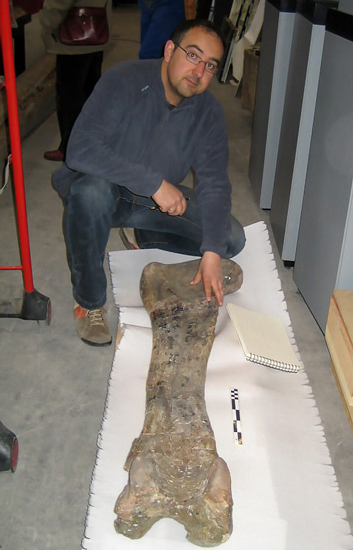
Rafael Royo-Torres Photographed Next to the Partial Femur (Thigh Bone)

The femur (thigh bone) of Soriatitan golmayensis

Palaeontologist Rafael Royo , lead author of the scientific paper examines a Soriatitan golmayensis femur.

Picture credit: Fundación Conjunto Paleontológico de Teruel-Dinópolis

11 09, 2017

500-Million-Year-Old Trace Fossils Shed Light on Animal Evolution in New Study

By |2024-05-09T13:08:07+01:00September 11th, 2017|Categories: Dinosaur and Prehistoric Animal News Stories, Main Page, Palaeontological articles|0 Comments

Tracing the Traces of Early Animal Life

Darwin was aware of the problem, Huxley and Owen had considered it too.  The American Charles Walcott, in 1909*, literally stumbled across evidence to support the idea of a bizarre array of early animal forms, but the fossil evidence that helps to pinpoint and then map the evolution of the Kingdom Animalia in deep geological time, is scarce to say the very least.  How and when did the first animals evolve?  What type of creatures were they?  These are the questions that taxed the minds of some of the greatest scientists in history, now, thanks to some new research published today, the way we think about how all animals evolved on Earth might just change.

Scientists have discovered microscopic traces of animal life more than half-a-billion years old.  The international team, including scientists from Manchester University, have identified trace fossils left by some of the first ever organisms capable of active movement.

Plotting the Evidence of Ancient Burrowing Creatures

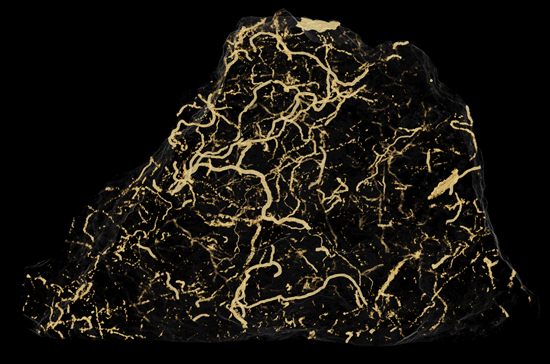
The first animals (trace fossils).

Evidence of the first animals (burrows and borings).

Picture credit: Manchester University

Ancient Trace Fossils

The picture above might look like a Jackson Pollock, but the image shows a computer generated, three-dimensional model of the trace fossils found by the scientists.  Trace fossils preserve evidence of the activity of organisms.  They are often the only evidence palaeontologists have for extinct animals whose bodies lacked any hard parts.  No physical remains of the microscopic worms that made these burrows have been found, but the researchers suggest that they were made by a type of nematoid-like worm, an animal with bilateral symmetry, making these organisms more closely related to Chordates (animals with notochords and spinal columns), than creatures like jellyfish and corals.

The fossils were discovered in sediment in the Corumbá region of western Brazil, close to the border with Bolivia.  The burrows are extremely small.  They measure from less than fifty to six hundred micrometres or microns (μm) in diameter.  That means the tiny creatures that made them were similar in size to a human hair, which can range from forty to three hundred microns wide.  One micrometre is just one thousandth of a millimetre.

The Research Team Carefully Mapped the Intricate Burrows in the Ancient Sediment

Ancient roundworm trace fossils.

Trace fossils indicate the first animals capable of independent movement.

Picture credit: Manchester University

Commenting on the significance of this research, Dr Russell Garwood (University of Manchester School of Earth and Environmental Sciences), stated:

“This is an especially exciting find due to the age of the rocks, these fossils are found in rock layers which actually pre-date the oldest fossils of complex animals – at least that is what all current fossil records would suggest.”

The Ediacaran-Cambrian Transition

The fossils found date back to a geological and evolutionary period known as the Ediacaran–Cambrian transition.  This was when the Ediacaran Period, which spanned 94 million years from the end of the Cryogenian Period, 635 million years ago, moved into the Cambrian Period around 541 million years ago.  To put that into context, dinosaurs lived between 235 and 66 million years ago in the Mesozoic Era and our human species (H. sapiens), may have been present on this planet for around 300,000 years or so.

Dr Garwood explained:

“The evolutionary events during the Ediacaran–Cambrian transition are unparalleled in Earth history.  That’s because current fossil records suggest that many animal groups alive today appeared in a really short time interval.”

The scientists suggest these burrows were created by “nematoid-like organisms”, similar to a modern-day roundworm, that used an undulating locomotion to move through the sediment, leaving these trace fossils behind.  This is important because current DNA studies, known as “molecular clocks”, which are used to estimate how long ago a group animals originated, suggests the first animals appeared before these trace fossils.  The research paper published in the academic journal “Nature Ecology and Evolution”, demonstrates that these trace fossils pre-date similar animals known from the fossil record.

500-Million-Year-Old Trace Fossils

Luke Parry, the lead author of the paper (Bristol University) stated:

“Our new fossils show that complex animals with muscle control were around approximately 550 million years ago, and they may have been overlooked previously because they are so tiny.  The fossils that we describe were made by quite complex animals that we call bilaterians.  These are all animals that are more closely related to humans, rather than to simple creatures like jellyfish.  Most fossils of bilaterian animals are younger, first appearing in the Cambrian period.”

*It was the American Charles Walcott who discovered the Burgess Shale deposits of British Columbia, that first provided palaeontologists with a window into the radiation and diversity of the Animalia during the Middle Cambrian.  The unique taphonomy of these shales permitted the preservation of a multitude of marine invertebrates including thousands of specimens of soft-bodied creatures.

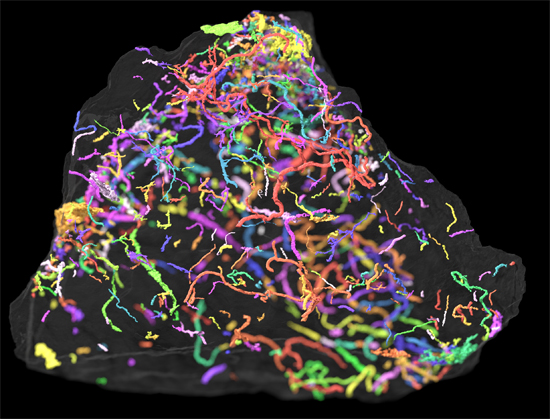
Mapping the Extensive Network of Trails

Ancient trace fossils.

The different colours mark different burrows.

To find such tiny fossils the team used X-ray microtomography, a special technique that uses X-rays to create a virtual, three-dimensional model of something without destroying the original object.

Paper Reference – “Ichnological evidence for meiofaunal bilaterians from the terminal Ediacaran and earliest Cambrian of Brazil” is being published in Nature Ecology & Evolution – DOI 10.1038/s41559-017-0301-9

Further Reading:

Cambrian worm discovery: It was a Worm’s World Back in the Cambrian.

A potential transitional fossil between worms and Arthropoda: Transitional “Cactus-like” Fossil Between a Worm and an Arthropod.

Visit the Everything Dinosaur website: Everything Dinosaur.
9 09, 2017

Has Human Evolution Tripped Us Up? Remarkable Discovery Provides a Fresh Insight

By |2024-05-09T13:09:37+01:00September 9th, 2017|Categories: Dinosaur and Prehistoric Animal News Stories, Main Page, Palaeontological articles|0 Comments

5.7 Million-year-old Hominin Footprints on Crete

The chance discovery of hominin fossilised footprints on the Mediterranean island of Crete, has challenged the accepted theory of human evolution.  The footprints, which have been dated to around 5.7 million years ago, were formed when all other hominins known to science were restricted to Africa and they had much more ape-like feet.  If the series of tracks prove to be accurately dated, then this challenges the idea that hominins (those species more closely related to us than they are to a chimpanzee), evolved in Africa.  Has someone just rocked the “cradle of humanity”?

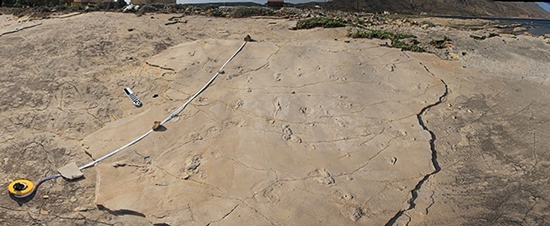
A Photograph of the Tracks (Ancient Hominin Footprints)

Hominin fossil footprints from Crete.

Fossilised hominin footprints from Crete.

Picture credit: Andrzej Boczarowski

The Out of Africa Theory

With the discovery of the Laetoli footprints in Tanzania in the mid 1970s (believed to have been made by a small group of Australopithecus afarensis), which were formed some 3.7 million years ago, our species (H. sapiens) and our direct ancestors were thought to have originated in Africa.  These footprints, show very human-like feet with a distinctive shape, a big toe and a human gait.

The gait of these early humans was “heel-strike” (the heel of the foot hits first) followed by “toe-off” (the toes push off at the end of the stride), the same way that modern humans walk.  Early hominins were thought to have remained isolated in Africa before dispersing to Europe and Asia, hundreds of thousands of years after they first evolved.

The discovery of approximately 5.7 million-year-old human-like footprints from Crete, published online this week by an international team of researchers, including scientists from Uppsala University (Sweden), overturns this rather simple picture and suggests a more complicated evolutionary path for our ancestors.

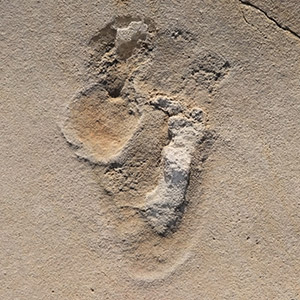
A Close View of One of the Footprints (right foot)

Fossilised hominin footprint from Crete

A fossilised hominin footprint from Trachilos (western Crete). The right footprint is estimated to be 5.7 million years old.

Picture credit: Andrzej Boczarowski

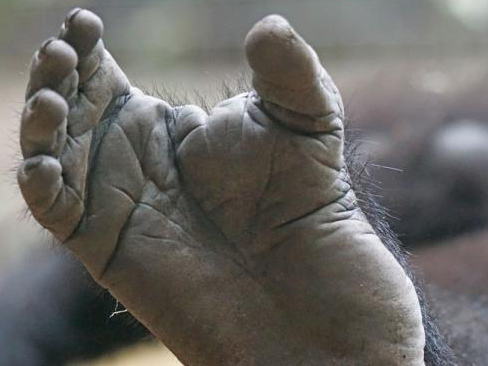
The picture above shows a close-up of one of the footprints, the big toe can be clearly seen.  Our feet have a very distinctive shape.  We have five short toes without claws, the hallux (big toe), is much larger than the other toes and our foot has a long sole.  The feet of the great apes, are very different.  They resemble a human hand with a thumb-like hallux that sticks out to the side.  The Laetoli footprints, ascribed to A. afarensis, are quite similar to those of modern humans except that the heel is narrower and the sole lacks a proper arch.

The 4.4 million-year-old Ardipithecus ramidus from Ethiopia, the oldest hominin known from reasonably complete fossils, has an ape-like foot.   The researchers who described Ardipithecus argued that it is a direct ancestor of later hominins, implying that a human-like foot evolved later.

The Trachilos Tracks

The newly described tracks from Trachilos in western Crete bear a close resemblance to a human footprint.  The big toe has similar morphology and there seems to be a distinct “ball” on the sole, which is absent in primates.  The sole of the foot is proportionately shorter than in the Laetoli prints, but it has the same general form.  The prints do look as if they were made by a hominin.

The Foot of a Great Ape (Note the Position of the Big Toe)

A photograph of the foot of an ape.

The foot of an ape.

Approximately fifty tracks were made when bipeds walked across a sandy area and although many large apes are known from the Late Miocene of Europe, no hominin was thought to have migrated into Europe for millions of years after the tracks were made.

Professor Per Ahlberg (Uppsala University), the lead author of the study commented:

“What makes this controversial is the age and location of the prints.”

At approximately 5.7 million years, they are younger than the oldest known fossil hominin, Sahelanthropus from Chad, and contemporary with Orrorin (O. tugenensis), from Kenya, but more than a million years older than Ardipithecus ramidus with its ape-like feet.

This fossil find throws into question the hypothesis that Ardipithecus is a direct ancestor of later hominins.  In addition, until this year, all fossil hominins older than 1.8 million years (the age of early Homo fossils from Georgia), came from Africa, leading most researchers to conclude that this was where the group evolved.

Studying the Hominin Prints

However, the Trachilos footprints are securely dated using a combination of foraminifera (marine micro-fossils) from over and underlying bedding planes, plus the fact that they lie just below a very distinctive sedimentary rock formed when the Mediterranean Sea temporarily evaporated around 5.6 million years ago.  Coincidentally, earlier this year, another group of researchers, led by Professor Madelaine Böhme of the University of Tübingen, (Germany), writing in the Journal PLOS One, reinterpreted the fragmentary 7.2 million-year-old primate Graecopithecus freybergi from Greece and Bulgaria as a hominin.

Professor Ahlberg added:

“This discovery challenges the established narrative of early human evolution head-on and is likely to generate a lot of debate.  Whether the human origins research community will accept fossil footprints as conclusive evidence of the presence of hominins in the Miocene of Crete remains to be seen.”

The eastern Mediterranean in the Late Miocene consisted of extensive, arid grasslands, the Sahara Desert did not exist and Crete was still part of the Greek mainland.  Early hominins could have ranged along this habitat moving from Africa to south-eastern Europe, with one group leaving their footprints on the shores of the Mediterranean that would one-day form part of the island of Crete.

The scientific paper: “Possible Hominin Footprints from the Late Miocene (c. 5.7 Ma) of Crete?”   Gierlinski, G. D. et al. 2017. published in the Proceedings of the Geologists’ Association.

Everything Dinosaur acknowledges the help of an Uppsala University press release in the compilation of this article.

Visit the Everything Dinosaur website: Everything Dinosaur.
7 09, 2017

National Thylacine Day A Very Special Day

By |2024-05-09T13:33:30+01:00September 7th, 2017|Categories: Animal News Stories, Dinosaur and Prehistoric Animal News Stories, Everything Dinosaur Products, Main Page, Photos of Everything Dinosaur Products|2 Comments

National Thylacine Day

Today, marks the 81st anniversary of the death of the last known Thylacine.  The animal, nick-named Benjamin, died this day (7th September 1936), at Beaumaris Zoo (Hobart, Tasmania).  The Thylacine (sometimes referred to as the Tasmanian Tiger, probably due to its prominent stripes), was the largest carnivorous marsupial of the Holocene Epoch.  It was the last member of the once diverse and numerous Thylacinidae family, which once ranged over Australia and New Guinea.

Thylacine Models

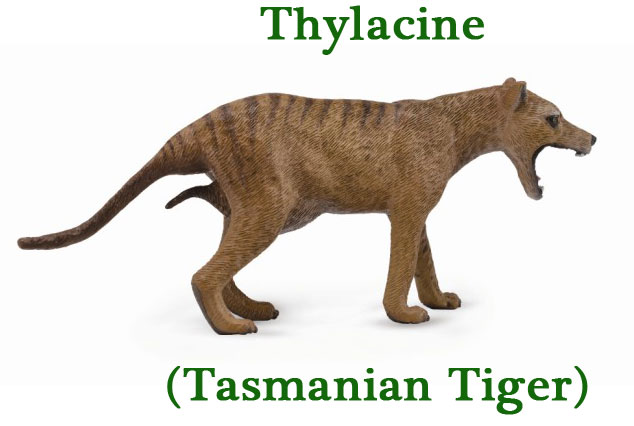
Over the last few years, Everything Dinosaur has been able to add a couple of Thylacine models to its extensive range of prehistoric and extinct animal replicas.  In 2016, CollectA added a female Thylacine model to its hugely popular CollectA Prehistoric Life model range.  The model can be clearly identified as a female because of the very obvious pouch.  The CollectA Thylacine model measures a fraction under twelve centimetres in length and the model’s head is some five centimetres off the ground.

The CollectA Thylacine Model

The CollectA Thylacine replica.

The CollectA Thylacine model.

To view the CollectA range of models: CollectA Prehistoric Life Models.

The distended pouch suggests that this particular Thylacine is carrying young.  This impressive, hand-painted model has received excellent reviews.  For example, a recent 5-star FEEFO review stated that this CollectA model was:

“Very high-quality product.”

Thylacinus cynocephalus

Aboriginal rock art records Thylacines and numerous fossil sites are known from Western Australia.  The Tasmanian Tiger ranged extensively over Australia and Tasmania, a mummified carcass was discovered in the famous Nullarbor Cave in 1969 by a field team from the Western Australian Museum.

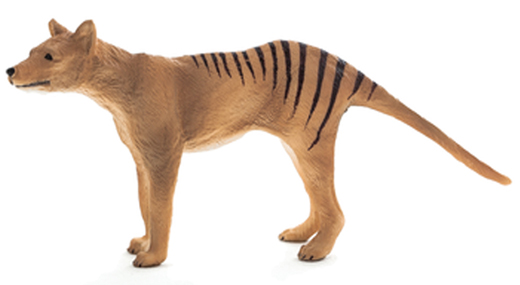
Mojo Fun also has a Thylacine replica in its model range (Mojo Fun Prehistoric and Extinct Animals), this replica is approximately the same size as the CollectA model and just like the CollectA replica, it is hand-painted.  Everything Dinosaur added this model range to its portfolio as part of plans to expand the company’s extensive model range.

The Mojo Fun Thylacine Model

The Mojo Fun Thylacine.

The Mojo Fun Thylacine model.

The Mojo Fun Thylacine has also received excellent reviews from collectors, such as this 5-star FEEFO rating – “Well-made model, exactly as presented on your web site.”

View Mojo Fun models: Mojo Fun Prehistoric and Extinct Figures.

Quality Thylacine Models

Such is the quality of these two figures, that we have supplied numerous scientists, academics and museum staff with these models.

To view the range of prehistoric and extinct animal replicas available from Everything Dinosaur: The Models Available from Everything Dinosaur.

September 7th is “National Threatened Species Day” in Australia.  This day is dedicated to acknowledging the efforts of those hard-working conservationists who strive to protect Australia’s flora and fauna.  It is also a day for remembering the Thylacine, our species Homo sapiens, was responsible for the extinction of this beautiful and little understood predator.

There have been several credible sightings in recent years, and prompted by some plausible eye-witness accounts, scientists from James Cook University have set up camera traps in a remote part of northern Queensland in a bid to capture irrefutable evidence that this enigmatic marsupial still exists.  Everything Dinosaur featured the plans to hunt for Thylacines in a blog article published in the spring: Hunting for Tasmanian Tigers.

The idea that a handful of “Tigers” might be still in the outback, is a very intriguing idea, however, scientists at the University of California, Berkeley, put together a mathematical model to assess the probability of the Thylacine still existing.  Having assessed all the sightings and other evidence, the most optimistic view is that the Thylacine might have persisted to around 1950 but the chances of finding a Thylacine alive today are extremely remote.  How remote?  About 1 in 1.6 trillion according to the mathematicians.

Visit the award-winning Everything Dinosaur website: Everything Dinosaur.
6 09, 2017

Evidence for Communal Roosting in Oviraptorids

By |2023-08-13T17:18:36+01:00September 6th, 2017|Categories: Dinosaur and Prehistoric Animal News Stories, Dinosaur Fans, Main Page, Photos/Pictures of Fossils|0 Comments

Communal Roosting in the Dinosauria

Attendees at the annual meeting of the Society of Vertebrate Palaeontology (SVP) in Calgary (Alberta, Canada), were treated to a presentation outlining the discovery of a trio of young oviraptorid dinosaurs that may have been preserved sleeping as a group.  This might provide the first evidence of communal roosting, a practice seen in many extant animals today, where members of the same species sleep together for mutual protection and to help keep themselves warm.  Communal roosting is seen in many species of birds, notable examples being starlings and rooks.  Communal roosting is also known amongst primates, bats and butterflies.

Although, it is easy to misinterpret fossils of this nature, oviraptorids, members of the Maniraptora clade of dinosaurs which are closely related to Aves (birds), are believed to have been social animals and a spokesperson for Everything Dinosaur stated that behaviour of this nature is within the “realms of expectation for these dinosaurs”.

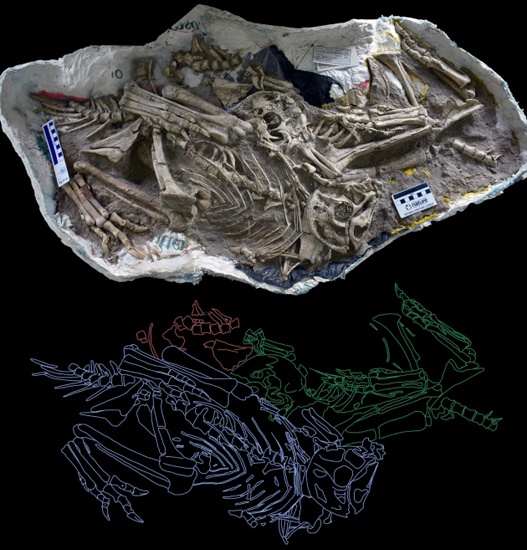
The Fossilised Remains of Three Oviraptorid Dinosaurs – Is this Evidence of Communal Roosting?

Block containing three oviraptorid fossils.

The three oviraptorid fossil skeletons within the single block.

Picture credit: Gregory F. Funston

The picture above shows the plaster-jacketed block containing the three individuals and a line drawing showing the location of each skeleton and the layout of the bones.  Greg Funston (University of Alberta), who led the fossil study explained that the three sleeping dinosaurs were probably relatives, perhaps from the same brood.  The fossil material first came to the attention of academics when Mongolian customs officials seized the specimen at an airport in 2006.  The stone block was being illegally smuggled out of the country, sadly, there is a thriving black market in illicit fossils from Mongolia and China, despite the very best attempts of the authorities to stop this trade.

Identifying the source of such illegally acquired fossils is always tricky, but a geochemical analysis of the surrounding matrix by scientists from the University of Bologna (Italy), led by Federico Fanti, suggested that the fossil came from the Bugiin Tsav area of the Gobi Desert (Upper Cretaceous sediments associated with the Nemegt Formation – Maastrichtian faunal stage).  Dr Fanti has also presented his findings at the SVP.

Sleeping Oviraptorids

Oviraptorids were extremely bird-like, feathered dinosaurs, with short skulls, beaks and deep lower jaws which were largely edentulous (lacking teeth).  Several genera have been named and these dinosaurs lived in the northern hemisphere during the Late Cretaceous.  Most of these dinosaurs were relatively small, around two-three metres in length (Gigantoraptor being an exception) and they were particularly abundant in Asia.  Fossils of their nests have been found, along with adults incubating eggs.  Most palaeontologists believe that these dinosaurs were social animals with similar behaviours to those seen in extant birds.  The diet of oviraptorids is uncertain, these bipeds could have been mainly herbivorous, but omnivory and durophagy (eating hard-shelled items like nuts, seeds and molluscs) is not ruled out.

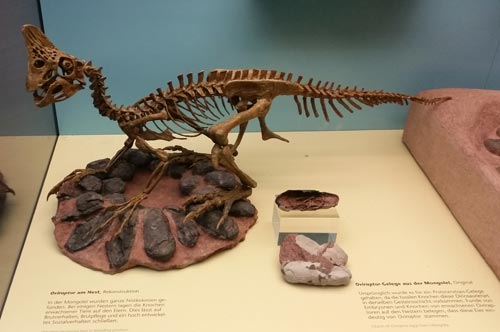
An Oviraptor Exhibit at a Museum (Frankfurt Natural History Museum)

An Oviraptor and dinosaur eggs exhibit.

An Oviraptor and its nest. Picture credit: Everything Dinosaur.

Picture credit: Everything Dinosaur

The three individuals are from the same species, which is new to science, these oviraptorids have yet to be formally named.  Like several other oviraptorids, a prominent, domed skull crest has been identified.  These types of dinosaurs seem to have been highly successful, the vertebrate biota of some Upper Cretaceous deposits of China are dominated by oviraptorids, for a case in point: Not Another Ganzhou Oviraptorid.

Juveniles Huddling Together

Two of the dinosaurs have been preserved crouched down on their stomachs, these two specimens, which are more complete than the third, have their necks curled back towards their bodies, whilst their arms cradle their heads, this is very reminiscent of a sleeping posture adopted by many types of living bird.

The fossilised remains of allegedly sleeping dinosaurs have been found before, perhaps most notably Mei long from the Liaoning Formation of north-eastern China.  M. long was named in 2004 after a spectacular fossil showing a head tucked under an arm and a tail curled round the body was discovered.  This little troodontid was either resting or sleeping when it was smothered by a layer of volcanic ash.

An Illustration of the “Sleeping Dragon” Mei long

Paleo-Creatures Mei long.

A Mei long dinosaur figure.

Dinosaurs Roosting Together

This is the first fossil evidence to support the idea that some kinds of dinosaurs roosted together (communal roosting).  Bone histology indicates that these animals were juveniles and roughly the same age when they died, it has been speculated that this fossil represents a “teenage gang” of sub-adult dinosaurs that died in their sleep.

If the layout of the fossils reflects their true posture and the bone position has not been affected by the fossilisation process, then the position of the three dinosaurs implies they were touching each other.  The researchers think the youngsters were probably huddling for warmth.  That suggests that the animals had tried to maintain a constant body temperature, or perhaps they were frightened and huddling together for protection and comfort.  David Varricchio (Associate Professor at Montana State University), has commented that he wondered whether these dinosaurs were resting or taking shelter from harsh weather rather than sleeping.

Communal Roosting in Oviraptorids

Funston argues that modern animals that roost together don’t usually make direct contact except for warmth.  Animals that died in events such as floods are preserved in very different positions from that of the oviraptorid trio, making it unlikely that the young dinosaurs were awake when they met their demise.

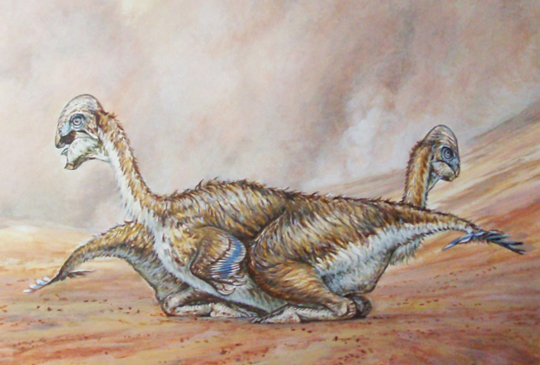
An Illustration of Roosting Oviraptorids

Communal roosting in oviraptorids.

Roosting oviraptorids.

Picture credit: Mike Skrepnick

Fossils that are Difficult to Interpret

The three dinosaurs do seem to have perished together, their body positions indicate that the carcasses were unlikely to have been transported far before accumulating and forming this assemblage, but interpreting the fossil is difficult.  Other researchers have expressed reservations about the communal resting hypothesis.  For example, biologist John Grady (Bryn Mawr College, Pennsylvania), has stated that the dinosaurs may have huddled together to hide or merely because the location was “a great place to sleep.” 

However, this fossil material is interpreted, it adds to the growing body of evidence that many types of dinosaurs, including Maniraptorans were highly social creatures and capable of exhibiting quite complex behaviours.

For a 2013 article that looks at evidence for oviraptorid courtship displays: Dinosaurs Shaking Tail Feathers and Strutting.

Canadian dinosaur helps to prove dinosaurs were show-offs: Fossil Discovery Reinforces Idea of Dinosaurs Displaying.

Visit the Everything Dinosaur website: Everything Dinosaur.
5 09, 2017

The End of the Road for Troodon formosus

By |2023-08-13T17:08:00+01:00September 5th, 2017|Categories: Dinosaur and Prehistoric Animal News Stories, Dinosaur Fans, Main Page|1 Comment

Troodon formosus – No Longer Valid

One of the first ever dinosaurs named from North America has officially bitten the dust in taxonomic terms as the troodontid Troodon formosus is no longer a valid genus.

This fast-running, bird-like dinosaur was first named and described in 1856 by the American palaeontologist Joseph Leidy and right from the very beginning there were problems over its description and classification.  Troodon (T. formosus), a dinosaur whose name provided the inspiration behind the erection of an entire dinosaur family, the Troodontidae (part of the Deinonychosauria clade), was described on the basis of the discovery of a fossilised tooth.

Troodon formosus = Nomen Dubium

The teeth of these types of dinosaurs are recurved and have large serrations, unlike any dinosaur teeth found previously and so Leidy erected a new genus – Troodon (the name means “wounding tooth”).  This staple of dinosaur books and academic literature for the best part of 160 years had been established on fairly shaky ground to begin with.  Now thanks to some new research from University of Alberta graduate student Aaron van der Reest, T. formosus has been replaced by two taxa, one new one Latenivenatrix mcmasterae and one resurrected one.

As a result of this new study, which has led to the reclassification of North American troodontid fossil material, the species Stenonychosaurus inequalis, first described by Sternberg in 1932 and previously regarded as a junior synonym of Troodon has come back into favour.

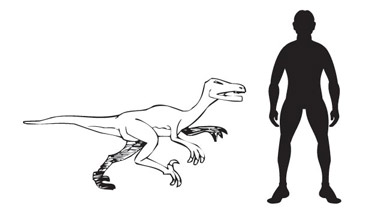
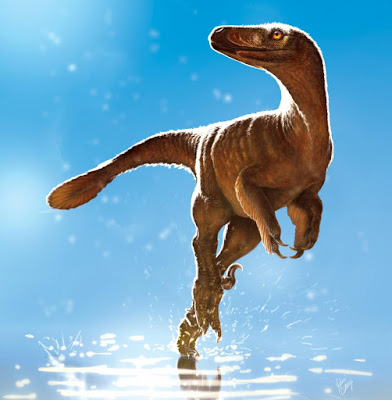
An Illustration of the Bird-like, Sickle-toe Clawed Troodon (T. formosus)

Troodontidae scale drawing.

A scale drawing of a typical member of the Troodontidae dinosaur family.  Picture credit: Everything Dinosaur.

Picture credit: Everything Dinosaur

Hips Brought Everything to a Head

In the early summer of 2014, van der Reest discovered an intact troodontid pelvis in Dinosaur Provincial Park Formation of southern Alberta.  This led to him conducting an in-depth analysis of previously collected troodontid fossils, including skull bones.  His research concluded that the Dinosaur Provincial Park fossil record held two genera of troodontid and not one.

For most of the 19th and 20th centuries troodontid fossils from North America tended to be assigned to T. formosus.  Based on this, Troodon ranged from Mexico in the south to Montana and beyond Alberta in the north and existed as a species through some fifteen million years.  A contradiction indeed, when the rapid dinosaur faunal turnover of Laramidia in the Late Cretaceous is considered.

The shape of the pelvic bones, particularly the pubis led to the erection of the new species – Latenivenatrix.  It comes from the upper Dinosaur Park Formation (Late Campanian) and following the student’s reassessment of troodontid fossil material from strata representing the youngest layers of the Dinosaur Park Formation, other fossil elements including partial skulls have been assigned to this species.  Latenivenatrix (the name means “hiding hunter”), a reference to the muddle and confusion surrounding North American troodontids, was a relative giant amongst its kind.

Aaron van der Reest explained:

“This new species is the largest of the troodontids ever found anywhere in the world, standing nearly two metres at the head and close to 3.5 metres long.  It’s about fifty per cent larger than any other troodontids previously known, making it one of the largest Deinonychosaurs (raptor-like dinosaurs) we currently recognise.”

An Illustration of the Late Cretaceous Troodontid Latenivenatrix mcmasterae

Latenivenatrix illustrated.

The giant North American troodontid Latenivenatrix.

Picture credit: Julius Csotonyi

Student van der Reest added:

“The hips we found could ultimately open the door for dozens of new species to be discovered.  Researchers with other specimens now have two new species [Latenivenatrix mcmasterae and Stenonychosaurus inequalis] for comparison, widening our ability to understand the troodontid family tree in North America.”

Confusion Amongst North American Troodontids

Troodontids are known from both Asia and North America, the most complete specimens come from Upper Jurassic Strata of China, Lower Cretaceous strata of China (western Liaoning Province) and the Cretaceous of Mongolia.  In contrast, troodontids from the western hemisphere, specifically Mexico, USA and Canada are very poorly known with a very fragmentary fossil record.   Previously unassigned fossils from the lower part of the Dinosaur Park Formation have now been assigned to the resurrected troodontid species Stenonychosaurus inequalis.

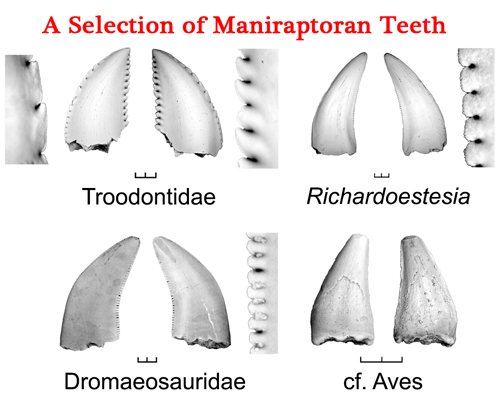
A Comparison of Maniraptoran Teeth

Maniraptora tooth morphology.

No evidence of teeth adapted to seed-eating were found in the study.

Honouring Mum

For Aaron, being able to name a new dinosaur has been an especially emotional experience.  The species name for Latenivenatrix mcmasterae honours his late mother, Lynne (McMaster) van der Reest who did so much to encourage him to pursue a career in palaeontology.

Thanks to this new study, the story of troodontids in North America is a little clearer.  A distinct stratigraphic separation between Stenonychosaurus inequalis and the younger troodontid Latenivenatrix mcmasterae has been established.  A phylogenetic analysis indicates that Latenivenatrix is more closely related to Asian Troodonts than it is to Stenonychosaurus, this suggests that the replacement of Stenonychosaurus may have resulted from an earlier Asian migrant into North America.

For the time being Troodon formosus is no more.

The scientific paper: “Troodontids (Theropoda) from the Dinosaur Park Formation, Alberta, with a Description of a Unique New Taxon: Implications for Deinonychosaur Diversity in North America” by Aaron J. van der Reest and Philip J. Currie published in the Canadian Journal of Earth Sciences.

Visit the Everything Dinosaur website: Everything Dinosaur.
3 09, 2017

New Devonian Fish Sidesteps Current Evolutionary Theory

By |2024-05-09T13:35:45+01:00September 3rd, 2017|Categories: Dinosaur and Prehistoric Animal News Stories, Dinosaur Fans, Main Page|0 Comments

Hongyu chowi – Convergent Evolution Or Did We Get It All Wrong?

The invasion of the land by vertebrates, the evolution of the first four-legged land animals (tetrapods), in the Late Devonian is regarded as one of the most significant periods in the history of the chordates.

Palaeontologists think that the first land animals with backbones, evolved from a type of lobe-finned fish belonging to the Class Sarcopterygii.  Numerous fossils of sarcopterygians, including several types of transitional forms have been discovered from Eusthenopteron to Panderichthys, through to Tiktaalik and onwards to the stem tetrapods Acanthostega and Ichthyostega scientists have been able to piece together the evolutionary development of limbs and other terrestrial adaptations… or have they?

Hongyu chowi

A fossil from the Upper Devonian deposits of the Zhongning Formation in the Ningxia Hui autonomous region of central China just might have caused a few palaeontologists to take a step backwards.  The newly described Hongyu chowi shows a combination of anatomical traits, some of which are found in more basal members of the Sarcopterygii, whilst other characteristics show an affinity to that group of sarcopterygians that are believed to have been ancestral to the tetrapods.  This mix of anatomical features makes it difficult for scientists to place Hongyu chowi in the fishy family tree.

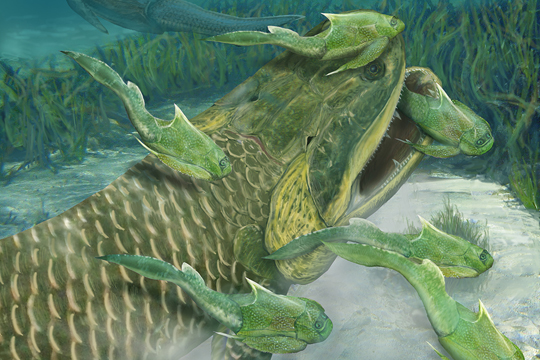
An Illustration of the Newly Described Late Devonian Sarcopterygian Hongyu chowi

Hongyu chowi (Devonian fish) illustration.

An illustration of Hongyu chowi. This Devonian fish is believed to have been an ambush predator.

Picture credit: Brian Choo

The picture above shows the 1.5-metre-long Hongyu chowi ambushing a group of placoderms (Antiarchs).

Writing in the academic journal “Nature Ecology & Evolution”, the researchers which include scientists from the Institute of Vertebrate Palaeontology and Palaeoanthropology (IVPP), and Uppsala University (Sweden), describe Hongyu as a predator.  It probably hunted in a similar way to extant Wobbegong sharks (Orectolobus maculatus).  These sharks, sometimes referred to as Carpet sharks, lie on the bottom and wait for small fish to come near them before they rapidly spring up and try to grab the startled fish in their over-sized mouths.

A Fossil Fish That Doesn’t Fit In

The fossil material dates from approximately 370 million years ago, a time when the first tetrapods were evolving.  Hongyu chowi looks like a rhizodontid fish, a group of basal sarcopterygians that are thought to have branched-off from the lobe-finned lineage of sarcopterygians that led to the first land vertebrates.  However, it has the same shoulders and gill cover supports seen in the Elpistostegalia (otherwise known as the Panderichthyida), an Order of sarcopterygians that led to the Tetrapodomorpha, fish that had limbs capable of supporting them on land.

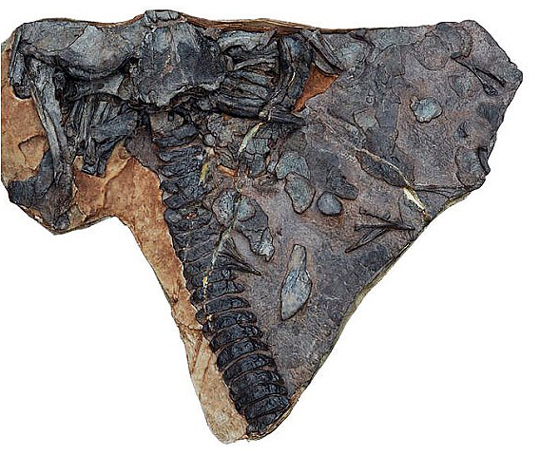
The Fossils of Hongyu chowi

The fossilised remains of Hongyu chowi.

The block which contained the fossil material (Hongyu chowi).

Picture credit: Nature Ecology & Evolution

The discovery of Hongyu chowi is certainly a “curve ball” when it comes to understanding the evolution of land living vertebrates.  The fossil find implies one of two things:

  1. H. chowi is a rhizodont that independently evolved the similar body characteristics to other distantly related sarcopterygians making this fish an example of convergent evolution (unrelated animals develop in similar ways as they are exploiting similar niches or resources, such as the evolution of wings in both birds and bats).
  2. H. chowi is a rhizodont and subsequently, the Order Rhizodontida are more closely related to the Tetrapods and the Elpistostegalia (Panderichthyida) than previously thought.  If this is the case, it suggests that there was a certain amount of independent evolution of similar features, because in a phylogenetic analysis, the Rhizodontida would be nested between two groups (tetrapods and the Elpistostegalia/Panderichthyida) which share many characteristics, which brings into sharp focus the idea that these two groups had to evolve similar features independently.

Commenting on the implications for this discovery, Neil Shubin (University of Chicago), who was not an author of the scientific paper, stated:

“The find confirms an earlier suspicion that there was independent or parallel evolution between the rhizodonts, the elpistostegids and the first four-legged animals.  It has been a recurrent theme in the field.”

Visit the Everything Dinosaur website: Everything Dinosaur.

1 09, 2017

A New Silky Dinosaur Ruffles Feathers

By |2024-05-09T08:42:52+01:00September 1st, 2017|Categories: Dinosaur and Prehistoric Animal News Stories, Dinosaur Fans, Main Page, Photos/Pictures of Fossils|0 Comments

Serikornis sungei – Feathered but a Terrestrial Dinosaur

A team of international scientists have ruffled a few feathers amongst their fellow palaeontologists.  A new species of feathered, four-winged dinosaur from north-eastern China has been described.  Despite its heavily feathered forelimbs and legs, this forty-eight-centimetre-long theropod may have been permanently grounded.  Writing in the journal “The Science of Nature”, the scientists, which include lead author Ulysse Lefèvre (Royal Belgian Institute of Natural Sciences in Brussels), describe a basal paravian (member of the Paraves clade of theropods), it has been named Serikornis sungei.

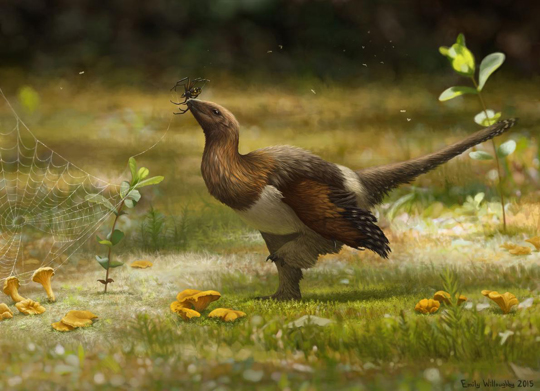
Potentially a Very Down to Earth Feathered Dinosaur – Serikornis sungei

Serikornis sungei catches a spider.

Serikornis catches a spider.

Picture credit: Emily Willoughby

Puzzling Paravians and Their Kin

The single, beautifully-preserved and nearly complete fossil specimen of this dinosaur was discovered in 2014.  It comes from the Tiaojishan Formation (Late Jurassic), of Liaoning Province, China, from the same strata that previously yielded another four-winged theropod Anchiornis (A. huxleyi), which was named and scientifically described in 2009.    These sediments, which are approximately 160 million-years-old (Oxfordian faunal stage), may also have yielded another four-winged, terrestrial theropod – Aurornis (A. xui).  However, Aurornis poses a problem for palaeontologist as they try to unravel the evolution of feathered flight.

The holotype fossil material of Aurornis was acquired from a fossil dealer, who claimed the fossil came from the Upper Jurassic deposits of Western Liaoning.  However, Pascal Godefroit, a colleague of Ulysse Lefèvre at the Royal Belgian Institute of Natural Sciences, who was the lead author of the scientific paper that described Aurornis, has expressed doubts on the provenance of the original fossil material.  The holotype could have come from the much younger Yixian Formation of Liaoning Province.  Aurornis could have lived at least thirty million years after Anchiornis and Serikornis.  The lack of appropriate and validated fossil documentation is adding to the difficulties faced by scientists as they try and unravel the evolution of flight.

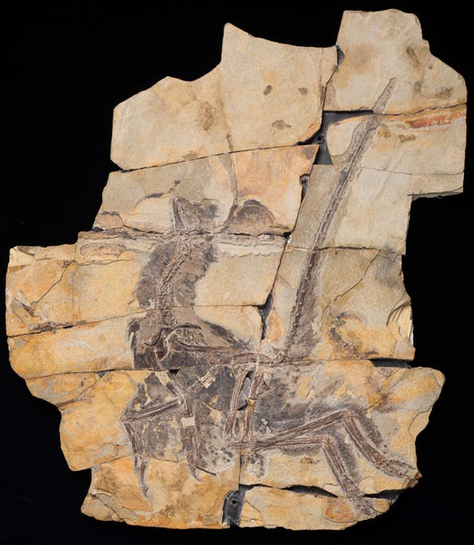
The Beautifully-Preserved Fossil Skeleton of Serikornis sungei

Beautifully preserved Serikornis sungei fossil showing feathers.

Serikornis sungei fossil showing the preserved plumage.

Picture credit: Ulysse Lefèvre/Royal Belgian Institute of Natural Sciences

“Silky Dinosaur”

The little dinosaur, nick-named “Silky”, because of the silky texture of its integument (covering of feathers), has a skeleton that suggests a terrestrial existence to the researchers.  They propose that Serikornis was a ground-dwelling dinosaur with no adaptations for flight, despite having feathers on its arms and legs.  Yet, feathery legs have been associated with the evolution of flight in the Dinosauria.

A hypothesis has been proposed that one dinosaur lineage went through a four-winged, gliding phase on the way to powered flight.  An example, of which would be the likes of Microraptor, known from Lower Cretaceous-aged deposits from Liaoning.  If a terrestrial dinosaur, such as Serikornis had long feathers on its legs, this suggests that such structures evolved in ground-dwelling dinosaurs and a flight function came secondary.

Such feathery legs might have evolved initially for a different reason, perhaps as a result of sexual selection or as a result of an evolutionary drive to produce even more elaborate and visually stunning displays.  These feathery legs were then inherited by increasingly aerodynamic and arboreal dinosaurs leading eventually to powered flight amongst the Dinosauria.

Palaeontologist Ulysse Lefèvre Examining the Serikornis Fossil Material

Examining the fossilised remains of Serikornis sungei.

Palaeontologist Ulysse Lefèvre views the fossil of Serikornis.

Picture credit: Ulysse Lefèvre/Royal Belgian Institute of Natural Sciences

Lefèvre and his team named the new species in honour of Sun Ge, the scientist at the Palaeontological Museum of Liaoning who made the fossil available for study, and for the presumed silky texture of its body covering. Serikos means “silk” in ancient Greek.

Contentious Fossil Interpretation

Commenting on one of the reasons for the team’s terrestrial diagnosis for Serikornis, Ulysse Lefèvre stated:

“The feathering of Serikornis shows for the first time a complete absence of barbules—that is, the microstructures that allow feathers to resist air pressure during wing beats.  The plumage is composed of four wings, as with many theropod dinosaurs from China, but it did not allow “Silky” to take off from the ground or from a tree.”

In the phylogenetic analysis undertaken by the research team, Serikornis is classified as a basal paravian, outside the Eumaniraptora clade, the clade that includes the Deinonychosauria (troodontids and dromaeosaurids), as well as birds.  Whilst these scientists propose a terrestrial habit for Serikornis, some palaeontologists disagree.  For example, Professor Mike Benton (Bristol University), thinks that presence of hind wings would have made life difficult for this little dinosaur.

Professor Benton explained:

“The hind wings would be inconvenient for a ground-runner.  The long feathers on the thigh and calf would be like very elaborate bell-bottomed trousers, rubbing and catching as the animal walked or ran.”

Professor Benton and many other leading academics support the idea that the anatomical arrangement of four wings is a good contender as a transitional stage between gliding and the evolution of powered flight.  The professor added that in his opinion the body plan of Serikornis was:

“A model for the origin of flight, in which little dinosaurs such as Serikornis clambered into trees, perhaps chasing insects and other small tree-dwellers for food.  To escape predators or to get around, they would glide from bough to bough.”

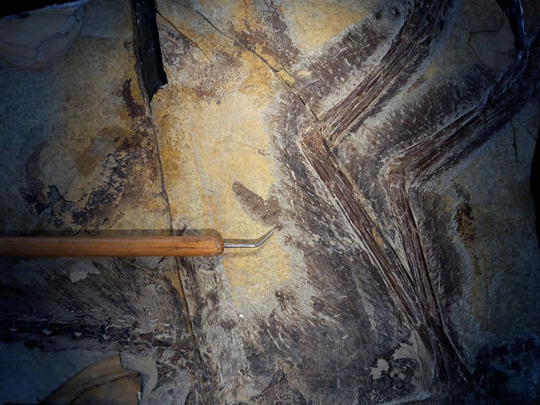
A Close-up of the Feathers on the Hind Legs of Serikornis sungei

The feathers on the hind limbs of Serikornis sungei.

A close-up view of the feathers on the hind legs of Serikornis sungei.

Picture credit: Ulysse Lefèvre/Royal Belgian Institute of Natural Sciences

A spokesperson from Everything Dinosaur commented:

“The discovery of another Late Jurassic four-winged dinosaur helps to increase our knowledge as to the diversity of the feathered theropods, it is very likely that feathers first evolved for other purposes, for example, as insulation, for display.   Flight was a secondary function.  However, where Serikornis sungei fits into the bigger picture regarding the evolutionary line that led to direct ancestors of today’s birds is open to debate.”

Lefèvre and his co-authors concede it may have been possible for these light, small dinosaurs to parachute from the trees to the ground.  The plumage of Serikornis could have slowed its descent, but “controlled falling” is a still a long way from flight.  Serikornis had enlarged claws that may have allowed it to climb trees, so this feathered dinosaur could have been at home in arboreal habitats.

To read Everything Dinosaur’s 2009 article on Anchiornis huxleyiOlder than Archaeopteryx! New Evidence of the Dinosaur/Aves Family Tree.

To read Everything Dinosaur’s 2013 article on the discovery of Aurornis: A New Contender for the Title of “First Bird”?

Visit the Everything Dinosaur website: Everything Dinosaur.
Go to Top