All about dinosaurs, fossils and prehistoric animals by Everything Dinosaur team members.

Fossil finds, new dinosaur discoveries, news and views from the world of palaeontology and other Earth sciences.

16 12, 2013

New French Abelisaurid Named After Road Builder

By |2023-03-01T23:28:55+00:00December 16th, 2013|Categories: Dinosaur and Prehistoric Animal News Stories|0 Comments

Arcovenator escotae – Hunter from the Arc River Region of France

The Abelisauridae family tree just got a little bit bigger.  A team of scientists from France have published a paper on a new abelisaur, this fossil discovery proves beyond reasonable doubt that these narrow-snouted, short-armed theropods were present in Europe at the very end of the Cretaceous.  Say hello to Arcovenator escotae, which alongside the likes of Tarascosaurus* (T. salluvicus) becomes the second abelisaur to be known from France.

* The fragmentary nature of the fossil material ascribed to Tarascosaurus has led some scientists to question whether this dinosaur actually is a member of the Abelisauridae family.

Abelisaurid

In 2007, as a French construction company called Escota worked on an extension to the major trunk road, the A8, close to the city of Aix-en-Provence, (which itself is about twenty miles north of Marseilles), a series of fossil fragments were discovered in fluvial sandstones, all of which probably came from the same individual animal.

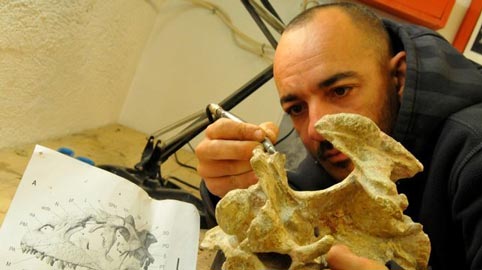
The fossil material consisted of elements from the back of the skull, a tail bone (caudal vertebra), bones from the lower right leg and three teeth.  Importantly, the presence of cranial material, enabled the scientists including Thierry Tortosa (Museum of Natural History, Aix-en-Provence) in collaboration with Eric Buffetaut, one of the world’s leading experts on European dinosaurs, and the palaeontologist responsible for naming and describing Tarascosaurus, to positively identify the material as being from an abelisaur.

Arcovenator escotae

This new dinosaur has been named Arcovenator escotae, the name means “hunter from the River Arc”, the specific name honours the motorway construction company which delayed the building work until all the sediments and strata in the construction site had been properly mapped and explored.

Thierry Tortosa Examining Cranial (Skull) Material from the New Abelisaur
 
New Theropod dinosaur from France.

New theropod dinosaur from France.


Phylogenetic studies carried out by the French team suggest that this member of the Abelisauridae is more closely related to the taxa known from India and Madagascar than to South American forms of abelisaur.  In addition, along with Tarascosaurus, Arcovenator is assigned a position in the Abelisauridae that indicates it is a basal, primitive member.  The discovery of these fossils in Campanian aged strata (72-76 million years old), have led the scientists to propose that Africa and Europe may have played a significant role in abelisaurid dispersal, and not South America as previously thought.

 
A Typical Illustration of a Fearsome Abelisaurid (Rajasaurus)
 
Fearsome, Theropods - a typical Abelisaur.

Fearsome, theropods – a typical Abelisaur.

Picture credit: Everything Dinosaur

At an estimated six metres in length, this theropod was very probably the apex predator in what was to become southern Europe at the end of the Cretaceous.  It shared its environment with titanosaurs, ornithopods and a variety of mammals and birds, including several types of large flightless bird.

The scientific paper: “A new abelisaurid dinosaur from the Late Cretaceous of southern France: Palaeobiogeographical implications” by Thierry Tortosa, Eric Buffetaut, Nicolas Vialle, Yves Dutour, Eric Turini, Gilles Cheylan published in the Annales de Paléontologie.

15 12, 2013

Denisovan Cave Material Hints at New Mystery Human Species

By |2024-05-02T06:25:03+01:00December 15th, 2013|Categories: Dinosaur and Prehistoric Animal News Stories|0 Comments

Research Shows that Neanderthals and Denisovans were Closely Related

Scientists from the Max Planck Institute for Evolutionary Anthropology based in Leipzig (Germany) have completed an analysis of ancient hominin DNA from a cave located in the Altai Mountains of Siberia.  Their study suggests the existence of a mystery human species, as evidence from the genome indicates the likelihood of extensive interbreeding and the possible recording of genetic material from Homo erectus.  H. erectus, although very different from modern humans, is much more “modern looking” than earlier hominins.  It also has the distinction of being the longest living species in terms of the age of its fossil record.

Homo erectus

The earliest fossil material ascribed to H. erectus is approximately 1.9 million years old, yet H. erectus may have survived until just fifty thousand years ago.  Fossils are known from Europe and Asia, but it is likely this species evolved in Africa.  It is the oldest globally distributed species of hominin known.

The research team have also announced that they have completed the most detailed analysis of a Neanderthal’s DNA to date.  The details of the team’s work has been published in the scientific journal “Nature”.  Back in 2010, Everything Dinosaur team members reported on the discovery of a new hominin species after researchers found fragmentary fossil remains in a cave located in the Altai Mountains.  The cave known as the Denisova Cave, gave rise to the name of this new species, they were labelled Denisovans, a type of human distinct from both Neanderthals and H. sapiens that lived in that part of Siberia forty thousand years ago.

To read the article on the discovery of the Denisovans: Evidence of New Species of Early Human Found.

Neanderthal Toe Bone

This new research concerns a Neanderthal (Homo neanderthalensis) toe bone that was found in the same cave as the Denisovan discovery, although it comes from a layer of sediments believed to date from between 50,000 and 60,000 years ago.  The Denisova site has provided evidence of Denisovans, Neanderthals and modern humans, this location seems to have been home to at least three species of early humans over the years – although each species occupied the cave at different times in prehistory.

The Neanderthal Toe Bone Used in the Study

Neanderthal Toe Bone used in the Study.

Neanderthal Toe Bone used in the Study.

Picture credit: Bence Viola

Professor Svante Paabo (Max Planck Institute) led the analysis of the toe bone and it has revealed some interesting information about both Neanderthals and other early human types.  The toe bone came from a female Neanderthal, one that was highly inbred perhaps the child of half-siblings who shared the same mother.  Other family relationship scenarios are possible however, including that her parents were an uncle/niece or aunt/nephew combination.  It is also feasible from the DNA study that her parents were a grandparent and grandchild or double first-cousins (the children of two siblings who bred with siblings).

Whatever the exact family relationship, based on this evidence, even the most ardent soap script writers would do well to come up with a convoluted story line to explain this one away.

Denisovan Cave Material

The research into the toe bone when compared to data on the Denisovans suggest that Neanderthals and Denisovans were closely related and probably looked very similar to each other as species.  Based on this study, it indicates that the Neanderthal/Denisovan common ancestor split off from the branch of the human family tree that would eventually lead to our own species, around 400,000 years ago.  The genome study as revealed by the Max Planck Institute also indicates that the Neanderthals and the Denisovans themselves diverged from each other around 300,000 years ago.

In addition, this genetic analysis threw up a surprise result.  It has been postulated that the Denisovans interbred with a mystery, fourth type of early hominin that was living in Eurasia.  Between 2.7 and 5.8% of the Denisovan genome comes from this, as yet not identified species.

This group split from the others more than a million years ago, and may represent the early human species known as Homo erectus, which fossils show was living in Europe and Asia a million or more years ago.
But Spanish researchers also recognise a species known as Homo antecessor, whose fossils show up about a million years ago at the Atapuerca site, near Burgos in Spain, and this may be another candidate.

Though Denisovans and Neanderthals eventually died out, they left behind bits of their genetic heritage because they occasionally interbred with modern humans.  The research team estimates that between 1.5 and 2.1 percent of the genomes of modern non-Africans can be traced to Neanderthals, whilst perhaps as much as 0.8% (on average across the entire human genome), of modern human DNA can be traced back to the Denisovan lineage, although most Denisovan DNA traces are associated with those modern humans from Oceanic or Asian populations.

Excavations in the Denisova Cave System Indicate at Least Three Species of Hominin Have Inhabited It

Excavation work in the cave.

Excavation work in the cave.

Picture credit: Bence Viola

The study proposes that as much 6% of the genomes of Aboriginal Australians, natives of New Guinea and some Pacific Islanders can be traced to Denisovans.  The new analysis finds that the genomes of Han Chinese and other mainland Asian populations, as well as of Native Americans, contain about 0.2% Denisovan genes.

Interbreeding between populations has certainly “clouded” the genetic map of modern humans and it is difficult to distinguish links to different species as a result, but the research has also identified at least eighty-seven specific genes to H. sapiens that are significantly different to Denisovan and Neanderthal DNA.  The research team suggest that these genes may hold clues to behavioural differences between different types of early human and may even go some way to explaining why we are still here but the Neanderthals and Denisovans as species are extinct.

12 12, 2013

Dangerous Cliffs at Lyme Regis

By |2023-03-01T23:17:51+00:00December 12th, 2013|Categories: Dinosaur and Prehistoric Animal News Stories, Everything Dinosaur News and Updates, Everything Dinosaur videos|0 Comments

Young Matthew Comments on the Dangers of Fossil Collecting at Lyme Regis

An enthusiastic fossil collector called Matthew and the grown ups with him made a short video highlighting the danger of land slides and mudslips around the Dorset coast.  The video was shot on the west beach at Lyme Regis and it nicely demonstrates how unstable the cliffs are in the area.

Matthew’s Safety Video – Lyme Regis Cliffs

Video credit: Brandon Lennon

Dangerous Cliffs at Lyme Regis

Matthew points out just how dangerous the cliffs at Lyme Regis and elsewhere on the “Jurassic Coast” can be.  Landslides and mudslips can happen at any time and without warning.  If walking around the cliffs we urge everyone to heed any warning signs posted and to keep away from the edge.  As for the beaches themselves, it is best to avoid getting too close to the cliffs, rocks and boulders can travel quite far down the beach from any rock fall so it is essential to keep your distance.  Advice from the locals is well worth taking too.

We are grateful to Brandon Lennon for sending us this video.  For those keen on a bit of fossil hunting in the Lyme Regis area, we at Everything Dinosaur strongly recommend that you take advantage of one of the regular fossil hunting walks organised by experienced professionals who know the cliffs and tides well.

For further information on organised fossil walks on the Dorset coast: Lyme Regis Fossil Walks.

It’s a great video Matthew, you make a great health and safety spokesperson and we hope you enjoyed your trip to the beach.

11 12, 2013

Duck-Billed Dinosaur with a Comb like a Rooster

By |2023-03-01T23:13:11+00:00December 11th, 2013|Categories: Dinosaur and Prehistoric Animal News Stories|0 Comments

Mummified Edmontosaurus Fossil Provides Evidence of a Soft-Tissue Comb like a Rooster

The weird and wonderful world of the Dinosauria just got a little more peculiar with the publication of a scientific paper in the academic journal “Current Biology” that announces the discovery of a soft-tissue comb present in the fossilised remains of a duck-billed dinosaur discovered in Canada.  The fossil record rarely preserves soft tissues and although a number of palaeontologists had suspected that some types of dinosaur may have sported flamboyant soft tissue crests, fossil evidence had been rather thin on the ground.

Soft Tissue Crest

Looking at birds, reptiles and mammals today a number of species have various soft skin pouches, wattles combs and even trunks in the case of members of the Proboscidea.  So why not extinct animals?  It seems that scientists examining the skull of a beautifully mummified hadrosaur from Upper Cretaceous sediments that make up the Wapiti Formation (Alberta, Canada) have uncovered evidence of soft tissue crests in a species of Edmontosaurus (E. regalis) whilst working close to the city of Grande Prairie.

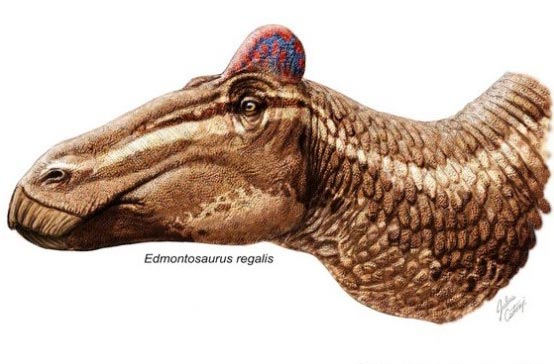
The three-dimensional, cranial crest seems to be entirely composed of soft tissue.  Its location came as a big surprise to Dr Phil Bell (Department of Environmental and Rural Science, University of New England, Armidale, New South Wales, Australia), as he put his chisel through the middle of it as he prepared the fossil skull specimen.  He simply did not expect to find any structure that was part of the dinosaur in that part of the matrix that he was excavating.

Duck-billed Dinosaur

Edmontosaurus is one of the best known Late Cretaceous dinosaurs.  It was one of the most abundant types of dinosaur roaming North America in the Late Cretaceous.  These herbivores grew up to 12 metres in length and a number of species have been described from fossil remains found in both the United States and Canada.

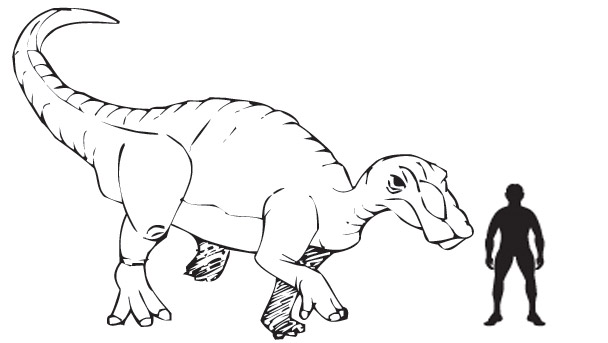
An Illustration of an Edmontosaurus

Edmontosaurus Dinosaur

Edmontosaurus dinosaur.

Picture credit: Everything Dinosaur

Commenting on the discovery, Dr Bell stated:

“An elephant’s trunk or a rooster’s comb might never fossilise because there is no bone in them.  This discovery is equivalent to learning for the first time that elephants had trunks.  We have lots of skulls of Edmontosaurus, but until now there have been no clues to suggest they might have had a big fleshy crest.”

“Flat-headed Hadrosaurines”

Previously, palaeontologists had described the likes of Edmontosaurus as “flat-headed hadrosaurines”, their skulls generally lacking the spectacular bony, hollow crests of the lambeosaurine hadrosaurs, dinosaurs such as Corythosaurus and Lambeosaurus.  Now it looks like this view is going to have to be revised.  The crests on some hadrosaurs had been linked to vocalisation, social signalling or intra-specific competition where animals of the same species might compete for mates.

This fossil find, from a mummified Edmontosaurus, one of a few dinosaur “mummies” known to science, provides the first view of a soft-tissue signalling structure in the Dinosauria.

A spokesperson from Everything Dinosaur commented:

“Although no colour evidence has been recovered from the fossil, we can speculate that this was a colourful crest, further evidence of ornamentation in the Dinosauria.  This is additional evidence that hints at complicated social behaviour amongst ornithopods.”

Crest evolution within Hadrosaurinae apparently culminated in the secondary loss of the bony crest in genera that lived at the very end of the age of dinosaurs.  However, the new specimen indicates that cranial ornamentation was in fact not lost but substituted in Edmontosaurus by a fleshy display structure.  It also implies that visual display played a key role in the evolution of hadrosaurine crests and raises the possibility of similar soft-tissue structures among other members of the Dinosauria.

An Illustration of E. regalis with the “Rooster” Comb

Soft-tissue crests in members of the Dinosauria.

Soft-tissue crests in members of the Dinosauria.

Picture credit: Julius Csotonyi

A Mummified Dinosaur

Described as being like a rather small, rounded bowler hat-like structure, the palaeontologists studying the fossil material estimate the soft-tissue crest was approximately 20 centimetres high and perhaps as much as 30 centimetres in length.  Although the fossilised remains are described as “mummified” this is not a technically correct term.  Very hot and dry conditions can desiccate the bodies of once living creatures, leading to a remarkable degree of preservation.

In the case of the dinosaur fossils often referred to as “mummies”, their remains have been buried quickly, the bones are in the “life position” and articulated, very occasionally soft tissue structures such as skin impressions are preserved. However, this is the first time that scientists have found evidence of a skull crest comprised entirely of soft tissue.

Dr Bell went onto to speculate that other dinosaurs, even really famous ones might have sported soft-tissue crests and other structures.  He stated:

“There’s no reason that other strange fleshy structures couldn’t have been present on a whole range of other dinosaurs, including T. rex or Triceratops.”

The hadrosaur specimen has been preserved in the typical “death pose” of a dinosaur, with the head and neck arched over the back, the picture below shows the position of the fossil portion in respect to the rest of the animal and the white arrows indicate the position of the crest.

Looking at the Crest Fossil Material (E. regalis)

Dinosaur with a chicken's comb

Dinosaur with a chicken’s comb.

Picture credit: Federico Fanti et al/Current Biology

The white arrows indicate the position of the crest, “c” = comb or crest indicate, the “m” refers to matrix, infill by sediment.  Scale bar shown represents 10 centimetres and the “ca” represents cluster areas which are referred to within the scientific paper.

A Close up of the Edmontosaurus Skull Material

Arrows indicate preserved impression of skin, the presence of a crest and skull bones.

Arrows indicate preserved impression of skin, the presence of a crest and skull bones.

Picture credit: Federico Fanti

This fossil discovery provides further evidence that the bones of dinosaur and other vertebrates do not necessarily, give us the complete picture of how they actually looked.  The research team have to be congratulated for the great care they have taken (not withstanding the odd slip with the chisel), in the preparation of this fossil material.

10 12, 2013

Extra-terrestrial Impacts – Demise of the Dinosaurs Could have Helped Fuel Life Elsewhere According to New Research

By |2024-05-02T06:53:36+01:00December 10th, 2013|Categories: Dinosaur and Prehistoric Animal News Stories|0 Comments

Space Object Earth Impacts – Debris Could have Reached Other Planets and Moons

When discussing the demise of the Dinosauria and that mass extinction event that saw the end of the Mesozoic around 66 million years ago, most scientists accept that there was an extra-terrestrial impact which probably contributed to the extinctions.  The Chicxulub impact, was certainly colossal, one event that would have caused immense devastation, but at the same time, such an impact could have helped spread life to other parts of our solar system.

Chicxulub Impact

The debris (known as ejector) hurled out into space from the huge explosion that occurred when the space object hit our planet, could have led to rocks from Earth landing on other planets and moons.  Organisms such as bacteria and other forms of extremophiles are capable of surviving in very harsh environments, even those such as found in outer space (if protected adequately from the full intensity of the sun’s radiation).

Microbes and other bacteria could have survived the immensely long journey from Earth to distant parts of our solar system, to moons such as Europa, a frozen satellite of the gas giant Jupiter.  Europa may have liquid water trapped beneath ice sheets thousands of metres thick.  If such organisms survived, then they could have “seeded” other parts of the cosmos with life forms that originated on Earth.

Pennsylvania State University Study

This is the main finding from a study carried out by researchers at Pennsylvania State University (United States) into the possible implications of extra-terrestrial impacts.  Ironically, what brings death and destruction to one environment may prove to be the catalyst to establishing life elsewhere in our solar system.

The idea that life from one part of outer space could seed life in another part has been around for a long time.  It is called Panspermia, the concept  that organisms can “hitch-hike” around the solar system on comets and debris from meteor strikes.  Conversely, if life has existed elsewhere in our solar system, perhaps on Mars for example, then meteor strikes on Mars could have sent ejector towards Earth.

Any organisms sent out into space as a result of the collision, if they survived their journey of many millions of miles and if they also survived passing through our planet’s atmosphere; could then have contributed to or even established life on our planet.   Odd to think it, but we could all be Martians, or at least part Martian as a result of this “space shooting gallery” as one of our colleagues calls it.

Rocks Big Enough to Support Life Ejected from Planet Earth

The scientists from Pennsylvania  State University set about calculating how many rocks potentially big enough to harbour life securely on a space journey had been ejected beyond our atmosphere in the last 3.5 billion years.  Why 3.5 billion years?  Simple, it is now a consensus view that life was present on Earth at least 3.5 billion years ago.  We may have been on an extremely slow fuse towards what is known as the Cambrian explosion, a time in our planet’s history equating to around 540 million years ago when preserved hard parts of organisms are found in abundance in the fossil record.

However, all the way back to 3.5 billion years ago, there was very probably types of archaic life and bacteria present.  Such organisms could have found themselves travelling to Mars and other exotic destinations as a result of extra-terrestrial impacts.

Life-Bearing Rocks

The research team have concluded that many thousands of potentially life-bearing rocks may have made it to Mars, which may have had in the past a more hospitable environment than it does today.  Arrivals having unwillingly landed on the Red planet, hundreds of millions of years ago, could well have survived and might even have flourished in their new home.

Lead author of the research, which has just been published in the academic journal “Astrobiology”, Rachel Worth stated:

“We find that rock capable of carrying life has likely transferred from both Earth and Mars to all of the terrestrial planets in the solar system and Jupiter.  Any missions to search for life on Titan [a moon of Saturn] or the moons of Jupiter will have to consider whether biological material is of independent origin, or another branch in Earth’s family tree.”

Computer Modelling

A computer model was used to calculate the number of rocks bigger than three metres in size that had left the Earth’s atmosphere as a result of impact events.  Why three metres in size?  Simple, this is the minimum size the scientists think necessary to protect any travelling microbes from the Sun’s radiation on their extremely long journeys around the solar system.  Journeys to the satellites of the gas giants of Jupiter and Saturn could take over ten million years it has been estimated.

The computer model mapped the number of likely impact events over the last 3.5 billion years, estimated the ejector and what proportion of the ejected material would have been at least three metres in size (think Nissan Micro sized).  The next stage was to plot what happened to the rocks and other debris that was now in space.

A significant portion of the material would have been recaptured by Earth’s gravity and sent back down to Earth.  Other rocks would have been pulled into the Sun to be consumed, whilst others would have been sling-shotted out of the solar system altogether and into deep space.  However, a small proportion of the huge amount of material ejected into space, could have travelled to relatively suitable habitats and allowed the establishment of “outposts of life” outside of our home planet.

Seventy Billion Kilogrammes of Ejected Material

The Chicxulub impact for example, may have led to the ejection of some seventy billion kilogrammes of rock into outer space.  As much as 20,000 kilogrammes of which could have travelled as far as the moon Europa.

Commenting specifically about debris landing on Earth from Mars, Ms Worth stated:

“Billions of rocks have fallen on Earth from Mars since the dawn of our planetary system.  It is even possible that life on Earth originated on Mars.”

The Pennsylvania University team are not the first group of scientists to study the concept of panspermia, but their computer model is one of the most sophisticated created to date.  Professor Jay Melosh, of Purdue University (Indiana, United States) commented:

“The study strongly reinforces the conclusion that, once large impacts eject material from the surface of a planet such as the Earth or Mars, the ejected debris easily finds its way from planet to another.”

Panspermia

With regards to the Chicxulub impact, it is a relatively poor candidate as a catalyst for panspermia to take place as this city-sized extra-terrestrial object crashed into the ocean, therefore restricting the amount of debris hurled into space.

The professor confided that when considering the Chicxulub impact he occasionally speculates as to what else might have been thrown up into space as a result of an impact between a huge object crashing into a Late Cretaceous sea-scape.

He stated:

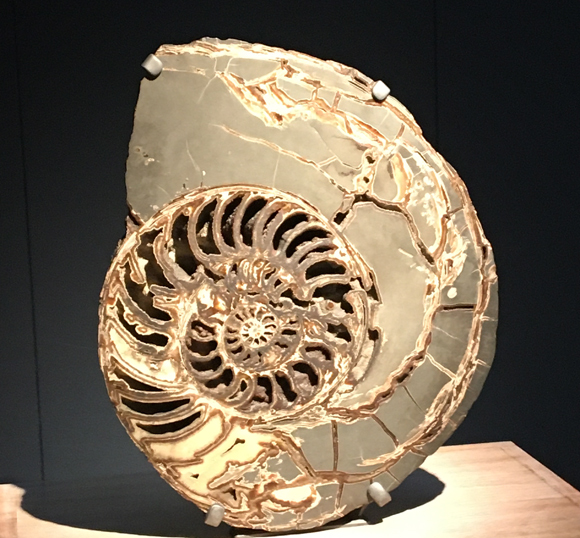
“I sometimes joke that we might find ammonite shells on the Moon as a consequence of that impact event.”

Speculating that Ammonite Shells Could be Found on the Moon
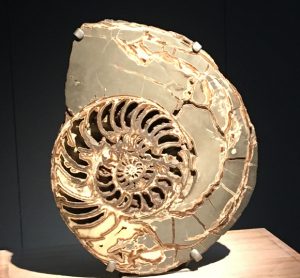
 
A beautiful ammonite fossil on display.

A stunning fossil of a Jurassic ammonite on display at the London Natural History Museum. Could ammonite fossils be found on the moon?

Picture credit: Everything Dinosaur

Based on the Pennsylvania University research, the following table gives an estimate of the amount of debris that reached planets and satellites in our solar system as a consequence of Earth impact events:
 
Earth rocks big enough to support life (bigger than three metres in size) made it to:
 
  • Venus 26,000,000 rocks
  • Mercury 730,000
  • Mars 360,000
  • Jupiter 83,000
  • Saturn 14,000
  • Io 10 (moon of Jupiter)
  • Europa 6 (moon of Jupiter)
  • Titan 4 (the largest moon of Saturn)
  • Callisto 1 (moon of Jupiter)

Source: Worth et al (published in Astrobiology).

Visit Everything Dinosaur’s website: Visit Everything Dinosaur.

8 12, 2013

Therizinosaur Study Adds “Bite” to the Purpose of Beaks in the Dinosauria

By |2023-03-01T16:16:06+00:00December 8th, 2013|Categories: Dinosaur and Prehistoric Animal News Stories|0 Comments

New Research Sheds Light on the Role of Beaks in Some Members of the Dinosauria

Many different types of dinosaur had beaks, the role of the beak, was thought to simply act as an efficient device for, in most cases, getting plant material into the jaws but a new study using computerised tomography suggests that these keratinous structures may have served a more subtle function.  The beak may have helped stabilise those light dinosaur skulls and helped to reduce stresses on the skull bones during feeding.

Therizinosaur Study

In new research published in the academic journal “The Proceedings of the National Academy of Sciences”, a team of international researchers including palaeontologists from Bristol University in collaboration with American palaeontologist Lawrence M, Witmer studied the fossilised skull of a four metre long, theropod dinosaur called Erlikosaurus andrewsi.  This dinosaur belongs to a bizarre group called the therizinosaurs (Scythe Lizards).  Although, descended from meat-eating dinosaurs, the therizinosaurs seem to have adapted to a herbivorous diet.  All the therizinosaurs described to date are thought to have possessed beaks.

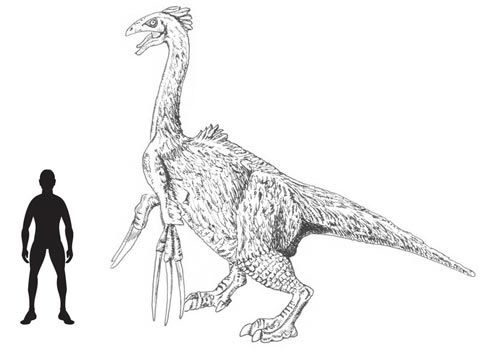
An Illustration of a Typical Therizinosaur (T. cheloniformis)

Huge "scythe lizard"

Huge “scythe lizard”.

Picture credit: Everything Dinosaur

E. andrewsi is known from an almost complete fossilised skull found in Mongolia (Bayenshiree Svita) and other fragmentary fossil remains.  Like all the known therizinosaurs, it had huge claws on its three-fingered hands.  Scientists still debate what these claws were used for, they were probably efficient hooks that could grab branches to help with feeding, although some palaeontologists have abandoned the idea of this type of dinosaur being a herbivore and suggested that the claws could have been used to tear termite nests open.

Erlikosaurus andrewsi

The Erlikosaurus fossil material dates from the Cenomanian/Turonian faunal stages of the Cretaceous.  The skull is almost preserved in three-dimensions with very little distortion, the fossil is the best example of a therizinosaur skull found to date.  Using sophisticated three-dimensional CT scans, a digital representation of the original specimen was created and from this a complete skull with jaw muscle groups and other muscles located.  The research team were then able to model how the beak and the jaws functioned and they examined the stresses and bite forces exerted.

Dinosaur Beaks

The team’s findings demonstrate that this dinosaur’s beak played an important role in stabilising skeletal structure during feeding, making the skull less susceptible to bending and deformation.  Beaks, as seen in extant Aves were traditionally thought of being an adaptation that came about as powered flight evolved.  The beak evolving as teeth and heavier jaws were lost.

Commenting on this research, lead author of the study, Dr Stephan Lautenschlager (Bristol University) stated:

“It has classically been assumed that beaks evolved to replace teeth and thus save weight, as a requirement for the evolution of flight.  Our results, however, indicate that keratin beaks were in fact beneficial to enhance the stability of the skull during biting and feeding.”

The Skull and Skull Reconstructions Utilised in the Research

A = original fossil B = 3-D computer image C = completed model of skull

A = original fossil
B = 3-D computer image
C = completed model of skull

Picture credit: Proceedings National Academy of Sciences/University of Bristol

Kinetic Modelling of Dinosaur Skulls

Co-author of the study, Dr Emily Rayfield (Bristol University) added:

“Using Finite Element Analysis, a computer modelling technique routinely used in engineering, we were able to deduce very accurately how bite and muscle forces affected the skull of Erlikosaurus during the feeding process.  This further allowed us to identify the importance of soft-tissue structures, such as the keratinous beak, which are normally not preserved in fossils.”

This is not the first time that techniques and methods used in other fields of study have been used in palaeontology.  Many new insights into fossil material have been made using techniques that have been developed originally for use in physics, medicine, chemistry as well as engineering.

American palaeontologist, Professor Lawrence Witmer (Ohio University Heritage College of Osteopathic Medicine) stated:

“Beaks evolved several times during the transitions from dinosaurs to modern birds, usually accompanied by the partial or complete loss of teeth and our study now shows that keratin-covered beaks represent a functional innovation during dinosaur evolution.”

Dinosaur Beaks – A Functional Innovation of the Dinosauria

"Captain beaky!"

“Captain beaky!”

Picture credit: Everything Dinosaur

For therizinosaur dinosaur replicas and models of feathered dinosaurs and other prehistoric animals: CollectA Age of Dinosaurs Popular Models.

3 12, 2013

The Mystery of the Denisovan Hominins

By |2023-03-01T15:41:51+00:00December 3rd, 2013|Categories: Dinosaur and Prehistoric Animal News Stories|0 Comments

Ancient Hominin Species Interbred with an Unknown Hominin Species – Surprising DNA Analysis

Researchers have pieced together the oldest human DNA sequence ever recovered from the fossil record after extracting genetic material from the thigh bone of an ancient hominin who lived 400,000 years ago.  The DNA study has added to the mystery of early human evolution, it suggests that our family tree was somewhat more crowded than previously suspected.  The femur (thigh bone) found in Spain, suggests that this early human was related to a species of hominin known from a few fragments of fossil material found in Siberia (Denisova hominin).  In 2010, scientists discovered evidence of a species of human, perhaps a sub-species of H. sapiens, or an entirely different branch of the human family tree in the Denisova Caves in the remote Altai Mountains (Siberia).

Denisovan Hominins

To read more about this human fossil discovery: Evidence of Third Ancient Hominin Species Discovered in Europe/Siberia.

The surprising result poses a puzzle for palaeoanthropologists because it shows that the humans living in northern Spain, where the femur fossil was found, share aspects of their DNA with another type of human that is known to have lived 5,000 miles away.  The femur and the DNA contained within it belong to a type of human that pre-dates our own species.   Fossils have been found in large numbers at La Sima de los Huesos – the “bone pit”, in the caves of  Atapuerca (northern Spain).  The cave system, a UNESCO World Heritage site, has yielded at least two dozen skeletons, it seems likely that these ancient humans may have deliberately placed bodies of their clan members in the caves.

Although this species has been classified as the robust, six foot plus, H. heidelbergensis, studies also show that these people had some Neanderthal (Homo neanderthalensis) characteristics.  Indeed, it has been suggested by some scientists that the fossil bones represent a group of early Neanderthals, as it is believed that H. neanderthalensis evolved from H. heidelbergensis.

Studying the Thigh Bone

The thigh bone enabled the research team to sequence almost the complete genome from the creature’s mitochondria (part of the cell that is responsible for the production of energy).  Mitochondrial DNA (mtDNA) is passed down the maternal line and this makes it extremely valuable when it comes to tracking evolutionary lineages.  Once analysed, the mtDNA suggested a link between this Spanish population and the Denisovans.  This came as a huge surprise to the researchers from the Max Planck Institute for Evolutionary Anthropology in Leipzig, (Germany).

Scientists know that around 40,000 years ago three types of human existed in Europe/Siberia, our species (H. sapiens), the Neanderthals and the Denisovans.  It is possible, that all three types of humans interbred.  The research, led by Matthias Meyer has been published in the academic journal “Nature”.

Published in “Nature”

Professor Chris Stringer, an expert on human evolution at the Natural History Museum (London), commented:

“This unusual finding could be due to at least two different scenarios, both relating to the maternal inheritance of mtDNA and the ease with which it can be lost in a lineage.  One scenario is that the mtDNA is derived from an ancient population, ancestral to both the Sima fossil population and Denisovans, which has since been lost in lineages in Africa and Western Eurasia.  A second, is that ancestral species interbred in Eurasia, passing over distinctive mtDNA which may have been lost later in the Neanderthal lineage, yet retained in the Denisovan branch”.

Studying Genetic Material

The study of genetic material from ancient hominins is opening up a whole new area of study for palaeoanthropologists.  The analysis of 400,000 year old mtDNA is helping scientists to gain a better understanding of the complex origins of our own species and the connections between other types of ancient human.

Professor Stringer added:

“Either way, this new finding can help us start to disentangle the relationships of the various human groups known from the last 600,000 years.  If more mtDNA can be recovered from the Sima ‘population’ of fossils, it may demonstrate how these individuals were related to each other, and how varied their population was.  Additionally, the recovery of such ancient DNA means that other human fossils from this time period can now be considered for DNA analysis.”

The mtDNA was extracted from just two grammes of powdered fossil bone taken from the femur.  Once the genetic information had been isolated and sequenced it was compared to extant simians, our own genome and the genome of the Neanderthal plus genetic data from Denisovan fossil material.  Although this technique is destructive, only minute amounts of fossil material are needed, but it is important to ensure no contamination of the sample occurs.  Thanks to this study, the researchers have revealed that at least one member of the ancient hominin Spanish population shared a 700,000 year old common ancestor with the hominins that were present in the Altai Mountains of Siberia (Denisovans).

A Link Between Spain and Siberia

Dr Meyer stated:

“The fact that the mtDNA of the Sima de los Huesos hominin shares a common ancestor with Denisovan rather than Neanderthal mtDNA is unexpected because its skeletal remains carry Neanderthal-derived features.”

Professor Svante Paabo, director of the Max Planck Institute for Evolutionary Anthropology, exclaimed:

“Our results show that we can now study DNA from human ancestors that are hundreds of thousands of years old.  This opens prospects to study the genes of the ancestors of Neanderthals and Denisovans.  It is tremendously exciting.”

It seems that the branch of evolution that led to the hominins and ultimately to us is a little more complicated than previously thought.  However, new techniques of genetic data recovery and analysis will in the future unlock the secrets of our ancestry.  We can expect one or two more surprises in store.

For prehistoric animal models and toys, visit Everything Dinosaur’s award-winning website: Visit Everything Dinosaur.
30 11, 2013

Dinosaurs under the Hammer – Are Auctions of Fossil Materials Good for Science? That’s a Great Question!

By |2024-05-02T06:28:59+01:00November 30th, 2013|Categories: Dinosaur and Prehistoric Animal News Stories, Everything Dinosaur News and Updates, Press Releases|0 Comments

High Prices for Fossils at High Profile Auctions Could Lead to Increased Fossil Thefts and Damage to Fossil Sites

The auction is over, Misty the Diplodocus has been purchased and lots of media outlets have covered the story, after all, a seventeen-metre-long dinosaur skeleton getting sold is quite an unusual event.

However, it is not the £400,000 price tag that sticks in our collective throats, it is the acknowledgement that such sales are going to become more commonplace.  In the pre-auction publicity,  it was reported that, the auction house responsible for the sale of the Wyoming Diplodocus specimen was the first to offer a lot of this nature in Europe.  Not true, we recall a number of specimens being sold on the continent, at auctions held in Paris, for example.

Fossil Auctions

Whichever way you look at it, fossils, are highly sought after and as such, some specimens can fetch very high prices.  High demand equals high prices so more sales either at auction or through other sales platforms are going to occur.

Fossils could be regarded as the ultimate in antiques, although we don’t imagine Victoria Wood penning a soap parody entitled “Acorn Fossils”.  They are rare, for instance, there could be as many as 650 Stradivari instruments in the world today, but less than a dozen or so specimens of that creature often referred to as the “first bird” – Archaeopteryx (A. lithographica) and many vertebrates including some of our ancient hominid ancestors are known from just a handful of fossil fragments.

Dinosaur Fossils for Sale

Dinosaurs in particular are “box office” and as a result, a number of very wealthy individuals have taken to collecting dinosaur fossils.  The film actors Nicholas Cage and Leonardo DiCaprio are believed to be keen devotees and good luck to them.

All this raises concerns for those of us who try to promote the study of Dinosauria and for that matter other vertebrates.  If fossils are worth a lot of money, then certain individuals may well be tempted to steal fossils and other rare artefacts in order to cash in on this bonanza.  Fossils have been stolen from museums.  A few years ago a fossilised dinosaur egg was stolen from a regional museum in New Zealand.  Team members at Everything Dinosaur embarked on a egg hunt with a difference. Fortunately, the fossil was retrieved and duly put back on display.

The Rise in Fossil Thefts

Theft from such institutions is abhorrent, however, a more heinous crime in our opinion, is the deliberate and wilful damage to important geological sites with a view to looting as much fossil material from them as possible.

Fossil Sites Ransacked as the Price of Fossils Soars

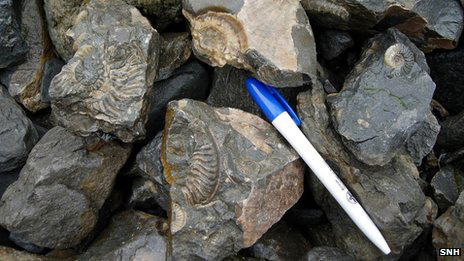
"Fossil Vandalism"

“Fossil Vandalism”

Picture credit: Scottish National Heritage.

Incidents in the UK

Such incidents are not limited to the dinosaur rich fossil hunting grounds of North America, unfortunately, there have been a number of shocking occurrences on this side of the Atlantic too.  Back in August of last year, Everything Dinosaur reported on the theft of a set of fossilised dinosaur  footprints from the Vale of Glamorgan.  The slabs containing the fossilised tracks were estimated to be over 200 million years old, but a local fossil collector saw the chance to make a quick profit.

To read more about this theft: Dinosaur Footprints Stolen.

Fortunately, the three-toed (tridactyl) prints were recovered.  It was not long before they were spotted on Ebay.  The fossils were also offered for sale from a fossil dealer located in Lyme Regis.  A man was cautioned by police for the offence of causing damage to a protected site of scientific importance.  However, the fossil prints could not be returned to their former resting place, fear of another theft has meant that these beautiful fossils are now kept under lock and key.  The fossil dealer argued that the fossils had been offered via a legitimate source, so no further action was taken against the dealer.

Auctions of Rare Fossils and Objects

The auction held on November 27th, the one in which Misty was sold, consisted of a large number of lots, collectively entitled “Evolution”.  The Diplodocus may have received star billing, but also on offer were a number of other important and rare fossils, both vertebrates and invertebrates.  In addition, bones from the Dodo including a pelvis were offered for sale.  There was also a number of stuffed animals up for auction, enough to keep the most enthusiastic taxidermist happy, even a specimen of a Tarpan (an extinct horse) was up for grabs.

Whilst we don’t object to such auctions, indeed, many important scientific discoveries have been made by commercial fossil dealers and fossil hunters as they go about their legitimate business.  Our concern is that with such high profile sales, the risk of fossil thefts and damage to locations where fossils can be found becomes that much more likely.

On October 27th 1997, we sat and watched in amazement as “Sue” the huge Tyrannosaurus rex fossil made an astonishing $8.36 million USD when she went under the hammer at Sothebys.  Misty the Diplodocus was sold a couple of days ago, like Sue, the Diplodocus specimen is most probably going to go on public display.  The Diplodocus fossils are still, in all probability, going to made available for further scientific study – that’s good news.  However, we wonder who else may have looked on at the auction, or listened to the news reports with a growing sense of glee.

For models of Diplodocus and other dinosaurs visit Everything Dinosaur’s award-winning website: Everything Dinosaur.

Fossils for Sale

When fossils are up for sale,  it is not just a case of the auctioneer’s gavel being called into action, other unscrupulous persons may be tempted to do some hammering of their own.  Sadly, there are those in our society who will see fossil locations as places where some quick and easy money can be made.  Specimens will be hacked out of rocks and offered for sale either openly or  to that murky underbelly of fossil collecting – the black market.

We must remain vigilant, we all have a role in protecting our fossil heritage.  One thing that has come out of the auction, it has given us the opportunity to write an article about the increased risk of fossil thefts and damage to S.S.S.Is and other important locations.

25 11, 2013

Baby Chasmosaurus Dinosaur Fossil Unearthed in Alberta

By |2023-03-01T14:56:18+00:00November 25th, 2013|Categories: Dinosaur and Prehistoric Animal News Stories, Dinosaur Fans|2 Comments

Dinosaur Provincial Park Home to a Baby Chasmosaurus

The word “cute” is rarely used to describe a member of the Dinosauria, but a team of scientists have discovered the nearly complete fossilised remains of a baby horned dinosaur, a chasmosaurine toddler and it is providing palaeontologists with an insight into how dinosaurs changed as they grew.

Baby Chasmosaurus

Finding the fossilised remains of a young dinosaur is exceptionally rare, as Professor Phil Currie of the University of Alberta (Canada), explained:

“The big ones just preserve better.  They don’t get eaten, the don’t get destroyed by animals.  You always hope that you’re going to find something small and that it will turn out to be a dinosaur.”

A field team was examining a dig site in the famous Dinosaur Provincial Park (Alberta), when Professor Currie thought he had found part of a turtle shell sticking out of the hillside.  On closer inspection it turned out to be elements from the bony frill of a baby horned dinosaur.  A number of isolated bones from small, juvenile ceratopsians had been found previously in the Dinosaur Provincial Park, but single bones are not much help to the scientists who want to learn how dinosaur body proportions changed as these reptiles grew up.

An Almost Complete Specimen

Having excavated the entire specimen, virtually complete with just the front limbs missing, in fact the skeleton was so well preserved that the pebble-like skin pattern of this dinosaur had been preserved as an impression on the surrounding rock matrix, the dinosaur was identified as a Chasmosaurus belli, a distant relative of the better known Triceratops.

The Baby Chasmosaurus Dinosaur Fossil (C. belli)

Scientists Discover Baby Dinosaur Fossil

Cute Chasmosaurus?

Picture credit: Philip J. Currie, Robert Holmes, Michael Ryan Clive Coy, Eva B. Koppelhus

Around Three Years of Age

The various tools placed around the fossil give an idea of scale.  The research team estimate that this little dinosaur was about three years old when it died.  It would have taken another fifteen years or so to reach maturity.  If it had made it into adulthood it would have been over five metres long and weighed more than an Indian elephant.  Although, still a baby this youngster was over 1.5 metres in length.  The sediments in which the fossil material had been preserved represent a watery environment and the lack of any evidence of predation or scavenging suggests this little dinosaur probably drowned and then the body was buried relatively quickly.

Professor Currie speculated:

“I think it may have just gotten trapped out of its league in terms of water current.”

Apart from being cute, this newly discovered specimen will help palaeontologists understand a little more about the ontogeny (growth) of ornithischian dinosaurs.  An examination of the baby chasmosaur’s bony frill has revealed that it looked very different compared to a mature adults.

Ontogeny in the Ceratopsia

Intriguingly those limbs that are present reveal that the leg proportions don’t change much as the animals grow.  Tyrannosaurids such as the infamous T. rex, look very gangly as juveniles.  The legs are disproportionately longer as juveniles than they are when they are adults.  Presumably, long legs in the youngsters help them to keep up with the adults in the pack, or perhaps to avoid being eaten by other predators.

An Illustration of a Baby Ceratopsian Dinosaur

"Baby horned face"

“Baby horned face”.

Picture credit: Mike Fredericks/Everything Dinosaur

Comparing the new chasmosaurian specimen to theropods, Professor Currie commented on the likely differences between how herbivores and carnivores grew up.

He added:

“In chasmosaurians, the proportions are essentially the same, which probably means the adults were probably never moving that fast.  There was never priority for these animals to run to keep up with the adults.”

It is very likely that this youngster would have stayed close to the adults in its herd, the larger, heavier animals would have acted as a considerable deterrent should any theropod fancy snacking on a baby Chasmosaurus.  It is likely that the specimen will be put on public display once the preparation work has been completed.

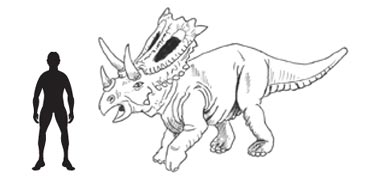
An Illustration of an Adult Chasmosaurus (C. belli)

"Chasm Lizard"

“Chasm Lizard”.

Picture credit: Everything Dinosaur

For articulated models and replicas of horned dinosaurs including chasmosaurs: Beasts of the Mesozoic Articulated Dinosaurs.

24 11, 2013

Dinosaurs from the Deep South

By |2023-03-01T13:59:34+00:00November 24th, 2013|Categories: Dinosaur and Prehistoric Animal News Stories|1 Comment

Southernmost Fossils of Dinosaurs from the Americas Described

A team of palaeontologists working in the most southerly part of Chile (South America), have described the fragmentary remains of Cretaceous-aged ornithopod dinosaurs.  The fossils, although very disarticulated, are definitely remains of bird-hipped dinosaurs and they are the most southernmost dinosaur fossils to be found to date in the Americas.  The discovery has taken place in the Chilean region of the Magallanes, more than 1,000 miles south of the Chilean capital of Santiago.  The area is relatively remote, sparsely populated and poorly served by roads.

Dinosaur Discovery

However, a team of scientists from the Chilean Antarctic Institute (INACH) supported by fellow researchers from the National Natural History Museum and the University of Chile have been working in the area for three years to establish a better understanding regarding the natural history of this beautiful yet remote part of the world.

The fossils come from Upper Cretaceous sediments that had been studied by the eleven member research team, the fossils, representing a bone bed are either hadrosaurs (duck-billed dinosaurs) or basal iguanodonts.  The team are hopeful that further investigations will enable them to make a genus diagnosis.

A Picture of One of the Fossil Bones at the Dig Site

Note the scale bar in the picture.

Picture credit: Chilean Antarctic Institute

The Chilean Antarctic Institute

Commenting on the research, Marcel Leppe, a palaeobotanist from the Chilean Antarctic Institute stated:

“This discovery constitutes a milestone in world palaeontology that also opens the way to studying the evolution of flora and fauna between the extreme south of the Americas and Antarctica.”

The scientists also discovered that underlying the fossilised bones there was a layer of plant fossils.  The two deposits represent different deposition elements preserved as a record in the life of an ancient river channel.  The leaves have been identified as belonging to the Nothofagus genus (Southern Beech).  For much of the Mesozoic, Antarctica and South America were joined together as part of a super-continent called Gondwanaland.

Nothofagus Fossils

Fossils of Nothofagus have recently been found in Antarctica in slightly older strata.  The scientists have hypothesised that this deciduous tree may have evolved in Antarctica and gradually spread throughout the land mass of Gondwanaland.  This has resulted in Southern Beeches being found today as places so geographically dispersed such as New Zealand, Argentina, Chile, New Caledonia and Australia.

There are thirty-six species of Nothofagus known today, it seems likely that the dinosaurs which roamed the land that was to become one of the most southerly points of the Americas, fed on the leaves of these trees.

For dinosaur models and replicas of South American dinosaurs and other prehistoric animals: CollectA Deluxe Scale Prehistoric Animal Models.

Go to Top