All about dinosaurs, fossils and prehistoric animals by Everything Dinosaur team members.

News stories and articles that do not necessarily feature extinct animals.

9 05, 2011

What is a Coelacanth? Providing Informative Answers

By |2024-04-21T09:37:43+01:00May 9th, 2011|Categories: Animal News Stories, Educational Activities, Main Page|0 Comments

Ancient Fish Question Swims into View

Whilst on a school visit the other day, one of the Everything Dinosaur team members was explaining how the natural world can surprise us and was illustrating his point by telling the story of the re-discovery of the Coelacanth.  Having explained how this strange fish was re-discovered by science in the last Century, the question was asked what is a Coelacanth?

What is a Coelacanth?

Coelacanths belong to an ancient class of fish the Sarcopterygians (lobe-finned fishes).  These fish have muscles and large bones at the base of their fins and it was once thought that Coelacanths used their fleshy fins to “walk” on the seabed, providing scientists with a link to those vertebrates that were the first back-boned animals to walk on land.

The Coelacanths were thought to have become extinct approximately 66 million years ago, however, in 1938, a trawler fishing off the Chalumna river estuary (South Africa), caught a strange looking fish and once the catch had been returned to port, Marjorie Courtney-Latimer, the curator of the nearby East London museum was notified and it was from her sketches and information that led to this specimen being identified as a Coelacanth.  It was not until 1952 that a second Coelacanth specimen was captured.

The two known species that survive to day belong to the genus Latimeria, named in honour of Marjorie Courtney-Latimer.

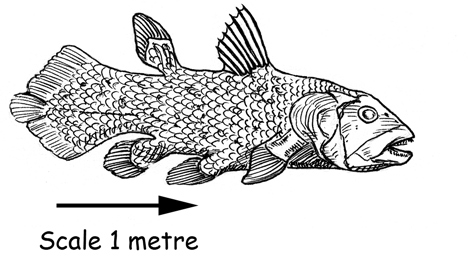
An Illustration of the Coelacanth

Scale drawing of a Coelacanth. What is a Coelacanth?

What is a Coelacanth?

Picture credit: Everything Dinosaur

Safari Ltd have produced an excellent model of a Coelacanth as part of their “Wild Safari Dinos” series, to view this model (Wild Safari Dinos Coelacanth)  and the other creatures in this range and dinosaur models: Wild Safari Prehistoric World Models and Figures.

30 04, 2011

In a Flap over our Feathered Friends

By |2023-03-07T11:29:27+00:00April 30th, 2011|Categories: Animal News Stories, Dinosaur Fans, Main Page|0 Comments

What was the Biggest Creature with Feathers of All Time?

In one of Everything Dinosaur’s frequent trips to school to visit young dinosaur fans and to help them appreciate fossils and all things Dinosaur, we get asked lots of questions from the enthusiastic student palaeontologists.   Last week we were asked the rather intriguing question – which was the biggest feathered creature of all time?

Everything Dinosaur

A tricky question, one that can be split up into two answers, the largest bird and the largest feathered animal, they may not be one and the same.  In terms of known examples from the fossil record the largest bird could also be split into two.  The recently extinct Elephant Bird of Madagascar (Aepyornis genus) was perhaps the largest flightless bird known to science.  This huge bird has fascinated the naturalist and broadcaster, Sir David Attenborough for much of his adult life and this was the subject of a recent BBC documentary.

To read more about this documentary: Attenborough – The Elephant Bird and his Fossil Fascination.

The Elephant Bird may have been up to ten feet tall.  The largest flying bird known from the fossil record, comes from Argentina.  Argentavis magnificens – a giant Condor from the Late Miocene Epoch.  Formally named and described in 1981, this giant bird had a wing span of up to eight metres, making it a rival for the largest pterosaurs.

However, in terms of our feathered friends, the largest feathered creature of all time, may have been a dinosaur.

Gigantoraptor (Gigantoraptor erlianensis) is known from one disarticulated and incomplete fossil specimen.  It was discovered in 2005 by a team of Chinese palaeontologists from the Institute of Vertebrate Palaeontology and Palaeoanthropology (Beijing).  The fossils represent one individual animal and include the lower jaw and elements of the beak, vertebrae, a shoulder blade, parts of the fore-limbs and almost the entire hind-limbs.

This bizarre dinosaur has been classified as a member of the Oviraptor family, but it is approximately five times bigger and much heavier than any other oviraptorid.  Gigantoraptor was formally named and described by Xu Xing and colleagues in 2007.  The species name honours the area of Inner Mongolia where the fossils were found.  It was over 8 metres in length and may have weighed as much as 1.5 Tonnes.

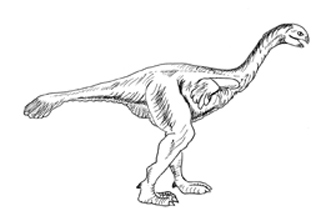
An Illustration of Gigantoraptor (G. erlianensis)

“Big Dino-Bird”.

Picture credit: Everything Dinosaur

The illustration above is based on the CollectA Gigantoraptor dinosaur model.

To view the CollectA range of models that features a model of this amazing Late Cretaceous dinosaur and other dinosaur models: CollectA Age of Dinosaurs Prehistoric Life Models.

So, Gigantoraptor may be the largest feathered animal of all time, at least the largest one discovered to date, but who knows what wonders lie out in the vast lands of Mongolia and other remote places awaiting discovery.

To read more about this dinosaur’s discovery: New Chinese Dinosaur Discovery – Gigantoraptor.

28 04, 2011

Removing the Protection from a Crocodile

By |2023-01-18T06:12:01+00:00April 28th, 2011|Categories: Animal News Stories, Main Page|0 Comments

Mexican Crocodile Species Faces Loss of Protection

A number of species of crocodile are listed under international treaties with regards to their conservation status.  Although these animals are remarkably hardy, many species have suffered due to loss of habitat and as a result of hunting for their valuable skins.  The Mexican crocodile (Crocodylus moreletii), otherwise known as the Central American crocodile or Morelet’s crocodile, after the French naturalist who first recognised this animal as a distinct species, is one such crocodile that has been persecuted over the years.

Crocodile

A native to freshwater habitats of Mexico, Belize and Guatemala, this particular crocodile, which can grow to lengths of 4 metres or more, is closely related to the Cuban and the American crocodiles.  It has a broad snout and a row of dark bands that run down its flanks, making its skin highly prized.  It is very similar in appearance to the now extremely rare Cuban crocodile.  Although, attacks by this creature are very infrequent, it is still regarded as highly dangerous and a potential man-eater.

According to a statement from the United States Fish and Wildlife Service, the Mexican crocodile has made sufficient recovery to be removed from the Endangered Species List.  The crocodile would remain endangered under the Convention on International Trade in Endangered Species of Wild Fauna and Flora, to which the United States is a signatory.

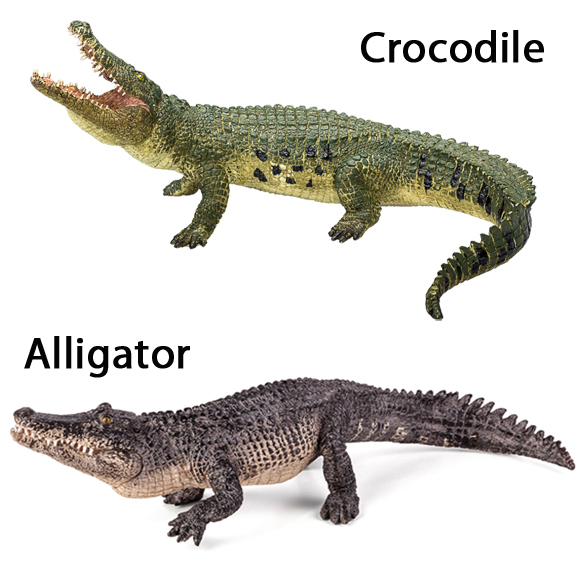
The Difference Between a Crocodile and an Alligator

Crocodile and Alligator comparison.

Crocodile (top) and Alligator (bottom).

The models shown above come from the Mojo Fun model range, to view these figures (whilst stocks last): Mojo Fun Prehistoric and Extinct Models.

This crocodile species, which was listed as endangered under the Endangered Species Conservation Act in 1972, is endemic to fresh water habitats along the Gulf of Mexico, from southern Mexico to Guatemala, although exact numbers of individuals is difficult to quantify.   At the time of its listing, the crocodile was endangered by habitat destruction and exploitation through the commercial trade in crocodile skin.

Because the species is not endemic to the United States, its protection under the Act was limited to a ban in the import or export of live animals, the skin from the carcase, or products made from crocodile’s skin.  In 2005, the government of Mexico petitioned the U.S. Fish and Wildlife Service to delist the Morelet’s crocodile, arguing that conservation efforts, including farming operations to produce skins for luxury products, made bans on trade unnecessary for the species to survive in the wild.  The U.S. Fish and Wildlife Service is asking for public comment on its proposal to remove the Morelet’s crocodile from the list of endangered species.

Under the international convention for the protection of species, Morelet’s crocodile currently has the status of being “conservation dependent”.

26 04, 2011

Crocodile Blood Could Help People who are HIV Positive

By |2023-01-18T06:02:02+00:00April 26th, 2011|Categories: Animal News Stories, Main Page|25 Comments

Crocodile Blood could Hold Key to Improving Human Immune System

Crocodiles, those ancient predators may have a reputation as being man-eaters but new research suggests that their remarkable physiognomy and crocodile blood may prove beneficial to humans when it comes to combating AIDS and other diseases.

Researchers at Kasertsart University (Thailand) have discovered a new medicine to help HIV positive children using crocodile’s blood, which has been successfully tested on rats and is now ready for wider research on people suffering from a number of diseases including those with the HIV positive condition.

Win Cheichomsri, Chief of Crocodile Blood Research, Faculty of Zoology, has conducted an experiment to evaluate the effectiveness of crocodile’s blood in unhealthy rats.  For the university, the third oldest in Thailand, these tests mark the beginning of an extensive crocodile blood testing programme.  For years, scientists have been aware of the remarkable properties of crocodile blood.  These animals live in dirty, stagnant water stuffed full of bacteria but even though they may have open wounds their blood and it’s anti-bodies prevent infections.

The Difference Between a Crocodile and an Alligator

Crocodile and Alligator comparison.

Crocodile (top) and Alligator (bottom).

Crocodile Blood

The researchers experiment involved two rats groups – one fed with supplement capsules made of crocodile’s blood and the other fed without the pills, a control group, as the scientists state.

Win Cheichomsri stated that the results indicate that the controlled group (fed without capsules) have bigger spleens than those in the experimental group.

The experimental rats (fed the crocodile supplements) became healthier and more fertile, reproducing many pups later on, the chief concludes.  The Food and Drug Administration committee has certified the crocodile-blood tablets as clean and safe supplements for consumption.

Mr. Cheichomsri believes that the crocodile-blood pills could improve the immune systems and general health of HIV positive children.  In fact, the capsules have been offered to twenty-four HIV infected children at Lorenzo Orphanage House in Panusnikom, Chonburi.

These children show remarkable physical changes after the consumption of the pills.  They show less fatigue and have more energy to play.  Their pustules are also gradually disappearing, Mr. Chiechomsri says.

He adds that those children who have suffered from hepatomegaly and splenomegaly, are presented with decreasing liver and spleen sizes.  In particular during cold weather these children do not fall ill, indicating an improvement in their immune systems, according to Mr. Chiechomsri.

Based on the results, Mitri Temsiripong (Manager of Sriracha Tiger Zoo) and Wisachini Rungtaweekchair (Wanithai Part, Ltd) donate the crocodile blood supplements to the children at the orphanage, as accepted by Sister Wichuda Kusub.  At the moment, the blood can be taken from the crocodiles without harming them and the crocodiles soon recover.

Perhaps these animals with a reputation for being man-eaters, may soon have gained a reputation for being man-savers as scientists search for new ways of combating disease and bacterial infections.

For models and replicas of crocodiles and alligators (whilst stocks last): Mojo Fun Prehistoric and Extinct Models.

20 04, 2011

World’s Oldest Evidence of Toothache Revealed by New Research

By |2024-04-18T21:50:09+01:00April 20th, 2011|Categories: Animal News Stories, Dinosaur and Prehistoric Animal News Stories, Main Page, Palaeontological articles|1 Comment

Dentists Had Not Evolved in the Palaeozoic

A team of North American palaeontologists have discovered the world’s oldest case of toothache in the fossilised jaws of an ancient reptile that lived in the Permian geological period.  Computerised tomography has revealed the tell-tale signs of an extensive abscess on the lower jaw of this unfortunate creature, the infection probably led to this reptile loosing a lot of its teeth.  The fossil provides evidence of dental caries in an omnivore and reminds our species (also omnivores) to look after our teeth.

Oldest Evidence of Toothache

The fossil is from a reptile known as Labidosaurus hamatus (lipped lizard), from the Lower Permian of the United States (holotype material for this species found in the Arroyo Formation of Baylor County, Texas), this one metre long reptile, was formally named and described in 1896 by that eminent American palaeontologist Edward Drinker Cope (1840-1897).

When the research team, led by Robert Reisz (Chair of the Dept. of Biology at the University of Toronto Mississauga) undertook a CT scan of the fossilised lower jaw of this anapsid reptile, they discovered evidence of a substantial infection that has caused the loss of several teeth.  The upper jaw (premaxilla) of these primitive reptiles was hooked, it had a distinct kink in it, the scientists discovered that once the jaw bones in question were studied, a sorry tale of tooth decay and tooth loss was revealed.

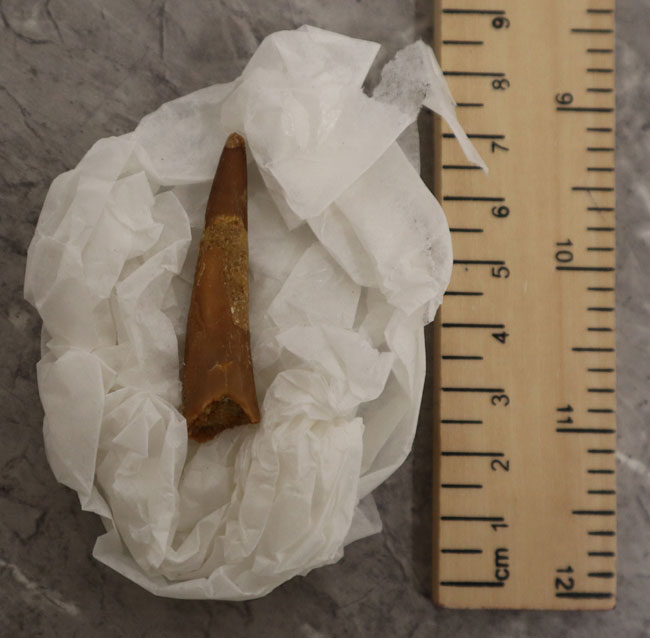
Palaeontologists Can Tell a Lot from a Single Tooth

Fossil pterosaur tooth

Palaeontologist can tell a lot from a single tooth, in this case a tooth of a pterosaur from Morocco. Picture credit: Robert

Diagrams show several views and scans of the fossilised jawbone revealing substantial tooth loss and the site of a nasty infection (abscess) in the bone.

Infection in the Jaw

The team’s analysis, which is written up in the scientific journal “Naturwissenschaften” shows the advantages and disadvantages of various evolved solutions when it comes to dentition (teeth).  These reptiles had adapted to life on land, and in doing so had given up the more primitive dental pattern of having teeth that were loosely attached to the jaw and continuously replaced, as is seen today in sharks for example.

Scientists believe that these types of reptiles were predominantly plant-eaters, but also partial to the occasional insect or small creature that they could catch – essentially omnivores.  The change to a more vegetarian diet led to the evolution of stronger teeth more firmly attached to the jaws.  Better, stronger, teeth led to more efficient biting and some grinding of plant matter in the mouth prior to swallowing.  These processes would have helped these creatures extract more nutrition from the food they ate.  However, a drawback to this was that infections and tooth decay in more semi-permanent teeth was likely to occur.

Dr Reisz and his team suggest that as these teeth were worn, dental nerves would have been exposed to bacterial infection and tooth loss was more likely, than in those animals such as many diapsid reptiles (including dinosaurs) that shed worn teeth and rapidly replaced them with new ones erupting from the jaw bones.

These findings may have a parallel with the evolution of mammals, including our own species.  Mammalian jaws are relatively simple, when compared to the jaws of many reptiles.  The mammal lower jaw is made up of one single bone the dentary, they are synapsids, named after an opening in the skull bones behind the orbit (eye).  This synapsid hole may have evolved to provide new attachment sites for jaw muscles as these creatures evolved a more effective and powerful bite.  Reptiles such as L. hamatus are members of the anapsid type.  They have no skull openings behind the eye socket.  The earliest reptiles were anapsid forms, they are represented today by the Chelonians (turtles and tortoises etc).  With a more simple jawbone, complex teeth evolved to enable synapsids to process food efficiently.  Such an evolutionary investment in tooth design, probably meant a trade off – they could not be so easily shed and replaced, as in diapsid reptiles for instance.

Dr Reisz commented:

“Our findings suggest that our own human system of having just two sets of teeth, baby and permanent, although of obvious advantage because of its ability to chew and process many different types of food, is more susceptible to infection than that of our distant ancestors that had a continuous cycle of tooth replacement.”

Different evolutionary solutions to handling tough land plants as food may have had an impact on reptile diversity, this would have affected those descendants of reptiles, the birds, who incidentally lost all their teeth in an adaptation to powered flight, and the mammals including us humans.

If you don’t want to end up with dental caries and an infected mouth best to take the advice of your dentist, after all, there were no dentists around in the Palaeozoic to assist poor Labidosaurus.

For replicas and models of prehistoric animals from the Permian: CollectA Age of Dinosaurs Popular Models.

15 04, 2011

Ranavirus – Office Pond Looking OK (Great News)

By |2024-04-21T10:13:56+01:00April 15th, 2011|Categories: Animal News Stories, Everything Dinosaur News and Updates, Main Page|0 Comments

No Signs of Ranavirus

Last week staff at Everything Dinosaur became concerned over the behaviour of some of the frogs that had spawned in the office pond.  At least three seemed lethargic and almost in a stupor.  Their movements were slow and we were concerned that the concentration of amphibians in the pond as they started their breeding season had led to an outbreak of the deadly virus Ranavirus.

Office Pond

This virus had first entered the UK sometime in the early 1980s and has spread up from the south.  Something like 80% of the frog population of the UK has been affected and the Common Frog population (Rana temporaria) has plummeted as a result.  Small ponds, even garden ponds are now extremely important to amphibians, we were concerned that the odd behaviour of the frogs after spawning may have been as a result of a virus outbreak.

No dead frogs have been found in and around the pond area and the tadpoles seem to be thriving.  We suspect that we had observed females who were exhausted after the stressful spawning time.  However, we will continue to maintain a “watching brief” on the pond and if we do find positive signs of a Ranavirus outbreak, we will report it to Froglife – the organisation formed to protect UK amphibian populations – straight away.

Fingers crossed.

Visit Everything Dinosaur’s award-winning website: Visit Everything Dinosaur.

10 04, 2011

Warm Weather Brings out the Alligators and Crocodiles

By |2023-01-17T14:27:34+00:00April 10th, 2011|Categories: Animal News Stories, Main Page|0 Comments

Floridians Warned about Increased Alligator and Crocodile Activity

The warm weather over the last few days in Florida has led to state authorities issuing a number of warnings to Florida residents about the perils of getting up too close to those alligators and American crocodiles that have started to become more active.  The authorities have warned of increasing alligator and crocodile activity.

Florida as two species of crocodilian, the American alligator (Alligator mississippiensis ) and the much rarer American crocodile (Crocodylus acutus).  These two protected species are regarded as dangerous to humans, although the American crocodile (found in the southern parts of Florida), has not been recorded as attacking humans and is generally regarded as a very shy animal.  However, attacks on people have been logged elsewhere in this reptile’s geographical range, so authorities in the State urge residents to take extreme care when in these creature’s habitats.

Alligator and Crocodile Activity

As cold-blooded animals, American alligators and crocodiles have been largely inactive in the cold weather that has occurred over the last few months.  However, with the onset of spring these reptiles will start to move more and there is the risk that they will run into contact with humans.

The Differences Between an Alligator and a Crocodile

Crocodile and Alligator comparison.

Crocodile (top) and Alligator (bottom).

The onset of warm weather in the spring is when Florida’s alligators and crocodiles begin getting active, and the Florida Fish and Wildlife Conservation Commission (FWC) reminds Floridians and visitors to be cautious when having fun in and around water.

The FWC has published a set of handy guidelines to ensure that humans and crocodilians can get along, the guidelines include:

1). Leave alligators and crocodiles alone.  The danger of being injured by a provoked alligator is much higher than by an unprovoked one.  Often if one of these reptiles is spotted on the waters edge basking in the sun, it will most probably move off on its own without being molested.

2). Never feed these animals, dispose of fish scraps from a fishing trip in the designated areas.  It is illegal to feed these creatures.  Alligators lose their natural fear of humans when fed, and become accustomed or attracted to people. Alligators that have been fed may be more likely to attack, and are more likely to become nuisance animals that must be destroyed.

3).  Don’t swim at night.  Alligators are more active at night or at dawn or dusk.  At these times they are more likely to be feeding than during the heat of midday.

4).  Do not swim in water that is known to contain large alligators, also do not swim outside of designated swimming areas.  Alligators are most active during the summer months.  Since this is the time of year when people are also likely to be in the water, areas known to contain alligators should be avoided.

5).  Never let children play alone near water.  Make sure children are supervised and in view.

6).  Do not allow pets to go near water that is known to contain these reptiles.  Dogs and other small pets are more likely to be attacked than humans because they resemble a natural prey item for the alligator.  Therefore, pets can attract alligators to swim areas and create a danger for humans also.

7).  Never capture or accept a baby alligator or crocodile as a pet.  Capturing alligators is illegal and can be dangerous.  Alligators do not become tame in captivity, and handling even small ones could result in a bite.

8).  Seek medical advice immediately if you are bitten or scratched by an alligator or crocodile.  Because of the environment in which they live, alligators’ mouths can harbour very dangerous bacteria (particularly Aeromonus hydrophila).  Any bite or scratch, even a small one, should be examined by a doctor or trained medical staff.

More information on how to avoid alligator or crocodile encounters visit the FWC’s website.

In the meantime, for models of crocodilians visit this part of the Everything Dinosaur website: Mojo Fun Prehistoric Life Models.

8 04, 2011

Suspected Ranavirus in the Office Pond Frog Population

By |2023-03-06T16:03:38+00:00April 8th, 2011|Categories: Animal News Stories, Everything Dinosaur News and Updates, Main Page|0 Comments

Lethargic Frogs – We suspect Ranavirus Outbreak

Over the last couple of weeks, team members at Everything Dinosaur have observed some strange behaviour in the frog population around our offices.  As many as seven individuals were counted at any one time in the office pond at the height of the spawning season and we logged a record amount of frogspawn laid this year.  However, we have noticed some strange behaviour from the adult frogs.  Three frogs (Common Frog – Rana temporaria) were extremely lethargic, almost in a stupor.  The frogs seemed perfectly healthy but the were very slow to react to any disturbance and almost seemed to be in a trance. 

The first frog, a little thin was moved away from the pond by a team member of Everything Dinosaur and placed in a safe and secure part of the yard, out of harm’s way in case one of the neighbourhood cats discovered it.  The second frog, left the pond but took almost six hours to cross the small courtyard and seek shelter behind some fence panels.  It was raining for much of this time, so the frog remained moist but we were all surprised to see the animal move so slowly and to expose itself to any predation in such a reckless manner.  Some team members commented that this particular frog had a “deathwish”.

At first we put the strange behaviour we had observed down to the fact that the frogs were in poor condition after mating, but the third frog we have been observing is making us question whether or not there is something more serious going on.

This frog, has been observed for the best part of a week now, it barely moves from a small rocky area by the office pond, it is thin and lethargic, not frightened by our approach at all.  It simply does not react.  We think that this lethargy may be the result of viral infection.  We are trying to observe this frog to see if we can spot any red blotches on the skin (erythema) or any bleeding (haemorrhaging), this and the drowsiness and lack of condition could indicate an outbreak of the dreaded Ranavirus.

If this is the case we will report our findings to froglife, the organisation that monitors the UK wild frog population.

Ranavirus was first found in the UK in the early 1980s.  It is most common in south-east England but known from elsewhere in the UK.  This virus could decimate the local population, there is no cure and for all we know if the adult frogs have caught the disease then this may have dangerous implications for the tadpoles in the pond.

We will keep monitoring the situation and if required, we will report this disease outbreak.

Fingers crossed that we have got this wrong.

Visit Everything Dinosaur’s award-winning website: Everything Dinosaur.

3 04, 2011

Watching a Beautiful Blue Triceratops

By |2024-04-21T10:01:40+01:00April 3rd, 2011|Categories: Animal News Stories, Everything Dinosaur News and Updates, Main Page, Product Reviews|0 Comments

Triceratops – Wild Watchers

Recently introduced into the Everything Dinosaur, extensive range of prehistoric animal soft toys are four new soft toys, each one representing a different dinosaur.  We think, that as they look so cute, that they resemble young animals (prior to distal growth), the big eyes and large heads giving these soft toys the appearance of baby dinosaurs.  There is an Oviraptor (with glow in the dark eyes), a Diplodocus, a very cute Tyrannosaurus rex (if such a thing is possible) and a bright blue baby Triceratops.  These are super, and very colourful dinosaur soft toys.

Dinosaur Soft Toys

Yes, bright blue and why not indeed.  Nobody knows for sure what colour horned dinosaurs were so why not blue.  There are a number of reptile genera which are coloured blue, many birds and reptiles are brightly coloured.  Scientists are fairly confident that like birds and crocodiles the Dinosauria had colour vision and colour would have played an important role in their lives, if their extant relatives are anything to go by.

Wild Watchers Triceratops Soft Toy

Picture credit: Everything Dinosaur

This new dinosaur soft to is part of a range called “Wild Watchers”, to view the range of prehistoric animal plush and dinosaur soft toys currently in stock on our award-winning website: Dinosaur Soft Toys.

It is also important to remember that the dinosaur clade first evolved in a world that was dominated by greens and browns, there were no bright, colourful flowering plants (Angiosperms), these did not evolve for around 100 million years after the first dinosaurs appeared.  So being colourful against a backdrop of mainly greens and browns may have been useful when displaying to attract a mate for example.

Blue Dinosaurs

Beasts of the Mesozoic Torosaurus latus dinosaur model.

A view of the Beasts of the Mesozoic Torosaurus articulated dinosaur model out of its packaging.  This is a blue horned dinosaur figure.  Picture credit: Everything Dinosaur.

Picture credit: Everything Dinosaur

The picture (above) shows a Torosaurus replica from the Beasts of the Mesozoic family of articulated dinosaur models.  To view this range of colourful dinosaur figures: Beasts of the Mesozoic Articulated Dinosaur Models.

In comparison to reptiles and Aves (birds) our own Order (Mammalia) are surprisingly colour shy – we of course have some remarkably colourful mammals, for example the Okapi and let us not forget the stark contrast of a herd of zebras but the team members at Everything Dinosaur could not think of a single type of mammal that was coloured predominantly green.

Indeed, the colour blue itself is very rare in the mammalian colour scheme, some primates, monkeys and such like have blue faces (and other parts) but we could not think of many more.  Even Belgium blue cattle and the Blue Whale are not coloured exactly blue, not least from the pictures we could find that depicted these animals.

25 03, 2011

And the Frogs have Left the Pond – Great News!

By |2024-04-21T10:04:08+01:00March 25th, 2011|Categories: Animal News Stories, Main Page|0 Comments

Frogs Leave Record Amount of Spawn in Office Pond

This morning, we noticed that all the frogs had left the office pond.  One large individual, was found close to the pond on the paving slabs adjacent to the water’s edge.  It was very lethargic and we did not stop to examine whether it was a male or female Common Frog.  The males develop a fleshy pad (called a nuptial pad) on their first digit.  They use this pad to secure themselves to a female during breeding, so during the mating season at least it is relatively easy to distinguish between males and females.

The frog was quite dry, so we suspected that it had been out of the water for sometime.  Concerned for its well being, especially with the prospect of a sunny day threatening to de-hydrate it and bring out the neighbourhood’s cats to investigate, we decided to move the frog to a safer place.

Carefully a colleague picked up the animal and transported it to an area of overgrown, shady scrub and made sure the frog was well hidden.  We suspect that since this creature showed no outward signs of any harm, it may simply have been exhausted after the exertions of the last few days.  By placing it a quiet, sheltered spot, we are confident that this frog will recover and perhaps return again next year to our office pond to breed.

The frogs have certainly been busy over the last week or so, we have a record amount of frog spawn in the pond, perhaps as many as eight females have laid eggs.

Go to Top