The talented design team at PNSO are to add a replica of the armoured dinosaur called Sauropelta to their model range. Say hello to Isaac the Sauropelta. It is yet another fantastic addition to the mid-size model range offered by this exciting figure and replica manufacturer.
PNSO Isaac the Sauropelta Dinosaur Model
PNSO are to introduce a replica of the Early Cretaceous nodosaurid Sauropelta. Say hello to Isaac the Sauropelta.
A Sauropelta Dinosaur Model
Details regarding this new dinosaur model are at a premium for the moment, but this figure is just the latest in a long line of compelling new prehistoric animal model announcements made by the company. Everything Dinosaur has announced seven new figures this autumn, the first, Gaoyuan the Microraptor, is due to be in stock in just a few days. PNSO are to add a replica of the bizarre, Chinese marine reptile Atopodentatus to their portfolio and several new dinosaurs have been announced as well – Pachyrhinosaurus, Corythosaurus, Borealopelta, Lambeosaurus, Spinosaurus and Tuojiangosaurus.
Coming into Stock at Everything Dinosaur – Gaoyuan the Microraptor
The packaging for the new for 2020 PNSO Gaoyuan Microraptor dinosaur model. The model will be in stock at Everything Dinosaur in just a few days (as of November 20th 2020).
Sauropelta (S. edwardsorum), is thought to have been an early member of the Nodosauridae family. The fossils of this heavily-built herbivore come from the Little Sheep Mudstone Member of the famous Cloverly Formation, this strata represents the middle section of this Early Cretaceous formation, the bedding planes associated with Sauropelta edwardsorum fossils are believed to have been deposited approximately 108 million years ago (Albian faunal stage of the Cretaceous).
Sauropelta co-existed with a number of theropod dinosaurs including the allosauroid Acrocanthosaurus as well as the large dromaeosaurid Deinonychus. The armour, including huge defensive spikes, so exquisitely replicated in the new PNSO model would have helped to defend this slow-moving quadruped from attacks from these predators.
A Close-up View of the Head of the New PNSO Sauropelta Figure
A close-up view of the armoured head of Sauropelta, complete with an array of formidable defensive spikes.
Everything Dinosaur Comments
A spokesperson from Everything Dinosaur commented:
“It’s great to see a replica of this American nodosaurid added to the extensive PNSO dinosaur model range. The company has announced a number of new armoured model introductions recently, including a model of Borealopelta and a replica of the Chinese stegosaur Tuojiangosaurus. They are all so good it is difficult to pick out a favourite.”
The PNSO Sauropelta dinosaur model is likely to be in stock at Everything Dinosaur in early 2021. The model measures 17.3 cm in length.
A Video Review of the New for CollectA Models (Part 2)
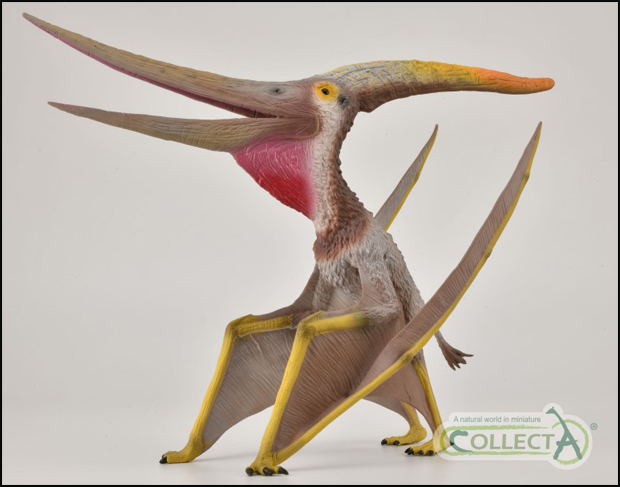
Everything Dinosaur has produced a short video review of the latest batch of new for 2021 prehistoric animal models to be introduced by CollectA. On Friday, (13th November), Everything Dinosaur in collaboration with CollectA, announced a CollectA Deluxe 1:15 scale Pteranodon figure along with two Age of Dinosaurs Popular models – Megalosaurus in ambush and Neovenator scenting prey.
Team members have put up a ten minute video reviewing these new models, providing more details and outlining some of the scientific research that inspired their development.
Everything Dinosaur’s YouTube Video – New CollectA Prehistoric Animal Models for 2021 (Part 2)
Video credit: Everything Dinosaur
CollectA Deluxe 1:15 Pteranodon Figure
The narrator discusses the new for 2021 CollectA Deluxe Pteranodon figure and highlights details of this revised and updated pterosaur model. The presence of a tail tassel on the figure is discussed and viewers are shown a diagram of the bizarre tail bones (caudal vertebrae) of Pteranodon that led palaeontologists to conclude that it may have had some form of specialist structure on the end of its relatively long (for a member of the Pteranodontia), tail. CollectA suggest a tail tassel which could be used in visual displays. Other proposals include a rudder to help with steering in flight or even a fin to assist swimming when this flying reptile associated with marine environments, ditched in the sea.
The New for 2021 CollectA Deluxe Pteranodon with a Tail Tassel
The new for 2021 CollectA Deluxe Pteranodon model in 1:15 scale.
Everything Dinosaur’s Interpretation of the Pteranodon Model with a Fin
Everything Dinosaur has modified the new for 2021 Pteranodon model giving the figure a fin. In the Everything Dinosaur YouTube video review various theories regarding the bizarre caudal vertebrae of Pteranodon are explored.
Picture credit: Everything Dinosaur
Question of the Day
Viewers are asked to consider “what other pterosaur replicas would you like CollectA to make for their Deluxe or Supreme ranges?” Feedback placed in the comments section would be passed to CollectA.
Two British Theropod Figures
The other figures featured are the two new theropods – Megalosaurus in ambush and Neovenator scenting prey. It is great to see an updated version of the iconic Megalosaurus introduced. As the narrator remarks in the video, the Reverend William Buckland would have been proud. Sharp-eyed viewers will note that the teeth are not exposed in the closed mouth. This CollectA model has been given lips (same with the new Neovenator replica).
The design team at CollectA have produced a Megalosaurus model based on the latest scientific thinking and that includes adding lips to their model in recognition of the debate with regards to oral tissues within the Theropoda.
The CollectA Age of Dinosaurs Popular Neovenator sports a row of small, raised spines running the length of its body. It also has a row of brown-coloured skin extensions from its lower jaw down its neck, these give the impression that it had a fleshy wattle as seen in many types of bird today. The beautifully painted head complete with its yellow flashes is slightly elevated, as if the dinosaur is sniffing. A scientific paper (Barker et al 2017), proposed that Neovenator had complex neurovascular canals in its snout. Such structures are associated with a highly developed sense of smell.
CollectA wanted to reflect this research in their 2021 model, hence its full title “Neovenator scenting prey”.
The CollectA Neovenator Scenting Prey Dinosaur Model
The elevated head of the CollectA Neovenator scenting prey model.
Everything Dinosaur team members have created an exciting channel on the video sharing platform YouTube. The Everything Dinosaur YouTube channel is packed full of dinosaur and prehistoric model reviews, hints and tips, plus, we even provide details of competitions that we organise and prehistoric animal themed book reviews. This channel has already attracted several thousand subscribers and the UK-based company tries to post up a new video every few days or so.
Everything Dinosaur on YouTube
Visit Everything Dinosaur’s YouTube Channel
Everything Dinosaur on YouTube. Subscribe to Everything Dinosaur’s YouTube channel.Picture credit: Everything Dinosaur.
The videos that we create are usually less than ten minutes in length. Our aim is to provide some of the science behind the models that you might have in your collection. Recently, Everything Dinosaur has been working on four videos, each one reviewing a batch of the new for 2021 prehistoric animal figures from CollectA. With a total of eleven new figures due to be introduced in 2021, plus, the addition of a new set of mini dinosaur and prehistoric animal figures, team members at Everything Dinosaur have certainly been kept busy shooting and editing these CollectA model videos.
A spokesperson from Everything Dinosaur commented:
“Our YouTube channel provides another communication link to our fans of dinosaurs. For example, in our recent CollectA video reviews we asked our subscribers to recommend to CollectA what other prehistoric animal figures the company should make? The enthusiastic and dedicated people at CollectA listen very carefully to the informed and insightful comments and feedback we receive on our channel. The input from collectors really does help shape projects and new prehistoric animal figures.”
Subscribe to Everything Dinosaur’s YouTube Channel
Everything Dinosaur’s YouTube channel is packed full of videos related to dinosaur figures and prehistoric animal model collecting. The channel has over 180 videos on it and it aims to provide model collectors with the very latest information about new products as well as hints and tips on how to make the most of your collection.
We recommend that you take a look at Everything Dinosaur’s YouTube channel and subscribe.
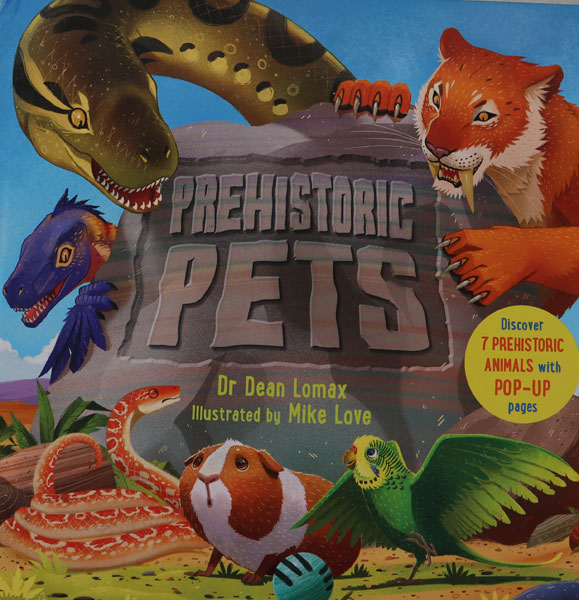
Everything Dinosaur has another super, prehistoric animal themed giveaway. We have a copy of the brand new book by the talented palaeontologist Dr Dean Lomax entitled “Prehistoric Pets” and we are giving you the chance to win it.
A Fabulous Book Competition
Please note this competition is now closed.
Win a Copy of “Prehistoric Pets” with Everything Dinosaur
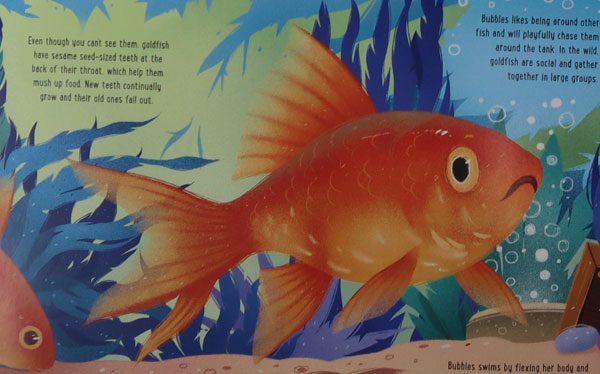
This colourful and well-written book takes the reader on a journey back in time, linking common household pets today with their prehistoric ancestors. You can win a copy of this super book that looks at seven common pets and using fossil clues reveals their prehistoric ancestry.
Picture credit: Templar Books/Everything Dinosaur
“Prehistoric Pets”
The internationally recognised, award-winning palaeontologist Dean Lomax takes a close look at some of our nation’s favourite animals and traces their ancestry back through deep time to explain their origins. Crammed full of fun facts, this is an excellent book for the younger readers, it is beautifully illustrated and it has pop-ups too!
“Prehistoric Pets” is an ideal Christmas gift and best of all you can win a copy courtesy of Everything Dinosaur!
Win a Copy of “Prehistoric Pets” in our Competition
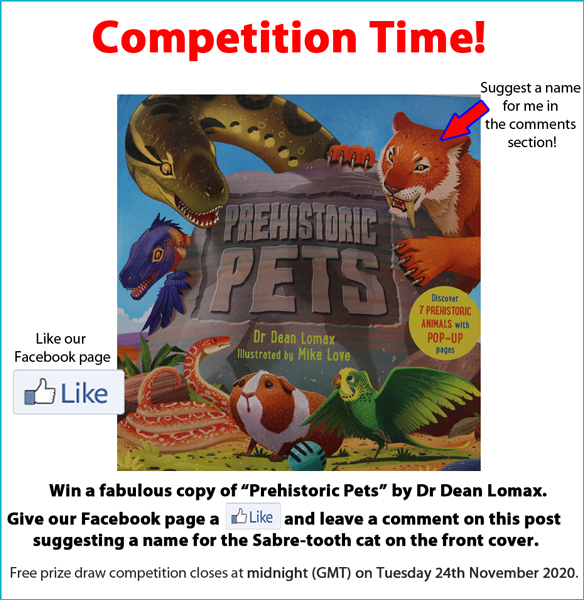
All you have to do is “Like” Everything Dinosaur’s FACEBOOK page, then comment on our dinosaur book competition post suggesting a name for the superb Sabre-tooth cat that features on the front cover. The Sabre-tooth is illustrated by Mike Love but he/she needs a name!
Don’t Forget to Suggest a Name and to “Like” our Facebook Page
We will draw our lucky winner at random and the “Prehistoric Pets” competition closes at midnight (GMT) on Tuesday 24th November. Good luck!
To view Everything Dinosaur’s range of superb prehistoric animal and dinosaur themed gifts visit: Everything Dinosaur.
Win a Copy of “Prehistoric Pets” in our Free to Enter Prize Draw Competition
Win a copy of the fabulous “Prehistoric Pets” book in our free to enter competition. Just leave a suggested name for the Sabre-tooth cat featured on the front cover in our comments section on this post or on our Facebook page to enter.Picture credit: Everything Dinosaur.
Picture credit: Everything Dinosaur
You can always leave a comment on this blog post and we will enter you into our free prize draw.
Please note this competition is now closed.
Terms and Conditions of the Name the Sabre-tooth “Prehistoric Pets” Competition
Automated entries are not permitted and will be excluded from the draw.
Only one entry per person.
The prize is non-transferable and no cash alternative will be offered.
The Everything Dinosaur name the Sabre-tooth cat competition runs until midnight Tuesday 24th November 2020.
Winner will be notified by private message on Facebook.
Everything Dinosaur has produced a video looking at the first three prehistoric animal models for 2021 to be announced by CollectA. Having collaborated with CollectA on the media release that came out on Friday (6th November, 2020), Everything Dinosaur have produced a video review of the CollectA Deluxe Mamenchisaurus, along with the Kamuysaurus and the Brontosaurus prey (CollectA Age of Dinosaurs Popular range).
Everything Dinosaur Takes a Look at the First Three Models for 2021 Announced by CollectA
In Everything Dinosaur’s video review the narrator introduces each of the new figures in turn using the official images provided by CollectA. Some of the science behind each of the new for 2021 models is highlighted. For example, when discussing the CollectA Deluxe 1:100 scale Mamenchisaurus, the video looks at the fossil evidence for a tail club that is depicted on the CollectA figure. Four fused vertebrae relating to a specimen of M. hochuanensis were discovered in 2001. The uniformity of these fused caudal vertebrae led palaeontologists to conclude that these fused bones were not caused by disease or an injury to the animal. Tail clubs have been reported in other Chinese sauropods including the closely related Omeisaurus.
Fused Vertebrae (Tail Bones) Associated with Mamenchisaurus hochuanensis
Views of the four fused caudal vertebrae associated with Mamenchisaurus hochuanensis.
Picture credit: Xing Lida et al
The Unique Dinosaur Biota of Japan
In the section discussing the Japanese hadrosaurid Kamuysaurus, Everything Dinosaur examines the recent focus on the unique dinosaur biota of Japan by CollectA. A model of Fukuiraptor was introduced in 2019 and earlier this year a 1:40 scale replica of Fukuisaurus was added to CollectA’s portfolio. Although, as the narrator points out in Everything Dinosaur’s video review, Kamuysaurus evolved tens of millions of years after these two dinosaurs became extinct.
Kamuysaurus Lived Tens of Millions of Years after Fukuisaurus and Fukuiraptor
The hadrosaur Kamuysaurus evolved tens of millions of years after Fukuiraptor and Fukuisaurus became extinct.Picture credit: Everything Dinosaur.
Picture credit: Everything Dinosaur
The Pathology on the CollectA Brontosaurus Prey Model
The injuries depicted on the CollectA Brontosaurus prey model reflect attack and feeding strategies that have been postulated for large theropod dinosaurs. Our congratulations to the design team at CollectA for their skilful representation of a sauropod, attacked, weakened and ultimately dispatched by a large carnivore, or possibly a pack of large carnivorous dinosaurs.
Three New CollectA Dinosaur Models for 2021
The first three models for 2021 announced by CollectA and Everything Dinosaur. The CollectA Deluxe Mamenchisaurus, Kamuysaurus and a Brontosaurus prey.Picture credit: Everything Dinosaur.
Picture credit: Everything Dinosaur
Everything Dinosaur will blog about the next new model announcements from CollectA shortly.
These three dinosaur models will be in stock at Everything Dinosaur in early 2021.
Fragmentary fossils including parts of a jawbone have led an international team of scientists to announce the discovery of a new species of dinosaur from the Late Cretaceous of Morocco. A number of dinosaurs have been described from the marine sediments that comprise the economically important phosphate deposits associated with the Ouled Abdoun Basin of north-central Morocco, but this new discovery is of particular significance. These are the first fossils of a hadrosaur known from Africa and it suggests that these duck-billed dinosaurs were capable of crossing hundreds of miles of open ocean to reach new habitats. The lambeosaurine dinosaur has been named Ajnabia odysseus.
A Life Reconstruction of the Newly Described Lambeosaurine Ajnabia odysseus
A life reconstruction of the dwarf hadrosaurid Ajnabia odysseus.
Picture credit: Raul Martin
Ajnabia odysseus – A Lambeosaurine Hadrosaur
The genus name means stranger or foreigner in Arabic, a reference to the fact that these ornithischian dinosaurs were not known from Africa. The species name is a reference to Odysseus the sea-faring hero of Homer’s epic poem “Odyssey”. The researchers which include Dr Nicholas Longrich (University of Bath) and Professor Nour-Eddine Jalil from the Department of Geology (FSSM), at the University Cadi Ayyad (Morocco), comment that this dinosaur lived about a million years before the end-Cretaceous extinction event (Late Maastrichtian).
A phylogenetic assessment suggests that Ajnabia was closely related to European hadrosaurs (the Arenysaurini, a clade of lambeosaurines previously known only from France and Spain).
The teeth and jawbone permitted the scientists to assign it to the lambeosaurine branch of the Hadrosauridae, a group of duck-billed dinosaurs famed for their elaborate and ornate hollow crests. It is very likely that the lambeosaurine dinosaurs evolved in North America and then spread into Asia via a northern land bridge before moving into Europe and finally crossing deep and wide seas to reach North Africa.
The specimen suggests that this dinosaur was a dwarf when compared to its more famous and geologically older relatives from North America such as Corythosaurus, Parasaurolophus and Lambeosaurus. The research team estimate the Ajnabia was around three metres long.
A Scale Drawing of the Newly Described Moroccan Lambeosaurine A. odysseus
A scale drawing of the newly described lambeosaurine from Morocco Ajnabia odysseus.Picture credit: Everything Dinosaur.
Picture credit: Everything Dinosaur
Distinct Dinosaur Dominated Terrestrial Faunas
By the Late Cretaceous distinct dinosaur dominated terrestrial faunas had been established in the Northern and Southern Hemispheres. This had been driven by the continued break-up of the landmass that once was the super-continent Pangaea, the widening of the Atlantic and a rise in global sea levels.
The Northern Hemisphere dinosaur biota was characterised by duck-billed dinosaurs, the Ceratopsia (horned dinosaurs) with tyrannosaurids occupying the niche of apex predators.
The Southern Hemisphere dinosaur biota was characterised by the continuation of the titanosaurian sauropods with members of the Abelisauridae as top predators.
The scientists conclude that hadrosaurs must have crossed hundreds of miles of ocean to rich Africa. These plant-eating dinosaurs with their powerful, deep tails were very probably capable swimmers so such feats may not have been beyond them. After all the estuarine crocodile (Crocodylus porosus), has been known to cross wide stretches of open water and has been spotted far out to sea.
Perhaps, dinosaurs were swept out to sea on rafts of vegetation following a storm event, which permitted them to colonise new habitats.
A Modern Analogy – Iguanas on the Island of Anguilla
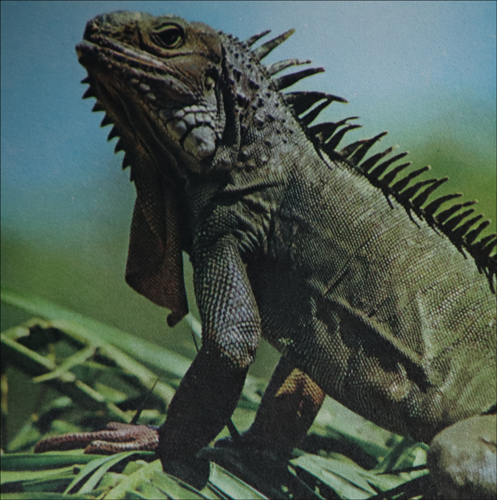
Green iguanas were found to be living on the Caribbean island of Anguilla when they had not been reported from the island before. Biologists concluded that hurricanes in 1995 had led to trees that originated in Guadaloupe some two hundred miles to the south-east of Anguilla, where the iguanas are indigenous, being washed ashore. It is thought that a group of these reptiles drifted out to sea and after about three weeks, the trees, with their unintentional lizard cargo made landfall on the island.
An Unlikely Seafarer – An Iguana
Iguanas made the sea crossing from Guadaloupe to Anguilla carried to the island by trees uprooted and washed out to sea during a hurricane. Picture credit: Everything Dinosaur.
Picture credit: Everything Dinosaur
Dr Longrich commented:
“Over millions of years, once-in-a-century events are likely to happen many times. Ocean crossings are needed to explain how lemurs and hippos got to Madagascar, or how monkeys and rodents crossed from Africa to South America.”
Ajnabia odysseus Colonised New Territories
Writing in the academic journal “Cretaceous Research”, the scientists conclude that as there were extensive and long-lasting seaways separating Africa and Europe from other landmasses and in the absence of any evidence for a two-way faunal interchange characterised by land bridges, it is likely that some animals were able to colonise new territories either by swimming to them or perhaps by being castaways. Such patterns of dispersal are seen with both extant or ancestral forms of mammals, reptiles and amphibians. This newly published paper suggests that dinosaurs too, were capable of travelling across oceans.
Dr Longrich added:
“As far as I know, we are the first to suggest ocean crossings for dinosaurs.”
Co-author Professor Nour-Eddine Jalil summarised the importance of this fossil find from a Moroccan phosphate mine by stating:
“The succession of improbable events (crossing an ocean by a dinosaur, fossilisation of a terrestrial animal in a marine environment) highlights the rarity of our find and therefore its importance. Ajnabia shows us that hadrosaurs have set foot on African land, telling us that ocean barriers are not always an insurmountable obstacle.”
The scientific paper: “The first duckbill dinosaur (Hadrosauridae: Lambeosaurinae) from Africa and the role of oceanic dispersal in dinosaur biogeography” by Nicholas R. Longrich, Xabier Pereda Suberbiola, R. Alexander Pyron and Nour-Eddine Jalil, published in Cretaceous Research.
The latest Everything Dinosaur newsletter features the exclusive Beasts of the Mesozoic limited edition Velociraptor osmolskae. Two more recently arrived Beasts of the Mesozoic models are also showcased in our “Dinovember” bulletin. The popular Linheraptor (L. exquisitus) and the top-selling Pyroraptor (P. olympius) replicas are back in stock. In addition, with our thoughts turning to the festive season, we highlight the Papo gift box that features the recently introduced Stygimoloch and Gorgosaurus. The newsletter also announces two new replicas from Rebor, the Compsognathus longipes preserved dissection specimens.
The Exclusive Velociraptor osmolskae Replica (Beasts of the Mesozoic)
The superb, limited edition Beasts of the Mesozoic Velociraptor osmolskae is in stock and available from Everything Dinosaur.
Picture credit: Everything Dinosaur
Beasts of the Mesozoic Raptor Figures
The fantastic Beasts of the Mesozoic Linheraptor and the Fans’ Choice Pyroraptor are in stock at Everything Dinosaur. These amazing, hand-painted and articulated 1:6 scale models have proved to be exceptionally popular. A delivery has just arrived at Everything Dinosaur’s warehouse just in time for Christmas.
The Beasts of the Mesozoic “Raptors” Linheraptor and the Fans’ Choice Pyroraptor Feature in the Newsletter
The popular Beasts of the Mesozoic Linheraptor (L. exquisitus) and the Pyroraptor (P. olympius) are available from Everything Dinosaur.
Papo Gift Boxes and the Rebor X-REX Swarm (Plague Variant)
Everything Dinosaur team members get asked at this time of year to recommend Christmas gifts, one of the best-selling items at the moment is the 2020 Papo gift box which features the Papo Gorgosaurus and the bone-headed dinosaur Stygimoloch. Gift boxes are popular in November and December, so it seemed sensible to feature this item in our latest newsletter. Fans of the Rebor X-REX series, the alien/Tyrannosaurus rex hybrid will not be disappointed with the second figure in this line, the fearsome X-REX Swarm (plague variant).
Papo Gift Boxes and the Rebor X-REX Swarm (Plague Variant)
The Papo gift box and the Rebor X-REX Swarm (plague variant).
Discerning figure collectors, especially those who have a fascination for science fiction have really taken to the introduction of the X-REX range of models from Rebor. Although the quartet has been delayed, the second figure in the series – Swarm (plague variant) is in stock at Everything Dinosaur.
Furthermore, newsletter readers were provided with details of two new Rebor replicas, both of which are due in early 2021 and are available to pre-order at Everything Dinosaur.
The beautifully detailed Rebor Oddities Compsognathus longipes preserved dissection specimens with their glass fronted display boxes would make a stunning addition to any collection. These 1:1 scale Compsognathus figures demonstrate the amazing attention to detail the design team at Rebor have.
The Rebor Oddities Compsognathus longipes Preserved Dissection Specimens
The Rebor Compsognathus longipes preserved dissection specimens.
Picture credit: Everything Dinosaur
To pick up a Rebor X-REX Swarm or to pre-order the Rebor Oddities Compsognathus longipes specimens: Rebor Models and Figures.
Everything Dinosaur newsletter subscribers received advance warning about pre-ordering the limited edition Victorian Goth Rebor Compsognathus replica, only 500 of these figures have been produced.
To join Everything Dinosaur’s newsletter subscriber database, simply: Email Everything Dinosaur alternatively, fill in the newsletter request form to be found at the bottom of our Everything Dinosaur website home page.
Buriolestes schultzi – A Relatively “Smart” Sauropodomorph
The huge sauropods such as Apatosaurus, Brachiosaurus, Mamenchisaurus and Brontosaurus are not regarded as particularly clever animals. Their brains were extremely small when compared to their huge body sizes, therefore any consideration of a “smart” sauropod is greatly undermined by their miniscule encephalisation quotient (ratio of brain size to body size). However, this lineage of lizard-hipped dinosaurs survived for over a 130 million years and they were extremely successful being both speciose and geographically widespread.
A newly published paper provides an insight into the evolutionary development of the brains of these types of dinosaurs. Writing in the academic “Journal of Anatomy” scientists report upon the study of the near perfectly preserved neurocranium of Buriolestes schultzi, a member of the Sauropodomorpha known from the Carnian faunal stage of the Late Triassic of Brazil. The researchers conclude that although the brain of this emu-sized dinosaur was very small, it probably had acute vision and fast reactions – very useful when you are actively pursuing prey.
A Life Reconstruction of the Triassic Sauropodomorph Buriolestes schultzi
Buriolestes schultzi life reconstruction. Scientists believe that this Late Triassic sauropodomorph as an agile, predator with a brain adapted to a fast, cursorial, predatory lifestyle.
Picture credit: Márcio L. Castro
A Well-developed Flocculus of the Cerebellum
Buriolestes roamed what is now the Rio Grande do Sul region of southern Brazil around 233 million years ago. It was a lightweight, bipedal, omnivorous dinosaur part of a group whose descendants would evolve into the giant sauropods of the Jurassic and Cretaceous. Researchers from the Federal University of Santa Maria in collaboration with colleagues from the Universidade de São Paulo (both institutions in Brazil), used computerised tomography to create a three-dimensional landscape of the inside of the skull of a fossil specimen in order to map the various regions of the brain.
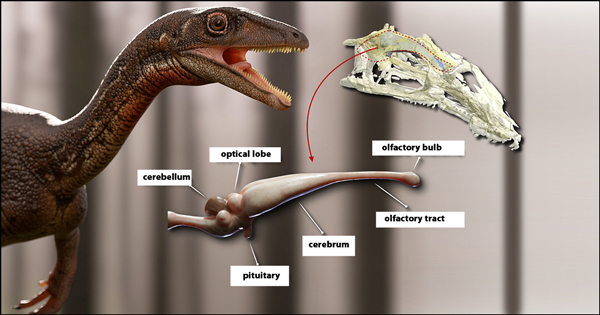
They discovered that Buriolestes had a well-developed flocculus region of its cerebellum, a part of the brain linked to motor skills and co-ordination. The analysis also revealed an elongated olfactory tract (related to sense of smell), combined to a relatively small pituitary gland, but the area of the brain associated with processing information from the eyes was much more sophisticated. The researchers inferred that the eyes were essential in the pursuit of prey, that vision was the dominant sense of Buriolestes.
Mapping the Brain of a Late Triassic Sauropodomorph (B. schultzi)
A diagram showing the skull of Buriolestes schultzi and the skull along with a diagram of the dinosaur’s brain.
Picture credit: Márcio L. Castro
The Senses of Buriolestes
Commenting on the research, one of the co-authors of the paper, palaeontologist Mario Bronzati (Universidade de São Paulo), stated:
“The dinosaur [Buriolestes] had a faunivorous diet. Unlike a carnivore, which is restricted to eating meat from other animals, the faunivore also includes the ingestion of insects and other small invertebrate animals. This characteristic, as well as its size, makes the species quite different from the most famous representatives of its lineage, the sauropod giants and herbivores which were the largest animals ever to walk the Earth.”
The team concluded that the characteristics of the brains of these types of dinosaurs changed dramatically as they evolved an entirely herbivorous diet and developed huge body sizes. Whilst Buriolestes was an agile, swift hunter the later sauropods evolved brains more suited to their particular niche in dinosaur dominated terrestrial communities.
Jurassic sauropods such as Brontosaurus and Diplodocus had higher olfactory capabilities when compared to Buriolestes. This more developed sense of smell is believed to play a role in foraging, helping plant-eaters to discriminate between digestible and indigestible vegetation. Having a better sense of smell may also have been important in the later sauropods if they were social animals living in herds. For example, higher olfactory capabilities are associated with vertebrates with more complex social behaviours, it is important for these herding animals to be able to detect and track chemical secretions.
First Calculations of the Reptile Encephalization Quotient (REQ) for a Triassic Dinosaur
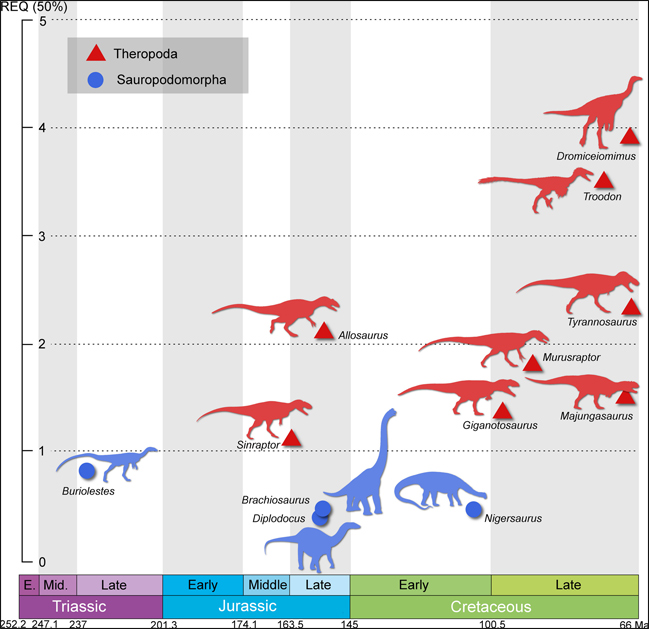
As well as providing information on how the brains sauropodomorphs evolved and changed over time, the researchers were able to plot the Reptile Encephalisation Quotient (REQ) for Buriolestes, the first time this has been calculated for a Triassic dinosaur. The Reptile Encephalisation Quotient essentially correlates an animal’s physical characteristics with perceived intelligence, it provides an estimate of how “smart” an animal might be.
Time‐calibrated Reptile Encephalisation Quotient (REQ; 50%) of Selected Saurischians
Measuring the time-calibrated Reptile Encephalisation Quotient (REQ) of selected lizard-hipped dinosaurs. The sauropodomorph Buriolestes had a higher REQ than later sauropods but its REQ was lower than the theropods included within the study.
Picture credit: Müller et al (Journal of Anatomy)
The scientists found that B. schultzi had a REQ lower than most Jurassic theropod dinosaurs, but much higher than that of later, much larger sauropodomorphs. Although, the lack of fossils to study prevents the researchers from comparing the REQ of Buriolestes with contemporaneous animals, the team do suggest that when Jurassic sauropods are considered, it could be that encephalisation tended to decline in this dinosaur lineage.
The scientific paper: “The endocranial anatomy of Buriolestes schultzi (Dinosauria: Saurischia) and the early evolution of brain tissues in sauropodomorph dinosaurs” by Rodrigo T. Müller, José D. Ferreira, Flávio A. Pretto, Mario Bronzati and Leonardo Kerber published in the Journal of Anatomy.
Today, we announce another new prehistoric animal model from PNSO. It is another ornithischian, but unlike the recently announced hadrosaurs (Lambeosaurus and Corythosaurus) and armoured dinosaurs (Borealopelta and Tuojiangosaurus), this replica is a horned dinosaur, a member of the Ceratopsia. PNSO are going to introduce a model of a Pachyrhinosaurus into their mid-size model range.
PNSO Pachyrhinosaurus Dinosaur Model
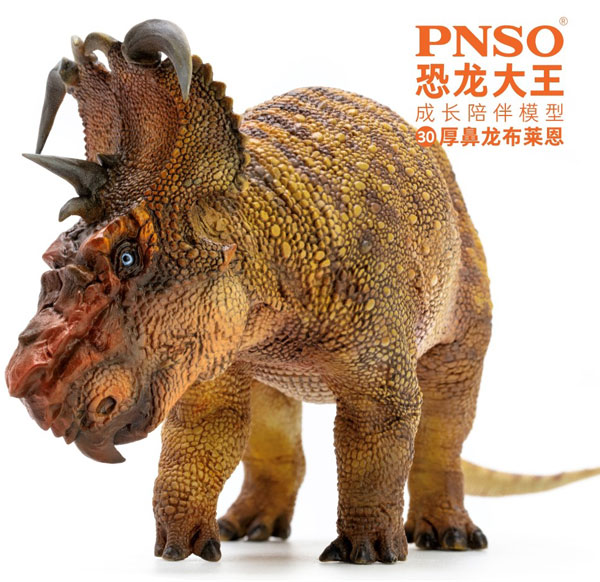
ThePNSO Brian the Pachyrhinosaurus dinosaur model.
Say Hello to the PNSO Pachyrhinosaurus (Brian)
PNSO have named their new horned dinosaur model “Brian” and it is number 30 in the numerical register adopted for the Chinese company’s prehistoric animal figures. It is a stunning replica with an amazingly detailed head. The blue eyes are a stark contrast to the burnished reds and oranges that make up the ornamentation on the head shield. Perhaps we should nickname this figure “blue-eyed Brian”.
A Close-up View of the Beautifully Designed PNSO Pachyrhinosaurus Dinosaur Model
The PNSO Pachyrhinosaurus dinosaur model.
Measuring the Model
The PNSO Pachyrhinosaurus model measures a fraction over fifteen centimetres in length. The tip of that carefully crafted head shield is just under eight centimetres high. Although PNSO do not declare a scale for their mid-size series figures, based on P. canadensis (the first species assigned to this genus), which is estimated to have been around six metres long, Everything Dinosaur team members calculate that this new dinosaur figure is in approximately 1:40 scale.
The Dinosaur’s Dimensions (PNSO “Brian” the Pachyrhinosaurus Model Measurements)
The measurements of the PNSO Brian the Pachyrhinosaurus dinosaur model.
Everything Dinosaur Comments
A spokesperson from Everything Dinosaur commented:
“We have recently announced a number of new dinosaur and prehistoric animal models due to come out from PNSO. Around three weeks ago, we announced that a new replica of the feathered dromaeosaurid Microraptor was coming into stock in November. Subsequently, Everything Dinosaur has announced two hadrosaurs, (Caroline the Corythosaurus and Audrey the Lambeosaurus), along with two armoured dinosaurs (Gavin the Borealopelta and a replica of the Chinese stegosaur Tuojiangosaurus). We have also recently confirmed that PNSO will be adding a replica of the bizarre marine reptile Atopodentatus to their mid-size model range.”
Although there are further models to be introduced, Brian the Pachyrhinosaurus is the only horned dinosaur.
The spokesperson from Everything Dinosaur confirmed that a shipment of PNSO figures, including the new Microraptor (Gaoyuan the Microraptor) was due to arrive at the company’s warehouse in the middle of the month (November 2020). The other new PNSO replicas will be in stock, most likely in late December or the early part of 2021.
With COVID-19 cases rising rapidly across the whole of the UK, mirroring what is being seen in most other parts of the world, the UK Government has decided to introduce new national restrictions that will come into force from Thursday 5th November (2020).
As Everything Dinosaur was able to keep operating its mail order business during the more severe lockdown that occurred in the spring, we believe that the steps and measures we have taken will permit us to continue our mail order operations.
Everything Dinosaur is Still Open – Our Mail Order Business Continues to Operate
Everything Dinosaur’s mail order business is still operating during the coronavirus pandemic.An update from Everything Dinosaur. Picture credit: Everything Dinosaur.
Picture credit: Everything Dinosaur
Mail Order Business is Still Operating (An Update from Everything Dinosaur)
Everything Dinosaur will continue to send out customer orders, that includes orders placed by international customers. We do advise that due to the massive increase in global on-line shopping, it would be sensible for customers to place orders early to ensure that parcels can arrive at destinations in time for special occasions such as birthdays and Christmas.
Everything Dinosaur Continues to Keep Calm and Carry On
Everything Dinosaur working hard to stay on top of the situation. The mail order business is still functioning although customers are advised to place orders early to avoid disappointment.Picture credit: Everything Dinosaur.
Picture credit: Everything Dinosaur
Contingency Plans in Place
These new measures will apply nationally for four weeks up to Wednesday 2nd December (2020). At the end of this period, the UK Government will look to return to a regional approach, based on the latest data.
Team members at Everything Dinosaur will be examining the details of the new restrictions carefully over the next few days. However, we remain confident that due to the extensive contingency plans we have in place, our mail order business will be able to continue and we will be able to maintain the level of customer service and support that our many thousands of customers all over the world have come to expect from a leading specialist supplier of prehistoric animal models and replicas.
Everything Dinosaur will continue to send out customer orders.