

Museum Specimen Genome Sequencing Could Transform Science
Natural history museums could hold the key to major scientific discoveries, according to a new paper. Museum specimen genome sequencing could transform research into evolution, conservation, medicine and environmental change.
Natural history collections around the world contain more than one billion specimens. Together, they preserve an enormous amount of genetic information. However, scientists have sequenced the whole genome of just 0.2% of all known animals and plants. Most of these are vertebrates or economically important species.
Unlocking Genetic Data from Museum Specimens
Until relatively recently, extracting complete genomes from preserved specimens presented considerable challenges. Advances in sequencing technology are now changing this. As a result, researchers can potentially recover whole genomes from specimens held in museum collections. Importantly, these collections contain species gathered from different places and periods. Some represent extinct animals and plants. Others come from habitats that have since changed beyond recognition.
Therefore, museum specimens can provide genetic information that scientists simply cannot obtain from living organisms today. Researchers from the Natural History Museum in London argue that museums should play a greater role in genomic research. They propose putting collections and taxonomic expertise at the centre of large-scale sequencing projects.
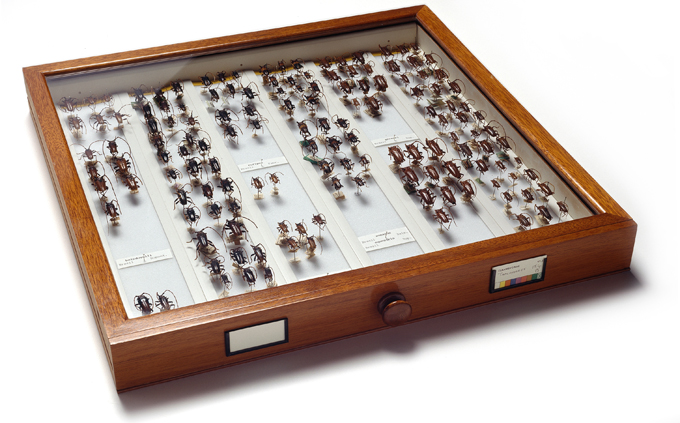
A display case with various beetle specimens. Picture credit: © The Trustees of the Natural History Museum, London.
Picture credit: © The Trustees of the Natural History Museum, London
Exploring the Tree of Life
At present, scientists have not sampled genomes evenly across the tree of life. Whilst it might be understandable to see a bias in vertebrates and for economically important species, it is noted that many other groups remain unstudied to a large degree. Systematically sequencing closely related species could help address this imbalance. Furthermore, scientists could compare large numbers of genomes to identify patterns invisible when studying individual species.
Such research could provide fresh insights into evolution and reveal previously overlooked species. It could help inform conservation efforts and perhaps drive new areas of medical research.
Large genomic datasets could also help researchers investigate how organisms respond to environmental change. Consequently, this information may prove valuable as scientists tackle the biodiversity and climate crises.
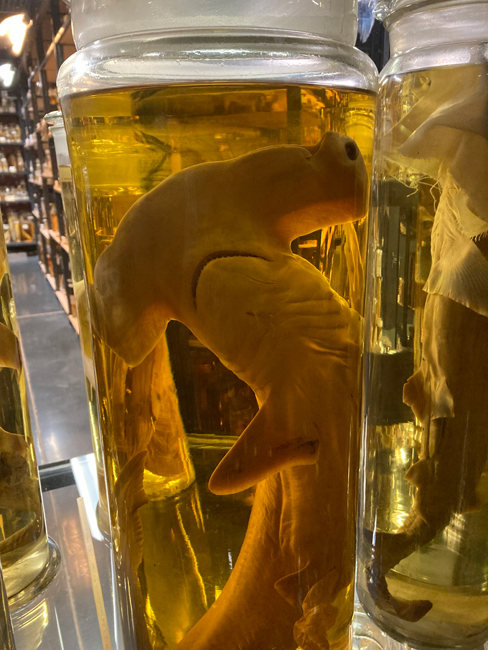
A hammerhead shark specimen stored in the enormous wet room at the Museum für Naturkunde Berlin. Picture credit: Everything Dinosaur.
Picture credit: Everything Dinosaur
Genetic study reveals history of the domestic dog: Oldest Domestic Dog Evidence.
Museum Specimen Genome Sequencing
Museum collections offer another important advantage. Researchers can connect genetic information with physical specimens, collection locations and dates. This combination could have applications in conservation, biotechnology, agriculture and medicine.
Moreover, these extensive datasets could help train machine learning systems. Scientists could then use these tools to identify hidden patterns and investigate changes in biodiversity.
Dr Paschalia Kapli, Research Leader in Collection-Based Genomics at the Natural History Museum, the lead author of the study stated:
“Until recently, natural history collections have mostly been seen as providers of specimens, rather than active catalysts, in sequencing projects. As a result, genomic data from large parts of the tree of life are still unknown.”
She explained that natural history collections have traditionally provided specimens for sequencing projects. However, she argues that museums could become active drivers of genomic research.
Dr Kapli explained:
“By putting these collections and taxonomic expertise at the heart of sequencing initiatives, there’s the opportunity to find out not just about these overlooked species, but make great leaps forward in our understanding of the natural world. Such discoveries could help to halt extinctions, boost food security and develop new medicines in the years to come.”
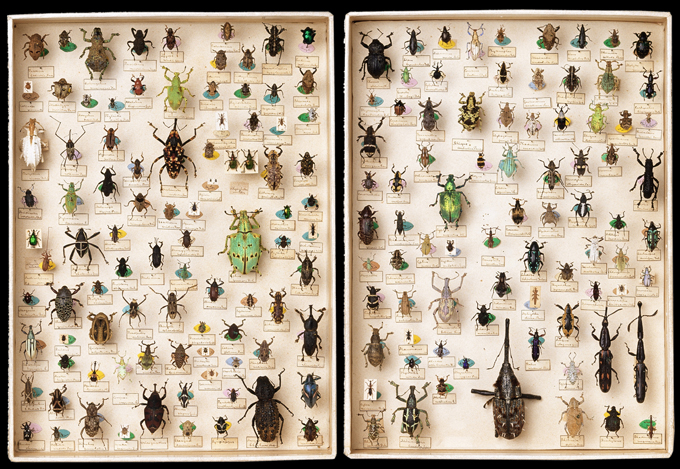
An amazing display case of weevil specimens. A paper has been published that proposes sequencing genomes from museum collections could help to revolutionise science. Picture credit: © The Trustees of the Natural History Museum, London.
Picture credit: © The Trustees of the Natural History Museum, London
Helping to Answer Key Questions About Evolutionary Relationships
Ultimately, the researchers suggest this work could support conservation and provide new insights into the tree of life. For example, the evolutionary origins of vertebrates remains controversial. Museum specimen genome sequencing could provide fresh insights, perhaps challenging the long-held view that the closest non-vertebrate relatives are echinoderms (starfish, sea urchins, sea cucumbers).
With more than a billion specimens preserved worldwide, natural history museums could represent an extraordinary and largely untapped genomic resource.
Everything Dinosaur acknowledges the assistance of a media release from the London Natural History Museum in the compilation of this article.
The scientific paper: “Species-dense genomics through natural history collections” by Paschalia Kapli, Hugh Carter, Hayley B. Free, Adam D. Leaché, Hugo J. de Boer, Tomáš Flouri, Ben Price, Gavin R. Broad, Matthew D. Clark, Mozes P.K. Blom, Karen Meusemann, Bernhard Misof, Rebecca N. Johnson, Sandra Knapp & D. Tim J. Littlewood published in Nature Reviews Genetics.
The award-winning Everything Dinosaur website: Dinosaur and Prehistoric Animal Models.