All about dinosaurs, fossils and prehistoric animals by Everything Dinosaur team members.
4 06, 2026

Tracking Down an Elusive Allosaurus Species

By |2026-06-07T08:29:54+01:00June 4th, 2026|Categories: Photos/Pictures of Fossils|0 Comments

Allosaurus has become a bit of a taxonomic waste basket.  This term relates to fossil material from theropods being assigned to the genus.  However, some of the evidence for assigning the material is tentative.  For example, theropod bones from southeastern Tanzania (Tendaguru Formation) had been assigned to an allosaur species named Allosaurus tendagurensis.  In 1925, when A. tendagurensis was erected (Janensch), Allosaurus was the best-known large Upper Jurassic carnivorous dinosaur.  These days, palaeontologists have a better understanding of Late Jurassic meat-eating dinosaurs.  These fossils are now described as “Tetanurae indet.”

Allosaurus tendagurensis

Whilst on a visit to the Museum für Naturkunde Berlin, we tracked down some of the Allosaurus tendagurensis fossils.  In a display case in the dinosaur gallery, we found a large tibia (lower leg bone), two teeth and a caudal vertebra.  The fossils had their original labels on them and were perhaps some of the material cited by the German palaeontologist Werner Janensch in the paper “Die Coelurosaurier und Theropoden der Tendaguru-Schichten Deutsch-Ostafrikas” published in 1925.

Allosaurus tendagurensis fossils (as originally labelled).

Originally described as Allosaurus tendagurensis by the German palaeontologist Werner Janensch (1925), these fossils are not associated with any specific theropod taxon but rather referred to as possible megalosauroid or carcharodontosaurid material. Picture credit: Everything Dinosaur.

Picture credit: Everything Dinosaur

The remains of several large predatory dinosaurs were found in the Upper Jurassic deposits of Tendaguru. From these remains two teeth, a lower leg bone (tibia) and a tail vertebra (caudal vertebra) are shown in the photograph. Although the material is incomplete, scientists can narrow down the group that the animal belonged to. It was probably a member of the carcharodontosaurid. However, as a more definite identification cannot be made, the fossil material is described generally as “Tetanurae indet.”

The Tetanurae Clade of Theropod Dinosaurs

The Tetanurae is a clade of theropod dinosaurs. It contains all the theropods more closely related to birds than to Ceratosaurus. Constituents include coelurosaurs, megalosauroids and allosauroids. Intriguingly, the Tendaguru bones tend to be larger than those associated with most allosaurids. Therefore, palaeontologists have concluded that theropods comparable in size to T. rex were present in the ecosystem.  The fossils originally referred to Allosaurus tendagurensis could represent a carcharodontosaurid or possibly a megalosauroid.

Several Species of Allosaurus

Over a hundred years after Janensch described the Tendaguru theropod fossils, palaeontologists have a much better understanding of the composition of the Allosaurus genus. For example, several species are now recognised:

  • Allosaurus fragilis – named by Othniel Charles Marsh in 1877 (North American species).
  • Allosaurus europaeus – from the Upper Jurassic strata of Portugal associated with the Lourinhã, Bombarral, and Alcobaça geological formations (Mateus et al 2006).
  • A. jimmadseni – another North America species erected after a reassessment of fossil material formerly assigned to A. fragilis (Chure and Loewen, 2020).
  • Allosaurus anax – erected following a reappraisal of fossil material formerly assigned to Saurophaganax (Danison et al, 2024).

New research suggests that Allosaurus europaeus is not a valid taxon: Research Undermines an Allosaurus Species.

The naming of Allosaurus jimmadseniA New Species of Allosaurus is Erected.

The demise of Saurophaganax: New Study Suggests Saurophaganax is Not a Valid Taxon.

Unfortunately, species assignment and potential synonyms are complicated by the type specimen of Allosaurus fragilis (YPM 1930) being extremely fragmentary.  This has led to difficulties ascribing fossils found in North America, Europe and elsewhere in the world to Allosaurus.

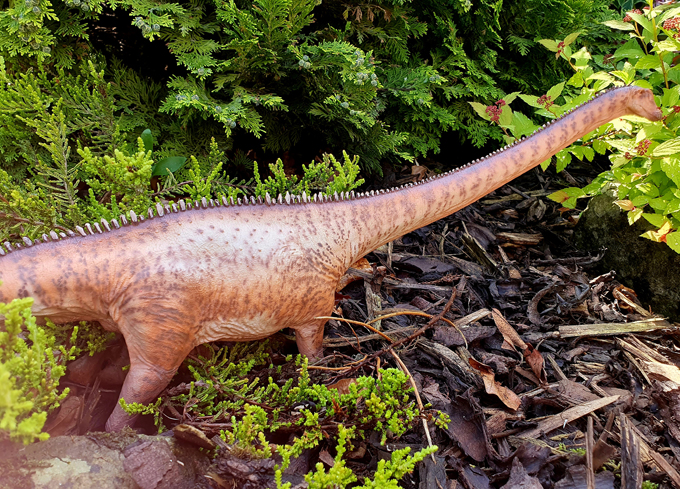
Most dinosaur models probably represent Allosaurus fragilis, or possibly Allosaurus jimmadseni.

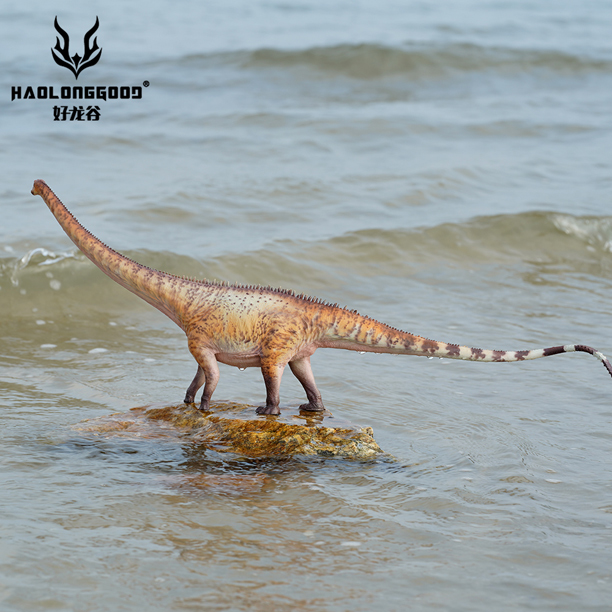
Haolonggood dinosaur models (Allosaurus figures).

The Haolonggood Allosaurus dinosaur models (Allosaurus Yangzhi and Suochao). These are typical of the high quality of Allosaurus models available.  Although Haolonggood do not declare a genus, the crests above the eyes suggest Allosaurus fragilis.

To view the extensive range of Haolonggood figures in stock: Haolonggood Dinosaur Toys.

Mike from Everything Dinosaur commented:

“Considerable work has been undertaken leading to a revision of the Allosaurus genus.  Several species have been erected. However, some taxonomy remains controversial.  Moreover, it is likely that fossils associated with this famous dinosaur will be revised further in the future.”

Allosaurus roaming Australia: Highlighting Australian Dinosaurs.

The multi-award-winning Everything Dinosaur website: Prehistoric Animal Models and Dinosaur Toys.

3 06, 2026

First of the New Schleich Models for 2026 in Stock

By |2026-06-05T06:09:58+01:00June 3rd, 2026|Categories: Schleich|0 Comments

New Schleich models for 2026 have arrived at Everything Dinosaur.  The new figures include a Brontosaurus, Triceratops and a Dimetrodon model. In addition, the Schleich Megalodon model is available too.  Schleich has been making dinosaur models for decades.  The company has a reputation for making robust, colourful prehistoric animal figures which are ideal for creative, imaginative play.

New Schleich Models for 2026 (Dimetrodon).

A Schleich Dimetrodon model (2026) held in the hand.

Schleich Models for 2026

The Schleich Dimetrodon has an articulated lower jaw.  Interestingly, the new Triceratops figure has a moveable head.  Schleich has manufactured Triceratops and Dimetrodon figures previously.  However, the latest figures are typical of Schleich, they are well-painted and attractive.  The Triceratops is particularly colourful with a most impressive headshield.

Schleich Triceratops dinosaur model.

The new for 2026 Schleich Triceratops dinosaur model has a moveable head.

To view the range of Schleich prehistoric animal models in stock at Everything Dinosaur: Schleich Dinosaur and Prehistoric Animal Models.

Brontosaurus has been modelled by Schleich on numerous occasions.  The 2026 Brontosaurus measures thirty-three centimetres in length and has a head height over eleven centimetres.  As with the other Schleich figures it is great for creative, imaginative play.

New Schleich Models for 2026 (Brontosaurus).

Schleich have re-introduced a replica of the famous sauropod Brontosaurus.

A Schleich Megalodon Model

Prehistoric shark figures are popular. Schleich have introduced a replica of the largest carnivorous shark known to science (Otodus megalodon).  The figure is marketed under this extinct shark’s popular common name “Megalodon”. At nearly thirty centimetres long, it is an impressive figure.

The Schleich Megalodon shark figure.

The Schleich Megalodon (Otodus megalodon) figure.

Members of the model collecting community might be confused over the name of this figure.  The scientific name for this shark is Otodus megalodon.  Its taxonomy has been revised, and it is now thought that this ancient predatory fish is not closely related to the Great white shark (Carcharodon carcharias).

To read more about this: The Classification of a Prehistoric Shark.

Commenting on the introduction of these four prehistoric animal models, Mike from Everything Dinosaur stated:

“Schleich continues to expand its prehistoric animal range with some exciting new additions. These four new figures combine imaginative design with excellent detail, so we expect them to prove popular with collectors and young dinosaur fans alike. Furthermore, they help to broaden the diversity of prehistoric animals represented in the Schleich range. In addition, as Triceratops, Dimetrodon and Brontosaurus figures have been made before, it is fascinating to see the latest interpretations. We are delighted to have all four models in stock and available to our customers. As always, we look forward to hearing what collectors think of these latest arrivals.”

The award-winning Everything Dinosaur website: Purchase Prehistoric Animal Figures.

2 06, 2026

A New Unenlagiid Dinosaur from Patagonia (Argentina)

By |2026-06-05T06:02:59+01:00June 2nd, 2026|Categories: Palaeontological articles|0 Comments

A team of scientists from Argentina and Japan has described a new species of unenlagiid dinosaur from southern Patagonia. Named Kank australis, this small, theropod dinosaur lived around 70 million years ago during the Late Cretaceous.

The fossil remains were discovered in the Chorrillo Formation of Santa Cruz Province, Argentina. The discovery helps palaeontologists better understand the diversity of Southern Hemisphere dromaeosaurids and provides fresh insights into the ecosystems that existed shortly before the extinction of the non-avian dinosaurs.

Kank australis life reconstruction.

Kank australis life reconstruction. Picture credit: Gabriel Díaz Yantén.

Picture credit: Gabriel Díaz Yantén

Kank australis Expands the Known Range of Unenlagiids

The newly described Kank australis belongs to the Unenlagiidae, a group of long-snouted paravian theropods up to now represented in Gondwanan landmasses. These dinosaurs are often compared to famous Northern Hemisphere relatives such as the dromaeosaurid Velociraptor. However, unenlagiids were unique to the southern continents. Unenlagiids are particularly diverse in northern Patagonia, where at least seven species have been identified from Upper Cretaceous strata. Therefore, the discovery of Kank australis extends the known distribution of these dinosaurs much further south.

A new fish-eating unenlagiid from Brazil (Ypupiara lopai): A New Piscivorous Dinosaur is Described.

Researchers suggest that this discovery helps bridge an important geographical gap. Furthermore, it may provide clues about links between South American dinosaurs and species that may have inhabited Antarctica during the Late Cretaceous. Antarctic species such as the probable unenlagiid Imperobator antarcticus.

The fossil material consists of vertebrae, isolated pedal phalanges, and shed teeth.

Fossil material associated with the newly described dinosaur K. australis.

Fossil material associated with the newly described unenlagiid K. australis. Picture credit: Ignacio García.

Picture credit: Ignacio García

Named After an Ancient Mythological Bird

This dinosaur’s name has an interesting origin. The genus name comes from the “elder rhea” from indigenous Aonikenk (Tehuelche) mythology. According to tradition, this bird left its footprint in the sky, creating the constellation known today as the Southern Cross.

Meanwhile, the species name “australis” means southern. It refers to the location in Patagonia where the fossil material was discovered.

Fossils Recovered During Difficult Fieldwork

The remains of Kank australis were collected during several expeditions that began in 2019. One of the most significant discoveries came just before severe weather forced researchers to abandon a field season. A vertebra from the base of the neck was spotted by a technician searching for small fossil fragments. At first, the team could not identify the specimen because it remained embedded in rock. However, once the surrounding matrix was removed, the researchers realised they had found part of a “raptor” dinosaur.

Examining the fossil material.

Working on the fossil material. Picture credit: Ignacio García.

Picture credit: Ignacio García

Although fragmentary, the fossils possess distinctive anatomical features that justify the erection of a new species.  In addition, the fossils demonstrate a suite of characteristics suggesting that K. australis was probably distinct from other unenlagiids.  Therefore, it reinforces the hypothesis that the Unenlagiidae was a morphologically disparate clade.

To read an article from 2024 about a newly described unenlagiine from northern Patagonia (Diuqin lechiguanae): A New Unenlagiid from Northern Patagonia.

What Did It Look Like?

Scientists estimate that Kank australis measured approximately two metres in length. This would make it comparable in size to Velociraptor. Its anatomy suggests that it may have occupied a different ecological niche from many Northern Hemisphere dromaeosaurs. For example, its teeth possess small longitudinal ridges. These structures may have helped the animal grip slippery prey. As a result, researchers propose that fish formed an important part of its diet. Whereas, most Northern Hemisphere dromaeosaurids are thought to have been terrestrial predators.

In addition, the neck vertebrae show specialised muscle attachment sites and structures associated with blood vessel protection. Similar features are seen in modern birds that make complex neck movements, including herons.

Consequently, palaeontologists suggest that Kank australis may have been a piscivore, rather than a purely terrestrial predator.

A Rich Late Cretaceous Ecosystem

Seventy million years ago, Patagonia looked very different from today. The Andes Mountains had not yet formed. Instead, the region was dominated by rivers, lakes and lush vegetation. The Chorrillo Formation has yielded a remarkable range of fossils. These include fish, frogs, turtles, snakes, mammals and numerous dinosaurs.

Large predators also shared this environment. Fossils of the giant megaraptoran theropod Maip macrothorax have been found at the same locality. In addition, the long-necked titanosaur Nullotitan glaciaris roamed the landscape.

CollectA Deluxe 1:40 scale Maip macrothorax model.

A replica of the giant South American theropod M. macrothorax. The CollectA Deluxe Maip macrothorax model measures 26 cm in length.

The picture (above) shows the CollectA Deluxe Maip macrothorax dinosaur model.  It is a recent theropod introduction into this extensive scale model range.

To view the CollectA Deluxe models: CollectA Deluxe Prehistoric Animal Models.

Together, these discoveries are helping scientists reconstruct one of the southernmost dinosaur ecosystems known from the final stages of the Age of Dinosaurs.

A Window into the Last Days of the Dinosaurs

The discovery of Kank australis demonstrates that southern Patagonia supported a diverse dinosaur fauna shortly before the end-Cretaceous mass extinction.

Each new fossil helps researchers piece together the complex history of life in Gondwana. Furthermore, discoveries such as Kank australis highlight how much remains to be learned about dinosaur evolution in the Southern Hemisphere.

Everything Dinosaur acknowledges the assistance of a media release from the Museo Argentino de Ciencias Naturales “Bernardino Rivadavia” in the compilation of this article.

The scientific paper: “New unenlagiid from the Chorrillo Formation (Late Cretaceous, Maastrichtian), SW Patagonia, Argentina” by Matías J. Motta, Alexis M. Aranciaga Rolando, Sebastián Rozadilla, Federico L. Agnolín, Federico Brissón Egli, Gerardo P. Álvarez Herrera, Nicolás R. Chimento, Gastón Lo Coco, Takanobu Tsuihiji, Makoto Manabe, Diego Pol and Fernando E. Novas published in the Journal of Vertebrate Paleontology.

The Everything Dinosaur website: Theropod Dinosaurs and Other Models.

1 06, 2026

New English Crocodylomorph Honours Welsh Teacher

By |2026-06-02T14:09:07+01:00June 1st, 2026|Categories: Palaeontological articles|0 Comments

Scientists have identified a new species of ancient crocodylomorph from Upper Triassic rocks in southwest England. The newly named species, Galahadosuchus jonesi, lived around 215 million years ago and it represents the second species of non-crocodyliform crocodylomorph described from the Late Triassic–aged fissures of the Bristol Channel area.

Non-crocodyliform crocodylomorph fossil material is known from both sides of the Bristol Channel.  Osteoderms, teeth and bones have been found.  Most of these fossils have been assigned to the species Terrestrisuchus gracilis (Crush, 1984).  However, it is probable that T. gracilis has become a taxonomic waste basket to some extent.  Different genera of early crocodylomorphs are likely present. The discovery of Galahadosuchus jonesi, named from fossils formerly assigned to Terrestrisuchus confirms previous suggestions of under-described pseudosuchian diversity from these deposits.

The fossil specimen was discovered in 1969. However, researchers have only recently recognised that it represents a previously unknown species. The findings have been published in the academic journal “The Anatomical Record”.

A Small, Fast-moving Terrestrial Predator

Unlike modern crocodilians, Galahadosuchus was not an aquatic ambush hunter. Instead, it was a lightly built, agile, fast-running animal that spent its life on land.

Researchers describe it as resembling a reptilian greyhound. It had long, slender limbs, an upright posture and a body adapted for speed. The animal probably hunted small reptiles, amphibians and early mammals.

Galahadosuchus jonesi scale drawing.

Galahadosuchus jonesi scale drawing (based on Pseudhesperosuchus jachaleri). Note scale bar equals 10 cm. Picture credit: Everything Dinosaur.

Picture credit: Everything Dinosaur

Several anatomical features support this interpretation. These include elongated wrist bones, tightly grouped metacarpals and a distinctive ankle structure. Together, these traits indicate that Galahadosuchus was a highly cursorial predator, related to Terrestrisuchus but a distinct genus.

Fossils from an Ancient Karst Landscape

The fossil comes from the famous fissure deposits found around the Bristol Channel area. During the Late Triassic, this region consisted of limestone uplands surrounded by hot, arid lowlands. Over time, caves and fissures formed within the limestone. The remains of animals were washed into these natural traps and became buried by sediment. As a result, the fissure deposits preserve a fascinating snapshot of life, although the exact dating of the deposits has proved controversial. For example, the geological age of these deposits and their fossil content remains unknown.

Some academics suggest that the fossils represent a biota from the youngest faunal stage of the Triassic (Rhaetian).  Moreover, that the fossils date from around 206 to 201.5 million years ago. In contrast, other researchers consider these deposits to be much older and spanning a greater interval of deep geological time.  For instance, it has been postulated that these fissure fill deposits span an age range from the Carnian to the Rhaetian (around 230 to 201.5 million years ago).

These rocks have provided numerous important vertebrate fossils including early dinosaurs and ancestors of modern lizards.

To read Everything Dinosaur’s blog post from 2021 about the discovery of an early theropod dinosaur: “Chief Dragon” from a South Wales Quarry.

Evidence of modern lizards in the Late Triassic: Cryptovaranoides is Clearly a Squamate.

Identifying a New Species

The specimen was originally assigned to Terrestrisuchus. However, a detailed study revealed important anatomical differences (autapomorphies). The research team identified thirteen anatomical traits that distinguish the fossil from known Terrestrisuchus specimens. Several of these differences involve the wrist bones, which are shorter and more robust in the new species. The differences in the morphology of the limb and wrist bones might correspond to differences in locomotory function between Terrestrisuchus and Galahadosuchus. These differences could reflect varying specialisations within Late Triassic crocodylomorphs.

Phylogenetic analysis places Galahadosuchus as a sister taxon to Terrestrisuchus. Both animals belong to a family of early crocodylomorphs known as the Saltoposuchidae.

These findings demonstrate that early crocodylomorph diversity was greater than previously recognised.

Galahadosuchus jonesi Honours an Inspirational Teacher

The species name honours David Rhys Jones, a physics teacher at Ysgol Uwchradd Aberteifi in Cardigan, Wales.

Lead author of the study, Ewan Bodenham explained that Mr Jones played an important role in encouraging his interest in science. The teacher’s enthusiasm, humour and willingness to challenge students helped inspire a future palaeontologist.

Meanwhile, the genus name combines “suchus” (crocodile) with a reference to Sir Galahad from Arthurian legend, a knight renowned for his moral uprightness. Therefore, the genus name reflects the upright stance of this reptile.

A Window into Early Crocodylomorph Evolution

The discovery of Galahadosuchus jonesi adds another important species to the rich fossil record of the Bristol Channel fissure deposits. These remarkable fossils continue to improve our understanding of life during the Late Triassic. Furthermore, they provide valuable evidence about the early evolution of crocodylomorphs, a lineage that would eventually give rise to modern crocodilians.

Everything Dinosaur Comments on Galahadosuchus jonesi

Commenting on the study, Mike from Everything Dinosaur stated:

“The fissure deposits of southwest England and South Wales continue to produce extraordinary insights into Late Triassic ecosystems. The identification of Galahadosuchus jonesi highlights just how diverse the early relatives of crocodiles had become before the end-Triassic extinction event. It also demonstrates the importance of revisiting historic museum specimens, as collections can still contain species waiting to be recognised.”

Everything Dinosaur acknowledges the assistance of the media team from University College London and the London Natural History Museum in the compilation of this article.

The scientific paper: “A second species of non-crocodyliform crocodylomorph from the Late Triassic fissure deposits of southwestern UK: Implications for locomotory ecological diversity in Saltoposuchidae” by Ewan H. Bodenham, Stephan N. F. Spiekman, Susannah C. R. Maidment, Paul Upchurch and Philip D. Mannion published in The Anatomical Record.

The Everything Dinosaur website: Dinosaur Toys and Models.

Go to Top