

Pterosaurs May Have Possessed Iridescent Pycnofibres
New research suggests that colourful tapejarid pterosaurs may have been even more spectacular than previously imagined. A recently published study proposes that some of these flying reptiles possessed iridescent pycnofibres that produced shimmering colours. As a result, these structures may have played an important role in visual signalling and display.
The bodies of pterosaurs, the first vertebrates to achieve powered flight, are covered with integumentary filaments (pycnofibres). They are thought to be homologous with feathers associated with the Dinosauria.
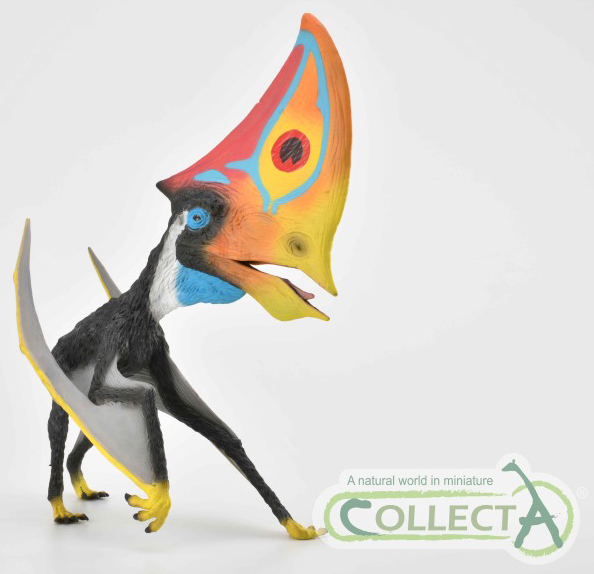
The Age of Dinosaurs Deluxe Caiuajara pterosaur figure with a moveable jaw. Tapejarid pterosaurs like Caiuajara have been depicted with colourful crests, however, a recent study (May 2026) proposes that the pycnofibres covering their bodies may have been iridescent.
The image (above) shows the CollectA Supreme Deluxe Caiuajara figure. It is pronounced – Kay-you-ah-jar-rah. CollectA have introduced an extensive range of beautiful pterosaur scale models.
To view the CollectA Deluxe model range: Scale Models of Pterosaurs and Other Prehistoric Animals.
Colourful Tapejarid Pterosaurs
The Tapejaridae were a geographically widespread Early Cretaceous pterosaur family with probable Asian origins. Tapejarid fossil material is known from the UK, Europe, Africa, South America and possibly from North America too. All known tapejarids were edentulous (lacked teeth). These pterosaurs are famed for their large and flamboyant crests. A recently published paper suggests that pycnofibres covering their bodies may have been capable of iridescence. If this is the case, they would have been extremely colourful.
To read a blog post from 2020 about the discovery of a tapejarid pterosaur in the Wessex Formation (Wightia declivirostris): A Terrific Tapejarid from the Isle of Wight.
Significantly, the recently published paper reveals evidence of something remarkable.
Scientists identified a layered arrangement of melanosomes within the pycnofibres of a tapejarid specimen. The fossil material represents Sinopterus dongi from the Early Cretaceous Jehol Biota. It had not been formally studied previously. Importantly, this internal structure of melanosomes resembles the organisation seen in the iridescent feathers of living birds. In modern species, such arrangements generate structural colours that can shift and shimmer when viewed from different angles. Consequently, the researchers propose that these pterosaurs exhibited colours ranging from green to magenta.
Did Iridescence Appear Early in the Evolution of Integumentary Filaments?
The research also has wider implications. According to the authors, this discovery indicates that the capacity for producing iridescence evolved very early in the evolution of integumentary filaments. Therefore, complex colour signalling and visual displays may have originated long before the appearance of birds.
In addition, the research provides further evidence that pycnofibres were multifunctional. Although they probably helped with insulation and thermoregulation, they also appear to have been used for communication and display. This finding supports the idea that visual signalling played a significant role in pterosaur behaviour. After all, if you are a tapejarid with a bold crest, then why not have iridescent pycnofibres too? The Early Cretaceous skies could have been filled with colourful tapejarid pterosaurs.
Highlighting the importance of this recent research, Mike from Everything Dinosaur commented:
“Large head crests already made tapejarids some of the most distinctive pterosaurs known. Now, scientists suggest that these reptiles may have enhanced their appearance with dazzling colours. Such displays could have helped attract mates, establish dominance or identify members of the same species.”
Implications for Palaeoartists and Model Makers
Most pterosaurs very probably had excellent colour vision. Using colour for signalling, social status and display makes sense. This has implications for model makers and palaeoartists. As a result of this study, colourful tapejarid pterosaurs may have looked far more vibrant than traditionally portrayed. They might have rivalled many modern birds in both appearance and visual complexity.
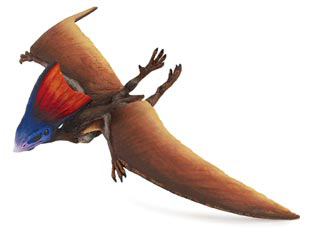
A model of Tapejara imperator (Safari Ltd)
The image (above) shows a model of a tapejarid pterosaur (Tapejara imperator). Most models have bright crests, but the pycnofibres tend to be plain in comparison. The conclusions from this study suggest a re-think when it comes to pterosaur colouration.
The paper highlights how exceptionally preserved fossils continue to transform our understanding of prehistoric life. Moreover, it demonstrates that the skies of the Cretaceous Period may have been filled with flying reptiles adorned with brilliant, iridescent colours.
The scientific paper: “Iridescence in pterosaur pycnofibers and the evolution of integumentary coloration” by Zelin Wu, Liliana D’ Alba, Chang-Fu Zhou, Julia A. Clarke, Jinhua Li, Matthew D. Shawkey and Quanguo Li published in bioRxiv.
The award-winning Everything Dinosaur website: Models of Pterosaurs and Other Prehistoric Animals.