

Scientists studying the famous Oxfordshire “dinosaur highway” have announced that one of the giant trackways may represent the longest known sauropod trackway discovered anywhere in the world. The remarkable sequence of footprints, uncovered at Dewars Farm Quarry, could have been made by a single Cetiosaurus as it wandered across a Jurassic mudflat around 166 million years ago.
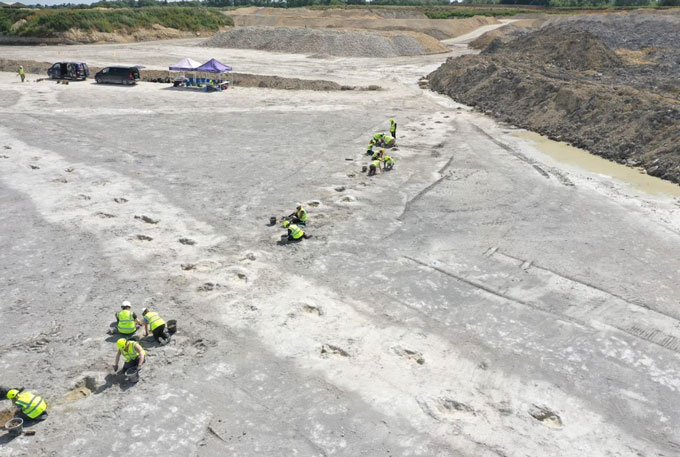
The Dewars Farm Quarry excavation work taking place in June 2024. Picture credit: The University of Birmingham.
Picture credit: The University of Birmingham
A Giant Dinosaur Left Its Footprints
Researchers have traced the trackway for approximately two-hundred and twenty metres. This enormous trail records the movements of a huge, long-necked herbivore. Furthermore, scientists think the tracks were made by a Cetiosaurus or a sauropod similar to Cetiosaurus, the first sauropod to be scientifically described (Owen, 1841). In total, four sauropod trackways at the site have been discovered. In addition, the site has yielded several other trackways, including those of a meat-eating dinosaur. These tracks have been tentatively assigned to Megalosaurus.
The original discovery attracted worldwide attention when details were formally announced in early 2025. The sauropod tracks represent animals of different sizes. This suggests some intriguing possibilities. For example, the tracks could represent a family moving together, or the trackways could represent a group of unrelated animals moving together. In an interview with Radio Oxfordshire, co-leader of the excavation Dr Emma Nichols (Oxford University Museum of Natural History), opined that the trace fossils could represent more than one type of sauropod.
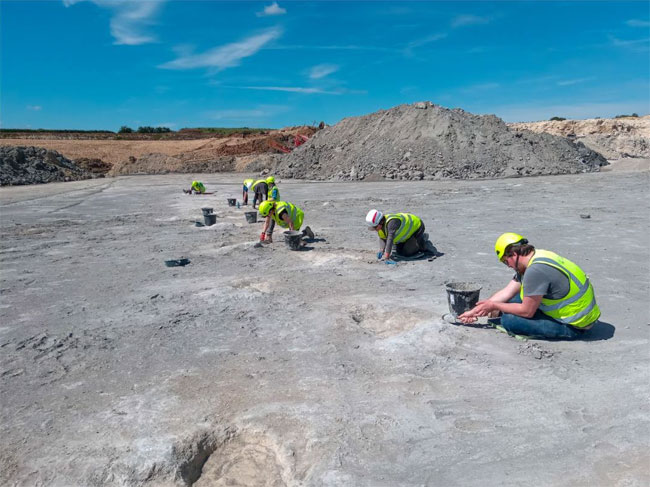
Working on the Dewars Farm Quarry dinosaur tracks. Picture credit: Caroline Wood University of Oxford.
Picture credit: Caroline Wood University of Oxford
The Oxfordshire “Dinosaur Highway” Made by a Cetiosaurus (Possibly)
The tracks cannot be linked directly to a skeleton. However, the footprints closely resemble those expected from a large, narrow-gauge sauropod. Consequently, scientists have suggested that the trackmaker was probably Cetiosaurus.
Cetiosaurus lived during the Middle Jurassic. It reached lengths of around eighteen metres and weighed many tonnes. Moreover, the type species, Cetiosaurus oxoniensis, was named from fossils discovered in Oxfordshire. Therefore, assigning the tracks to this dinosaur makes geological sense.
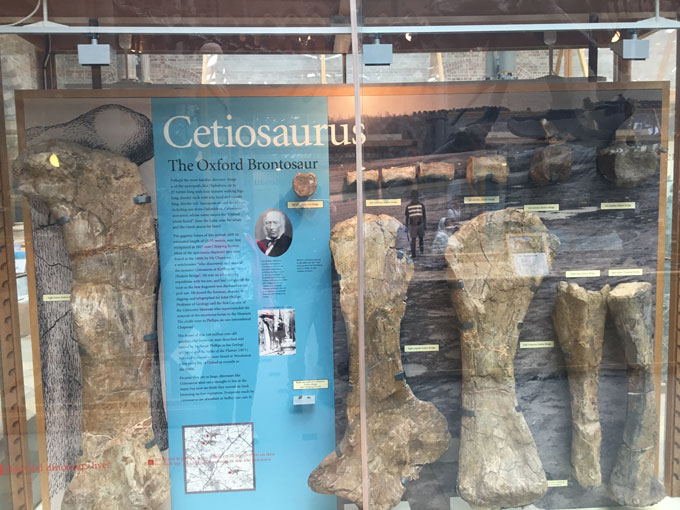
Fossils ascribed to the taxon Cetiosaurus on display at the Oxford University Museum of Natural History (OUMNH). Picture credit: Everything Dinosaur.
Picture credit: Everything Dinosaur
To read Everything Dinosaur’s article from January 2025 (formal announcement of quarry discovery): Remarkable Dinosaur Highway Uncovered in Oxfordshire.
Following in the Footsteps of Jurassic Giants
Trackways provide a different type of evidence from fossil bones. Skeletons reveal anatomy. However, footprints capture behaviour. They show how dinosaurs moved and interacted with their environment. Using modern imaging techniques, researchers have created detailed three-dimensional models of the trackway. As a result, scientists can estimate walking speed and study the animal’s gait. The Oxfordshire trackways represent one of the most important dinosaur discoveries made in Britain for decades. Furthermore, they provide a rare snapshot of life during the Middle Jurassic.
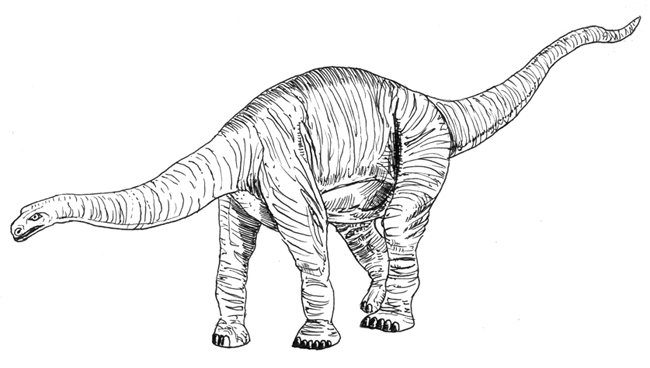
An illustration of a typical sauropod from the Middle Jurassic (Cetiosaurus). It is thought that the Oxfordshire “dinosaur highway” was created by Cetiosaurus or sauropods similar to Cetiosaurus. Picture credit: Everything Dinosaur.
Picture credit: Everything Dinosaur
One of the World’s Most Important Dinosaur Sites
At the time the tracks were made, much of Britain was covered by a shallow sea. The Oxfordshire area formed part of a shallow tropical landscape. Mudflats and lagoons provided ideal conditions for preserving footprints. Consequently, the tracks survived for millions of years beneath layers of sediment.
Scientists continue to investigate the quarry. Therefore, further discoveries may yet emerge from this extraordinary site. However, it is not the only site where long trackways of sauropod dinosaurs have been discovered.
Commenting on the on-going research, Mike from Everything Dinosaur stated:
“The Dewars Farm Quarry site is remarkable. Scientists think there are more footprints awaiting discovery. Hopefully, the site’s owners will continue to work closely with the researchers as well as Natural England to ensure that these fossils are preserved.”
Everything Dinosaur acknowledges the assistance of a media release from the University of Birmingham supplied in January 2025 in the compilation of this article.
The award-winning Everything Dinosaur website: Models of Dinosaurs.

Leave A Comment