All about dinosaurs, fossils and prehistoric animals by Everything Dinosaur team members.
14 02, 2021

Dinosaurs and St Valentine’s Day

By |2024-05-19T08:06:10+01:00February 14th, 2021|Categories: Dinosaur and Prehistoric Animal News Stories, Dinosaur Fans, Main Page, Photos|0 Comments

Dinosaurs and St Valentine’s Day

Today, February 14th is St Valentine’s Day in the UK (and elsewhere in the world too).  It is the feast day of St Valentine, a day associated with romance.  Romance and the Dinosauria might be an unusual mix, but we are reminded of an article we published nearly five years ago that reported upon some remarkable research into dinosaur trace fossils that possibly shed light on the mating behaviour of “terrible lizards”.

Dinosaurs and St Valentine’s Day

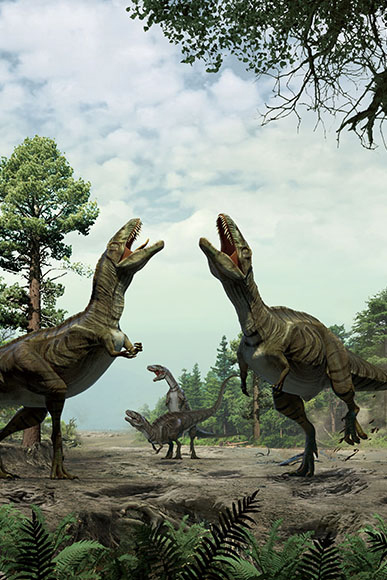
Writing in the academic journal “Scientific Reports”, a team of scientists from Poland, China, South Korea and the USA concluded that a series of trace fossils consisting of pits, scrapes and gouges associated with Upper Cretaceous strata located in western Colorado, preserve evidence of dinosaurs engaging in courtship and mating behaviours similar to modern birds.

Dinosaurs Go a Wooing

Courtship of dinosaurs.

An artist imagines the Cretaceous courtship scene.  Gouges and scrapes preserved in sandstone strata that is estimated to be around 100 million years old, preserve evidence of dinosaurs engaging in courtship and mating behaviours similar to extant birds.

Picture credit: Lida Xing and Yujiang Han / University of Colorado, Denver

Dinosaurs and Birds

The connection between dinosaurs and Aves (birds) is well established.  However, to what extent can we view the behaviour of modern-day birds and infer behaviours in their long extinct relatives?  Thanks to some research published in 2016 in the academic journal “Scientific Reports”, palaeontologists may have gained an insight into the courtship and mating behaviours of theropod dinosaurs.

To view the original Everything Dinosaur article from 2016: Dance of the Dinosaurs.

The scientific paper: “Theropod courtship: large scale physical evidence of display arenas and avian-like scrape ceremony behaviour by Cretaceous dinosaurs” by Martin G. Lockley, Richard T. McCrea, Lisa G. Buckley, Jong Deock Lim, Neffra A. Matthews, Brent H. Breithaupt, Karen J. Houck, Gerard D. Gierliński, Dawid Surmik, Kyung Soo Kim, Lida Xing, Dal Yong Kong, Ken Cart, Jason Martin and Glade Hadden published in the journal Scientific Reports.

Visit the Everything Dinosaur website: Everything Dinosaur.

13 02, 2021

Providing New Data on Baryonyx

By |2024-05-19T08:03:43+01:00February 13th, 2021|Categories: Dinosaur Fans, Educational Activities, Everything Dinosaur News and Updates, Main Page, Photos of Everything Dinosaur Products, Teaching|0 Comments

Producing a Display Board About Baryonyx

Our project work continues despite the lockdown (COVID-19).  For example, in anticipation of outdoor events and exhibitions in the UK starting up again in the summer of 2021 an events company has requested the assistance of Everything Dinosaur team members to help them provide suitable dinosaur-themed data for a series of prehistoric animal display boards being prepared for an exhibition.

Baryonyx

One of the theropods we have been asked to help with is Baryonyx (B. walkeri), the first fossils of which were brought to the attention of science back in 1983.  This dinosaur was formally described in 1986 (Charig and Milner).

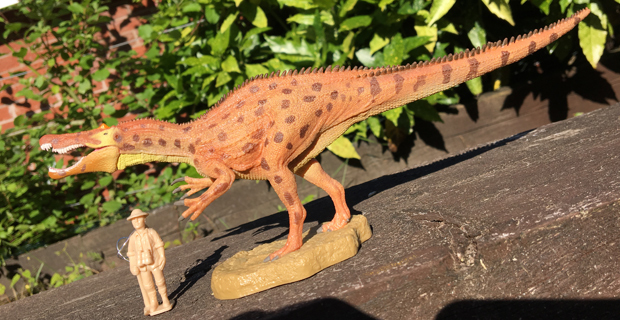
A Model of the Theropod Dinosaur Baryonyx (B. walkeri)

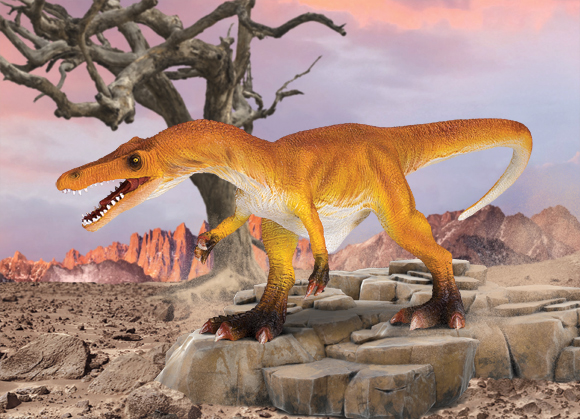
CollectA Baryonyx dinosaur model.

The CollectA Deluxe 1:40 scale Baryonyx dinosaur model, photographed outside.  A recently introduced model of Baryonyx with a human figure providing an approximate scale.  Picture credit: Everything Dinosaur.

Picture credit: Everything Dinosaur

View the CollectA model range: CollectA Prehistoric Life Models.

Information for the Display Board

Name: Baryonyx (B. walkeri).
Means: Heavy Claw.
Period: Early Cretaceous, about 125 million years ago.
Where have Baryonyx fossils been found: England, Spain, (Europe).

In 1983, amateur fossil hunter, William Walker discovered parts of a giant claw, a claw bone and a tail bone whilst exploring a clay pit in Ockley, Surrey.  Palaeontologists from the British Museum (now known as the Natural History Museum) in London were despatched to investigate and this led to the recovery of approximately 70% of the skeleton of a new type of theropod dinosaur.

The huge claw, after which Baryonyx is named, measures over 30 cm along its curve.  It is possible that Baryonyx used this claw to hook fish out of water, while hunting on riverbanks.  The fossils found in the Surrey clay pit came from a dinosaur that was not fully grown.  Baryonyx could have measured up to 9.5 metres long, 2.5 metres high at the hips and probably weighed over 2 tonnes.

Dinosaurs Associated with the Wealden Group

Mojo Baryonyx deluxe dinosaur model.

The new for 2020 Mojo Fun Baryonyx deluxe dinosaur model.

The picture (above) shows a Baryonyx in the Mojo Fun collection.

To view this range of models: Mojo Prehistoric and Extinct Models.

Visit the Everything Dinosaur website: Everything Dinosaur.

12 02, 2021

Happy Birthday to Sir Charles Darwin

By |2024-05-19T07:21:16+01:00February 12th, 2021|Categories: Famous Figures, Main Page|0 Comments

Happy Birthday Charles Darwin

From the Beagle to barnacles, today marks the 212th anniversary of the birth of Charles Darwin, the famous English naturalist who shaped modern science with his theories related to natural selection and evolution.  Born this day in 1809, Darwin travelled to the Galapagos Islands aboard HMS Beagle and his observations about the fauna he encountered during his voyage through much of the Southern Hemisphere led him to speculate that organisms changed over time by a process of natural selection.  When Darwin’s theories were finally published in 1859 in the soon to be famous book “On the Origin of Species by Natural Selection*“, there was a great deal of controversy generated.

Charles Darwin

His studies of the natural world, including research into barnacles and his ground-breaking classification of the infraclass Cirripedia (barnacles are a marine arthropod), helped to establish his reputation in zoological circles.  His work remains a cornerstone within biology and related disciplines including palaeontology.

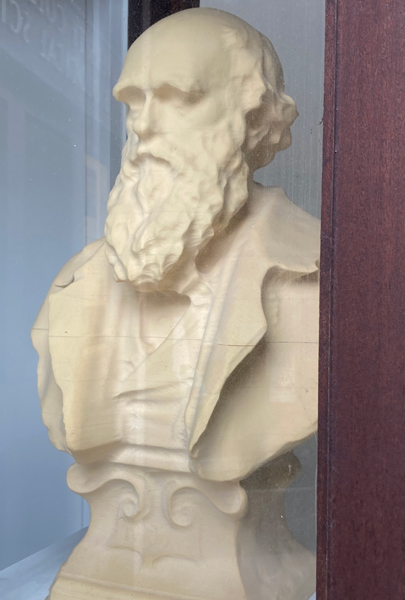
Sir Charles Darwin bust.

The Sir Charles Darwin bust on display at the Darwin Building of the Wellcome Trust in London. Picture credit: Everything Dinosaur.

Picture credit: Everything Dinosaur

For models and replicas of dinosaurs and other prehistoric animals: Dinosaur Models and Collectable Prehistoric Animal Figures.

Happy 212th birthday Charles Darwin.

*Like a lot of Victorian academic publications Darwin’s famous book had a very long title, the full title of the 1859 publication is “On the Origin of Species by Means of Natural Selection, or the Preservation of Favoured Races in the Struggle for Life”.

An Avid Collector

An avid collector, Darwin amassed a huge number of samples and specimens over his long career, some of his collection still contains a few surprises.  To read a related article about Darwin’s extensive and remarkable collection: The Lost Fossils and a Cabinet of Curiosities.

11 02, 2021

Elasmosaurs Lived In Rivers According to New Research

By |2024-05-19T07:14:56+01:00February 11th, 2021|Categories: Adobe CS5, Dinosaur and Prehistoric Animal News Stories, Dinosaur Fans, Main Page, Photos/Pictures of Fossils|0 Comments

Fluvionectes sloanae – Late Cretaceous Freshwater Elasmosaurid

Researchers based in Canada have identified the remains of a Late Cretaceous elasmosaur from fossil remains found in Alberta.  Fossils of these large, long-necked plesiosaurs are not unknown from North America, but significantly these fossils were found in rocks laid down in a non-marine environment.  This suggests that this elasmosaur named Fluvionectes sloanae, spent at least some of its time in freshwater.

An Artist’s Reconstruction of Fluvionectes sloanae Hunting Fish in a Freshwater Environment
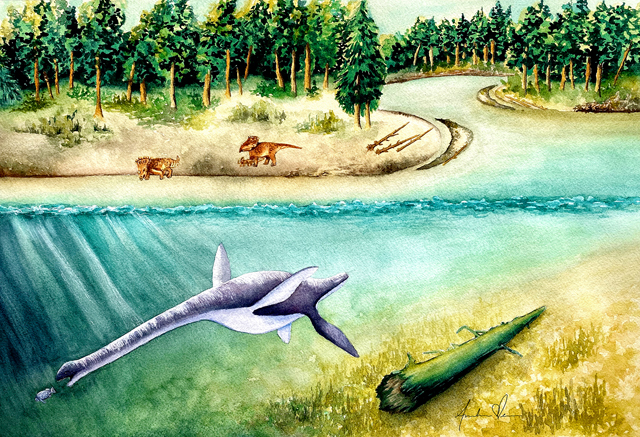
Fluvionectes sloanae life reconstruction.

Fluvionectes sloanae hunting fish in a river.

Picture credit: Andrea Elena Noriega

“River Swimmer”

Fossils of plesiosaurs occur throughout the Dinosaur Park Formation but they are generally rare, fragmentary and poorly preserved.  As a result, these fossils have attracted little scientific attention although they were first documented by Lawrence Lambe back in 1902.

This specimen is different, it consists of a partial disarticulated skeleton made up of a single tooth, numerous vertebrae, ribs, parts of the pectoral and pelvic girdles and elements from the left forelimb and left hindlimb.  The bones and the tooth were collected from a stratum immediately overlying the basal most coal bed of the Lethbridge Coal Zone in the Dinosaur Park Formation with the first material discovered in 1990.

Fluvionectes sloanae

It is the most complete example of an elasmosaurid found to date in the Dinosaur Park Formation and as such, the researchers have been able to formally describe the specimen and assign it a scientific name – Fluvionectes sloanae. The genus name translates as “river swimmer”, a reference to the fact that the fossils come from alluvial deposits believed to have been laid down at least 100 kilometres inland from the Western Interior Seaway.  The species name honours Donna Sloan who discovered the holotype, and in recognition of her service to palaeontology, both in the field and as the scientific illustrator at the Royal Tyrrell Museum of Palaeontology (Drumheller, Alberta).

Quarry Map and Skeletal Reconstruction of F. sloanae
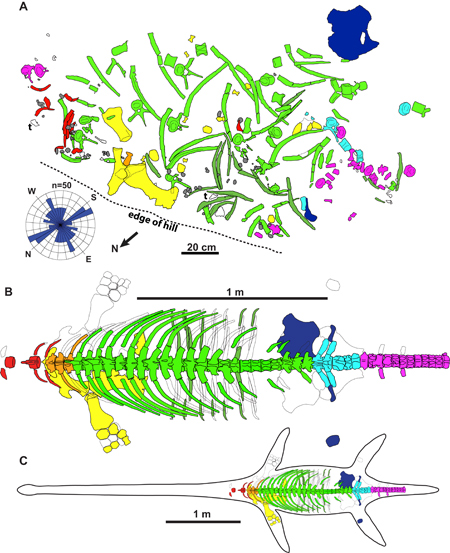
Colour coded quarry map showing location of F. sloanae fossil material.

Quarry map and skeletal reconstruction of F. sloanae.  The fossil material was found scattered over an area of around 2.5 square metres.

Picture credit: Campbell et al (PeerJ)

A Freshwater Predator (Fluvionectes sloanae)

A taxonomic analysis conducted by the scientists which included Dr James Campbell of the University of Calgary and Mark Mitchell, a technician at the Royal Tyrrell Museum of Palaeontology, failed to resolve definitively the exact taxonomic relationship of Fluvionectes within the Elasmosauridae.  However, the team were able to conclude that the fossil remains probably represent a young adult.  The specimen indicates an animal approximately 5.6 metres long when it died.

Fragmentary fossils of potentially larger elasmosaurids, representing animals around seven metres in length have been found in the Dinosaur Park Formation.  Some of these specimens might represent the Fluvionectes genus.  The scientists conclude that further study is needed to identify specimens at the genus level.

Views of the Vertebrae Associated with Fluvionectes sloanae
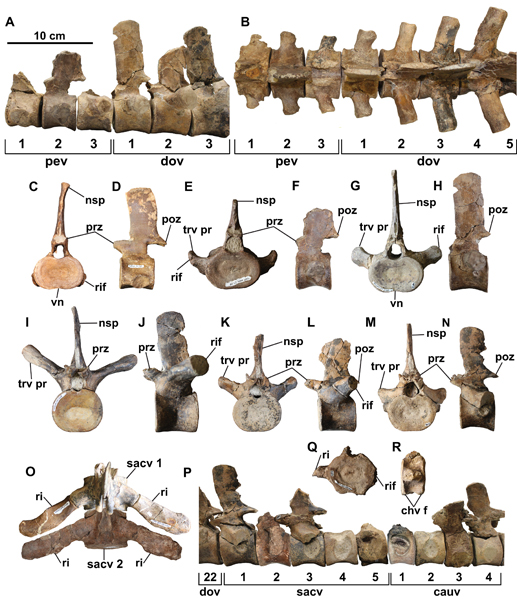
Vertebrae associated with the elasmosaurid Fluvionectes sloanae.

Fluvionectes sloanae – examples of vertebrae.

Picture credit: campbell et al (PeerJ)

Everything Dinosaur stocks a wide range of marine reptile models.  Models of elasmosaurs, plesiosaurs and mosasaurs are in stock.

To view a selection of marine reptile figures: Wild Safari Prehistoric World Models and Figures.

Did Some Juvenile Elasmosaurs Live in Freshwater?

Intriguingly, the elasmosaurid fossils found in the Dinosaur Park Formation (non-marine deposition), are relatively small when compared to elasmosaurid fossils found in offshore, marine deposits such as the Pierre Shale or Bearpaw formations.  Large elasmosaur fossil bones have not been found in the Dinosaur Park Formation.  It could be speculated that juvenile elasmosaurs ventured into estuarine environments and freshwater river systems before relocating to marine environments when they reached maturity.

This is not the first example of a marine reptile, normally associated with marine environments been found in freshwater.  To read Everything Dinosaur’s 2013 article about the discovery of a freshwater pliosaur in Australia: Freshwater Pliosaur from Cretaceous Australia.

To read our article about a freshwater Mosasaur: Freshwater Mosasaur from a Hungarian Bauxite Mine.

The scientific paper: “A new elasmosaurid (Sauropterygia: Plesiosauria) from the non-marine to paralic Dinosaur Park Formation of southern Alberta, Canada” by James A. Campbell, Mark T. Mitchell, Michael J. Ryan and Jason S. Anderson published in PeerJ.

Visit the Everything Dinosaur website: Everything Dinosaur.

10 02, 2021

The Beasts of the Mesozoic Triceratops (sub-adult) Model

By |2024-05-19T07:13:09+01:00February 10th, 2021|Categories: Adobe CS5, Dinosaur Fans, Everything Dinosaur Products, Main Page, Photos of Everything Dinosaur Products|0 Comments

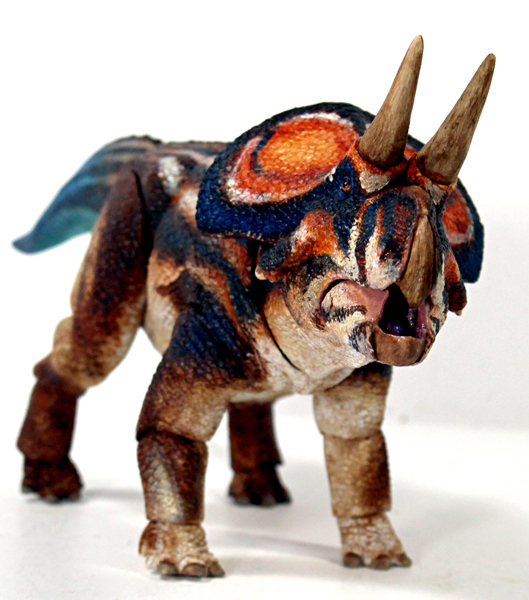
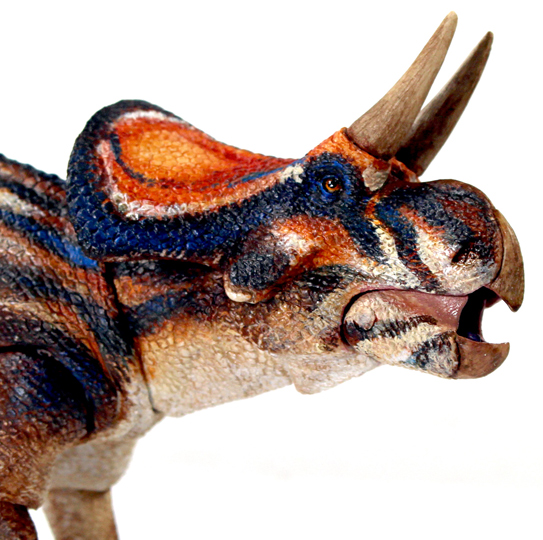
The Beasts of the Mesozoic Triceratops (sub-adult) Model

We have received some requests to post up more photographs of the popular Beasts of the Mesozoic sub-adult Triceratops dinosaur model.  Our team members are always willing to oblige so we produced a short blog post that features some more pictures of the Beasts of the Mesozoic Triceratops horridus.

The Beasts of the Mesozoic Articulated Triceratops Dinosaur Model (sub-adult Triceratops horridus)

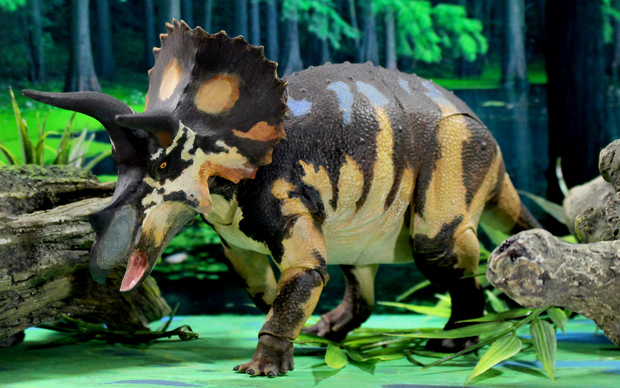
The Beasts of the Mesozoic Triceratops (sub-adult) articulated figure.

The beautiful Beasts of the Mesozoic Triceratops (sub-adult) articulated figure.  This is one of nine members of the Ceratopsia in the first wave of the popular Beasts of the Mesozoic series.

This one of the largest of the first wave of ceratopsian models created, this is appropriate as T. horridus is regarded as one of the biggest of all the horned dinosaurs described to date.

The Beasts of the Mesozoic Triceratops Model is Around 27 cm in Length

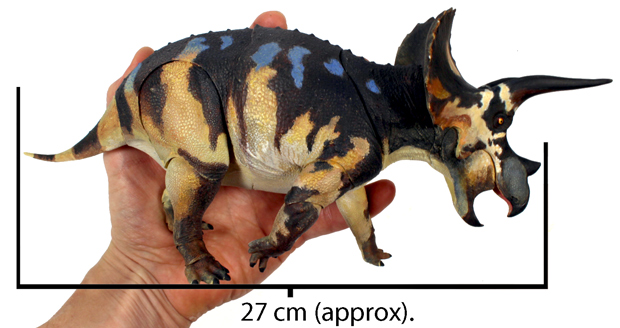
Beasts of the Mesozoic sub-adult Triceratops dinosaur model is approximately 27 cm long.

The Beasts of the Mesozoic sub-adult Triceratops dinosaur model is approximately 27 cm long.  The model has twenty points of articulation and the manufacturer declares a scale of 1:18.

Beasts of the Mesozoic Triceratops (1:18 Scale)

A replica of one of the most popular of all the dinosaurs, the Beasts of the Mesozoic Triceratops is a very colourful figure with twenty points of articulation.  Measuring a fraction under 27 cm in length it is also one of the largest of the first wave of ceratopsian figures created by this company, even though the figure represents a sub-adult.  The model has a declared scale of 1:18 and it represents a dinosaur that lived towards the very end of the Cretaceous.

Palaeontologists have estimated that the temporal range of Triceratops horridus was from 66.8 to 66.4 million years ago (Maastrichtian faunal stage of the Late Cretaceous).  It was superseded by Triceratops prorsus which it is believed it was an ancestor of.  Hell Creek Formation fossils also suggest an as yet, unnamed intermediate species between T. horridus and the younger T. prorsus.

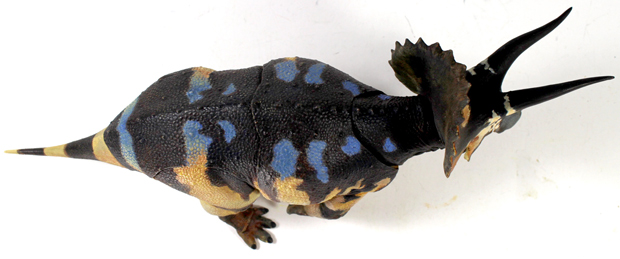
A Dorsal View of the Beasts of the Mesozoic Triceratops Dinosaur Model

The Beasts of the Mesozoic Triceratops sub-adult model (dorsal view).

A dorsal (top down) view of the Beasts of the Mesozoic Triceratops (sub-adult) dinosaur model.

To view the gorgeous Beasts of the Mesozoic sub-adult T. horridus and the rest of the articulated figures in the Beasts of the Mesozoic range: Beasts of the Mesozoic Models.

For other types of dinosaur and prehistoric animal themed merchandise visit: Everything Dinosaur.

9 02, 2021

Creating a New Stegosaurus Information Panel

By |2024-05-19T07:07:53+01:00February 9th, 2021|Categories: Dinosaur Fans, Educational Activities, Main Page, Photos of Everything Dinosaur Products, Teaching|0 Comments

Stegosaurus Information Panel

As part of our on-going work with an events management company Everything Dinosaur team members have been asked to prepare an information panel on Stegosaurus for an exhibition.  Despite being one of the most popular of all the dinosaurs and a “terrible lizard” that the public find very easy to recognise, this genus has proved to be problematical for palaeontologists and ever since the first Stegosaurus was scientifically described back in 1877 by the American palaeontologist Othniel Charles Marsh, the stegosaur family have gone through several revisions.

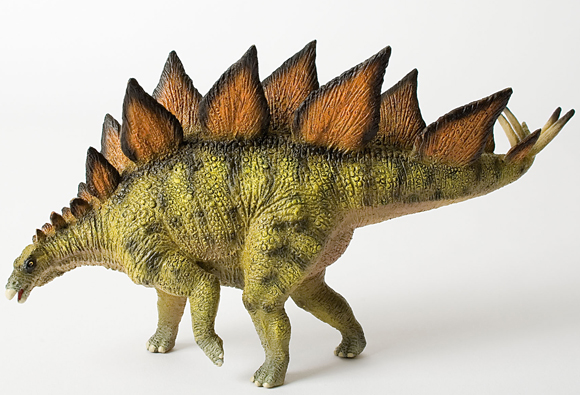
The Bullyland Stegosaurus Dinosaur Model – Stegosaurus is One of the Most Famous of All the Dinosaurs

Bullyland Stegosaurus dinosaur model.
The Bullyland Stegosaurus dinosaur model.  An iconic replica of a famous dinosaur that because of its plates and spiky tail is easy to identify for members of the public.  However, its taxonomic history has been far from straight forward.

The image (above) shows the superb Bullyland Stegosaurus dinosaur model.

To view the range of Bullyland prehistoric animal figures: Bullyland Prehistoric Animal Figures.

In surveys conducted by Everything Dinosaur, to determine favourite prehistoric animals, Stegosaurus has been placed as high as three, with only Tyrannosaurus rex and Triceratops beating it in terms of popularity.  Putting together a concise yet informative display panel for Stegosaurus represented quite a challenge.

The Stegosaurus Information Panel

Name: Stegosaurus

Means: Roof Lizard

Period: Late Jurassic, about 155-150 million years ago

Where have Stegosaurus Fossils been Found? Colorado, Utah and Wyoming in the USA and Portugal (Europe)

Stegosaurus was a slow-moving herbivorous quadruped and is perhaps one of the easiest dinosaurs to recognise thanks to its plates and tail spikes.  However, ever since the first fossils of this iconic dinosaur were found in 1877 Stegosaurus has caused much controversy.  For example, the famous American palaeontologist Othniel Charles Marsh, the first scientist to describe Stegosaurus, thought that the plates resembled the large flat bones that formed the shells of some types of prehistoric sea turtle.

Marsh suggested that Stegosaurus was an aquatic animal.  It was not until 1891, after the discovery of several more specimens that the first skeletal reconstruction of Stegosaurus was completed.  The hind limbs are much longer than the front limbs and it has been suggested that Stegosaurus could have reared up so it could feed on the branches of trees.

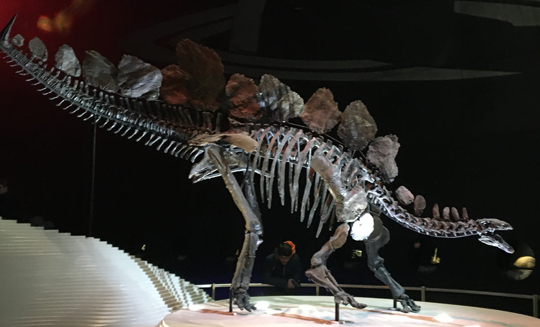
“Sophie” the Stegosaurus a Star Attraction at the London Natural History Museum

Sophie the Stegosaurus at the London Natural History Museum
Sophie the Stegosaurus (S. stenops), a star exhibit at the London Natural History Museum.  The most complete Stegosaurus specimen known to science.  Picture credit: Everything Dinosaur.

Picture credit: Everything Dinosaur

Bony Plate

Scientists are still debating what the bony plates were used for and how exactly they were arranged along the back.  The plates are not attached to the spine but held in place with cartilage, tendons and muscles.  It is thought that the plates were arranged in two alternating rows running down the back with the largest plates (up to 1 metre high), located over the hips.  In this position the plates would have provided very little protection, it seems more likely that they played a role in species recognition or display behaviour.  The bony plates may also have helped maintain body temperature by acting as heat regulators.

The largest species measured around 9 metres in length and weighed more than 3 tonnes.  Stegosaurus also had two pairs of spikes on the end of its tail. These were probably defensive weapons.

To read an article about the research into the most complete Stegosaurus (S. stenops) specimen known to science: “Sophie” the Stegosaurus at 1.6 tonnes.

Visit the award-winning and user-friendly Everything Dinosaur website: Everything Dinosaur.

8 02, 2021

Beasts of the Mesozoic Zuniceratops Dinosaur Model

By |2024-05-18T22:14:02+01:00February 8th, 2021|Categories: Adobe CS5, Dinosaur Fans, Everything Dinosaur Products, Main Page, Photos of Everything Dinosaur Products, Product Reviews|0 Comments

Beasts of the Mesozoic Zuniceratops Dinosaur Model

One of the first wave of horned dinosaur figures to be introduced under the Beasts of the Mesozoic banner, Zuniceratops is one of those dinosaur models that since its introduction it has helped inform and educate model collectors about the huge diversity now associated with the Ceratopsia.  Models of this Late Cretaceous horned dinosaur are few and far between and the inclusion of this figure, a replica of a member of the Ceratopsidae which was about the size of a cow, helped broaden the understanding of dinosaur fans and model collectors.

Zuniceratops represents a “transitional form”, a dinosaur with a combination of primitive traits and more derived characteristics.  Roaming around the southern United States approximately 90 million years ago (Turonian faunal stage), it is one of just a handful of dinosaurs known to science from this time, some twenty-four million years prior to the evolution of more famous horned dinosaurs such as Triceratops.

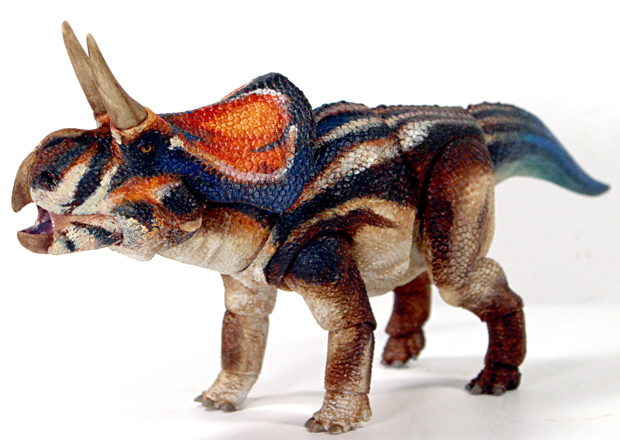
The Beasts of the Mesozoic Zuniceratops (Z. christopheri) Dinosaur Model

The beautiful markings on the Beasts of the Mesozoic Zuniceratops model.

Beasts of the Mesozoic Zuniceratops (lateral view).  Showing the colourful markings on this articulated dinosaur model.

Zuni Horned Face

Measuring a fraction under 22 cm in length, this is one of the smallest of the horned dinosaurs in the Beasts of the Mesozoic series.  In order for it to be given the standard scale for this range (1/18th scale), a small replica was required as this dinosaur measured around three metres long and weighed approximately 200 kilograms, making it considerably smaller and lighter than its much more famous horned dinosaur distant relatives such as Styracosaurus, Triceratops and Pachyrhinosaurus.  The figure might measure just under 22 cm long but it does have 19 points of articulation crammed into its small but sturdy frame.

A Close-up View of the Horns Possessed by Zuniceratops

Beasts of the Mesozoic Zuniceratops christopheri dinosaur model.

The Beasts of the Mesozoic Zuniceratops christopheri dinosaur model.  Despite its formidable appearance, Zuniceratops was actually quite small for a member of the North American ceratopsids.

A Fantastic Paint Scheme

The colours chosen for this articulated dinosaur model are certainly bold and striking.  The body shows signs of counter shading which then give way to contrasting orange flashes which blend with the deep blue to be found at the top of the front legs, around the eyes and framing the long neck shield.   The two brow horns are beautifully painted.  These horns may have played a role in visual communication or as defensive weapons to deter the advances of theropod predators.  Ironically, as far as Everything Dinosaur team members know, there have been no large carnivorous dinosaurs from the Moreno Hill Formation of New Mexico formally described.  Fossils of Zuniceratops are associated with this geological formation and nowhere else.

The Beautiful and Very Colourful Head of the Zuniceratops Model

Beasts of the Mesozoic Zuniceratops (anterior view).

The beautiful, detailed head of the Beasts of the Mesozoic Zuniceratops articulated dinosaur model.

The Everything Dinosaur website: Models of Dinosaurs.

A spokesperson from Everything Dinosaur commented:

“Because it represents one of the smaller Late Cretaceous ceratopsians from North America, this Beasts of the Mesozoic figure is a little smaller than the rest of the first wave of these dinosaur models.  We have subsequently priced it a little cheaper so it has become the ideal entry point for model collectors who wish to familiarise themselves with this exciting dinosaur model series.”

To view the Beasts of the Mesozoic ceratopsians and the rest of the models in this series: Beast of the Mesozoic Models.

7 02, 2021

Helpful Feedback on Nanmu Studio Jurassic Series Models

By |2024-05-19T07:10:42+01:00February 7th, 2021|Categories: Dinosaur Fans, Everything Dinosaur Products, Main Page, Photos of Everything Dinosaur Products|0 Comments

Nanmu Studio Jurassic Series Model Reviews

Over the last few weeks, we have been busy sending out lots of Nanmu Studio dinosaur models to enthusiastic collectors.  Since this range came into stock at Everything Dinosaur, we have sold a lot of Nanmu Studio models and customer reviews as provided by the independent ratings company Feefo are starting to be posted up on the Feefo website.  The Nanmu Studio range of figures is certainly proving to be popular.

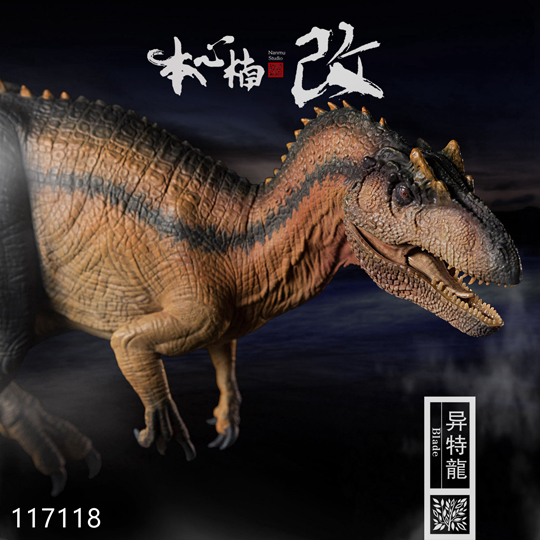
A Nanmu Studio Allosaurus Dinosaur Model

Nanmu Studio Allosaurus Blade (Red).

The Nanmu Studio Allosaurus Blade (Red).  One of the Nanmu Studio dinosaur models in stock at Everything Dinosaur which has recently been reviewed by customers.

Nanmu Studio Dinosaur Model Reviews

Here are some examples of recent customer reviews of the Nanmu Studio Jurassic Series dinosaur models:

Steve provided feedback on his Nanmu Studio order stating that:

“I have purchased from Everything Dinosaur a fair few times now and I can honestly say they are one of the best, sadly I can only give 5 stars or it would be more.  Everything Dinosaur have pushed to bring in some amazing figures recently and I certainly look forward to purchasing more in the future.  They have a great range of products to suit all ages from a child to an adult collector, so they are pretty much a one stop shop for dinosaur products.”

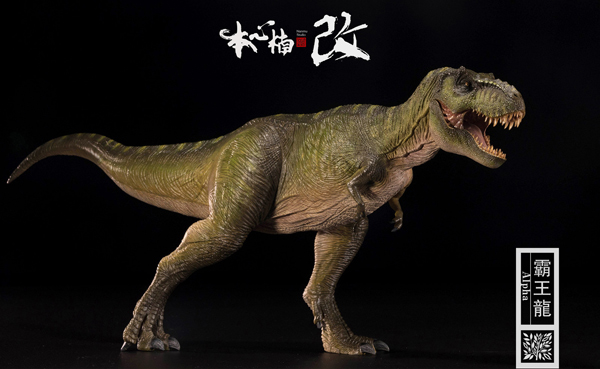
He had purchased the Nanmu Studio Jurassic Series Tyrannosaurus rex (Alpha – Green) and this is his review:

“Nanmu JP series of Dinosaurs are probably the best available and this one is a superb addition to my collection”.

The Nanmu Studio Jurassic Series T. rex Dinosaur Model

Nanmu Studio Jurassic Series Tyrannosaurus rex (Alpha -Green) dinosaur model.

A Nanmu Studio Jurassic Series Tyrannosaurus rex (Alpha -Green).

Everything Dinosaur  customer Shanice commented:

“Perfect as always!  It’s my favourite dinosaur store.  I appreciate the quick responses on Facebook as well, as I usually approach Everything Dinosaur on Facebook for questions!”

Purchasing the Spinosaurus (Supplanter) the review left stated:

“Supplanter equals absolutely amazing!  It’s funny actually, since I contacted Everything Dinosaur a long time ago asking if they would ever have Nanmu figures in their store and back then they told me they were working on connecting with several brands!  I am so glad I had the patience to wait so I could finally buy it here!  Finally, I got the beauty!  This Spinosaurus is gorgeous the details are just wow…. I love it especially those teeth looking so real in fact this entire figure really looks real like!  Love it!”

Nanmu Studio Jurassic Series Supplanter Spinosaurus Model

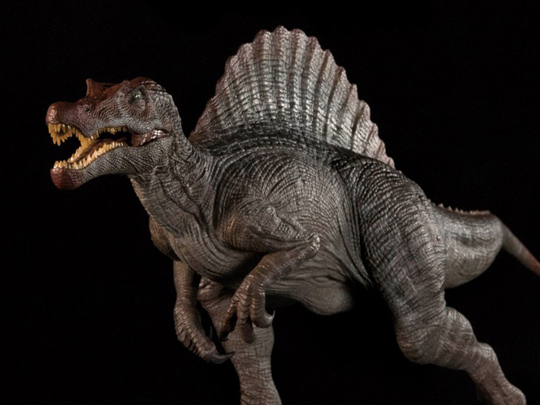
Nanmu Studio Spinosaurus in stock at Everything Dinosaur.

The Nanmu Studio Spinosaurus dinosaur model (Supplanter) at Everything Dinosaur.

Nanmu Studio Jurassic Series Model Reviews

Lara from Slovenia commented on the Nanmu Studio T. rex model:

“It is amazing!  Very well made.  I bought it as a gift and my bf loved it.  These are very well made statues.”

Cameron reviewed the Nanmu Studio Jurassic Series Carnotaurus Ranger model stating:

“Fantastic my little boy loves it as Carnotaurus is his favourite dinosaur.  As per usual great communication amazing service from start to finish.  Speedy delivery as always, highly recommend them [Everything Dinosaur] to anyone.”

Visit the Everything Dinosaur website: Dinosaur Models.

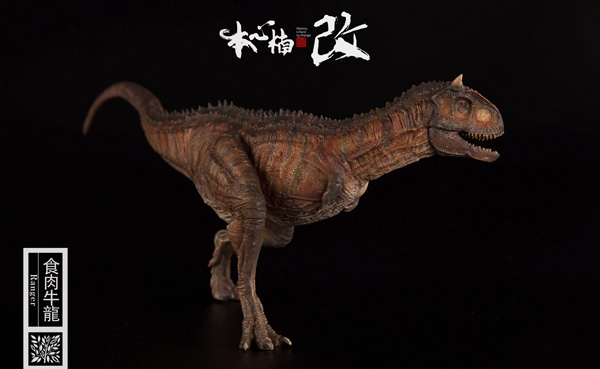
The Nanmu Studio Jurassic Series Carnotaurus (Ranger)

The Nanmu Studio Jurassic Series Carnotaurus dinosaur model.

Picture Credit: Everything Dinosaur

To view the range of Nanmu Studio prehistoric animal models in stock at Everything Dinosaur: Nanmu Studio Jurassic Series Prehistoric Animal Models.

6 02, 2021

Preparing a Pteranodon Information Panel

By |2023-08-15T05:37:29+01:00February 6th, 2021|Categories: Dinosaur Fans, Educational Activities, Everything Dinosaur News and Updates, Main Page, Teaching|0 Comments

Preparing a Pteranodon Information Panel

As part of their on-going work with an events management company, Everything Dinosaur team members have been asked to prepare an information panel on the famous pterosaur genus Pteranodon.  The information provided will be used for a display board that accompanies a life-size Pteranodon longiceps exhibit.  The Pteranodon panel is one of a series of display boards being created by Everything Dinosaur, all the other boards that staff members have been asked to create relate to dinosaurs.

A Model of the Pterosaur Pteranodon longiceps

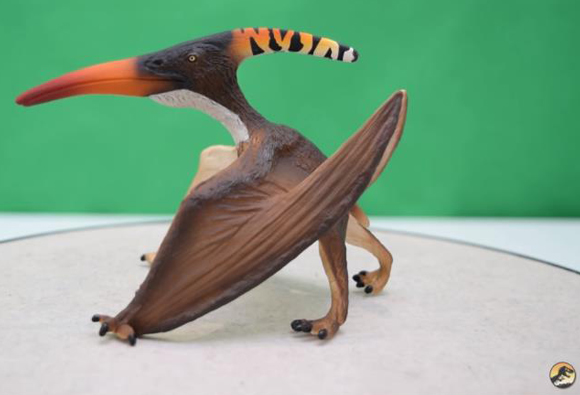
JurassicCollectables reviews the Wild Safari Prehistoric World Pteranodon figure.

Perhaps the most famous flying reptile of all!  A model of the flying reptile known as Pteranodon (P. longiceps).  Everything Dinosaur team members have been asked to create an information board to accompany a life-size museum display of this Late Cretaceous pterosaur.

Picture credit: JurassicCollectables

The image (above) shows a Pteranodon figure from the Wild Safari Prehistoric World model range.

To view this range: Wild Safari Prehistoric World Figures and Models.

The Pteranodon Information Panel

Pteranodon might be one of the best-known and extensively studied of all the Pterosauria.  Around 1,200 fossil specimens are known, ironically most are fragmentary and squashed as flat as a pancake.

Name: Pteranodon (Pteranodon longiceps).

Means: Winged and Toothless.

Period: Late Cretaceous, 85 Million Years Ago (approximately).

Where are the majority of Pteranodon Fossils Found?  They are found in Kansas, South Dakota and Wyoming (USA).

Pteranodon is a pterosaur, a type of extinct flying reptile and not a dinosaur!  Pterosaurs were a very unusual group of reptiles that lived alongside the dinosaurs.  They were the earliest back-boned animals to evolve powered flight and take to the sky.  There are many species known (more than 120).  The smallest had a wingspan of around 25 centimetres, whereas the largest had a wingspan of about 10 – 11 metres!

They became extinct at the end of the Cretaceous, around 66 million years ago.  Pteranodon is perhaps the most famous pterosaur; the largest specimens suggest a wingspan of around 7 metres.  Over a thousand specimens, from almost complete skeletons to fragmentary bones, have been found.  Pteranodon fossils are associated with strata laid down in marine environments and it is thought that these flying reptiles fed on small fish.

Many Prehistoric Scenes Feature the Iconic Pterosaur Pteranodon

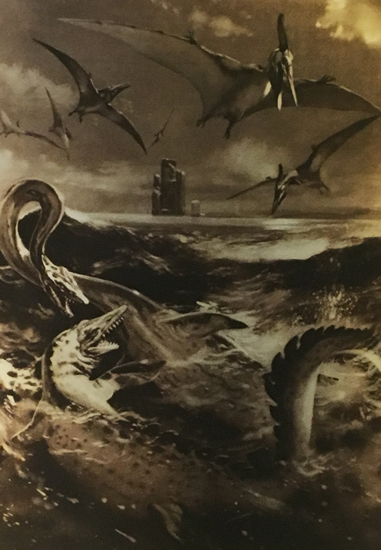
The Western Interior Seaway (Late Cretaceous)

Dramatic scene from the Western Interior Seaway painted by Burian.  Pteranodon fossils are associated with marine deposits and this explains why they are featured in prehistoric seascapes, especially those depicting the Pierre Seaway and the Western Interior Seaway.

Picture credit: Zdeněk Burian

Visit the award-winning Everything Dinosaur website: Everything Dinosaur.
5 02, 2021

Research Suggests Horned Dinosaurs Evolved Frills to Attract Mates

By |2024-05-18T22:04:02+01:00February 5th, 2021|Categories: Dinosaur and Prehistoric Animal News Stories, Dinosaur Fans, Main Page, Palaeontological articles, Photos/Pictures of Fossils|0 Comments

Horned Dinosaurs Evolved Frills to Attract Mates

The ornate and very diverse head crests and frills of horned dinosaurs (ceratopsians) probably evolved to help them attract a mate.  That is the conclusion from a study recently published in the Proceedings of the Royal Society B.

Why Did Some Horned Dinosaurs Have Elaborate Frills?

Ever since the first horned dinosaurs were discovered, palaeontologists have debated why these plant-eating dinosaurs evolved such elaborate neck shields (these features are produced by elaborate extensions to the parietal and squamosal skull bones).  It had been thought that these frills provided some protection from attack from theropod dinosaurs such as the contemporaneous tyrannosaurs, or perhaps they had a role in thermoregulation.

With so many different types of large ceratopsians known from the Late Cretaceous of North America it had also been suggested that these crests and frills played a role in species recognition.  An extensive analysis of the skulls of “first horned face” – Protoceratops (P. andrewsi), suggests that they played a role in sexual selection.

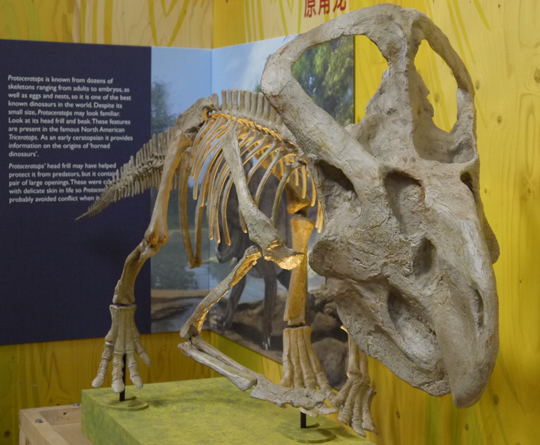
A Reconstruction of the Skeleton of Protoceratops (P. andrewsi)

Protoceratops skeleton on display.

A skeleton of a Protoceratops on display.  The elaborate head crest complete with fenestrae (two large holes), probably evolved as a result of sexual selection.  Picture credit: Everything Dinosaur.

Picture credit: Everything Dinosaur

Sexual Selection in Horned Dinosaurs

Sexual selection is a method of natural selection in which members of one biological sex choose mates of the other sex to mate with.  Certain characteristics in organisms are favoured by members of the opposite sex and organisms that possess the favoured feature(s) are the ones that breed.  This leads over time to these preferred characteristics becoming more intricate and elaborate.  There are plenty of examples to be found in the natural world today, most certainly amongst the closest living relatives of the Dinosauria the birds.  The elaborate but cumbersome tails of peacocks for instance, or the ornate and very beautiful plumes of the birds of paradise.

The researchers, which included scientists from the Natural History Museum (London) and Queen Mary University of London, used computer modelling to map how the skull of Protoceratops changed as the dinosaur grew.  Protoceratops has a rich and extensive fossil record.  Hundreds of specimens have been found ranging from embryos in unhatched eggs up to large, very old adults.  This extensive fossil record made this type of horned dinosaur an ideal candidate for this study.

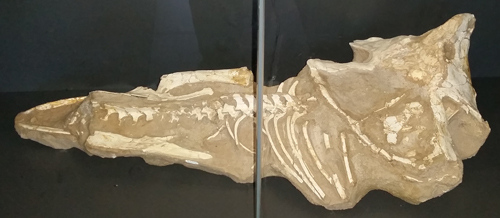
The Fossilised Remains of a Protoceratops

The fossils of a Protoceratops.

Protoceratops fossil display in Frankfurt Museum (could be a cast).  Picture credit: Everything Dinosaur.

Picture credit: Everything Dinosaur

An Important Driver of Evolution

Sexual selection is predicted to be an important driver of evolution.  It influences adaptation and the development of new species.  There are anatomical traits and characteristics that can be identified in the fossil record that indicate sexual selection within a species is at work.   The fossilised skulls of horned dinosaurs can be studied to see if any of these traits and characteristics can be found.

Predicted characteristics of horned dinosaur skulls that indicate sexual selection having an influence include:

  • Low integration with the rest of the skull.
  • A significantly higher rate of change in size and shape as the dinosaur grows.
  • A higher morphological variance in the parietal and squamosal when compared to other bones of the skull.

The computer modelling used to assess these traits supported the theory that sexual selection was at work within Protoceratops andrewsi.

No Evidence of Sexual Dimorphism in Protoceratops

Whilst it is notoriously difficult to identify males from females using just the fossil record, the large number of Protoceratops specimens gave the researchers the opportunity to see if they could spot evidence of male Protoceratops having different skull frills compared to the females.  Although the research involved a substantial sample set, no evidence of sexual dimorphism in skull shape was found.  This suggests that either there were no differences in frill shape between the boys and the girls or that any differences between the genders was very small.

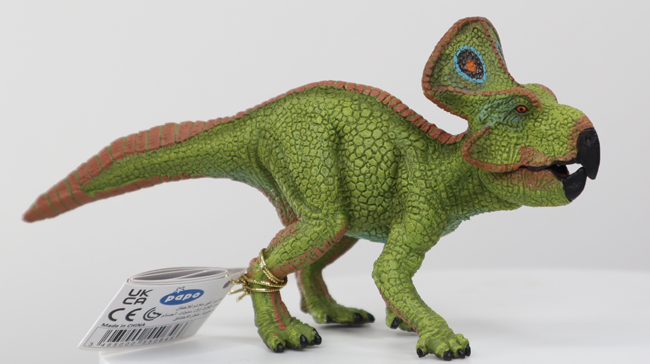
A Model of an Adult Protoceratops

Papo Protoceratops dinosaur model.

Papo Protoceratops dinosaur model.  Picture credit: Everything Dinosaur.

Picture credit: Everything Dinosaur

The image (above) shows a Papo Protoceratops dinosaur model.

To view the Papo dinosaur model range: Papo Dinosaurs and Prehistoric Animal Models.

The scientific paper supports the idea that the elaborate frills of horned dinosaurs did play a role in sexual selection.  Scientists have suspected that many of these strange anatomical features found in the Dinosauria were linked to sexual selection and display.  This evidence is extremely hard to find using the fossil record alone, however, the computer modelling and in-depth analysis used here provides evidence for the presence of signalling structures linked to sexual selection in Protoceratops andrewsi.

The scientific paper: “Three-dimensional geometric morphometric analysis of the skull of Protoceratops andrewsi supports a socio-sexual signalling role for the ceratopsian frill” by A. Knapp, R. J. Knell and D. W. E. Hone published in the Proceedings of the Royal Society B.

Visit the Everything Dinosaur website: Everything Dinosaur.
Go to Top