All about dinosaurs, fossils and prehistoric animals by Everything Dinosaur team members.
8 03, 2019

Time to Celebrate International Women’s Day

By |2023-11-25T15:54:45+00:00March 8th, 2019|Categories: Educational Activities, Main Page, Photos/Schools, Press Releases, Teaching|0 Comments

Celebrating International Women’s Day

Today, March 8th is International Women’s Day, an annual event that has its origins in the early part of the 20th century.  Over the last few years, with women’s rights and inequality issues gaining much greater media attention, this day has provided an opportunity to highlight the many challenging issues and barriers women face, for team members at Everything Dinosaur, it allows us a platform to celebrate and commemorate the huge contribution women have made and continue to make to science.

Spotted in a London Primary School – Inspiring the Next Generation of Scientists

School poster acknowledges the role of women in science.
Celebrating the role of women in science. Picture credit: Everything Dinosaur.

Picture credit: Everything Dinosaur

International Women’s Day

The theme for International Women’s Day 2019 is: “Think equal, build smart, innovate for change”.  International Women’s Day has become an important date in the international calendar as it provides an opportunity to focus on the achievement of women and amongst other things to celebrate the role women play in the advancement of human knowledge and their contribution to society.  It also provides a focal point to address gender inequality.

When team members visit schools, we provide information to help the teachers to identify suitable role models for the children to learn about.  We have been lucky to have worked with some amazing scientists from all over the world and we can provide lots and lots of examples supporting the cause of gender equality in science, after all, the word scientist does not distinguish between male and female.

We Try and Breakdown Stereotypical Views about a Career in the Sciences

Developing scientists in schools.
Developing the next generation of scientists.  Helping to break down gender stereotypes.

Picture credit: Lego

Celebrating the Life and Work of Mary Anning

One of the role models we suggest is Mary Anning (1799-1847).  This famous fossil hunter from Dorset and her story has become synonymous with elements of the national curriculum for schools (primary school level).  When we visit schools, we provide lots of additional teaching resources and we often challenge the class to research and write about Mary Anning (independent learning and non-chronological reporting).

A Challenge to a Key Stage 1 Class – Ten Questions About Mary Anning

Mary Anning Non-chronological report.
A non-chronological report exercise based on the life and work of Mary Anning.  Helping to promote the role of women in science. Picture credit: Everything Dinosaur.

Picture credit: Everything Dinosaur

Tomorrow, March 9th, is the anniversary of the death of Mary Anning, at just 47 years of age.  As well as working with Key Stage 1 children exploring the fossils that Mary Anning found and her role in helping to improve our understanding of prehistoric life, when working with older children in Upper Key Stage 2, we introduce other issues that are reflected in the life and work of the famous fossil hunter.  For example, in Georgian and early Victorian times, the academic world largely shunned the idea of women making a contribution to scientific enquiry.

During her lifetime, Mary Anning received little credit and very little reward for her efforts.  These days, we live in somewhat more enlightened times, although many might argue that there is still a long way to go before true equality is achieved.

Working with Upper KS2 Students

When working with Year 5 and Year 6 students we explore how other scientists treated Mary and her endeavours.  She was not permitted to join the Geological Society of London, being a woman, this was forbidden and many of her male contemporaries not only refused to give her credit for her discoveries and insights, they actually took much of the credit for themselves.  Sadly, Mary died all too soon having spent much of her life in abject poverty.  When Everything Dinosaur team members visit Lyme Regis, where Mary was born, we make a pilgrimage to her grave at St Michael’s church and pay our respects.

Mary Anning’s Grave at Lyme Regis She is Buried Alongside Her Brother Joseph
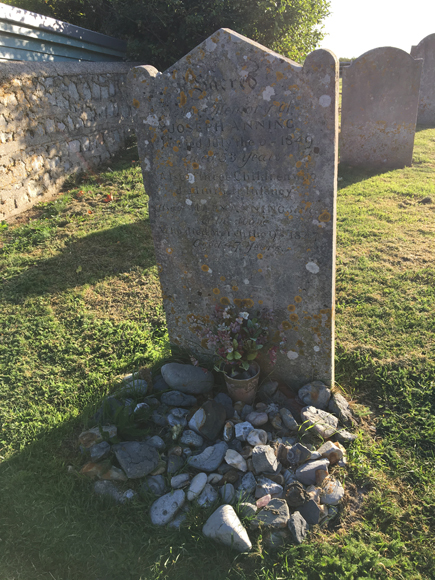
Mary and Joseph Anning are buried here.
The grave of Mary and Joseph Anning.  It has become the custom to leave a fossil at the grave as a tribute to Mary’s contribution to science. Picture credit: Everything Dinosaur.

Picture credit: Everything Dinosaur

The Royal Society Acknowleges Mary Anning

In 2010, the Royal Society published a list of the top ten British women who had most influenced the history of science.  Mary Anning was included in this list.  Much has changed in terms of gender equality in the sciences, however, despite the Royal Society having its roots in the early 1660s, it is worth remembering that the first female Fellow was not elected until 1945 (we think).

Another female scientist included in the Royal Society list was the chemist, biologist and physicist Rosalind Franklin.  Rosalind was an outstanding polymath who made an enormous contribution to our understanding of DNA and RNA and pioneered X-ray crystallography (XRC).  Rosalind Franklin is commemorated on the poster we spotted in the primary school.

Rosalind Franklin is Featured on the School Poster Praising the Contribution of Women in Science

Highlighting the work of Rosalind Franklin.
The work of Rosalind Franklin is highlighted. Picture credit: Everything Dinosaur.

Picture credit: Everything Dinosaur

Visit the Everything Dinosaur website: Everything Dinosaur.

7 03, 2019

Everything Dinosaur Achieves 6,000 “Likes” on Facebook

By |2023-11-24T13:54:04+00:00March 7th, 2019|Categories: Adobe CS5, Everything Dinosaur News and Updates, Main Page, Prehistoric Times|0 Comments

Everything Dinosaur Reaches 6,000 “Likes” on Facebook

Today, Everything Dinosaur celebrates the benchmark of having achieved 6,000 “likes” on Facebook.  Our Facebook page (@EverythingDinosaur), provides a reliable source of information on new prehistoric animal models, figure retirements, updates on fossil finds and we post up lots and lots of images of prehistoric animals, especially dinosaurs.   We even publish surveys and polls too!

The Everything Dinosaur Facebook page reached the landmark of 5,000 “likes” at the end of July 2018, a little over seven months later, we have smashed through the 6,000 “likes” threshold on our page.  A huge thank you to all those followers and friends who have “liked” our page.

6,000 Facebook “Likes” for Everything Dinosaur

Facebook and 6,000 "likes"
6,000 Facebook “likes” click to “like” Everything Dinosaur.

Picture credit: Everything Dinosaur

Everything Dinosaur Reaching Facebook Milestones

In June 2015, the Everything Dinosaur Facebook page passed the landmark of 2,000 “likes”.  By early November 2017, this had been doubled to more than 4,000 and now we have had a fifty percent increase on this with an additional 2,000 “likes” added in less than fifteen months.

A representative from Everything Dinosaur commented:

“I would like to thank all our friends, followers, customers, dinosaur enthusiasts and collectors of prehistoric animal figures who have taken the time and trouble to visit our Facebook page and to give Everything Dinosaur’s page a “like”.  We really do appreciate this and, unlike some Facebook sites, all of our “likes” are genuine.  The increase in our page’s popularity has come from organic growth and not a single “like” has come from any form of paid for advertising and promotion.  We all feel very honoured.”

Visit Everything Dinosaur on Facebook

The “like” button on the Facebook social media platform permits users to easily interact with Everything Dinosaur.  The page provides status updates, photos, links, news, polls and comments.  Gaining legitimate and genuine “likes” on Facebook gives an organisation authority and provides reassurance to other Facebook visitors.   This helps to build up a community around the company and helps to reinforce customer loyalty and trust.

We believe customer service is the key to getting "likes".
“Like” our Facebook page.

Everything Dinosaur Celebrating 6,000 “Likes” on Facebook

6,000 "Likes" on Facebook for Everything Dinosaur.
Everything Dinosaur achieves 6,000 “likes” on Facebook.

Picture credit: Everything Dinosaur

Once again, a very big thank you from all of us at Everything Dinosaur to all of you.

The company website: Everything Dinosaur.

6 03, 2019

Twisting and Turning Tyrannosaurs Made them Top Predators

By |2023-11-24T13:49:34+00:00March 6th, 2019|Categories: Dinosaur and Prehistoric Animal News Stories, Dinosaur Fans, Main Page, Palaeontological articles|0 Comments

New Study Suggests Tyrannosaurids More Manoeuvrable than Other Large Theropods

Researchers at the University of Wisconsin-La Crosse and the Oklahoma State University Centre for Health Sciences have applied mathematical models to assess the manoeuvrability of predatory dinosaurs.   This research, published in the on-line journal PeerJ, involving numerous collaborators, suggests that large bodied tyrannosaurs were more agile and able to turn more sharply than other similar sized theropods such as allosaurs and carcharodontosaurids.

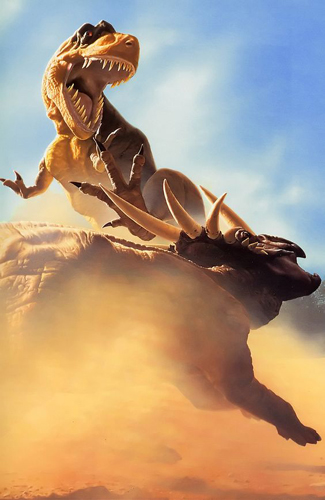
A Large Tyrannosaur Attacks a Styracosaurus

Daspletosaurus fighting a horned dinosaur.
Tyrannosaur fighting a horned dinosaur.  A new study suggests that large bodied tyrannosaurs may have been surprisingly agile.

Picture credit: John Gurche

A Factor in the Evolutionary Success of Tyrannosaurs

The research involving complex mathematics, a study of animal anatomy and physics compared how rapidly meat-eating dinosaurs could turn their bodies.  In summary, the scientists concluded that tyrannosaurs could attack smaller, faster and more dangerous prey.  It is suggested that the greater manoeuvrability of these carnivores may have been a factor in their evolutionary success.

Associate Professor at the University of Wisconsin-La Crosse, Eric Snively, in collaboration with co-author Haley O’Brien (Oklahoma State University Centre for Health Sciences) along with several other leading palaeontologists such as Professor Phil Currie (University of Alberta), demonstrated that whether a tyrannosaur was dog-sized or a fully-grown, mature adult, it retained its agility and manoeuvrability.

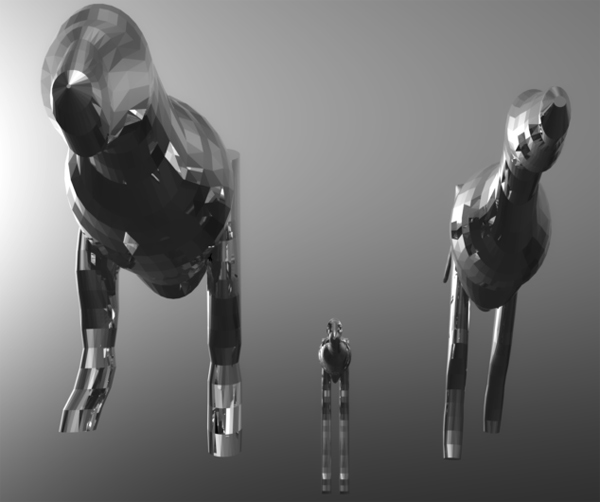
Three-dimensional Computer Models Used to Test Tyrannosaurid Manoeuvrability

Assesing the agility of tyrannosaurids.
Computer models were created to examine the agility of tyrannosaurids.

Picture credit: University of Wisconsin-La Crosse

Enhanced Agility Compared to Other Super-sized Theropods

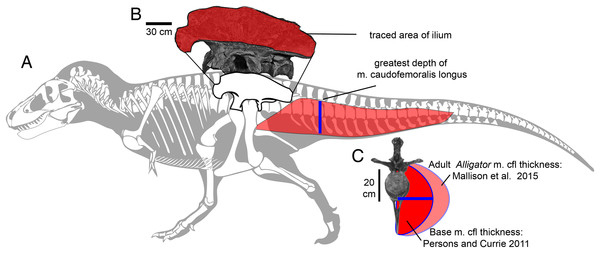
Tyrannosaurs were assessed to be more agile as they had relatively short bodies (anteroposteriorly short thoracic regions, and cervical vertebrae that aligned into posterodorsally retracted necks).  In summary, shorter bodies meant less turning resistance and even their tiny arms helped!  In addition, long, tall ilia bones (part of the hip), provided plenty of room for huge leg muscle attachments that gave the power needed for rapid turns and pivots.

The Size of the Ilia (Hip Bones) was Used to Infer Muscle Size Along with Postulated Tail Depth

Tyrannosaur agility, mapping the position of leg locomotor muscles.
Mapping muscle groups to assess the agility of tyrannosaurids.  Tyrannosaur musculature was compared to that of an extant alligator.

Picture credit: PeerJ

In terms of the fastest results from the Tyrannosaur family, a horse-sized juvenile T. rex turned the quickest for its size, followed by the giant T. rex “Sue”, the enormous, mature adult from the Field Museum (Chicago).

Eric Snively described the T. rex turn as something akin to a “slow-motion-ten-tonne figure skater from hell,” quite apt in a way as T. rex fossils are known from the Hell Creek Formation.

Biomechanical Model Has Implications for Large Theropod Hunting Strategies

The researchers used very accurate anatomical assessments and rigorous statistics to create three-dimensional models that could then be tested for their range of movements.  Different theropods were examined including Dilophosaurus, Ceratosaurus, Giganotosaurus, Sinraptor as well as numerous tyrannosaurs at different growth stages as well as smaller members of the Tyrannosauroidea Superfamily such as Raptorex.  With respect to other theropods, tyrannosaurids were found to be increasingly agile without compromising their large body mass, such that in a pairwise comparison, tyrannosaurids were achieving the same agility performance as much smaller theropods.  For example, a 500 kg Gorgosaurus had slightly greater agility scores than the 200 kg Eustreptospondylus, and an adult Tarbosaurus nearly twice the agility scores of the lighter Sinraptor.

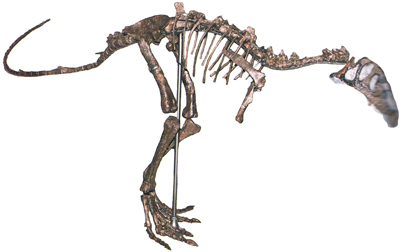
The Oxford University Specimen of Eustreptospondylus Used in the Study

Eustreptospondylus dinosaur skeleton exhibit.
The fossil specimen on display (E. oxoniensis).

Picture credit: Siri Scientific Press

Pursuing and Subduing Prey (Tyrannosaurs)

Enhanced agility and tight manoeuvrability in tyrannosaurids suggest that T. rex et al had superior abilities when it came to pursuing and subduing prey.  This new research may have important implications when it comes to examining how large theropods hunted.

If tyrannosaurids were more agile and able to manoeuvre faster than other large predators they may have been more adept than earlier, super-sized, apex predators when it came to catching agile prey.  It is postulated that this capability of tyrannosaurids is consistent with coprolite evidence that indicates that tyrannosaurids fed on juvenile ornithischians.  Furthermore, it is proposed that healed tyrannosaur bite marks on fossilised remains of adult horned dinosaurs and hadrosaurs indicate an ability to outmanoeuvre quadrupedal prey.

A spokesperson from Everything Dinosaur commented:

“Whilst this is a fascinating piece of research, it is important that we don’t entirely discount observations of modern-day predator/prey interactions.  Often an apex predator will select a weakened, or sick animal within a herd to attack.  In addition, young animals are particularly vulnerable as they are smaller and less experienced in avoiding predators compared to adult animals.”

The largest non-tyrannosaurids, including Giganotosaurus, often lived in habitats alongside sauropod dinosaurs.  These associations may suggest that allosauroids may have preferred less agile prey than did tyrannosaurids.  It is also possible that stability conferred by high rotational inertia, as when holding onto giant prey, was more important for allosauroids than turning quickly.

The researchers intend to undertake research to assess the manoeuvrability of ceratopsids and other prey such as duck-billed dinosaurs before applying the same techniques to examine tyrannosaur bite forces.

The Everything Dinosaur website: Everything Dinosaur.

5 03, 2019

Designing New Dinosaur Models is Rewarding Work

By |2023-11-30T15:06:49+00:00March 5th, 2019|Categories: Dinosaur Fans, Everything Dinosaur Products, Main Page, Photos of Everything Dinosaur Products, Product Reviews|0 Comments

Designing Dinosaur Models

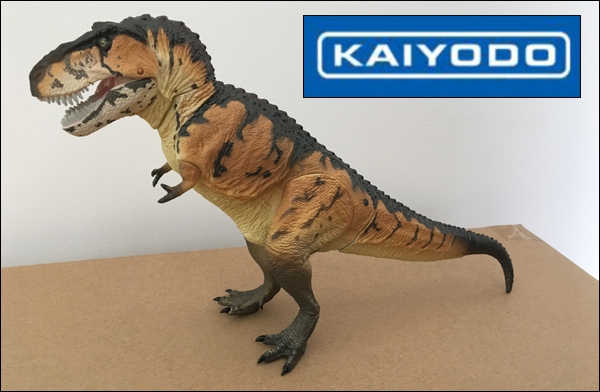
Designing dinosaur and prehistoric animal models is a tricky business.  With the advent of three-dimensional printing technology and modelling software, things have got a little easier but there is still all the work involved in creating prototypes, mould building and so on.  Today, we feature the Kaiyodo Sofubi Toy Box T. rex figure, a dinosaur model that was developed to demonstrate how scientific thinking regarding the stance of theropod dinosaurs such as Tyrannosaurus rex has changed over the last hundred years or so.

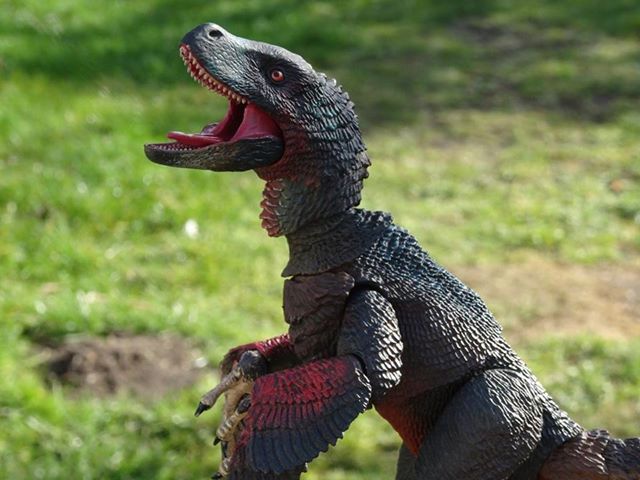
The Japanese model maker Kaiyodo has employed state-of-the-art modelling techniques to produce fantastic, highly collectable dinosaur models and figures.  The design team excelled themselves when developing a collectable figure with ten points of articulation.  Many models have an articulated lower jaw, but for the design team at Kaiyodo, doing the ordinary was out  of the question, in their limited edition T. rex Toy Box figures, they opted for an articulated upper jaw instead.

Demonstrating the Articulated Upper Jaw on the Kaiyodo Sofubi Toy Box T. rex Figure

Video credit: Everything Dinosaur

Articulated Dinosaur Models

There has been a trend in recent years for dinosaur models to have articulated jaws and front limbs.  One of the benefits of an articulated jaw for example, is this feature does permit collectors to be able to close the mouth of their figure.  Many theropod dinosaur models tend to depict these animals with their mouth open, not a natural pose at all.

Most tetrapods don’t walk round all day with the jaws wide open.  It is the lower jaw that is articulated in the vast majority of these figures. However, in order to demonstrate their engineering credentials, the design team at Kaiyodo gave their Sofubi Toy Box T. rex an articulated upper jaw (premaxilla and maxilla), as demonstrated in this short forty-five second video.

The Kaiyodo Sofubi Toy Box T. rex in “Kangaroo” Pose

Kaiyodo Sofubi Toy Box T. rex
Kaiyodo Sofubi Toy Box T. rex in a “kangaroo” pose. Picture credit: Everything Dinosaur.

Picture credit: Everything Dinosaur

From Kangaroo to a Balanced See-saw

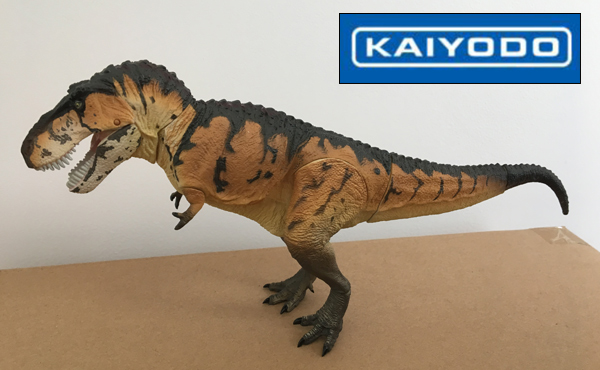
When first scientifically described, Tyrannosaurus rex was illustrated as a biped whose tail dragged on the ground.  The articulated tail of the Sofubi Toy Box T. rex permits the model to displayed in this position, a pose described as a “kangaroo pose” or sometimes a “kangaroo stance”.  However, the ingenious engineering allows this figure to be displayed in what is thought to be a more anatomically accurate pose, with the centre of balance over the hips and the tail lifted off the ground – a sort of pose described as a “balanced see-saw”.

The Kaiyodo Sofubi T. rex Model in a “Balanced See-saw” Stance

The Kaiyodo Sofubi Toy Box articulated T. rex model.
The Kaiyodo Sofubi Toy Box articulated T. rex figure with the tail lifted off the ground. Picture credit: Everything Dinosaur.

Picture credit: Everything Dinosaur

When it comes to the engineering behind the design of dinosaur models, you have to hand it to Kaiyodo…

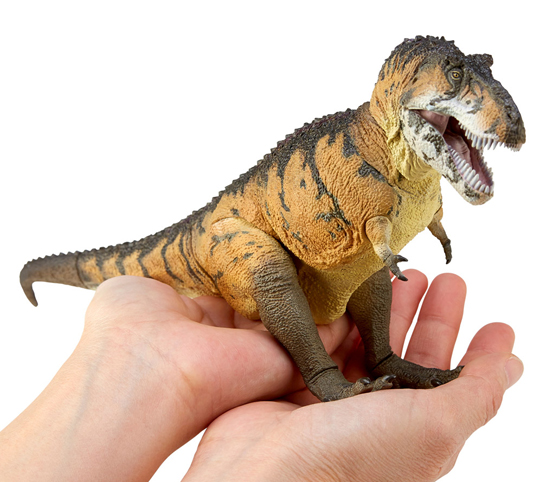
A Handy Dinosaur Model

T. rex dinosaur model (Kaiyodo Sofubi Toy Box - T. rex A).
Kaiyodo Sofubi Toy Box T. rex dinosaur figure (T. rex A).

To visit the Everything Dinosaur website: Everything Dinosaur.

The Kaiyodo Sofubi Toy Box T. rex figure is suitable for collectors from fifteen years and above and it can be found here: Kaiyodo Prehistoric Animal Models.

4 03, 2019

Feathered Theropod Models Triumph in Poll

By |2023-11-24T13:40:31+00:00March 4th, 2019|Categories: Dinosaur Fans, Everything Dinosaur News and Updates, Main Page, Photos of Everything Dinosaur Products|0 Comments

Feathered or Scaly Theropod Dinosaur Models?  The Results are In

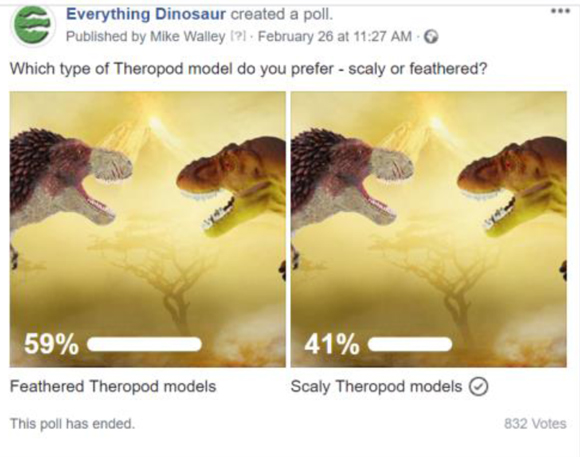
Recently, Everything Dinosaur team members set up a poll on the company’s Facebook site asking dinosaur fans and model enthusiasts which they preferred, feathered theropod dinosaur models or models of theropods with scaly skins?

The results are in and in this particular survey it is the feathered theropod dinosaur models that have come out on top.  It’s a feather in the cap for feathered theropod model designers.

Which Type of Theropod Model do you Prefer – Feathered or Scaly?

Feathered Theropod models preferred over scaly-skinned Theropod models.
In Everything Dinosaur’s survey of dinosaur model preferences with collectors it was the feathered theropods that triumphed.  In this poll, 59% of respondents opted for the feathered dinosaur model option.

Picture credit: Everything Dinosaur

Theropod Models Reflecting Current Scientific Thinking

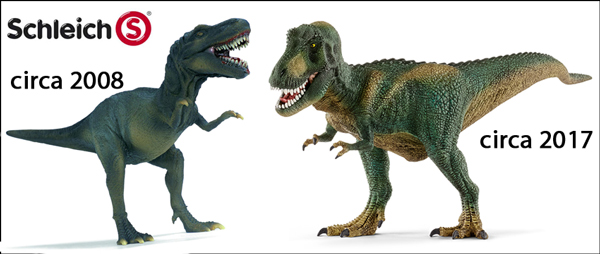
Step back ten years and virtually all the models of fearsome, carnivorous dinosaurs such as Allosaurus, Acrocanthosaurus and Tyrannosaurus rex were entirely devoid of a feathery integument.  Many mainstream manufacturers still prefer to produce non-feathered figures, an example being Schleich of Germany.

Schleich Have Yet to Produce a Feathered T. rex Dinosaur Model

Schleich Tyrannosaurus rex models circa 2008 and circa 2017.
Comparing Schleich Tyrannosaurus rex dinosaur models through time.  Picture credit: Everything Dinosaur.

Picture credit: Everything Dinosaur

Other model manufacturers have chosen to reflect current scientific thinking and produce feathered theropod replicas, including fuzzy T. rex dinosaur models.  Schleich has moved towards introducing feathered theropods, a number of dromaeosaurids have been introduced into their range over the last few years with varying degrees of feathery integumentary covering.

A model of the Late Triassic, fast-running predator Tawa (T. hallae), which was introduced by Schleich in 2018, has a feathery crest on its head and a “tuft” of feathers on its tail.  The Schleich Psittacosaurus, a model of an ornithischian dinosaur, which was also introduced by Schleich last year, had feathers, reflecting the current scientific thinking.  In addition, the Oviraptor and the Therizinosaurus, both examples of theropod dinosaurs have feathers, perhaps it is just a matter of time before Schleich introduces a feathered Tyrannosaurus rex.

Schleich Prehistoric Animal Model Releases in 2018 – A Trend Towards More Feathers?

New Schleich prehistoric animals (2018).
New Schleich prehistoric animal models (2018).  The new Schleich models introduced last year showed examples of feathery integumentary coverings.  Picture credit: Everything Dinosaur.

Picture credit: Everything Dinosaur

See Schleich models available from Everything Dinosaur: Schleich Prehistoric Animal Models and Figures.

59% Versus 41%

In the Everything Dinosaur poll, 59% of respondents voted in favour of feathered theropod dinosaur models, whilst 41% stated that they preferred scaly theropod figures.  A big thank you to all those who participated.  We appreciate all the comments that were posted up and the “shares” of our Facebook post too.

The Everything Dinosaur Facebook page provides status updates, photos, links to news stories and blog posts as well as lots of prehistoric animal model features.

We believe customer service is the key to getting "likes".
Visit Everything Dinosaur on Facebook.

Visit the Everything Dinosaur website: Everything Dinosaur.
3 03, 2019

New Research into Late Triassic Frogs of North America

By |2023-11-23T14:50:38+00:00March 3rd, 2019|Categories: Dinosaur and Prehistoric Animal News Stories, Main Page, Palaeontological articles, Photos/Pictures of Fossils|0 Comments

The Earliest Equatorial Record of Frogs

Researchers including palaeontologists from the Department of Geosciences at Virginia Tech, have identified tiny fossil fragments collected from Upper Triassic deposits in Arizona that provide evidence of the oldest known frogs from North America.  Although, no new genus has been erected, the scientists are confident that further study of the microfossils at the location may yield skull and jaw bones which will result in the naming of new species.

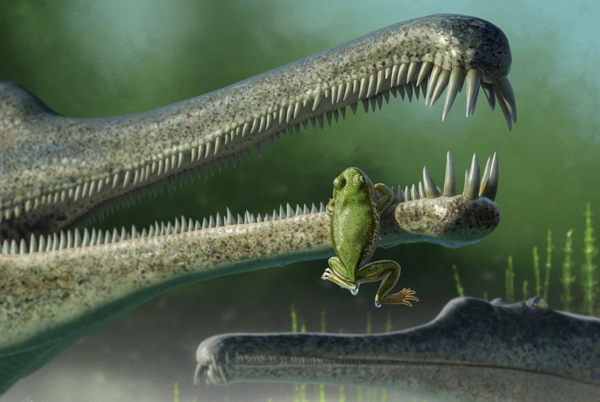
A Little Chinle Frog Has a Close Encounter with a Phytosaur

A suggested encounter between a frog and a phytosaur.
A Chinle frog encounters a phytosaur. It is likely that phytosaurs would have fed on amphibians.

Picture credit: Andrey Atuchin

The Oldest Known Frogs from North America

The fossils are composed of several tiny pieces of hip bone, (from the ilium), they were collected last May from three separate locations within the famous Chinle Formation and they have been dated to between 223 and 213 million years ago.  The bones represent the earliest equatorial record of the Salientia, the group that includes stem and crown-frogs.  These tiny amphibians, little more than two centimetres in length, are not direct ancestors of modern frogs (Anura).

One of the authors of the scientific paper, published in the journal Biology Letters, Assistant Professor Michelle Stocker, stated that these fossils underscore the importance of microfossil collection, analysis and study as it helps palaeontologists to build up a more comprehensive picture of an ancient ecosystem.

New Insights into a Triassic Ecosystem

Assistant Professor Stocker explained:

“This new find highlights just how much there is still to learn about the Late Triassic ecosystem and how much we can find when we just look a little closer.  We are familiar with the charismatic archosaurs from the Chinle Formation, but we know that based on other ecosystems, they should make up a small percentage of the animals that lived together.  With this new focus, we are able to fill in a lot of those missing smaller components with new discoveries.”

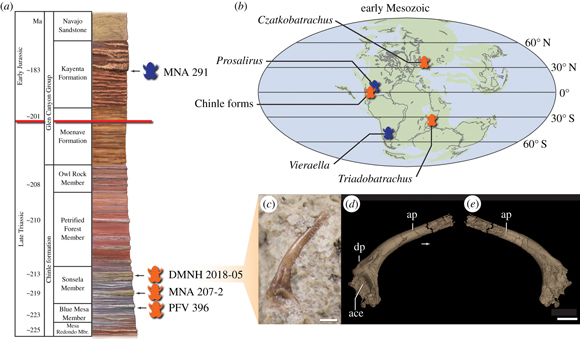
Time-calibrated Stratigraphic and the Geographical Distribution Across Pangaea of Triassic and Jurassic Anurans

The stratigraphic and biogeographic distribution of Triassic and Jurassic fossil frogs.
Time-calibrated stratigraphic and biogeographic distribution of Triassic and Jurassic Period anuran specimens.

Picture credit: Biology Letters

The image above shows (a) the stratigraphic sequence indicating the three fossil examples of Chinle frogs and their relationship to the Early Jurassic Prosalirus (MNA 291) from the Kayenta Formation (Arizona), whilst (b) shows the biogeographic distribution of fossil anurans from the Jurassic and Triassic.  Note, the proximity of the Late Triassic Chinle frogs to the equator.  Photograph (c) shows an eyelash sized fossil ilium whilst (d) and (e) are computerised scans of the same fossil material shown in lateral and medial views.  Scale bars equal 1 millimetre.

Chinle Formation Frogs – Long and Hollow Hip Bones

The fossil material gathered from extensive sieving  and screen washing of sediments in order to obtain microvertebrate fossils, consists of long, hollow hip bones with the hip socket offset rather than centred, anatomical traits that are characteristic of frogs and that help to support their hoping style of locomotion.  Stocker and her collaborators include fellow scientists from Virginia Tech, Arizona’s Petrified Forest National Park, and the University of Florida’s Museum of Natural History.

The Chinle frogs share more features with living frogs and Prosalirus, a genus of Early Jurassic frog found in sediments from the present-day Navajo Nation (Arizona), than to Triadobatrachus, an Early Triassic frog discovered in Madagascar.

Stocker added:

“These are the oldest frogs from near the equator.  The oldest frogs overall are roughly 250 million years old from Poland [Czatkobatrachus] and Madagascar, but those specimens are from higher latitudes and are not equatorial.”

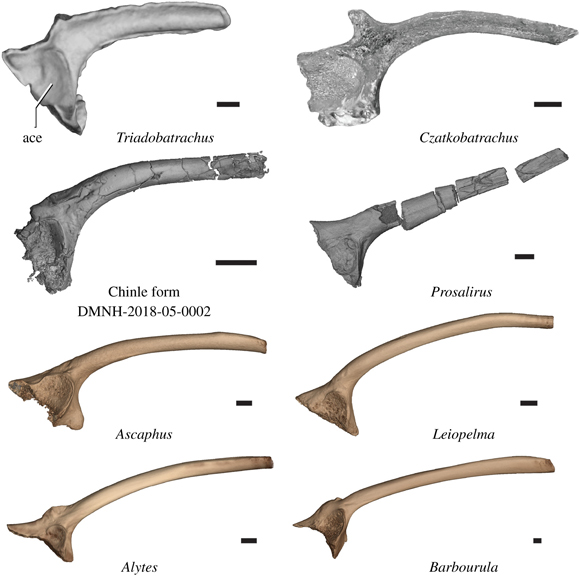
Comparing the Ilia of Stem Anurans

Comparing fossilised hip bones from stem anurans (frogs).
Comparing the ilia of stem anurans and those of extant frogs (Ascaphus, Leiopelma, Alytes and Barbourula) scale bar = 1 mm.

Picture credit: Biology Letters

Frog Evolution

Co-author Sterling Nesbitt (Virginia Tech), commented:

“Now we know that tiny frogs were present approximately 215 million years ago from North America, we may be able to find other members of the modern vertebrate communities in the Triassic Period.”

This is the first time that frog fossils have been found in sediments associated with phytosaurs and early members of the Dinosauria.

The research team hope that further work screening and washing sediments from the Chinle Formation sites, will yield more information about the tiny animals that lived alongside some of the first dinosaurs in North America.

A spokesperson from Everything Dinosaur stated:

“The sieving and screen washing methodology employed to discover the tiny hip bones and fossil material associated with Late Triassic frogs could also be used to help identify other small animals that lived in this ecosystem, animals such as salamanders, early squamates and even small mammals.”

Everything Dinosaur acknowledges the assistance of a press release from the Virginia Tech College of Science in the compilation of this article.

The scientific paper: “The Earliest Equatorial Record of Frogs from the Late Triassic of Arizona” by Michelle R. Stocker, Sterling J. Nesbitt, Ben T. Kligman, Daniel J. Paluh, Adam D. Marsh, David C. Blackburn and William G. Parker published in Biology Letters.

Visit the Everything Dinosaur website: Everything Dinosaur.
3 03, 2019

Excellent Feedback from a Teacher

By |2023-11-23T14:42:10+00:00March 3rd, 2019|Categories: General Teaching, Key Stage 1/2|Comments Off on Excellent Feedback from a Teacher

Feedback from a Teacher

Everything Dinosaur team members are busy sorting out all the dinosaur and fossil themed workshops and school visits that we have scheduled over the rest of this spring term.  Our visits to school are extremely popular and we have a very congested teaching itinerary for the spring and summer terms of this academic year.  We even have confirmed bookings for teaching work for the spring of 2020.

We get lots of positive feedback as demonstrated by the many testimonials that we receive.  Take for example, this email received this weekend from a Year 1 teacher after a morning of dinosaur and fossil themed activities with her class.

The teacher emailed to say:

“Just a quick email to say thank you so much for the wonderful morning we all had this morning.  The whole class absolutely loved everything.  We have learnt so many exciting dinosaur facts and it has definitely given the start of our topic the wow factor.”

Everything Dinosaur Receives Feedback from a Teacher

Our team members are often praised by members of the teaching team. With a background in teaching we can adjust the lesson plan to meet the children’s needs.

Teaching Feedback.
Five stars for Everything Dinosaur! Picture credit: Everything Dinosaur.

Picture credit: Everything Dinosaur

For dinosaur themed, educational toys and games: Dinosaur Toys and Gifts.

The teacher went on:

“Thank you for the resources you have sent too.  We are looking forward to creating our own dinosaurs and drawing and labelling them for you amongst other things.”

Everything Dinosaur team members are happy to help where they can and we tend to bring some extra resources and teaching materials with us when we visit schools.  Our teaching team members get lots of positive feedback from teachers and teaching assistants as a result of conducting our dinosaur and fossil themed workshops in schools.

Visit Everything Dinosaur’s website: Everything Dinosaur.

2 03, 2019

Beasts of the Mesozoic Atrociraptor

By |2023-11-23T14:33:49+00:00March 2nd, 2019|Categories: Adobe CS5, Dinosaur Fans, Everything Dinosaur Products, Main Page, Photos, Photos of Everything Dinosaur Products|0 Comments

Beasts of the Mesozoic Atrociraptor marshalli

Our thanks to dinosaur model fan and collector Caroline who sent us some beautiful photographs of her recently purchased Beasts of the Mesozoic Atrociraptor marshalli figure.  The taxonomic position of Atrociraptor within the Dromaeosauridae remains contentious, however, with a short, powerful jaw and oversized teeth this predator lives up to its scientific name meaning, that of “cruel or savage thief”.

Everything Dinosaur were sent some Photographs of the Atrociraptor Figure Outdoors

Atrociraptor marshalli (Beasts of the Mesozoic) a 1:6 scale dinosaur figure.
The Beasts of the Mesozoic Atrociraptor marshalli dinosaur model.  A beautifully composed photograph.

Picture credit: Caroline

The outdoor location really brings out the colouration of the model, the exquisite way in which the bright red elements of the plumage have been blended in with the muted tones of brown and black.  The sun lit model highlights the texture and the individual feathers on the torso and the top of hips can be clearly seen in this well-composed photograph.

Atrociraptor marshalli

Named and described in 2004, some eighty years after the far better known Velociraptor (V. mongoliensis) was described, this dinosaur is estimated to have reached a length of approximately two metres and weighed around fifteen kilogrammes.  The fossil material associated with this genus comes from the famous Horseshoe Canyon Formation of southern Alberta, however, a single jaw fragment and some isolated teeth from the Two Medicine Formation of Montana may also represent Atrociraptor.

Everything Dinosaur’s Scale Drawing of Atrociraptor marshalli

Atrociraptor marshalli scale drawing.
A scale drawing of the dromaeosaurid Atrociraptor marshalli. Picture credit: Everything Dinosaur.

Picture credit: Everything Dinosaur

Fast Delivery of a Fast Member of the Dromaeosauridae

When sending her pictures to Everything Dinosaur Caroline commented:

“The order arrived not long ago.  Thank you for the fast delivery.  Please use the photos of the Beasts of the Mesozoic Atrociraptor marshalli if you wish.”

We are happy to post up Caroline’s excellent photographs, pictures of a fast running dinosaur, that was delivered quite fast as well.

Visit the Everything Dinosaur website: Everything Dinosaur.
The Beasts of the Mesozoic Atrociraptor marshalli Dinosaur Figure

A view of the Beasts of the Mesozoic Atrociraptor marshalli figure.
A close-up view of the distinctive short snout and the oversized teeth of the beautifully crafted Beasts of the Mesozoic Atrociraptor marshalli figure.

Picture credit: Caroline

The photograph (above), shows a close-up view of the head of the Beasts of the Mesozoic model.  The characteristic short, robust snout and the oversized teeth that helped to define this genus can clearly be seen in this beautifully composed picture.

A spokesperson for Everything Dinosaur praised the images saying:

“We are always pleased to receive photographs of purchases from customers.  The Atrociraptor model looks fantastic in these outdoor shots.”

To view the Beasts of the Mesozoic Atrociraptor marshalli and the rest of the Beasts of the Mesozoic articulated “raptor” models available from Everything Dinosaur: Beasts of the Mesozoic Models.

1 03, 2019

Nemicolopterus or a Juvenile Sinopterus?

By |2023-11-23T14:28:47+00:00March 1st, 2019|Categories: Adobe CS5, Dinosaur and Prehistoric Animal Drawings, Dinosaur Fans, Everything Dinosaur Products, Main Page, Photos of Everything Dinosaur Products|0 Comments

Nemicolopterus or a Juvenile Sinopterus?

As it is March 1st, team members at Everything Dinosaur, thought it appropriate that on St David’s Day, the patron saint of Wales, it might be a good idea to post up a picture of one of the welsh dinosaurs such as Pantydraco (P. caducus) or the recently described Dracoraptor (D. hanigani), but in the end we decided to post up a picture of a very tiny pterosaur instead.

As we prepare for the arrival of the new for 2019 PNSO models, we have been busy researching and writing fact sheets to accompany sales of these figures.  One of these new PNSO models is a replica of Nemicolopterus, which if it is a valid genus, represents the smallest member of the Pterosauria described to date.

Everything Dinosaur’s Scale Drawing of the Tiny Chinese Pterosaur Nemicolopterus crypticus

Nemicolopterus crypticus scale drawing.
A scale drawing of the tiny pterosaur named Nemicolopterus.  Picture credit: Everything Dinosaur.

Picture credit: Everything Dinosaur

A Tiny Chinese Pterosaur

With a wingspan not much bigger than a garden robin (Erithacus rubecula), Nemicolopterus probably weighed less than 100 grams.  Assigned to the Tapejaridae family, this little flying reptile, known from a single fossil specimen, has attracted quite a lot of controversy since it was named and described in 2008.

To read Everything Dinosaur’s 2008 article about the discovery of Nemicolopterus: New Species of Tiny Pterosaur from China.

The unfused bones and body proportions are very typical of a juvenile pterosaur.  It has been suggested that the fossil specimen might not represent a tiny species, but the juvenile stage of a much larger pterosaur.  For example, a number of academics have compared the Nemicolopterus fossil to juvenile specimens of the tapejarid Sinopterus, which is also known from China.

The New for 2019 PNSO Age of Dinosaurs Nemicolopterus Model

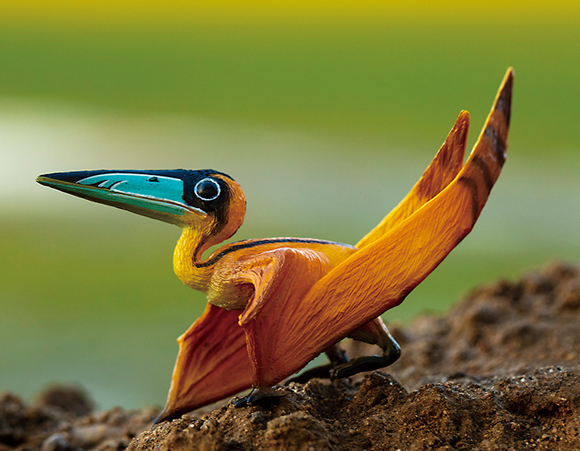
PNSO Nemicolopterus model.
The PNSO Nemicolopterus pterosaur model.

To view the range of PNSO pterosaurs and dinosaurs: PNSO Age of Dinosaurs Figures.

The PNSO Nemicolopterus (or whatever genus the figure should represent), is coming into stock at Everything Dinosaur in the next few weeks.

Dragons and Dinosaurs

It has been suggested that Nemicolopterus may not be a valid genus.  It has been proposed that the fossil material should be re-assigned to the genus Sinopterus.  Whatever the outcome, on March 1st, in honour of a Welsh national symbol and with a nod towards the orient and the legends of dragons from the Far East, we thought it appropriate to post up some images of a tiny flying reptile.

Happy St David’s Day.

Visit the Everything Dinosaur website: Everything Dinosaur.
28 02, 2019

Rare Fossils of a North Lincolnshire Pliosaur Go on Display

By |2023-11-23T10:05:25+00:00February 28th, 2019|Categories: Dinosaur and Prehistoric Animal News Stories, Geology, Main Page, Photos/Pictures of Fossils|0 Comments

The “Scunthorpe Pliosaur”

This week has seen the formal unveiling of the fossilised remains of a pliosaur at North Lincolnshire Museum in Scunthorpe.  The fossils, consisting of a single tooth, a series of vertebrae, elements from the ribs, the tip of the snout and a single humerus, suggest an animal of around eight metres in length.  It would have been one of the apex predators of the Late Jurassic marine environment.

The “Scunthorpe Pliosaur” on Display

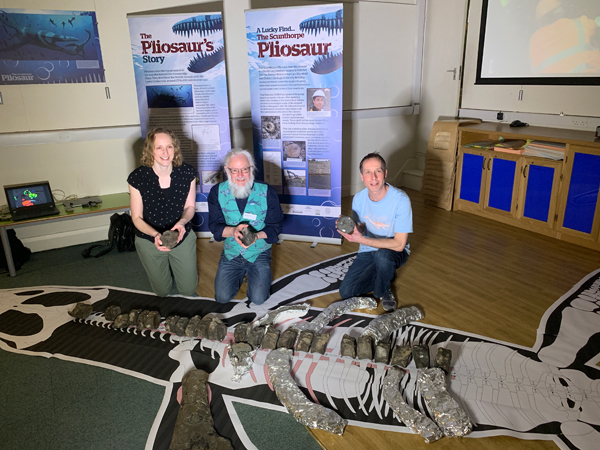
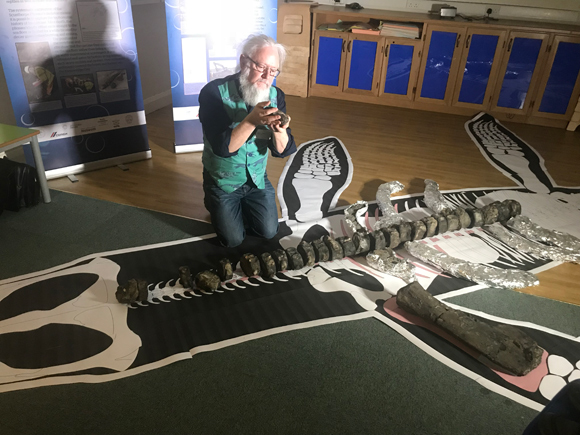
Rose Nicholson, Richard Forrest and Darren Withers with the Scunthorpe Pliosaur.
Rose Nicholson (North Lincolnshire Museum), palaeontologist Richard Forrest and Darren Withers (Stamford and District Geological Society), showing where the fossil bones are located on a pliosaur skeleton.

Picture credit: North Lincolnshire Museum

A Memorable Geology Field Trip

The first evidence of the remains of a marine reptile, were discovered by Darren Withers of the Stamford and District Geological Society during a field trip to a north Lincolnshire quarry in October 2017.  The Society had visited the quarry previously and were aware that the Kimmeridge Clay deposits (dating from 157 to 152 million years ago), contained numerous fossils, but marine reptile bones, especially several pieces from an individual skeleton are exceptionally rare.

After spending some time looking at the quarry floor, Darren decided to investigate some of the stepped banks in the quarry side.  He followed a trail of small Rasenia cymodoce ammonites until they petered out after about thirty metres, but he decided to explore further and then a surprising discovery was made:

Darren commented:

“I’m so glad I did [explore a little further] because the next thing I was looking down at was a large vertebra.”

CEMEX, the quarry owners, granted further access to the site and over the next twelve months or so more of the pliosaur remains were found.  In total, the haul consists of twenty-eight vertebrae, a single tooth, fourteen rib elements, a bone from the upper arm (humerus) and some fragments from the front portion of the upper jaw (premaxilla).  It has been estimated that the specimen is around 155 million-years-old.

Excavating the Pliosaur Specimen

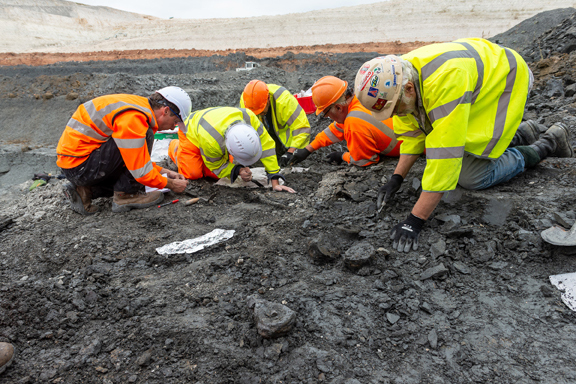
Extracting the fossilised remains of a pliosaur.
Extracting fossils at the north Lincolnshire quarry (CEMEX).

Picture credit: North Lincolnshire Museum

Pliosaurs were marine reptiles, part of the Plesiosauria Order, specifically, the short-necked plesiosaurs, the Suborder Pliosauroidea.  They were the apex predators in most Late Jurassic marine ecosystems.  Pliosaurs had an enormously powerful bite, perhaps the most powerful bite of any vertebrate, a complex system of sensory organs in their snouts, superb eyesight and the ability to taste water as they swam to help them locate prey.

A Model of a Typical Pliosaur

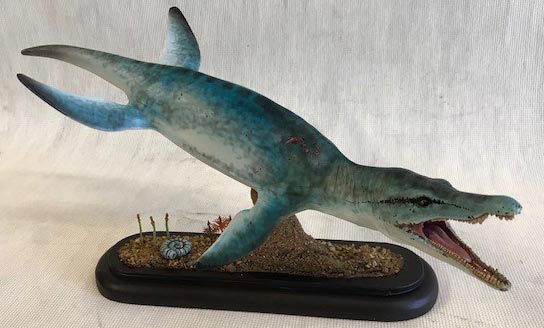
Martin Garratt's customised CollectA Deluxe Pliosaurus.
The customised CollectA Deluxe Pliosaurus model.  The model helps to portray what the “Scunthorpe Pliosaur” might have looked like.

Picture credit: Martin Garratt/Everything Dinosaur.
Explaining the significance of the “Scunthorpe Pliosaur”, Richard Forrest, a vertebrate palaeontologist with an extensive knowledge of the Plesiosauria stated:

“Although the specimen is not complete it tells a fascinating story of how the carcase was broken down by scavenging and decay in the ancient Kimmeridge Clay seas.  Because top predators are much less common than their prey, this is indeed a rare find.  We have hundreds of specimens of other marine reptiles, but only a handful of Pliosaurs.”

The “Scunthorpe Pliosaur” Goes on Display

The fossils will be on display at the North Lincolnshire Museum in a temporary exhibit, however, there are plans to give this exceptionally rare fossil find from eastern England a permanent home at the Museum.

Richard Forrest Examines the Pliosaur Vertebrae

Richard Forrest (vertebrate palaeontologist) examines a Pliosaur vertebra.
Richard Forrest laying out one of the vertebrae in the correct anatomical position.

Picture credit: North Lincolnshire Museum

Councillor Elaine Marper, responsible for the North Lincolnshire Museum added:

“We are over the moon to be able to have this prehistoric sea monster on display at North Lincolnshire Museum.  This is a rare find and to have the fossilised remains stay in North Lincolnshire and go on display for the public is a real feat.  Thank you to CEMEX for making this possible.”

Richard Forrest at the Quarry Holding the Pliosaur Tooth Discovered at the Site

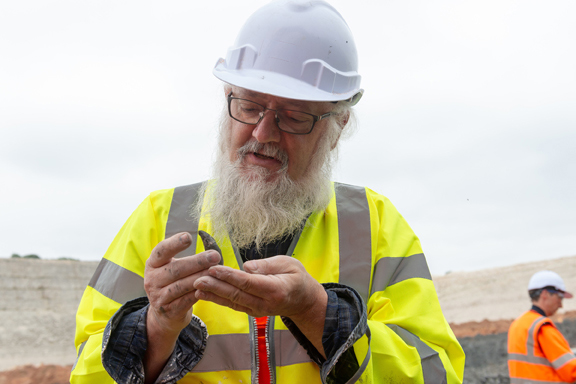
The pliosaur tooth examined by Richard Forrest.
Richard Forrest holding a pliosaur tooth.

Picture credit: North Lincolnshire Museum

Everything Dinosaur acknowledges the assistance of a press release from North Lincolnshire Council in the compilation of this article.

Go to Top