All about dinosaurs, fossils and prehistoric animals by Everything Dinosaur team members.

Everything Dinosaur team members working in schools, helping museums and other educational bodies. Our work with and in schools.

29 09, 2016

Big Blue Dinosaur in School Mural

By |2023-05-07T12:51:42+01:00September 29th, 2016|Categories: Main Page, Press Releases, Teaching|0 Comments

Spot the Big, Blue Dinosaur

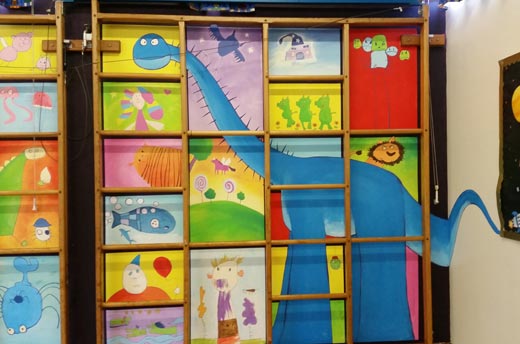
Whilst working in a school hall delivering a dinosaur themed workshop to Reception-aged children we spotted this super illustration of a dinosaur.  The big, blue sauropod was part of a mural created for the school by talented artist and children’s book author Steve Smallman back in 2013.  How do we know?  The artist had signed the dinosaur’s tail. It is a very colourful mural.

A Big, Blue Dinosaur

A Big Blue Dinosaur Spotted in a School Hall

School hall has a dinosaur in a mural.

A mural that features a big, blue dinosaur in a school hall.

Picture credit: Three Peaks Academy and Everything Dinosaur

Whilst we can’t vouch for its anatomical accuracy, it certainly is a very colourful dinosaur.  The dinosaur drawing was certainly popular with the children.

For dinosaur and prehistoric animal themed drawing resources: Dinosaur Drawing Materials, Gifts and Toys.

A Dinosaur Mural

The mural reached up from the floor to the ceiling and we estimate that the blue dinosaur was around four metres tall.  Surprisingly, the teacher who had booked Everything Dinosaur to undertake the morning of dinosaur themed workshops with the classes, was not aware that a dinosaur was lurking in the school hall.  This must be an example of hiding in plain sight.  We wonder what other dinosaurs and prehistoric animals might be found in school artwork displays?  We shall have to keep a lookout for any more striking dinosaur illustrations to be found in the schools that we are scheduled to visit.

Take a look at Everything Dinosaur’s website: Everything Dinosaur.

28 09, 2016

Answering Important Questions About Dinosaurs

By |2024-05-06T15:45:41+01:00September 28th, 2016|Categories: Key Stage 1/2|Comments Off on Answering Important Questions About Dinosaurs

Answering Questions About Dinosaurs

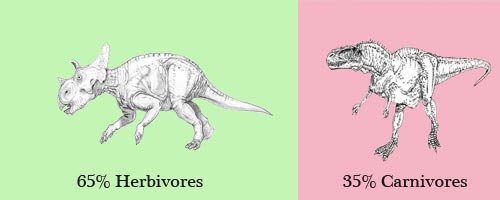
Another busy day yesterday for the teaching team at Everything Dinosaur.  One of our dinosaur and fossil experts had been invited into Astbury St Mary’s Church of England Primary to work with the Reception class who had just started studying dinosaurs, the children’s first ever term topic.  The impressive dinosaur museum already had a number of very colourful exhibits and we were able to suggest a dinosaur sorting game helping the children work out which dinosaurs were plant-eaters and which were meat-eaters.

For soft toy dinosaurs: Dinosaur Soft Toys.

Our suggestion was certainly well received by the class teacher, she incorporated our idea into her teaching activities for the afternoon.  We even got the chance to see the outcome of this activity as a short post about the children’s sorting fun was posted on the school blog.

Most of the Dinosaurs Had Plants in their Diet

Dinosaurs carnivores or herbivores.

Proportion of plant-eaters to meat-eaters in the Dinosauria.

Picture credit: Everything Dinosaur

Questions About Dinosaurs

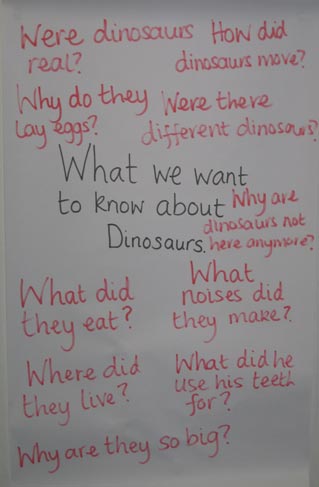
Prior to our visit the Reception class children were challenged to come up with some questions about dinosaurs that they wanted to learn the answers to.  The questions that the children came up with were then posted up onto one of the display walls in the well-appointed and spacious class room.

Children Compose Questions about Dinosaurs

Praise for Everything Dinosaur.

Brainstorming dinosaurs with a class of school children.

Picture credit: Everything Dinosaur

Lots of questions and to be perfectly honest, most of them we had encountered before, but one question really floored us, Jude wanted to know did dinosaurs have phones?  What a wonderful, imaginative question.  The Reception children certainly had a great time exploring dinosaurs.

Visit Everything Dinosaur’s website: Everything Dinosaur.

27 09, 2016

Staff Rooms Islands of Calm and Serenity

By |2023-05-07T12:30:22+01:00September 27th, 2016|Categories: General Teaching|Comments Off on Staff Rooms Islands of Calm and Serenity

Staff Rooms – Islands of Calm

As team members at Everything Dinosaur like to arrive nice and early at schools prior to delivering a dinosaur or fossil themed workshop, we very often get the chance to visit the staff room.  We can tell a lot about the school from the staff room, the orderly lay out of information on the walls, every inch of space (in most schools), being occupied by helpful and important information about child welfare, safe guarding and school activities.  The tidy sink area with the dishwasher emptying rota clearly displayed – oh happy days.  We think of the staff room as being a little island of calm inside a busy learning environment.

Everything Dinosaur

Located on one of the more prominent walls is the master whiteboard.  This for us, is the very hub of the school, its centre, its beating heart.  Written on the board are lots of notes for the teachers, teaching support team members and the school administrators, all the information required to help the school run efficiently and smoothly.  Most whiteboards are divided up into days of the week, this helps the staff to see at a glance what is going on and when.  A well organised staff room, equipped with a well organised white board does say a lot about the school.  Sometimes, team members at Everything Dinosaur even get a mention!

Visit Everything Dinosaur’s website: Everything Dinosaur.

Fame as Everything Dinosaur and Palaeontology is Mentioned on the Notice Board

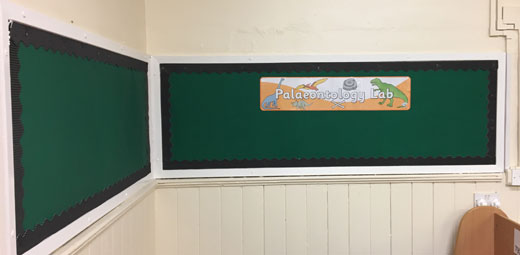
The FS2/Year 1 class have a palaeontology lab.

The FS2/Year 1 class have a palaeontology laboratory.

Picture credit: Everything Dinosaur

We even got an emoticon 🙂 on the notice board.

Arriving Early in Plenty of Time for a Dinosaur Workshop

Team members always like to arrive early.  With dinosaur themed school workshops to deliver up and down the country, we certainly travel a lot in our work, but we try our best to arrive in plenty of time.  We do not want to worry the teachers and a late arrival could upset their teaching plans.  We know ourselves just how stressful it can be waiting for a school visitor to turn up.

For dinosaur toys, models and gifts: Dinosaur Toys, Models and Gifts.

27 09, 2016

Special Dinosaurs Roar with Jonah!

By |2024-05-06T08:59:45+01:00September 27th, 2016|Categories: Educational Activities, Main Page, Teaching|0 Comments

Jonah Class Explore Dinosaurs

It was a busy morning for the Reception class at Astbury St Mary’s Church of England Primary School.  It was also a busy morning for Everything Dinosaur.

Class Jonah have been learning all about dinosaurs and the enthusiastic teaching team had invited a member of the Everything Dinosaur staff into the school to explore dinosaurs and fossils.  The spacious hall was taken over and turned into a mini dinosaur museum and the budding young palaeontologists quickly learned that they had more fingers on their hands than a Tyrannosaurus rex.

Dinosaurs as a Term Topic

Dinosaurs as a term topic was proving very popular amongst the children as they settled into full-time education, the girls were delighted to hear that a girl T. rex grew up to be bigger and stronger than a boy T. rex!  As far as we can tell, the female Tyrannosaurs were probably bigger than the males.

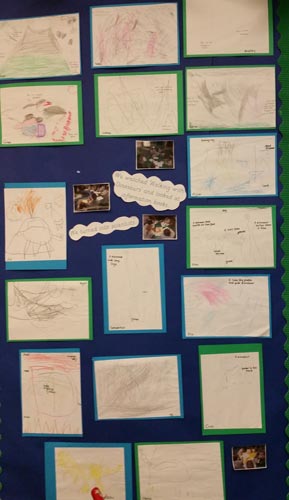
Lots of Creative Dinosaur Drawings on Display

FS2 children draw prehistoric landscapes.

Drawings of a prehistoric landscape by FS2 children.

Picture credit: St Mary’s Primary School/Everything Dinosaur

A Well-organised Classroom

The well-organised classroom already had lots of dinosaur themed drawings and models on display.  The children had made some pointy dinosaur teeth (probably a meat-eater) and the walls were decorated with some lovely prehistoric animal drawings.   The class teacher Miss Irwin, had challenged her class to imagine what a prehistoric landscape looked like, the children had certainly produced some very imaginative drawings.

For dinosaur toys, models and gifts: Dinosaur Gifts and Toys.

The dinosaur food we brought with us helped support the children’s learning about herbivores and carnivores and we note that on the Jonah class blog there are some pictures of a dinosaur plant-eater/meat-eater sorting exercise that our expert suggested the children attempt to help reinforce their understanding about the diets of different dinosaurs.

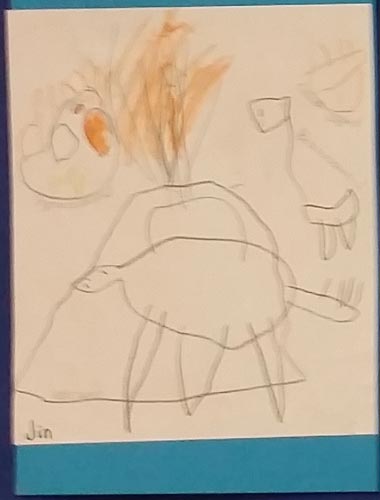
Dinosaur Land with an Erupting Volcano

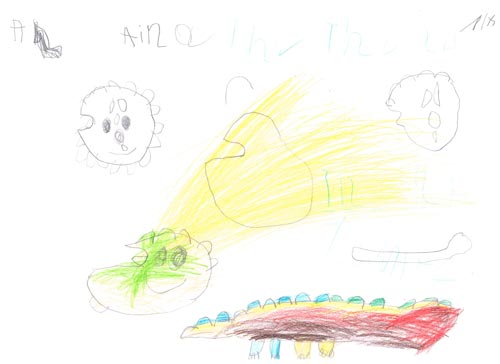
FS2 draw dinosaurs.

Reception draw a volcano.

Picture credit: St Mary’s Primary School/Everything Dinosaur

Did Dinosaurs Have Phones?

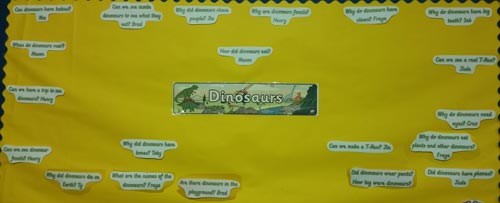
Prior to our visit, the children under the supervision of Miss Irwin and with the support of Mrs Ainscough, had come up with some super questions about dinosaurs that they would like to explore.  The eager learners busy practising their phonics and getting to grips with reading wanted to learn lots of amazing facts about life in the past.

Questions About Dinosaurs from Jonah Class

Questions about dinosaurs from Reception.

Dinosaur questions from FS2

Picture credit: St Mary’s Primary School/Everything Dinosaur

The Big Teeth of Dinosaurs

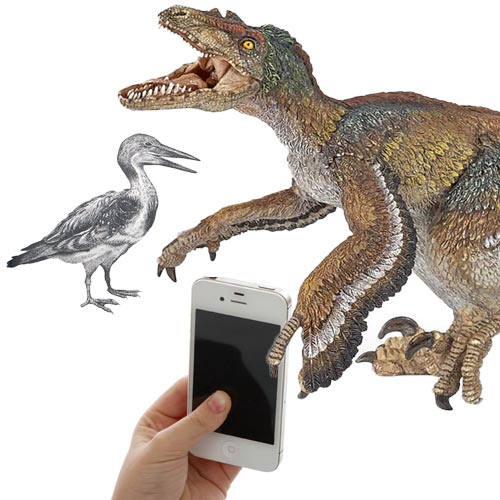
Sebastian asked why do dinosaurs have big teeth?  Toby enquired why dinosaurs have bones?  Brad questioned whether there were dinosaurs in the playground?  Some news for you Toby, perhaps some birds like Robins, Magpies and Blue Tits will visit your dinosaur museum outside.  Birds are so closely related to some types of dinosaur that, technically, birds are dinosaurs.  Jude asked did dinosaurs have phones?  That’s an interesting question!  With T. rex having such short arms and only two fingers on each hand, do the children think that this dinosaur could make a phone call?  If you happen to receive a text from a T. rex what would it say?

Did Dinosaurs Have Phones?

Did dinosaurs have phones?

Reception class consider whether dinosaurs had phones and how closely related birds are to dinosaurs.

Picture credit: Everything Dinosaur

Visit Everything Dinosaur’s award-winning website: Everything Dinosaur.

21 09, 2016

A Photograph of a Remarkable Trilobite Fossil

By |2024-05-06T08:58:22+01:00September 21st, 2016|Categories: Main Page, Photos/Pictures of Fossils, Teaching|0 Comments

A Trilobite Fossil

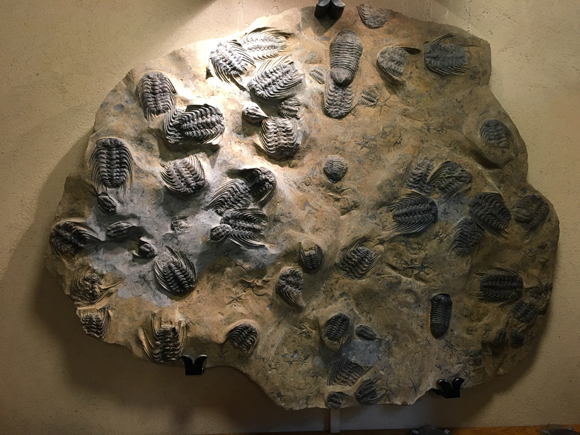
We were contacted by a teacher to help explain how trilobite fossils formed, how old they were and what trilobites actually looked like.  We were happy to email over a fact sheet all about the Trilobita and to send over some pictures of trilobite reconstructions along with some photographs of fossils.

A Trilobite Fossil

A Photograph of Trilobite Fossils

Trilobite fossils - the Selenopeltis slab.

Trilobites galore – the Selenopeltis slab.

We received a lovely email in return thanking us for providing such a lot of useful teaching material and for being so responsive.  The picture (above) shows an assemblage of fossil trilobites. At least three species are preserved in the specimen. The fossils are on display at the Oxford University Museum of Natural History.  The photograph was taken by an Everything Dinosaur team member.

Visit Everything Dinosaur’s website: Everything Dinosaur.

Trilobites

As trilobites shed their exoskeletons in order to grow (moulting), most trilobite fossils are actually shed shells, rather than the corpses of dead animals.  Whatever the species, we are always keen to see pictures of trilobites and we were happy to help out the teacher.

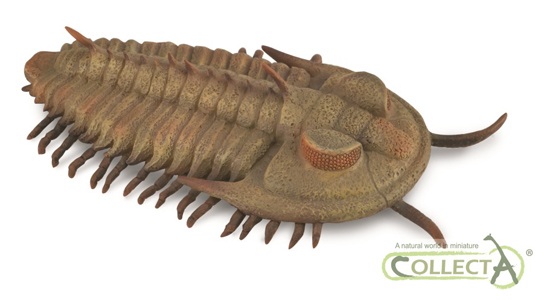
A CollectA Prehistoric Life Trilobite Model (Other Prehistoric Animals)

CollectA Redlichia rex trilobite. "First Life"

CollectA Redlichia rex trilobite model.

To view the CollectA trilobite and other prehistoric animal figures and models: CollectA Other Prehistoric Animal Models.

14 09, 2016

Dinosaurs Visit Coventry for a Special Event

By |2024-05-06T08:56:27+01:00September 14th, 2016|Categories: Key Stage 1/2|Comments Off on Dinosaurs Visit Coventry for a Special Event

Dinosaurs Visit Coventry

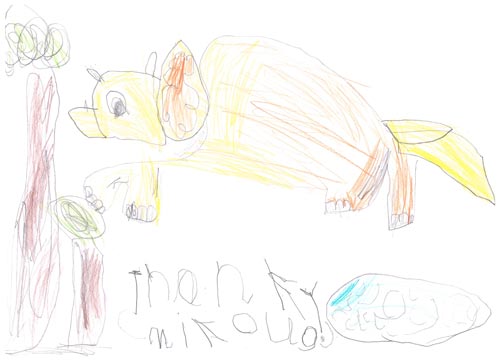
Yesterday, one of our dinosaur experts along with lots of fossils was “sent to Coventry”.  Not to worry, one of our enthusiastic team members has not been ostracised, they went to Coventry to visit Howes Primary to conduct a series of dinosaur and fossil themed workshops with Year 1 and Year 2.  During the session with the first class, our dinosaur expert challenged the budding young palaeontologists to have a go at drawing their very own dinosaur.  At the end of our busy morning we were presented with a selection of very colourful prehistoric animal drawings that the children had produced.

Fossil Themed Workshop

The Children Wrote a “Thank You” on Their Colourful Dinosaur Drawings

A horned dinosaur drawn by a child in Year 1.

A dinosaur drawing from Year 1.

Picture credit: Howes Primary School/Everything Dinosaur

The children in Year 2 were accompanied by some of the budding palaeontologists from the Hearing Impaired Unit.  All the children enjoyed handling the various fossils and learning lots of prehistoric animal facts and figures.  We helped explain about just how big some dinosaurs could be and we looked at herbivorous dinosaurs such as Ankylosaurus and Triceratops as well as meat-eating dinosaurs.  Some of the children were keen to demonstrate their dinosaur knowledge by naming dinosaurs that were omnivores.

Carnivores, Omnivores and Herbivores

The teaching team requested some additional support with helping to explain simple food chains and the diets of dinosaurs.  Our dinosaur expert was happy to oblige.  Some extension resources had been brought with us on the day, but that evening, our dedicated dinosaur experts emailed over some additional support resources including a couple of exercises all about dinosaur food webs.

For models and figures of dinosaurs that ate different food: Schleich Models and Figures.

Howes Primary School Children Draw Dinosaurs (Year 1)

Year 1 draw colourful dinosaurs.

Wonderful dinosaur and fossil drawings from a Year 1 pupil.

Picture credit: Howes Primary School/Everything Dinosaur

 We even “tweeted” some pictures to the school’s Twitter account, it’s all about providing support and additional resources to assist the hard-working teaching team.

Visit Everything Dinosaur’s website: Everything Dinosaur.

13 09, 2016

Dedicated Everything Dinosaur Visits Howes Primary School for Exclusive Dinosaur Fun

By |2024-05-06T08:55:32+01:00September 13th, 2016|Categories: Educational Activities, Main Page, Teaching|0 Comments

Dinosaurs “Get Sent to Coventry”

Tuesday was “dinosaur day” for the Key Stage 1 children at Howes Primary school with a visit from Everything Dinosaur to help support the term topic for Year 1 and Year 2 children.  This friendly and very welcoming school is located in Coventry (East Midlands), however, thanks to the unseasonably warm weather, Coventry felt more like Copacabana beach as noon temperatures touched thirty degrees Celsius.

Noel, the helpful Site Manager, had the forethought to open the windows in the spacious hall where we were working and despite the heat, the children learned that just like stones, most fossils feel cold when you first touch them.

Dinosaur Workshop

The Children in Year 1 Gave our Dinosaur Expert some Wonderful Dinosaur Drawings

A horned dinosaur drawn by a child in Year 1.

A dinosaur drawing from Year 1.

Picture credit: Howes Primary School (Year 1)

The children in Year 2 were joined by some of the budding palaeontologists from the Hearing Impaired Unit.  All the children enjoyed handling the various fossils and learning about the super power of a giant armoured dinosaur.

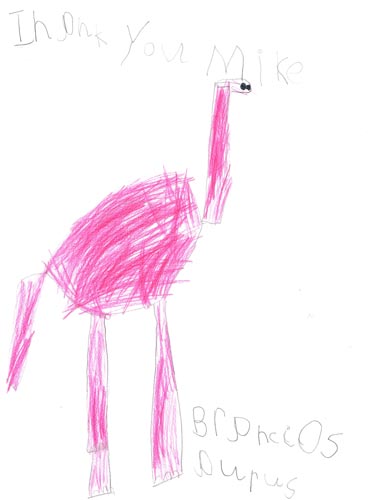
A Pink Long-Necked Dinosaur

A very pink dinosaur by Year 1.

A pink long-necked dinosaur drawing.

Picture credit: Howes Primary School (Year 1)

Everything Dinosaur

The Year 1 and Year 2 teachers asked us to help them by providing information about carnivores, herbivores and omnivores.  A number of the children demonstrated considerable pre-knowledge regarding dinosaurs and the extension resources we brought with us should support the teaching team and their scheme of work.  On returning to the office, our team member who visited the school, prepared a couple of extra exercises aimed at supporting this section of the curriculum.

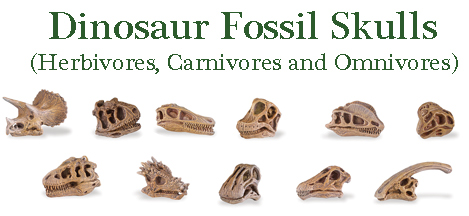
These resources and materials were emailed over to the teacher.  They also recommended a set of dinosaur skulls that featured omnivores, carnivores and herbivores along with other prehistoric animal themed teaching resources to help support learning.

A Set of Dinosaur Skulls – Helpful for Omnivore, Carnivore and Herbivore Sorting Games

Dinosaur fossil skull models, ideal for school.

A set of eleven dinosaur fossil skulls.

Picture credit: Everything Dinosaur

The dinosaur skulls and other useful Key Stage 1 teaching resources can be found here: Safari Ltd. Wild Safari Prehistoric World.

After our busy morning exploring dinosaurs, the Year 1 teacher presented us with a selection of  colourful dinosaur drawings that her class had created.  We shall pin up these pictures onto our warehouse wall, they will cheer us up as we study fossils.

Colourful Prehistoric Animal Drawings from Year 1 at Howes Primary School (Coventry)

Year 1 draw colourful dinosaurs.

Wonderful dinosaur and fossil drawings from a Year 1 pupil.

Picture credit: Howes Primary School (Year 1)

Our thanks to all the children in Year 1 and Year 2 at Howes Primary, we really appreciate the beautiful prehistoric animal drawings that you created and we are sure, that, thanks to the dedicated teaching team, all the children are really going to enjoy their dinosaur themed autumn term topic.

Visit Everything Dinosaur’s website: Everything Dinosaur.

10 09, 2016

Emily’s Remarkable and Special Fossils

By |2024-05-06T08:53:36+01:00September 10th, 2016|Categories: Educational Activities, Main Page, Teaching|0 Comments

Year 3 at Yarnfield Primary Learning About “Footprints in the Past”

Yesterday, was another busy day with a visit to the vibrant Yarnfield Primary School to work with the three classes of Year 3 children as they began their term topic entitled “Footprints in the Past”.  The teaching team had developed an exciting and challenging scheme of work utilising a term topic all about dinosaurs and fossils to help 3Red, 3Yellow and 3Green classes study life in the past.

One of the spacious and well-organised classrooms had been designated to the member of the Everything Dinosaur teaching team to conduct the workshops, he noted that a number of special areas had been allocated on the walls of the classroom on which the children could display their work.  There was even a large area dedicated to science related elements of the curriculum.

“Footprints of the Past”

Naturally, there is a big focus on literacy and numeracy throughout the school.  Year 3 was no exception and prior to the workshops, our dinosaur expert talked through some extension ideas with the enthusiastic teaching team.  A dinosaur footprint measuring exercise certainly ticked all the right boxes when it came to supporting numeracy and the “dinosaur foot facts” writing activity was well received.

A Collection of Fossils

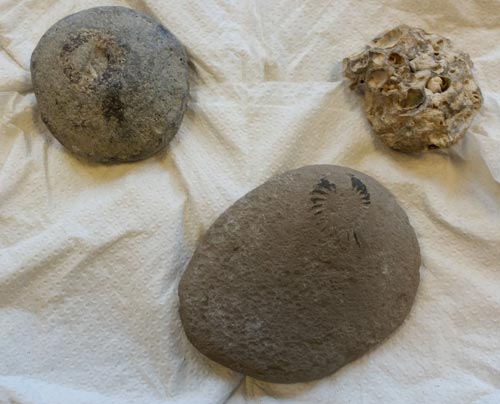
Emily had brought in a collection fossils that her father had found.  She had carefully wrapped them in tissue paper and stored them in a sturdy plastic box to keep them safe.  Could the children work out why you have to wear special, soft gloves when you handle some fossils?

A Picture of the Fossils Emily had Brought into School

Fossils brought into school.

Fossils brought into school by a Year 3 pupil.

Picture credit: Yarnfield Primary School/Everything Dinosaur

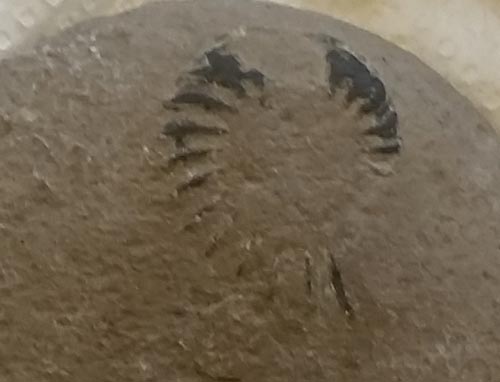
An Ammonite Fossil

Our fossil expert was able to identify the fossils and explain that they came from a beach, the remains of the coiled shells of ammonites and other fossil fragments have been preserved in the rocks.

Can You Spot the Fossil?

An ammonite fossil.

A close-up of the fossil (ammonite).

Picture credit: Yarnfield Primary School/Everything Dinosaur

For replicas of ammonites and other iconic animals from the fossil record: Replica Fossils and Models of Iconic Fossil Animals.

An idea might be for the children to set up their own dinosaur and fossil museum in the classroom so that they can display their work and exhibit some of their discoveries.  During the workshops, Year 3 learned about Mary Anning, a Georgian fossil collector, dealer and palaeontologist who was to become famous for her fossil discoveries from the cliffs at Lyme Regis (Dorset).

Mary’s discoveries include the first ichthyosaur fossil to be scientifically described along with plesiosaurs, ancient fish and the first flying reptile fossil to be found in England.  Although her finds made her quite well known and a number of leading scientists used Mary’s work and her knowledge to further their own careers, she never gained the public recognition her contribution to science merited.  Good luck to all the pupils who attempt the “sea shells” tongue twister inspired by Mary Anning  that we provided.

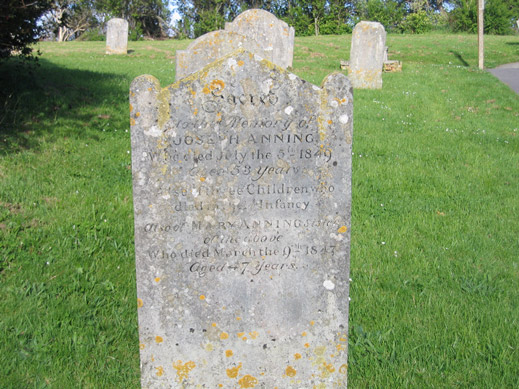
The Grave of Mary Anning 1799 – 1847

Mary Anning's grave.

Mary Anning’s grave at St Michael’s Church on the hill overlooking Lyme Regis.

Picture credit: Everything Dinosaur.

The picture above shows a the gravestone of Mary and Joseph Anning in the church close to the beach at Lyme Regis.  Perhaps Emily’s fossils will inspire the children at Yarnfield Primary School to become famous fossil collectors just like Mary Anning.

Visit Everything Dinosaur’s website: Everything Dinosaur.

7 09, 2016

Remembering the Beautiful Thylacine – Threatened Species Day

By |2024-05-06T08:49:10+01:00September 7th, 2016|Categories: Animal News Stories, Dinosaur Fans, Educational Activities, Everything Dinosaur Products, Main Page, Teaching|1 Comment

Remembering the Thylacine

On this day, eighty years ago, the last known Thylacine died at Beaumaris Zoo in Hobart.  It was on the 7th of September 1936, that staff at the Tasmanian zoo discovered “Benjamin”, as the animal was believed to have been named, dead.  Sadly, just two months earlier, the species Thylacinus cynocephalus had been granted protected status, after more than a hundred years of persecution.

Today, we live in what is regarded as more enlightened times, and September 7th in Australia is “National Threatened Species Day”, a day dedicated to honouring those people who work to protect Australia’s unique wildlife.  It is also a day for reflecting on how our own species has led to the demise of other species.  For example, the Thylacine was thought to attack and kill sheep and other domesticated animals and so it was hunted with bounties being paid for each “Tasmanian Tiger” killed.

The Sad Tale of Benjamin – The Last Known Tylacine

Benjamin is believed to have been captured in the Florentine Valley area (south central Tasmania) in 1933 and brought to Beaumaris Zoo (Hobart).  Although once thought to be female, a more recent analysis confirmed that Benjamin was indeed, in all probability a male.  An inability to determine gender reflects the relative neglect the animal suffered in the zoo.  Indeed, the fact that the animal was even nick-named Benjamin has been challenged by a number of academics and authors.

The Tasmanian winter of 1936 was particularly severe and it seems that the last known Thylacine in captivity probably died of exposure after having been locked out of its sheltered sleeping quarters.  And so, the last Thylacine was dead.  Ironically, Beaumaris Zoo, for years dogged by financial difficulties, was to close shortly afterwards.  It was shut down by the Hobart City Council in the last week of November 1937.

In 1996, on the sixtieth anniversary of the death of the only Thylacine to have been given official protection, “National Threatened Species Day” was declared.  A time to reflect on the demise of the Thylacine and how similar fates await other species of flora and fauna unique to Australia unless action is taken to reverse their decline.

The CollectA Female Thylacine Model

Everything Dinosaur is proud to have added the beautiful CollectA female Thylacine model to its range of CollectA models.  The Thylacine, (Thylacinus cynocephalus), was the largest carnivorous marsupial to have lived in Australia in modern times and the last member of a once much more diverse group of marsupials.  The “Tasmanian Tiger” may be thought to be extinct, but is it?

The CollectA Thylacine Model
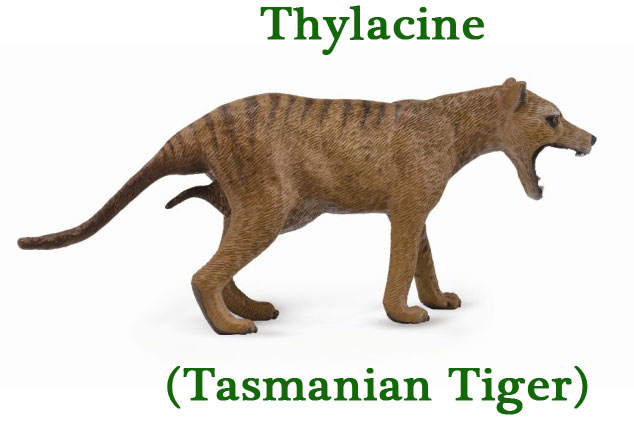
The CollectA Thylacine replica.

The CollectA Thylacine model.

Picture credit: Everything Dinosaur

To see the range of not to scale prehistoric animal figures in stock at Everything Dinosaur: CollectA Age of Dinosaurs Popular Range.

Is the Thylacine Extinct?

The main island that makes up the State of Tasmania is a fraction under 25,000 square miles in size, that’s around three times the size of Wales or about the size of the State of West Virginia in the USA.  There have been a number of reported sightings of “Tigers” both in Tasmania and on the Australian mainland.

Evidence for the existence of Thylacines is a little threadbare to say the least.  Blurred and very indistinct photographs, casts of footprints and some poor quality film footage, but nonetheless, there are a number of people, including academics who fervently believe that the Thylacine, although extremely endangered and very vulnerable, is still holding on.  Every now and then a new eyewitness account is published.

Let’s hope that the Thylacine still exists and that one day soon, September 7th will have even greater significance to the people of Australia.

Visit Everything Dinosaur’s website: Everything Dinosaur.

4 09, 2016

Everything Dinosaur to the Rescue

By |2023-05-06T21:39:55+01:00September 4th, 2016|Categories: General Teaching|Comments Off on Everything Dinosaur to the Rescue

Providing Dinosaur Themed Resources for Schools

After having supplied some prehistoric animal models and fact sheets to a teacher who was developing a scheme of work with a number of classes at her school, we received this kind email thanking us for our contribution.

Dinosaur Themed Teaching Resources

The teacher wrote:

“Thank you so much for the information.  It was exactly what I was looking for.  We are working on an outreach project for a local school (grades 4-6).  The prehistoric animal models are part of a school assignment on adaptation which includes extinction of species.  I hope to have the students get excited about science in general and plan to use the materials in lots of activities.  The information sheets you provided will help them learn about the prehistoric animals that they make models of.  It should be a fun day!”

Everything Dinosaur Supplies a Range of Prehistoric Animal Models and Other Resources for use in Schools

Everything Dinosaur receives a large shipment of CollectA prehistoric animal figures.

Lots of different prehistoric animal figures available from Everything Dinosaur.

Picture credit: Everything Dinosaur

To view this model range: CollectA Deluxe Prehistoric Life Models.

Everything Dinosaur’s Resources

The picture above shows a set of prehistoric animal models supplied to schools by Everything Dinosaur.  Each model is supplied with a fact sheet.  Each fact sheet is research and written by Everything Dinosaur team members and regularly updated in the light of new fossil discoveries and scientific evidence.

To visit Everything Dinosaur’s website: Everything Dinosaur.

We shall leave the last word to the teacher.  As we had supplied the fact sheets late on Friday (in response to her email which arrived about thirty minutes earlier), the teacher was most impressed with our speedy response and rapid customer service.  The teacher concluded her email by saying:

“Thank you ever so much and have a great weekend!”

Here’s one teacher who has got her lesson planning sorted in double quick time.

To contact Everything Dinosaur: Send Everything Dinosaur an Email.

Go to Top