All about dinosaurs, fossils and prehistoric animals by Everything Dinosaur team members.

Everything Dinosaur team members working in schools, helping museums and other educational bodies. Our work with and in schools.

1 11, 2016

Dinosaur Workshops for the Cornerstones Curriculum

By |2023-05-08T13:55:19+01:00November 1st, 2016|Categories: General Teaching, Key Stage 1/2|Comments Off on Dinosaur Workshops for the Cornerstones Curriculum

Dinosaur Workshops for the Cornerstones Curriculum

The start of the second part of the autumn term and Everything Dinosaur team members are in the process of delivering a number of dinosaur and fossil themed workshops to support various term topics within schools.  Several schools have approached the teaching team at Everything Dinosaur and requested a provocation, a dinosaur workshop to kick-start a topic area, one that will enthuse the pupils (and teachers too).

Everything Dinosaur and Dinosaur Workshops

Some of these schools are following the Cornerstones curriculum, a cross curricular approach to learning that encompasses four interlocking phases.

Delivering a Provocation to Inspire Young Learners
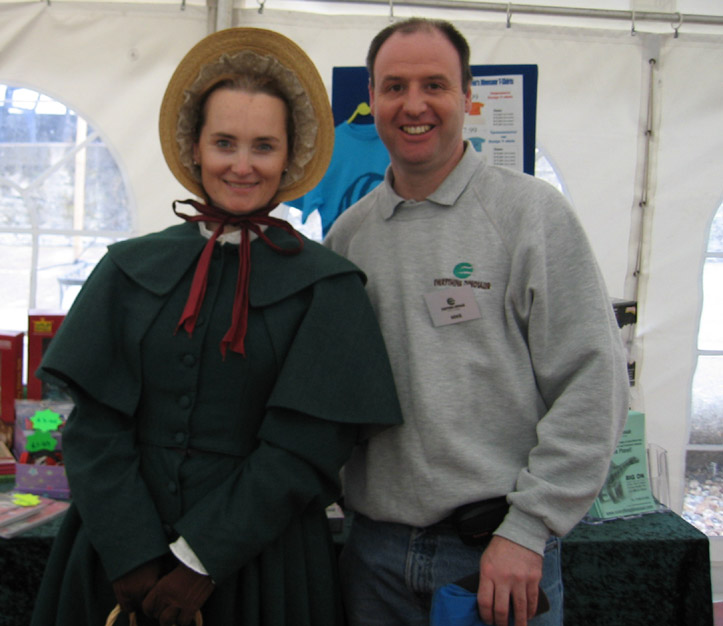
Helping to promote learning in schools.

Helping to promote science for girls by dressing up as Mary Anning.  Picture credit: Everything Dinosaur.

Picture credit: Everything Dinosaur

The Cornerstones Curriculum

Cornerstones has four main areas of learning:

  1. Engage
  2. Develop
  3. Innovate
  4. Express

Pupils have the opportunity to develop and improve skills learnt during each of these interlocked and related stages.  The aim is to help each child reach their full potential.  When it comes to a dinosaur themed learning topic, our team members are often amazed at the level of pre-knowledge that is demonstrated.  For instance, during one of our recent dinosaur workshops in school, working with a Year 1 class, the children were eager to show us their underwater scenes that featured a variety of marine reptiles and a coelacanth!

The Engage Element of the Cornerstones Curriculum

In the “Engage” section of the Cornerstones curriculum, pupils are given the chance to start their topic with a memorable, exciting and stimulating first-hand learning experience.  Everything Dinosaur team members call their provocation workshops “wow experiences”, after all, a great way to start a topic all about dinosaurs and life in the past is to handle real fossils.

Fossil Handling as Part of a Dinosaur Themed Workshop Helping to Kick-Start a Term Topic
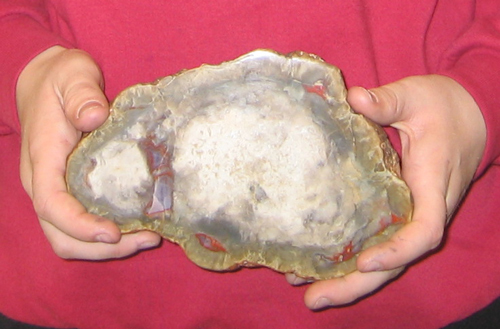
dinosaur coprolite

“Shiny side up” the joys of “dino dung”.  The joys of fossil handling.  Picture credit: Everything Dinosaur.

Picture credit: Everything Dinosaur

For further information about Everything Dinosaur’s science outreach work: Email Everything Dinosaur Team Members.

Dinosaur Workshops

It is important to kick-off the topic with a thought provoking and exciting learning experience.  This will help to enthuse and motivate the children, it will also help to enthuse the teaching team and with the extra resources we provide, there is plenty of scope to build in extension activities after one of our dinosaur and fossil workshops.

The dedicated teaching team at Everything Dinosaur will be undertaking a number of these provocations over the next two weeks as many schools start a new dinosaur and fossil themed topic area in the second half of the autumn term.  We wish all teachers, teaching assistants and home educationalists a rewarding and successful teaching term.

Visit Everything Dinosaur’s website: Everything Dinosaur.

31 10, 2016

Everything Dinosaur and the Cornerstones Curriculum

By |2023-05-08T13:46:17+01:00October 31st, 2016|Categories: Educational Activities, Main Page, Teaching|0 Comments

Whole School Topic Maps and the Cornerstones Curriculum

One of the main focal points linked to the establishment of a new curriculum was the aim to help every child reach his or her potential.  Providing an enriched and stimulating environment is essential and every day we come across examples of teaching excellence.

We see the efforts of many teachers to introduce a range of teaching styles and to really enthuse and motivate their class.  Thanks to the support of the senior leadership team, teaching professionals can set out to develop children emotionally and help them to prepare for adult life as well as embracing an appreciation of lifelong learning.  Hence the renewed focus on helping the children to experience personal, social, health and emotional development.

Helping Young People to Become Lifelong Learners

Personal, emotional and social development.

Helping learners to gain an appreciation of lifelong learning.

Picture credit: Press (Frankfurter Buchmesse)

The Cornerstones Curriculum

A lot of schools have chosen to adopt the Cornerstones curriculum.  This topic based curriculum reflects the requirements of the National Curriculum in a structured and organised manner, helping pupils to remain engaged and to apply skills and knowledge.  Often a whole school topic map will be planned, usually running on a biannual cycle.

Learning about rocks and fossils is now part of the science curriculum for Lower Key Stage 2, whilst evolution and natural selection subjects are found within the science subject areas for Year 6, so Everything Dinosaur’s workshops have a very broad appeal.  In addition, teachers of younger children find dinosaurs as an ideal term topic area, following on from children’s fascination for dinosaurs and providing an opportunity to develop and improve skills learnt to enable them to reach their full potential.

A Dinosaur Term Topic Can Really Help the Development of Young Minds

Children enjoy learning about dinosaurs.

Lots of literacy and numeracy activities displayed.  Picture credit: Everything Dinosaur.

Picture credit: Everything Dinosaur

A Cross Curricular Approach to Learning

The Cornerstones curriculum allows the teaching team to tailor the content and delivery of the teaching scheme of work to meet the needs of individual pupils.  It is essentially, a cross curricular approach to learning, hence when we are delivering a dinosaur themed workshop to Lower Key Stage 1 for example, we like to be briefed on the learning outcomes that the teaching team require.  In this way, we can cover key aims and help to reinforce learning, as well as providing plenty of numeracy, literacy and IT based extension exercises.

Cornerstones has four main areas of learning:

  • Engage
  • Develop
  • Innovate
  • Express

Interlocking Stages – Supporting Learning

During each of these interlocking stages, children have the opportunity to develop and improve skills learnt to enable them to reach their full potential.   We are often amazed at just how much knowledge children demonstrate during our school visits, for example, during our last fossil themed workshop, children were eager to tell us all about some marine reptiles that they had been learning about.

In the “Engage” element, pupils have the opportunity to kick-start a topic area with a memorable, thought provoking, first-hand learning experience.  Everything Dinosaur’s dinosaur workshops in schools are often used as a provocation to help give the term topic a good start.  Our dedicated teaching team will be undertaking a number of these provocations over the next two weeks as schools start a new dinosaur and fossil themed topic area at the beginning of the second half of the autumn term.

In the “Develop” element, children improve their knowledge and understanding in relation to their topic.  They develop and practice new skills learnt and have time to explore and create in relation to their term topic.  Many of the extension ideas we provide to teaching teams allows children to build on their pre-knowledge and to apply this and newly acquired knowledge to a range of scientific themed exercises.  All these extensions are aimed at helping to reinforce learning.

Everything Dinosaur and the Cornerstones Curriculum

For further information about Everything Dinosaur’s outreach work: Contact the Team at Everything Dinosaur.

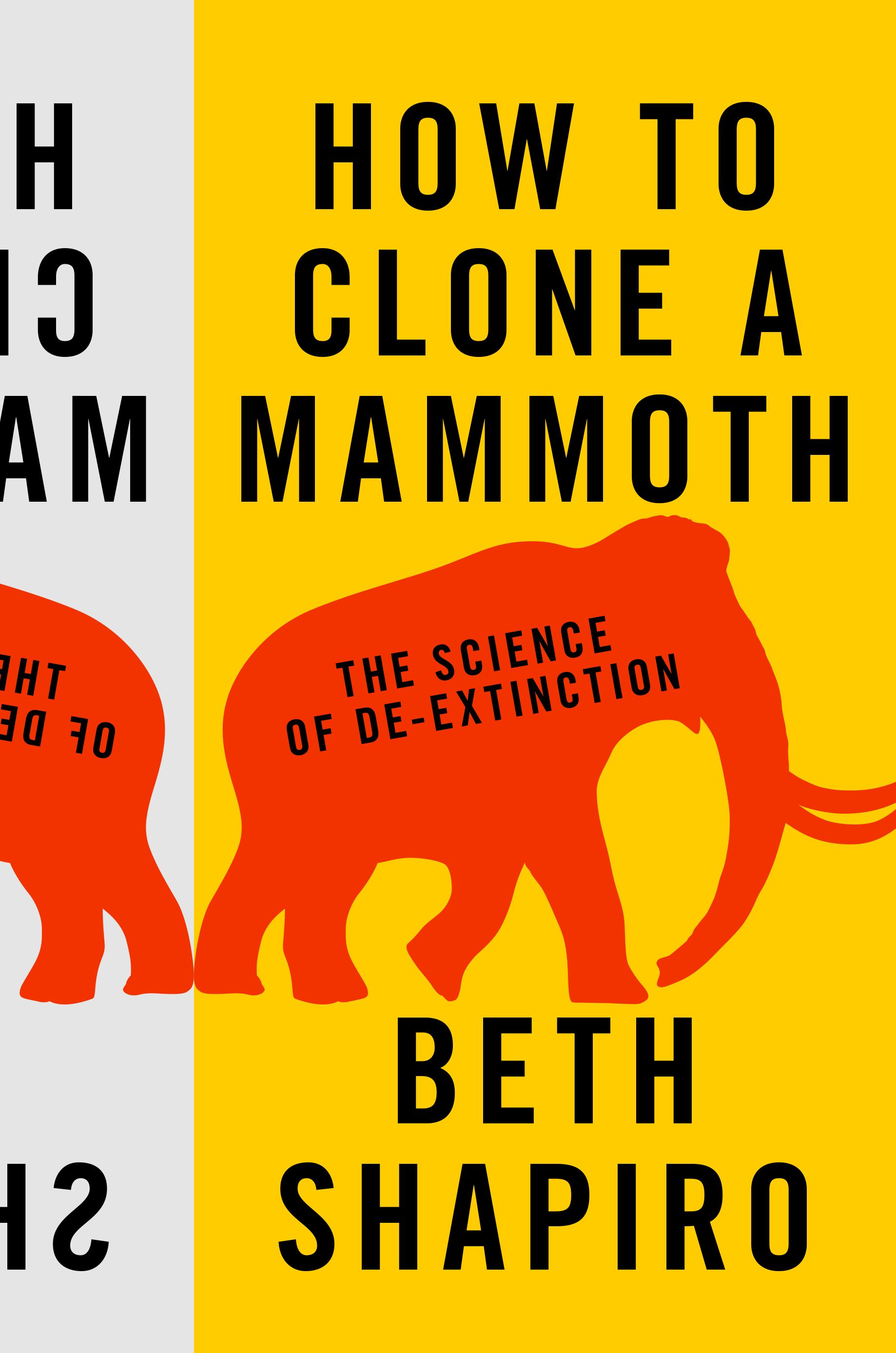
When it comes to the “Innovate” section, we like to see pupils applying the skills and knowledge they have learnt in real life, palaeontological contexts.  An example of this is challenging a Year 6 class to debate whether cloning a Woolly Mammoth would be a good idea.

Thoughtful and Provocative Debates Related to Climate Change, Extinction and the Ethics Behind De-extinction

The science behind de-extinction.

The science of de-extinction by Beth Shapiro.

Picture credit: Princeton Press

During our workshops, we like to give children the opportunity to explore real problems.  This helps to inspire them through learning and allows them to see how classroom teaching can be applied to real scientific conundrums.

Finally, we come to the “Express” section.  This provides young learners with the opportunity to become performers, experts and to inform others.

Everything Dinosaur Team Members Advising Teaching Teams

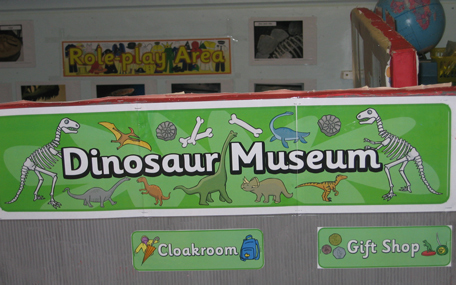
Demonstrating what they have learned can come in different forms, from a school assembly presentation related to mass extinction to writing and performing an expressive dance piece that depicts the extinction of the dinosaurs.  We advise teachers to have a dinosaur and fossil themed “learning wall” for this type of term topic.  This permits the class to showcase and celebrate their achievements as they have studied the topic.  A dinosaur museum set up in the classroom can provide a useful focal point for showcasing the work undertaken.

Come to the Dinosaur Museum!

A dinosaur museum set up on the classroom.

Come to our dinosaur museum! Picture credit: Everything Dinosaur.

Picture credit: Everything Dinosaur

We wish everyone well with the start of the second half of the autumn term.  Onwards and upwards with learning, whatever curriculum the school is following.

Visit the Everything Dinosaur Website: The Website of Everything Dinosaur.

31 10, 2016

Helpful Networking for Teachers and Academics a Chance to Swap Great Ideas

By |2024-05-06T15:15:53+01:00October 31st, 2016|Categories: General Teaching|Comments Off on Helpful Networking for Teachers and Academics a Chance to Swap Great Ideas

Frankfurter Buchmesse 2016

For those teachers, teaching assistants and members of the educational profession, the recent Frankfurt Book Fair provided an ideal opportunity to meet up and discuss the latest ideas in teaching literacy.  At this five-day event, a total of 277,000 people attended, but there was still plenty of room available to sit down and discuss learning aims and objectives in a convivial atmosphere.

The Frankfurter Buchmesse

A Chance to Network and Exchange Ideas

Visitors to the trade fair. The Frankfurt Book Fair.

Tens of thousands of visitors attended the Frankfurter Buchmesse.

Picture credit: Everything Dinosaur

With so many developments in literacy teaching at the moment, this annual event provided an important opportunity for teaching professionals to catch up with the latest trends and teaching ideas.  There were so many books to peruse, both fiction and non-fiction and our team members particularly enjoyed discussing ideas in phonics teaching with a number of the publishing house professionals on the trade stands.

Everything Dinosaur team members recognise the importance of trade shows.  The Frankfurter Buchmesse provides plenty of networking opportunities. Trade fairs provide plenty of contacts and allow the exchange of ideas.

To learn more about Everything Dinosaur team members: About Everything Dinosaur Team Members.

Dinosaurs Helping to Inspire Young Readers

At the Frankfurter Buchmesse, it was pleasing to see the number of dinosaur and prehistoric animal themed titles aimed specifically at young readers that were available.  Dinosaurs, as a teaching theme certainly enthuses and motivates young minds.  Children seem to have a remarkable level of pre-knowledge when it comes to the Dinosauria.

Inspirational Dinosaurs at the Frankfurt Book Fair

Dinosaur Books at the Frankfurt Book Fair.

A dinosaur book spotted at the Frankfurter Buchmesse.

Picture credit: Everything Dinosaur

Team Members Preparing for More Science Outreach Work

As team members at Everything Dinosaur prepare for the next set of dinosaur themed workshops in schools, it is great to know that there are some excellent literary resources to help support teaching teams as they strive to develop a lifelong passion for learning within their young charges.

The Everything Dinosaur website: Everything Dinosaur Website.

25 10, 2016

A Special Fossil Hunting Event at Biddulph Grange Garden

By |2024-05-06T15:16:42+01:00October 25th, 2016|Categories: Dinosaur Fans, Educational Activities, Geology, Main Page, Teaching|0 Comments

Budding Palaeontologists Wanted at Biddulph Grange Garden – Sunday 30th October

On the cusp of “Dinovember” already and Sunday 30th October will see team members from Everything Dinosaur visiting the prestigious Biddulph Grange Garden (Staffordshire), to set up a fossil hunting activity in support of the fund to help restore and refurbish the amazing Geological Gallery at this National Trust property.

A Fossil Hunting Activity

The beautiful Biddulph Grange House and Gardens, a fine example of Victorian architecture and landscaping, hide a secret.  Theologian, lay preacher and naturalist James Bateman, the erstwhile owner of the house and gardens, built a unique gallery dedicated to uniting the ideas of a biblical creation with the newly emerging sciences of geology and palaeontology.

An Illustration of the Victorian Geological Gallery

An lithograph of the geological gallery at Bidduph Grange House.

An illustration of James Bateman’s amazing Geological Gallery in its Victorian heyday.

Picture credit: National Trust

The Geological Gallery

This amazing gallery is currently being restored and Everything Dinosaur will be inviting “palaeontologists in training” to brush up on their fossil hunting skills and help us to discover fossils.  What you find you can take home and keep!

For further information about Everything Dinosaur: Everything Dinosaur – About Us.

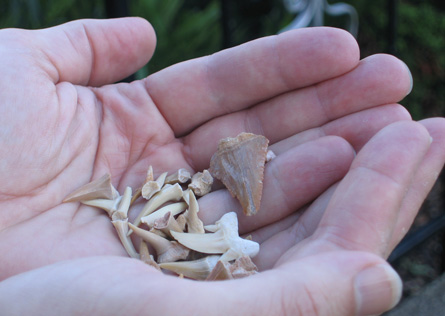
Everything Dinosaur team members are busy sorting out all sorts of amazing fossils that they intend to giveaway to lucky fossil hunters on Sunday 30th October, with so many fossils to find, visitors to this fund-raising event are bound to come away with something special, we might even bring a few of our dinosaur fossils and other items along too.

Sorting Prehistoric Sharks Teeth Ready for the Fossil Hunt

fossilised shark teeth.

A successful fossil hunt.

Picture credit: Everything Dinosaur

For replicas of iconic animals from the fossil record: Dinosaur Games, Dinosaur Crafts and Iconic Fossil Replicas.

A Unique Space

The Geological Gallery demonstrates the growing scientific understanding of ancient life on Earth and marries it with the biblical view of creation as outlined in the first book of the bible (Genesis).  James Bateman’s vision was to set out fossils and the history of prehistoric animals and plants in the context of the seven days of the Christian creation story.

The garden was a marvel of its age, providing a striking exhibition of beautiful fossils and colourful rocks.  A dedicated team of volunteers at the National Trust are setting out to restore the Geological Galley to its former glory and visitors on Sunday have the opportunity to see the progress, as well as to take home a little bit of Earth’s prehistory for themselves.

Team members at Everything Dinosaur might even play one or two games and provide some palaeontological puzzles to test the knowledge of the young fossil hunters who join us on the day (watch out mums, dads, grandparents and guardians, we might just teach you a thing or two too).

Chirotherium Fossil Track Being Restored to the Exhibit

A Chirotherium reptile print (Triassic).

Restoring one of the fossil exhibits in the Biddulph Grange Geological Gallery.

Picture credit: National Trust

This exciting day of dinosaur themed activities starts at 11.30am Sunday morning, check out this link to visit our website: Everything Dinosaur.

17 10, 2016

Looking forward to the Frankfurt Book Fair

By |2023-05-08T10:23:56+01:00October 17th, 2016|Categories: General Teaching|Comments Off on Looking forward to the Frankfurt Book Fair

The Frankfurter Buchmesse (19th to 23rd October)

For many teachers, the half-term holiday provides an opportunity to review the scheme of work undertaken in the first part of the autumn term as well as to fine tune plans for the second part of the term and the build up to Christmas.  However, for members of the teaching team at Everything Dinosaur, the pause in their programme of dinosaur and fossil themed workshops for schools, provides an opportunity to visit the forthcoming Frankfurt Book Fair.

The Frankfurt Book Fair

Final Preparations Underway for a Visit to the Frankfurter Buchmesse

Frankfurther Buchmesse logo (2016). The Frankfurt Book Fair logo.

Frankfurt Book Fair logo (2016).

Picture credit: Frankfurt Book Fair Press

For inspiring ideas about dinosaurs and prehistoric animal gifts: Educational Prehistoric Animal Themed Gifts and Toys.

Providing Inspiration for Teachers and Education Professionals

This annual five-day event, held in southern central Germany, attracts visitors from all over the world.  It is the ideal venue for teachers, school administrators, educationalists and librarians to catch up on the latest trends in educational publishing.

Since Everything Dinosaur team members focus mainly on working with Key Stage One and Key Stage Two pupils, we appreciate the tremendous focus placed on the development of reading by teachers and teaching assistants.  We may specialise in delivering fossil and dinosaur themed workshops in support of the science curriculum, but our teaching team also strives to ensure that they build in extension exercises that involves reading both non-fiction and fiction texts.

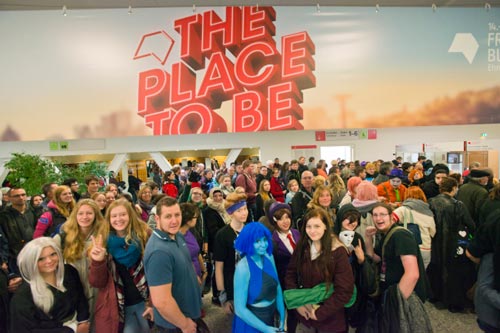
More than 250,000 Visitors are Expected at the 2016 Frankfurter Buchmesse

Visitors to the Frankfurt Book Fair.

Visitors enjoy cosplay at the Frankfurter Buchmesse.

Picture credit: Frankfurt Book Fair Press

Developing a Passion for Reading

Developing confidence with reading is a fundamental element of the new English national curriculum for schools.  In the Department of Education outline, the focus on providing children with a rich and stimulating learning environment is stressed and the school library can often provide a focal point for a coordinated effort across the school to improve reading.  Many young boys become disillusioned with reading, however, if given the opportunity to read and then write about a Tyrannosaurus rex most jump at the opportunity.

As the world’s largest book fair (in terms of the number of publishers attending and exhibitors), the annual Frankfurter Buchmesse can inspire teachers, home educationalists and education professionals, allowing them to keep up to date with the fast moving world of educational publishing.

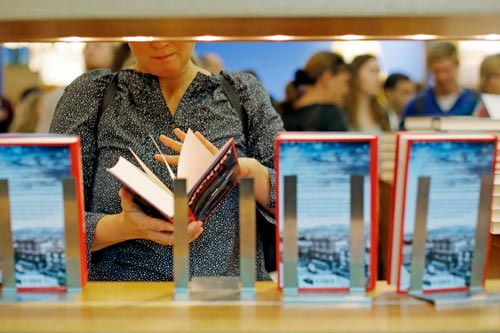
A Lively Atmosphere at the Frankfurter Buchmesse

Browsing books.

Time for browsing at the Frankfurt Book Fair.

Picture credit: Frankfurt Book Fair Press

Getting Ready for World Book Day

For those teachers working on their plans for World Book Day 2017 (a date for your diaries – Thursday 2nd March 2017), the cosplay at the Frankfurt Book Fair could be just the thing to help inspire them and their scheme of work.

Visit Everything Dinosaur’s website for more inspiration: Everything Dinosaur.

11 10, 2016

A Beautiful Dinosaur “Wow Wall”

By |2024-05-06T15:12:14+01:00October 11th, 2016|Categories: Educational Activities, Main Page, Teaching|0 Comments

Displaying Children’s Dinosaur Topic Work

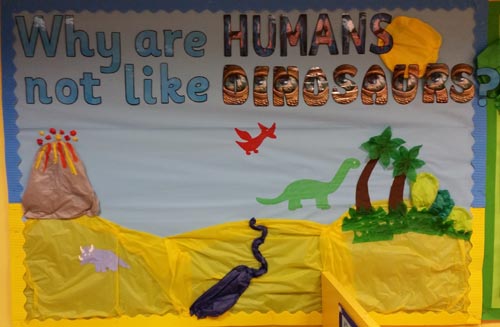
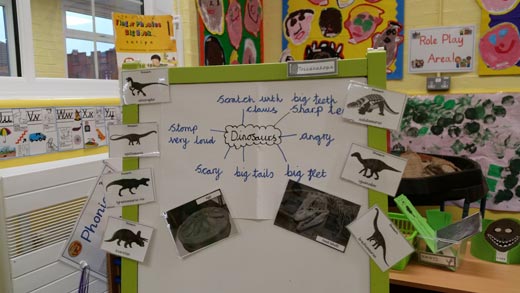
Year 1 children at Lowton St Mary’s CE Primary have commenced their autumn term topic entitled “Why are humans not like dinosaurs?  The children have not learned about prehistoric animals in school before, for the teacher too, this is a new topic, requiring careful planning to help cement the learning targets already achieved in Reception and to prepare the children for more directed learning tasks targeted on developing confidence with literacy and numeracy.

A Dinosaur Themed Topic

A question at the heart of the topic, provides the teaching team with a focal point on which to centre the scheme of work for the term.  In this instance, the question asking about the differences between people and dinosaurs links into one of the key areas of the English national curriculum for Lower Key Stage 1, that of learning about our bodies.

The Focal Point for a Dinosaur Themed Term Topic – “Why are Humans not like Dinosaurs”?

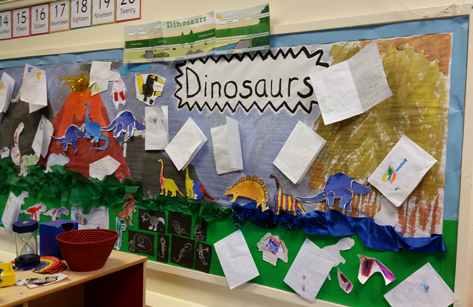
A "Wow Wall" in Year 1 helping to enthuse the children.

Why are humans not like dinosaurs?

Picture credit: Lowton St Mary’s CE Primary/Everything Dinosaur

A “Wow Wall”

A number of display areas have been prepared around the well-organised classroom to showcase the children’s work.  This can provide a focal point for the children and allows good examples of writing (fiction and non-fiction), to be prominently displayed.  During a visit to the school, to conduct a dinosaur themed workshop with the class to act as a provocation for the term topic, our fossil expert provided further advice as well as some handy extension resources to support planning of the topic areas.

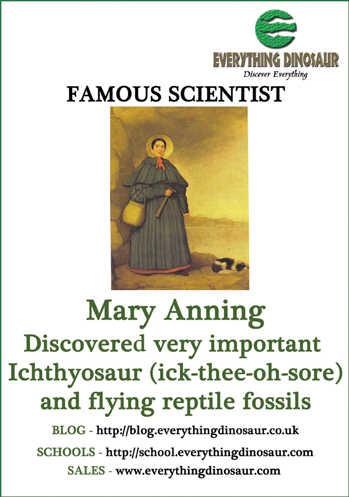
One suggestion was to introduce the story of Mary Anning (1799-1847).  This Georgian lady found a number of important fossils around the cliffs of Lyme Regis and the tongue twister “she sells sea shells” is connected with her.  Mary also provides a fine role model for girls, in what otherwise might be viewed as a boy focused topic.

Mary Anning – A Famous Fossil Hunter from Dorset (southern England)

Mary AnningPoster

Helping to learn all about scientists.

Picture credit: Everything Dinosaur

A Dinosaur Museum

Many teachers dedicate an area of the classroom for a dinosaur museum, this allows craft ideas such as fabric and clay models or salt dough fossils to be displayed.  This permits the teaching team to support an area of curriculum learning related to exploring the properties of everyday materials.

During our visit we met one little boy who explained that he had some fossils at home.  With permission, these items could be brought into school and put on display in the museum, this allows the teacher to explore with the children what might be needed to keep the fossils safe, how might the fossils be displayed?  When creating a dinosaur museum in a classroom environment we like to ask the class what sort of rules their museum should have.  Thinking about the rules for good behaviour in the museum links into the PSHE elements (personal, social, health and economic values), that are encouraged by Ofsted.

The children considering appropriate behaviour in their museum can help them to understand and develop knowledge, understanding, attitudes and responsibilities with regards to their own behaviour in the class generally.

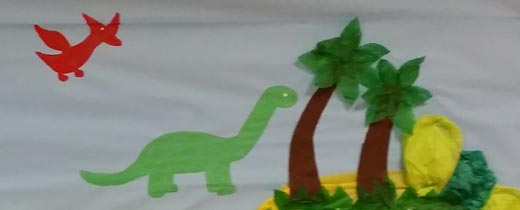
Different Materials Used to Make a Prehistoric Animal Themed Display

A dinosaur themed display.

Different materials used to make a prehistoric animal themed display.

Picture credit: Lowton St Mary’s CE Primary/Everything Dinosaur

A Dinosaur Themed Topic “Wow Wall”

The prehistoric animal themed display, the “wow wall” as we like to call it, was comprised of a number of different materials.  This was a clever way of helping the children to explore textures as well as the properties of materials.

The Everything Dinosaur website: Everything Dinosaur.

10 10, 2016

Milk Carton Woolly Mammoth Craft Idea

By |2023-05-07T21:42:12+01:00October 10th, 2016|Categories: Early Years Foundation Reception, Key Stage 1/2|Comments Off on Milk Carton Woolly Mammoth Craft Idea

Milk Carton to Woolly Mammoth

For teachers, museum staff and home educationalists, here is a simple craft idea to make a Woolly Mammoth model.  This could prove to be very useful when thinking of extension ideas to support teaching about the Stone Age or prehistoric mammals.  A milk carton can be used to make a Woolly Mammoth model.

Make Your Own Woolly Mammoth Models Using Milk Cartons

Making a Woolly Mammoth out of a plastic milk carton.

Making a Woolly Mammoth out of a milk carton.

Picture credit: Everything Dinosaur

Visit Everything Dinosaur’s website: Everything Dinosaur.
Ideal for Upper KS1 or Lower KS2

Using just a few basic school resources, all of which are readily available in the average classroom, a milk carton can be used to make a Woolly Mammoth model.  This craft idea is a great way to help support cross curricular activities.

What You Will Need

  • Scissors (round ended ones would be best)
  • A selection of empty milk cartons (washed out)
  • White card or paper
  • Paints
  • Pencil and a black pen to help draw out the shapes to be cut out of the milk carton

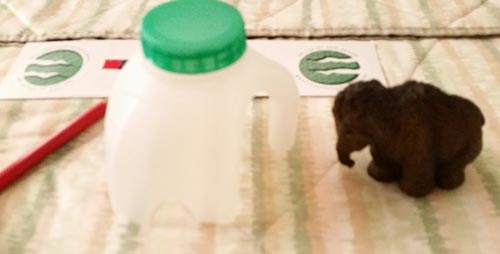
Carefully cut the milk carton in half, using the handle as a guide.  The handle will make the trunk of the Mammoth so cut the handle first than cut around the rest of the carton.  Then trim the base of the milk carton so that the base is a good two centimetres deeper than the trunk.  This will ensure that the Mammoth’s trunk will be raised off the floor.

The Milk Carton Mammoth Begins to Take Shape

Milk carton Woolly Mammoth takes shape.

Woolly Mammoth takes shape (milk carton).

Picture credit: Everything Dinosaur

Making a Woolly Mammoth Model

Cut two tongue-shaped slots on each side of the carton, these will make the legs.  Use a pencil to sketch out where the cuts will be made and then go over the pencil line with a black marker pen to give you a distinctive line to follow.  Cut a third tongue-shaped slot on the back of the carton, this will help to form the back legs.  Add the tail by cutting a small “V” shape at the top of this slot, you can then bend this plastic out to make the Woolly Mammoth’s stumpy tail, but watch for sharp edges.

Paint your Woolly Mammoth model, mark in the five toe nails per foot, outline the small ears (an adaptation to the cold) and add the eyes.

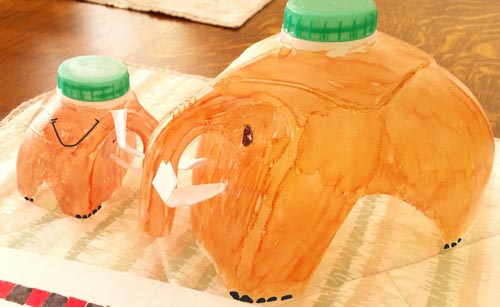
Build Your Own Herd of Prehistoric Woolly Mammoths

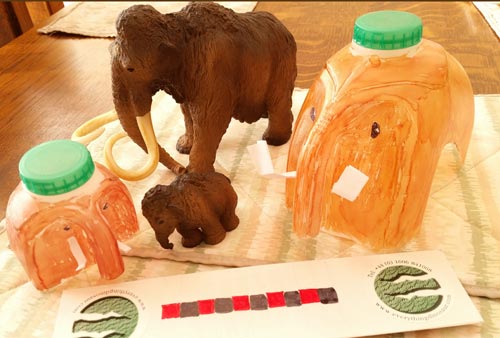
A pair of milk carton Woolly Mammoths.

Build your own herd of milk carton Woolly Mammoths.

Picture credit: Everything Dinosaur

Make a small hole either side of the trunk and push some white card or paper into the hole to form the pair of tusks.  Bend the tip of the tusks upwards so that they resemble the tusks of this Ice Age elephant.  Different sized milk cartons can be used to make different sized Woolly Mammoths, such as the adult and young pictured above.

For dinosaur and prehistoric animal resources for schools, including fossil sets and dinosaur models: Prehistoric Animal Toys and Gifts.

10 10, 2016

A Clever Milk Carton Woolly Mammoth – A Great Craft Idea

By |2024-05-06T15:12:47+01:00October 10th, 2016|Categories: Educational Activities, Main Page, Teaching|0 Comments

Milk Carton Woolly Mammoth

Here’s a simple craft idea for teachers, home educationalists and museum staff who want to teach about Ice Age prehistoric animals.  A plastic milk carton can be turned into a Woolly Mammoth model.

A Milk Carton Woolly Mammoth Model

Making a Woolly Mammoth out of a plastic milk carton.

Making a Woolly Mammoth out of a milk carton.

Picture credit: Everything Dinosaur

Visit Everything Dinosaur’s website: Everything Dinosaur.
A Woolly Mammoth Model

This is a simple and fun to make Woolly Mammoth model and would be a great activity for Key Stage 1 or Lower Key Stage 2 children to try.

What You Will Need to Make a Milk Carton Woolly Mammoth

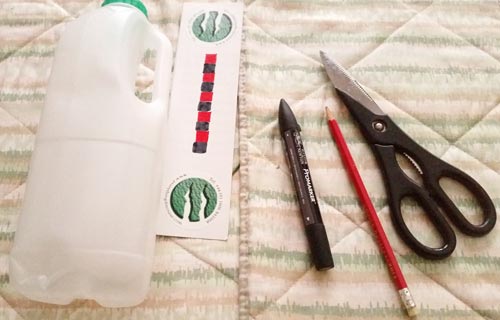
  • Empty plastic milk cartons (washed out to remove any milk residue)
  • Pair of round ended scissors
  • Pencil and black highlighter pen
  • White card or paper
  • Paints

Taking your milk carton, carefully cut it into half, using the handle as a guide.  The handle will form the trunk of your Mammoth so cut the handle first then cut around the rest of the carton about two centimetres lower down the carton.  This will ensure that your Mammoth’s trunk will be raised off the ground.

What You Need to Make a Milk Carton Mammoth

What you need to make a Woolly Mammoth model from a milk carton.

Tools required to make a milk carton Mammoth.

Picture credit: Everything Dinosaur

A Milk Carton Woolly Mammoth Model

Once the milk carton has been cut, then simply cut two tongue-shaped slots on the widest part of carton, these will make the legs.  Use a pencil to sketch out where the cuts will be made and then go over the pencil line with the black marker pen to give you a distinctive shape to follow as you cut.  Finally, cut a third tongue-shaped slot on the back of the carton, this slot will help to form the back legs.  If you want, you can cut a small “V” shape at the top of this slot, you can then bend this plastic out to make the Woolly Mammoth’s little tail.

The Milk Carton Woolly Mammoth Begins to Take Shape

Milk carton Woolly Mammoth takes shape.

Woolly Mammoth takes shape (milk carton).

Picture credit: Everything Dinosaur

Once the legs and tail have been cut out, simply paint the carton a sandy, brown colour to mimic the shaggy Mammoth coat.  Add the eyes, (draw on the tail, if you have not cut out a “V-shaped” slot at the back), and add the five rounded nails on each foot.  You can mark the area of the ears as well.  Remember, Woolly Mammoths had relatively short ears compared to those of modern elephants (an adaptation against the cold).

Build Your Own Herd of Woolly Mammoths

A pair of milk carton Woolly Mammoths.

Build your own herd of milk carton Woolly Mammoths.

Picture credit: Everything Dinosaur

Adding the Tusks

To finish off your Woolly Mammoth cut two small holes either side of the trunk and then slot in a piece of white card or paper to make the tusks.  Don’t forget to bend the tusks upwards a fraction and there you have it, an easy to make milk carton Woolly Mammoth, a super craft idea to support teaching about Ice Age animals and life in the Stone Age.

Different sized milk cartons can be used to make different sized members of your Mammoth herd.

For models and replicas of prehistoric animals including Woolly Mammoths: Papo Replicas of Prehistoric Animal Models.

8 10, 2016

Reception Classes Explore Amazing Dinosaurs

By |2024-05-06T15:13:36+01:00October 8th, 2016|Categories: Educational Activities, Main Page, Teaching|0 Comments

Manor Primary and Dinosaurs

Friday was yet another busy day for the young learners at Manor Primary School (Coseley, West Midlands).  The three Reception classes had embarked on their first ever term topic and to cap an exciting week, the children were visited by one of the dinosaur experts from Everything Dinosaur.

Dinosaurs and Prehistoric Animals

With three workshops to deliver over the course of the day, the teaching schedule was quite tight, but within minutes of arriving our team member had settled in and prepared the spacious dance hall in readiness for the first of that morning’s dinosaur workshops.  There was plenty of time prior to the arrival of the children to conduct a briefing with one of the Foundation Stage teachers.  This helped establish learning objectives and intended outcomes for each class workshop.  In addition, our dinosaur expert was given the opportunity to view some of the excellent preparation that had been undertaken by the teaching team in this Ofsted rated “outstanding” school.

RLC Class Children Had Thought About Dinosaurs Prior to the Workshop

A simplified KWL chart with Reception children.

Reception children think about dinosaurs. What can they tell the teacher?

Picture credit: Manor Primary/Everything Dinosaur

First Time Dinosaurs

This was the first term topic for the three Reception classes, the autumn term marking the transition from the Nursery programme onto the more structured learning associated with Foundation Stage 2 on the national curriculum.  It was also the first time that the teachers had covered dinosaurs with their charges, our handy phonetic pronunciation guide was greatly appreciated, we know how challenging some of those dinosaur names can be!  The extra resources that we had provided were well received and there was even an opportunity to inspect the organised and tidy classrooms prior to the start of the school day.

As a teaching school, providing support and training to other schools in the area, Manor Primary sets high standards for both pupils and staff.  Emphasis is placed on developing confident, enthusiastic learners and the stimulating activities that the children had been focused on in the first few days of this term topic provided plenty of evidence of a thoughtful and well-planned scheme of work.

Clay Fossils

Some of the children had made clay fossils, whilst others had been constructing dinosaur teeth.   One class had been excavating their very own set of dinosaur bones in the classroom sand tray.  Dinosaurs and fossils as a topic certainly gives plenty of scope for exploring the properties of materials as well as for creative, imaginative play.

For prehistoric animal toys and games: Prehistoric Animal Toys and Games.

RAB Class Had Been Making Their Own Dinosaur Land

A Reception class dinosaur themed creative play area.

A creative play area with a dinosaur theme in the Reception class.

Picture credit: Manor Primary/Everything Dinosaur

Dinosaur Drawing Challenge

Plenty of space had been set aside in each of the three Reception classrooms to allow the children’s work to be displayed.  We challenged the children to have a go at drawing their very own dinosaur, but we also wanted to see plenty of labelling of the dinosaur’s body parts.  Could they label the dinosaur’s head?

Lots of pre-knowledge was demonstrated by the children, they certainly know their dinosaurs, but our workshops also focused on developing vocabulary as well as exploring the differences between people and prehistoric animals.  Plenty of good listening in evidence, which was quite remarkable given the fact that some of these enthusiastic palaeontologists have only just turned four.

RKM Class Take Up Palaeontology in the Sand Tray

Reception class dig for dinosaurs.

Digging for dinosaurs with a Reception class.

Picture credit: Manor Primary/Everything Dinosaur

Diverse and Varied Dinosaur Themed Activities

The children certainly have access to diverse and varied dinosaur themed activities.  All learning styles seem to be well catered for.  We hope that our novel way of demonstrating the size of a Tyrannosaurus rex, part of the extension resources that were provided, helps the FS2 children to appreciate that some dinosaurs were very big indeed!  Or were they massive, giant, huge, bigger – just some or the words the children came up with when we examined fossils and challenged the children to describe some of them.

Discover Everything Dinosaur’s website: Everything Dinosaur.
4 10, 2016

Big Blue Dinosaur Spotted at Three Peaks Academy

By |2023-05-07T17:04:59+01:00October 4th, 2016|Categories: Early Years Foundation Reception|Comments Off on Big Blue Dinosaur Spotted at Three Peaks Academy

There’s a Dinosaur Behind You!

Another busy morning for a member of the teaching team at Everything Dinosaur.  Today, it was an early start and off to Three Peaks Academy in the sunny West Midlands to work with two classes of eager Reception children.  The children had only just started attending the school for the entire school day and their first ever term topic is dinosaurs.  The budding young palaeontologists had already excavated some dinosaur bones and built a safe play area for the prehistoric animal models that had taken up residence in the well-appointed classrooms.

Lots of super listening skills on display and both classes were able to beat our fossil expert in the ammonite fish catching game, so that means stickers all round.

For creative, dinosaur themed toys and games: Dinosaur Toys and Gifts.

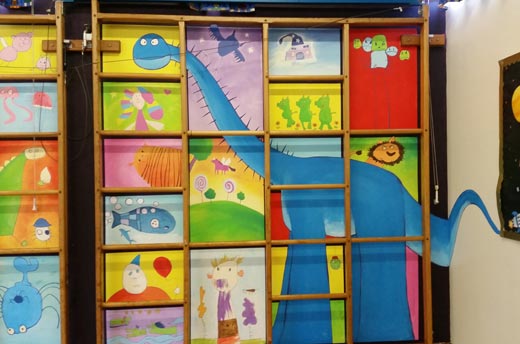
Lurking at the back of the spacious hall, the location for today’s dinosaur workshops with the Reception classes, was a huge, blue dinosaur.  Our dinosaur expert thinks that none of the children spotted the dinosaur, even the teacher looked surprised when she was informed.  Can you spot a blue dinosaur?

A Big Blue Dinosaur Spotted at Three Peaks Academy

School hall has a dinosaur in a mural.

A mural that features a big, blue dinosaur in a school hall.

Picture credit: Everything Dinosaur

A Big, Blue Dinosaur

Can the children work out what the dinosaur’s name might be?  It’s not a Lexovisaurus or a Liliensternus that’s for sure, two dinosaurs that we discussed with Lexie and Lilly, promising to email over pictures of the dinosaurs that have similar names to their own.  What food did this big blue dinosaur eat?  Perhaps the dinosaur themed word mats that we provided as extension materials along with the other resources we sent to the teacher, could provide a clue.

During our dinosaur workshop with each Reception class we challenged the children to have a go at drawing their very own dinosaur.  Our dinosaur expert wanted to see lots of colourful pictures and could the children label their dinosaur’s body parts, especially the skull?

Everything Dinosaur’s website: Everything Dinosaur.

Go to Top