All about dinosaurs, fossils and prehistoric animals by Everything Dinosaur team members.

Everything Dinosaur team members working in schools, helping museums and other educational bodies. Our work with and in schools.

10 08, 2017

Josh and an Omnivore Along with a Super Dinosaur Drawing

By |2024-05-07T15:34:39+01:00August 10th, 2017|Categories: General Teaching|Comments Off on Josh and an Omnivore Along with a Super Dinosaur Drawing

Josh Sent Us a Drawing of a Dinosaur (Omnivore)

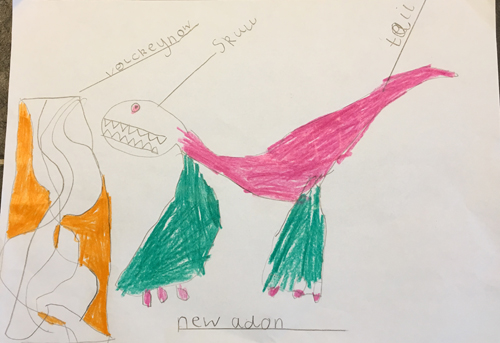
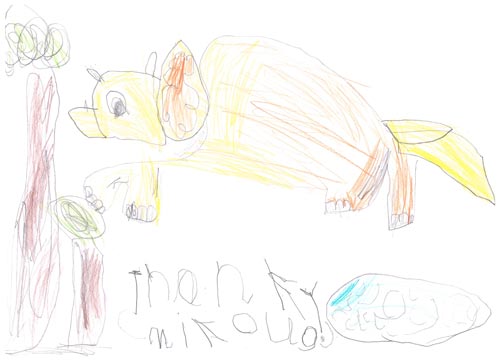
A big thank you to Josh who sent in a drawing of a spiky omnivorous dinosaur to our offices.  Josh decided to call his yelloa and brown dinosaur “Joshrex”.  Josh is seven years of age and he is a big fan of dinosaurs, especially Stegosaurus, Triceratops and Tyrannosaurus rex.

A Dinosaur Drawing

A horned dinosaur drawn by a child in Year 1.

A dinosaur drawing.  A colourful illustration of a prehistoric animal.

For inspirational dinosaur themed gifts: Dinosaur Themed Gifts and Toys.

Labelling a Dinosaur Drawing

Josh went to the trouble of labelling his dinosaur drawing for us.  In the letter enclosed with his illustration, Josh explained that this was a dinosaur that ate both plants and meat, this is what the term omnivore means.  Thanks for the explanation Josh, we also appreciate your comments about the dinosaur having big eyes so that it could see its food properly and that the tail spikes were to help the dinosaur to protect itself from attack by other prehistoric monsters.

Well done for spelling the word “omnivore” correctly.  Josh added that he wanted to be a palaeontologist when he gets older.  Perhaps, he will discover a new type of dinosaur, even an omnivore!

Visit the Everything Dinosaur website: Everything Dinosaur.

9 08, 2017

Sensational Summer Dinosaur Letters

By |2024-05-06T16:17:16+01:00August 9th, 2017|Categories: General Teaching|Comments Off on Sensational Summer Dinosaur Letters

Summer School and Dinosaur Letters

Over the last month or so, as summer school organisers have been finalising their plans to keep the children occupied and entertained over the holiday period, Everything Dinosaur has been busy providing advice and free teaching resources to teaching assistants and volunteers as they prepare their summer school programmes.  For example, one summer school has spent a whole week learning about dinosaurs, prehistoric animals and life in the past.

Everything Dinosaur Helping by Providing Lesson Plans

We helped provide a lesson plan to support their scheme of work explaining about deep time.  Another summer school, has an objective of improving the children’s confidence with writing.  Our visit went down very well and we set the children, who ranged in age from six years to eleven years of age, a series of writing tasks including non-fiction chronological reporting.

Our team member received some lovely thank you letters from the children, Eve wrote in to say that she enjoyed the visit and learning all about Tyrannosaurus rex.

A Thank You to Everything Dinosaur

Thank you Everything Dinosaur.

Thank you Everything Dinosaur for your excellent product range, wonderful teaching work and fantastic customer service. Picture credit: Everything Dinosaur.

Picture credit: Everything Dinosaur

Eve Says Thanks

Eve also thanked us for giving all the children stickers (dinosaur themed ones of course) and she said her favourite part of the visit was pretending to be an ammonite.  It’s always a pleasure helping out with such worthwhile activities and events and we did enjoy coming to the school and spending time supporting the excellent and varied teaching programme that had been organised for the eager, young fossil hunters.

Ammonites are extinct marine cephalopods that thrived during the Mesozoic.  Fossils of these molluscs provide important information to palaeontologists and help with relative dating of strata.

Visit the Everything Dinosaur website: Everything Dinosaur.

3 08, 2017

A Beautiful Carnivorous Dinosaur Drawing from Ethan

By |2024-05-09T08:32:51+01:00August 3rd, 2017|Categories: General Teaching, Key Stage 1/2|Comments Off on A Beautiful Carnivorous Dinosaur Drawing from Ethan

Ethan’s Meat-eating Dinosaur Drawing

Our thanks to Ethan who kindly sent into the Everything Dinosaur offices, a wonderful drawing of a meat-eating dinosaur.  In a note included with Ethan’s drawing, he explained that his two favourite dinosaurs were Spinosaurus and Tyrannosaurus rex.  As he like carnivorous dinosaurs so much he had drawn a picture of a fearsome dinosaur that would have been a carnivore, especially for us.  Thanks for this lovely drawing Ethan.

A Drawing of a Meat-eating Dinosaur from Young Dinosaur Fan Ethan

A colourful dinosaur design.

A very colourful dinosaur.

Picture credit: Ethan

A Green and Pink Dinosaur Drawing

Ethan explained that he had coloured his dinosaur green so that it could creep up on plant-eating dinosaurs and attack them without it being seen.  He gave his dinosaur some red spines and a sail just like one of his favourite dinosaurs – Spinosaurus.  The dinosaur even has a golden horn on its head, that’s a very imaginative dinosaur you have drawn for us.

In Ethan’s note he explained what a carnivore ate and named some carnivorous dinosaurs.  Ethan also described the diet of herbivorous dinosaurs and gave three examples of dinosaurs that ate plants, namely Stegosaurus, Triceratops and Brontosaurus.  He also helpfully explained that all these three dinosaurs lived in America, although Triceratops lived during the Cretaceous, whilst Stegosaurus and Brontosaurus lived earlier, in the Jurassic Period.

Our thanks to Ethan for his drawing and his detailed note.

Visit the Everything Dinosaur website: Everything Dinosaur.

21 07, 2017

A Guide to the CollectA Mini Prehistoric Marine Animals Set

By |2023-08-08T07:37:15+01:00July 21st, 2017|Categories: Dinosaur Fans, Everything Dinosaur Products, Main Page, Teaching|0 Comments

A Guide to the CollectA Mini Prehistoric Marine Animals Set

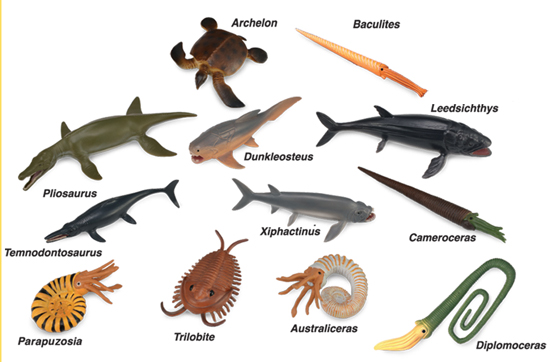
With CollectA having introduced another set of miniature figures into their “Prehistoric Life” model series, team members at Everything Dinosaur thought it would prove helpful to model makers if they listed the twelve replicas within the new CollectA mini prehistoric marine animals set.  This information might be helpful to creators of prehistoric animal dioramas so that they can put the correct model within the context of the geological time period that they are trying to replicate.

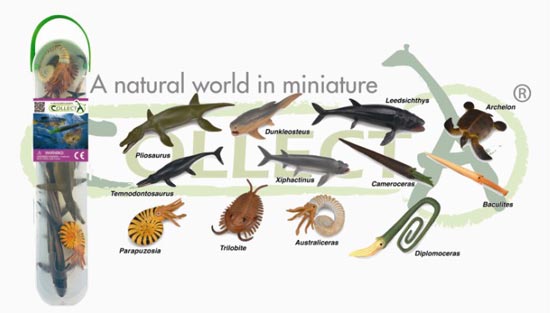
The New for 2017 CollectA Mini Prehistoric Marine Animals Set

The CollectA mini prehistoric marine animals.

The CollectA mini prehistoric marine animals set.

CollectA Mini Prehistoric Marine Animals Contents and Details

The twelve replicas that make up this set are certainly an eclectic bunch.  The model set consists of six vertebrates and six invertebrates.  We have listed them in alphabetical order and provided some details about the prehistoric animal each replica represents.

  • Archelon – known from Upper Cretaceous deposits (Campanian faunal stage), of the United States.  One of the largest turtles known to science, it lived approximately 80 million years ago in the Western Interior Seaway.  Archelon means “ruling turtle”.
  • Australiceras –  known from Australia (Queensland), fossils of this ammonite have been found in Early Cretaceous rocks (Aptian faunal stage 125 – 112 million years ago).  The name translates as “southern horn”.
  • Baculites – a straight shelled member of the ammonite Order from the Late Cretaceous (Cenomanian faunal stage to the Maastrichtian).   This mollusc had a worldwide distribution, but most of the named species are associated with the Campanian faunal stage of the Western Interior Seaway.  The name translates as “walking stick rock”.
  • Cameroceras –  a giant member of the orthocones (Cephalopoda – related to squid, cuttlefish, octopi and ammonites). It evolved in the mid Ordovician some 470 million years ago and was widespread. One the largest molluscs to have ever lived, size estimates of around six to nine metres have been stated.  These giants, survived into the Silurian, although the end Ordovician extinction did dramatically reduce the number of genera.  The last Cameroceras died out around 430 million years ago.  The name translates as “chambered horn”.
  • Diplomoceras –  a large Late Cretaceous ammonite with a bizarrely shaped shell.  Diplomoceras had a world-wide distribution and the very biggest individuals had shell lengths (unwound) of more than three metres.  The name translates as “double horn”.
  • Dunkleosteus – a giant placoderm fish from the Late Devonian (370-360 million years ago).  Fossils are known from North America, Morocco, Belgium and Poland.  Dunkleosteus may have reached lengths of around ten metres.  The name translates as “Dunkles bones”, honouring Dr David Dunkle (Cleveland Museum of Natural History).

Everything Dinosaur Website

All these figures and many more can be found on the award-winning Everything Dinosaur website.

To visit the website: Everything Dinosaur.

  • Leedsichthys – possibly the largest fish that has ever lived, with some scientists estimating the size of Leesdichthys at over 22 metres.  This leviathan lived during the Middle Jurassic and fossils have been found in England, France, Germany and Chile.  The name translates as “Leeds’s fish” and honours the British palaeontologist Alfred Leeds.
  • Parapuzosia – a genus of giant ammonite from the Late Cretaceous (Cenomanian to Campanian faunal stages).  Most fossil shells are less than one metre in diameter but a few specimens have been found with shells in excess of three metres wide.  World-wide distribution.  The name translates as “near to Puzosia”, reflecting its taxonomic affinity to the genus Puzosia.
  • Pliosaurus – A genus of Late Jurassic (155 to 147 million years ago), marine reptile.  A hypercarnivore and apex predator growing to more than ten metres in length.  The name translates as “more lizard” and this model makes a great representation of a juvenile.
  • Temnodontosaurus – known from the Early Jurassic (200-189 million years ago), of Europe.  This member of the Ichthyosauria grew to around ten metres long and probably weighed between one and two tonnes.  The name translates as “cutting-tooth lizard”.
  • Trilobite – an extinct group of arthropods that were entirely marine and lived from the Early Cambrian to the end-Permian extinction event (545 million to 251 million years ago).  Numerous Phyla have been identified and something like 20,000 species have been named and described.  Trilobita were ubiquitous and have a world-wide distribution.  The name translates as “three-lobed” as these invertebrates had three distinctive parts that made up their body plan.  The model represents the genus Olenoides, known from the Cambrian of Canada (Burgess Shale).
  • Xiphactinus –  one of the largest known bony fish, reaching lengths of up to six metres.  Fossils are known from Upper Cretaceous deposits of North America (Western Interior Seaway), but fossils of this predatory fish have also been reported from Australia.  Xiphactinus lived from approximately 88 to 66 million years ago.  The name translates as “sword ray”.

The CollectA Mini Prehistoric Marine Animal Set

The CollectA Mini Prehistoric Marine Animals Set

CollectA mini prehistoric marine animals set.

The CollectA mini prehistoric marine animals set.

Picture credit: Everything Dinosaur

Last year, when Everything Dinosaur announced that CollectA was introducing this innovative model set, we were able to have a chat to the designer Anthony Beeson.

Anthony told us:

“These are of course, not to scale but can be used in play and dioramas along with our other models as immature animals where we have already produced models of the same species.  The new models include the giant ammonite Parapuzosia and the little trilobite Olenoides serratus and other prehistoric fish and cephalopods that I thought might be enjoyable and educational.  I always particularly liked the elegantly uncurled Australiceras after coming across fossils at Dinosaur Isle museum on the Isle of Wight.”

To view the CollectA mini prehistoric marine animals set and the rest of the CollectA “Prehistoric Life” model range: CollectA Prehistoric Life.

20 07, 2017

Impressive and Spectacular Dinosaur Model Painting

By |2024-04-01T14:04:04+01:00July 20th, 2017|Categories: General Teaching, Key Stage 1/2, Key Stage 3/4|Comments Off on Impressive and Spectacular Dinosaur Model Painting

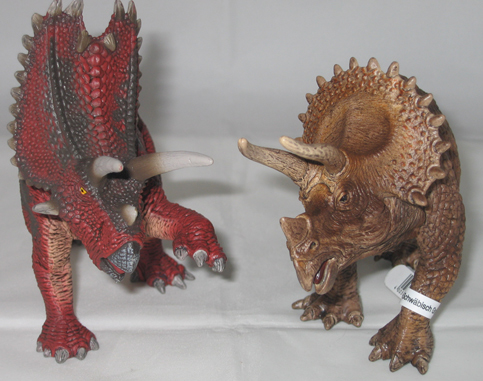
Schleich Pentaceratops Model Makeover

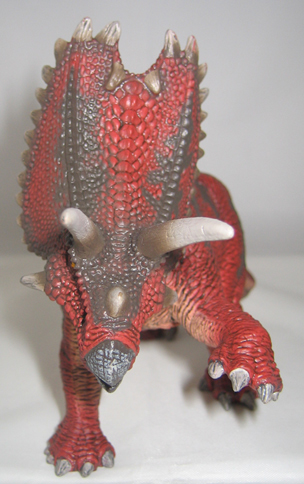
At Everything Dinosaur, our team members and teaching staff are always amazed by just how creative and clever dinosaur fans are.  Take for example Peter Thomas, a collector of prehistoric animal models who kindly sent to us some pictures of his version of the Schleich Pentaceratops dinosaur figure.  What an amazing colour scheme and such a skilfully painted model too.

Schleich Pentaceratops Model

Schleich Pentaceratops.

Schleich Pentaceratops available from Everything Dinosaur.  Picture credit: Everything Dinosaur.

Picture credit: Everything Dinosaur

The Colour of Dinosaurs

Despite considerable advances in recent years, palaeontologists cannot be certain about the colours of horned dinosaurs.  However, most scientists believe that these bird-hipped reptiles had excellent colour vision and that their spectacular frills and crests played a role in visual display as well as in intraspecific combat and as defensive weapons against carnivorous dinosaurs.  Peter has opted to give his Pentaceratops a very colourful crest and skull, the flashes of yellow combined with the red tones would have made a most impressive display surrounded by the greens and browns of the forest.

Combining Dinosaurs with Art

Dinosaur models, such as those made by Schleich with their roughened textures and carefully crafted features, provide tremendous scope when it comes to considering a repaint.  By repainting, you can be guaranteed to have created a unique piece of art and after all, not even the world’s most respected palaeontologist can criticise your choice of colours, as no one has ever seen a living non-avian dinosaur.  Horned dinosaur replicas make an excellent model choice for the hobbyist.  These types of dinosaurs, known as ceratopsians, are famous for their ornate head shields and myriad of bumps, horns, and lumps on the heads and faces.  When painted the model can be photographed in a suitable setting or added to a custom-made prehistoric landscape diorama.

The Schleich Pentaceratops Compared to the Schleich Triceratops

Schleich Pentaceatops compared to a Schleich Triceratops

One of the enlarged jugal bones with a horny sheath on it can be clearly seen on the Pentaceratops model (cheek area, under the eye).  Picture credit: Everything Dinosaur.

Picture credit: Everything Dinosaur

Visit the Everything Dinosaur website: Everything Dinosaur.

Education Extensions

As an extension to a science module involving learning about evolution, fossils and extinction, teachers could challenge students to repaint a dinosaur model.  This brings an element of art and design work into the science curriculum, helping to support the idea of cross curricular touch points in the teaching syllabus.   Students could be tasked to consider the following areas:

  • What colour scheme might work best to help camouflage the animal?
  • How the habitat/environment might influence the evolution of different coloured animals
  • The evidence for the colouration of extinct animals
  • Can students use examples of living (extant) animals to justify their chosen colour scheme?

A spokesperson from the teaching team at Everything Dinosaur commented:

“Peter’s Pentaceratops is an excellent example of a repainted dinosaur replica.  The photography has really helped to emphasis the hues and tones that have been carefully blended together to make a fantastic and truly unique dinosaur model.”

The Schleich model range is an excellent choice for this sort of activity, to view the range of Schleich prehistoric animals in stock at Everything Dinosaur: Schleich Dinosaurs and Prehistoric Animals.

17 07, 2017

The Excellent Dinosaurs of China Exhibition Reviewed

By |2024-04-01T14:06:04+01:00July 17th, 2017|Categories: Dinosaur and Prehistoric Animal News Stories, Dinosaur Fans, Educational Activities, Main Page, Teaching|6 Comments

A Review of the Dinosaurs of China Exhibition by Thomas Clarke-Williams

Budding young palaeontologist and all-round dinosaur enthusiast Thomas, very kindly sent in a review with photographs of The Dinosaurs of China exhibition to Everything Dinosaur.

Thomas Outside the Splendid Wollaton Hall

Thomas Clarke-Williams at Wollaton Hall.

Thomas, all ready to explore the Dinosaurs of China exhibition.

Picture credit: Thomas Clarke-Williams

Here is his review….

The Dinosaurs of China exhibition, at Wollaton Hall and Nottingham Lakeside Arts is an amazing, informative, fun, enjoyable and a one-off experience that I highly recommend for all ages.  I particularly enjoyed the Mamenchisaurus and Sinraptor skeletons as they give you a fantastic insight to how big some dinosaurs really were.  It was a nice touch to add a mirror next to the towering display so people can become fully immersed with the size of the whole animal.  I also like how you can go up to the banisters and look down on most of the Mamenchisaurus and the Sinraptor, it adds to the shock and awe of how large these dinosaurs really were.

The Enormous Mamenchisaurus on Display
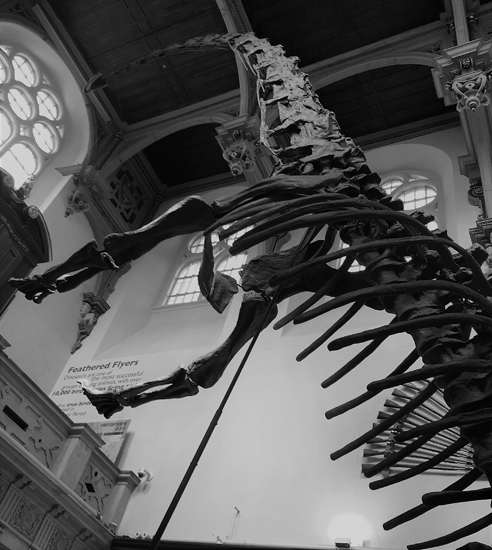
Mamenchisaurus on display.

The rearing Mamenchisaurus dinosaur exhibit.

Picture credit: Thomas Clarke-Williams

The art on the walls and in the book, was captivating and amazing to look at.  It helped you to imagine these dinosaurs were alive and moving around, just like they did millions of years ago.  One helpful feature to viewers was the information plaque next to each exhibit.  They included a variety of important facts which were then repeated in the books.

Spectacular Artwork Helps to Bring the Dinosaurs to Life

Artwork by Zhao Chuang (PNSO).

Amazing artwork by Zhao Chuang (PNSO).

Picture credit: Thomas Clarke-Williams

View the PNSO Age of Dinosaurs model range: PNSO Age of Dinosaurs.

Something that I did notice is that the Dilophosaurus sinensis and the Alxasaurus are housed in a separate building.  Unfortunately, this separate building is not labelled very clearly in my opinion, and some people, such as myself, missed this part of the exhibition entirely.

Nottingham Lakeside Arts – Well Worth a Visit

All I can say is, when you go, make sure not to miss the Nottingham Lakeside Arts building, it’s well worth visiting.  I also recommend going simply because the exhibition organisers connected the displays at Wollaton Hall with the exhibition displays for a fun experience where you’re constantly switching between modern day and prehistoric times which adds to the experience.  The paleoart used for each exhibit was beautifully done and helps the viewers to see what the dinosaurs may have looked like when they were alive.

Helpful Information Panels Throughout the Exhibition
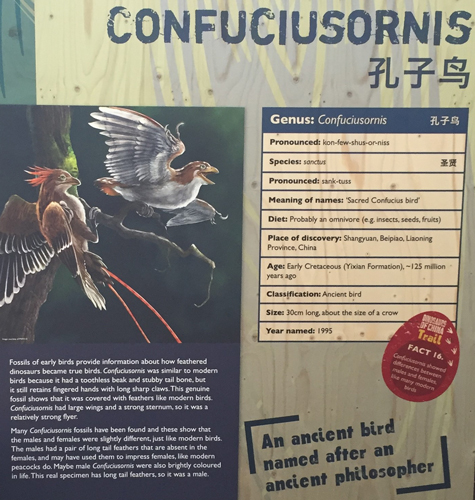
Confuciuosornis information panel

Helpful and informative display panels throughout the exhibition.

Picture credit: Thomas Clarke-Williams

The book, which you can pick up and buy from the entrance to the exhibition, is packed with detail and amazing art of the creatures.  The front cover shows the world where Microraptor and Sinornithosaurus lived, which gives a great insight into the lives of dinosaurs right from the start.  Some of the really in-depth facts are missed but it’s only minor as the average person does not need to know all the “nitty gritty stuff” like how a type specimen of Dilong is possibly a juvenile, or the fact that Linheraptor is actually smaller than Velociraptor.  But these minor details are insignificant to the overall presentation of the exhibition.

Birds from the Mesozoic in the Dinosaurs of China Exhibition

Using Chinese and Asian Dinosaurs is, in my opinion, the best way of getting people to understand how dinosaurs evolved into birds, as many of the dinosaurs at the exhibition have feathers and some could even glide.  I also like the inclusion of three Mesozoic-aged birds Yanornis, Confuciusornis and Protopteryx.  A pterosaur (Wukongopterus), was used to show the differences between the two lineages.

Genuine Fossil of a Prehistoric Bird
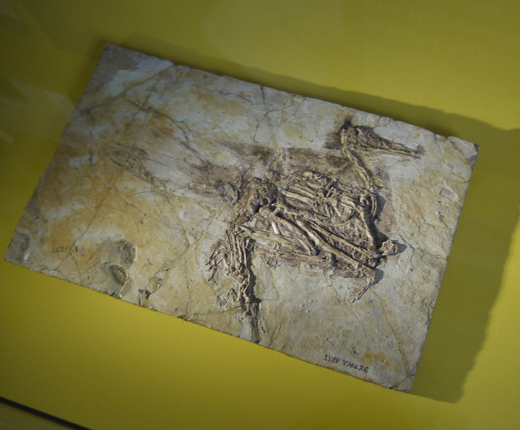
Yanornis fossil on display.

A genuine fossil of a Cretaceous bird (Yanornis martini).

Picture credit: Thomas Clarke-Williams

Another useful feature that was included on both the information boards, and in the book, tells you how to pronounce the names.  For example, “Yi qi” is pronounce ‘ee chee’.  Another helpful feature was the inclusion of what the name actually means.  A point that may prove interesting to viewers is the comparison on the wall and in the book of some of the Chinese dinosaurs to some American and European dinosaurs.  The fact that Lufengosaurus is included helps people viewing the exhibition to get a good view of where titans such as Mamenchisaurus came from, the dinosaurs they used to dwarf, and it makes you wonder how a 5 to 9-metre-long dinosaur turned into a 23-metre-long one!

Towering Over You the Giant Mamenchisaurus Skeleton
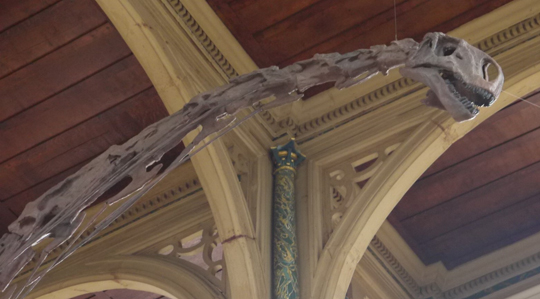
Mamenchisaurus on display.

The head and neck of the immense Mamenchisaurus.

Picture credit: Thomas Clarke-Williams

More Theropod Dinosaurs Please

Personally, I would have liked for a wider selection of dinosaurs to be on display but that’s just me!  I would have liked the awesome and terrifying Yutyrannus and Sinotyrannus to have been there together as they are large, fearsome, but interesting and in the case of Yutyrannus, beautifully feathered.  Both Chinese tyrants would have made for an excellent exhibit with the two locked in a fierce rivalry with one another.

The Dinosaurs of China Exhibition

It would have also been cool if Therizinosaurus made an appearance too, since he is quite popular with his huge claws that would have made for another amazing exhibit.  The theme used for the event sums up what the exhibition is about perfectly, “Ground shakers to feathered flyers”, the transition between prehistoric dinosaurs into modern day ones.  The inclusion of the fake Archaeoraptor fossil is a fun learning experience showing what some people are capable of doing to fossils.  The fake fossil has the tail of Microraptor, the legs of an unknown animal, and the head and body of a Yanornis, a complete hybrid!

In conclusion, The Dinosaurs of China Exhibition was a great, amazing and enjoyable learning experience for the whole family to enjoy and immerse themselves in and a one-off experience too.  To miss the exhibition would be a real shame, so come to Nottingham to Wollaton Hall and Nottingham Lakeside Arts as fast as you can to meet some of the amazing dinosaurs of Mesozoic China before it’s too late!

Meet Some Amazing Dinosaurs!
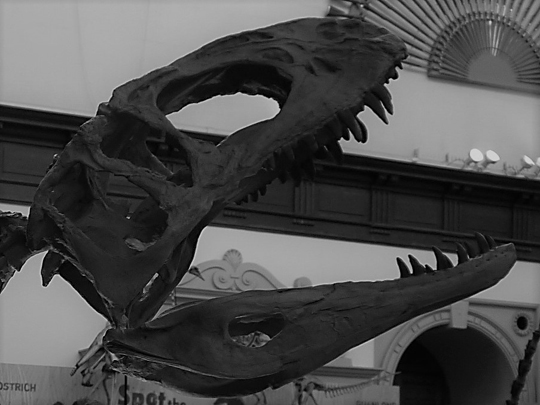
Sinraptor - Theropod dinosaur.

The powerful jaws of Sinraptor.

Picture credit: Thomas Clarke-Williams

Written by: Thomas Clarke-Williams

Visit the Everything Dinosaur website: Everything Dinosaur.

16 07, 2017

A Unique Tupuxuara Illustration

By |2024-04-01T14:05:28+01:00July 16th, 2017|Categories: Dinosaur Fans, Educational Activities, Everything Dinosaur Products, Main Page, Teaching|0 Comments

Flying Reptile Fan Asks for a Tupuxuara Scale Drawing

In our bulging email inbox this week, we received a request from an avid fan of prehistoric animals for some more information about the large Early Cretaceous pterosaur called Tupuxuara.  We don’t get too many requests related to this, one of the more bizarre members of the Pterosauria, but as ever, our hard-working team members were happy to oblige.  A scale drawing accompanied by a fact sheet on this flying reptile, fossils of which are known from north-eastern Brazil, was promptly sent out.  We were happy to send out the information and a Tupuxuara scale drawing.

A Scale Drawing of the Bizarre Crested Tupuxuara (T. leonardii)

A scale drawing of Tupuxuara

Tupuxuara scale drawing.  Picture credit: Everything Dinosaur.

Picture credit: Everything Dinosaur

How to Pronounce Tupuxuara

This flying reptile was named after a spirit figure in the folklore of the people who live in the area of Brazil where the fossils come from.  Our emailer wanted clarification on how to pronounce the name of this prehistoric animal.  As far as we are aware, this pterosaur is pronounced “Too-pooh-hwar-ah”.  There are several species assigned to this genus, the second species to be named T. leonardii honours Father Giuseppe Leonardi, who did much to improve our understanding of the fossils associated with the Araripe Basin of Brazil.

Tupuxuara is popular amongst model collectors and we have received some super pictures of the Papo Tupuxuara model being used in various prehistoric animal dioramas.

Tupuxuara in a Prehistoric Scene

Tupuxuara diorama.

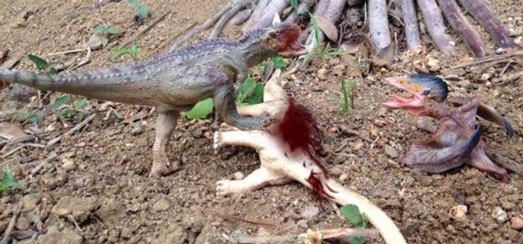
Tupuxuara confronts a Carnotaurus.

Picture credit: Rodriguez

This member of the Thalassodromidae family of pterosaurs, was quite a sizeable beast.  Some of the largest specimens had wingspans in excess of four metres. As to what this flying reptile ate, this is open to speculation but palaeontologists have suggested various diets including fruit eating (frugivore) or even scavenging the kills of dinosaurs.  The picture above shows a Tupuxuara challenging a large Theropod (Carnotaurus) over the carcass of a Titanosaur.  This is a fascinating model composition and it demonstrates how popular Tupuxuara is with dinosaur fans and model collectors.

Papo have produced a Tupuxuara replica, to see this model as well as the complete range of Papo prehistoric animal figures available from Everything Dinosaur: Papo Dinosaurs and Prehistoric Animal Models

At Everything Dinosaur, we try our best to help all those people who contact us.  We try to answer all the questions and queries that we receive quickly and in full.  We respond to all those emails, letters and phone calls that require a reply.

Visit our award-winning website: Everything Dinosaur.

10 07, 2017

Schleich Introduces a New Dinosaur Model

By |2023-08-07T08:04:12+01:00July 10th, 2017|Categories: Early Years Foundation Reception|Comments Off on Schleich Introduces a New Dinosaur Model

The Schleich Acrocanthosaurus

The German figure and model manufacturer Schleich have introduced a new dinosaur model into their “The First Giants” model range and this dinosaur model is great for imaginative, creative play.  The Schleich Acrocanthosaurus (pronounced Ack-row-can-tho-sore-us), stands nearly fifteen centimetres high and it measures a fraction over twenty-five centimetres long, an ideal size for little hands.

The New for 2017 Schleich Acrocanthosaurus Dinosaur Model

The Schleich Acrocanthosaurus dinosaur model.

The new for 2017 Schleich Acrocanthosaurus dinosaur model.  Picture credit: Everything Dinosaur.

Picture credit: Everything Dinosaur

A Tactile Schleich Acrocanthosaurus Dinosaur Model

The skin texture of this dinosaur model is fantastic.  The rough scales are very tactile and the Schleich Acrocanthosaurus is great for sensory play.  We had a go at making some “dinosaur tracks” in sand, the large feet on this replica seemed particularly suited to this type of exploration themed activity.  Designed for children from three years and upwards this model of a big, meat-eating dinosaur certainly proved very popular with the younger dinosaur fans we met recently.

Playing in the Sand with an Acrocanthosaurus Dinosaur Model

Schleich Acrocanthosaurus dinosuar model playing in the sand.

A Schleich Acrocanthosaurus dinosaur model playing in the sand.

Picture credit: Everything Dinosaur

A Stable Dinosaur Model

The Schleich Acrocanthosaurus dinosaur model stands up very well.  The feet have been made a little oversized to help young children and the sturdy tail rests on the ground, providing three areas of support for the replica.  The children had no problem handling this dinosaur and they encountered no issues at all with getting the model to stand up, even on the rough sand.

Many dinosaur models are created with the tail lifted off the ground.  This might be the correct anatomical position as far as a palaeontologist is concerned, but for very young children, this can cause problems as they struggle to get the dinosaur to stand up.  No such problems with the Schleich Acrocanthosaurus we are happy to report.  This is one robust and very child friendly dinosaur model!

Everything Dinosaur stocks a huge range of Schleich prehistoric animals, including the new for 2017 Schleich Acrocanthosaurus, to view this range: Schleich Dinosaur and Prehistoric Animal Models.

The Schleich Acrocanthosaurus

Acrocanthosaurus was a carnivorous dinosaur that lived during the Cretaceous period and its fossils have been found in the United States of America.  Although, not as widely known as the famous Tyrannosaurus rex, this dinosaur may have been nearly as big.  It was certainly a ferocious predator and palaeontologists have even found giant, three-toed footprints that they have assigned to this genus.  Although a predatory dinosaur, we note the attention to detail and care, for example, the teeth in the model are big, will resist tugs and pulls from budding young palaeontologists but these teeth are blunt, so they are unlikely to prick little fingers.

Dinosaur Models in the Sand

A flock of Acrocanthosaurus.

Several Schleich Acrocanthosaurus dinosaur models.

Picture credit: Everything Dinosaur

Children love playing with dinosaurs and the Schleich Acrocanthosaurus ticks all the boxes when it comes to finding a suitable, large dinosaur model to help encourage exploratory learning and creative, imaginative play.

Visit the award-winning Everything Dinosaur website: Everything Dinosaur.

4 07, 2017

Exciting Dinosaur Adventures at Styal Primary School

By |2024-04-01T10:28:07+01:00July 4th, 2017|Categories: Early Years Foundation Reception, General Teaching, Key Stage 1/2|Comments Off on Exciting Dinosaur Adventures at Styal Primary School

Dinosaur Adventures at Styal Primary School

Adjacent to one of the best-preserved textile mills of the Industrial Revolution, (Quarry Bank Mill), Styal Primary school is one of the most picturesque schools in the whole of Cheshire.  Quarry Bank Mill might provide a handy location for learning about the cotton industry, but during the summer term, children in Reception and Year 1/2 have been travelling back further in time as they have been learning about dinosaurs and fossils.  Time for some dinosaur adventures at a primary school.

Dinosaur Adventures

During our morning of dinosaur themed workshops with two classes, we spotted in the tidy school hall, a large dinosaur themed mural.  This Sauropod display had been created by children in the Reception class and Year 1 and it certainly brightened up what was a rather cloudy day.

A Dinosaur Themed Mural Spotted at Styal Primary School (Cheshire)

Dinosaur adventures with Key Stage 1.

Dinosaur adventures with Key Stage 1. Picture credit: Everything Dinosaur.

Picture credit: Everything Dinosaur

For dinosaur themed toys and gifts: Dinosaur Gifts and Toys.

During our workshop, we explored the size and scale of dinosaurs, looked at fossils and tried to catch fish like a giant ammonite.  Lexie, was delighted to learn that she had a name similar to the name of an armoured dinosaur that once roamed southern England.  Once our busy morning of dinosaur themed workshops had concluded, our dinosaur expert discussed extension resources with the enthusiastic teaching team.

Later that afternoon, we were able to email over some pictures of Lexie’s armoured dinosaur (Lexovisaurus), along with some further information on Mary Anning.  The Lexovisaurus fact sheet and scale drawing might help inspire the children when it comes to designing their own prehistoric animals – one of the many palaeontology themed challenges we set the classes.

Visit the award-winning Everything Dinosaur website: Everything Dinosaur.
3 07, 2017

Dinosaurs of China Exhibition Great for Schools

By |2023-07-29T15:22:08+01:00July 3rd, 2017|Categories: General Teaching|Comments Off on Dinosaurs of China Exhibition Great for Schools

Dinosaurs of China – A Great Learning Experience

Teachers and home educationalists looking for an inspiring school visit to help support their science teaching programmes should check out the amazing “Dinosaurs of China” exhibition being held at Wollaton Hall (Nottinghamshire).  This amazing learning experience provides pupils with an opportunity to explore the evolutionary relationship between parts of the Dinosauria and living birds.  The education team at the spectacular 16th century, Elizabethan country house have developed a number of facilitated sessions which dove-tail into various aspects of the English national curriculum for science.  On the subject of doves, students will be able to learn about amazing fossils that demonstrate just how closely related birds are to dinosaurs.

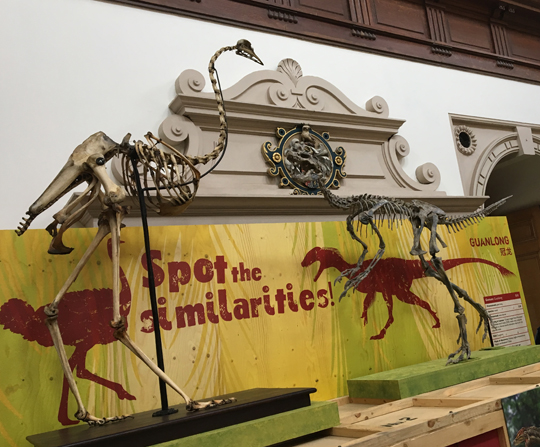
Comparing a Skeleton of an Ostrich from the Nottingham Natural History Museum Collection to an Early Member of the Tyrannosaur Family (Guanlong)

Ostrich skeleton compared to Guanlong dinosaur skeleton.

The skeleton of an extant ostrich compared to a theropod dinosaur (Guanlong). Picture credit: Everything Dinosaur.
Picture credit: Everything Dinosaur

Mary Anning, Charles Darwin, Huxley and Seeley

The skilfully laid out exhibition tells a story “Ground Shakers to Feathered Flyers” and provides access to huge dinosaurs as well as some of the most significant fossils ever found that demonstrate the evolutionary process, highlighting how dinosaurs evolved and changed over time.  The well-written, presentation panels provide plenty of helpful information to support school activities and the palaeontologists behind the exhibition have planned a “Dinosaurs of China” trail that helps visitors to understand the observations that helped to shape some of the theories about the dinosaurs, as championed by such famous scientists as Thomas Huxley and Henry Govier Seeley.

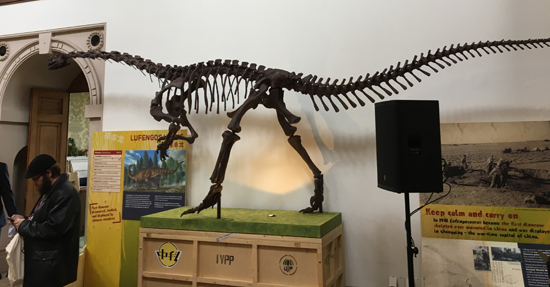
Exploring the History of Dinosaurs and What Their Fossils Can Tell Us About the Living Animals

Lufengosaurus huenei exhibit.

Lufengosaurus – the first Chinese dinosaur to be scientifically described.  Picture credit: Everything Dinosaur.

Picture credit: Everything Dinosaur

For dinosaur and prehistoric animal figures: PNSO Age of Dinosaurs Models.

Programmes for KS1 to KS4

The education team have created helpful teaching sessions centred around Darwinism and natural selection along with other sessions that utilise the extensive fossil collection of the Nottingham Natural History Museum and demonstrate how fossils form and how they have shaped our understanding of the natural world.  This is a great way to develop any school lesson plans that involve learning about Mary Anning.

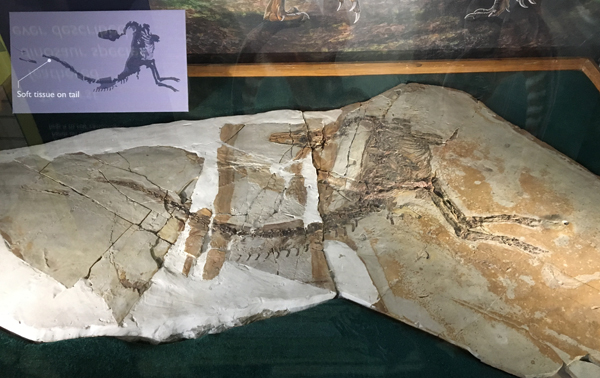
Feathered Dinosaur Fossils are on Display

Sinosauropteryx fossil material.

Sinosauropteryx on display – the first feathered dinosaur described. Picture credit: Everything Dinosaur.

Picture credit: Everything Dinosaur

To enquire about Everything Dinosaur: Email Everything Dinosaur.

A spokesperson from the Everything Dinosaur teaching team stated:

“This exhibition is an opportunity for schools and educationalists to see the fossil evidence that links parts of the Dinosauria to modern-day birds.  Concepts taught in the classroom can be brought to life and the scientific principles behind evolution and natural selection are strikingly illustrated.  Dinosaurs of China represents a once-in-a-lifetime opportunity for schools to help enrich their science teaching.  This is one exhibition that is not to be missed!”

Lakeside Arts Centre – Hands-on Activities

Several public, free-access events have been organised at the nearby Lakeside Arts Centre.  Scientific illustration plays an important role in fossil interpretation and a number of activities such as free exhibitions, drop in activities and palaeoart displays will be running throughout the duration of “Dinosaurs of China”.  Teachers visiting Lakeside Arts can pick up plenty of inspirational ideas to help support their teaching programmes.

Visit the award-winning Everything Dinosaur website: Visit Everything Dinosaur.

Go to Top