All about dinosaurs, fossils and prehistoric animals by Everything Dinosaur team members.

Everything Dinosaur team members working in schools, helping museums and other educational bodies. Our work with and in schools.

2 07, 2017

Pterosaurs Are Not Dinosaurs – A Helpful Explanation

By |2024-04-01T10:27:05+01:00July 2nd, 2017|Categories: Dinosaur Fans, Educational Activities, Main Page, Teaching|0 Comments

Pterosaurs are not Dinosaurs

Perhaps the single most distressing thing we see during our visits to schools to delivery dinosaur and fossil themed workshops are the inaccuracies in teaching resources.  Many of the downloads and other learning resources that teaching teams rely on are simply wrong.  It is not the fault of the teachers, it is laziness on the part of the providers.

At Everything Dinosaur, we do all that we can to help educate and inform and we provide lots of lesson plans, dinosaur themed resources, teaching materials and so forth.  The Everything Dinosaur website provides help to teaching professionals and home educationalists.  There is a helpful blog crammed full of examples of good teaching practice when it comes to learning about life in the past.  In addition, we try our best to provide assistance and helpful advice.

The Everything Dinosaur website: Everything Dinosaur.

Inaccurate Dinosaur Themed Teaching Resources in Schools
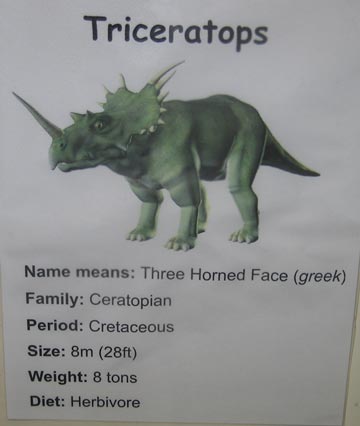
Triceratops mistakes!

Triceratops? Not very good quality teaching resources. Picture credit: Everything Dinosaur.

Picture credit: Everything Dinosaur

The photograph above shows a typical dinosaur themed teaching resource that we come across in school.  We admit, that at Everything Dinosaur we do make mistakes from time to time “to err is human” and all that, but it is almost easier to state what is scientifically accurate in the picture above than to list the errors.  These are the sorts of dinosaur themed teaching materials that are used to help educate and inform.   We have serious concerns about the standards of such teaching materials.

Pterosaurs are not Dinosaurs

One of the commonest mistakes we find concerns the confusion as to what exactly is and what exactly is not a dinosaur.  At the “Dinosaurs of China” event at Wollaton Hall, one of the most significant items of information in the entire exhibition can be found painted onto a wall in one of the first-floor galleries leading to some of the exquisite feathered dinosaur fossils.

Pterosaurs Are Not Dinosaurs
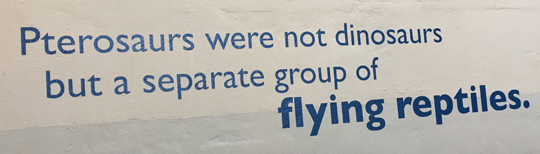
Flying reptiles (Pterosauria) were not dinosaurs.

Pterosaurs are not dinosaurs. Picture credit: Everything Dinosaur.

Picture credit: Everything Dinosaur

The Pterosauria were not dinosaurs (members of the Dinosauria) but a separate, related order of flying reptiles.

Everything Dinosaur team members have lost count of the number of times pterosaurs and for that matter, marine reptiles, have been included as dinosaurs.  Most children, with a degree of pre-knowledge, will be able to point out the errors in dinosaur themed “word mats” such as the one that we have posted below.

A Dinosaur Word Mat – Can You Spot the Mistakes?
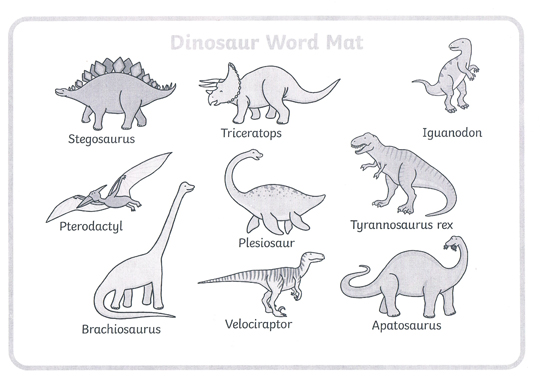
A dinosaur word mat for schools with lots of mistakes.

A dinosaur word mat supplied by a school resources company – can you spot the mistakes?  Picture credit: Everything Dinosaur.

Picture credit: Everything Dinosaur

Providing Dinosaur and Fossil Themed Teaching Resources

During our latest school visit, we provided the teaching team (Reception and Key Stage 1), with Mary Anning themed resources, a pronunciation guide, a dinosaur geography exercise to help reinforce learning about the seven continents and a dinosaur song that we had written for use with Foundation Stage 2.  We were happy to help and these were all given away free.

For further information on Everything Dinosaur’s work in schools and to enquire about teaching resources: Contact Everything Dinosaur
27 06, 2017

Smallwood Academy Study Dinosaurs as Part of Exciting Term Topic

By |2024-04-01T10:24:09+01:00June 27th, 2017|Categories: Educational Activities, Main Page, Teaching|0 Comments

Dinosaur Drawings and Super Spelling

A day of dinosaur workshops with the Key Stage 1 children and the Reception class at Smallwood CofE Primary Academy in Cheshire and what a busy day it was too.  Under the enthusiastic tutelage of the dedicated teaching team, the children in Ash, Elm and Willow classes have been learning all about prehistoric animals and famous fossil hunters such as Mary Anning.

Several of the children had brought in their own fossil finds to show their classmates.  The children’s splendid fossils are not quite as big as the “gigantic”, “giant”, “humongous” Jurassic ammonites that our dinosaur expert took into school.  However, we are sure that the fossils that the children brought in will help to enrich this exciting term topic.  After explaining how fossils formed, there was lots of fossil handling and plenty of opportunities for the pupils to try out some super describing words.

Ash Class (Year 1) Design Dinosaurs

Year 1 dinosaur designs.

Year 1 children design dinosaurs.  Picture credit: Everything Dinosaur.

Picture credit: Everything Dinosaur
Extension Activities

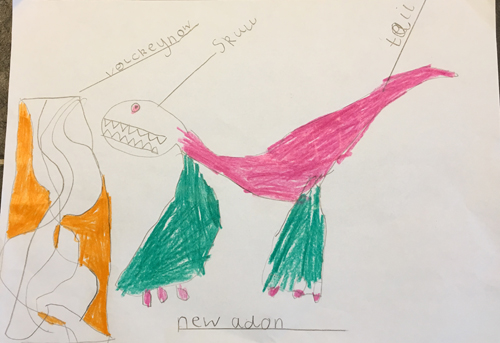
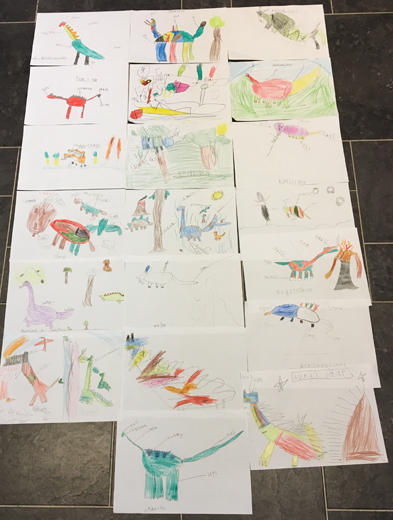
One of the extension activities involved challenging the class to design their own prehistoric animals.  Could the pupils label the body parts including the skull?  Could they come up with a name to describe their very own dinosaur?  Having worked with the Key Stage 1 classes in the morning, during the lunch break, our dinosaur expert was handed a selection of the drawings from the budding young palaeontologists in Ash class (Year 1) – what a colourful collection of dinosaurs!

A Pink and Green Dinosaur from Florence

A colourful dinosaur design.

Florence (Ash class) designed a very colourful dinosaur.  Picture credit: Everything Dinosaur.

Picture credit: Everything Dinosaur
New Dinosaur Discoveries

At Everything Dinosaur, we keep a register of newly described and named dinosaurs.  On average, a new dinosaur is named every three weeks and so far around 1,200 different genera have been erected – there are certainly lots of amazing dinosaurs to help inspire the children with their very own dinosaur designs.  We even emailed over to the teaching team a fact sheet and scale drawing of one dinosaur (Maiasaura), could the children work out from the drawing and fact sheet what Maiasaura ate?

Aimee Drew an “Apartesarrs”

A long-necked dinosaur drawaing.

A beautiful dinosaur drawing from Aimee.

Picture credit: Everything Dinosaur

For dinosaur toys and games: Dinosaur Toys and Gifts.

Amazing Questions

Elm class (Year 2), had thought of some brilliant questions to ask and in the afternoon, we met up with the enthusiastic Reception class (Willow) and our dinosaur expert was introduced to Oliver – Willow’s resident dinosaur expert.

A very big thank you to the children for producing such a wonderful collection of dinosaur drawings and our thanks to the teaching team at Smallwood CofE Primary Academy for inviting Everything Dinosaur into the school.
Visit the Everything Dinosaur website: Everything Dinosaur.

25 06, 2017

Dinosaurs Help Children Learn About the Continents

By |2023-07-27T18:55:01+01:00June 25th, 2017|Categories: General Teaching, Key Stage 1/2|Comments Off on Dinosaurs Help Children Learn About the Continents

Key Stage 1 Learn About Continents Using Dinosaurs

Another busy week for the teaching team at Everything Dinosaur.  During one of our school visits to deliver a dinosaur themed workshop to Reception and Key Stage 1 children, we were asked by a member of the teaching team to provide assistance when it came to reinforcing learning about the seven continents.  Luckily, our knowledgeable dinosaur experts had prepared a dinosaur themed geography exercise to help link the geography and science topics together.

Linking a Term Topic About Dinosaurs to Learning About Continents (Geography)

Dinosaur geography exercise.

Key Stage 1 – dinosaurs and geography exercise. Picture credit: Everything Dinosaur.

Picture credit: Everything Dinosaur

Dinosaur Fossils Have Been Found All Over the World

Palaeontologists know that dinosaurs lived all over the world.  The world may have looked very different during the time of the dinosaurs, but fossils of dinosaurs have been found on every continent, even Antarctica.  This evidence proves that dinosaurs lived on all seven continents.  As our dinosaur experts know which kinds of dinosaurs lived where, they can use this information to develop teaching resources to help children learn about geography such as the names and the locations of these continents.

The Dinosaur Geography Exercise

Everything Dinosaur geography exercise.

A selection of prehistoric animals in the dinosaur geography exercise.  Picture credit: Everything Dinosaur.

Picture credit: Everything Dinosaur

The Key Stage 1 children are challenged to put each of the named dinosaurs onto a map of the world, on the continent where the fossils have been found.  Naturally, we provided a comprehensive lesson plan with all the information the teaching team required to help support the children’s learning.

For dinosaur themed toys and games: Dinosaur Toys and Games.

Developing Locational Knowledge

Under the national curriculum for England, children in Key Stage 1 should develop knowledge about the world and develop a basic vocabulary relating to human and physical geography.  A key requisite is to be able to name and locate the world’s seven continents and five oceans.  Our dinosaur geography exercise cleverly links in this teaching requirement and enables the children to demonstrate their understanding by making links across topic areas.

Helpful Teaching Notes are Provided by Everything Dinosaur

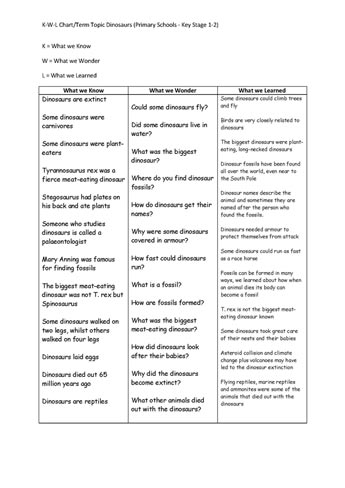
Teaching Notes

A chart to help kick-start a teaching topic about dinosaurs. Picture credit: Everything Dinosaur.

Picture credit: Everything Dinosaur

Cross-curricular Learning

In the rich and varied scheme of work for the dinosaur term topic at the school we were visiting, the teachers had included sub-topic areas such as learning about Mary Anning as well as learning about how the Earth has changed since the time of the dinosaurs.  The dinosaur geography exercise that we had developed dove-tailed nicely into the teaching team’s scheme of work.

Visit the Everything Dinosaur website: Everything Dinosaur.

A spokesperson from Everything Dinosaur commented:

“We were able to combine the children’s enthusiasm for learning about dinosaurs with the teacher’s need to ensure that the class could learn about the location of today’s continents.  This was a great way to test understanding and to reinforce learning across different subject areas.”

For further information about Everything Dinosaur’s work: Contact Everything Dinosaur.

23 06, 2017

Key Stage 1 Learn About Dinosaur Geography – A Helpful Exercise

By |2024-04-01T10:22:44+01:00June 23rd, 2017|Categories: Dinosaur Fans, Educational Activities, Main Page, Teaching|5 Comments

Dinosaurs Help Children Learn About the Continents

The national curriculum in England for children in Key Stage 1 states that pupils should know the location of the seven continents and they should be able to name them along with the five oceans. A requirement of this area of the curriculum (geography), is that children should develop locational knowledge. Everything Dinosaur has developed a dinosaur based geography exercise that helps with the teaching of this topic. It uses children’s pre-knowledge about prehistoric animals and their enthusiasm for dinosaurs to help them learn and recognise the location of the different continents.

Everything Dinosaur – Using Dinosaurs to Help Children Learn about the Location of the Continents

Dinosaur geography exercise.

Key Stage 1 – dinosaurs and geography exercise.  Picture credit: Everything Dinosaur.

Picture credit: Everything Dinosaur

Demonstrating Learning and Linking Subject Areas

Palaeontologists have found dinosaur fossils on all seven continents.  Dinosaurs even roamed Antarctica, although, in the past, due to higher levels of carbon dioxide in the atmosphere and other factors, the landmass we now know as Antarctica was much warmer than it is today.  Using a child’s fascination for prehistoric animals, Everything Dinosaur has developed a dinosaur geography based lesson.  Can the children identify where in the world different dinosaurs lived?

Palaeontologists Have Found Dinosaur Fossils in Antarctica

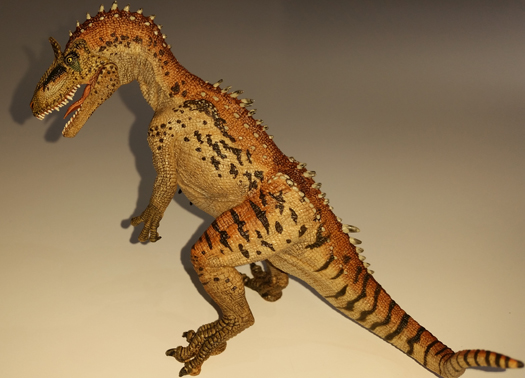
Papo Cryolophosaurus dinosaur model.

The Papo Cryolophosaurus dinosaur model.  Cryolophosaurus dinosaur fossils have been found in Antarctica.

Picture credit: Everything Dinosaur

The picture (above) shows a Papo Cryolophosaurus dinosaur model.  Fossils of Cryolophosaurus have been found in Antarctica.

To view the Papo model range: Papo Dinosaur and Prehistoric Animal Figures.

Everything Dinosaur and a Dinosaur Geography Exercise

Our comprehensive lesson plan provides the teaching team with simple instructions and the only resources required are a map of the world as it is today, some round-ended scissors to cut out the various dinosaurs from the worksheets and some sticky tape to secure the dinosaur in the correct place on the map.

The Everything Dinosaur geography exercise asks children to place a total of twenty-five different dinosaurs onto the various continents where the dinosaur’s fossils have been found.  Two of the dinosaurs have to be placed on the continent of Antarctica, the armoured herbivorous dinosaur Antarctopelta and the fearsome, meat-eating dinosaur Cryolophosaurus.

To read an article about Cryolophosaurus, a dinosaur that lived in Antarctica: Twenty Years of Studying the Antarctic Dinosaur Cryolophosaurus.

Twenty-five Dinosaurs – Can the Children Find the Continent Where Their Fossils Have Been Discovered?

Everything Dinosaur geography exercise.

A selection of prehistoric animals in the dinosaur geography exercise.  Picture credit: Everything Dinosaur.

Picture credit: Everything Dinosaur

Learning About Where Famous Dinosaurs Lived

The national curriculum demands that pupils should develop a knowledge about planet Earth.  Within a dinosaur topic, learning about where well-known dinosaurs lived enables the teaching team to link this subject to the aims and objectives of the geography section.  Dinosaurs can help children learn the names and location of the seven continents and the five oceans.  Introducing famous fossil hunters such as Mary Anning and Sir Richard Owen can help children locate places in the UK where fossils have been found.

Everything Dinosaur’s geography exercise challenges Key Stage 1 pupils to place on a map of the world where famous dinosaurs like Triceratops, Stegosaurus and Tyrannosaurus rex lived.

For further information about Everything Dinosaur’s science outreach work: Contact Everything Dinosaur.

To visit the Everything Dinosaur website: Everything Dinosaur.

20 06, 2017

Year 2 Learn About Dinosaurs and Fossils

By |2023-07-27T09:03:47+01:00June 20th, 2017|Categories: Educational Activities, Main Page, Teaching|0 Comments

Hedgehog, Squirrel and Deer Study Dinosaurs

Children in Hedgehog, Deer and Squirrel classes (Year 2), at Newport Infant School have been busy learning all about fossils, dinosaurs and life in the past.  A member of the Everything Dinosaur teaching team was invited into the school to conduct fossil themed workshops and to help the children explore what studying prehistoric life can tell us about animals and plants that are alive today.  How can we help animals and plants that currently share our planet with us avoid extinction?

A Stegosaurus Dinosaur Model on Display in the Classroom

Stegosaurus dinosaur model.

Stegosaurus model on display.  Picture credit: Everything Dinosaur.

Picture credit: Everything Dinosaur

Herbivores, Carnivores and Omnivores

As part of a rich, varied and challenging curriculum, the pupils have been reading “Dinosaurs and all that rubbish”, by Michael Foreman.  The teaching team, ably assisted by their teaching assistants had skilfully interwoven ideas about habitats and the diets of different animals into a wider theme looking at conservation and environmental issues.  Recently, the school had been home to some chickens, which the children now know are closely related to dinosaurs like Tyrannosaurus rex.  Just like birds, dinosaurs laid eggs and a model of a dinosaur’s egg had been brought into school.

A Colourful Dinosaur Egg in Deer Class

Cracking fun! Dinosaur egg models.

The big crack suggests that the dinosaur egg is about to hatch!  Picture credit: Everything Dinosaur.

Picture credit: Picture credit: Everything Dinosaur

Half-term Class Projects

The Year 2 children were set some special challenges over half-term.  Could they make a three-dimensional model of a prehistoric animal?  The dinosaur and prehistoric animal replicas made a fantastic display in the classroom, what an amazing collection of dinosaurs!

Children Created Their Very Own Dinosaurs

Children in Year 2 made dinosaur models.

Year 2 children made dinosaur models.  Picture credit: Everything Dinosaur.

Picture credit: Everything Dinosaur

To view dinosaur themed gifts and toys: Dinosaur Themed Toys and Gifts.

Many of the children’s models had been made from recycled household items.  By recycling paper, collecting rubbish, saving water and ensuring that lights are switched off, the children are helping to protect our planet and prevent the Earth from having the problems it had in the story book written by Michael Foreman.

Extension Activities

During the course of the day, the eager, young palaeontologists learned some amazing dinosaur facts and our fossil expert set them some “pinkie palaeontologist challenges” to help support the teaching team’s lesson planning.  There was even time for some questions with one of the classes at the end of the afternoon.

Visit the Everything Dinosaur website: Everything Dinosaur.

16 06, 2017

From Dinosaurs to the Stone Age

By |2023-07-27T08:37:44+01:00June 16th, 2017|Categories: Key Stage 1/2|Comments Off on From Dinosaurs to the Stone Age

Year 3 and Year 4 Explore Fossils

Children in Lower Key Stage 2 at The Acorns Primary and Nursery School have been enjoying learning about the Stone Age and prehistoric life.  Under the enthusiastic tutelage of the teaching team, the three classes that make up Lower Key Stage 2 cohort have been developing their writing skills as well as investigating how fossils form and researching Mary Anning.  We hope that the tongue twister “she sells sea shells on the sea shore” will help to inspire the children with their creative writing.

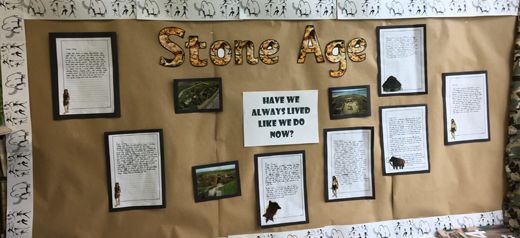
Examples of Cursive Handwriting Form Part of the Stone Age Display

Everything Dinosaur and exploring the Stone Age.

Examples of cursive writing. Picture credit: Everything Dinosaur.

Picture credit: Everything Dinosaur

Mary Anning and a Broad and Balanced Scheme of Work

The pupils were set lots of exciting challenges during our dinosaur and fossil themed workshops.  Our dinosaur expert ensured that the activities that were proposed fitted in with the learning objectives set by the teachers.  For example, looking at Woolly Mammoth fossils led onto introducing the idea of the class producing a piece of fiction writing imagining what it would have been like to go on a Woolly Mammoth hunt.  One young girl proposed writing her story based on the viewpoint of the Mammoth – what a super idea!

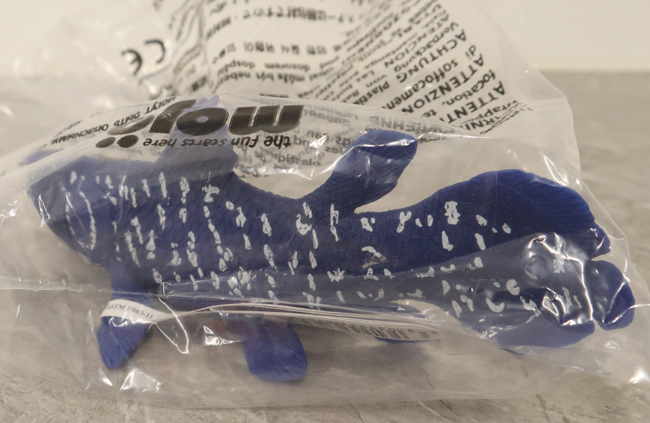
With such an interesting topic, there is plenty of scope to introduce cross-curricular activities.  Class 4ML have been looking at life in the rainforest and threats to existing habitats, the opportunity to learn more about extinction events and climate change certainly resonated with the young audience.  We asked the Year 4 children to undertake independent research on the bizarre Coelacanth, a fish thought to have died out with the dinosaurs but now sadly, seriously threatened due to loss of habitat and the encroachment of human activity.  The children loved the idea of learning about a fish that was the same colour as their school jumpers.

A Coelacanth Model – The Story of the Coelacanth – Helping to Link Topic Areas

Mojo Fun Coelacanth model.

A very bright and colourful Mojo Fun Coelacanth model. Picture credit: Everything Dinosaur.

Picture credit: Everything Dinosaur

The picture (above) shows a Mojo Fun Coelacanth figure.  It is one of their models in the “Prehistoric and Extinct” model series.

To view this range: Mojo Fun Prehistoric and Extinct Models.

Making Fossils

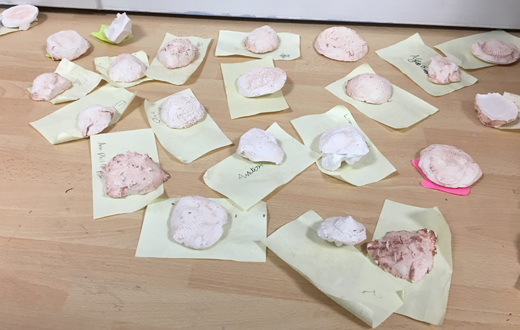
Several very impressive plaster casts of fossils were prominently displayed.  The children were keen to demonstrate their understanding by explaining what fossils are and how they form.  The replica fossils included some amazing bivalves and snail shells.  During the workshop, the children got the chance to handle real fossils including some “gigantic”, “enormous” ammonites.  The ammonite shells reminded the children of snail shells, our fossil expert explained that snails and ammonites are distantly related and in a practical fish catching exercise, illustrated why ammonites, squid and octopi are classified as cephalopods.

Lots of Carefully Crafted Plaster Cast Fossils on Display

Lots of amazing plaster fossils.

Lots of amazing plaster fossils. Picture credit: Everything Dinosaur.

Picture credit: Everything Dinosaur

Once back in the office, we were able to email over some more resources to help the teaching team.

Visit the award-winning Everything Dinosaur website: Everything Dinosaur.

13 06, 2017

Introducing New Mojo Fun Dinosaur Models

By |2024-05-09T08:18:46+01:00June 13th, 2017|Categories: General Teaching|Comments Off on Introducing New Mojo Fun Dinosaur Models

Everything Dinosaur Adds Mojo “Prehistoric and Extinct” Models

The UK-based, on-line retailer Everything Dinosaur has added the Mojo “Prehistoric and Extinct” model range to its extensive portfolio of prehistoric animal and dinosaur replicas.  Mojo Fun models to be added to the range.  The company, which has been supplying the educational sector with dinosaur and fossil themed teaching resources for more than a decade, has introduced this range because the robust, hand-painted replicas are ideal for creative play and feature a number of animals that can help with coursework related to adaptation, genetics and extinction, all cornerstones of the national science curriculum in England.

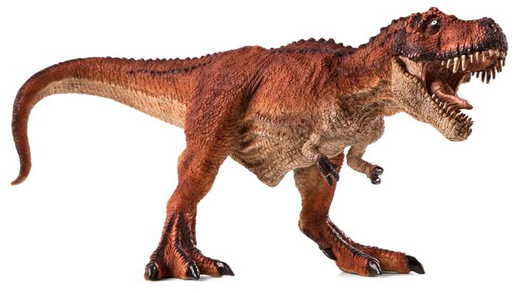
The Mojo Hunting Tyrannosaurus rex Dinosaur Model

Mojo hunting Tyrannosaurus rex.

Mojo hunting T. rex dinosaur model.

To view the range of educational Mojo prehistoric animal models stocked by Everything Dinosaur: Mojo Fun Models – “Prehistoric and Extinct”.

Mojo Fun Models

Mojo was founded in 2009 and the company has grown quickly, becoming a highly respected producer of animal replicas since the very first range of models was introduced in January 2011.  Mojo’s mission is to create the finest quality, educational replicas available on the market.  Product safety is paramount to Mojo.  Every figure in the Mojo range is rigorously tested and fulfils all current worldwide safety standards.  All the replicas in the “Prehistoric and Extinct” range are suitable for children from three years and upwards making them ideal for schools and home education.

Mojo Models Can Be Used to Help Learn About the Stone Age

Prehistoric mammal models from Mojo. Models of early mammals.

A selection of prehistoric animal models from the Mojo “Prehistoric and Extinct” range.

Picture credit: Everything Dinosaur

Stone Age and Ice Age

With many schools introducing a scheme of work that explores life in the Stone Age, the Mojo Woolly Mammoth models can help children to learn more about the kinds of animals that once roamed Britain, Woolly Mammoths and Sabre-toothed Cats for example.

These replicas can be used in the production of classroom dioramas or for motivating students to undertake independent research.  The Mojo Woolly Mammoths also make handy props when exploring such issues as adaptation and extinction.  At Everything Dinosaur, we have come across many examples of models such as these being used to inspire children as they explore the likely causes of the extinction of the Woolly Mammoth, this in turn, leads on to such concepts as climate change and the impact of our species on the environment.

Learning About Extinctions

With a focus on working scientifically, the teaching curriculum provides flexibility in how learning objectives are achieved.  Children in upper Key Stage 2 are expected to learn about Darwinism and evolution, helpful preparation, as in Year 7 the science of genetics is introduced and runs through to Key Stage 4.   The Mojo Fun model range includes replicas of some recently extinct animals, the Quagga for example, an excellent way to illustrate the science of selective breeding to encourage certain characteristics and traits within a population.

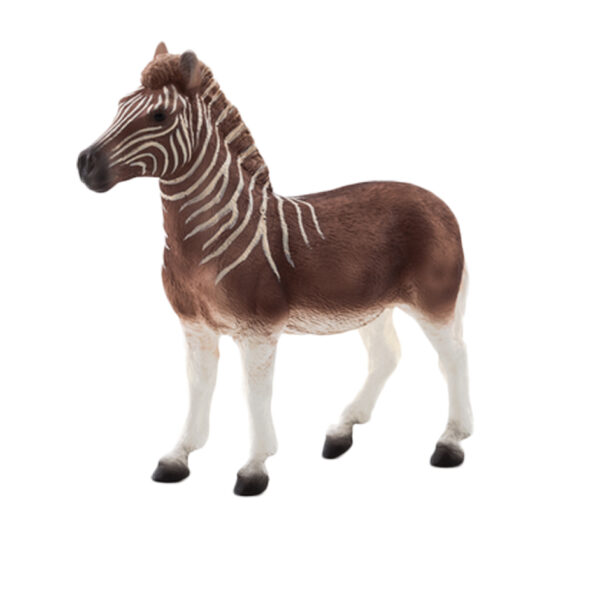
The Mojo Quagga Model

Mojo Quagga replica.

The Mojo Quagga model.

A focus of science teaching in secondary schools that follow the national curriculum (England), is to help pupils develop a deeper understanding of the range of scientific ideas in biology.  Giving pupils the opportunity to learn about the extinction of the Quagga and the on-going attempts to resurrect this sub-species of Plains Zebra, helps to reinforce teaching about genetics and genetic engineering as well as providing important cross-curricular links into history, human population dynamics and the impact of climate change.

Visit the award-winning Everything Dinosaur website: Everything Dinosaur.

10 06, 2017

Fossils Rewrite the History of our Species

By |2023-07-26T09:15:06+01:00June 10th, 2017|Categories: General Teaching, Key Stage 3/4|Comments Off on Fossils Rewrite the History of our Species

Pushing Back the Origin of our Species by 100,000 Years

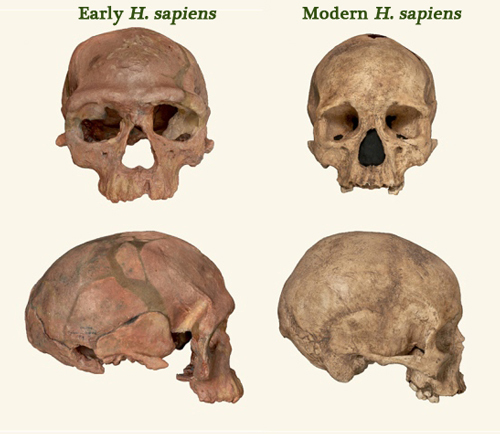
Fossil hominin remains from the Atlantic coast of Morocco indicate that our species Homo sapiens originated at least 100,000 years earlier than previously thought.  In addition, this north African discovery challenges the idea of eastern Africa as being the “cradle of humankind” – at least in terms of the evolution of our species.

An Early Human Skull Compared to a Modern Human Skull (Homo sapiens)

Comparing Homo sapiens skull material.

Comparing Homo sapiens skull material.

Picture Credit: Natural History Museum (London) with additional annotation by Everything Dinosaur

Writing in the academic journal “Nature”, scientists that include lead author professor Jean-Jacques Hublin (Department of Human Evolution at the Max Planck Institute for Evolutionary Anthropology in Leipzig, Germany), have studied the fragmentary fossilised remains of five early humans and dated these remains to approximately 315,000 years ago.  Previous studies, had suggested that our species originated some 200,000 to 220,000 years ago.

Rewriting the Textbooks

Sixty miles west of the Moroccan city of Marrakesh, the remote cave site of Jebel Irhoud can be found.  The cave roof may have collapsed long ago, but this location has provided extremely important evidence about life in the Pleistocene Epoch.  This notable anthropological site was discovered in 1960, with the first extensive field work being undertaken a year later.  The limestone cave site has yielded a number of fossils of prehistoric mammals as well as bones and stone tools associated with both Neanderthals and our own species.  According to scientists, this new study indicates that the idea that our species evolved in eastern Africa is no longer tenable.  It is more likely that H. sapiens evolved all across the continent.

Professor Hublin stated:

“It is not the story of it happening in a rapid way in a “Garden of Eden” somewhere in Africa.  Our view is that it was a more gradual development and it involved the whole continent.  So, if there was a Garden of Eden, it was all of Africa.”

A Beautifully Preserved Human Jaw

The more than twenty human bones (from five individuals), include a nearly complete lower jaw, plus skull fragments. The material has been dated using several methods and the range of dates produced is between 280,000 to 350,000 years, with the most probable date around 315,000 years.

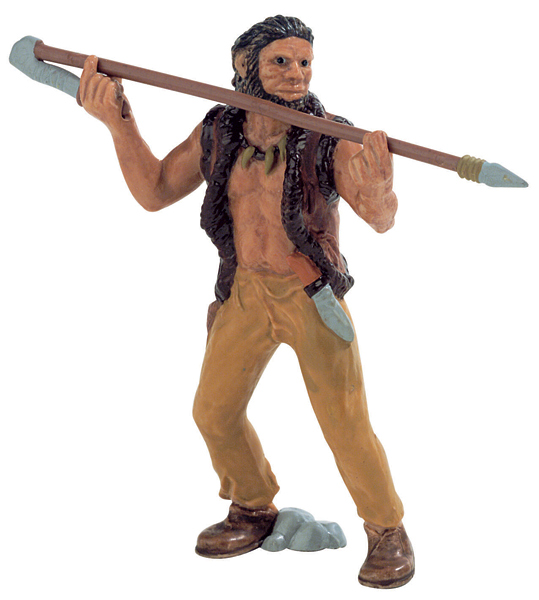
A Model of a Modern Human (H. sapiens)

Bullyland H. sapiens

A model of modern human being (H. sapiens).

The model (above) is from the Bullyland range of prehistoric animal figures.

To view this range: Bullyland Prehistoric Models and Figures.

Homo sapiens Fossils

The re-dating and the human remains from Jebel Irhoud convinced the research team that early H. sapiens once lived at this location.  The teeth, somewhat bigger when compared with those of modern humans, are a better match to H. sapiens than they are to Neanderthals or other known archaic humans.

The Jebel Irhoud skulls are elongated compared with those of modern people.  This suggests that these individuals’ brains were organised differently when compared to our own.

A spokesperson from Everything Dinosaur commented:

“These fossils overturn our ideas regarding the evolution of our species.  In addition, by comparing the skulls, jaws and teeth we can gain a better understanding of how our species Homo sapiens has evolved over the last 300,000 years.  We are not separate from the laws of natural selection, but very much shaped by them.”

Visit the award-winning Everything Dinosaur website: Everything Dinosaur.

8 06, 2017

T. rex Not Feathered After All According to New Research

By |2024-05-09T08:20:50+01:00June 8th, 2017|Categories: General Teaching|Comments Off on T. rex Not Feathered After All According to New Research

Tyrannosaurus rex Had Scaly Skin

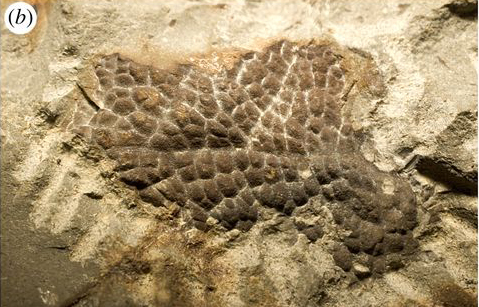
A team of international scientists including Professor Phil Currie (University of Alberta) and Robert T. Bakker (Houston Museum of Natural Science), have concluded that Tyrannosaurus rex was probably not covered in a coat of shaggy feathers.  A study of T. rex skin impression fossils found in association with a 30% complete skeleton of the “Tyrant Lizard King” in Montana indicate that this iconic carnivorous dinosaur had scaly skin like a modern-day reptile.

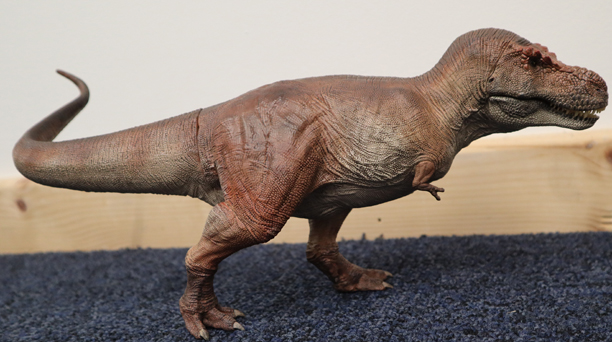
Tyrannosaurus rex Not Covered in Feathers

Rebor T. rex Tusk dinosaur model.

The Rebor T. rex Tusk King T. rex Requiem model is supplied with a clear plastic support base but our models appear quite stable even standing on our office carpet without the need for the support stand. This is a T. rex model that does not show any feathers. Picture credit: Everything Dinosaur.

Picture credit: Everything Dinosaur

The model (above) is a Rebor T. rex figure.

To view the Rebor model range: Rebor Prehistoric Animal Models.

Dinosaurs with Feathers

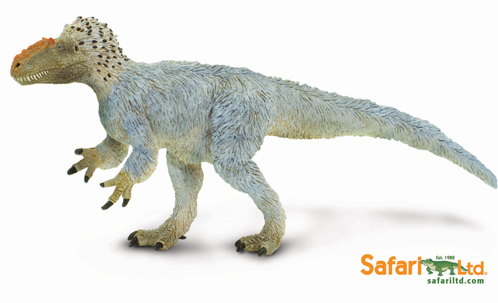
A number of dinosaurs are known to have sported feathers and some did have shaggy, feathery coats.  A member of the same clade of dinosaurs to which T. rex belongs, a big, meat-eating dinosaur called Yutyrannus (Y. huali), from China did have a feathery coat.  Based on this evidence a number of scientists proposed that dinosaurs such as Tyrannosaurus rex and its near relatives were also feathered.

A Feathered Tyrannosaur Dinosaur Model

Available from Everything Dinosaur.  A feathered tyrannosaur figure.

The model (above) is from the Wild Safari Prehistoric World range.

To view this range: Wild Safari Prehistoric World Figures.

Extension Ideas

How do scientists know that some dinosaurs had feathers?   Link to fossil evidence and what fossils can tell us about life in the past.  This article might prove helpful as it provides pictures of feathered dinosaur fossils and a reconstruction of a feathered dinosaur: New Feathered Dinosaur from China with Pennaceous Feathers.

Why might some dinosaurs have had feathers?  There are a number of potential answers, for example, some dinosaurs may have had dense coats of feathers to help keep them warm, (insulation), in the same way that many birds and mammals have insulating feathers and fur today.  Can the class provide of examples from the natural world?  Feathers might also have been used for display or for visual communication.  Can the children provide examples of birds that use feathers not just for flying but for display – peacocks, birds of paradise etc.

One of the T. rex Skin Impression Fossils 

Tyrannosaurus rex skin impression.

Preserved integument from the neck (b) of T. rex specimen HMNS 2006.1743.01

Picture credit: Biology Letters

For more information about the recent research into the Montana T. rex specimen with its skin impressions: Has T. rex Shed Its Feathers?

Visit the Everything Dinosaur website: Everything Dinosaur.

29 05, 2017

Key Stage 1 Children Design Beautiful Dinosaurs

By |2024-05-09T08:23:40+01:00May 29th, 2017|Categories: General Teaching, Key Stage 1/2|Comments Off on Key Stage 1 Children Design Beautiful Dinosaurs

Herbivore, Carnivore, Omnivore

One of the key topic areas covered in the Year 2 science curriculum (England), is that pupils should be taught to describe how animals obtain their food.  This permits the teaching team to introduce the concept of the development of simple food chains.  The national curriculum for England gives guidance on science programmes of study, but schools have flexibility in how these key concepts are taught in the classroom.  Dinosaurs and life in the past can provide a class with a highly enjoyable term topic that permits the teaching team to build in a wide range of cross-curricular learning activities.

An Everything Dinosaur Workshop

Designing a Herbivorous Dinosaur – Learning About Food Webs

Designing a dinosaur herbivore.

Our mailbag was full of lovely dinosaur cards.

Picture credit: Great Wood Primary School

Take for example, the term topic recently delivered by the teaching team at Great Wood Primary School (Lancashire), to their charges in Year 2.  Our dinosaur expert observed some excellent examples of non-fiction and fiction writing, along with evidence of non-chronological reporting during his visit to deliver a dinosaur themed workshop at the school.

For dinosaur themed toys and gifts: Prehistoric Animal Toys and Gifts.

A Dinosaur Food Chain

During an hour-long workshop with the Key Stage 1 children, our dinosaur expert introduced a series of extension ideas to help support the scheme of work that had been developed by the teaching team.  One of the topic areas touched upon was establishing the concept that different kinds of animals obtained food in different ways.  In addition, scientists used special terms to describe the diets of animals – herbivores, carnivores and omnivores.

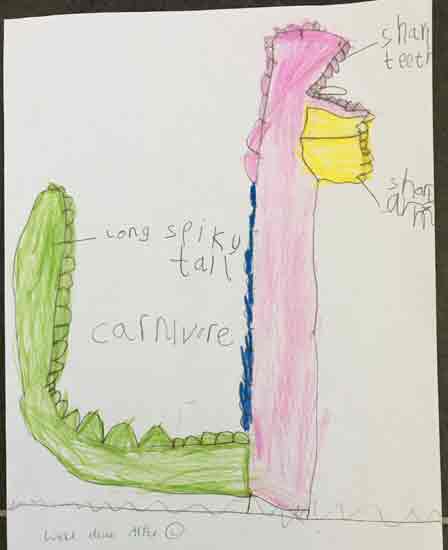
We challenged the children to design their very own prehistoric animal, to label its body parts and to think about what food it might have eaten.  Could they come up with a name to describe their very own dinosaur?  By doing this, we were checking the children’s understanding of the key concepts.

Herbivores, Omnivores and Carnivores in the Dinosauria

Dinosaur illustration (Alice in Year 2)

A colourful dinosaur drawing from Alice in Year 2 at Greatwood Primary School).

Picture credit: Great Wood Primary School

The children came up with some very creative and imaginative designs.  At the end of the topic, one of the teaching team members sent us examples of the children’s work.  These pictures were posted up onto our warehouse wall and they made a very colourful display.  Having children design their own prehistoric animals is a great way to test understanding and provides an interesting way of demonstrating the key components of food webs, as well as introducing ideas about how animals can adapt to different environments.

Visit Everything Dinosaur’s website: The Everything Dinosaur Website.

Go to Top